

jeudi, 17 novembre 2016
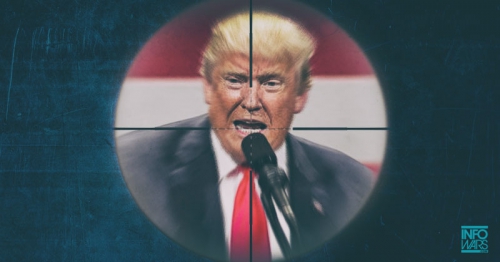
Préparation d'un «coup d'Etat» contre Donald Trump
Préparation d'un «coup d'Etat» contre Donald Trump
par Jean-Paul Baquiast
Ex: http://www.europesolidaire.eu
La formule la plus rapide et la plus immédiate consisterait à obtenir un vote anti-Trump des Grands Electeurs en charge de valider définitivement le président élu. Dans le système électoral américain, à peu près incompréhensible en Europe, ce n'est pas le nombre total des voix obtenues par les candidats au plan national qui compte, mais dans chaque Etat celui des voix obtenues par les représentants des deux candidats, dits Grands électeurs, lesquels élisent ensuite définitivement, quelques semaines après, le président.
Une pétition visant à obtenir des Grands Electeurs qu'ils ne valident pas l'élection de Trump a été lancée. Elle pourrait recueillir des millions de voix. Le prétexte en est que Trump a obtenu moins de votes populaires que Clinton. C'est actuellement vrai mais le décompte n'est pas fini, et il reste à peu près 7 millions de votes, dont ceux des militaires estimés à 80% en faveur de Trump. Par ailleurs la présomption de fraudes multiples concernant le vote et le décompte des voix, en provenance du camp Clinton, paraît tout à fait fondée.
Ces millions de voix qui contestent l'élection de Trump proviennent de milieux sociaux favorisés, tenant à garder leurs privilèges. Pour eux Trump représente l'électorat pauvre, qui n'est d'ailleurs pas seulement blanc ou masculin, provenant des zones industrielles en déshérence du fait de la mondialisation (le « Rust Belt »). Dans le vocabulaire français, ces électeurs pauvres seraient considérés comme représentant la gauche, et les électeurs favorisés la droite. Autrement dit, la pétition et plus généralement les efforts du parti Clinton pour faire invalider l'élection de Trump seraient considérés comme l'amorce d'un coup d'Etat de la droite et de l'extrême droite contre un Trump se situant, qu'il le veuille ou non, à gauche.
Mais l'establishment a réussi, à coup de campagnes d'opinions largement financées par les riches entrepreneurs, notamment à travers la fondation dite Democracy Alliance du milliardaire Soros, à faire passer Hillary Clinton comme la candidate des pauvres, des noirs, des femmes, tandis que Donald Trump est renvoyé du côté des fascistes, sinon des nazis. Depuis quelques jours, des manifestations de rues importantes, comprenant des jeunes, des femmes, des noirs et des hispaniques, tous provenant de milieux sociaux favorisés (comme cela est facile à voir sur les photographies de presse), sont organisées pour protester contre l'arrivée de Trump à la Maison Blanche. Elles sont largement applaudies en Europe et notamment en France, où les médias ont toujours été les défenseurs aveugles d'une Hillary Clinton corrompue, belliciste et anti-russe.
Nul évidemment ne fait valoir que si le même argent avait été employé pour organiser des manifestations pro-Trump, notamment dans le Rust Belt, les manifestants auraient été probablement plus nombreux et plus convaincants., même si moins bien vêtus et s'exprimant moins aisément.
Une guerre de classe
La parti Clinton, s'il ne réussit pas à faire invalider l'élection de Trump, s'efforcera d'encourager les mouvements sécessionnistes dans les Etats, tels la Californie, où l'establishment local a toujours été acquis au système. Ceci pourrait susciter des difficultés pour le président Trump, qui sera accusé d'avoir provoqué de nouvelles guerres de sécession aux Etats-Unis. Nul ne fera remarquer que sous Obama, c'étaient dans les Etats pauvres, victimes du système, que des mouvements sécessionnistes avaient commencé à prendre de l'importance.
Tout ceci montre bien qu'une véritable guerre de classe, comme auraient dit les marxistes des années 50, est engagée entre les favorisés et les non favorisés, entre l'aristocratie sociale et le prolétariat. Ceci à propos de l'élection du milliardaire Trump, qui s'est inscrit par une sorte de prescience politique à la tête du prolétariat.
Cette guerre ne fait que commencer. Trump ne la gagnera peut-être pas, compte tenu de l'importance des forces financières, économiques et politiques qui se mobilisent contre lui. Peut-être sera-t-il assassiné, peut-être sera- t-il victime d'une « sale affaire » l'impliquant, montée de toutes pièces par l'establishment. Celui-ci sait y faire en matière de « regime change » provoqué dans les pays dont les gouvernements lui déplaisent. Il doit maintenant considérer que le temps est venu pour qu'il déploie ce savoir faire en Amérique même.
19:38 Publié dans Actualité | Lien permanent | Commentaires (0) | Tags : actualité, états-unis, donald trump, élections américaines, présidentielles américaines |  |
|  del.icio.us |
  |
|  Digg |
  Facebook
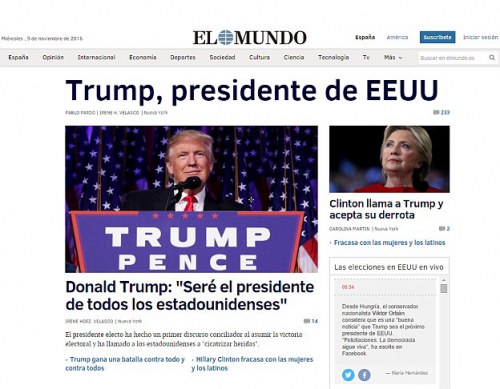
Guillaume Durocher - Trump Victory: Impact on America & Europe
Guillaume Durocher - Trump Victory: Impact on America & Europe

Guillaume Durocher is a French political writer and historian. He has lived in many European countries and worked in politics and journalism. He writes for several Alt-Right publications, including The Occidental Observer, Counter-Currents, and Radix.
We begin by discussing the results of the recent election. Guillaume compares Trump’s victory to Brexit, for the mainstream media – through its polls and pundits – failed to accurately predict either. We discuss what this means for not only America, but the West as a whole. Guillaume explains that the American nation-state is now run by a wildcard, and that if Trump drastically alters the course of America, Europe will follow suit. We then discuss Guillaume’s background, including how he became a nationalist. We learn that he was originally an anti-war liberal; questioning the EU, however, led him to then realize the importance of having homogeneous nation-states. The first hour also explores the ongoing culture war in the West, the Jewish community’s response to the Trump phenomenon, and the origins of our current plight.
The members’ hour begins with a consideration of technology. We discuss how the internet has allowed for alternative media to loosen the mainstream media’s control over culture and information. Guillaume correctly points out that Trump, through his condemnation of the mainstream media, has furthered this effect. We then switch gears to consider the big picture. Guillaume argues that it’s okay for those of us in the Alt-Right to disagree about the ideal form of government; what matters, though, is that whichever system we adopt exist solely for the benefit of our people. Guillaume then makes a case for the inclusion of genetics into policymaking decisions, which leads to a discussion on the massive population boom now underway in the third world. The members’ hour also covers the need for willpower and determination, the vulgarization of Western culture, and the tribal nature of fascism.
Guest's website: http://www.theoccidentalobserver.net/...
Listen or watch the second hour of all our shows and get full access to our archives at http://redicemembers.com
Subscribe and stream or download over 1000 programs, videos, films, Insight episodes, Red Ice TV & Weekend Warrior.
More Red Ice Radio:
https://redice.tv/red-ice-radio
Follow us on Twitter: https://twitter.com/rediceradio
Like us on Facebook: https://facebook.com/RedIceCreations
Listen on Soundcloud: https://soundcloud.com/red-ice-radio
Listen on Spreaker: https://spreaker.com/show/red-ice-rad...
Subscribe to our YouTube: https://youtube.com/user/RedIceRadio
RSS feeds: https://redice.tv/rss
19:18 Publié dans Actualité, Affaires européennes, Entretiens | Lien permanent | Commentaires (0) | Tags : guillaume durocher, donald trump, entretien, actualité, politique internationale, europe, affaires européennes, élections américaines, présidentielles américaines | | del.icio.us | | Digg | Facebook
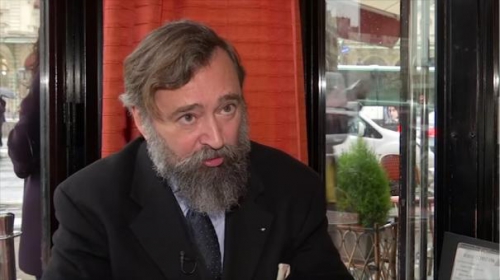
Constantin Parvulesco: La crise d'identité française
Constantin Parvulesco: La crise d'identité française

18:41 Publié dans Affaires européennes, Entretiens, Jean Parvulesco | Lien permanent | Commentaires (0) | Tags : constantin parvulesco, france, europe, affaires européennes, géopolitique, entretien | | del.icio.us | | Digg | Facebook
WWIII: The Balkan Stage for a Turkey-EU War
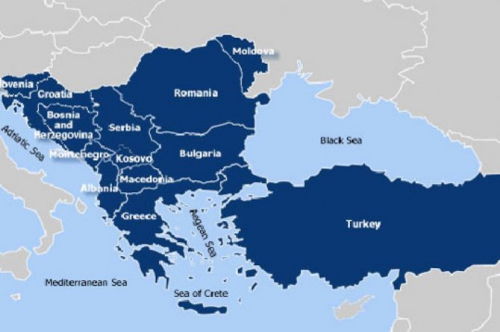
WWIII: The Balkan Stage for a Turkey-EU War
The End Of the War Against ISIS
ISIS, which was artificially created to redraw the borders of Middle East, is about to be defeated in Iraq and Syria by the ongoing military operations in Mosul and Raqqa, the center of ISIS. After ISIS’s end, there can be a sort of temporary break in military clashes in the Middle East. Thanks to the military intervention of Russia in support of the Syrian government and the military involvement of Turkey, with the undeclared consent of Russia, to prevent a YPG-led Kurdish corridor in the North Syria and to fight against ISIS, the US’ aim of dissolving the territorial unity of Syria has failed.
The US will have two options: either deepening its efforts to provoke new clashes between Turkey and Iraq, Turkey and Iran, or Turkey and Syria (thanks be to God that US plans to start a war between Russia and Turkey already failed) or changing its focus to another part of Eurasia to spread instability and incite clashes between the regional actors of Eurasia.
The US may select the second option thanks to the balancing and mediating Russian efforts to prevent any direct clashes among the Middle Eastern countries. The Balkans may be the most appropriate candidate for the US due to its geopolitical structure, historical conflicts, and ethnic and religious diversity. The word “Balkan” is a Turkish word which means steep and forested mountains. On the other hand “Bal” means honey and “Kan” means blood in Turkish. Therefore peace and conflict have always coexisted in the Balkans, as the name of the peninsula points out.
An Overview Of Geopolitics In The Balkans
Lying in the east of Europe, the Balkans is inhabited by mostly Slavic and Orthodox nations. With 19 million residents , Romania is the most populated country in the region, but the other countries are all below 10 million and diversified into small countries and ethnicities. In the west the Germans, in the north the Russians, and in the east the Turks surround the peninsula as great nations.
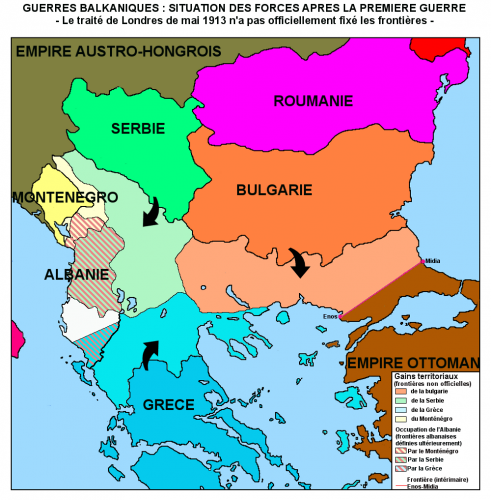
The recent history of Balkans also confirms the geopolitical truth that the potential actors that can clash or cooperate in the upcoming crisis are the Germans (EU), the Russians, and the Turks. After six centuries of Ottoman rule, the Balkan nations became separated countries. Then Nazi Germany invaded the entire peninsula. After the Second World War, with the exception of Greece, all the Balkan countries were under the influence of the USSR or communism. After the collapse of the iron curtain, by either joining the EU or NATO, most of the Balkan countries fell under the influence of the EU and US.
Greece, Romania, Bulgaria, Croatia and Slovenia are EU members; Turkey, Albania, Serbia, Montenegro, Macedonia and Bosnia-Herzegovina are candidates. On the other hand, Turkey, Greece, Romania, Bulgaria, Albania, Croatia, Slovenia are already NATO members, while Montenegro, Macedonia, and Bosnia-Herzegovina are candidates for NATO membership. Therefore at first glance, the current political situation might seems very united and stable in the region. All the countries are members of NATO and the EU or candidates. But as explained below, the reality on the ground is very different than it appears, and the EU- and US-oriented countries may go to war with each other.
Diversified Ethnicity and the Problems of Religion and Minorities
The US always uses ethnic and religious differences as a tool for provoking instability. Unfortunately ethnicity and religion is a very sophisticated complexity in the Balkans. Bulgarians and all the ex-Yugoslavian nations (Serbs, Montenegrins, Croats, Slovenes, Bosnians, and Macedonians) are Slavic, while Romanians, Greeks, and Albanians have distinct nationalities. The Romanians are Latin origin, the Greeks have Hellenic roots, and the Albanians have genetic ties to Italians. Bulgarians, Serbs, Montenegrins, Macedonians, Romanians, and Greeks are Orthodox, while Croatians and Slovenes are Catholic. Bosnians and two thirds of Albanians are Muslim, the rest being Orthodox.
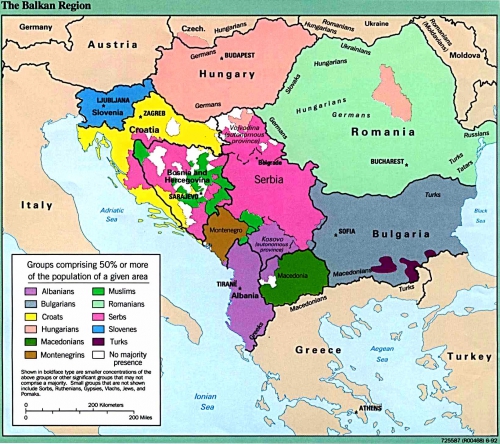
Although all the nations in Balkans have independent states, almost all of the countries have internal minority problems. Hungarians living in the west (Transylvania) of Romania constitute 7% (1,4 million) of Romania’s population. Bulgaria also has a 10% Muslim-Turkish (900 thousand) minority. In Greece, there are 250 thousand Macedonians, 370 thousand Albanians, and 200 thousand Muslim Turks. Albanians with a population of 500 thousand constitute 25% of Macedonia’s population and 1.8 million Albanians are living in Kosovo. Montenegro’s population consists of 45% Montenegrins, 29% Serbs, %12 Bosnians, and %5 Albanians. 250 thousand Hungarians live in Serbia. Bosnia and Herzegovina is a loose Bosnian, Croatian, and Serbian confederation. On the Bosnian-Croatian side, 70% of the population is Bosnian and the rest is Croatian, while on the Serbian side 80% is Serbian and the rest is Bosnian.
Historical, Religious, and Ethnic Ties with Turkey and Russia
When the Balkan nations achieved their independence from the Ottoman Empire, starting from the late 19th century and lasting up to 1989, many Turks, Muslim Albanians, and Bosnians immigrated to Turkey. Currently, 12 million people of Balkan origin are living in Turkey. Among immigrants, 7 million are of Turkish origin who immigrated from Bulgaria, Greece, Albania, Macedonia, Kosovo, and Bosnia. Although 2.2 million Bosnians live in Bosnia-Herzegovina, 2 million Bosnians also live in Turkey as a kind of second motherland. Moreover 3.2 million Albanians live in Albania, while as a second motherland 2 million Albanians live in Turkey. Therefore, in Turkey, the Balkan-originated community has a strong lobby and in the government and business cycles is very influential. Moreover, most of them still have strong ties with their relatives in The Balkans.
On the other hand, the Slavic nations have historic, religious, and ethnic ties with Russia. Besides Romanians, Greeks, and Albanians, the rest of the Balkan nations are Slavic in origin. Moreover, besides Croatians, Slovenians, Albanians and Bosnians, the others are of the Orthodox belief. During these peoples’ independence struggle, Russia gave strong support and came to represent an elder brother.
Turkey’s Increasing Potential to Surpass the Balkans
Compared to Turkey, the Balkan countries’ populations are decreasing dramatically. Not only low fertility rates but also migration to developed EU countries have caused the population to decrease. In 1990, the population of Turkey (53 million) was 75% of all the Balkan countries’, while Turkey’s present population (80 million) exceeds all of the Balkan nations combined (63 million) and has reached 125% of the whole Balkans’ population. Economic growth rates are also in favor of Turkey. In 2000, Turkey’s GDP was 107% of that of all the Balkans, and presently the figure has reached 123%, and this despite the fact that the EU member Balkan countries attract EU direct investment and EU funds to restructure national economies. For the top three economies of the Balkans (Greece, Romania, and Bulgaria), Turkey is an important export destination.
Souring Relations between Turkey and the EU
Turkey has souring relations with EU. Although Turkey chose Westernization as a type of modernization at its founding in 1923 and has been a NATO member since 1952, its application for full membership in the EU is still on stand-by. In recent years, Turkish President Recep Tayyip Erdoğan has faced an opposition campaign by the Western media. He is accused of being a dictator even though he won 11 democratic elections in 14 years including municipal, parliamentary, and presidential ones.
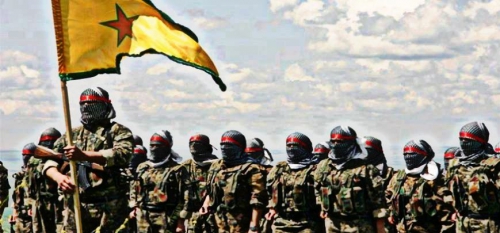
Moreover, even though the Kurdish Workers Party (PKK) is declared a terrorist organization by the EU, their obvious support for Kurdish separatists in Turkey increases anti-EU sentiments among Turks. The PKK cavalierly propagates its views, organizes demonstrations, and is provided financial resources in Europe. The recent arrest of the leader and ten parliamentarians of the PKK-affiliated political party HDP may deteriorate the EU-Turkish relations to an irreparable extent.
Moreover, nine columnists and directors of the pro-Western newspaper Cumhuriyet were also arrested last week under accusations of cooperating with the terrorist organization FETÖ, a US proxy that attempted the coup d’état on July 15th in Turkey. The editor of the newspaper, Can Dündar, has fled to Germany and receives support from Germany.
EU representatives and the foreign minister of Luxembourg have announced their concern over the recent arrests and have even proposed to impose economic sanctions like the ones they have against Russia, arguing that 60% of the foreign investment in Turkey is of EU origin. The Italian prime minister said that Turkey cannot be a member of theEU under these circumstances. Additionally Moody’s and Standard & Poor’s, Western rating companies, lowered Turkey’s rating after the coup d’état, asserting that political instability is on the rise.
On the other hand Turkish President Erdoğan accuses the EU of supporting terrorism in Turkey and the Middle East (PKK, FETÖ and ISIS), attempting to divide Turkey by supporting Kurdish separatists, attempting to overthrow the democratically elected government and president, and spreading Islamophobia and Turkophobia. He has declared that the EU’s attitude is akin to the second phase of World War 1 when Turkey, Syria, and Iraq were divided on the basis of ethnicity and sect.
Turkish Stream
Germany, Turkey and Italy are the top three importers of Russian natural gas. The South Stream project was canceled due to the EU’s blocking two years ago. The new Turkish Stream pipeline for transporting Russian natural gas directly to Turkey, bypassing Ukraine, strengthens Russian-Turkish cooperation and both of their positions against the EU, despite the opposition of US. The possible extension of the Turkish Stream from Greece to Germany and Italy via the Balkans could provide strategic advantage to Turkey and Russia. Therefore, while Russia and Turkey want stability in order to guarantee the route of pipeline, the US might provoke instability and clashes in the Balkans in order to prevent Russia’s increasingly position and block the possible extension of the Turkish Stream pipeline.
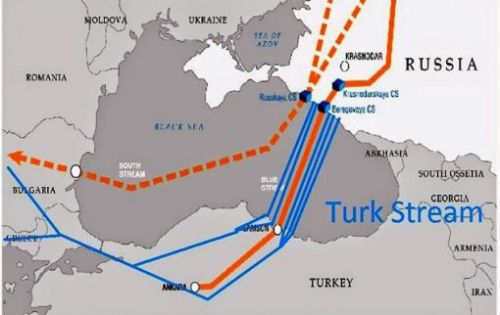
Russia and Turkey’s new military approach
Russia, seeing the encirclement policy of the US, has begun to use hard power as a “preemptive” strategy as seen in Georgia and Ukraine. The military intervention of Russia in Syria is a “policy making” strategy and a clear offer to regional actors to cooperate against the US. On the other hand, Turkey, like Russia, has begun to use hard power, such as in Syria and to some extent in Iraq. Turkey reaped the fruits of the use of hard power through the Turkish-Russian alliance in Syria. Therefore, in order to break encirclement, Turkey, knowing that Russia can offer support against US, would be much more eager to militarily intervene in any conflict in Balkans.
Potential Conflicts
The first potential unrest could be in Bosnia-Herzegovina. Composed of Bosnian-Croatian and Serbian Republics and as a weak confederation founded after the Dayton Peace Agreement, Bosnia’s future mainly depends on the support of the EU. Any change in Serbian politics away from the pro-EU approach could motivate the Serbian side to strive for independence. It is no doubt that an anti-EU movement in Serbia would also affect Montenegro, which has a considerable Serbian population. But the Bosnian-Serbian-Croatian dispute is far away from inciting military clashes due to the artificial creation of the confederation and the lack of a Bosnian army.
Another problem is posed by the Albanians. The desire to establish “Greater Albania” has historic roots among Albanians. Attempts to unite Albania, Kosovo, and the Albanian-populated areas of Macedonia could directly pull Macedonia, Greece, and Serbia into a conflict. On the other hand, Bulgaria will not be silent if Macedonia falls into unrest. It is worth remembering that Macedonia was the cause of the Second Balkan War. The US military base in Kosovo can be the center for US provoking of the Albanians in the region. Moreover, radical Islamic ties dating back to the Yugoslav Civil War and the Kosovo uprising are a perfect starting point for the US to exploit the situation with the use of terrorist attacks.
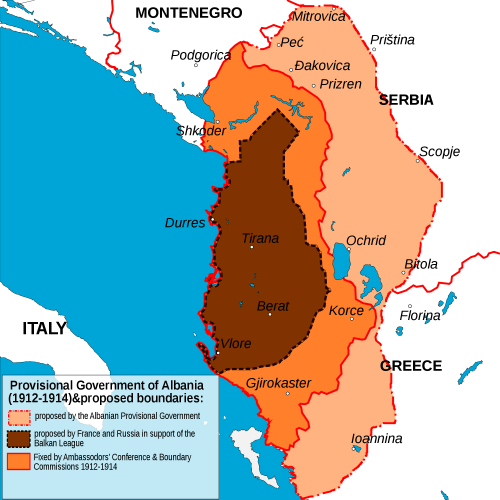
Moreover, Turkey has countless disputes with Greece. The Cyprus issue, the Turkish minority in the Western Thrace, and the 12 islands and sea mile disputes in the Aegean Sea are all alarming conflicts that could provoke a military clash between Turkey and Greece. When the US and EU’s pressure on Turkey increased, Erdoğan put the existing conflicts with Greece on the agenda and clearly declared that if the US and EU try to redraw the boundaries in the Middle East, then Turkey will turn to the Balkans and question the boundaries with Greece, and use hard power to solve the disputes if needed. Therefore, if Greece militarily intervenes in any clash arising from the Albanians, Turkey will not be silent.
Concluding Thoughts
Turkey and Russia face political, military, and economic attacks from the US and EU. Both countries are regarded as two great obstacles preventing the West’s domination in Eurasia. The US-backed coup attempt in Turkey, the toppling of the democratically elected government in Ukraine, Russia’s and Turkey’s military intervention in Syria, and Turkey’s military alliance with Russia in Syria have changed the attitudes of Turkey and Russia from using soft power to hard power, from defensive strategies to a preemptive one. In order to set up a new confrontation between Russia and Turkey by exploiting ethnic and religious contradictions and preventing the extension of the Turkish Stream pipeline to Europe in order to block Russia, the Balkans is a very suitable region for the US. Moreover, as seen in the Ukraine case, provoking unrest in the Balkans by attracting Turkish and/or Russian military intervention is a very convenient justification for increasing the US’ military presence and political domination in Europe. Albanians’ desires for unification or the Turkey-Greece border disputes are the most attractive tools for flaring up unrest in the Balkans. If Turkey, as in Syria, can cooperate with Russia in order to preserve stability and peace in the Balkans, then the result of the US’ incitements will not be those intended. Turkey and Russia could not only break the the US’ encirclement, but almost the entire Balkans could be consolidated into a great Eurasian block.
18:17 Publié dans Actualité, Affaires européennes, Géopolitique | Lien permanent | Commentaires (0) | Tags : actualité, europe, affaires européennes, géopolitique, politique internationale, balkans, turquie, russie, serbie, grèce, macédoine, bulgarie, albanie, kosovo | | del.icio.us | | Digg | Facebook