


vendredi, 25 septembre 2026
Le système libéral-bureaucratique

Le système libéral-bureaucratique
Par Roberto Pecchioli
Source : Ereticamente & https://www.ariannaeditrice.it/articoli/il-sistema-libera...
Une connaissance, animateur de l’office de tourisme d’un village de l’arrière-pays, se plaint avec irritation de la difficulté d’organiser la fête annuelle du village. Non par manque de fonds, de bénévoles ou d’intérêt, mais en raison du pouvoir écrasant et dévastateur de la bureaucratie. Des semaines de travail sont nécessaires pour obtenir des autorisations, remplir des formulaires, satisfaire les exigences d’innombrables administrations et institutions, organiser chaque événement conformément à une quantité exorbitante de normes, de circulaires et de règlements.
Tout cela pour quelques journées de fête dans une société qui se vante d’être la plus libre de l’histoire. Ce n’est pas vrai, comme chacun le sait par expérience directe. Nous vivons dans un système libéral-bureaucratique, un despotisme conforme à la loi.
 Il ne s’agit ni d’une contradiction ni d’une hétérogenèse des fins, mais de la conséquence logique du libéralisme réel. Alexis de Tocqueville en avait perçu les prémices dans un célèbre passage de De la démocratie en Amérique :
« Si je cherche à imaginer sous quels traits nouveaux le despotisme pourrait se produire dans le monde, je vois une foule innombrable d’hommes égaux, uniquement occupés à se procurer de petits et vulgaires plaisirs, dont ils satisfont leurs désirs. Au-dessus d’eux s’élève un pouvoir immense et tutélaire, qui se charge seul d’assurer leurs biens et de veiller sur leur sort. Il est absolu, détaillé, régulier, prévoyant et doux. Il ressemblerait à l’autorité paternelle si, comme elle, il avait pour objet de préparer les hommes à l’âge viril ; mais il ne cherche, au contraire, qu’à les fixer irrévocablement dans l’enfance. Il aime que les citoyens se réjouissent, pourvu qu’ils ne songent qu’à se réjouir. Il travaille volontiers à leur bonheur, mais il veut en être l’unique agent et le seul arbitre ; il pourvoit à leur sécurité, prévoit et assure leurs besoins, facilite leurs plaisirs, conduit leurs principales affaires, dirige leur industrie, règle leurs successions, divise leurs héritages ; que ne peut-il leur ôter entièrement le trouble de penser et la peine de vivre ? »
Un très mauvais maître, Michel Foucault, a parlé d’une société organisée comme un « dispositif ». Même l’organisation des grandes entreprises privées se caractérise par le bureaucratisme, la rigidité et l’adhésion irréfléchie à des règles minutieuses, souvent incompréhensibles. Le libéralisme économique et l’étatisme sont frères et ne s’opposent qu’en paroles: ils marchent séparément pour frapper ensemble. Même les professions dites libérales sont prisonnières de protocoles, de lignes directrices et de carcans dans lesquels le Marché sacré — pseudonyme de l’intérêt privé — et la boulimie normative remplissent chacun une fonction, avec pour conséquences l’absence de liberté concrète, la sanction et le contrôle.
Le démantèlement libéral — avec l’apport fondamental du marxisme — des normes culturelles et des coutumes a engendré un pouvoir diffus, à la fois libéral sur le plan économique et étatiste-bureaucratique. Nous vivons au sein d’une singulière créature hybride : l’étatisme individualiste.
Le libéralisme échoue au moment même où il est pleinement réalisé. Devenue dominante à partir des années 1990, la philosophie politique née pour réaliser la tapisserie pluraliste — devenue un patchwork abstrait — a produit un déséquilibre économique intolérable, imposé l’uniformité — le mondialisme, les économies d’échelle, la consommation uniformisatrice du McMonde et des centres commerciaux identiques partout — et favorisé la dégradation matérielle et spirituelle. Elle doit défendre et étendre ces réalités grâce à son alliance avec son frère ennemi étatiste: son moyen privilégié est le monstre bureaucratique, la progression algébrique des normes, des contrôles et, bien entendu, des contrôleurs.

Son projet a besoin de la mégamachine au sein de laquelle se conjuguent l’action de l’État, de l’économie, du système éducatif, de la science et de la technologie. Il en résulte une société de solitaires diversement égaux, incapables de nouer des relations, saturés de droits, définis par des libertés abstraites, voire dissolvantes, impuissants, apeurés et seuls. Des proies parfaites pour le système de la consommation et des bureaucraties, maternelles et enveloppantes autant qu’implacables, omnivores et punitives. Celles-ci sont alimentées non seulement par la prolifération des réglementations, mais également par le consentement intéressé de classes bureaucratiques pléthoriques, composées de prétendus experts — et de contrôleurs aux aguets — que Costanzo Preve appelait les couches dominées au sein de la classe dominante.
L’action coordonnée du dogme libéral et de la pratique bureaucratique réduit les choix à des mécanismes dépersonnalisés, à des voies prédéfinies et à des caprices rebaptisés droits, au sein d’un gigantesque système de dépendance et d’addictions. Entre la demande de protection de la liberté individuelle et l’expansion de l’État se dissimule la relation d’interdépendance entre l’État, les bureaucraties et le marché. Ils croissent nécessairement et constamment de concert. L’étatisme rend possible l’individualisme, qui exige à son tour le cadre étatiste. Nous devenons chaque jour davantage individualistes et étatistes. Le rôle des forces politiques est complémentaire.
Une alternance sans alternative — selon Jean-Claude Michéa — dans laquelle les uns se concentrent sur l’individualisme et l’égoïsme social sans toucher au cadre étatiste, tandis que les autres réalisent l’opération inverse mais équivalente. Les uns comme les autres évoluent dans le même horizon, en accord avec les prémisses philosophiques et les résultats pratiques du libéralisme. En uniformisant par la consommation et l’intérêt l’individu, séparé de son identité, de sa communauté ainsi que de ses appartenances naturelles, professionnelles, territoriales et spirituelles, le libéralisme doit organiser le conflit engendré par la fragmentation de la société au moyen de nouvelles normativités, de lois, de dispositifs, d’interdictions et d’obligations que seules les bureaucraties savent administrer, animées par le préjugé idéologique du progrès, de la tolérance et de l’inclusion.
Le système porte le nom significatif de gouvernance : administration de l’existant sur le terrain du libéralisme économique, assortie de la production continue de nouveaux droits, de nouvelles significations et de nouvelles règles devant être garanties par la bureaucratie. Les dominants se répartissent leurs domaines respectifs, mais restent unis et alliés dans leur gestion. En dessous végète la masse de tous les autres. Le pouvoir préfère les prétendus « derniers » — immigrés, minorités sexuelles et autres catégories similaires, qui dépendent de lui pour survivre ou faire valoir leurs droits — au reste de la population, cette armée désarmée des avant-derniers, sur laquelle pèsent le poids de l’injustice libérale et la prison constituée par l’armée impersonnelle des experts et des fonctionnaires : l’appareil bureaucratique, les petits chefs d’un mémorable film de Totò.

Le libéralisme efface la conception de la liberté comme capacité de maîtriser la recherche de la satisfaction immédiate des instincts ou des désirs. Il s’agissait de la capacité à se gouverner soi-même en différant ses instincts, ses besoins et ses pulsions, et en renonçant à ce qui était jugé négatif parce que contraire à la vertu et au bien. Si l’aboutissement commun à tous les courants libéraux, de droite comme de gauche, est la prédominance de l’action subjective, sa sphère juridique est le droit positif. C’est-à-dire un système fondé sur de simples procédures — et non sur des principes ou sur le bien commun — ainsi que sur des majorités changeantes. Les assemblées politiques légifèrent conformément à la pensée dominante d’un moment historique donné, laquelle est la pensée, c’est-à-dire l’intérêt, de la classe dominante. La formulation des normes est généralement complexe, obscure et contradictoire, conçue de manière à exiger l’arbitrage de légions de spécialistes ainsi qu’une multitude de règlements, dont l’élaboration d’abord, puis la mise en œuvre, produisent de nouvelles bureaucraties dotées de pouvoirs toujours plus étendus, autoréférentiels et débordant dans le vide de la décision politique voulu par le libéralisme réel. L’affaire de l’Ilva en Italie en est un exemple : les installations de ce géant sidérurgique, stratégiques pour l’avenir industriel, ont été mises à l’arrêt par une décision judiciaire, l’ordre de bureaucrates publics devenu pouvoir autonome.
La substance du système est celle d’un (dés)ordre qui amplifie toutes les formes d’individualisme, tout en les faisant garantir par un vaste appareil juridique, politique et social dont diverses bureaucraties sont à la fois les gardiennes et les bénéficiaires. Ainsi, l’autonomie du subjectivisme libéral, qui tend vers l’anarchie, est contrôlée, façonnée et administrée par l’imposition d’innombrables lois, avec pour conséquence évidente l’élargissement de la sphère d’influence de l’État et de bureaucraties omnivores transformées en police des comportements.
 Paradoxalement, plus l’autonomie libérale est grande, plus l’État devient omniprésent. La liberté d’hier, constituée de relations et de liens communautaires, associatifs, moraux et familiaux, se rétrécit au profit d’une émancipation qui, afin d’éviter la guerre de tous contre tous, nécessite le Léviathan bureaucratique. Le libéralisme atteint son accomplissement grâce à l’individu libéré et à l’État contrôleur. Le Léviathan privé, maître de tout, dispose d’une interface étatiste et bureaucratique chargée — à ce qu’elle affirme — de contenir les excès du subjectivisme absolu de l’homo homini lupus de Thomas Hobbes. Ce n’est pas un hasard si ce penseur anglais du XVIIe siècle fut le secrétaire de Francis Bacon, le scientifique et philosophe qui voulait dominer les forces de la nature afin de les exploiter économiquement, avant de devenir le modèle de référence de John Locke, premier théoricien du libéralisme au XVIIIe siècle.
C’est également de cette période que date l’idée, exposée dans La Fable des abeilles de Mandeville, selon laquelle les vices privés se transforment en vertus lorsqu’ils génèrent du profit. L’horizon est celui du déchaînement individualiste de ce que Joseph Schumpeter appellera les « esprits animaux » du capitalisme libéral, insoutenables sans une solide armature bureaucratique au sein de laquelle l’État devient le policier.
En dernière analyse, le projet du libéralisme économique — désormais entré dans sa phase libertaire-libertine —, puisqu’il épuise les ressources morales et naturelles sur lesquelles il s’était initialement fondé, survit grâce au concours déterminant de la technologie et à son inquiétant aboutissement, la fintech, oscillant entre l’anarchie subjective croissante et le contrôle omniprésent et coercitif d’un appareil bureaucratique mis à son service. L’avenir proche — et, en partie, le présent déjà — laisse entrevoir une liberté extrême dans la sphère pulsionnelle au sein d’une oppression extrême. L’un des drames de cette contradiction — une forme d’anomie ou d’aporie qui aurait surpris Émile Durkheim, le premier à l’avoir étudiée — est la tendance de l’homo contemporain, qui n’est plus tellement sapiens, à réduire cette condition en forme d’entonnoir à un simple problème «technique», qu’il faudrait résoudre par des doses plus massives de libéralisme économique et de libertarisme ou de contrôle politique et bureaucratique, selon les mouvements du balancier entre les deux principales tendances de l’arc-en-ciel libéral. Deux solutions également destructrices, auxquelles il faut opposer, avec patience, ténacité, ouverture culturelle, imagination, mais aussi radicalité, la sortie de la toile d’araignée libérale-bureaucratique.
18:33 Publié dans Actualité, Philosophie, Sociologie | Lien permanent | Commentaires (0) | Tags : libéralisme, bureaucratie, actualité, philosophie, philosophie politique, sociologie |  |
|  del.icio.us |
  |
|  Digg |
  Facebook
mercredi, 16 septembre 2026
Transdémocratie et double morale: le monopole moral des immoraux

Transdémocratie et double morale: le monopole moral des immoraux
Source: https://report24.news/trans-demokratie-das-moralische-mon...
La massue faite de moraline est l’arme favorite de la gauche et de la mouvance woke: ils sont les «gentils», ils se trouvent du «bon» côté. Du moins le pensent-ils. La réalité montre bien souvent le contraire. Leur embarrassante double morale peut s’expliquer psychologiquement — et s’avère extrêmement utile sur le plan politique. Les forces qui causent le plus de dommages sont celles qui, au sein de l’appareil de pouvoir, exploitent délibérément ces mécanismes afin de diviser la société. Et qui, ce faisant, scient ironiquement la branche sur laquelle elles sont elles-mêmes assises.
Les conversations avec un certain type de personnes donnent l’impression d’être retombé à l'âge du bac à sable: un mot de travers, et les braillements commencent aussitôt — à la fin, des châteaux de sable sont théâtralement piétinés et des pelles en plastique volent dans les airs.
La suffocation indignée et l’indignation sont aujourd’hui des instruments de contrôle du débat public. Les propos qui déplaisent ne sont pas examinés à l’aune des arguments et des faits. On critique plutôt l’audace même d’avoir osé les formuler. Les prétendus bien-pensants et parangons de vertu ont perfectionné cet étouffement du débat. Dès qu’une phrase s’écarte de la ligne souhaitée, la condamnation morale tombe: c’est de droite, c'est nazi, raciste, misanthrope, ou que sais-je encore (voilà pour les braillements). Et puisque celui qui dit quelque chose de mauvais est lui-même mauvais, l’interlocuteur tout entier est aussitôt considéré comme délégitimé. Il a quitté le club de la «diversité», de la «solidarité», de «nos valeurs» et de «notre démocratie» (à partir de maintenant, les pelles peuvent voler.)

On agit avec la conviction de détenir un monopole moral. Celui-ci s’est après tout construit au fil des décennies: la longue marche de la gauche à travers les institutions a probablement été plus fructueuse que certains de ses premiers protagonistes n’auraient osé le rêver. Les interprétations de gauche, aussi absurdes soient-elles, dominent de larges pans des médias, de l’industrie culturelle, des universités, des salles des professeurs, des grandes institutions ecclésiastiques, des ONG et de la fonction publique. Quiconque souhaite faire carrière dans ces sphères, ou simplement y travailler sans être inquiété, sait généralement quelles phrases peuvent être prononcées et lesquelles ne le peuvent pas. C’est du pouvoir, et ce pouvoir rayonne vers l’extérieur. Mais c’est aussi une identité.
Les convictions politiques comme identité
Les avantages sont manifestes: celui qui se croit du «bon côté de l’histoire» en tire une estime de soi extraordinairement stable. On appartient aux gentils et on lutte contre les méchants. On se tient aux côtés des faibles, des victimes, et on les défend contre l’injustice et les attaques des puissants. On est pratiquement Batman — dans certains cas, plutôt Batman au RSA, mais passons.

Ce sentiment est extrêmement gratifiant sur le plan psychologique: il libère du doute de soi, donne un sens à sa propre vie et fournit des ennemis tout désignés contre lesquels on peut se défouler. Il épargne également l’effort de penser, car dès lors qu’il ne faut plus analyser les faits, mais seulement les classer moralement, on n’a plus à se confronter aux réalités qui dérangent. Cette image de soi n’est pas liée aux faits, mais à un sentiment de supériorité morale.
Accessoirement, cela permet aussi de devenir aussitôt membre d’une bande qui, dans de nombreux domaines, exerce encore le pouvoir. Les êtres humains sont des animaux grégaires. Le sentiment d’appartenance nous procure de la sécurité. Le perdre paraît menaçant. Quiconque s’écarte du consensus dans certains cercles professionnels ou privés s’expose à des conséquences allant des regards critiques et de l’exclusion ouverte jusqu’à la fin d’amitiés, voire à des préjudices professionnels. Dans divers milieux, la «posture» correcte passe pour une preuve d’intelligence et de décence. Celui qui se fait remarquer négativement perd non seulement sa carte de membre, mais aussi son statut.

La psychologie sociale étudie ces phénomènes dans le cadre de la théorie de l’identité sociale. Cette théorie part du principe que les êtres humains ne tirent pas leur image d’eux-mêmes de leurs seules caractéristiques individuelles, mais qu’ils se définissent fortement par l’intermédiaire de groupes — notamment, et tout particulièrement, par leur camp politique. Ils adoptent l’identité de leur groupe et en intériorisent les normes, les valeurs et les comportements. Les opinions politiques ne sont alors plus des convictions susceptibles d’être modifiées par les faits, mais deviennent une composante de l’identité personnelle et se trouvent, par conséquent, fortement chargées d’émotion.
Changer d’avis reviendrait à devoir remettre simultanément en question son identité et son appartenance au groupe. Au sein de son propre groupe, la cohésion est forte et l’on se perçoit, soi-même et ses semblables, comme supérieurs. Les personnes rattachées à d’autres groupes tendent en revanche à être dépréciées et considérées comme «l’ennemi».

Un cadeau fait aux puissants
Ces classifications nous sont de peu d’utilité dans notre manière concrète d’appréhender ces mécanismes. Il est toutefois important de comprendre que, dans de nombreux débats politiques, on ne lutte pas autour des faits — on se heurte à des processus psychologiques dont l’effet est bien plus puissant. Les débats ne dégénèrent pas parce que quelqu’un cite des statistiques sur la criminalité; ils dégénèrent parce que ces statistiques sont perçues comme une attaque contre une vision du monde, une image de soi et l’identité de tout un groupe.
Cette prétendue menace entraîne le lancer des pelles en plastique. Tandis que l’un des interlocuteurs souhaite argumenter sur le fond, l’autre est depuis longtemps parti en guerre, comme si l’on venait d’insulter non seulement sa personne, mais aussi ses parents, ses grands-parents et même l’intégralité de son clan familial. Les effets sur la société sont dévastateurs, mais ce phénomène est souhaitable pour les puissances politiques qui redoutent un peuple uni. Voilà pourquoi ces mécanismes sont exploités à des fins politiques et médiatiques.
Dans ce contexte, l’absurde double morale de ceux qui se croient «moralement supérieurs» devient elle aussi explicable. Car, objectivement, les prétendus «gentils» sont très loin d’être aussi «bons» qu’ils se l’imaginent. Ils minimisent la violence, sapent les droits des femmes ainsi que ceux des minorités pour lesquelles ils prétendent lutter, favorisent des structures qu’ils rejettent en principe et nuisent aux pauvres et aux faibles. Ces angles morts peuvent être considérés comme le symptôme d’un processus de déconnexion de la réalité. Mais ils révèlent surtout la bassesse d’un complexe politico-médiatique qui dissimule les contradictions afin d’entretenir et d’accentuer la division.
Cette série d’articles met en lumière quelques-unes des failles particulièrement embarrassantes du monopole de l’opinion exercé par les bien-pensants de gauche, et montre comment elles dévoilent le modèle économique d’un appareil de pouvoir tributaire de la polarisation.
14:37 Publié dans Actualité, Sociologie | Lien permanent | Commentaires (0) | Tags : actualité, sociologie, transdémocratie, démocratie | | del.icio.us | | Digg | Facebook
mardi, 25 août 2026
Le wokisme, du mythe à la politique: voici pourquoi la gauche ne fera jamais marche arrière

Le wokisme, du mythe à la politique: voici pourquoi la gauche ne fera jamais marche arrière
par Sergio Filacchioni
Source: https://www.ilprimatonazionale.it/approfondimenti/woke-mi...
Rome, 17 août – Il faut reconnaître à Alexandria Ocasio-Cortez une certaine capacité de synthèse, même quand cette synthèse, en fait, n’est pas d’elle. Interrogée par ABC, la députée démocrate a repris une boutade du conseiller socialiste new-yorkais Chi Ossé: «Woke one was crazy» (“Le premier woke était fou”). Puis elle a précisé: pendant le Covid, la fenêtre d’Overton s’est grande ouverte, toutes sortes de propositions ont investi le débat, et la rhétorique alors employée n’est pas celle que les progressistes utiliseraient aujourd’hui. Quand le journaliste lui a énuméré certaines positions du programme national des Democratic Socialists of America – abolition de la police et des prisons, amnistie généralisée, abolition du Sénat, propriété publique des industries essentielles –, Ocasio-Cortez (photo) a répondu simplement qu’elle ne les partageait pas. Mieux vaut parler de loyers, de courses, de salaires et de santé.


Une absorption progressive du wokisme
On pourrait y voir un aveu tardif. De notre côté, d’ailleurs, les funérailles du wokisme avaient déjà été annoncées début 2024, lorsqu’en Italie même La Repubblica commençait à expliquer que «trop de woke tue le woke», que Disney découvrait soudain qu’il fallait vendre des films, et que les grandes entreprises commençaient à refroidir ce mélange de DEI (Diversité, Équité et Inclusion), d’écologisme corporatiste, de représentation post-identitaire et de militantisme symbolique qui avait atteint son apogée après la mort de George Floyd et le cycle Black Lives Matter. Puis, en 2025, la confirmation la plus flagrante de ce repositionnement est venue : Meta, avec d’autres géants de la Silicon Valley, a commencé à démonter pièce par pièce l’architecture interne du paradigme woke. Non seulement un rétrécissement des politiques DEI, mais aussi la suppression de ces petits «drapeaux» microsymboliques qui avaient marqué l’époque précédente: des programmes d’inclusion poussée jusqu’aux choix les plus paradoxaux, comme la distribution de serviettes hygiéniques dans les toilettes pour hommes dans les bureaux de la Silicon Valley, du Texas ou de New York, justifiée au nom des salariés non-binaires ou en transition. Une mesure qui, au-delà des intentions, était devenue le symbole d’une réécriture idéologique du réel matériel.

Ce ne fut pas un cas isolé. Entre 2024 et 2025, une série de grandes entreprises – de McDonald’s à Amazon, de Walmart à Ford – ont progressivement réduit ou abandonné des programmes structurés d’inclusivité et de diversité, les remplaçant par un langage plus neutre, axé sur la performance et les résultats. Comme l’a résumé un dirigeant d’Amazon, l’objectif n’est plus la multiplication des programmes, mais la construction d’une culture « plus réellement inclusive », à travers des indicateurs vérifiables et des objectifs d’entreprise. Plus récemment, c’est Larry Fink qui a expliqué que le balancier était allé « trop loin ». BlackRock a revu à la baisse certaines politiques qui, quelques années auparavant, semblaient être le nouveau catéchisme obligatoire de la grande finance. Mais le point, alors comme aujourd’hui, n’était pas de crier victoire. Il s’agissait de comprendre que le capitalisme n’avait pas soudain retrouvé le «bon sens»: il avait simplement changé de besoins. C’est précisément pour cela que la phrase d’Ocasio-Cortez, et l’écho qu’elle a reçu, mérite attention. Parce qu’elle montre quelque chose de plus intéressant que le simple «nous avions raison»: la phase «mythologique» du wokisme a pu s’achever au moment même où commence sa phase politique.
De l’«excès idéologique» à la nouvelle gauche
L’année 2020 n’a pas été simplement un moment d’« excès idéologique », mais une phase typique de mobilisation mythopoïétique: un cycle où un ensemble de symboles, de récits et de rituels sert à rendre politiquement disponible un nouveau champ de conflit. Les genoux à terre, les carrés noirs sur les réseaux sociaux, les statues déboulonnées, les manuels d’antiracisme obligatoires, le blackwashing obsessionnel dans les productions audiovisuelles, la révision des canons de beauté féminins et les entreprises qui, pendant quelques mois, se comportaient comme des départements d’études culturelles : ce ne sont pas des phénomènes esthétiques isolés, mais des dispositifs de synchronisation symbolique. Ils servent à produire un langage commun et, surtout, à signaler l’entrée de nouveaux critères de légitimité publique. En termes sociologiques, il s’agit de la phase «mythique» d’un cycle politique: non pas parce qu’elle serait irrationnelle, mais parce qu’elle agit sur la production de sens avant sa traduction institutionnelle. Le mythe est une structure narrative qui permet à des questions latentes (inégalités, race, violence institutionnelle, patriarcat) de devenir dicibles et rassemblées dans une seule grammaire morale. C’est ce qui rend la coalition possible, non ce qui la remplace.

Aujourd’hui, Ocasio-Cortez l’admet presque candidement en parlant de la fenêtre d’Overton. Mais la dynamique est plus précise que ne le suggère la métaphore: une fois qu’une fenêtre de légitimité s’ouvre, elle ne se referme pas simplement; elle s’institutionnalise. Les idées qui traversent la phase mythique ne restent pas identiques à elles-mêmes: elles sont sélectionnées, traduites, épurées, puis intégrées dans des appareils stables – partis, administrations, politiques publiques, langages techniques. C’est là que réside l’erreur d’interprétation la plus courante: lire le reflux du wokisme comme un démenti du phénomène, plutôt que comme sa transition de phase. Netflix, Disney ou les campagnes publicitaires ne sont que la surface visible d’un moment esthétique désormais dépassé ; mais le véritable héritage du cycle n’est pas esthétique, il est infrastructurel.
La gauche des grandes coalitions
C’est ici que des cas politiques comme ceux de Zohran Mamdani et Abdul El-Sayed deviennent intéressants, même si la question ne se limite pas aux États-Unis. Mamdani est devenu maire de New York en axant l’essentiel de son programme sur le coût de la vie. Son administration parle de logements abordables, de transports, de services et de défense des locataires ; le plan logement présenté en mai prévoit la construction de 200.000 nouveaux logements abordables et la préservation de 200.000 autres sur la prochaine décennie.

El-Sayed (photo), tout juste vainqueur des primaires démocrates pour le Sénat dans le Michigan, utilise une formule encore plus élémentaire: retirer l’argent de la politique, le remettre dans les poches des Américains, adopter Medicare for All. Il parle de supermarché, de loyer, d’hôpital, de salaires et de syndicats. Il serait difficile de trouver une forme plus «anti-woke» dans la présentation. Mais ce même schéma, avec des variantes locales, se retrouve désormais aussi en dehors des États-Unis.
Au Royaume-Uni, par exemple, la trajectoire d’une partie du Labour post-Corbyn et des administrations municipales progressistes s’est progressivement déplacée vers un vocabulaire beaucoup plus matériel: crise du logement, coût de l’énergie, transports publics, salaires réels. Même lorsque la culture politique reste imprégnée de multiculturalisme et de droits civils, la compétition électorale se joue de plus en plus sur les loyers et les factures que sur les batailles symboliques. En France, La France Insoumise de Mélenchon est un cas encore plus explicite: dans une structure idéologique qui conserve des éléments fortement identitaires et postcoloniaux, la campagne politique s’est concentrée de plus en plus sur l’inflation, le pouvoir d’achat, les retraites et le conflit social. L’axe n’est plus seulement celui de la « reconnaissance », mais aussi de la redistribution, avec une rhétorique qui revient à opposer le peuple aux élites économiques avant de penser en termes de minorités contre majorités culturelles.
En Italie, le fameux « champ large » progressiste montre une dynamique similaire, bien que plus confuse: la solidité des coalitions dépend de moins en moins d’un agenda culturel cohérent et de plus en plus de la capacité à rassembler des demandes sociales très concrètes – santé de proximité, salaires stagnants, précarité du logement, coût de la vie – qui traversent des électorats différents et souvent incompatibles sur le plan idéologique. Là aussi, le vocabulaire woke survit en surface, tandis que la substance de la compétition politique se déplace. Et pourtant, c’est précisément là l’essentiel. La gauche radicale, des deux côtés de l’Atlantique, apprend à dissocier son programme politique de l’esthétique qui l’accompagnait au cycle précédent. Ocasio-Cortez peut prendre ses distances avec l’abolition de la police tout en restant membre du chapitre new-yorkais des DSA. Elle peut tourner la page de la rhétorique de 2020 et, dans le même temps, saluer comme un « renouveau » du Parti démocrate la percée de la nouvelle gauche socialiste.

La gauche ne pourra plus jamais être non-woke
Il y a quelques jours, The American Spectator publiait un article au titre volontairement provocateur : « Why All Leftism Is Now Far Left ». La thèse d’Itxu Díaz est que des thèmes qui, au XXe siècle, appartenaient à la gauche radicale – politique de genre, multiculturalisme, frontières, révision de l’histoire, abolitionnisme pénal – ont progressivement colonisé l’ensemble du camp progressiste. Pris à la lettre, bien sûr, « toute la gauche est extrême » est faux. Il existe des démocrates modérés aux États-Unis, des sociaux-démocrates européens, des administrateurs pragmatiques, etc. Mais la provocation met le doigt sur un phénomène réel: il a presque entièrement disparu, ce courant de gauche qui pouvait être socialiste sur l’économie, national sur la communauté, populaire dans les mœurs et radicalement étranger à la constellation idéologique articulée autour du genre, de l’intersectionnalité, de l’écologisme et du tiers-mondisme. L’ancienne gauche pouvait se disputer sur les salaires sans avoir nécessairement une théorie sur la fluidité de genre. Elle pouvait défendre l’État-providence sans considérer que toute frontière est une forme de violence. Elle pouvait organiser les ouvriers sans s’imaginer investie de la mission de représenter universellement toutes les minorités existantes. Désormais, toute la gauche doit emporter avec elle un peu de woke, même pour parler de santé, d’infrastructures et de travail. Le wokisme a profondément changé la signification même d’« être de gauche ».
Au sein de cette transformation s’inscrit aussi un phénomène qui mériterait d’être analysé sans caricatures: la convergence politique croissante entre le progressisme occidental et une partie des communautés musulmanes. Non pas à cause de la foi personnelle en soi, qui ne prouve rien, mais parce que des questions comme Gaza, Israël, l’immigration et la discrimination sont devenues des points de mobilisation à travers lesquels une partie de l’électorat musulman entre durablement dans les nouvelles coalitions progressistes. El-Sayed soutient ouvertement l’embargo sur les armes à Israël et l’abolition de l’ICE, tout en axant sa campagne sur Medicare for All et le coût de la vie. En ce sens, « woke » et lutte des classes ne sont pas des pôles opposés, mais deux moments d’une même dialectique historique qui tend à se rejoindre après une phase de gestation et de séparation apparente.
Du mythe à la politique: que se passe-t-il maintenant ?
En somme, on peut sourire des boutades sur le «Woke 1» et suivre les trajectoires des candidats démocrates qui n’ont plus envie de discuter de l’abolition de la police. Le carnaval, du moins pour l’instant, semble terminé. Mais les fenêtres d’Overton fonctionnent précisément ainsi: certaines propositions entrent, d’autres sont rejetées, d’autres encore deviennent si normales qu’elles n’ont plus besoin de l’étiquette qui les a fait passer. Le vrai succès d’une idéologie arrive quand elle n’a plus besoin de se présenter comme idéologie. En 2020, le wokisme fut une explosion mobilisatrice, un véritable mythe avec ses symboles, ses prêtres et ses liturgies. Mais il a entre-temps sélectionné des cadres, modifié des coalitions, déplacé des priorités, mais surtout changé le vocabulaire politique d’une génération entière.

C’est là, sans doute, que la droite devrait commencer une réflexion moins consolatrice. Car si une partie d’entre elle a eu le mérite de reconnaître très tôt la nature idéologique du phénomène woke, elle a trop souvent confondu cette capacité de diagnostic avec une politique. Elle a parfaitement appris le mythe de l’adversaire, sans jamais réussir à en construire un pour elle-même. Pendant des années, elle a su dire ce qu’elle ne voulait pas: la cancel culture, l’immigration sans limites, la fluidité de genre, l’écologisme punitif, la réécriture du passé. Mais elle a beaucoup moins clairement su dire quelle forme de société, quelle idée du peuple, quel rapport entre travail, technique, famille, État et nation devait leur succéder. Et là, le problème devient brutalement politique, plus que simplement culturel. Un mythe ne se combat pas avec de «meilleures» idées, ou en démontrant que celles des autres sont scientifiquement «fausses», mais quand une autre représentation du monde devient assez puissante pour produire un langage, des hommes, des institutions et des comportements.
* * *
Qui est Sergio Filacchioni?
Journaliste, graphiste et photographe, actif pour le magazine en ligne Il Primato Nazionale. Romain, né en 1998.
14:14 Publié dans Actualité, Sociologie, Théorie politique | Lien permanent | Commentaires (0) | Tags : actualité, gauche, wokisme, sociologie, théorie politique, sciences politiques, politologies | | del.icio.us | | Digg | Facebook
jeudi, 30 juillet 2026
Relire Bauman. Le relativisme progressiste engendre des cultures faibles et des sociétés liquides

Relire Bauman. Le relativisme progressiste engendre des cultures faibles et des sociétés liquides
par Pierfranco Bruni
Source: https://www.destra.it/home/rileggendo-bauman-il-relativis...
Zygmunt Bauman, disparu à Leeds le 9 janvier 2017, reste-t-il encore le sociologue de la « liquidité » de la société ? Il était né à Poznań le 19 novembre 1925. Sociologue et philosophe polonais, dont les origines renvoient à la culture juive, Bauman a été l’un de ces chercheurs qui a étroitement lié, à travers des processus culturels, l’aspect sociologique des sociétés et les éléments philosophiques.
Ces deux aspects sont d’une grande importance, car une société, avec ses stratifications sociales et son mouvement de transition à l’époque du postmoderne, peut être lue à travers différents aspects, des éléments divers et articulés, y compris d’ordre anthropologique.
 Les deux aspects fondamentaux sur lesquels Bauman a porté son attention ont été le consumérisme de ces sociétés en transition, surtout dans la culture de la postmodernité, et à l'ère de la mondialisation. Deux points d’ancrage à travers lesquels Bauman a mené sa recherche, dont l'objet a été défini comme étant la « société liquide ». En effet, on se souvient de lui comme d'un sociologue ayant mis en avant les processus sociologiques en soi, les processus philosophiques, les processus anthropologiques, dans une détermination bien définie qui est précisément celle de la « société liquide ». Sur ces deux éléments, le consumérisme et la mondialisation, sur lesquels il s’est attardé, il convient de considérer, du point de vue de la critique sociologique, la réalité du concept de « déchet », c'est-à-dire les vies mise au rebut, la vie à l’intérieur de la mondialisation et l’homme du consumérisme.
Cela a conduit par la suite à une homogénéité des aspects, c’est-à-dire à ce contexte d’expressions que Bauman a défini comme l’homogénéisation des sociétés, dans un parcours uniformisant, des sociétés qui se « dépersonnalisent » et deviennent l’élément porteur d’une réalité déterminée, qui est une réalité culturelle. Dans ce discours, il va de soi qu’il y ait aussi une morale à part entière. Mais qu’est-ce que la société liquide ? C’est une société qui consomme tous ses aspects, et qui, en les consommant, se dissout. Il y a une idée très forte chez Bauman qui dit : « La dissolution devient un processus continu. Rien n’a le temps de se solidifier et ce que j’appelle la modernité liquide, la modernité actuelle, comme les liquides, ne peut garder une forme longtemps.».
Il s’agit indéniablement des sociétés modernes dont le point de référence est l’oubli. Tout est-il oublié parce que tout se dissout ?
 Tout se consomme, tout se perd, tout se détruit et, au fond, selon Bauman, nous vivons dans cette société liquide, dans cette société qui consomme tout, qui perd tout, et tout se perd et, en perdant le tout, on perd aussi les valeurs, on perd également cet aspect des valeurs qui est à l’intérieur de la dimension d’un processus de ramification à part entière. Un processus de ramification qui évolue entre quelques concepts de base : l’espace et le temps, l’identité et l’appartenance.
Je suis d’avis que cela représente le fait significatif d’un processus qui n’est plus lent. Mais improvisé et immédiat. Une vision parfois contradictoire, mais efficace dans un contexte de pensée fragile et faible.
Ses ouvrages, notamment « Retrotopia » et « La culture à l’ère de la consommation », datant de 2016, ont apporté cette dimension essentielle. Que se passe-t-il dans la culture qui vit à l’ère de la consommation ? Elle devient elle aussi une culture « liquide » parce que tout se consomme. Elle se massifie.
 D’autres textes fondamentaux : « État de crise » de 2015 et « Futur liquide. Société, homme, politique et philosophie » de 2014. Dans ce texte, il est mis en évidence que dans un futur, dans le destin d’une société dont l’avenir est liquide, tout devient dissoluble, consommable. Justement. Tout devient, essentiellement, non plus résistant, définitif, mais perdant. Par conséquent, les sociétés, l’homme, bien qu’enracinés dans la politique, dans la philosophie, sont une véritable source de liquidation, et cela a aussi conduit à définir la postmodernité à travers une dimension où notre société vit le « spectre des barbares » qui n’est pas seulement une définition historique, ancienne, mais une définition dans laquelle domine le « spectre des barbares ».
Nous vivons dans « l’obscurité du postmoderne ». En effet, en 2011, il publie son livre « L’obscurité du postmoderne », mais Bauman avait déjà défini cette dimension de la culture et de la « société liquide », au point que, des années auparavant, il avait écrit « Peur de la liquidité, peur du liquide ». Cela signifie que même dans une société postmoderne, l’état solide ne dure pas dans le temps et le lien entre l’état solide et liquide ne fait qu’exprimer la voix des « sociétés relatives ».
 Cette définition a fait de Bauman l’un des chercheurs, sur le plan sociologique, de notre réalité. Il affirmait : « L’attention portée au corps s’est transformée en une préoccupation absolue et en le passe-temps le plus prisé de notre époque. »
Cela nous fait comprendre comment, au sein de notre contemporanéité, les frontières divisent l’espace, mais ne sont pas des barrières. Bauman soulignait: «Les frontières divisent l’espace, mais ne sont pas de simples barrières. Elles sont aussi des interfaces entre les lieux qu’elles séparent, et en tant que telles, elles sont soumises à des pressions opposées et sont donc des sources potentielles de conflits et de tensions».
Il s’agit d’un sujet d’une grande actualité, d’une grande dimension et d’une grande stratification de la pensée. Seules les sociétés et cultures faibles, ou les sociétés et cultures « légères », vivent cette liquéfaction, en soi métaphorique, de la perte des valeurs. Dans les sociétés d’aujourd’hui, il manque l’ordre et il manque, justement, ce concept de transmission de la tradition. Bauman l’avait bien compris, c’est pourquoi il dessine cette « société du liquide », mais tout en dessinant cette « société du liquide », il semble complètement impliqué à accepter et « apprécier » cette vision qui est la structure d’un processus social qui se dissout.
Dans les sociétés qui ont une identité forte, cela n’arrive pas car les racines, non oubliées, font la différence. Mais ce sont des sociétés dont le point de départ est la tradition et non le « progressisme ». C’est aussi une lecture idéologique. C’est précisément dans l’idéologie progressiste que l’homme vit sa chute. Donc une telle société semble être sans espoir.
Chez Bauman, en l’absence d’espoir, il n’y a pas de témoignage spirituel. Il n’y a pas de Foi. Il y a perte. Le regard, quand il est éloigné du religieux, conduit à la défaite de l’homme. Bauman vit la défaite du religieux. Les sociétés liquides sont des structures dans lesquelles domine le relativisme progressiste. Mais malgré tout, il ne met pas en avant la nécessité de retrouver la Tradition. C’est là la tragédie.
19:41 Publié dans Philosophie, Sociologie | Lien permanent | Commentaires (0) | Tags : zygmunt bauman, société liquide, philosophie, sociologie | | del.icio.us | | Digg | Facebook
lundi, 13 avril 2026
La grande faille de notre époque: le snobisme du diplôme au lieu de la conscience de classe
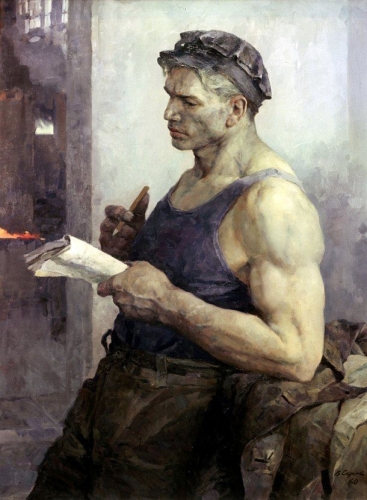
La grande faille de notre époque: le snobisme du diplôme au lieu de la conscience de classe
Eric Feremans
Source: https://www.facebook.com/eric.feremans
Pendant longtemps, la politique a été comprise comme une lutte entre le travail et le capital. Les employés votaient à gauche, les détenteurs de capital à droite. Ce schéma a aujourd’hui fondamentalement évolué. La ligne de fracture centrale dans notre société n’est plus principalement économique, mais socioculturelle: elle se situe entre ceux qui sont hautement qualifiés contre ceux qui sont peu qualifiés.
Ce changement explique pourquoi de vastes segments de la population active aux États-Unis ont massivement soutenu Donald Trump. Non pas parce qu’ils sont soudainement devenus capitalistes, mais parce qu’ils ne se sentent plus représentés par la gauche politique qui, historiquement, défendait leurs intérêts.
La première cause réside dans la réalité économique des dernières décennies. La mondialisation et le changement technologique ont fragilisé le travail industriel. Les usines ont disparu, la sécurité aussi. Mais au lieu de répondre fermement à cette désorganisation, la gauche a été de plus en plus associée à un autre programme: celui des classes moyennes urbaines, des thèmes culturels et de la politique identitaire. Pour de nombreux travailleurs, cela a semblé être une rupture.
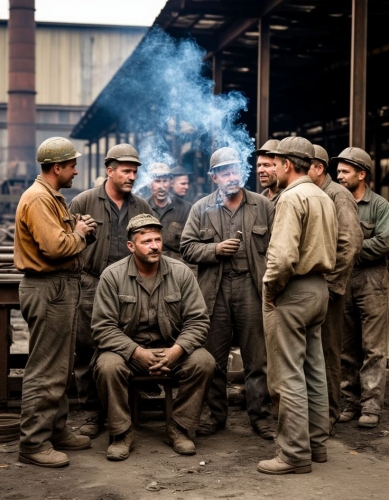
S’ajoute à cela un profond sentiment d’aliénation culturelle. Les milieux hautement qualifiés dominent les universités, les médias et la politique. Leur langue, leurs valeurs et leurs normes deviennent la norme. Ceux qui n’y correspondent pas ne vivent pas cela comme une neutralité, mais comme une exclusion. Ce qui représente une avancée pour un groupe, est vécu par un autre comme une perte de reconnaissance et de respect.
La politique traduit cela par un déplacement des intérêts vers l’identité. La question « que vais-je gagner ? » n’est plus la question centrale, mais « suis-je encore vu ? ». Trump a parfaitement compris ce mécanisme. Son discours ne proposait pas de solutions économiques cohérentes, mais autre chose: la reconnaissance, des images d’ennemis claires, et la promesse de défier les élites. Cela semblait plus convaincant pour beaucoup que des propositions politiques complexes.
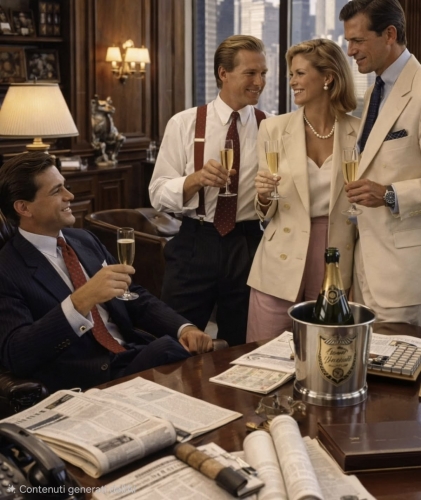
De l’autre côté, se trouvent les hautement qualifiés. Ils profitent en moyenne davantage de l’économie globalisée, travaillent plus souvent dans des secteurs de la connaissance et ont plus confiance dans les institutions. Leurs valeurs sont cosmopolites, leur cadre de référence est international. Ils votent donc plus souvent pour la gauche progressiste ou la droite modérée, et s’opposent à la disruption populiste.
Cette opposition n’est pas un détail, mais le cœur de la politique contemporaine. Le diplôme est devenu une forme d’identité. Il ne détermine pas seulement les chances économiques, mais aussi la vision du monde, les valeurs et les préférences politiques.
La Belgique ne fait pas exception à cette évolution. En Flandre, les groupes moins instruits votent de plus en plus pour des partis qui se positionnent comme anti-establishment et mettent fortement l’accent sur l’immigration et l’identité. Parallèlement, les électeurs hautement qualifiés se tournent vers des partis qui mettent en avant le climat, la coopération internationale et la stabilité institutionnelle.
Pour la gauche traditionnelle, c’est un problème structurel. Elle tente de représenter deux mondes en même temps: d’un côté, la base historique composée d'ouvriers et d’employés, et de l’autre, une nouvelle base urbaine hautement qualifiée. Ces deux groupes ne partagent pas toujours les mêmes priorités. Ce qui est une nécessité morale pour l’un peut être perçu comme une menace par l’autre.
Le résultat est une paralysie politique. La gauche perd en cohérence, tandis que la droite parvient à rassembler diverses frustrations dans une seule narration simple. Ce n’est pas parce que la droite est moins divisée, mais parce qu’elle réagit mieux au sentiment de perte et d’aliénation.
Le véritable défi ne consiste donc pas à répéter les anciens schémas, mais à comprendre cette nouvelle ligne de fracture. Tant que la distinction entre hautement qualifié et peu qualifié sera ignorée, la gauche restera divisée et perdra du terrain. Ceux qui prennent cette réalité au sérieux comprennent que l’avenir de la politique progressiste n’est pas dans plus de discussions internes, mais dans la reconstruction d’un projet sociétal partagé, où reconnaissance, sécurité et solidarité se rejoignent à nouveau.
17:54 Publié dans Actualité, Sociologie | Lien permanent | Commentaires (0) | Tags : actualité, sociologie, populisme, classe moyenne, classe ouvrière, jet set | | del.icio.us | | Digg | Facebook
lundi, 16 mars 2026
La violence économique comme essence de la condition néolibérale
La violence économique comme essence de la condition néolibérale
Diego Fusaro
Source: https://posmodernia.com/la-violencia-economica-como-esenc...
« La violence peut également être une catégorie économique immanente »
(G. Lukács, Ontologie de l'être social)
L'essence de la « condition néolibérale » actuelle réside dans la dynamique de naturalisation et d'absolutisation de l'économie, dans un cadre où le vocabulaire de la rationalité économique devient la seule source capable de donner un sens à l'existence et aux actions. Dans le triomphe de ce que Gramsci, dans ses Cahiers de prison, a appelé le « crétinisme économique » (VII, § 13), l'ordre de l'économie dépolitisée est absolutisé, car tout dépend de lui et lui est subordonné ; et, en même temps, il est naturalisé, selon une subsomption de tous les aspects de la vie humaine sous le paradigme basé sur le discours économique et l'ordre néolibéral, conçu comme naturel et, par conséquent, ni négociable ni transformable.
Délégitimant a priori tout imaginaire alternatif, la pensée néolibérale unique fait valoir un paradigme unique de rationalité, celui de la ratio oeconomica, dans lequel se développent le sens et les limites de toutes les fonctions de l'action et de la pensée. La rationalité économique, selon la syntaxe habermasienne, colonise le monde de la vie et, selon le lexique foucaldien, gouvernementalise biopolitiquement l'existence humaine. Elle porte ainsi à son paroxysme la dynamique d'économisation intégrale du réel et du symbolique.

La condition néolibérale présente un caractère mélancolique, au sens de la souffrance freudienne pour un objet perdu dont on perçoit encore sans cesse la présence persistante sous la forme d'une absence connue. Il s'agit, toujours en termes freudiens, de l'inversion du deuil. Percevant l'objet perdu comme trop proche, le mélancolique ne peut procéder à la symbolisation de la perte: selon les termes de Freud, l'ombre de l'objet ne cesse de peser sur le moi.
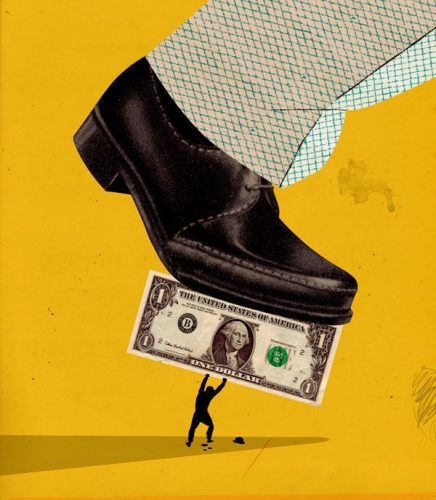
La perte qui rend mélancolique la condition néolibérale est double et concerne l'avenir, en tant que dimension projetée, et la politique, comprise soit comme lieu de conflit, soit comme espace social de discussion rationnelle sur des avenirs alternatifs à convenir collectivement. Le néolibéralisme se présente comme la condition dans laquelle il n'y a plus rien de politique. Il est réduit à une simple continuation de l'économie par d'autres moyens, et l'homme est réduit à n'être qu'un esclave du marché et des multinationales. La dépolitisation de l'économie est le revers de l'économisation de la politique : la gestion technique et administrative froide du social et la gouvernementalisation biopolitique de la vie nue soustraient la décision politique à la communauté souveraine. La ratio oeconomica de la théologie mercantiliste n'admet aucune autre raison, y compris la politique. C'est pourquoi il est aujourd'hui plus nécessaire que jamais de décliner la critique marxienne de l'économie politique sous la forme inédite d'une critique de l'économie dépolitisée.
 Dans ce contexte de dépolitisation de l'économie et d'absolutisation de l'ordo oeconomicus, la violence devient elle aussi une catégorie intrinsèquement économique. En particulier, le fait qu'aujourd'hui, la violence ait pratiquement cessé d'être exercée sous ses formes directes, traditionnelles, par l'intermédiaire de leaders charismatiques et de « l'esthétique de la souffrance » foucaldienne, et qu'elle ait commencé à se déployer sous la forme silencieuse, anonyme et apparemment invisible, de l'économie ou, mieux, de la dictature des marchés transnationaux, qui n'est visible que par ses effets désastreux sur la vie humaine et la planète, renforce l'une des hypothèses idéologiques les plus profondément ancrées dans notre imaginaire: celle selon laquelle, à notre « ère des droits », la violence aurait heureusement disparu, laissant place à la liberté universelle des individus enfin en mesure de s'autodéterminer. Ce grand récit libéral est aussi ancien que De l'esprit de conquête (1814) de Benjamin Constant, avec sa thèse du dépassement de l'impulsion sauvage de la violence guerrière par le calcul civilisé propre à l'ère du commerce et de l'économie.
Qu'il s'agit là d'une présupposition idéologique devient immédiatement évident dès lors que l'on considère une double détermination. D'une part, dans le lexique courant comme dans le discours de la classe intellectuelle, la liberté universelle tant vantée aujourd'hui coïncide toujours avec la liberté d'acquisition et de consommation de marchandises par l'individu solitaire, abstrait, dés-historicisé et dé-socialisé. La liberté est donc idéologiquement dérivée par abstraction de la dynamique du marché et de la circulation multidirectionnelle des marchandises. D'autre part, le système de production perpétue la violence sous des formes économiques, rendant impossible toute liberté autre que celle d'acheter, de consommer et d'exprimer des opinions qui, dans tous les cas, sont sans importance par rapport à la logique de la reproduction systémique.
La non-reconduction des contrats de travail en raison de l'ordo oeconomicus inflexible, ainsi que le relèvement de l'âge de la retraite, les coupes sauvages dans les salaires, les sacrifices des peuples au nom du marché (en 2011, ce fut le tour des Grecs, immolés sur l'autel de Monsieur le Capital), et, plus généralement, l'expropriation forcée de l'avenir en tant que dimension projetée pour la nouvelle « armée industrielle de réserve » marxienne composée de jeunes réduits à l'esclavage (formellement libre) qu'est le travail flexible et précaire ; sont autant de signes qui révèlent sans équivoque, si cela était encore nécessaire, non seulement que la « main invisible » du marché est telle parce qu'elle n'existe pas, mais aussi que l'économie est à la fois politique et violence.
Il convient donc de renoncer à l'idée, typique des « belles âmes » incurables de notre époque, selon laquelle l'économie est en soi neutre et la violence est l'apanage exclusif de la politique: la réalité mondialisée nous montre chaque jour que la violence existe aussi — Lukács docet — en tant que « catégorie économique immanente ». L'hypermnésie spasmodique finit en fait par jouer un rôle apaisant et, en même temps, soporifique, suscitant l'illusion que la violence est un épisode heureusement révolu, qui concerne exclusivement le siècle d'Hitler et des crimes politiques.
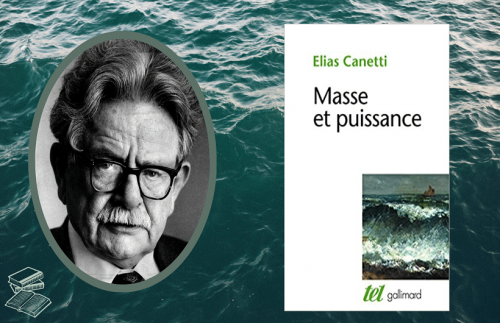
Si par violence nous entendons une force démesurée qui se transforme en pouvoir lorsqu'elle se stabilise dans le temps, comme l'a suggéré Elias Canetti dans Masse et puissance, coïncidant avec la capacité de contraindre les autres à faire ce qu'ils ne feraient pas d'eux-mêmes (ou en les empêchant de faire ce qu'ils feraient d'eux-mêmes), alors le manque de reconnaissance du caractère éminemment économique de la violence et du pouvoir à notre époque revient en force parmi les multiples résultats de l'idéologie. Il est difficile de ne pas percevoir la nature du pouvoir économique – au sens de violence stabilisée dans le temps – qui imprègne aujourd'hui chaque cellule de notre société. Le monopole de la violence légitime organisée, prérogative que Weber attribuait à l'État dans Économie et société, est aujourd'hui passé à l'économie.
Les mesures politico-économiques du néolibéralisme (État minimal, privatisations, précarité, flexibilité, déréglementation, chômage massif, salaires qui ne garantissent plus un revenu décent), c'est-à-dire ces impositions qui, si elles avaient été mises en œuvre toutes en même temps, auraient vraisemblablement déclenché des réponses révolutionnaires, ont été appliquées de manière lente mais implacable. Elles ont toujours été présentées comme le résultat de processus irréversibles en cours, comme des besoins urgents dictés par la crise. C'est ainsi que s'est accompli progressivement, dans un silence général, le massacre du travail et des opprimés par la violence économique. De plus, le mythe de la compétitivité sur lequel repose le libre-échange implique que, pour être compétitif, il faut faire baisser les coûts de production, en réduisant les salaires et les droits sociaux : le capital entre de plus en plus en conflit avec la vie humaine, dont il aspire à s'emparer intégralement.
La rhétorique idéologique répète compulsivement que la violence est une catégorie politique du passé, des totalitarismes heureusement disparus ou, dans le présent, des individus déments; jamais de la société en tant que telle, des normes perverses de l'économie qui sacrifient sans pitié des vies humaines sur son autel. Comparé aux totalitarismes du passé, qui au moins donnaient un visage et un nom à leurs bourreaux, le totalitarisme du marché opère de manière anonyme, caché par le voile invisible des lois silencieuses de l'économie et de son objectivité spectrale. La seule main invisible qui existe aujourd'hui est celle de la violence du fanatisme économique.
La réduction généralisée des dépenses publiques et des services sociaux, la restriction économique obtenue par la simple répartition différenciée des richesses (avec des inégalités de plus en plus scandaleuses) et la soumission d'individus formellement libres et économiquement asservis, répondent parfaitement aux politiques néolibérales et, en même temps, sont toujours imputées aux lois sacrées de l'inévitabilité systémique, selon le théologumène efficace en vogue « le marché l'exige ».
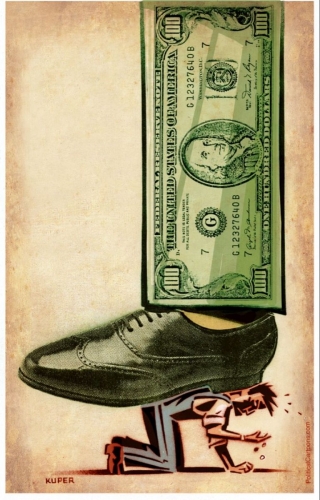
Derrière l'hypocrisie de « l'écran uniforme et perfide de la courtoisie », comme l'appelait Rousseau, la violence exercée par le pouvoir sur les corps et sur la vie nue des individus se présente comme la conséquence naturelle et physiologique de cette restructuration internationalisée des systèmes productifs, commerciaux et financiers qui est pudiquement définie comme la mondialisation et qui, dans ses traits essentiels, est autoritairement gouvernée d'en haut par les politiques néolibérales.
Métaphore absolue de l'ère de la péchéité totale, le « contrat temporaire » incarne de manière stupéfiante le caractère économique de la violence capitaliste galopante dans la « ville par projets » postmoderne, où les existences sont vidées de leur sens dans une logique de précarité et de flexibilité. Le contrat temporaire ne se contente pas d'exproprier les nouvelles générations du futur, les empêchant de planifier librement leur vie et les condamnant à une précarité pathologique qui vide leur existence de tout sens ; avec le contrat temporaire, une forme impitoyable de violence est exercée sur les jeunes, les privant de toute garantie et de tout pouvoir contractuel, les rendant serviles à la volonté du pouvoir et incapables - sous peine de non-renouvellement du contrat - d'opposer la moindre résistance.
De cette manière, toutes les plus grandes conquêtes sociales, celles obtenues de manière hégélienne par le Serviteur sur le champ de la lutte pour la reconnaissance, sont annulées: l'obstacle du licenciement abusif est contourné par la possibilité de ne pas renouveler le contrat à temps partiel. Le salarié se retrouve ainsi dissous dans le précariat, c'est-à-dire dans une exploitation de la main-d'œuvre non contractuelle et mal rémunérée qui combine le classisme capitaliste avec des éléments de dépendance personnelle de type semi-féodal. L'étymologie même du terme, d'ailleurs, est tout sauf neutre: en elle, la dimension théologique propre au capital spéculatif s'entremêle avec celle de la soumission personnelle, co-essentielle au monde féodal historique. En effet, precarius renvoie à prex, la « prière » : il fait allusion à ce qui, obtenu par la supplication, s'exerce parce qu'il est accordé par la tolérance des autres. En tant que tel, est precarius ce dont la durée dépend exclusivement de la volonté de celui qui l'accorde.

Dans ce contexte, l'attitude générale des nouvelles générations est déconcertante. Elles subissent quotidiennement sur leur peau les contradictions obscènes du système de production et, en même temps, les vivent apathiquement comme si elles étaient un destin incontrôlable. La violence qu'elles subissent quotidiennement finit ainsi par ne même plus être perçue comme telle. Les jeunes d'aujourd'hui sont la première génération désintégrée dans la structure et intégrée dans la superstructure (ou, selon le lexique de Gramsci, « dominée » et, en même temps, « subalterne »). Contraints à la précarité et aux contrats les plus mesquins (alors que la classe ouvrière traditionnelle se trouvait dans une situation qui n'avait rien d'un paradis), ils n'opposent aucune résistance à l'ordre établi, l'acceptant sans réfléchir comme un malheur inévitable.
Non seulement les jeunes supportent les contradictions d'un système de travail flexible et précaire méprisable, créé à leur image et à leur ressemblance par le capitalisme spéculatif, la gérontocratie au pouvoir leur fait porter la responsabilité systémique, les présentant comme des paresseux ou des ratés, comme trop « exigeants » (choosy, selon le lexique de l'empire rigoureusement utilisé il n'y a pas si longtemps par le ministre italien du Travail) parce qu'ils recherchent un emploi fixe et stable.
D'autre part, parmi les caractéristiques du paysage social contemporain figure également l'imputation des fautes systémiques aux individus et des fautes individuelles au système : il s'agit d'une stratégie délibérée qui consiste à rejeter hypocritement toute la faute, toujours et exclusivement, sur les damnés de la terre. Selon les mots de Dante (Convivio, I, 3, 4), le malheur qui dépend de la chance ou, plus souvent, des décisions d'autrui, « est souvent injustement imputé à la victime ». Ainsi, comme cela a déjà été dit, les effets atroces du système de production sont imputés aux jeunes et, à leur tour, les décisions politiques néolibérales sont hypocritement présentées comme l'expression inévitable d'une nécessité systémique, déresponsabilisant ainsi les acteurs sociaux.
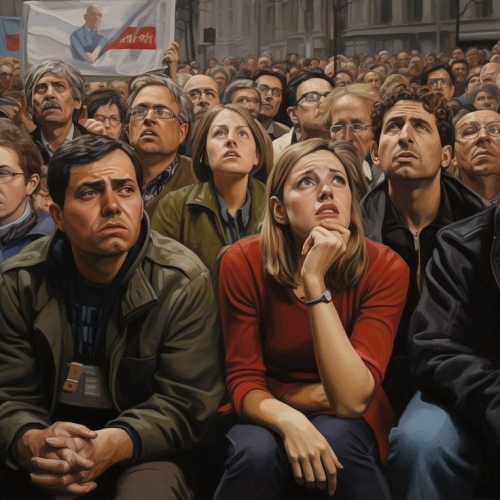
Nous sommes manifestement en présence d'une ingénierie anthropologique qui, en manipulant sans cesse le « parc humain », aspire à priver les jeunes de la stabilité existentielle et professionnelle indispensable pour projeter et construire librement leur avenir. L'éloge omniprésent d'une jeunesse illimitée se révèle, en soi, fonctionnel à la précarisation professionnelle et existentielle. Le jeunisme est, de ce point de vue, l'un des plus grands ennemis des jeunes. D'une part, l'éloge des jeunes est la façade qui cache la gérontocratie rampante de notre société, dans laquelle la jeunesse est constamment louée si elle se prête aux fonctions les plus inutiles et obscènes, tout en étant tenue à l'écart de tout rôle important, tant dans la culture que dans la politique.
D'autre part, si aujourd'hui on est considéré comme « diversement jeune » jusqu'à cinquante ans, c'est parce que l'on est idéalement précaire jusqu'à la fin de sa vie professionnelle (que ce soit dans la vie sociale ou affective), incapable de stabiliser son existence dans les formes traditionnelles familiales (qui ne sont pas par hasard constamment ridiculisées comme des institutions bourgeoises du passé) et professionnelles (emploi fixe et stable, garanti, permettant de planifier l'avenir de manière stable). Le présent entièrement réifié neutralise tout élément résiduel de l'éthique bourgeoise d'inspiration hégélienne et, en même temps, tout désir marxiste d'émancipation par le dépassement de l'état des choses.
La téléologie latente de la logique de précarisation vise à transformer – par le biais de « l'élaboration forcée d'un nouveau type humain », pour reprendre l'expression utilisée par Gramsci à propos de l'américanisme – la précarité en une dimension naturelle, de sorte que tout (du travail à la profession, des relations sentimentales aux relations existentielles) devienne flexible et précaire. Le fondamentalisme économique parvient à obtenir, grâce aux lois anonymes et impersonnelles du marché, ce que les dictatures traditionnelles ne pouvaient obtenir qu'en recourant aux armes et aux chars. Les systèmes dictatoriaux traditionnels, en tout état de cause, finissaient toujours par alimenter des formes de dissidence et d'opposition: ils étaient dangereux et, en même temps, toujours en danger, dans la mesure où l'esthétique des supplices et la violence visible suscitaient l'hostilité sur de multiples fronts.
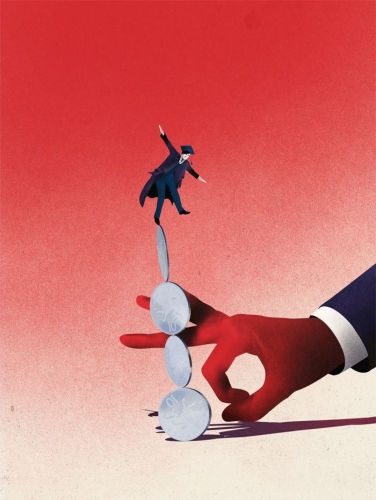
Pour sa part, le totalitarisme de marché, également en raison de son anonymat impersonnel, empêche de manière préventive la constitution d'une désobéissance opérationnelle, car il présente ses propres crimes comme systémiques, nécessaires, inéluctables, dus aux lois sacrées de l'économie fétichisée : comme si, en fait, ils n'étaient concrètement produits par personne et que, par conséquent, personne ne pouvait y remédier.
Et tandis que cette violence indécente, qui ne montre pas son visage, enchaîne les victoires, la scène médiatique et intellectuelle est occupée par les figures des nouveaux Solon qui dénoncent la violence subjective pour accepter sic et simpliciter la violence systémique, condamnant les formes despotiques du passé afin que celles du présent de l'économie et de la circulation des marchandises restent invisibles, pontifiant sur la question morale afin que l'attention ne se concentre plus sur la question sociale. La violence – répète l'idéologie assourdissante qui envahit capillairement le royaume médiatique – est partout sauf dans le monde dont nous sommes les habitants, dominé qu'il est par les divinités olympiques « Liberté, Égalité, Propriété et Bentham ».
Les traces éthiques du processus de production des marchandises finissent souvent dans le sang, de la Chine aux pays dits « en développement », selon cette équation précise entre progrès et subordination au capital qui est inertiellement considérée comme naturelle par la rhétorique dominante. Cependant, au cœur de la société de consommation, les consciences rassasiées et heureuses des consommateurs finaux de marchandises dégoulinant de sang et d'immondices par tous les pores ne veulent rien savoir de tout cela. Hier comme aujourd'hui, le spectacle fantomatique des marchandises assimile et cache simultanément la violence du processus de production, dénonçant comme violente et dictatoriale toute forme sociale et politique qui ne coïncide pas avec celle du fondamentalisme économique. Le scénario mondialisé implique que chaque découverte et chaque processus aient des répercussions mondiales : suivant l'exemple de L'idéologie allemande, la découverte en Angleterre d'une nouvelle machine condamne à la famine d'innombrables travailleurs en Inde et en Chine.
 Cela peut être compris à l'aide de la « Parabole du mandarin » du Père Goriot. Dans l'œuvre de Balzac, l'étudiant Rastignac demande à son ami Bianchon ce qu'il ferait s'il pouvait devenir riche en tuant un vieux mandarin en Chine par la seule force de sa volonté, sans quitter Paris et avec la garantie de l'impunité. C'est l'apologue de la mondialisation, où l'on n'est toutefois même pas conscient du meurtre du mandarin chinois, grâce au fait que l'invisibilité de la violence économique — la main invisible de Smith — est également garantie par son fonctionnement dans les espaces mondiaux et, par conséquent, en produisant des victimes invisibles pour les bourreaux eux-mêmes.
Les licenciements et les réductions salariales, tout comme les vies jetables et le sang des blessés dont sont issues les marchandises dans les coins les plus oubliés de la planète, sont invisibles pour la « question morale », aujourd'hui élevée au rang de non plus ultra d'une critique qui concentre son attention sur le non-respect des règles qui reproduisent la désorganisation organisée du capital. Plutôt que de question morale, il serait alors approprié de parler – en variant la formule de Kierkegaard – de « maladie morale », étant donné le haut degré de compatibilité qu'elle présente avec les circuits mortels de l'économisation du réel et du symbolique.
Le fait que, contrairement à celles provoquées par les totalitarismes du 20ème siècle, les morts causées par les décisions apparemment aseptisées, impersonnelles et invisibles du Fonds monétaire international et par les caprices théologiques du marché ne soient pas visibles ne signifie certainement pas qu'elles n'existent pas. Les relations de classe dans la production n'ont cessé de générer une séquence de connexions aveuglantes, dans lesquelles chaque moment singulier aide l'autre à paraître normal et naturel, physiologique et inscrit dans l'ordre éternel des choses. Depuis son origine génétique, c'est-à-dire depuis sa venue au monde « ruisselant de sang et d'immondices de la tête aux pieds », le capital fait valoir sa tendance à forger à son image et à sa ressemblance des relations de pouvoir qui ne sont pas régies par les liens personnels et politiques traditionnels de seigneurie et de servitude. Ces relations, en vertu de la simple diversification des fonctions économiques des acteurs sociaux, s'articulent sous la forme de nouveaux liens de seigneurie et de servitude, de formes inédites de violence — économique — à tel point efficaces qu'elles n'ont pas besoin de s'afficher de manière flagrante.
Le capital, hier comme aujourd'hui, n'est pas une chose, mais une relation entre des êtres humains médiatisée par des choses. C'est la relation même de la production capitaliste qui établit une soumission des hommes — entre eux et par rapport au produit de leur propre travail — dépourvue de connotations juridiques et politiques, car elle est capable de se reproduire et de se conserver sur la base pure de la contrainte anonyme du mécanisme de production transformé en Absolu immanent. Un capitalisme qui fonctionne à plein régime, tel qu'il se révèle comme « absolu » — dans le double sens de : a) correspondre pleinement à son propre concept ; et b) être libéré de tout lien — n'a potentiellement plus besoin de recourir à la violence sous ses formes traditionnelles issues de l'esthétique des supplices: la violence économique, invisible et infiniment plus efficace que toute autre forme de coercition, lui suffit.
Le paradoxe capitaliste de l'esclavage qui se proclame liberté, de la dictature qui exorcise comme totalitaire toute formation socio-politique différente et du monothéisme du marché qui se fait passer pour un monde laïc où tout brille à la lumière de la raison, atteint des effets pour le moins tragicomiques dans les zones qui, à l'époque du bipolarisme mondial du cuius regio eius oeconomia, étaient sous souveraineté communiste. En effet, la pulvérisation des systèmes socialistes et la disparition de l'alternative possible sous les décombres du Mur (Berlin, 9 novembre 1989) n'ont pas déterminé le triomphe de la liberté pour les millions d'esclaves du despotisme communiste, selon la bonne nouvelle avec laquelle le grand récit néolibéral continue d'embrouiller les esprits. Au contraire, cela a provoqué leur transition, tout sauf indolore, vers les rangs de l'immense armée industrielle de réserve de l'esclavage salarié et du précariat mondial ; c'est-à-dire vers un régime qui se vante d'être le summum de la liberté, mais qui, en termes de caractère despotique, n'a rien à envier au régime soviétique.
D'autre part, dans l'ancienne Union soviétique et ses satellites, finalement devenus « libres », non seulement le fossé entre riches et pauvres a atteint des niveaux jamais vus auparavant, mais les espérances de vie ont également chuté de manière tragique, en raison de l'éclipse des garanties sociales dont le principe de valorisation de la valeur ne peut se charger. Pour les habitants du régime soviétique désormais effondré, au préjudice causé par la misère, l'exploitation et la privation de toute garantie sociale s'est ajoutée la moquerie de voir qualifier joyeusement de « libération » leur passage du despotisme oriental à une nouvelle forme d'esclavage non moins oppressive qui a transformé les hommes en mendiants et en esclaves du salaire, et les femmes en prostituées et en servantes.
La forme primaire de la violence et de l'esclavage, de l'exploitation et de la gestion des corps et des esprits, coïncide aujourd'hui avec le pouvoir purement immanent de l'économie, c'est-à-dire avec cette violence qui, en dissimulant à la fois son propre exercice et l'identité de ses propres artisans, délégitime comme violence toute tentative de lui opposer une résistance.
Le premier geste révolutionnaire consiste toujours à appeler les choses par leur nom et, comme le savait Althusser, à ne pas se raconter d'histoires.
15:19 Publié dans Economie, Philosophie, Sociologie | Lien permanent | Commentaires (0) | Tags : diego fusaro, économie, violence économique, sociologie, philosophie | | del.icio.us | | Digg | Facebook
dimanche, 15 mars 2026
Comment le capitalisme a récupéré la contre-culture

Comment le capitalisme a récupéré la contre-culture
par Bernard Lindekens
Source: Nieuwsbrief Knooppunt Delta, Nr. 208, Maart 2026
Il existe un mythe tenace relatif aux années soixante qui continue à être colporté. De jeunes rebelles — hippies, artistes, étudiants et rêveurs — se seraient dressés contre le capitalisme froid et le conformisme étouffant de leurs parents. Ils incarnaient la liberté, l’authenticité et la révolte. Les entreprises représentaient l’establishment. Le marché était l’ennemi.
 C’est là une bien belle histoire. Mais selon The Conquest of Cool de Thomas Frank, ce n’est pas exact (1). Ou plutôt : ce n’est qu’à moitié vrai. Car que se serait-il passé si la contre-culture n’avait pas sapé le capitalisme, mais l’avait modernisé ? Et si la rébellion n’avait pas été une menace, mais plutôt une ressource?
Frank inverse radicalement le récit classique des Sixties. Il montre comment le monde des affaires n’a pas été vaincu par le mouvement contestataire, mais a, au contraire, adopté son langage, son style et son énergie. Ce qui avait commencé comme une révolte contre la consommation de masse et la bienséance bourgeoise est devenu un nouveau moteur du marketing. La rébellion n’a pas mené à la révolution, mais à la publicité.
Dans les années cinquante, les entreprises se présentaient comme stables, sérieuses et fiables. L’employé idéal était loyal, soigné, obéissant. Le conformisme était une vertu. Mais dans les années soixante, cette image a basculé. Les agences de publicité ne voulaient plus être de ternes institutions. Elles se voyaient comme des pépinières de créativité, pleines d’esprits libres. La publicité ne portait plus sur la fiabilité, mais sur l’identité. Ce n’était plus: "achetez ceci, car c’est bien". Mais: "achetez ceci, car VOUS êtes différent".
L’authenticité est devenue un argument de vente. L’individualisme une caractéristique du produit. Le non-conformisme une stratégie de marque. Les entreprises se sont positionnées comme les alliées de la liberté et de l’expression de soi. Le message était d’une simplicité séduisante: vous êtes unique — et vous pouvez le prouver en achetant cela. L’anti-conformisme est ainsi devenu une nouvelle forme de conformisme.
L’absorption de la contestation
Beaucoup de critiques du capitalisme dans les années soixante ne visaient pas vraiment les structures de propriété ou la dynamique du marché, mais l’ennui, la médiocrité et l’étouffement intellectuel. Le système n’était pas seulement injuste — il était surtout… ennuyeux. Et c’est là qu'on a trouvé la brèche.

Les entreprises n’avaient pas besoin de réprimer la critique. Elles pouvaient l’embrasser. « Nous ne sommes pas ennuyeux », disaient-elles implicitement. « Nous brisons les règles. Nous comprenons les jeunes. » Plutôt que de combattre l’opposition, elles en ont fait un style. La protestation est devenue esthétique. La rébellion, du branding. La contestation, une identité.
Ce que décrit Frank, c’est la naissance du « cool » comme catégorie économique. Le cool n’était plus une énergie culturelle spontanée, mais une stratégie. Il était testé, lancé, positionné, vendu. Le capitalisme n’était plus un bloc de béton rigide, mais un caméléon. Il changeait de couleur dès que la culture évoluait.
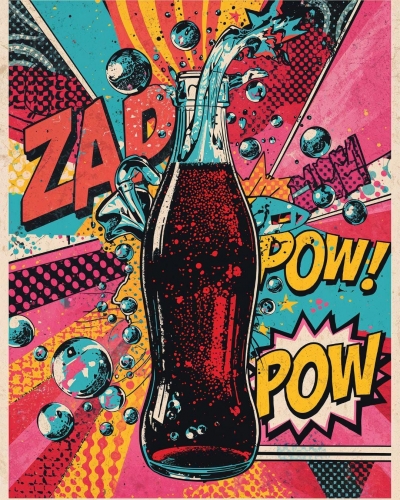
Et ce mécanisme n’a pas disparu. Les grandes marques se présentent aujourd’hui comme rebelles, inclusives, engagées socialement. Elles parlent le langage de l’émancipation et de l’authenticité. L’esthétique de la protestation s’affiche dans leurs campagnes. Pensez à Nike, par exemple. Le capitalisme ne fonctionne pas seulement par l’ordre et la discipline, mais aussi par l’incorporation. Il se nourrit des critiques qu’il absorbe.
The Conquest of Cool n’est donc pas un livre nostalgique des années soixante. C’est une analyse du pouvoir dans les sociétés modernes. Il pose une question dérangeante : si même la rébellion peut être commercialisée, où se situe alors la vraie résistance ?
Un cran plus loin : Heath & Potter
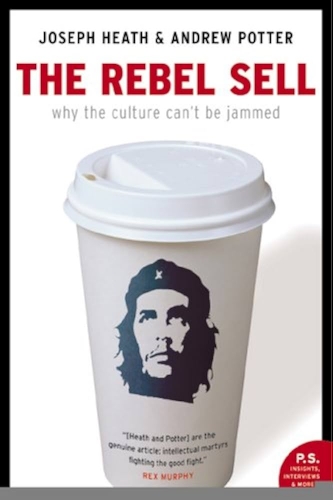 Là où Frank montre que le système absorbe la rébellion, Joseph Heath et Andrew Potter vont plus loin dans The Rebel Sell (2). Leur thèse est encore plus dérangeante : la contre-culture n’a pas seulement été récupérée par le capitalisme — elle en a été, dès le début, un moteur.
D’après Heath et Potter, de nombreux comportements soi-disant « anti-establishment » relèvent moins d'une recherche de la justice que du statut social. Les gens veulent se distinguer de la masse. Ils refusent d’être mainstream. Mais ce désir de distinction crée de nouveaux marchés. Le rebelle n’achète pas une BMW mais un vélo vintage. Pas de fast-food mais de la street food artisanale. Pas de marque de masse mais un label de niche au récit durable. Pourtant, le mécanisme reste identique: la consommation comme déclaration d’identité.
Ils s’appuient sur l’analyse classique de Thorstein Veblen sur le rôle de la consommation ostentatoire, mais l’actualisent pour une époque où l’authenticité elle-même est devenue un symbole de statut. Même l’anti-consumérisme devient un segment de marché. Le minimalisme devient un style de vie. La durabilité une catégorie premium.
Heath et Potter sont critiques envers l’idée que l’on peut combattre « le système » via des choix de mode de vie. Acheter équitable, boycotter les logos ou adopter des marques alternatives donne l’impression d’agir, mais ne change rien ou presque aux règles institutionnelles. Le vrai changement, selon eux, passe par la régulation, les politiques publiques et les décisions collectives — pas par la rébellion esthétique.
Leur analyse est provocante parce qu’elle sape aussi bien la critique culturelle romantique que la rhétorique anticapitaliste simpliste. Ils ne défendent pas un marché débridé, mais des institutions bien régulées. Leur message-clé est aussi limpide que troublant : tant que la résistance s’exprime dans ce que nous achetons, portons ou consommons, elle reste piégée dans la même logique qu’elle prétend combattre.

C’est peut-être là l’idée la plus inquiétante. Le capitalisme n’est pas un bloc de béton qu’on peut renverser. C’est une éponge. Il absorbe la critique, se transforme et revient plus fort. Quand les gens en ont assez du conformisme, il vend de l’individualisme. Quand ils en ont assez de la hiérarchie, il vend de l’autonomie. Quand ils se méfient de l’autorité, il vend de la rébellion.
La contre-culture attaquait le système sur l'ennui et l'étouffement qu'il générait. Le système a répondu: très bien, nous serons créatifs et rebelles. Ainsi, l’opposition culturelle est devenue un moteur du renouveau économique. En résumé: si Thomas Frank dit: «Le capitalisme a conquis le cool», Heath & Potter répondent: «Le cool a toujours fait partie du jeu».
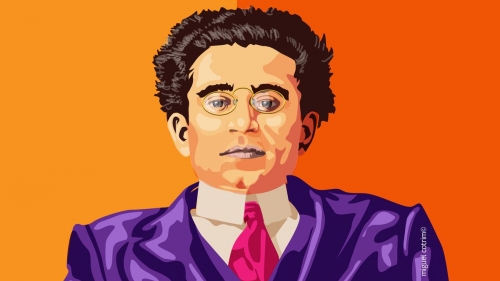
Les deux livres montrent que le pouvoir moderne ne passe pas toujours par la répression, mais par l’incorporation, l’adaptation et le renouvellement esthétique. Cela sonne presque gramscien. Toutefois, la différence intéressante, c’est que le marxiste Antonio Gramsci (1891-1937) pensait surtout en termes de pouvoir politique et idéologique, alors que Thomas Frank, puis Joseph Heath et Andrew Potter, se concentrent sur les mécanismes du marché et sur la culture de consommation. Là où Gramsci parlait d’hégémonie comme d’une lutte d’idées et de visions du monde, ces critiques culturels modernes montrent comment les systèmes commerciaux peuvent traduire la rébellion en branding, en style de vie et en dynamique de statut. La logique est comparable: la résistance n’est pas toujours réprimée, mais souvent recyclée, réécrite et finalement normalisée.
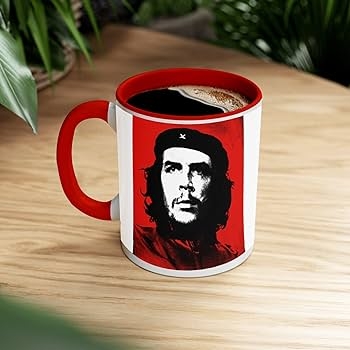
Peut-être que les hipsters d’aujourd’hui, sirotant distraitement leur café latte dans un gobelet à l’effigie du Che Guevara, devraient se demander si leur soi-disant révolution ardente n’a pas déjà été absorbée dans un gobelet biodégradable au lait de soja parfaitement moussé.
Bernard Lindekens
Notes :
(1) Thomas Frank, The Conquest of Cool. Business Culture, Counterculture, and the Rise of Hip Consumerism, University of Chicago Press, Chicago, 1997, 322 pages, ISBN 9780226260129
(2) Joseph Heath & Andrew Potter, The Rebel Sell: How The Counter Culture Became Consumer Culture, Harper Perennial, New York, 2005, 384 pages, ISBN 978-0006394914
18:57 Publié dans Défense, Livre, Livre, Sociologie | Lien permanent | Commentaires (0) | Tags : sociologie, livre, contre-culture, capitalisme, cool, définition | | del.icio.us | | Digg | Facebook
jeudi, 25 décembre 2025
Jacob Savage et la génération perdue

Jacob Savage et la génération perdue
par Joakim Andersen
Source: https://motpol.nu/oskorei/2025/12/21/lastips-jacob-savage...
 La discrimination envers les hommes blancs est devenue systématique au cours des dernières décennies, notamment dans des sphères telles que le monde académique, les médias et le divertissement. Cela a conduit de jeunes hommes blancs à ressentir beaucoup plus de difficultés à faire carrière que leurs frères et pères un peu plus âgés, et cela a également contribué à leur radicalisation, remettant en question la société et l’idéologie qui les ont diabolisés et marginalisés. Ce genre de choses arrive lorsqu’on essaie de faire cuire la grenouille trop rapidement. Quoi qu’il en soit, l’esprit du temps a quelque peu changé depuis la présidence de Trump, et on accepte plus aisément maintenant de parler de cette discrimination. Ce qui était connu depuis des années dans les cercles de droite peut désormais aussi être abordé par des libéraux (de gauche), ce qui constitue en soi un pas positif dans la bonne direction. Un signe en est la large diffusion de l’article de Jacob Savage, The Lost Generation.
Le texte de Savage est bien écrit et approfondi. Il décrit, à l’aide de statistiques et de récits personnels, comment les hommes blancs ont commencé à être discriminés autour de 2014, à la suite de mouvements comme BLM et MeToo, et comment plusieurs institutions d’élite ont collectivement fait tout leur possible pour en embaucher le moins possible.
Savage cite le souvenir d’un recruteur de cette période, qui disait: «Il était évident que nous n’allions pas embaucher la meilleure personne… C’était choquant de parler d’exclure les hommes blancs». Le résultat a été dramatique. Un exemple dans le monde académique est celui de Brown: «Depuis 2022, Brown a recruté quarante-cinq professeurs en tenure-track dans les sciences humaines et sociales. Seuls trois étaient des hommes américains blancs (6,7%)». Savage écrit aussi que, «en 2011, l’année où j’ai déménagé à Los Angeles, les hommes blancs représentaient 48% des scénaristes de télévision de niveau inférieur; en 2024, ils ne représentaient plus que 11,9%. La rédaction de The Atlantic est passée de 53% d’hommes et 89% de blancs en 2013 à 36% d’hommes et 66% de blancs en 2024. La proportion d’hommes blancs est passée de 39% des postes fixes dans les sciences humaines à Harvard en 2014 à 18% en 2023. Rétrospectivement, 2014 a été le tournant, l’année où la DEI est devenue institutionnalisée dans la vie américaine». Les conséquences pour ces hommes blancs millenials qu’il a rencontrés ont été déterminantes: on leur a refusé des missions et des emplois encore et encore, leur indiquant plus ou moins clairement que cela était dû à leur race et à leur genre. Ces hommes ont en outre exigé qu’il ne publie pas leurs noms. Beaucoup d’entre eux sont bloqués dans leur vie, sans possibilité de fonder une famille.
L’article de Savage aborde un aspect important du phénomène, celui qui relève du générationnel. Beaucoup de décideurs clés, professeurs et autres, sont toujours des hommes blancs. Mais ils ont bloqué les opportunités de carrière pour les jeunes hommes blancs, par peur ou par sympathie envers l’esprit woke et ses défenseurs agressifs. Savage évoque aussi le lien entre la politique anti-blanc et l’idéologie anti-blanc («le changement démographique a remodelé non seulement qui énonçaient les narratifs, mais aussi lesquels étaient racontés »). Un journaliste soupçonnait aussi que cette politique contre les blancs contribuait à la dérive à gauche des institutions: les blancs qui y étaient encore se sentaient obligés d’adopter «une sorte de coloration protectrice, une mentalité d’allié» pour survivre. Ce n’est généralement pas suffisant, il faut le souligner. L’article vaut la peine d’être partagé avec des amis libéraux: les statistiques et les interviews sont frappantes et confirment que «au cours des années 2010, presque tous les mécanismes que l’Amérique libérale utilisait pour conférer du prestige ont été réévalués selon des lignes identitaires». Quiconque prend encore au sérieux la rhétorique sur les «privilèges blancs» après avoir lu le texte de Savage ne mérite pas non plus d’être pris au sérieux.
 Cependant, le texte présente aussi des lacunes. La conclusion est accablante : au lieu de légitimer la colère légitime, Savage aurait dû écrire quelque chose comme «la vérité, c’est que je ne suis pas un talent exceptionnel qui a été ignoré ; je suis un talent ordinaire — et en temps ordinaires, cela aurait suffi». Un complément précieux et nécessaire à cet article viral est donc celui de Compact, intitulé Lost Generation, too little, too late, du penseur qui se cahce derrière le pseudonyme de "Bronze Age Pervert" ("BAP"). BAP voit l’article comme globalement positif: il diffuse la connaissance nécessaire parmi les libéraux. Mais il identifie aussi des faiblesses cruciales et un focus erroné. Au lieu de promouvoir un récit de victime, où les hommes blancs ne doivent que prendre leur place parmi les groupes de victimes, BAP veut clairement mettre l'accent sur sur les échecs médiocres de l’establishment. Il écrit que «à mesure que ce récit se répand, cet article sera compris comme une victimisation et une supplication sentimentale, quémandant de la sympathie, plutôt que comme une condamnation juste d'un pouvoir corrompu et maladroit». Il n’a pas tout à fait tort. La discrimination que Savage décrit, et l’esprit qui la pousse et la traverse, sont anti-faustiennes et anti-méritocratiques. Les élites qui ont expulsé des hommes et femmes compétents et créatifs ont pratiquement menée notre civilisation au bord du gouffre. Une question que Savage ne pose pas, et qu’en 2025 il ne peut pas ne pas poser, est la suivante: une méritocratie ininterrompue aurait-elle garanti une surreprésentation des hommes issus de l’Occident faustien? Il s’agit du conflit entre l’Occident faustien et son esprit indo-européen d’un côté, et d’un monstre chimérique issu de l’ancien despotisme oriental de Marx et de la modernité managériale de l’autre. C’est aussi un point abordé par BAP : plutôt que de se lamenter, on pourrait rompre avec ces institutions anti-blanches et, comme Pewdiepie, créer soi-même quelque chose.

BAP remarque aussi que le processus décrit par Savage est bien plus ancien que 2014. les Blancs ont été discriminés dans divers contextes depuis des décennies, pas seulement en tant que groupe blanc. Plus important encore, des types de personnalité rares ont été exclus de l’université, de Hollywood, etc., même avant 2012 (« pas d’emplois pour les freaks, excentriques ou créatifs audacieux à Hollywood avant 2012 »). Le résultat était une culture interne repoussante et une production également repoussante. BAP note: «Je me souviens de l’époque avant 2012, et ce n’était pas beaucoup mieux, surtout dans les domaines qu’il met en avant : journalisme, université, Hollywood ou médias».
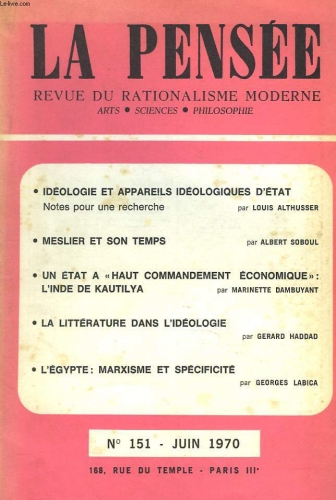
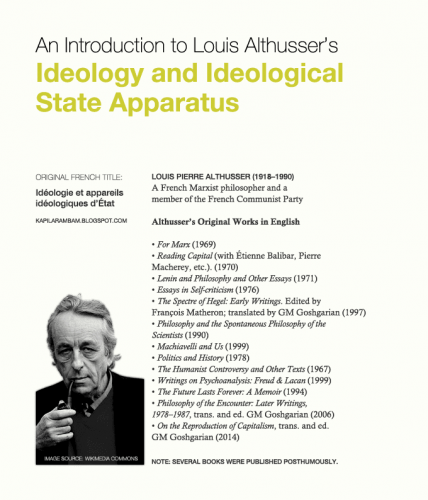
En somme, les articles de Savage et de BAP sont tout à fait dignes d’être lus. Une idéologie et un esprit anti-faustiens ont envahi la plupart des institutions que Althusser qualifiait d’AEI, d'Appareils d’État Idéologiques. Cela a empêché les jeunes hommes blancs d’accéder à des carrières, à l’élite et à la participation à la culture. Les hommes blancs plus âgés ont survécu de justesse tant qu’ils s’adaptaient. Le résultat a été un glissement idéologique clair et un déclin culturel, où Trump peut finalement être considéré comme une réaction. Il s’agit aussi d’une « génération de vengeance », pour reprendre une expression alt-right déjà ancienne. Cette génération s’est en grande partie construite en dehors des institutions, et en a créé de nouvelles. Leur but n’est pas d’être reconnus comme une autre groupe dans la hiérarchie officielle des victimes, mais de la remplacer par d’autres, plus saines.
Liens :
- Jacob Savage – The Lost Generation: https://www.compactmag.com/article/the-lost-generation/
- BAP – Compact « Lost Generation » DEI article: too little, too late: https://www.bronzeagepervert.yoga/p/compact-lost-generation-dei-article
19:17 Publié dans Actualité, Sociologie | Lien permanent | Commentaires (0) | Tags : discrimination, actualité, états-unis, wokisme, sociologie | | del.icio.us | | Digg | Facebook
mardi, 02 décembre 2025
Selon le professeur Garett Jones, la migration de masse modifie fondamentalement les économies et affaiblit les nations innovantes
Selon le professeur Garett Jones, la migration de masse modifie fondamentalement les économies et affaiblit les nations innovantes
Peter W. Logghe
Source: Knooppunt Delta - Nieuwsbrief n°204 - Novembre 2025
J'ai soudainement repensé au professeur Garett Jones en lisant dans Het Laatste Nieuws du 29 octobre 2025 que 6 chômeurs sur 10 en Belgique ont un antécédent migratoire. « Nous sommes les pires de la classe en Europe », titrait le journal. « Si l’on se concentre sur les migrants d'en dehors de l’UE, alors la Belgique est presque toujours la dernière de la classe européenne. Si l’on rassemble tous les migrants hors UE qui sont au chômage, plus de la moitié d’entre eux le sont depuis plus d’un an », expliquait le professeur Stijn Baert.
Ces chiffres confirment-ils les affirmations du professeur Jones ? Qui est Garett Jones ?
Garett Jones est né en 1970 et est économiste à l’Université George Mason (Virginie, États-Unis). Il a acquis une renommée internationale avec son livre Hive Mind: How Your Nation's IQ Matters So Much More Than Your Own.
Ses recherches portent sur la macroéconomie, la politique monétaire, le QI en relation avec la productivité, les cycles économiques à court terme et le développement économique. Il a développé la théorie de la «transplantation culturelle»: selon lui, les peuples migrateurs apportent dans le pays d’accueil les valeurs économiques et institutionnelles de leur pays d’origine — phénomène auquel aucune gouvernance jusqu’à présent n’a prêté attention. Une société qui accueille des flux migratoires massifs (comme l’Europe de l’Ouest) finira par ressembler de plus en plus aux pays d’origine de ces migrants.
Il part d’une idée simple: la richesse économique ne se limite pas au capital ou à la technologie, elle repose avant tout sur des habitudes collectives: épargne, confiance, discipline institutionnelle, intégrité.
Il a étudié la diaspora de nombreux peuples aux États-Unis et a constaté que les enfants et petits-enfants des migrants ont les mêmes réflexes économiques que leurs ancêtres: les Italo-Américains ressemblent aux Italiens, tout comme les Mexicano-Américains ressemblent aux Mexicains. «Les migrants ne s’adaptent pas aux normes économiques du pays d’accueil, mais ils y importent leurs valeurs économiques», explique-t-il.
En d’autres termes: les valeurs économiques et politiques des populations migrantes s’enracinent dans le pays d’accueil et transforment ainsi progressivement la société qui les a accueillis. Par exemple, la diaspora chinoise aux États-Unis a apporté une éthique du travail et des valeurs communautaires stables. Singapour et la Malaisie connaissent également cette influence chinoise.
Jones poursuit en affirmant que les pays innovants, comme les États-Unis, le Japon, la Corée du Sud ou l’Allemagne, représentent un capital civilisationnel fragile. Leur avance technologique et scientifique repose sur des institutions solides et sur une culture qui promeut les efforts et la confiance. Mais, dit le professeur Jones, une migration de masse en provenance de pays où ces valeurs sont très faibles comporte le risque que les pays de destination perdent leurs fondements axiologiques favorisant l’innovation et la stabilité.
C’est une question de survie pour toute civilisation technologique, affirme-t-il: «Si les pays innovants changent de l’intérieur, l’ensemble de l’économie mondiale sera affaibli».
Pour l’économiste, qui plaide fortement en faveur d’une sélection des migrants issus de certains pays, le drame pour l’Europe de l’Ouest réside dans le fait qu’elle a massivement importé des migrants provenant de collectivités où la corruption, la dépendance à l’État et la faiblesse de la confiance sociale sont endémiques. Les gouvernements européens n’ont jamais pris en compte les conséquences à long terme d’une telle politique migratoire.
Le professeur Garett Jones pose une question anthropologique fondamentale: une société peut-elle rester la même si elle change de peuple? L’Europe de l’Ouest constate à son tour les effets d’une mutation culturelle lente mais profonde. Selon Jones, les cultures ne disparaissent pas. Elles se succèdent, se concurrencent, et finissent par redéfinir la société.
La question est de savoir si les gouvernements en Europe de l’Ouest sont encore capables de lire, de comprendre les signes des temps, et de prendre, dans l’intérêt de leur propre population, les mesures nécessaires?
Livres:
Hive Mind: How Your Nation’s IQ Matters So Much More Than your Own (2015)
The Culture Transplan: How Migrants Make the Economics They Move to a Lot Like the Ones They Left (2022)
20:15 Publié dans Actualité, Livre, Livre, Sociologie | Lien permanent | Commentaires (1) | Tags : sociologie, actualité, migrations | | del.icio.us | | Digg | Facebook
dimanche, 23 novembre 2025
La fin des relations amoureuses en Europe occidentale

La fin des relations amoureuses en Europe occidentale
André Waroch
Depuis la disparition des mariages forcés/arrangés, au XXème siècle, nous sommes entrés, concernant la vie amoureuse des hommes et des femmes en Occident, dans ce que Houellebecq a appelé, dans les années 90, l’extension du domaine de la lutte, c’est-à-dire l’extension du libéralisme à tous les domaines de la vie, y compris le sexe et les relations amoureuses, ce que nous appellerons, plus précisément, les relations sexualo-affectives.
Jusqu’aux années 2010, nous étions toujours dans la première version de ce libéralisme, telle que décrite par Houellebecq: l’homme cherchait à avoir une relation sexuelle (ou sexualo-affective) avec une ou plusieurs femmes. La femme se chargeait de choisir entre tous ses prétendants (en général issus de son entourage direct). Nous étions déjà dans l’hypergamie: cette tendance qu’ont les femmes à n’accepter une relation sexualo-affective qu’avec une très petite partie des hommes et à rejeter totalement tous les autres.
C’est une tendance naturelle qu’on peut observer dans son expression la plus pure chez les animaux. Dans un groupe de gorilles, un seul mâle féconde toutes les femelles du groupe. Les autres, à moins d’oser affronter le mâle dominant et le terrasser, n’auront tout simplement aucun rapport sexuel de leur vie.

Chez les paons, il ne s’agit pas pour le mâle d’être le plus fort physiquement, mais d’être jugé par les femelles comme faisant la plus belle roue. Mais le principe est le même, ainsi que le résultat: 70 à 90% des mâles meurent sans jamais avoir réussi à séduire suffisamment une femelle pour s’accoupler avec elle.
Cette hypergamie a une fonction évidente: éviter la détérioration de l’espèce en faisant en sorte que les seuls mâles les plus viables puissent transmettre leurs gènes.
Mais une société humaine ne fonctionne pas exactement comme une société animale. Ainsi cette hypergamie a été corrigée au fil des siècles d’une manière différente par chaque civilisation. L’Occident l’a réprimée avec la plus extrême sévérité: mariage arrangé décidé par les familles, interdiction de l’adultère et de la polygamie (cette dernière n’étant que l’officialisation, la codification et l’aboutissement logique de l’hypergamie) et condamnation morale et sociale du célibat.
Tout cela, nous l’avons dit, a volé en éclats au XXème siècle. C’est maintenant la femme qui choisit librement, mais, jusqu’à une date très récente, elle ne pouvait choisir qu’entre les hommes de son entourage immédiat: amis, collègues d’école ou de travail, etc…

Dans les années 2010, l’avènement du numérique a causé deux révolutions qui se sont nourries l’une de l’autre: le triomphe du féminisme et le triomphe de l’hyper-hypergamie des applications de rencontre.
Le féminisme a convaincu les femmes que les hommes étaient essentiellement des violeurs, des menteurs, des exploiteurs, des harceleurs, des égoïstes, des abrutis et des pervers ; qu’ils opprimaient les femmes depuis des dizaines de milliers d’années et que toutes les mauvaises actions entreprises contre eux ne seraient que revanche légitime. Idéologie illustrée par de nombreux hashtags: #metoo, #balancetonporc, #allmenaretrash, etc. Dans ce contexte il était bien évident que toute tentative de drague dans l’espace public (rue, bar, boite de nuit, école, travail) serait désormais assimilée à un comportement anormal et déviant. Il a donc été intimé aux hommes de ne plus tenter d’approcher les femmes nulle part, sauf dans des lieux payants et prévus plus ou moins à cet effet: bars, boites de nuit, et surtout, bien sur, dans le cadre virtuel et sans risque des applications de rencontre.
Alors que le harcèlement de rue est maintenant à son apogée (les véritables sociopathes n’ont eu que faire de cette campagne d’intimidation, puisqu’ils n’étaient de toute façon pas visés), les hommes normaux qui n’avaient pas encore renoncé à toute vie amoureuse ont fait tout ce que les militantes féministes (soutenues par les autres femmes) leur ont dit de faire: ils se sont inscrits sur les sites de rencontre. Ainsi l’hypergamie a-t-elle pu se déchainer. Au lieu de devoir choisir entre les cents ou deux cents mâles de son entourage, la femme moyenne a pu avoir accès à des dizaines de milliers d’hommes dans toute sa région. Alors que la majorité des hommes avaient déjà beaucoup de mal à trouver une femme, cette difficulté s’est transformée en quasi-impossibilité.

Il ne faut pas chercher plus loin la récente baisse de fréquentation de ces applications, reconnue du bout des lèvres par le Système, qui essaie tant bien que mal d’en camoufler la vraie raison, et d’assurer que « les jeunes » sont partis parce qu’ils préfèrent maintenant faire des rencontres « dans la vraie vie » (comprendre: dépenser de nouveau leur argent dans les boites de nuit et dans les bars.)
En réalité, ce ne sont pas « les jeunes » qui ont fui ces applis. Ce sont les hommes, et ils les ont fuies parce que les femmes ne veulent pas coucher avec eux. Et ils n’ont pas fui pour se remettre à draguer « dans la vraie vie » (ce qu’on leur avait interdit et qu’on leur interdit toujours de faire, ce qui était une des principales raisons pour lesquelles ils s’étaient résignés à le faire sur les applis) ; ils ont tout simplement pris acte de la fin de non-recevoir définitive délivrée par les femmes occidentales et ont cessé avec elles toute tentative d’interaction amoureuse.
D’étranges vidéos circulent, ces derniers temps, principalement sur TikTok, de femmes se plaignant et ne « comprenant pas pourquoi » les hommes ne les draguent plus. Rappelons-le à toute fin utile, ces femmes n’ont aucune intention de coucher avec les hommes à qui il prendrait l’envie de les aborder de nouveau. Elles ne cherchent que la validation qui leur permettra d’acquérir la « confiance en soi » nécessaire pour être candidate au « chad », c’est-à-dire l’homme ultime, musclé, intelligent, beau et riche, qui n’a plus besoin, lui, de « draguer » ; à peine a-t-il à lever le petit doigt.
Cet homme, le « chad », qui représente au maximum 5% des hommes, est, en réalité, le seul bénéficiaire de cette révolution numérique des rapports amoureux. L’engagement monogame qu’attendent de lui les femmes n’a jamais été plus éloigné de ses préoccupations. Lui peut se permettre de choisir parmi le stock illimité de femelles qui se tiennent à sa disposition, et de changer de partenaire au gré de ses caprices.
Deux évolutions qui pourraient paraitre contradictoires à première vue (étude de l’INSERM, voir source): de 2006 à 2023, le nombre de rapports sexuels des femmes a baissé, voire s’est effondré de 28% (contrairement à ce que font croire tous ces youtubeurs se plaignant qu’elles soient devenues d’ignobles dépravées) alors que le nombre de leurs partenaires sexuels, lui, a presque doublé. L’explication est simple: les femmes couchent beaucoup moins, notamment parce qu’elles sont de moins en moins souvent en couple, mais en privilégiant les coups d’un soir avec des « chads » dont elles espèrent qu’un d’entre eux va finir par lui passer la bague au doigt, et qui se contentent en fait de les « faire tourner » entre eux.
Ce triomphe concomitant de l’hyper-hypergamie et du féminisme a, concrètement, donné le résultat suivant : des citadines bardées de diplômes croupissent encore, à quarante ans, célibataires et sans enfants, dans un studio puant la pisse de chats. Quant aux hommes, ils semblent en réalité moins affectés. Ils se sont résignés à l’impossibilité de toute relation sexualo-affective avec une femme occidentale. Une minorité d’entre eux part à l’étranger chercher une épouse. Pour les autres, c’est une vie consacrée au travail, aux loisirs entre hommes, et un recours de plus en plus massif à la prostitution et à la pornographie.
Alors que les femmes postent également des vidéos où elles se plaignent que la vie de célibataire est trop dure à assumer financièrement, les hommes, au contraire, semblent satisfaits du fait que cette même vie de célibataire les rend beaucoup plus autonomes sur le plan économique. L’explication de cette apparente contradiction est simple: les femmes choisissent des métiers très mal payés, rechignent à faire beaucoup d’heures, et ont un mode de vie dispendieux ; les hommes optent pour des métiers plus rentables, et n’hésitent pas à faire des heures supplémentaires pour financer des plaisirs dont ils calculent le coût pour ne pas vivre au-dessus de leurs moyens.
Pour le dire autrement : les femmes sont en train de redécouvrir que le couple était une structure qui permettait à la femme de faire du shopping avec l’argent de l’homme. Et qu’elles ont mis fin elles-mêmes, par bêtise et inconséquence, à leur propre existence de parasite.
André Waroch.
Source (texte à télécharger) :
https://anrs.fr/actualites/actualites/premiers-resultats-...
14:18 Publié dans Actualité, Sociologie | Lien permanent | Commentaires (1) | Tags : actualité, problèmes contemporains, sociologie, sexualité, féminisme | | del.icio.us | | Digg | Facebook
samedi, 11 octobre 2025
Woke, une vendetta contre l’Histoire
Woke, une vendetta contre l’Histoire
par Roberto Pecchioli
Source: https://telegra.ph/Woke-vendetta-contro-la-Storia-10-09
La culture de l’annulation woke, soi-disant « éveillée » (elle aurait mieux fait de continuer à dormir), est une vengeance contre l’histoire, un suprématisme du temps présent. Elle mène une véritable guerre contre le passé. Mots obligatoires, grammaire inventée, statues déboulonnées, nouveaux lieux communs « présentistes » souvent ridicules remplacent les convictions enracinées sur lesquelles des communautés entières se sont fondées. Les livres coupables d’exprimer des idées non conformes à la vulgate contemporaine sont interdits. Des bûchers symboliques en attendant les vrais. Quand ils ne sont pas cachés ou « purgés », les textes jugés politiquement incorrects, les films, les œuvres d’art suspectes exposées dans les musées sont précédés des fameux trigger warnings, des avertissements signalant « la présence de contenus susceptibles de déclencher des émotions négatives, des pensées ou des souvenirs désagréables chez les personnes ayant subi un traumatisme ou particulièrement sensibles à certains thèmes comme la violence, les abus ou la perte. L’objectif est de permettre aux personnes de choisir d’affronter ou non le contenu, en leur offrant une préparation psychologique et la possibilité d’éviter une retraumatisation ». Le nouvel art dégénéré. La définition citée est celle de Google, élaborée par l’Intelligence artificielle. Voilà donc qui sont les véritables mécènes de l’ouragan woke.
En substance, on avertit les lecteurs et les usagers des œuvres et contenus que ceux-ci ne correspondent pas au canon présentiste inversé. Ils appartiennent au passé: ils méritent d’être effacés, ou du moins ridiculisés, soumis à la censure éthique du tribunal de l’Inquisition laïque. Le critère est élémentaire: tout ce qui n’a pas été inventé, produit ou pensé par la génération actuelle est faux, indigne, barbare. Les contemporains se sont « réveillés » et savent avec une certitude infaillible que la vision du monde actuelle est la seule correcte, voire définitive. L’éveil a conféré la conviction apodictique que le passé doit être totalement effacé pour délit de discordance avec l’Aujourd’hui. Vaste entreprise au nom de laquelle l’ensemble de l’héritage historique de la civilisation occidentale s’est transformé en champ de bataille. Le verdict ne prévoit ni absolutions, ni circonstances atténuantes, ni excuses.
Le problème, c’est que si l’on destitue tout passé, il devient impossible de donner un sens à la vie des gens dans le présent. Nous craignons que ce soit là l’objectif, non pas tant des théoriciens woke, parmi lesquels abondent marginaux et sujets borderline, mais de leurs maîtres mondialistes, ceux qui les ont mis en chaire, qui leur ont confié la direction de l’appareil culturel, médiatique, communicationnel dont ils sont propriétaires. En effet, une caractéristique de la culture de l’annulation – oxymore risible puisque la culture est accumulation – est de ne jamais remettre en cause l’ordre économique, social et financier actuel, le globalisme capitaliste, dont elle est soutien et avant-garde. L’ennemi, c’est moi, c’est toi qui lis, c’est le peuple ordinaire, résumé dans la formule méprisante pale, male and stale (pâle (blanc), mâle et rassis (vieux, rétrograde)), étendue à toute l’histoire de la civilisation.
La contestation ne touche pas à la structure concrète du pouvoir, mais réinterprète tout, chaque passé, chaque événement comme une vengeance posthume contre les torts d’hier. Puisque le passé n’existe plus et ne peut être changé, victimes et bourreaux doivent être créés et situés dans le présent. L’idée de sensibilité blessée est un récit artificiel, né parce que quelqu’un a décidé de lui coudre une histoire, attribuant à une chose – une statue de Colomb, une œuvre d’Aristote, certains principes – une signification d’oppression capable de générer le sentiment d’offense, essentiel au mécanisme de l’annulation. L’étape suivante est l’indignation sur commande, puis la sanction, enfin l’interdiction et la damnatio memoriae, la condamnation à l’oubli pour indignité. La première victime est le langage qui interprète la réalité, raison pour laquelle il faut obligatoirement dire « la maire » ou « l’avocate », s’adresser aux « travailleuses et travailleurs », alors que personne n’avait jamais pensé que le genre masculin « étendu » en italien contenait de la discrimination.
La seconde est la liberté de jugement. La volonté de préserver quelqu’un du trouble inclut l’interdiction de l’expression libre au nom d’une abstraction ou d’une simple intention offensive, inexistante dans des œuvres qui utilisaient, comme il se doit, les canons linguistiques, culturels, les connaissances de l’époque où elles furent conçues. La dictature du présent empêche la formation de consciences libres et inhibe l’avenir. Et si les générations décidaient que le critère woke est erroné, voulaient connaître d’autres points de vue ou pressentaient que le canon d’aujourd’hui pourrait être contredit demain ? Quant à l’offense perçue, à effacer ou à punir, elle présente souvent des traits paranoïaques. Comment un vers de Shakespeare pourrait-il offenser ? Si cela arrive, cela signifie que les générations élevées au pain et au woke sont extrêmement fragiles, des flocons de neige hypersensibles, incapables de vivre dans le monde, forcés par de mauvais maîtres à cacher la tête sous le sable, jusqu’à devenir des haineux implacables de quiconque fait éclater la bulle de savon dans laquelle ils sont plongés.
Leur imaginaire, loin d’être décolonisé comme le prétend le récit woke, a été vidé et rempli de concepts entourés d’une aura d’indiscutabilité, des a priori dont la négation déconstruit des esprits fragiles désaccoutumés au raisonnement. Le capitalisme absolu, qui est au pouvoir, rit sous cape, car il a grand besoin de têtes vides, d’autant plus si elles invalident l’histoire, détruisent le passé, corrigent la connaissance. C’est la quintessence de la modernité libérale dont les fautes passées indignent tant l’idéologie woke. La volonté de tout remettre à zéro et de repartir à nu n’est pas nouvelle. C’est l’histoire de la révolution française, du communisme, du maoïsme, des traditions qui imposent même leur propre calendrier. Cela n’a jamais apporté grand-chose de bon, mais l’homme n’apprend jamais de ses erreurs, d’autant plus s’il est programmé pour les ignorer.
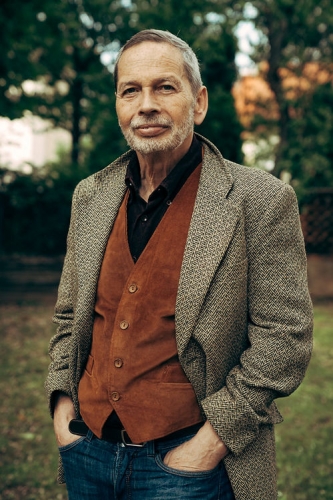
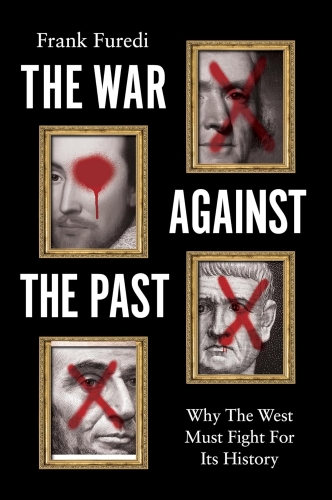
Un livre du Hongrois Frank Furedi, naturalisé américain, La guerre contre le passé, constate la nature iconoclaste, furieuse, de la culture de l’annulation, la rage de ceux qui violentent le passé – par exemple en détruisant une statue présente depuis des siècles – pour se venger du présent et « déshériter l’histoire ». Naïve est la surprise de Furedi lorsqu’il observe que les lubies idéologiques actuelles, incubées dans les années 1960, ont explosé en influence culturelle dans les années 1980, dominées par Ronald Reagan et Margaret Thatcher. Il confond libéralisme/néolibéralisme et conservatisme, deux idéologies divergentes. Les libéraux des années 1980, comme leurs références culturelles et économiques (von Hayek, Friedman, Ayn Rand), avaient essentiellement des préoccupations économiques: ils défendaient la libre entreprise et le dogme de la croissance, la forme du progrès chère à la droite libérale. Leur prétendu conservatisme se limitait à défendre l’ordre patrimonial existant. Margaret Thatcher a affirmé que la société n’existait pas, qu’il n’y avait que des individus. « There is no such thing as society ». Distillat de culture de l’annulation, tout comme l’autre affirmation iconique de la dame anglaise selon laquelle « il n’y a pas d’alternative » à la société de marché, l’acronyme TINA (there is no alternative) invoqué par la pensée libérale.
Ce furent le colonialisme anglo-saxon et français qui ont pratiqué la suppression culturelle – déculturation suivie d’acculturation forcée – à l’encontre des peuples « arriérés », soumis à un énergique lavage de cerveau pour les conduire vers un progrès inévitable, coïncidant avec l’adhésion au modèle libéral-démocratique occidental, arrivé aujourd’hui – selon la vulgate woke – à l’apogée civile et culturelle de l’histoire. Une grave erreur si elle est exprimée par des experts en scénarios géopolitiques comme Francis Fukuyama, dévastatrice si elle devient l’idée unique de générations elles-mêmes déculturées et, de plus, ramollies par la ouate existentielle. Tout à fait trompeuse est la prétention à un jugement moral irrévocable condamnant le passé: racisme contre l’histoire. Une conséquence est l’autosatisfaction aveuglée par la négation d’idées, de principes, de formes de vie différents, incompréhensibles faute de points de comparaison. Le présent devient totem et tabou d’une idéologie semblable à la caverne de Platon, où les ombres remplaçaient la réalité.
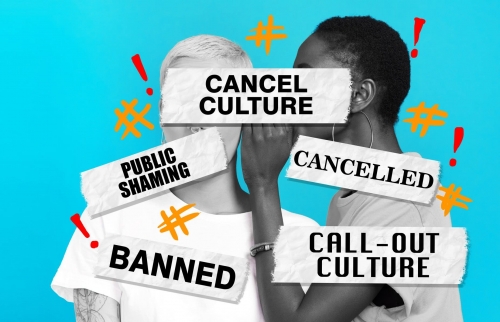
Le passé à effacer est ce qui est donné, le fondement, naturel (la biologie niée) ou culturel, les usages, coutumes, traditions et principes sédimentés au fil du temps. Nous assistons à un phénomène singulier d’inversion: habitudes, normes, institutions sont déclarées obsolètes au nom de la supériorité du présent, c’est-à-dire d’une croyance invérifiable, tandis que ceux qui les défendent – lorsqu’on leur accorde gracieusement la parole – doivent apporter la preuve de la validité de leurs affirmations. Mais comment démontrer la normalité de l’existence de deux sexes, de races différentes, du fait que la grossesse a été attribuée par la nature ou par Dieu à la femelle des mammifères (un terme suspect que nous suggérons aux policiers du langage)? Il n’est pas non plus possible d’apporter une rigueur scientifique à l’usage de certains mots ou à des comportements que le jugement commun a toujours considérés comme normaux (autre terme dont on demande l’abolition).
Nous ne pouvons pas démontrer qu’il est préférable de connaître Dante, Shakespeare, la philosophie et l’histoire, plutôt que de les effacer. Il manque un code commun de compréhension. On pourrait affirmer que la condition préférée des êtres vivants est l’homéostasie – le maintien de conditions stables – mais on resterait dans le champ du réel, vaincu dans l’imaginaire woke (et pas seulement) par la virtualité. Il est vain de rappeler que des théoriciens libéraux, de Stuart Mill à Hayek ou le progressiste Jonas, ont argumenté en faveur de l’importance des coutumes et modes de vie consolidés, mais on ferait alors référence au passé. Personne ne répondrait. Seulement des regards dédaigneux, au mieux la pitié réservée à ceux qui ne sont pas dans l’air du temps.
En suivant Erich Fromm – qui n’était certainement pas un réactionnaire borné – nous affirmons qu’une guerre acharnée de l’avoir contre l’être est en cours, où discréditer le passé sert les intérêts du monde-marché et de son mouvement perpétuel orienté vers le profit. Le symbole universel du présent est l’argent, par nature mobile, sans passé ni avenir. Le présentisme qui efface, engloutit et recrache est l’expression d’un monde dominé par le marché, la consommation, c’est-à-dire l’obsolescence programmée. Et d’une idée de liberté négative, d’émancipation « de ». Liens, idées, identités, héritages ; du passé, le grand ennemi. Nus vers le but, mais le but est la dissolution. Individuelle, communautaire, civique. Au réveil woke succédera la nuit définitive. Il deviendra lui aussi du passé. Ce qu’il adviendra de ce pan du monde, nous le découvrirons en vivant. Ou en mourant.
19:37 Publié dans Actualité, Sociologie | Lien permanent | Commentaires (0) | Tags : actualité, sociologie, woke, cancel culture | | del.icio.us | | Digg | Facebook
dimanche, 05 octobre 2025
L’Occident étouffe la dissidence pour préparer les citoyens à la guerre
L’Occident étouffe la dissidence pour préparer les citoyens à la guerre
Davide Rossi
Source: https://telegra.ph/LOccidente-soffoca-il-dissenso-per-pre...
La situation actuelle a généré les prémisses dramatiques visant à diffuser une culture de guerre, alimentée par des peurs savamment et artificiellement construites, en inventant des ennemis là où il n’y en a pas.
À notre époque, marquée par des oppositions souvent plus verbales et verbeuses que substantielles, mais toujours dichotomiques, ne laissant aucune place au dialogue, à la confrontation, à l’approfondissement, où l’on véhicule des modèles absolus et absolutistes selon lesquels il n’est pas permis de s’aventurer dans la réflexion mais où il s'agit simplement de prendre parti, presque obligatoirement du côté de la pensée dominante, prélude à toute guerre, la dissidence étant devenue inadmissible, répréhensible, erronée et fausse simplement parce qu’elle a été pensée.
Lire la complexité des faits et de la réalité devient ainsi toujours et en tout cas condamnable, car cela impliquerait de démanteler l’architecture de guerre qui s’est construite autour du récit dominant, lequel doit être soutenu à chaque souffle médiatique, imposé avec une violence à la fois subtile et robuste à des citoyennes et citoyens de plus en plus détachés et désorientés face à un monde qu’on leur fait percevoir comme lointain et incompréhensible.
L’acquiescement passif généralisé des anciennes générations, majoritaires en Occident, trouve un triste et tragique équivalent symétrique parmi les jeunes générations, bien que, fort heureusement, de notables et brillantes exceptions existent. Les jeunes, en effet, ont généralement intériorisé la substance de cette induction martelée, pour aboutir à une passivité complaisante tout en se consacrant à des questions éphémères, où le jeu de la dissidence n’est qu’un jeu, où mettre ou non un « like » sur les réseaux sociaux est essentiellement pareil et totalement insignifiant, car toutes ensemble, les nouvelles générations occidentales, et celles qui ont été occidentalisées à travers le monde, ont été convaincues de s’intéresser à des sujets peu significatifs et essentiellement évanescents, pour lesquels le fait de prendre parti devient un masque social pour une représentation sans avenir.
Après avoir été privés de la parole, le système tente de priver également les jeunes générations de toute pensée et, comme le rappelait à juste titre l’écrivain Erri De Luca il y a quelque temps, il ne leur reste plus qu’à écrire sur leur propre corps, en essayant d’y graver ce que l’on suppose indélébile, alors que cela s’effacera avec le temps et le cours de la vie, transformant les tatouages en une éloquence muette d’un corps plus ou moins maladroitement encadré par les époques précédentes, mais incapable, comme celui qui l’habite, de parole.
Écouter sans parler ni répondre et, au final, ne plus parler, enfermés dans une réalité irréellement réelle, virtuellement compensatrice des besoins émotionnels et communautaires qui, en Occident, ont été violemment étouffés pour transformer les femmes et les hommes, et surtout les jeunes, en atomes sociaux inoffensifs et insignifiants, des monades séparées de toutes les autres et toutes ensemble coupées du monde qui les entoure.
Le tout est aggravé par la réduction de l’information et de la connaissance à ce qui peut être simplement et uniquement véhiculé par le smartphone, érigé en source principale, pour beaucoup exclusive, d’interaction avec le monde extérieur, dans un cadre qui confond le haut et le bas, le bon et le mauvais, le vrai et le faux, le tout dans un kaléidoscope où distinguer devient une fatigue supplémentaire et difficile à pratiquer, et où les mille pages des « Frères Karamazov » de Dostoïevski deviennent un sommet inatteignable, même dans le simple résumé wikipédesque. Privés ainsi de savoirs et de beauté, les langages et les pensées s’appauvrissent, brûlent leurs racines, abandonnées, perdues et oubliées, tout comme sont oubliés en même temps les multiples et complexes branches qui tiraient origine, sève et vie de ces racines, donnant feuilles, fruits, fleurs, c’est-à-dire toute la richesse bigarrée des cultures.
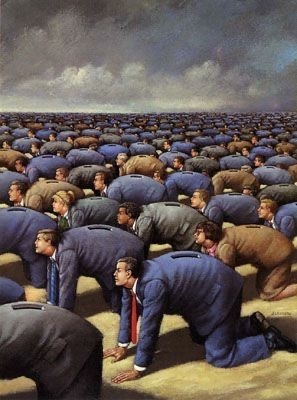
Une communication qui, par ailleurs, se trouve écrasée par des dynamiques de marchandisation et de commercialisation où les valeurs et qualités artistiques et culturelles sont submergées et dévastées par les exigences d’un marché qui engloutit toute dimension et surtout l’imaginaire personnel et collectif, violemment colonisé et poussé vers une homogénéisation dévastatrice, réductrice, avilissante.
Le tragique résultat final est une société appauvrie et appauvrissante, où le réel est transcendé au profit du superficiel, où la complexité est réduite à des jugements banalisés, positifs ou négatifs, dictés par des attitudes superficiellement préconçues, au sein de dichotomies culturelles et politiques où progressisme et conservatisme sont réduits à des postures générales, impalpables et factices, manifestant davantage une gigantesque pauvreté spirituelle qu’une profonde plénitude de contenu.
L’Occident, ainsi privé de son univers culturel et de ses valeurs séculaires, a perdu de vue l’essentiel, pour se réduire à la simple vénération de l’argent, devenu malheureusement et tragiquement l’étalon de toutes les relations, une approche monétariste de la culture et des relations humaines qui a produit une coexistence de plus en plus injuste dans ses dynamiques matérielles et de plus en plus dégradée dans ses dynamiques spirituelles.
Le tout dans une auto-référentialité qui amène les citoyennes et citoyens occidentaux à perdre totalement de vue et à ne pas comprendre les expressions culturelles et les sociétés extra-occidentales, dans lesquelles les relations humaines et la vie quotidienne sont encore rythmées par des temps, des pensées et des modalités étrangères à la marchandisation.
Cette situation a généré les prémisses dramatiques visant à véhiculer une culture de guerre, alimentée par des peurs soigneusement et artificiellement construites, inventant des ennemis là où il n’y en a pas, comme dans le cas de la Russie, construisant des murs qui rendent incompréhensible ce qui est étranger à la petitesse des horizons dans lesquels on nous a enfermés, une cour étouffée par des murs encore plus étouffants et lourds, vendue comme un « jardin fleuri », selon les paroles tragiques de Josep Borrell, ancien Haut représentant de l’Union européenne pour les affaires étrangères, épigone de toutes celles et ceux qui ont pris et continuent à prendre l’Union européenne et l’Occident pour un paradis démocratique, alors qu’il s’agit, à l’évidence, d’un enfer libéral-libéraliste, néolibéral, tandis que ceux qu’ils désignent comme autocraties et dictatures sont des nations où la politique décide de l’économie au bénéfice des citoyens et aussi, justement, des États dans lesquels les femmes et les hommes sont encore loin de la dégradation et de la décadence que nous vivons et traversons dans le Vieux Continent et le reste de l’Occident, des États-Unis à l’Australie. Cet Occident collectif de plus en plus vidé de sens et de signification et, pour cette raison même, privé d’espérance.
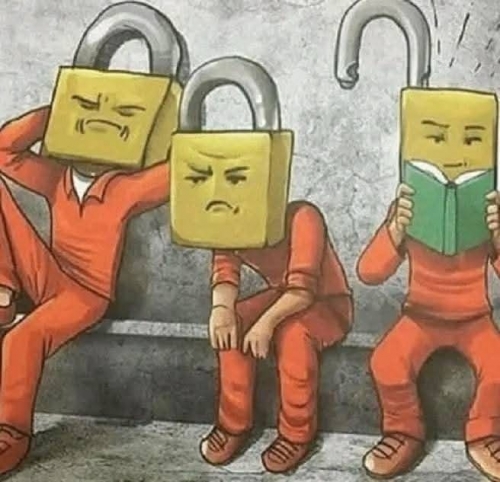
Le déclin de l’Occident n’est pas simplement un déclin matériel et irréversible dû à la fin de la période du pillage des matières premières énergétiques et alimentaires au détriment du Sud global, mais c’est aussi et surtout le crépuscule d’une civilisation qui a renoncé à la confrontation, à la recherche et à l’innovation, et s’est tristement et tragiquement repliée dans une fermeture hautaine face à toute forme d’altérité, par peur de toute confrontation et contamination, montrant ainsi toute la faiblesse d’un temps, le présent, qui a détruit ses propres racines historiques, spirituelles, matérielles pour se réduire à un miroir complaisant de soi-même dans la pauvreté actuelle, image compensatoire, autosuffisante et auto-gratifiante, un selfie dont on ajuste les couleurs et le contraste sans se rendre compte qu’il reste essentiellement une image pauvre, floue et délavée.
Pour toutes ces raisons et bien d’autres, je continue à croire que celles et ceux qui trouveront en eux-mêmes la force de ne pas renoncer, d’étudier, de résister, de lutter — forts de leur histoire, de leur culture, de leur identité, y compris religieuse et politique — non seulement pourront s’améliorer eux-mêmes et améliorer leur entourage, mais surtout indiqueront une voie vers la paix, la coopération et l’amitié entre les peuples à toutes celles et ceux qui, violés et humiliés par la violence du système libéral, ont perdu tout espoir et toute parole et s’abandonnent de plus en plus à la rhétorique belliqueuse de la guerre.
14:53 Publié dans Actualité, Philosophie, Sociologie | Lien permanent | Commentaires (0) | Tags : occident, décadence, sociologie, philosophie | | del.icio.us | | Digg | Facebook
vendredi, 19 septembre 2025
« La Rive Gauche » ésotérique de Georges Bataille et du Collège de Sociologie

« La Rive Gauche » ésotérique de Georges Bataille et du Collège de Sociologie
Cette initiative fut une expérience culturelle dont l’importance est inversement proportionnelle à sa notoriété
par Luca Gallesi
Source: https://www.barbadillo.it/124690-la-rive-gauche-esoterica...
A propos d'Interroger le Sphinx. Histoire du Collège de Sociologie de Renzo Guolo, paru aux éditions Mimesis (Italie)
Vers la fin des années trente, au sein de la librairie parisienne Galeries du Livre, rue Gay-Lussac, plusieurs intellectuels de premier plan, parmi lesquels Georges Bataille, Roger Caillois et Michel Leiris, fondent le Collège de Sociologie : une association qui n’est ni un collège, ni réellement vouée à la sociologie, mais qui voudrait être une société secrète dédiée à l’étude du sacré, à la fonction des mythes et à l’action du pouvoir.
Georges Bataille, déjà reconnu comme écrivain et spécialiste de Nietzsche, considère que l’école sociologique française doit tourner son attention vers les problématiques de l’homme contemporain.
Roger Caillois, proche de René Daumal et de Georges Dumézil, estime vital d’identifier les facteurs capables de restaurer les liens entre les hommes, raison pour laquelle il oriente ses recherches vers le sacré.
Michel Leiris, comme les deux autres figures du surréalisme français, est un ethnologue très critique envers sa propre discipline, qu’il juge incapable de saisir la totalité de l’existence, contrairement à la poésie et à la littérature.

Rapidement tombée dans l’oubli, tant à cause de sa brièveté que de l’avènement de la guerre mondiale, cette initiative fut, en réalité, une expérience culturelle dont l’importance est inversement proportionnelle à sa notoriété, comme le raconte Renzo Guolo dans son essai Interroger la Sphinx. Histoire du Collège de Sociologie (Mimesis, 376 p., 26 €). En explorant les parcours intellectuels, académiques et artistiques des fondateurs, Guolo met en lumière l’absolue singularité d’un groupe ayant courageusement mené une aventure exemplaire dans le monde politique et culturel du 20ème siècle, impliquant de nombreux protagonistes de l’époque.
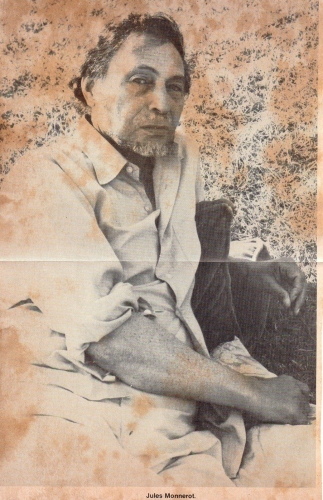
Aux trois noms déjà cités, il faut ajouter, parmi les fondateurs, Jules Monnerot, qui fut en réalité le véritable concepteur de l’initiative et celui qui en a choisi le nom, mais qui ne prit ensuite pas part aux activités ultérieures, sans doute volontairement effacé en raison de son adhésion déclarée au fascisme français, ce qui n’est pas totalement incompréhensible.

Georges Bataille, Roger Caillois et Michel Leiris.
En effet, lorsqu’on évoque des sociétés secrètes – ou même des Ordres monastico-chevaleresques – s’opposant au matérialisme de la société de consommation, la pensée se tourne spontanément vers des mouvements et cénacles d’extrême droite, qui fleurissaient alors à travers l’Europe. Or, ici, nous sommes face à des figures de la culture et de la politique issues presque toutes de la gauche, parfois même de l’extrême gauche, fascinées par l’attrait envoûtant des zones d’ombre du pouvoir. Chez tous, on trouve l’ardent désir d’une « nouvelle aristocratie », fondée sur une grâce mystérieuse, et non sur le travail ou l’argent. Caillois va jusqu’à considérer comme sain « de désirer le pouvoir sur les âmes ou sur les corps, par prestige ou tyrannie », pour forger un nouvel « environnement ». Bataille, quant à lui, affirme que « seuls l’armée et la religion peuvent répondre aux aspirations les plus profondes des hommes ».

Connus pour leur radicalisme anticonformiste, Bataille, Caillois et Leiris partagent une amitié et une affinité spirituelle scellées dans l’expérience artistique et littéraire du surréalisme, ainsi que dans l’aventure politico-ésotérique de revues révolutionnaires telles que Contre-Attaque et Acéphale. L’objectif affiché du Collège de Sociologie est de dépasser l’académisme de la sociologie officielle, « en réglant leurs comptes avec les gardiens académiques de cette science humaine et l’hégémonie qu’ils y exercent », qui se figent dans l’analyse des civilisations passées. Il s’agit d’affronter, au contraire, « des questions brûlantes mais urgentes à comprendre, telles que le fascisme et le communisme, avec leur emprise sur la société, leur caractère d’organisations de mobilisation totale, leur nature à la fois politique et religieuse ».

Au final, l’histoire de ce cénacle d’intellectuels privilégiés s’achève par le retour de tous ses animateurs à la littérature, qu’ils avaient dédaigneusement quittée à la recherche d’un sens à la vie ne pouvant se trouver que dans l’action et la redécouverte du sacré. Leur aventure semble aujourd’hui à des années-lumière des préoccupations de l’intelligentsia actuelle, davantage soucieuse de ses apparitions sur les réseaux sociaux et dans les talk-shows que prête à affronter le scandale et la difficulté d’approfondir les grandes questions de l’existence humaine. Il demeure cependant la consolation de leur exemple et de leurs tentatives, qu’on les partage ou non, de s’engager pour affronter la réalité de leur temps, sans se soucier d’être, ni même de paraître, du côté des justes.
19:48 Publié dans Livre, Livre, Philosophie, Sociologie | Lien permanent | Commentaires (0) | Tags : philosophie, sociologie, livre, surréalisme, collège de sociologie, jules monnerot, georges bataille, michel leiris, roger caillois | | del.icio.us | | Digg | Facebook
vendredi, 18 juillet 2025
Capitalisme sauvage et opinion publique
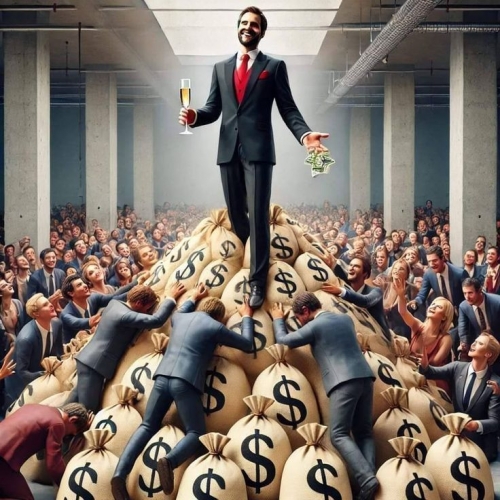
Capitalisme sauvage et opinion publique
Par Ricardo Vicente López
Source: https://noticiasholisticas.com.ar/capitalismo-salvaje-y-o...
Considérations historiques nécessaires
Je commence cette série d'articles par quelques précisions et explications concernant le titre de ma première contribution. Cela m'amène à faire un bref tour d'horizon des concepts qui le composent :
Le capitalisme est un système économique dans lequel les individus et les entreprises possèdent la richesse ou le capital et opèrent essentiellement dans un but de profit individuel. Il se distingue des autres systèmes en ce qu'il privilégie la propriété privée et la concurrence comme moteurs de l'activité économique [1].
Capitalisme sauvage: ce concept est utilisé pour décrire une forme de capitalisme caractérisée par la recherche implacable de la rentabilité à court terme, sans se soucier des conséquences sociales, environnementales ou éthiques de ses actions. Il est considéré comme un modèle égoïste et déloyal, qui conduit à l'exploitation des travailleurs ; la richesse est concentrée entre quelques mains, tandis que la majorité de la population s'appauvrit. Il est justifié par une culture financière qui ignore l'existence de la justice sociale, celle-ci étant niée alors qu'elle est la composante nécessaire d'une communauté saine [2].
Le revenu nécessaire prend des dimensions exceptionnelles dans un dispositif économique qui se concentre uniquement sur les résultats financiers à tout prix, laissant de côté les relations sociales indispensables à la subsistance d'une communauté saine [3].
Un autre modèle de capitalisme, apparu en raison des besoins extrêmes liés à l'état catastrophique laissé par la Seconde Guerre mondiale en Europe occidentale, est celui qui a été expérimenté pendant la reprise de ce sous-continent avec l'adoption de divers modèles de capitalisme, influencés et financés par le plan Marshall :
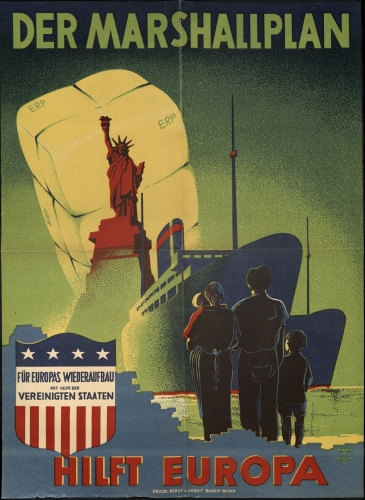
« Le plan Marshall, ou programme de reconstruction européenne (ERP), était un programme d'aide économique et technique lancé par les États-Unis à partir de 1948 pour reconstruire l'Europe occidentale à la fin de la guerre mondiale. Son objectif principal était de revitaliser les économies européennes, afin d'arrêter la propagation du communisme et d'assurer l'influence américaine en Europe ».
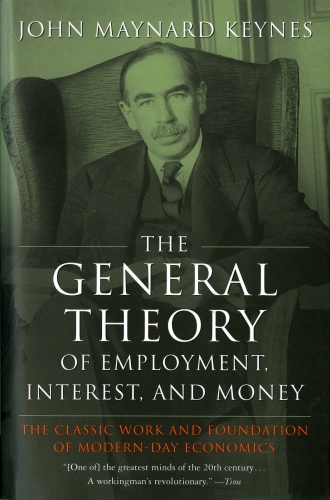
On l'appelait le capitalisme keynésien, qui se caractérisait par la nécessaire intervention de l'État dans l'économie afin de la stabiliser et d'éviter les crises cycliques. Contrairement au capitalisme traditionnel qui favorise la main invisible du marché, le keynésianisme soutient que la demande est le principal moteur de l'économie et que l'État doit agir pour la soutenir.
L'opinion publique est un concept qui fait référence au comportement, réel ou stimulé, d'une société massifiée, modifiant les faits sociaux, politiques ou économiques induits par la propagande sous toutes ses formes. L'orientation du vote, le niveau d'approbation ou les attitudes à l'égard de groupes ou de situations sociales sont également des formes d'opinion publique. Au cours du 20ème siècle, des méthodes de recherche sociologique ont été développées afin de connaître les consensus sociaux largement partagés ou les attitudes de rejet du public à l'égard de certains aspects de la politique gouvernementale.
L'opinion publique n'a pas toujours été écoutée, cela dépend du type de gouvernement qui détient le pouvoir politique à un moment donné: s'il s'agit d'une dictature, elle ne sera jamais prise en compte; en revanche, si nous sommes en démocratie, cela dépend du système dans lequel elle s'inscrit, elle peut présenter une diversité d'attitudes à cet égard.
L'influence de l'opinion publique ne se limite pas à la politique et aux élections. C'est une force puissante dans de nombreux autres domaines, tels que la culture, la mode, la littérature et les arts, la propagande, la consommation, le marketing et les relations publiques. Les méthodes que certains groupes de pouvoir peuvent utiliser pour manipuler une ou plusieurs personnes, ou des groupes, peuvent inclure la séduction, la suggestion, la coercition et le chantage.

La manipulation des médias consiste en une série de techniques interdépendantes par lesquelles les membres d'un groupe donné créent une image ou une idée qui favorise leurs intérêts particuliers.
Parmi ces tactiques, on peut citer les sophismes logiques et la propagande politique, qui impliquent souvent la suppression d'informations ou d'autres points de vue par leur déformation, incitant d'autres personnes ou groupes de personnes à ne plus écouter certains arguments, ou simplement en détournant leur attention vers un autre sujet ou une autre question. La manipulation des médias est utilisée dans les relations publiques, la propagande, le marketing, etc., et bien que l'objectif poursuivi soit différent dans chaque domaine, les techniques utilisées sont souvent très similaires. Ainsi, bon nombre des méthodes modernes de manipulation des médias se concentrent sur des formes de distraction, partant du principe que le public a une capacité d'attention réduite, ce qui peut être une méthode associée au soft power ou au pouvoir intelligent.
Notes:
(1) Consulter Les origines du capitalisme moderne sur www.ricardovicentelopez.com.ar
(2) Je recommande également de voir le film Les Compagnons (1963) – Film complet en espagnol qui montre un tableau social de l'Italie qui subit les effets de la révolution industrielle un siècle plus tard. Il est disponible sur https://www.youtube.com/watch?v=aN15hNJzyko
(3) Vous pouvez consulter Le capitalisme et le bonheur humain sur notre page (réf. supra) – ainsi que Richesse concentrée et pauvreté généralisée – Section Bibliothèque-
14:19 Publié dans Définitions, Sociologie | Lien permanent | Commentaires (0) | Tags : sociologie, opinion publique, définition, capitalisme, capitalisme sauvage | | del.icio.us | | Digg | Facebook
Les opinions des hommes et l'ingénierie sociale
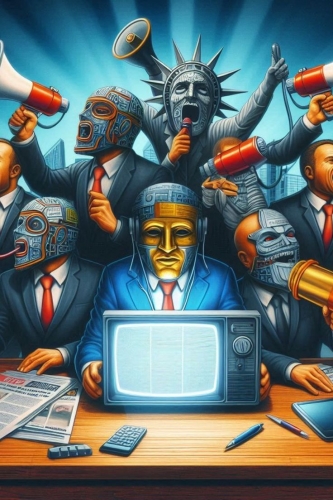
Les opinions des hommes et l'ingénierie sociale
Par Juan Manuel de Prada
Source: https://noticiasholisticas.com.ar/las-opiniones-de-los-ho...
Beaucoup de gens m'écrivent ou me demandent pourquoi j'ai cessé de participer à des émissions de radio ou de télévision. Il s'agit sans aucun doute de personnes naïves qui vivent dans un monde imaginaire. Dans un passage particulièrement abject de son Contrat social, Rousseau fait sans vergogne référence à la nécessité de façonner l'« opinion publique » de manière induite: « La volonté est toujours droite, mais le jugement qui la guide n'est pas toujours éclairé. Il faut lui faire voir les objets tels qu'ils sont. Tous ont également besoin de guides. Il faut obliger les uns à conformer leur volonté à leur raison; il faut enseigner aux autres à reconnaître ce qu'ils veulent ». Et, un peu plus loin, Rousseau étaye cette vision ignominieuse de l'être humain par un aphorisme malveillant: « Corrigez les opinions des hommes et leurs mœurs se purifieront d'elles-mêmes ».
Pour couronner un exercice d'ingénierie sociale visant à changer les mœurs des hommes, en les transformant en un troupeau facilement manipulable, il faut d'abord corriger leurs « opinions ». Et comment « corrige-t-on » les opinions des hommes? Dans les régimes totalitaires d'antan, la formule était très simple: on recourait à la technique du marteau-pilon, qui frappait sans relâche le cerveau des pauvres gens soumis, jusqu'à broyer leur âme: les commissaires politiques répétaient comme des perroquets la doctrine à respecter obligatoirement; la propagande officielle omniprésente se chargeait de la rappeler à chaque instant; et les matraques se chargeaient d'instruire les dissidents. Mais cette méthode, propre aux régimes totalitaires, n'est pas présentable dans les régimes démocratiques, qui proclament une « liberté d'opinion » feinte; et elle n'est pas non plus efficace et opérationnelle, car la doctrine qui s'impose par la violence ou même par la contrainte finit par être détectée même par les personnes les plus lentes d'esprit, qui cherchent à échapper à son influence (car personne n'aime qu'on lui casse les pieds et qu'on lui dise ce qu'il doit penser). Les régimes démocratiques ont donc essayé d'autres systèmes plus sophistiqués pour corriger les opinions des hommes.
Pour cela, il faut créer ce que Marcuse appelait une « dimension unique de pensée » (ndt: une "pensée unidimensionnelle"), en insufflant aux hommes la croyance illusoire qu'ils pensent par eux-mêmes, alors qu'en réalité ils sont dirigés par d'autres. Cette illusion est créée en amenant les individus à « intérioriser » ou à s'approprier une série de paradigmes culturels que le système leur impose, afin de les transformer en êtres passifs, conformistes et grégaires, soumis à des consignes qu'ils confondent avec des expressions émanant de leur volonté (cette volonté que le scélérat de Rousseau considérait toujours comme « droite », même s'il avait besoin de « guides » pour orienter son « jugement »). Afin d'atteindre cette « dimension unique de la pensée » tout en maintenant l'illusion d'une pluralité sacro-sainte, les régimes démocratiques limitent les idées qui peuvent être soumises à la discussion ou à la controverse, en imposant des prémisses fondamentales qui restent tacites ou inexprimées. La parole est donnée à des personnes qui partagent les mêmes prémisses qui, cependant, ne sont jamais énoncées ; et on les fait « débattre » faussement au nom des idéologies en lice, toujours sur des questions mineures (bien que présentées avec une grandiloquence effrayante, pour donner l'impression qu'il s'agit de questions primordiales), avec une ardeur si acharnée et une apparence de désaccord si tapageuse et stridente que les personnes naïves pensent qu'elles défendent des positions contraires (alors qu'en réalité, elles sont d'accord sur l'essentiel). Comme l'a souligné Noam Chomsky, « la manière intelligente de maintenir les gens passifs et obéissants est de limiter strictement l'éventail des opinions acceptables, mais de permettre un débat animé à l'intérieur de cet éventail (voire d'encourager les points de vue critiques et dissidents). Cela donne aux gens l'impression qu'il y a une libre pensée, alors que les présupposés du système sont constamment renforcés par les limites imposées au spectre du débat ».

Toute opinion qui contredit les prémisses fondamentales sur lesquelles repose le système, toute pensée qui dépasse les limites imposées au débat, finit par être réduite au silence. Pendant un certain temps, en participant à ces marécages médiatiques sordides où l'on donne l'apparence d'un débat, j'ai réussi à camoufler mes opinions dissolvantes, celles qui pouvaient miner les idéologies en lice, en faisant preuve de prudence et même de discipline ésotérique. Mais tôt ou tard, ils vous démasquent, découvrent que vous êtes un élément dangereux et vous expulsent. That's all, folks.
13:59 Publié dans Sociologie | Lien permanent | Commentaires (1) | Tags : opinion publique, manipulation médiatiques, sociologie | | del.icio.us | | Digg | Facebook
Max Weber sur les classes et les ordres sociaux
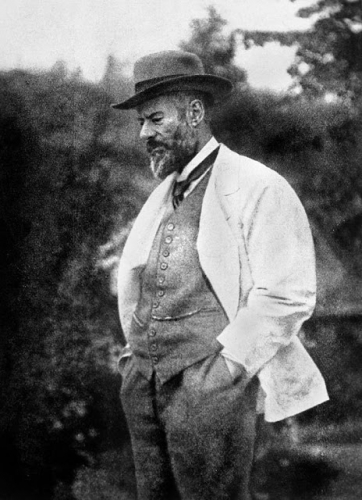
Max Weber sur les classes et les ordres sociaux
par Joakim Andersen
Source: https://motpol.nu/oskorei/2025/07/05/max-weber-om-klasser...
La droite authentique a historiquement cherché des alternatives à la société fondée sur l'individu et les classes, l'une des plus récurrentes de ces alternatives étant une société fondée sur les ordres sociaux (Stände). On en trouve des variantes chez Per Engdahl, Rudolf Kjellén et Othmar Spann.
Dans une certaine mesure, on peut dire que la société d'états (Stände) abolit la société basée sur les classes et peut ainsi être considérée comme « sans classes ». L'approche consiste à identifier les groupes naturels de la société et à leur donner une représentation formelle. Il n'est pas rare qu'ils correspondent plus ou moins aux trois fonctions indo-européennes, avec les exemples familiers où se juxtaposent « noblesse, clergé, bourgeoisie et paysannerie ». Quelle que soit la façon dont on envisage la possibilité de remplacer le parlementarisme basé sur les partis par une représentation corporative, les classes sociales constituent un complément précieux et une correction du concept marxiste de classe. Il existe d'ailleurs depuis au moins un siècle une forte tendance chez les sociologues à transformer cette dernière en quelque chose qui rappelle la première (cf. « habitus » de Bourdieu et « clercs » de Kotkin).
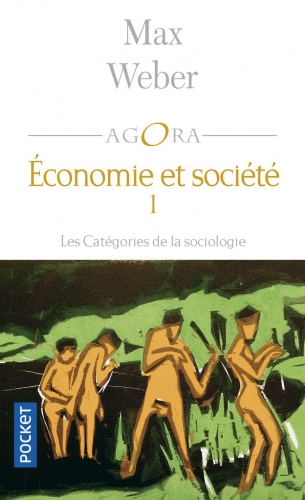 Dans ce contexte, il est intéressant de mentionner le court essai du sociologue et philosophe allemand Max Weber, Class, Status, Party, qui est en fait un chapitre de Economy and Society. Weber y définit les concepts de classe, de statut et de parti, en se basant sur les types idéaux de Gemeinschaft et Gesellschaft. Ce dernier est un couple d'opposés essentiel pour comprendre la pensée allemande, notamment pour ceux qui souhaitent lire Marx en tant que penseur inscrit dans la tradition allemande. Alors que la Gemeinschaft est la forme de société la plus ancienne, car elle est organique et naturelle, la Gesellschaft est une « communauté » artificielle et mécanique. « La Gemeinschaft se caractérise par le fait que les gens sont unis malgré les facteurs qui les séparent, tandis que la Gesellschaft se caractérise par le fait qu'ils sont séparés malgré ce qui les unit », pour citer un texte ancien consacré à Tönnies. Dans une large mesure, Marx et d'autres penseurs allemands sont des bardes qui chantent le chant du cygne de la Gemeinschaft lorsqu'elle est remplacée par la Gesellschaft sous la forme du marché et de la bureaucratie. Conformément à la dialectique germanique, ils pressentent également un avenir où la Gemeinschaft reviendra mais, cette fois, à un niveau supérieur.
Une idée intéressante de Weber est que la société de classes présuppose la Gemeinschaft. Il a écrit à ce sujet que « l'existence d'une entreprise capitaliste nécessite une action communautaire très spécifique de la part de la Gemeinschaft qui protège la possession des biens, et en particulier le libre pouvoir des individus de disposer des moyens de production ».
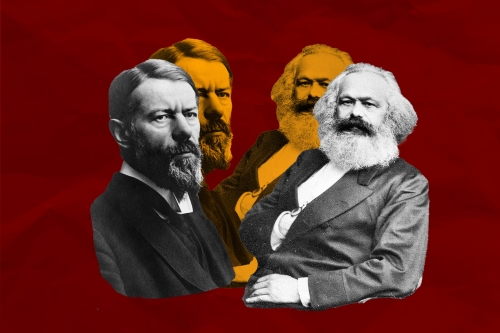
Sans une communauté qui a choisi de protéger le droit de propriété, celui-ci n'existe pas. Cela peut être interprété comme signifiant que la propriété privée est liée à la propriété populaire du pays, ce qui ne conduit pas nécessairement au communisme à grande échelle. Weber se rapprochait de Marx lorsqu'il définissait le concept de classe, une relation fondamentalement objective liée à la propriété et à la non-propriété (« la propriété et les biens » et « l'absence de propriété ou de biens » sont donc les catégories de base de toutes les situations de classe). La définition de Weber est même plus restrictive que celle de Marx, car il ne considérait pas, par exemple, les esclaves de l'Antiquité comme une classe et voyait les conflits antiques plus souvent comme des guerres entre ordres sociaux que comme des guerres entre classes. Pour citer Weber :
Nous pouvons également parler de « classe » 1) lorsqu'un grand nombre de personnes ont en commun un élément causal spécifique leur offrant des chances dans la vie, 2) lorsque cet élément causal est représenté exclusivement par des intérêts économiques liés à la possession de biens et aux possibilités de revenus, et 3) lorsque l'élément causal est représenté dans les conditions des marchés des marchandises ou du travail (« situations de classe » 4).
Weber se distinguait également de Marx dans son analyse de ce que cela signifiait concrètement. Alors que Marx considérait la lutte des classes comme la stratégie rationnelle pour les non-propriétaires, la théorie du jeu de Weber était moins figée. La recherche de la réussite personnelle ou, d'ailleurs, la passivité peuvent également être des stratégies tout à fait rationnelles. Ce que Weber appelait « action de classe », comparable à la « lutte des classes » marxiste, est l'une des nombreuses stratégies possibles et suppose, entre autres, que la classe partage des normes (à l'instar des classes sociales et de la Gemeinschaft). Nous notons ici en passant pourquoi l'immigration de masse est une arme si efficace dans la lutte des classes : elle brise la Gemeinschaft historique qu'est la classe ouvrière européenne. Weber l'a exprimé en ces termes : « cette action de masse est fondée sur l'opinion dominante du groupe. Ce fait est à la fois simple et important pour comprendre les événements historiques ». Marx parlait dans ce contexte de conscience de classe plutôt que de Gemeinschaft, et de l'évolution de la classe en soi à la classe pour soi, mais il s'agit de processus similaires.
 Par rapport aux classes, qui peuvent être définies objectivement par la situation du marché, les états/Stände sont plus amorphes. Au lieu de l'économie, ils ont trait au statut ou à l'honneur. Les Stände sont des communautés, Weber écrivait que « contrairement aux classes, les états/Stände sont normalement des Gemeinschaften, des communautés. Cependant, ils sont souvent de nature amorphe. Contrairement à la « situation de classe », qui est purement déterminée par l'économie, nous voulons caractériser la situation des classes comme résultant d'une partie intégrante typique de la vie, dans laquelle le destin des hommes dépend d'une évaluation sociale positive ou négative spécifique de l'honneur ». Elles sont exclusives et formulent certaines exigences pour qu'on en devienne membre. Par exemple, on ne peut pas vivre n'importe comment et être un citoyen lambda, ou d'ailleurs un fonctionnaire, un criminel ou un aristocrate. Weber a notamment utilisé ici l'exemple de la noblesse: « La fonction sociale (de la noblesse) fonctionne de manière très exclusive et repose sur une sélection d'individus qui sont personnellement qualifiés pour en être membres (par exemple, la chevalerie), en fonction de leurs aptitudes martiales, physiques et psychologiques ». Comme on peut le constater, nous ne sommes pas très loin ici des biotypes et des classes. Weber a également décrit comment certains groupes ethniques sont devenus dans la pratique des sortes de classes, parmi lesquels les Juifs et les Roms, qui sont des « communautés qui ont acquis des traditions professionnelles spécifiques dans des métiers particuliers ou d'autres arts, et qui favorisent la croyance en une identité ethnique qui sous-tend leur communauté ».
Il est intéressant de noter qu'il considérait les classes comme un frein à l'évolution vers la Gesellschaft. Il a notamment écrit que « l'existence des classes sociales empêche la réalisation conséquente du principe du marché nu ». La situation normale était une société composée de plusieurs classes sociales, chacune ayant ses propres exigences sur la manière dont ses membres devaient vivre pour ne pas être déshonorés. « Les époques et les pays dans lesquels la situation de classe nue revêt une importance prédominante sont généralement les périodes de transformations technologiques et économiques ; alors que tout ralentissement d'un processus de changement économique à court terme conduit au réveil de la culture des classes. En conséquence, l'importance de l'« honneur » social est rétablie ».
 Dans l'ensemble, le bref raisonnement de Weber sur les classes et les castes est enrichissant. Des définitions et des idées pertinentes telles que « les gens ne recherchent toutefois pas le pouvoir uniquement pour s'enrichir économiquement. Le pouvoir, y compris le pouvoir économique, peut être apprécié « pour lui-même » apparait à plusieurs reprises dans son écrit. Le texte de Weber devrait également servir d'avertissement à un mouvement ouvrier qui souhaite également mener une politique d'immigration massive, car les classes ouvrières réellement existantes en Occident étaient également des Stände et l'immigration massive les a considérablement affaiblies. D'un point de vue abstrait, les travailleurs suédois et divers travailleurs non suédois appartiennent à la même « classe », mais dans la pratique, ils constituent d'innombrables classes sociales.
Mais Weber, en collaboration avec Burnham, nous rappelle également que le « mouvement ouvrier » n'a peut-être pas été mené par les « ouvriers » dans un passé récent, mais par des classes sociales complètement différentes, avec d'autres systèmes d'honneur internes (comparez le politiquement correct et l'engouement « woke » comme cultures de classe pour les cadres et les universitaires, avec le lien vers le « ralentissement d'un processus de changement économique »). Il est particulièrement intéressant de lire Weber à la lumière des analyses sociales réalisées récemment par Curtis Yarvin et Joel Kotkin sur les groupes de l'Occident contemporain, avec des noms tels que clercs, paysans, serfs et oligarques, ou vaishyas, brahmanes, dalits et hilotes. Le terme « classes sociales » aurait en fait été plus approprié que « castes » pour désigner ces derniers, même si le modèle ingénieux de Yarvin aurait alors probablement eu moins d'impact dans les milieux anglophones.
12:44 Publié dans Sociologie, Théorie politique | Lien permanent | Commentaires (0) | Tags : sociologie, théorie politique, politologie, sciences politique, philosophie politique, max weber, karl marx, communauté, sociétés, classes sociales | | del.icio.us | | Digg | Facebook
jeudi, 17 juillet 2025
Igor Chafarevitch et le phénomène ethnomasochiste
Igor Chafarevitch et le phénomène ethnomasochiste
par Joakim Andersen
Il y a eu plusieurs « gauches »: l'objectif de la gauche ouvrière primitive était par exemple de reproduire la Commune de Paris, tandis que la gauche dominée par les cadres visait plutôt un État thérapeutique avec le même encadrement aux commandes. Il est intéressant d'essayer d'identifier d'éventuels traits communs, une éventuelle essence historique, ainsi que la mesure dans laquelle nous avons affaire à une expression de la révolte récurrente contre l'ordre olympique qu'Evola associait à Typhon, ou si nous avons plutôt affaire à la théorie de Douguine selon laquelle la classe ouvrière est principalement une paysannerie urbanisée.
Quoi qu'il en soit, la gauche contemporaine au sens large est un phénomène intéressant. Elle présente des traits de type biologique ou de personnalité (cf. le ressentiment chez Nietzsche), des traits d'intérêts de classe (cf. la révolution managériale selon Burnham) et des traits idéologiques (cf. l'analyse de l'égalitarisme par la "nouvelle droite").
Une contribution intéressante dans ce contexte est celle d'Igor Shafarevich (1923-2017) (*), éminent mathématicien et dissident chrétien qui a notamment influencé Soljenitsyne. Dans The Socialist Phenomenon, publié en 1975, Shafarevich décrit plusieurs socialismes historiques. Même pour les lecteurs de gauche, cet ouvrage constitue une présentation enrichissante où l'auteur explicite de nombreux exemples bien connus tels que Platon, les millénaristes médiévaux, Thomas Müntzer, Campanella et Fourier, ainsi que des personnages moins connus tels que Denis Vairasse et Restif de la Bretonne. Shafarevich a ensuite tenté d'identifier les traits récurrents communs aux différents socialismes. Il estimait que ces principes étaient « l'abolition de la propriété privée, l'abolition de la famille, l'abolition de la religion, l'égalité, l'abolition des hiérarchies dans la société ». Au moins trois d'entre eux sont l'expression d'un principe, celui de la suppression de l'individualité.
 Shafarevich est revenu sur l'analyse et les mises en garde de Wittfogel concernant le despotisme asiatique et a notamment cité Heichelheim: « pour les chercheurs qui ont étudié cette évolution en détail, ce n'est un secret pour personne que l'économie planifiée et le collectivisme de notre ère moderne des machines sont revenus inconsciemment aux conditions orientales anciennes partout où nous essayons d'abolir ou de modifier les formes individualistes et libertaires de société qui ont caractérisé l'âge du fer des trois derniers millénaires glorieux... les liens spirituels que le 19ème siècle entretenait avec... Israël, la Grèce et Rome sont plus souvent remplacés, dans une plus grande mesure que nous ne le pensons, par un retour aux fondements orientaux anciens». Il a également évoqué le profil psychologique unique que les socialismes exigent de leurs partisans, et a identifié le nihilisme et la pulsion de mort derrière ce phénomène. Il a notamment retrouvé ce nihilisme dans la correspondance assez peu connue de Marx et Engels, où débordaient la haine et le mépris envers tout, depuis leurs propres parents et camarades de parti jusqu'au prolétariat et à l'humanité tout entière. « Rien à faire avec ma vieille femme tant que je ne suis pas assis sur son cou », pour citer le jeune Marx. Plus tard, ils ont tous deux qualifié Heine de « chien » et Liebknecht de « chose ». Shafarevich estimait que ces passages révélaient un nihilisme profond, tout comme ceux dans lesquels divers socialistes écrivaient sur la destruction future de l'humanité (parfois avec des connotations religieuses, parfois avec des connotations matérialistes).
L'anti-peuple
De toute évidence, à chaque tournant critique de la vie d'un peuple, apparaît le même type de « petit peuple » dont les convictions fondamentales sont OPPOSÉES à la vision du monde du reste du peuple.
– Shafarevich
Les citations peu sympathiques tirées de cette correspondance sont sans doute nouvelles pour de nombreux spécialistes de Marx, y compris moi-même, mais pour le reste, The Socialist Phenomenon ne contient peut-être pas de grandes surprises. L'accusation selon laquelle le socialisme veut abolir l'individualité n'est pas nouvelle. L'article de Shafarevich intitulé Russophobia, publié en 1982, est plus original. Il y identifie une tendance, chez les émigrés et les intellectuels, à dépeindre l'histoire et la culture russes sous un jour très sombre (« une mentalité servile, un manque d'estime de soi, une intolérance envers les opinions étrangères et un mélange servile de malveillance, d'envie et d'admiration envers les puissances étrangères »). « Ils ont l'esclavage dans le sang », disait un représentant de cette tendance à propos du peuple russe. Dans le même temps, ces intellectuels étaient assez peu intéressés par les intérêts et les préoccupations de la majorité des Russes. Shafarevich écrivait ici que « dans le domaine de la nationalité, le sort des Tatars de Crimée attire beaucoup plus l'attention que celui des Ukrainiens, et le sort des Ukrainiens — plus que celui des Russes ». Il existe une parenté évidente avec l'attitude actuelle de l'établissement suédois envers la majorité suédoise, ainsi qu'avec le complexe politico-émotionnel que Guillaume Faye a baptisé «ethnomasochisme».
Shafarevich a identifié des tendances similaires au cours de plusieurs phases historiques et dans plusieurs pays. Dans certains cercles allemands au 19ème siècle, par exemple, les sympathies allaient à la France, « le terme « antipatriotisme pro-français » était en vogue. On espérait que les Français occuperaient à nouveau l'Allemagne et lui apporteraient la liberté. Ces cercles sont apparus dès la Révolution française.
 Shafarevich s'est largement inspiré de l'historien français Augustin Cochin (1876-1916), qui parlait d'une certaine couche sociale ou spirituelle qu'il appelait le « petit peuple ». Il s'agissait d'un cercle ou d'un groupe de personnes vivant dans leur propre monde intellectuel et spirituel, qui étaient en grande partie à l'origine de la révolution, car « le petit peuple » a eu pendant quelques années le pouvoir sur « le grand peuple ». Berdiaev les décrivait comme « un groupe étrange de personnes, étrangères aux couches organiques de la société russe ».
Le point de vue de Cochin et de Shafarevich offre une perspective intéressante sur un aspect de la « gauche » contemporaine, à savoir qu'elle est souvent devenue « le petit peuple », aliéné du peuple parmi lequel il est contraint de vivre. Son monde intellectuel et spirituel propre est transmis notamment par certains milieux universitaires, sur les réseaux sociaux et autres. Il existe des biotypes spécifiques qui sont plus attirés par ce monde que d'autres, comparables aux « mutants malveillants » d'Edward Dutton, qui ont également des liens avec certaines couches sociales, comparables à celles de Burnham et Samuel Francis. Mais c'est aussi un environnement, une mentalité et une vision du « Grand Peuple » à part entière, où les individus peuvent se retrouver indépendamment de leur biotype et de leur appartenance sociale.
Shafarevich a été accusé d'antisémitisme lorsqu'il a affirmé que les liens entre la communauté juive russe et le « petit peuple » étaient forts dans la Russie des années 1980: « Les sentiments nationaux juifs sont l'une des principales forces qui motivent actuellement le « petit peuple ». Il a toutefois noté que cela n'avait pas été le cas pendant la Révolution française et que cette mentalité n'était pas directement liée à un groupe social ou national particulier. Dostoïevski avait prédit cette mentalité sécessionniste du "petit peuple" en ces termes: «Quiconque maudit son passé est déjà des nôtres — telle est notre formule!». Il n'est pas nécessaire d'être juif pour se sentir étranger à la population majoritaire. Les termes de Cochin constituent une contribution précieuse à la compréhension des raisons pour lesquelles certains individus et certaines couches sociales se retournent contre leur propre groupe et de la manière dont le phénomène ethnomasochiste apparaît.
Il existe également des aspects psychologiques, mieux décrits par D.H. Lawrence, ainsi que des aspects liés à la lutte des classes, où Marx et Francis sont utiles, mais la description de Cochin du « petit peuple » peut être une révélation enrichissante. Le phénomène « woke » était à bien des égards l'expression du besoin changeant mais récurrent des ressortissants du « petit peuple » de se distancier du « grand peuple ».
Note:
(*) Nous avons maintenu dans l'article la graphie anglaise du patronyme de Chafarevitch, ce qui permettra à nos lecteurs de mieux retrouver ses ouvrages scientifiques, politiques et historiques sur la grande toile car l'anglais est la seule langue en laquelle ses oeuvres ont été amplement traduites.
18:10 Publié dans Sociologie | Lien permanent | Commentaires (0) | Tags : igor chafarevitch, petit peuple, sociologie | | del.icio.us | | Digg | Facebook
mardi, 18 mars 2025
«Le secret et les sociétés secrètes» de Georg Simmel et la lutte pour le pouvoir
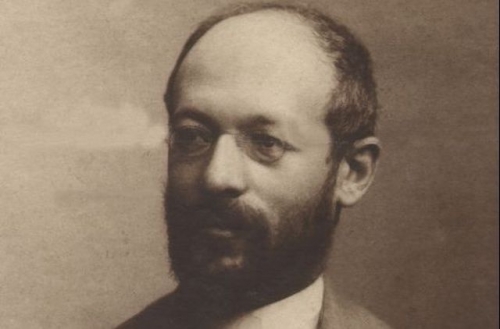
«Le secret et les sociétés secrètes» de Georg Simmel et la lutte pour le pouvoir
L'essai du sociologue allemand sur les dynamiques complexes de l'ésotérisme, publié par Aragno dans une nouvelle traduction italienne
par Lello Sciannimanico
Source: https://www.barbadillo.it/119816-il-segreto-e-le-societa-...
 Dans Le secret et les sociétés secrètes, Georg Simmel aborde le concept de « secret » d’un point de vue sociologique et philosophique, explorant sa pertinence dans les dynamiques sociales et les structures de pouvoir. L’auteur, l'un des penseurs les plus influents de la sociologie, ne se contente pas de traiter le secret comme un phénomène exclusivement privé ou psychologique, mais l’examine comme un élément fondamental des liens sociaux, de la construction de l’identité et des hiérarchies de pouvoir.
Le texte est structuré en deux parties principales: la première se concentre sur l’analyse du secret en soi, explorant sa nature psychologique et sociale. Simmel en souligne la fonction ambivalente, capable de renforcer les liens de confiance entre ceux qui le partagent, mais aussi génératrice de suspicions et de divisions, créant une frontière subtile entre l'inclus et l'exclus. Le secret, dans cette vision, n'est pas seulement un moyen de protection, mais aussi une manière dont la société se structure, excluant et protégeant simultanément. La seconde partie du livre traite de manière incisive des « sociétés secrètes », ces groupes qui reposent sur des connaissances exclusives, réservées à quelques initiés. Simmel explore le rôle de ces organisations dans le maintien des structures de pouvoir, la création de solidarité entre les membres et l'attrait qu’elles suscitent à travers le mystère et la confidentialité. Les sociétés secrètes deviennent ainsi une lentille privilégiée à travers laquelle observer les dynamiques de pouvoir et d’appartenance qui traversent la société dans son ensemble.
Particulièrement fascinante est l'approche de Simmel concernant la relation entre visibilité et invisibilité, public et privé. Le secret, bien qu'il reste caché, exerce une influence continue sur les structures visibles de la société, créant des espaces de pouvoir, de contrôle et de résistance. Cette dialectique entre ce qui est connu et ce qui est occulté traverse toute la réflexion de l’auteur, faisant de l'œuvre une clé de lecture importante des sociétés contemporaines, tant dans la sphère politique que dans les relations intimes.
Le langage de Simmel, bien que philosophiquement dense, est extrêmement raffiné et incisif, et la traduction restitue fidèlement la richesse de la pensée originelle. Le texte se distingue par sa capacité à mêler sociologie, philosophie et psychologie, offrant une vision complexe et multidimensionnelle du secret, d’où émergent des réflexions qui ne sont en rien obsolètes concernant les structures sociales et politiques du présent.
Le secret et les sociétés secrètes est donc une œuvre d'une rare profondeur, qui continue de susciter des interrogations et des pistes de réflexion sur la nature du pouvoir, des relations sociales et de l’intimité. Un travail qui invite à s'interroger sur le rôle fondamental que joue le secret, avec son pouvoir invisible, dans nos vies sociales, politiques et personnelles. Un texte incontournable pour ceux qui souhaitent comprendre les dynamiques souterraines qui gouvernent les sociétés, tant dans le passé que dans le présent.
Georg Simmel, Il segreto e le società segrete, a cura di Giovanni Balducci e Mauro Cascio, Introduzione di Antonio De Simone, Aragno, Torino 2024 (= Georg Simmel, Le secret et les sociétés secrètes, édition par Giovanni Balducci et Mauro Cascio, introduction d'Antonio De Simone, Aragno, Turin 2024).
14:15 Publié dans Livre, Livre, Philosophie, Sociologie | Lien permanent | Commentaires (0) | Tags : livre, georg simmel, sociologie, philosophie | | del.icio.us | | Digg | Facebook
mardi, 28 janvier 2025
Le triomphe de la stupidité

Le triomphe de la stupidité
Par Juan Manuel de Prada
Source: https://noticiasholisticas.com.ar/el-triunfo-de-la-estupi...
Dans son dernier essai, El triunfo de la estupidez (publié chez Plaza y Janés), Jano García aborde une question politique épineuse, à savoir l'intronisation par tout dirigeant malin de la stupidité humaine comme mortier sur lequel fonder son pouvoir. Cette intronisation de la stupidité atteint son paroxysme, selon l'auteur, dans la démocratie, où les masses sont flattées comme dans aucune autre forme d'organisation politique, car le dirigeant a besoin de leur soutien pour rester au pouvoir, et où les passions viles sont élevées au rang de vertus publiques, en particulier l'envie. En fait, en établissant ce lien entre l'envie et la démocratie, Jano García ne va pas plus loin que ce contre quoi de nombreux maîtres nous ont mis en garde ; souvenons-nous, par exemple, de ces vers d'Unamuno qui nous avertissaient que lorsque « l'envie déverse son fiel sur une foule vide/de reconnaissance à l'appel sourd/elle la quitte habituellement et la transforme en une horde/qu'elle est la mère de la démocratie ».

Bien sûr, cette « mère de la démocratie » doit se déguiser en justice sociale. Non seulement pour piller les riches, comme le souligne Jano García, mais en général pour dégrader et humilier tout ce qui est bon ou beau, car les envieux ont besoin de voir piétinées les vertus qu'ils ne peuvent atteindre. L'envieux, comme le souligne Jano García, « ne sera jamais assez satisfait du pillage dont souffre son prochain jusqu'à ce qu'il soit réduit au même niveau que lui ».
C'est en effet le cœur pourri de la démocratie qui, dans cette dernière phase de dégénérescence, atteint son paroxysme par l'intronisation de démagogues qui, en attisant les basses passions de la foule, réalisent leurs desseins les plus néfastes. Dans son essai, Jano García expose avec brio les ravages que cette « envie égalitaire » - pour reprendre l'expression de Gonzalo Fernández de la Mora - est en train de causer à la communauté politique.
Dans son ouvrage de référence La démocratie en Amérique, Alexis de Tocqueville avait déjà prévu ces ravages: « Les nations de notre temps ne peuvent éviter l'égalité des conditions dans leur sein, mais il dépend d'elles que cette égalité les conduise à la servitude ou à la liberté, à la civilisation ou à la barbarie, à la prospérité ou à la misère ». Tocqueville a averti que la démocratie favoriserait une nouvelle forme de despotisme, dans laquelle il suffirait au despote d'aimer l'égalité, ou même de faire semblant de l'aimer, pour que les masses rejettent toute atteinte à l'égalité, en renonçant en échange à leur liberté politique. C'est cette recette qu'utilise le Dr Sánchez, face à une société qui ne bronche pas et à une droite molle, enfermée dans la cage mentale de ses distorsions cognitives.

Jano Garcia nous montre comment l'égalité des chances, si nécessaire au maintien d'une société saine, s'est dégradée en un égalitarisme avilissant qui prétend que les ignorants peuvent réduire au silence les sages, que les paresseux peuvent vivre dans l'opulence aux dépens des travailleurs, que les vils peuvent mépriser et stigmatiser les nobles de manière olympique. Comme l'observait Tocqueville, l'égalité produit deux tendances: l'une conduit directement les hommes à l'indépendance, l'autre les conduit par une voie plus longue et plus secrète, mais plus sûre, au servage. Sans doute notre époque maudite a-t-elle choisi la voie de la servitude, qui aboutit à ce que Tocqueville lui-même appelle « la tyrannie de la majorité », où s'imposent un égalitarisme castrateur et une subversion de toutes les hiérarchies. Et cette passion égalitaire devient encore plus monstrueuse lorsqu'elle se mêle à l'obsession du bien-être, qui transforme l'être humain en victimaire avide de confort matériel et de « nouveaux droits ».
Dans un passage de son ouvrage, Jano García affirme que les stupides sont beaucoup plus dangereux que les méchants, « car un méchant, pour réaliser son plan diabolique, a toujours besoin de la participation des autres pour atteindre son but ». Un dirigeant malfaisant a en effet besoin de masses crétinisées pour se hisser et se maintenir au pouvoir. Mais si ce sont les méchants qui mobilisent les stupides, les méchants sont sans doute les plus dangereux, car ils sont à l'origine du mal, même si l'union des stupides est tragique. En effet, un noble souverain peut transformer les stupides en gens laborieux ; il peut stimuler chez eux les conduites les plus vertueuses et les plus bienfaisantes ; il peut susciter chez eux un désir d'émulation et les ennoblir, enfin, jusqu'à l'héroïsme ou à la sainteté. En revanche, un chef méchant, outre qu'il flatte les stupides, peut aussi les rendre méchants en suscitant en eux les passions les plus viles.
Un noble souverain s'efforce d'ordonner la société de façon hiérarchique, de telle sorte que les capacités de chacun, en prenant la place qui leur revient, agissent au profit des capacités des autres, en les renforçant. Le mauvais souverain, au contraire, ne fera rien d'autre que d'exciter l'envie de ceux qu'il gouverne, pour laquelle il a besoin de subvertir toutes les hiérarchies humaines, de détourner l'éducation, de frelater l'opposition, d'encourager les exigences les plus iniques et les pillages les plus sanglants. Et ainsi de suite, jusqu'à transformer la société qu'il gouverne en un pandémonium où triomphent les satans les plus bas. Mais il y a toujours des hommes bons qui parviennent, avec l'aide de Dieu, à vaincre le mal et la bêtise. Jano García en parle également dans son splendide essai ; mais il doit s'agir d'hommes prêts à être mis en pièces par la meute.
15:56 Publié dans Livre, Livre, Philosophie, Sociologie | Lien permanent | Commentaires (1) | Tags : envie, stupidité, livre, philosophie, philosophie politique | | del.icio.us | | Digg | Facebook
lundi, 09 décembre 2024
L’immigration contre le féminisme
L’immigration contre le féminisme
par André Waroch
C’était une autre époque. Pourtant pas si lointaine. Une époque qui s’est achevée vers 2014, c’est-à-dire avant le mouvement #Me Too, la plus gigantesque escroquerie de ces dix dernières années, qui a consisté, pour les élites gauchistes, à mettre dans le même panier Harvey Weinstein, ses amis producteurs hollywoodiens adeptes de la promotion canapé et de l’esclavage sexuel, et tous les autres hommes.
Ainsi, les champions du padamalgam, ceux qui guettaient la moindre tentation de tout un chacun de remarquer quelques points communs entre les terroristes et la religion à laquelle ils appartiennent et au nom de laquelle ils perpétuent leurs forfaits, ceux qui affirmaient qu’il serait immoral de faire l’amalgame entre l’islamisme et l’ensemble des musulmans, c’est-à-dire 25% de la population, ont réussi, en même temps, à décréter légitime l’amalgame entre les violeurs hollywoodiens et l’ensemble des hommes, c’est-à-dire 50% de l’humanité.

Tout le monde semble avoir oublié, comme s’il s’agissait d’une époque lointaine, que, jusqu’à cette année 2014, l’idéologie qui prétendait régler les relations homme-femme était l’idéologie différentialiste et réconciliatrice de John Gray, l’auteur du célébrissime « Les hommes viennent de Mars, les femmes viennent de Vénus ».
Epoque bénie qui voyait les hommes et les femmes plébisciter un ouvrage qui prétendait aider les premiers à comprendre les secondes, et inversement ; un ouvrage qui voulait faire en sorte que les relations de couple soient plus harmonieuses, que l’ambiance au sein de la famille soit meilleure, que la société soit plus agréable, bref, que la vie humaine soit la meilleure possible.

Mais certaines personnes n’ont pas eu envie que cela se produise. Ainsi l’ineffable Caroline de Haas, qui se fendait d’un billet tout à fait clair en 2016 intitulé « percuter l’illusion de l’égalité » en entreprise. L’objectif était donc clair : casser le logiciel différencialiste et réconciliateur de Gray pour lui substituer une idéologie de haine et de séparation.
Pour cela, le plus pratique, évidemment, était de s’adresser aux femmes. Car ce sont elles qui sont les plus influençables. Ce n’est pas la peine de pondre un traité de philosophie ou de psychologie pour le comprendre: il suffit de regarder les publicités télévisées et de se demander qui est le public visé; poser la question, c’est y répondre.
Pour influencer les femmes, les firmes capitalistes, qui sont en réalité les seules responsables de la réapparition du féminisme après quarante ans de disparition due à l’obtention définitive de l’égalité des droits, ont envoyé d’autres femmes, preuve que le précepte christique « pardonnez-leur car ils ne savent pas ce qu’ils font » ne s’applique pas à leurs dirigeants. Ils ont décidé de cette manipulation des femmes avec le plus parfait cynisme, en utilisant ce réflexe qu’on appelle la sororité, et que je serais tenté de nommer solidarité féminine obligatoire : face aux hommes, les femmes, instinctivement, veulent faire bloc, et celles qui ne ressentent pas cet instinct, qui seraient tentées de prendre parti pour « l’ennemi » parce qu’elles estimeraient qu’il a raison, sont terrorisées à l’idée d’être exclues du groupe des femmes pour crime de haute trahison envers son « genre » (puisqu’il est maintenant admis que cette traduction littérale débile de l’anglais gender doit remplacer le mot « sexe »).
Ainsi, en France et en Europe, les hommes se voient, depuis dix ans, traités, sur tous les médias, toute la journée et toute l’année, par des féministes prétendant parler au nom de toutes les femmes: de porcs, de violeurs, d’oppresseurs, de sociopathes, voire de tueurs, avec le silence assourdissant, quand ce n’est pas l’approbation bruyante, de toutes les autres femmes, en tout cas des femmes occidentales.
Mais, pour une fois, la réaction des jeunes hommes français a été très rapide, voire brutale. Pour simplifier : plus personne ne veut se mettre en couple. Effectivement, pour quoi faire ? Avoir des enfants qu’on ne verra plus s’il prend à Madame l’envie de divorcer ? Avoir du sexe quatre fois par an quand il prendra à Madame l’envie de faire des galipettes (il est maintenant admis qu’accepter un rapport juste pour faire plaisir à son homme est une abomination) ? Ecouter des leçons de morale féministes toute la journée ?

En réalité, les jeunes hommes français ont, sans le savoir, appliqué entièrement le programme du féminisme. Et, pour savoir quel est ce programme, quel est le but secret du féminisme, ce n’est pas Caroline de Haas, ce n’est pas Emmanuelle Piet, ce n’est pas Lucile Peytavin qu’il faut sonder, mais ceux qui les dirigent, qui les subventionnent, qui les financent : ceux qui savent ce qu’ils font.
Le but du féminisme est en réalité simple, limpide, clair comme de l’eau de roche : détruire les relations homme-femme, donc détruire le couple, donc détruire la famille, donc détruire la société. Car peut-on encore appeler société un agglomérat d’individus isolés, solitaires, végétant dans leur studio, consacrant leur vie entière au travail, à la consommation et à la vie virtuelle ?
Et une fois cette « société » mise en place ? Les firmes capitalistes qui auront utilisé le féminisme pourront vendre à ces individus atomisés à peu près tout ce qu’elles veulent leur vendre, à commencer par ce qu’ils auraient pu avoir non seulement gratuitement, mais avec de l’amour : du sexe. Car un des grands enjeux du féminisme est de contractualiser, et, au final, de systématiquement faire payer aux hommes l’accès au sexe.
D’où ce paradoxe absolument ignoble, ahurissant : les féministes assimilent à un viol le fait qu’une femme puisse accepter un rapport sans envie pour faire plaisir à son mari, mais ne trouve rien à redire au fait qu’elle accepte un rapport sans envie avec un inconnu pour cent cinquante euros.
Un des arguments, tordants, des féministes en faveur de leur mouvement, est qu’il est dans l’intérêt des hommes d’y adhérer ; ce qui est partiellement vrai. Sauf que les hommes qui trouveront leur bonheur dans le féminisme sont ceux qui ont toujours attiré l’ire de ces dames : ceux qui ne veulent pas s’engager, qui ne veulent aucune responsabilité, qui ne veulent pas d’enfants, qui se complaisent dans une adolescence éternelle.
En réalité, le féminisme incite les hommes qui auraient pu vouloir s’engager il y a encore dix ou vingt ans à ne surtout plus le faire.
Ce en quoi ils se trompent : car les féministes et les gens qui les financent ont oublié ce qui pourrait devenir l’arme absolue des hommes français qui veulent encore trouver la femme de leur vie, s’installer avec elle et avoir des enfants : les femmes de l’immigration.

Contrairement aux passport bros, essentiellement des Noirs américains qui partent aux Philippines ou en Thaïlande parce qu’ils cherchent à échapper aux dernières cinquante années d’émancipation de la femme et d’égalité des droits, et qu’ils veulent une épouse naïve et soumise, les jeunes Français ne cherchent à échapper qu’aux dix dernières années de féminisme délirant. Ils sont toujours dans le logiciel égalitaire des années deux mille, celui que les Françaises ont cassé en exigeant l’avènement d’un suprémacisme féminin dans lequel elles auront sans cesse plus de droits et moins de devoirs que les hommes.
Pour trouver des femmes qui sont toujours dans ce logiciel égalitaire, qui l’appellent de leurs vœux, souvent parce qu’elles viennent de sociétés réellement inégalitaires vis-à-vis de la femme, et qui appellent de leurs vœux un homme qui ressemble à peu près à un homme, il est maintenant évident que les jeunes Français doivent s’ouvrir à ce qu’ils ont autour d’eux : les millions et les millions de femmes polonaises, russes, roumaines, asiatiques, antillaises, africaines que l’immigration massive a amenées dans notre pays au cours des quarante dernières années.
Pour comprendre quelle est la situation, et comment les femmes peuvent passer de l’état de problème à l’état de solution, mais en changeant de femmes, il faut se rappeler l’appel du 18 juin du Général de Gaulle. Comparaison incongrue, me direz-vous : Charles de Gaulle appelait les Français vaincus et défaits à ne pas se laisser abattre, à reprendre espoir et à reprendre la lutte ; et il s’agissait d’une guerre, une guerre que les Français venaient de perdre dans les grandes largeurs.
Et bien il s’agit toujours d’une guerre : une guerre fourbe, une guerre impitoyable, une guerre politique, médiatique et psychologique ; une guerre que les Français ont également perdue dans les grandes largeurs, un « blitzkrieg gauchiasse » pour reprendre l’expression de Daniel Conversano à propos d’un tout autre évènement ; une guerre pourtant qu’ils peuvent reprendre et qu’ils peuvent gagner, une guerre pour les femmes, une guerre pour la reproduction, une guerre pour la vie, une guerre pour la perpétuation de leur civilisation.
Que disait Charles de Gaulle ?
- Que cette guerre n’était pas finie, car c’était une guerre mondiale ; que la France n’était qu’un théâtre d’opération parmi d’autres.
- Que les Français avaient été submergés par une force supérieure, et qu’ils pouvaient l’emporter demain en utilisant une force encore supérieure
- Que cette force encore supérieure, il faudrait aller la chercher dans d’autres parties du monde, notamment dans l’empire colonial français.
Charles de Gaulle, cet authentique visionnaire, ce « chrétien nietzschéen » loué par Pierre Lance, avait compris que le danger était de limiter le débat et le combat à une perception franco-française, ou franco-allemande, des choses.
La guerre que les Français actuels ont perdu, c’est le « blitzkrieg gauchiasse » opéré par le féminisme. Blitzkrieg qui a triomphé, à peu près simultanément, dans l’ensemble du monde occidental. Cette force supérieure, c’est la grande bourgeoisie occidentale, prête à sacrifier sa classe moyenne et son prolétariat sans aucun remords.
Les Français qui ont perdu par les femmes, demain, peuvent triompher par les femmes. Mais pas les mêmes : ces femmes issues de notre empire colonial ou de l’ancien empire colonial russo-soviétique, venant de pays où le féminisme n’existe pas, où seul existe, combattu ou déjà triomphant, l’égalité, ou, plus exactement, la symétrie des droits et des devoirs, rendue possible par l’évolution technologique (et non pas -fable ridicule- par un quelconque combat féministe).
Les femmes de l’immigration, voilà cette force encore supérieure qui permet de battre le Système à son propre piège, en utilisant une de ses armes contre l’autre, c’est-à-dire l’immigration contre le féminisme.
16:50 Publié dans Actualité, Sociologie | Lien permanent | Commentaires (0) | Tags : immigration, féminisme, actualité, sociologie | | del.icio.us | | Digg | Facebook
mercredi, 04 décembre 2024
L'École de Francfort: la pensée néocommuniste qui a changé l'Occident
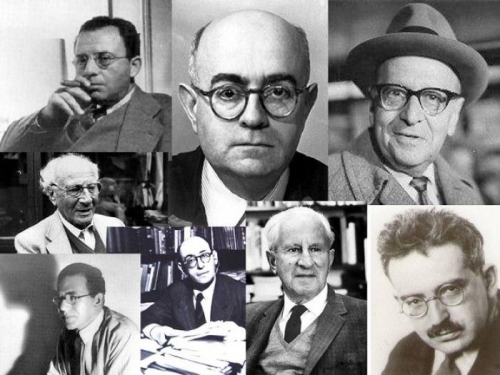
L'École de Francfort: la pensée néocommuniste qui a changé l'Occident
par Sara (Blocco Studentesco)
Source: https://www.bloccostudentesco.org/2024/11/21/bs-scuola-di...
L'école de Francfort est une école de pensée qui a vu le jour dans les années 1920 dans la République de Weimar. Les philosophes adhérant à cette école ont opéré une synthèse entre la psychanalyse freudienne et l'idéologie marxiste, conduisant à faire émerger ce que l'on pourrait appeler le « néo-communisme psychanalytique ». Les membres de cette école ont réussi, surtout après la Seconde Guerre mondiale, à infiltrer les écoles publiques, le gouvernement et à influencer l'ensemble de la société occidentale. Leurs idées sont d'ailleurs toujours à l'ordre du jour.
Theodor Adorno, le penseur le plus important de l'École, estimait que les conceptions traditionnelles de la société, telles que les vérités universelles, cachaient souvent des contradictions et des problèmes. Pour lui, la tâche de la théorie sociale et de la pensée critique était précisément de mettre au jour ces contradictions. Dans son livre intitulé « Dialectique négative », Adorno a critiqué la philosophie traditionnelle pour sa tentative de créer des systèmes logiques et ordonnés pour expliquer le monde, allant même jusqu'à affirmer qu'elle servait à justifier l'oppression sociale. Sa critique s'étendait également à l'art qui, selon lui, perpétuait l'oppression sociale en présentant des visions d'harmonie, de beauté et de vérité. Dans une déclaration célèbre, il a écrit : « Écrire de la poésie après Auschwitz est barbare », ce qui signifie que l'art qui véhicule des idéaux de beauté et de vérité renforce les idéologies oppressives. Selon Adorno, ce qui paraît beau ou harmonieux exclut et opprime ce qui n'est pas conforme à cet idéal, et doit donc être déconstruit.
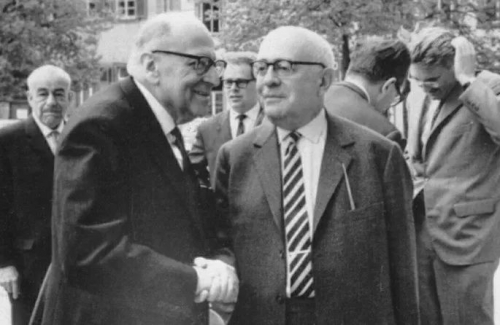
Cette critique de la beauté et des valeurs traditionnelles a alimenté une approche sceptique qui a encouragé la résistance à ce qu'Adorno a appelé la « coercition spiritualisée ». Les idées d'Adorno ont laissé un héritage durable sur la pensée critique contemporaine. Les critiques d'aujourd'hui se méfient souvent de la beauté, de l'harmonie et des récits moraux. Ce regard critique a conduit à la perception que toute forme d'art traditionnelle ou belle est « fasciste » parce qu'elle implique une hiérarchie : si quelque chose est beau, quelque chose d'autre doit être laid ; si quelque chose est vrai, quelque chose d'autre doit être faux. Cette attitude peut être observée dans la critique culturelle moderne, où la beauté est souvent déconstruite. Cette critique accuse souvent l'art traditionnel, les récits et même la morale d'incorporer des systèmes cachés de violence et de conformité.
Le rejet de l'esthétique traditionnelle par Adorno présente des similitudes avec l'activisme moderne « woke », qui cherche à démanteler les institutions et les structures sociales jugées oppressives, y compris les normes de beauté et de moralité. Ce type d'activisme célèbre souvent des figures qui remettent en question les hiérarchies traditionnelles, comme les « filles patronnesses » ou les mouvements de sexualité alternative, comme une forme de résistance contre le patriarcat et les normes conservatrices. Ces attitudes se reflètent en fait dans les théories de l'école de Francfort, qui considérait l'opposition à la tradition comme un acte libérateur.
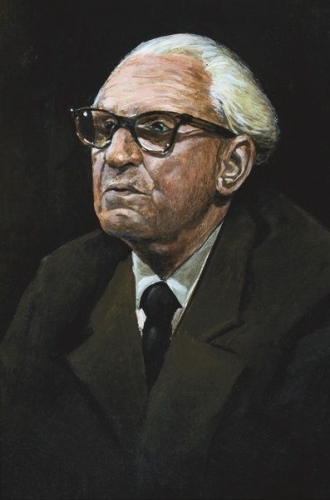
Herbert Marcuse, un autre membre influent de cette école, a élargi la critique d'Adorno en y intégrant les idées de Freud sur la sexualité. Dans son livre Eros et Civilisation, Marcuse affirme que les systèmes économiques capitalistes répriment la sexualité pour maintenir le contrôle sur la main-d'œuvre. Dans ce contexte, les relations hétérosexuelles et reproductives étaient considérées comme fonctionnelles pour la production capitaliste. Avec le communisme, cependant, cette répression disparaîtrait, permettant à la sexualité de s'exprimer librement. Bien que Marcuse se soit inspiré de Freud, il s'en est éloigné en rejetant l'idée que la répression était nécessaire à la civilisation. Il imagine une « civilisation non répressive » dans laquelle le travail deviendrait un jeu et l'énergie érotique s'exprimerait librement. Marcuse voit dans le mythe de Narcisse, qui tombe amoureux de son propre reflet, une métaphore du rejet des normes sociales et de l'adhésion à l'individualisme. Selon lui, le dépassement des distinctions traditionnelles de genre et de sexualité conduirait à une nouvelle culture libérée, dans laquelle le retour à un état pré-répressif dissoudrait les structures sociales traditionnelles.
Après tout, l'école de Francfort nous a laissé un héritage précieux: l'art de la critique perpétuelle, qui ne manque jamais une occasion de démonter, de déconstruire et finalement de détruire tout ce qui représentait autrefois la beauté, l'ordre et la vérité. Aujourd'hui, son influence se reflète dans une société qui célèbre la désintégration des valeurs traditionnelles, qui considère l'harmonie comme un acte d'oppression et l'individualisme comme un signe de libération. En associant Marx et Freud, l'École a créé un cocktail mortel d'idéologie et de psychanalyse qui continue à renforcer la croyance que toute hiérarchie, toute norme, toute structure sociale est une forme déguisée de domination. Et, bien sûr, ce qui reste à célébrer, ce sont les petites victoires contre la beauté et l'ordre: les nouveaux héros sont les « meilleurs » ennemis de la beauté, les champions de l'idéologie, les adversaires de l'harmonie qui luttent courageusement contre les vestiges d'une société qui ose encore apprécier le classicisme et l'élégance. Car, comme l'enseigne l'École de Francfort, tout ce qui est trop beau, trop soigné, trop traditionnel, est assurément fasciste, oppressif et digne d'être balayé. Finalement, pour ceux qui ont appris à mépriser tout ce qui représente la vérité et la beauté, il y a toujours un combat à mener contre une civilisation qui n'a jamais pris la peine de perdre. Mais au milieu de cette tempête idéologique, il y a encore de la place pour ceux qui croient que la beauté et l'ordre peuvent être des forces libératrices. C'est en redécouvrant la beauté et en embrassant les valeurs qui ont résisté à l'épreuve du temps que nous pourrons véritablement construire une société qui non seulement existe, mais prospère.
19:04 Publié dans Philosophie, Sociologie | Lien permanent | Commentaires (1) | Tags : philosophie, sociologie, école de francfort, theodor w. adorno, herbert marcuse | | del.icio.us | | Digg | Facebook
dimanche, 17 novembre 2024
Comment la presse moderne inventa notre réalité

Comment la presse moderne inventa notre réalité
par Nicolas Bonnal
La presse invente une réalité dans laquelle baigne l’humanité. On voit en Amérique, partie la plus avancée sur le plan technologique, qu’une bonne partie de la population arrive à s’extraire du simulacre de réalité (mais la réalité peut-elle être autre chose, Ô Maya ?) et commence à comprendre. Mais elle même s’adresse au réseau, à la matrice. Les vieux médias vont sans doute crever en Amérique (en France ils sont fonctionnarisés-donc-increvables) mais ils sont remplacés par sans doute pire qu’eux, ce que la vieille garde démocrate, par la voix des frères Coen, avait nommé l’Idiocratie. Le pullulement d’analphabètes néo-cons dans l’administration Trump rassérénera les amateurs qui adulent tel messie pacifico-politico-médiatique.
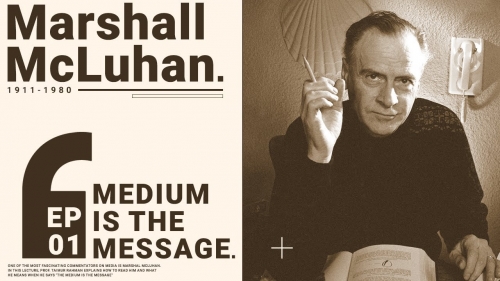
La presse invente la réalité de deux manières : l’idéologique (la plus facile à comprendre) et la technologique, la typographique, disait McLuhan, qui a montré à quel point l’Occidental moyen aura été altéré par cette typographie. McLuhan termine son magistral (et totalement incompris car non lu) ouvrage par une puissante réflexion sur la Dunciade de Pope qui lui-même comprend au début du dix-huitième siècle les conséquences de ce pullulement typographique d’information qui va anéantir toute voie vers la Vérité et répandre l’imbécillité industrielle. Citons encore Chesterton et son infini Nommé Jeudi :
— Non, dit Ratcliff. Le genre humain va disparaître. Nous en sommes les derniers représentants.
— Peut-être, répondit le professeur, d’un air distrait ; puis il ajouta de sa voix rêveuse : comment est-ce donc, la fin de la Dunciade ? Vous rappelez-vous ?… « Tout s’éteint, le feu de la nation comme celui du citoyen. Il ne reste ni le flambeau de l’homme ni l’éclair de Dieu. Voyez, ton noir Empire, Chaos, est restauré. La lumière s’évanouit devant ta parole qui ne crée pas. Ta main, grand Anarque, laisse tomber le rideau et la nuit universelle engloutit tout ! »
La réalité idéologique (idéolochique, comme dit Céline dans ses éclairés pamphlets) est facile à comprendre et on la connaît : changement climatique, inondations, racisme, vaccination pour un oui ou pour un non, invasion migratoire, guerre mondiale contre Chine, Iran, Russie, Bataclan, peur des virus informatiques, peur de l’islam et de son antisionisme, peur du souverainisme (pire simulacre pourtant des temps qui courent), encore etc.

Et puis il y a la réalité ontologique ou technologique. Elle est plus grave, c’est la prison noire de fer de Philip K. Dick. C’est quand toute représentation remplace la réalité. On cite Borges dans un espagnol très simple, le fameux texte où la carte remplace la terre-territoire, texte sans cesse cité par Baudrillard, qui en fait la clé de Simulacre et simulation, livre-source comme on sait du film Matrix.
« En aquel Imperio, el Arte de la Cartografía logró tal Perfección que el mapa de una sola Provincia ocupaba toda una Ciudad, y el mapa del Imperio, toda una Provincia. Con el tiempo, estos Mapas Desmesurados no satisficieron y los Colegios de Cartógrafos levantaron un Mapa del Imperio, que tenía el tamaño del Imperio y coincidía puntualmente con él. »
L’altération psychique et intellectuelle causé par la typographie a été totale en Occident : elle a même créé le nationalisme, valeur antitraditionnelle (Evola et Guénon auraient dû lire cette école canadienne...) au possible, et crée le citoyen-métronome-automate moderne, consommateur-conscrit-contribuable et conditionné.
Et la presse va plus loin ; car si elle formate aussi bien les esprits depuis des siècles (ce qu’observent Tolstoï, Fichte, Bernanos…) c’est qu’elle est elle-même formatée pour présenter une actualité qui n’est pas l’actualité réelle. La réalité elle l’invente. C’est ce que dit un grand journaliste américain de Time, T. S. Mathews, cité par Jacques Barzun dans son légendaire pavé sur l’aube et la décadence (From Dawn to Decadence).
« On suppose que l’essentiel de la presse est l’actualité. Si la nouvelle est ce qui s'est passé hier, alors les journaux publient énormément de fausses nouvelles. L’information est ce que produit la presse.
La plupart des reportages internationaux sont réalisés par la presse elle-même : interviews d'hommes, événements importants, rapports sur des situations graves, rapports politiques, "spéculations fondées", etc. Une grande partie de la presse a véritablement cessé de se concentrer exclusivement sur les faits — T. S. MATHEWS (1959) ».
La mise en scène de « l’actualité » par la presse abolit la réalité. On en revient au grand théâtre baroque, à Corneille (le Menteur, l’Illusion), à Gracian, au Jacques de Shakespeare. Aujourd’hui on en arrive à la mise en scène informatique, celle de Musk qui a gagné facilement l’élection américaine, et qui abolit le règne de la télé, au moins en Amérique. L’Europe trop vieillie et réac dans son socialisme-humanisme obtus, risque de rater le coche…
Relisons Baudrillard sur cette abolition non de l’actu mais de l’Histoire par l’information :
« Ce n’est pas la fin de l’histoire au sens de Fukuyama, par résolution de toutes les contradictions qu’elle avait soulevées, mais la dilution de l’histoire en tant qu’événement : sa mise en scène médiatique, son excès de visibilité. La continuité du temps qui est une façon de définir l’Histoire (pour qu’il y ait récurrence possible d’une séquence de sens, il faut bien qu’il y ait un passé, un présent, un futur, avec une continuité entre eux) est de moins en moins assurée. Avec l’instantanéité de l’information, il n’y a plus de temps pour l’histoire elle-même. Elle n’a pas le temps d’avoir lieu en quelque sorte. Elle est court-circuitée. »

Baudrillard poursuit implacable en s’en prenant à son ami Paul Virilio : car l’actu, l’info, la matrice informative peut aussi nous priver de cette apocalypse dont se gargarisent certains ; rappelons que cette apocalypse est un produit de la Réforme, de la Renaissance, de la typographie, et que ce redoutable brulot fasciste-communiste-illuminé et exterminateur a suffisamment fanatisé-hypnotisé-conditionné les Allemands pour en exterminer un tiers en un siècle (voir le texte de Rothbard) :
« Il se place en position apocalyptique, de prophète anti-apocalyptique tout en étant persuadé que le pire peut advenir. Sur ce point, on a fini par diverger. Car, je ne crois pas à cette apocalypse réelle. Je ne crois pas au réalisme de toute façon, ni à une échéance linéaire de l’apocalypse. À la limite, si l’on pouvait espérer cet accident total, il n’y aurait qu’à le précipiter, il ne faudrait pas y résister. L’avènement du virtuel lui-même est notre apocalypse, et il nous prive de l’évènement réel de l’apocalypse. Mais telle est notre situation paradoxale, il faut aller jusqu’au bout du paradoxe. »
La vraie apocalypse, c’est qu’il n’y aura pas d’apocalypse, le monde n’étant plus assez réel...
Sources :
https://ciudadseva.com/texto/del-rigor-en-la-ciencia/
https://nicolasbonnal.wordpress.com/2024/04/09/jean-baudr...
https://fr.wikisource.org/wiki/Le_Nomm%C3%A9_Jeudi/Texte_...
https://nicolasbonnal.wordpress.com/2024/10/20/chesterton...
https://www.ocopy.net/wp-content/uploads/2017/10/mcluhan-...
https://mediosyhumanidades.wordpress.com/wp-content/uploa...
https://nicolasbonnal.wordpress.com/2023/10/22/le-communi...
13:37 Publié dans Actualité, Sociologie | Lien permanent | Commentaires (0) | Tags : presse, simulacre, sociologie, post-vérité, nicolas bonnal | | del.icio.us | | Digg | Facebook
samedi, 16 novembre 2024
La famille traditionnelle comme facteur de durabilité du monde multipolaire
La famille traditionnelle comme facteur de durabilité du monde multipolaire
Marina Bakanova
Sur l'exemple des BRICS
L'un des grands thèmes de la géopolitique, aussi étrange que cela puisse paraître, est la famille. L'idée elle-même est assez ancienne, mais aujourd'hui, au vu des nombreux événements qui se déroulent, cette notion est redevenue d'actualité.
La famille traditionnelle est considérée comme un facteur de durabilité du monde multipolaire. C'est ce qui ressort notamment de la déclaration finale de la "troisième réunion eurasienne des compatriotes russes", intitulée « Women's Agenda of the Compatriotic Movement in the Context of Preserving Traditional Family Values », qui s'est tenue à New Delhi le 9 avril 2024. Les participants à la réunion sont convaincus que les valeurs traditionnelles ainsi que l'aspiration des peuples à une liberté, une justice et une souveraineté véritables serviront de base au futur monde multipolaire (Conseil mondial de coordination des compatriotes russes vivant à l'étranger).
De nombreux pays se sont penchés sur la question de la famille traditionnelle en raison de la décomposition du concept de famille dans les pays de l'Occident global, de la crise systémique des valeurs et des relations familiales, ainsi que de la promotion agressive de modèles familiaux non traditionnels, y compris dans les réseaux sociaux. Il convient également de noter la forte baisse des taux de natalité dans la plupart des pays du monde, pour diverses raisons. Il est clair qu'en Russie, par exemple, les échecs démographiques suite à la Grande Guerre patriotique et à la dépression des années 1990 resteront longtemps en suspens. En Chine, le programme « Une famille - un enfant » a eu un impact significatif. En Inde, la situation ne semble pas aussi grave, mais les familles urbaines soutiennent activement le programme « Do bacha - acha » (« Deux enfants - excellent »), surtout si les deux sont des garçons. Il convient de noter que les deux pays connaissent un énorme déséquilibre entre les sexes, en plus du problème des enfants en bas âge. Le Brésil se caractérise également par une forte baisse de la fécondité: 1,5 enfant. Dans ce cadre, la situation de l'Afrique du Sud est un peu meilleure - le taux de natalité de 2,3 enfants par femme permet non seulement de préserver, mais même d'augmenter la population, même si l'échec démographique de 1995-2010 aura aussi inévitablement un impact dans les années à venir. La situation est toutefois meilleure dans les nouveaux pays BRICS: cela est dû en partie à leur faiblesse à atteindre le niveau des pays post-industriels, et en partie à la religion et à la mentalité orientale.
On assiste également à une crise de la vie familiale, avec des taux de mariage en baisse dans presque tous les pays et des taux de divorce en hausse. Pour diverses raisons, la situation est pire en Russie parmi les pays membres des BRICS. En même temps, l'orientation du mouvement tend vers la même direction et c'est bien sûr une caractéristique de tous ces pays. Le format de la famille change également, avec un glissement vers la forme nucléaire: la Russie et la Chine sont particulièrement actives dans ce sens.

L'Inde et les pays arabes sont traditionnellement caractérisés par la parenté et les familles élargies, avec non seulement plusieurs générations vivant ensemble, mais aussi des parents proches, en particulier dans les zones rurales. L'Afrique du Sud et le Brésil se situent à peu près à mi-chemin entre les premières et les secondes. Toutefois, pour compléter le tableau, il convient de noter qu'une famille nucléaire peut être isolée de ses proches qu'elle ne voit que lors des grandes fêtes (modèle occidental de responsabilité parentale jusqu'à la majorité de l'enfant), ou maintenir un format de communication étroit avec eux (en particulier avec la génération plus âgée) indépendamment de la distance physique, ce qui est typique de la Russie et de la Chine.
Il convient de noter que les familles élargies ou nucléaires, mais avec des liens familiaux étroits, sont les plus durables et sont conçues pour assurer un développement social global à l'échelle d'un pays et surmonter la crise des valeurs familiales. Les familles traditionnelles ne doivent pas être considérées comme un idéal exclusivement patriarcal. Au vu de l'évolution d'un certain nombre de pays, elles sont en effet pratiquement identiques, mais il existe une réelle possibilité de former une famille à orientation traditionnelle sur d'autres bases.
La position dominante de l'homme dans la famille, due au développement des femmes et à leur leadership au cours des dernières décennies, est tout à fait contestable et peut être remplacée par des relations égales entre conjoints qui écouteront non seulement l'autre, mais aussi l'opinion des générations plus âgées et plus jeunes. Une telle famille, tout comme une famille patriarcale, encourage la préservation des traditions: le respect des parents et des aînés, l'hommage à la mémoire des ancêtres et aux sanctuaires familiaux, l'accomplissement des rôles familiaux, professionnels et civils, tandis que la plupart des décisions familiales sont prises de manière collégiale.
La notion de « responsabilité collective » semble dépassée car dans une telle situation « personne n'est responsable de rien », mais de nouveaux modèles peuvent être réalisés grâce aux capacités personnelles des membres de la famille. Lorsque chacun fait ce qu'il sait le mieux faire (décisions, loyauté, responsabilité) par rapport aux autres, la famille contribue à la préservation et à l'amélioration de la qualité de vie.
Une telle famille contribue à la préservation et au développement de fondements moraux élevés pour la formation des relations familiales, la continuité des générations et l'exhaustivité de l'éducation morale, éthique et spirituelle.
L'analyse des tendances négatives de l'évolution de la famille dans les pays du Global West permet de conclure que, pour la société non occidentale, la famille traditionnelle est le seul modèle de relations familiales capable de surmonter la crise dans ce domaine. Il convient de noter que les études menées dans les pays BRICS révèlent des tendances à une perception plus positive de l'image de la famille traditionnelle et des valeurs familiales, même parmi les habitants des grandes métropoles.
Dans son essence, le système néocolonialiste et néoféodal du monde unipolaire, qui est actuellement promu par l'Occident global sur la base du monde anglo-saxon, est la pire version du patriarcat (oui, le patriarcat peut être positif, mais pas dans ce cas) - une dictature absolue du pouvoir au niveau international et une anarchie complète au niveau social. En même temps - en fait - ils ont complètement détruit l'institution de la famille dans leurs pays. En revanche, le monde multipolaire peut être considéré comme une variante de la famille élargie, basée sur le « droit des égaux » tout en respectant les intérêts de chacun. Les réalités de la grande politique montrent que ce format ne donnera pas une « vraie famille », pas plus qu'aucun autre, mais il n'y a pas de besoin particulier à cet égard. La famille traditionnelle moderne est caractérisée par la compétition et la rivalité, mais tout cela repose sur la capacité de négocier, l'équité et le respect mutuel. Il convient de noter que le sommet des BRICS à Kazan l'a prouvé.
Nous venons tous, d'une manière ou d'une autre, de notre enfance et, par conséquent, le format d'une famille traditionnelle moderne contribuera non seulement à jeter les bases et à développer l'ensemble des qualités nécessaires chez les futurs membres de la société, mais il apprendra également à la prochaine génération à construire ses relations avec le monde dans le même cadre, y compris les relations interethniques, interreligieuses et entre les pays. Ce qu'il est actuellement possible d'observer dans une certaine mesure dans les plateformes des BRICS.
Ainsi, malgré la crise mondiale de la famille traditionnelle, les pays du Sud se sont révélés relativement plus résistants, préservant les valeurs traditionnelles, y compris dans les modèles familiaux. Toutefois, comme on peut le constater, les familles purement patriarcales ne sont pas activement représentées dans les pays BRICS à l'heure actuelle, et la famille se développe dans le cadre de la construction de partenariats, tandis que les valeurs familiales ne se perdent pas, mais se développent en phase avec l'époque. Les formats modernes de la famille traditionnelle sont certainement importants non seulement pour l'éducation de la nouvelle génération, mais aussi pour le développement des relations internationales et des modèles de diplomatie.
Le modèle de la famille traditionnelle, actualisé en fonction des réalités d'aujourd'hui, devrait devenir un modèle prometteur pour l'organisation des relations familiales dans une société multipolaire moderne, tenant compte des traditions et de la mentalité des peuples qui la composent, conçu pour assurer un développement social global à l'échelle nationale et internationale, et pour surmonter la crise des valeurs familiales dans la société du Sud.
16:18 Publié dans Actualité, Sociologie | Lien permanent | Commentaires (1) | Tags : famille, famille traditionnelle, sociologie | | del.icio.us | | Digg | Facebook
samedi, 14 septembre 2024
La nouvelle guerre de l'opium et le silence intolérable de la politique
La nouvelle guerre de l'opium et le silence intolérable de la politique
par Maurizio Bianconi
Source: https://www.destra.it/home/sporchi-affari-la-nuova-guerra-delloppio-e-lintollerabile-silenzio-della-politica/
La Compagnie des Indes orientales, expression de l'empire colonial britannique, a fondé une grande partie de sa fortune sur le commerce de l'opium, principalement vers la Chine. Lorsque l'empereur de la Cité interdite a pris conscience de la dégradation causée par ce commerce, il a interdit la circulation et la consommation de drogues. Les Britanniques ont réagi avec une extrême détermination en déclenchant deux guerres successives qui sont entrées dans l'histoire sous le nom de « guerres de l'opium » (1839-1842 et 1856-1860). La Chine a été contrainte de tolérer le trafic, le commerce et la consommation effrénée de drogues, l'opium en premier lieu. Ce phénomène a contribué à la désintégration de la structure politique de l'empire chinois et à sa ruine économique, au profit de la reine Victoria et de sa superpuissance coloniale. D'où l'idée souvent répétée que le Royaume-Uni a été le premier narco-État de l'histoire moderne.
Il a été noté sporadiquement que Karl Marx a observé le phénomène et a écrit que la propagation de la consommation de drogues est un outil très utile pour la destruction des structures de l'État capitaliste et la victoire de la lutte des classes qu'il avait théorisée. Un siècle plus tard, l'un de ses disciples, peut-être le plus observateur, Fidel Castro, a tenté de mettre cet enseignement en pratique. À des fins économiques et dans le but politique de saper l'ennemi n°1, les États-Unis, il s'est inséré dans le commerce de la drogue vers les États-Unis. Il a profité de la position géographique de Cuba, mis à disposition des navires, des ports et des laboratoires de raffinage situés dans les anciens repaires des « barbudos » de la Sierra Maestra. Sous le prétexte de l'embargo américain, il a récupéré et blanchi des avalanches de dollars provenant du trafic de drogue.
Cela a dépassé les limites de la décence et, sous la pression de son principal allié, Castro a été contraint de sacrifier son camarade le plus loyal, le héros communiste, le général Ochoa, qui, au nom de la révolution, a prétendu être le seul responsable des crimes découlant du trafic international de drogue par soif d'enrichissement personnel et a accepté, en conséquence, de se faire fusiller.
Si l'on lit aujourd'hui les chiffres de la mortalité due à la consommation de drogues, même synthétiques, on reste bouche bée. Aux États-Unis, le décompte le plus précis pour 2023 s'élève à 115.000 morts. Deux fois plus que le nombre de soldats américains qui ont péri pendant les 12 années de guerre au Vietnam. En Europe, et particulièrement en Italie, nous n'en sommes pas à ces chiffres astronomiques. Mais vous savez: aux États-Unis, tout se passe à l'avance et ensuite, en cascade, les phénomènes s'emparent également de l'Europe et de notre pays. Il suffit d'attendre. Il n'est pas facile de prévoir combien de temps.

Ce qui est certain, c'est qu'en Italie, environ 40% des citoyens âgés de 15 à 70 ans ont consommé des drogues. Cette consommation surabondante affecte la capacité générale à s'appliquer, à apprendre, à travailler. Elle s'immisce dans les relations et les communautés, crée des poches d'ombre avec une propension généralisée à l'égoïsme social et une baisse du sens civique. Jusqu'à l'effondrement prédit par Marx et déjà perceptible aux États-Unis.
Il ne faut pas mener une bataille manichéenne sur cette question. Il n'y a pas de pervers ou de sauveur. Il y a une réalité qui n'est pas abordée avec sérieux et rigueur, mais avec des critères idéologiques et factionnistes de part et d'autre. On pense davantage à aboyer et à diviser qu'à comprendre les effets dévastateurs sur la résilience du système. On ne met pas en évidence les conséquences induites par le phénomène qui conduit à l'insignifiance progressive des citoyens, eux aussi démotivés et affaiblis par cette éventualité, et la passation progressive du contrôle à quelques détenteurs de la technologie gérant l'argent du pouvoir.
Comme à chacune de leurs étapes, ils s'emploient constamment à écarter les citoyens des rôles actifs, économiques et politiques. L'arme de Marx devient stratégiquement l'outil de la finance et du pouvoir, c'est-à-dire ses ennemis historiques. Ceux dont l'objectif est le profit et la domination, et non la prospérité, la liberté et les droits, tirent profit et force d'une communauté en déclin et en faillite.
Ce n'est pas une coïncidence si, en 2014, Eurostat a légalisé de facto le commerce et la consommation de drogues, en décidant que les revenus correspondants devaient être comptabilisés dans le PIB. Ce n'est pas non plus une coïncidence si les fonds internationaux ont dépassé les banques en termes de puissance de feu spéculative, digérant et investissant l'argent de la drogue.
L'énormité de cet état de fait, rarement soulignée par le monde politique, met en exergue les batailles mesquines sur le cannabis oui, le cannabis non. Tandis que dans les rues, c'est la guerre, à la maison, les enfants jouent avec des petits soldats.
14:05 Publié dans Actualité, Sociologie | Lien permanent | Commentaires (0) | Tags : drogues, guerres de l'opium, toxicomanie | | del.icio.us | | Digg | Facebook
samedi, 17 août 2024
L'Occident collectif élimine la classe moyenne en la contraignant à une décroissance malheureuse

L'Occident collectif élimine la classe moyenne en la contraignant à une décroissance malheureuse
Augusto Grandi
Source: https://electomagazine.it/loccidente-collettivo-elimina-il-ceto-medio-costringendolo-alla-decrescita-infelice/
Il y a hypocrisie paradoxale du pouvoir dans l'Occident collectif. En Italie, en France, en Allemagne, tous les entrepreneurs se plaignent parce que la classe moyenne a drastiquement réduit sa consommation. À cause des salaires insuffisants payés par ces mêmes entrepreneurs qui se plaignent. Et les gouvernements continuent à taxer cette même classe moyenne, l'appauvrissant et la prolétarisant progressivement.
Mais la situation aux États-Unis est encore plus absurde. Les deux candidats à la présidence ont choisi comme députés des personnes qui devraient être en mesure de récupérer les votes de la classe moyenne nord-américaine. Appauvrie par les choix de Trump en faveur des plus riches et par les politiques de Biden sur la scène internationale qui ont eu des répercussions sur la classe moyenne. Qui, et ce n'est pas un hasard, a également été drastiquement réduite numériquement. Et qui, dans l'ensemble, a connu une croissance économique deux fois moindre que celle des plus riches.
Le Sud global, au contraire, tente de faire croître la classe moyenne dans tous les pays. Au-delà des positions idéologiques et des alliances stratégiques. Car la classe moyenne garantit la consommation qui tire la production intérieure. Alors que les choix néo-meloniens, en Italie, de procéder par primes et gratifications au bénéfice des évadés fiscaux et des migrants plus ou moins réguliers, au détriment des vrais pauvres italiens, ne conduisent qu'à l'achat de produits à bas prix et de mauvaise qualité en provenance de l'étranger. C'est la décroissance malheureuse.
Il est clair que l'Occident collectif considère que le modèle économique social incluant la classe moyenne est dépassé. Il n'a plus besoin d'un tel amortisseur pour protéger les oligarques de la rage des exploités. Les méthodes de répression de plus en plus sophistiquées suffisent. Ou le matraquage médiatique des esprits obnubilés.
Tandis que la classe moyenne s'est désormais résignée au silence ou, au mieux, à la grogne. Pas une idée, pas une proposition, pas un centime investi dans la construction d'une alternative au système qui l'écrase. La bourgeoisie, qui avait été à l'avant-garde de la Révolution française et du Risorgimento italien, dans les combats de la Première Guerre mondiale, a renoncé à jouer un rôle de premier plan. Elle s'est réfugiée dans le « bien de mauvais goût », mais en réalité le mauvais goût est resté et les choses ne vont plus si bien.
On fait étudier ses enfants pour partir à l'étranger, on réduit ses dépenses, on se retrouve entre vieux amis appauvris et attristés. Et on regarde avec une colère mêlée d'étonnement les interviews des responsables d'associations professionnelles qui se plaignent que la classe moyenne ne dépense plus l'argent qu'elle n'a plus.
19:07 Publié dans Actualité, Sociologie | Lien permanent | Commentaires (0) | Tags : actualité, sociologie, classe moyenne, décroissance, décroissance malheureuse | | del.icio.us | | Digg | Facebook