


samedi, 22 octobre 2011
Türkische Drohungen
Türkische Drohungen
Die Türkei darf EU-Staaten nicht länger sanktionslos drohen
Von Andreas Mölzer
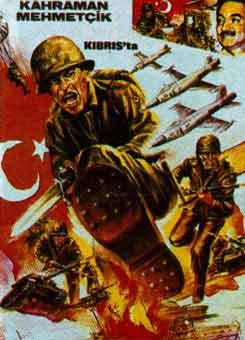 Die Drohungen der Türkei gegenüber Zypern haben ein inakzeptables Ausmaß angenommen. Denn der türkische Premierminister Recep Tayyip Erdogan beläßt es leider nicht bei Wortdrohungen, die schon schlimm genug sind, sondern läßt mittlerweile ein Kriegsschiff in den Gewässern vor Zypern kreuzen.
Die Ursache der derzeitigen Kraftprobe zwischen Türkei und Zypern sind Probeölbohrungen in zypriotischen Gewässern, die die Türkei nicht akzeptieren will. So droht man den Zyprioten: „Wenn sie [Anm.: damit] weiter machen, werden sie die Haltung der Türkei sehr gut kennenlernen“. Solche Äußerungen und Handlungen gegen ein EU-Mitgliedsland sind auf das schärfste zu verurteilen und müssen dazu führen, daß die EU-Beitrittsverhandlungen sofort abgebrochen werden.
Anstelle von klaren Reaktionen gegenüber der Türkei gibt es von seiten der europäischen Politiker jedoch nur Demutsgesten. So ist am 28. September in Straßburg eine Absichtserklärung zwischen der EU-Kommission und der Türkei unterzeichnet worden, wonach hinkünftig auch sog. Nationale Experten aus der Türkei bei der Kommission angestellt werden sollen. Dies stellt jedoch ganz klar einen unzulässigen Vorgriff auf eine zukünftige Mitgliedschaft der Türkei dar und ist entschieden abzulehnen. Es ist sachlich nicht nachvollziehbar, daß türkische Beamte, deren Land nicht Mitglied der EU ist, hinkünftig als Nationale Experten in der Kommission tätig sein sollen. Dies muß Staatsangehörigen von Mitgliedstaaten vorbehalten bleiben.
Was wir brauchen, sind gute politische und wirtschaftliche Beziehungen mit der Türkei, jedoch keine trojanischen Pferde in einer durch den ständigen EU-Zentralismus immer mehr gestärkten EU-Kommission, die verantwortlich für die Gesetzesvorschläge der EU ist.
00:21 Publié dans Actualité, Affaires européennes, Géopolitique | Lien permanent | Commentaires (0) | Tags : politique internationale, turquie, chypre, europe, affaires européennes, union européenne, parlement européen, méditerranée |  |
|  del.icio.us |
  |
|  Digg |
  Facebook
Dominique Venner, électrochoc des esprits pour un choc de l'histoire

Dominique Venner, électrochoc des esprits pour un choc de l'histoire
Par Olrik
Ex: La Droite strasbourgeoise (cliquez ici)
 Dans un livre d’entretien conduit par la journaliste Pauline Lecomte, « Le choc de l’histoire » publié aux éditions « Via Romana », Venner se penche une nouvelle fois sur notre époque en crise. On retrouvera en filigrane la grille d’analyse affûtée qu’il avait déjà exposée dans son ouvrage « Le siècle de 1914 », mais cette fois pour en dépasser le cadre restreint de la discipline historique.
Selon lui, la grave crise actuelle clos un cycle historique amorcé en 1914 et qui aura secoué tout le XXème siècle. Après avoir favorisé un lent processus de déchristianisation, les idéaux des Lumières ont vu, au cours du dernier siècle, les grands récits idéologiques qu’ils avaient enfantés s’effondrer les uns après les autres. Après avoir tordu le cou aux aventures fascistes en Europe, le communisme et le capitalisme mondialiste, qui se sont imposés à une Europe réduite à la sujétion, se sont révélés finalement incapables de surmonter les contradictions systémiques internes qui les taraudaient.
Le communisme s’affaissera brutalement sur lui-même sans prévenir, en 1989, laissant le mondialisme des droits de l’homme porté par les Etats-Unis bien seul face à ses propres apories. Passée une brève période d’euphorie, la faillite de Lehmann Brother en 2008 est venue signifier à une planète incrédule la mort par KO technique de la dernière illusion issue des ruines du XXème siècle et partant, le début du déclin de l’empire américain.
Pour Dominique Venner, la grande faute qui caractérisa toutes ces expériences idéologiques fut de ne s’inscrire qu’exclusivement dans le champ trop temporel du politique ou de l’économique. Malgré les prétentions eschatologiques et les abords religieux que ces aventures n’ont jamais manqué d’emprunter, toutes se révélèrent in fine bien incapables de bâtir des modèles durables de société, comme su par exemple le faire en son temps le christianisme. Les mythes du progressisme égalitaire, de l’homme nouveau ou encore de la fin de l’histoire auront finalement buté sur l’amère réalité de leur impossible avènement. Leurs échecs successifs laissent donc aujourd’hui les Européens à la fois exsangues et durement désemparés devant un sérieux questionnement identitaire.
Même le christianisme, passablement épuisé, ne présente plus la moindre possibilité d’un recours. Son universalisme - qui put être un atout lorsqu’il s’agissait de légitimer l’hégémonie de l’Europe sur le monde - se révèle désormais totalement inopérant à offrir des solutions pour des Européens ramenés à un monde multipolaire et violemment chaviré par un rééquilibrage des puissances entre ex-dominés et ex-dominants. Pire encore ! Ce résidu d’universalisme, qui nimbe encore tout l’Occident, les handicape aujourd’hui dans leur capacité à répondre au réveil identitaire, et souvent revanchard, des civilisations concurrentes.
L’état des lieux est clair : l’Europe, assommée par le traumatisme de deux guerres mondiales, est entrée en dormition depuis plus de 50 ans. Mais l’effondrement annoncé de l’empire américain provoquera inévitablement le retour souverain des nations du vieux continent dans le jeu de l’histoire. Inutile de s’illusionner ! Ce réveil ne se fera pas sans de déchirantes et profondes révisions. La grande démonstration de ce livre tient précisément dans l’évidence que la solution dépasse largement le champ des contingences du politique stricto sensu.
Dépourvue de religion identitaire, à la différence de l’Inde, du Japon ou de la Chine, l’Europe va devoir retrouver ce qui la singularise en renouant avec sa plus longue mémoire. Une mémoire amenée à former les bases d’une mystique identitaire apte à produire un imaginaire collectif opérant face aux nouveaux enjeux de la modernité. Les Européens vont devoir se réarmer moralement s’ils ne veulent pas tomber en servitude. A cet égard, il nous donne l’exemple du renouveau hindouiste actuel en Inde, amorcé grâce à la création par Nagpur en 1925 d’un mouvement identitaire à vocation plus culturelle et spirituelle que politique.
Sur ce chemin qui remonte dans notre plus longue mémoire, Dominique Venner nous indique des pistes. Il nous renvoie d’abord à son ouvrage « Histoire et Tradition des Européens : 30 000 ans d'identité » et évoque ensuite une « histoire européenne des comportements [pouvant] être décrite comme le cours d’une rivière souterraine invisible et pourtant réelle. » Pour lui, cette rivière qui coule en nous, souvent à notre insu, prend sa source dans la Grèce antique en général et dans l’œuvre fondatrice d’Homère en particulier. Dans l’Iliade et l’Odyssée, qu’il qualifie de « mémoire des origines », il est possible de retrouver tout l’imaginaire européen dans sa substance la plus parfaite. Notre vision du monde, notre rapport à la nature, au vivant, à la mort, notre cœur aventureux, notre façon d’enchanter les éléments et de sublimer nos sentiments, cette relation entre les hommes et les femmes sur un pied d’égalité, tout est là sous nos yeux, écrit il y a presque 3 000 ans déjà.
Venner nous avise toutefois à ne pas confondre tradition et folklore. La vraie tradition consiste à entreprendre des choses neuves dans le même esprit que celui des anciens. Alors que le folklore, c’est justement l’inverse. En exemple, il nous donne des figures contemporaines d’Européens, sur lesquelles, selon lui, l’esprit de la tradition a indéniablement soufflé. Parmi ceux-ci, il s’attarde longuement sur le cas du colonel Claus von Stauffenberg. Cet officier qui incarna la fidélité à la tradition aristocratique allemande fut l’instigateur décisif de l’attentat manqué contre Hitler.
En conclusion, nous citerons cette phrase de Dominique Venner : « ce n’est pas rien de se savoir fils et filles d’Homère, d’Ulysse et de Pénélope. »
Livres de Dominique Venner (NDLR) :
Le Choc de l'Histoire, Dominique Venner, Editions Via Romana, 185 pages, 2011, 20,00 € (cliquez ici)
Le Siècle de 1914, Dominique Venner, Editions Pygmalion, 408 pages, 2006, 22,50 € (cliquez là)
Histoire et tradition des Européens : 30 000 ans d'identité, Éditions du Rocher, Monaco et Paris, 2002, 273 pages, 17,50 € (cliquez là)
00:15 Publié dans Livre, Nouvelle Droite | Lien permanent | Commentaires (0) | Tags : dominique venner, livre, nouvelle droite, histoire | | del.icio.us | | Digg | Facebook
5 to 9 Conservatism

5 to 9 Conservatism
By Greg Johnson
Ex: http://www.counter-currents.com/
Years ago, the friend who had the most influence on my awakening on race and the Jewish question offered a quite clarifying distinction between “9 to 5” and “5 to 9” conservatism.
The 9 to 5 conservatives take their name from the standard 9:00 a.m. to 5:00 p.m. work day. These conservatives focus on the economic realm. They wish to preserve economic freedom from government interference. They also focus on cutting taxes and resisting new taxes, so that productive people can keep more of the fruits of their labor. 9 to 5 conservatism, in short, is just economic liberalism. Its most ideologically pure advocates in America today are libertarians and the Tea Party.
5 to 9 conservatives take their name from the rest of the day. They focus on preserving the non-economic realms of life: the family, civil society, religion, culture, history, the environment, etc.
Many 5 to 9 conservatives are actually political liberals. For instance, environmentalists, historical preservationists, and promoters of walkable communities, mixed-used development, human-scale architecture, and public spaces are all objectively conservatives of the 5 to 9 variety (regardless of any genuinely liberal positions they might also hold). But politically they tend to be left-of-center and at odds with the commercial interests championed by 9 to 5 conservatives.
There is good reason why the two kinds of conservatives are at loggerheads. Unlimited economic freedom tends to corrode the other realms of society. The best way to appreciate this is to consider working hours. In America today, we do not have a 9 to 5 economy. We have a 24/7 economy.
As a bohemian intellectual, I can’t complain about this. I find it very convenient to be able to go out at 4:00 am to buy a carton of milk from a meth-zombie. Americans living in Germany are shocked that most stores are closed by 6:00 pm and are not open at all on weekends. It forces them to actually plan ahead, one of the many faculties that American life has allowed to grow slack.
The reason why Germany and other countries regulate the hours of businesses is not because they are “socialists” or “liberals.” It is because they are 5 to 9 conservatives. They realize that shop clerks have friends and families and communities. Work days are regulated so that more people can spend the 5 to 9 hours, and weekends, with their families and friends. Yes, such laws inconvenience us insofar as we are consumers. But we are more than consumers. We have families, friends, communities. Or we should have them.
Why does the government have to get involved? Say that there are no laws regulating the hours of retail establishments. If one firm decides they will extend their evening hours to increase their market share, others will be pressured to follow. Eventually, through the magic of the marketplace, we will compete our way into a 24/7 economy, in which there will be entire industries where the entry level jobs often taken by young people who have children (or should have them) are on aptly-named “graveyard” shifts.
From a social point of view, this is a profoundly destructive development. And from an economic point of view, it is destructive too, since the same amount of milk is sold in a 24 hour day as would be sold in a 10 hour day, yet all are forced to keep the lights on and the buildings manned 24/7 lest they lose their market share.
F. Roger Devlin uses an excellent analogy [2] to illustrate the nature of destructive competition. Imagine you are seated at a sports event. It might be to your advantage to stand up to see an exciting play. But if one person stands, then others will be forced to stand as well. Eventually, everyone will be standing, so the advantage to any individual of standing will be erased. Everyone will have just as good a view of the game as when they started, but they will all be less comfortable . . . because they are standing. The only way to stop this sort of destructive competition is for people in authority to legislate and enforce rules against it. The same goes for the economic realm.
The idea of 5 to 9 conservatism is useful to White Nationalists, because we are 5 to 9 conservatives ourselves. After all, we are concerned to preserve our race, and we are willing to do battle with the 9 to 5 conservatives who are destroying us by importing non-white labor to take white jobs, or exporting white jobs to non-white countries.
The distinction between 5 to 9 and 9 to 5 conservatism is also helpful for envisioning new political alliances—and breaking up existing ones. In America today, the major political parties are coalitions, both of which include significant numbers of 5 to 9 conservatives.
Among Republicans, the 5 to 9 conservatives tend to be religious conservatives and traditionalists. Among Democrats, the 5 to 9 conservatives tend to be environmentalists, consumer advocates, historical preservationists, new urbanists, and the like.
In both parties, the 5 to 9 conservatives tend to be overwhelmingly white. Furthermore, in both parties, 5 to 9 conservatives are exploited by party leaders for their votes. Finally, in the end, 5 to 9 conservative interests are vetoed by the leaders of the major parties, because their primary focus is the promotion of socially corrosive ideologies: economic liberalism for the Republicans, social liberalism for the Democrats. It would be enormously subversive/productive if 5 to 9 conservatives could free themselves from the corrosive ideology of liberalism, whether of the left or the right.
It would be interesting to bring together 5 to 9 conservatives from across the political spectrum to begin a dialogue. I think they would discover that they have a lot more in common than they think. It is a conversation in which we White Nationalists need to take part. We need to be there to help bring their implicit whiteness to full consciousness. We must show them that their values are the products of homogeneous white communities and cannot be preserved without them. We need to explain to them that the leaders of the major parties are exploiting and betraying them. And we cannot neglect to explain to them why both parties pursue Jewish interests at the expense of white interests.
It is also important to help them understand that before the emergence of the modern aberrations of economic and political liberalism, the mainstream of Western political thought from Aristotle through the American Founders recognized that a free society requires private property broadly distributed and stably possessed, and that to achieve this end, a certain amount of economic regulation is necessary.
In the end, White Nationalists are more than mere conservatives, for although a lot of what we want can be captured by the idea of 5 to 9 conservatism, it is not enough. From my Nietzschean/Spenglerian point of view, mere conservatism is not really an alternative to decadence. Instead, it is a form of decadence, for a healthy organism does not merely preserve or repeat the past, but carries it forward and transforms it creatively. But politically speaking, conservatism comes first, since our race needs to survive before we can worry about the luxury of self-perfection.
Article printed from Counter-Currents Publishing: http://www.counter-currents.com
URL to article: http://www.counter-currents.com/2011/10/5-to-9-conservatism/
00:13 Publié dans Réflexions personnelles | Lien permanent | Commentaires (0) | Tags : conservatisme, ringards, etats-unis, réflexions personnelles | | del.icio.us | | Digg | Facebook
Eustace Mullins - The Global Financial Situation
Eustace Mullins - The Global Financial Situation
00:05 Publié dans Actualité, Economie | Lien permanent | Commentaires (0) | Tags : finances, économie, eustace mullins, monnaie, usure, usurocratie | | del.icio.us | | Digg | Facebook