


lundi, 11 février 2013
The Map to Power
The Map to Power
The Revenge of Geography: What the Map Tells Us About Coming Conflicts and the Battle Against Fate, Robert D. Kaplan, Random House, 432 pages

Winston Churchill noted the symbiotic relationship between space and human action with the remark that “we shape our buildings, and afterwards our buildings shape us.”
On a much greater scale, consider how the physical world and its contours shape human development, just as humanity adapts the environment to its needs. The obvious faded from view in recent decades, however: globalization set the tone for the post-Cold War idea that old limits mattered little in a very new world. Grand, transformative projects sought to recast societies and institutions. Disappointment ensued with the failure of nation-building in the Middle East and the collapse of economic prosperity throughout the developed world.
In The Revenge of Geography, Robert Kaplan draws upon many thinkers, some unjustly neglected, to sketch a guide through the wreckage of these lost hopes. Far from creating the flat world Thomas Friedman described in his eponymous (and ephemeral) bestseller, globalization brings distant threats closer to home and draws differences into sharper relief. The future requires a new map.
Constructing the map to encompass geography in its fullest sense—embodying demographics, climate, and resources along with topography—highlights the factors that drive world trends. History and anthropology take the analysis further by providing context and showing how trends work over time. Geography, Kaplan argues persuasively, sets the framework within which contingency operates. International politics makes little sense without it.
Kaplan brings a reputation along with his point of view. His reporting from benighted regions during the 1990s drew criticism from liberal internationalists who objected to his pessimistic tone and caution about democracy-promotion. Deploying what John Ruskin called the innocent eye—an observer’s ability to see what lies before him rather than what he expects to see—Kaplan ignored the triumphalism of democratic capitalism to sketch a more complex and often bleak vista. Disdain for frivolous preoccupations among civilian elites drew Kaplan closer to the U.S. military, whose Spartan, practical ethos won his respect.
Experience—including with the Hobbesian nightmares of Afghanistan and Somalia, along with Saddam Hussein’s totalitarian experiment in Iraq—led Kaplan to back nation-building after 9/11. He joined the consensus behind the Iraq War and spent periods embedded with U.S. troops. While some commentators praised Kaplan as a latter-day Rudyard Kipling, others attacked him as a cheerleader for American empire. Kaplan himself admitted to having come too close to his subject and fallen prey to excessive zeal, even though he never took up the polarizing rhetoric of the Bush era. The Revenge of Geography marks a search for new perspective.
The way in which geographers, historians, and strategists traced their maps frames Kaplan’s discussion of geopolitics. He takes their ideas—particularly where diverging opinions raise conflicts—to pose questions rather than providing answers. Herodotus, whose account of the wars between the Greeks and Persia balanced geographic determinism with the decisions of men, represents the sensibility Kaplan seeks to recover. Environment sets a context, not least by shaping culture and custom, for decisions often made in the grip of passion. Dynamics shaping politics in the fifth century B.C. still operate today. Indeed, the region Herodotus describes between the eastern Mediterranean and the Iranian-Afghan plateau remains a critical area of conflict.
William McNeill, author of the 1963 landmark The Rise of the West, also looked to that area linking three continents for insight into the interaction between civilizations. Isolation along a fertile river surrounded by desert shaped Egypt by keeping outsiders at bay, while Mesopotamia remained vulnerable to predation. Both developed authoritarian, bureaucratic regimes, but Iraq had a more brutal political culture forged by insecurity. McNeil describes Greece, India, and China—all three developed unique civilizations, but distance kept China on a separate path while the ebb and flow of frontiers between Hellenistic, Middle Eastern, and Indian civilizations made for a delicate cultural balance in Greece, India, and the lands between. McNeill’s focus on interaction challenged the view of civilizations as developing separately, familiar from Oswald Spengler’s Decline of the West and Arnold Toynbee’s more optimistic account. McNeill’s idea of history as a study in fluidity gives Kaplan a starting point to consider geography’s impact upon social and political development in Eurasia.
The fact that Nazi Germany turned geopolitics to the service of conquest tainted the reputation of the field’s founding father, Halford Mackinder, but the continuing relevance of his ideas is undeniable. Geography, Mackinder argued, operates as the pivot of history by setting the context in which men and societies act. It forms barriers of desert, mountain, and tundra along with pathways of river valley and steppe. The seas acted as both, alternately providing a sheltering impasse and a highway transit.
Far from being an environmental determinist, however, Mackinder thought that understanding geographical limits pointed to ways of overcoming them. Indeed, Kaplan argues that his vision of geography’s role had a dynamic quality exactly opposed to the static assumptions of determinism. Technology, a form of human initiative, modified environments. Railways had a decisive impact by opening land to inexpensive transport of bulk goods. What began as a feeder to ocean or river transport eventually became a means of connecting Eurasia. Controlling its heartland would confer a decisive strategic advantage. Mackinder sought to chart trends rather than strategize conquest, but his analysis had an obvious appeal to the evil empires of Hitler’s Germany and Soviet Russia.
Where Mackinder and Nazi theorists like Karl Haushofer focused on the Eurasian heartland, the Dutch-born American Nicholas Spykman argued that projecting maritime power from the rimland built on advantages geography provided the United States. The combination of temperate climate and rich resources with effective hegemony over the Western Hemisphere gave the U.S. power to spare for adjusting the balance of power in the Eastern Hemisphere. The United States’ location provides access to Europe that South America lacks, while the Amazon and Arctic create secure buffers. Kaplan cites Spykman’s analysis as a way to see past the immediate press of events and discern basic geostrategic truths. His approach matters more than his conclusions themselves.
Earlier, Alfred Thayer Mahan offered in 1890 an historical account of sea power that still resonates among Chinese and Indian strategists. It influenced Spykman, along with Theodore Roosevelt and Germany’s Wilhelm II. Britain’s ability to control the seas by defeating enemy fleets during the 18th-century wars Mahan narrates ensured that maritime commerce would operate on British terms and rendered France vulnerable to coastal attack. Mahan’s contemporary Julian Corbett refined the analysis by arguing that a weaker fleet could effectively contest a numerically stronger foe by attacking bases and controlling vital choke points. Such leverage suited powers, like early 20th-century Britain, forced to meet widespread commitments with limited means. Maritime coalition building—and a presence in littoral spaces to affect land operations—offers an alternative to matching high seas fleets.
What do these ideas mean for understanding present discontents? Kaplan applies insights from these thinkers to sketch possibilities in key regions. Spykman warned that a united Europe would be a staunch competitor to the United States and perhaps the dominant outside power in equidistant parts of South America. Geography, however, has divided Europe to facilitate a balance of power since Roman times, as Edward Gibbon pointed out. Kaplan notes the appeal Mitteleuropa holds as a tolerant cultural zone dating from the Habsburg Empire, which joined pluralism with the impartial rule of law. The geographic space Central Europe occupies, however, serves as a crush zone between maritime and continental Europe. Peace might allow it to flourish, especially with Germany’s turn from war and Russia’s relative weakness.
Indeed, the search for peace has driven Europe’s efforts to rearrange itself since the 1950s. European integration, particularly in its post-Cold War phase, aims to transcend limits of history and geography to end conflict. Defying those limits, however, made the single currency a transmission mechanism for fiscal strain rather than a unifying force. Greece, as the weakest link in the project, offers a guide to the health of European integration. Its weakness derives from a history torn between Europe and the Middle East that left it politically and economically underdeveloped.
Gravity in the Middle East seems likely to shift toward Turkey and Iran, with Ankara providing a check on its rival. History and geography give logical frontiers to both, along with avenues of influence throughout the region. Other states lack such clear borders, making civil disorder in Syria a danger to Iraq and Jordan.
Geography also sets the terms for the problem China’s rise presents. A continental power like Russia, China also holds a large oceanic frontage onto the Pacific with good harbors. The combination provides strategic reach enhanced by decades of economic growth. Kaplan deftly notes the interaction between human initiative and geography over China’s history and how those factors shape its current ambitions.
But geographic factors also mitigate its advantages. Vietnam and Japan look to the United States for help in balancing China, while Korea’s unstable division presents a problem on its doorstep. The weakness of neighboring powers can trouble China no less than their strength. Sea power allows the United States to balance China without forcing a confrontation. Kaplan suggests that a struggle between them will be more stable than the Cold War rivalry with Russia was. Geopolitics shapes a subtle dynamic to influence other states while avoiding war.
Sketching geostrategic possibilities is a more useful exercise than making predictions. Kaplan articulates a realism focused on consequences that marks a welcome change from the fads and theories of the past 20-odd years. Instead of narrowing vision through a theoretical lens that hides facts out of line with theory, he draws upon those facts to press questions, and he thereby offers a more nuanced view. Seeing the world as it is, rather than as we might wish it to be, helps navigate the rapids of the turbulent era in which we live.
William Anthony Hay is a historian at Mississippi State University.
00:05 Publié dans Actualité, Géopolitique, Livre | Lien permanent | Commentaires (0) | Tags : livre, états-unis, robert kaplan, géopolitique, politique internationale, géographie, théorie politique, politologie, sciences politiques |  |
|  del.icio.us |
  |
|  Digg |
  Facebook
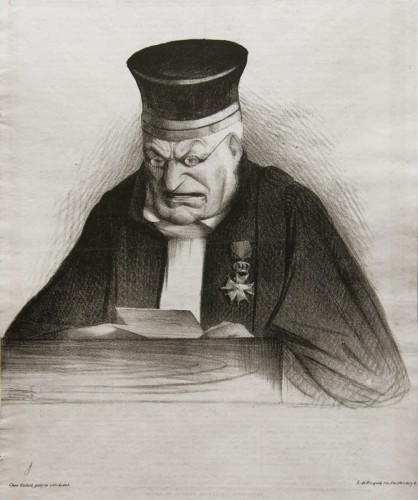
De l'autisme judiciaire...
De l'autisme judiciaire...
Nous reproduisons ci-dessous un point de vue de Xavier Raufer, cueilli sur le site de Valeurs actuelles et consacré à l'étrange politique pénale mise en oeuvre par la minstre de la justice, Christiane Taubira, et ses affidés...
Ex: http://metapoinfos.hautetfort.com/
De l'autisme judiciaire
Si Mme Taubira s’intéressait à ce qui se passe chez nos voisins britanniques, elle renoncerait à supprimer les courtes peines.
Chacun sait — c’est même un cliché — que “l’Angleterre est la mère des démocraties”. De culture protestante, la Grande-Bretagne subit en outre bien moins le clivage droite répressive-gauche laxiste que les pays latins. Dans la décennie 1980, un équivalent britannique de nos très progressistes “plans banlieue” fut même initié par… Margaret Thatcher, après des émeutes “à la française” dans la périphérie londonienne. Raison de plus de nous intéresser aux évolutions pénales de cet exigeant État de droit, en matière de prévention, de sursis, de réinsertion, etc.
Mais cela, les Diafoirus-sociologues et autres trotskistes d’antichambre encerclant l’actuelle garde des Sceaux s’en moquent, trop occupés qu’ils sont à délirer sur la “construction sociale”, les “stigmatisations”, “stéréotypes” et autres sornettes à la Bourdieu, uniquement vouées à nier ou camoufler la réalité criminelle.
Si elle s’intéressait un tant soit peu aux trivialités du réel, au lieu de les camoufler sous le vocable méprisant de “faits divers”, la garde des Sceaux aurait donc pu se documenter sur le vaste scandale qui, depuis décembre 2012, secoue une justice britannique vivement attaquée par des parlementaires de tous bords.
Ces dernières années en effet, le ministère britannique de la Justice a, sous le nom de “révolution de la réinsertion”, fait du Taubira pur sucre : pas de prison ferme mais du sursis et des travaux d’intérêt général (“community service”). Une mesure qui a touché 50 000 auteurs d’agressions, voire de vols à main armée, trafiquants de drogue, cambrioleurs, etc.
L’ennui — et c’est bien ce qui provoque la révolte des parlementaires —, c’est que pratiquement 100 % de ces 49 636 malfaiteurs traités à la Taubira ont été, dans l’année ( je cite) « condamnés pour une autre infraction, qu’ils n’auraient pu commettre s’ils avaient été en prison ». Et cela, malgré (ou du fait ? ) des peines alternatives voulues par la justice…
Pour les députés britanniques, il s’agit d’un « échec choquant des services de réinsertion » manifestement « incapables de maîtriser les criminels qu’ils sont supposés réinsérer ». D’où leur appel au ministère de la Justice pour qu’il « agisse dans l’urgence afin de briser cet épouvantable cercle vicieux de récidive ».
Tout se passe cependant comme si Mme Taubira et ses conseillers ignoraient tout de ce scandale sécuritaire qui fait pourtant les gros titres de la presse populaire britannique — notamment du Daily Mail, quotidien vendu à près de 1,7 million d’exemplaires… Impassible, la garde des Sceaux poursuit ses appels fracassants à “vider les prisons” sans se rendre compte qu’ils agissent sur les malfaiteurs à la manière d’une hormone de croissance.
La preuve ? Voici, pour les dernières semaines de 2012, un minitour de France des “faits divers” chers à Mme Taubira, tels que rapportés par la presse quotidienne régionale. « Vols à main armée : série noire en Moselle-Est » ; « Peur du braquage en Charente » ; « Vols de câbles SNCF : cri d’alarme du président [socialiste, NDLR] de Midi-Pyrénées » ; « Tarn-et-Garonne : les cambriolages en hausse de 14 % » ; « Châtellerault : les commerçants exaspérés par les vols » ; « Vallauris : après cinq braquages en huit ans, la bijoutière n’en peut plus » ; « Vaucluse : une crèche [!] attaquée à l’arme de guerre » ; « Finistère : les cambriolages en forte hausse » ; « Bressuire : cambriolages en rafale » ; « Deux braquages en deux jours au centre commercial de Saint-Clément-de-Rivière » ; « Recrudescence des cambriolages à Fère-Champenoise » ; « Ille-et-Vilaine : jusqu’à 35 cambriolages par jour » : « Marseille, porte d’Aix : l’illégalité regagne du terrain » ; « Insécurité : les riverains des gares parisiennes n’en peuvent plus » ; « Signy-le-Petit : les braqueurs font exploser la route [!] pour emporter le butin » ; « Arles : en garde à vue à 14 ans pour braquage »…
Pour finir, un peu d’air pur. À New York, « le nombre de meurtres est au plus bas depuis 50 ans ». Le secret anticrime du maire, Michael Bloomberg ? De longue date, il fait dans sa ville l’inverse de ce que prône, depuis quelques mois, Mme Taubira.
Xavier Raufer (Valeurs actuelles, 30 janvier 2013)
00:05 Publié dans Actualité, Droit / Constitutions | Lien permanent | Commentaires (0) | Tags : actualité, france, europe, affaires européennes, droit | | del.icio.us | | Digg | Facebook
Conférence de J. C. Rolinat

Restaurant “Les Ronchons”
25, quai de la Tournelle
Paris V
Tél. 01.46.34.50.99
www.lesronchons.fr
00:05 Publié dans Evénement, Histoire | Lien permanent | Commentaires (0) | | del.icio.us | | Digg | Facebook
The Comic Book as Linear Energy

The Comic Book as Linear Energy
By Jonathan Bowden
Ex: http://www.counter-currents.com/
Edited by Alex Kurtagić
Editor’s Note:
The following is excerpted from a book called Scum, written in 1992. It is part of a larger and wide-ranging, if perhaps unfocused, discussion on sado-masochism and the expulsion and conservation of energy. The text has only been lightly edited for punctuation, spelling, capitalisation, and grammar.
One of the most interesting and despised areas of popular culture is the “funny book” or comic—although the comic book itself has now become a prized form, with the original frames of Batman and Superman fetching large prices at Sotheby’s and other art dealers. The early comics, such as Batman and Superman, were staples of DC comics, based in the Rockefeller Plaza. They were adventure stories for boys, though comics were later to split along the styles of gender specification, and boys enjoyed superhero comics, perhaps War and Battle as well, while girls tended towards romantic comics dealing , in a crude way, with “human situations,” such as Cindy magazine. One can almost hear feminist devotees clucking in the background, but gender specification is an inalienable fact, a biological reality.
Nevertheless, Batman and Superman were subtly different from each other, and while Superman was more rugged, more all-American, Batman was darker and had more Gothic potential. Indeed, Batman was a mere mortal, unlike Superman, an expression of the vigilante urge in American society. In accordance with liberal stereotypes, of course, Batman was an individual who liked dressing in sado-masochistic uniforms and “beating the hell out of criminals.” He was obviously a man who showed “fascistic symptoms“—elements of pathological retribution, based on the murder of his parents, the Waynes. While Batman himself represented a dark, Gothic atmosphere, his villains, who reappeared in issue after issue, were his alter egos. Moreover, they appeared to be necessarily lightweight; they were villains of humor, charlatans of deviousness, like the Joker, the Riddler, and the Penguin.
The Joker is an interesting figure: a man who always murders his opponents with a smile on his face. This is basically because the smile, the broken leer, is unmovable; it was fixed there either by acid or a radioactive explosion, I cannot remember which—but, unlike Doctor Doom, the villain in The Fantastic Four, a Marvel comic which came along later, the Joker is not a genuinely tragic figure.
Doctor Doom, on the other hand, is a marvelous character, a man who has been terribly disfigured by a chemical explosion. As a result of this, he locks his face and eventually his whole body away in a suit of armour, later covered with beige cloth. Like The Phantom of the Opera in Gaston Leroux’s novel, no-one can see his face without being completely incapacitated—one of the reasons why it has never been shown in a comic panel.
In a sense, therefore, comic books represent orgies of violence, ugliness, meaninglessness, and sado-masochistic violence. Indeed, it is not surprising that Marvel Comics later introduced a character called The Punisher, first as a villain in Spiderman, and then as a hero or anti-hero in his own strip.
Marvel also brought out a highly sophisticated and degenerate comic called Deathlok, which featured a strange freak of science fiction: a half-human robot; a robot which was actually a reanimated and rotting corpse—the corpse of a marine commando, held in a metal casing and with part of its brain replaced by a computer (‘puter), with which the cyborg engaged in constant mental jousts.
As can be seen from the above, these comics were an amphitheatre of perversion, a cruel tourney, available in any dime house, over which children would pore for hours, much to the consternation of their parents. Not surprisingly, there are periodic attempts (by parents and guardian committees, watchdogs, and so forth) to ban or restrict the circulation of such material, and under threat by a Congressional committee that was concerned about “horror comics,” the industry bowed to the inevitable and introduced a voluntary body, the Comics Code Authority.
Of course, the whole purpose of comic books is that they are cruel “jokes,” violent forms of juvenilia, which focus and dispel the raw emotions of children. In a sense they are the violent fantasies of children, where no-one is ever hurt and everyone picks themselves up at the end of the day. Hence, we see the purposeless energy, the violent and contrary lines of force that comic books represent. They are festivals of line, disorientated patterns of force—just look at the Modesty Blaise strip by Peter O’Donnell, for instance, and you will realize that they are the sine qua non of Right-wing art. They are a festival of linear force—nothingness, despair, redemption, where redemption involves commitment, in the Sartrean sense, nearly always through violent action. This is the type of act represented by Rapeman in the Japanese adult comics known as Manga, where beautiful and dreamy oriental women, drawn in outline, are sexually assaulted and murdered by Rapeman. Moreover, such draughtmanship always accentuates the sexual organs of women, as in the Vampirella strip, for example.
The Vampirella strip, in particular, dealt with the adventures of a scantily clad Transylvanian countess. In many respects, it was an attempt to corner two markets at once: namely, the market for horror stories, on the one hand, and the market for soft pornography, on the other. Moreover, you can be sure such comics were not licensed by the Comics’ Code Authority.
http://www.wermodandwermod.com/newsitems/news020220131828.html [2]
Article printed from Counter-Currents Publishing: http://www.counter-currents.com
URL to article: http://www.counter-currents.com/2013/02/the-comic-book-as-linear-energy/
00:04 Publié dans art, Bandes dessinées, Nouvelle Droite | Lien permanent | Commentaires (0) | Tags : jonathan bowden, bande dessinée, art, 9ème art, nouvelle droite britannique | | del.icio.us | | Digg | Facebook
Traditori al Governo?
Artefici, complici e strategie della nostra rovina
Autore: Marco Della Luna
Prezzo: € 4,08 (invece di €4,80)

Un libro imperdibile per sapere tutta la verità su chi andremo a votare
Traditori al Governo: come i capitalisti di Germania e Francia tramite l'Euro e gli interessi sul debito pubblico strangolano l'Italia per renderla una loro colonia...
Servilmente, l'Italia si adatta a vivere per pagare gli interessi ai creditori, a tempo indeterminato. Sin dagli anni Settanta, è una storia di incompetenze ed errori clamorosi oppure di tradimenti e strategie verticistiche, che producono danni per l'Italia con paralleli vantaggi economici e politici per Germania, Francia e, in generale, i capitali dominanti. Ma erano davvero errori? E chi dobbiamo ringraziare?
Lo schema si ripete: un provvedimento, una riforma, un trattato "sbagliato", preparato da un abile battage ideologico, genera, alla lunga, effetti destabilizzanti, che causano una crisi, alla quale si rimedia con nuovi interventi (comprese le cessioni di sovranità), che coprono i sintomi nel breve, aggravando al contempo i mali strutturali, fino a causare la successiva emergenza, finché tutte le decisioni divengono obbligate, "senza alternativa".
Le tappe più salienti: il serpente monetario degli anni Settanta, il divorzio di Bankitalia dal Tesoro nel 1983, lo SME e la folle gestione della sua crisi nel 1992, Maastricht e i suoi vincoli recessivi, l'Euro prematuro e la sua pseudo banca centrale, il "fiscal compact", il MES (meccanismo Europeo di Stabilità) ... ogni volta si dà qualcosa di più e, contrariamente alle promesse, si rimane meno liberi, più instabili, più dipendenti.
Analizzando la situazione, troviamo che all’Italia, dietro la facciata europea, viene applicato il medesimo schema, basato sull’indebitamento guidato e la perdita di sovranità, che il capitalismo USA ha sempre applicato per assicurarsi, a basso costo, le risorse naturali e umane, nonché il controllo politico, di molti Paesi della sua area di influenza, sotto la bandiera della libertà e di un molto asimmetrico liberismo commerciale.
Introduzione al Tradimento - Traditori al Governo
È necessario occuparsi più dei requisiti e delle incompatibilità per il Colle e per Palazzo Chigi, che per altre cariche! Un premier infedele può rovinare il Paese tradendo i suoi interessi, e un presidente infedele può minarne l’indipendenza e la Costituzione. Poiché a breve dovremo rinnovare queste due cariche, e considerate le problematiche e le denunce penali che infuriano ultimamente intorno ai titolari in carica, è urgente stabilire criteri tassativi di esclusione dei profili a rischio.
Continua a leggere in Anteprima : > Introduzione al Tradimento - Traditori al Governo
Indice
Premessa
- Introduzione al tradimento
- L'Europa ha sempre ragione
- Due agende: Monti e Tremonti
- Sacrifici senza prospettive
- Il sogno che la crisi "finisca"
- Il sogno del mercato educatore
- Lo sporco lavoro dell'euro
- Colpa o dolo?
- L'azione di Monti
- MPS Connection, e altro
- Porcate
- Traditori o nemici
- Costituzione violata
- Manifesto massimalista
- Piano integrato per la stabilizzazione del debito pubblico e la rieducazione macroeconomica delle banche
- Il tesoro nascosto delle banche centrali
Appendici
Postfazione di Luigi Tedeschi - direttore di «Italicum»
Bibliografia
Premessa
Dai tempi di Kohl e Mitterand, oltre vent'anni fa, Germania e Francia — o meglio, i capitali dominanti di questi paesi - si sono accordati per eliminare la concorrenza italiana, che diventava ogni anno più preoccupante per il modello di sviluppo cui essi lavoravano. La passione e la moda dell'europeismo, assieme all'aspettativa, tipicamente italiana, che i paesi più forti ci avrebbero aiutati, offrivano un utile camuffamento; ma, per far passare questo piano in Italia, avevano bisogno di collaboratori interni, meglio se inconsapevoli. Probabilmente qualcuno capiva quello che si stava facendo... però si è chiesto che senso avrebbe avuto resistere...
I passaggi principali alla base dell'attuale crisi finanziaria e, soprattutto, della depressione economica dell'Italia, del drastico peggioramento delle condizioni e prospettive di vita, sono stati rivolti a privare l'Italia della sovranità monetaria in favore di interessi esterni, e si possono così riassumere:
- La progressiva e totale privatizzazione della proprietà e della gestione della Banca d'Italia, con l'affidamento ai mercati speculativi del nostro debito pubblico e del finanziamento dello Stato (operazione avviata con Ciampi e Andreatta negli anni'80);
- L'immediato, conseguente raddoppio del debito pubblico (da 60 a 120% del pil) a causa della moltiplicazione dei tassi, e la creazione di una ricattabilità politica strutturale del Paese da parte della finanza privata;
- La svendita ad amici del palazzo, stranieri e italiani, delle industrie che facevano capo allo Stato e che erano le più temibili concorrenti;
- La privatizzazione, con modalità molto "riservate", ma col favore di quasi tutto l'arco politico, della Banca d'Italia durante la privatizzazione delle banche di credito pubblico (Banca Commerciale Italiana, Banco di Roma, Banca Nazionale del Lavoro, Credito Italiano, con le loro quote di proprietà della Banca d'Italia);
- L'adesione a tre successivi sistemi monetari - negli anni '70, '80 e '90 - che impedivano gli aggiustamenti fisiologici dei cambi tra le valute dei paesi partecipanti - anche l'Euro non è una moneta, ma il cambio fisso tra le preesistenti monete - con l'effetto di far perdere competitività, industrie e capitali ai paesi meno competitivi in favore di quelli più competitivi, che quindi accumulano crediti verso i primi, fino a dominarli e commissariarli.
- personaggi istituzionalmente più esposti nel corso di questa strategia trentennale sono stati Beniamino Andreatta, Carlo Azeglio Ciampi, Giuliano Amato, Mario Draghi (Goldman & Sachs), Romano Prodi (Goldman & Sachs); essi sanno, e dovrebbero essere costretti a svelare (tolto Andreatta, che è morto), chi fu ad imporla e quali mezzi adoperò per farsi obbedire.
In quest'ultimo trentennio della storia d'Italia, le maggioranze politiche, i governi e soprattutto le più alte cariche politiche, economiche e finanziarie, inclusi certi vertici di Banca Italia, sono stati e continuano ad essere gli complici consapevoli o inconsapevoli della rovina socioeconomica in cui stiamo cadendo, come appare da diversi scandali aperti. Ma non trascuriamo il ruolo della Banca Centrale Europea e delle massime banche italiane europee e internazionali che appaiono sempre più registi e beneficiari della riduzione dell'Italia a loro servile colonia.
Oggi Germania e Francia, insieme alla Banca Centrale Europea (BCE) guidata da Mario Draghi e dalle principali banche di questi due stati, col pretesto di voler far uscire l'Italia dal suo indebitamento, le tolgono la liquidità necessaria per investire, lavorare e produrre, creando le condizioni per una recessione gravissima, che sta producendo il crollo di tante attività, e così il nostro debito aumenta sempre, e presto saremo obbligati a vendere ai nostri creditori, a prezzo di realizzo, le ricchezze del nostro Paese, frutto delle capacità produttive e creative di generazioni e generazioni.
Come da tempo spiegano molti esperti, l'Italia, per ritrovare competitività, capacità di investire e consumare, libertà dall'attacco della speculazione, quindi anche indipendenza e dignità politica, ha una chiara e oggettiva necessità di tornare alla Lira, nazionalizzare Bankitalia, ora di proprietà di poche banche private, e togliere il debito pubblico italiano dai mercati speculativi, altrimenti resterà ricattabile e priva dei soldi per lavorare, produrre, investire, pagare i debiti; infatti senza denaro in circolazione, non si ha domanda e il patrimonio pubblico e privato continuerà a svalutarsi.
Il carattere portante e unificante della storia europea, in contrapposizione a quello della storia asiatica, è l'uso della ragione per smantellare dogmi e superstizioni, oppressioni e sfruttamenti. Perciò l'atto più europeista oggi possibile è sbaraccare le strutture di questo dispotismo bancario e coloniale che sta prendendo possesso del continente europeo. È un'esigenza razionale e oggettiva, per il bene comune dell'Europa, non certo un'espressione di ostilità verso questa o quella nazione o popolo.
L'alternativa, per conservare l'Euro e la UE senza che ci distruggano, sarebbe riformarne l'architettura come segue:
1) Imporre ai paesi membri con avanzo commerciale verso altri paesi membri di investire nell'economia reale di questi paesi gran parte dell'avanzo;
2) Unificare il debito pubblico dei paesi membri;
3) Incaricare la BCE di comprare sul mercato primario i titolo del debito pubblico europeo che rimangano invenduti alle aste;
4) Separare le banche di credito e risparmio da quelle di azzardo e speculazione.
Senza questa riforma, l'Italia può salvare se stessa soltanto lasciando l'Euro e il mercato unico.
 Acquista online su Macrolibrarsi
00:01 Publié dans Actualité, Livre, Théorie politique | Lien permanent | Commentaires (0) | Tags : trahison, italie, europe, affaires eurpéennes, actualités, politique internationale, théorie politique, politologie, sciences politiques | | del.icio.us | | Digg | Facebook