


dimanche, 21 avril 2013
Akif Pirinçci: Das Schlachten hat begonnen
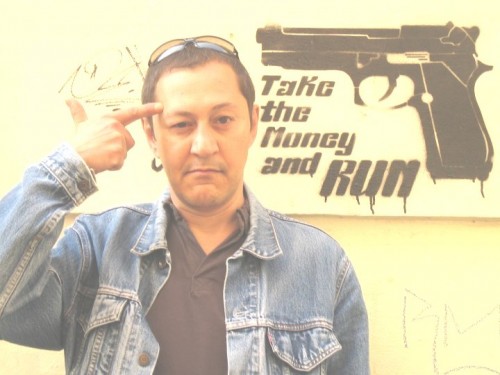
Akif Pirinçci: Das Schlachten hat begonnen
Martin Lichtmesz
Ex: http://www.sezession.de/
[1]Einige Leser haben in unseren Kommentarspalten bereits auf den auf der Netzseite Achse des Guten veröffentlichten Kommentar des türkischstämmigen Bestseller-Autors Akif Pirinçci [2] zum Fall Daniel S. hingewiesen. Der provozierende Text ist vielleicht die notwendige Roßkur, um der gezielt weichgespülten und verlogenen Berichterstattung [3] der Mehrzahl der Medien ein Gegengewicht zu geben.
Es mag auch sein, daß Pirinçci mit seinen drastisch-célinesken Formulierungen ähnliches im Sinn hatte, wie es Götz Kubitschek in der aktuellen Druckausgabe der Sezession [4] ausdrückt: nämlich dem „halb verstorbenen, halb verfetteten Deutschland“ einen kräftigen Tritt in den Hintern zu verpassen, „um zu sehen, wo noch ein Muskel zuckt: kein ökonomischer Muskel, sondern einer, der den kulturellen, ethnischen, seelischen Selbsterhaltungstrieb in Gang“ zu setzen vermag.
Sein ungebremster Wutausbruch wird vielen Genugtuung bereiten, die von der landesüblich praktizierten Heuchelei und Schönrednerei ähnlich die Nase voll haben. Wo die üblichen Verdächtigen immer noch vom „bunten Deutschland“ säuseln, sieht Pirinçci längst schon einen „darwinistischen“ Rückfall in die Barbarei und einen bisher „kalten“, allnmählich „heiß“ werdenden „Bürgerkrieg“ im Gange. Man könnte indessen mit Hinblick auf die von Gunnar Heinsohn [5]beschriebenen demographischen Dynamiken auch von einem „ethno-biologischen“ Krieg sprechen. Hier einige Auszüge aus seiner Polemik:
Warum erzähle ich das? Weil es sich bei der letztmaligen Tötung eines jungen Deutschen namens Daniel S. von Türken in Kirchweyhe im Grunde um einen beispielhaft evolutionären Vorgang handelt, nämlich um den schleichenden Genozids an einer bestimmten Gruppe von jungen Männern. Dabei ist nicht einmal die Tötung selbst von Interesse, so grausam sich das auch anhören mag, sondern das “Biotop”, in dem der Genozid stattfindet. Und noch mehr dessen Folgen. Die Tat reiht sich ein in eine Serie von immer mehr und in immer kürzeren Abständen erfolgenden Bestialitäten, die zumeist von jungen Männern moslemischen Glaubens an deutschen Männern begangen werden. (Es befinden sich unter den Opfern nie Frauen. Die werden in der Regel vergewaltigt, was auch banal evolutionär zu erklären ist, aber dazu später.)
Am Entstehen dieses Typus von Gewalttäter trägt die Propaganda der „Migrantenindustrie“ erhebliche Mitschuld:
Natürlich haben die Täter nur rudimentäre bis überhaupt keine Ahnung von Islam – zum Glück! Aber das Wenige, was sie beigebracht bekommen haben, vom Hörensagen kennen oder erahnen, reicht aus, um sich als “The masters of the universe” zu fühlen. Die Theorie von einfühlsamen (deutschen) Soziologen, wonach diese bestialischen Jugendlichen sich in Wahrheit als Versager und Opfer der Gesellschaft vorkämen und ihr Blutrausch ein verzweifelter Aufschrei sei, ist natürlich eine von der Migrantenindustrie, schwachsinnigen Politikern und geisteskranken linken Medienleuten bestellte Lüge, die, obwohl niemand daran glaubt, nicht einmal sie selbst, dazu dienen soll, sozusagen das öffentliche “Branding” des armen, lieben Ausländers in das Hirn der Allgemeinheit zu penetrieren. Im Gegenteil, nicht einmal ein Milliardär mit dem Aussehen eines Ryan Gosling hat so viel Selbstbewußtsein wie ein Türke oder Araber, der einem Deutschen am Bordstein das Hirn aus dem Schädel tritt.
Diese Vorfälle laufen nach einem erkennbaren Muster [6] ab, das verbietet, sie als „Einzelfälle“ abzutun:
Das Muster ist immer gleich. Eine Gruppe oder die herbeitelefonierte Kumpelschaar umstellt das Opfer nach der Jagdstrategie von Wölfen, wobei die Delta- und Betatiere stets außen herum laufen und für das einschüchternde Jagdgeheul sorgen und das Alphatier nach und nach von der Beute Stücke abzubeißen beginnt, bis am Ende alle über sie herfallen und hinrichten. Die Zahl der solcherlei Weise ermordeten Deutschen wird von offiziellen Stellen bewußt geheimgehalten, es ist aber wohl nicht übertrieben, wenn man taxiert, daß es sich um die Opferanzahl eines veritablen Bürgerkrieges handelt.
Die deutschen Journalisten, die sich selbst so gerne als engagierte Humanisten inszenieren, sind von Zynismus und pathologischem Selbsthaß zerfressen. Auch sie kennen ihre „Untermenschen“ und ihr „unwertes“ oder zumindest minder-wertiges Leben – nämlich die eigenen Landsleute:
Es geht einem deutschen Journalisten am Arsch vorbei, ob ein junger Landsmann von ihm auf offener Straße totgeprügelt wird, im Gegenteil, da ihm vom Kindergarten an der Haß auf die eigene Volkszugehörigkeit antrainiert wurde, er sogar seine berufliche Existenz riskierte, falls er für so etwas Mitgefühl zeigte, freut er sich in einer Art Übersprungshandlung sogar darüber. …
Niemand hätte von der viehischen Ermordung von Daniel S. medial erfahren, wenn nicht durch eine Unachtsamkeit in einer lokalen Ausgabe der BILD-Zeitung darüber berichtet worden wäre und die Nachricht sich wie ein Lauffeuer durch das Internet verbreitet hätte. Überrollt von der Empörungswelle, saßen die linksgestrickten Medien nun in einer Zwickmühle. Wie bringt man das Kunststück fertig, den Leuten zu erklären, daß schon wieder ein unschuldiger Deutscher von deutschhassenden “Menschen mit Migrationshintergrund” totgeschlagen wurde, und suggeriert gleichzeitig genau das Gegenteil? Ein klassischer Fall von Doppeldenk. Vielleicht macht man es so wie der Bundespräsident Gauck in seiner Weihnachtsrede: “Sorge bereitet uns auch die Gewalt in U-Bahnhöfen oder auf Straßen, wo Menschen auch deshalb angegriffen werden, weil sie schwarze Haare und eine dunkle Haut haben”? Also einfach frech lügen? Es mußte doch, verdammt nochmal, möglich sein, das Ganze mit irgendwelchen Nazis in Verbindung zu bringen, so daß später an den Köpfen der Leser und Zuschauer in diesem Zusammenhang nur noch Bilder von glatzköpfigen Gewaltrobotern hängenbleiben!
Die Polemik endet mit einer pessimistischen Prognose, die man wohl als weiteren, verzweifelten Tritt in den vor Angst gelähmten Hintern Deutschlands verstehen muß:
Wie wird die Zukunft aussehen? Diese sich steigernde Deutsche-Totschlägerei wird medial sukzessive an ihrer Brisanz verlieren, so sehr, daß nur noch die allerschlimmsten Fälle in der Gewichtung von schweren Autounfällen Erwähnung finden werden. Es wird zum Alltag dazu gehören, man wird sich daran gewöhnen. Zum Teil ist es ja heute schon so. Und man wird sich damit abfinden müssen, daß man allmählich “übernommen” wird. Vor allem wird es ratsam sein, keine Söhne mehr zu haben. Wie gesagt, die Töchtern werden es wenigstens überleben.
Mehr zu diesem Thema im Verlag Antaios:
Götz Kubitschek / Michael Paulwitz: Deutsche Opfer, fremde Täter. [7]
Thorsten Hinz: Zurüstung zum Bürgerkrieg [8]
Fjordman: Europa verteidigen. [9]
Foto Akif Pirinçci: Achse des Guten. [10]
Article printed from Sezession im Netz: http://www.sezession.de
URL to article: http://www.sezession.de/37791/akif-pirincci-das-schlachten-hat-begonnen.html
URLs in this post:
[1] Image: http://www.sezession.de/37791/akif-pirincci-das-schlachten-hat-begonnen.html/rums
[2] Akif Pirinçci : http://www.achgut.com/dadgdx/index.php/dadgd/article/das_schlachten_hat_begonnen
[3] Berichterstattung: http://www.jungefreiheit.de/Single-News-Display-mit-Komm.154+M5bb240754d2.0.html
[4] Sezession: http://www.sezession.de/heftseiten/heft-53-april-2013
[5] Gunnar Heinsohn : http://www.sezession.de/4727/gunnar-heinsohn-eine-werkbiographische-skizze.html
[6] erkennbaren Muster: http://www.sezession.de/37666/daniel-s-kirchweyhe-und-jusef-el-a-neukolln-zweierlei-begrabnis.html
[7] Götz Kubitschek / Michael Paulwitz: Deutsche Opfer, fremde Täter.: http://antaios.de/gesamtverzeichnis-antaios/antaios-thema/44/deutsche-opfer-fremde-taeter.-auslaendergewalt-in-deutschland-hintergrund-chronik-prognose?c=13
[8] Thorsten Hinz: Zurüstung zum Bürgerkrieg: http://antaios.de/gesamtverzeichnis-antaios/reihe-kaplaken/11/zuruestung-zum-buergerkrieg.-notizen-zur-ueberfremdung-deutschlands?c=7
[9] Fjordman: Europa verteidigen. : http://antaios.de/gesamtverzeichnis-antaios/antaios-thema/45/europa-verteidigen.-zehn-texte?c=13
[10] Achse des Guten.: http://www.achgut.com/dadgdx/
00:05 Publié dans Actualité, Affaires européennes | Lien permanent | Commentaires (0) | Tags : akif perinçci, allemagne, europe, affaires européennes, multiculturalisme, multiculturalité, immigration, criminalité |  |
|  del.icio.us |
  |
|  Digg |
  Facebook
Manifeste pour une nouvelle dissidence
Contre la loi Taubira, la France des invisibles s’est réveillée. Et multiplie les actions de protestation contre la dictature des minorités et du politiquement correct. C’est le temps de la « Nouvelle dissidence ». Un manifeste de janvier 2010 que Polémia rediffuse.
————————————–
— La grande oppression —
La France et les nations européennes ne vivent plus dans une démocratie mais dans une après-démocratie où l’alternance n’est qu’une illusion. Ce n’est plus le peuple qui détient le pouvoir, c’est une classe d’oligarques. Les grands dirigeants financiers, médiatiques, culturels et politiques s’y côtoient. Ils imposent une idéologie dominante devenue idéologie unique.
1. L’idéologie unique enferme la pensée et l’opinion dans un carré carcéral dont les quatre côtés sont :
– le libre-échangisme économique voulu par les grands oligopoles mondiaux que sont les transnationales ;
– l’antiracisme, négateur des réalités ethniques et culturelles, qui culpabilise les défenseurs de l’identité française et de la civilisation européenne ;
– l’antitradition et l’inversion des valeurs qui bouleversent une expérience multimillénaire et le socle familial ;
– la vision marchande et mercurienne du monde et l’arraisonnement utilitaire de la vie, de la nature, de la culture.
L’idéologie unique assujettit durablement les Français et les Européens aux Anglo-Saxons : empêcher la constitution d’une Europe-puissance est d’ailleurs l’une de ses fonctions.
2. L’idéologie unique impose un despotisme mou à travers quatre logiques totalitaires :
– le novlangue, les médias-mensonges et les grandes peurs qui s’imposent par la tyrannie médiatique : quiconque s’écarte des vérités officielles est condamné au silence et/ou à la diabolisation ;
– la normalisation des règles et des comportements édictés :
• par les bureaucraties nationales, européennes (l’UERSS) et mondiales sous l’influence des grands groupes de pression (lobbies) ;
• par les grands cabinets de conseil internationaux (les Big Four).
– la théocratie des droits de l’homme qui assujettit les peuples à travers la Cour européenne des droits de l’homme qui interprète dans le sens de la pensée unique la Convention européenne des droits de l’homme ;
– la répression de Big Brother qui condamne les crimes contre la pensée grâce aux lois liberticides.
3. Cette idéologie unique a ses gagnants et ses perdants.
Du côté des gagnants, la superclasse mondiale (SCM), trente millions de cosmocrates qui ont plus de points communs entre eux qu’avec le peuple dont ils sont issus. Du côté des gagnants aussi, les pays émergents – la Chine notamment – et les bénéficiaires de l’immigration : migrants accédant aux régimes sociaux des pays développés ; employeurs tirant les salaires à la baisse. Du côté des gagnants toujours, les minorités ethniques et sexuelles bénéficiant d’un statut valorisé et de la discrimination positive.
Du côté des perdants, les anciens pays développés dont la puissance s’affaiblit, l’indépendance se rétrécit et la richesse s’amenuise et, en leur sein, les classes moyennes et les classes populaires dont la force de travail est exploitée par les transnationales et mise en concurrence avec celle des pays émergents et celle des migrants. Du côté des perdants toujours, les familles européennes dont le modèle de vie est dévalorisé et dont les difficultés à se loger et à trouver de bonnes écoles pour leurs enfants sont amplifiées par l’africanisation et l’islamisation.
La majorité invisible, les autochtones, les Français de souche sont les victimes de la situation. Ils souffrent de discrimination négative et subissent un processus de domestication. Ils ont perdu leur souveraineté, ils n’ont pas la possibilité de s’exprimer utilement par référendum. Les hommes politiques qui les gouvernent ne sont pas des hommes d’Etat mais des médiagogues qui gèrent leur carrière en flattant les médias et en se soumettant à l’idéologie unique. Face à l’inacceptable, il faut trouver la voie d’une nouvelle dissidence.
— La nouvelle dissidence —
Le système dominant repose sur le déni de cohérence et le déni de réalité. Vers la fin de l’Union soviétique, ceux qui voyaient la situation en face et osaient la dévoiler étaient qualifiés de dissidents : ils avaient pour arme le samizdat, c’est-à-dire la ronéo et l’anonymat. Les dissidents du mondialisme ont, eux, à leur disposition Internet et le pseudonymat, c’est-à-dire un outil subversif – la réinfosphère – infiniment plus puissant. Le rôle de la réinfosphère est de conscientiser l’opinion.
1. Première attitude de la dissidence : la réinformation est une gymnastique de l’esprit et de l’âme.
Elle consiste à chercher à se faire sa propre opinion pour échapper au conformisme et à la pensée perroquet. La réinformation consiste à chercher à connaître la réalité du monde à partir d’une expérience directe plutôt qu’à partir des écrans. Et, pour le recours aux écrans, à bannir autant que faire se peut les programmes de télévision au profit de la vidéo ou de la radio à la demande, et bien sûr des sites alternatifs de la réinfosphère.
2. La deuxième attitude de la dissidence consiste à libérer les esprits du formatage de l’idéologie unique.
Libérer les esprits du formatage de l’idéologie unique c’est émanciper les intelligences et les cœurs du politiquement correct, de l’économiquement correct, de l’historiquement correct, du moralement correct, du religieusement correct, de l’artistiquement correct. Face à la dictature de l’émotion conditionnée, il faut retrouver la voie de la raison et les grandes règles de l’esprit européen : en dehors des dogmes religieux, ne peut être dit vrai que ce qui peut être librement réfutable. Toute vérité officielle doit être passée au crible du doute.
3. La troisième attitude de la dissidence, c’est la force de l’âme.
L’âme puise son énergie dans les racines de la civilisation européenne et chrétienne et se ressource dans un imaginaire millénaire et/ou dans la foi religieuse. Tout ce qui donne à l’homme une vérité intérieure et le libère des pressions de l’urgence et de la contingence le rend plus fort. Il s’agit ici de refuser de se laisser contaminer par les émotions préfabriquées de l’extérieur pour mieux se réapproprier ses propres émotions : celles qui sont liées à sa terre, à son peuple, à sa langue, à son histoire, à sa religion. Bref, se relier aux émotions de sa famille, de sa lignée, de son clan, de ses coreligionnaires.
4. La quatrième attitude de la dissidence, c’est le comportement dissident, c’est agir différemment.
La dissidence, ce n’est pas seulement réfléchir. C’est aussi agir autrement :
– face au mondialisme économique, faire jouer le localisme, la préférence locale, la préférence nationale, la préférence européenne, le patriotisme économique ;
– face au déracinement pratiquer une écologie humaine et prochaine : reprendre le contact avec son territoire de vie et la nature qui l’entoure ; accepter comme des contraintes bienfaisantes les lois de la géographie et du climat ;
– face à la société marchande, se méfier des grands oligopoles de distribution ;
– face au cosmopolitisme et à l’antiracisme, défendre son identité : choisir l’école de ses enfants ; s’inscrire dans une logique d’enracinement dans ses choix esthétiques et culturels ; préférer l’art caché au financial art ; face au globish pratiquer et respecter la langue française ; face à la volonté de métissage des oligarques, cultiver le « nous » (le Sinn fein des Irlandais) ; face à la mémoire imposée par les maîtres du discours, préférer le souvenir qui renvoie à une réalité charnelle historique : la transmission familiale des événements tels qu’ils ont été réellement vécus par sa lignée.
5. La cinquième attitude de la dissidence, c’est l’intervention dans la vie de la cité et plutôt à la périphérie qu’au centre.
La dissidence, ce n’est pas un exil intérieur, c’est une étape vers la reconstruction d’un projet communautaire, c’est l’intervention dans la vie de la cité, là où cela peut être efficace, c’est-à-dire plutôt à la périphérie qu’au centre, plutôt dans la vie locale que dans la vie nationale.
La dissidence, c’est susciter des actions identitaires ou y participer :
– contre l’islamisation ou l’africanisation de son quartier ;
– contre l’imposition du globish dans son entreprise ou son administration.
Car « les libertés ne sont pas autre chose que des résistances » (Royer-Collard).
La dissidence, c’est aussi agir pour défendre un héritage que l’on aime : pour la protection d’un site ou d’un paysage, d’un monument, d’une église ou d’un musée, éléments de l’identité française et de la civilisation européenne.
La démocratie directe spontanée, l’organisation parajuridique de pétitions et de référendums locaux sont à cet égard de bons moyens d’action.
6. La sixième attitude la dissidence, c’est faire savoir.
Faire, faire savoir et, grâce à Internet, rendre publiques et visibles des actions frappées d’ostracisme par la tyrannie médiatique.
Agir, c’est aussi se faire entendre des élus, notamment locaux, pour que la pression du peuple compense la pression du Système.
7. La septième attitude de la dissidence, c’est participer à la mobilisation de forces immenses mais endormies : les majorités invisibles mais opprimées.
Ces communautés majoritaires économiquement, socialement et culturellement sont rendues invisibles par les oligarchies dirigeantes et les politiques de « diversité » qu’elles mettent en œuvre à l’encontre des majorités.
Ces majorités opprimées sont :
– les classes moyennes et les classes populaires sacrifiées aux intérêts de la finance, et mises en concurrence avec le monde entier sur le marché du travail ;
– les petites et moyennes entreprises victimes du fiscalisme et des oligopoles mondiaux ;
– les familles menacées par la théorie du genre et la culture de mort ;
– les chrétiens et les laïcs, les uns et les autres concernés par l’occupation de l’espace public par l’islamisation ;
– et, bien sûr, les jeunes mâles blancs (JMB) (expression d’Anne Lauvergeon) objets de toutes les culpabilisations et cumulant contre eux toutes les discriminations (comme jeunes, comme hommes, comme Blancs). Les jeunes hommes blancs (JMB) ont vocation à sortir la vieille Europe de sa dormition.
Il y a dans tous ces groupes, pour peu qu’ils prennent conscience de leur force, tous les ingrédients d’une révolte susceptible de porter une vague de populisme, courant d’opinion qu’il faut assumer sans complexe.
8. Vers la révolte du peuple ?
Allant bien au-delà de l’exil intérieur, la dissidence prend de l’ampleur, sur Internet mais aussi sur les réseaux sociaux et sur les réseaux territoriaux. La réappropriation de son environnement géographique et humain est une exigence croissante. De même que la prise de conscience par le peuple qu’il a un ennemi : la superclasse mondiale et les maîtres du discours qui la servent.
Avant-garde d’un mouvement qui va en s’approfondissant, le comportement dissident se nourrit d’une prise de conscience des méfaits du Système mondialiste dominant. Et cette prise de conscience conduit à renouer avec le génie français et l’identité européenne : recherche de la vérité, recours aux arts figuratifs, respect des traditions, goût de la liberté, défense de la langue et des patries charnelles.
La dissidence libère les esprits et forge les âmes : elle est l’étape préalable à la révolte du peuple.
Après s’être intéressée au novlangue, La Fondation Polémia présente, cette fois, Cinq cents mots pour la dissidence
Source : Polémia – première diffusion : 25/01/2010, seconde diffusion : 18 avril 2013
Crédit photo : DR.
[cc] Novopress.info, 2013. Les dépêches de Novopress sont libres de copie et diffusion sous réserve de mention de la source d'origine. La licence creative commons ne s'applique pas aux articles repris depuis d'autres sites [http://fr.novopress.info/]
00:05 Publié dans Actualité, Affaires européennes | Lien permanent | Commentaires (0) | Tags : dissidence, politique internationale, france, europe, affaires européennes, politique | | del.icio.us | | Digg | Facebook
Fonder un Etat européen
Contre l’Europe de Bruxelles
Fonder un Etat européen,
par Gérard Dussouy
![[Lecture] Contre l’Europe de Bruxelles – Fonder un Etat européen, par Gérard Dussouy](http://fr.novopress.info/wp-content/uploads/2013/04/dussouy_modifie-1.jpg)
PARIS (NOVOpress Breizh) - Auteur d’ouvrages concernant la géopolitique et les relations internationales (« Traité de l’interétatique », « Les théories de la mondialité » et « Les théories géopolitiques » Editions de l’Harmattan), Gérard Dussouy, professeur émérite à l’Université Montesquieu de Bordeaux (géopolitique et relations internationales), vient de publier aux Editions Tatamis un livre intitulé « Contre l’Europe de Bruxelles – Fonder un Etat européen », préfacé par l’historien Dominique Venner.
Dans ce nouvel ouvrage, Gérard Dussouy commence par exposer la situation de l’Europe en matière de démographie, de défense, d’économie et d’identité. Il fait un parallèle entre la situation de l’Empire romain finissant et celle de l’Union Européenne à bout de souffle qui présente, selon lui, tous les symptômes du « syndrome romain » : effondrement démographique, submersion migratoire, vieillissement des élites, délitement des cultures nationales, anomie sociale, fuite dans l’individualisme, déclin économique accéléré, finances publiques en perdition, incapacité à prévenir et à maîtriser les perturbations de toutes natures en provenance de son environnement international, déclin militaire et désarmement programmé .
Face à la crise généralisée que connaît l’Europe, Gérard Dussouy nous invite à dépasser le cadre national qui est trop petit pour résoudre les grands problèmes et trop grand pour satisfaire aux besoins locaux ; ce dépassement devrait avoir pour objectif la création d’un Etat fédéral des régions d’Europe dans lequel les grands pays seraient démembrés en régions qui deviendraient, au même titre que les petits pays, des régions fédérées constitutives de l’Etat européen.
L’abandon de l’Union européenne actuelle et la formation d’une Europe fédérale des régions, qui peut sembler utopique aujourd’hui, pourraient avoir lieu à la faveur d’un stress majeur des populations européennes soumises à un faisceau de crises simultanées ( crise économique, crise inter-ethnique, crise d’identité, crise sociale, crise du système politique, crise géopolitique ) et d’une communication intra-européenne intense qui permettrait de secréter une nouvelle symbolique et une nouvelle culture politique européenne .
Pour ce faire, l’auteur écrit qu’il est indispensable de mettre en œuvre très rapidement, parce que nous ne disposons pas de beaucoup de temps avant qu’il ne soit trop tard, des mouvements citoyens européistes porteurs d’une culture politique européenne et susceptibles de la diffuser . Les partis politiques de gouvernement, paralysés par les ambitions personnelles et une idéologie qui participe à la fois de l’universalisme et d’un nationalisme étriqué sont incapables de contester le bien fondé d’une représentation dominante du monde qui n’offre aux peuples européens d’autre alternative que de subir. Quant aux mouvements dits « populistes », l’auteur considère que ceux d’extrême-droite surestiment beaucoup les effets d’un repli sur le pré-carré national et que ceux d’extrême-gauche s’évertuent à vouloir faire croire que le socialisme, dont eux seuls ont saisi l’essence, est toujours malgré ses réfutations par le réel, répétées ici et là, partout à travers le monde, la voie du bonheur pour l’humanité toute entière .
Gérard Dussouy pense que seule la création d’un tel état fédéral serait en mesure de prendre les mesures nécessaires à un redressement de l’Europe : mise en place de frontières géographiques, démographiques et économiques; création d’un espace économique semi-autarcique et protégé; politique de redressement de la natalité des Européens; sortie de l’OTAN et création d’un système de défense strictement européen ; partenariat économique, militaire, scientifique et culturel avec la Russie; développement de pôles européens de recherche et développement . La création d’un état fédéral permettrait également de résoudre la crise liée à la monnaie unique en permettant les transferts nécessaires entre les régions d’Europe les plus favorisées et celles qui le sont moins.
Ce livre est important parce qu’il constitue une excellente synthèse de la problématique géopolitique et économique commune à l’ensemble des peuples européens. Les lecteurs pourront apprécier diversement la solution envisagée par l’auteur pour sortir de la situation funeste dans laquelle nous sommes aujourd’hui, mais il est indispensable pour mener une réflexion sur le sujet essentiel du devenir de l’Europe.
François Arondel
Contre l’Europe de Bruxelles – Fonder un Etat européen, par Gérard Dussouy, Editions Tatamis, 180 pages, 14 € (port compris). Commander
[cc] Novopress.info, 2013. Les dépêches de Novopress sont libres de copie et diffusion sous réserve de mention de la source d'origine. La licence creative commons ne s'applique pas aux articles repris depuis d'autres sites [http://fr.novopress.info/]
00:05 Publié dans Actualité, Affaires européennes, Géopolitique, Livre, Livre | Lien permanent | Commentaires (0) | Tags : livre, gérard dussouy, géopolitique, politique internationale, europe, union européenne, affaires européennes | | del.icio.us | | Digg | Facebook
What's Driving France's Surprising Anti-Gay Marriage Protest
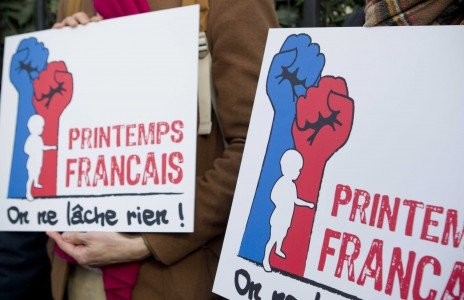
The French Spring
Paris.
This year, the spring in France is unusually cold and rainy, coming up after the frosty and long winter. Only last Sunday was different: the sun pushed the clouds away, for the first time for a few months, and immediately the lucid Parisian air warmed up and trees broke in full bloom. The French were cheered up after long gloom and went to demonstrate against neoliberal policies of their new ostensibly socialist government. This Blairite ‘socialism’ is symbolised by the new gay marriage and adoption bill that the government tries to push through the Parliament despite popular rejection. The French police, brutal as ever, wielded batons, tear gas and arrested the demonstrators. Sixty-seven of them were in prison after the mammoth manifestation of March 23. (They apparently were released). The newspapers speak of the French Spring, echoing the Arab one.
The new President Francois Hollande is quite unpopular; his ratings are the lowest of any French president since presidential popularity began to be rated in 1981. For the simple reason: his socialist party continues with the same neoliberal policies, this time in agreement with the tame trade unions. The Wicked Witch of the West is dead, but her spirit is still with us. The ministers have offshore accounts they previously denied. By the new ‘national agreement’ (ANI), the employers will be allowed to extend working hours, to reduce salaries to the minimum and to enforce «working mobility» by sending workers to far-away plants. If they refuse they can be fired without compensation. The family allowances shrink, the pensions stagnate and do not keep up with the inflation. France, like the rest of us, was robbed by the bankers, and the working people are left to pay the bills. The families of French workers have difficulty to have their ends meet. They view the gay marriage and adoption bill as a part and parcel of this neoliberal attack on their lives.
In order to become a law, the bill had to be approved by the Senate and then it should come again to the National Assembly, the lower house. Recent protesters manned a picket for the time of the debates, starring Cardinal Barbarin, the Archbishop of Lyon, the Primate of the Gauls and the second highest ranking man in the Catholic Church in France. Still the Senate approved the bill with wafer-slim majority of two votes, both given by deserters from the Gaullist party representing the French overseas. Now the tents of the protesters are pitched in front of the National Assembly, and the police expects more trouble for April 23, the day of the final vote brought forth by the government.
The socialist party and its allies, soft Communists and Greens, still insist on the unpopular bill. They care more about their sponsors, rather than for the ordinary French families who hardly can feed their own children, say their opponents.
The biggest manifestation of March 23 against the bill gathered over a million participants in Paris alone. The French police claimed there were only three hundred thousand protesters. They learned from the American repression of the Occupy movement and falsified the photos of the demo. On the protesters’ site one can see the sloppily Photoshop-doctored photos: in order to fit their numbers, police erased not only the marchers, but the dividing lines and trees off the Avenue de la Grande Armee near the Arc de Triomphe.
The French people are really upset by the bill. Traditionally extremely tolerant to all sexual proclivities, they justifiably refuse to see it as a “struggle for gay rights.” For them, this is a new step towards the Brave New World of tube-manufactured children, towards inhumane capitalism where money buys all and ordinary working people are deprived of everything: of steady work, of respect, of families, of homes and even of their children.
The supporters of the bill are pushing with their standard soft-leftist agenda of caring for everybody – gays, lesbians, immigrants – but the working class majority who are castigated as “bigots, homophobes and anti-semites”. Indeed they took a leaf from the pro-Israel supporters (who always defend their untenable positions by crying “antisemitism”) and bewailed the “homophobia” of the protesters. They claimed that a gay was beaten up somewhere, and that the protesters (sic!) were guilty of incitement, though there is a considerable and well-publicised body of Gays against the Bill who joined the demo and fought the bill together with the rest of the French.
Of course, adoption agencies support the bill. Each adoption brings tens of thousands dollars to the agencies, and now they will have new clients. Middle Eastern wars like the Syrian civil war encouraged by France will provide the desired orphans. Or not necessarily orphans: there was a famous scandal when the agencies imported children for adoption from war-savaged Darfur. The children were stolen or bought from their parents. Some of them allegedly ended up in the organ transplantation clinics.
The new bill will boost the intermediaries who supply surrogate mothers from the former colonies and poor Third World countries; the courts enforce the contacts so these women will have to part with their babies whether they want it or not. Indeed the new neoliberal law restores slave trade to the position it lost in 19th century. Moreover, bearing in mind the opening for transplantation, it can restart a neo-cannibalism, too.
Europe is in bad shape. This year I surfed on the crest of early spring through many small towns and villages of France, Italy, Spain; the old continent is dying out. The houses stay empty and boarded up; only tourists and immigrants remain at large. The big cities are overcrowded, the rest is dead, as if the dreadful prophecy of Iliya Ehrenburg (detailed in his 1920s novel DE Trust) that big money will destroy Europe, came true. The good old Europe was destroyed by combination of Right and Left policies. Thatcher (and her counterparts in European countries) eliminated the working class, industry, education; shifted incomes from ordinary people to the rich; afterwards, came Blair (and his counterparts elsewhere) and completed the job, by destroying the family and planting his surveillance cameras on every courtyard. The right created debts, the left came to collect and pay the bankers.
Israel Shamir is now in France, and he can be reached on adam@israelshamir.net
00:05 Publié dans Actualité, Affaires européennes | Lien permanent | Commentaires (0) | Tags : france, europe, affaires européenne, printemps français | | del.icio.us | | Digg | Facebook
Contre l'Europe de Bruxelles !...
Contre l'Europe de Bruxelles !...
Les éditions Tatamis viennent de publier un essai de Gérard Dussouy intitulé Contre l'Europe de Bruxelles - Fonder un Etat européen et préfacé par Dominique Venner. Professeur de sciences politiques et de géopolitique, Gérard Dussouy est, notamment, l'auteur de Quelle géopolitique au XXIe siècle (Editions Complexes, 2002).

" « Bien entendu, on peut sauter sur sa chaise comme un cabri en disant « l’Europe ! », »l’Europe ! », « l’Europe ! », mais cela n’aboutit à rien et cela ne signifie rien. »
Charles de Gaulle, Discours et messagesLa sentence gaullienne a frappé les esprits. Elle a visé juste jusqu’à aujourd’hui. Mais, n’est-ce pas faute d’avoir abandonné notre communauté de destin, l’Europe, aux mains des seuls politiciens et des eurocrates ?L’Europe n’appartient-elle pas d’abord aux Européens ? Comment, dans le même temps, peut-on laisser certains expliquer que l’Europe est la cause de tous nos maux alors que l’idée européenne est la solution face à la mondialisation ?Des Thermopyles au Traité de Rome, des tranchées de Verdun aux travées du Parlement Européen à Strasbourg, les Européens ont su résister, dépasser leurs querelles, créer, et innover.Et si la prochaine innovation était institutionnelle ?Et si l’on construisait enfin l’Europe, une autre Europe, notre Europe ?Face à la crise, et contre les fauteurs de décadence.Naturellement engluée dans un brouillard libéral et mondialiste, l’Europe navigue à vue.Face au monde multipolaire qui se dessine, et comme à chaque rendez-vous avec l’Histoire, l’Europe devra choisir entre la puissance ou la mort.La mort, c’est subir la crise, accepter le déclin, décourager ses forces vives et laisser fuir sa jeunesse pour ne devenir qu’une ombre de ce que les Américains appellent déjà « la vieille Europe », celle des musées, des maisons de retraite et des souvenirs.La puissance, c’est envisager le renouveau, le dépassement des États-Nations, la construction d’un État européen volontariste et pragmatique. Fédéral et régional, afin de respecter et de protéger la diversité culturelle des peuples européens, il se doit d’être en mesure de répondre aux attentes sociales des populations. Fort et puissant afin de promouvoir et de défendre, au delà de toute idéologie, les intérêts matériels et immatériels, les valeurs et les traditions culturelles des Européens, il doit oser rayonner à travers le monde.Cri d’alarme et cri du coeur, ce livre appelle à un élan collectif vers un État européen, un Etat d’urgence ! Il est temps que le cabri se fasse loup ! "
00:05 Publié dans Affaires européennes, Géopolitique, Livre, Livre | Lien permanent | Commentaires (0) | Tags : géopolitique, livre, politique internationale, europe, affaires européennes, gérard dussouy | | del.icio.us | | Digg | Facebook
Bryan Magee’s The Tristan Chord

Bryan Magee’s The Tristan Chord
By Greg Johnson
Ex: http://www.counter-currents.com/
 Review:
Bryan Magee
The Tristan Chord: Wagner and Philosophy [2]
New York: Metropolitan Books, 2000

Bryan Magee’s The Tristan Chord: Wagner and Philosophy (just Wagner and Philosophy in the UK) combines two of my favorite subjects into an informative, stimulating, and highly readable book. Creativity and critical reflection are two very different activities, and excellence in one is seldom accompanied by excellence in the other. Thus Richard Wagner was virtually unique because he was both a great artist and a serious intellectual.
First of all, Wagner had a remarkably facility for reflection on both his own art and art in general, which he poured into a large number of books and essays on music and drama. Wagner was also widely read in mythology, religion, history, politics, and—at the very pinnacle of difficulty and abstraction—philosophy.
Wagner’s greatest philosophical influences were Ludwig Feuerbach and Arthur Schopenhauer, particularly the latter. Furthermore, Wagner did not merely read these philosophers. He understood them profoundly and incorporated their teachings into the living substance of his greatest artistic achievements.
Sometimes theories can get in the way of authentic artistic expression. But not so with Wagner, for when he read Feuerbach and especially Schopenhauer, they did not so much furnish his mind with new ideas as articulate and thus strengthen the intuitions that he held all along. Philosophy, in short, was an aid to authentic existence and creativity. It cleared away confusions and impediments and helped Wagner become who he really was.
The Tristan Chord is a fugue that simultaneously follows Wagner’s development in four different areas: (1) his operas, (2) his theory of opera, (3) his political thought, and (4) his philosophy of life. (Unkind reviewers would say that the book jumps around and repeats itself a lot.)
The Operas
For our purposes, Wagner’s 13 operas fall into four groups.
First, there are what could be called Wagner’s juvenilia: Die Feen (The Fairies), Das Liebesverbot (The Ban on Love), and Rienzi. The common denominator of these works is that they were deliberate, self-conscious attempts to write in a particular style. Die Feen is a German Romantic opera in the style of Weber. Das Liebesverbot is an Italianate opera in the style of Bellini. Rienzi is a Parisian Grand Opera in the vein of Meyerbeer.
Wagner later repudiated these operas as calculating, commercial, and thus inauthentic. But, as Magee points out, for all that, they are still good. Die Feen and Das Liebesverbot were written when Wagner was 19 and 20, and Magee correctly remarks that they are better than anything Mozart or Verdi composed at that age. Furthermore, Rienzi is better than anything by Meyerbeer. Although Wagner expressly excluded these works from performance at Bayreuth, they should be performed more regularly, and what better place to do it than the international Wagner festival?
The next three operas are Wagner’s early mature works: The Flying Dutchman, Tannhäuser, and Lohengrin. The common denominator is that they are authentic expressions of Wagner’s mature artistic style, yet they predate Wagner’s theoretical works on opera and drama and his encounters with the philosophies of Feuerbach and Schopenhauer.
Wagner’s middle period consists of the four operas of The Ring of the Nibelung: Das Rheingold, Die Walküre, Siegfried, and Götterdämmerung. These works are deeply marked by Wagner’s early theory of opera, his revolutionary political engagement, and the philosophy of Feuerbach.
Wagner’s final period consists of three operas: Tristan and Isolde, The Mastersingers of Nuremberg, and Parsifal. What unites them is that they reflect Wagner’s mature views on the nature of opera and drama, politics, metaphysics, and the spiritual life, for which Schopenhauer was the indispensable philosophical midwife.
This chronology is somewhat muddled by the fact that although Wagner conceived and wrote the Ring libretto well before he began work on Tristan and Isolde and The Mastersingers, he composed both operas before completing the music for the Ring cycle. Nevertheless, the Ring and the last three operas belong to distinct phases in Wagner’s musical and intellectual development.
The Theory of Opera
Beginning in 1849, Wagner began to elaborate a theory of opera and drama in such books and treatises as The Art Work of the Future (1849), Art and Revolution (1849), Opera and Drama (1850–51), and A Message to My Friends (1851). Twenty years later, Wagner made important changes to his theories in such works as Beethoven (1870) and The Destiny of Opera (1871).
The core of Wagner’s theory of opera are his views of the nature and aesthetic potential of opera. Modern opera was a conscious attempt to revive ancient Greek drama, which had musical accompaniment. Wagner regarded classical Athenian drama as a pinnacle of artistic achievement.
First, classical drama had enormous expressive powers because it combined a whole range of arts, including poetry, music, acting, mime, and even painting and architecture for the staging. This is the idea of the “total work of art,” the Gesamtkunstwerk.
Second, classical drama focused on mythical themes that were shared by the whole community and in which each individual could find personal meaning.
Third, classical dramas were sacred and communal rather than profane, private, and commercial. They were subsidized by the state and performed as part of religious rites in which the whole population took part. Greek drama fused art, religion, and politics. It was a collective, celebratory experience of the community’s self-awareness of its common origins, nature, and destiny. These views remained essentially the same.
What changed were Wagner’s views of the relative importance of music and other dramatic elements within opera. Wagner believed that drama and especially music had made remarkable progress since ancient Greece. Shakespeare was a better dramatist than Aeschylus or Sophocles because he penetrated more deeply into character and motive. And Beethoven had vastly expanded the emotional power of music. But even with these advances, modern opera failed to realize its artistic potential and remained inferior to ancient Greek tragedy. Wagner set out the correct that.
In his early theory of opera, Wagner sought to create a greater unity between words and music by dispensing with the dichotomy between recitative and aria; eliminating purely musical forms, such as the da capo aria, which contained dramatically needless repetitions; dropping dramatically unintegrated showpieces for virtuoso singers; eliminating ensembles for multiple singers which are musically effective but make it impossible to understand the words; clarifying orchestration so that the music did not overwhelm the words, and the like. The aim was to make music and drama entirely complimentary, to compose music that underscores rather than overwhelms our experience of drama. In effect, Wagner was inventing the “soundtrack,” and indeed, Wagner was the single greatest influence on movie scoring. Wagner put this theory into practice in Das Rheingold and the first act of Die Walküre.
But although Wagner was right to prune back some of the musical-dramatic imbalances of earlier forms of opera, he gradually abandoned strict parity between music and words, first by following his own muse and later through his encounter with the aesthetic theory of Arthur Schopenhauer
Schopenhauer argued that music has greater emotional power than all other art forms because it has greater metaphysical depth. Representational art shows us Platonic forms or ideas, whereas music (like sex) offers us direct experience the primal metaphysical reality which Schopenhauer called will.
Wagner’s use of music was analogous to the chorus in Greek drama: but the Greek chorus merely explained the inner meaning of the events represented on stage whereas the orchestra can actually make you feel them; music actually allows one to feel what the characters feel. Magee does, however, point out that Wagner never abandoned the various musical-dramatic innovations of his earlier theoretical works, using them to great effect.
But the music was primary, and indeed, music has always been primary in opera. The flimsiest plots can become absolutely compelling if set to music. And no matter what his theory, Wagner never lost sight of music’s divine and magical powers. Thus even in Das Rheingold, at the very end, he uses pure music to remind us that, for all their corruptions and follies, the gods are still gods.
Indeed, Wagner’s mature, Schopenhauerian operas, Tristan and Isolde, The Mastersingers, and Parsifal, can be seen as evolving out of distinct musical-emotional ideas, just as Schopenhauer believed the world of representation arises out of the primal will. In Tristan the musical-emotional seed is erotic longing. In The Mastersingers it is what I call “generativity,” namely the self-renunciation of the old to foster the next generation. In Parsifal it is what I call “abjection,” the feeling of guilt and the need for absolution, the feeling that mankind is incapable of solving the problems of life without the supplement of some sort of supernatural grace. Furthermore, as the music gained in primacy, the libretti shrank: Tristan and Parsifal have the fewest words among Wagner’s operas, and Parsifal is one of the longest.
Wagner’s Politics
Magee’s discussion of Wagner’s politics aims at refuting the idea that he was some sort of Right-wing proto-fascist.
Magee argues that Wagner a Left-wing revolutionary in his youth. Specifically, Wagner was heavily influenced by the Young Germany movement of Heinrich Laube (1806–1884) and the anarchism of Pierre-Joseph Proudhon (1809–1865) and Mikhail Bakunin (1814–1876).
Wagner’s anarchism valorized a pre-industrial Hobbit-like society of small, independent farmers and craftsmen. The principles of this form of society were nature, which puts limits on acquisition, and love, which puts limits on exploitation. This anarchistic utopia was destroyed by industrialism and usury, creating a miserable, landless proletariat toiling to heap up riches for capitalists. Capitalism is founded on the rejection of love for the pursuit of power and of nature for artifice and the pursuit of unlimited wealth.
Wagner’s critique of capitalism is reflected in the third scene of Das Rheingold, where the Nibelung dwarf Mime laments the loss of the Nibelung’s traditional life as independent craftsmen to his tyrannical brother Alberich, who has forsworn love in order to steal the Rhine gold, from which he fashioned a magic Ring, which he has used to enslave the Nibelungen and make them toil in mines and factories to heap up riches for himself. Wagner hoped that the revolution would break the rule of power and greed and inaugurate a new form of society based on love and nature.
Wagner combined this anarchist-socialist outlook with German nationalism. But, as Magee stresses, German nationalism was, in its time, a Left-wing political cause too. In particular, Wagner was deeply influenced by the Young Germany movement, which preached German national and cultural regeneration after the humiliations of the Napoleonic conquest. They wished to unify Germany under a republican regime. They were also socialists and advocates of sexual freedom.
Magee’s argument, however, hinges on a superficial fixation on the categories of Left and Right as opposed to an appreciation of the substance of Wagner’s positions. Yes, when Wagner was a young man, his German nationalism and critique of capitalism were Left-wing positions. But the substance of Wagner’s anarchism was essentially conservative and backward-looking. Furthermore, Wagner’s combination of nationalism and conservative anti-capitalism is pretty much the paradigm of 20th-century fascism, National Socialism, and their New Right successors. Finally, Wagner surely would have rejected the substance of most of what passes for Left-wing opinion today. There is little doubt that if Wagner were alive today, he would be aligned with the European New Right.
Magee also argues that, contrary to widespread belief, Wagner did not become more conservative as he grew older but merely gave up the idea that politics could solve man’s most important problems. Thus, Magee concludes, Wagner did not embrace conservative politics but merely became apolitical. This argument, however, strikes me as sophistical, for a large part of conservatism is precisely the conviction that the most important problems of life cannot be solved by politics. Furthermore, it ignores the fact that the substance of Wagner’s youthful anarchism was a critique of capitalism from a deeply conservative, anti-modernist perspective
Feuerbach
Ludwig Feuerbach (1804–1872) was the first German philosopher to exercise an important influence on Wagner. Feuerbach was one of the Young or Left Hegelians who accepted Hegel’s basic philosophical framework but argued that Christianity and the modern state, including modern capitalism, are not the end of history and that we can evolve beyond them.
To find a lever and a place to stand in order to critique Hegel’s system, Feuerbach embraced materialism and atheism. Feuerbach argued that gods and religious myths are merely projections and reifications of human nature. Thus, although there are no gods and all religions are false, religion is still deeply important, because it provides insight into human nature.
Wagner embraced Feuerbach’s view of religion when he was writing the Ring, which is the story of the destruction of the gods and the beginning of the age of man. Magee argues that on religious matters, Wagner remained a Feuerbachian for the rest of his life. This is plausible, for even though Schopenhauer convinced Wagner that there is a metaphysical dimension beyond the material world, Schopenhauer himself was an atheist, albeit one who also recognized the importance of religion for gaining insight into human nature.
Nevertheless, I wish that Magee had showed how his thesis is consistent with Wagner’s many remarks on Christianity, particularly those recorded in the diary of his wife Cosima, for they certainly do not sound like the views of an atheist. Wagner clearly wished to sever Christianity from its Jewish and Catholic roots and remake it as a Germanic folk religion, and perhaps he regarded it merely as an exoteric cult in which he did not believe. But if so, he kept up the pretense even in front of his wife.
Moreover, Wagner’s last opera Parsifal, which deals with the knights of the Holy Grail, is definitely not orthodox Christianity in any sense. It even contains elements of Buddhism and Schopenhauer. But for all that, the Grail and the Spear of Longinus still perform magic, and I find it impossible to listen to the music and conclude that Wagner did not believe in that magic.
Feuerbach’s social and political philosophy was largely consistent with Wagner’s pre-existing Young Germanist and anarchist-socialist convictions. As a materialist and atheist, Feuerbach was convinced that nature allows human beings to be happy on earth if they act properly: if they love one another and keep their desires for material goods moderate and within natural bounds. He believed that love was man’s greatest need and satisfaction. He also believed that love makes possible a social order that is free of coercion and exploitation. Injustice arises when human beings reject loving and being loved for the pursuit of power and wealth, transgressing nature’s limits by acquiring unnecessary and excessive material possessions. Revolution is necessary to overthrow the tyrants and exploiters and to institute a more egalitarian society based on love and in harmony with nature.
Wagner first encountered Feuerbach’s writings in the 1840s. His principal works are The Essence of Christianity (1841) and The Principles of the Philosophy of the Future (1843). But Wagner’s most intense engagement with Feuerbach began in 1849, when he was an exile in Switzerland where he fled after the collapse of the 1849 Dresden revolution, of which he was a ringleader along with Bakunin. Wagner’s The Art Work of the Future (1849) is dedicated to Feuerbach and bears a distinctly Feuerbachian title. But Wagner’s greatest tribute to Feuerbach is the Ring cycle itself, which is constructed around the antithesis of the principles of love and power, puts forward a revolutionary critique of tradition, capitalism, and sexual repression, and culminates with the death of the gods and the beginning of the age of man.
Schopenhauer
Wagner was such a man of ideas that Feuerbach’s influence could only be surmounted by that of a greater philosopher: Arthur Schopenhauer (1788–1860), who Wagner discovered in the fall of 1854 while he was writing the music of Die Walküre. The treatment of Schopenhauer is the most interesting part of the book. Magee obviously relishes the subject, for just as Wagner is his favorite composer, Schopenhauer is his favorite philosopher. Magee is also the author of The Philosophy of Schopenhauer (Oxford: Oxford University Press, 1997), a masterful overview of Schopenhauer’s thought with an appendix on Wagner and Schopenhauer that is as long as Magee’s earlier book Aspects of Wagner [3].
Wagner was well-prepared to appreciate Schopenhauer. According to Wagner’s autobiography My Life, when he first encountered Schopenhauer, he felt that Schopenhauer was articulating his most longstanding and heartfelt intuitions. He had always already been a Schopenhauerian. Furthermore, according to Magee, Wagner was deeply disillusioned with radical politics and had retreated into solitude, where he had lost himself in composing Das Rheingold and Die Walküre, the latter of which he was writing at astonishing speed, in a frenzy of inspiration, when he first picked up Schopenhauer in the fall of 1954.
It scarcely seems possible that in such a state, Wagner would have the mental energy to read and digest the two volumes and 1,000+ pages of Schopenhauer’s The World as Will and Representation, which, although it is one of the most lucid and brilliantly written philosophical works of all time, still deals with weighty and difficult topics. But Wagner went on to read The World as Will and Representation four times within one year, and it was his inseparable companion for the rest of his life.
Schopenhauer caused Wagner to revise his explicit views on three subjects: materialism, optimism, and the place of music in opera. (I have already touched on the third topic above.) Unlike Feuerbach, who claimed that the material world was the only reality, Schopenhauer argued that the material world (what he called “the world as representation”) does not exhaust reality. There is another dimension of reality, what Kant called the “thing as it is in itself” and what Schopenhauer calls “the world as will.” Schopenhauer taught that the will is a blind, purposeless striving, which can never find satisfaction. He believed that the will is at the root of all natural and human phenomena: the life force, the sex drive, etc. We are generally unconscious of the workings of the will within us, but it can be experienced most fully through sex and music. He believed that man’s conscious mind, including our rationality, is ultimately conditioned by the will. Thus man is largely an irrational animal.
Schopenhauer’s doctrine of the will largely destroys the optimism of those like Feuerbach and the anarchists who believe that human beings can be happy once we create a form of society in which human striving is moderated by reason to stay within the limits of nature. For Schopenhauer, human striving can never harmonize with the limits of the natural world (the world as representation) because human action arises from the world as will, which is blind, irrational, and unbounded. Thus human beings in the grip of the will are doomed to excess, conflict, and misery in our earthly existence. For Schopenhauer, life is essentially tragic, and optimism is folly.
These ideas represented a fundamental rejection of Wagner’s conscious convictions at the time: he was a Feuerbachian materialist and an optimist. But when he looked back at his operas—The Flying Dutchman, Tannhäuser, Lohengrin, and the Ring cycle—he realized that his conscious philosophy had always been out of sync with his deepest intuitive convictions as expressed in his art. Schopenhauer had liberated Wagner from a false self-understanding, harmonizing his conscious and unconscious minds and laying the groundwork for his greatest mature works, his Schopenhauerian operas: Tristan and Isolde, The Mastersingers, and Parsifal.
Schopenhauer taught that man is doomed to suffer unless he can break the power of the will within him. Schopenhauer calls this redemption. Redemption is possible through three paths: the way of suffering, as when the cancer patient “lets go” and ceases to fear death; the aesthetic path of contemplating beauty, which in Kant’s terms is “disinterested,” meaning that it stills the striving of the will within us; and the religious path, in which the experience of compassion reveals the fundamental oneness of all beings and the illusory nature of the conditioned, suffering ego.
Redemption cannot be willed, because the will is the root of our bondage. Thus redemption must come to us from without, or from above, as a kind of supernatural grace, and the only thing that we can do is prepare a space for it and make ourselves receptive. Redemption cannot, therefore, be achieved by revolutionary politics or any other kind of purposeful action. But it can be experienced collectively through artistic performances and religious rituals, which create a space and attune the soul for the reception of redemption, which may or may not come. Ritual and art, of course, are fused together in Greek Tragedy . . . and in the Wagnerian Music Drama.
Redemption through “breaking of the will to live” is precisely the sort of lugubrious teaching one would expect of history’s greatest pessimist. But if Schopenhauer had been so inclined, he could have formulated redemption in a much more appealing way. The breaking of the will to live is actually equivalent to conquering the fear of death, and if one does not fear death, one has conquered all lesser fears as well.
For Schopenhauer, redemption has to be redemption in this life. He did not advocate suicide, much less regard it as redemptive. Nor did he believe in the survival of the individual soul after death. Thus for Schopenhauer, one goes on living after one attains redemption. But one’s life is no longer in the grip of the will. But how?
The will wills only one thing: to keep on willing. It is a will to self-preservation. And it rules us, ultimately, through our fear of death, which is, for most people, the greatest of all fears. Thus breaking the will’s power is equivalent to losing one’s fear of death, and with it, one loses all lesser fears as well.
Thus the redeemed individual lives a life without fear, and fear is the root of all vice and the main impediment to self-actualization and duty. Thus, paradoxically, what Schopenhauer calls breaking the will to live is actually the primary condition for a truly realized and happy life, but as a pessimist, he would not put it that way.
Wagner’s last three operas are all about redemption, and Magee devotes three of his best chapters to Tristan and Isolde, The Mastersingers, and Parsifal. Schopenhauer thought that sex gave us profound insight into the nature of the will, but it was ultimately a form of bondage, not a path to redemption. But even after he read Schopenhauer, Wagner never abandoned his belief in the redemptive power of love. The Ring cycle ends with a musical theme called “Redemption through love,” but it is not just love, but a love-death: Brünnhilde joins Siegfried on his funeral pyre, and the sparks fly up to consume Valhalla and the gods. Tristan and Isolde deals with the same love-death theme. Schopenhauer thought that lovers’ suicide pacts made no sense. Wagner actually wrote a letter setting Schopenhauer straight, but his argument is inchoate, and the letter was never sent. In the end, he argued the point with some of the most beautiful music ever written. The Mastersingers and Parsifal are more “orthodox” in their Schopenhauerianism. The Mastersingers deals with the redemptive power of art, and Parsifal is about the redemptive power of compassion.
* * *
Magee closes his book with two long chapters, one on Nietzsche, the other on anti-Semitism.
In brief, Magee argues that Nietzsche’s critique of Wagner was entirely unfair and slightly unhinged. He attributes their final break to Wagner’s speculation, which he shared with Nietzsche’s doctor, that Nietzsche’s bad eyesight was due to chronic masturbation. When this got back to Nietzsche, evidently much embellished by the rumor-mill, suggestions of homosexuality had also been added. Nietzsche never forgave Wagner and nursed a resentment for the rest of his life, which expressed itself in increasingly violent and irrational forms as he lost his grip on reality.
As for Wagner’s anti-Semitism, Magee’s goal is damage control. He offers a thorough explanation of Wagner’s views without offering any exculpation, then he argues that, in any case, Wagner’s anti-Semitism does not manifest itself in his operas, despite the claims of a number of Jewish critics.
Both these chapters deserve more extensive commentary, but not on this occasion.
Perhaps the best recommendation I can give The Tristan Chord is that I have read it three times since I first bought it in 2002, and it has richly repaid all my efforts. This is required reading for anyone who wishes to gain a well-rounded sense of Wagner’s intellectual and artistic genius.
Article printed from Counter-Currents Publishing: http://www.counter-currents.com
URL to article: http://www.counter-currents.com/2013/04/bryan-magees-the-tristan-chord/
URLs in this post:
[1] Image: http://www.counter-currents.com/wp-content/uploads/2013/04/tristanchord.jpg
[2] The Tristan Chord: Wagner and Philosophy: http://www.amazon.com/gp/product/080507189X/ref=as_li_ss_tl?ie=UTF8&camp=1789&creative=390957&creativeASIN=080507189X&linkCode=as2&tag=countercurren-20
[3] Aspects of Wagner: http://www.counter-currents.com/2013/03/bryan-magees-aspects-of-wagner/
00:05 Publié dans Musique, Musique | Lien permanent | Commentaires (0) | Tags : musique, richard wagner | | del.icio.us | | Digg | Facebook