


dimanche, 12 avril 2009
Etats-Unis: après le géoconstructivisme, la géoingénierie?
Ex: http://zebrastationpolaire.over-blog.com
Abstract : After the geoconstructivist era of the American diplomacy which began at the Paris Peace Confrence in 1919 , will the XXI st century be the geoingineering era of Us foreign policy ?
In an interview to the AP , the new scientific adviser of the Obama aministration John Holdren says that this option is considered as tool to fight against global warming . This statement follows an article in " Foreign Affairs" on the same subject and shows the influence of the CFR on the american leadership .
Apres le geoconstructivisme qui a marqué la politique étrangère Etasunienne au cours du XX eme siècle depuis la conférence de Paris en 1919 , le XXI eme siècle sera t'il marqué par la géo-ingénierie ?
Curieusement , encore que ( ! ) , on constate que ces théories naissent au sein du même creuset : Le Council on Foreign Relations ( CFR ) . Celui ci est l'héritier direct de " The Inquiry " , une commission de géographes et d'historiens qui a accompagné le Président Wilson à la Conférence de Paris ( 1919 ) et qui a voulu " redessiner la carte de l'Europe " .
La depêche ci-dessous est à analyser à l'aune de la recomandation du CFR concernant la geo-ingenierie paru dans le numéro de Mars-Avril 2009 de la revue " Foreign Affairs" .
Apres l'avoir lu , on peut s'orienter vers la nouvelle " Sans Dessus-Dessous " de Jules Verne .............
On peut aussi se poser la question si cette déclaration qui survient lors du jubilé du traité sur l'antarctique est en rapport avec l'initiative sur le climat que les Etats-Unis comptent présenter à la prochaine réunion du Conseil Arctique
Si l'on effectue un bilan de la conférence de Paris 90 ans plus tard et ses séquelles toujours douleureuses pour l'Europe , on peut s'attendre au pire concernant ce nouveau projet qui serait la concrétisation du mythique HAARP !
L'administration Obama s'intéresse à la lutte contre le réchauffement climatiqueL'administration Obama s'intéresse à la lutte contre le réchauffement climatique .
Le nouveau conseiller scientifique de la Maison Blanche, John Holdren, a indiqué mercredi que, du fait de l'intensité du réchauffement climatique, l'administration Obama réfléchissait à la mise au point de technologies destinées à rafraîchir l'atmosphère terrestre.
Dans un entretien à l'Associated Press, le premier qu'il accorde depuis sa désignation le mois dernier à la tête du bureau de la Maison Blanche en charge de la politique scientifique et des technologies, il a confirmé que l'idée d'une "géoingénierie du climat" était actuellement à l'étude.
Ce projet radical comprendrait notamment l'envoi dans les hautes couches de l'atmosphère de particules émises par des polluants pour refléter les rayons du soleil, une mesure expérimentale qui ne pourrait toutefois être décidée qu'en dernier recours en raison des effets associés, selon John Holdren.
Une autre hypothèse envisagée consisterait à utiliser des "arbres artificiels" pour absorber et stocker le dioxide de carbone, principal gaz à effet de serre d'origine humaine. D'abord jugée trop coûteuse, cette option aurait été réexaminée et serait à nouveau d'actualité, d'après John Holdren.
"Il faut y réfléchir", a-t-il dit. "Nous ne pouvons nous offrir le luxe d'exclure la moindre option."
Selon Holdren, certains phénomènes liés au réchauffement climatique pourraient se produire très rapidement. Il cite en particulier la disparition totale de la mer de glace d'été en Arctique, ce qui, à ses yeux, augmenterait les risques de "conséquences vraiment intolérables".
A deux reprises au cours de cet entretien, le scientifique âgé de 65 ans a comparé le réchauffement climatique à "la conduite d'une voiture équipée de mauvais freins et se dirigeant vers une falaise dans le brouillard".
Les services du conseiller présidentiel ne sont pas les seuls à se pencher sur la géoingénierie. L'Académie nationale des sciences en a fait le thème d'un atelier dans son nouveau programme multidisciplinaire sur le climat. L'idée est également examinée par le Parlement britannique.
La Société américaine de météorologie s'est de son côté engagée à "étudier le potentiel de la géoingénierie , comprendre ses limites et éviter un recours irréfléchi". AP
Liens : The Inquiry
" The Inquiry " et le CFR
The Geoengineering Option ( Article de " Foreign Affairs " Mars- Avril 2009 )
Il faut se méfier des expérimentations de guerre climatique réalisées par le Pentagone -
Article de Michel Chossudovsky .
00:30 Publié dans Actualité | Lien permanent | Commentaires (0) | Tags : etats-unis, géopolitique, stratégie |  |
|  del.icio.us |
  |
|  Digg |
  Facebook
Hellenes and Indo-Aryans
Hellenes and Indo-Aryans
 To us it seems almost mockery, if one compares a philosopher with a blind man. In order to avoid any misinterpretation of my comparison, I want to make myself even more clear by referring to the Greeks. It is by no means certain, I believe, that the Greeks (those virtuosi when it comes to using the eye) had the right capabilities to serve mankind as the exclusive leaders on philosophical issues. Their whole life was a denial of introspection and therefore formed the sharpest contrast possible with the Indo-Aryan lifestyle. Now let us look at the upbringing of the Aryan thinker. The young Brahman received his education in the seclusion of a rural surrounding: mental treasures and moral habits; with incomparable severity and perseverance he was educated for thinking, according to plan. Twelve years and often longer the theoretical instruction and exercise took; then came the indispensable school of practical life, the founding of his own household. And it was only after his own son had grown up and had build his own house, that the time had come for a wise man to disappear into the forests, he, now freed from all the obligations of the rituals and from the entire equipment of the symbolic belief in gods, he, whose speculative abilities formed the best personal civilization one could think of, whose memories were enriched by all joys and sadness of family life, he whose knowledge of human nature had matured by the fulfilment of his practical civic duties — only now the time had come for this wise man to increase the treasures of thought, inherited from his ancestors, and thus to increase the mental possession of his people.
For the Greeks however education consisted of the training of the eye and of rhythmic feeling: gymnastics and music, being pretty and recognizing beauty with sureness. From their childhood up they filled their days with looking at the other, „watching the outside“, talking and discussing and tuning. In short: the publicity was the atmosphere of Greek existence; all Greek philosophers were politicians and orators. And while even in today’s degenerated times many Indo-Aryans of pure race conclude their life in complete seclusion, prepare their grave, and calmly lie down, silent and lonely while death approaches, in order to unite themselves with the omnipresent world spirit, we hear Socrates, up to the moment when he empties the cup of hemlock, amusing himself with dialectic hair-splitting with his friends and discussing the advantage of the believe in immortality for the human society.
 So we see that the serious obstacles, raised by the formlessness of the Indo-Aryan representation of their world-view, are not without some kind of atonement; and it’s justified to expect to find something new here. But we would be superficial, if we were satisfied with just this one insight. Because the distinction between form and matter can lay claim to a limited value only; so here we have to dig somewhat deeper.
Hellenic humanism — to which the Indo-Aryan now forms a counterweight — was for us in particular a school of form, or perhaps better of shaping, of creation, of the artists’ individual works on up to the realization that a human society can have a form in which free-creative art is the all-penetrating element. In admiration of related strangers we climbed up to new achievements of our own. On the other hand, each attempt failed to master what was specifically Hellenic regarding the contents, if one refrains from those things — logic, geometry — where the form is already contents. This is quiet clear for the arts, but for philosophy the emancipation from Helleno-Christian ties has to still take place, although it was always followed out by our real philosophers, from Roger Bacon on to Kant. As for India the conditions differed. The Indian Aryan missed a Hellene, to keep within bounds in time his innate inclination — also inborn to us — to digress excessively, to canalize his over-rampantly thriving forces as it were, to accompany his overflowing fantasy with the wise guide called „taste“, and his judgement with a notion of shape-giving. That effusiveness, which Goethe calls the source of all greatness, was present with the Indian Aryan just as abundantly as with the Hellenes, they missed however sophrosyne, the restrictress. No poem and no philosophical writing of the Indian is enjoyable for a man of taste, formally speaking. And once these people wanted to avoid the excessiveness and therefore untransparancy, the unartisticness of their creations, they immediately ran into the opposite extreme and availed themselves of such an exaggerated aphoristical briefness that their writings became nearly an unsolvable mystery.
 A well-known example is Pânini’s grammar of Sanskrit, which is written in the form of algebraic formulas, so that this exhaustive representation of the Sanskrit language, 4000 rules large, fills hardly 150 pages. Another example are the philosophical comments of Bâdarâyana, with whom sometimes a whole chapter with explanations was necessary, before one could understands three words of his way of expression, concise to absurdity. The form of the Indian is therefore nearly always rejectable. And this means a lot; because a clear distinction between form and contents can’t be found anywhere; he who criticizes the form, cannot praise the contents without some reservations. For this is also true; with the Indo-Aryan we have to dig deeply before we hit upon pure, unslagged gold. If one is not determined or capable to descend into the depths of this soul (for which a congenial attitude is necessary), one shouldn’t make attempts at all; he will harvest little for much trouble. However, he who can and may descend, will return with ever-lasting rewards.
And now we see immediately, how very limited the criticism of such an organism often is; for while I just criticized the Indian form, one also has to admit that especially within this „formlessness“ the possibility of certain conceptions, certain suggestions, a certain communication between soul and soul emerges, which one would search for in vain in other places. Such things are untransferable and cannot not be detached from their environment; we learn to think thoughts, which we would not have thought otherwise, because we missed the material mediator — if I may say so. Nevertheless we may summarize our views on form with the following statement: what causes our deepest interests in the creations of the Indo-Aryan spirit, is the inner core, from whence they originate, and not the form in which they are represented to us. Thus if we expect an animating influence from India on our own spiritual life, then this expectation is mainly related to that core only.
* * *
From Aryan World-view, (or. Arische Weltanschauung). The translation, based upon the 8th. ed. in German, published by F. Bruckmann A.-G., Munich 1938, was made by hschamberlain.net.
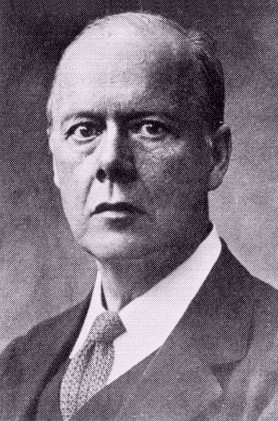
Houston Stewart Chamberlain
00:05 Publié dans Histoire | Lien permanent | Commentaires (0) | Tags : hellenité, grèce antique, antiquité, iran, perse, perse antique | | del.icio.us | | Digg | Facebook