Ok

En poursuivant votre navigation sur ce site, vous acceptez l'utilisation de cookies. Ces derniers assurent le bon fonctionnement de nos services. En savoir plus.

mercredi, 17 décembre 2008

100 anos de imperialismo norteamericano

100 anos de imperialismo norteamericano

El accionar del imperialismo en Venezuela, América y el tercer mundo comienza desde el siglo XV cuando fuimos colonizados por los europeos y pasamos a formar parte de la periferia del capitalismo mundial como suministradores de materia prima. A pesar de los procesos de independencia no hay la menor duda de que continuamos en la órbita de dependencia y de neocoloniales con respecto a los principales centros hegemónicos del capitalismo en el siglo XIX, en lo económico con respecto a Inglaterra y en segundo plano con Alemania y en lo político y cultural con respecto a España y en mayor grado con respecto a Francia. Desde los primeros bancos e industrias, pasando por líneas férreas y navieras, empresas de servicio y de comercio eran capitales fundamentalmente ingleses y alemanes. Igualmente los políticos e intelectuales que hicieron posible las nuevas repúblicas lo hicieron trasladando las principales constituciones, formas de gobiernos y universidades provenientes de la Europa Occidental. Pero desde finales del siglo XIX surge el Imperio Norteamericano con su expansión sobre el territorio cubano y puertorriqueño a partir de la guerra con España de 1898. Ya antes, desde apenas la cuarta década del siglo pasado Estado Unidos se había apropiado de buena parte del territorio mexicano.

El término que mejor define la política exterior norteamericana es la agresión, desde su nacimiento como país soberano (1776) ha demostrado una profunda vocación expansionista, evidenciada durante los gobiernos de Tomás Jefferson, pero que tendría una mayor definición en la presidencia de James Monroe con su famosa doctrina “América para los Americanos”, o lo que es mejor decir “América para los norteamericanos”. Si bien el siglo XIX es tiempo de consolidación de la economía norteamericana y de su política interna (guerra de secesión, 1861 - 65), esto no los aisló de su ideal expansionista, que ya se había manifestado sobre Luisiana y la Florida, pero que se profundiza con la anexión de los hasta entonces estados mexicanos de Texas y California (ricos en minerales como el petróleo).

Fue nuestro Simón Bolívar quien con mayor visión se percató de esta agresiva política exterior norteamericana, puesta de manifiesto fundamentalmente en los preparativos del Congreso de Panamá en 1826, con la idea de consolidar la integración de los países recién liberados del dominio español sin involucrar a los EEUU en dicho Congreso. El boicot norteamericano estuvo claramente presente en la derrota de este plan integracionista latinoamericano. En 1829 es aún más clara la percepción de Bolívar sobre el país del norte cuando señalo: “Los Estados Unidos parecen destinados por la providencia a plagar a la América de hambre y miseria en nombre de la libertad” Precisamente la mayor desviación de este proyecto fue la constitución del Panamericanismo en 1890.

Las mayores muestras de agresiones continuas y de carácter brutal por parte del gobierno norteamericano se producen desde 1898 con la guerra contra España, cuando los Estados Unidos se posesionan de los codiciados territorio Cuba, Puerto Rico, Filipinas y Wuam comenzando así su expansión extracontinental, sobre todo su interés en la “apertura” comercial Asiática. Luego vendría la política del “Gran Garrote” de Teodoro Roosvelt (1901 - 1909) y la historia de las invasiones en Cuba, Panamá, Honduras, Haití, Nicaragua, Santo Domingo, separación de Panamá de Colombia, agresiones que solo fueron disminuidas con el crac económico de los años 30. Al tiempo que se producían intervenciones militares, los Estados Unidos habían consolidado su poder económico sobre la zona: el poder del dólar. En aquellos países donde no intervino militarmente (como Venezuela); brindó “apoyo” a los gobiernos que representaban seguridad para sus inversiones.

Tanto la crisis económica de los años 30 como el enfrentamiento al nazifacismo (1933 - 45) hicieron replegar la política intervencionista norteamericana, pero el comienzo de la Guerra Fría permitió a los Estados Unidos consolidar su presencia en regiones hasta entonces inaccesibles, como las zonas petroleras del Medio Oriente. El dominio económico de los Estados Unidos se expande por todo el mundo, sus capitales y compañías levantan a Europa y Asia destruidas por la guerra y penetran en los países subdesarrollados, ya no sólo en los de América Latina. Pero la expansión económica y política norteamericana se vio frenada por el auge del socialismo que dominaba ya no solo en Europa del Este, sino también en la China, Yugoslavia y fue expandiendo su órbita sobre pequeñas naciones que habían sido víctimas de los grandes imperios occidentales.

Al tiempo que los Estados Unidos expandían sus políticas a través de la utilización de organismos internacionales aparentemente neutrales (FMI, BM, OEA, TIAR, OTAN, ONU) que han representado históricamente sus intereses, se inició una política internacional de favorecer a los “gobiernos fuertes” de marcada tendencia anticomunista, manifiesta en el auge de los gobiernos dictatoriales no sólo en América Latina (1948 - 57) sino en el resto del tercer mundo: Invade Guatemala en 1954 y 1965, presiona contra la revolución Boliviana de 1952, así como se involucra en la caída de Perón en Argentina y Vargas en Brasil, de Medina y luego Rómulo Gallegos en Venezuela, interviene en los conflictos de Corea y de Vietnam donde es, por primera vez en su historia, aplastantemente derrotado.

En el Medio Oriente, hasta 1951, en el único país donde los EEUU no tenían participación era Irán, controlado cien por ciento por los ingleses. Después de la Segunda Guerra Mundial, además del debilitamiento inglés, existen otros factores por lo cual el Medio Oriente se convierte en determinante en la política exterior norteamericana; primero, en su política de defensa ante la amenaza de expansión del comunismo, para lo cual se lanza la “Doctrina Truman”, segundo, por la situación de dependencia en la que se coloca EEUU a partir del año en que se convierte en principal importador de petróleo, situación que aumenta el peso de los EEUU, la población de origen judío fue lo que justificó su decidido apoyo a la creación y mantenimiento del Estado de Israel. En pro de estos intereses los EEUU llegaron hasta intervenir militarmente cuando consideraron algún peligro: Así dieron su aprobación al desplazamiento violento de los palestinos de sus territorios, en 1949 intervienen directamente en un golpe de Estado contra Siria y junto a Inglaterra contra el Líbano y Jordania, en 1958, motivados por el miedo a las repercusiones en esos países de la revolución iraquí. Pero su acción militar más importante fue el derrumbamiento de Mossadeh en Irán en 1954, donde la participación de la CIA fue decisiva. En 1955, en el contexto de la guerra fría, Inglaterra y EEUU establecen el acuerdo de Bagdad, acuerdo militar de la región para la “mutua defensa” ante posibles agresiones, era una extensión más de la OTAN, como lo fue el TIAR en América Latina para enfrentar el comunismo y a los movimientos nacionalistas.

Regresando a Latinoamérica, desde 1959 con la revolución cubana surge lo que desde entonces ha sido el obstáculo más grande en la política exterior norteamericana en sus relaciones con la región. El comunismo en su propio continente, en un territorio que al igual que Puerto Rico habían considerado de su dominio natural. Además, junto a la revolución cubana se había producido el auge de los movimientos insubordinados en muchos países de América Latina. Todo esto se producía, además, en el comienzo de una profunda recesión de las economías hegemónicas capitalistas aunado a la crisis energética de los 70, que a su vez generó una profundización de los movimientos nacionalistas y tercermundistas a escala mundial a los que tuvo que enfrentar la “diplomacia” norteamericana. Esta política norteamericana contribuyó, en buena parte, al retorno de las dictaduras cuya agresividad más palpable ocurrió en Chile con la caída del gobierno socialista de Allende. 1979 es un año realmente terrible para la política exterior norteamericana, cuando se producen revoluciones socialistas en Granada y Nicaragua, así como la revolución islámica y la caída del Sha en Irán, país que había sido uno de los principales aliados norteamericano en el Medio Oriente.

Al contrario de lo que muchos ingenuamente pensaban, las guerras y cualquier manifestación de violencia no han sido socavadas después del fin de la guerra fría. Por el contrario hay quienes opinan que existía mayor grado de “estabilidad política” cuando prevalecían los dos grandes bloques del occidente capitalista Vs. el oriente comunista. Hoy hasta quienes celebraron la caída de la Unión Soviética y el auge del proceso globalizador están reflexionando sobre las consecuencias de estos sucesos y sus repercusiones en el mundo actual. Los cambios ocurridos con el derrumbamiento soviético; el fin de la Guerra Fría posibilitó el surgimiento de los Estados Unidos como máxima potencia mundial. Ante el debilitamiento soviético los Estados Unidos intervienen militarmente y derrumban el gobierno socialista de Granada (1987) y luego el derrocamiento del presidente de Panamá Manuel Noriega en 1989, que estaba claramente influido por la resistencia - aun latente- de entregar el canal en 1999 y luego su participación fue evidente en el desplazamiento de los Sandinistas de Nicaragua. Como habíamos señalado en la primera parte, la última intervención militar en América se había producido contra Guatemala en 1965, luego vendría el fracaso aplastante de Vietnam. En estos años la política exterior norteamericana se hiso muy pragmática, salvo en el caso cubano, los intereses políticos pasaron a un segundo plano, a pesar de la permanencia del comunismo en China se silenciaron los ataques contra este país y por el contrario se profundizó las relaciones económicas. En el caso de Rusia no hay la menor duda que la reelección de Yelsin, frente a la amenaza que representaban los comunistas y los ultra nacionalistas, tuvo en el apoyo norteamericano un importante aval. Los Estados Unidos ahora jerarquizan sus intervenciones en aquellas regiones o naciones que representan un significativo interés.

La primera invasión sobre Iraq (1991) se encierra en el contexto que hemos señalado, las agresiones norteamericanas hacia esa nación hubieran sido imposibles con la existencia de la URSS, también sería ingenuo pensar que las mismas tuvieron como causa la defensa de la democracia y la soberanía de Kuwait - que nunca las ha tenido- o la defensa de las minorías étnicas, como los kurdos, cuyo problema, por cierto, fue creado por los propios países occidentales y que hoy no solamente atañen a Irak. Tan ingenuo es convertir a Hussein en un Satán como hacerlo un héroe, eso no es lo que nos debe interesar, pero lo cierto es que es una lucha en extremo desigual que solo pretendía garantizar el control norteamericano sobre el 70% de las reservas petroleras del mundo ubicadas en el Medio Oriente. Los gobiernos de Kuwait y Arabia Saudita e Israel le son ya incondicionales a EEUU pero no así el resto de la región.

La Paz Americana que se quiso imponer en la región, ha sido debilitada fundamentalmente por el antiarabismo de Israel, pero más aún por la profundización de los movimientos nacionalistas y concretamente del fundamentalismo islámico, que amenazan con convertirse en el obstáculo mayor de tan añorada globalización. Las agresiones a Irak, el intento de bloquear a Irán y Libia (Ley de Amato), no son solo medidas coyunturales con intereses electorales, esto va mucho más allá, los Estados Unidos se han percatado del inminente peligro que representa la inestabilidad de esta zona para su futuro. La adversidad de esta región hacia occidente está siendo alimentada tanto por la intolerancia de Israel como la de los EEUU.

En el contexto de una supuesta globalización es la imposición y la intolerancia lo que predomina, para ello los EEUU utilizan a los organismos internacionales, aparentemente “neutrales”, para enmascarar sus propios intereses, como si hubieran sido hechos bajo el consenso de todas las naciones del mundo y para el bienestar general. Se imponen modelos de economías abiertas cuando ellos aplican el proteccionismo, hablan de un mundo entre iguales y de democracias liberales cuando rechazan al inmigrante del sur, intervienen directamente en los problemas internos de otras naciones y apoyan gobiernos dictatoriales pero con economías de mercado.

Así tenemos que frente al tratado de libre comercio con México, su población es cada vez más rechazada en territorio norteamericano. En Colombia, ante una aparente lucha contra las drogas, ha intervenido directamente en la política interna de ese país, cuando todos sabemos que la principal causa del crecimiento del comercio de la droga está en el creciente consumo de los países desarrollados, especialmente el norteamericano. Los EEUU no intervinieron directamente en la desintegración y matanza de los pobladores de la exyugoslavia, cuya desintegración le es más bien favorable, no lo hicieron frente al apartheid sudafricano, en las matanzas en Ruanda, Somalia, tampoco ante las cruentas dictaduras de Pinochet en Chile o la de Corea del Sur, las cuales por el contrario se convirtieron en importantes socios económicos para EEUU.

En relación a Cuba, los EEUU vienen cometiendo - a nuestro modo de ver- sus más grave error (junto a los del Medio Oriente) no solo por la injusta profundización del bloqueo con la Ley Helms - Burton, sino que es tanto la intolerancia demostrada y la prepotencia al tratar de imponer una legislación a todo el mundo, que le ha producido un bumerang político, al ser rechazado a nivel internacional y producir por efectos indirectos un sentimiento de solidaridad hacia la nación cubana, al tiempo que ha despertado sentimientos de aversión hacia el gobierno norteamericano. Igualmente esta ocurriendo con las continuas agresiones hacia Irak, que han producido todo tipo de reacción adversa.

En 1997, luego de una profunda indiferencia en su primer periodo gubernamental el presidente Clinton realizó una visita a Latinoamérica para tratar de reconquistar espacios perdidos, no solamente en nuestro continente sino en todo el mundo la política exterior norteamericana manifiesta preocupación por el avance geopolítico de Europa (especialmente Francia) y la expansión económica de Asia. Concretamente en Venezuela llego a bendecir la política económica de Caldera y Teodoro Petkoff de “La Agenda Venezuela “y sobretodo la plena apertura (mejor decir entrega) petrolera.

El gobierno de George Bush ha sido de los más violentos y agresivos en su política exterior y mayor expresión de frustración al tratar de imponer su política hegemónica al resto del mundo. A partir de los ataques del 11 de septiembre del 2001, esta lamentable y condenable acción sirvió como pretexto para arremeter una política armamentista contra todos los posibles enemigos, rivales o elementos que causen molestias al gobierno norteamericano y sus principales aliados. En efecto, días después de la tragedia George Bush, sin haber demostrado las pruebas de responsabilidad de Bin Laden y al-qaeda en dichos actos, publicó una lista de supuestos cómplices y de los países “propulsores del mal”, donde lógicamente no podían dejar de aparecer los tradicionales enemigos: Kadafy en Libia, los fundamentalistas de Irán, los palestinos, Hussein en Irak, Fidel en Cuba y las FARC de Colombia, entre otros. Así mismo, inmediatamente salieron otros países como el caso de Inglaterra, España e Israel a apoyar esta iniciativa, dando su respaldo a que en la misma lista estuvieran los irlandeses de IRA, la ETA española y los palestinos de Hamas. Como se puede percibir ya el enemigo no tiene cara comunista, ya no es la Unión Soviética ni la Europa del Este, el enemigo cada vez se parece más a los países pobres del Tercer Mundo. Como bien lo dijo el exsecretario general de las Naciones Unidas, Boutros Ghali (cuya posición le costó la reelección) después de la caída del Muro de Berlín; se desdibujaba la frontera entre el este y el oeste pero surgía otra mas profunda entre el norte y el sur.

En lo inmediato pudimos presenciar la declaración de una guerra hacia un país, Afganistán, a cuyo gobierno -talibanes- se acuso de ser protectores de la organización al-qaeda liderizada por Osama Bin Laden, al cual se atañe la responsabilidad de los sucesos del once de septiembre, luego vino la invasión a Irak. En el 2003 la invasión a Irak, bajo el pretexto del incumplimiento de la disminución armamentista y el impedir la vigilancia permanente de la ONU, es la continuación de la guerra iniciada en 1991 por George Bush padre, quien por temor a causar una guerra civil en Irak no logró el objetivo final de liquidar al incomodo mandatario Iraquí. Tampoco tenemos la menor duda en señalar que si no fuera ese país uno de los principales productores de petróleo del mundo y la región del Medio Oriente poseedora del 80 % de las reservas mundiales, el interés no sería el mismo, nadie hablaría de democracia ni de fundamentalismo, lo mismo que ocurrió con países como Somalia y Ruanda cuya espantosa guerra para nada interesó a las grandes potencias del mundo. También estamos conscientes de que el problema no es solo petrolero, que ya es bastante, sino que se le teme al liderazgo que este país junto a Irán ejerce en la región, tanto en el mundo árabe como en la religión islámica, que se han convertido en el mas fuerte rival cultural y político; obstáculo para la expansión económica en esta importante región.

Pero la guerra contra Irak y todos los supuestos terroristas mundiales no solo sirven para sacar del camino los viejos enemigos, a los estorbos del mundo, sino que además representa un excelente negocio para quienes viven de la guerra, fundamentalmente los países desarrollados que son los principales productores armamentista del mundo, quienes venden unos 750 mil millones de dólares en este sector, y que son a su vez los mayores violadores de los acuerdos de disminución de armamentos. También la guerra sirve para obviar la preocupación de los ciudadanos norteamericanos (quienes en su mayoría rechazan esta contienda) de los graves problemas económicos del país y la poca popularidad de Bush. Así mismo, Bush hijo, salvo heredar la agresividad republicana de su padre, ha demostrado desde la campaña electoral (que por votos perdió ante Al Gore, pero que sin embargo la naturaleza de la democracia norteamericana le dio el triunfo.) es un desconocedor de la realidad mundial. El intelectual mexicano Carlos Fuentes, uno de los más brillantes de América Latina, lo ha acusado en varias oportunidades de “Ignorante y estúpido”.

Contrariamente al discurso de campaña Bush , quien dijo en el 2000 que América Latina sería “un compromiso fundamental de su presidencia”, y de su proclamación junto con otros líderes hemisféricos en abril del 2001 de que éste era “el siglo de las Américas”, su gobierno no hizo nada o muy poco por enmendar errores del pasado y mucho menos cumplir con las promesas de anteriores mandatarios, como lo de condonar parte de la deuda externa, dar trato preferencial a nuestros productos. Por el contrario después de los sucesos de septiembre del 2001 centró sus intereses en el Medio Oriente y hacia Latinoamérica apuntalo solo hacia profundizar sus ataques a Cuba, incentivar el Plan Colombia contra los movimientos insurgentes y crear mayores obstáculos a la migración latina, caso dantesco con el nuevo muro entre ese país y México.

Es ahora cuando percibe como-a diferencia de lo que se pensaba hace apenas pocos años- la población latinoamericana rechaza cada vez más la política unipolar y hegemónica de los EE.UU., y ha castigado en rebeldía y en las urnas electorales los gobiernos lacayos del imperialismo. Al contrario de lo que se pensaba, después del derrumbe soviético, América latina se ha convertido en escenario fundamental de nuevos proyectos políticos y económicos, frente al neoliberalismo impulsado principalmente por la potencia del Norte.

En América latina se debate libre y plenamente sobre la posibilidad de un nuevo orden social para la región y el mundo. Cuba ya no es la excepción, Nicaragua, Ecuador, Bolivia, Venezuela, apuestan francamente contra el capitalismo y en pro del socialismo. Pero en Brasil, Argentina, Chile, Uruguay, Perú, México, Guatemala y en casi toda la región pueblos enteros han demostrado que no son simples minorías, y que a pesar de lo moderado de sus gobiernos, los pueblos rechazan el imperialismo y buscan otros caminos en su proceso de liberación. Bush en un intento desesperado de obstaculizar los avances de Venezuela y de la revolución latinoamericana realizó en el 2007 una visita a cinco naciones (Brasil, Uruguay, Colombia, Guatemala y México) entre el 8 y el 14 de marzo, pero nada consiguió, aunque ofreció acuerdos económicos que satisfagan a las oligarquías y a los lacayos políticos este proceso es irreversible no solo en América sino en el mundo entero, guste o no el capitalismo y su manifestación imperialista tiene el tiempo contado, ya no será posible con bayonetas acallar a los pueblos, ni invadiendo a todo el mundo podrán detener el camino que los pueblos se han trazado: un mundo mas humano, un mundo sin dueños, un mundo de todos.

Pedro Rodríguez Rojas

Extraído de Rebelión a través de la LBN

Robert Poulet

danslameleexxsiecle.jpg

Robert Poulet

trouvé sur : http://archaion.hautetfort.com

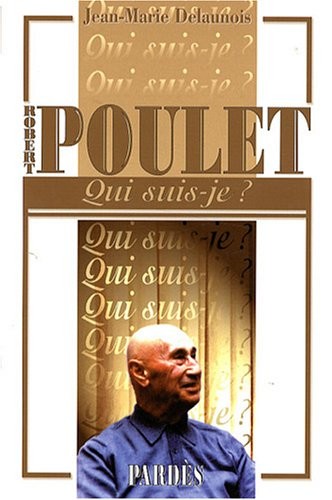
Auteur en 2003 d'une monumentale biographie de Robert Poulet (1893-1989), l'historien et éditeur Jean-Marie Delaunois a eu l'excellente idée d'en proposer une version abrégée qui permet au lecteur de se forger une opinion sur cet homme ô combien paradoxal. Il a dépouillé une imposante documentation, souvent inédite (notamment L’Oiseau des tempêtes, les mémoires de Robert Poulet) et rencontré tous les témoins de ce parcours si singulier, de la gloire à l’exil. Delaunois étudie le cas Robert Poulet dans toutes ses dimensions : esthétiques (du dadaïsme juvénile au classicisme de la maturité), éthiques (des dérives des années 20 au rigorisme catholique), politiques (du " fascisme occidental " à l’anarchisme de droite), etc.

51zY3%2BehrVL.jpg


Né à Liège dans la bourgeoisie catholique, Robert Poulet aura tout connu au long de son existence: les études d'ingénieur des Mines, la découverte de Wagner à 18 ans, le front des Flandres où il gagne ses galons d'officier au mérite, la vie de bohème dans la France des années 20, le cinéma  muet comme acteur et scénariste (il participe au tournage du Napoléon d'Abel Gance), les milieux littéraires où il fait une entrée fracassante avec Handji (1931), un roman remarqué par les plus grands. Cet anarchiste de tempérament, ulcéré comme beaucoup d'anciens de la Grande Guerre (ses futurs amis Drieu et Montherlant par exemple) par la crise des années 30, fréquente alors ces non conformistes qui tentent de concilier tradition et révolution dans le but d'enrayer le déclin. De poète exalté, il se métamorphose en conseiller du prince, tout aussi exalté mais dans un monde qui bannit toute naïveté. Or, Poulet, comme le montre bien Delaunois, est tout sauf un esprit pragmatique. Aveuglé par un ahurissant complexe de supériorité comme nombre de génies (car Poulet fut un génie… littéraire), l'écrivain se veut théoricien d'un ordre nouveau. Il donne des leçons à gauche et surtout à droite, rompt des lances en faveur de la neutralité belge après Munich, bref il s'engage sur une voie minée au risque d'être manipulé. Après la défaite, il se trouve, en compagnie du très ambigu P. Colin, à la tête du Nouveau Journal par "devoir de présence", pour le "moindre mal", dans le cadre d'une collaboration conditionnelle, certainement non vénale et ce jusqu'en 1943, quand Degrelle, par pur opportunisme, proclame la germanité des Wallons, mettant ainsi fin aux illusions. Robert Poulet, qui incarna en Belgique la figure du non-conformiste des années 30, voulut, d’écrivain pauvre, devenir maître à penser d’une sorte de révolution nationale à la belge. Rallié à une collaboration conditionnelle, à ce qu’un grand résistant a nommé un "patriotisme collaborateur", Poulet se crut, un peu naïvement sans doute, l’homme du roi Léopold III, et l’élément central d’une politique de présence face aux Allemands. On pense à Drieu, le rêveur qui se voulut homme d’action, mais Poulet était, lui, un cérébral pur, dévoré d’orgueil, perdu dans des nuées fanatiquement préférées au réel.


Poulet s'est-il lancé dans cette aventure avec les encouragements du comte Capelle, conseiller du Souverain? Il l'affirmera une fois condamné à mort en 1945, entrant à son corps défendant dans l'Affaire royale, où son cas est instrumentalisé par les ennemis de Léopold III. Un paradoxe de plus: méprisé sous l'Occupation par les amis du Grand Reich comme par la Résistance, ce littéraire qui s'est cru homme de pouvoir découvre les dures lois de la Realpolitik, ce monarchiste renforce la clique hostile au Roi; bref, Poulet s'enlise dans un bourbier presque mortel, car le Régent avait signé son arrêt de mort. Le déclenchement de l'Affaire qui porte son nom le sauve du poteau et, en 1951, il est conduit à Paris dans une voiture du Ministère de la Justice avec pour ordre de ne plus se manifester en Belgique. Exit Poulet? Nenni: à 57 ans, aidé par ses fidèles amis Hergé et Marceau, il se remet à publier sans trêve jusqu'à son dernier souffle, bâtissant une oeuvre puissante autant qu'originale, à rebours du siècle. Fracassant: le terme convient parfaitement à ce personnage ambivalent… et fracassé, car jamais Poulet ne digérera ce qu'il estime être une injustice majeure. En témoigne une stupéfiante lettre à Baudouin Ier. Delaunois pose à ce sujet des questions pertinentes: la justice de l'été 45 fut-elle sereine et impartiale? Pouvait-on sérieusement accuser Poulet d'avoir voulu nuire méchamment au pays? Sa conduite, dictée par un orgueil démesuré, valait-elle douze balles au petit matin? A-t-il vraiment trahi? Loin de céder à la tentation commode de l'anachronisme moralisateur, J.-M. Delaunois rend bien la complexité du personnage, écrivain majeur, immense critique, mais piètre politique. 


Christopher Gérard


Jean-Marie Delaunois, Robert Poulet, Pardès, coll. Qui suis-je ? La biographie complète (540 pages) a été publiée en 2003 sous le titre, Dans la mêlée du XXème siècle. Robert Poulet, le corps étranger, aux  éditions De Krijger.


Fêtes païennes des quatre saisons

Fêtes païennes des quatre saisons, sous la direction de Pierre Vial,

par Robert Dragan

C’est bientôt la fête de Jul, ou comme disent nos amis chrétiens, Noël. Qu’offrir à vos parents ou vos proches ? Un présent utile, qui contribuera à les éclairer politiquement : Fêtes païennes des quatre saisons, ouvrage collectif rédigé sous la direction de Pierre Vial, est le cadeau tout trouvé.
Peut-on cependant parler d’un ouvrage “politique” à propos de Fêtes païennes des quatre saisons ?

Assurément oui. Ceux qui considèrent que la politique consiste exclusivement à gloser sur les résultats de nos gouvernants, et à concevoir des stratégies opératoires pour prendre leur place, en seront pour leurs frais. Ici, pas l’ombre d’un programme électoral, et pas un seul mot en « isme ».

Mais qu’est-ce que la politique sinon l’art de diriger la cité, c’est-à-dire celui de conduire en priorité sa vie et celle de ses enfants ?

Fêtes païennes des quatre saisons est un vade-mecum pour le militant identitaire qui cherche à vivre selon ses lois, au moins dans le cadre de la famille et de la communauté ; et cela, l’Etat moderne reste impuissant à le lui interdire.

Vivre selon ses lois, c’est d’abord se réapproprier son calendrier. Dans la Tradition indo-européenne, l’année est divisée en fonction de la course du soleil : elle est rythmée par deux solstices, celui d’hiver (Jul) et celui d’été (au mois de juin), et deux équinoxes (dont Ostara en Mars) ; mais on célèbre également le mois de mai (Beltaine), le soleil le 1er août (Lughnasadh), et les morts le 1er novembre (Samhain).

On peut constater qu’il est assez simple pratiquement de consacrer du temps à ces fêtes car elles correspondent peu ou prou aux dates de nos modernes vacances scolaires : à cela il y a une explication bien simple, c’est que la christianisation de l’empire romain, puis des royaumes barbares d’Europe du Nord, n’a été rendue possible que parce que le calendrier chrétien s’est glissé dans les habits de celui des Indo-européens.

En introduction du livre on nous le précise d’ailleurs :

« Le christianisme a dû s’européaniser et, donc, récupérer et intégrer des formes de sacralité s’exprimant dans la vie des communautés populaires (…). D’où la mise en place d’un calendrier de fêtes « chrétiennes » greffées en fait, plus ou moins adroitement, pour beaucoup d’entre elles, sur d’ancestrales fêtes païennes. »

Dès lors, on a désigné du nom de paganisme, celles des survivances indo-européennes qui étaient un peu trop évidentes, auxquelles restaient attachés les paysans (paganus,i). Et on s’est ingénié à les combattre : d’amusantes citations ponctuent Fêtes païennes, ainsi une vie de Saint Nicolas éditée en 1886 où il est précisé que « pendant sa vie notre saint avait travaillé à éteindre le culte d’Apollon, mais, malgré tous ses efforts, il n’était pas parvenu à extirper toutes les racines de cette superstition ». L’auteur nous précise alors que Nicolas est né à Patare, « deuxième ville de Lycie (du grec Lycaon, « le loup »), port fondé par les Grecs, [qui] était un centre important du culte d’Apollon. »

Dès lors, on voit qu’à moins d’avoir perdu toute mémoire, il n’est pas si difficile d’ « être païen ».

Etre païen consiste également à célébrer le culte de ses ancêtres.

Certes, l’ouvrage est savant, en ce qu’il fourmille de références historiques, mais en guise d’introduction, Jean Haudry fait la part des choses : être païen ne consiste pas à collectionner des références érudites, et à en disputer entre spécialistes l’interprétation. Si ce travail est nécessaire, et continue d’être approfondi, comme le montre son long article, il n’en conclut pas moins à la nécessité de faire vivre la Tradition :

« La Tradition est consubstantielle au peuple. C’est pourquoi comme lui elle a des ennemis, dont la haine vigilante sait exploiter ses faiblesses, et notamment l’impossibilité d’établir de façon sûre une continuité linéaire entre la pratique actuelle et son origine lointaine. Mieux vaut donc adopter la démarche inverse, semblable à celle qui consiste à faire revivre une langue morte, et revendiquer, tel que la science nous le révèle, l’héritage de nos ancêtres. »

Philippe Conrad explique ainsi que « [la] célébration [du solstice d’été] doit être vivante et joyeuse (…). Renouer avec cette fête de la plus vieille Europe, c’est affirmer notre fidélité à l’héritage ancestral et par là même notre identité. (…) Il reste le moment privilégié où, près du bûcher aux flammes claires, l’individu retrouve son clan. »

Si être païen permet de renouer verticalement avec la Tradition passée, c’est également le moyen de mesurer horizontalement dans son siècle, quelles sont les limites de sa communauté. Fêtes païennes des quatre saisons vous montrera de façon pratique et simple la réalité du fait européen : Jean Poueigh décrit le solstice au pays d’Oc, deux pages illustrées évoquent l’Oktoberfest de Munich, vous lirez un article de l’Accent catalan sur la pratique actuelle des feux de la St Jean en Roussillon, vous n’ignorerez rien des traditions nordiques (l’origine de la tour de Jul ou la mort de Balder), et vous pourrez même apprendre à présenter vos souhaits pour le solstice d’hiver en vingt-six langues européennes ! Vous apprendrez qu’on célèbre également au mois de Mars la fête de l’amitié et de la communauté qui lie les fratries de jeunes gens, et au mois d’Avril la fête de l’Empire. Les derniers empires de notre continent ont sombré en 1918 ? Qu’importe si l’idée reste présente dans les cœurs des Européens d’aujourd’hui !

Fêtes païennes des quatre saisons, c’est encore mille informations pratiques : comment cuisiner les plats correspondant aux célébrations (ragoût de sanglier ou gâteau aux noix), comment organiser sa veillée familiale du solstice d’hiver, comment décorer sa maison, son arbre de Jul (confectionner votre julbok – activité idéale pour occuper les petits) ou comment monter le bûcher du solstice.

Ajoutons que l’ouvrage est abondamment illustré (photos de monuments, tableaux, gravures) et très soigneusement mis en page.

Enfin, il m’est impossible de dresser une liste complète de ses contributeurs : outre les noms cités, on y lira par exemple Diodore de Sicile, C. d’Orléans, P. de Ronsard, Bernardin de Saint Pierre, Hölderlin, A. de Musset, A. de Gobineau, G. de Maupassant, F. Nietzsche, E. Vehaeren, J. Giono, P. Drieu La Rochelle, G. Dumézil, J. Prévert, A. de Benoît, D. Venner… Et bien sûr notre camarade Jean Mabire, à qui l’ouvrage est dédié.

Fêtes païennes des quatre saisons, sous la direction de Pierre VIAL
Editions de la Forêt - Mars 2008 - 34€ (N° ISBN : 978-2-9516812-8-6)

Robert Dragan


Article printed from :: Novopress Québec: http://qc.novopress.info

P. Kondylis and the obsoleteness of conservatism


RTEmagicC_Panajotis_Kondylis.jpg


Panajotis Kondylis and the obsoleteness of conservatism

Paul Gottfried

Panajotis Kondylis (1943-), a Greek scholar who lives in Heidelberg and writes in German, may be, unbeknownst to himself, one of the great conservative thinkers of our age. Describing Kondylis as a conservative might leave him and his readers puzzled. His five-hundred page work Conservatism (1986) examines "the historical content and decline" of its subject. For Kondylis, conservatism had already declined in the last century as a major political force. It was the ideal of an essentially medieval hierarchical society defended by landed aristocrats and their intellectual followers. What Americans have usually presented as conservative values, Kondylis explains, belongs to a "bourgeois world of thought." Indeed the historical constructions of American traditionalists have been at most attempts to "exalt an older conceptual legacy and a long dead way of life against the newest developments in the direction of a consumerist mass democracy."[1] Kondylis cites Russell Kirk and the Southern Agrarians as examples of this tendency to conjure up an ideal organic past in a society that has always been nearer to mass democracy than it has to European traditionalism.

Kondylis identifies himself with Marxism, broadly understood. In a recent essay, "Marxism, Communism, and the History of the Twentieth Century," Kondylis offers this revealing opinion: "The planetary social project of Communism failed not because of moral or economic inferiority but because the national power of Russia encountered the superior national power of the United States." Furthermore, "Never before has the Marxist view of history been as true and current as it is now in the initial phase of a planetary history," particularly in determining social relations and the "ideological" forms that they take.[2] In my German correspondence with him, Kondylis makes the point that, unlike me, "he stands far closer to Marx than to [the German legal thinker] Carl Schmitt."[3] His detailed analysis of social class and of ideological consciousness as reflected in culture point back to Marx and to the twentieth-century Marxist interpreter of intellectual history, George Lukacs. Kondylis underlines these connections whenever he can.

His transparent dislike for the United States and its current devotion to "human rights" may offend some American patriots. He reduces the American faith in democracy and in universal rights to an instrument of national power. In a caustic piece for the Frankfurter Rundschau (August 18, 1996), "Human Rights: Conceptual Confusion and Political Instrumentalization," he notes that the United States speaks of human rights in the context of international affairs, not as a replacement for its own national laws that still distinguish between citizens and non-citizens: "No state can grant all of humanity the same rights--e.g., rights of settlement and voting--without ceasing to exist." For the American government, "human rights are a political tool within a planetary context whose density requires the use of universalist ideologies; within this framework, however, great nations continue to determine the binding interpretation of those same constructs."[4] Kondylis dislikes not only Americans for what he perceives as political hypocrisy but for their consumerist mentality. He has editorialized against the corrupting effect of American hedonism, which he thinks is now infecting Europeans.

Kondylis's brief against the United States occasionally descends into superficial generalization. "Human rights" ideology is by no means accepted by all Americans; and contrary to what Kondylis asserts, "human rights" ideologues are willing to blur the distinction between the rights of citizens and of noncitizens. Recent judicial decisions that bear on the "rights" of illegal aliens have interpreted the Fourteenth Amendment as establishing universally binding human rights. Meanwhile, advocates of a human rights-based foreign policy, like the editorial boards of the New York Times and Wall Street Journal, have been equally zealous in upholding an expansionist immigration policy. Conversely, American nationalists on the Old Right have been both isolationists and critics of "human rights."[5] As for the assurance given that "economic inferiority" had nothing to do with the disintegration of the Soviet empire, this particular statement is never demonstrated. Kondylis goes on to speak of the "superior national power of the United States," which may be another way of referring to the working economy of the U.S., as opposed to the fatally paralyzed one of the former Soviet Union.[6]

Despite Kondylis's Marxist self-labeling and distaste for the United States, one can find in him an identifiable man of the Right. But the Right to which Kondylis belongs is not the European counterpart of the American Right-Center, made up of pro-business supporters of a democratic welfare state and of a consumer economy. Like the intellectual movement called the European New Right, which often quotes him, Kondylis stresses the merits of traditional community, which he believes to be threatened by American mass democracy and American economic expansion. Unfortunately, antiAmericanism has become instinctive for many on the European Right.[7] I say "unfortunately" not because this sentiment is never justified. I think it often is, given the human rights and globalist triumphalism of American state department spokesmen and journalists and the moral pollution produced by our entertainment industry. But anti-Americanism gets in the way of understanding our current political context. Much of what the European New Right blames on the American people are recent developments, such as crusades for human rights with an often changing content; while what is perceived as quintessentially American is equally characteristic of other Western societies. Here a sense of historical change may be necessary. For example, Southern planters and the Northeastern merchant class of the midnineteenth century were far removed from late twentieth-century mass democracy. They were in fact as far removed from it as the world of Palmerston and Disraeli was from the social democratic and multicultural England which I visited last year.

Note that the Marxism that Kondylis expounds is highly selective and without the egalitarian and "utopian" aspects of the original product. Kondylis praises Marx and some Marxists for looking behind ideologies for the social and/or political interests which they incarnate. Like Marx, he considers "ideology" to be "false," a shared body of social and cultural attitudes which distorts historical reality, willfully or unwittingly. Kondylis mocks ethicists for packaging as "human rights" the interests of empires or the political ambitions of particular intellectuals. For Kondylis, such ethicizing conceals a will to power or the force of an expanding consumer economy. But Kondylis rarely seizes on the terms "ideologeme" or "false consciousness" when he analyzes the restorationist thought of the early and mid-nineteenth century. Although a sound argument can be made that Joseph de Maistre, Friedrich Stahl, and Le Comte de Bonald were defending a dying European order against a rising bourgeois society, Kondylis discusses such counter revolutionaries with profound respect. Not all of the foredoomed battles in his work or in his view of world history are traced to "false consciousness," and it may be observed that the closer he gets to the modern era of "mass democracy," planetary politics, and a consumerist culture the more Kondylis talks about dishonest ideologues.

This selectiveness may be partly the result of ingrained attitudes. Though a visceral anti-American fond of Marxist terminology, Kondylis has no use for mass democracy and its cultural and economic accompaniments. Sprung from an illustrious Greek family that produced both statesmen and military officers, he remains proud of his own antecedents. As he explained, with self-deprecation in a letter to me, unlike other Kondylises who accomplished much, "all he has managed to do is write long books in German." His books, by the way, are not only long but recondite, written in exceedingly dense prose and marked by tortuous explications.

This stylistic difficulty and his questionable generalizations about Americans to the contrary notwithstanding, Kondylis reveals two strengths that American conservatives would do well to imitate. One, he contextualizes ideas, without reducing them to mere epiphenomena of other historical forces. Kondylis grasps the necessary relation between cultural and moral ideals and the social and political configurations in which they develop. He demonstrates the disintegration of a conservative vision, one based on fixed orders with corresponding duties and privileges, in a society then undergoing critical changes, namely urbanization and the Industrial Revolution. Those who wished to represent an already superannuated conservative vision lost their social base and were forced to modify their public stance to include bourgeois ideals.

In this modified conservative view that emerged in the second half of the nineteenth century, defenders of medieval hierarchy and civil order made common cause against revolt from below. They and bourgeois liberals opposed democratic revolutionaries and socialist reformers. In this alliance, however, the truly conservative vision of order became increasingly vestigial.[8] The major lines of division were thereafter between "bourgeois modernity" and "mass democratic postmodernity," a topic minutely discussed in Kondylis's book The Decline of the Bourgeois Form of Thought and Life (1991).[9] Social visions remain competitive, Kondylis reminds his reader, for only as long as they are tied to a dominant or powerful class. Once that class is overwhelmed by political or material changes, its ideas inevitably fall out of favor. Though Kondylis points out the historical precondition for the predominance of what he as well as Richard Weaver calls a "vision of order," he does not relativize all such visions. From his descriptions it is clear that Kondylis favors the restorationist thought of the early nineteenth century over the liberal bourgeois Denkformen that replaced it. Despite his attempted detachment in surveying the end of mass democracy, Kondylis despises the disorder and boundless self-indulgence which he associates with the postmodern age.

He presents mass democracy as a total way of life that develops in a favorable political and economic climate. He does not use the term simply to express contempt for what he dislikes. Nor does he try to reduce mass democracy to a side effect of some material transformation, for example, by treating it as a byproduct of industrial growth or of the shifting of population toward cities. Kondylis does note certain political and economic preconditions for the rise of mass democracy, most particularly universal suffrage, material abundance, and the identification of self-government with public administration. But he also stresses its cultural and intellectual presuppositions. Among those that preoccupy him are the avant-garde artistic movements of the early twentieth century and the kind of experimental theater that began shortly thereafter. Unlike the Marxist Lukacs, who viewed such movements as sources of bourgeois amusement, Kondylis interprets them as the beginnings of a cultural war. Artists and playwrights collaborated in bringing down the bourgeois liberal world. For they despised precisely what it exalted, social constraint, rationally comprehensible art, and a coherent view of life and civic responsibility.

In their place Western society received a highly subjective, self-expressive, and ideologically inflammatory culture. Once this became wed to material hedonism, the erosion of identity, and a fixation on total equality, Kondylis maintains, a mass democratic world view established itself.[10] Kondylis points to the cultural components of this world view as omens of postmodernism. Rather than identifying this phenomenon exclusively with the most recent assaults on fixed or received meanings, Kondylis argues that postmodernism has been extensive with the entire mass democratic age.[11] The relativization of meaning is only the latest strategy for advancing social equality and for evacuating nondemocratic opinions associated with an elitist past.

Mass democracy, as interpreted by Kondylis, is also a global process. Moving from the West where it supplanted "an oligarchic and hierarchical bourgeois liberalism," it is now "merging with a planetary landscape," in which Marxism and Communism have become the preparatory phases in a mass democratic end of history.[12] Unlike the liberal age it ended or the Communism it surpassed in material productiveness, mass democratic society both proclaims and works toward providing material gratification. In a secularized and dehierarchical setting, it does what Marxist socialism promised but only occasionally could produce. Here Marx, according to Kondylis, offered a partially accurate prediction but grafted onto it a happy historical ending that is unlikely to come to pass. Marx "had clung to the idea of a normative-eschatological unification of world history" and "had explained this unitary character of a planetary event through social and economic factors while drawing appropriate political conclusions [from his assumptions]."But this unitary world history which Marx saw as tied to economic modernization is also intensifying the war against social cohesion, in the name of individual gratification and universal sameness. Kondylis observes the irony that the struggle against Communism, "fought not least of all for liberal ideals," has resulted in the victory of a postliberal society, one whose dissimilarity from the bourgeois age is greater than the distance that had separated Europe before the French Revolution from the Europe of the late nineteenth century. This exemplifies the ideological misrepresentation that Kondylis believes characterizes the promoters of mass democracy. They insist on a fictional continuity with the liberal past.[13]

Kondylis's contextualization of conservative, liberal, and mass democratic world views and his detailed analysis of mass democracy carries implications that he spells out for would-be conservatives. The term "conservative" is now being applied, he explains in an essay, "The Archaic Character of Political Concepts," to those who have nothing to do with an agrarian aristocratic society and less and less to do with a bourgeois liberal order. Kondylis finds it useless to define conservatives as "those who defend existing institutions, no matter what they happen to be."[14] He mocks journalists and academics who indiscriminately apply "conservative" to Chancellor Kohl or to Russian insurgents. They are accused of the same semantic opportunism as those who use "liberal" not to describe the "economic and constitutional conceptions of the European bourgeois but the right to abortion or an unlimited right to asylum."Least of all does Kondylis accept the Marxist practice, common during the Cold War, of designating the anti-Communist West as "conservative." Such a designation is unsuited for a "system which has revolutionized productive forces to an unprecedented extent and which places at the disposal of individuals material and mental possibilities that represent an astonishing and world-historical novum."[15]

Kondylis believes that a conservative politics in the sense that he understands that concept can no longer be fruitfully pursued. The socio-political context for this orientation was already disappearing by the late nineteenth century, and a similar fate overtook bourgeois liberalism, which gave way to mass democracy. Moreover, the mass democratic system that Kondylis analyzes embraces politics, the economy, ethical reasoning, and the arts. It permeates and shapes human relations and expectations, and, despite its war against most of the Western heritage, is now held to be the crowning achievement of Western democratic peoples. It also condemns and dissolves traditional gender, social, and ethnic distinctions, and, ethically and economically, prepares the way for a global society of uprooted and increasingly indistinguishable individuals. Whether or not one accepts Kondylis's view of the United States as the vital source of this mass democratic empire, what he describes in any case is too monolithic and popular to be effectively opposed by eighteenth- or nineteenth-century visionaries.

Inasmuch as Kondylis makes fun of political labels "with changing contents," it is hard to imagine that he would take seriously any conservatism anchored in mass democracy. While an ambitious politician or political journalist might find reasons to praise this state of affairs, their reasoning, he would conclude, has nothing to do with conservatism. Those who exalt "human rights" and call for open borders and global democracy may be taking positions that help their careers and make them part of a respectable opposition. But nothing substantive separates them from other boosters of mass democracy or links them to either classical conservatism or bourgeois liberalism. There is also no evidence that such "conservatism" slows down the dynamism of mass democracy. At most, "moderate" mass democrats may create procedural obstacles that prevent democratic change from moving more quickly; in other situations, however, they may accelerate that change by their devotion to multinational corporations and by their dislike for national and regional differences.

In contrast to the bogus, would-be conservatisms that Kondylis finds in the postmodern age, he does view the counterrevolutionary Right as a genuine alternative to mass democracy. But this Right offers not a "conservative" alternative to the present age but a force of resistance to radical change: "the distinguishing characteristic of the Right consists of its willingness to suspend political liberalism for the sake of protecting economic liberalism and private property against leftist assault. In this sense the Right belongs to liberalism, however much the 'enlightened' segment of the bourgeois might show embarrassment about this connection."[16] In one crucial respect this authoritarian Right does resemble the counterrevolutionary conservatism of the early nineteenth century: in its willingness to impose "provisional dictatorship" to prevent "the overthrow of existing institutions through a revolutionary sovereign dictatorship." The distinction between "commissarial" and "sovereign" dictatorship, one that suspends legality (as in the case of Peru) in order to restore it in peaceful conditions and one that supplants a constitutional order by force, is taken from the work of Carl Schmitt, a legal theorist who defended precisely the kind of authoritarian Right that Kondylis describes.[17] But such a Right, which may take over because of a Communist threat or because of the radicalization of mass democracy, can lurch out of hand. It may culminate in the sometimes irresponsible violence unleashed by a military coup or in the kind of substantive "national revolution" sought by idealistic Italian fascists. In either case the socio-economic upheaval wrought by these events or later reactions to them will far surpass whatever order is brought by provisional dictatorship.

In other cases, alluded to by Kondylis, the "authoritarian dominance of the Right" has "created the institutional framework for modernization and industrialization in a capitalist direction, to the exclusion of socialist experiments."[18] But these charges have sometimes led, as in the case of Spain, to the establishment of a mass democratic culture. Social democracy, a consumer society, "human rights" ideology and a disintegrating nuclear family have all followed once a welfare state and modern economy have been established. Pointing these problems out is not the same as deploring twentieth-century technology or exaggerating the benevolence of landed aristocrats or Victorian merchants. It is to state a causal connection between postmodernity in its social, political, and cultural forms and a progressive vanishing of inherited identities, civil society, as opposed to the state and economy, parental authority, and anything once understood to be "tradition." Kondylis believes that what has caused this situation is not the failure of public administrators to teach "values" or of manufacturers to promote "democratic capitalism." For him, the problems are systemic and lie in the fit between human appetites and changing institutional arrangements. They are also rooted in what Kondylis sees as the inevitability of struggle as the human condition. In the planetary age, people are fighting over resources but do so while appealing to the human rights slogans invented by intellectuals and the media.[19]

Kondylis claims to be pursuing value-free science and stresses the distinction by nineteenth-century social thinkers between descriptive statements and concepts formed out of observation and value-assertions. He insists that his scholarship does not contain expressions of normative morality and is openly contemptuous of political advocacy disguised as analytic thought. Yet the nonscientific aspect of his own judgments keeps intruding, seen in the obvious moral passion shown by Kondylis in scolding political utopians. Since 1991, when the "end of history" argument was first advanced by neoconservative publicist Francis Fukuyama, Kondylis has held forth against the notion that human history is ending with the fall of Communism. He has ridiculed the idea and the presumed intent behind it, that all or most of humanity is being drawn into a democratic capitalist orbit marked by peaceful trade and orderly change.

To this Kondylis has responded that history will likely go on, as has been the case until now, with struggles and ideological self-justifications. In a world of expanding population, limited resources, and rising materialist expectations, he finds no reason to think that human conflict is about to end. Moreover the terms "democracy," "capitalism," and "rights" have been made to mean whatever partisan politicians and intellectuals wish them to mean. All of these terms now have been given what Kondylis calls a "polemical" function: they are used to carry on a struggle against political and cultural enemies or obstacles. Here Kondylis may be entirely on the mark. As I myself found in doing research on a book dealing with the managerial state, "democracy," "liberalism," and "right" have lost any specific meaning in "Western democracies." What provides these terms with steady points of reference are their connection to postmodern societies and their sacral use by a particular elite. Public administrators, journalists, and other segments of the political class determine or alter the meaning of political doctrine. Even so, Kondylis, no less than those he argues against, is speaking "polemically." His attempts to refute global democrats are not disinterested scientific statements. They proceed from a moral stance composed of his tragic view of life and dislike for ideological manipulation. This view does not weaken Kondylis's arguments and in fact may enhance them, but it clearly does not represent the triumph of value-free science.

His interest in the cultural and geographic extensions of mass democracy has resulted in, among other projects, a book on planetary politics published in 1992. The argument of this work features prominently in Kondylis's critical remarks on another recent study of world politics, Samuel Huntington's provocative thesis on impending cultural wars presented in Foreign Affairs in 1993. Kondylis disagrees sharply with Huntington's view (which I happen to share), that future planetary conflicts will be fueled by the tensions among cultural-religious blocs. In opposition to this gloomy prediction, he offers another equally somber one, that mass democracy will create both spiritual stupor and a growing desire for material well-being. This will lead not to peace, but to devastating wars pursued for resources, without much regard for moral self-justification. The belligerents will simply trot out the already worn mass democratic tags about "equality" and "human rights."[20]

For all the pessimism of his work, Kondylis remains cheerful in his demeanor. He attributes this serene cheer to the kind of stoic apatheia which he cultivates. Already in his mid-fifties, he continues to live in austere solitude, dividing his time between two bachelor residences, in Heidelberg and in the Kifisia district of Athens. He has never held a full-time academic appointment, but has made do with a series of grants and the payment received for his political journalism. Despite the unfavorable comparison he draws between himself and better-known members of his family, Panajotis Kondylis may add further luster to an already distinguished name.

Notes

1. Panajotis Kondylis, Konservativismus: Geschichtlicher Gehalt und Untergang (Stuttgart, 1986), 51.

2. Panajotis Kondylis, "Marxismus, Kommunismus und die Geschichte des 20. Jahrhunderts" in Der Marxismus in seinem Zeitalter (Leipzig, 1994), 25, 33.

3. Letter from Kondylis dated February 14, 1997.

4. "Menschenrechte, begriffliche Verwirrung und politische Instrumentalisierung," Frankfurter Rundschau, August 18, 1996, 12.

5. Cf. George H. Nash, The Conservative Intellectual Movement in America since 1945, revised edition (Wilmington, Del., 1996), 329-41; and Paul Gottfried, The Conservative Movement, second edition (New York, 1993), 142-66.

6. Der Marxismus in seinem Zeitalter, 25 and 34.

7. For an expansive statement of this anti-American sentiment by Europe's most prominent New Right spokesman, see Alan de Benoist's Il etait une fois l'Amerique (Paris, 1984); and Thomas Molnar's "American Culture: A Possible Threat," The World and l (May 1987), 440-42.

8. See Konservativismus: Geschichtlicher Gehalt und Untergang, 387-447 and 507.

9. See Kondylis, Der Niedergang der burgerlichen Denk-und Lebensform: Die liberale Moderne und die massendemokratische Postmoderne (Weinheim, 1991), especially 169-88.

10. Ibid., 208-26.

11. Ibid., 238-67.

12. Der Marxismus in seinem Zeitalter, 15-16.

13. Der Marxismus in seinem Zeitalter, 18-19.

14. "Die Antiquiertheit der politischen Begriffe," Frankfurter Allegemeine Zeitung, October 5, 1991, 8.

15. Ibid., see also "Globalisierung, Politik, Verteilung," Tagesanzeiger, November 29, 1996, 8.

16. Konservativismus, 505.

17. References to Carl Schmitt abound in Kondylis's interview with the Deutsche Ze itschrift fur Philosophie 4 (1994), 683-94; and in his work.

18. Konservativismus, 504.

19. See Kondylis's feature pieces "Globale Mobilmachung" in Frankfurter Allemeine Zeitung, July 13, 1946, 7: "Bluhende Geistesgeschafte," ibid., December 28, 1995; "Was heisst schon westlich?," ibid., November 19, 1994; and Planetarische Politik nach dem Kalten Krieg (Berlin, 1992).

20. See "Globale Mobilmachung" in Frankfurter Allgemeine Zeitung, July 8, 1995, 7; and "Wege in die Ratlosigkeit," ibid., May 7, 1995. The latter article is particularly revealing of Kondylis's historical and moral outlook, inasmuch as it treats the "information revolution" dismissively and insists that the "logic of information will remain subordinate to interpersonal relations and ideological orientations."

[Modern Age; Fall97, Vol. 39 Issue 4, p403, 8p]

1