

lundi, 30 novembre 2009
Modus Operandi de la desinformacion
 Modus Operandi de la desinformación
El martes 10 de noviembre, el Ministerio de Defensa de Corea del Sur anunció que una patrulla norcoreana había cruzado la línea fronteriza marítima en el Mar Amarillo (o Mar Occidental) lo que provocó que un buque de la Marina de Corea del Sur realizara “disparos de advertencia” a los que respondieron los norcoreanos. Según la agencia noticiosa surcoreana Yonhap, el patrullero de Pyongyang “aparentemente sufrió daños”, aunque no se informó de víctimas.
La frontera marítima en aguas del Mar Occidental es una zona altamente conflictiva donde se han librado enfrentamientos con numerosas bajas entre buques de las dos Coreas. Pyongyang rechaza la controvertida Línea del Límite del Norte (NLL), impuesta al final de la Guerra de Corea (1950-1953) por las tropas de la ONU lideradas por EEUU.
Este incidente agregó significación a una reciente denuncia por desinformación maliciosa formulada por el destacado pacifista y escritor estadounidense Bruce K. Gagnon, coordinador de la “Red global contra las armas y el poder nuclear en el espacio”.
Se trata de un suceso que, sin ser excepcional ni novedoso, resalta la sistemática manipulación que caracteriza al modus operandi de la gran prensa corporativa.
Relataba Gagnon que el diario The Washington Post de la capital estadounidense había publicado el 13 de octubre de 2009 un artículo titulado “Disparó Corea del Norte cinco misiles”, referido al hecho cierto de que esa nación asiática lanzó tal cantidad de misiles de corto alcance tras lo cual declaró una prohibición de la navegación en aguas frente a sus costas orientales y occidentales, sin mencionar en lo absoluto las motivaciones que había tenido Pyongyang para adoptar esas medidas.
“Lo que fue convenientemente excluido de la noticia es que Estados Unidos y los militares surcoreanos acababan de iniciar grandes maniobras militares conjuntas en el Mar Occidental (o Amarillo), situado entre Corea y China, que tendrían lugar del 13 al 16 de octubre y que incluirían la participación del grupo de combate del portaviones USS George Washington. Corea del Norte temía que Estados Unidos y Corea del Sur (que ahora construye misiles de largo alcance capaces de alcanzar en profundidad el territorio de Corea del Norte) planearan utilizar la circunstancia para lanzar un ataque sorpresivo contra ellos”, observa Gagnon.
“Después de todo, -añade- ellos conocen de los ataques de EEUU contra Iraq y Afganistán, y escuchan el entrechoque de los sables de guerra que Estados Unidos blande contra Irán. Corea del Norte no puede descuidarse ante la ocurrencia de estos grandes ejercicios militares. Cuando tienen lugar, ellos dejan todo lo que estén haciendo y se preparan para la defensa de su país. Es esa una razón por la que su economía presenta tantos problemas.”
“Por eso, como medida preventiva, ellos dispararon al mar, sin intención ofensiva, los 5 misiles de corto alcance, a fin de advertir (al eventual atacante) que ellos estaban alertas”, dice Gagnon.
El Washington Post había escrito que, “la Secretaria de Estado, Hillary Clinton, reaccionando ante los informes sobre el lanzamiento de los misiles, declaró que Estados Unidos y sus aliados están tratando de demostrar a Corea del Norte que la comunidad internacional no aceptará la continuidad de su programa nuclear”.
Ironiza Gagnon que “Estados Unidos finge sorpresa por este comportamiento extravagante e inesperado de la ‘inestable’ Corea del Norte y utiliza el incidente como pretexto para recordar al mundo que los buenos americanos están trabajando fuertemente para detener el programa nuclear de Corea del Norte. Estados Unidos, en otras palabras, es apenas un ingenuo observador. El tío bueno sólo sacude la cabeza, consternado, ante la conducta de aquellos norcoreanos tan extravagantes”.
El objetivo de la inocente información –dice- es hacer que en la mente del lector norteamericano y en las de los de otros lugares del mundo bajo influencia de los medios corporativos que controla Washington quede sólo la idea de que los maniáticos norcoreanos, una vez más, han disparado misiles contra objetivos fantasmas.
Relata Gagnon que, habiendo tenido acceso al cúmulo de informaciones omitidas, pudo constatar de qué manera Estados Unidos y el Washington Post engañaban al público, incluso a la mayor parte de los congresistas de Estados Unidos, que ignoraba el grave peligro que significaban esos ejercicios que llevaban a cabo su país y Surcorea frente a las costas de Corea Democrática y de China, algo que la noticia sobre los cinco misiles pasó por alto.
Grupos de pacifistas en Corea del Sur, identificados con el intríngulis del asunto, se manifestaron en protesta durante los días de las maniobras conjuntas, sin que ello fuera reportado por los medios en Corea del Sur ni, mucho menos, por el Washington Post.
Gagnon considera que se trata de un revelador ejemplo de la forma en que se estigmatiza a Norcorea desde la Guerra de Corea. “La práctica es la misma que se ha usado contra Cuba durante muchos años, contra Irak, y en la actualidad contra Irán, Afganistán y Pakistán. Es el modus operandi de Estados Unidos”.
Manuel E. Yepe
Extraído de Argenpress.
00:25 Publié dans Manipulations médiatiques | Lien permanent | Commentaires (0) | Tags : manipulations médiatiques, manipulation, désinformation, médias, soft power, mondialisme, globalisation |  |
|  del.icio.us |
  |
|  Digg |
  Facebook
Edward Abbey, Conservative Anarchist
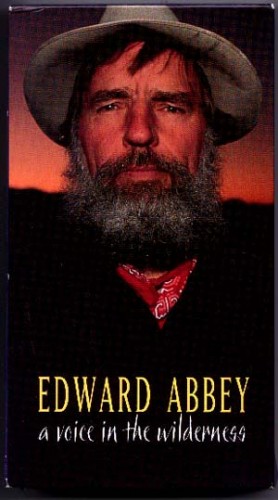 Edward Abbey, Conservative Anarchist
By Bill Croke / http://newrightamerica.blogspot.com/
http://spectator.org/archives/2009/03/13/edward-abbey-conservative-anar
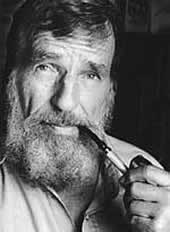
Cactus Ed (a nickname he liked) is dead, lo these twenty years (March 14, 1989). He was a less controversial figure in his time than he is today, and certainly has more readers. I recently attended a lecture/book discussion on the author's Desert Solitaire at my local public library, and wasn't surprised by what I heard. Small town book clubs tend to be the pet projects of liberals bent on "promoting literacy," and attract likeminded people. The discussion was moderated by a local Abbey fan, a woman of some academic credentials, and roughly twenty people took part. I've read Desert Solitaire twice, but went to the lecture on a whim, only flipping through my paperback copy shortly beforehand, intending to just listen. The group chewed over the book for 90 minutes, and the takeaway for me was that most people there thought Abbey to be a larger-than-life iconic character, the life transcending the work. And they mostly agreed with his severe critique of the management of the public lands, his ambiguous views on the national parks, and his anarchic thoughts concerning humankind's history and place on the planet, in general. An amusing evening.
Edward Abbey's posthumous fame lies mostly with the Green Left, especially in the West. He's attained that iconic cult status as a man who embodied equal parts Henry David Thoreau (Larry McMurtry once called him "The Thoreau of the American West") and John Muir, with an added dash of Mikhail Bakunin. Somebody who thought and wrote, but also acted, and influenced others to act, however indirectly. All this begs an old question: Does a writer pushing an agenda in his work compromise the artistic integrity of that work? In Abbey's case the answer is both yes and no, because he was much more a polemicist than an artist.
Edward Paul Abbey was born on January 29, 1927, in Indiana, Pennsylvania, the son of a farmer and logger. After a 1944 hitchhiking trip west at 17, he served in the U.S. Army late in World War II and afterwards, then enrolled at the University of New Mexico in 1948 on the G.I. Bill, eventually earning a Master's Degree in philosophy. During this time Abbey started to write as he began concurrently to explore the backcountry of the Southwest in his spare time, specifically the Four Corners area (where Utah, Colorado, Arizona, and New Mexico meet), otherwise known as the Colorado Plateau because it's drained by that great river.
It was among the last of Western regions to be surveyed and mapped. In 1869, John Wesley Powell was its primary explorer when he led a party in dories down the rapids-ravaged canyons of the Green and Colorado Rivers from Green River, Wyoming, all the way through the Grand Canyon. It's an unforgiving region of deserts and mountains, much of it federal land, and home to a half dozen national parks. Here Abbey found the subject that was the focus of his four decades as a writer.
Abbey started as a novelist with a run into the 1960s with series of competently executed but forgettable books such as Jonathan Troy (1954), The Brave Cowboy (1956), and Fire on the Mountain (1962). The Brave Cowboy was made into Lonely Are the Brave (1962), a film starring Kirk Douglas, thus earning Abbey some much-needed Hollywood money. During this time he also churned out essays and journalism about his wanderings in "the back of beyond."
Money was tight, though, and Abbey also worked odd jobs through the 1950s and '60s. His most noteworthy employment was as a seasonal ranger at Arches National Monument (now Arches National Park) near Moab, Utah, in 1959. This experience (along with others) culminated in the 1968 publication of Desert Solitaire, the book that made his reputation. After that, Cactus Ed became the Thoreau of the West.
 The book is in some ways an episodic pastiche. Abbey alternates vividly written chapters describing the multi-hued landscapes of Arches and elsewhere with others featuring cranky polemics about Bureau of Reclamation river dams and "Industrial Tourism." But those sharp landscape renderings are some of the finest writing extant about the desert Southwest. Here he is in Glen Canyon before the eponymous dam was built (1963) that created Lake Powell:
The sandstone walls rise higher than ever before, rounding off on top as half-domes and capitols, golden and glowing in the sunlight, a deep radiant red in the shade.
And this from the same trip:
Beyond the side canyon the walls rise again, slick and monolithic, in color a blend of pink, buff, yellow, orange, overlaid in part with a glaze of "desert varnish" (iron oxide) or streaked in certain places with vertical draperies of black organic stains, the residue from plant life beyond the rim and from the hanging gardens that flourish in the deep grottoes high on the walls. Some of those alcoves are like great amphitheatres, large as the Hollywood Bowl, big enough for God's own symphony orchestra.
Companions to Desert Solitaire are the essays found in such collections as The Journey Home (1977), Abbey's Road (1979), Down the River (1982), Beyond the Wall (1984), and One Life at a Time, Please (1988). The subjects of the essays (the form being possibly Abbey's greatest strength as a writer) vary from detailed accounts of his wanderings -- rafting the Colorado, exploring such landscape oddities as the San Rafael Swell or Big Bend National Park -- to passionate polemics against national park infrastructure development or Bureau of Land Management (BLM) policies on leasing grazing land to ranchers. The latter type showed that Abbey would have done well as an 18th-century pamphleteer. In an essay entitled "Eco-Defense," he writes: "Eco-defense is risky but sporting; unauthorized but fun; illegal but ethically imperative…Spike those trees; you won't hurt them; they'll be grateful for the protection; and you may save the forest. Loggers hate nails."
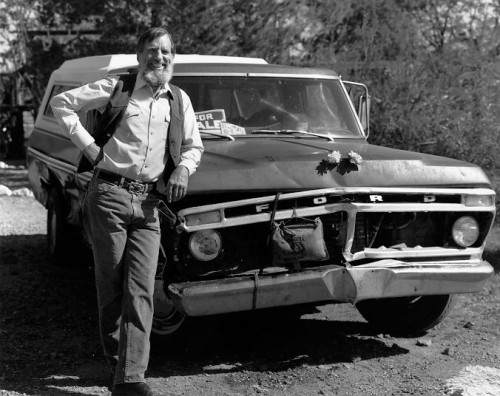
Abbey's most controversial role was only obliquely related to his work. In 1975 he published his novel The Monkey Wrench Gang, a book that alongside Desert Solitaire enhanced his reputation as an environmentalist, but unlike the latter tome it has prose as purple as an Arizona sunset. The plot involves four anarchic enviros who conspire to blow up Glen Canyon Dam. In a case of life imitates art, the book inspired the establishment of a notorious radical green group in 1980 known as Earth First!, with Abbey as a charter member. Other noteworthy members were activist/writer Doug Peacock, and Dave Foreman, an ex-Goldwater Republican. Earth First! "membership" was and remains (to the extent that it even exists today) anonymous and shadowy, as it's known for acts of "monkey wrenching" of earthmoving and logging equipment, spiking trees, stealing survey stakes, cutting wire fences, and so on. "Earth First!" has spawned ancillary groups such as the Earth Liberation Front (ELF), which before its downfall at the hands of the FBI in 2006 burned down a Colorado ski lodge, and destroyed a number of vehicles at an SUV dealership in Eugene, Oregon, among other acts of domestic terrorism.
Cactus Ed was a prickly sort; a conservative anarchist, if you will, who on one hand could support eco-terrorism (a favorite motto was: "Keep America Beautiful -- Burn a Billboard!"), and on the other supported the National Rifle Association (NRA), and restrictions on immigration. When he died of natural causes, some of his Earth First! compatriots famously and illegally absconded with his body, and buried it in a secret place in remote desert outside of Tucson. And there he lies to this day, pushing up cactus.

00:20 Publié dans Philosophie | Lien permanent | Commentaires (0) | Tags : etats-unis, conservatisme, anarchisme de droite, anarchisme | | del.icio.us | | Digg | Facebook
Chaliand: le nouvel art de la guerre
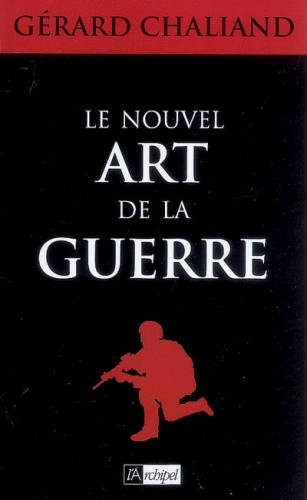 Le nouvel art de la guerre
Via ONG [1]
« Si tu ne connais ni ton adversaire ni toi-même, à chaque bataille tu seras vaincu» , écrivait Sun Tzu, voici vingt-cinq siècles, dans L’Art de la guerre. On ne peut dire que les guerres d’Irak et d’Afghanistan aient été engagées avec une vraie connaissance culturelle de l’adversaire. Aussi grave, mais plus paradoxal: les sociétés occidentales, croyant bien se connaître, mesurent mal leurs propres transformations et les conséquences militaires qui en découlent. Ainsi, depuis plusieurs décennies, l’hémisphère Nord accuse un recul démographique, tandis que l’épicentre des conflits paraît de plus en plus se situer dans les opinions publiques, qui les veulent brefs et victorieux. La sensibilité d’une population vieillissante supporte mal les pertes militaires. Or, les guerres dites asymétriques sont, par nature, des guerres d’usure. Des troupes occidentales peuvent-elles, aujourd’hui, gagner des guerres irrégulières? Ont-elles encore intérêt à intervenir massivement? De nouvelles stratégies prévaudront-elles demain ? Autant de questions que pose cet essai pour repenser l’art éternel de la guerre Gérard Chaliand est spécialiste des conflits et ses enquêtes de terrain lui ont fait partager, durant plusieurs années, l’expérience de luttes armées en Asie, en Afrique et en Amérique latine, comme, tout récemment, en Irak et en Afghanistan. Il a enseigné à l’ENA et au Collège Interarmées de Défense, à Harvard, à Berkeley, ainsi que dans nombre d’autres universités étrangères. Il a contribué, par ses Atlas (avec J.-P. Rageau), au regain d’intérêt pour la géopolitique. Ses ouvrages militaires (L’Amérique en guerre, Le Rocher, 2007; Histoire du terrorisme, Bayard, 2004) illustrent une approche nouvelle des questions de stratégie et des guerres irrégulières.
Disponible sur Libre-diffusion [2]
Article printed from :: Novopress Québec: http://qc.novopress.info
URL to article: http://qc.novopress.info/7109/le-nouvel-art-de-la-guerre/
URLs in this post:
[1] ONG: http://ongong.canalblog.com
[2] Libre-diffusion: http://shop.upsylon.com/cgi-bin/librediff/12087.html
00:15 Publié dans Livre | Lien permanent | Commentaires (0) | Tags : guerre, militaria, polémologie | | del.icio.us | | Digg | Facebook
Une biographie du Maréchal Mannerheim
Archives de SYNERGIES EUROPEENNES - 1998
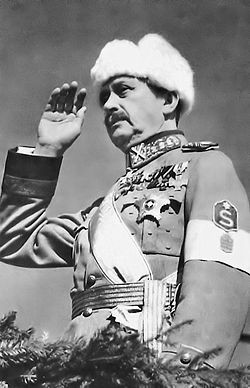 Une biographie du Maréchal Mannerheim
Heureuse initiative des éditions M. La Maule que de traduire du suédois la biographie du Maréchal Mannerheim (1867-1951), le De Gaulle finlandais. Officier de l'armée impériale russe, aide de camp du Tsar Nicolas II en 1912, Gustaf Mannerheim prend la tête des troupes blanches qui pulvériseront les Bolchéviks sur le Front de Finlande, garantissant l'indépendance du pays des mille lacs. La Finlande, comme la Pologne d'un autre grand maréchal, donne ainsi l'exemple d'une résistance victorieuse au communisme, parce qu'ancrée dans une conscience populaire et ethnique clairement profilée: une réalité charnelle, même numériquement inférieure, triomphe toujours d'une abstraction, fût-elle colossale. Mannerheim, comme plus tard en Espagne ou au Chili, aura sauvé son pays de la terreur léniniste. Dans les années 30, Mannerheim fait tout pour préparer son pays à l'inévitable affrontement avec Staline. Et en 1939, il prend à nouveau la tête des armées finlandaises lors de la Guerre d'Hiver, modèle de guérilla bien menée et occasionnant un maximum de pertes à l'Armée rouge. Parmi les Gardiens de la Démocratie et du Droit, lisez la City de Londres et la calamiteuse IIIième République, nul ne s'opposa concrètement à cette invasion d'un pays neutre: les Finlandais mobilisent tous leurs hommes de 15 à 70 ans, et aussi leurs femmes, les formidables Lotta qui épauleront leurs compagnons, leurs fils et leurs maris, avec une détermination qui nous laisse encore pantois. Les mêmes démocrates français et britanniques, idolâtres de principes ronflants et de monnaies sonnantes et trébuchantes, précipiteront le continent dans une guerre suicidaire pour “défendre la Pologne” (sauf la partie envahie par les Russes): 120.000 soldats français mourront pour Dantzig, mais non pour Katyn. Episode peu connu de la IIième Guerre civile européenne, l'auteur de cette passionnante biographie rappelle la complexe partie de cache-cache de l'armée finlandaise avec les troupes allemandes durant le Guerre de Continuation, qui verra leur pays amputé de la Carélie et de Vyborg, vidées de leur population et soviétisées, c'est-à-dire sinistrées. L'ouvrage du professeur S. Jagerskiold, diplomate et juriste, constitue une excellente introduction à l'histoire contemporaine —et à l'esprit— de la Finlande, qui présidera bientôt l'Union Européenne.
Patrick CANAVAN.
S. JAGERSKIOLD, Gustaf Mannerheim, M. de Maule (27 rue Montorgueil, F-75.001 Paris), 148 FF. Une seule critique: peu de cartes et aucune photo, contrairement à l'édition allemande recensée dans Orientations n°9/1987.
00:05 Publié dans Histoire | Lien permanent | Commentaires (0) | Tags : finlande, histoire, deuxième guerre mondiale, seconde guerre mondiale, biographie | | del.icio.us | | Digg | Facebook