




 Il s’agit d’une forme sophistiquée de gaslighting collectif. Le lecteur doit porter cette contradiction en lui et apprend à gérer la tension en acceptant la ligne politique qui en découle. Comme dans la secte étudiée par Festinger, l’investissement dans le récit – en temps, en identité et en conviction morale – devient si important qu’il est psychologiquement coûteux de l’abandonner.
 Note:
Note:
 del.icio.us
 Digg
Digg Facebook


 Pendant des années, la manipulation de l’information était perçue comme une anomalie. Aujourd’hui, elle fait l’objet d’études systématiques.


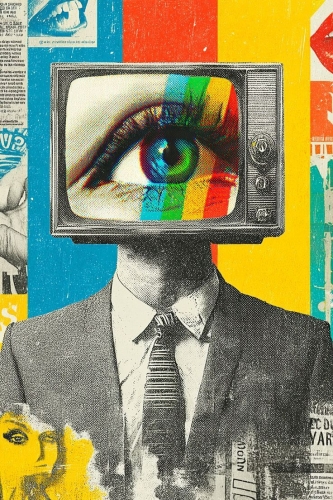
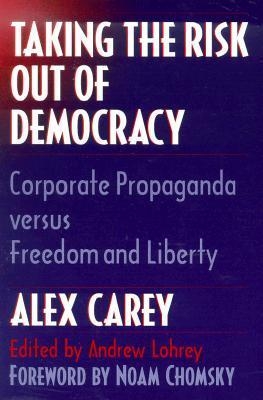
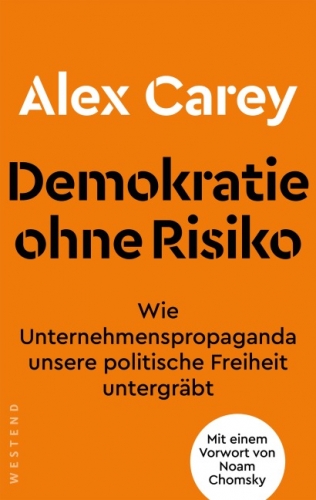 Dans son ouvrage fondamental intitulé « Démocratie sans risque », Alex Carey montre comment les entreprises, les agences de relations publiques et les élites politiques manipulent systématiquement l'opinion publique afin de faire valoir leurs intérêts.
 Une base scientifique solide
 Le Dr Jonas Tögel est américainiste et chercheur en propagande. Il a obtenu son doctorat sur le thème du soft power et de la motivation et travaille comme assistant de recherche à l'Institut de psychologie de l'Université de Ratisbonne. Ses recherches portent notamment sur la motivation, l'utilisation des techniques de soft power, le nudging, la propagande et les défis historiques des 20ème et 21ème siècles. Le site web de l'auteur est





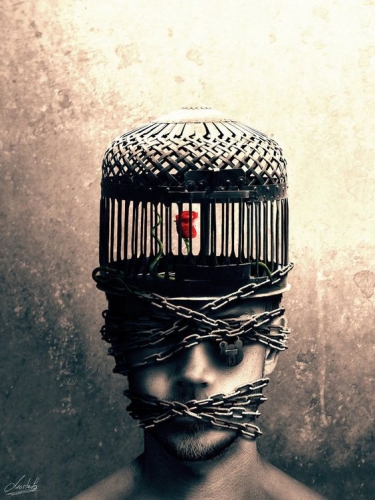
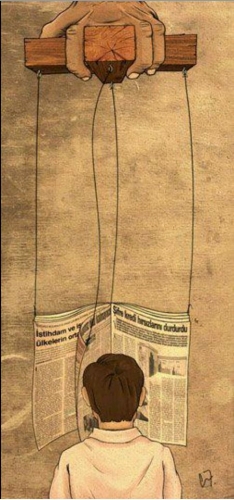

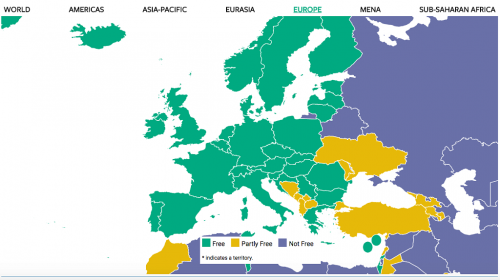
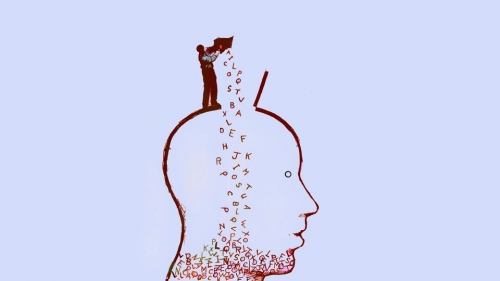
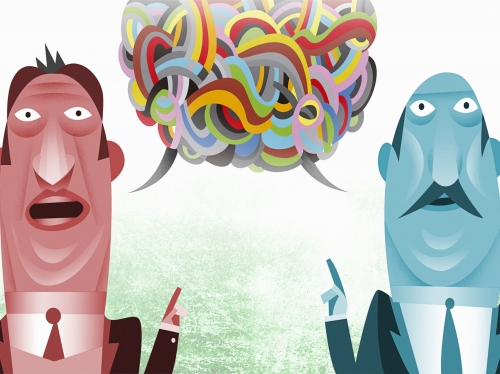
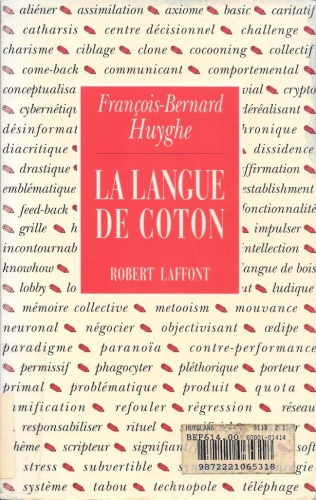 La troisième catégorie de notre typologie ne fonctionne pas par les conventions d’une minorité ou par la contrainte des autorités : elle est si consensuelle, si peu discriminante, si floue qu’il n’est plus possible de dire le contraire. Cette « langue de coton » a particulièrement fleuri à la fin des années 1980, dans les discours médiatique, politique et technocratique. Irréfutable parce que l’on ne peut pas énoncer la thèse opposée, elle dit des choses tellement imprécises ou moralement évidentes qu’il est impossible de savoir à quelle condition son message pourrait être reconnu faux tant il offre d’interprétations. On reconnaît la langue de coton à ce que ses concepts sont interchangeables. Les mêmes mots peuvent servir à parler de n’importe quoi d’autre.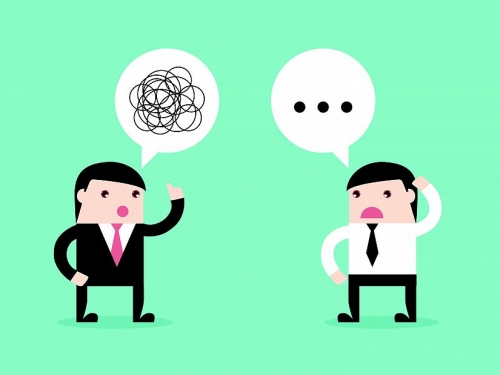

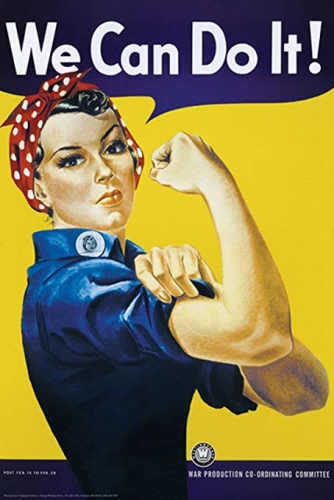
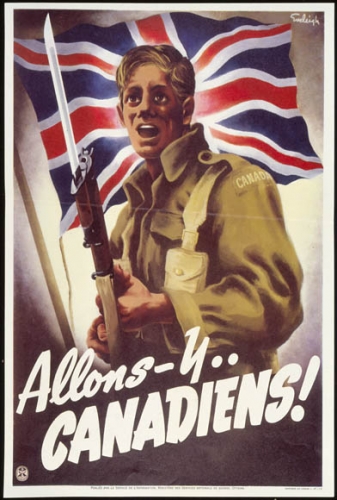
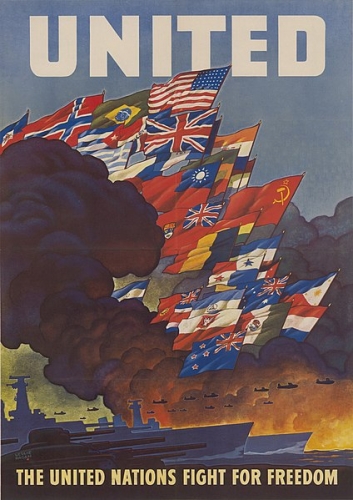
 Au total les définitions de la propagande suggèrent pourtant des conditions minimales :
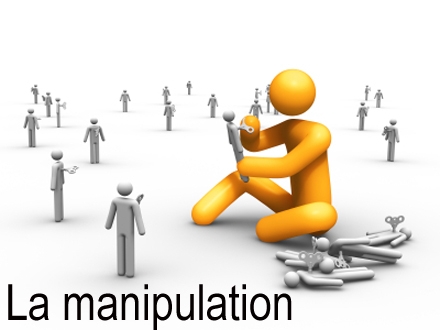


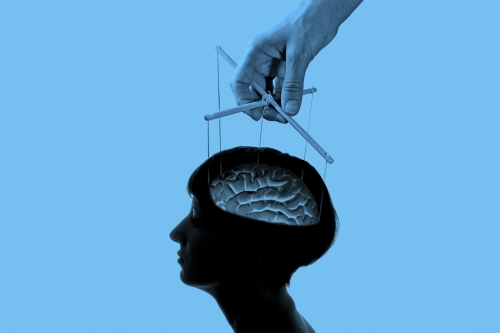
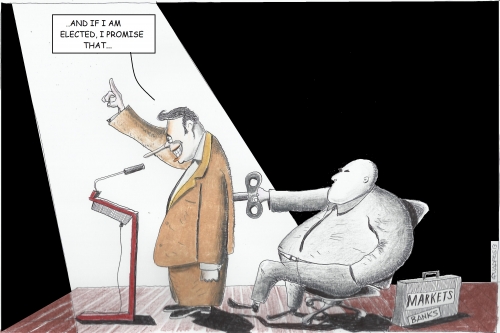
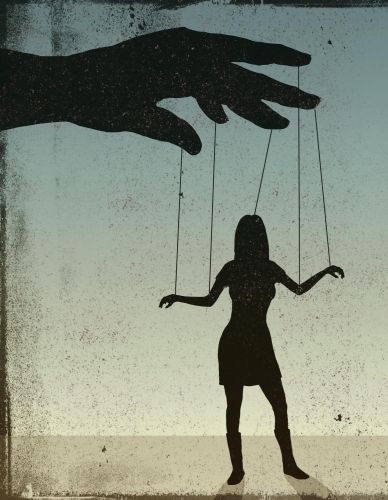 Laquelle de ces opinions est résistible ou irrésistible ? Et au cas où ce classement pourrait être établi, selon quel critère ? Quel « traitement » appliqué à l’opinion (rhétorique, mise en scène ,répétition..) fait que le choix d’accord/ pas d’accord est ainsi faussé ? Où passe la frontière entre le désir licite de convaincre ou de séduire, ce que nous tentons de faire la moitié du temps quand nous ouvrons la bouche, et la manipulation scandaleuse?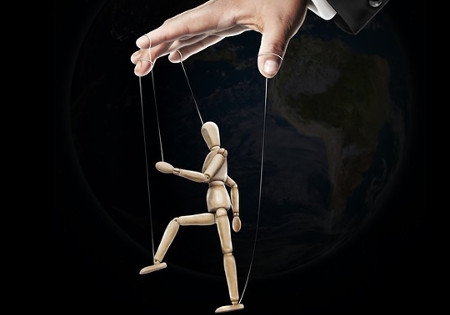
 La catégorie manipulation recouvrirait pratiquement toutes les stratégies par l’information: désinformation, propagande, mystification, endoctrinement, stratagèmes.
  - Des effets plus généraux de manipulation à travers les médias. Leur capacité globale à produire tel effet sur l’opinion en situation réelle, entendez hors laboratoire et soumise à une pluralité de messages, serait alors l’objet d’une ‘science des médias » (media studies anglo-saxonne ou sociologie des médias). Celle-ci tenterait de décrire la nature et les limites du « pouvoir des médias », zone qui circonscrirait le domaine des manipulations efficaces ou non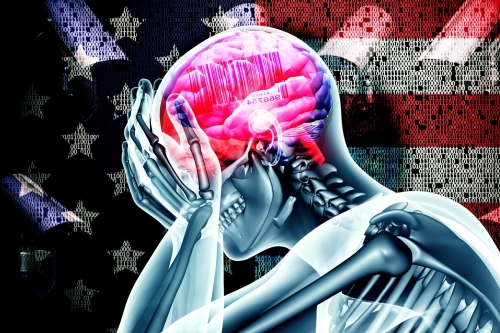
In my 30 years as a self-improvement coach, the most important insight is that where you put your attention is where your energy goes. If you find that hard to believe, try this: Walk through a crowd. Put your attention on the people. Then walk through the same crowd again and put your attention on the gaps between the people. More of them will now make way. Try it. It never fails. Here’s another experiment: Stand at the corner of any city street and look upwards for a while. You will notice people around you also look upwards. They want to know what you are looking at, and for that brief period you determined the direction of their attention.
If I tell a group of people to think of a red car, there is a great likelihood that all of them will do it. And if I tell them not to think of a red car… they will also think of a red car! They could have chosen to think of a blue mountain instead. From that you realise how easy it is to steer mass attention.
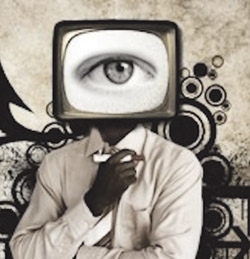 Rarely will anyone form their own thought or choose different than what they are told. In fact, if you do not make decisions and intentions, someone else will do it for you. You know this from your own life: If your spouse asks you where you want to go for dinner and you don’t really have any specific preference, then they will decide where to go. The same applies on a mass-scale.
Due to a general weakness of will and awareness, most people have their reality decided for them, with merely the illusion of choice given – such as being able to choose whether you will pay your taxes by credit card or bank wire.
In school, children do not learn how to think but what to think. They do not learn how to steer attention but instead various things they are supposed to steer attention to.
It is humbling to realise that most people on the planet do not practice focusing, guiding, re-directing, shifting, retrieving and un-sticking their own attention. Thus the life-experience of most of us is determined by external agendas as given by mass media, schools, our parents and countless other sources that have very little to do with our innermost heart’s truth.
We are lucky that at least some of the direction we get from outside is benign. We are lucky if we have parents who say, “You are highly talented, intelligent and beautiful,” thus directing our attention in the right direction. Have you ever heard a newscaster tell you, “You are safe, talented, intelligent, beautiful, empowered and able”? Not hardly. You’ll hear you are the victim of horrible circumstances that you can do nothing about.
Through directing attention, you become a mini-reality-creator. But the mass media is the grand sorcerer of reality manipulation as it directs the attention of millions. It’s not generally understood to what bizarre extent the news media actively participate in the creation of our reality. It is thought they only “report” what is “happening,” but that’s not the case.
The following are different levels of mass-reality-creation by the news media, sorted by the degree of manipulation:
Level 1: Filtering
When I create a movie for my work, I usually choose an outdoor location. I make sure to set up the camera in nature so the scenery looks really good. By choosing what to point the camera at, I am excluding everything I don’t want viewers to see, anything that does not fit my agenda.
I recently filmed breathtaking natural scenery… or at least that’s what it looked like in the final result. I excluded an adjacent parking place, trashcans, roaming dogs, public signs, ugly houses and anything else that disturbed the illusion of me being in paradise. Any filmmaker understands to which extent the filmmaker distorts reality.
From the millions of events that happen every day, the reporter filters which ones to report. This is a normal process. I do it for my own website by presenting only information relevant to its overall topic. People do it on Facebook by presenting themselves in a certain way and excluding pictures that might put them in a bad light.
News media, however, tend to apply several filters. The first one is the filter of negative bias. Why? Because at Earth’s current level of consciousness, fear, drama and hatred still capture more interest than peace, prosperity and harmony. Desperate to sell ad slots on their news program and their declining newspapers, most reports are filtered by how much upheaval and action they contain. In addition, televised news media follows the creed, “if there is no footage (video), it doesn’t matter.” When I was younger I worked for a well-known news station where I was told exactly that. I tried to get the editor to cover important angles of a story, but if there was no footage of it, it was as if it didn’t exist.
If they were to portray life on a day on Earth accurately, as it is for most people most of the time, it might appear “boring.” So the camera zooms in on places of the most mayhem and tragedy. This extreme filtering gives the audience the false impression that the whole world is mostly in a state of chaos, coupled with the implication there is absolutely nothing you can personally do about it. The sensationalist journalist never adds words of advice on improving your life, moving to peaceful surroundings or words of encouragement. He only cares about the sheer terror of explosions, debris, blood and destruction. If any of your relatives talked like a news anchor, you’d consider them mentally unstable.
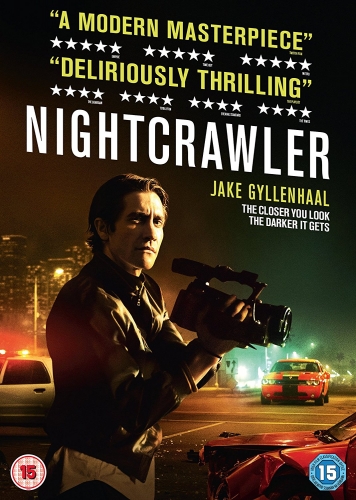 A recent movie The Nightcrawler (starring Jake Gyllenhaal) exposes the juvenile and sadistic mindset of some sections of modern “journalism.” No doubt, the last decade has seen a rise in terrorist attacks all over the world. And while these are horrific, they are still actually just localised events, pinpointed at certain buildings with a limited amount of people. They are not nearly as bad as the nation-to-nation all-out-wars we’ve had in decades before that.
I happened to be in the city of Munich on the day of a terrorist attack at the end of July 2016. The shooting of 9 people at the hands of a 19-year-old kid named Ali went around the world. And yet, I learned it from the news, not from being in Munich at the time. On that day I was riding my bike along the river and went for a swim. I received numerous text messages asking whether I’m still alive and sending blessings to me and my family. You see my point…. things are bad, but rarely as bad as the news says they are.
On an odd note: The same journalist who happened to be at the Nice (France) terror attack only a week before, shooting live footage of it, also “coincidentally” happened to be pre-positioned at Munich on location and filming. His name is Richard Gutjahr and he is either magnetically attracted to such events for the sake of “terrortainment” or there is something more sinister going on.
When, if I may ask, is the last time you saw windsurfers in the Palestinian Gaza Territory or a happy family having a barbecue in their Jerusalem garden in the news? These events happen every day, by the hundreds, but they do not automatically come to your mind when I say “Gaza!” or “Israel!” I have been to both Palestine and Israel on numerous visits, both privately and for business, and I’ve always had a great time. Yet when I tell people I am travelling there, they tell me “be careful! That’s dangerous!” They associate these places with the blood and gore the news showed them. They know virtually nothing about the realities of these places than what they have been shown.
I mean no disrespect to the suffering of people in the Middle East or anywhere else for that matter. I am merely using these extreme examples to make the point of filtered-realities. They cause a lack of balance in our perception of the world as well as desensitising us toward violence.
Ideally, news media would have to not only show a nice segment at the end of their show, but more positive and interesting segments throughout. Then we learn that the world is a balance of light and darkness. Where are the news reports of hope, inspiration, everyday-heroes and human accomplishment? They are far and few between. If a proper balance of dark and light were given, the audience would become more involved in the healing of darkness rather than apathetic to it.
Level 2: Distortion
The next level of reality-manipulation is deliberate distortion by the journalists themselves because they wish to see something in a certain manner or are partial to some political, religious or philosophical ideology.
Of course, nobody is completely neutral and unbiased, nor is that expected. But one of the problems of our times is there is virtually no mass media outlet that is not widely known as being affiliated with some political, governmental, anti-governmental or philosophical “side” and a far shot from “neutral.” Latest statistics from my country (USA) show that the Top Ten most successful “news” outlets on the Internet are either “right-wing” or “left-wing” affiliated. The fact that we are able to determine whether an outlet is “left” or “right” is in itself problematic. It is disheartening how almost every story “top news outlets” carry is filtered through political bias. In other words, these are not “news” outlets and their employees are not “journalists,” they are unabashed propaganda outlets for one of the two political parties in the US.
Another form of distortion occurs when a journalist makes something better or worse than it is. He knows the editor will only accept a story if its interesting enough so he adds a few details here and there, knowing nobody will likely ever examine them more closely. From writing my own blog to a fairly large audience, I am somewhat familiar with the problem, but have always resisted the urge to exaggerate reports. I’d rather have some of my reports be understated (“boring”) than to report things that did not happen. Needless to say, I am not only blaming the mass media, as they only reflect the desires of the populace, who favour entertainment and excitement over reason and truth. When that audience goes to the cinema, they rarely pay to see peace, love and harmony, they usually pay to see death and suffering.
Another form of distortion is that most news stories are reported without wrapping them into a wider context. Most things that happen are part of a greater pattern, part of a history, part of a mindset. Yet, the way stories are reported is as separate pieces that have little or no relation to each other.
When I report on my blog, I frequently like to put what I wrote into context and comparison with other things I wrote in order to give a congruent overall big-picture. This is not the case in conventional news media where people think that the presidential elections in the US, the hurricane that happened just before, the resignation of the CIA-boss and the resurgent Israel-Palestine conflict (all having happened within a few weeks a couple of years ago) have nothing whatsoever to do with each other and are separate bits of information. But they are interconnected, not only metaphysically but geopolitically. Because the news reports too much and journalists write too quickly, ignoring context and connections, they breed ignorance of the depth and meaning of things.
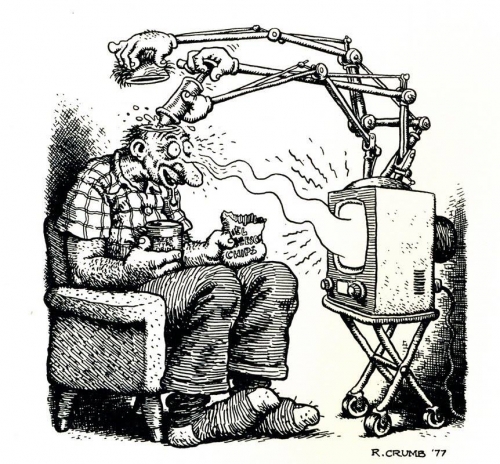
Level 3: Deliberate Fabrication
This is the most intense form of reality-manipulation which hopefully does not occur too often. I recently spoke to someone who used to work for the British “Ministry of Defense.” He shared the following story: Some decades ago a group of reporters went to Northern Ireland to capture footage of the conflict. When they arrived everything was peaceful, so they went ahead and created some chaos, just so they could return home with footage. They bribed a local to make and throw molotov cocktails (amateur bombs) off rooftops into the streets, setting cars and trashcans ablaze. In this instance, the journalists literally created the news. They refused to go home saying “the streets of Belfast are peaceful at this time.” The guy who told me the story lamented that this scandal of sorts was never revealed or reported on to this day. It was covered up by the BBC to avoid embarrassment.
For a mature human being it is important to at least be aware of how news media manipulates reality. Mere awareness immunises you. You can then read and watch the news without being dragged down to victim-mentality or desensitised apathy, and if you are interested in a story you can then read different news outlets to view the different viewpoints and versions of it and gain a birds-eye-view.
It’s better not to rely on only one news outlet. In my view, most of these stories are just the world-mind processing garbage, like in some kind of bad dream. None of it needs to have anything to do with you, your reality and the reality of those around you. You experience only what you attract through the contents of your own consciousness and subsequent decisions. In some cases you will have a friend or relative who gets way too caught up in news media, exaggerating the importance of various events.
Back in the 80s some believed AIDS would completely wipe out the entire planet by the year 2000. It didn’t happen. Then they thought “Swine-Flu” would “wipe out civilisation as we know it”: It didn’t happen. Then they thought 2012 would enlighten humanity to a golden era of peace and bliss. Didn’t happen. And they thought 9/11 would mark the beginning of World War III. Didn’t happen. I dare say that for most of us, life went on like it did the 10 years before and progressed or regressed in accordance with our personal level of consciousness.
Those who take the news way too seriously very rarely do anything actively to help the situation. They’d prefer being worried and indignant to taking positive action. For them, daily preoccupation with the news is like an escape from their own lives which may lack movement or excitement. But when the time comes that their own lives pick up, their interest in daily news recedes. This means they have chosen to focus their precious attention to places that really matter in the development of their own spirit.
Attention is the currency of the 21st century and I recommend you use yours wisely. Be conscious of what you give your eyes to see, your ears to hear, your mind to think and your heart to feel.
If you appreciate this article, please consider a digital subscription to New Dawn.
.
FRED DODSON is the creator of Reality Creation Coaching. Since 1999 he has taught the outermost optimisation of personal performance, the expansion of awareness and the ascension to higher states of consciousness. He believes there are many versions of ‘you’ and that you can access higher-versions of yourself by which you attract different experiences into your life. He calls this process Reality Creation. Fred has a range of fascinating books (available from his website or www.amazon.com) and courses. Find out more here: www.realitycreation.org.
The above article appeared in New Dawn 159 (Nov-Dec 2016)
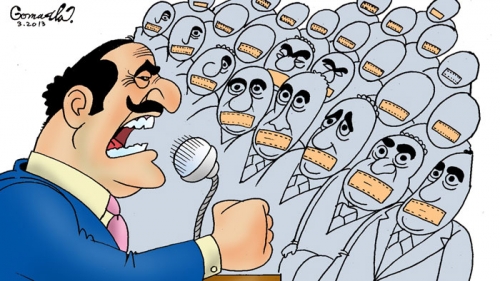

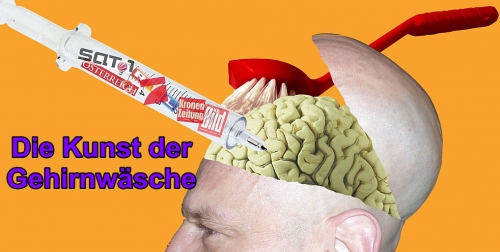



Die Leute werden nicht müde, trotz Abwesenheit allgemein akzeptierter Autoritäten, von indiskutablen letzten Werten, verbindlichen Normen sowie gemeinsamen Überzeugungen über Politik zu reden.
Demokraten z.B. gehen davon aus, dass ihresgleichen einer mit sachlichen Argumenten geführten Diskussion zugänglich sein muss. Es kann ja gar nicht anders sein. Nach ihnen hat die Vernunft es so eingerichtet, dass „wir Demokraten“ miteinander reden können. Schließlich sind wir alle – d.h. „wir Demokraten“ – vernünftig.
In der Demokratie zählt Gleichheit mehr als Vernunft
Dabei wird vergessen, dass in der Demokratie die Gleichheit der Vernunft übergeordnet ist: Entweder ist die Vernunft allen Individuen gleichermaßen angeboren, oder aber wir haben kein individuelles Vernunftvermögen, welches uns bezüglich der Vernunft voneinander unterschiede.
Entweder sind „wir Demokraten“ alle von Natur aus gleich weise, einsichtig und vernünftig bzw. töricht, uneinsichtig und unvernünftig, oder aber „wir Demokraten“ können nachträglich gemeinsam übereinkommen in Einsicht, Verständigkeit und Besonnenheit, bzw. in Torheit, Unverstand und Wahnsinn, vermittels der Gleichheit.
Unmöglichkeit der Diskussion
Trotz demokratischer „Gleichberechtigung“ in der Diskussion sollte die Pattsituation, in der sich jede Diskussion von selbst erübrigt, die demokratische Situation schlechthin sein. Denn dem der Demokratie zu Grunde liegenden individualistischen Gleichheitsgrundsatz, der von der geistigen Autarkie und Autonomie der Einzelnen ausgeht, entspricht es nämlich beileibe nicht, von anderen zu fordern, sie möchten die besseren eigenen Argumente doch einsehen, sie akzeptieren und, infolgedessen, sich selbst zu eignen machen.
So betrachtet ist Überzeugen keine Option, sondern ein Wahn: von mir kann vernünftigerweise niemand verlangen, den Willen aufzubringen, je nachdem, entweder andere überzeugen zu wollen, oder aber mich überzeugen zu lassen. Längst gibt es die schwächlichen, den Gegenüber angeblich beschwichtigenden Wendungen: „Ich will die ja gar nicht überzeugen“ und „Das ist einfach nur meine persönliche Meinung ohne jeden Anspruch auf Wahrheit“.
Liberale Demokratie und „dialogische Form“ schließen einander aus
Die liberale, fälschlich für dialogisch gehaltene Form der Demokratie, welche auf der unentwegten gegenseitigen Zusicherung von Gesprächsbereitschaft – „parlement“ – beruht, erweist sich bei näherem Hinsehen als Chimäre. Soll überhaupt ein Dialog stattfinden, müssen die Kontrahenten einander wirklich ebenbürtig sein. Ebenbürtigkeit aber schließt Gleichheit mit Nichtebenbürtigen von vornherein aus. Und ebenbürtig ist auch nur der, der gleich geartet, d.h. gleichen Geistes und Gemüts wie einer selbst, ist. Damit aber ist ein Schlussstrich unter die Demokratie gezogen.
Nach Einigung auf die Sachlichkeit der Argumente erfordert der Dialog von beiden Seiten noch behelfsmäßige Annahme, Prüfung, Erörterung, Auseinandersetzung sowie beiderseitige Willfährigkeit, zu überzeugen und sich überzeugen zu lassen, gerade weil beider Leitstern die Wahrheit ist. Denn wäre sie das nicht, wozu dann diskutieren, meinen, reden? Wer ohne Wahrheit, d.h. vernunftlos, redet, redet einfach nur der Rede wegen, oder aber weil es ihm um nichts anderes als um die Vormacht geht, und zwar nicht um die Vormacht im Gespräch, sondern um die wahre, die handfeste Vormacht.
„Demokratie“ als Recht des Stärkeren – Recht des Listigeren
Innerhalb der liberalen Demokratie ist es um dialogische Form von vornherein schlecht bestellt: Gibt es doch tatsächlich Menschen, die zu ihrer natürlichen geistigen Begnadetheit auch noch die notwendige Selbstbeherrschung mitbringen, um allein Dienst an der Wahrheit zu tun. In der Konfrontation mit ihnen landen unsere gesprächsbereiten Demokraten früher oder später bei Machiavellis Standpunkt, dass die sicherste Art zu herrschen – bzw. davon abgeleitet: in der Diskussion zu triumphieren – immer noch die der Zerstörung (des Gegners) ist.
Dabei ist die einzige Herrschaft, für die gestritten werden sollte, die der Wahrheit. Demokraten aber geht es letztlich auch nur um ihre Herrschaft. Innerhalb des liberalen gesellschaftlichen Redeflusses sind „gleiche Chance“ und „Gleichberechtigung“ daher nichts anderes als Chiffren: Für den Einzelnen chiffrieren sie seine Selbstsucht und seinen Eigennutz, für Gruppen und Parteien die eigene Selbstgerechtigkeit und Scheinheiligkeit, also ebenfalls Selbstsucht und Eigennutz. „Demokratie“ kann deshalb sowohl Recht des Stärkeren als auch Recht des Listigeren, vor allem des Hinterlistigeren, bedeuten.
Von der liberalen Demokratie zur Wissensgesellschaft
Die Schwierigkeit der dialogischen Form, die sie auch mit der liberalen Demokratie unvereinbar macht, liegt in ihren individuellen Voraussetzungen. Nicht jeder Mensch ist fähig und auch willens, im Dialog der Wahrheit uneigennützig zum Siege zu verhelfen. Vielmehr gilt: Für Eigensinn und Willen zur Macht gibt es kein besseres Mistbeet und Treibhaus als eben unsere liberale Demokratie, die sich selbst „Wissensgesellschaft“ zu nennen goutiert.
Aus ihr sprießen Heerscharen von Schulmeistern, sonstigen wissenden Widerspruchswichten aber auch grobianischen Wortberserkern. Sokrates selbst findet freilich auch unzählige Nachahmer, unter denen sich aber kein einziger echter Sokrates auffinden lässt, sondern einfach nur Papageien. Kein Mensch hat Nerven, die demokratische Pattsituation zu akzeptieren. Auch sind es immer wieder liberale Demokraten, die ein geradezu pathologisches Mitteilungsbedürfnis haben. „Lakonisch“ und „liberal“ sind nicht nur politisch Gegensätze. Sie sind es auch in der Rede.
Machtmensch vs. Dialogiker
Dem Dialogiker, der sich unvorsichtigerweise darauf eingelassen hat, mit Machtmenschen zu reden, kommt seine Unvorsicht teuer zu stehen. Der Machtmensch dankt dem Dialogiker seine Gesprächsbereitschaft nicht. Im Gegenteil versucht er ihn zu überbieten. Aufgrund der demokratischen Gleichheit hegt der Machtmensch nämlich den Verdacht, der Dialogiker wolle ihn überbieten.
Damit ihm ja nicht geschehe, was er selbst seinem Gegenüber, seinem potentiellen Opfer, antun will, bietet er alles auf, um durch vorauseilendes Übertrumpfen zu verhindern, dass er zum Überbotenen und, somit, zum Besiegten werde. Die Mittel dazu sind: den Gegenüber sprachlos, rhetorisch, logisch und auch bezüglich Einzelheiten platt zu machen. Und zu diesem Zweck werden Kampfmittel aufgefahren und sogar Täuschungsmanöver angewandt.
Alles eine Machtfrage!?
Das Gespräch ist ein Kampf. Der Soziologe Gabriel de Tarde hat sogar von einem „logischen Zweikampf“ gesprochen. Und die alten Griechen kultivierten den rhetorischen Wettkampf wie jeden anderen Wettkampf auch. Der Machtmensch aber macht aus diesen logischen Wettkämpfen einen Ringkampf um die Macht, bei dem jegliches Einhalten von Regeln zu seinen eigenen Ungunsten ausschlagen würde.
Nichts liegt ihm ferner als liberales Fairplay. Argumente sind ihm Waffen und Waffen Argumente. Selbst die behelfsmäßige Annahme, getätigt im Dienste der Wahrheit, sein Gegenüber könnte Recht haben, verlangt ihm eine Liebe zur Wahrheit (Philosophie) ab, die er gar nicht haben kann. Und, anstatt die Willfährigkeit und die sich aus ihr ergebende Bereitschaft, zu überzeugen und selbst – wenn auch nur der Möglichkeit nach – überzeugt zu werden, mitzubringen, bringt er ganz einfach den Willen zur Macht mit. Und selbst für gewitztere (liberale) Demokraten, die als ihre einzigen Waffen entwaffnenden Humor und Ironie mitbringen, ist allein der Wille zur Macht maßgebend.
Sektierer, Gemeinde und Gesinnungspolizei in einer Person
Das politische Gespräch heutzutage ist eine Unmöglichkeit. Hauten sich die Leute gegenseitig die Köpfe ein und schwiegen sie – oder umgekehrt – wäre ihnen besser gedient. Es ist nämlich ganz zwecklos, mit anderen Menschen über Politik ins Gespräch zu kommen. Man scheint in die Lage des inneren Exilanten Machiavelli versetzt, der sein Zwiegespräch mit den römischen Klassikern hielt, um über Politik reden und schreiben zu können.
Oder aber in die Platos, des Meisters des Dialogs, der sich seine Dialogpartner selbst ersann um die Dinge der Politik dialogisch-dialektisch auseinanderzusetzen. Oder aber in die Rankes, welcher durch die beiden Brüder seines „politischen Gesprächs“ selbst zu Wort kam. Die Benimmregel, aus Gründen des Zusammenlebens bei Tisch nicht über Politik, Religion und Fußball – was im Grunde alles dasselbe ist – zu reden, kann man getrost auf die ganze gnostische Wissensgesellschaft ausdehnen: In ihr ist jeder sein eigener Sektierer und sich selbst dazu noch die Gemeinde.
Damit sind Sektierer und Gemeinde in einer Person vereint und die Gesinnungspolizei, die man ebenfalls selbst ist, hat allerhand zu tun, sowohl mit gleich und als auch ungleich gearteten Menschen verbal handgreiflich zu werden.