Interview with Alexander Dugin http://www.wermodandwermod.com/
Introduction
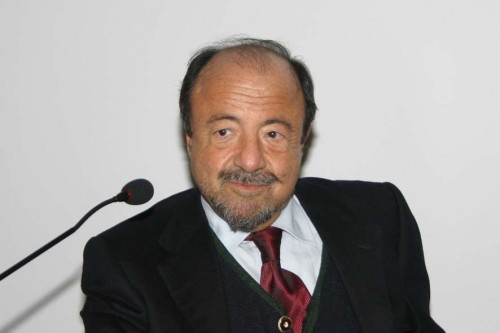
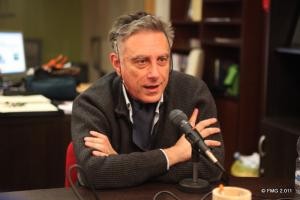
In February 2012, Professor Alexander Dugin traveled to New Delhi, India to attend the 40th World Congress of the International Institute of Sociology, the theme of which was “After Western Hegemony: Social Science and its Publics.” Professor Dugin was kind enough to take some time away from the conference to answer a few questions by representatives of Arktos who attended the event.
In this interview, we attempted to have Professor Dugin clarify some of his basic beliefs in order to dispel the confusion and misrepresentations that exist about him and his movement, the Eurasian Movement, and its offshoot, the Global Revolutionary Alliance, in the English-speaking world. The interview was conducted by Daniel Friberg, CEO of Arktos, and John B. Morgan, Editor-in-Chief.
This interview is being released in conjunction with Prof. Dugin’s appearance at Identitarian Ideas 2012, being held by the Swedish organization Motpol in Stockholm on July 28, 2012, and the simultaneous release of Prof. Dugin’s book The Fourth Political Theory by Arktos (http://www.arktos.com/alexander-dugin-the-fourth-political-theory.html). This is the first book by Prof. Dugin to appear in the English language.
There is a perception in the West that you are a Russian nationalist. Do you identify with that description?
The concept of the nation is a capitalist, Western one. On the other hand, Eurasianism appeals to cultural and ethnic differences, and not unification on the basis of the individual, as nationalism presumes. Ours differs from nationalism because we defend a pluralism of values. We are defending ideas, not our community; ideas, not our society. We are challenging postmodernity, but not on behalf of the Russian nation alone. Postmodernity is a yawning abyss. Russia is only one part of this global struggle. It is certainly an important part, but not the ultimate goal. For those of us in Russia, we can’t save it without saving the world at the same time. And likewise, we can’t save the world without saving Russia.
It is not only a struggle against Western universalism. It is a struggle against all universalisms, even Islamic ones. We cannot accept any desire to impose any universalism upon others – neither Western, Islamic, socialist, liberal, or Russian. We defend not Russian imperialism or revanchism, but rather a global vision and multipolarity based on the dialectic of civilization. Those we oppose say that the multiplicity of civilizations necessarily implies a clash. This is a false assertion. Globalization and American hegemony bring about a bloody intrusion and trigger violence between civilizations where there could be peace, dialogue, or conflict, depending on historical circumstances. But imposing a hidden hegemony implies conflict and, inevitably, worse in the future. So they say peace but they make war. We defend justice – not peace or war, but justice and dialogue and the natural right of any culture to maintain its identity and to pursue what it wants to be. Not only historically, as in multiculturalism, but also in the future. We must free ourselves from these pretend universalisms.
What do you think Russia’s role will be in organizing the anti-modern forces?
There are different levels involved in the creation of anti-globalist, or rather anti-Western, movements and currents around the world. The basic idea is to unite the people who are fighting against the status quo. So, what is the status quo? It is a series of connected phenomena bringing about an important shift from modernity to post-modernity. It is shaped by a shift from the unipolar world, represented primarily by the influence of the United States and Western Europe, to so-called non-polarity as exemplified by today’s implicit hegemony and those revolutions that have been orchestrated by it through proxy, as for example the various Orange revolutions. The basic intent behind this strategy is for the West to eventually control the planet, not only through direct intervention, but also via the universalization of its set of values, norms, and ethics.
The status quo of the West’s liberal hegemony has become global. It is a Westernization of all of humanity. This means that its norms, such as the free market, free trade, liberalism, parliamentarian democracy, human rights, and absolute individualism have become universal. This set of norms is interpreted differently in the various regions of the world, but the West regards its specific interpretation as being both self-evident and its universalization as inevitable. This is nothing less than a colonization of the spirit and of the mind. It is a new kind of colonialism, a new kind of power, and a new kind of control that is put into effect through a network. Everyone who is connected to the global network becomes subjected to its code. It is part of the postmodern West, and is rapidly becoming global. The price a nation or a people has to pay to become connected to the West’s globalization network is acceptance of these norms. It is the West’s new hegemony. It is a migration from the open hegemony of the West, as represented by the colonialism and outright imperialism of the past, to an implicit, more subtle version.
To fight this global threat to humanity, it is important to unite all the various forces that would, in earlier times, have been called anti-imperialist. In this age, we should better understand our enemy. The enemy of today is hidden. It acts by exploiting the norms and values of the Western path of development and ignoring the plurality represented by other cultures and civilizations. Today, we invite all who insist on the worth of the specific values of non-Western civilizations, and where there other forms of values exist, to challenge this attempt at a global universalization and hidden hegemony.
This is a cultural, philosophical, ontological, and eschatological struggle, because in the status quo we identify the essence of the Dark Age, or the great paradigm. But we should also move from a purely theoretical stance to a practical, geopolitical level. And at this geopolitical level, Russia preserves the potential, resources and inclination to confront this challenge, because Russian history has long been intuitively oriented against the same horizon. Russia is a great power where there is an acute awareness of what is going on in the world, historically speaking, and a deep consciousness of its own eschatological mission. Therefore it is only natural that Russia should play a central part in this anti-status quo coalition. Russia defended its identity against Catholicism, Protestantism and the modern West during Tsarist times, and then against liberal capitalism during Soviet times. Now there is a third wave of this struggle – the struggle against postmodernity, ultra-liberalism, and globalization. But this time, Russia is no longer able to rely on its own resources. It cannot fight solely under the banner of Orthodox Christianity. Nor is reintroducing or relying on Marxist doctrine a viable option, since Marxism is in itself a major root of the destructive ideas constituting postmodernity.
Russia is now one of many participants in this global struggle, and cannot fight this fight alone. We need to unite all the forces that are opposed to Western norms and its economic system. So we need to make alliances with all the Leftist social and political movements that challenge the status quo of liberal capitalism. We should likewise ally ourselves with all identitarian forces in any culture that refuse globalism for cultural reasons. From this perspective, Islamic movements, Hindu movements, or nationalist movements from all over the world should also be regarded as allies. Hindus, Buddhists, Christians, and pagan identitarians in Europe, America, or Latin America, or other types of cultures, should all form a common front. The idea is to unite all of them, against the single enemy and the singular evil for a multiplicity of concepts of what is good.
What we are against will unite us, while what we are for divides us. Therefore, we should emphasize what we oppose. The common enemy unites us, while the positive values each of us are defending actually divides us. Therefore, we must create strategic alliances to overthrow the present order of things, of which the core could be described as human rights, anti-hierarchy, and political correctness – everything that is the face of the Beast, the anti-Christ or, in other terms, Kali-Yuga.
Where does traditionalist spirituality fit into the Eurasian agenda?
There are secularized cultures, but at the core of all of them, the spirit of Tradition remains, religious or otherwise. By defending the multiplicity, plurality, and polycentrism of cultures, we are making an appeal to the principles of their essences, which we can only find in the spiritual traditions. But we try to link this attitude to the necessity for social justice and the freedom of differing societies in the hope for better political regimes. The idea is to join the spirit of Tradition with the desire for social justice. And we don’t want to oppose them, because that is the main strategy of hegemonic power: to divide Left and Right, to divide cultures, to divide ethnic groups, East and West, Muslims and Christians. We invite Right and Left to unite, and not to oppose traditionalism and spirituality, social justice, and social dynamism. So we are not on the Right or on the Left. We are against liberal postmodernity. Our idea is to join all the fronts and not let them divide us. When we stay divided, they can rule us safely. If we are united, their rule will immediately end. That is our global strategy. And when we try to join the spiritual tradition with social justice, there is an immediate panic among liberals. They fear this very much.
Which spiritual tradition should someone who wishes to participate in the Eurasianist struggle adopt, and is this a necessary component?
One should seek to become a concrete part of the society in which one lives, and follow the tradition that prevails there. For example, I am Russian Orthodox. This is my tradition. Under different conditions, however, some individuals might choose a different spiritual path. What is important is to have roots. There is no universal answer. If someone neglects this spiritual basis, but is willing to take part in our struggle, during the struggle he may well find some deeper spiritual meaning. Our idea is that our enemy is deeper than the merely human. Evil is deeper than humanity, greed, or exploitation. Those who fight on behalf of evil are those who have no spiritual faith. Those who oppose it may encounter it. Or, perhaps not. It is an open question – it is not obligatory. It is advisable, but not necessary.
What do you think of the European New Right and Julius Evola? And in particular, their respective opposition to Christianity?
It is up to the Europeans to decide which kind of spirituality to revive. For us Russians, it is Orthodox Christianity. We regard our tradition as being authentic. We see our tradition as being a continuation of the earlier, pre-Christian traditions of Russia, as is reflected in our veneration of the saints and icons, among other aspects. Therefore, there is no opposition between our earlier and later traditions. Evola opposes the Christian tradition of the West. What is interesting is his critique of the desacralization of Western Christianity. This fits well with the Orthodox critique of Western Christianity. It is easy to see that the secularization of Western Christianity gives us liberalism. The secularization of the Orthodox religion gives us Communism. It is individualism versus collectivism. For us, the problem is not with Christianity itself, as it is in the West. Evola made an attempt to restore Tradition. The New Right also tries to restore the Western tradition, which is very good. But being Russian Orthodox, I cannot decide which is the right path for Europe to take, since we have a different set of values. We don’t want to tell the Europeans what to do, nor do we want to be told what to do by the Europeans. As Eurasianists, we’ll accept any solution. Since Evola was European, he could discuss and propose the proper solution for Europe. Each of us can only state our personal opinion. But I have found that we have more in common with the New Right than with the Catholics. I share many of the same views as Alain de Benoist. I consider him to be the foremost intellectual in Europe today. That it is not the case with modern Catholics. They wish to convert Russia, and that is not compatible with our plans. The New Right does not want to impose European paganism upon others. I also consider Evola to be a master and a symbolic figure of the final revolt and the great revival, as well as Guénon. For me, these two individuals are the essence of the Western tradition in this dark age.
In our earlier conversation, you mentioned that Eurasianists should work with some jihadist groups. However, they tend to be universalist, and their stated goal is the imposition of Islamic rule over the entire world. What are the prospects for making such a coalition work?
Jihadis are universalists, just as secular Westerners who seek globalization are. But they are not the same, because the Western project seeks to dominate all the others and impose its hegemony everywhere. It attacks us directly every day through the global media, fashions, by setting examples for youth, and so on. We are submerged in this global cultural hegemony. Salafist universalism is a kind of marginal alternative. They should not be thought of in the same way as those who seek globalization. They also fight against our enemy. We don’t like any universalists, but there are universalists who attack us today and win, and there are also non-conformist universalists who are fighting against the hegemony of the Western, liberal universalists, and therefore they are tactical friends for the time being. Before their project of a global Islamic state can be realized, we will have many battles and conflicts. And global liberal domination is a fact. We therefore invite everybody to fight alongside us against this hegemony, this status quo. I prefer to discuss what is the reality at present, rather than what may exist in the future. All those who oppose liberal hegemony are our friends for the moment. This is not morality, it is strategy. Carl Schmitt said that politics begins by distinguishing between friends and enemies. There are no eternal friends and no eternal enemies. We are struggling against the existing universal hegemony. Everyone fights against it for their own particular set of values.
For the sake of coherence we should also prolong, widen, and create a broader alliance. I don’t like Salafists. It would be much better to align with traditionalist Sufis, for example. But I prefer working with the Salafists against the common enemy than to waste energy in fighting against them while ignoring the greater threat.
If you are in favor of global liberal hegemony, you are the enemy. If you are against it, you are a friend. The first is inclined to accept this hegemony; the other is in revolt.
In light of recent events in Libya, what are your personal views on Gaddafi?
President Medvedev committed a real crime against Gaddafi and helped to initiate a chain of interventions in the Arab world. It was a real crime committed by our President. His hands are bloodied. He is a collaborator with the West. The crime of murdering Gaddafi was partly his responsibility. We Eurasianists defended Gaddafi, not because we were fans or supporters of him or his Green Book, but because it was a matter of principles. Behind the insurgency in Libya was Western hegemony, and it imposed bloody chaos. When Gaddafi fell, Western hegemony grew stronger. It was our defeat. But not the final one. This war has many episodes. We lost the battle, but not the war. And perhaps something different will emerge in Libya, because the situation is quite unstable. For example, the Iraq War actually strengthened Iran’s influence in the region, contrary to the designs of the Western hegemonists.
Given the situation in Syria at present, the scenario is repeating itself. However, the situation, with Putin returning to power, is much better. At least he is consistent in his support for President al-Assad. Perhaps this will not be enough to stop Western intervention in Syria. I suggest that Russia assist our ally more effectively by supplying weapons, financing, and so forth. The fall of Libya was a defeat for Russia. The fall of Syria will be yet another failure.
What is your opinion of, and relationship to Vladimir Putin?
He was much better than Yeltsin. He saved Russia from a complete crash in the 1990s. Russia was on the verge of disaster. Before Putin, Western-style liberals were in a position to dictate politics in Russia. Putin restored the sovereignty of the Russian state. That is the reason why I became his supporter. However, after 2003, Putin stopped his patriotic, Eurasianist reforms, putting aside the development of a genuine national strategy, and began to accommodate the economic liberals who wanted Russia to become a part of the project of globalization. As a result, he began to lose legitimacy, and so I became more and more critical of him. In some circumstances I worked with people around him to support him in some of his policies, while I opposed him in others. When Medvedev was chosen as his heir, it was a catastrophe, since the people positioned around him were all liberals. I was against Medvedev. I opposed him, in part, from the Eurasianist point-of-view. Now Putin will return. All the liberals are against him, and all the pro-Western forces are against him. But he himself has not yet made his attitude toward this clear. However, he is obliged to win the support of the Russian people anew. It is impossible to continue otherwise. He is in a critical situation, although he doesn’t seem to understand this. He is hesitating to choose the patriotic side. He thinks he can find support among some of the liberals, which is completely false. Nowadays, I am not so critical of him as I was before, but I think he is in a critical situation. If he continues to hesitate, he will fail. I recently published a book, Putin Versus Putin, because his greatest enemy is himself. Because he is hesitating, he is losing more and more popular support. The Russian people feel deceived by him. He may be a kind of authoritarian leader without authoritarian charisma. I’ve cooperated with him in some cases, and opposed him on others. I am in contact with him. But there are so many forces around him. The liberals and the Russian patriots around him are not so brilliant, intellectually speaking. Therefore, he is obliged to rely only upon himself and his intuition. But intuition cannot be the only source of political decision-making and strategy. When he returns to power, he will be pushed to return to his earlier anti-Western policies, because our society is anti-Western in nature. Russia has a long tradition of rebellion against foreign invaders, and of helping others who resist injustice, and the Russian people view the world through this lens. They will not be satisfied with a ruler who does not govern in keeping with this tradition.




 del.icio.us
 Digg
Digg Facebook