

samedi, 29 juin 2013
Africa in the Context of BRICS and Geopolitical Turbulence
Africa in the Context of BRICS and Geopolitical Turbulence
by Leonid SAVIN
Ex: http://www.geopolitica.ru/
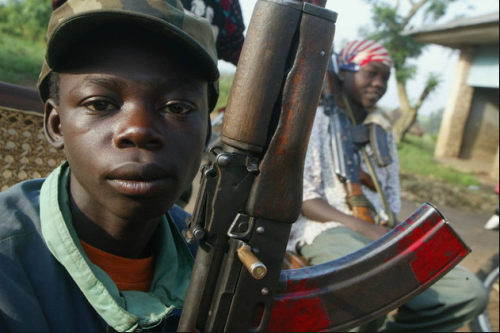
After the terrorist attacks on the WTC in New York, the US began to implement a new foreign policy vision and strategy for global order. Its elements synchronized with the doctrine of ‘Full Spectrum Dominance’ that was detailed in the 1996 Defense Department policy directive “Joint Vision 2010”[1]. In accordance with this concept, US armed forces should be "persuasive in peace, decisive in war, pre-eminent in any form of conflict"[2]. The militarization of the Africa continent is to be conducted hand-in-hand with the exploitation of African resources by Western corporate interests. The terrorist attack on the World Trade Centre on September 11th 2001 opened US eyes to the strategic advantage of creating a relatively ‘safer’ West and West-Central African, in particular Nigeria, whose sources of high quality crude oil are rapidly transportable across the Atlantic Ocean to refineries in populous cities on the North American eastern industrial seaboard[3]. For example, 92.3 % of African imports to U.S in 2008 consisted of oil[4]. The ‘War on Terror’ has also provided US-NATO command with justification for securitising the ‘dangerous’ West African Muslim states.
In 2006 the US began military exercises on land and sea in different African countries. Since 2008, AFRICOM, the US military Command Center responsible for Africa, has been officially operational. In 2010 the Pentagon began active military cooperation with several governments in the region (Senegal, Cape Verde, Ghana, Cameroon, the Democratic Republic of São Tomé e Príncipe, Mali, and Niger) and has established a military presence in the southern and northern states of Nigeria where the oil fields are located.
The argument that AFRICOM is primarily designed to provide humanitarian support has largely disappeared. Yet the United States still struggles to persuade the African people of the benefits of AFRICOM. To most observers, Africa has never been the intended beneficiary of AFRICOM. Based on the historical record, including direct comments from National Security Advisor James Jones, co-founder of AFRICOM, the goal of the new command is to protect U.S. access to oil and to protect U.S. corporate interests in Africa. Many African countries certainly have serious security concerns. But the behaviour of the states and the national militaries in question, combined with international economic interests, are often the catalysts for that insecurity. The question is whether the United States supports the forces of democracy and rule of law in Africa or whether, by treating dissent with military force rather than traditional law enforcement techniques, the United States has undermined democratic movements and encouraged extremism and the growth of anti-Americanism[5]. Another strategic goal of AFRICOM is to counter and roll-back Chinese economic expansion in the region[6].
The other reason that African policy is a US priority for the next decade is geopolitical and strategic order. In the midst of the current economic-financial crisis, Washington should, as a major global player, direct its efforts in maintaining its positions in global zones, penalty to pay, in the best outcome, a rapid reorganization in regional power, or in the worst, a disastrous collapse, difficult to overcome in the short term. Instead, in line with the traditional geopolitical expansion that has always marked its relations with other parts of the planet, Washington chose Africa with its ample space to manoeuvre, from which to relaunch its military weight on the global plane in order to contest the Asian powers for world supremacy[7].
Another tool of US penetration into Africa is economic-financial structures and programs (seen in the case of sanctions against Sudan and the interference of the International Monetary Fund and the World Bank in the relationship between the Democratic Republic of Congo and China) with such initiatives like the Overseas Private Investment Corporation (OPIC) and the African Growth and Opportunity Act (AGOA). Communication strategy should also be seen as a vector for US interest promotion in Africa, such as Obama’s speeches, already considered “historic”, in Cairo and Accra[8].
Attempts to establish control over Africa runs under the guise of new generation partnership and dialogue as well[9]. Africa underdevelopment is also a strategic concern for US geopolitical designs. U.S. military strategist Thomas Barnett has spoke about the ‘non-integrated gap’ of Africa and Middle Asia that must be integrated into the functional global core[10].
The Council of Foreign Relations (CFR), as an influential instrument of U.S. foreign policy also provides the US government with recommendations for dealing with African states. In Contingency Planning Memorandum No.11 "Crisis in the Congo" issued in May 2011 CFR advocated Washington to take several bilateral and multilateral steps to reduce the risk of violent instability, including: to improve Regional Engagement, use its influence through the office of the World Bank's American executive director, ensure a UN Presence, increase support for basic military training , etc.[11].
The US’s military presence in Africa also facilitates control over the Pacific and Atlantic Oceans, particularly in light of the emergence of new phenomena and threats such as piracy, the spreading of information technologies that can to be used for destabilization, water crises, and demographic crises.
The potential threat of conflicts rooted in ethnicity, religion, and tribal politics is a serious challenge for Africa. For example, in Nigeria with a population of 150 million, there are about 250 different ethnic groups, the population is divided between Christians and Muslims, and there are several active rebel groups. Out-of-the-box Western principles of parliamentary democracy based on class divisions do not function in societies divided in terms of identity on these lines[12]. A more complex and tailored approach taking into account regional history, culture, and identity divisions is needed. African critics claim that Europe and the US do not understand the nature and needs of social mobilization in Africa, where economic concerns coexist with ethnic and other divides.
But the economic crisis also demonstrates the contradictions and instability of the neoliberal global economic system, because of which, on the one hand African countries are threatened by transnational capital and re-colonialism, and on the other hand alternatives open to the issues of multilateral cooperation and self governance[13].
An important strategic initiative is the bloc of BRICS countries that have the possibility to turn African policy into a new paradigm. Geopolitically, Russia, India, Brasil and China are Land Powers (Not excluding of course, the necessity to have strategic sea lines of communication for transportation of goods, energy and natural resources).
China, India and Brazil are building relationships that take place within the framework of interaction between post-colonial countries[14], and therefore, these States inspire a higher degree of confidence and trust in Africa, than does the EU and the US with their colonial legacies The most successful foreign policy has been demonstrated by China, through the mechanisms of soft power for economic, industrial and cultural penetration.
One possible alternative trend also is the possibility of the strengthening of the East African Community – a regional economic group with a population of more than 126 million people, whose members include Burundi, Kenya, Rwanda, Tanzania and Uganda. South Sudan with its huge oil reserves also has the potential to join this group[15].
Italian geopolitician Tiberio Graziani notes that,
Africa, in order to safeguard its own resources and stay out of disputes between the US, China, and probably Russia and India – disputes that could be resolved on its own territory – needs to get organised, at least regionally, along three principal lines that pivots with the Mediterranean basin, the Indian Ocean, and the Atlantic Ocean.
The activation of economic and strategic cooperation policies, at least regarding security, between the countries of North Africa and of Europe, on the one hand and similarly with India (to that aim note the Delhi Declaration, drawn up in the course of Summit 2008 India-Africa), on the other, besides making the African regions more interconnected, sets up the basis for a potential future unification of the continent along regional poles and entered in the broadest Euro-Afro-Asian context. Likewise, the Atlantic line, that is the pursuit of strategic south-south cooperation between Africa and Indo-Latin America, would foster, in this case, the cohesion of western African nations and would contribute to the unification of the continent. In particular, the development of the Atlantic line would reinforce the weight of Africa relative to Asia, and to China in the first place[16].
But this plan is based on the old geopolitical scenario of the political game. We have proposed to look at this situation from another point of view. Besides the established concept for global order of unipolarity and multilateralism, there exists the alternative concept of multipolarity (or pluripolarity).
In the unipolar world model, the BRICS countries are thought of separately, as intermediates zones between the core and the periphery of the world or between the centre of globalization and the non-integrated gap. With this approach, the elite of these countries must integrate into the global elite and the masses be consumed in a global melting pot with other lower social strata, including through migration flows and in so doing, lose their cultural and civilizational identity.
But in terms of the multipolar world view, the BRICS can be conceived fundamentally differently. If these countries can develop a common strategy, form a consolidated approach to major global challenges, and develop a joint political bloc, there will come into being a powerful international institution capable of birthing the multipolar world, with enormous technical, diplomatic, demographic and military resources[17].
This project should change the structure of the BRICS to that of a powerful global organization that will be able to dictate their demands to other participants (three countries of BRICS have armed with own nuclear weapons).
So, with the economic and intellectual potential of the BRICS countries and the experience of intercultural and interethnic relations of complementarity, the only true geopolitical strategy for the African continent and in relation to it will be multipolarity.
[1] Joint Vision 2010. Pentagon. Washington, DC. 1996. [Электронный ресурс] URL: http://www.dtic.mil/jv2010/jv2010.pdf (дата обращения 01.09.2010).
[2] Ibid. P. 2.
[3] Ifeka C. AFRICOM, the kleptocratic state and under-class militancy. 2010-07-22, Issue 491. [Электронный ресурс] URL: http://pambazuka.org/en/category/features/66140 (дата обращения 12.03.2011).
[4] U.S. - African Trade Profile. Dept. of Commerce of the U.S. [Электронный ресурс] http://www.agoa.gov/resources/US_African_Trade_Profile_2009.pdf (дата обращения 15.12.2010).
[5] Africa Action and FPIF Staff. Africa Policy Outlook 2010. January 22, 2010. [Электронный ресурс] URL: http://www.fpif.org/articles/africa_policy_outlook_2010 (дата обращения 04.03.2011).
[6] Энгдаль У. АФРИКОМ, Китай и война за ресурсы Конго. 06.12.2008. [Электронный ресурс] URL: http://www.warandpeace.ru/ru/exclusive/view/30290/ (дата обращения 15.12.2010).
[7] Graziani T. L’Africa nel sistema multipolare. 27 novembre, 2009. [Электронный ресурс] URL: http://www.eurasia-rivista.org/lafrica-nel-sistema-multipolare/2311/ (дата обращения 15.05.2011).
[8] Ibidem.
[9] Molefe M. Oxford opens a New Chapter on Pan-Africanism. 2011.03.16. [Электронный ресурс] URL: http://pambazuka.org/en/category/Announce/71762 (дата обращения 15.12.2010).
[10] Barnett T. The Pentagon's New Map. Putnam Publishing Group, 2004.
[11] Marks, Joshua. Crisis in Congo. Contingency Planning Memorandum No. 11. N.Y.: C.F.R. May 2011. [Электронный ресурс] URL: http://www.cfr.org/democratic-rep-of-congo/crisis-congo/p25031?cid=nlc-rfpbulletin-memorandum_crisis_congo-051911 (дата обращения 15.05.2011).
[12] Amin S. Eurocentrism. Modernity, Religion and Democracy: A Critique of Eurocentrism and Culturalism. Fahamu books, 2010.
[13] Dani Wadada Nabudere. The Crash of International Finance-Capital and its Implications for the Third World. Fahamu books, 2009.
[14] Emma Mawdsley, Gerard McCann (ed.). India in Africa: Changing Geographies of Power. Pambazuka Press, 2011.
[15] Marco Picardi and Hamish Stewart. Building Africa: Where's The United States? May 27, 2010. [Электронный ресурс] URL: http://www.fpif.org/articles/building_africa_wheres_the_united_states (дата обращения 15.12.2010).
[16] Graziani T. L’Africa nel sistema multipolare. 27 novembre, 2009. [Электронный ресурс] URL: http://www.eurasia-rivista.org/lafrica-nel-sistema-multipolare/2311/ (дата обращения 15.05.2011).
[17] Дугин А.Г. Геополитика. – М: Академический проект, 2011. С. 511.
00:05 Publié dans Actualité, Géopolitique | Lien permanent | Commentaires (0) | Tags : actualité, politique internationale, géopolitique, afrique, affaires africaines, leonid savin |  |
|  del.icio.us |
  |
|  Digg |
  Facebook
Les guerres d'Afrique
Des origines à nos jours
Entretien avec Bernard Lugan
Africaniste renommé, récemment auteur entre autres ouvrages d'une Histoire de l'Afrique, d'une Histoire de l'Afrique du Sud et d'une Histoire du Maroc, expert auprès du TPI-Rwanda et éditeur de la lettre d'information L'Afrique Réelle, Bernard Lugan signe aujourd'hui une nouvelle somme.
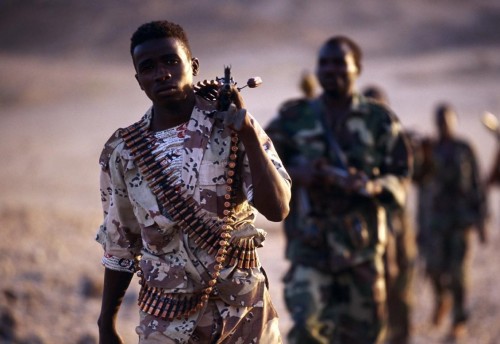
Son livre est très logiquement divisé selon un plan chronologique en quatre grandes parties : "Guerres et sociétés guerrières en Afrique avant la colonisation", "Les guerres de conquête coloniale", "Les guerres de la période coloniale" et "Les guerres contemporaines, 1960-2013", tous conflits dont il fait le récit chronologique et factuel. On voit bien l'ampleur du sujet et Bernard Lugan nous fait plusieurs fois traverser le continent de part en part au fil des époques. La grande région sahélienne, celle des Grands Lacs et l'Afrique australe reviennent bien sûr à plusieurs reprises et certaines situations résonnent en écho jusqu'à aujourd'hui. Tous les chapitres, agrémentés d'encarts qui précisent des situations locales ou des données chiffrés, sont intéressants et l'on ne retiendra à titre d'exemple que quelques titres de la dernière partie (sait-on que pour la période 2000-2010 70% des décisions de l'ONU sont relatives aux conflits africains ?) : "La guerre civile algérienne (1992-2002)", "Les guerres de Somalie : clans contre clans (depuis 1977)", "Nigeria : de la guerre du Biafra au conflit ethno-religieux Nord-Sud", "La deuxième guerre du Kivu (depuis 2007)" : autant de coups de projecteur extrêmement utiles et souvent pertinents sur des zones crisogènes dont l'Europe ne peut pas se désintéresser (même si elle le voulait, de toute façon).
L'ensemble de ces chapitres, rédigés d'une plume alerte et toujours référencés, est complété par un cahier central d'une soixantaine de cartes en couleurs, parfaitement lisibles et pédagogiques, et le livre se termine sur un index complet et une bibliographie significative. Ceux qui connaissent déjà tel ou tel engagement pourront regretter que certaines campagnes ne soient pas traitées davantages en détail, mais aborder autant d'opérations et de combats en 400 pages témoigne d'un bel esprit de synthèse. Au total, un ouvrage appelé à devenir très rapidement de référence et que liront avec le plus grand intérêt les étudiants et tous ceux qui soit s'intéressent à l'histoire du continent, soit se préoccupent de l'avenir.
Editions du Rocher, Monaco, 2013, 403 pages, 32 euros.
ISBN : 978-2-268-97531-0.
Bernard Lugan a bien voulu répondre à quelques questions pour nos lecteurs :
Question : Votre livre dresse un impressionnant tableau des conflits en Afrique de la plus haute Antiquité aux guerres actuelles. Par grande période, une introduction présente un résumé des évolutions, mais vous ne tentez pas d'en tirer des enseignements généraux en conclusion. Pourquoi ?
Réponse : Parce que nous ne devons par parler de l’Afrique, mais des Afriques, donc des guerres africaines. Mon livre est construit sur cette multiplicité, sur ces différences irréductibles les unes aux autres et sur leur mise en perspective. Dans ces conditions, il est vain de faire une typologie, sauf pour les guerres de la période contemporaine, ce que j’ai fait, et encore moins une classique conclusion de synthèse.
Question : La grande région saharienne-Sahel est présente dans chaque partie, des "Origines de la guerre africaine" aux "Guerres contemporaines". Pouvez-vous nous en dire davantage sur ce qui semble bien être une zone de conflits quasi-permanents ?
Réponse : Cette zone qui court de l’Atlantique à la mer Rouge en couvrant plus de dix pays, est un véritable rift racial et ethnique en plus d’être une barrière géographique. Ce fut toujours une terre convoitée car elle fut à la fois le point de départ et le point d’arrivée -hier du commerce, aujourd’hui des trafics transsahariens, une zone de mise en relation entre l’Afrique « blanche » et l’Afrique des savanes, un monde d’expansion des grands royaumes puis de l’islam.
Aujourd’hui, cette conflictualité ancienne et résurgente tout à la fois est exacerbée par des frontières cloisonnant artificiellement l’espace et qui forcent à vivre ensemble des populations nordistes et sudistes qui ont de lourds contentieux. Le tout est aggravé par le suffrage universel fondé sur le principe du « un homme, une voix », qui débouche sur une ethno mathématique donnant automatiquement le pouvoir aux plus nombreux, en l’occurrence les sudistes. Voilà la cause de la guerre du Mali, mais ce problème se retrouve dans tout le Sahel, notamment au Niger et au Tchad. Au Mali, le fondamentalisme islamiste s’est greffé sur une revendication politique nordiste de manière récente et tout à fait opportuniste. Or, comme le problème nord-sud n’a pas été réglé, les causes des guerres sahéliennes subsistent.
Question : On a dit beaucoup de choses sur le retentissement de l'échec italien lors de la première tentative de conquête de l'Ethiopie à la fin du XIXe siècle. Si les conséquences en politique intérieure à Rome sont compréhensibles, ces événements ont-ils un écho réel dans les autres capitales européennes et sur le sol africain lui-même ?
Réponse : L’originalité de la défaite d’Adoua est qu’elle a, sur le moment, mis un terme au projet colonial italien. Ce fut une défaite stratégique. Français, Anglais et Allemands connurent eux aussi des défaites, les premiers, notamment au Sahara, mais cela n’interrompit pas la prise contrôle de ces immensités ; les Britanniques furent battus à Isandhlawana, ce qui n’empêcha pas la conquête du royaume zulu ; quant aux Allemands, ils subirent plusieurs déconvenues contre les Hehe et les Maji Maji, mais l’Est africain fut néanmoins conquis. Le désastre italien fut d’une autre nature, d’une autre échelle, alors que, à l’exception d’Isandlhawana, Anglais, Français et Allemands ne perdirent en réalité que des combats à l’échelle d’une section, au pire, d’une compagnie. Quant aux Espagnols, même après leurs sanglantes déroutes lors de la guerre du Rif, leur présence dans le Maroc septentrional ne fut pas remise en cause et, dès qu’ils décidèrent d’utiliser leurs troupes d’élite comme le Tercio et non plus des recrues tant métropolitaines qu’indigènes, ils reprirent le contrôle de la situation. Il faut cependant remarquer qu’avant son éviction par Pétain, Lyautey avait, comme je le montre dans mon livre, rétabli la situation sur le front de l’Ouergha et de Taza, ce qui enlevait toute profondeur d’action aux Riffains.
Autre conséquence, auréolée par sa victoire de 1896, puis par sa résistance sous Mussolini, l’Ethiopie eut un statut particulier d’Etat leader du mouvement indépendantiste et ce fut d’ailleurs pourquoi, dès sa création en 1963, le siège de l’Organisation de l’unité africaine fut établi à Addis-Abeba.
Question : Vous décrivez "Un demi-siècle de guerres au Zaïre/RDC", et l'on a finalement le sentiment qu'une amélioration de la situation reste très hypothétique. Comment l'expliquez-vous ?
Réponse : Ici le problème est sans solution car il n’est pas économique mais ethnique et politique. Nous sommes en effet en présence d’un Etat artificiel découpé au centre du continent à la fin du XIX° afin de retirer le bassin du Congo à la convoitise des colonisateurs et cela afin d’éviter une guerre européenne pour sa possession. Cet Etat artificiel, désert humain en son centre forestier, englobe sur ses périphéries de vieux Etats comme le royaume Luba, l’empire Lunda ou encore le royaume de Kongo. Ces derniers ont une forte identité et leurs peuples ne se reconnaissent pas dans l’artificielle création coloniale qu’est la RDC. Quant à l’impérialisme rwandais qui s’exerce au Kivu, il entretient un foyer permanent de guerre dans tout l’est du pays. La raison en est claire : étouffant sous sa surpopulation, le « petit » Rwanda doit trouver un exutoire humain s’il veut éviter le collapsus. De plus, comme 40% du budget du pays provient de l’aide internationale et le reste, à plus de 90% du pillage des ressources du Congo, pour le Rwanda, la fin de la guerre signifierait donc la mort économique du pays. Appuyé par les Etats-Unis qui en ont fait le pivot de leur politique régionale, le Rwanda exploite avec habileté ce que certains ont appelé la « rente génocidaire » pour dépecer sans états d’âme la partie orientale du pays.
Question : Vous intitulez la partie dans laquelle vous traitez de la décolonisation : « Des guerres gagnées, des empires perdus », pouvez-vous nous expliquer pourquoi ?
Réponse : Parce que la parenthèse coloniale fut refermée sans affrontements majeurs, sans ces combats de grande intensité qui ravagèrent l’Indochine. En Afrique, les guérillas nationalistes ne furent jamais en mesure de l’emporter sur le terrain, pas plus en Algérie où les maquis de l’intérieur n’existaient quasiment plus en 1961, qu’au Kenya où les Britanniques avaient éradiqué les Mau Mau, ou encore que dans le domaine portugais -à l’exception de la Guinée Bissau-, où, et mes cartes le montrent bien, l’armée de Lisbonne était maîtresse du terrain. En Rhodésie, la pugnace et efficace petite armée de Salisbury avait réussi à tenir tête à une masse d’ennemis coalisés, massivement aidés par l’URSS et la Chine avant d’être trahie par l’Afrique du Sud qui pensa naïvement acheter son salut en abandonnant les Blancs de Rhodésie. Partout, la décolonisation fut un choix politique métropolitain ; elle ne fut nulle part imposée sur le terrain. Les combats de grande intensité apparurent après les indépendances, dans le cadre de la guerre froide, et je les décrits dans mon livre : Angola, South African Border War, Corne de l’Afrique, Congo etc.
Merci très vivement pour toutes ces précisions et plein succès pour votre ouvrage. A très bientôt.

00:05 Publié dans Actualité, Entretiens, Livre, Livre | Lien permanent | Commentaires (0) | Tags : bernard lugan, politique internationale, afrique, affaires africaines, géopolitique, entretien, actualité | | del.icio.us | | Digg | Facebook
In Search of Anti-Semitism
In Search of Anti-Semitism
By Paul Gottfried
Ex: http://neweuropeanconservative.wordpress.com/
Among those authors considered politically incorrect, and even those considered really politically incorrect, Kevin MacDonald holds a special place of honor or shame. A feature story in the May 9 (Los Angeles) Jewish Journal describes this small-boned, soft-spoken 64-year-old professor of psychology at California State University at Long Beach as “the professors anti-Semites love.” Alluding to the fact that university authorities have been trying to force the outspoken MacDonald out of his tenured position, the article complains about “the downside of academic freedom.” We also learn that this clinical psychologist is “considered the foremost anti-Semitic thinker by civil rights experts.”
It would be ridiculous to imagine the same ignominy would be visited on MacDonald if he were a black sociologist making critical remarks about white people. Assuming that he were a designated victim, he would be allowed to compose for profit and prestige diatribes against white Christian males, possibly from a cushy university post at whatever salary illustrious defamers of Euro-Americans are now earning. And if he were a Jew or Christian attacking Christians as the agents of human evil, the now browbeaten MacDonald could make a king’s ransom at some well-heeled institute or as a feature writer for The New Republic or New York Times.
Readers of this website are aware of the lunatic double standard that has been imposed on intellectuals throughout the Western world, almost always by Westerners themselves, for the purpose of determining who can criticize whom. (By now this has become a permanent aspect of “democratic” regimes.)
Plainly MacDonald is not playing by the establishment rules when he observes that Jews have worked at weakening those non-Jewish societies in which they have lived. Although this thesis seems to me to be a bit too generalized, I have no objection to letting MacDonald go on trying to prove it.
In his recently published anthology of essays, Cultural Insurrections, it would be proper to note that MacDonald makes assumptions here that I have questioned in my review of his three-volume, monumental work on the Jews since Moses. I continue to find some of the cognitive disparities he stresses between Ashkenazi Jews and Euro-Americans to be overstated or at least under-demonstrated. If they were in fact as stark as MacDonald insists they are, I would believe that Jews have a right to treat Euro-Americans as natural inferiors or as people probably unfit to sustain their civilization (or what remains of it) without a Jewish master class. I am also skeptical about the possibility of extrapolating from the way a particular Jewish subculture has behaved in the U.S., Canada, and parts of Europe in the twentieth and twenty-first centuries to how Jews have conducted themselves everywhere at all times.
It also seems that certain Jewish behavioral patterns MacDonald outlines are not uniquely Jewish. Other minorities such as Protestant non-conformists and later Irish Catholics in England (and in the U.S.), Huguenots in France, and Old Believers in Tsarist Russia, have shown exactly the same propensity for radical social causes, partly as acts of defiance against what they viewed as regimes that had failed to accord them full legal and/or social recognition.
Sephardic and German Jews who came to America in the eighteenth and nineteenth centuries seemed hell-bent on joining upper-class Protestants and they usually disappeared into the dominant gene pool within a few generations. I am not convinced that Jewish behavior toward Christians follows a biologically determined strategy aimed at the control of resources. My lifelong impression from being around them is that Jews don’t like Christians because of historical grievances, just the way Irish Catholics continue to rage against Protestant Yankees for real amd imaginary offenses inflicted on their ancestors.
Although friend-enemy distinctions are evident here, it is doubtful that these dividing lines operate strictly according to biological conditioning. And it seems even less likely that they are shaped by the natural desire to control resources, in competition against other groups. Much of what MacDonald cites as Jewish behavior is hostility, mixed with anxiety, rather than competitiveness. MacDonald is illustrating culturally subversive activities that go well beyond any attempt to achieve group competitive advantage measured by socio-economic success. Assailing the moral foundations of a Christian middle-class society as pathological and anti-Semitic, a tendency MacDonald proves Jewish intellectuals have repeatedly engaged in, is not simply an attack on the material resources of the dominant society. What MacDonald highlights looks like unfriendly behavior; and one may certainly question the biological reductionism used to explain it.
Having raised these critical points, I should also mention that MacDonald builds a thoroughly cogent case that the creation of “modernity” and the launching of a succession of indignant social crusades against bourgeois Christian civilization by Jewish intellectuals and political activists has usually betokened some degree of malice. But as I mentioned above, and as MacDonald is well aware, Jews are not the only minority that has attempted to subvert dominant outside cultures. They’re just better at doing this than any other group. Jewish intellectuals and activists excel at agitating in the name of some presumed moral high ground, acting like the cunning or resentful priestly class, to which Nietzsche compared the Jews in Genealogy of Morals. In Nietzsche’s analysis, Jews are good at transmitting “slave morality,” without being (immediately) infected themselves.
MacDonald’s newest anthology offers further evidence of what he understands as the Jewish practice of burrowing from within to weaken the cultural coherence of gentile societies. And he offers abundant proof that this burrowing has and is continuing to occur. Whether he is dealing with the predominantly Jewish Frankfurt School and its cultural influences, the role played by Jewish activists in opposing controls on immigration throughout the last hundred years, the penetration and takeover of the American Right by the neoconservatives, or the pressures placed on politicians and political parties by Zionist organizations, MacDonald creates the impression that Jews have worked collectively toward two ends: lessening the cohesion of gentile society and promoting specifically Jewish national ends.
An argument I have used in the past to counter his generalizations is that “not every Jewish community at all times and in all places have acted in this way”; nonetheless, MacDonald could respond to my objections by pointing out that his analysis applies to American Jews for at least the last several generations. And he offers evidence that the same behavioral patterns as the one he discerns among the predominantly Eastern European Jews in the U.S. could already be seen among the relatively assimilated German Jews since their emancipation in Europe.
The same radicalization could be perceived among German Jewish intellectuals going back to the beginnings of Marxian socialism. And the cultural Marxism that has now taken off in a big way had its origin among alienated or embittered German Jews of the interwar period, who later emigrated to the U.S. The present multicultural fixation that has taken Western Europe, Canada and the U.S. by storm was largely the creation of German Jews.
But the group MacDonald’s brief leaves me wondering about most is the white Christian majority: They are jerked around because they have accepted this role for themselves. My own works on the politics of guilt underlines this tendency: Euro-Americans have become emotionally and sociologically predisposed toward aggrieved minorities that condemn them for politically incorrect attitudes. But have Jewish priests been necessary to get the Christian majority to practice slave morality? My answer is that “it helps but isn’t absolutely necessary.”
The institution of learning at which I work and the German Anabaptist denomination to which it was long connected are paradigmatically PC. Furthermore, Lancaster County, where our college is located, registered the largest vote for Obama in the Democratic primary of any county in Pennsylvania that’s not predominantly black. This result was owed much to Church of the Brethren, whose members in their zany anti-racism and open-borders postures make Abe Foxman sound relatively sane. The chance that such radicalized Protestants, who live in their own social bubble, would have picked up their lunacies from any Jew (me perhaps?) is next to nil. They came by their madness on their own, as a “peace church,” and as late entrees into the modern age after having spent an eternity on isolated farms in the Pennsylvania countryside. Like Jimmy Carter, Jim Wallis, Bill Moyers, and most of the Catholic hierarchy on the question of immigration, these Anabaptists exemplify aspects of Christianity that are totally compatible with cultural Marxism and the politics of Western suicide. They do not need Jews, blacks, or North African Muslims to teach them self-destructive behavior, any more than Swedes or Spaniards need the villains in MacDonald’s script to hand over their countries to hostile Muslims from North Africa.
The most interesting point for me in MacDonald’s volume is his presentation of movement conservative goyim. He is absolutely on the money in documenting their servility in relation to their neoconservative puppet-masters. The most startling aspect of this relation is the degree to which the servile class allows itself to be instructed. Irving Kristol, Charles Krauthammer, Douglas Feith, and other neoconservative spokesmen have indeed convinced their pliant enablers that Israel is to be defended as an “ethno-cultural creation,” while the American nation is to be seen as possessing an “ideological identity,” founded on global human rights principles and on an expansionist foreign policy. MacDonald cites the remarkable tribute produced for neocon guru Leo Strauss by his admiring disciple Werner Dannhauser, a tribute that extols Strauss, the famous mentor to global democrats, as “a good Jew. He knew the dignity and worth of love of one’s own. Love of the good is higher than love of one’s own, but there is only one road to truth and it leads through love of one’s own.” MacDonald asks rhetorically whether Anglo-Saxon Protestant “conservatives” could express such sentiments about their own group without Jewish liberals or neocons attacking them as nativists or incipient Nazis.
McDonald cites the public letter drafted by William Kristol’s Project for the New American Century in 2002, calling for a “move against Saddam Hussein,” on the grounds that “Israel’s fight against terrorism is ours.” MacDonald calls special attention to the prominent Jewish neoconservatives who appended their signatures to this call for a war of aggression on behalf of Israel. But what is perhaps even more striking are the non-Jewish signatories, such as William J. Bennett, Frank Gaffney, Ellen Bork, and the professionally insecure, very young editor of National Review, Rich Lowry. In most of these cases one encounters demonstrations of fealty paid to the neoconservative barons who run FOX News, Wall Street Journal, Heritage Foundation, ISI, and the minds of a majority of Republican voters.
But pace MacDonald, these neocon lords and their servants are not the voices of the entire Likud coalition in Israel. They speak for Natan Sharansky, Benjamin Netanyahu, and others even further on the Israeli nationalist right, many of whom have been taught to mumble neocon gibberish about how “democracies have never fought wars” and about how “only democracies are legitimate governments.” A point Israeli political analysts Leon Hadar (see especially his book Sandstorm) and Martin van Creveld have argued for several years now is that neoconservatives and their gentile policy-think-tank hangers-on do not speak for the majority of Israelis, who certainly did not favor the American invasion of Iraq. (Iran might well be a different matter.) It was American neoconservatives, supported by the Christian Right and their Israeli contacts, who planned Bush’s Middle Eastern policy. In the end, MacDonald demonstrates the same when he investigates the Israeli associations of Richard Perle, Paul Wolfowitz, and Douglas Feith.
The Evangelical Cal Thomas and the “conservative Catholic” “theologian” Michael Novak invariably cite in their columns and speeches the alleged return of anti-Semitism on the antiwar left. When Novak came to speak at my college six years ago, he attacked movie producers in Hollywood—Jewish leftists to a man—as “anti-Semites.” The audience listened to him in understandable astonishment, for it could not escape even our news-averse trustees that Novak was saying something glaringly ridiculous.
Moreover, in their invectives against Obama’s pastor Jeremiah Wright, FOX News analysts and announcers played on Wright’s association with the “anti-Semitic Louis Farrakhan.” That Wright and Farrakhan don’t much like Jews and Judaism seemed to matter more than the more obvious fact that the pair hate the Jews specifically as subgroup of Whitey.
Such pandering may result from the fact that movement conservative gentiles are almost as infected as other gentiles by the politics of white Christian guilt. They can only embrace their country to the extent that it renounces an “ethnic-cultural” identity, a character that they happily concede to Jews and others, but which they have collectively renounced for the dubious honor of being a “propositional nation.” Naturally (what else?) the assumption of this contrived identity sets the stage for their country being overwhelmed by legal and illegal Third World immigrants. It also means waging whatever wars the neocon master race tells their gentile collaborators is “good for Israel” and/or helps to spread “democracy.” Unlike MacDonald, I see no compelling reason to blame this lunacy exclusively or even predominantly on the two percent of the population which is Jewish, without noticing that the majority group, including those who describe themselves as “conservatives,” have lost their cotton-picking minds.
Gottfried, Paul. “Homo Americanus.” Taki’s Magazine, 6 April 2009. <http://takimag.com/article/in_search_of_anti-semitism/print#ixzz2Wu4ZRqK6 >.
00:05 Publié dans Philosophie | Lien permanent | Commentaires (0) | Tags : paul gottfried, antisémitisme, philosophie | | del.icio.us | | Digg | Facebook
La crise renverse le flux d’immigration dans un contexte de péril terroriste
LE RETOUR DES ESPAGNOLS DU MAROC
La crise renverse le flux d’immigration dans un contexte de péril terroriste
Jean BonneveyEx: http://metamag.fr/


00:05 Publié dans Actualité, Affaires européennes | Lien permanent | Commentaires (0) | Tags : espagne, maroc, méditerranée, émigration, immigration, europe, afrique du nord, maghreb, affaires européennes, crise financière, crise économique, crise espagnole | | del.icio.us | | Digg | Facebook