

dimanche, 15 décembre 2013
Israel es el único aliado fiel que le queda a Arabia Saudí
Ex: http://www.elespiadigital.com
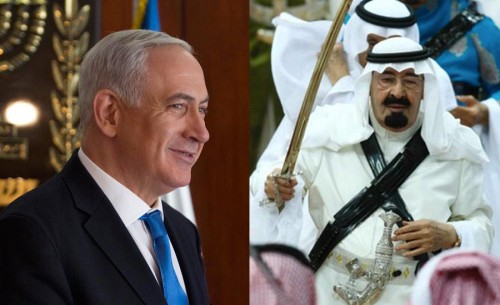
Israel es el único aliado serio que le queda a Arabia Saudí, señala el periódico Al Akhbar. Los saudíes creen que ellos están apostando por un caballo que ganará la carrera, pero Israel se enfrenta, en realidad, a una crisis estratégica. En definitiva, es posible afirmar que Israel se sirve de Arabia Saudí para obtener más territorios en Cisjordania, expandir más los asentamientos y seguir adelante con la judaización de Jerusalén.
Sin embargo, Tel Aviv no tiene nada que ofrecer a Arabia Saudí en contrapartida. El reino está, pues, en vías de suicidarse.
Un despertar saudí de esta realidad es siempre posible, pero el tiempo es muy limitado. Tal hecho sería prácticamente un milagro, señala el periódico.
Por otro lado, medios israelíes han subrayado recientemente la existencia de contactos entre Israel y Arabia Saudí, que comparten un cierto número de intereses en la región frente a la “aproximación irano-estadounidense”.
Yediot Aharonot considera que estos contactos han alcanzado su punto álgido porque ambos países temen el programa nuclear de Irán y están interesados en luchar contra Hezbolá en Siria.
Arabia Saudí no abandonará a sus protegidos en Siria debido a EEUU y todavía posee medios para proseguir esta guerra, señalan analistas israelíes.
Los medios israelís creen que existe una oportunidad histórica para que Israel se alíe con Arabia Saudí.
Los “enemigos comunes” y los intereses económicos llevarán a ambos a alcanzar esta alianza, señalaron dichos medios.
00:05 Publié dans Actualité, Géopolitique | Lien permanent | Commentaires (0) | Tags : politique internationale, géopolitique, arabie saoudite, israël, alliance israélo-saoudienne, proche orient, levant, moyen orient |  |
|  del.icio.us |
  |
|  Digg |
  Facebook
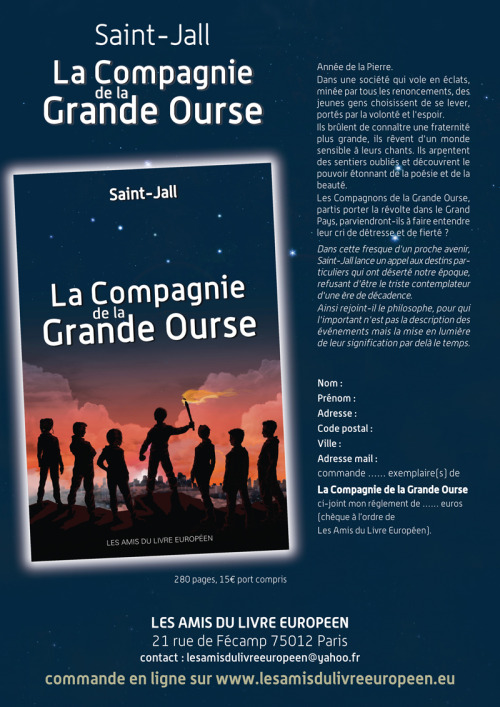
La Compagnie de la Grande Ourse
00:05 Publié dans Livre, Livre | Lien permanent | Commentaires (0) | Tags : livre, jeunesse | | del.icio.us | | Digg | Facebook
Kerstman moet dier worden
"Kerstman moet dier worden in plaats van blanke man"
Door: Karen Van Eyken
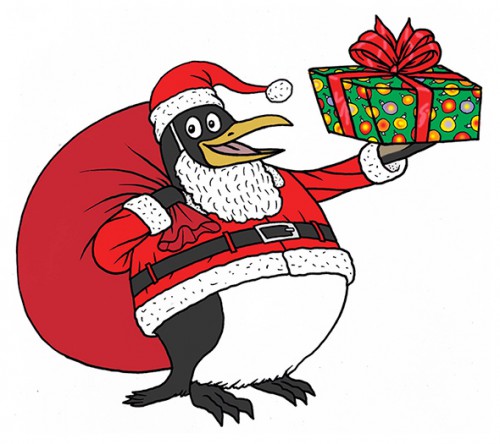
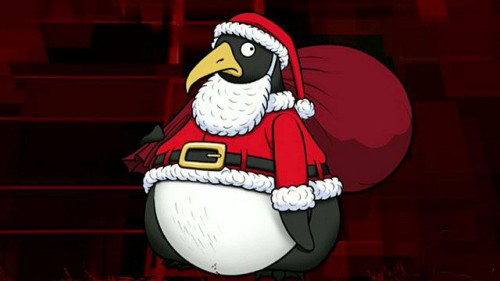
Na Zwarte Piet moet nu ook het uiterlijk van de kerstman er aan geloven. Terwijl de Pieten van de Sint niet meer zwart zouden mogen zijn volgens sommigen, vormt ook het blanke voorkomen van de kerstman een probleem. "Het is hoog tijd voor een make-over", verklaart blogger Aisha Harris op de Amerikaanse website Slate. "Maak er een dier van, wars van alle stereotypen", suggereert ze. "Een pinguïn bijvoorbeeld."
"Tijdens mijn jeugd kende ik twee kerstmannen", steekt Harris van wal. "De eerste had een dikke buik, een lange witte baard en een bleke huid. Hij was alomtegenwoordig en kwam langs op school, in het shoppingcenter en op televisie. Dan was er de kerstman in onze familie. Hij stond op kerstkaartjes en er waren ook beeldjes van. Hij leek een perfecte kopie van de eerste, alleen was zijn huid zo donker als de mijne."
Wit of zwart?
"Het was verwarrend om als kind twee verschillende kerstmannen te zien. Op een dag vroeg ik dan ook aan mijn vader hoe de kerstman er dan eigenlijk uitzag. Was hij zwart zoals wij? Of was het toch een blanke man? Mijn vader antwoordde dat de kerstman elke kleur had. Afhankelijk van het huis dat hij bezocht, veranderde de man op een magische manier in een witte of zwarte versie van zichzelf."
"Beschaamd"
"Maar ik geloofde mijn papa niet. Ik voelde me wat beschaamd dat onze kerstman eigenlijk niet de 'echte' was. Zelfs als kind was ik doordrongen van het beeld van een blanke man die ons tijdens het winterseizoen een bezoekje bracht. En toen ik merkte dat zelfs zwarte families hun huizen versierden met de blanke kerstman, accepteerde ik de dominerende consensusversie van de kindervriend, ondanks de nobele intenties van mijn ouders."
Etnisch verscheiden
Twee decennia later zijn de Verenigde Staten op etnisch vlak veel meer verscheiden geworden maar de kerstman is amper geëvolueerd. In reclamecampagnes, winkelcentra en films is hij nog steeds blank. Zou het niet beter zijn dat het beeld van de man beter tegemoet komt aan ALLE kinderen die hij jaarlijks verblijdt?"
Nieuw kerstsymbool
De Verenigde Staten moeten de blanke, dikke 'Santa' achter zich laten en een nieuw kerstsymbool creëren. Maak er een dier van, een pinguïn. Ja, inderdaad, een pinguïn. De meeste kinderen houden van de kerstman omdat hij hen cadeautjes brengt maar een 'Santa Claus' in de vorm van een oude man kan een kleintje ook afschrikken. Een pinguïn daarentegen is bij iedereen geliefd".
Zuidpool
Alle kerstfolklore kan trouwens bij het oude blijven. Ook een pinguïn leeft in een koude, sneeuwrijke omgeving. Maar in plaats van op de Noordpool moet de 'Santa nieuwe stijl' dan wel verkassen naar de Zuidpool om het alvast wetenschappelijk bij het rechte eind te hebben. Hij kan zonder probleem een valse baard en kostuum aandoen. Aangezien een pinguïn niet kan vliegen, moet hij nog steeds beroep doen op een rendier om hem van hot naar her te brengen".
"Pinguïn Claus"
"Dus laten we de 'Pinguïn Claus' voortaan omarmen zoals we dat reeds met de paashaas doen. Laat deze vogel de harten van alle kinderen verwarmen, los van hun huidskleur."
Ex: http://www.slate.com/articles
Santa Claus Should Not Be a White Man Anymore
By Aisha Harris
When I was a kid, I knew two different Santa Clauses. The first had a fat belly, rosy cheeks, a long white beard, and skin as pink as bubble gum. He was omnipresent, visiting my pre-school and the local mall, visible in all of my favorite Christmas specials.
Then there was the Santa in my family’s household, in the form of ornaments, cards, and holiday figurines. A near-carbon copy of the first one—big belly, rosy cheeks, long white beard: check, check, check. But his skin was as dark as mine.
Seeing two different Santas was bewildering. Eventually I asked my father what Santa really looked like. Was he brown, like us? Or was he really a white guy?
Aisha Harris Aisha Harris
Aisha Harris is a Slate culture blogger for Brow Beat. Follow her on Twitter.
My father replied that Santa was every color. Whatever house he visited, jolly old St. Nicholas magically turned into the likeness of the family that lived there.
In hindsight, I see this explanation as the great Hollywood spec script it really is. (Just picture the past-their-prime actors who could share the role. Robert De Niro! Eddie Murphy! Jackie Chan! I smell a camp classic.) But at the time, I didn’t buy it. I remember feeling slightly ashamed that our black Santa wasn’t the “real thing.” Because when you’re a kid and you’re inundated with the imagery of a pale seasonal visitor—and you notice that even some black families decorate their houses with white Santas—you’re likely to accept the consensus view, despite your parents’ noble intentions.
Watch Fox News guests debate this article on Megyn Kelly's show:
Two decades later, America is less and less white, but a melanin-deficient Santa remains the default in commercials, mall casting calls, and movies. Isn’t it time that our image of Santa better serve all the children he delights each Christmas?
Yes, it is. And so I propose that America abandon Santa-as-fat-old-white-man and create a new symbol of Christmas cheer. From here on out, Santa Claus should be a penguin.
That’s right: a penguin.
Why, you ask? For one thing, making Santa Claus an animal rather than an old white male could spare millions of nonwhite kids the insecurity and shame that I remember from childhood. Whether you celebrate the holiday or not, Santa is one of the first iconic figures foisted upon you: He exists as an incredibly powerful image in the imaginations of children across the country (and beyond, of course). That this genial, jolly man can only be seen as white—and consequently, that a Santa of any other hue is merely a “joke” or a chance to trudge out racist stereotypes—helps perpetuate the whole “white-as-default” notion endemic to American culture (and, of course, not just American culture).
Plus, people love penguins. There are blogs dedicated entirely to their cuteness. They’re box office gold. Most importantly, they’re never scary (in contrast to, say, polar bears and reindeer). Most kids love Santa—because he brings them presents. But human Santa can be terrifying—or at least unsettling.
And, with a penguin Santa, much Christmas folklore can remain unchanged. Being a penguin, Santa Claus can still reside in a snowy homeland—though for scientific accuracy we’ll need to move him from the North Pole to the South. He can still rock a fake white beard and red suit if he chooses. Since penguins can’t fly, Rudolph and his fellow reindeer will remain a crucial element to getting the job done on Christmas Eve. You may have even spotted a penguin here and there already among the holiday books and Christmas kitsch.
Will kids have a harder time believing in Santa the Penguin—aka Penguin Claus—than in the fat white guy he’s replacing? I don’t think so. Kids are used to walking, talking bears and gigantic friendly birds. A penguin delivering gifts might even seem more feasible to them, since cartoons have primed them to consider such creatures fairly run of the mill.
Of course, since we created Santa, we can certainly change him however we’d like—and we have, many times over. Like the holiday itself, Santa has long since been extracted from his religious roots, even if the name St. Nicholas still gets thrown around. Our current design takes inspiration from multiple sources, including Washington Irving’s 1809 description of St. Nick “riding jollily among the tree tops, or over the roofs of the houses, now and then drawing forth magnificent presents from his breeches pockets, and dropping them down the chimnies of his favourites.” When Clement Clarke Moore published “A Visit from St. Nicholas” in 1823, the old man was described and illustrated as a “plump” but elfin figure. Since then, Santa has been redesigned and re-appropriated to push everything from soda to war.
So let’s ditch Santa the old white man altogether, and embrace Penguin Claus—who will join the Easter Bunny in the pantheon of friendly, secular visitors from the animal kingdom who come to us as the representatives of ostensibly religious holidays. It’s time to hand over the reins to those deer and let the universally beloved waddling bird warm the hearts of children everywhere, regardless of the color of their skin.
00:05 Publié dans Actualité | Lien permanent | Commentaires (0) | Tags : père noël, père pinguin, département psychiatrique, actualité, politiquement correct | | del.icio.us | | Digg | Facebook
Meeting with Helmut Schmidt
Meeting with Helmut Schmidt
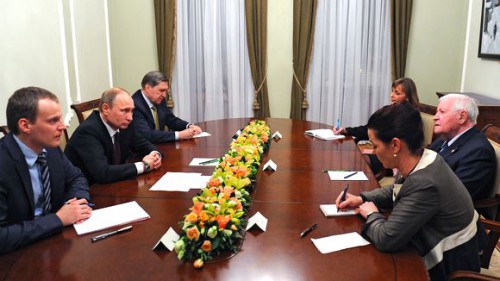
Late last night, Vladimir Putin met with Helmut Schmidt, a German statesman and the fifth chancellor of the Federal Republic of Germany from 1974 to 1982.
PRESIDENT OF RUSSIA VLADIMIR PUTIN: Mr Chancellor, please allow me to warmly welcome you.
It is a great pleasure and honour for me to meet with you in Moscow, for you are not only the patriarch of European politics but of global politics as well.
You have done a great deal for the development of the Federal Republic and Europe, but you have also made significant contribution to the development of Russian-German relations. The decision on the “gas for pipe” contract was made while you were a member of the Government. In one of your articles I read that at that time, after the war, no hatred remained between the Germans and the Russians toward one another, and this was very good.
I want to tell you that we have made a great deal of progress in developing our relations. Today, Germany is one of our leading trade and economic partners. This year, I believe we will cross the threshold of $75 billion in trade. Some two thousand German companies are operating in Russia, there is a large volume of mutual investment, and all this is developing. We are carrying out large-scale joint projects, working not only at the ministerial level, but the regional level as well.
We are broadening contacts between civil societies and people, which is probably more important than anything.
I am very happy to see you. Welcome, Mr Chancellor.
HELMUT SCHMIDT (translated from Russian): Thank you very much, Mr President,
You have already mentioned that neither Russians nor Germans harbour any hatred toward one another. And that, indeed, is a surprise; having been a soldier in World War II, I simply cannot believe that we have reached such a positive result, which was simply impossible to dream about at the time.
Mr President, you have already said some beautiful words about me, but you must nevertheless know that I am almost 95 years old; I am a very old man who is hard of hearing and no longer needed. Today, I am only an observer; I am observing what is happening in the world. I can say that things have been worse on our planet, but we can still improve our current state of affairs. Nevertheless, today, I am no longer an active player in this arena; I am simply observing what is happening.
VLADIMIR PUTIN: Your birthday is on December 23, isn’t it?
HELMUT SCHMIDT: That’s right. I was almost a Christmas baby; Christmas is celebrated in Germany on the 24th.
You know, this is – how can I say – my farewell visit to Russia, because it has become very difficult for me to travel; I didn’t even really want to come here, because it truly is quite difficult for me. But ultimately, you must say your proper goodbyes to your neighbours, right? I have already visited China, the United States, Italy and France. But it was particularly important for me to come here, because I remember that at the end of the last century, in 1999, at the end of this century, at the end of the next century – we will always remain neighbours. In spite of any economic developments, or military developments, we will always be bound by fate; we will always remain neighbours. Granted, we have Poland and Ukraine between us, as well as other nations. But in good times and in bad times, we nevertheless remain neighbours forever – neighbours who depend on one another.
You know, about 40 years ago, the General Secretary [of the Central Committee of the CPSU] Leonid Brezhnev came to visit Germany – West Germany at the time – and met with then-Federal Chancellor Willy Brandt. This was in the 1970s and I was present at that meeting. And Brezhnev spoke for a very long time, listing the terrible actions we committed on Russian soil. I think he spoke for about 15 minutes. When he finished, I also made a long speech. I said, “Mr General Secretary, everything you just said is, of course, true. Everything is correct; we committed terrible acts on Russian soil. Yes, we started the war, all this was our fault, but if you say that all Germans were fascists, I must tell you that is not true. Yes, all this was our fault, but not all Germans were fascists. In most cases, these were simply German soldiers who felt that they must defend their Fatherland. Yes, all this happened, all this was simply awful, but it is nevertheless wrong to call all Germans fascists. These were simply soldiers who were misled to believe in the wrong values.”
I want to stress again: it truly is a miracle that there are nearly no feelings of hatred between our peoples today. And you very rightly mentioned that our relations are very good and tight, not only economically, but in many other areas as well. Indeed, we have become good neighbours, and I am one of the very many Germans who have always felt and continue to feel today that this is very important, to always have good neighbourly relations between our nations.
VLADIMIR PUTIN: Mr Federal Chancellor, you said that this is your farewell visit. But I hope we will still remain in contact. You will soon be celebrating your birthday, so please allow me to wish you a Happy Birthday.
We truly know how much you have done since Mr Willy Brandt passed the baton on to you. And your opinion regarding the future of Russian-German relations is very important for us and for future politicians.
Of course, there has been a great deal of tragedy in our relations. But you rightly stated – the interpreter left out a detail, but it is important – the detail is that we have always been together, in good times and bad. And it will be the same in the future. Still, we need to strive to avoid dark spots; on the contrary, we have everything we need to grow together, rather than fight one another. Today’s trends in global development are pushing us toward joining forces.
I am certain that there are more elements uniting us than problems, which might cause disputes, both on a day-to-day level and politically. I would very much like for the opinions of people such as you to be spread even wider within our Russian establishment, as well as in Europe.
HELMUT SCHMIDT: You know, I would very much like that too. Although I must say that at this time, Europe is undergoing a crisis and things are not at their best; Europe is going through an institutional crisis.
I must say that the parliament is not very capable, the commission in Brussels is not functioning so well, various councils of ministers are also not working well, and the actions taken by individual governments leave something to be desired. I think there have been two outstanding leaders in Europe since the war: Winston Churchill and Charles de Gaulle. Since then, the quality of European leaders is gradually going down.
VLADIMIR PUTIN: The Chancellor who preceded you, Willy Brandt, certainly belongs to this cohort, at the very least.
HELMUT SCHMIDT: I agree with you.
VLADIMIR PUTIN: If I may, I have already said that you firmly gripped the baton that was passed to you, and I think you also played a tremendous role, as did the other Federal Chancellor, Mr Helmut Kohl.
As for critical statements, you certainly have the right to make them. But I do not share your view. Still, you and I can discuss this matter further.
HELMUT SCHMIDT: But I haven’t criticised anything yet.
VLADIMIR PUTIN: So this was only a prelude.
HELMUT SCHMIDT: No, I just stated the facts.
VLADIMIR PUTIN: You see, the global economic situation is complicated. It’s true that it is difficult to resolve the problems Europe faces, given the European nations’ large social burden, which is due to their development model. But on the other hand, it is precisely these difficulties that should prompt us to work together.
00:05 Publié dans Actualité, Affaires européennes, Entretiens | Lien permanent | Commentaires (0) | Tags : vladimir poutine, helmut schmidt, entretiens, rencontres, politique internationale, allemagne, russie, europe, affaires européennes, relations germano-russes | | del.icio.us | | Digg | Facebook
La mise en place de la fausse gauche

La mise en place de la fausse gauche
Des chrétiens de gauche à la «culture culturelle»
Ex: http://metamag.fr

00:05 Publié dans Actualité, Politique | Lien permanent | Commentaires (0) | Tags : gauche, idéologie, politique | | del.icio.us | | Digg | Facebook