


dimanche, 22 décembre 2013
Roberto de Moraes (1939 – 2010) In memoriam
Recordar um Amigo. Até sempre!
«De ano para ano tenho suportado, também, o sofrimento que Hölderlin atribui a Hyperionte: o sentimento de ser estrangeiro na própria pátria.”

12:24 Publié dans Hommages, Nouvelle Droite | Lien permanent | Commentaires (0) | Tags : roberto de moraes, nouvelle droite, hommage |  |
|  del.icio.us |
  |
|  Digg |
  Facebook
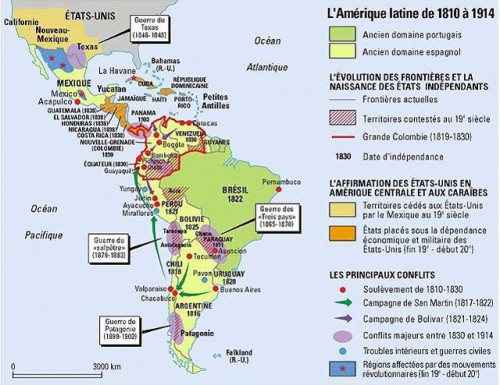
L’Amérique Latine fait la leçon à l'Europe
Actualidad.rt *
Ex: http://metamag.fr
L’Europe devrait suivre l'exemple de l’Amérique Latine pour sa capacité à faire face à la crise économique, selon l'avis de divers économistes. Au cours des deux derniers siècles, les anciennes colonies ont appris à utiliser habilement les instruments destinés à combattre la crise, tandis que les ex-colonisateurs n'ont fait qu'aggraver la crise économique.
C'est ce que pensent les économistes A. Vegh, de l'Université Johns Hopkins, et Guillermo Vuletin, de l'Institut Brookings, qui se sont demandé comment les économies de la Région avaient pu surmonter leurs difficultés passées. Pour répondre à cette question, ils ont étudié une série de collapsus économiques ainsi que leur durée moyenne et leur intensité.
Ces scientifiques ont noté une caractéristique intéressante : à partir de 1998, les crises en Amérique Latine sont devenues plus courtes et ont causé moins de dommages à l'économie, notamment au Brésil, au Chili et au Mexique.
Après s'être livrés à l'analyse des politiques monétaires et fiscales, les économistes sont parvenus à la conclusion selon laquelle la réaction des gouvernements et des banques centrales a radicalement changé durant les 30-40 dernières années.
L’Amérique Latine à l'avant-garde de l'économie
Au début les autorités ne faisaient pas preuve d'interventionnisme et avaient tendance à subir les cycles économiques. Cependant, à partir de 1998, de nombreux États ont modifié leur façon de répondre à la crise en prenant des mesures de nature à stimuler l'économie. C'est le cas du Brésil, du Chili et de la Colombie qui ont réduit leur taux d'intérêt pour répondre à la récente crise financière mondiale.
Ces mêmes scientifiques soulignent que l’Amérique Latine a appris à réagir face à la crise avec plus d'efficacité que par le passé et avancent l'idée que les pays de la Région seront capables de surmonter sans heurt les dernières étapes de la politique de fléxibilisation quantitative de la Réserve Fédérale des États-Unis.
On ne peut en dire autant de l'Europe qui est actuellement confrontée à de grands difficultés financières. La récession se faisait encore sentir au cours du premier trimestre de 2013 dans 7 pays de la zone euro, dans des proportions inconnues en Amérique Latine même à l'époque de Simon Bolivar : le PIB de la Grèce a baissé de 24 % depuis le début de la crise.
Après avoir analysé les politiques budgétaires des gouvernements européens, les scientifiques sont parvenus à la conclusion que, pour répondre à la crise, les Européens se sont mis à appliquer des politiques procycliques. En d'autres termes, ils se sont mis à épargner, avec pour conséquence, une aggravation de la crise.
Par conséquent, aux dires de ces experts, la politique fiscale procyclique menée durant la crise de la zone euro a, de fait, contribué dans certains pays à prolonger et à aggraver la crise actuelle ».
*Traduit de l'espagnol par Lucas Navarro
00:05 Publié dans Actualité, Affaires européennes, Géopolitique | Lien permanent | Commentaires (0) | Tags : politique internationale, géopolitique, europe, affaires européennes, amérique latine, amérique du sud, continentalisme | | del.icio.us | | Digg | Facebook
'Mobiele bendes' Oost-Europa massaal richting westen

http://www.volkskrant.nl/vk/nl/
'Mobiele bendes' Oost-Europa massaal richting westen
Wil Thijsen
De georganiseerde criminaliteit stijgt in West-Europa en daalt fors in midden- en Oost-Europa. Die trend is zichtbaar sinds de verruiming van het interne Europese handelsverkeer en de uitbreiding van de Europese Unie. Dit constateert de politie in zowel West- als Oost-Europa.
'We exporteren niet alleen goederen, maar ook onze misdaad', zegt Agata Tonder-Nowak, hoofdonderzoekster georganiseerde misdaad van de landelijke politie in Warschau. Zo is het aantal autodiefstallen in Polen na de Schengen-akkoorden met bijna 77 procent gedaald. De sterkste afname deed zich voor in 2004, toen Polen lid werd van de Europese Unie.
Wisseltrucs
'Die daling gaat door', zei ze woensdag op een congres over grensoverschrijdende criminele bendes aan de Universiteit Utrecht. Ze noemt vier oorzaken: 'In West-Europese landen zijn meer luxegoederen te halen, de winsten zijn groter, de pakkans is klein en jullie straffen zijn laag.' Dezelfde trend geldt volgens haar voor ramkraken, overvallen, winkel- en huisinbraken, wisseltrucs, koperdiefstal en het in omloop brengen van vals geld.
Gestolen goederen worden doorgaans in het land van herkomst verkocht. Het gaat om bendes van 2 tot 25 mensen. Hun daden zijn goed voorbereid en doelgericht. Zij blijven relatief kort in een West-Europees land en gaan dan weer naar huis.
Ook rechercheur Szonja Szabó van het Nationaal bureau voor onderzoek naar georganiseerde misdaad in Boedapest constateert dat veel criminaliteit uit Hongarije is verplaatst. Zij stelt dat mensenhandel door Hongaarse minderheden, zoals Roma, stijgt. De gevolgen zijn in West-Europa een toename van prostitutie, diefstal en misbruik van de sociale voorzieningen. Zij benadrukt dat deze groepen door armoede worden gedreven.
Volgens Frank van den Heuvel van de politie Rotterdam-Rijnmond komen de meeste 'mobiele bendes' uit Polen, Bulgarije, Roemenië en Litouwen. Uit de eerste drie landen komen ook veel migranten die gewoon werk zoeken, maar Litouwers komen vrijwel uitsluitend met criminele motieven, stelt hij. Alleen al in en rond Rotterdam is het aantal delicten door Litouwers toegenomen van 200 in 2007 tot ruim 2.300 dit jaar. Daarbij zou Litouwen fungeren als doorvoerland voor gestolen goederen naar Rusland en verder.
Voordelen
'Bij de opening van de grenzen is alleen stilgestaan bij de economische voordelen', zegt hoogleraar criminologie Dina Siegel. 'Er werd niet gekeken naar de veiligheid en daar is nog steeds amper onderzoek naar.'
In opdracht van de KLPD onderzoekt Siegel de motieven, sociale structuur en gevolgen van grensoverschrijdende bendes. Volgens Siegel blijven sommige bendes maar 24 uur in een land als Nederland, waardoor de pakkans gering is. Ook is de internationale samenwerking van de politie 'niet optimaal'.
Uit gesprekken met gedetineerde midden- en Oost-Europeanen zou blijken dat ze Nederlandse straffen niet alleen laag vinden, maar soms zelfs willen worden opgepakt om in de cel 'uit te rusten, hun gezondheid te verbeteren, af te kicken of om een tijdje uit de criminaliteit te zijn'.
00:05 Publié dans Actualité, Affaires européennes, criminologie | Lien permanent | Commentaires (0) | Tags : criminalité, europe, affaires européennes, politique internationale, mafias, bandes criminelles | | del.icio.us | | Digg | Facebook
The Rites of Manhood: Man’s Need for Ritual
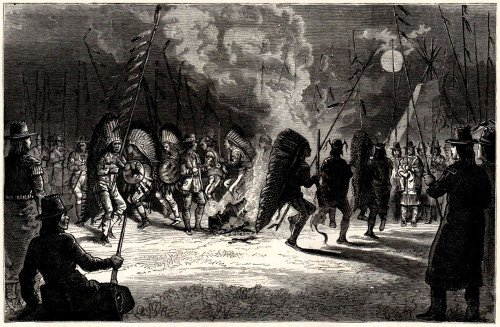
Does modern life ever feel excruciatingly flat to you? A bleak landscape devoid of layers, rhythm, interest, texture?
Are you ever haunted by the question “Is this all there is?”
Have you ever looked at an old photo and felt that the scene held such an inexplicable richness that it seemed you could practically step right into it?
The barren flatness of modern life is rooted in many things, including mindless consumerism, the absence of significant challenges, and the lack of shared values and norms, or even shared taboos to rebel against. But what is the solution?
Many would be quick to say faith, or philosophy, or relationships. All good answers.
But what is it that vivifies beliefs to the extent they can transform your perspective not simply for an hour on Sunday, but also in the mundane moments throughout your week? What can move an understanding of abstract truths from your mind into your very sinews? What can transform superficial ties with others into deep and meaningful bonds?
The answer I would suggest is ritual.
Our modern world is nearly devoid of rituals – at least in the way we traditionally think of them. Those that remain – such as ones that revolve around the holidays – have largely lost their transformative power and are often endured more than enjoyed, participated in as an obligatory going through of the motions. Ritual has today become associated with that which is rote, empty, meaningless.
Yet every culture, in every part of the world, in every era has engaged in rituals, suggesting they are a fundamental part of the human condition. Rituals have even been called our most basic form of technology – they are a mechanism that can change things, solve problems, perform certain functions, and accomplish tangible results. Necessity is the mother of invention, and rituals were born out of the clear-eyed perspective that life is inherently difficult and that unadulterated reality can paradoxically feel incredibly unreal. Rituals have for eons been the tools humans have used to release and express emotion, build their personal identity and the identity of their tribe, bring order to chaos, orient themselves in time and space, effect real transformations, and bring layers of meaning and texture to their lives. When rituals are stripped from our existence, and this fundamental human longing goes unsatisfied, restlessness, apathy, alienation, boredom, rootlessness, and anomie are the result.
The Rites of Manhood
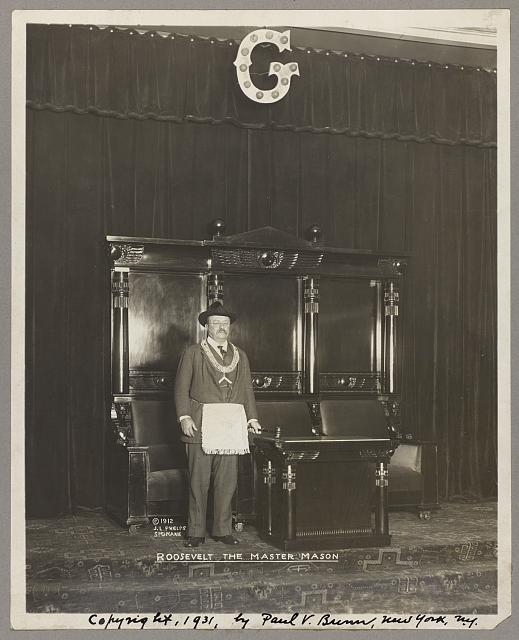
In the coming year we plan to do in-depth posts on some of the rituals that have been most central to the meaning and making of manhood, such as rites of passage, initiations, and oaths. This week we will be laying the foundation for these posts in two articles; the first will set up a definition of ritual, and the second will explore the many ways rituals are so vital for a full and meaningful life.
Today we’ll provide a little context as to the nature of ritual and why it has largely disappeared from modern societies.
What Is Ritual?
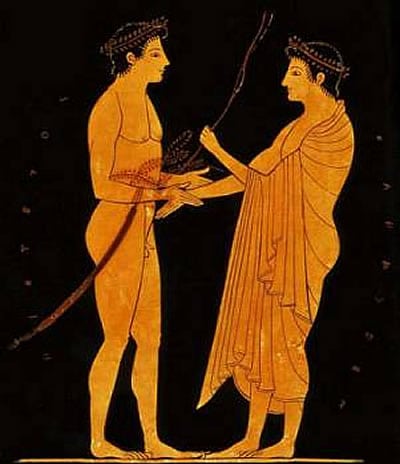
According to Catherine Bell, professor of ritual studies and author of the preeminent textbook on the subject, ritual has been traditionally defined as an action that lacks a “practical relationship between the means one chooses to achieve certain ends.” For example, shaking hands when you meet someone can be considered a ritual as there is no real reason why grabbing another’s hand and shaking for a second or two should lead to acquaintanceship. It is a culturally-relative gesture; we might very well greet each other with a pat on the shoulder or even no physical contact at all. As another example, washing your hands to clean them is not a ritual since there exists a clear practical relationship between your action and the desired result. But if a priest splashes water on his hands to “purify” them, that’s a ritual, since the water is largely symbolic and not really meant to rid the hands of bacteria.
Bell lists six attributes of rituals:
- Formalism: This is a quality rooted in contrast and how restrictive or expressive the accepted code of behavior is for a given event/situation. For example a backyard picnic is very casual and will not feel like a ritual because there are few guidelines for how one may express oneself. A very formal dinner, on the other hand, has a more limited range of accepted behaviors and thus can feel quite ritual-like. Bell argues that while we sometimes see formality as stuffy, since it curbs more spontaneous expression, formalized activities are not “necessarily empty or trivial” and “can be aesthetically as well as politically compelling, invoking what one analyst describes as ‘a metaphoric range of considerable power, a simplicity and directness, a vitality and rhythm.’ The restriction of gestures and phrases to a small number that are practiced, perfected, and soon quite evocatively familiar can endow these formalized activities with great beauty and grace.”
- Traditionalism. Rituals are often framed as activities that carry on values and behaviors that have been in place since an institution’s creation. This link to the past gives the ritual power and authority and provides the participant with a sense of continuity. The ritual may simply harken to those who came before, as when university graduates don the gowns that were once typical everyday classroom wear for scholars, or it may actually seek to recreate a founding event – as in the American celebration of Thanksgiving.
- Disciplined invariance. Often seen as one of the most defining features of ritual, this attribute involves “a disciplined set of actions marked by precise repetition and physical control.” Think of soldiers marching in drill step or the sit/stand/kneel pattern followed by Catholics during the course of a Mass. Disciplined invariance suppresses “the significance of the personal and particular moment in favor of the timeless authority of the group, its doctrines, or its practices,” and “subordinates the individual and the contingent to a sense of the encompassing and the enduring.”
- Rule-governance. Rituals are often governed by a set of rules. Both war and athletics are examples of activities that can be quite ritual-like when their rules regulate what is and is not acceptable. Rules can both check and channel certain tensions; for example, the game of football channels masculine aggression into a form of ritualized and controlled violence. On occasion the rules fail to sufficiently check the tension that is always bubbling right at the surface, as when a chaotic brawl breaks out amongst players. That the game reflects a similar submerged tension within society at large is part of why the audience finds the ritual so compelling.
- Sacral symbolism. Ritual is able to take ordinary or “profane” objects, places, parts of the body, or images, and transform them into something special or sacred. “Their sacrality,” Bell writes, “is the way in which the object is more than the mere sum of its parts and points to something beyond itself, thereby evoking and expressing values and attitudes associated with larger, more abstract, and relatively transcendent ideas.” Thus something like incense can be a mere mixture of plants and oils designed to perfume a room, or, when swung from a censer, can represent the prayer of the faithful ascending into heaven.
- Performance. Performance is a particular kind of action – one that is done for an audience. A ritual always has an intended audience, even if that audience is God or oneself. Tom F. Driver, a professor of theology, argues that “performance…means both doing and showing.” It is not a matter of “show-and-tell, but do-and-show.” Human are inherently actors, who wish to see themselves as characters in a larger narrative, and desire the kind of drama inherent in every timeless tale. Rituals function as narrative dramas and can satisfy and release this need. In the absence of ritual, people resort to doing their “showing” on social media and creating their own drama – often through toxic relationships or substances.
The more of these attributes a behavior/event/situation invokes, the more different from everyday life and ritual-like it will seem. The fewer of these attributes present, the more casual and ordinary it will feel.
For a more simple definition of ritual, here’s one that works: thought + action. A ritual consists of doing something in your mind (and often feeling something in your heart), while simultaneously connecting it to doing something with your body.
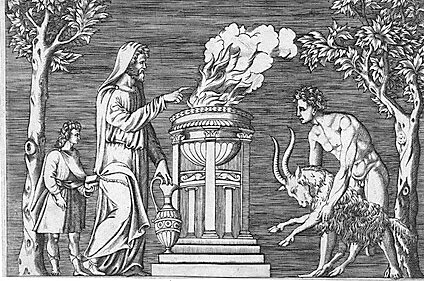
Rituals fall into a wide variety of categories. Theorist Ronald Grimes lists 16 of them:
- Rites of passage
- Marriage rites
- Funerary rites
- Festivals
- Pilgrimage
- Purification
- Civil ceremonies
- Rituals of exchange (as in worshipers making sacrifices to the gods in hope of receiving blessings from the divine)
- Worship
- Magic
- Healing rites
- Interaction rites
- Meditation rites
- Rites of inversion (rituals of reversal, where violating cultural norms is temporarily allowed, as in men dressing like women)
- Sacrifice
- Ritual drama
The important thing to understand about rituals is that they are not limited to very big, very formal events. Rituals can in fact be large or small, private or public, personal or social, religious or secular, uniting or dividing, conformist or rebellious. Funerals, weddings, presidential inaugurations, church services, baptisms, fraternal initiations, and tribal rites of passage are all rituals. Handshakes, dates, greetings and goodbyes, tattoos, table manners, your morning jog, and even singing the Happy Birthday song can be rituals as well.
Whither Ritual?
In many traditional societies, almost every aspect of life was ritualized. So why is there such a dearth of rituals in modern culture?
The embrace of ritual in the Western World was first weakened by two things: the Protestant Reformation’s movement against icons and ceremonialism and the Enlightenment’s emphasis on rationalism.
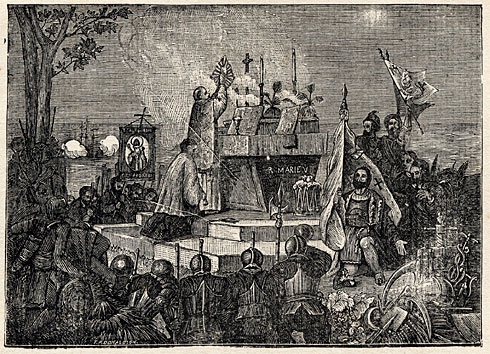
Historian Peter Burke, argues “the Reformation was, among other things, a great debate, unparalleled in scale and intensity, about the meaning of ritual, its functions and its proper forms.” Many Protestants concluded that the kind of rituals the Catholic Church practiced gave too much emphasis to empty, outward forms, rather than one’s internal state of grace. They rejected the “magical efficacy” of rites to be able to do things like change bread and wine into the literal body and blood of Christ.
The magical efficacy of ritual was attacked from the other side by Enlightenment thinkers. As discussed above, ritual is inherently nonrational since there is no practical relationship between the action and the end result. It is not rational to think that painting one’s body before battle will offer protection, that a rite of passage can turn a boy into a man, or that smoking a peace pipe can seal a treaty. Thus, ritual began to be associated with the superstitions of primitive peoples.
Suspicion of ritual again grew after World War II, in the wake of the way in which ritual ceremonies had been used to solidify loyalty to the Nazi cause.
Cultural embrace of ritual then really began to unravel during the social movements of the 1960s, which emphasized free expression, personal freedom, and individual emotional fulfillment above all. Rituals — which prescribe certain disciplined behaviors in certain situations, and require a person to forfeit some of their individuality in service to the synchrony and identity of the group — constrain spontaneity and the ability to do whatever one pleases. Ritual thus came to be seen as too constraining and not sufficiently “authentic.”
For these reasons, the use of and participation in rituals has been greatly curtailed. Or perhaps as historian Peter Burke argues, we’ve just replaced old rituals with new ones: “If most people in industrial societies no longer go to church regularly or practice elaborate rituals of initiation, this does not mean that ritual has declined. All that has happened is the new types of rituals—political, sporting, musical, medical, academic and so on—have taken the place of the traditional ones.” But the new rituals – watching sports, attending music festivals, checking Facebook, shopping, visiting a strip club on your 18th birthday — are light on nourishment and do not satisfy. Traditional rituals provided a mechanism by which humans could channel and process that which was difficult to grapple with – death, maturation, aggression – allowing the participant to discover new truths about themselves and the world. New rituals, if they can even really be called such, attempt to deny anything ugly in life (lest that lead you to close your wallet) and present a shiny, glossy façade — “confetti culture” – that facilitates passive consumption and turning away from examining given assumptions.
In our next post, we will argue that despite the cultural disdain for ritual, it is a human art form and practice which should be revived. It is true that ritual can be used for good or for ill, yet its benefit is so great that fear of the bad should not lead us to throw out the baby with the bathwater. Even if a man sees no place for ritual in his faith, he can have great use for it in other areas in his life (indeed, if his faith is completely unritualized, he has all the more need for other kinds of rituals). We will argue that even the most rational man might make room in his life for some “magic,” and that while ritual may seem constraining, it can paradoxically be incredibly empowering and even liberating. How that might be so, is where we will turn next time.
____________
Sources:
Ritual: Perspectives and Dimensions by Catherine Bell
Liberating Rites: Understanding the Transformative Power of Ritual by Tom F. Driver
00:05 Publié dans anthropologie, Définitions, Traditions | Lien permanent | Commentaires (0) | Tags : traditions, tradition, rituels, anthropologie, virilisme, machisme, masculinisme | | del.icio.us | | Digg | Facebook
Le Mazdéisme et l’Avesta : à l’origine des tribus indo-européennes

Le Mazdéisme et l’Avesta : à l’origine des tribus indo-européennes
« On vit apparaître
un si grand nombre d’analogies,
de points identiques entre les dogmes, les mythes,
les légendes, les institutions religieuses
de l’Orient et de l’Occident,
que les recherches prirent aussitôt
une direction nouvelle et précise »
(propos sélectionnés par Fabrice Dutilleul de la préface d’Émile Burnouf)
Qu’est-ce que l’Avesta ?
C’est l’ensemble des textes sacrés de la religion mazdéenne et forme le livre sacré, le code sacerdotal des zoroastriens. Il est parfois connu en Occident sous l’appellation erronée de Zend Avesta. Il est rédigé en plusieurs états de l’iranien ancien, désignés sous le nom d’avestique. Les parties les plus anciennes, celles des gathas, sont dans une langue aussi archaïque que celle du Rig Veda (sanskrit védique), le « gathique », les autres en avestique tardif. Le tout est écrit dans l’alphabet avestique.
Et qu’est-ce que le Mazdéisme ?
Le Mazdéisme originel remonte aux tribus indo-européennes des 2e et 1er millénaires avant JC. Il possède une étroite parenté avec l’ancienne religion indienne décrite dans les Veda. Le dieu suprême, Ahura Mazda ou Ormazd (Varuna, en Inde), est entouré de divinités, les Amesa Spenta. Cette religion est donc polythéiste. La société des hommes, quant à elle, est tripartite… Prêtres, guerriers et agriculteurs-éleveurs.
Que permet la persévérance de l’étude des religions ?
Que la science cherche depuis un siècle à en saisir l’unité. L’unité cherchée n’est pas cette fusion des églises qu’ont vainement discutée Leibniz et Bossuet ; c’est la communauté des dogmes primitifs d’où les diverses religions sont sorties ; c’est une unité historique.
Comment la science a-t-elle été conduite à cette recherche ?
Ce ne fut point par une théorie préconçue, par une rêverie ; ce fut par les faits eux‑mêmes. Tant qu’on n’eut pour matériaux que les doctrines chrétiennes, soit romaines, soit orthodoxes et, d’autre part, les anciennes mythologies grecques et latines, l’opposition entre elles parut si grande qu’on ne put pas les supposer issues d’un fonds commun. Mais lorsque, dans la seconde moitié du XVIIIe siècle et dans la première moitié du XIXe, on fut en possession des livres sacrés de l’Inde et de la Perse et qu’on put converser avec des Brahmanes et des Parsis, une révolution se fit dans la science. On vit apparaître un si grand nombre d’analogies, de points identiques entre les dogmes, les mythes, les légendes, les institutions religieuses de l’Orient et de l’Occident, que les recherches prirent aussitôt une direction nouvelle et précise.
Plusieurs conceptions primordiales ont donné lieu à plusieurs groupes de religions
Le groupe aryen parut le plus important et, après lui, le groupe sémitique. Le premier comprenait l’Inde, la Perse avec la Médie, les anciens Pélasges avec les Grecs et les Latins, les Germains, les Celtes, les Scandinaves. Le second était représenté par les peuples de race sémitique, notamment par les Assyriens, les Hébreux et plus tard par les Arabes. On voit que cette division des dogmes répond presque exactement à celle des langues. Si dans l’avenir, les langues sont, par de nouvelles découvertes, ramenées à une origine commune, il pourra en être de même des religions. Jusqu’à présent, disons‑le, rien ne fait prévoir un tel résultat. Constater des similitudes et une communauté d’origine entre plusieurs religions, ce n’est pas supprimer les différences. La science, prudente et sincère, ne supprime rien ; mais elle doit rendre raison de tous les faits constatés.
Le Mazdéisme. L’Avesta, Gaston-Eugène de Lafont, préface d’Émile Burnouf, éditions de L’Æncre, collection « Patrimoine des religions », dirigée par Philippe Randa, 238 pages, 26 euros
BON DE COMMANDE
Je souhaite commander :
...ex de Le Mazdéisme. L’Avesta (26 euros)
Autres livres de la collection
« Patrimoine des Religions » :
… ex de Le Mazdéisme. L’Avesta de Gaston-Eugène de Lafont (26 euros)
à renvoyer à : Francephi diffusion - Boite 37 - 16 bis rue d’Odessa - 75014 Paris - Tél. 09 52 95 13 34 - Fax. 09 57 95 13 34 – Mél. diffusion@francephi.com
Commande par internet (paiement 100 % sécurisé par paypal ou carte bancaire) sur notre site www.francephi.com
00:01 Publié dans Traditions | Lien permanent | Commentaires (0) | Tags : avesta, mazdéisme, traditions, traditionalisme, indo-européens | | del.icio.us | | Digg | Facebook