


mercredi, 18 septembre 2013
Syrie: accord USA/Russie

00:06 Publié dans Actualité | Lien permanent | Commentaires (0) | Tags : syrie, politique internationale, caricature |  |
|  del.icio.us |
  |
|  Digg |
  Facebook
Gigantisch anti-Obama protest in VS genegeerd door media
Protest gericht tegen 'fundamentele verandering VS door president Obama' - 'President oorzaak van vloedgolf politieke islam in Midden Oosten en Noord Afrika'

Tussen de 1 en 2 miljoen 'bikers' kwamen in Washington bijeen om te protesteren tegen het linkse, totalitaire pro-islam beleid van president Barack Hussein Obama.
De 'progressieve', politiek correcte reguliere media hadden gisteren geen enkele boodschap aan een gigantisch anti-Obama annex anti-islam protest in de Verenigde Staten. Klaarblijkelijk zijn 2 miljoen mensen die zich eensgezind verzetten tegen Obama's vernietiging van de Amerikaanse vrijheid, en zijn openlijke steun voor de wereldwijde verspreiding van een intolerant, discriminerend, racistisch en fascistisch religieus systeem, voor bijvoorbeeld NOS.nl en NU.nl niet belangrijk genoeg om er ook maar één item aan te wijden.
De gemeenteraad van Washington DC had het massaprotest zoals verwacht verboden, maar dat hield 2 miljoen Amerikaanse en Canadese motorrijders er niet van op de 12e gedenkdag van 9/11 gezamenlijk naar de hoofdstad te rijden. Op talloze filmpjes is op straten en andere wegen een letterlijk oneindige rij 'bikers' te zien.
2 miljoen vs. 25 demonstranten
Het massaprotest was het gevolg van een plan van een moslimbeweging om een 'moslim miljoen-mannenmars' op Washington te organiseren. Hoewel die demonstratie wél werd toegestaan, werd die een enorme flop; volgens de Weekly Standaard werden hooguit enkele honderden moslims en links-liberalen verwacht, en dat terwijl de organisatoren de naam van de mars nog hadden gewijzigd in 'miljoen Amerikanen marcheren tegen angst'. NBC berichtte dat er uiteindelijk slechts 25 demonstranten kwamen opdagen.
Het American Muslim Political Action Committee (AMPAC) had de totaal mislukte miljoen-mannenmars georganiseerd. AMPAC wordt geleid door M.D.Rabbi Alam, die de complottheorie verspreidt dat de Joden de aanslagen op 9/11 hebben veroorzaakt.
'Amerikanen hadden geen benul van Obama's 'change''
Het tegenprotest van 2 miljoen motorrijders -volgens de politie om 13.00 uur bijna 1 miljoen- was des te indrukwekkender. In een verklaring lieten de organisatoren weten dat het protest was gericht tegen de 'fundamentele verandering van de VS door president Obama'. Volgens de populaire radiotalkshow presentator rush Limbaugh hadden de Amerikanen er in 2008 geen benul dat Obama met zijn credo 'change' bedoelde dat hij 'de Amerikaanse Grondwet op zijn kop wilde zetten, en het kapitalisme zou vervangen door het socialisme.' (2)
Steun voor Moslim Broederschap
In het boek 'Impeachable Offenses: The Case to Remove Barack Obama from Office' tonen New York Times bestseller auteurs Aaron Klein en Brenda J. Elliot aan dat Obama doelbewust Moslim Broederschap regimes, die een bedreiging vormen voor de stabiliteit van de VS en de hele wereld, aan de macht helpt. 'Door Obama's beleid overspoelt de politieke islam als een vloedgolf van 'change' het hele Midden Oosten en Noord Afrika. De desastreuze gevolgen voor die regio's en voor de VS zijn inmiddels zichtbaar.'
De auteurs vergelijken Obama met de tot dan toe minst populaire Amerikaanse president ooit: Jimmy Carter. Carter verzwakte het regime van de Shah van Iran, en veroorzaakte daardoor een Shi'itische islamitische revolutie die tot op de dag van vandaag het wereldwijde terrorisme ondersteunt en vrijwel wekelijks roept dat Israël moet worden vernietigd.
Obama creëert chaos
Tunesië, Libië, Egypte, Jemen, Syrië - al deze landen zijn slachtoffers van Obama's beleid om chaos te creëren, zodat extremistische (terreur)bewegingen zoals Al-Qaeda en de Moslim Broederschap aan de macht kunnen en konden komen. Ook Marokko is niet aan Obama's aandacht ontsnapt; onder Amerikaanse druk heeft de koning Mohammed VI een aan de Broederschap verwante islamistische partij tot zijn regering toegelaten. Deze partij streeft ernaar om Marokko totaal door de islam te laten regeren.
Tal van redenen om Obama af te zetten
Daarnaast noemen de auteurs nog een groot aantal andere redenen om Obama af te zetten. Zo werd het Congres bij het invoeren van het peperdure 'Obamacare' gezondheidsstelsel gepasseerd, wat tegen de Grondwet is. Ook gaf hij een uitvoerend bevel om miljoenen illegalen amnestie te verlenen en grote aantallen criminele illegalen vrij te laten uit de gevangenissen. Hij begon de oorlog tegen Libië zonder instemming van het Congres, en verdonkeremaande bewijs van de werkelijke oorzaak en daders van de aanslag op het consulaat in Benghazi op 11 september 2012. (3)
Xander
(1) Infowars (YouTube filmpjes: 1 / 2 / 3 / 4 / 5 / 6 / 7 )
(2) World Net Daily
(3) World Net Daily
00:05 Publié dans Actualité, Manipulations médiatiques | Lien permanent | Commentaires (0) | Tags : obama, états-unis, politique internationale | | del.icio.us | | Digg | Facebook
Syrie : L’initiative russe dans sa véritable dimension !
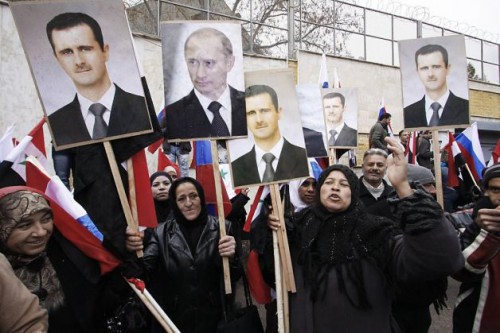
L’initiative avancée par la Russie, pour contrer les États-Unis décidés à attaquer la Syrie, établit de nouvelles équations et de nouveaux équilibres traduisant les nouvelles réalités imposées par l’Axe de la résistance sur le terrain ; équations qui ont révélé le coût d’une telle agression pour les États-Unis, leurs alliés, leurs agents dans la région et surtout pour l’entité sioniste, maintenant que la Syrie, l’Iran et la Résistance libanaise ont fait comprendre que cette entité recevra sa part de « la contre-attaque défensive » en réponse à l’agression étatsunienne.
Premièrement, par cette initiative la Russie a réussi à reprendre les rênes de l’offensive au niveau international et à imposer à Obama et à l’Empire US de nouvelles donnes qui devraient les ramener à « obéir » au Conseil de sécurité de l’ONU.
En effet, il est clair que l’équation révélée hier par M. Poutine, qui se résumerait à dire « l’arrêt de votre agression contre des accords avec la Syrie sur les armes chimiques », est le prélude à une entente globale qui dissuaderait toute ingérence en Syrie sous n’importe quelle forme que ce soit – aussi bien politique que financière ou militaire – et à la reprise du processus de Genève 2 perturbé par les USA depuis des mois.
De nombreux détails mériteraient plus d’attention et de suivi, notamment celui qui témoigne que la Russie a réussi à montrer que la crise est la résultante du conflit entre la Syrie et ses alliés d’une part, et les USA et leurs agents d’autre part ; en même temps qu’elle est apparue comme un référent essentiel pour les ajustements dictés par une nouvelle réalité internationale. Le tout, suivi d’une gifle retentissante assénée par son ministre des Affaires étrangères, Sergueï Lavrov, au triangle colonialiste US-France-GB lorsqu’il a refusé de placer tout projet concernant les armes chimiques dans le cadre du chapitre VII de la charte des Nations Unies.
Deuxièmement, l’ensemble des données disponibles révèlent que le « projet de solution russe » vise à dissuader toute agression contre la Syrie et certainement pas à l’encourager ou à s’y associer. Ceci est très clair et le deviendra de plus en plus, car les USA ne devront pas se contenter de déclarer publiquement leur abandon des hostilités, retirer leurs navires de guerre et leurs destroyers ; ils devront aussi cesser tout financement, armement et soutien prodigués aux bandes terroristes. C’est en tout cas le premier point sur lequel repose l’entente préalable, sur cette initiative, entre les ministres des Affaires étrangères de la Russie et des USA.
Soutenir les efforts de l’Etat syrien dans son combat contre le terrorisme sera, dans les prochaines semaines, le cadre des activités de la Russie sur le plan international ; cette initiative ayant créé les conditions de nouvelles avancées sur le terrain en faveur de la Syrie. En l’occurrence, c’est ce dont témoignent les cris, les jérémiades et l’hystérie des pays impliqués dans l’agression, qui ont vu échouer leurs tentatives de destruction de l’État syrien et dont le dernier espoir était de faire pencher la balance en faveur des gangs terroristes d’Al-Qaïda dirigés par Bandar bin Sultan.
Troisièmement, l’abandon par la Syrie de son arsenal d’armes chimiques est compensé par une modification qualitative de ses capacités de défense et de dissuasion du fait de l’implication directe de la Russie dans des projets de renforcement de ses systèmes de défense et de sécurité. Ceci, que ce soit en missiles, en avions de combat, en armes sophistiquées, et même en connexion à l’immense réseau de stations radar russes comme l’a démontré le test des deux missiles [*] lancés par Israël.
Par conséquent, la Syrie – qui a annoncé sa volonté d’adhérer au Traité de non-prolifération des armes chimiques et d’abandonner son arsenal chimique sous contrôle international – dispose déjà de moyens, et disposera de tous les moyens qui seront mis à sa disposition par son allié russe. Par ailleurs, l’indéfectible partenariat qu’elle a construit avec l’Iran et la Résistance libanaise constitue une organisation hautement performante en cas d’agression sioniste, si bien qu’une des constantes des équations régionales et internationales est désormais que toute ingérence isolée ou groupée, d’Israël, des USA ou de l’OTAN en Syrie, rencontrera une douloureuse réaction à laquelle participeront l’Iran et la Résistance libanaise, alors que la Russie sera présente en appui de la défense syrienne par tous les outils et moyens disponibles. D’ailleurs, c’est ce que la Russie a déjà fait en dépêchant sa flotte face au danger US et en fournissant des armes modernes à l’Armée arabe syrienne, en plus de ses formateurs et experts travaillant avec leurs homologues syriens à développer différentes techniques en fonction du plan de défense syrien.
Quatrièmement, la fin de règne de l’hégémonie et de l’unilatéralisme US, le renforcement de l’organisation défensive régionale contre Israël et les USA, et même la contre-attaque défensive contre l’agression des États-Unis qui ont pris toutes leurs dispositions pour ce faire, sont autant de réalisations initiées et accomplies par la résistance de l’État syrien, de son Commandant en chef, de son Armée et de son peuple ; réalisations à mettre aussi sur le compte de la fermeté de ses alliés d’Iran et du Hezbollah et de l’extraordinaire courage de son allié russe. Le monde doit s’attendre à découvrir le contenu de ce que nous ont préparé, tout en finesse politique et diplomatique, le trio formé par Sergueï Lavrov, Walid Mouallem et Hussein Abdel Lahyan dont la présence concomitante à Moscou ne relève probablement pas de la coïncidence.
Le partenariat entre la Russie et « l’Organisation de la Résistance en Orient » s’est donc renforcé. C’est un nouveau bloc qui vient de naître et c’est le bras qui se met en travers de l’agression hargneuse des Israéliens et des USA.
Tout un chacun en Syrie ou ailleurs a le droit de clamer que la Syrie en acceptant de se défaire de son arsenal chimique, au profit d’un système de défense plus performant, a capitulé. Mais cela reviendrait à refuser de reconnaître qu’une telle concession est d’un coût nettement moindre que celui que les Syriens auraient payé sans cette victoire politique, qui n’a été rendue possible que grâce à leur résistance à l’agression US.
Ce à quoi nous avons assisté, ces derniers jours, fera date dans l’Histoire moderne en ce sens que des forces de libération luttant pour leur souveraineté et leur indépendance ont réalisé cet exploit sans recourir à une guerre pour laquelle ont été mobilisés de considérables moyens une fois qu’Obama a annoncé sa décision d’attaquer la Syrie, un exploit dont le mérite revient à la Résistance syrienne !
Ghaleb Kandil
11/09/2013
Article original : New Orient News
http://www.neworientnews.com/news/fullnews.php?news_id=112152
Article traduit de l’arabe par Mouna Alno-Nakhal pour Mondialisation.ca
[*] La Russie détecte 2 missiles en Méditerranée
Monsieur Ghaleb kandil est le Directeur du Centre New Orient News (Liban)
00:05 Publié dans Actualité, Géopolitique | Lien permanent | Commentaires (0) | Tags : syrie, levant, proche orient, actualité, géopolitique, politique internationale | | del.icio.us | | Digg | Facebook
Il Processo Ergenekon: Un’analisi giuridica e politica in ordine cronologico
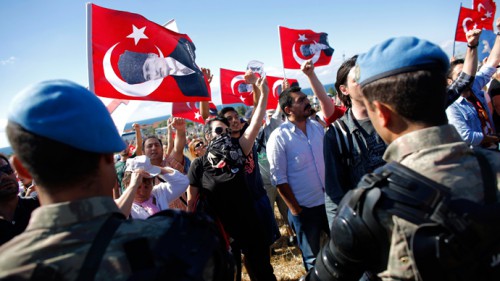
Il Processo Ergenekon: Un’analisi giuridica e politica in ordine cronologico
Aytekin Kaan Kurtul
Ex: http://www.statopotenza.eu
Il 5 agosto ha avuto luogo l’ultima udienza del processo Ergenekon che si trattava della “formazione di un’organizzazione terrorista” che “ha tentato ad organizzare un colpo di stato contro il Governo attuale (Erdoğan)”. L’inchiesta era stata iniziata nel 2007, con la “scoperta” delle armi “segrete” e dei “diari del golpe” dalla polizia, i quali erano stati “forniti” nel dipartimento della polizia secondo i video fatti da parte della polizia (gia’ qui si capisce come si e’ svolto il processo) .
Dopo il consolidamento del potere della “nuova oligarchia islamica” (ovvero dopo le elezioni generali e l’elezione presidenziale del 2007, con le quali il partito di Erdoğan ha praticamente “nominato” il Presidente) il processo e’ stato portato davanti alla Corte dove sono state scritte le accuse. I soggetti in questione venivano accusati di far parte di un’organizzazione terrorista, chiamata Ergenekon, che mirava ad organizzare un colpe di stato contro il Governo Erdoğan. Anche se le accuse venivano considerate dentro il quadro di un tentato colpo di stato, i primi ad essere arrestati erano civili. Il piu’ noto di questi, Ergun Poyraz, era un ricercatore e uno scrittore indipendente che aveva scritto libri sulle relazioni “intime” tra le sette mafiose in Turchia (come la setta Gülen) , “gli stati religiosi” (il Vaticano e l’Israele) e i capitalisti finanziari d’Occidente. Il libro che veniva considerato come “una prova di delitto” s’intitolava “Erdoğan e Gül: I Figli d’Israele“, tanto per mostrare la liberta’ di espressione in Turchia.
Un altro personaggio noto tra i primi ad essere arrestati era l’imprenditore Kuddusi Okkır. Egli era il fondatore di un’impresa di informatica che cercava di sviluppare tecnologie nazionali per non dipendere totalmente dal rete statiunitense. Okkır e’ stato arrestato il 20 giugno 2007 ed e’ morto in carcere (presumabilmente a causa della tortura) prima della prima udienza del processo Ergenekon, nella data del 6 giugno 2008. Il 22 gennaio 2008, e’ stata iniziata la seconda onda di arresti. Questa volta i bersagli erano prevalentemente militari, con alcune eccezioni. Due di queste erano l’avvocato Kemal Kerinçsiz e la portavoce della Chiesa Ortodossa Turca, Sevgi Erenerol. Kemal Kerinçsiz era noto per aver impugnato scrittori liberali come Orhan Pamuk per “aver incitato odio razziale, aver insultato la nazione turca e aver incitato una guerra contro i confinanti della Repubblica” (artt. 301, 304 del Codice Penale). Sevgi Erenerol, invece, era una sacerdotessa cristiana e una scrittrice nota per le sue idee patriottiche.
Il 21 marzo 2008 era la data dell’inizio della onda piu’ grande. Personaggi noti dell’opposizione legale in Turchia come il Presidente del Partito dei Lavoratori (noto per essere uno dei primi due partiti comunisti a difendere il socialismo eurasiatista), il Dottor Doğu Perinçek; il giornalista socialista noto per essere torturato durante il regime della giunta del ’71, İlhan Selçuk; il Vice Presidente del Partito dei Lavoratori, Ferit İlsever; il Vice Presidente del Partito dei Lavoratori, Nusret Senem; il fondatore della Fondazione del Pensiero Kemalista, Şener Eruygur; l’ex generale e personaggio kemalista Hurşit Tolon; giornalista socialdemocratico e deputato del Partito Repubblicano del Popolo, Mustafa Balbay; il tenente noto per aver provato ad arrestare i soldati statiunitensi ad İncirlik, Hasan Atilla Uğur e l’accademico Erol Mütercimler sono stati detenuti dalla polizia e la maggior parte e’ stata arrestata.
L’1 luglio 2008 ha testimoniato l’espansione dell’onda precedente ed e’ stato arrestato il Presidente Fondatore dell’Unione Giovanile di Turchia (l’Unione della Gioventu’ di Turchia), Adnan Türkkan. L’Unione Giovanile di Turchia (l’Unione della Gioventu’ di Turchia) e’ stata definita come “l’ala giovanile dell’organizzazione terrorista Ergenekon” dalla stampa liberale (conosciuta come “la stampa dei pinguini” dopo la Sollevazione di Giugno), anche se non era definita cosi neanche nelle accuse. L’arresto e’ stato seguito da repressioni nelle universita’ e tanti studenti hanno dovuto lottare per praticare il loro diritto allo studio.
La prima udienza e lo “schema” dell’organizzazione
La prima udienza ha avuto luogo nel comune di Silivri nella provincia di İstanbul (il quale e’ abbastanza lontano dal centro) il 20 ottobre 2008 ed e’ stato dichiarato lo “schema” dell’organizzazione. Secondo lo “schema”, non c’era una gerarchia o qualsiasi struttura organizzativa – c’era solo un “gruppo” di leader composto prevalentemente da militari. Tra questi leader, c’erano due personaggi noti: il Generale Martire Eşref Bitlis e l’ex generale Hurşit Tolon.
Il Generale Martire Eşref Bitlis era stato assassinato misteriosamente il 17 febbraio 1993. Egli era noto per aver promosso il dialogo con i contadini curdi per risolvere la questione curda. Il 7 febbraio 1993, il Generale Bitlis aveva dichiarato che “gli aerei statunitensi che partono da İncirlik portano armi e forniture ai terroristi del PKK nell’Iraq settentrionale e gli israeliani gli offrono informazioni vitali riguardo le nostre posizioni nella regione“. Era stato assassinato 10 giorni dopo.
L’ex generale Hurşit Tolon, invece, era uno dei primi militari a dichiarare il fatto che “far parte della NATO e’ una minaccia per l’esistenza della Repubblica“. Egli aveva promosso un’alleanza con “l’altro polo che sta crescendo, cioe’ quello guidato oggi dalla Cina, dalla Russia, dall’India e dall’Iran. In questo quadro l’Iran e’ il nostro alleato naturale per il fatto che abbiamo legami sociali e nemici in comune – a prescindere dalle nostre differenze ideologiche“.
Gli avvocati dei prigionieri hanno obiettato l’intero processo citando la mancanza delle prove concrete, l’illegalita’ dell’invasione della sfera privata durante l’inchiesta e il fatto che il Generale Bitlis era gia’ morto nel 1993 e quindi non era fisicamente capace di fare un colpo di stato nel 2008. Le loro obiezioni non sono state prese in considerazione.
L’aggiunta dell’attacco al Consiglio di Stato e il salafita Osman Yıldırım
Il 3 agosto 2009, il caso che riguarda l’attacco al Consiglio di Stato perpetuato da un salafita che si chiama Osman Yıldırım e’ stato aggiunto al caso Ergenekon, rendendo la cosidetta “organizzazione terrorista” in questione “un’organizzazione terrorista attiva”. Osman Yıldırım era stato condannato precedentemente per “aver commesso matricidio” e “aver venduto la propria nipote” (artt. 81, 227 del Codice Penale). Nelle prime udienze nel processo riguardo all’attaco al Consiglio di Stato, egli aveva affermato che mirava a “distruggere il regime laico infedele e costruire il Sacro Califfato. Io sono un cittadino dello Stato Islamico dell’Asia Minore e un nemico del bastardo europeo che ha fondato il regime“, riferendosi al fondatore della Repubblica, il comandante antimperialista Mustafa Kemal Atatürk che era nato a Salonica. Per di piu’ ha ammesso che egli aveva perpetuato l’attacco. Nonostante il fatto che egli ha commesso i crimini “mirando a distruggere l’ordine repubblicano e l’unione nazionale” ed “essersi opposto all’ordine costituzionale” (artt. 302, 309 del Codice Penale), e’ stato rilasciato dopo l’ultima udienza (per aver collaborato con la corte) mentre decine di giornalisti, accademici e politici e anche l’ex Comandante in Capo delle Forze Armate Turche con il quale lo stesso Governo Erdoğan aveva collaborato sono stati simbolicamente condannati all’ergastolo.
La durata della reclusione e le sentenze della Corte Costituzionale e della CEDU
La maggior parte dei prigionieri e’ stata in carcere per piu’ di cinque anni senza una sentenza definitiva, una situazione che era stata legittimizzata con l’ultima riforma del Codice di Procedura Penale che aveva prolungato la durata massima di reclusione a 10 anni. La riforma, comunque, e’ stata dichiarata incostituzionale da parte della Corte Costituzionale con la sentenza 07/2013 pubblicata il 2 agosto 2013 sulla Gazzetta Ufficiale. Secondo la Corte, siccome la norma presente e’ stata annullata, dovrebbe essere applicata la norma precedente che aveva fissato la durata massima a 5 anni.
La sentenza e’ stata emessa parzialmente in conformita’ con le ultime sentenze della CEDU riguardo alla massima durata di reclusione. La CEDU, infatti, nella sentenza Vaccaro v. la Repubblica Italiana, aveva deciso che sei anni di reclusione era inaccettabile in un caso piu’ “leggero” rispetto al processo Ergenekon. Nonostante le sentenze della CEDU (le cui massime dovrebbero essere applicate nelle corte nazionali siccome la Turchia e’ una firmataria della Convenzione) e l’ultima sentenza della Corte Costituzionale della Repubblica di Turchia, la corte penale ha deciso di non rilasciare i prigionieri mentre uno che doveva essere condannato all’ergastolo secondo il Codice Penale vigente e’ stato rilasciato.
Una sintesi
Come avete visto, il processo Ergenekon e’ stato un processo illegale, incostituzionale e disumano sia nel senso giuridico che nel senso morale. L’Associazione degli Avvocati ha dichiarato che essa non riconosce le sentenze e giornalisti comunisti come Jürgen Elsasser e partiti comunisti come il Partito Comunista della Federazione Russa hanno espresso solidarieta’ ai prigioneri politici in Turchia. Gli antimperialisti nel mondo hanno visto che personaggi come l’ex Comandante in Capo delle Forze Armate Turche sono stati arrestati “simbolicamente”, ovvero per rendere piu’ “credibile” il processo che era totalmente politico e mirava a reprimere l’opposizione legale in Turchia. E ultimamente il Primo Ministro Erdoğan ha affermato che “non riconoscere le sentenze Ergenekon e’ un delitto“. Le sue parole contraddicono le norme del Codice Penale ma se esse valgono piu’ del diritto nazionale e della Costituzione, possiamo parlare di uno stato di diritto?
Scusate la mia liberta’ di espressione.
Le sentenze
Adnan Türkkan, membro fondatore dell’Unione Giovanile di Turchia (l’Unione della Gioventu’ di Turchia): 10 anni e 6 mesi in carcere
Tunç Akkoç, membro fondatore dell’Unione Giovanile di Turchia (l’Unione della Gioventu’ di Turchia), membro del Comitato Centrale del Partito dei Lavoratori: 11 anni in carcere
Doğu Perinçek, Presidente del Partito dei Lavoratori: Ergastolo + 117 anni in carcere
Ferit İlsever, Vice Presidente del Partito dei Lavoratori: 15 anni in carcere
Nusret Senem, Vice Presidente del Partito dei Lavoratori: 20 anni, 3 mesi in carcere
Mehmet Bedri Gültekin, Vice Presidente del Partito dei Lavoratori: 10 anni, 6 mesi in carcere
Zafer Şen, membro del Comitato Centrale del Partito dei Lavoratori: 8 anni, 9 mesi in carcere
Erkan Önsel, membro del Comitato Centrale del Partito dei Lavoratori: 9 anni in carcere
Mustafa Balbay, Deputato del Partito Repubblicano del Popolo: 34 anni e 8 mesi in carcere
Tuncay Özkan, giornalista socialdemocratico: Ergastolo aggravato
Yalçın Küçük, accademico marxista: Ergastolo aggravato
İlker Başbuğ, Ex Comandante in Capo delle Forze Armate Turche: Due ergastoli aggravati seguenti + 4 anni, 2 mesi in carcere
Hikmet Çiçek, giornalista comunista: 21 anni in carcere
Sevgi Erenerol, Portavoce della Chiesa Ortodossa Turca: Ergastolo
Şener Eruygur, Fondatore della Fondazione del Pensiero Kemalista: Ergastolo
Tenente Hasan Atilla Uğur: 29 anni, 3 mesi in carcere
Dursun Çiçek, ammiraglio: Ergastolo aggravato
Mustafa Özbek, Presidente del Sindacato Türk-Metal: Ergastolo
Deniz Yıldırım, ex direttore editoriale del quotidiano comunista Aydınlık: 16 anni, 10 mesi in carcere
Hurşit Tolon, ex generale: Ergastolo aggravato
Kemal Kerinçsiz, avvocato: Ergastolo aggravato
Emcet Olcaytu, avvocato: 13 anni, 2 mesi in carcere
Adnan Akfırat, giornalista: 19 anni in carcere
Ünal İnanç, giornalista: 19 anni in carcere
Ergün Poyraz, scrittore: 29 anni, 4 mesi in carcere
Vedat Yenerer, giornalista: 7 anni, 6 mesi in carcere
Kemal Alemdaroğlu, accademico: 15 anni, 8 mesi in carcere
Mehmet Perinçek, accademico, figlio di Doğu Perinçek: 6 anni e 3 mesi in carcere
Ferit Bernay, accademico: 10 anni in carcere
Mustafa Yurtkuran, accademico: 10 anni in carcere
Aydın Gergin, membro del Partito dei Lavoratori: 8 anni in carcere
Tenente Fikri Karadağ: Ergastolo aggravato
İsmail Hakkı Pekin, ex generale: 7 anni, 6 mesi in carcere
Özlem Konur Usta, editore del quotidiano comunista Aydınlık: 6 anni, 3 mesi in carcere
Mehmet Bozkurt, editore del quotidiano comunista Aydınlık: 9 anni, 3 mesi in carcere
Turan Özlü, fondatore del canale televisivo Ulusal: 9 anni in carcere
Sinan Aygün, Deputato del Partito Repubblicano del Popolo: 13 anni, 6 mesi in carcere
Tenente Fuat Selvi: Ergastolo
Fatih Hilmioğlu, accademico: 23 anni in carcere
Serdar Öztürk, veterano di guerra: 25 anni, 6 mesi di carcere
Mahir Çayan Güngör, corrispondente del canale televisivo Ulusal: 6 anni, 3 mesi in carcere
Kemal Yavuz, ex generale: 7 anni, 6 mesi in carcere
00:05 Publié dans Actualité | Lien permanent | Commentaires (0) | Tags : turquie, ergenekon, eurasisme, panturquisme, pantouranisme, erdogan, politique internationale | | del.icio.us | | Digg | Facebook
D. H. Lawrence on the Metaphysics of Life
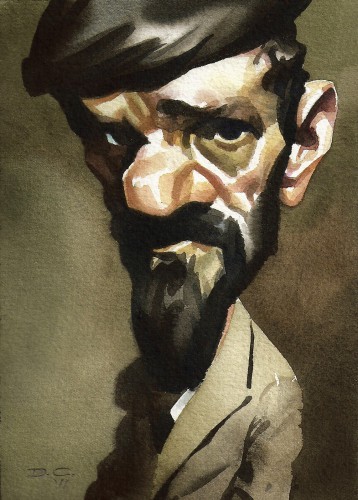
D. H. Lawrence on the Metaphysics of Life
By Derek Hawthorne
Ex: http://www.counter-currents.com
1. Life and the “Creative Mystery”
Lawrence believes that the chief thing modern science simply cannot explain is life itself. And he regards life as an irreducible, and ultimately inexplicable, primary. Further, he believes that there is no such thing as disembodied spirit, or immaterial existence. The only meaningful distinction is that between living and non-living matter.[1]
In addition, Lawrence believes that non-living matter is merely the dead remains of the living. (A position that will strike many as utterly bizarre.) Lawrence makes this claim many times, especially in Fantasia of the Unconscious, but also in his strange, Hermetic essay “The Two Principles.” He writes there, “Inanimate matter is released from the dead body of the world’s creatures. It is the static residue of the living conscious plasm, like feathers of birds.”[2] And: “death is not just shadow or mystery. It is the negative reality of life. It is what we call Matter and Force, among other things. . . . The cosmos is nothing but the aggregate of the dead bodies and dead energies of bygone individuals. The dead bodies decompose as we know into earth, air, and water, heat and radiant energy and free electricity and innumerable other scientific facts.”[3]
Obviously, if the non-living comes from the living and is its residue, then living things must have existed before there were any non-living things. But this seems to present a whole host of difficulties. Where did these living things reside, if not on the non-living rocks we call planets? If they were like the living things we know, then wouldn’t they have had to have breathed oxygen and consumed water? And oxygen and water can hardly be classed as “alive.” Lawrence finds a way around this problem, however, by postulating that in the beginning there were no living things; instead, life was “homogeneous,” and not divided into distinct creatures.
He puts this idea forward in his 1914 philosophical essay “A Study of Thomas Hardy”: “In the origin, life must have been uniform, a great unmoved, utterly homogeneous infinity, a great not-being, at once a positive and negative infinity: the whole universe, the whole infinity, one motionless homogeneity, a something, a nothing.”[4] (I will have reason to return to this quotation later for, as we shall shortly see, Lawrence qualifies this statement in an important way.)
Lawrence’s conception of an undifferentiated, homogeneous “life” is very close to Schopenhauer’s “will.” Recall that in The World as Will and Representation, Schopenhauer argues that the will is an impersonal, self-perpetuating force, and that it lies at the root of all that exists. Lawrence seems to have held some version of this theory for most of his life. In a letter from 1911 he writes: “There still remains a God, but not a personal God: a vast, shimmering impulse which waves onwards towards some end, I don’t know what—taking no regard for the little individual, but taking regard for humanity. When we die, like rain-drops falling back again into the sea, we fall back into the big, shimmering sea of unorganized life which we call God.”[5]
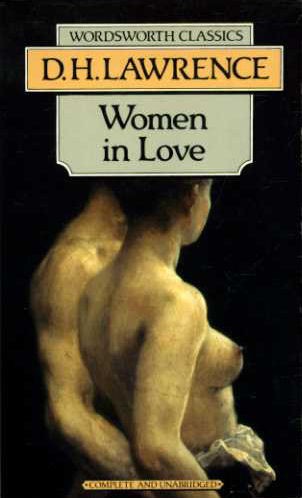
In Women in Love Birkin often expresses Schopenhauerian ideas: “Well, if mankind is destroyed, if our race is destroyed like Sodom, and there is this beautiful evening with the luminous land and trees, I am satisfied. That which informs it all is there, and can never be lost. After all, what is mankind but just one expression of the incomprehensible.”[6] And, later in the novel, Lawrence expresses Birkin’s thoughts after Gerald’s death:
If humanity ran into a cul-de-sac, and expended itself, the timeless creative mystery would bring forth some other being, finer, more wonderful, some new, more lovely race, to carry on the embodiment of creation. The game was never up. The mystery of creation was fathomless, infallible, inexhaustible, for ever. . . . The fountain-head was incorruptible and unsearchable. It had no limits. It could bring forth miracles, create utter new races and new species in its own hour, new forms of consciousness, new forms of body, new units of being. To be man was as nothing compared to the possibilities of the creative mystery.[7]
Lawrence also sometimes refers to “the pan mystery,” and at one point says “God is the flame-life in all the universe; multifarious, multifarious flames, all colours and beauties and pains and somberness. Whichever flame flames in your manhood, that is you, for the time being.”[8] Finally, in one of Lawrence’s last works of fiction, The Man Who Died, he writes,
And always the man who had died saw not the bird alone, but the short, sharp wave of life of which the bird was the crest. . . . And the man who had died watched the unsteady, rocking vibration of the bent bird, and it was not the bird he saw, but one wave-tip of life overlapping for a minute another, in the tide of the swaying ocean of life. And the destiny of life seemed more fierce and compulsive to him even than the destiny of death. The doom of death was a shadow compared to the raging destiny of life, the determined surge of life.[9]
Unlike Schopenhauer, Lawrence never settles on a single term for this “life force,” and so I have chosen to follow his language in Women In Love and to refer to it consistently here as the creative mystery. I take Lawrence’s discussion in “A Study of Thomas Hardy” of primordial life as a “great unmoved, utterly homogeneous infinity,” as yet another description of the creative mystery that lies at the root, and origin of all things.
It is easy to see that the creative mystery forms the basis for Lawrence’s ontology, his theory of Being.[10] If Lawrence merely followed Schopenhauer and identified the creative mystery with Being (as Schopenhauer himself never explicitly does), he would fall squarely within the tradition of what Heidegger calls “ontotheology.” Ontotheology is the error of identifying Being-as-such with the highest or most basic of all beings, or things that have being. The error is analogous to declaring that the characteristic of Tallness is just the same as a thing that happens to be tall (i.e., a thing that “has” tallness). To recognize what Heidegger calls the “ontological difference” is to recognize that Being is not simply another of the beings, no matter how special.
If the creative mystery is something that has Being, then it cannot be Being-as-such. Fortunately, however, Lawrence does not make this error. One of the few places where Lawrence explicitly refers to Being occurs in his essay “Reflections on the Death of a Porcupine”: “The clue to all existence is being. But you can’t have being without existence, any more than you can have the dandelion flower without the leaves and the long tap root.”[11] Essentially, for Lawrence Being is the emergence of individuals out of the creative mystery. The creative mystery itself is not Being, but what one might call the “ground of Being.”
This ontology comes very close to Heidegger’s understanding of the Pre-Socratic conception of Being as phusis. And surely this is no accident. Lawrence’s understanding of the creative mystery and what emerges from it was not formed solely through his encounter with Schopenhauer. His descriptions of it also reflect his encounter with pre-Socratic philosophy, which he also studied carefully. In particular, one can detect a strong hint of Anaximander’s “indefinite” (apeiron), out of which all things emerge and into which they return. I will return to Lawrence’s ontology later when I discuss his theory of the “Holy Ghost,” which “draws” individuals out of the creative mystery and into the flowering of Being. For now, however, we must continue to investigate Lawrence’s understanding of the creative mystery itself.
2. The Holy Ghost
Earlier I quoted Lawrence’s essay “A Study of Thomas Hardy” concerning the origin of life, when it was “uniform, a great unmoved, utterly homogeneous infinity.” However, he qualifies this statement in the next sentence: “And yet it can never have been utterly homogeneous: mathematically, yes; actually, no.”[12] Indeed, Lawrence makes it very clear elsewhere that he believes in the primacy of the individual.
In Fantasia of the Unconscious he writes, “Life is individual, always was individual and always will be. Life consists of living individuals, and always did so consist, in the beginning of everything.”[13] Later in the same text Lawrence remarks that living individuals are “the one, pure clue to our cosmos.” And then: “I only know there is but one origin, and that is the individual soul. The individual soul originated everything, and has itself no origin.”[14]Lawrence is here going a step further. Life is always individual life, but what accounts for individuality as such is “the soul,” or what he calls elsewhere the Holy Ghost. Lawrence has acquired these terms from his Christian upbringing, but he uses them in a highly unusual way, as we will see in the next section.
But here we must pause to raise a troubling, and obvious objection: doesn’t all of this completely contradict the idea Lawrence puts forward that in the beginning only life existed, but that it was an “utterly homogeneous infinity”? Yes and no. Lawrence frankly admits elsewhere that he does not believe there ever was a literal beginning to the universe. So what was the point, then, in telling us what happened “in the origin”? Is Lawrence simply spinning out myths? The answer is yes: Lawrence is consciously and deliberately expresses his ideas in mythic form.
When Lawrence speaks of a homogeneous life “in the origin” this is a mythic way of speaking of the creative mystery that is the source of all things. In a way, one can say that this is the “origin” of all things. However, the creative mystery has always existed in and through individuals. Because these individuals are all expressions of the creative mystery, they are all one; but the one creative mystery exists only within the many. As Lawrence says, “life” is homogeneous “mathematically,” but not “actually.”
Now, some might charge that the foregoing is merely a facile way of trying to resolve what is quite simply a glaring contradiction in Lawrence’s thought. But this is not the case. Lawrence makes it quite clear, in fact, that he means us to interpret him exactly as I have suggested. In his essay “The Two Principles” Lawrence writes: “When we postulate a beginning, we only do so to fix a starting point for our thought. There never was a beginning, and there never will be an end to the universe. The creative mystery, which is life itself, always was and always will be. It unfolds itself in pure living creatures.”[15]
For Lawrence, existence “begins” with an undifferentiated life force, which then progressively and infinitely individuates itself. Of course, we must remember that Lawrence does not believe in a literal beginning. When this is taken into account, his position comes extremely close to that of Schopenhauer: existence is, at root, an infinite will that never exists as such, purely by itself, but is continually “expressed” through individuals. Lawrence’s account of the course of creation then becomes, in effect, an alchemical ontology giving us the ultimate qualities and categories of being itself—the most fundamental of which are Fire and Water.
Lawrence develops his “creation myth” in Fantasia and in “The Two Principles.” It is complex and obscure, and best set aside for the moment. Instead, I will turn now to another issue, and an important one. We have seen that for Lawrence the purpose of existence itself is individuation: the coming-into-being of individuals of various forms, each unique and, to one degree or another, independent and self-sufficient. But how, in metaphysical terms, can we account of the arising of the individual? Lawrence answers this question with his idiosyncratic theory of the “Holy Ghost.”
Writing of the positive “sun-pole” and negative “moon-pole” in Fantasia, Lawrence states that “Existence is truly a matter of propagation between the two infinities. But it needs a third presence. . . . The hailstone needs a grain of dust for its core. So does the universe. Midway between the two cosmic infinities lies the third, which is more than infinite. This is the Holy Ghost Life, individual life.”[16] Lawrence also speaks of the ‘individual soul” as the “one clue to the universe.”[17] We shall see that the soul and the Holy Ghost are, in a way equivalent.
The Holy Ghost, Lawrence tells us, mediates between dualities. In the language of “The Two Principles” the Holy Ghost is that which “draws together” Fire and Water to produce a new individual. In his essay “The Crown,” Lawrence remarks that every new (living) individual is “a glimpse of the Holy Ghost.”[18] And in “Reflections on the Death of a Porcupine” he writes that “All existence is dual, and surging towards a consummation into being. In the seed of the dandelion, as it floats with its little umbrella of hairs, sits the Holy Ghost in tiny compass. The Holy Ghost is that which holds the light and the dark, the day and the night, the wet and the sunny, united in one little clue. There it sits, in the seed of the dandelion.”[19]
Lawrence’s concept of the Holy Ghost is not unlike Aristotelian entelecheia, or full or completed actuality. It is that for that for the sake of which each thing strives: its end, or, in Lawrence’s terms, its “fullness of being.” The entelecheia of a thing is just the fully-accomplished being or acting of the thing, yet it has the status of an ideality which is, in a sense, logically and ontologically prior to the existence of the thing. This comparison may seem a bit of stretch, so let us consider the following statements Lawrence makes in his essays. In “Reflections on the Death of a Porcupine” he writes,
Any creature that attains to its own fullness of being, its own living self, becomes unique, a nonpareil. It has its place in the fourth dimension, the heaven of existence, and there it is perfect, beyond comparison. . . . At the same time, every creature exists in time and space. And in time and space it exists relatively to all other existence, and can never be absolved. Its existence impinges on other existences, and is itself impinged upon. . . . The force which we call vitality, and which is the determining factor in the struggle for existence is, however, derived also from the fourth dimension. That is to say, the ultimate source of all vitality is in that other dimension, or region, where the dandelion blooms, and which men have called heaven, and which now they call the fourth dimension: which is only a way of saying that it is not to be reckoned in terms of space and time.[20]
 In “Him with His Tail in His Mouth” (1925), Lawrence writes “Creation is a fourth dimension, and in it there are all sorts of things, gods and what-not. That brown hen, scratching with her hind leg in such common fashion, is a sort of goddess in the creative dimension.”[21] And in “Morality and the Novel” (1925), Lawrence tells us “By life, we mean something that gleams, that has the fourth-dimensional quality.”[22] Nothing in Lawrence is ever completely clear, but it seems clear enough in these passages that he thinks that living things exist in two ways. In space and time they exist alongside other creatures, and in large measure are what they are in contrast or opposition to those other creatures. In truth, however, their being is located in a realm beyond space and time.
So far, this seems Platonic. However, Lawrence tells us that any creature that attains its own “fullness of being” becomes unique, and “has its place in the fourth dimension.” In other words, being, for Lawrence, is an achievement. When creatures actualize themselves through becoming what they are, this actuality (what Lawrence calls “vitality”), achieved in space-time, partakes of the eternal.[23] Employing Aristotelian terminology to explain these ideas is almost irresistible—but I hope at this point that the reader sees that my use of this terminology is not misuse.
The Holy Ghost is the actuality of each individual living thing, existing “prior” to it, drawing it on to its achieved fullness of being. Lawrence’s statement that in the fourth dimension “there are all sorts of things, gods and what-not” is tantalizing. I take it to support my claims about the Holy Ghost (i.e., that it is a non-spatio-temporal ideality). But Lawrence’s remark about the hen shows very clearly that, as I shall argue more fully later on, each individual thing is itself God or a god insofar as it follows its Holy Ghost and achieves its fullness of being.
As we have seen, the universe for Lawrence tends toward individuation—or, to put it another way, the creative mystery realizes itself through the perpetual blossoming of myriad individuals. “While we live, we are balanced between the flux of life and the flux of death. But the real clue is the Holy Ghost, that moves us into the state of blossoming. And each year the blossoming is different: from the delicate blue speedwells of childhood to the equally delicate, frail farewell flowers of old age: through all the poppies and sunflowers: year after year of difference.”[24] The blossom is the “completed” individual, which is a wholly unique creation; an unrepeatable expression of the creative mystery.
Lawrence tells us that “Blossoming means the establishing of a pure, new relationship with all the cosmos.”[25] According to Lawrence’s fanciful cosmogony, “first” the creative mystery abides as the one existing individual. Yet, in this form, it is simply undifferentiated “life plasm”—and, in truth, it is no individual at all, for it has no other against which it marks itself off as a specific something. The creative mystery then comes to actualization as an individual, not through the introduction of a foreign other, but through “othering itself”: through expressing itself as an infinite plurality of individuals, whose identities mutually determine each other – who are drawn forth from the mystery in blossoming, abide for a while, then die. The residue they leave forms the material out of which other living things are grown, and on which they depend for shelter and sustenance.
That Lawrence is aware that he is formulating an ontology is clear from the language he uses. For example, to repeat a quotation from “Reflections on the Death of a Porcupine,” he states that “The clue to all existence is being. But you can’t have being without existence, any more than you can have the dandelion flower without the leaves and the long tap root.”[26] By “being” Lawrence means “blossoming,” which not only bears a strong similarity to the Aristotelian entelecheia, but also, more generally, to the Greek phusis, mentioned earlier. Existence, on the other hand, refers to the concrete forms through which blossoming takes place: individual flowers, animals, human beings, etc.
Lawrence is telling us that the clue to understanding beings is Being, but that there is no Being without beings. So long as one understands the specific sense Lawrence gives to Being—“blossoming”—these are not vacuous statements. Things exist only insofar as they are, in essential terms, the blossoming forth of an underlying, primal reality—and this underlying, primal reality only exists through the concrete forms of blossoming in terms of which it “specifies” itself.
Unsurprisingly, Lawrence goes on to identify his Holy Ghost with God. To Heideggereans, of course, this means that Lawrence’s ontology slides over into the fallacy of ontotheology, discussed earlier. Lawrence remarks that “The flower is the burning of God in the bush: the flame of the Holy Ghost: the actual Presence of accomplished oneness, accomplished out of twoness. The true God is created every time a pure relationship, or a consummation out of twoness into oneness takes place. So that the poppy flower is God come red out of the poppy-plant.”[27]
In truth, however, this is not ontotheology. Lawrence is in actual fact telling us that there is no separate being called God. If however, what we mean by “God” is simply the most fundamental fact or, we might say, the most fundamental act in the universe, then we may identify God with Being or blossoming as such. Lawrence’s imagery in the above quotation is a particularly brilliant example of both his skills as a writer, and as an interpreter of myth. God is the burning bush—but in truth every bush, every flower, every living thing is the fire of God: the fire of “accomplished oneness.” God, for Lawrence, just is individuation, and God comes into being, in the world, each time a new living individual blossoms forth.
So far I have spoken in general terms of the Holy Ghost as, in effect, an ideality all living things are striving, in Aristotelian fashion, to “realize.” But nothing has been said specifically about the Holy Ghost in us, and our experience of it. In his 1924 essay “On Being Religious,” Lawrence tells us that “Only the Holy Ghost within you can scent the new tracks of the Great God across the Cosmos of Creation. The Holy Ghost is the dark hound of heaven whose baying we ought to listen to, as he runs ahead into the unknown, tracking the mysterious everlasting departing of the Lord God, who is for ever departing from us.”[28]
The Holy Ghost is an “ideality,” in the sense that it is something being striven for, but in the human being it is not the intellect or a part of the intellect. In so far as Aristotle seems to identify the actualization of the human animal with the actualization of its intellect, this is definitely a point on which Lawrence parts company with Aristotle. As I have argued in other essays, for Lawrence the “true self” is not to be identified with the conscious, socially-constructed ego, nor is it to be identified with intellect. In fact, for Lawrence, the Holy Ghost in human beings is more or less the same thing that he calls the true unconscious (see my essay “D. H. Lawrence on the Unconscious [2]”). It is the primal self that knows without abstract concepts, and guides without words and rules. It is this primal self that draws us on to the realization of our “fullness of being.”
Our Holy Ghost is our being—and it is an expression of the ultimate being, the creative mystery. Thus, when Lawrence tells us that “Only the Holy Ghost within you can scent the new tracks of the Great God across the Cosmos of Creation” he means that if we are to identify ourselves with our primal self—if we are able to become, in a sense, just that—then through it we know all of life, all of the universe. Lawrence’s position is, again, structurally similar to that of Schopenhauer. In Schopenhauer’s philosophy, we come to know the will in nature through the will that manifests itself in our deepest self. Indeed, that is the only way in which we may become aware directly of the will as the source of all that is.
“We go in search of God,” Lawrence writes, “following the Holy Ghost, and depending on the Holy Ghost. There is no Way. There is no Word. There is no Light.”[29] Lawrence means that there is no way to God, to awareness of ultimate reality and ultimate goodness, except through following our own Holy Ghost and letting it draw us into blossoming, into fullness of being. In other words, because God just is Being or blossoming, there is no way to God except through each of us becoming what we are.
Words cannot get us there, nor can following a path marked out by others, or a light kindled by others. Each of us is alone before God, and each way to God is individual because God is individuation. Recall the passage quoted earlier: “Creation is a fourth dimension, and in it there are all sorts of things, gods and what-not. That brown hen, scratching with her hind leg in such common fashion, is a sort of goddess in the creative dimension.”[30] In a sense, each living thing is God insofar as it achieves its fullness of being.
Notes
[1] “There is no utterly immaterial existence, no spirit. The distinction is between living plasm and inanimate matter.” Phoenix II, 230 (“The Two Principles”).
[2] Phoenix II, 230 (“The Two Principles”).
[3] Fantasia, 150-51.
[4] Phoenix, 432 (“A Study of Thomas Hardy”).
[5] Selected Letters of D. H. Lawrence, ed. Diana Trilling (New York: Farrar, Straus, and Cudahy, 1958), 10. Note that Schopenhauer does not identity will with God. His is an atheistic philosophy. But Lawrence has already gone beyond Schopenhauer and given a religious dimension to the will doctrine. Also, there is no direct evidence that Lawrence read The World as Will and Representation. However, we do know that he read Schopenhauer’s essays, and that they made a major impact on him.
[6] D. H. Lawrence, Women in Love (New York: Viking Press, 1969), 52.
[7] Ibid., 470.
[8] Phoenix II, 426 (“The Novel”).
[9] D. H. Lawrence, The Man Who Died (New York: Ecco Press, 1994), 17-18.
[10] I capitalize the B in Being to distinguish it from a being, or thing which has Being. In other words, beings (things which are) have Being.
[11] Phoenix II, 470 (“Reflections on the Death of a Porcupine”).
[12] Phoenix, 432 (“A Study of Thomas Hardy”).
[13] Fantasia, 150.
[14] Fantasia, 160.
[15] Phoenix II, 227 (“The Two Principles”).
[16] Fantasia, 158.
[17] Fantasia, 150.
[18] Phoenix II, 396 (“The Crown”).
[19] Phoenix II, 470 (“Reflections on the Death of a Porcupine”).
[20] Phoenix II, 469 (“Reflections on the Death of a Porcupine”).
[21] Phoenix II, 431 (“Him With His Tail in His Mouth”).
[22] Phoenix I, 529 (“Morality and the Novel”).
[23] In “Reflections on the Death of a Porcupine,” Lawrence writes “Being is not ideal, as Plato would have it: nor spiritual. It is a transcendent form of existence, as much material as existence is. Only the matter suddenly enters the fourth dimension” (Phoenix II, 470). I take Lawrence to be expressing here (without realizing it) essentially the Aristotelian alternative to Platonism: the being of the thing is not another “thing” existing in another reality. Instead, in some sense a living thing becomes eternal—becomes fourth-dimensional—in its actualization. At the same time, we may speak of this “actualization” as something transcendent precisely because it is not a spatio-temporal “thing” at all, but something ontologically “prior” to things. Insofar as it is the actualization of some spatio-temporal living thing, however, in another way it is immanent.
[24] Phoenix II, 396 (“The Crown”).
[25] Phoenix II, 471 (“Reflections on the Death of a Porcupine”).
[26] Ibid., 470.
[27] Phoenix II, 412 (“The Crown”).
[28] Phoenix I, 728 (“On Being Religious”).
[29] Ibid., 729.
[30] Phoenix II, 431 (“Him With His Tail in His Mouth”).
Article printed from Counter-Currents Publishing: http://www.counter-currents.com
URL to article: http://www.counter-currents.com/2013/09/d-h-lawrence-on-the-metaphysics-of-life/
URLs in this post:
[1] Image: http://www.counter-currents.com/wp-content/uploads/2013/09/morpheus-iris-01.jpg
[2] D. H. Lawrence on the Unconscious: http://www.counter-currents.com/2013/08/d-h-lawrence-on-the-unconscious/
00:05 Publié dans Littérature | Lien permanent | Commentaires (0) | Tags : d. h. lawrence, angleterre, littérature, littérature anglaise, lettres, lettres anglaises | | del.icio.us | | Digg | Facebook