
Ok

En poursuivant votre navigation sur ce site, vous acceptez l'utilisation de cookies. Ces derniers assurent le bon fonctionnement de nos services. En savoir plus.

samedi, 13 novembre 2010

L'antiracisme: une arme au service de l'oligarchie

L'antiracisme : une arme au service de l'oligarchie

par Yvan BLOT - Ex: http://www.polemia.com/


1945621319_small_1.jpgDans l’histoire, les oligarchies se sont toujours opposées au peuple sur le thème du déracinement. Il importe que l’homme soit une matière première mobile pour l’économie et toute racine est considérée comme une contrainte, que ce soit pour un empereur multinational comme celui des Perses de l’Antiquité, que ce soit pour un dictateur moderne à la Staline ou que ce soit pour des oligarques marchands.


Antiracisme et culte de l’argent

Dans notre monde actuel, suite aux excès du matérialisme nazi, l’antiracisme est devenu la base idéologique sur laquelle l’oligarchie espère fonder son autorité. L’antiracisme forme un couple indissociable avec le culte de l’argent car la seule discrimination autorisée dans un monde matérialiste est précisément celle de l’argent. Si vous fondez un club de Blancs exclusifs se retrouvant entre eux (ou un club de Noirs, d’ailleurs, mais c’est moins grave car ils sont une « minorité »), la réprobation, voire la loi s’abattra sur vous et vous serez « puni » ! Mais si vous fondez un club dont la seule condition d’admission est de payer 1.000 voire 5.000 euros par mois, cela ne posera aucun problème aux bonnes consciences officielles. Seul l’argent a le droit de discriminer les hommes.

L’antiracisme, cœur de l’idéologie du déracinement

L’antiracisme est le cœur de l’idéologie du déracinement et de ce que Heidegger appelle « la destruction de la Terre », c’est-à-dire la destruction de la base sur laquelle se fonde un habitat humain spécifiquement humain. Le racisme n’est pas la réponse à l’antiracisme car il se meut dans la même sphère du matérialisme : l’homme est une chose au service de la volonté de puissance et doit donc être traité comme une matière première interchangeable. La seule variante est que le racisme espère obtenir l’interchangeabilité des hommes par l’homogénéité biologique obligatoire alors que l’antiracisme espère obtenir l’interchangeabilité grâce au mélange obligatoire. Dans les deux cas figure le mot « obligatoire » car le matérialisme du Gestell (mot de Heidegger pour désigner le système qui arraisonne les hommes à l’utilitarisme) est en fait autoritaire et destructeur des libertés. On le voit bien, le racisme comme l’antiracisme obligatoires, lorsqu’ils sont au pouvoir, étouffent les libertés, à commencer par la liberté d’expression malmenée en France par les lois Gayssot et consorts.

Religion de l’ego et religion des droits de l’homme

Antiracisme comme socle et culte de l’argent comme idéal (comme « ciel », dirait Heidegger), le système oligarchique s’oppose aussi à la divinité et à l’humanité. Il s’oppose à la Divinité car la religion est un marqueur ethnique puissant et gêne la volonté de transformer les hommes en matière première interchangeable. Le Gestell divinise l’ego humain car en flattant l’ego des citoyens on peut arriver à les manipuler. C’est ce qu’ont fait les faux prophètes (ouvrage d’Yvan Blot à paraître chez Jean Picollec prochainement) : Voltaire dit aux hommes : soyez votre Dieu ! Rousseau, soyez votre Roi ! Marx, soyez votre patron ! Freud, soyez Don Juan ! La religion de l’ego pompeusement baptisée religion des droits de l’homme a pour but de permettre à l’oligarchie de manipuler les hommes en leur retirant tout sens du sacré.

La dictature molle : le contrôle des âmes par les médias

Dès lors, l’homme devient, comme l’écrit Heidegger, un « animal technicisé », un être qui profite de la technique pour satisfaire ses instincts animaux (pas seulement sexuels, il y a aussi la volonté de puissance, par exemple). Sois heureux et tais-toi : tu seras interdit de référendum et d’initiative populaire, tu devras voter pour des hommes choisis par des oligarques que sont les bosses des partis, tu auras une liberté d’expression limitée (censure si tes idées gênent et prison et amende si le juge te juge arbitrairement raciste). Le régime n’est démocratique qu’en façade. Sa réalité est celle d’une oligarchie qui pratique une dictature molle (on recourt le moins possible à la contrainte physique mais on veut s’assurer par les médias le contrôle des âmes).

L’oligarchie antiraciste est antiraciste comme l’URSS était une démocratie « populaire » : le mot « antiraciste » comme le mot « populaire » sont là pour indiquer qu’on a affaire à une notion taboue : on n’a pas le droit de remettre en cause le pouvoir PARCE QUE il est « populaire » ou « antiraciste ». Par contre, donner la parole au peuple comporte un risque de « populisme » (de remise en cause du pouvoir oligarchique), donc de « racisme » supposé, ce qui permet de verrouiller le système politique en toute bonne conscience.

Grégariser en déculturant

Enfin, quatrième caractéristique de l’oligarchie antiraciste : elle veut grégariser à tout prix les hommes et en faire des masses incultes donc manipulables. Inculte ne veut pas dire sans savoir. On veut bien des jeunes spécialisés pour servir l’économie sans broncher. Mais il faut absolument essayer de leur retirer la faculté de juger et pour cela s’attaquer à la culture générale. Le marxisme a servi cet objectif en traitant la culture générale de bourgeoise et créatrice d’inégalités. Mais le système oligarchique marchand exècre aussi la culture générale qui risque de former des hommes libres, des « personnalités ». On ne forme alors plus que des spécialistes, des rouages pour le système au pouvoir : anglais et informatique d’abord !

On obtient en utilisant les schémas en croix de Heidegger pour approcher l’être du système le schéma suivant :

Culte de l’argent
_
Ego divinisé _ oligarchie_ masse grégaire
_
Antiracisme

Sur ce schéma, on voit bien que le socle du pouvoir oligarchique est l’antiracisme, lequel à la limite n’a plus grand-chose à voir avec la race puisqu’on parlera de racisme anti-jeunes ou anti-vieux ou anti-féminin ou anti-ouvrier, etc.

L’argent, idéal du système

L’idéal du système est incarné par l’argent qui se substitue aux autres formes d’idéaux ; la religion est évacuée au profit du culte de l’ego et l’humanisme classique, qui forme des citoyens libres, est détruit au profit d’une formation technique de spécialistes appelés à devenir des rouages du système. L’aliénation, pour reprendre un mot juste, une fois n’est pas coutume, du marxisme, est alors à son comble. L’idéal est que le citoyen dénationalisé, consommateur matérialiste et interchangeable, aime le régime dans lequel il vit, accepte de ne pas être associé au pouvoir sinon par des simulacres (élections contrôlées étroitement par les chefs de parti) et s’agite au jour le jour, comme l’écrivait Tocqueville dans un écrit prophétique, pour « se procurer de petits et vulgaires plaisirs ». Quant aux oligarques, ils se réservent les plaisirs les plus grands, ceux qui satisfont leur volonté de puissance. C’est ainsi que sur la base de l’antiracisme (faux nez finalement de l’égalitarisme totalitaire), l’oligarchie contrôle les âmes de ceux qu’elle a le culot de nommer encore « citoyens » alors qu’ils sont des sujets, mieux encore, des objets manipulés par le système utilitariste et matérialiste du Gestell. Sans trop de contraintes physiques, le système réussit ainsi à faire de l’homme libre un « animal technicisé », à détruire l’humanisme édifié au cours des siècles en Occident par la synthèse du christianisme et de l’héroïsme antique. Le système est à sa façon totalitaire, même si les formes les plus brutales et primitives du totalitarisme ont aujourd’hui disparu de nos contrées.

Yvan Blot
16/10/2010

Correspondance Polémia – 25/10/2010

Note de la rédaction : « L’immigration de masse est une absurdité dans un pays avec 4 millions de chômeurs et il est très difficile de la justifier avec des arguments rationnels. L’oligarchie en tire cependant bénéfice. Tout propos qui attente au dogme immigrationniste est donc immédiatement sorti du champ du débat pour être frappé d’anathème. L’oligarchie finance notamment pour cela une myriade de micro-associations dites antiracistes dont les indignations sont complaisamment relayées par son appareil médiatique. » (Commentaire sur Le Monde .fr, à propos de l’affaire Guerlain, 25/10/2010)


Yvan Blot

How the Left Won the Cold War

How the Left Won the Cold War


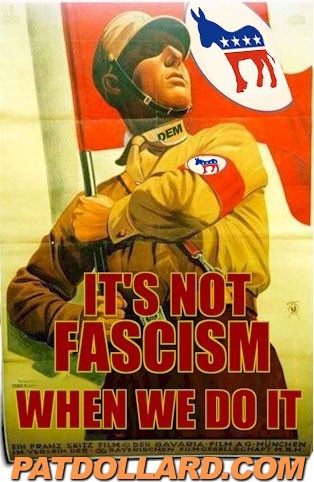
fascist-leftists.jpgThe following address was delivered to the HL Mencken Club's annual meeting in Baltimore, October 22, 2010.
I’m often asked why there is need for an independent or non-aligned Right. Aren’t Sean Hannity, Sarah Palin and Rich Lowry covering all our bases? Why should we create a movement on the right when FOX and those middle-aged people marching around at Tea Parties with costume-store wigs, are doing our job? Why give ammunition to the Democrats by showing that our side is divided? We should be pulling together so we can pummel Nancy Pelosi and Harry Reid in next month’s referendum on Obamacare.

Engaging this question fully would require more than a ten-page exposition. Indeed there is no way to address it without being in this instance a Hegelian. It was the great German philosopher Hegel who argued that the true definitions of concepts and movements are necessarily genetic. Such definitions can not be dealt with properly, unless we go back to the origin of what is being defined. A tree is not what it first appears to be, but the history of that object, from the time it was a seedling. So too there is no way to understand where we are at the present time without noticing where we were before. The present state of any institution or movement reflects a dialectical process teeming with strife. It is only when, according to Hegel, conflicting forces can be brought together in a permanent synthesis that the inherent contradictions are resolved. Before that point is reached, the dialectic must go on, as something integral to what is being formed.

My intention is not to belabor you with Hegelian concepts. It is rather to bring up the unfinished dialectic of the right, for understanding why we do not belong to the authorized “conservative movement” and why that movement has become an echo of the Left. Allow me then to start with this generalization. In the second half of the 20th century, the other side, from our perspective, won almost everywhere in the West. But the Left that prevailed was not the gerontocracy and garrison socialism associated with Soviet rule. This Left had little to do with occupation armies in baggy pants, with inefficiently distributed goods and services, and with an arsenal of atomic missiles. The Left that triumphed was a truly radical one, and it celebrated its victories in Western countries that were straining to practice more egalitarian forms of democracy.

Whether the American civil rights movement and its later implications for feminists, gays, transvestites, and illegals, the ascent of antifascism and tiers-mondialisme in France, Italy, Spain and the Lowlands, or the morbid preoccupation of Germans with their undemocratic past and troubling Sonderweg, the post-Communist Left has had a constant task. It seeks to right the wrongs of the past, and specifically those wrongs that are blamed on White Christian, Indo-European civilization.

It may be superfluous to go over here the characteristics of this Left, since most of you are aware of what is being described. I might also recommend my book The Strange Death of European Marxism, which shows how the present Left differs from both Marxism in theory and Communism in practice. This movement is conventionally referred to as cultural Marxism, and it is now at war with anything that is not sufficiently radical in the social sphere. It adherents blame bourgeois society for such evils as “racism,” “sexism,” “homophobia,” and the horrors of Hitler’s Third Reich. This post-Marxist Left appeals to the guilty conscience of the West for having held down everyone else and for not having fought with enough determination against “fascism.”

Though in Europe this Left defends Communist regimes and typically plays down the crimes of Stalin’s Russia, it is not primarily interested in socialism. It is interested above all in reconstructing society, in integrating Western nation states into global organizations and in opening Western countries to Third World immigration and to popularizing non-Christian or non-Judeo-Christian religions. For those who may have noticed, the EU has become a major instrument for this desired social experiment in Europe.

Where this Left overlaps Christian theology is in its stress on guilt and the need for atonement. But the Christian attitudes have been recycled into a replacement theology, one that develops a cult of revolutionary saints and victims, and one that produces a liturgical calendar centered on politically correct remembrance. In this replacement theology victimizing groups are expected to exhibit unconditional atonement toward those considered historical victims.

This post-Marxist Left began to supplant Communism as the major leftist ideology in the West before the fall of the Soviet Empire. Already in the 1960s, a youth culture rejecting bourgeois standards of conduct and in close alliance with anti-colonial Third World revolutionaries, had taken root in Europe. Energy began to flow in the large Communist parties in France and Italy away from traditional party cadres toward young radicals. This rising elite were concerned with combating discrimination against women and immigrants and the marginalization of gays more than they were with the nationalization of productive forces. Although the emerging order became more apparent after the violent demonstrations of the soixante-huitards in Paris in May 1968 and the organization of Red Brigades in Germany and Italy, signs of a changing guard were present before.

In a perceptive work, Sognando la rivoluzione: La sinstra italiana e le origini dei sessantottanti, the Milanese political historian Danilo Breschi shows how Communist youth organizations and workers’ strikes fell into the hands of what the old cadre called “decadent bourgeois adolescents.” While those who showed up for strikes in the 1960s in Turin, Genoa, Milan, Bologna and other cities in the northern industrial belt were self-proclaimed anti-capitalist radicals, recruited from Catholic Action, Trotskyist factions, and ethnic minorities, for the under-30 demonstrators, the real agenda was more ambitious -- but also more feasible. It was a social-cultural transformation to be engineered from above. Longtime advocates of Marxism, like film-maker P.P. Pasolini and Marx-scholar Lucio Colletti, raged against these usurpers, and they called for ousting them from respectable leftist gatherings. Colletti went so far as to call the police to eject these “decadents” from his office; and Pasolini saw their agitation on the Italian Left with growing apprehension and referred to their statements as a “verbal disease.”

This post-Marxist, anti-bourgeois Left had less sympathy for Communist parties than they do for other socialist groups, and they have gotten on particularly well with the Greens. As the Greens shifted their focus from environmentalism to filling Western countries with the Third World poor and with promoting alternative lifestyles, they became indistinguishable from the post-Marxist Left. By the end of the Cold War, Communism in the West had become obsolete because the cultural Marxist Left had taken its place and because this replacement Left was shaping the left side of the political spectrum in western Europe.

The Communist parties in France, Italy, and Germany continued to function as one of several bastions of Cultural Marxism but not usually as its vital center. A similar process unfolded in the Soviet empire more slowly. Under the noses of Communist officials in East Germany, cultural radicals, and most prominently Stasi informant and now head of the German Party of the Democratic Left, Gregor Gysi, were coming into their own. The DDR’s collapse allowed these radicals to join those in the West who were pushing the same antibourgeois projects, namely, gay and feminist rights, harping on fascist dangers, and turning nation states into branches of a global managerial regime.

One might try to challenge the eventual direction of my argument by insisting this has nothing to do with FOX or Glenn Beck. The conservative movement proclaims itself to be anti-leftist. It mocks the glorification of Islam and upholds Western democratic and feminist ideas; and it defends the sovereignty of the American state against international organizations. A well-paid GOP satirist, Mark Steyn, actually derides Europeans and Canadians nonstop for catering to anti-Western fanatics. I could not therefore be suggesting that our official conservatives represent cultural Marxist or liberal Christian quirks.

In fact I am suggesting precisely this view.

And I would make the further point that what separates our authorized right-center from the post-Marxist Left, in Europe and on the American and Canadian Left, is mostly quantitative. While the Left pushes Political Correctness without buts or ifs, the conservative movement expresses it in a less extreme form. But both groups reflect in varying degrees the same general cultural movement. Like our Left and like the dominant ideology in Western Europe, our 30- and 40-some conservative publicists are immersed in a leftist culture. And the result is something that all of them believe things that adults in the 1950s, including Communist sympathizers, would barely have understood.

It would be no exaggeration to say that Sarah Palin, who is an outspoken advocate of anti-discrimination laws for women, is more radical socially than were French and Italian Communist leaders sixty years ago. While old-fashioned CP members favored a centrally controlled economy and rooted for the Soviet side in the Cold War, unlike Sarah, they were not eager to punish sexists. And they didn’t give a hoot about gays, up until the time Communist parties were under siege from the post-Marxist Left. It is inconceivable that Communists of this era would have followed Jonah Goldberg, Charles Krauthammer, John Podhoretz, the neocon New York Post and the WSJ in affirming government-enforced “gay rights.” Two historians of the post-World War Two Communist movements in France and Italy, Annie Kriegel and Andrea Ragusa, depict a party leadership that belonged, even in spite of itself, to a bourgeois age. They stress the degree to which Communist parties embodied the social attitudes of the pre-Vatican Two Church.

Acceptable critics of the Islamic invasion of Europe like Steyn and Christopher Caldwell are targeting (and this must be noted) a specifically European experiment in multiculturalism. America’s willingness to take in and naturalize just about anybody does not bother these critics; presumably our big tent can hold lots more than we already have. By declaring ourselves to be a “propositional nation” held together by human rights and the belief in universal democratic equality, we are opening our doors to the world, or at least to those in the world who affirm our universalist creed.

I’ve also learned over the last two decades thanks to movement conservative celebrities: that Martin Luther King was acting specifically as a conservative Christian theologian when he spearheaded the civil rights revolution; that gay marriage, properly understood, may be a conservative “family value;” and that we are duty-bound to convert Muslims to our current notion of women’s rights and gay rights. It is precisely these ideas that make us “Western”; and if we truly value the glories of our civilization, which came into existence during some recent phase of late modernity, we should work to spread everywhere our high ideals. Equally relevant, those who have challenged our human rights beliefs, and most outrageously 19th-century counterrevolutionaries were actually “liberals.” Otherwise these mislabeled conservatives would have embraced the American creed of democratic equality!

A striking example of how deeply leftist thought patterns have affected the Right can be discerned in William F. Buckley responses to the attacks in the liberal/neocon press against the “anti-Semites” Joe Sobran and Pat Buchanan. In National Review in December 1991 and March 1992 and in his subsequent In Search of Anti-Semitism, Buckley distinguishes between those who are anti-Semites by conviction and those who are “contextually” anti-Jewish. His key distinction goes back to the Marxist notion of being an “objective reactionary,” meaning someone who challenges the preferences of the Communist Party. Buckley’s argument from context likewise recalls the charge in Europe against those who challenge multiculturalism, as greasing the skids for neo-Nazis.

From this standpoint, it does not matter whether or not one says something that is objectively correct. What counts is not upsetting certain VIPs. In Buckley’s brief, neither the malefactors nor the victims have anything to do with the European Holocaust. The catastrophe is being placed at the doorstep of anyone who allows himself to be intimidated into accepting it. Furthermore, the blame in this instance affects American Christians, who are required to show prescribed sensitivity toward particular American Jews. There are surrogate victims and surrogate victimizers, the first being Buckley’s dinner companions and those journalists who felt outraged, and the second being those who made offending remarks but who had nothing to do with Nazi crimes. Offenders had to be driven off the pages of National Review and out of polite society. They are or were the equivalent of what the Communists used to call “social fascists” and what the European guardians of PC consider “fascistoid.” Such antisocial types are contextually dangerous and therefore must be ostracized lest they do harm.

Note that our two contextual anti-Semites were not abetting violence against Jews, any more than European critics of Muslim immigration or German scholars who question the exclusive blame of their country for every major war are trying to unleash pogroms. They have simply run afoul of certain elite groups, by reopening an inconvenient debate. The conservative movement plays this game by declaring any question it doesn’t want raised forever closed. Such questions now include, among a myriad of other things, objecting in any way to the major congressional legislation of the 1960s.   


What did remain in the conservative movement from the 1950s through the 1980s was anti-Communism. American conservatives throughout this period were in favor of resistance to Communist expansion and generally viewed the Soviets as an evil empire. But the movement’s arguments against the evil empire changed over the decades, from defending Western civilization against a godless foe to standing up for global democratic values against a reactionary homophobic Russian enemy.

And these changing reasons for an anti-Soviet stand tell much about the movement’s leftward drift. This drift became a forced march after the neoconservatives ascended to power, and its consequences help explain why there is an independent Right. We more than others have resisted the post-Marxist Left. We remain at war with the cultural and political forces that reshaped the Left in the 1960s; the conservative movement by contrast has made its peace with those forces -- while emphatically denying what has happened.

The authorized conservative movement has worked to blur this truth. The “victory of the West” in the Cold War is placed into an invented series of conservative triumphs, going from Reagan’s “conservative revolution” in the 1980s through the presidency of Bush II. In the Heritage Foundation’s embellishment, even the Clinton presidency belonged to an “ongoing conservative revolution” that began with Reagan and culminated in Dubya’s democratic crusading. Like Reagan and Bush I and II, Clinton supposedly practiced fiscal conservatism and advanced American concepts of human rights, albeit not as effectively as his Republican rivals. There have also been “good” Europeans who aided this conservative march, including an otherwise run-of-the-mill social leftist Tony Blair, who rallied to the Bush administration. Thatcher and Kohl were two other friends, who supported us during the Cold War. The German chancellor Kohl was obsequious enough, that is, “conservative” enough in the current Pickwickian sense, to make sure that his country’s unification would be a passing stage in his country’s merger with an international body. “Conservative” outside the U.S. means going along with neoconservative policies.


Movement conservatives have also applied the “C” label to things that have nothing to do with any genuine Right. Democratic equality and moderate feminism are two such preferred values that the conservative movement has claimed for itself. Conservative think-tanks have also reinvented self-described leftists as men and women of the Right. The reinventions of King, Joe Lieberman, and Pat Moynihan as “conservative” heroes all exemplify this practice. And such manipulations have their use. The movement can claim to be doing well, even when the Left triumphs.

Conservative publicists have also reconstructed the 1960s, by divorcing its cultural radicalism from its politics. Although nasty hippies, we are told, fouled the air by not brushing their teeth and by smoking pot, the 1960s also produced legislative reforms that would have pleased Edmund Burke. It was the Civil Rights Act that according to Jonah Goldberg bestowed on our country economic freedom -- for the first time. And the Voting Rights Act was another “conservative” landmark, because thereafter the federal government made sure that all citizens would be able to vote. In fact it kept certain parts of the country under perpetual federal surveillance, lest the Black-voting proportion fell below certain expected turnouts. After all, voting for one or both of our two institutionalized parties is a “conservative” practice. And presumably the more people of different pigmentation vote, the more “conservative” we become. And equally important, the Immigration Reform of 1965 filled the U.S. with a “conservative” Catholic electorate, the benefits (or conservatism) of which have still to be ascertained.

In the 1950s and 1960s conservatives held markedly different views. While they held no brief for those who were occupying university buildings or taking drugs, they were at least equally unhappy with that era’s political reforms. Not even in their wildest dreams could most of them have imagined that such far-reaching attempts at remaking our country attitudinally and ethnically would one day be declared conservative. And I would make the obvious point that one doesn’t have to applaud Jim Crow laws (and I for one don’t) in order to recognize that measures that were taken to end “discrimination” have created a permanent governmental straightjacket from which we’re not likely to extricate ourselves. There was nothing “conservative” about the congressional and bureaucratic measures by which that straightjacket was constructed.

But today’s conservative movement is about preserving the 1960s. It has turned that decade’s transformative legislation into the cornerstone of “conservative” politics. And then there was that other questionable triumph for the Right. Supposedly the collapse of the Soviet Empire belonged to a series of conservative victories in the West, associated with Reagan, Thatcher, and their successors. But the end of Soviet hegemony in Eastern Europe did not cause the ideological shift that is sometimes ascribed to it. The Soviets left the stage of History after a more radical Left had taken over; and this occurred preeminently in the West, which had never suffered the fate of a Soviet occupation. This replacement Left reshaped Communist organizations long before the collapse of the Soviet Empire, and in its milder form, it determined the general political culture in Western countries, including that of a transformed American Right.

One cannot complete the story of why there is an independent Right without also looking at the big picture. We are part of that picture, as much as those who now oppose us. But unlike those movement conservatives who do know the truth, we are not given to manipulating the facts. In the West, there were no conservative victors in the Cold War; such victors, if they existed, were the renascent nations of Eastern Europe. And even these deserving victors may be threatened with moral defeat, if the Left that has triumphed in the West, including this country, continues to gain ground.

Paul E. Gottfried

Paul E. Gottfried

Paul Gottfried has spent the last thirty years writing books and generating hostility among authorized media-approved conservatives. His most recent work is his autobiography Encounters; and he is currently preparing a long study of Leo Strauss and his disciples. His works sell better in Rumanian, Spanish,Russian and German translations than they do in the original English, and particularly in the Beltway. Until his retirement two years hence, he will continue to be Raffensperger Professor of Humanities at Elizabethtown College in Elizabethtown, PA.

Por qué somos jovenes conservadores: a modo de manifiesto

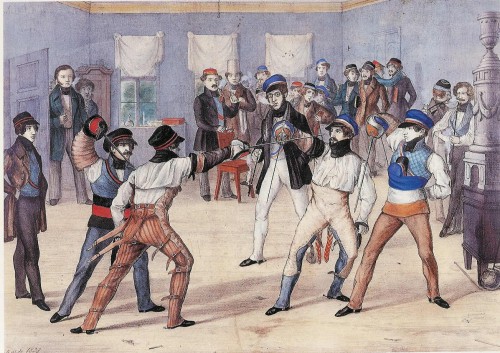
Mensur_G%C3%B6ttingen_1837.jpg


Por qué somos jovenes conservadores: a modo de manifiesto


 por Giovanni B. Krähe

Ex: http://geviert.wordpress.com/

Hay lectores que leen este blog y se entusiasman por sus temas, pero luego se desaniman por culpa de los significados comunes y corrientes que escuchan del término conservador: un derechista, viejo, reaccionario, facho, burgués, liberal, ultramontano, pro-sistema, extremista, pasadista, filo-monárquico, ultra-derecha, anti-moderno, derechista “cavernario”, uno que “no quiere cambiar las cosas”, un defensor del status quo, del mundo de los “adultos”, de la iglesia, uno que le gusta la “mano dura”, un plebiscitario, un nacionalista, decisionista, un schmittiano, uno que se pasó “a lado oscuro de la fuerza” (que tal boludez), un “lobo de arriba”, uno lacayo de los “poderes fácticos”, etc, etc, etc. Dejo a la fantasía del lector realizar todas las posibles combinaciones que se usen en su país.

Estas etiquetas hábilmente utilizadas por anquilosados ideólogos de alcoba, llevan a nuestro lector a la duda, logrando que abandone ese primer entusiasmo que descubrió inicialmente. Nuestro lector termina claudicando espiritualmente frente a las sirenas del progresivismo, lo neo-, lo post-, lo “revolucionario”, lo “anti-sistema”, la “contra-cultura”, “la emancipación”, “el feminismo igualitario”, lo “glocal”, lo anti-. Todo lo que encuentre a la mano y le permita decir No, termina seduciéndolo. El primer prurito gratuito que encuentra es pasar por ateo. Al parecer, todas esas sirenas parecen ser las únicas formas que tienen los más jóvenes para hacerse aceptar por los propios coetáneos, para diferenciarse del grupo o para mendigar reconocimiento (a esto lo llaman con un nombre a efecto “militancia”, “compromiso”). Si colocamos juntos a todos los desencantados por igual, la derrota generacional es tan general y profunda a nivel espiritual que es típico encontrar una masa descarriada de escépticos, ateos, dandys libertarios, anarquista á la Ciorán, Gramscianos 2.0, de “rebeldes anti-sistema”, todos aglomerados al mejor postor. Muy raro es encontrar a un sólo joven de 20 – 25 años que se declare joven-conservador, de nueva derecha y sin pelos en la lengua, sin temor. “Soy de derecha y soy de sociales” parece ser la áurea consigna de aquellos universitarios solitarios que se resisten a vender su alma al prurito colectivo del momento, al novismo, al automatismo del Anti-. Ser un “libertario”, un “anarquista” un “post-moderno”, un “filósofo-pop”, querer pasar ahora, en tiempos de religión civil y catequismo liberal, por ser “menos” comunista, menos “utópico” y más “de neo-izquierda”, querer pasar siendo, en una palabra, un radical chic, se ha convertido en un automatismo, en una cuestión antropológica (Umberto Eco dixit).

La vieja derecha

En el caso de las posturas de vieja derecha, el vicio y las sirenas no son muy diferentes: las sirenas en este caso tienen que ver con la “tradición”, la “Überlieferung”, los caprichos de Sissí y Barbarossa, la capa del torero y la espada. En una palabra, el viejo derechista en LA cultiva el abolengo pseudo-ibérico en privado y el dandismo criollo en público. Peor aún si a todo esto se añade el anhelar un abolengo europeo, pues todo resulta tres veces lejano: de espíritu, de carácter y de distancia. En el peor de los casos, la sirena para el viejo derechista en LA es el entusiasmo por la “mano dura” o la nostalgia pasadista por viejos experimentos autoritarios. Para el viejo conservador en LA, es literalmente imposible ser conservador sin ser católico. Si las jóvenes generaciones tienen todos esos prejuicios mencionados al inicio sobre lo que es ser conservador, se debe en gran parte a esta miopía confesional de la vieja derecha latinoamericana autoritaria y ultramontana. Debido a esta miopía de los padres, las nuevas generaciones – no pudiendo negar su propia fe – tienen que crearse un Dios mundano a medida, un deísmo a medida, una fe a medida, una curiosidad por lo trascendente o lo religioso (o su rechazo, que vincula por igual) a medida de la propia subjetividad e intimidad. Hasta la primera rebeldía de estas generaciones a la segunda socialización (las instituciones, la ciudadanía) es menos que un remedo de las aporías y sinsabores de la primera rebeldía identitaria hacia los padres.  Gracias a esta intolerancia católico-confesional en LA, el joven termina abrazando, primero, el vicio meramente reactivo y gratuito del ateismo, para pasar luego al anti-modelo religioso por antonomasia: el mito político-romántico, (neo-) marxista o el dandismo del mito libertario-anarquista. Entre un polo viciado y el otro, el modesto, el discreto, encuentra el ocasionalismo liberal, el patriotismo humanista. Es suficiente que el jovencito ateo, el neo-izquierdista, pasen apenas los treinta años para descubrirse poco a poco un liberal “moderado”, un socialdemócrata blando, un liberal universalista astuto y movedizo (Vargas Llosa es el bio-pic por antonomasia). A partir de los treinta o se es un apocalíptico o un integrado (Eco). Dos mundos generacionales en LA, padres teístas e hijos deístas, que terminan siendo exactamente dos caras precisas de la misma moneda.

Después de todo, tanto en el caso del radicalismo chic de izquierda como en el dandismo criollo de vieja derecha, se trata de mendigar diferencia, definir estilos, pedir reconocimiento o fugar hacía la ideología culturológica de la otredad. ¿por qué la dureza? porque en sentido estrictamente politológico e político-sociológico, la dicotomía izquierda y derecha ya no explica nada del fenómeno de lo político. Decir “nueva derecha”, es más bien limes identitario, un inicio, una orientación para el lector atento. Frente a todo lo afirmado, nuestro lector se vuelve a preguntar ¿por qué debería ser, entonces, joven conservador? En un post anterior formulé rápidamente algunas ideas sobre el significado del ser conservador, del espíritu conservador, del ser joven conservador. Retomo lo escrito en aquel post. Quien leyó con atención, notó que no se trató de introducir una pauta sobre el pensamiento conservador como doctrina político-filosófica (se hará en su momento). Se trató simplemente de compartir una regla y un símbolo vivo, una bandera en alto, que represente el ser conservador como carácter. A esa regla, a esa bandera en alto, la definiremos con la siguiente imagen:

El espíritu conservador es la pura y simple admiración alrededor de nuestra propia finitud. Es aquella admiración permanente que conserva, en el tiempo, los frutos de aquella experiencia finita. El espíritu conservador cosecha el símbolo anunciado en ese evento y lo conserva en el íntimo misterio de su revés perpetuo, hace de aquel revés finalmente su piedad y su entusiasmo, su regla. El joven conservador sabe que la fuga permanente hacia “lo nuevo”, hacia el “mañana”, no es menos ingenua de esconderse detrás de un símbolo viejo del ayer, de un símbolo muerto. Solo un mito vivo puede pedirle que vuelva la mirada hacia el pasado, nunca un mito muerto. Porque solo el Ahora (Nun) es guía para el conservador, sólo ante el Ahora se postra y solo en el Ahora escrito claudica. Si alguna vez su corazón temblará de temor, dará dos pasos hacia atrás para observar mejor cómo crece el horror o la belleza de aquella verdad que lo espera al borde de sí mismo. Nunca fugará hacia el pasado muerto y sus fantasmas, nunca hacia un mañana innecesario. El tiempo del conservador es tiempo kairológico. El joven conservador es un peregrino del absoluto.

El espíritu conservador es un espíritu íntimamente joven, jungkonservativ y joven Romántico por antonomasia. A diferencia del aburridísimo (muchas veces incompetente) analista ideológico que no distingue entre conceptos básicos como poder y autoridad, el joven conservador es una alma silenciosa, sabe donde se oculta el poder, conoce la miseria del necesitado (no la hace parte de su identidad ideológica). El joven conservador no teme expresar sus sentimientos, su subjetividad, cuando es un símbolo, y no los fantasmas del intelecto práctico o racional, a guiar su Ahora. El pensamiento joven-conservador resulta ser, entonces, finalmente joven, porque es simplemente honorado por todos aquellos retos que la vida misma le exige y exalta. En este sentido, el joven conservador o la joven conservadora no claudican jamás ante la finitud de la existencia, sabiéndola inevitable: ambos conservan lo vivido en ella con suma admiración, haciendo de aquella experiencia un fruto reflexivo e intelectivo, pero también un estandarte silencioso, entre un Ahora y otro, entre un abismo y otro. Harto de pastar abismos, el pensamiento del joven-conservador es un pensamiento necesariamente fuerte, no por esto indelicado, sin virtud, sin gracia.

Descubrir el admirar jungkonservativ

Expresado mejor con las últimas palabras de una joven de 22 años, poetisa de origen francés, una joven conservadora y radical-aristocrática del Siglo XVIII, decapitada por rebelde un día de aquelarre, cerca del cementerio de Montrouge, en París. Antes de morir, escribió exaltada y visionaria lo siguiente. Se recupere el entusiasmo juvenil por la vida, el símbolo, más allá de la imagen, el tono o la metáfora (paráfrasis nuestra a partir de un manuscrito apócrifo):

Ser joven conservadora, radical, extremista, es dejarse atravesar por el viento, dejar que la existencia raye con los márgenes de nuestra propia libertad, que lo más intenso y descabellado nos escoga en yugo para siempre. Es sentir con la piel en flor los límites del ser al punto de toparse cara a cara con nuestros más íntimos límites, con la ruptura fatal que nos desnuda la piel. Mi canto es el canto ebrio, la gloria puntual, la llamada de la esclavitud más dura de lo justo y necesario, el espejo nuestro en el castigo esperado, el yugo que invade todo desde el cariño perpetuo. Que nuestros enemigos nos lancen ya, desde lo más alto y con el más íntimo desprecio, la sucia moneda de cobre con la mirada más rencorosa, siendo nosotros mismos la moneda, la mano, el desprecio, la súplica, el enemigo, la altura, la SED, el perdón. Porque salvaje e indómito es aquel Dios que enciende toda locura clarividente en nuestra llama VIVA, en nuestro AHORA, en nuestro mirar perpetuo, en nuestro admirar sincero; indómito es aquel Dios extraño que enciende exacto y puntual, de carmesí inapagable, nuestros corazón, deshojándose por esto, en su osadía, de rubor humano.

¡Desde la más ínfima ilusión de Libertad en cada ser humano individual, en cada albor que sopla centelleante sobre nosotros, por obra de la conciencia servil al borde de su próxima y amada oscuridad, se restaurará la legítima esclavitud del Espíritu en coro unánime y con la máxima y cruda imposición, porque lo más BELLO, lo más esplendoroso, lo más tierno, lo más sincero, OS perseguirá puntualmente a azotes sobre vuestro miserable JUBÓN de piel, curtido de tiempo…! Antes de recibir vuestro castigo humano, antes de entregar mi cuerpo a la oscuridad más sublime, yo les impogo a ustedes mi PERDÓN. Mi odio no está hecho de la medida de vuestra mundana cobardía. La gracia del acto puro en el perdón se desparramará en su luz sobre todos vuestros sucios cráneos y el yugo restaurará la legítima esclavitud del Espíritu, aquella que posee sin ninguna miserable liberalidad, ninguna, fuera de la oscura y amorosa coacción del Ahora, fuera de la corrupción de los principios en el ayer y el mañana! ¡La cima crecerá más aún por vosotros, seres que saben únicamente crecer horizontalmente, en VIL cópula; cada uno de ustedes seguirá en silencio, desde la volición unánime del Dios que llega del viento y nunca desde el desierto infame, la fe humana, aquella que será arreada por última vez a besos, a pesar de las guerras que vendrán después de mí. Se escuchará cantando finalmente, en procesión, mi nombre oculto!

Si el Dios se mantiene vivo, de pie, con la cabeza en alto, con el pie fijo y certero sobre la cerviz infame del Dios que viene del desierto, conservando intacto su dignidad celeste en el Ahora, es porque respira en el aire la profunda certeza de que un sólo joven conservador, UNO solo, y una sola joven conservadora, UNA sola, dignos de él y sólo de ÉL, existen.

Quien de antemano niega la grandeza y la capacidad del Dios, la inconmensurabilidad de la belleza que él reviste cuando decide arbitrariamente posarse en una sola hebra de mis cabellos al viento, en los labios del extraño o en la mirada misma de quien me recordará mañana, le cava una tumba al propio corazón: le forja un hoyo negro donde vivirá agonizando de Amor ausente. La fe y la voluntad en armonía perfecta mueven montañas inamovibles, derriban murallas y desconocen de todo límite, y por virtud del viento y del rubor, son omnipotentes. Porque aquel que se niega a dar camino a sus miserables pasos, se niega a soñar. Aquel que, en cambio, no aprende a seguir los pasos del Dios, se niega a ser el SUEÑO mismo. Solo el viento en el ahora es el camino, donde no mora Dios alguno.

El cielo está repleto de estrellas y cualquier zarza común cae ardiente llena de Dios hacia la tierra; y sólo aquel que ya ve llegar el fuego lento sobre la propia piel desnuda, se descalza completamente de Amor; los demás se sientan en torno a las cenizas del último corazón en llamas y arrancan contritos, en espera, las moras.

————————

imágenes:

Imagen: John Willian Waterhouse, Psyche Opening the Golden Box.

The Rebel: An Interview with Dominique Venner

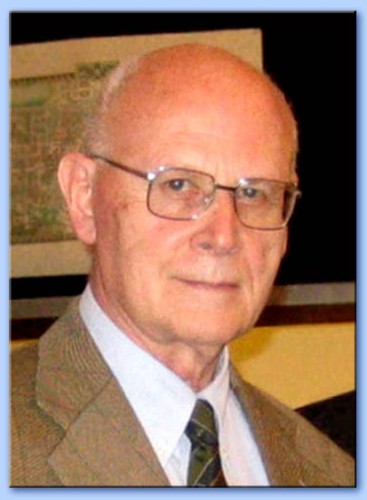
dominique_venner.jpgThe Rebel:
An Interview with Dominique Venner

Ex: http://www.counter-currents.com/

Translated by Michael O’Meara

Czech translation based on this English translation: here

The noted French nationalist and historian speaks to the personal imperatives of white liberation.

Translator’s Note:

It’s a testament to the abysmal state of our culture that hardly one of Dominique Venner’s more than forty books have been translated into English. Venner is more than a gifted historian who has made major contributions to the most important chapters of modern, especially twentieth-century European history. He’s played a key role in both the development of the European New Right and the “Europeanization” of continental nationalism.

It is his “rebel heart” that explains his engagement in these great struggles, as well as his interests in the Russian Revolution, German fascism, French national socialism, the US Civil War, and the two world wars. The universe found in his works is one reminiscent of Ernst von Salomon’s Die Geächteten — one of the Homeric epics of our age.

The following interview is about the rebel. Unlike the racial conservatives dominant in US white nationalist ranks, European nationalism still bears traces of its revolutionary heritage — opposed as it is not merely to the alien, anti-national forces, but to the entire liberal modernist subversion, of which the United States has been the foremost exemplar.

Question: What is a rebel? Is one born a rebel, or just happens to become one? Are there different types of rebels?

Dominique Venner: It’s possible to be intellectually rebellious, an irritant to the herd, without actually being a rebel. Paul Morand [a diplomat and novelist noted for his anti-Semitism and collaborationism under Vichy] is a good example of this. In his youth, he was something of a free spirit blessed by fortune. His novels were favored with success. But there was nothing rebellious or even defiant in this. It was for having chosen the side of the National Revolution between 1940 and 1944, for persisting in his opposition to the postwar regime, and for feeling like an outsider that made him the rebellious figure we have come to know from his “Journals.”

Another, though different example of this type is Ernst Jünger. Despite being the author of an important rebel treatise on the Cold War, Jünger was never actually a rebel. A nationalist in a period of nationalism; an outsider, like much of polite society, during the Third Reich; linked to the July 20 conspirators, though on principle opposed to assassinating Hitler. Basically for ethical reasons. His itinerary on the margins of fashion made him an “anarch,” this figure he invented and of which after 1932 he was the perfect representative. The anarch is not a rebel. He’s a spectator whose perch is high above the mud below.

Just the opposite of Morand and Jünger, the Irish poet Patrick Pearse was an authentic rebel. He might even be described as a born rebel. When a child, he was drawn to Erin’s long history of rebellion. Later, he associated with the Gaelic Revival, which laid the basis of the armed insurrection. A founding member of the first IRA, he was the real leader of the Easter Uprising in Dublin in 1916. This was why he was shot. He died without knowing that his sacrifice would spur the triumph of his cause.

A fourth, again very different example is Alexander Solzhenitsyn. Until his arrest in 1945, he had been a loyal Soviet, having rarely questioned the system into which he was born and having dutifully done his duty during the war as a reserve officer in the Red Army. His arrest and then his subsequent discovery of the Gulag and the horrors that occurred after 1917, provoked a total reversal, forcing him to challenge a system which he once blindly accepted. This is when he became a rebel — not just against Communist, but capitalist society, both of which he saw as destructive of tradition and opposed to superior life forms.

The reasons that made Pearse a rebel were not the same that made Solzhenitsyn a rebel. It was the shock of certain events, followed by a heroic internal struggle, that made the latter a rebel. What they both have in common, what they discovered through different ways, was the utter incompatibility between their being and the world in which they were thrown. This is the first trait of the rebel. The second is the rejection of fatalism.

Q: What is the difference between rebellion, revolt, dissent, and resistance?

DV: Revolt is a spontaneous movement provoked by an injustice, an ignominy, or a scandal. Child of indignation, revolt is rarely sustained. Dissent, like heresy, is a breaking with a community, whether it be a political, social, religious, or intellectual community. Its motives are often circumstantial and don’t necessarily imply struggle. As to resistance, other than the mythic sense it acquired during the war, it signifies one’s opposition, even passive opposition, to a particular force or system, nothing more. To be a rebel is something else.

Q: What, then, is the essence of a rebel?

DV: A rebel revolts against whatever appears to him illegitimate, fraudulent, or sacrilegious. The rebel is his own law. This is what distinguishes him. His second distinguishing trait is his willingness to engage in struggle, even when there is no hope of success. If he fights a power, it is because he rejects its legitimacy, because he appeals to another legitimacy, to that of soul or spirit.

Q: What historical or literary models of the rebel would you offer?

DV: Sophocles’ Antigone comes first to mind. With her, we enter a space of sacred legitimacy. She is a rebel out of loyalty. She defies Creon’s decrees because of her respect for tradition and the divine law (to bury the dead), which Creon violates. It didn’t mater that Creon had his reasons; their price was sacrilege. Antigone saw herself as justified in her rebellion.

It’s difficult to choose among the many other examples. . . . During the War of Secession, the Yankees designated their Confederate adversaries as rebels: “rebs.” This was good propaganda, but it wasn’t true. The American Constitution implicitly recognized the right of member states to secede. Constitutional forms had been much respected in the South. Robert E. Lee never saw himself as a rebel. After his surrender in April 1865, he sought to reconcile North and South. At this moment, though, the true rebels emerged, those who continued the struggle against the Northern army of occupation and its collaborators.

Certain of these rebels succumbed to banditry, like Jesse James. Others transmitted to their children a tradition that has had a great literary posterity. In The Unvanquished, one of William Faulkner’s most beautiful novels, there is, for example a fascinating portrait of a young Confederate sympathizer, Drusilla, who never doubted the justice of the South’s cause or the illegitimacy of the victors.

Q: How can one be a rebel today?

DV: How can one not! To exist is to defy all that threatens you. To be a rebel is not to accumulate a library of subversive books or to dream of fantastic conspiracies or of taking to the hills. It is to make yourself your own law. To find in yourself what counts. To make sure that you’re never “cured” of your youth. To prefer to put everyone up against the wall rather than to remain supine. To pillage whatever can be converted to your law, without concern for appearance.

By contrast, I would never dream of questioning the futility of seemingly lost struggles. Think of Patrick Pearse. I’ve also spoken of Solzhenitsyn, who personifies the magic sword of which Jünger speaks, “the magic sword that makes tyrants tremble.” In this Solzhenitsyn is unique and inimitable. But he owed this power to someone who was less great than himself. That should give us cause to reflect. In The Gulag Archipelago, he tells the story of his “revelation.”

In 1945, he was in a cell at Boutyrki Prison in Moscow, along with a dozen other prisoners, whose faces were emaciated and whose bodies broken. One of the prisoners, though, was different. He was an old White Guard colonel, Constantin Iassevitch. He had been imprisoned for his role in the Civil War. Solzhenitsyn says the colonel never spoke of his past, but in every facet of his being it was obvious that the struggle had never ended for him. Despite the chaos that reigned in the spirits of the other prisoners, he retained a clear, decisive view of the world around him. This disposition gave his body a presence, a flexibility, an energy that defied its years. He washed himself in freezing cold water each morning, while the other prisoners grew foul in their filth and lament.

A year later, after being transferred to another Moscow prison, Solzhenitsyn learned that the colonel had been executed.

“He had seen through the prison walls with eyes that remained perpetually young. . . . This indomitable loyalty to the cause he had fought had given him a very uncommon power.”

In thinking of this episode, I tell myself that we can never be another Solzhenitsyn, but it’s within the reach of each of us to emulate the old White colonel.

French Original: “Aujourd’hui, comment ne pas être rebelle?