

mercredi, 07 mars 2012
Turkije dreigt met annexatie Noord-Cyprus
Turkije dreigt met annexatie Noord-Cyprus
In augustus 1960 werd Cyprus onafhankelijk van Groot-Brittannië nadat de Cypriotische politici hadden beloofd af te zien van enosis (eenheid met Griekenland) en taksim (verdeling van Cyprus tussen Grieken en Turken). Na politieke spanningen viel Turkije Cyprus binnen op 20 juli 1974 en dwong de taksim op. De Grieken in het noorden van Cyprus werden verdreven en het noorden werd de Turkse Republiek van Noord-Cyprus. Nu dreigt Turkije met de volledige annexatie van het gebied, dat wettelijk gezien een deel van de EU is.
Onderhandelingen over hereniging van de twee Cyprussen slepen al langer aan. Men moet echter rekening houden met het feit dat de Europese Unie Cyprus als geheel ziet als een volwaardig lid van de EU en de Noord-Cypriotische regering niet erkent. Griekenland zit nu echter in diepe problemen en de verkiezingen van 29 april gaan daar niets aan verbeteren. Als die verkiezingen nog wel doorgaan aangezien de kans groot is dat Griekenland op 20 of 23 maart economisch volledig instort. Turks premier Erdogan heeft dit ook gezien en ziet de kans schoon.
Op 4 maart 2012 zei Turks minister voor Europese Zaken Egemen Bagns tegen de Turks Cypriotische krant Kibris dat indien de onderhandelingen voor hereniging niet een pak positiever worden (lees: gunstiger voor de Turken) Noord-Cyprus wel eens zou kunnen teruggebracht worden tot een Turkse provincie doordat Turkije zou overgaan tot annexatie. Dat laatste woord werd letterlijk gebruikt door de Turkse minister. De logische verdere vraag is dan ook de houding die het het Turkse leger aanneemt wanneer het opnieuw landt op Cyprus, hun deel overneemt en vervolgens ziet dat de andere kant momenteel in chaos verkeert. Het zou niet de eerste keer zijn dat men in naam van stabiliteit, ordebewaring, etc… dan ineens zou kiezen voor de volledige annexatie van Cyprus.
Dreigen met het opschorten van onderhandelingen over Turks lidmaatschap door de EU gaan niet veel uithalen. Op 27 juli zou Cyprus immers het roterende voorzitterschap van de EU overnemen in welk geval Turkije dreigt met het afbreken van enige dialoog met de EU. De Italiaanse minister van Buitenlandse Zaken maakte alvast een mooie buiging voor Turkije door bij een ontmoeting met Turks minister van Buitenlandse Zaken, Ahmet Davutoglu, te stellen dat er snel concrete vooruitgang moet komen in de herenigingsgesprekken. Ironisch genoeg is de enige kritiek op het Turkse dreigement te horen vanuit Turks Noord-Cypriotische hoek. De Republikeinse Turkse Partij, de oppositie in Noord-Cyprus, verwierp het Turkse dreigement als complete waanzin en als volledig onaanvaardbaar.
Ondertussen blijft het stil in de media hierover. Het was anders voorpaginanieuws in Cyprus en Griekenland.
00:05 Publié dans Actualité, Affaires européennes | Lien permanent | Commentaires (0) | Tags : politique internationale, turquie, chypre, méditerranée, géopolitique, actualité, europe, affaires européennes |  |
|  del.icio.us |
  |
|  Digg |
  Facebook
Sur l'identité wallonne
Intervention de Jean-Luc Gascard à la journée identitaire du Château Coloma (3 mars 2012)
Sur l'identité wallonne
Quel est la place de la culture et de la langue wallonne au sein des peuples européens ?
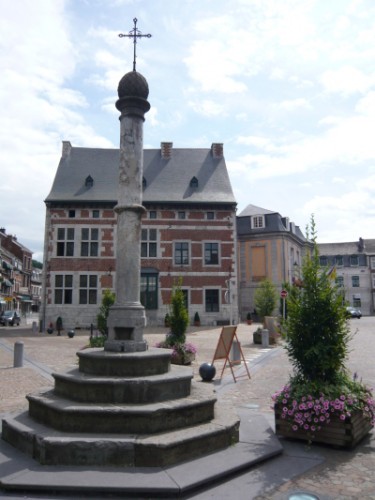 Le wallon a toute sa place dans l’histoire des peuples d’Europe. Wallon vient de Wahl, un vieux mot germanique utilisé par les Germains pour désigner les populations celtophones et romanes. La langue wallonne est très ancienne et comme le picard, le champenois ou encore le normand, elle est une langue d’Oïl qui fait partie du groupe des langues gallo-romanes. Bon nombre des évolutions que l’on considère comme typique du wallon sont apparues entre le 8° et le 12° siècle et vers 1200, la langue wallonne était nettement individualisée. Le wallon n’est donc pas un français abâtardi ou incorrect, c’est une langue en soi qui n’a simplement pas aussi bien réussi que le patois français et nombre des belgicismes découlent directement du wallon. Je rappelle que les peuples wallons n’ont jamais fait partie de la France, sauf quand ils ont été occupés, mais faisaient partie du SERG et particulièrement la Principauté de Liège. La place des wallons de l’Est étaient certainement d’être à l’époque un pont entre les mondes germaniques et romans. Il paraît qu’il y aurait 15 à 20 % des mots wallons qui seraient d’origine germanique et c’est sûrement dans le dialecte du wallon oriental, celui de Liège et d’Ardenne, que cela se retrouve le plus et qui rend notre dialecte si particulier. Je vais me permettre de vous lire comme exemple quelques courtes phrases :
Dji’m rapinse qui s’a lèyî prinde a s’badjawe = je me rappelle qu’il s’est laissé prendre à son bagout
Fareût veûy kimint qu’i s’sètche foû di spèheûr = il faudrait voir comment il va se débrouiller
Moussî ainsi, i ravisse on spâwta = habillé ainsi, il ressemble à un épouvantail (les Blancs Moussî de Stavelot sont donc simplement ceux qui sont habillés de blanc, pour la Laetare, le carnaval local, qui aura lieu dans 15 jours !)
Dja’n hête a m’deût = j’ai une écharde à mon doigt
En entendant cela, vous comprenez bien… que vous n’y comprenez rien du tout(pas plus d’ailleurs que la majorité des jeunes liégeois et ardennais actuels), ce qui prouve bien tout simplement que le wallon n’est pas du français. J’ai encore vu quand j’étais gamin des anciens à qui il fallait traduire en wallon, parce qu’ils ne comprenaient pas le français. Heureusement, même s’il est en nette perte de vitesse, le wallon est encore parlé et compris par une petite minorité de wallons de souche (la preuve !). Par contre, le wallon est forcément ignoré de la masse exotique… et est donc une langue identitaire par excellence. Et, heureusement, on trouve encore des jeunes qui s’impliquent dans le théâtre dialectal et qui sont parfaitement conscients de l’aspect identitaire de leur dialecte.
En ce qui concerne la culture (les industries, mœurs, habitudes culinaires, folklore, architecture,…), on perd souvent de vue, à force de « vivre dedans », qu’elle existe bel et bien. Elle n’a rien à envier à ses voisines. Si tout le monde connaît l’importance de la peinture flamande et la richesse des villes de Flandre au MA, beaucoup moins nombreux sont ceux qui connaissent l’importance de l’art mosan à l’époque ottonienne, son orfèvrerie, ses églises imposantes, son « école liégeoise » et encore moins savent que les marchands de la vallée mosane allaient vendre leurs produits dans toute la Germanie, jusqu’à Vienne et Prague et en Italie sur les marchés de Ligurie. Et je suppose que je ne dois pas vous parler de l’importance des industries minières et métallurgiques chez nous, sans parler de l’industrie du verre et de la laine, qui ont fait de la Wallonie au 19° siècle une des économies les plus prospères du monde.
Donc, quand j’entends certains en Flandre qui essaient de nous faire passer pour des barakî à moitié inculte, des nawe (fainéant) et des accros depuis 1830 aux subsides de la vache à lait flamande, mon sang wallon bouillonne d’indignation. On n’est peut-être plus ce que l’on a été, mais nous ne sommes pas les ratés pour lesquels on veut nous faire passer. Nous avons toujours notre place parmi les peuples d’Europe.
Si le monde politique le désirait réellement, le wallon serait un excellent facteur de cohésion identitaire, tant au niveau local que régional. Mais, pour les raisons idéologiques que nous ne connaissons que trop bien, les autorités n’apportent aucun soutien à la langue wallonne, ou si peu. Sa survivance au niveau populaire démontre donc une réelle volonté de certains Wallons de rester eux-mêmes, bien au-delà des chimères idéologiques universalistes et égalitaristes.
Un pouvoir politique identitaire, soucieux de valoriser toutes les identités enracinées d’Europe, trouverait dans la défense du wallon et de la culture wallonne un important objectif politique (cohésion identitaire ethnique). On peut toujours rêver !
Dans le cas ou la Wallonie obtiendrait son autonomie, en cas d'éclatement de la Belgique, quel en serait le bénéfice pour la culture wallonne ?
En l’état des choses, le bénéfice serait minime, parce que, malheureusement, il n’y a plus concordance entre la Wallonie et les wallons.
Je m’explique : comme je vous l’ai dit tout à l’heure, le wallon est parlé par ses populations depuis bien longtemps. Mais depuis bien longtemps, les élites wallonnes ont adopté le français, et cela avant bien des contrées de l’actuelle France. Et comme en Flandre, ces élites ont tenté d’imposer la francisation généralisée à notre population. Le terme fransquillon servait aux wallons du peuple, déjà pendant l’occupation française, pour décrire ces pédants qui ne jurait que par le français. Mais alors qu’en Flandre, le mouvement flamand se battait depuis 1840 pour l’usage de la langue flamande et sa culture, le mouvement dit wallon lui n’entendait défendre que l’usage du français.
"Le mouvement wallon naissant s'inscrit donc dans une perspective belge telle qu'ont été défini les contours et surtout l'identité linguistique de cet État en 1830. Il considère l'acquisition de la langue française comme une forme d'adhésion à la Belgique et aux grands principes de liberté dans la Constitution
On peut donc bien dire que l’unitarisme belge s’est fait d’abord et avant tout au détriment de la langue, et donc de la culture, wallonne puisque le flamand, lui, a survécu.
Dans ma propre famille, tous les gens de la génération de mes grands-parents en Ardenne parlaient wallon, mais on a dénigré à l’école le wallon auprès de la génération de ma mère. Ainsi, il y a quelques années, alors que je parlais avec une de mes tantes de l’intérêt de continuer à parler notre langue, elle me répondit : « arrête avou soula, c’est sale, c’è s’t one langue po les biesses (arrête avec ça, c’est sale, c’est une langue pour les bêtes[càd les cons, les demeurés mais les animaux aussi]) ! ». C’est pourtant la langue de ses parents, mes grands-parents !
Etonnez-vous après cela que le wallon tend à disparaître parmi tous mes cousins et cousines et tous les gens de ma génération. Le pire, c’est qu’avec l’abandon de la langue wallonne se perd aussi le lien avec notre histoire et notre culture wallonne. Et je ne vous parle même pas des générations qui suivent. En fait, ils sont devenus des Francophones, c’est-à-dire des gens indifférenciés, sans véritables racines. Et quand on n’a pas de racines, on est voué à flotter aux vents de toutes les modes et opportunismes. Par exemple quand un grand défenseur des francophones comme Maingain est disposé à faire apprendre aux enfants des écoles de sa commune l’arabe, pour mieux accepter leur présence. Qui s’intègre à qui, je vous le demande ?
C’est ce hiatus entre Wallonie et wallons qui fait notre perte. On appelle encore trop souvent wallons les gens qui vivent en Wallonie, alors qu’ils ne sont souvent plus que des Francophones. C’est si vrai que, récemment, un homme politique a appelé à créer une « patrie francophone ». Une patrie francophone ! Fâ s’ti ko arradjî (intraduisible = +ou- c’est pas croyable), qu’es que c’est coula por une arrêdje ? éco one saqwê qu’a tchoukî foû dol tiesse d’one biesse libéral (qu’est-ce que c’est que cela pour une affaire ? Encore une chose qui a poussé hors de la tête d’un bête libéral)! Evidemment, cela est fort utile pour noyer les populations autochtones, nous les wallons, dans le magma des allogènes de toutes sortes qui viennent nous envahir et aussi pour garder un lien avec Bruxelles. Ou pire, nous intégrer à la France. Ca, jamais ! Je préfère encore demander l’asile politique en Flandre. Qui sait, ils pourraient peut-être nous accorder…des facilités ?
Mais il ne faut bien sûr pas perdre espoir. Il y aurait comme un frémissement d’intérêt. Il n’est que de voir l’intérêt porté à des émissions comme Ma Terre ou celle sur les Wallons du Wisconsin. Ou même le théâtre wallon à la télé. Et aussi l’existence de nombreux groupes de musique traditionnelle.
Et que l’on ne vienne pas me dire que c’est trop difficile de garder ou même d’apprendre notre langue autochtone. Elle n’est sûrement pas plus difficile pour nous que le chinois, le russe ou l’arabe. Ou même le flamand. Le jour où j’ai commencé à parler wallon à l’école, mes collègues ont rigolé malade, se demandant d’un air ahuri ce que ça pouvait être et ce qui pouvait bien encore passer par la tête de ce grand original. Maintenant ils n’y font même plus attention et comprennent souvent ce que je dis. Qui sait, encore un peu et je pourrais vous convertir au Liégeois ? Ce n’est qu’une question de volonté. Les Luxembourgeois, les Gallois préservent bien leur langue, pourquoi pas nous ?
 Pour résumer, pour retirer un bénéfice quelconque d’une autonomie, ce qu’il nous faut, c’est faire la différence entre Wallons et Francophones. Le wallon est celui qui a ses racines, c’est-à-dire ses ancêtres, en Wallonie et aussi qui parle, qui vit wallon. Et par-dessus tout, ce qu’il nous faut, c’est garder notre fierté. J’entendais à la fin d’un concert d’un groupe acadien ce cri du coeur : soyez toujours fiers de qui vous êtes, et les dieux savent si les Acadiens ont failli perdre leur identité et souffrent encore pour la garder. C’est la fierté qui les sauvent et qui nous sauvera. Tout le reste, programmes, subsides, etc… en dépend.
Je vous dis donc pour terminer : je suis wallon, pas francophone, et dji su fir de mè p’tite patreye (je suis toujours fier de ma petite patrie) « amon nos’aut »(entre nous, entre gens de chez nous).
00:05 Publié dans Affaires européennes, Entretiens, Terres d'Europe, Terroirs et racines | Lien permanent | Commentaires (2) | Tags : terres d'europe, terroitrs, racines, wallonie, belgicana, europe, affaires européennes, patries charnelles, entretiens | | del.icio.us | | Digg | Facebook
The Pioneers & Frontiersmen of Prehistoric Europe
The Pioneers & Frontiersmen of Prehistoric Europe
By Andrew Hamilton
Ex: http://www.counter-currents.com/
 [
[
Avebury Henge, Wiltshire, southwest England
When reading accounts of European prehistory I am often struck by a sense of familiarity—time and again glimmers of the white conquest of North America are awakened.
Continental Europe [2] occupies roughly 3.86 million square miles (10 million square kilometers)—roughly the size of the United States. The retreat of the glaciers after the last Ice Age (10,000 BC) caused the seas to rise as old coastlines flooded permanently for miles inland, former tundra retreated northward, and Europe became covered with trees.
From c. 10,000 BC to 5000 BC, northern Europe was dominated by Mesolithic (post-Ice Age, pre-agricultural) hunter-gatherers (foragers). The Mesolithic (Middle Stone Age) fell between the Paleolithic (Old Stone Age) and the Neolithic (New Stone Age).
By 5500-5000 BC, the earliest Neolithic farmers were expanding through central Europe. It seems likely that these “pioneers” and “frontiersmen” (for such they must essentially have been) displayed character traits and lifestyles similar in many ways to the pioneers and frontiersmen of early North America.
These first farmers cannot automatically be equated with Indo-European invaders, however.
Curiously, prehistorians typically omit any mention of the Indo-European framework from their publications. In reading standard academic accounts it is difficult to understand how the Indo-European narrative [3] fits into European prehistory chronologically, racially, demographically, or linguistically.
For example, according to Microsoft Encarta Encyclopedia, Proto-Indo-European (PIE) was still a unified language around 3000 BC, but by 2000 BC Greek, Hittite, and Sanskrit had each become distinct. (Reconstructed PIE shows that its speakers were agriculturalists—i.e., not hunter-gatherers.)
The problem with such a “recent” dating for PIE is that by 3000 BC Neolithic farmers had been expanding across Europe for at least two to three thousand years, if not more. According to historical demographer Colin McEvedy, quoted below, 3000 BC actually marks the completion of the colonization of Europe by agriculturalists—the very time when PIE speakers were presumably still united in or near their ancestral homeland on the steppes north of the Black Sea.
“Frontier” characteristics of the Early Neolithic in Europe include a probable contest for dominance between indigenous hunter-gatherers and incoming farmers, grievously lop-sided population densities, deforestation, agricultural expansion, and profound cultural transformation accompanying the transition from a hunter-gatherer to an agricultural lifestyle.
The Neolithic Frontier
Around 5000 BC, Germany and the Low Countries were colonized by Early Neolithic farmers belonging to the Linear Pottery Culture [4] (abbr. LBK, Linearbandkeramik)—the first farmers to colonize central and northwestern Europe.
 [5]
[5]
The early Neolithic in Europe. Colors indicate time scales for the spread of farming. "Earliest LBK" (Linear pottery culture) and "Later LBK/AVK" (LBK/Alföld linear pottery culture) represent the first farmers in central Europe.
LBK culture may have been spread by pioneers immigrating along rivers, practicing slash-and-burn agriculture. Their lifestyle was characterized by farming, herding, polished stone axes, timber longhouses, and pottery. The lands into which they moved are believed to have been uninhabited or too sparsely populated by hunter-gatherers to hinder the newcomers’ long-term progress.
As with their adventurous prehistoric and ancient seafaring counterparts, or North American successors, the arrival of settlers (or traders) was likely heralded by initial penetration into a trackless wilderness of river valleys, plains, mountains, and deep forests by dauntless men in quest of adventure and the unknown: explorers, hunters, trappers (is it likely they did not trap?), and scouts interacting with native forager bands and tribes as guests, unofficial diplomats, traders, and foes, sometimes killing and being killed.
After colonizing an area, a new farming population was sedentary up to the capacity of the land, and then the excess population moved to less inhabited areas.
The newcomers not only cultivated grain and kept livestock, but like their American successors supplemented their diet by hunting and fishing for waterfowl, fish, turtles, small mammals, deer, and other wild resources, as revealed in archaeological excavations of refuse pits.
As might be expected, Mesolithic hunter-gatherer sites lacked the large, deep pits from which clay was extracted by settlers for construction and other purposes. Instead, there were small pits, postholes, and scattered, low-density distributions of refuse containing numerous shards of broken pottery, unlike the dense, concentrated Neolithic-style rubbish deposits. Gradually, the Mesolithic way of life became marginalized and disappeared.
In northeastern Belgium, fortified frontier villages marked early Neolithic culture. Individual LBK villages were united together against the foragers beyond. Archaeological remains show that one such Neolithic village was fortified after having first been burnt.
Settlers evidently received a hostile reception from the indigenous, low-density Mesolithic hunter-gatherer populations on the frontier.
In War Before Civilization [6] (1996), American archaeologist Lawrence Keeley notes that prehistorians tend to assume that all foreign goods found at archaeological sites are present because of trade.
When exotic goods are found at a site, they are almost invariably interpreted as being evidence of prehistoric exchange. That such items might be the spoils of war seldom occurs to prehistorians, who immediately proceed to plot “trade routes” and try to reconstruct the mechanisms of exchange. . . . [A]rchaeologists should at least consider the possibility that they represent plunder. (p. 126)
The author acknowledges the problem of proof: “Given the aversion of modern archaeology to the idea of migration and colonization (let alone conquest), the problem of documenting such processes in prehistory is difficult.” This is because defeat or forced migration is typically manifested in the archaeological record only by the peaceful existence of winners on territory formerly occupied by the losers.
Keeley cites the example of the defeat of the Celtic Boii in Bohemia by the Germanic Marcomanni, recorded by Roman historians: “Archaeologically, this [known] event is evidenced only by the expansion of Germanic settlements and cemeteries into regions previously inhabited by Celts” (p. 111). In the absence of Roman written records, this conquest would have remained archaeologically “invisible.”
Deforestation
Mixed and broadleaf forests once dominated all of central Europe, including the British Isles and part of the Russian plains. But, as with the frontier US, they were felled to create plots to grow produce, obtain material for the construction of homes and other structures, and for use as heat and fuel. Only a small portion of this area still has forest cover.
Michael Williams, an English geographer, has outlined the process of deforestation in Neolithic Europe. (“Dark Ages and Dark Areas: Global Deforestation in the Deep Past,” [7] Journal of Historical Geography, 26 [2000]: 28–46)
The older paradigm, he says, viewed indigenous hunter-gatherer Mesolithic cultures from c. 8000–5000 BC “as the primitive fagend of the Palaeolithic.” The Mesolithic populations were engulfed by successive waves of Neolithic proto-agriculturalists sweeping across central Europe from the Near East in a great colonizing wave. The Neolithic colonizers were “primitive” farmers practicing slash-and-burn methods.
In line with this view, Williams quotes English archaeologist Grahame Clark’s assertion in Prehistoric Europe (1952) that the earliest farmers did not initiate
systematic, permanent clearance and the formation of settled fields. Their approach was tentative and their agriculture extensive. Patches of forest would have been cleared, sown, cropped, and after a season or two allowed to revert to the wild, while the farmers took in a new tract.
But Williams, relying upon more recent research, maintains that the truth “is much more complex, and has profound implications for our understanding of forest clearing.” Large sections of forest were cleared with flint and stone axes, demonstrated by modern experiments to have been capable of felling trees. Burning and animal grazing thinned and ultimately eliminated additional woodland.
Neolithic settlement and agriculture were also more stable and permanent than previously thought:
The significance of the timbered long houses found throughout Europe has been ignored yet archaeological excavations during the 1970s showed that some had been occupied for many hundreds of years which makes the universal slash-and-burn hypothesis unlikely. . . . Trees were chopped down by flint and polished stone axes and the flood plains were used for intensive garden cultivation and meadows. Neolithic settlements would have been entirely recognizable to the modern European farming eye.
Williams cites a simulation (model) from Gregg, Foragers and Farmers: Population Interaction and Agricultural Expansion in Prehistoric Europe (1988), conjecturing the type of farming and nutritional strategies necessary to maintain a hypothetical six-household, 30-person village in central Europe. It would have required a little over 6 km2 of woodland to survive—”a staggering 20 hectares [49.4 acres] per person.”
Continuity or Replacement?
The ancestry of contemporary white Europeans is debated by geneticists, archaeologists, and anthropologists. A crucial question is the extent to which Europeans are descended from the first European farmers in the Neolithic Age 7500 years ago, or from Paleolithic hunter-gatherers who were present in Europe since 40,000 years ago. In other words, were the early farmers newcomers from afar, or descendants of indigenous hunter-gatherers who transitioned to farming?
Intuitively, it would seem that the demographically vibrant newcomers must have had significantly higher fertility rates than Mesolithic hunter-gatherers, and therefore contributed more to the modern European gene pool than forager populations.
To provide a rough indication of relative Mesolithic (hunter-gatherer) and Neolithic (early farmer) population densities, I quote Colin McEvedy’s and Richard Jones’s historical estimates for Europe as a whole:
The first Europeans, the hunters of the Old Stone Age, never amounted to more than 100,000 at the best of times; at the worst—specifically during the cold phases of the last Ice Age—there were considerably fewer than that. The ending of the Ice Age offered the chance of escape from this depressing pattern: during the better weather of the following mesolithic period (10th–8th millennia BC) numbers rose past the previous best, finally inching up to the quarter million mark [250,000 people]. Then came the great leap forward, the neolithic revolution of the 5th milliennium. This carried the total over [one] million. It also created the first important distinction between styles of settlement, for, whereas the food-gatherers of the Old Stone Age had rarely achieved densities as high as 0.1 km2, the New Stone Age food-producers ordinarily lived at densities of 1 per km2. By the time these agriculturalists had completed their colonization of southern and western Europe—say by 3000 BC—the continent’s population was more than 2 million. (Atlas of World Population History, Penguin, 1978, p. 19)
One can immediately see a parallel here with North America: in terms of population density and mode of existence, the Neolithic farmers of Europe look a lot like the white pioneers in America, and the old Mesolithic hunter-gatherers like the Indians—albeit with human differences that were presumably more ethnic than racial in character.
According to Colin McEvedy, “The density of a Neolithic people being greater than that of a mesolithic one by a factor of at least ten, the ethnic contribution of the aborigines—even if they were absorbed rather than exterminated or expelled—must have been insignificant” (The Penguin Atlas of Ancient History, 1967, 9).
English archaeologist Sir Paul Mellars offers a similar hypothesis for the previous displacement of Neanderthals in Europe by anatomically modern humans (a.m.h.—they are no longer called Cro-Magnons):
[A] simple imbalance in relative birth-over-death ratios between the two populations could quite easily have led to a process of effective replacement of one population by the other, within a relatively short space of time—perhaps no more than a thousand years or so. If we envisage Neanderthal populations who were fairly thinly distributed over most areas of Europe, in relatively small, highly mobile social units, one could easily visualize a scenario of eventual population replacement without any notion of mass genocide, or even direct conflict between the two populations. (“The Upper Paleolithic Revolution” in Barry Cunliffe, ed., The Oxford Illustrated Prehistory of Europe, Oxford University Press, 1994, pp. 42–78 at 57)
It is easy to imagine a comparable dynamic at work at the time of the Mesolithic-Neolithic transition. Indeed, the same process is decimating the white population today [8].
While the notion of “mass genocide” is a red herring (in the Neanderthal context it is championed by anti-European Jewish popularizer Jared Diamond), the familiar trope of no direct conflict at all has been persuasively refuted by archaeologist Lawrence Keeley.
A 2009 study comparing mitochondrial DNA (mtDNA) sequences (a useful but restricted form of genetic analysis) from late European hunter-gatherer skeletons with those from early farmers and from modern Europeans found that
Most (82%) of the ancient hunter-gatherers share mtDNA types that are relatively rare in central Europeans today. Together, these analyses provide persuasive evidence that the first farmers were not the descendants of local hunter-gatherers but immigrated into central Europe at the onset of the Neolithic. (Bramanti, et. al, “Genetic Discontinuity Between Local Hunter-Gatherers and Central Europe’s First Farmers,” [9] Science [October 2, 2009]: 137–140)
The authors add, “We find large genetic differences between all three groups that cannot be explained by population continuity alone.”
Against this view it is maintained by others that hunter-gatherers may have adopted agricultural techniques and, transitioning to primitive farming, expanded the indigenous gene pool, thereby preserving Paleolithic continuity:
At the more general level, it is possible to claim there has been a major shift in opinion on the ancestry of Europeans, driven largely by the combined forces of archaeology and genetics. Near Eastern farmers played their part, but the majority of European [mtDNA and Y-chromosome] genetic lineages have their roots in the European Paleolithic. (Martin Richards, “The Neolithic Invasion of Europe,” [10] Annual Review of Anthropology, October 2003 32:135–162 at 157)
For now, the evidence for either population replacement or Paleolithic continuity remains equivocal. Nevertheless, published accounts suggest key ways in which the spread of farming through Europe along an advancing frontier during the Neolithic demographic transition resembled the white settlement of North America millennia later (1500s–1800s).
Quite possibly the enterprising men and women of the early Neolithic were more similar to our own storied frontiersmen and pioneers than is generally recognized.
Article printed from Counter-Currents Publishing: http://www.counter-currents.com
URL to article: http://www.counter-currents.com/2012/03/the-pioneers-and-frontiersmen-of-prehistoric-europe/
00:05 Publié dans archéologie | Lien permanent | Commentaires (0) | Tags : archéologie, proto-histoire, histoire, europe préhistorique, néolithique, préhistoire | | del.icio.us | | Digg | Facebook