


samedi, 26 octobre 2013
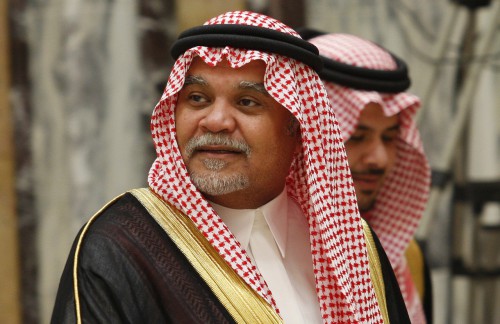
L’Arabie et Bandar, faiseurs de désordre aux abois
L’Arabie et Bandar, faiseurs de désordre aux abois
Ex: http://www.dedefensa.org
La relation très privilégiée entre les USA et l’Arabie se trouve dans un grand état d’agitation. Plusieurs faits, commentaires, affirmations, “révélations” de ces derniers jours en témoignent sans qu’on puisse dégager une ligne claire de commentaire, – sinon celui du désordre... Cette situation a notamment le potentiel d’une crise affectant l’une des plus vieilles et des plus importantes relations extérieures informelles des USA, portant à la fois sur la stabilité de la sécurité d’une zone-clef, sur la puissance d’intérêts financiers innombrables et très diversifiés, sur des entreprises de déstabilisation clandestine sans nombre.
Cette relation a été établie informellement en février 1945, à bord du USS Augusta transportant un Roosevelt agonisant, retour de la conférence de Yalta. Le croiseur de l’US Navy avait jeté l’ancre près d’Alexandrie, en Égypte, et le président US avait reçu le roi Ibn Saoud d’Arabie. Les USA s’étaient engagés à assurer la sécurité du royaume contre des garanties de production et d’approvisionnement en pétrole. Ce fut le premier acte fondamental de la politique d’expansion des USA de l’après-guerre, exercée d’une façon gigantesque hors de sa zone d’influence traditionnelle s’avant 1941, dans les deux Amériques et sur quelques points stratégiques comme les Philippines. La relation s’est largement diversifiée avec de puissants intérêts financiers croisés, dans le secteur privé US (pétrole, armement, etc.) avec le soutien des pouvoirs politiques et la participation d’innombrables princes saoudiens et de divers dirigeants politiques US (dont la famille Bush au sein de conglomérats type-Carlysle) ; avec, à partir des années 1980 (opération de soutien à la rébellion afghane, fondatrice des nébuleuse al Qaïda, taliban, etc.), de puissants intérêts opérationnels communs dans de très nombreuses opérations secrètes de déstabilisation et de terrorisme, avec la CIA comme un des principaux interlocuteurs de l’Arabie et, à partir de cette époque le rôle prééminent de Prince Bandar comme intermédiaire-animateur, à son poste d’ambassadeur saoudien aux USA, puis, très récemment, de chef des services de sécurité saoudiens.
Depuis plusieurs jours sinon quelques semaines, plusieurs actes et événements divers ont marqué l’intense inquiétude et la considérable préoccupation des Saoudiens à l’encontre des USA. Deux événements de la part des USA motivent cette attitude : l’attaque avortée des USA contre la Syrie, au profit d’un accord avec la Russie et du lancement de la neutralisation des armements chimiques syriens ; l’amélioration sensible des relations des USA (du groupe P5+1) avec l’Iran, avec des perspectives d’une possibilité d’une résolution de la crise du nucléaire iranien. Parmi ces événements récents, on notera ceux-ci :
• Il y a eu d’abord des bruits d’une “alliance” anti-iranienne entre l’Arabie et Israël (voir Antiwar.com, le 3 octobre 2013). On a aussi des échos de cette perspective dans notre texte du 18 octobre 2013. Le point le plus remarquable de ces rumeurs est évidemment qu’une telle hypothèse se fait en-dehors des USA, sinon presque en position antagoniste. (Reuters, du 9 octobre 2013, citant Mustapha Alani, analyste du Gulf Research Center de Djedda, présenté comme proche de la direction saoudienne : «Usually the Saudis will not make any decision against U.S. advice or interests. I think we're past this stage. If it isn't in our interests, we feel no necessity to bow to their wishes...»)
• Il y a eu l’annonce que l’Arabie Saoudite refusait le siège de non-permanent au Conseil de Sécurité de l’ONU pour l’attribution duquel elle avait dépensé (au propre et au figuré) des trésors de pressions d’influence. (Voir le Guardian du 18 octobre 2013.) Cette position n’a pas encore été actée officiellement. Selon le Wall Street Journal (le 21 octobre 2013), Prince Bandar aurait précisé –à un diplomate européen : «This was a message for the U.S., not the UN», – et un “message” très négatif on s’en doute.
• Il y a eu, justement, cet article du Wall Street Journal (WSJ) du 21 octobre 2013, qui a été largement cité et commenté. Il est centré sur Prince Bandar et évoque les diverses manigances du personnage, qui semble en train de passer du statut officiel de “notre homme à Ryhad” de la CIA à “notre principal adversaire à Ryhad” de l’administration Obama. Encore faut-il évoquer les multiples facettes, manœuvres, coups fourrés dans tous les sens de Prince Bandar, aussi bien que des hypothèses de désaccords au sein du richissime souk qu’est la direction saoudienne, – cela pouvant être interprété comme la suggestion que la ligne Bandar n’est pas nécessairement la ligne saoudienne. (Un article de Reuters, du 22 octobre 2013, renvoie aux mêmes circonstances, notamment à partir de confidences de Bandar, citées aussi par le WSJ, toujours à un diplomate européen, – est-ce le même ? – au cours d’un week-end à Djedda.) A noter tout de même dans l’article du WSJ deux points concrets bien entendu non officialisés, qui alimenteraient la supposée fureur saoudienne dans le sens qu’ils constitueraient une gravissime entorse à l’alliance verbale Roosevelt-Saoud de février 1945 ...
«Diplomats and officials familiar with events recounted two previously undisclosed episodes during the buildup to the aborted Western strike on Syria that allegedly further unsettled the Saudi-U.S. relationship. In the run-up to the expected U.S. strikes, Saudi leaders asked for detailed U.S. plans for posting Navy ships to guard the Saudi oil center, the Eastern Province, during any strike on Syria, an official familiar with that discussion said. The Saudis were surprised when the Americans told them U.S. ships wouldn't be able to fully protect the oil region, the official said. [...]
»In the second episode, one Western diplomat described Saudi Arabia as eager to be a military partner in what was to have been the U.S.-led military strikes on Syria. As part of that, the Saudis asked to be given the list of military targets for the proposed strikes. The Saudis indicated they never got the information, the diplomat said.»
• Il y a eu de nombreux commentaires suivant l’article du WSJ. On peut lire celui de The Moon of Alabama, du 22 octobre 2013. Celui de ZeroHedge du 22 octobre 2013 est intéressant à méditer pour son hypothèse, dans la chronique “désordre” dans laquelle s’inscrit cette affaire. Tyler Durden décrit un Prince Bandar “furieux” et rappelle la fameuse (et soi-disant secrète) visite de Bandar à Poutine. (Voir sur notre site, le 24 août 2013.) A partir de là, Durden donne cette interprétation des événements divers que nous mentionnons :
»Fair enough: but what can it do? It is no secret, that as the primary hub of the petrodollar system which is instrumental to keeping the dollar's reserve status, Saudi has no choice but to cooperate with the US, or else risk even further deterioration of the USD reserve status. A development which would certainly please China... and Russia, both of which are actively engaging in Plan B preparations for the day when the USD is merely the latest dethroned reserve currency on the scrap heap of all such formerly world-dominant currencies.
»Perhaps the only party that Saudi can lash out at, since it certainly fears escalating its animosity with the US even more, is Russia. And perhaps it did yesterday, when as we reported, a suicide-bombing terrorist incident captured on a dashcam killed many people, and was supposedly organized by an Islamist extremist - of the kind that Bandar told Putin several months ago are controlled and funded by Saudi intelligence chief.
»If true, and if Saudi wants to project its impotence vis-a-vis the US by attacking Russia, this will likely culminate with the Sochi winter Olympics. So will Prince Bandar be crazy enough to take on none other than the former KGB chief? And more importantly, just like in the US Syrian fiasco, what happens when and if Putin retaliates against the true power that holds the USD in place?»
• Il y a enfin cette rencontre de Kerry et du ministre des affaires étrangères saoudien, hier à Paris. Rencontre d’explication sur tous les méchants bruits en cours. (Kerry, mielleux et conciliant, en mode-explication partout ; avec al-Fayçal, mais aussi avec les Français pour leur vanter tous les charmes de la NSA derrière une apparence un peu rude.) Probablement rien de décisif durant les deux heures d’entretien, les deux hommes manœuvrant en mode-déflection pour limiter les dégâts de communication. Dans le Guardian du 23 octobre 2013, cette déclaration de Kerry à la fois franche et lénifiante : «We know that the Saudis were obviously disappointed that the [Syria] strike didn't take place... It is our obligation to work closely with them – as I am doing... The president asked me to come and have the conversations that we have had.»
Il est bien entendu non seulement impossible mais absurde d’essayer de tirer de ces divers “événements” quelque enseignement assuré, quelque conclusion ferme. Des guillemets pour “événements” sont employés ici parce qu’ils sont nécessaires, parce que combien de ces “événements” sont véridiques, combien sont des actes, combien relèvent de la seule communication et de sa guerre, etc. ? Ils témoignent d’abord de l’ordinaire désordre qui caractérise absolument les diverses situation des relations internationales, et particulièrement celles qui semblent, ou semblaient les plus assurées, les plus “taillées dans le marbre”, – ou dans le pétrole et le dollar lorsqu’il s’agit de la relation USA-Arabie. Cette relation-là est si vieille, si fondée, si réciproquement nécessaire qu’elle paraîtrait pérenne pour un peu, si l’emploi d’un mot qui renvoie à l’idée de “principe” n’avait pas un accent un peu obscène dans un rapport qui relève du racket et du gangstérisme des deux côtés, et rien que cela. (Aucune caricature dans ces mots : War Is a Racket disait et écrivait dans les années 1930 le général des Marines devenu “dissident” Smedley Butler, exceptionnellement distingué par deux Médailles d’Honneur du Congrès.)
Certes, la relation USA-Arabie est si nécessaire à la puissance et à l’établissement de ce qu’ils nomment “empire” avec son hybris, mais qui n’est autre en vérité que le Système tout entier dans sa folle équation surpuissance-autodestruction. Par conséquent, tout est possible puisque rien n’est plus assuré de rien dans cet épisode du destin du Système. Le “désordre ordinaire” dont nous parlons n’est ordinaire que parce qu’il est désormais constant, général, omniprésent. Ce “désordre ordinaire” est donc, jugé dans l’absolu, complètement extraordinaire. C’est pour cela qu’il existe bel et bien et qu’il occupe cette place qu’on décrit, effectivement dans une époque extraordinaire. Également extraordinaire la politique devenue erratique de l’Arabie, d’un royaume conservateur, rétrograde et immobile dans sa course richissime et corrompue depuis 1945, – mais avec son côté paradoxal d’extrémisme religieux, – désormais aux abois de ses paniques de déstabilisations internes ; l'Arabie engagée contre tous ses penchants de prudence avaricieuse dans une politique ouvertement offensive dans divers azimuts, répandant des schémas de “Grands Jeux” stratégiques à bouleverser le monde, ne rêvant désormais à ciel ouvert que plaies et bosses pour les autres, devenu quasiment amateur publiquement affirmé de guerres à faire-faire derrière le sourire cyniquement méphistophélique de Prince Bandar, – mais quoi, War Is a Racket...
00:09 Publié dans Actualité | Lien permanent | Commentaires (0) | Tags : politique internationale, arabie saoudite, moyen orient, monde arabe, monde arabo-musulman, islamisme |  |
|  del.icio.us |
  |
|  Digg |
  Facebook
Niet Piet maar de Sint is het probleem

Ex: http://visionairbelgie.wordpress.com/2013/10/24/piet/
Niet Piet maar de Sint is het probleem
Shepherd
Nog maar net is het stofwolkje rond mijn kritiek op het moraalridderdom van de humanitaire gemeenschap gaan liggen, of daar komt mevrouw Verene Shepherd met een heuse VN-delegatie naar Nederland (dus niet naar België of waar dan ook, maar het vrijdenkende Holland) om te onderzoeken of die Zwarte Piet wel geen vermomde Surinaamse slaaf zou kunnen zijn.
Ik kan haar bij voorbaat gerust stellen: neen, Piet is geen Creool uit de omstreken van Paramaribo, de Hollanders zullen op een andere manier met hun koloniaal verleden moeten klaarkomen.
Wel stuitend is deze nieuwe opstoot van mondiale political correctness en mensenrechterlijke haarklieverij. Niet dus tegenover het Indische kastensysteem dat nog steeds zeer verbreid is. Niet tegen de vaginale verminking wereldwijd of de kinderarbeid of de slavernij van vandaag, of de onthoofding van homo’s in
Saudi-Arabië, of het heksengeloof dat in Afrika nog altijd vrouwen en kinderen letterlijk de woestijn in drijft. Maar dus wel tegen de 6 december-folklore waar trouwens geen enkel kind nog in gelooft, al doen ze alsof om hun ouders een goed gevoel te geven.
Afbleekmiddel
Om die Hollandse pietenhysterie te duiden, ondertussen goed voor anderhalf miljoen FaceOdinbooklikes, is het goed om even de herkomst van de traditie op te frissen. En het gaat wel degelijk over kleuren. De Christelijke Klaasfiguur is gebaseerd op de legendes rond de semi-fictieve Nicolaas van Myra, een bisschop die in de 4de eeuw zou geleefd hebben, en vooral gereputeerd was als helper-in-nood voor onbemiddelde meisjes die in de prostitutie dreigen verzeild te geraken (belangrijk voor het vervolg van ons verhaal).
De Zwarte Piet is een ander verhaal, of toch weer niet. De andere, heidense Nicolaas, die men omwille van de zieltjeswinnerij vermengde met de Christelijke versie, is namelijk een gedaante van de Germaanse oppergod Wotan, een nachtridder die met zijn achtpotige Sleipnir vooral in de twaalf donkerste dagen van het jaar de buurt onveilig maakte en in ruil voor bescherming loon-in-natura eiste. Geen gever dus, maar een nemer.
Probleem voor de Christelijke iconologie: na de nuttige vermenging van de twee klazen moest dat zwart-maffieus tintje er wel terug uit, teneinde weer een proper, deugdelijk afkooksel te bekomen dat zonder problemen in de Biblioteca Sanctorum paste.
En zo ontstond het olijke duo van de bebaarde Goedheilige Man alias de gecastreerde Wotan, en zijn donkerhuidige dommekracht, in Vlaanderen nog steeds Nicodemus genoemd. In de Angelsaksische wereld heeft men alleen Santa Claus overgehouden en de Piet zedigheidshalve gedumpt. Maar het lijdt geen twijfel: Pieterman is een afsplitsel van Sinterklaas zelf, en herinnert aan de fratsen van de seksbeluste Wotanfiguur. Mevrouw Shepherd wil dus eigenlijk de geamputeerde penis (de roe) van de weldoener op sterk water. Gevaarlijk werk voor meisjes, me dunkt.
Kinderlokker en meisjesgek
Zo zijn we direct waar we moeten wezen: niet de zwartheid van Piet is het probleem, mKlaasaar wel de witter-dan-witheid van Klaas, wiens schijnvroomheid veel stof tot contestatie biedt, zonder dat men er het racisme hoeft bij te sleuren. Er zijn m.a.w. een boel redenen om dat Klaasgedoe eens door de mangel te draaien, zomaar, zonder tussenkomst van de Verenigde Naties.
Vooreerst is het stuitend dat dit icoon van de Christelijke caritas altijd al een conservatieve functie heeft gehad: hij moest de rijken aanzetten tot vrijgevigheid, in hun eigen belang, opdat de armen niet opstandig zouden worden. In de 19de eeuw zou die meritocratische achtergrond absoluut primeren: wie rijk is, heeft dat ook verdiend, en wie arm is al evenzeer. De schoentjes van de deugdzamen worden het best gevuld, omdat ze hun mérites voor deze maatschappij bewezen hebben. De anderen moeten maar wat harder werken, eventueel aangespoord door de roe.
Vandaag stoort mij vooral de permanente ongelijkheid in het Sinterklaasverhaal, de afzichtelijke commercialisering van het ritueel, en het feit dat de vrijgevigheid van de Sint, als PR-man van de speelgoedindustrie, vooral met de draagkracht van de ouderlijke beurs is verbonden. Er zij dus kinderen die gewoon niks krijgen, nada, noppes, met de impliciete motivatie dat het met hun slecht gedrag te maken heeft. Ze zijn zwart, gebrandmerkt, veel meer dan de geschminkte Piet.
Terecht geven kinderen bij dit vertoon hun eigen onschuld maar wat graag op. Het zijn uiteindelijk zij die de Sint wandelen moeten sturen, als een verhaal vol ranzige kantjes.
In een bredere context is de link tussen braafheid en giften krijgen ronduit ranzig. Het creëert afhankelijkheid én onderdanigheid. Het maakt van de Sint een usurpator en kinderlokker, wat hij eigenlijk altijd al was. Zijn voorkeur voor jonge meisjes –liefst arm, die zijn gewilliger- is een rode draad in alle Sintlegendes, ook de Christelijke. Zijn Piet hangt er niet zo maar bij, maar is een wezenlijk onderdeel van een seksuele toeëigening die als dusdanig niet herkend wordt, juist door de tweeledigheid, de scheiding tussen wit en zwart.
Dat Pietencirkus dient dus vooral om de aandacht van de handen van de goedgeilige man zelf af te leiden. Men kan er nochtans moeilijk naast kijken, als buitenstaander. Altijd weer die kindjes op schoot, hun gekrijs omdat ze voelen dat er iets niet klopt, de witte handschoenen, het gefriemel en gefezel in het rode pluche, het grote zondenboek, de geënsceneerde aankomst per boot, het debiel-vrolijke geneuzel van Bart Peeters er rond (“Piet is zwart vanwege de schoorsteen”), de verhullende witte baard waarboven toch de uitpuilende ogen hangen van Jan Decleir, de belachelijke leugens en het gemonkel van de volwassenen,- heel dat ziekelijk vertoon is een beschaving onwaardig.
Terecht geven kinderen bij dit vertoon hun eigen onschuld maar wat graag op. Het zijn uiteindelijk zij die de Sint wandelen moeten sturen. De twaalfjarige Mozart voerde de dubieuze weldoener al ten tonele in zijn opera “Bastien und Bastienne”, gebaseerd op J.J. Rousseau’s “Le devin du village”, waar hij als Colas het herderinnetje Bastienne belooft om te bemiddelen in een ruzie met haar vriendje, maar eigenlijk zichzelf opdringt als meester en inwijder.
Sint-killer
Terug naar de negritude. Op 30 juni 1960 hield Patrice Lumumba, de eerste premier van hlumumba_speechet onafhankelijke Congo, een vlijmscherpe, niet-aangekondigde speech tegen de wandaden van de Belgische weldoener en kolonisator. Koning Boudewijn zat op de eerst rij en keerde in koude razernij huiswaarts. Het heeft toen niet veel gescheeld of Zwarte Piet werd verboden in het Koninkrijk België. Gelukkig spaarde onze diepbetreurde vorst zijn roe en gaf de opdracht om Lumumba zelf te liquideren, letterlijk: hij werd geëxecuteerd en zijn lijk opgelost in zwavelzuur. De weg voor de corrupte Joseph Mobutu lag open. De rol van de CIA, de Britse geheime dienst én het Belgische hof is in deze ondertussen historisch uitgeklaard, België bood in 2002 zelfs excuses aan. Case closed… of toch niet?
De reden waarom wij in Vlaanderen geen zin hebben om Piet te bannen, is nu net zijn subversieve betekenis. Nog altijd is een zwarte bij ons niet alleen een neger, maar het wijst tegelijk op een politiek-foute paria, iemand die men geen hand geeft zonder de handen nadien te wassen. Meteen blijkt, hoe die mevrouw Shepherd eigenlijk het omgekeerde doet van wat ze voorwendt: ze elimineert de zwarte, waarna de witte als Santa Claus het rijk voor zich alleen heeft. Vreemd geval van zelfhaat.
De reden waarom wij in Vlaanderen geen zin hebben om Piet te bannen, is nu net de dreiging die hij uitstraalt tegenover de witte weldoener.
Want in hun coëxistentie zit net de mogelijkheid van een omslag. Op elk moment kan de knecht de meester van het dak gooien of in de haard verbranden, dat gevaar is inherent aan hun relatie. Het is voor mij ook het enige motief om de doodsstrijd van Nicolaas te rekken en te wachten tot hét gebeurt: het exploot van de Sint-killer. Wat Georg Wilhelm Friedrich Hegel (1770-1831) al omschreef als de meester-knecht-dialectiek, nl. het feit dat gezagsrelaties altijd labiel zijn omdat de meerdere de mindere nodig heeft om zijn macht te bevestigen, bevat de dreiging van een grote vadermoord. Nicodemus alias Lumumba zal dan, zelfs als hij daarvoor achteraf wordt terecht gesteld, blijven spoken in de speelgoedwinkel en de dromen van de machthebbers teisteren.
Zwarte poes
Laten we voor de rest niet vergeten dat dit een verschrikkelijke mannenzaak is, van in de oorsprong. Na de moord op Klaas lijkt me een nieuw element van verering op zijn plaats, als we in deze donkere tijden toch moeten wegdromen: geen Zwarte Piet maar Zwarte Poes, het vrouwelijk geslacht dat als een origine du monde geeft zonder te nemen, zonder voorwaarden te stellen, zonder gehoorzaamheid te eisen, genereus en absoluut. Geen pietenschmink maar echte, diepe negritude met een matriarchale inslag. Verene Shepherd zou er best voor kunnen doorgaan, als ze toch maar die bedillerige en rancuneuze zwavelzuurtoon achterwege kon laten die ze, dat weet ik heel zeker, in het blanke maatpakkenuniversum heeft opgelopen.
00:05 Publié dans Actualité, Traditions | Lien permanent | Commentaires (0) | Tags : tradition, saint nicolas, père fouettard, zwarte piet, sinterkallas, pays-bas, flandre, folklore | | del.icio.us | | Digg | Facebook
Agitprop occidental sobre Siria, un arte en el que nada se deja al azar
Agitprop occidental sobre Siria, un arte en el que nada se deja al azar
BAHAR KIMYONGUR
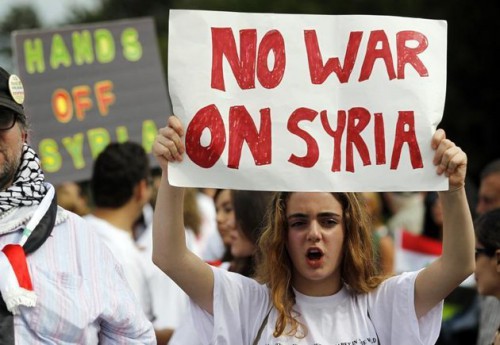
Hay que reconocerlo: en asuntos internos al igual que en geopolítica, nuestros medios, intelectuales y estrategas mainstream manejan a la perfección el arte, por no decir el arma, de la retórica de la inversión. Queriendo por un lado enfrentarse a cualquier precio con el gobierno de Damasco, y por el otro purgar el espacio público de las voces críticas y disidentes sobre el conflicto sirio, no temen adherir a ideologías, propagandas y militantismos dignos de las compañías de teatro soviéticas de agitprop. Encontraremos bajo sus plumas, por aquí y por allá, un toque autocrítico para darse aires libertarios y de pluralismo. Pero conscientemente o no, nos vuelven a servir la vieja sopa de siempre en sus fiambreras de soldados del sistema. Pongamos el foco en la guerra del lenguaje llevada a cabo por nuestros “expertos” empotrados en Siria. Sin blindado y sin camuflaje.
Ya fue el caso del conflicto libio en 2011. Un joven de las afueras de Bengazi, reclutado en una mezquita salafista y haciendo un gesto de degollar el cuello con su pulgar mientras grita Allah ou Akbar, se convertía de manera milagrosa en un encantador luchador por la libertad.
En cambio, sus compañeros franceses del “gang de Roubaix” o de “Forsane Al Izza” no fueron objeto de los mismos elogios. Recordemos que las unidades del RAID no se anduvieron con miramientospara “neutralizar” al hermano tolosano del barbudo de Benghazi.
Entonces, imaginad la cara y el discurso de los presentadores de telenoticias de TF1, imaginad la actitud del ejército francés si entre 6.000 a 8.000 Mohamed Merah se desplegasen en Paris, Marsella o Lyon, como eso sucede en Homs, Damasco o Alepo.
Ídem respecto a los comandos catarís, saudíes o egipcios que fueron a emprender el yihad contra la Libia verde de Muamar El Gadafi. Todos aquellos legionarios fueron descritos como humanistas apasionados por la democracia. Sin embargo, un militante panafricano de origen nigeriano, maliense o saharaui que combatía al lado de Moammar Gadafi se transformaba en vulgar mercenario, preferentemente “violador”, para conservar la fantasía del Negro libidinoso. Con cargamentos de viagra suministrados por el coronel, ¡por favor!
En lo que se refiere a Libia, ha habido tanta desinformación como arena en el desierto de Sirte...
Es la misma historia en Siria.
Al yihadista sirio armado por Riad y Doha que remata a su víctima según prácticas satánicas, se le disfraza como un guerrillero romántico bajo el teclado mágico de nuestros “spin doctors”. Pero un soldado sirio que resiste a una invasión extranjera es presentado secamente como una especie de SS a sueldo de la “secta alauí”. Un civil armado progubernamental que defiende su barrio contra las incursiones terroristas, contra los secuestradores de rehenes, y los ladrones, es de oficio un chabbiha (partidarioarmado del régimen) “quebrantador de huesos y cráneos”.
Incluso el miliciano disciplinado y patriota del Hezbollah libanés que se encuentra en su tierra, se convierte en un odioso terrorista “auxiliar de la dictadura alauí”.
Otra comparación: cuando nuestros soldados matan inocentes, a eso se le llama un error.
A los milicianos del Ejército sirio libre (ESL), por ser nuestros protegidos, las masacres que cometen se maquillan en errores incluso cuando sus salvas tienen como objetivo los barrios residenciales, hospitales, escuelas, y cuando asesinan al periodista Gilles Jaquier, al igual que a nueve manifestantes pro-Assad en Homs.
Al contrario, cuando es el ejército sirio quien mata a inocentes, lo que desafortunadamente sucede muy a menudo, a eso se le llama una masacre premeditada.
Un cazabombardero de la OTAN lleva a cabo golpes dirigidos, quirúrgicos, se nos dirá, aun a riesgo de hacer un pleonasmo.
Pero cuando el ejército sirio envía sus MIG o acciona su artillería contra terroristas y mercenarios después de haber evacuado a la población civil (si los secuestradores lo permiten) para evitar las victimas colaterales, a eso se le llama un “machaque intensivo”, una “masacre”, o una “carnicería”.
Otro descubrimiento brillante de nuestros fabricantes del prêt-à-penser, el terrorismo existiría en todas partes del mundo excepto en Siria, donde esa etiqueta sería una exclusividad del régimen de Damasco.
Mejor aún, el terrorismo que hace estragosen Siria desde mucho antes del comienzo de la primavera árabe sería una “profecía que se auto cumple”, o de cómo la prensa occidental inventa leyendas urbanas. [1]
Puede entenderse fácilmente la falta de afán por parte de Occidente en reconocer ese tipo de terrorismo: implicaría un reconocimiento del derecho del régimen sirio a la legítima defensa.
Para hacer conocer la realidad del terrorismo anti-sirio a pesar del catecismo maniqueo dentro del que algunos “expertos” de Siria pretenden encerrarnos, publiqué, en abril de 2012, un texto titulado El terrorismo anti-sirio y sus conexiones internacionales, en el que describía la consanguinidad entre los tres movimientos yihadistas anti-sirios de antaño, de ayer y de hoy. Es decir, entre los Hermanos musulmanes sirios que devastaron el país en los años 70 y 80 antes de ser eliminados en 1982 en Hama por el ejército sirio; los movimientos anti-chiíes como Ousbat al Ansar, Fatah Al Islam o Jound Al Cham que contaminaron los campos palestinos del Líbano al comienzo de los años 2000, y que luego vieron incrementarse sus fuerzas tras la partida de las tropas sirias del país del Cedro ( abril 2005), sobre todo por la zona de Trípoli, hasta el punto de acosar al ejército sirio en su propio territorio y golpear Damasco; y por fin, las actuales filiales de Al Qaeda en Siria, como el Frente al Nosrah, Ahrar Al Cham, la Brigada Tawhid ,etc. que van viento en popa gracias a la pretendida “primavera siria”.
Salvo algunos medios alternativos, nadie de la gran prensa se ha interesado en la génesis del terrorismo anti-sirio. Hay como una especie de tabú respecto a ese tema.
A tal punto que, desde el comienzo de la primavera siria, algunos “expertos” quisieron hacernos creer que en Siria no existía tradición del Islam takfirista y conquistador.
Por mucho que quisiéramos recordarles que los mayores Inquisidores del Oriente medieval eran sirios, en especial Ibn Taymiyya, al igual que sus discípulos Ibn Kathir y Ibn Qayyim, que algunas regiones del país se ven inundadas a diario de las prédicas retransmitidas por cadenas satélites saudíes como Iqraa, Wessal o Safa TV, que describen a los alauíes como más viles que los judíos y los cristianos, y que exigen “purificar” el país de los “impíos”, que por esa razón, en algunos lugares recónditos de Siria, especialmente en la periferia de las zonas de población alauí, los no suníes e incluso los suníes laicos no son bienvenidos desde hace lustros, según nuestra prensa oficial sería el gobierno laico y multi-confesional de Damasco el responsable a pesar de todo de la “comunitarizacion”del conflicto sirio.
Nos preguntamos qué interés podría tener Damasco alimentando la hostilidad hacia la población suní mientras que el grueso de los efectivos militares y en lo esencial la élite política y económica del país es suní.
¿Por qué pues un gobierno que se beneficia del apoyo de la mayoría suní del país querría alienarse esa mayoría?
Los que conocen el país saben perfectamente bien que la ideología oficial no tolera de ningún modo el discurso sectario. Toda propaganda de carácter « ta’ifiyyé » (sectario) está sometida al castigo penal en Siria.
Ahora bien, sólo la oposición utiliza la retórica sectaria, designa a los alauíes como a “los enemigos” o los responsables de la represión y de las injusticias reales o supuestas, acusa a los drusos y a los cristianos de colusiones con el “régimen alauí” y amenaza a los suníes que ocupan un lugar en el gobierno con represalias por su pretendida traición hacia sus correligionarios.
Llevadas de la mano por las potencias suníes (Turquía, Jordania, Estados miembros del Consejo de cooperación del Golfo), la oposición siria es el único bando que verdaderamente puede sacar provecho de la “confesionalización” del conflicto.
En realidad, el fermento que une a todas esas fuerzas contra el régimen sirio no tiene nada que ver con la democracia.
Es esencialmente la guerra contra Irán y sus apoyos políticos (Siria) y religiosos (Hezbollah) lo que interesa a los socios capitalistas de la “revolución siria”. [2]
Conviene recordar aquí que el odio anti-chií destilado por los regímenes reaccionarios árabes de inspiración suní se exacerbó en particular después de las dos victorias de Hezbollah frente a Israel, la del 25 de mayo de 2000 que permitió liberar el Sur del Líbano de la ocupación sionista, y la que coronó la “Guerra de los 33 días” durante el verano de 2006.
Aquellas dos victorias fueron obtenidas gracias al apoyo infalible de Damasco. Desde entonces, las fotos de Hassan Nasrallah, secretario-general de Hezbollah, al lado de Bachar El-Assad, florecieron por todo el país, lo que no satisfizo a todo el mundo.
Efectivamente, el refuerzo de la fraternidad estratégica e ideológica entre la Siria resistente y el Líbano resistente fue el argumento esgrimido por los fundamentalistas suníes apasionados por las teorías del “complot chií” como amenaza para « Ahl Al Sunna », la comunidad de los suníes.
Gracias a nuestra prensa, la gran mayoría de la opinión pública occidental ignora que los reyezuelos del Golfo se asustaron a tal punto de ver a un movimiento chií humillar a Israel y generar una simpatía supra-confesional en la opinión árabe, que le acusaron de “aventurista”, “provocador” e “irresponsable”.
Después de esta precisión necesaria, volvamos a otros casos de abuso de lenguaje de nuestra prensa desplazada al frente sirio.
Cuando a un país aliado se le ataca por grupos armados, estos últimos son de oficio terroristas.
Así, el 5 de agosto de 2012, dieciséis militares egipcios fueron asesinados en el Sinaí, no por rebeldes sino por “terroristas”. [3]
En cambio, los miles de soldados sirios asesinados en el mismo tipo de emboscadas son los objetivos legítimos de los “revolucionarios” y de los “rebeldes”.
Un periodista del bando enemigo asesinado por terroristas también es un objetivo legítimo ya que no es más que una vulgar “herramienta de propaganda”. [4]
Reducidos al estado de simples objetos, de engranajes inertes, los periodistas que trabajan para las cadenas públicas sirias no pueden pues esperar la menor compasión por parte de sus colegas occidentales.
El silencio observado por las organizaciones internacionales de defensa de la prensa respecto a la censura impuesta por la Liga árabe a las cadenas públicas sirias no tiene entonces nada de sorprendente.
Para descalificar de manera definitiva a un enemigo, nada mejor que una buena dosis de reductio ad hitlerum stalinumque.
El anti-hitlerismo y el anti-estalinismo son dos productos inamovibles de lo que Noam Chomsky llama “la fábrica del consentimiento”.
Las exacciones cometidas por la policía política del régimen de Damasco se asimilan de ese modo a las prácticas “gestapistas” o “estalinianas” [5] pero jamás a la represión que tuvo lugar en la guerra de la Vandea, ni a los horrores perpetrados por Francia durante la insurrección malgacha de 1947, ni al uso masivo de la tortura mediante la aplicación de descargas eléctricas contra el pueblo argelino o en Indochina, ni a las torturas y ejecuciones perpetradas por el ejército US en Vietnam, en Bagram en Afganistan, en Abou Ghraib en Irak o en América Latina.
Nuestra prensa no osaría nunca tratar a nuestros aliados regionales de nazis, ni a la Arabia wahabí de la dinastía Saud poblada de príncipes sádicos y de predicadores del odio, ni al emir golpista y esclavista de Catar, ni al régimen militar-islamista de Ankara. Sin embargo, esos tres regímenes reprimen, torturan y aprisionan.
Dicho esto, es cierto que el primero nos provee petróleo, el segundo nos suministra gas y compra nuestros clubs de fútbol y nuestros bonitos barrios, y el tercero tiene una tasa de crecimiento económico de dos cifras. Y, además, los tres son Israel friendly.
En los medios atlantistas, ya sean de izquierda o de derechas, es de buen tono referirse al antifascismo para “ayudar” al lector profano a descifrar el conflicto sirio.
Para Thomas Pierret, maestro (indiscutido) de conferencias en islam contemporáneo en la universidad de Edimburgo, los yihadistas que convergen en Siria para combatir al régimen “impío” en Siria hacen pensar en las “Brigadas internacionales” movilizadas al lado de la República durante la guerra civil española de 1936-39. [6]
Pero no se le ocurriría comparar a esos combatientes con los reclutas de la División de Granaderos SS Charlemagne que fueron a enfrentarse contra el bolchevismo en el Frente del Este durante la segunda guerra mundial o con los Contras que combatieron al gobierno sandinista de Nicaragua con el apoyo financiero... ¡de Arabia Saudí!
La utilización abusiva de la guerra antifascista española se ha convertido en un clásico de los marcadores ideológicos que permiten distinguir a los buenos de los malos.
Recordemos que, hace dos años, el filósofo mercenario franco-israelí Bernard-Henri Levy se tomó por la reencarnación de André Malraux enfrentándose a las balas franquistas en las trincheras de la República española. Aquel Don Quijote súper-millonario había confundido incluso a las Brigadas internacionales de inspiración comunista con los ejércitos coloniales de la OTAN y sus refuerzosal qaedistas.
Los rebeldes sirios y sus aliados yihadistas llegados para “morir en Alepo” han tenido derecho en nuestra prensa a verdaderos cantares de gesta donde se les ha comparado periódicamente a los antifascistas del mundo entero que fueron a “morir a Madrid” frente a las tropas de Franco. [7]
Dudo que BHL se digne a ofrecer una imagen tan épica de la Internacional yihadista que combate y muere de manera igualmente “heroica” en Yemen o en Pakistána la sombra de los drones americanos.
Y luego, está ese lenguaje tan devastador como las bombas...
Tras el atentado del 18 de julio que tuvo como objetivo las oficinas de la seguridad de Damasco, el periodista de Le Figaro Pierre Prier interrogó al bloguero asociado del periódico Le Monde, Ignace Leverrier, cuyo nombre verdadero es Wladimir Glassman, el famoso sionista tuerto que echa « una mirada (de tuerto) a Siria ».[8]
Los dos comparsas están de acuerdo al afirmar que el general Daoud Rajha, víctima del atentado era un “aval cristiano” y “un idiota útil” del régimen. Para el señor Leverrier/Glassman y para muchos otros observadores, el régimen sirio procede mediante cálculos étnicos para « corromper » a las minorías y volverlas responsables de su « política de terror ».
En cambio, no se les oirá utilizar los mismos términos insultantes hacia el kurdo Abdel Basset Sayda, quien no fue elegido a la cabeza del Consejo nacional sirio (CNS) sino para seducir a los kurdos sirios y para de esa forma dar un sello pluralista a una oposición dominada por los Hermanos musulmanes.
Sin embargo, Sayda, en adelante el gran amigo de Sarkozy, es el idiota útil por excelencia, un perfecto desconocido que una gran mayoría de kurdos sirios rechazan a la vez porque no tiene ningún pedigrí militante y porque resideen una estructura próxima a los servicios secretos turcos.
Volvamos al campo de batalla de la guerra del lenguaje. Un imam suní apoyando al gobierno de Bachar El-Assad es un agente del régimen. Pero no se utilizará jamás esa palabra infamante a propósito de un imam de la oposición, inspirada por las prédicasanti chiíes y sometida al wahabismo.
Un gobierno enemigo siempre es calificado de “régimen”. Nunca se nos ocurriría la idea de hablar de “régimen” de Londres, de Paris, de Berlín o de Washington.
Un gobierno enemigo debe inspirar odio y desprecio de manera continua. Por eso, se le debe mostrar bajo su aspecto más repugnante.
Por consiguiente, Siria que es a la vez un Estado del Bienestar inspirado del modelo soviético en el que la política regula en gran parte la economía, en el que la masa de funcionarios es pletórica, en el que la enseñanza es gratuita y de calidad al igual que el sistema de salud, un Estado no endeudado en nuestras instancias económicas y por ello liberado de la dictadura financiera occidental, un Estado autosuficiente promotor de la soberanía alimentaria, un Estado tercermundista y pro palestino, un Estado laico y multi confesional, pero también un Estado policial donde la tortura y las ejecuciones sumarias son moneda corriente, esta Siria de múltiples facetas es reducida en nuestra prensa a su único perfil represivo. Los atributos del Estado sirio que le convierten en algo menos repulsivo serían, según nuestros ideólogos, lisa y llanamente fabricados, simulados, manipulados y falsificados.
Un gobierno enemigo es profundamente maquiavélico. Es la encarnación del Mal. Mata a sus enemigos pero también a sus propios amigos para acusar a sus enemigos. El asesinato del hijo del muftí pro-Bachar, ¡es Bachar! El atentado contra los generales de Bachar, ¡es Bachar! Los yihadistas anti-Bachar, ¡una obra de Bachar! Los estudiantes pro-Bachar asesinados en la universidad por anti-Bachar, ¡una jugadade Bachar! Las masacres de aldeanos, obreros, funcionarios, periodistas, profesores, cineastas, deportistas pro-Bachar, ¡un crimen de Bachar! Nuestros medios no retroceden ante ninguna teoría del complot a propósito del enemigo.
En las redacciones occidentales al igual que en la calle, aquel que no asocie los términos “cínico”, “brutal”, “totalitario”, “feroz”, “mafioso”, “sanguinario”, “odioso”, “bárbaro”, “sectario”, “corrompido”, “asesino”, etc. al Estado sirio, es sospechoso de simpatizar con el enemigo.
A menos que uno se llame Kofi Annan, defender la paz, la moderación, la reconciliación en Siria como lo hizo el difunto (primer) presidente argelino Ben Bella para poner fin a la guerra civil que desgarró a su país, se convierte en algo sospechoso. Maccarthysmo, el retorno.
Un gobierno enemigo esta “aislado” incluso si disfruta del apoyo de los BRICS (Brasil, Rusia, India, China, Sudáfrica), es decir de las naciones que contabilizan más del 40% de la población mundial. Añadan a esa dinámica los Estados-miembros del ALBA, Argelia, Irán o aún Bielorrusia y se acercarán a la mitad de la humanidad. Después de todo, son muchos amigos para un Estado puesto en cuarentena.
Un gobierno enemigo como el de Damasco tiene como único apoyo popular a una banda de “oportunistas”, de “clientes” y de “apparatchiks” [9] pero los opositores comprados a precio de oro en el mercado de Riad y Doha son, por supuesto, demócratas sinceros y desinteresados.
Respecto al pueblo, siempre según nuestros medios, es la oposición quien tendría su exclusividad. En cambio, el otro pueblo, el que rechaza participar en la anarquía, que muestra un apoyo total o condicional al gobierno, que encarna la mayoría silenciosa, ese pueblo, no existe. Como mucho, se le menciona vagamenteen algunos raros artículos de análisis.
En el caso de la guerra civil siria, la lista de palabras cuyo significado es desviado por la corriente de pensamiento dominante es larga, y el tema merecería que se le dedicase un diccionario.
Los pocos ejemplos citados en este texto muestran que en una guerra, el lenguaje no es neutro. Su opción está determinada por nuestras convicciones. Es la prolongación, el espejo de nuestras ideas, de nuestra sensibilidad. Los periodistas de guerra no contravienen las normas. Sus palabras, fuentes o interlocutores no se escogen al azar. Tener una ideología y hacer propaganda no es sorprendente en sí, cuando se tiene por misión interesar a un público sobre acontecimientos políticos que contienen una pesada carga emotiva. Son los intereses subyacentes los que deberían plantearnos una interrogación, e incitarnos a seguir vigilantes, sobre todo cuando el así llamado periodista disimula su propaganda bajo los atavíos de una moral superior pretendidamente universal.
Bahar Kimyongur es el autor del libro Syriana, la conquête continue
Fuente: michelcollon.info
Traducción : Collectif Investig'Action
Notas:
[1] Alain Jaulmes, Le Figaro, 31 julio 2012
[2] No siempre es fácil separar la política de la religión. Las corrientes ortodoxas como las heterodoxas acumulan a menudo una dimensión a la vez política y religiosa.
[3] France 24, 11 agosto 2011
[4] AFP, 6 agosto 2012
[5] Koen Vidal, De Morgen, 3 julio 2012
[6] Le Vif, 6 agosto 2012, Gokan Gunes, Syrie : qui sont ces djihadistes dont se sert Damas ?
[7] Mourir en Madrid est un famoso documental de Frédéric Rossif consagrado a la guerra civil española.
[8] Le Figaro, 19 julio 2012
[9] Le Soir, 30 enero 2012
Apoya la información alternativa,
Sumate a los Amigos de Investig'Action
00:05 Publié dans Actualité | Lien permanent | Commentaires (0) | Tags : actualité, politique internationale, syrie, levant, proche orient, monde arabe, monde arabo-musulman, géopolitique, occident | | del.icio.us | | Digg | Facebook
Reviews Ex: http://atimes.com
Reviews
Ex: http://atimes.com
| Crushed by the Chinese dream Five Star Billionaire by Tash Aw As this tale of five new arrivals in Shanghai unfolds, the narrative that gradually draws them together builds a picture of the city as a glittering, ruthless devourer of their cash - and fame-fueled dreams. While the book succeeds in showing how the modern "Chinese dream" is as illusory as its American counterpart, an overplaying of coincidences sees it descend into heavy-handed plot manipulation. - Kent Ewing (Oct 11, '13) |
 |
| How the West denied China's law Legal Orientalism: China, the US and Modern Law by Teemu Ruskola This important book traces the remarkable hold Orientalist views demonizing China as lawless still have on political and cultural narratives about China's laws and legal institutions. It argues that at a time the word needs more accurate knowledge of Chinese legal concepts, present-day reforms equating to a "self-Orientalism" make that unlikely. - Dinesh Sharma (Sep 27, '13) |
 |
| Military matters in Myanmar Soldiers and Diplomacy in Burma by Renaud Egreteau and Larry Jagan. Strong Soldiers, Failed Revolution by Yoshihiro Nakanishi Outside focus on Myanmar's new civilian authorities and recent economic changes has helped the military, still the country's most powerful institution, to retreat into the shadows and to evade similar scrutiny. These two books help to shed light on that space, though both fall short of their objectives. - Bertil Lintner (Sep 20, '13) |
 |
| How oil poisoned Gulf governance Collaborative Colonialism: The Political Economy of Oil in the Persian Gulf by Hossein Askari Given the "collaborative colonialism" relationship between Western powers and Arab countries, with callous, often corrupt, regimes backed militarily in return for secure oil supplies, Askari sees little motivation for Gulf countries to improve governance despite increasingly restive populations. His suggestion of intergenerational oil funds as an alternative reflects a compassion for the region that runs throughout the book - Robert E Looney (Sep 13, '13) |
 |
| The dark heart of West's Iran obsession A Dangerous Delusion: Why the West Is Wrong About Nuclear Iran by Peter Oborne and David Morrison Using concise research, this work argues that Iran's readiness to accept monitoring and lack of weapons-grade uranium enrichment make a mockery of Western hype over a supposed nuclear program threatening the security of Israel and Gulf states. Its only questionable conclusion is that the US wants to prevent Iran from becoming a major Middle East power - bitter memories is one more likely explanation. - Peter Jenkins (Sep 6, '13) |
 |
| How colonial Britain divided to rule Define and Rule: Native as Political Identity by Mahmood Mamdani Following a series of revolts, the British Empire was forced to recalibrate its style of indirect rule. Instead of merely differentiating between conquerors and the conquered, it now drew lines between distinct political identities and between natives according to tribe. This work argues that this not only led to local administrations becoming racialized, it also helped create our modern preoccupation with defining and managing difference. - Piyush Mathur (Aug 2, '13) |
 |
| What China really wants Wealth and Power: China’s Long March to the Twenty-First Century by Orville Schell and John Delur Tracing Chinese history through the eyes of its most influential leaders, this work proposes that all but one were motivated by the simple pursuit of wealth, power or both. It was these objectives that led China to dabble in republicanism, anarchism or "whatever ism of the time", writes the authors. Now that the country is wealthy and powerful, they conclude, a constitutional society may just be possible. - George Gao (Jul 26, '13) |
 |
| How Jews navigated Bolshevik currents Russian Jews Between the Reds and the Whites, 1917-1920 by Oleg Budnitskii Western historians approaching the subject of Russian Jews during the Civil War are too often influenced by ideology - conservatives paint the Bolsheviks as anti-Semitic fascists, while leftists sketch out a pro-Jewish, progressive regime. This book succeeds in portraying a more accurate central path. Neither the Reds nor Whites favored ethnic-religious pogroms - but only because it was a politically expedient stance. - Dmitry Shlapentokh (Jul 12, '13) |
 |
| When will the dirty wars end? Dirty Wars: The World Is a Battlefield by Rick Rowley and Jeremy Scahill  Using investigative reports, this film argues that from cover-ups of Afghan night-raid atrocities to extrajudicial assassinations, a globally extended US militarism is being used to prevent anything undermining the US image of dominance being projected overseas. If it weren't for journalism exposing dirty wars, knowledge of such abuses might never escape the affected hotspots. - Steve Fake (Jun 14, '13) |
 |
| Orphan of the collective The Elimination by Rithy Panh Cambodian-born filmmaker Rithy Panh's brave account of life stripped bare by the Khmer Rouge is helped by the inclusion of interview exchanges with Duch, the death-camp warden sentenced to life in prison by a UN-backed tribunal. Yet Panh is at his best writing about his own survival as a teenaged orphan among an adopted collective of killers. - Joe Freeman (May 31, '13) |
 |
| Portraits of an identity crisis Lens and the Guerrilla: Insurgency in India's Northeast by Rajeev Bhattacharyya Che in Paona Bazaar: Tales of Exiles and Belonging from India's Northeast by Kishalay Bhattacharjee Scores of local rebel groups are active in the seven states east of the narrow "Siliguri Neck" connecting the northeast with the rest of India, but the motivations and people behind these movements are understudied. By taking entirely different approaches to the problems of identity in the volatile region, two new books shine complementary light. - Bertil Lintner (May 10, '13) |
 |
| Banker tries bait and switch Nothing Gained by Phillip Y Kim When this tale of death and mystery in a crisis-hit US investment bank relates how a life built on arrogance, privilege and luck can rapidly unravel, it's a pleasure to watch high-fliers squirm. However, the would-be international business thriller pushes its most compelling characters offstage and offers unsatisfying substitutes. - Muhammad Cohen (Apr 26, '13) |
 |
| How humanitarians trumped neo-cons in Libya Slouching Towards Sirte: NATO's War on Libya and Africa by Maximilian Forte The succession of human-rights based scare stories used to justify Western intervention in Libya, from the looming bloodbath in Benghazi to the African mercenaries and the "mass rapes", underscore the colonial mentality of the liberal lynch mob who backed the invasion. While it's similar to the smoking gun deception over Iraq, at least the neo-cons never claimed to be kind. - Dan Glazebrook (Apr 25, '13) |
 |
| The Real North Korea The Real North Korea: Life and Politics in the Failed Stalinist Utopia by Andrei Lankov Andrei Lankov turns his critical eye on the North Korean system and attempts to do the impossible: describe a country that has spent considerable time and effort defying description. If anyone can have a shot at delivering the goods on the "real North Korea'', he is the man, and with a few exceptions, he does a very good job. - John Feffer (Apr 22, '13) |
 |
| Living (and dying) in the shadows Hong Kong Noir by Feng Chi-shun Gruesome tales from the minds of Hong Kong's most notorious serial killers and gangsters fascinate and appall in equal measure. While the 15 "factual" stories in the book sometimes mobilize the author's imagination, the squeamish detail in the former pathologist's writing will likely leave some readers cold. - Kent Ewing (Apr 19, '13) |
 |
| Searching the globe for China Inc China's Silent Army: The Pioneers, Traders, Fixers and Workers Who Are Remaking the World in Beijing's Image by Juan Pablo Cardenal and Heriberto Araujo As Chinese business expands overseas, it is increasingly important to understand how mainland companies and Beijing interact as the latter steers the economic juggernaut. This book unravels some aspects of how Chinese diplomacy and business cooperate to serve geopolitical goals, but it mistakenly implicates Chinese immigrants in search of a better life in the economic exploitation being orchestrated by their leaders. - Muhammad Cohen (Mar 22, '13) |
 |
| Judaism's ancient voice of reason The Philosophy of Hebrew Scripture by Yoram Hazony The Hebrew Bible has long been misinterpreted within the Christian framework of revelation, though Christian concepts such miracles and eternal life are conspicuously absent from core tenets of Judaism. This book sets out to remind readers that like the works of great Greek philosophers, ancient Hebrew scriptures are entirely products of universal reason. - Friedrich Hansen (Feb 8, '13) |
 |
| Judaism's ancient voice of reason The Philosophy of Hebrew Scripture by Yoram Hazony The Hebrew Bible has long been misinterpreted within the Christian framework of revelation, though Christian concepts such miracles and eternal life are conspicuously absent from core tenets of Judaism. This book sets out to remind readers that like the works of great Greek philosophers, ancient Hebrew scriptures are entirely products of universal reason. - Friedrich Hansen (Feb 8, '13) |
|
| Huddled masses Refugee Hotel (Voice of Witness) by Gabriele Stabile and Juliet Linderman Striking photographs and moving personal accounts present a firsthand look at the confusion-filled first days of refugees in the United States. The stories of refugees from Bhutan, Myanmar, Burundi, Ethiopia, Iraq, and Somalia illustrate the variety of calamities that drive people to flee their home countries. - Renee Lott (Feb 1, '13) |
 |
| Can Asians be funny? The Curious Diary of Mr Jam by Nury Vittachi A endearing collection of Hong Kong humorist Nury Vittachi's observations on everything from global politics to family life, this "diary" of his alter-ego Mr Jam also sets out to prove that despite blacklisting by oppressive regimes, post-modern Asian vidushaks, or jesters, can indeed raise a smile. The author succeeds, it just takes a few too many pages to get there. - Kent Ewing (Jan 18, '13) |
 |
| Hirsute iconoclasts Joseph Anton - A Memoir by Salman Rushdie. Antifragile: Things That Gain From Disorder by Nassim Nicholas Taleb Salman Rushdie's most recent book describes the lead-up to the infamous death sentence imposed on him by Ayatollah Khomeini, while Nassim Nicholas Taleb's provides background to his examinations of probability in finance. This makes the works seem incomparable, but both are brave accounts of presenting counter-logic to a prevailing consensus, and both explore the radical afterthought that comes from post-trauma. - Chan Akya (Dec 7, '12) |
 |
| A Wolfe loose as Miami meets Moscow Back to Blood: A Novel by Tom Wolfe The return of Tom Wolfe sees the "New Journalism" exponent expose a Russian oligarch in a plot to make hundreds of millions of dollars through donating fake art to a Miami art museum. While the romp through Russian art and Cuban-American montes veneris does get to the heart of the Cold War eventually, it's no triumph of investigative journalism, fictional or real. - John Helmer (Nov 16, '12) |
 |
| Making Korea possible Korea: The Impossible Country by Daniel Tudor South Korea is far from being a dull place, and has much more to offer the visitor than kimchi and K-pop. From "neophilia" to Shamanism, Tudor reveals cultural and political concepts missed by less-informed Western observers while exploding the myth that this is a conservative and isolated country. - James Pearson (Nov 2, '12) |
 |
| Curse of the donor Aid Dependency in Cambodia: How Foreign Assistance Undermines Democracy by Sophal Ear Billions of dollars in aid has poured into Cambodia over the past two decades, and while the economy has grown it is on shaky foundations, with real development languishing in a mire of corruption ruled over by a predatory elite. Modern Cambodia is a kleptocracy cum thugocracy, writes the author, and the international community, led by the UN, is its enabler. - Sebastian Strangio (Oct 26, '12) |
 |
| Tamerlane through Central Asian eyes The Legendary Biographies of Tamerlane: Islam and Heroic Apocrypha in Central Asia by Ron Sela This glimpse into how Central Asia's evolving view of the legendary 14th-century ruler Timur (Tamerlane) highlights how the region's impoverished societies for centuries held up Timur as a symbol of past greatness and promise of future glory. In post-Soviet discourse the cult of Timur was re-launched under Uzbekistan leader Islam Karimov - overlooking that Uzbeks were his sworn enemies. - Dmitry Shlapentokh (Oct 19, '12) |
 |
| A one-sided history Modern China-Myanmar Relations: Dilemmas of Mutual Dependence by David I Steinberg and Hongwei Fan Given the wide-ranging hypocrisy dominating the West's embrace of Myanmar's "normalization" and China's role in the transition, honest analysis of what is really going on in is scarce. While this book does little to fill the void, it does coherently outline China's economic aspirations in Myanmar and provide valuable data on cross-border trade. - Bertil Lintner (Oct 5, '12) |
 |
| Unity in diversity: NAM's nuclear politics Nuclear Politics and the Non-Aligned Movement by William Potter and Gaukhar Mukhatzhanova This book offers valuable insights into how in a post-9/11 revival the Non-Aligned Movement has shed its outdated image and create non-proliferation initiatives that have put Israel and its Western defenders on the back foot. While summizing well the complexity of NAM's nuclear politics, the authors fail to grasp how the International Atomic Energy Agency is manipulated by Western powers. - Kaveh L Afrasiabi (Sep 28, '12) |
 |
| Chinese juggernaut World.Wide.Web by Bertil Lintner Seemingly insignificant stopovers by US diplomats in Asia-Pacific backwaters are one pointer to the expansion of Chinese interests in the region. The author has done an excellent job of tracing the country's increased role over the past three decades, but the absence of some developments means the work already seems dated. - Kent Ewing (Sep 14, '12) |
 |
| The nudists and the diplomat's daughter Midnight in Peking by Paul French Written in a racy style that occasionally veers too close to parody, this is a fascinating look at the brutal slaying of a young Englishwoman in Beijing during the run-up to World War II. The victim herself now lies under the modern city's Second Ring Road, but the author has told her tragic story, and that of her bereaved father who never accepted the official investigation into the murder, vividly and expertly. - Michael Rank (Aug 31, '12) |
 |
| The West, the Gulf and China: An oil-fueled triangle China and the Persian Gulf, ed Bryce Wakefield and Susan L Levenstein As China continues its rise, its vast energy requirements are increasing its influence in the Middle East, source of more than two-fifths of its crude oil. China has replaced the United States as Saudi Arabia's top export partner and Beijing is taking advantage of the West's demonization of Iran to do business in the Islamic Republic. Yet neither oil buyer can force the other out from the Persian Gulf. - Giorgio Cafiero(Aug 24, '12) |
 |
| Iran nuclear diplomacy: An insider's take National Security and Nuclear Diplomacy, by Hassan Rowhani Hassan Rowhani, Iran's nuclear negotiator for 22 months during Mohammad Khatami's presidency, continues to influence the debate on how Tehran deals with the West. His book, detailing disagreements within the establishment, is recommended reading for anyone interested in understanding Iran's post-revolutionary politics and how a changing power structure has transformed decision-making from one-man rule to a collective enterprise. - Farideh Farhi (Aug 10, '12) |
| Marketing guru chooses a tough sell The End of Cheap China: Economic and Cultural Trends That Will Disrupt the World by Shaun Rein No longer a mere source of cheap labor, China is becoming the world's most compelling consumer market. The author not only has stellar credentials to describe this new reality, and offer advice on how foreign business can cash in on it, he does so in a clear and highly readable style. It's his spin on politics that falls flat. - Muhammad Cohen (Aug 3, '12) |
 |
| The 'real' story is the less obvious Three Ways of Thought in Ancient China by Arthur Waley Because they are familiar, to some degree, to Westerners, the book's treatment of Taoism and Confucianism may be of most interest to readers. Yet it was the third way of thought, "realism", that largely guided the evolution of China. - Dmitry Shlapentokh (Jul 20, '12) |
 |
| Living large in Hong Kong Walking the Tycoons' Rope by Robert Wang This autobiography by a lawyer who found success in the circles of Hong Kong's mega-rich, only to be brought down by that same world of greed and heartlessness, begins in a very different environment, of poverty and tragedy in the communist mainland. A fascinating look back at a city of dreams that no longer exists, the book is also timely, as resentment against the tycoon class grows in Hong Kong. - Kent Ewing (Jul 13, '12) |
 |
| Internet under their thumb Consent of the Networked: The Worldwide Struggle for Internet Freedom by Rebecca MacKinnon United States-based companies happily profit from overseas Internet censorship - most notably in China, while at home Facebook, Google, and government officials exert feudal rule over cyberspace. MacKinnon draws on a rich history of classical liberal thought to explore the real threat to digital freedoms. - Geoffrey Cain (Jul 10, '12) |
 |
| China's take-off riddle China Airborne by James Fallows Fallows' work, nominally about China's ambitious commercial aviation sector, opens far broader issues vital to future international relations, such as how far Western partisanship and passivity contributed to China's momentum over the past 30 years when it should have provoked action and investment. - Benjamin Shobert (Jul 5, '12) |
 |
| Rationalizing US Middle East policy The Arab Uprising: The Unfinished Revolutions of the New Middle East, by Marc Lynch The range covered by Lynch in a work designed to reflect the recent complex and murky developments in the Middle East from Tunisia to Bahrain and Yemen, results in some essential reading for the student of the region. Yet he falls short in many ways, not least in his failings in considering socio-economic structures, the absence of an adequate theoretical framework, and an overly superficial grasp of United States involvement. - Kaveh L Afrasiabi (Jun 29, '12) |
|
| Mindset of a mass murderer Facing the Torturer: Inside the Mind of a War Criminal by Francois Bizot A searing personal account of the suffering the author endured as a prisoner of the Khmer Rouge in the early 1970s, this book delves deep into the mental makeup of his tormentor, the infamous "Comrade Duch". Haunted by his own ghosts over the circumstances of his release, Bizot explores why Duch, an evidently intelligent man, became a mass murderer. - Bertil Lintner (Jun 22, '12) |
 |
| A window into North Korea's art world Exploring North Korean Arts edited by Rudiger Frank This collection of essays on North Korean visual arts, literature and music offers invaluable historical and theoretical perspective on an art culture that's as kitsch as it is cynically propagandistic. Postage stamps of American soldiers being killed and paintings of waves, waterfalls and rivers predictably promote slavish devotion to the Kim cult. Its less clear what motivated philatelic depictions of the late Princess Diana. - Michael Rank (Jun 15, '12) |
 |
| A drone-eat-drone world Barely a decade after America's drone wars began, the unmanned hunter-killers are set to fill the global skies, with initial dreams of technological perfection giving way to the reality that as their use soars, so will the number of dead civilians on the ground. But drone warfare is here to stay, and will escalate as other nation's acquire more remotely controlled weaponized hardware. - Nick Turse (Jun 1, '12) |
 |
| Cherry-picking from China's success What the US Can Learn from China by Ann Lee This book forces the reader to confront China's growth in the midst of America's decline, drawing attention to the reasons US politics became too self-serving, too short-sighted and too partisan. The author doesn't argue the Chinese approach is flawless, but she does hold up China's single-minded fixation on economic growth and leadership process based on experience as examples US policymakers must consider. - Benjamin Shobert (May 18, '12) |
 |
| Mainstream political science masks Western clientelism The Rise and Fall of Arab Presidents For Life by Roger Owen This study of repressive modes of governance in the Arab Middle East falls flat due to a failure to examine the West's historical role in perpetuating those authoritarian regimes. By whitewashing the legacy of interventionism, such works prevent a better understanding of how clientelism delayed democratization from below and kept the region a "subordinate sub-system" in global politics. - Kaveh L Afrasiabi (May 11, '12) |
 |
| When heaven and earth shook in China The Death of Mao: The Tangshan Earthquake and the Birth of the New China by James Palmer As a devastating earthquake struck the Chinese city of Tangshan on a sweltering summer's night in July 1979, killing an estimated 650,000, a series of political events that would culminate in the Gang of Four's expulsion were starting in Beijing. Recounting days of despair and deceit that helped forge modern China, this insightful work suggests political reform did little for disaster management. - Michael Rank (May 4, '12) |
 |
| Anti-India agenda costs Pakistan dearly Pakistan on the Brink: The Future of America, Pakistan and Afghanistan by Ahmed Rashid Offering bleak but compelling insights into how the Pakistani military elite's obsession with defeating India has crippled national development and destabilized Afghanistan, this work argues that as a war-weary Taliban approach the United States seeking peace, Pakistani intelligence will increasingly rely on the Haqqani network to further its quest for strategic depth. - Brian M Downing (Apr 27, '12) |
 |
| Green lessons from India's past Dharma and Ecology of Hindu Communities: Sustenance and Sustainability by Pankaj Jain Green lessons from India's past Exploring how three historic Indian communities - the Swadhyayis, the Bishnois and the Bhils - became forerunners of a tree-hugging ethos of "dharmic ecology", the book offers insight into how Hinduism-inspired environmental methods and ethics in rural India are relevant to the entire planet. - Piyush Mathur (Apr 20, '12) |
 |
| Compelling case for Iraq war crime tribunal The Age of Deception: Nuclear Diplomacy in Treacherous Times by Mohamed ElBaradei The author, former head of the United Nations' nuclear watchdog, is so morally outraged by the blatant pulverization of a sovereign Middle East country (Iraq) by a Western superpower and its allies that he advises the Iraqis to demand war reparations. If for nothing else, this book is indispensable. Apart, that is, from the invaluable insights it offers into the ongoing crisis over Iran. - Kaveh L Afrasiabi (Apr 13, '12) |
 |
| Global tango tilts toward China China Versus the West: The Global Power Shift of the 21st Century by Ivan Tselichtchev Professor and TV talking head Ivan Tselichtchev assesses the heavyweight battle for global economic supremacy in his new book. Rather than a clash of civilizations and systems, his nuanced analysis suggests that everyone can wind up a winner. However, the West will need to play by China's rules. - Muhammad Cohen (Mar 30, '12) |
 |
| Two faces of Islamism in Afpak An Enemy We Created: The Myth of the Taliban/Al Qaeda Merger in Afghanistan by Alex Strick Van Linschoten and Felix Kuehn This study of the divergent origins and motivations of the Taliban and al-Qaeda argues that the United States mistakenly evaluated the Taliban's refusal to hand over Osama bin Laden in 2001 as proof of close links, coloring US policy for years. Al-Qaeda's international agenda was an anathema to the Taliban's nationalism, with shared suspicions of a Western conspiracy the only common thread. - Brian M Downing (Mar 23, '12) |
 |
| The power and the inglory Power Struggle over Afghanistan by Kai Eide As the United Nations' main envoy in Afghanistan from 2008 to 2010, the author had unique insight into the myriad problems in that country, and the hatchet job done on Hamid Karzai by the Obama administration. Somehow Eide came away from the experience still hopeful that the Afghan people will find a way out of the chaos. Still, after reading his book, it's hard to see how. - Nick Turse (Mar 16, '12) |
 |
| Meth madness in Hong Kong Eating Smoke by Chris Thrall This book works well as a portrait of a crystal-methamphetamine addict, not as a portrait of Hong Kong. The city is no longer what it was in the mid-1990s before the handover, the time of the English author's harrowing sojourn. What is captivating is his hellish depiction of his addiction and fall into a dangerous underworld. - Kent Ewing (Mar 9, '12) |
 |
| Women who shaped India Sonia Gandhi: An Extraordinary Life, an Indian Destiny by Rani Singh . It began as a love story, and has culminated in a modern, transitional chapter of the Nehru-Gandhi dynasty. This cannily crafted biography stands as a narrative not only of the modern history of the planet's largest democracy, but also of the role of some of the most remarkable women the world has ever known, including Sonia's beloved mother-in-law, the late Indira Gandhi. - Dinesh Sharma (Mar 2, '12) |
 |
| BRIC by brick to the future The Growth Map: Economic Opportunity in the BRICs and Beyond by Jim O'Neill. Few economists saw their reputations survive intact after the global financial crisis. The pre- and post-crisis growth of China and other BRIC countries has, however, burnished the standing of Jim O'Neill, who now expands his search to identify the world's next growth centers. - Benjamin Shobert (Feb 24, '12) |
 |
| Love in a time of revolt Love, Passion and Patriotism: Sexuality and the Philippine Propaganda Movement, 1882-1892 by Raquel A G Reyes A number of young Filipinos, or rather the children of colonial Spaniards, educated in Spain in the 19th century were later venerated as national heroes after their ideas helped to spark the revolution of 1896. Yet these self-titled Ilustrados had an often overlooked human, if not haughty, side marked by serial affairs, duels, and deep male chauvinism. - George Amurao (Feb 17, '12) |
 |
| Decoding Obama's Iran policy A Single Roll of the Dice: Obama's Diplomacy with Iran by Trita Parsi An intricate study of how President Barack Obama's Iran policy evolved, this book relates how campaign pledges to reach out crumbled under the weight of Israeli and Saudi pressure, and from disillusionment following Iran's 2009 election crackdown. The book reveals top Israeli officials' doubts that a nuclear strike will ever be launched, with Israel's aggressive stance based on maintaining its Palestinian territories and aura of invincibility. - Brian M Downing (Feb 10, '12) |
 |
| Playful lessons for North Korea's young leader The Lily: Evolution, Play, and the Power of a Free Society by Daniel Cloud Princeton University political philosopher Daniel Cloud's gift to North Korea's new leader Kim Jong-eun could not have come at a better time. The book explains to the Young General, that by grasping evolutionary forces, free societies - as the Dao De Jing puts it - "accomplish everything by doing nothing." Something for Kim to ponder among his ambitious plans to join the "elite club of nations" this year. - Mark A DeWaever (Feb 6, '12) |
 |
| LeT: Terror incorporated The Caliphate's Soldiers: The Lashkar-e-Tayyeba's Long War by Wilson John With thousands of recruitment and training centers across Pakistan, funds pouring in from the Gulf and links from Nepal to Sri Lanka, Lashkar-e-Toiba has flourished since the Mumbai attacks of November 2008. Detailing LeT's growth into "the world's most powerful and resourceful terror consultancy firm" - including a Department of Martyrs - this book offers an excellent primer on LeT's global ambitions. - Surinder Kumar Sharma (Feb 3, '12) |
 |
| Obama, the Lone Ranger Barack Obama in Hawaii and Indonesia: The Making of Global President by Dinesh Sharma This book maps out how the cultural influences and global underpinnings of Barack Obama's diverse upbringing in Indonesia and Hawaii created the president America needed for the multipolar world of the 21st century. Written by a cultural psychologist, it uses anthropological, political and genealogical perspectives to argue that Obama's life journey has reflected the challenges America faces today. - Richard Kaplan (Jan 20, '12) |
 |
| How Imperial Russia wooed Asia Russia's own Orient: The politics of identity and Oriental studies in the Imperial and early Soviet periods by Vera Tolz When Russia launched Oriental studies amid its imperial decline, it sought to emulate the West. However, the glamorous image of the downtrodden at the time led minorities to be treated as equals rather than subjects, a wild contrast from the West's approach. Using a wealth of research this book outlines how this impacted positively on ethnic policy after the Bolshevik Revolution - until the regime needed to consolidate power. - Dmitry Shlapentokh (Jan 13, '12) |
 |
| Invisible walls in Xinjiang The tree that bleeds: a Uighur town on the edge by Nick Holdstock A snapshot of Xinjiang province's Yining city four years after deadly ethnic riots in 1997, this book provides insights into how fraught relations between Uyghurs and and Han Chinese were worsened by Beijing's divisive rules and policies, particularly in education. The separate dormitories, canteens and admissions described as the ethnicities "pretend the other doesn't exist" make recent violence easier to understand. - Michael Rank (Jan 6, '12) |
 |
| A future with China China and the Credit Crisis: the Emergence of a New World Order by Giles Chance The book explores the inter-connection between United States policy and China's participation in globalization. The presentation on what the current economic crisis means regarding the future of the US dollar and the necessary adjustment by the world's financial and regulatory systems to incorporate China's needs are balanced and satisfying. Yet the most important reason to read this work may be what it has to offer about how these troubled times will reshape US-China relations. - Benjamin A Shobert (Dec 21, '11) INTERVIEW Getting the dragon onboard The Chinese may have an attitude whereby they want to exploit the rest of the world for their own benefit. They do not see themselves yet as a responsible leader of the world economy in a way we would like them to. The issue is how can we bring China to stand alongside Europe and America? So asks Giles Chance, author of China and the Credit Crisis in a conversation with Benjamin A Shobert. (Dec 21, '11) |
 |
| Angels and inquisitors A Point in Time by David Horowitz For a quarter of a century, Horowitz has told unpleasant truths about the political left where he spent the first half of his career before turning conservative some 30 years ago. He surpasses himself in this new essay, though, by telling unpleasant truths about the human condition. - David Goldman (Dec 21, '11) |
 |
| The Unraveling The Unraveling: Pakistan in the Age of Jihad by John R Schmidt With relations between Pakistan and the United States in cold storage, John R Schmidt, a senior US diplomat, sheds some light on the reasons. He argues that Islamabad's dual policy of supporting US military actions in Afghanistan while maintaining its connection with radical Islamic groups is understandable and the US must face up to the problem; advice unlikely to lead to a thaw any time soon. - Erico Yu (Dec 16, '11) |
 |
| Deconstructing Thomas Friedman The Imperial Messenger: Thomas Friedman at Work by Belen Fernandez Analyzing the work of influential New York Times columnist Thomas Friedman, this book finds flaws ranging from hypocrisy and racism to factual errors and skewed judgment. More frightening is how Friedman is found to represent a US media that's sacrificed its objectivity to US economic and political goals, with corporate profit taking precedent over human life in counsel on Iraq, Israel and Palestine. - Sandra Siagian (Dec 9, '11) |
 |
| Down the wrong path 9-11 by Noam Chomsky Updated to cover Osama bin Laden's death, this prescient work on the September 11 attacks written in November 2001 chillingly predicts how expensive and bloody wars in Muslim countries would drain the American economy and kill thousands of civilians. Though a compelling indictment of an "imperial mentality" that's seen America abandon human-rights principals to pursue its goals, the book's dialogue format may frustrate some readers. - Christopher Bartlo (Dec 2, '11) |
 |
| Revelations of a secret war The Secret Army: Chiang Kai-shek and the Drug Warlords of the Golden Triangle by Richard M Gibson and Wenhua Chen While it's known that thousands of Chinese nationalists settled in north Thailand after the civil war, as seen in thriving Chinese villages like Mae Salong, this book reveals how the United States rebuilt and re-equipped the forces to fight Mao Zedong's China and later Thai communist insurgents. It also constructs how US involvement helped created the narcotics production hub that is today's Golden Triangle. - Bertil Lintner (Nov 18, '11) |
 |
| The incredible lightheadedness of being German I Sleep in Hitler's Room: An American Jew Visits Germany by Tuvia Tenenbom Tuvia Tenenbom comes off as a Jewish Hunter S Thompson, describing cringing encounters in Germany that strip away the veneer of sanity from his subjects. His peregrinations show that World War II and the Holocaust have left the Germans with a terminal case of post-traumatic stress disorder and aspirations for their national identity to be subsumed into Europe. To understand Germans, one has to learn their language and live with them - or read Tenenbom's book. - Spengler (Nov 15, '11) |
 |
| Harsh light on history Breaking the Rules by Alexander Casella An insider's account of the United Nations refugee agency's inner workings, this book sketches out a "humanitarian industry" run by politicians and bureaucrats more interested in securing their own paychecks and promotions than helping victims. Starting in post-unification Vietnam and traveling into the UN's dark heart, it rewards readers with a trove of insights and anecdotes about events that have shaped our time by someone who was right in the thick it it. - David Simmons (Nov 10, '11) |
 |
| A path not taken The Ideal Man: The Tragedy of Jim Thompson and the American Way of War by Josh Kurlantzick Rather than seeking answers to Jim Thompson's mysterious disappearance in 1967, this book examines how the American spy turned Thai silk magnate increasingly resented his idealized Thailand being swept away by the involvement of the United States in the region. As Thompson strolled into Malaysian hills never to return, his era of intrigue and opportunity was fading forever from Southeast Asia. - Sebastian Strangio (Nov 4, '11) |
 |
| A graveyard for US war strategies The Wrong War: Grit, Strategy, And the Way Out of Afghanistan by Bing West This cold hard look at United States' Afghan war strategies concludes that Washington's focus on nation-building rather than military supremacy since 2006 has reinvigorated the Taliban's influence. Through boots-on-the-ground chronicling, readers glimpse how US soldiers are battling bureaucracy as much as insurgents. However, its final argument - that Afghanizing counter-insurgency will turn the conflict - is problematic. - Geoffrey Sherwood (Oct 28, '11) |
 |
| The human face of World War I To End All Wars: A Story of Loyalty and Rebellion, 1914-1918 by Adam Hochschild An exploration of how World War I became so protracted and bloody, this book also retells how pacifists braved jail and lynchings to reject the carnage. By focusing on individuals like the vain generals who ordered a whole generation into deadly storms of steel, the author offers a timely reminder that blindness to war's realities leads to unparalleled loss. - Jim Ash (Oct 21, '11) |
 |
| Hidden eyes and ears Spies for Nippon by Tony Matthews Using recently declassified United States intercepts of World War II Japanese intelligence, this book offers a rare glimpse into how Tokyo ran diplomat spies in Axis-leaning "neutral" European capitals to track Allied troop movements across Asia and establish Latin American cells. Though lacking insight into individual spy operations, it holds compelling revelations on how cracking Japan's "Purple" code altered the war's course. - George Amurao (Oct 14, '11) |
 |
| US-China power imbalance threatens Asia A Contest for Supremacy: China, America, and the Struggle for Mastery in Asia by Aaron L Friedberg While arguing that a stark evaluation of Beijing's military strategy proves the United States has been overly optimistic in believing economic engagement would foster democracy, this book makes no alarmist predictions of China pursuing global hegemony. However, to alter deep-seated patterns of power politics drawing the countries toward conflict, the US needs to rebalance its China relationship by urgently addressing its own economic and political dysfunctions. - Benjamin A Shobert (Oct 7, '11) |
 |
| Before the darkness Rangoon Journalist: Memoirs of Burma days 1940-1958 by J F Samaranayake This gripping account of a journalist's life in 1940s-1950s Burma before press repression took hold covers the "gold rush", a time when media were more modern, outspoken and professional than any other in the region. Aside from offering a chilling glimpse into the descent into military rule, the book offers a valuable and rare account of the country's forgotten literary history. - Bertil Lintner (Sep 30, '11) |
 |
| Russia's tug-of-war with its Asian soul Russian Orientalism: Asia in the Russian Mind from Peter the Great to the Emigration by David Schimmelpenninck van der Oye This book expertly details how pre-revolutionary Russia's view of "Asia" coincided with that of European Orientalists - even as Western intellectuals saw Russians as Asiatic successors to the Huns and Mongols. As study of Asia blossomed into a critical source of colonial know-how, belief in the potential of Eurasian symbiosis gradually gave way to suspicions and benign imperialism, mimicking present-day Russia's Asian outlook. - Dmitry Shlapentokh (Sep 23, '11) |
 |
| Make babies or die How Civilizations Die: (And Why Islam Is Dying Too) by David P Goldman The author's demographics-mixed-with-religion dash through history displays the erudition and sarcasm that marks his writing on this site ("Spengler") and elsewhere. And demography may indeed be almost (sometimes fatal) destiny - but pessimism may blind Goldman to what is adaptation and survival. (Sep 23, '11) |
 |
| Lashkar-e-Toiba - safe at home Storming the World Stage: The Story of Lashkar-e-Toiba by Stephen Tankel A detailed study of Lashkar-e-Toiba's evolution from a relatively unknown group into the infamous militant organization that launched the 2008 Mumbai attacks, this book also covers how Pakistan's Inter-Services Intelligence nurtured LeT as an indispensable asset in its anti-Indian struggle. The author concludes that ISI's strong support of LeT leaves it unlikely to turn against Islamabad. - Brian M Downing (Sep 16, '11) |
 |
| Obama and Osama as archetypes Barack Obama in Hawaii and Indonesia: The Making of a Global President by Dinesh Sharma The ashes and the bellowing smoke of 9/11 metaphorically touched all corners of the Earth. They also touched the core of Barack Obama's identity as a would-be senator, global citizen and progressive thinker who knew the world had been pushed to a cataclysmic point and was determined to play a role in shaping events. Moreover, in the minds of millions, the Obama-Osama bin Laden binary opposition formed archetypes of good and evil. (Sep 9, '11) |
 |
| One final word? On China by Henry Kissinger Forty years ago, Henry Kissinger's masterful diplomacy helped clear a path for China's rise, though he could not have foreseen the threat that presents to the American psyche today. His belief that partnership is possible - yet conflict the easier path - stems from aged and experienced eyes, but exhortations to Americans to avoid a contest with China focus readers on a question he is easily the least qualified to answer. - Benjamin A Shobert (Sep 2, '11) |
 |
| War without end Roads of Bones: The Epic Siege of Kohima 1944 by Fergal Keane Almost forgotten, Kohima in the mountains of northeastern India was where British and British-Indian troops inflicted the Japanese Imperial Army's worst defeat and forced a retreat back into Burma (Myanmar). Keane's outstanding account of "Asia's Stalingrad" shows remarkable understanding of Japanese soldiers who fought and died, and has important contemporary value since it is often argued that in the hills of northern Myanmar and northeastern India, World War II never ended. - Bertil Lintner (Aug 26, '11) |
 |
| US smart power falters in information age The Future of Power by Joseph S Nye Jr This too United States-centric analysis of global power trends envisions major shifts towards non-state actors in the 21st century, with soft power increasingly important. While the author rejects that the US is in precipitous decline, he argues that in the age of social networks and information-sharing, leaders need to think of themselves in a circle rather than atop a mountain. - Shiran Shen (Aug 19, '11) |
 |
| In search of a way out No Exit: North Korea, Nuclear Weapons, and International Security by Jonathan D Pollack With the belief that the how and why of the North Korean nuclear impasse must begin with the country's system and its history, the author consults Cold War archives, interviews and technical history, among others, to weave together the evolution of the Hermit Kingdom and its nuclear program. It's a useful narrative with a detailed, beyond-the-Beltway overview. - Shiran Shen (Aug 11, '11) |
 |
| J Street battles for Jewish hearts and minds A New Voice for Israel: Fighting for the Survival of the Jewish Nation by Jeremy Ben-Ami This manifesto of "pro-Israel, pro-peace" lobby J Street and memoir of leader Jeremy Ben-Ami lays out the group's strategy to steer United States policy on the Middle East towards favoring a two-state solution. While J Street is emerging as a strong voice, forces aligned against it - Christian Zionists, neo-conservative think-tanks and the Israel Lobby - exert a powerful grip on US foreign policy. - Mitchell Plitnick (Aug 5, '11) |
 |
| US rattled by Vietnam War skeletons Matterhorn: A Novel of the Vietnam War by Karl Marlantes Girl by the Road at Night: A Novel of Vietnam by David Rabe Wandering Souls: Journeys with the Dead and the Living in Viet Nam by Wayne Karlin This wave of Vietnam War literature features the familiar grunt prose, patrol drama and punji pits, alongside a new, ultimately inadequate attempt to empathize with the formerly faceless enemy. Yet exploration of the gaping holes left in Vietnamese families by the countless still missing does suggest soul-searching, while guilt over the thousands forced into prostitution recognizes that lives were not only destroyed by bombs and bullets. - Nick Turse (Jul 29, '11) |
 |
| The real AfPak deal Inside al-Qaeda and the Taliban: Beyond Bin Laden and 9/11 by Syed Saleem Shahzad Drawn from fearless reporting in the complex and deadly Pakistani tribal areas, this book outlines the grand strategy al-Qaeda plotted for AfPak before the United States even coined the term. Despite the book's revelations and vision, it's also the cracking narrative of one man armed only with a strong moral compass; a man murdered by his own state for searching out the truth. - Pepe Escobar (Jul 22, '11) |
 |
| Dispelling the myths of humanitarian aid International Organizations and Civilian Protection by Sreeram Chaulia Demolishing notions that humanitarian organizations from the United Nations and elsewhere risk all to protect civilians, the author draws on extensive experience in Sri Lanka and the Philippines to illustrate how donor and host-state pressures - as well as internal struggles - leave these organizations passively "building databases" and providing blankets while local activists fight to protect the innocent. - Sudha Ramachandran (Jul 15, '11) |
 |
| Fallacy of American cosmopolitan power Cosmopolitan Power in International Relations by Giulio M Gallarotti The notion of a world led by United States "cosmopolitanism" is undermined by the superpower's use of colossal hard and soft power to manufacture consensus. Far from holding a worldly, trans-national outlook, the US employs military and economic strength to safeguard its geopolitical interests and promote its ideology of expansionism. - Kaveh L Afrasiabi (Jul 8, '11) |
 |
| Asia on expressway to disaster Consumptionomics: Asia's Role in Reshaping Capitalism and Saving the Planet by Chandran Nair For the author, capitalism's deficiency remains its inability to acknowledge the natural resource limitations that confront most of the developing world. His solutions, like "economic activity being subservient to the vitality of resources" - will deeply trouble many in the West. However, questioning capitalism's longer-term implications makes sense for an Asian audience. - Benjamin A Shobert (Jul 1, '11) |
 |
| A black man from Kenya and a white woman from Kansas A Singular Woman: The Untold Story of Barack Obama's Mother by Janny Scott The Obamas: The Untold Story of an African Family by Peter Firstbrook While Barack Obama's Kansas-born mother was a trail-blazing globalist whose idealism gave the United States president access to the progressive soul of America, his intelligence, resourcefulness and ambition can be traced back several generations in his economist father's African bloodline. Obama's own books openly discuss his roots, but these works paint a clearer picture of his two guiding lights. - Dinesh Sharma (Jun 24, '11) |
 |
| Pomp and porn during the Qing Dynasty Decadence Mandchoue. by Sir Edmund Trelawny Backhouse In an erotic romp through the twilight years of the Qing Dynasty, these memoirs recount among other trysts the Victorian Orientalist author's subservient servicing of the Empress Dowager Cixi, then 69, and adventures with the eunuchs and catamites of Peking's bathhouses. Intermingled with fantastical imperial palace intrigue, the work has faced charges of fraudulence and obscenity; this belies its charm and historical significance. - Kent Ewing (Jun 17, '11) |
 |
| Moral war compass fails to point West Moral Combat: A History of World War II by Michael Burleigh This books succeeds perhaps too well in detailing just how repugnant the German and Japanese regimes were in World War II, and is especially strong on the Pacific theater, an area one-volume histories tend to neglect. Where it fails is in its resort to slippery tactics to avoid confronting the dirt that was on the Allies' hands. - Jim Ash (Jun 10, '11) |
 |
| Crisis of American international thought Liberal Leviathan: The Origins, Crisis, and Transformation of the American World Order by G John Ikenberry A liberal pro-United States bias permeating the book sees the US's resource-oriented military gambits and imperial behavior conveniently papered over and rising states dismissed as challengers to the global order. By presenting US power as benign, with no nefarious core-periphery or hegemonic dimensions, the author undermines his own views on the rapidly changing state of world affairs. - Kaveh L Afrasiabi (May 27, '11) |
 |
| War and taxes Development Disparities in Northeast India by Rakhee Bhattacharya In insurgent-run areas of northeast India the penalty for not paying "tax" is final: death. But as this book reveals, revenue collections systems put in place by rebels there are surprisingly sophisticated. By investigating exactly how the "taxation" takes place, the author offers an excellent glimpse into how other shadow insurgent economies are likely run elsewhere in Asia. - Bertil Lintner (May 20, '11) |
 |
| Wages of peace Cambodia's Curse: The modern history of a troubled land by Joel Brinkley This searingly accurate depiction of how Western aid in post-Khmer Rouge Cambodia helped create the corrupt, impoverished and lawless state of today is undermined by its premise: that Cambodians will never rise up against bad leadership due to a "curse" of feudal subservience. History suggests internal rebellion is more likely to spark change than the weak-kneed efforts of foreign donors. - Sebastian Strangio (May 12, '11) |
 |
| When Attlee met Mao Passport to Peking, A very British mission to Mao's China by Patrick Wright This colorful account of British delegations sent to communist China in the 1950s intersperses valuable insights into the early Cold War period with a humorous culture clash as a typically eccentric English band led by prime minister Clement Attlee meets a rapidly transforming China. Beyond the gayety lies a fascinating account of a forgotten era. - Michael Rank (May 6, '11) |
 |
| Obama's hidden radical past Radical-in-Chief: Barack Obama and the Untold Story of American Socialism, by Stanley Kurtz Detailed organizational charts, histories, and smoking-gun documentation about the world of left-wing organizations in which Barack Obama circulated early in his career make this book required reading for anyone who wants to pierce the veil of a self-constructed enigma. It also shows the US president is not the man he claimed to be in the 2008 campaign. - Spengler (May 2, '11) |
 |
| Conservative reappraisal of the Afghan war The Wrong War: Grit, Strategy, and the Way Out of Afghanistan by Bing West The United States war effort in Afghanistan is failing, says this authoritative - and usually supportive - voice on US military affairs. While implacable Afghan resentment of foreigners is undermining the counter-insurgency, inter-ethnic divisions are killing "Afghanization". Throw in the financial crisis, an apathetic American public and the vague objectives of Washington's revolving-door leadership, and you have a recipe for quagmire - Brian M Downing (Apr 29, '11) |
 |
| The president as a public intellectual Reading Obama by James Kloppenberg James Kloppenberg's intellectual biography of Barack Obama finds the United States President 's political philosophy and style of politics owes a lot to the pragmatic tradition in American philosophy. That will disappoint those on the right who paint him as an extreme leftist radical. Missing from this otherwise outstanding analysis are the ideas the younger Obama acquired from his global travels. - Dinesh Sharma (Apr 21, '11) |
 |
| Seeing the forest for the leaves Family of Fallen Leaves by Charles Waugh and Huy Lien The Invention of Ecocide by David Zierler These books take separate approaches to the United States' defoliation campaign in the Vietnam War. One focuses on US scientists who realized there were horrendous implications to using chemicals such as Agent Orange; the other tells heart-rending tales of birth defects, sickness and death inflicted on the Vietnamese. Neither fully captures the horrific impact of "ecocide" on an agrarian society. - Nick Turse (Apr 15, '11) |
 |
| The good old days Reporter Forty Years Covering Asia by John McBeth An absorbingly detailed account of the major stories that shook Southeast Asia during the 40 years the author was a reporter, from Thailand's five coups to the "secret war" in Laos and Cambodia's Khmer Rouge massacres. Evoking an era when journalists were cut from a different cloth, the book also recounts the death of one of Asia's most influential news magazines. - Robert Tilley (Apr 8, '11) |
 |
| Asians can't have it all Consumptionomics: Asia's Role in Reshaping Capitalism and Saving the Planet by Chandran Nair Western consumerism in the developing East will have an irreversible climate impact, according to Nair, who observes that climate change is an example of massive market failure, so the world can't rely on markets to fix it - authoritarianism is his preferred alternative. The challenge is finding an appealing alternative to steak and SUVs. - Muhammad Cohen (Apr 6, '11) |
 |
| Asians can't have it all Consumptionomics: Asia's Role in Reshaping Capitalism and Saving the Planet by Chandran Nair Western consumerism in the developing East will have an irreversible climate impact, according to Nair, who observes that climate change is an example of massive market failure, so the world can't rely on markets to fix it - authoritarianism is his preferred alternative. The challenge is finding an appealing alternative to steak and SUVs. - Muhammad Cohen (Apr 6, '11) |
|
| The trouble with China's brands The Brutal Truth About Asian Branding: And How to Break the Vicious Cycle by Joseph Baladi China has failed to nurture compelling consumer brands and largely remains a factory for the West. Blaming the rigid confines of Confucian leadership and a lack of awareness that "brands fundamentally define people", this book argues that if China can't make the transition to home-grown brands, the process of globalization will falter. - Benjamin A Shobert (Apr 1, '11) |
 |
| The privatization of US foreign policy Outsourcing War and Peace: Preserving Public Values in a World of Privatized Foreign Affairs by Laura A Dickinson Since the Vietnam War, the United States has steadily shunted foreign policy responsibilities onto private contractors, with no hope now of closing the Pandora's box. This legal look into how privatization has seeped into the Pentagon and why serious abuses take place outlines how a flawed organizational and monitoring structure can be reformed to not threaten human rights and democratic accountability. - David Isenberg (Mar 25, '11) |
 |
| Davids in a world of Goliaths Small Acts of Resistance: How Courage, Tenacity, and a Bit of Ingenuity Can Change the World by Steve Crawshaw and John Jackson These heroic tales of non-violent, game-changing defiance by individuals or small groups in repressive states like Iran, Myanmar and communist Poland are a reminder that all authority, even at its very worst, exists only with the consent of those it commands. By illustrating the bravery of those facing imprisonment without trial, torture or extra-judicial murder just to enact change, the book makes a mockery of political apathy in the West. - Jim Ash (Mar 18, '11) |
 |
| Smoking out Vietnam War truths Search and Destroy: The Story of an Armored Cavalry Squadron in Viet Namby Keith Nolan As the United States marks 50 years since the start of the Vietnam War, revisionism is as rife as ever. This one-year account of an armored cavalry squadron, however, offers a clear-eyed appraisal of atrocities inflicted on the Vietnamese people as well as a three-dimensional, sensitive portrayal of the American troops that suffered bravely in the conflict. - Nick Turse (Mar 11, '11) |
 |
| Islam and democracy debate revisited Democracy in Modern Iran: Islam, Culture, and Political Change by Ali Mirsepassi This critique of political Islam's evolution in Iran attempts laboriously to apply Western philosophical and political perspectives to the issue, with an uncritical embrace of the opposition "Green" movement also apparent from the start. While there are useful chapters on Iranian intellectuals, the generalizations and borrowed terminologies undermine any serious exploration of Iran's part-theocratic, part-republican system. - Kaveh L Afrasiabi (Mar 4, '11) |
 |
| Oil poisoning humankind Crude World: The Violent Twilight of Oil by Peter Maass For the author, oil is a curse - from the moment it is extracted until the moment it is poured into the oversized gas tanks of sports utility vehicles. The book takes no pot-shots at companies, nations or people, instead using snapshots of badly affected counties to show that Peak Oil will be a blessing. - Jim Ash (Feb 25, '11) |
 |
| The lighter side of the Tibet issue Waiting for the Dalai Lama: Stories from all sides of the Tibetan Debate by Annelie Rozeboom Not a run-of-the-mill portrayal of the Free Tibet love camp, this book draws on an eclectic cast of characters to flesh out the debate, including a former serf and a nomad, a state oracle and a Tibetan Mao Zedong impersonator. While the author's ability to highlight the funny and bizarre ensures an easy read, this limits analysis of meaningful subjects such as evolving views towards the Chinese. - Dinah Gardner (Feb 18, '11) |
 |
| Unmasking British intelligence MI6: The History of the Secret Intelligence Service 1909-1949 by Keith Jeffery Tracing the history of the British Secret Intelligence Service (now known as MI6) from its birth in 1909 until the post-World War II years, this book focuses on the spy service's trailblazing founder, its emergence and early triumphs, and political battles the organization faced for its survival. Replete with detail, the work rehabilitates the SIS's contribution to the British war effort. - Mahan Abedin (Feb 11, '11) |
 |
| One man's Korean war Yin Yang Tattoo by Ron McMillan This novel follows the sexual and drunken exploits of Scottish photojournalist Alec Brodie as he is sucked into the shady attempt of a bankrupt South Korean chaebol to save itself through a corporate scam involving the Hermit Kingdom. As a work of expatriate escapism, the book is a great success. But as a cautionary tale it may fall a little short. - David Simmons (Feb 4, '11) |
 |
| The party principle Red Capitalism: The Fragile Financial Foundation of China's Extraordinary Rise by Carl E Walter and Fraser J T Howie Is China headed for a fall? Can it cope with the crises its rapid growth and uneven development might spark? Walter and Howie attempt to answer these questions by focusing exclusively on the country's financial system. They conclude that China’s embrace of the free market is merely a ploy to keep the Communist Party predominant, and question whether this approach can work in the long term. - Reviewed by Benjamin A Shobert (Jan 28, '11) |
 |
| The neo-Renaissance man How to Run the World: Charting a Course to the Next Renaissance by Parag Khanna Khanna tells us that an informal network of committed individuals can end the new feudal age we toil in, and usher in the next Renaissance. The book bristles with good ideas, and Khanna's heart is in the right place. But he fails to explain how his vision will survive the plutocrats and Pentagonistas who currently run the world. - Pepe Escobar (Jan 21, '11) |
 |
| Not so special The Eurasian Face by Kirsteen Zimmern This photographic exploration of the Eurasian experience treads too lightly on a tumultuous history of discrimination, violence and stigma, dismissing the identity crisis many Eurasians still feel as an amusing reminiscence. While its subjects are young and old, and drawn from all walks of life, their shallow portraits make the reconciling of ethnicities sound far too easy. - Kent Ewing (Jan 14, '11) |
 |
| The last American Caesars Dismantling the Empire: America's Last Best Hope by Chalmers Johnson The late author's last book encapsulates his previous themes of how America's empire-building since World War II, epitomized by base-building sprees, stage-managed coup d'etats and illegal killings and torture, has filled a "pond of hatred" set to cause pernicious "blowback" and financial ruin. It offers little hope for the empire's future, predicting a hubris-fueled demise similar to that of Rome. - Jim Ash (Jan 7, '11) |
 |
| Reconfiguring the Middle East Reset: Iran, Turkey and America's Future by Stephen Kinzer The book argues the United States' morass in the Middle East could be improved by "reseting" relations with Turkey and Iran, who with their histories of popular democratic struggle are an ideal US "soul mate", while inching away from traditional ties with Saudi Arabia and Israel - relationships built on "dirty war" contracts and "Biblical traditions" that have hurt US interests. - Sreeram Chaulia (Dec 22, '10) |
 |
| The driving force behind empires When Empire Meets Nationalism by Didier Chaudet, Florent Parmentier and Benoit Pelopidas When Empire Meets Nationalism by Didier Chaudet, Florent Parmentier and Benoit Pelopidas The authors attempt to deconstruct the ideologies that inform foreign policy and the creation of empires, particularly in relation to the United States and Russia. This is an informative exercise, but overlooked are other important factors, such as economic policies. - Dmitry Shlapentokh (Dec 17, '10) |
 |
| Eastern promise The Chinese Dream: The Rise of the World's Largest Middle Class and What It Means to You by Helen Wang The author argues that the mainland's rising middle class is essential to the economic health of both China and the United States, as well as to China's future political liberalization. Underneath all this, her book also strikes a poignant note about America's lost optimism. - Benjamin A Shobert (Dec 10, '10) |
 |
| Myanmar's ageless ethnic question The Shan of Burma: Memoirs of a Shan Exile by Chao Tzang Yawnghwe The intensifying clashes between Karen rebels and government forces along Myanmar's border with Thailand make the re-release of this seminal account and overview of the Shan resistance all the more timely. Written by a late Shan activist and prince, the two-decade-old book's plea for a solution to the state's deadly ethnic divisions is equally powerful and relevant today. - Bertil Lintner (Dec 3, '10) |
 |
00:05 Publié dans Livre, Livre | Lien permanent | Commentaires (0) | Tags : livres, politique internationale, bibliographie | | del.icio.us | | Digg | Facebook