

lundi, 01 février 2016
Du mot proto-indo-européen *deywos
Du mot proto-indo-européen *deywos
par Thomas Ferrier
Ex: http://thomasferrier.hautetfort.com
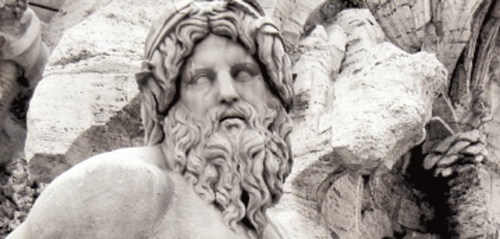
Qu’est-ce qu’un *deywos, mot qui a abouti au latin deus et au français « dieu » ? D’autres termes pour désigner les divinités ont été employés par les Indo-Européens indivis, à l’instar de *ansus, « esprit divin » [scandinave Ass, indien Asura) ou de *dhesos, « celui qui est placé (dans le temple) » [grec theos] et bien sûr le terme germanique *gutaz désignait « celui qu’on invoque », mais *deywos aura été le plus courant et le mieux conservé puisqu’on le retrouve à peu près partout (gaulois devos, germano-scandinave tyr, balte dievas, sanskrit devas, latin deus, iranien daeva).
La racine de *deywos est bien connue, et on la retrouve dans le nom de *dyeus, le « ciel diurne », à la fois phénomène physique et divinité souveraine. On peut la traduire par « céleste » aussi bien que par « diurne » mais aussi par « émanation de *dyeus ».
La divinité suprême *Dyeus *Pater est en effet l’époux d’une parèdre du nom de *Diwni (« celle de *dyeus ») qui est le nom marital de la déesse de la terre, son épouse naturelle, formant le couple fusionnel dyavaprithivi dans l’Inde védique. Les *Deywôs sont donc les fils de *Dyeus, tout comme les *Deywiyês (ou *Deywâs) sont ses filles. C’est leur façon de porter le nom patronymique de leur divin géniteur.
Les *Deywôs sont donc par leur nom même les enfants du ciel, ce qui place leur existence sur un plan astral, l’ « enclos des dieux » (le sens même du mot *gherdhos qu’on retrouve dans Asgard, le royaume divin des Scandinaves) étant situé sur un autre plan que le monde des hommes mais placé systématiquement en hauteur, généralement à la cime de la plus haute montagne ou de l’arbre cosmique, ou au-delà de l’océan, dont la couleur est le reflet du ciel bleu, dans des îles de lumière (Avallon, Îles des Bienheureux…).
Mais ils forment aussi une sainte famille, autour du père céleste et de la mère terrestre, l’un et l’autre régnant dans un royaume de lumière invisible aux yeux des hommes.
Toutefois, le ciel diurne ne s’oppose au ciel de nuit que dans une certaine mesure. Sous l’épiclèse de *werunos, le dieu « du vaste monde » [grec Ouranos, sanscrit Varuna], *Dyeus est aussi le dieu du ciel en général, les étoiles étant depuis toujours les mânes des héros morts, souvenir que les Grecs lièrent au mythe d’Astrée, déesse des étoiles et de la justice, qui abandonna le monde en raison des pêchés des hommes. Astrée elle-même n’était autre que la déesse *Stirona indo-européenne que les Celtes conservèrent sous le nom de Đirona (prononcer « Tsirona ») et que les Romains associèrent à Diane.
Quant à la parèdre de *Dyeus, on la retrouve sous les noms de Diane et de Dea Dia à Rome, de Dziewona en Pologne pré-chrétienne et de Dionê en Grèce classique, celle-là même qu’on donne pour mère d’Aphrodite. De même la déesse de l’aurore (*Ausos) est dite « fille de *Dyeus » [*dhughater *Diwos], terme qu’on retrouve associé à Athéna mais aussi plus rarement à Aphrodite.
*Diwni, l’épouse du jour, devient *Nokwts, la nuit personnifiée. Le *Dyeus de jour cède alors la place au *Werunos de nuit. Tandis que les autres *Deywôs dorment, *Dyeus reste éveillé. L’idée d’un dieu du jour et de la nuit, donc aux deux visages, est à rapprocher du Janus romain, dieu des commencements, époux alors de la déesse de l’année *Yera (Héra) ou de la nouvelle année (Iuno).
Thomas FERRIER (Le Parti des Européens)
19:45 Publié dans Traditions | Lien permanent | Commentaires (0) | Tags : tradition, mythologie, dieux, paganisme, zeus, indo-européens |  |
|  del.icio.us |
  |
|  Digg |
  Facebook
Gehanteerd ‘recht op asiel’ bestaat volgens Geneefse Conventie helemaal niet
Het is een 'fabeltje dat de Conventie de uitwijzing van erkende vluchtelingen zou verbieden’
Ieder land heeft het recht vluchtelingen te weigeren
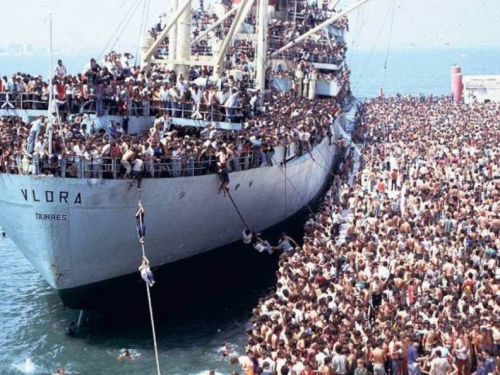
Vrijwel niet één van de miljoenen moslims die nu tot Europa worden toegelaten heeft volgens de internationale regels daadwerkelijk ‘recht’ om hier (tijdelijk) te blijven. Het islamiseren van ons continent en ons land is daarom een welbewuste politieke keuze.
Vandaag lazen we het weer eens: GroenLinks dat bij monde van Tweede Kamerlid Linda Voortman vindt dat ‘het recht op asiel niet mag worden uitgehold’ (2) en de grenzen dus open moeten blijven voor iedereen die zichzelf een ‘vluchteling’ noemt. De Duitse journalist, publicist en professor Peter Meier-Bergfeld schreef onlangs in de Wiener Zeitung dat de Geneefse Conventie door politici die pro-immigratie zijn weliswaar heel vaak wordt geciteerd, maar slechts zelden echt gelezen wordt. Doet men dat wel, dan blijkt het door Voortman en veel anderen aangehaalde ‘recht op asiel’ zoals dat nu wordt gehanteerd helemaal niet te bestaan.
Zodra politici en anderen de komst van miljoenen moslim’vluchtelingen’ naar Europa in twijfel trekken, steigeren de gevestigde partijen onmiddellijk en wijzen vervolgens op de Vluchtelingenconventie van Genève (GFK) en/of het Europese Mensenrechtenconventie (EMRK), waarin zou zijn vastgelegd dat wij de plicht hebben om iedere ‘vluchteling’ toe te laten.
Overigens heeft Groot Brittannië het EMRK al enkele maanden geleden buiten werking gesteld, maar dit terzijde.
Het GFK stamt uit 1951 en gold oorspronkelijk alleen mensen die uit het communistische Oostblok naar het Westen vluchtten. Pas in 1967 werd het GFK wereldwijd uitgerold. Inmiddels hebben 137 landen de conventie geratificeerd.
Het GFK omvat GEEN inreisrecht voor individuen en gaat NIET over het ‘recht op asiel’, maar is een afspraak tussen landen over het recht IN asiel, niet OP. Het vaststellen wie wel of geen vluchteling is wordt in het GFK geheel aan de onafhankelijke lidstaten zelf overgelaten.
Ieder land heeft het recht vluchtelingen te weigeren
Natuurlijk kan (volgens artikel 1) een vluchteling gewoon worden teruggestuurd als de gronden waarop hij werd toegelaten zijn weggevallen. Het GFK is tevens niet van toepassing op personen die misdaden hebben gegaan (artikel 1f), en vanzelfsprekend heeft iedere vluchteling ‘tegen het land waar hij zich bevindt, de verplichting om wetten en andere gerechtelijke regels, en tevens maatregelen die werden getroffen om de openbare orde te handhaven, te respecteren’ (artikel 2).
In artikel 9 wordt dat verscherpt: ‘Geen enkele bepaling van dit verdrag verhindert een staat... in het geval van zwaarwegende en buitengewone omstandigheden om tegen bepaalde personen voorlopige maatregelen te nemen, die deze staat voor zijn veiligheid noodzakelijk houdt.’ Illegalen kunnen daarom gewoon worden bestraft, tenzij ze direct uit een gebied komen waarin hun leven en vrijheid wordt bedreigd’, en ‘onder voorwaarde dat hij zich onmiddellijk bij de autoriteiten meldt en redenen geeft om zijn onrechtmatige binnenkomst te rechtvaardigen.’
Verbod op uitwijzing erkende vluchtelingen is fabeltje
Het is tevens een fabeltje dat artikel 32 en 33 van het GFK de uitwijzing van erkende vluchtelingen zou verbieden. Dit is ‘om redenen van openbare veiligheid en orde’ wel degelijk mogelijk, zelfs zonder dat de vluchtelingen hier gerechtelijk ook maar iets tegen kunnen ondernemen.
Het vaak aangehaalde uitwijzingsverbod in artikel 33 wordt in alinea 2 namelijk beperkt: ‘Op het voorrecht in dit voorschrift kan een vluchteling zich echter niet beroepen, als hij vanwege zwaarwegende oorzaken als een gevaar voor de veiligheid van het land waarin hij zich bevindt wordt beschouwd, of een gevaar voor de algemeenheid van deze staat vormt, omdat hij wegens een misdrijf of een bijzonder zwaar vergrijp gerechtelijk veroordeeld werd.’
Iedere drugsdealer kan daarom, ook als hij een erkende vluchteling is, worden uitgewezen. Hetzelfde geldt voor iedere vluchteling die zijn paspoort of andere identiteitspapieren vernietigd heeft, een vervalst paspoort heeft of op wat voor wijze dan ook bewust zijn eventuele uitzetting verhindert. Wie werkelijk voor zijn leven is gevlucht –en enkel dàt is grond voor asiel- zal dat dan ook niet doen.
Tot slot heeft zoals bijna alle internationale verdragen ook de Geneefse Conventie in artikel 10 een clausule waarmee het GFK gewoon kan worden opgezegd. ‘Iedere verdragsluitende staat kan het akkoord op ieder moment door een mededeling aan de secretaris-generaal van de VN opzeggen.’ De opzegtermijn bedraagt 1 jaar. Bovendien kan volgens artikel 45 op ieder moment om een herziening van het verdrag worden verzocht. (1)
Politieke keuze om Nederland te islamiseren
Het ‘asielrecht’ zoals de gevestigde politieke partijen in Den Haag dat nu gebruiken misbruiken om een onbeperkt aantal ‘vluchtelingen’, waarvan de meesten hun papieren hebben weggegooid en door tal van veilige derde landen zijn gereisd, bestaat in werkelijkheid dus helemaal niet.
Het is dan ook niets anders dan een welbewuste politieke keuze om onze landen te ondermijnen met het toelaten van grote aantallen mensen die overduidelijk niet voor hun leven zijn gevlucht, en die bijna allemaal een religieuze ideologie aanhangen die in vrijwel alle opzichten rechtstreeks tegen onze normen, waarden, cultuur en maatschappelijke orde ingaat. Kortom: Den Haag WIL Nederland islamiseren, ongeacht of dat nu wel of niet afgedwongen wordt door de antidemocraten in Brussel en Berlijn.
Xander
(1) Wiener Zeitung
(2) NU
19:21 Publié dans Actualité, Affaires européennes | Lien permanent | Commentaires (0) | Tags : actualité, europe, affaires européennes, politique internationale, immigration, réfugiés, migrants | | del.icio.us | | Digg | Facebook
Presseschau Februar 2016

Presseschau
Februar 2016
Wieder zahlreiche Links. Bei Interesse anklicken...



Asylunterkünfte - Essener SPD-Ortsvereine sagen Demo ab
http://www.derwesten.de/staedte/essen/fluechtlingsverteil...

18:44 Publié dans Actualité, Affaires européennes | Lien permanent | Commentaires (0) | Tags : journaux, presse, médias, actualité, allemagne, europe, affaires européennes | | del.icio.us | | Digg | Facebook
Fighting the Multicultural Left
Fighting the Multicultural Left
By Paul Gottfried
Ex: http://www.lewrockwell.com
In his latest column Pat Buchanan writes eloquently about a “civil war on the right.” According to Pat, “conservatives” are now locked in mortal combat over the future of the American Right, and the sides are divided between the fans and despisers of populist presidential candidate Donald Trump. From this narrative it seems that while some “conservatives” are rooting for the Donald, others are ready to bolt the Republican Party if he picks up the Republican presidential nomination.
Although the events Pat describes are indeed unfolding, his label is misleading. Whatever political term one may decide to confer on Trump, most of those who are now railing against him, led by Rich Lowry and his band at National Review, are hardly “conservative.” They are essentially leftists, who are slightly less leftist than their friends at the Washington Post and at other national papers, whose editorial pages are graced by such “conservatives” as Jennifer Rubin, Charles Krauthammer, George Will, and Michael Barone. Much of what looks like the Right has been forced to live in the shadows since the neoconservatives in conjunction with the establishment Left helped to marginalize a truer Right in the 1980s. Real “conservative wars” did take place in the 1980s; and the paleoconservatives and paleolibertarians were overrun by the other side’s superior resources. The winning side was led by the neoconservatives who were helped significantly by the journalistic Left.
What happened in those years resulted in having “conservative” and “liberal” labels assigned to factions that had once belonged on the Left. By now of course the “conservative” label means whatever the media and our two official parties wish it to mean. Thus we encounter advocates of gay marriage, David Boas and John Podhoretz featured among National Review‘s “conservatives,” in a battle against the supposed interloper from the left, Donald Trump? It is certainly hard, and perhaps even impossible, to locate the “conservative” substance or worldview uniting the critics of Trump in National Review. Why should we think, for example, that National Review expresses “conservatism” when it protests Vladimir Putin’s critiques of “Western social decadence” and when a National Review-regular contributor wishes to intervene in Ukraine on behalf of the transgendered? Does the magazine represent the “conservative” side in international relations, as opposed to, say, self-described leftist Steven Cohen, who has urged greater moderation in dealing with the conservative nationalist Russian government?
Why are Republican presidential candidates who yearn to call Bibi and pledge him our unconditional support as soon as they’re elected taking the “conservative” side in anything? And is being in good standing with Rupert Murdoch and Sheldon Adelson the current operative definition of being a “conservative”? Perhaps Richard Lowry and Marco Rubio could answer this question for us. But it’s unlikely they would, since I’m considered to be the sworn enemy of “conservativism,” whatever that term has now come to mean. Not surprisingly, National Review and most of its anti-Trump critics ran to affix the label “conservative” to Mitt Romney, John McCain and to other centrist, leaning-left Republicans when they were nominated for president. The term “conservative” for these Trump-critics is synonymous with being acceptable to the Republican establishment.
It was also tiresome listening to Megyn Kelly on Fox news explain that “conservative luminaries” have denounced Trump as a leftist. Most of those who did the denouncing would have been viewed as social radicals by the American standards of the 1950s, that is, before the feminist and gay movements took over and before the government became an agency of accelerating Political Correctness. Further, the word “luminary” is one that I would reserve for figures of the stature of Shakespeare, Newton, Mozart, Goethe, and George Washington. Lesser but also significant luminaries in my time were Murray Rothbard, M.E. Bradford, Sam Francis and other brilliant thinkers whom Rich Lowry’s movement of yuppie journalists and pretentious cultural illiterates helped turn into non-persons.
Talking about the mislabeling of what Trump called a “dying” publication (which unfortunately is still not dead enough), the most unconvincing defense of NR’s tear against Trump was from those who wish to remind us that Bill Buckley set up a publication that would “stand athwart the time.” Since NR in 1955 was meant to be a “conservative” fortnightly, we are therefore supposed to believe that it has remained such. The problem with this evidence is that it proves nothing at all, except that in 1955 the founder of a particular enterprise had a certain intention which he may or may not have realized. One may doubt whether Buckley’s brain child ever realized its proposed goal (certainly those on the right whom he expelled would have questioned that).
But even if we do concede arguendo that the magazine was properly established to present conservative positions, why would I have to believe that sixty years later it is still doing the same thing? In the 1950s the New York Times was a pro-Eisenhower Republican newspaper; in 1940 the French daily Le Figaro was a right-wing nationalist one; and as late as fifteen years ago, Hans-Hermann Hoppe described the Frankfurter Allgemeine Zeitung quite accurately to me as “eine bürgerliche Zeitung (a bourgeois newspaper).” All these publications are now integral parts of the propaganda apparatus of the multicultural Left, although Le Figaro and the FAZ may be more sympathetic to corporate capitalism than the spasmodically socialist NYT.
Newspapers and news magazines change their politics over the decades, and most of them that have survived into our now perfected “liberal democracies” have moved decidedly to the left on a wide range of social and political issues. Despite the fact that its advertising still features, with ample support from leftist friends, the “conservative” name brand, National Review has undergone the kind of fundamental change that has characterized other publications that once belonged recognizably to the Right. Evidence of how far to the left this fortnightly has moved became apparent to me when I chanced upon a long tribute on National Review-Online to the Communist revolutionary Leon Trotsky. Particularly noteworthy about this fulsome tribute, by Steve Schwarz, was that it was prominently published in a “conservative” magazine.
The same publication had actively participated in purging and marginalizing those right-wing contributors (like me), who had failed to meet the PC criteria of the magazine’s control people. As I read NR’s tribute to a failed Communist global revolutionary, it dawned on me that what the editorial board understood as “conservative” was something far closer to Trotskyism than it was to what had passed for “conservatism” among NR’s founders in 1955. Needless to say, the term in question had signified something different to interwar opponents of the American welfare state than it did to Bill Buckley. Still, the two sides spoke to each other in a meaningful fashion. Although strife broke out on the right when Buckley espoused his own form of liberal interventionism, the anti-welfare state isolationists of the 1930s and the original editors of NR shared enough of the same universe of discourse to engage in communication. Moreover, by the present standards of ideological conformity that prevail at Lowry’s operation, the post-World War Two debates on what still looked like some kind of Right were models of free exchange. But today NR‘s editors and those whom they’ve helped flush down a memory hole could not even begin to hold a civil conversation. This may be attributed to the not insignificant fact that NR’s “conservatives” have taken over so much of the leftist spirit of the age that there is nothing conservative that they represent any longer.
See this quotation from NR; it’s unforgettable: “To my last breath, I will defend Trotsky who alone and pursued from country to country and finally laid low in his own blood in a hideously hot house in Mexico City, said no to Soviet coddling to Hitlerism, to the Moscow purges, and to the betrayal of the Spanish Republic, and who had the capacity to admit that he had been wrong about the imposition of a single-party state as well as about the fate of the Jewish people. To my last breath, and without apology. Let the neofascists and Stalinists in their second childhood make of it what they will.” [see Paul Gottfried’s commentary on Takimag.com, April 17, 2007]
Paul Gottfried [send him mail] is Horace Raffensperger Professor Emeritus of Humanities at Elizabethtown College and author of Multiculturalism and the Politics of Guilt, The Strange Death of Marxism, and Conservatism in America: Making Sense of the American Right. His latest book is Encounters: My Life with Nixon, Marcuse, and Other Friends and Teachers.
creativecommons.org
Previous article by Paul Gottfried: From Under the Rubble
11:39 Publié dans Actualité, Réflexions personnelles | Lien permanent | Commentaires (0) | Tags : multiculturalisme, paul gottfried, gauche, gauche multiculturelle, états-unis, actualité | | del.icio.us | | Digg | Facebook