

Alexander LATSA ( http://alexandrelatsa.blogspot.com )
mercredi, 07 octobre 2009
Russia is the future of Europe!
Russia is the future of Europe !

"There is no longer any doubt that with the end of the Cold War a lengthier world development period came to an end, spanning 400-500 years during which European civilization had dominated in the world. The historical West had consistently advanced on the edge of this dominance."
" The new stage is occasionally defined as “post-American.” But, of course, this is not a “world after the US” and even less so without the US. It is a world where as a result of the rise of other global centers of power and influence the relative significance of America’s role dwindles, as was already the case over recent decades in the global economy and trade. Leadership is an entirely different question though; it’s above all the question of achieving harmony within a circle of partners, of the ability to be the first, but among equals."
"To define the content of an emerging world order, such terms as multipolar, polycentric and nonpolar are also put forward"
"We do not share the concerns that the current reconfiguration in the world will unavoidably lead to “chaos and anarchy.” There goes the natural process of the formation of a new international architecture – political as well as financial-economic – which would correspond to the new realities."
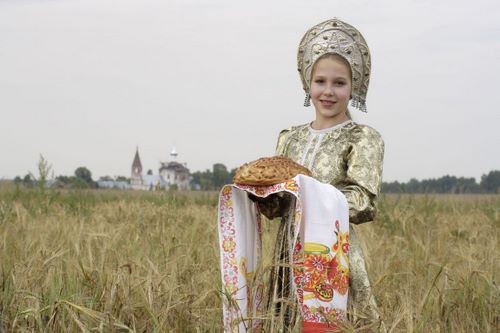
"Russia conceives itself as being a part of European civilization having common Christian roots"
"The rigid Anglo-Saxon model of economic and social development is again, as it did in the 1920s, beginning to wobble.the global financial-economic architecture was largely created by the West to suit its own needs. And now that we watch the generally recognized shift of financial-economic power and influence towards the new fast-growing economies, such as China, India, Russia and Brazil, the inadequacy of this system to the new realities becomes obvious. In reality, a financial-economic basis is needed which would conform to the polycentricity of the contemporary world. The manageability of world development can’t be restored otherwise."
" The new stage is occasionally defined as “post-American.” But, of course, this is not a “world after the US” and even less so without the US. It is a world where as a result of the rise of other global centers of power and influence the relative significance of America’s role dwindles, as was already the case over recent decades in the global economy and trade. Leadership is an entirely different question though; it’s above all the question of achieving harmony within a circle of partners, of the ability to be the first, but among equals."
"To define the content of an emerging world order, such terms as multipolar, polycentric and nonpolar are also put forward"
"We do not share the concerns that the current reconfiguration in the world will unavoidably lead to “chaos and anarchy.” There goes the natural process of the formation of a new international architecture – political as well as financial-economic – which would correspond to the new realities."
"Russia conceives itself as being a part of European civilization having common Christian roots"
"The rigid Anglo-Saxon model of economic and social development is again, as it did in the 1920s, beginning to wobble.the global financial-economic architecture was largely created by the West to suit its own needs. And now that we watch the generally recognized shift of financial-economic power and influence towards the new fast-growing economies, such as China, India, Russia and Brazil, the inadequacy of this system to the new realities becomes obvious. In reality, a financial-economic basis is needed which would conform to the polycentricity of the contemporary world. The manageability of world development can’t be restored otherwise."
*****
More than a year after Sergei Lavrov’s assertions (June 2008), the only report that comes to mind is that the financial crisis has totally confirmed those assertions. At the dawn of the autumn 2009, the Western world is about to leave History by the smallest door, after having transmitted its metastasis to the whole humanity. In this world in transition, it would be good to wonder what game the European populations intend to play.
At that time where the line breakages are less and less legible, it would be good to remember that the only chance of survival of the Europeans is to get out of the suicidal atlantist rut and to develop a true and integrated collaboration with the Federation of Russia. This European-Russian partner could contribute to peace within Heartland, in the hart of this new multi polar and decentralized world.
In a multi polar and decentralized world the European unity is unavoidable
Far from the ideal of psychology armchair, the reality of tomorrow is based on demography and economy. The decrease of America’s influence is also proved by the increase of many other actors: Brazil, Russia, India, China and the Arab Muslim world, both rich in energy and human capital. The world population reaches 6, 5 billions of inhabitants and will be over the 9 billions in 2050. Europe counts today 758 millions inhabitants 91/3 of the EU0 and should see its population fall down, between 564 millions and 632 millions inhabitants i.e. 7 % to 8% of the world population and less than 20% of the GDP (about the same than China on its own).
France as an example should count 70 millions inhabitants in 2050, i.e. 0,8% of the world population, 1 inhabitant out of 3 being more than 60 years old and half of its youngest population being mainly African and from Northern Africa.
In this context, and despite the punchy speeches of credible and interesting personalities (Nicolas DuPont Aignant, Paul Marie Couteaux or Jean Pierre Chevènement to only quote those), the way out of the EU and the return to a national sovereignty is surely the very last solution to think of.
The EU is imperfect to 99%, because being led by Brussels, and under the influence of ‘’the American party’’, who treats Europe as an American colony.
Worse the Americans (who wish first to maintain their dominating position and defend their own interests) do not want a united and powerful Europe. This Europe may not follow them in their military offensives or even oppose to them diplomatically and maybe militarily.
This is the reason why the Americans try everything in order to have their Troy horse entering the EU (Turkey) in order to create dissension and destabilize a homogeneous whole on its way.
Let us not forget, at last, that Turkey is the second army of NATO and with Israel the pawn of America in the Near East, while occupying Cyprus.
This is the reason why America has done everything in order to persuade De Gaulle not to obtain the nuclear independency and to stop France to exit the NATO commandment.
An independent France would be a prelude to an independent Europe. The latter could lead to the worse situations for the US strategists: the loss of the advantages gained at the end of the World War II with the occupation of Western Europe and therefore the loss of the Heartland western side.
This is also the reason why some strategists of the ‘American party’ in Europe have understood the necessity to support the EU refusals through the anti EU and the Europhobic parties such as Ireland with the Libertas candidate.
More recently, the Europhobic Philippe de Villiers has also joined the atlantist party of Nicolas Sarkozy, UMP, a party though openly pro EU, after that UMP has had France joining the NATO commandment.
The loss of sovereignty for the European countries is a process that went through 2 stages.
* The first one is the end of the empires, originating from the Westphalia treaty, supporting the national identity concept (nation state) as the primary identity. This “nationalisation” of the European identities has generated the 30 years war that destroyed our continent in the first half of the 20th century. Strange coincidence, the Westphalia treaty ended a European civil war that lasted 30 years.
* The second is the stage of the fragmentation into regions. This process, are we told, is very progressive politically (i.e. regions would be the ultimate stage of the European integration). But it is in fact the result of a deliberate external political process aiming at weakening Europe, by fragmenting in small pieces that are left with neither economical independence nor military sovereignty.
This was the case in particular for Eastern Europe, e.g. Czechoslovakia, Yugoslavia or the USSR, for obvious reasons: Those nations are not under the western influence since long so they are suspected of being hostile to the Euro –Atlantic Axis.
Of course, it is no surprise that most of the regionalist European political parties are also the most Europhiles and the ones fighting most actively for a NATO expansion and a Euro – Atlantic integration.
Those same political alignments are shared by the Brussels commissioners, devoted agents of the American interests in Europe.
The Europe of Brussels is of course the opposite of the powerful and independent Europe that we want. The EU made of flesh, the reel EU (the non legal one) is the only aim to defend in order for the Europeans to control their destiny and to become more than spectators, to become actors.
The world of tomorrow though will probably not be a more opened world than the one we know. It surely will be a world made of blocks in conflict, conflict for territories zones and civilisations.
In this world of increasing tensions the key for Europe is to gain a structure of defence that belongs to it and allows her to protect its interests and citizens.
In that sense, the proposals of President Medvedev on the necessity of creating a Pan European structure of security (replacing NATO) are a real challenge and the most interesting one, for Europe.
In a multi polar world, let us exit NATO and create a continental and NON Atlantic defence’s system.
NATO is a military alliance created is 1949 in order to face USSR, but also in order to avoid a new risk to Europe (as it had been the case with Germany). Fast, this alliance, under the Anglos Saxons’ influence, led to the creation of a competing alliance in the other bloc, the soviet one, in 1955: ‘’ The Warsaw Pact’’. This double alliance split up the world in two rival blocs, until 1958 while the De Gaulle France decided to leave the Anglo Saxon block and to develop its own nuclear programme.
In 1966, France leaves the NATO commandment and the NATO HQ moves from Paris to Brussels, which is still the case nowadays. Brussels hosts the European institutions as well as the NATO ones. 30 years later in 1995, the French President Jacques Chirac started the negotiations to get back into the integrated commandment of NATO. This return was confirmed and focalized by President Sarkozy on the 17th March 2009.
Why this return ? What were the motivations of France to become an essential NATO actor ?
NATO has got today only two essential functions, both in the interest of America and both against the European interests.
First it has become a conquest weapon of the Eurasian heartland by America and its extension towards the East and the Russian borders. New nations are asked to join under wrong justifications, i.e. the historical fear of a Russian imperialism. But this imperialism does not exist any longer. Only the American strategists keep it alive at perfection.
Under the pretext of entering the Euro-Atlantic partnership, NATO installs itself in the hart of Europe, pushes Russia back towards its own eastern borders and divides Europe once more, with the installation of American bases in front of the Russian borders.
This is the real aim of the Serbia campaign. Serbia is an ally of Russia in the logic of the Pentagon. With the bondsteel base but also the orchestrated revolution in Ukraine, the aim of America was to implement an American base in Crimea, in order to respond to the Russian base.
Since the 11/09/NATO has become a crusaders army at the eyes of the Muslim world, the same American strategists trying to convince us that NATO is a protection against the aggressive and terrorist Islamism.
No need though to be a scientist in order to understand that the Iraq and Afghanistan campaigns, if they could be won (which will probably not be the case) will not defeat ‘’terrorist’’ Islamism. Islamism is used today like an excuse in order to justify much older geopolitical objectives. Do we not suspect that the Afghanistan attack has been justified by the 11th September, but planned much before and that its reel aim had been the implementation of US troops in the heart of Eurasia?
Can we, without laughing, believe that the baathist Iraq of Saddam Hussein was one of the vectors of the world Islamist terrorism, or targeted for its petrol dwells?
Domination wars of the USA are wars aiming at controlling the natural resources that are concentrated (apart from Arctic) in the Arab peninsula, Iraq, Iran, Persian Gulf, Southern Russia (Caucasus) and Afghanistan.
Those resources conflicts are provoked by wrong motives, which are not Europe’s one. Worse, they may lead Europe to ethnical and religious tensions on ‘’its’’ territory.
Yugoslavia disintegration showed us how much a security structure was essential in order to maintain its harmony and face the external destabilizations. The recent Kosovo issue has perfectly shown that Europe is the bridge head that serves the USA who attack and invade Eurasia. America therefore creates tensions between European populations and in particular with Russia, to whom the ‘’Serbia’’ warning was addressed.
The vote of the Silk road strategy Act by the US Congress in 1999 was aimed at ‘’favouring’ the independence of the Caucasus and the Central Asian countries and at creating a land bridge in order to divert the road of the Silk Road to the Turkish harbours, therefore a NATO country.
The BATCH oil pipeline that passes by Georgia is following the same strategy and also partly explains the development of the military assistance to Georgia, since the arrival at power of Mikhaïl Saakachvili.
In a multi polar world with many centres, we could avoid a continental disintegration
In 1999 despite the attack on Serbia and after 10 years of total collapse, the assumption by Vladimir Poutine straightens Russia up and replaces the country at the front of the word political scene. Europe has toppled over NATO (by its participation to the bombing of Serbia). Russia, China, and the Muslim nations of Central Asia create in 2001 the Shanghai organisation as well as the OSTC in 2002. Those military Eurasian and inter-religious alliances aim at replying to the double Chinese and Russian surrounding by the American army and at defending the Eurasian regional well defined area.
Zbigniew Brezinski said: «The Eurasian strategy of the USA brought Russia and China closer. The two continental powers are building a real military alliance in order to face the Anglo Saxon coalition and its allies. »
The American offensive towards the East (from Berlin to Kiev) has materialized in two majors steps, from 1996 until 2009.
In 1996, GUUAM was born. It regroups Georgia, Uzbekistan, Ukraine, Azerbaijan and Moldavia.
Those nations wish to get out of the post soviet bosom, right after the Berlin wall fall and while Russia was collapsing. It is not surprising that those nations who have strategic geographical positions, consequently have been the victims of revolutions financed by the CIA (orange revolution, tulips, roses and recently in Moldavia too after the elections). They also have been the victims of changes of western regimes. The most representative members of this association are the observers, Turkey and Latvia (!).
Nevertheless those regimes have not made it through, despite the expectations of their supporters (integration to NATO and EU, improvement of life).
On the contrary, those overthrown regimes have degraded economically and no integration into the euro-atlantist model occurred.
This is the reason why the departure of Uzbekistan in 2005 and the absence of concrete realization of the organization have led the latter to become inexistent politically. In May 2006 the political scientist Zardust Alizadé from Azerbaijan expressed his doubts regarding the development of the alliance and of the alliance’s ‘’practical results’’.
Today, the second step sees a quite aggressive materialization through the creation of a new front that we may call GUA (Georgia, Ukraine, and Arctic). In Georgia: the political incapacity of the president has pushed the American strategists to launch a military operation in August 2008. This operation failed because the Russian army has replied with a lot of strength and has liberated the territories of Ossetia and Abkhazia. This conflict is the first conflict opposing Russia to America out of the Russian borders. The previous conflict had been the Whabitt destabilization in Chechnya, instigated mainly by the CIA.
In Ukraine the recent conflicts about gas show the growing tensions and a bright observer recently said that ‘’ a limited conflict, under the pretext of a territorial dispute, will surely burst and lead to a rupture of the gas’ supplies for a more or less long period of time. Those gas crises are provoked in order to train the Europeans to get used to such cuts.’’
Artic would need another article just for itself. I invite my readers to read my previous articles on the topic here and there and to consult the blog « zebrastationpolaire ».
Those manoeuvres of surroundings, of containment and of destabilization have various objectives:
- To control the Black sea the Caspian and Baltic seas perimeters as they are essential zones of transit between the East and the West.
- To control the future corridors of energy in particular via a building project of oil and gas pipelines going round Russia but linking the regions of the Caspian sea with the ones of the Black and the Baltic sea.
- To spread the NATO influence further East in the heart of Eurasia in order to reduce the sphere of influence of Russia (on its close stranger) but mainly in Europe, and avoid a potential development of the Chinese influence towards Central Asia.
- To spread the NATO influence further East in the heart of Eurasia in order to reduce the sphere of influence of Russia (on its close stranger) but mainly in Europe, and avoid a potential development of the Chinese influence towards Central Asia.
Of course, a non experienced reader will tell me that the Russians and the Americans have never stopped to fight since 1945 and that globally this is not the business of Europe and of the Europeans. Well, this is exactly the contrary.
In a multipolar world with many centres, the Euro-Russian Alliance is the key stone for peace on the continent.
The consequences we told you about in this article are dramatic for Europe. They will cut Europe from Russia at a civilization, geopolitical, political and energetic level.
They will create a new wall in Europe, not in Berlin but in the heart of Ukraine, separating the West (under the American influence) from the East (under the Russian influence).
In a more pragmatic way this fracture nearly cuts the Orthodox Europe from the catholic and protestant Europe, underlining the theory of S.Hungtinton in his book « The shock of civilisations ». Last, let us note that China, a crucial geopolitical and economical actor, probably sees Europe (through NATO) as co-responsible of the surrounding situation that it (China) faces, West (military American bases in central Asia) and East (the Pacific along its shores, with also many American bases).


This rupture with two essential actors that are Russia (the biggest country in the world) and China (the most populated country of the world) are very serious.
In case of growing tensions with NATO and OCS, France and the other European countries would be in a conflict with an organisation that nearly groups together, one man out of three in the world, covers 32, 3 millions of km² et resources wise groups together 20 % of the petroleum world resources, 38% of natural gas, 40% coal and 50% uranium.
This strategy of separation of Russia and Europe and of Western and the centre will limit Europe in a micro territory slot in the west of the continent and will cut t from the huge possibilities that a partnership with Russia would offer.
· Europe needs Russia energy wise because Russia has got the gas and the petroleum resources that Europe needs. Russia is a stable supplier as its relation with Turkey proves it. Turkey has no supply problem. Just remember that the supply cuts during the war with Ukraine were due to the latter, but funnily enough the media have made Russia guilty). The topic ‘’energy’’ is essential because Europe under the American commandment is proposed very risky alternatives, as for instance to replace Russia by Turkey (A NATO country aiming at becoming an EU member!). . This replacement of Russia by Turkey would also mean to have Nabbuco instead of South Stream and to participate to conflicts for energy (like Iraq). Europe could surely avoid all those troubles.
· Europe needs the fabulous Russian potential, the human one (140 millions inhabitants), and the geographical one (17 millions km2 and its opening on the Pacific). Europe would therefore become a crucial actor, especially with the Asian world, the latter being in a full development process.
· Russia also needs Europe and the Europeans not only for allocating its primary resources but also for its technologies and human capital that it could use to fight against it depopulation at the East of Oral. Last but not least it needs Europe like a natural and complementary ally, originating from the same civilisation.
This Euro- Russian unity is the only warrant of peace and independence for the continent populations. It is vital, it is strongly advised, because the Western European and the Russians belong to the same civilisation first of all.
As Natalia Narotchnitskaïa recently said in Paris during a colloquy:
« The real cooperation between Russia and Europe could give a new energy to our continent, at the dawn of the third millenary. The big roman – German and Russo- Orthodox cultures share one and only one apostolic foundation, the Christian and spiritual one. Europeans, whether they are western or Russians, have given to the world the biggest examples of the orthodox and Latin spirituality.’’
These are the reasons why Russia is the future of Europe.
00:25 Publié dans Actualité | Lien permanent | Commentaires (0) | Tags : europe, russie, affaires européennes, eurasisme, eurasie, géopolitique, politique internationale, géostratégie, stratégie |  |
|  del.icio.us |
  |
|  Digg |
  Facebook
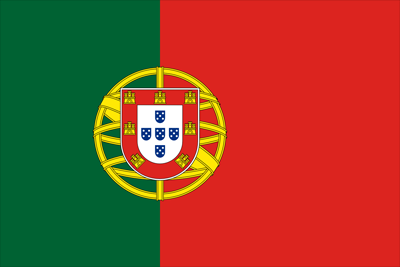
Politische Information über Portugal
Politische Information über Portugal
Portugal hat ja auch letztes Wochenende gewählt
Dort gibt es auf der "Rechten" (im weitesten Sinne) zwei Parteien,
die rechtsliberalen Sozialdemokraten (in der deutschen Presse oft konservativ genannt)
http://de.wikipedia.org/wiki/Partido_Social_Democrata
http://www.politicadeverdade.com/
und das rechtskonservative demokratisch-soziale Zentrum (in der deutschen Presse oft als Rechtspopulisten erwähnt), die mit über 10 Prozent ein recht gutes Ergebnis einfuhren. Hier ist man katholisch-konservativ, gegen Zuwanderung und Abtreibung...
http://de.wikipedia.org/wiki/Centro_Democr%C3%A1tico_e_Social_%E2%80%93_Partido_Popular
http://www.cds.pt/
Die weitere Parteienlandschaft Portugals ist stark linkslastig. Kommunisten gemeinsam mit Grünen in einem Bündnis gemeinsam im Parlament, und dann neben den regierenden Sozialisten noch ein trotzkistisch beeinflusster Linksblock, zudem gibt es bei den nicht vertretenen Parteien auch mehrere weitere Marxisten.
Ich bin aber noch auf drei weitere interessante rechte Parteien gestoßen, die allerdings alle nicht einen Prozent bei der Wahl bekommen haben.
Die Monarchisten - Partido Popular Monárquico
http://de.wikipedia.org/wiki/Partido_Popular_Mon%C3%A1rquico
http://www.ppm.pt/
(auf die Flagge klicken)
Die "Rechtsradikalen" - Partido Nacional Renovador
(scheint so etwas wie eine gemäßigte NPD zu sein; Übrigens mal ein Beispiel für gelungenen "Entrismus" von rechts)
http://de.wikipedia.org/wiki/Partido_Nacional_Renovador
http://www.pnr.pt/
(die Internetseite war heute nicht vorhanden, gestern war ich aber noch drauf. Vielleicht ein Umbau? Vielleicht sind sie auch enttäuscht vom schlechten Wahlergebnis (ich glaube 0,2 Prozent))
Somit einige Bilder, als sinnliche Ergänzung:
http://3.bp.blogspot.com/_TGTJ1-LWGo4/SFfAPPzhBjI/AAAAAAAAABw/IErlzWF-wIQ/s320/Revista.JPG
http://img242.imageshack.us/img242/7199/pnr2hy6.png
http://ofogodavontade.wordpress.com/2009/08/15/nacional-e-social/
http://portugalmensal.blogspot.com/2008_05_01_archive.html
http://aspirinab.com/ficheiros/eca-pnr.jpg
Am interessantesten erscheint mir allerdings die Partei, die bei der Wahl am allerwenigsten Stimmen erhalten hat. Wirkt irgendwie alles sehr positiv.
Die ökologisch-konservative "Partei der Erde" - Partido da Terra
http://de.wikipedia.org/wiki/Partido_da_Terra
http://www.mpt.pt/mpt2009/index.php
Nun vielleicht ist das für den ein oder anderen interessant, vor allem wenn man Portugiesisch versteht.
00:15 Publié dans Affaires européennes | Lien permanent | Commentaires (0) | Tags : europe, affaires européennes, portugal, politique, politique internationale, péninsule ibérique | | del.icio.us | | Digg | Facebook
Fascism and the Meaning of Life
Fascism and the Meaning of Life

Review: MODERNISM AND FASCISM: The Sense of a Beginning under Mussolini and Hitler. Roger Griffin (Palgrave Macmillan, Basingstoke 2007)
Roger Griffin, Professor in Modern History at Oxford Brookes University, first introduced the idea of 'Palingenesis' to the field of fascist studies over 15 years ago, making him immediately a leading figure in his chosen vocation. He isolated the syncretic fascist core as being palingenetic, populist ultra-nationalism, with overtones of a phoenix-like heroic rebirth. Since then he has extended and elaborated his theory that essential to the definition of the 'fascist minimum' is the notion of national rebirth or renaissance - “myths that generated policies and actions designed to bring about collective redemption, a new national community, a new society, a new man...engineered through the power of the modern state.” - culminating in this masterwork which rightly places fascism at the centre of wider modernist movements.
Epiphanic versus Programmatic Modernism
Griffin's insights have previously been recognized as audacious and perceptive, no more so than here. Part One of the book tackles the at first seemingly tricky concept of Modernism itself, which Griffin clarifies brilliantly. Modernism's “common denominator lies in the bid to achieve a sense of transcendent value, meaning of purpose despite Western culture's progressive loss of a homogeneous value system and overarching cosmology (nomos) caused by the secularizing and disembedding forces of modernization.” Modernization is experienced by those caught up in its slipstream as a relentless juggernaut unzipping the fabric of meaningful existence and leaving in its wake the abyss of permanently unresolved ambivalence. In short, Modernism is defined as a reaction against the decadent* nihilism of intellectual, societal and technical modernization. While Marx, other Leftists and liberals consider modern man's condition as one of angst and alienation induced by class warfare and industrial production, the Right sees anomie as both the cause and the principle symptom of our modern malaise. “It is the black hole of existential self-awareness in all of us, our fear of 'the eternal silence of infinite spaces' that so alarmed [Blaise] Pascal, which produces culture”. This modern culture is further divided by Griffin into what might be called introvert and extrovert reactions: the introvert reaction is generally individualistic and in Griffin's expression an 'epiphanic modernism' – the path of the artist – while the extrovert, collective reaction is defined as 'programmatic modernism'. The latter seeks to change the world and resolve the permanent crisis of modernity (“all that is solid melts into air” - Marx) by a collective act of 'reconnection forwards' (Moeller van den Bruck). It is not difficult to make the short step from 'programmatic modernism' to fascism; the transcendent politics proposed by van den Bruck at the beginning of the Twentieth Century are not so different from Guillaume Faye's 'Archaic Futurism' at its end. Both are, in the phrase of Guy Debord, “technically equipped archaism”.
Amongst the epiphanic modernists Griffin includes Nietzsche, Eliot, Joyce, Proust, van Gogh, Kandinsky and Malevich, but perhaps the truth of Griffin's argument is demonstrated by the man widely-acknowledged as the greatest modern painter: Picasso. In his earlier cubist works, Picasso sought inspiration from the primitivism of African masks, and later in the archetypal Mediterranean symbols of horses and particularly bulls (which surprisingly Griffin doesn't mention).
Gardening State
Following the exhaustive and enlightening dissection of modernism in Part One, Griffin explores the implications and applied politics in Part Two, where “modernity turbocharged by the conjuncture of the First World War, the Russian Revolution, the collapse of three absolutist regimes and a powerful monarchy, with an influenza epidemic that killed as many as 100 million people world wide had made the modernist drive to ward off the terror of the void – cultural, social and political – a phenomenon of mass culture. The new era would be a creatio ex profundis, an act of creativity defying the void.” Fascism aimed for a complete overhaul, in accordance with Emilio Gentile's observation of totalitarianism as “an experiment in political domination undertaken by a revolutionary movement.” Griffin introduces the idea of the pre-War Fascist and National Socialist regimes as 'gardening states' striking a successful balance between idyllic ruralism and technocratic modernism, the “compelling new imperative” that it obeyed “to clean up, to sterilize, to re-order, to eliminate dirt and dust” (Frances Saunders). Or neatly, if flippantly, summed up by Lars Lindholm, “For example, the Aryans (i.e. Germans, the blond and blue-eyed) are direct descendants from the Atlantean root-race, whereas the Jews, Negroes, Slavs, and anyone else for that matter, are unfortunate mutants, further away from Homo sapiens than the snottiest gorilla. The reason for all the troubles in this world is the presence of these unsavoury species that the master race should mercifully do away with so that peace and quiet could be restored and life imbued with a bit of style.” PILGRIMS OF THE NIGHT: Pathfinders of the Magical Way (Llewellyn, St. Paul MN, 1993). It was this same vision of hygienic modernity which inspired the building in London of bright new health centres in Peckham and Finsbury during the 1930s. But mild English pragmatism was no match for German determination, where public buildings were “an act of sacralization symbolized in the toned bodies of Aryan workers showering in the washrooms of newly built hygienic factories or playing football on a KdF sportsground, their camaraderie and zest for life expressing the hope for a young, healthy nation.”
Fascist aesthetics
Included in the book are illustrations of art and architecture not usually associated with the pre-War Fascist and National Socialist regimes: from the soaring arch designed by Adalberto Libera for the aborted EUR '42 exhibition in Rome (later ripped-off by Eero Saarinen for the St. Louis Gateway Arch), to the cool steel and glass structure designed by Morpugo encasing the Ara Pacis of Augustus, the 1933 blueprint for the new Reichsbank in Berlin by Gropius, or Baron Julius Evola's painterly experimentations with Dadaism. Goebbels is revealed as a fan of Edvard Munch and Fritz Lang, while Le Corbusier submitted plans for the new town of Pontinia in the recently-reclaimed Pontine Marshes. Fritz Todt celebrated Aryan technocratic power in his construction of autobahns and later the Atlantic Wall. Irene Guenther is quoted extolling 'Nazi Chic' with fashion displaying “another countenance, one that was intensely modern, technologically advanced, supremely stylized and fashionably stylish” and the Bauhaus influence on the new, burgeoning market in consumer durables is emphasised. Unlike previous historians of fascism with their simplistic and inflexible frameworks, Griffin admirably demonstrates that “fascism, despite the connotations of regression, reaction and flight from modernity it retains for some academics, is to be regarded as an outstanding form of political modernism”, encapsulating a “deadly serious attempt to realize an alternative logic, an alternative modernity and an alternative morality to those pursued by liberalism, socialism or conservatism”.
Ambition
Griffin is well aware of the boldness and ambition of his arguments. “Post-modern” academia is notoriously hostile to transdisciplinarity and historians today are loath to erect grand structures of interpretation and meaning. Few historians are less fashionable than Oswald Spengler, or even Samuel 'Clash of Civilizations' Huntington. Griffin is well aware of this problem, and in the introduction he specifically places MODERNISM AND FASCISM within the context of 'Aufbruch' (a breaking out of conventions). For this reason Griffin's style is reflexive: he is conscious of the fact that in proposing a new syncretic historical worldview he is in some ways mirroring the dynamics of fascism itself. Of course, European Identitarians and New Rightists will have no problem with the concept of evolutionary synthesis (it's no accident that one of the principal English-language New Right websites is called Synthesis), nevertheless Griffin is correctly keen to show and stress that his work is non-totalizing. Overall his style is extremely lucid and arguments that may appear at first to be mere flights of fancy are revealed as having firm foundations, unlike the convoluted, almost impenetrable and until recently-fashionable critical theory style of, say, Andrew Hewitt's POLITICAL INVERSIONS: Homosexuality, Fascism and the Modernist Imaginary (1996) or the late Lacoue-Labarthe's HEIDEGGER, ART AND POLITICS (1990).
The sky is falling on our heads
At the end of his book, Griffin draws attention to a BBC News report from September 1998. “The sky is falling” it announces dramatically (shades of Asterix and Obelix here) “The height of the sky has dropped by 8km in the last 38 years, according to scientists from the British Antarctic Survey. Greenhouse gasses like carbon dioxide are believed to be responsible for creating the effect.” He goes on to speculate, “Had Nietzsche been philosophizing at the beginning of the twenty-first century instead of the end of the nineteenth, amidst Swiss glaciers shrivelling under skies where the abstract art of vapour trails punctures illusions of transcending Good and Evil, maybe he would have 'rethought all his ideas' in a different, greener 'framework'. Instead of railing against the advent of 'nihilism', 'decadence' and 'the last man', he might have realized that the time for any sort of 'eternal return' is rapidly running out in a literal, not symbolic sense.” In the intervening 9 years since that ominous BBC report, our carbon emissions have escalated tremendously while our climate has deteriorated further, thanks to global capitalism, free market economics, liberalism, population increase, mass migration across borders and above all the profound weakness and myopia in confronting the issue which is inherent to liberal democracies. We need to get a grip.
*not the frivolous, glamourized Sally Bowles Weimar “decadence” that the word conjures up in the minds of many gay men, but rather the very real awareness of decay; that all our greatest achievements as a civilization – the Renaissance, the Age of Discovery, the Moonshots – are behind us.

00:10 Publié dans Livre | Lien permanent | Commentaires (0) | Tags : fascism, nouvelle droite, théorie politique, politologie, philosophie, sciences politiques, modernité, droite, conservatisme | | del.icio.us | | Digg | Facebook
SYNERGIES en Allemagne: pourquoi?
 Archives de SYNERGIES EUROPEENNES - 1996
SYNERGIES en Allemagne: pourquoi?
Une mise au point du Président Mark Lüdders
Quand on lui posait la question de savoir si la “droite” allemande avait un avenir, le non-conformiste Günter Maschke répondait brièvement et sèchement: “Pas pour le moment”. Et il poursuivait en expliquant pourquoi son pronostic était si négatif. Parce que le niveau intellectuel de ces droites était tout simplement misérable. Maschke a donné cette réponse à Junge Freiheit et à Vouloir en 1991. Son jugement n'a pas dû se modifier considérablement depuis lors. Tout porte à croire qu'il doit même être plus pessimiste encore à l'heure qu'il est.
En effet, on peut aisément constater que les droites allemandes se sont intellectuellement repliées sur des positions datant du siècle dernier, celui du bon vieil Etat-Nation. On s'encroûte dans ses manies, on quitte la ville pour s'installer dans une campagne soi-disant “vierge” de toutes compromissions avec la modernité, on sombre dans le solipsisme, on se plaint, on attend que cette situation si terrible infligée au pays par la défaite de 1945 prenne fin... Ces reclus et ces figés connaissent leurs ennemis: l'ordinateur, émanation de l'âge du Mal, le paprika que consomment les citadins et qui ne pousse pas en terre germanique (et ne peut donc être consommé sous peine de sombrer dans un état de péché mortel), la science qui n'est jamais qu'un résultat des Lumières, gauchistes avant la lettre, et “maçonniques” de surcroît... De Frédéric Nietzsche, ils ne connaissent que le nom, ont oublié celui d'Arnold Gehlen, ne s'intéressent plus aux travaux de Lorenz et de son école d'épistémologie biologique, ignorent bien entendu les leçons de Zinoviev et de De Felice, d'Oakshott et d'Ortega y Gasset, de Huizinga et de Maffesoli: tous des étrangers...
Ce petit monde replié sur lui-même est toutefois convaincu de deux choses: les Juifs (toujours eux!) contrôlent tout dans le monde, et les Polonais occupent les provinces orientales de l'Allemagne qui doivent nous revenir. Quand les Juifs cesseront de tout contrôler et que Breslau, Stettin, Dantzig, etc. redeviendront pleinement allemandes, tout ira bien entendu mieux dans le meilleur des mondes... Force est de constater qu'une bonne partie des droites allemandes a complètement perdu le sens des réalités politiques et n'a plus qu'une culture politique fragmentaire et lacunaire, assortie de phobies inexplicables qui les empêchent de sortir de leur ghetto.
Face à ces droites repliées sur elles-mêmes, nous avons des droites qui se sont ancrées —ou cherchent à s'ancrer— dans l'ordre fondamental de la démocratie libérale: elles tentent d'entrer en dialogue avec l'établissement, afin de changer graduellement la société et en espérant qu'elles obtiendront finalement le pouvoir politique à haut niveau ou une parcelle importante de celui-ci. Mais en visant cet objectif fort lointain, ces droites-là oublient leurs positions idéologiques et axiologiques de base et snobent leur clientèle au parler plus cru et aux aspirations plus directes. Elles ne comprennent pas que la “méchante” oligarchie dominante ne s'intéresse pas à elles, mais ne vise que le maintien de ses postes, fonctions, statuts et positions et qu'elle dosera toujours savamment ses compromis pour rester au pouvoir et ne concéder que d'infimes parcelles de “pouvoir” purement décoratif, en marge des décisions politiques réelles. Ces droites-là tentent à tout bout de champ de redéfinir les concepts, s'engluent dans des discussions interminables visant à ménager la chèvre et le chou, finissent par prétendre qu'elles seules respectent le principe de la liberté d'expression et sont en droit de détenir le label de “véritable libéralisme”. Ces droites-là pèchent également par naïveté: elles ne voient pas, ou refusent de voir, que l'idéologie libérale n'est plus ce qu'elle était au XIXième siècle, qu'elle n'est plus l'expression d'une bourgeoisie cultivée et entreprenante, mais qu'elle est un instrument de domination subtil ou une illusion progressiste agressive que l'on appelle la “permissivité”. En spéculant sur un libéralisme (conservateur et tocqueviellien) qui n'existe plus, ces droites se retranchent elles aussi dans des anachronismes du XIXième siècle. Elles demeurent certes “morales” ou “irréprochables” aux yeux de l'idéologie dominante, mais sur le plan politique ou sur le plan intellectuel, elles sont tout à fait inoffensives. Surtout parce qu'elles ne tentent même pas de construire une véritable alternative à l'idéologie dominante: elles demeurent obnubilées par leur souci d'être jugées “conformes à la constitution”.
Mais le paysage idéologico-politique allemand connaît tout de même quelques exceptions positives. Il faut mentionner ici les efforts des nationaux-révolutionnaires des années 70 qui ont eu l'intelligence et le courage de jeter les premiers ponts entre le savoir scientifique contemporain et une vision du monde alternative. Si, dans les droites, on a pu apercevoir deci-delà quelques modernisations dans le discours, c'est à cette petite phalange d'idéologues audacieux qu'on le doit. Mais ces hommes n'ont été qu'une poignée: une partie d'entre eux se sont malheureusement fondus dans les droites recluses ou “entristes”, une autre partie s'est retirée de tout, écœurée; si bien que nous n'avons plus en Allemagne qu'un tout petit groupe d'intellectuels combattifs et toujours non-conformistes...
Devant ce triste bilan des agitations des droites allemandes, disons que la “Révolution Conservatrice” de l'entre-deux-guerres avait appliqué à la perfection le mot-d'ordre de Schiller (“Vis avec ton siècle, mais n'en sois pas la créature”) mais qu'après cette formidable révolution intellectuelle, sur laquelle le monde entier se penche encore aujourd'hui, les droites allemandes sont entrées en une profonde léthargie, ont raté lamentablement leur connexion aux nouveaux impératifs scientifiques ou philosophiques.
Cet échec est un défi pour les jeunes qui refusent tant les schémas de la droite recluse que ceux de la droite alignée. Ces jeunes sont là, leur nombre croît, mais ils n'ont ni tribune ni organisation. Ils perçoivent l'étroitesse d'esprit des uns et l'opportunisme des autres. Ils veulent rester dans la société civile, dans la société réelle, bref dans le peuple, mais sans perdre leur ouverture d'esprit. Ils veulent influencer la société sans vénérer les vieilles lunes en place et sans sacrifier aux lubies du libéralisme permissif. Dans les circonstances actuelles du paysage politique allemand, ces jeunes révolutionnaires constructifs, disséminés dans toute la société civile, ne rassemblent pas leurs forces, ne mettent pas leurs énergies en commun pour atteindre un objectif bien défini: ils restent éparpillés dans de petites organisations sans envergure et demeurent isolés (ce que l'idéologie et le pouvoir dominants attendent d'eux). C'est à cette carence qu'entend répondre une organisation comme SYNERGON. En effet, SYNERGON veut construire une communauté de pensée, bâtir une plate-forme pour tous ceux qui luttent isolément, rassembler les jeunes qui réclament l'avènement d'une droite ouverte aux idées nouvelles et qui veulent collaborer activement avec leurs homologues de tous les pays d'Europe. Car il faut mettre fin à cette diabolisation xénophobique des autres Européens: il faut aller au devant d'eux pour apprendre leurs recettes, pour élargir nos propres horizons.
Un tel échange à l'échelle continentale animera et fécondera tous les “révolutionnaires-conservateurs” d'Europe: les Allemands pourront ainsi tirer profit de la flexibilité intellectuelle de leurs amis italiens, étudier plus profondément les legs de la pensée philosophique française de ces dernières décennies (Deleuze, Guattari, Foucault, Rosset, Maffesoli, etc.), découvrir les filons conservateurs-révolutionnaires des Russes, etc. Par ailleurs, Français, Italiens, Ibériques et Russes, épaulés par les Allemands, pourront plonger plus directement dans les méandres de la “Révolution conservatrice” qui alimente encore tous les discours innovateurs de notre temps. Une invention allemande comme le mouvement de jeunesse (des Wandervögel à la Freideutsche Jugend et aux expériences plus audacieuses et plus étonnantes des années 20) pourra apprendre aux autres Européens à vivre plus concrètement leurs idéaux et à les transmettre en dehors de la seule sphère intellectuelle. De plus, l'écologie politique organique, donc révolutionnaire-conservatrice, qui est une idée allemande, pourra être communiquée à tous les cercles intéressés d'Europe.
Le grand défi qui nous attend, nous les synergétistes de tous les pays qui appellent à l'unité, c'est de forger de concert une Weltanschauung qui soit réellement en prise avec notre temps, qui soit aussi éloignée de tout dogmatisme, de tout esprit partisan, qui puisse inclure et exploiter les résultats des recherches scientifiques les plus neuves, afin d'offrir à la société civile une alternative réelle et praticable à l'idéologie dominante, instrumentalisée par le pouvoir.
Pour obtenir un résultat tangible, nous devons donc échanger des idées au-delà des frontières en Europe, débattre, comparer des positions en apparence différentes voire irréconciliables. SYNERGON est le seul mode d'action commune qui puisse à l'heure actuelle répondre à ce défi. SYNERGON ne se pose pas d'emblée comme le concurrent d'autres organisations: nous ne cherchons pas à absorber ou à détruire ou à phagocyter des partis, des cercles ou des clubs déjà existants, mais nous voulons tout simplement animer un centre de coordination et de coopération.
Notre espoir est de réussir bien entendu, d'abord en établissant SYNERGON en Allemagne, afin que Günter Maschke puisse envisager l'avenir avec davantage d'optimisme.
Mark LÜDDERS.
00:05 Publié dans Synergies européennes | Lien permanent | Commentaires (0) | Tags : nouvelle droite, synergies européennes, droites, conservatisme, révolution conservatrice, allemagne | | del.icio.us | | Digg | Facebook