Ok

En poursuivant votre navigation sur ce site, vous acceptez l'utilisation de cookies. Ces derniers assurent le bon fonctionnement de nos services. En savoir plus.

samedi, 04 décembre 2010

A. Latsa: un autre regard sur la Russie

russia_01.jpg

"Un autre regard sur la Russie"
par Alexandre Latsa*

Depuis que je réside en Russie, il m’est souvent arrivé, lors de discussions avec mes amis russes, d’aborder le sujet du niveau de vie et aussi de la pauvreté. Bien sûr ce sujet est essentiel: tout le monde souhaite bien et en général mieux vivre qu’avant.

La mondialisation, grâce à la télévision et internet a permis à toute la planète de contempler et de souhaiter le niveau de vie jugé idéal: le niveau de vie occidental. Récemment dans la rubrique "Opinions des lecteurs" d’un journal russe, il était demandé à des étudiants quelle question ils souhaiteraient poser au président Medvedev. Une jolie étudiante, âgée de 23 ans avec des grands yeux d’écureuil posait la question suivante: "Dimitri Anatolievitch, quand allons-nous enfin bien vivre?".

En Russie, le salaire moyen est d’approximativement 500 euros par mois en 2009 et de 1.000 euros par mois à Moscou. Ces chiffres sont assez déconcertants pour qui connaît le coût de la vie dans ce pays. Cependant, je dis souvent à mes amis que ces salaires moyens sont pourtant déjà bien supérieurs à ceux d’Etats de l’Union Européenne tels que la Roumanie (350 euros) ou la Bulgarie (150 euros).

La Russie, sur le papier, se situerait pour l’instant sous le niveau estonien (700 euros) ou polonais (875 euros). Evidemment, la Roumanie et l’Estonie, ce n’est pas la France. Il est vrai que le salaire moyen en France s’élève à 1.800 euros. En plus me rétorquent-ils le coût de l’immobilier en Russie (qui est un réel problème national) dépasse les niveaux de prix français! Bien sûr, ils semblent avoir raison d’un point de vue purement mathématique.

Pourtant d’autres indicateurs économiques sont plus flatteurs pour la Russie. Prenons par exemple la pauvreté. Celle-ci a reculé de moitié en dix ans, la part des Russes vivant sous le seuil de pauvreté ayant diminué de 29 à 15% de la population entre 2000 et 2009.
En France, le taux de pauvreté, qui était de 6,2% de la population en 2001 à la veille du passage à l’euro atteint aujourd’hui 13,7%. La moitié des Français en 2009 vit avec moins de 1.500 euros par mois, ce qui en France n’est vraiment pas beaucoup. Autre indicateur, le chômage. Celui-ci touche aujourd’hui 7% de la population active en Russie, alors qu’il avoisine 12% en France et presque 25% pour les moins de 24 ans.

Enfin, peut-on réellement comparer les niveaux de vie?

Il n’est pas du tout évident que 500 euros à Omsk confèrent moins de pouvoir d’achat que 1.500 euros à Bordeaux. Autre exemple, est-on plus riche à Paris qu’à Moscou avec, disons, 1.000 euros? Assurément non. En 2009, selon la Banque mondiale, la Russie se classait même devant la France pour le pouvoir d’achat par devise nationale.

Mais ces statistiques ne veulent pas tout dire. En France, par exemple, elles sont maquillées par des concepts comme la précarité, le temps partiel ou le surendettement qui explosent depuis quelques années et sont très significatifs du mal-être général. Alors bien sûr la France, via son généreux système d’aide sociale, ne laisse pas sans assistance financière les gens sans ressources ou les chômeurs.

C’est encore vrai aujourd’hui mais le débat sur le coût d’un tel système (déficitaire de 23 milliards d’euros en 2010) est désormais lancé et il est plausible que la crise économique signe la fin de l’Etat providence ("Etat providence " désigne la forme prise par l'intervention de l'État dans la vie économique et sociale-ndlr.) à la française.

Que se passera-t-il alors que l’Etat ne "peut pas" donner du travail à tous ces gens? Les Russes savent-t-ils que le niveau d’endettement de l’Etat français est tel que chaque nouveau né doit déjà 25.000 euros? En Russie a contrario, il est encore fréquent que les revenus réels soient plus élevés que les salaires, de nombreux Russes cumulant une seconde activité en parallèle à leur travail principal.

Cela est, malgré tout, possible dans une économie suffisamment souple et suffisamment dynamique, comme l’est la Russie. Une économie sans dettes mais avec des réserves financières massives. Les prévisions de croissance en Russie pour les deux ou trois prochaines années sont les plus élevées d’Europe et feraient rêver n’importe quel gouvernement de la zone Euro. Il semble donc que la Russie soit sur une phase ascendante, pendant que de nombreux pays européens, comme la France, soient dans une phase plutôt descendante.

Imaginons que durant les dix prochaines années, la situation perdure, que les niveaux de " salaires " continuent à augmenter en Russie et la pauvreté à diminuer, tandis que le phénomène inverse se passe en France. Dès lors mes amis russes dans 10 ans tiendront t-ils le même discours?

Pour ma part, il me semble que l’évaluation du niveau de vie n’est pas définissable seulement par des indicateurs économiques linéaires. Cette sensation que l’avenir sera meilleur que le passé fait qu’il est devenu possible pour les Russes de ne plus regretter le passé, mais également de ne plus craindre l’avenir. A l’inverse, les Français qui ont connu l’insouciance des "Trente Glorieuses" (cette période d’embellie économique allant de 1945 au choc pétrolier de 1973) ne cessent d’en parler comme d’un âge d’or, révolu. La dégradation de la situation économique, sociale et identitaire a fait que les Français aujourd’hui ne sont plus sereins face à l’avenir.

Samedi soir, en allant dîner dans un restaurant de mon quartier, Rio Grande, je me suis plongé dans ces réflexions en observant les clients. Sur des morceaux de rock russe des années 1970 repris par un duo talentueux, les habitués dansaient, indépendamment de leur âge et de leurs origines sociales, pourtant très variées.

Je précise que j’habite dans un quartier excentré, un "spalniy rayon" classique au bout d’une ligne de métro. Finalement les gens avaient l’air relativement heureux et insouciant et j’en suis arrivé à la conclusion que le sentiment global de sécurité et de confiance est un indicateur fondamental du réel niveau de vie. Selon cet indicateur-là, les Russes en 2010 sont sans aucun doute parmi les premiers au classement européen.

"Un autre regard sur la Russie": Mistral gagnant

* Alexandre Latsa, 33 ans, est un blogueur français qui vit en Russie. Diplômé en langue slave, il anime le blog DISSONANCE, destiné à donner un "autre regard sur la Russie".

Presseschau (Dezember 2010/1)

giornali-4-1024x768.jpg

Presseschau

Dezember 2010 (1)

Liebe Angemailte, großer Kreis. Da die infokreis-Presseschau derzeit nicht erscheint, meine selber gesammelten Links für eine Presseschau spezial November. Umfangreich. Viel Spaß und manche Anregung beim Lesen.
C.W.

###

Costa Rica
Nach "falschem" Armee-Einmarsch: Google ändert Karten
http://www.dnews.de/nachrichten/netzwelt/362634/falschem-...

Google-Street-View: Eier-Anschläge auf verpixelte Häuser
http://www.op-online.de/nachrichten/internet/eier-anschla...

USA
Einschüchterung von Wählern bleibt ungeahndet
http://www.jungefreiheit.de/Single-News-Display-mit-Komm....

Neues Gutachten im Fall Barschel belastet Geheimdienst Israels
http://nachrichten.rp-online.de/politik/neues-gutachten-i...

Neues Gutachten stützt Mordthese im Fall Barschel
http://www.jungefreiheit.de/Single-News-Display-mit-Komm....

Godfrey Bloom
„Ein Volk, ein Reich, ein Führer“
http://www.focus.de/politik/weitere-meldungen/godfrey-blo...

Wie gewonnen, so zerronnen: Nächster Abgang bei Stadtkewitz-Partei
http://deutschlandecho.wordpress.com/2010/11/02/wie-gewon...

Die Illusion der intellektuellen Teilhabe
http://www.sezession.de/21349/die-illusion-der-intellektu...

Spaziergang durch die Geschichte der humanistischen Ideale
http://www.dradio.de/dkultur/sendungen/kritik/1317745/

Karriere-Chancen mit einem Master in Holocaust Communication and Tolerance
http://www.sezession.de/21504/karriere-chancen-mit-einem-...

Leitartikel zur Wahl Graumanns
Aus einer anderen Zeit
von Arno Widmann
http://www.fr-online.de/politik/meinung/aus-einer-anderen...

Alter Text…
Die Wiedergeburt des Antiamerikanismus
Zum Neonationalismus prominenter Ex-68er
von Wolfgang Kraushaar
http://www.isioma.net/sds14401.html

Das endlose Gelaber
Standpunkt. Das paßt den führenden deutschen Medien in den Kram: Mit Thilo Sarrazins demagogischen Thesen läßt sich die Bevölkerung bestens von ihrer weiteren Ausplünderung ablenken
Von Kurt Pätzold
http://www.jungewelt.de/2010/09-15/021.php

20 Jahre deutsche Einheit - Kein Grund zum Feiern
http://www.linkezeitung.de/cms/index.php?option=com_conte...

gähn...
Zentralrat der Juden sieht bedrohlichen Antisemitismus
http://www.welt.de/print/die_welt/politik/article10819117...

Betrüger täuschen deutsche Fonds
Millionenbetrug bei Holocaust-Entschädigungen
http://www.tagesschau.de/ausland/holocaust108.html

Bielefeld: Ideologieschmiede rechts außen
Bielefeld – Für den 27. und 28. November kündigt die „Burschenschaft Normannia-Nibelungen zu Bielefeld“ ihre „6. Ideenwerkstatt“ an.
http://nrwrex.wordpress.com/2010/11/26/bi-ideologieschmie...

„Christdemokraten für das Leben“ fordern Rücktritt von BpB-Chef Krüger
http://www.jungefreiheit.de/Single-News-Display-mit-Komm....

Deutschland: Olympischer Unfriede bei den Grünen
http://diepresse.com/home/politik/aussenpolitik/612150/De...

Raphael Gross, die FAZ und Konrad Löw
http://www.sezession.de/21486/raphael-gross-die-faz-und-k...

Linksterrorismus
Seid faul und militant!
http://www.faz.net/s/Rub642140C3F55544DE8A27F0BD6A3C808C/...

Linke Militanz
Und was kommt dann?
http://www.fr-online.de/kultur/debatte/und-was-kommt-dann...

Hafeneger (gerne bei dpa zitiert) 1
Rechtsextremismus bei Jugendlichen
http://www.welt.de/print/welt_kompakt/vermischtes/article...

Hafeneger 2
Der Rechtsextremismus in Hessen wird jünger
http://www.fnp.de/nnp/region/hessen/der-rechtsextremismus...

EMOTIONSMANAGEMENT GEGEN RECHTSPOPULISMUS
Symbolische Integration
http://www.taz.de/1/archiv/digitaz/artikel/?ressort=ku&am...

Rechtspopulismus
Es gilt, jedes Gegenargument zu entwerten
Wir sind so echt
http://www.taz.de/1/debatte/kommentar/artikel/1/wir-sind-...

Knobloch fordert Bundesbeauftragten gegen Rechtsextremismus
http://www.jungefreiheit.de/Single-News-Display-mit-Komm....

Antifantisches (1)
http://www.sezession.de/21272/antifantisches-1.html

Der edle Linke
http://www.jungefreiheit.de/Single-News-Display-mit-Komm....

SPD hebt Unvereinbarkeitsbeschluß mit VVN-BdA auf
http://www.jungefreiheit.de/Single-News-Display-mit-Komm....

Freiburg: Linke Gruppen gegen Jesse-Vortrag
http://de.indymedia.org/2010/11/293803.shtml

Frankfurt
Burschenschaftler ausgepfiffen
Demo auf dem Römerberg gegen den Akademikertag
http://www.fnp.de/fnp/region/lokales/burschenschaftler-au...

Darmstadt
Protest gegen Burschenschafter
Orangerie mit Farbe beschmiert
http://www.hr-online.de/website/rubriken/nachrichten/inde...

(Die "Frankfurter Rundschau" macht aus den "Autonomen" einfach mal "Unbekannte"...)
Orangerie mit Farben beworfen
Aus Protest gegen einen Burschenschafter-Kongress in Darmstadt haben Unbekannte den Tagungsort, die Orangerie, mit Farbgläsern beworfen. Dabei entstand ein Schaden von rund 50.000 Euro
http://www.fr-online.de/rhein-main/orangerie-mit-farben-b...

Aus für Thor Steinar in Mitte
http://www.tagesspiegel.de/berlin/aus-fuer-thor-steinar-i...

Mit Rollkommandos gegen Läden
http://vox-coelestis.blogspot.com/2010/11/heute-lehne-ich...

Berlin
Linke: Anschlag auf S-Bahn
http://www.ostpreussen.de/zeitung/nachrichten/artikel/lin...

Berlin
Militante AKW-Gegner bekennen sich zu Anschlag auf S-Bahn
http://www.zeit.de/gesellschaft/zeitgeschehen/2010-11/bah...

Vereitelte Anschläge
Griechenland stoppt Luftpostverkehr für zwei Tage
http://www.spiegel.de/politik/ausland/0,1518,726854,00.html

Paketbombe für Merkel kam von Linksradikalen
http://www.derwesten.de/nachrichten/Paketbombe-fuer-Merke...

(Ja klar, "Nazis" beschmieren nun auch noch gerne die Gedenkstätten für Opfer des Bombenkrieges...)
http://www.mopo.de/2010/20101102/hamburg/panorama/nazi_sc...

Der gute Onkel Karl - war bei der SS
http://de.altermedia.info/general/abt-herr-befreie-uns-vo...

Hanau
Souveräne Reaktion auf Rep-Antrag
Stadtparlament ließ sich nicht provozieren
http://www.op-online.de/nachrichten/hanau/stadtparlament-...

Razzia
BKA lässt Rechts-Radio verstummen
http://www.fr-online.de/politik/bka-laesst-rechts-radio-v...

Report Mainz wirft Verlagen Vertrieb von „Nazi-Literatur“ vor
http://www.jungefreiheit.de/Single-News-Display-mit-Komm....

Antifa-Verein lehnt Bekenntnis zum Grundgesetz ab
http://www.jungefreiheit.de/Single-News-Display-mit-Komm....

Wegen Hakenkreuz-Tattoo Arzt verweigert Operation
http://www.bild.de/BILD/news/2010/11/12/hakenkreuz-tattoo...

BRD-Sippenhaft: Beide Kinder von Bernhard Schaub fliegen von Waldorfschule in Schopfheim/Süd-Schwarzwald
http://de.altermedia.info/general/brd-sippenhaft-beide-ki...

Na so ein Fauxpas aber auch...
Wulff ehrt mutmaßliche Rechtsextreme
http://www.op-online.de/nachrichten/politik/aerger-ueber-...

Vlotho - Zwangsversteigerung des Collegium Humanum - Expose - 12.11.2010

[http://www.vlothoer-anzeiger.de/lokales/vlotho/3948970_Bu...]

[http://www.westfalen-blatt.de/nachrichten/regional/herfor...]

[http://www.mt-online.de/lokales/nachbarschaft/vlotho/3954...]

Fragen bei www.abgeordnetenwatch.de...
Migrationskosten:
http://www.abgeordnetenwatch.de/philipp_missfelder-575-37...
Zensur Aigner:
http://www.abgeordnetenwatch.de/ilse_aigner-575-37446--f2...
Meinungsfreiheit Reiche:
http://www.abgeordnetenwatch.de/katherina_reiche-575-3788...

Hartz IV geht doppelt so häufig an Ausländer
http://www.jungefreiheit.de/Single-News-Display-mit-Komm....

Türkische Gastarbeiter kamen auf Druck der USA
http://www.unzensuriert.at/002551-t-rkische-gastarbeiter-...

Ausländer in Deutschland
Einwanderungsland wider Willen
http://www.faz.net/s/Rub31A20177863E45B189A541403543256D/...

Interview mit Volker Bouffier
"Lebenslüge Einwanderungsland"
http://www.rp-online.de/politik/deutschland/Lebensluege-E...

Das Dschihad-System: Manfred Kleine-Hartlage
http://www.youtube.com/watch?v=eBCtdId15tk

Brandrede über Kadri Ecvet Tezcan von Mag. Ewald Stadler - BZÖ
http://www.youtube.com/watch?v=j0BOKGDSo7o&feature=pl...

Zentralrat der Juden
Knobloch verurteilt Anschlag auf Sehitlik-Moschee
Die Präsidentin des Zentralrates der Juden in Deutschland sieht in dem mutmaßlichen Brandanschlag "ein weiteres alarmierendes Indiz für ein Erstarken rechtsradikalen Gedankenguts in Deutschland".
http://www.morgenpost.de/berlin-aktuell/article1457296/Kn...

Die dänische Pest
Das kleine skandinavische Land rühmt sich seiner Fremdenfeindlichkeit. Und das Schlimmste daran ist: Dieses abschreckende Beispiel könnte sich ausbreiten über Europa.
http://www.fr-online.de/politik/meinung/die-daenische-pes...

Familienministerin kritisiert muslimische „Machokultur“
http://www.jungefreiheit.de/Single-News-Display-mit-Komm....

Kommentar zur Integrationsdebatte
Falscher Ansatz
http://www.op-online.de/nachrichten/politik/falscher-ansa...

Deutschsprachige Länder
Staatsoberhäupter in Lübeck: Brauchen Zuwanderung
http://www.abendblatt.de/politik/deutschland/article16817...

Christian Wulff
Bundespräsident Wulff trommelt für die Integration
http://www.focus.de/politik/weitere-meldungen/christian-w...

Wulff würdigt vielfältige Kulturen in Berlin
http://www.ad-hoc-news.de/wulff-wuerdigt-vielfaeltige-kul...

Sächsischer Innenminister will Einwanderungskriterien senken
http://www.jungefreiheit.de/Single-News-Display-mit-Komm....

Böhmer gegen Abschiebung von gut integrierten Kindern
http://www.saarbruecker-zeitung.de/sz-berichte/politik/Bo...

Frankfurter Asyl
Mehr Bewerber in Hessen
http://www.welt.de/print/welt_kompakt/vermischtes/article...

Sportlichkeit von Ausländern angemahnt...
Hessen will Integration genauer unter die Lupe nehmen
http://www.epd.de/hessen/hessen_index_82595.html

(Einwanderungslobbyisten sind nun mal wieder "Experten"...)
Experten fordern Abschiebestopp für junge Flüchtlinge
http://www.nh24.de/index.php?option=com_content&view=...

Kriminalität
Gewalt gegen Polizei nimmt zu – GdP fordert schärfere Strafen
http://www.focus.de/politik/weitere-meldungen/kriminalita...

(Artikel des Berliner Tagesspiegel zu sogenannten "Intensivtätern". Das ist das perfideste, das seit langem aus linker Feder bei einer großen Tageszeitung zu lesen war. Letztlich eine Rechtfertigung von Faustrecht und Sozialdarwinismus...)
Mentales Altersheim - Jugendbanden und Demographie
In Berlin gibt es ausländische Jugendbanden. Das ist ein Problem. Noch größer wäre das Problem, wenn es sie nicht gäbe.
http://www.tagesspiegel.de/meinung/mentales-altersheim-ju...

Generalverdacht
http://www.sezession.de/21513/generalverdacht.html#more-2...

Ein Diener für die Hausaufgaben
http://www.berlinonline.de/berliner-zeitung/berlin/318447...

(Es wird nicht nur das Opfer "Hassan" heißen...)
Frankfurt. Justiz im Kriechgang
Zwei Jahre nach schwerer Schlägerei stehen zehn Jugendliche vor Gericht
http://www.fnp.de/fnp/region/lokales/justiz-im-kriechgang...
(...wenn das Opfer überhaupt so heißt, denn bei der Frankfurter Rundschau hat es plötzlich gar keinen Namen mehr)
http://www.fr-online.de/frankfurt/zehn-gegen-elf/-/147279...

Wortkarger Fahrgast zieht Messer - Offenbach
(iz) Mit einem Messer bedrohte am Dienstag kurz vor Mitternacht ein junger Mann einen Taxifahrer, zu dem er am Wilhelmsplatz ins Auto gestiegen war. Nachdem der Fahrer den Wunsch seines Gastes erfüllt und ihn in die Taunusstraße gefahren hatte, zog der Unbekannte in Höhe des Hauses Nummer 28 plötzlich wortlos ein Messer und bedrohte den Chauffeur. Der löste aber sofort Alarm aus und stoppte abrupt seinen Wagen; das beeindruckte den unliebsamen Fahrgast offensichtlich derart, dass er - ohne überhaupt ein Wort gesagt zu haben - aus dem Wagen sprang und flüchtete. Somit bleibt rätselhaft, ob der "Messermann" den Taxifahrer berauben oder nur den Fahrpreis nicht bezahlen wollte. Der Ausländer, der als 18 bis 25 Jahre alt und etwa 1,70 Meter groß beschrieben wurde, hatte ein auffälliges Palästinenser-Tuch um den Hals geschwungen. Vielleicht kann sich jemand an diesen Mann am Wilhelmsplatz oder später in der Taunusstraße erinnern. Hinweise bitte an die Kripo, Telefon 069/8098-1234.
http://www.presseportal.de/polizeipresse/pm/43561/1719148...
Hier ohne Nennung der Herkunft (es ist nur noch ein "junger Mann")
http://www.primavera24.de/lokalnachrichten/rhein-main-geb...

Junger Mann pinkelt Mädchen in Rüsselsheim an, tritt sie und klaut ihr Handy
(hier ohne Täterherkunft)
http://www.main-spitze.de/region/ruesselsheim/9654469.htm
(hier mit Täterherkunft)
http://www.mopo.de/2010/20101120/deutschland-welt/panoram...
http://www.wiesbadener-tagblatt.de/nachrichten/polizei/96...

Offenbach
Zuzügler aus Bulgarien und Rumänien werden für die Stadt zunehmend zum Problem
Kehrseite der Freizügigkeit
http://www.op-online.de/nachrichten/offenbach/zuzuegler-r...

Genossen werfen Bülent Ciftlik raus
http://www.mopo.de/2010/20101106/hamburg/politik/genossen...

Flughafen-Bande
Dreiste Diebe rauben Touristen in Frankfurt aus
http://www.welt.de/vermischtes/weltgeschehen/article10796...

Mitschuldig im Sinne der Anklage
http://www.jungefreiheit.de/Single-News-Display-mit-Komm....

Katholische Kirche wirbt fünf anglikanische Bischöfe ab
http://diepresse.com/home/panorama/religion/608958/Kathol...

RCQT-Designer Rodrigo Diaz: „Die Adressaten unserer Botschaft sind nicht Angehörige fremder Völkerschaften sondern eingeborene Multikulti-Volksverräter“ 
http://www.blauenarzisse.de/v3/index.php/aktuelles/2078-r...

(unfassbar originell...)
„Mein Kampf“
Schweigen im Schlachthaus
Amélie Niermeyer hat George Taboris „Mein Kampf“ am Schauspiel Frankfurt als fulminante Farce inszeniert – mit Hitler als grotesker Witzfigur.
http://www.faz.net/s/RubFBF93A39DCA8403FB78B7625AD0646C5/...

TV-Kritik: Liebe deinen Feind
Heillos überfrachtet
http://www.morgenpost.de/printarchiv/kultur/article144328...
http://www.evangelisch.de/themen/medien/tv-tipp-des-tages...

Jüngers Jünger
Der Nachlass des Kriegsschriftstellers Ernst Jünger
http://www.3sat.de/page/?source=/kulturzeit/tips/149356/i...

Martin Walser berauscht sich am Ruhm Ernst Jüngers
http://diepresse.com/home/kultur/literatur/608667/Martin-...

... nach der Wiener "Die Presse" hetzt jetzt die "Wienerzeitung" gegen die Jünger-Austellung in Marbach
http://www.wienerzeitung.at/DesktopDefault.aspx?TabID=390...

Hans-Jürgen Syberberg
Landnahme eines Mythomanen
http://www.welt.de/print/die_welt/kultur/article10884797/...

Ausstellung zu den Nürnberger Prozessen
Verbrechen und Strafe
http://www.taz.de/1/zukunft/wissen/artikel/1/verbrechen-u...

NS-Vergangenheit
Auswärtiges Amt lässt Bilder aus Ahnengalerien entfernen
http://www.spiegel.de/politik/deutschland/0,1518,730780,0...

Ein Anti-Sarrazin: Der Bestseller "Das Amt" zeigt, dass Deutschland sein Heil nicht mehr in Eliten suchen darf / Von Alan Posener
http://www.welt.de/print/die_welt/kultur/article10796370/...

(Nach dem Auswärtigen Amt ist nun das Reichsfinanzministerium dran. Studien, deren Ergebnis bereits am Anfang feststeht...)
Reichsfinanzministerium
NS-Beamte plünderten Juden aus
http://www.fr-online.de/politik/ns-beamte-pluenderten-jud...

Reichsfinanzministerium
Amt zur materiellen Vernichtung der Juden
http://www.faz.net/s/Rub0E9EEF84AC1E4A389A8DC6C23161FE44/...

NS-Finanzministerium
Raub für die Volksgemeinschaft
http://www.taz.de/1/politik/deutschland/artikel/1/raub-fu...

Bewältigungs-Perestroika?
http://www.sezession.de/21378/bewaeltigungs-perestroika.h...

"Der kleine Nazi" gewinnt Deutschen Kurzfilm-Wettbewerb
http://derstandard.at/1289608444936/Der-kleine-Nazi-gewin...

Die Passion der Anne Frank erscheint als Comic
http://www.welt.de/kultur/literarischewelt/article1082921...

Brennende Kinder
http://www.jungefreiheit.de/Single-News-Display-mit-Komm....

Frankreich: "Musikkarte" soll Jugendliche vom illegalen Herunterladen abhalten
http://www.gulli.com/news/frankreich-musikkarte-soll-juge...

Pilotenvereinigung "Cockpit":
Verbietet die Laser-Pointer!
Immer neue Blend-Attacken. Allein in diesem Jahr gab es laut Flugsicherung schon 330 Licht-Attacken
http://www.berlinonline.de/berliner-kurier/print/nachrich...

Remarque-Villa im Tessin droht der Abbruch
http://www.swissinfo.ch/ger/kultur/Remarque-Villa_im_Tess...

Haus im alten Pompeji eingestürzt
http://www.nzz.ch/nachrichten/international/haus_im_alten...

Abriss scheint unausweichlich
Wenn sich nicht bis Dienstag wider Erwarten ein Kaufinteressent für das Rosenzweighaus am Mühlhausener Marktplatz findet, wird es dem Erdboden gleich gemacht.
http://www.infranken.de/nachrichten/lokales/erlangenhoech...

Rosenzweighaus findet keine Gnade mehr
Bei drei Gegenstimmen beschloss der Mühlhausener Gemeinderat den Abriss des Rosenzweighauses. Ein junger Architekt aus Miami hatte vergebens um Aufschub gebeten.
http://www.infranken.de/nachrichten/lokales/erlangenhoech...

Streit um den Nürnberger Neptunbrunnen!
Ein Symbol für die wechselvolle Geschichte der Stadt
http://www.neptunbrunnen.info/pageID_10334657.html

Wiederauferstehung des Königsberger Schlosses?
Kaliningrad. Die Kaliningrader sollen über den Wiederaufbau des Königsberger Schlosses entscheiden.
http://www.kaliningrad.aktuell.ru/kaliningrad/stadtnews/w...

Leben ohne Partner
"Singles wandern auf schmalem Grat"
http://www.spiegel.de/panorama/gesellschaft/0,1518,728112...

Vorteile des Single-Lebens
Jung, ledig, gesund sucht...
http://www.spiegel.de/wissenschaft/mensch/0,1518,727929,0...

Seltsamer Vorfall
Frau bringt Sohn und Enkel zur Welt
http://www.bz-berlin.de/aktuell/welt/frau-bringt-sohn-und...

68er-Ikone Langhans:
"Das Dschungelcamp - die Urszene der Kommune"
http://www.stern.de/kultur/tv/68er-ikone-langhans-das-dsc...

Rainer Langhans geht ins Dschungel-Camp
„Auch in seltsamen Hüllen steckt immer ein lieber Mensch “
http://www.faz.net/s/Rub501F42F1AA064C4CB17DF1C38AC00196/...

Handy am Steuer
Die Jugend kann nicht ohne
http://www.focus.de/auto/news/handy-am-steuer-die-jugend-...

61 Prozent der Deutschen ziehen Ökostrom vor
http://www.welt.de/newsticker/dpa_nt/regioline_nt/hamburg...

Klebriges auf Kosten der Schüler
http://www.jungefreiheit.de/Single-News-Display-mit-Komm....

###

Text: Frankfurter Allgemeine Sonntagszeitung, 28.11.2010, Nr. 47 / Seite 2

BROETCHE
Die antifaschistische Altenfront kämpft im Netz Und: Wie viele Frauen
braucht ein Mann?

Die Berliner Landeszentrale für politische Bildung mobilisiert unermüdlich
gegen rechts. Zum antifaschistischen Kampf kann jetzt auch die "Generation
50plus" beitragen. Deren "lebenserfahrene Meinungen und Ideen" sollen gegen
Neonazis in Stellung gebracht werden. Angesichts der Verfassung der
50plus-Antifaschisten ist an einen körperlichen Einsatz aber nicht zu
denken. Deswegen bietet die Berliner Landeszentrale für politische Bildung
gemeinsam mit der Amadeu Antonio Stiftung, dem Generali Zukunftsfonds und
dem Bundesverband der Arbeiterwohlfahrt "für Menschen der Generation 50plus"
einen Kurs zur Bekämpfung der Neonazis "im interaktiven Teil der virtuellen
Welt" an. Schirmherr des Unterfangens "Generation 50plus aktiv im Netz gegen
Nazis" ist der 72 Jahre alte ehemalige Bremer SPD-Bürgermeister Henning
Scherf. "Engagierte Interessierte aus der Generation 50plus" erhalten in dem
in Mecklenburg-Vorpommern und Nordrhein-Westfalen erprobten Bildungsprogramm
von erfahrenen Antifaschisten eine Unterweisung darin, "wie man im Internet
gegen Rechtsextremismus aktiv werden kann" und was 50plus tun muss, um "die
interaktiven Seiten des Internets zu erobern". Die Leitfragen für die
Antifa-Kursteilnehmer lauten: "Wie erkennt man und wie begegnet man
neonazistischen Argumentationen? Wie kann man seine Lebenserfahrung für
Demokratie einsetzen und Jugendliche erreichen?" Im dreigeteilten "Workshop"
geht es in "Part I" um die "modernen Nazis", um "ihre Ideologie, ihre
Strategien und ihre Erkennungsmerkmale" sowie "um Gegenstrategien in der
realen und in der virtuellen Welt". In "Part II" lernt 50plus "die
Grundlagen für die Nutzung des Internets und seiner interaktiven Angebote
kennen", und in "Part III" werden die aktiven Alten auf den "Einsatz als
Moderator oder Moderatorin bei netz-gegen-nazis.de oder ähnlichen
Communities vorbereitet." Der Lehrgang ist gebührenfrei. jos.

Une biographie d'Evita Peron

Evita.JPG

VIVA EVITA !

Jean-Claude Rolinat présente sa biographie d'Eva Peron...


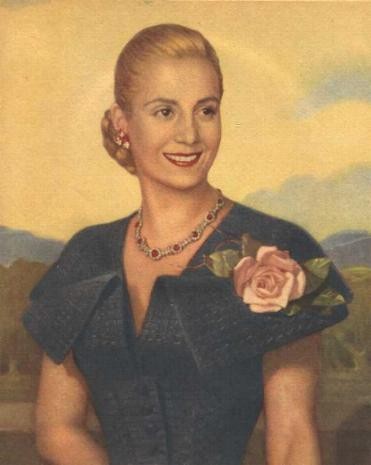
Evita Peron quadri.jpgJean-Claude Rolinat a publié dernièrement, aux éditions Dualpha, une remarquable biographie d'Eva Peron.
 
Evita, comme l'appelaient affectueusement les "descamisados", principaux soutiens du régime nationaliste populaire instauré par son mari, Juan Domingo Peron, en Argentine de 1945 à 1954, est un personnage historique qui mérite d'être étudié. Le livre de Jean-Claude Rolinat a le mérite d'aborder la vie de la "Sainte argentine" à la fois avec passion et objectivité.
 
Un livre à lire absolument et un cadeau idéal pour ceux qui veulent faire plaisir à un camarade à l'approche des fêtes.
 
Afin d'assurer la promotion et la diffusion de cette belle biographie d'Evita Peron :
 
Dimanche 5 décembre, l'auteur sera au Salon du livre d'histoire, à la Maison de la chimie, 28  rue  Saint-Dominique, Paris 7ème,
 
Mercredi 8 décembre, à partir de 19 h 00, il est invité par Martial Bild dans son libre journal sur Radio Courtoisie, 95.6 mgz à Paris et RP, 
 
Samedi 11 décembre, l'après-midi, il sera à la Librairie Primatice, 10, rue Primatice à Paris 13ème (métro Place d'Italie),  
 
et le jeudi 13 janvier 2011, à 19 h 00, il sera reçu par Serge Ayoub pour une conférence au  "Local", 92  rue de Javel, Paris 15ème.
 
Evita Perón, la reine sans couronne des Descamisados, par Jean-Claude Rolinat, Editions Dualpha, 244 pages, 29,00 €


Violence & "Soft Commerce"

quentin.jpg

Violence & “Soft Commerce,” Part 1

Dominique VENNER

Translated by Greg Johnson / Ex: http://www.counter-currents.com/

Violence is not merely a matter of arms. For half a century, a world system has been imposed, the system of “soft commerce.” Soft as bombs. It dominates peoples under the guise of democracy, breaking down the most sacred customs. This new violence reigns thanks to the drugs of consumption and guilt. It is not, however, without resistance.

Georges Sorel is famous for having published his often reprinted Reflections on Violence in 1906.[1] A partisan of revolutionary socialism read by Lenin and Mussolini alike, Sorel made himself the apologist of violence as the motor of history.

In his essay, he worried about an anemic dearth of social violence that he thought he observed in Western Europe and in the United States:

Education is dedicated to so attenuate our tendencies to violence that we are instinctively led to think that any act of violence is a demonstration of a regression towards cruelty. . . . One has to wonder if there is not some silliness in the admiration of our contemporaries for softness.

These remarks, going back one century, could be from today. They certainly grab one’s attention and interest.

Less than ten years after Sorel’s morose report, the Great War commenced, showing something quite different from a general penchant for softness. This war was followed in Russia and Europe by a series of revolutions and civil wars, whose dominating feature was not peace. And the Second World War which followed, together with after-effects like the generalization of terrorism, was also not a demonstration of peaceful tendencies.

Europe in Dormition & Repentance

In other words, one is often misled by forecasts that imagine the future as an extension of the present. Under the effect of unexpected emotions or collective commotions, the softness or flabbiness of one time can suddenly be cast off in irresistible violence. The history of peoples and societies is not governed by a principle of continuity, but by unforeseeable accidents.

In Europe today (but not elsewhere), everything leads one to suppose that history with its violence and politics has reached its final end.  Those who have read my Siècle de 1914 (Century of 1914) know that I have interpreted the time that followed the Second World War as Europe’s entry into dormition after half a century of violent follies. This dormition is not unrelated to a project of culpabilization and demoralization without parallel.

With courage and clarity, this project was analyzed in 2003 by intellectuals worried by the rise in France of anti-Semitism because of Maghrebian immigration. According to these authors, this immigration had been supported by certain Jews who, “making a tragic mistake, believed in a possible alliance between the assertion of Jewish identity and the celebration of minorities and localisms, in short, of ‘the Other’ against the nation.”[2] Intense immigrationist propaganda was seen as an error.

But, the authors said, it was necessary to go back to the 1960s to find the roots of French and European demoralization, when the memory of the “Shoah was imposed as . . . a decisive reference mark of a culpability that does not concern just the Nazis but . . . everyone in Europe, the people as a whole.” For “the Shoah forbids the European people any historical hope and locks up them in remorse.” A disturbing report. Fifty years after, Europeans doze on, crushed by remorse, “outcasts of history.” For how long? That we do not know. But it cannot be forever.

Dreams of Happiness, “Soft Commerce,” &  Violence

In Europe, the anticipated end of history and dreams of hedonism cannot be isolated from a public discourse nourished by the myth of “soft commerce” invented long ago by Adam Smith.

What were its practical effects on lived history? The experience of the last two centuries shows that “soft commerce” is rarely a guarantee against violence. Least of all because it replaces politics (reason) with morality (emotion). Emotion sells more than reason. But, in addition to daydreams, it is often the purveyor of slaughter, both religious wars and in the ideological wars of the twentieth century.

In spite of Adam Smith’s promises, the intensive exercise of “soft commerce” on a global scale was accompanied by not exactly moderate amounts of violence. If one looks at the nineteenth century, there were, inter alia, the Opium Wars (1840–1842, 1858, 1860) in which France and Great Britain forced open the frontiers of China. This was necessary to give China the benefit of biblical morality and opium traffic, at the cost of the destruction of thousand year old traditions. Carried out for the profit of “soft commerce,” the Franco-British armed interventions eventually led China to a series of revolutions, which were preludes to the great slaughters of Maoism.[3]

One can chalk up many more colonial and national conflicts to the benefit of “soft commerce.” It played a large role in the two World Wars, which were not free of economic motives.[4] Globalizing the Anglo-American “free market” was not done without a little breakage . . . One of the more recent instances of damage, masked by moral and democratic justifications (a redundancy), is the war in Iraq begun in 2003. The control of an important source of hydrocarbons necessary to “soft commerce” is the likely reason that Saddam’s Iraq, a regime that was rather brutal (which is nothing unusual) but also stable, was put to fire and sword.

Notes

1. One of the contributions of Georges Sorel (1847–1922) to political thought is the concept of myth to designate the mobilizing images around which great historical movements are constituted (Nouvelle Revue d’Histoire, no. 13, pp. 20–22).

2. Article published in Le Monde, December 30, 2003, under the signature of Gilles Bernheim, chief rabbi and philosopher, Elisabeth de Fontenay, professor of philosophy, Philippe de Lara, professor of philosophy, Alain Finkielkraut, writer and professor, Philippe Raynaud, professor of philosophy, Paul Thibaud, essayist, Michel Zaoui, lawyer.

3. See La Chine et l’Occident, Nouvelle Revue d’Histoire no. 19, July–August 2005.

4. Georges-Henri Soutou, L’or et le sang. Les buts de guerre économiques de la Première Guerre mondiale (Paris: Fayard, 1989). We have discussed this subject in many issues of Nouvelle Revue d’Histoire, notably in nos. 14 and 32.

Source: http://www.dominiquevenner.fr/#/doux-commerce/3272231

Violence & “Soft Commerce,” Part 2

Now that “soft commerce” has been globalized since the end of the 20th century, one must grant that it has the advantage of a plasticity and a capacity for survival enjoyed by few regimes up to the present.

“Soft commerce” is sheathed in abstract concepts like “capitalism” or “liberalism.” But because those have been used for so many indigestible cuisines, their significance is exhausted. Another concept, more recent, is “cosmocracy.” It was coined by American authors and was taken up again by Samuel Huntington in his last book Who are We?[1] I myself have used it. It is explicit. It suggests the character that the globalist oligarchy acquired little by little since the 1960s.[2]

But let us return for a moment to the internal logic of “soft commerce.” What is its goal?  It is the individual financial profit of the capitalist, regardless of the cost to others. Having become dominant in our societies, this objective was promoted to the rank of supreme value, justifying everything, in particular what was at once condemned by common sense and the most elementary social morals. In the Communist Manifesto of 1848, Karl Marx aptly described the unlimited destructive power of the system that he called “bourgeois,” even though the personal behavior of many bourgeois individuals contradicted his thesis. Recall his famous lines:

Everywhere where it seizes power, the bourgeoisie trampled underfoot feudal, patriarchal, and idyllic relations. All the complex and varied ties which linked feudal man to his natural superiors, were mercilessly shattered so that no other tie remained between men but cold self-interest. . . . This constant social upheaval, this agitation, and this perpetual insecurity distinguish the bourgeois era from all preceding ones.

Marx was delighted by soft commerce’s constant pressures against the old European order. In this eyes, they presaged the advent of post-bourgeois society, i.e., of the communist utopia. They presaged a homogenized world and the end of history with a capital “H.” Marx was almost right. He just needed this nuance: “Soft commerce” has ultimately showed itself to be far more durable, although no less perverse, than the communist utopia, some aspirations of which it carries out by other means.

The Convergence between Communism and “Soft Commerce”

The convergence of the two systems was remarkably analyzed by Flora Montcorbier in a wrongfully forgotten book.[3] Economist and philosopher, with a vigorous clarity, she gives us a key to plausibly interpreting the organized chaos that replaced our traditional societies.

No one before her cared to understand the curious outcome of the cold war, the great upheaval. Exactly who won on this fake war? The United States, of course, and “soft commerce.” But also their common religion, the religion of Humanity (with a capital “H”), one, uniform, and universal. And it was not their only affinity.

What did the Communists want? They wanted a planned management of the wealth of humanity. They also wanted the creation of a new man, a rational and universal man, freed of the “obstacles” of roots, nature, and culture. They wanted, finally, to satisfy their hatred of concrete men, the bearers of difference; their hatred of old Europe, multiple and tragic.

And “soft commerce,” in other words, the American West, what did it want?[4] Pretty much the same thing. The differences were in their methods. Rejecting planning and forced collectivism (terror), “soft commerce” sees the financial market as the principal factor of economic rationality and the desired changes.

“Soft commerce,” another name for globalism, does not only share its radiant vision of the final goal with its Soviet brother and former enemy. To change the world, it must also change man, manufacture the Homo oeconomicus of the future, the zombie, the New Man: homogeneous, empty, possessed by the spirit of the universal and unlimited market. The zombie is happy. Happiness consists in satisfying all his desires, the desires caused by the market.

Notes

1. Samuel P. Huntington, Who Are We: The Challenges to America’s National Identity (New York: Simon and Schuster, 2005).

2. Dominique Venner, Le Siècle de 1914 (Paris: Pygmalion, 2006), ch. 10.

3. Flora Montcorbier, Le Communisme de marché [Communism and the Market] (Paris: L’Age d’Homme, 2000).

4. We do not confuse the “Western-American system” with Americans taken individually, who often suffer from it.

Source: http://www.dominiquevenner.fr/#/doux-commerce/3272231

Violence & “Soft Commerce,” Part 3

The System is Nourished by Fake Opposition

One of the characteristics of the system is that it is nourished by its seemingly most extreme opponents. If one is astonished by this surprising fact, one is forgetting that the opposition known as the “left” and the system share the religion of humanity and thirst for deconstruction; they are the same in essence. Thus nobody laughed when the papers of an implacable rebel (Guy Debord) were classified as a “national treasure” by the director of the National Archives in June 2009.

Explanation: “soft commerce” needs the counter-culture and its opposition to nourish the unlimited appetite for “pleasure without boundaries” which feeds the market. The fake rebellion of the cultural realm has been co-opted and institutionalized. The experiments of people who are more than a little crazy renew the language of advertising and haute couture which nourish innovation and excitement. The rights of minorities—ethnic, sexual, etc.—are also extended without limit since they constitute new markets and offer moral support to the system.

The unlimited is the horizon of “soft commerce.” It nourishes the work of moles in the realms of culture, the stage, teaching, the university, medicine, justice, or the prisons. Those who are naively indignant when delirious and repugnant buffooneries are extolled do not understand that they have been promoted to the rank of commodities, and as such they are both ennobled and essential.

The only dissent that the system cannot absorb is that which challenges the religion of humanity and stands for respecting diverse identities. The irreducible ones who cannot be dissolved by “soft commerce” are those who are attached to their city, their tribe, their culture, or their nation, and also honor the attachments of others.  This is why, in spite of their possible electoral representation in the European Parliament, these dissidents are subjected to rigid segregation (except in Italy).

This uncomfortable fate could lead them to think they have only one political option when the system is disrupted and distracted by an emergency, Politics might regain its rights.[1] Then “soft commerce” could be put back in the subordinate and dependent place where it belongs in a world in order.

Appendix: Two Different & Opposed Conceptions of the Economy: Adam Smith & Friedrich List.

Adam Smith (1723–1790). British economist born in Scotland. Traveling to France, he connected with the physiocrats (Turgot). In 1776 he completed his great work, An Inquiry into the Nature and Causes of the Wealth of Nations, which made him the theorist of economic liberalism. For Smith, the psychological engine of all economic activity is self-interest and the hedonist principle which drive men to seek maximum satisfaction with minimum effort. He believes in the spontaneity and beneficial character of economic activity (the “hidden hand” and “soft commerce”). It realizes the designs of Providence. The State must “laisser faire, laisser passer.” Adam Smith justifies international free trade which is appropriate for maritime powers like Great Britain and later the United States.

Friedrich List (1789–1846). German economist. Partisan of the abolition of tariff barriers between the German States (Zollverein), he could not make himself heard and thus exiled himself to the United States (1824), where he made a fortune. After his return to Germany, when the Zollverein was achieved (1834), he pioneered railroad construction. Ruined by a financial crisis, he committed suicide in 1846. He theorized the autarky of great spaces: an economy that is protectionist externally and liberal internally. Unlike Adam Smith, List did not believe in the mutual enrichment of nations by “soft commerce” but in eternal economic war. His principle, “strong economy and strong army,” would be applied by the great powers: The United States practiced protectionism while prohibiting it for the rest of the world.

Notes

1. Politics with a capital “P” designates the superior principles of power (to command, to judge, to protect. Politics with a small “p” designates practice.
Mishima, l'eterna giovinezza di un samurai

Mishima, l'eterna giovinezza di un samurai

Quarant’anni fa moriva lo scrittore giapponese

Lo ricorda un ex ragazzo che crebbe nel suo mito

Strumenti utili
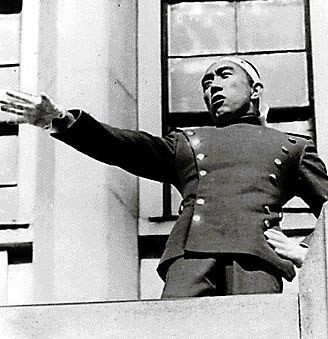
mishimacccvvvv.jpgLe parole non bastano. Così parlò Yukio Mishima, e il 25 novembre del 1970 si uccise davanti alle telecamere col rito tradizionale del seppuku. Alle parole seguì il gesto e la scrittura debordò nella vita per compiersi nella morte. Il suicidio eroico di Mishima scosse la mia generazione, versante destro. Era il nostro Che Guevara, e sposava in capitulo mortis la letteratura e l’assoluto, l’esteta e l’eroe, il Superuomo e la Tradizione. Lasciò un brivido sui miei quindici anni. Poi diventò un mito a diciassette, quando uscì in Italia Sole e acciaio, il suo testamento spirituale. È uno di quei libri che trasforma chi lo legge; gustato riga per riga, non solo letto ma vissuto, come un libro d’istruzioni per montare la vita, pezzo per pezzo. Altro che Ikea, il pensare si riversava nell’agire. Le parole non bastano.

Andammo in palestra, dopo quel libro, tra i manubri e i pesi, sulla scia di Mishima e del suo acciaio per scolpire il corpo all’altezza dei pensieri e per dare una vita ardita a un’indole intellettuale. Correvamo a torso nudo d’inverno con alcuni pazzi amici per andare incontro al sole. Dopo una corsa di dieci chilometri c’era un ponte che era la nostra meta finale perché sembrava che corressimo verso il cielo. Arrivavamo sfiniti ma a testa alta, con uno scatto finale, e una benda rossa sulla fronte. Pazzi che eravamo, illusi di gloria. Ridicoli. Vedevamo il sole come obbiettivo, non guardavamo sotto, all’autostrada, che banalmente scorreva sotto il ponte. Eravamo nella via del Samurai, mica sull’asfalto. Inseguivamo il mito. Un mito impolitico, che ci portava lontano dall’impegno militante e ci avvicinava a quella comunità eroica che Mishima aveva fondato due anni prima di darsi la morte. Mishima diventò col tempo il nostro Pasolini, disperato cantore di un mondo antico contro il mondo moderno e le sue macerie spirituali, l’americanizzazione e i consumi. Oggi di Mishima non è più proibito parlare, tutte le sue trasgressioni restano vietate, eccetto una che però basta a glorificarlo agli occhi del nostro tempo: Mishima era omosessuale. Sposato, ma omosessuale. E così viene oggi celebrato dai media e riabilitato.

Su Radio3 è andato in onda qualche giorno fa un bel programma a lui dedicato di Antonella Ferrera. Ho scritto più volte di lui, accostandolo al Che, d’Annunzio e Pasolini. Fu grande gioia ripubblicare, con un mio saggio introduttivo, Sole e acciaio, dieci anni dopo la sua prima lettura. Avevo ventisette anni ma avevo un conto in sospeso con la mia giovinezza, e fui felice di onorarlo. Il peggior complimento che ricevetti fu da un professore che allora mi disse: è più bella la tua introduzione del testo. Mi piace ricevere elogi, non nego la vanità. Ma quell’elogio fu peggio di un insulto, disprezzava il breviario della nostra gioventù. Come poteva paragonare un saggetto giovanile e letterario a un testamento spirituale così denso e forte? L’ho riletto dopo svariati anni, quel piccolo libro; non era un libro sacro, d’accordo, ma lo trovai ancora bello e teso, spirituale e marziale.

Poi c’era Mishima romanziere, gran letterato, ma poco rispetto al testimone dell’Assoluto. Certo, Mishima soffriva di narcisismo eroico, c’era in lui una componente sadomaso e molto di quel che lui attribuiva allo spirito dell’antico Giappone imperiale proveniva in realtà dalla letteratura romantica d’occidente e dalle sue letture. Mishima era stato lo scrittore più occidentale del Giappone, era di casa in America, veniva in Italia, amava Baudelaire e d’Annunzio, Keats e Byron, perfino Oscar Wilde. Faceva il cinema, scriveva per il cinema e per il teatro moderno, amava i film di gangster, era amico di Moravia. E c’era in lui quell’intreccio di vitalismo e decadentismo comune agli esteti nostrani. La stessa voluttà del morire di d’Annunzio, lo stesso culto della bella morte degli arditi e poi di alcuni fascisti di Salò...

Ma il miracolo di Mishima fu proprio quello: ritrovare nella modernità occidentale il cuore antico del suo Giappone, il culto dell’imperatore, la via del samurai, il pazzo morire; il nostro pensiero e azione che diventano in Giappone il crisantemo e la spada. Ribelle per amor di Tradizione. Certo, dietro il suicidio non c’è solo il grido disperato e irriso verso lo spirito che muore; c’è anche il gusto del beau geste clamoroso e c’è soprattutto l’orrore della vecchiaia, del lento e indecoroso morire nei giorni, negli anni. Dietro il samurai c’era Dorian Gray. Ma colpisce la sua cerimonia d’addio, vestito di bianco come si addice al lutto in Giappone, e prima il suo congedo in scrittura. Saluto gli oggetti che vedo per l’ultima volta... Mi siedo a scrivere e so che è l’ultima volta... Poi il pranzo dai genitori alla vigilia, la ripetizione fedele delle abitudini, come se nulla dovesse accadere. E il giorno dopo conficcarsi una lama nel ventre e farsi decapitare, dopo aver gridato tra le risa dei soldati, l’occhio delle telecamere e il ronzio degli elicotteri, il suo discorso eroico caduto nel vuoto.

Quell’immagine ti resta conficcata dentro, come una spada, capisci che l’unica morale eroica è quella dell’insuccesso, pensi che il successo arrivi quando il talento di uno si mette al servizio della stupidità di molti; diffidi delle vittorie e accarezzi la nobiltà delle sconfitte. E leggi Morris e la Yourcenar che a Mishima dedicò uno splendido testo, per accompagnare con giuste letture il suo canto del cigno. Su quegli errori si fondò la vita di alcuni militanti dell’assoluto, alla ricerca di una gloria sovrumana che coincideva con la morte trionfale, la perdita di sé nel nome di una perfetta eternità... Perciò torno oggi in pellegrinaggio da Mishima e porto un fiore di loto ai suoi 45 anni spezzati, e ai nostri quindici anni spariti con lui.