Ok

En poursuivant votre navigation sur ce site, vous acceptez l'utilisation de cookies. Ces derniers assurent le bon fonctionnement de nos services. En savoir plus.

jeudi, 25 octobre 2012

Mali : quatre réflexions « utiles » avant le déclenchement de l’offensive

 mali.jpg

Bernard LUGAN:

Mali : quatre réflexions « utiles » avant le déclenchement de l’offensive

Avant de déclencher l’intervention militaire programmée et nécessaire, quatre points méritent réflexion :
1) Au long des siècles, l’Islam s’est peu à peu imposé dans tout l’Ouest africain sahélien aux dépens des peuples animistes dont les constructions politiques furent détruites et les populations régulièrement mises en servitude. Au XIe siècle, les Almoravides disloquèrent ainsi le royaume soninké de Ghana. L’islamisation s’enracina ensuite à l’époque des empires du Mali et du Songhay. Puis, à partir des XVIIe-XVIIIe siècles, vint le temps des jihad qui se succédèrent de l’Atlantique au lac Tchad. A l’Ouest, les principaux furent celui des Toucouleur qui aboutit à la constitution de l’empire d’al Hadj Omar dans la partie occidentale du Sahel et celui des Peul de Shekku Ahmadu qui s’étendit dans la vallée moyenne du Niger. Plus à l’est, l’empire Peul-Haoussa de Sokoto fut fondé par le jihad d'Osman dan Fodio au début du XIXe siècle dans le nord du Nigeria, zone actuelle d’opération de Boko Haram. Qu’il s’agisse de Boko Haram, d’Aqmi, du Mujao ou encore d’Ansar Eddine, les actuels courants fondamentalistes sahéliens s’inscrivent tous clairement dans la tradition de ces jihad.

2) À la faveur des évènements survenus dans le nord, les islamistes ont pris le contrôle du sud du Mali où, et ne l’oublions pas, il y a moins de 150 ans, le royaume animiste bambara résistait encore à l’islamisation et où la conversion intégra nombre de pratiques antérieures. Aujourd’hui, ce qui faisait l’originalité des « islams noirs » est en passe d’être éradiqué car, face au vide politique, le Haut-conseil islamique, d’obédience rigoriste, s’est en effet imposé à Bamako comme étant le vrai pouvoir. Le HCI a ouvert des négociations directes avec Ansar Eddine duquel il n’est en réalité séparé que par de légères et subtiles divergences d’interprétation du Coran. Le HCI et Ansar Eddine étant tous deux en faveur du respect de l’intégrité des frontières du Mali, un terrain d’entente a donc été trouvé et cela d’autant plus que les négociateurs du HCI ne demandaient à leurs interlocuteurs nordistes que quelques concessions de détail concernant l’application de la charia.

3) Face à l’offensive militaire de la CEDEAO , les islamistes nordistes sont donc divisés puisque, comme je viens de le dire, les plus réalistes ont déjà quasiment accepté une forme de ralliement qui isolera encore davantage la fraction la plus intransigeante désormais réduite à des groupuscules rassemblant moins de 300 « véritables » combattants. Quant aux Touaregs du MNLA, comme ils ne sont plus en mesure d’imposer leur revendication indépendantiste, ils sont donc condamnés à négocier leur ralliement à Bamako en échange de concessions politiques. Ils vont donc jouer en quelque sorte le rôle de supplétifs nordistes de la future offensive que prépare la CEDEAO. Peut-être en profiteront-ils pour régler « discrètement » leurs comptes avec les islamistes quand, dispersés dans les immensités désertiques, ces derniers chercheront à se mettre à l’abri de frontières poreuses.

4) La reprise de Tombouctou et de Gao ne changera rien au fond du problème qui est que les populations nordistes ne veulent plus être soumises à celles du Sud. A défaut d’un redécoupage frontalier refusé par toutes les parties, à l’exception des Touareg, la reconnaissance de l’autonomie des trois Azawad est donc une nécessité. Pour mémoire, il s’agit de l’Azawad touareg, de l’Azawad maure et de l’Azawad du fleuve à la population composite. Faute de quoi, les mêmes causes produisant les mêmes effets, le nord du Mali ne tardera pas à refaire l’actualité…

Hamas-Qatar: un’alleanza da 400 milioni di dollari

hamas-ismail-ha.jpg

Palestina. Hamas-Qatar: un’alleanza da 400 milioni di dollari

Critiche per l’arrivo del sovrano nella Striscia da Anp e Israele. Per Tel Aviv ora la pace è più lontana

Matteo Bernabei

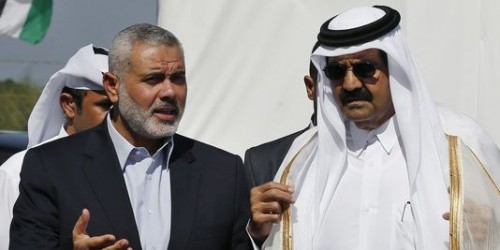
L’emiro del Qatar, Hamad bin Khalifa al Thani (in foto con Ismail Haniyeh), si è recato ieri nella Striscia di Gaza per una prima storica visita che segna definitivamente la virata politica di Hamas: dall’alleanza con la Siria e l’Iran, a quella con le ricche monarchie sunnite del Golfo. Un cambio di rotta iniziato già alcuni mesi fa con l’inaspettato trasferimento dell’ufficio politico del movimento islamico, guidato dal leader in esilio Khaled Meshaal, da Damasco a Doha. Una rottura che, secondo quanto affermato dal governo di Gaza, sarebbe dovuta allo scoppio della crisi siriana e alla presunta repressione dell’esecutivo di Bashar al Assad nei confronti della propria...

24 Ottobre 2012 : http://rinascita.eu/index.php?action=news&id=17365/  

The Pakistan-Russia Relationship: Geopolitical Shift in South and Central Asia?

PakRussia.jpg

The Pakistan-Russia Relationship: Geopolitical Shift in South and Central Asia?

The two countries have quietly been building a mutual relationship for the last few years through bilateral as well as multilateral contacts at the highest levels. Pakistan’s status as an observer state in the Shanghai Cooperation Organisation (SCO) has provided it with an important opportunity to have interaction with the top Russian leadership.

In June 2009, President Asif Ali Zardari participated in the SCO Summit in Yaketerinburg and met the then Russian President Dmitry Medvedev. The Russian leader was reported to have expressed a strong desire to develop closer relations with Pakistan in all important areas, including defence, investment and energy.

The establishment of close contacts between the top leadership of Pakistan and Russia and the two sides readiness to open a new chapter in their relationship is not only in the interests of the two countries, it will also serve the interests of peace, security and regional integration in two of the world’  s important regions of Central Asia and South Asia.

* *

Despite being geographically contiguous, Pakistan and Russia had remained politically distant from each other during the last six decades. The framework of the Cold War and the East-West confrontation defined the relations between the two countries during that period.

Another factor that obstructed the development of close and friendly relations between Pakistan and Russia was the latter’s insistence on looking at South Asia only through Indian eyes, ignoring Pakistan’s vital national security concerns. But the post-Cold War transformation of global politics and fast changing geo-political situation in the region following 9/11 have created new and strong imperatives for the two to come closer and enter into productive bilateral cooperation in the political, economic and security areas.

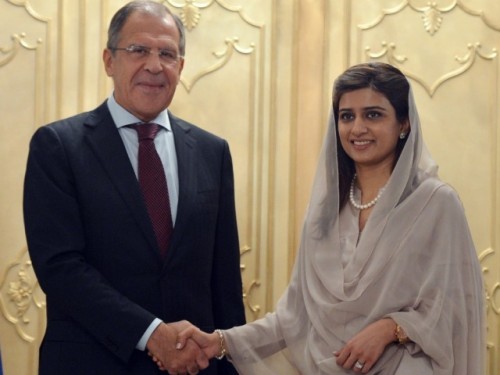
This reality was manifestly recognised in the statements by Pakistan’s Foreign Minister Hina Rabbani Khar and visiting Russian Foreign Minister Sergei Lavrov at a joint press talk in Islamabad earlier this month. “We are longing for better ties with Pakistan,” said Mr Lavrov; while Ms Khar termed the current millennium as “the millennium of (Pakistan’s) relations with Russia.” The visit of the Russian foreign minister has brought the relationship of the two countries to a new and historic threshold.

Pakistan has achieved significant diplomatic success by securing the Russian endorsement of its position on the peace and reconciliation process in Afghanistan. The Russian foreign minister, while talking to the media in Islamabad, had categorically said that his country was against any solution of the Afghanistan problem that is imposed from outside and is not Afghan-owned and Afghan-driven. Instead, Russia would back an indigenous peace and reconciliation process owned and led by the people of Afghanistan. Similarly, the Russian condemnation of drone attacks has strengthened Pakistan’s hands in ensuring the country’s independence, sovereignty and territorial integrity. The Russian position on Afghanistan as articulated by Foreign Minister Lavrov during his recent visit to Pakistan is clear evidence of the greater geo-strategic convergence between Pakistan and Russia on regional issues.

The two countries have quietly been building a mutual relationship for the last few years through bilateral as well as multilateral contacts at the highest levels. Pakistan’s status as an observer state in the Shanghai Cooperation Organisation (SCO) has provided it with an important opportunity to have interaction with the top Russian leadership.

With the induction of a democratic government in Pakistan following the 2008 elections, the process gained momentum and the two sides took important initiatives to promote bilateral trade, economic cooperation and regional connectivity through multilateral frameworks. In June 2009, President Asif Ali Zardari participated in the SCO Summit in Yaketerinburg and met the then Russian President Dmitry Medvedev. The Russian leader was reported to have expressed a strong desire to develop closer relations with Pakistan in all important areas, including defence, investment and energy. According to some sources, Pakistan and Russia were contemplating entering into a commercial defence agreement enabling Pakistan to purchase Russian arms and weapons.

There is vast potential for the growth of bilateral cooperation between Pakistan and Russia in a wide range of areas. Since the two sides have shown a keen desire to explore new areas and strengthen already existing cooperation in multiple fields, the coming years if not months are certain to witness an expansion of cooperation between the two countries. The areas of energy, regional connectivity, infrastructure and trade are going to be the focus of these endeavours.

However, while discussing the future prospects of Pakistan-Russia cooperation in economic and other non-political areas, the political and strategic fallout of the newly-found Russia-Pakistan friendship should also be taken into consideration, particularly by Pakistan, which has to date followed a foreign policy based on a narrow regional and global perspective.

Russia, which is a successor state to a former superpower, has its own worldview. For example, despite the establishment of a strategic partnership between India and the United States symbolised by their deal on civil nuclear cooperation, and robust Sino-India trade and economic relations, Moscow still values New Delhi as a close friend and Russian relations with Pakistan will not be at the cost of the former’s relations with India. As a big stakeholder in peace and tranquillity in South Asia, the growth of the Pakistan-Russia relationship will be a further incentive for Pakistan to pursue peace and normalisation with its eastern neighbour.

The Russians have their own perspective on issues relating to militancy, terrorism and regional peace and security. They are concerned about the prospects of Afghanistan again coming under the rule of the Taliban. Although, as the statement of the Russian foreign minister in Islamabad indicated, the Russians are opposed to the permanent military presence of the United States in Afghanistan; they are frightened on the prospects of NATO failure in Afghanistan as that would lead to serious anarchy and chaos in the country. This is why they are helping ISAF in Afghanistan by allowing their supplies through Russian territory. The Russians are also very worried about the security and law and order situation in Pakistan, particularly, the presence of a large number of foreign militants from Central Asia and Chechnya. During the meeting on the sidelines of the SCO summit at Yaketerinburg in June 2009 between President Zardari and President Medvedev, the latter was reported to have called for the elimination of safe havens of terrorists in Pakistan’s tribal areas.

The establishment of close contacts between the top leadership of Pakistan and Russia and the two sides’ readiness to open a new chapter in their relationship is not only in the interests of the two countries, it will also serve the interests of peace, security and regional integration in two of the world’s important regions of Central Asia and South Asia.

The writer is a professor of International Relations at Sargodha University

Al Jazeera, la fin d’une légende

Al-Jazeera-007.jpg

Al Jazeera, la fin d’une légende

Par Réné Naba
 

Omniprésent sur terre et sur air, l’Emir de Qatar aura été incontestablement l’homme de l’année 2011, plus fort que Mohamad Bouazizi, dont l’immolation a déclenché le soulèvement salvateur du printemps arabe, réussissant le tour de force de retourner en sa faveur le cours de la révolution arabe.


Mais le nouvel Air and Field Marshall du Monde arabe, dans un mouvement de balancier, aura dans le même temps, sinistré l’une des principales réalisations de son régime, la chaîne transfrontière Al Jazira, passant du rôle envié de prescripteur de l’opinion arabe, à celui moins glorieux de lanceur d‘alerte des menées anti arabes de l’Otan, faisant voler en éclat, en six mois, une crédibilité patiemment construite en quinze ans.
«On the air» d’Al Jazira, l’autocrate intronisera l’égyptien Youssef Al Qaradawi en prédicateur électronique de la mouvance islamiste panarabe et maintiendra en couveuse, en réserve de la République, le tunisien Rached Ghannouchi, les deux flotteurs des Frères musulmans en exil, qu’il fera réhabiliter par les chancelleries occidentales, en les plaçant en orbite dans la foulée du renversement du président Hosni Moubarak (Egypte) et de Zine El Abidine Ben Ali (Tunisie).

A coups de pétrodollars et d’esbroufe, amplifiée par la force cathodique d’Al Jazira, à l’époque à l’apogée de sa crédibilité, il cautionnera une intervention occidentale en Libye, réintroduisant le loup dans la bergerie, en la personne d’Abdel Hakim Belhadj, l’ancien chef des brigades islamiques de Libye et nouveau gouverneur militaire de Tripoli.

En tandem avec le roman-enquêteur français Bernard Henri Lévy, qui lui dispute la palme pour 2011, les duettistes se vivront alternativement, successivement et cumulativement comme le nouveau Rommel du désert de la Cyrénaïque et le Von Paulus de la Tripolitaine, vivant quotidiennement les épopées conjuguées de la première armée d’Afrique et de l’Afrika Korps.

Depuis la mise à mort publique du Colonel Kadhafi, en octobre 2011, l’Emir du Qatar dont l’armée compte cinq mille soldats et autant de mercenaires, commande une coalition de treize pays comprenant trois puissances atomiques alignant plusieurs centaines d’ogives nucléaires, nouveau tour de force qui le propulse au titre très envié de commandant en chef d’une mythique Africa Korps nucléaire atlantiste. Avec les encouragements et les acclamations d’une cohorte de commentateurs politiques, dont le plus en vue n’est autre que l’universitaire franco-tunisien, l’Islamologue toulousain Mathieu Guidère, nouveau venu sur la scène médiatique, de son vrai nom Moaz Goueider, par ailleurs, précepteur du propre fils du souverain à l’Ecole Saint Cyr, l’académie française chargée de former les officiers de commandement.

En 1990, le Monde arabe avait offert au Monde un Field Marshall en la personne de Khaled Ben Sultan, l’interface saoudien du général Arnold Schwarzkopf, le maitre d’œuvre de la tempête du désert contre l’Irak. Bel exploit d’un pays qui bat tous les records en matière de dépenses d’armement sans jamais livrer de guerre directe. Le propre fils du ministre saoudien se distinguera, non sur le champ de bataille, mais sur le terrain de l’intendance, prélevant une respectable commission de l’ordre de trois milliards de dollars sur les transactions visant le ravitaillement des 500.000 soldats du corps expéditionnaire occidental venus protéger le pétrole saoudien des convoitises irakiennes. .

Bel exploit d’une principauté, le Qatar, dont le quart du territoire abrite la plus importante base américaine hors Otan, celle du commandement central, le maillon intermédiaire qui assure la jonction entre l’Otan (Atlantique Nord) et l’OTASE (Asie du Sud Ouest).

Parricide, le Field Marshall pétro monarchique s’emparera du pouvoir à Doha, à la faveur d’un coup de force des paras commandos jordaniens, en 1995, accourus au Qatar pour restaurer les intérêts pétroliers lésés des compagnies britanniques. Brutus n’est pas le monopole de Rome, il en pousse à l’ombre des derricks. Prédateur à l’instar de son prédécesseur, sa réconciliation avec le principal opposant à la dynastie, Nasser al Misnad, exilé au Koweït depuis 1950, sera scellée, périnéalement, par les épousailles de l’Emir avec la propre fille de son ancien ennemi, Mozza, la ci-devant Banana princess.
Rébus de luxe pour recyclage haut de gamme, béquille financière de la France, caution arabe du plus pro israélien des dirigeants français, son plus bel exploit demeure toutefois d’avoir retourné en sa faveur le slogan révolutionnaire lancé à l’aube du printemps arabe dont la pleine saveur se retrouve dans sa formulation en arabe par inversion du mot Kadar (Destin) par Qatar:
Si le peuple veut la vie, Il importe au destin (Kadar) d’y faire droit
Si le peuple veut la vie, Il importe au Qatar d’y faire droit

Le plus zélé disciple des Etats-Unis dans la mise à l’index des Républiques arabes, la Libye puis la Syrie, se tient bien car bien tenu. Prescripteur de l’information pendant deux décennies sur le plan arabe, Al Jazira, l’alibi stratégique suprême du Qatar face à sa sujétion à l’ordre occidental, parait devoir vivre la fin de son monopole médiatique en raison des dérives dont la chaîne qatariote s’est rendu coupable, lors de la couverture des révoltes arabes de l’an 2011, particulièrement en Libye et en Syrie.
Al-Jazira, dont le nom a été forgé par référence à «Al-Jazira Al-Arabia» la verdoyante péninsule arabique, l’espace géographique regroupant les principautés pétrolières du Golfe, l’Arabie saoudite et le Yémen, l’ancienne «Arabia Felix» (l’Arabie Heureuse) des premiers temps de l’Islam, est bel et bien en effet une excroissance rebelle de l’ordre médiatique saoudien, tout comme d’ailleurs sur le plan politique Oussama Ben Laden, une excroissance rebelle de l’hégémonie saoudienne sur l’ordre domestique arabe.

La mise en place d’Al Jazira a constitué un bel exemple d’équilibrisme diplomatique du petit émirat du Qatar, face aux ambitions des protagonistes du jeu régional et la tentative de domestication de la chaîne transfrontière arabe constitue à cet égard un cas d’école.
Son lancement en 1996, l’année qui a suivi la crise d’hémiplégie qui a frappé le Roi Fahd, le grand frère saoudien dont l’Emir parricide du Qatar en prenait ombrage, répondait à trois objectifs:
-Dédouaner aux yeux de l’opinion arabe l’Emir de Qatar de la lourde tutelle occidentale qui a parrainé son parricide politique.

-Doter la principauté d’une force de frappe médiatique dissuasive en vue de marquer son territoire sur le plan énergétique au sein de la constellation des pétromonarchies du Golfe
-battre en brèche l’hégémonie saoudienne sur la sphère arabe, en prenant partiellement appui sur une équipe journalistique formée hors orbite de la censure arabe, -le service arabe de la BBC (British Broadcasting Corporation)-, victime de l’arbitraire saoudien (1).

En moins d’une décennie, Al-Jazira a rempli ses objectifs, brisant le monopole du récit médiatique détenu par les médias occidentaux depuis l’avènement de l’information de masses, il y a un demi siècle, se propulsant au rang de grand rival des grands vecteurs occidentaux, le prescripteur de l’opinion publique arabe, l’artisan du débat pluraliste au sein du monde arabe. Une promotion qui a conduit les Américains à entreprendre méthodiquement sa domestication, particulièrement depuis la guerre d’Afghanistan.
Alors que les Etats-Unis mobilisaient l’opinion internationale pour l’invasion de l’Irak et cherchaient une base de repli à leur QG saoudien, un média saoudien laisse opportunément filtrer ce jour là, sur son site Internet «Arabic news.com», une information apparemment puisée aux meilleurs sources américaines et saoudiennes annonçant «une tentative de coup d’état» contre l’Emir de Qatar Cheikh Hamad Ben Issa al-Khalifa «déjouée par les Etats-Unis». L’information laconique ne mentionnait ni les auteurs de la tentative, ni la date à laquelle elle a été déjouée. Fomentée par qui? Déjouée comment? Tentative fomentée et simultanément déjouée par le même opérateur? Coup d’état par simulation virtuelle?

Quiconque connaît le fonctionnement de la presse saoudienne, particulièrement la censure en temps de guerre, pareille information bienvenue pour la diplomatie américaine et saoudienne n’aurait jamais pu filtrer sans l’assentiment des autorités de tutelle tant saoudiennes qu’américaines. Le message sera entendu par le Qatar qui dans un geste de bonne volonté signera le lendemain un accord de coopération avec le Paraguay, une prestation de service qui serait en fait une opération de couverture pour les services américains en Amérique latine.

La pression est de nouveau mise lors de la phase finale de l’offensive américaine en Irak: le 8 avril 2003, jour de la chute de Bagdad, l’hebdomadaire américain «Newsweek» annonce à grands renforts de publicité une information sans véritable lien avec la conduite de la guerre: le lancement d’une enquête pour corruption contre le ministre des Affaires étrangères du Qatar, Hamad Ben Jassem Ben Jaber Al Thani (alias HBJ), qui aurait été impliqué dans le courtage d’une affaire d’assurances et le blanchissement subséquent de cent cinquante millions de dollars sur un compte dans les Iles Jersey (Royaume Uni). Le choix de la cible n’est pas le fruit du hasard.

Un des vieux routiers de la vie politique du Golfe, Jassem est l’inamovible ministre des Affaires étrangères du Qatar depuis 1992, c’est-à-dire lorsque l’accusation est portée, depuis 11 ans, soit un homme qui a servi les deux derniers gouverneurs, le père et le fils. Fils aîné de Cheikh Jaber Ben Hamad, ancien Emir de Qatar, Jassem a d’ailleurs joué un rôle important dans le coup d’état pro anglo saxon qui a porté au pouvoir le nouvel Emir et passe pour être un homme sensible aux intérêts des firmes pétrolières anglaises et américaines.
A la tête d’une immense fortune, qui lui vaut le titre de l’homme le plus riche du richissime Qatar, situé à un niveau très élevé du hit parade des fortunes du Golfe, Cheikh Jassem est actionnaire de la compagnie aérienne qatariote «Qatar Airways» et du fond d’investissement «Qatari Diar», dont le fils du souverain le prince Tammim, en est le président.

Membre reconnu de l’Establishment américain, Cheikh Jassem est membre associé de la prestigieuse «Brooking Institution», spécialisée dans les études géostratégiques sur le Moyen orient, à ce titre un interlocuteur régulier des dirigeants israéliens, notamment de Mme Tzipi Livni, ancien agent du Mossad et ancien ministre israélien de affaires étrangères, et à ce titre futur coordonnateur des guerres destructrices israéliennes contre le Liban (2006) et contre l’enclave palestinienne de Gaza (2008).

Effet du hasard ? Cheikh Jassem assumera un rôle de pointe dans la mise à l’index de la Syrie, à l’automne 2011, dans une opération de déroutement de la révolution arabe des rives du golfe pétro monarchique vers la frange méditerranéenne du Monde arabe.

Le choix de la cible n’était nullement anodin. Il paraissait destiné à démonter la détermination des Etats-Unis à «caraméliser» quiconque se dresserait contre leur projet, jusques y compris leurs meilleurs amis, visant à faire taire toute critique à l’égard de l’invasion de l’Irak.


La neutralisation d’Al Jazira, dont ils caressaient le projet de bombarder son siège central, figurait alors comme leur cible prioritaire. Curieuse information qui apparaît rétrospectivement comme un contre feux alors que le bureau d’Al-Jazira dans la capitale irakienne était de nouveau la cible de dommages collatéraux de la part de l’artillerie américaine et que des informations persistantes faisaient état de l’implication de la firme Halliburton dont Dick Cheney en était le patron avant sa nomination au poste de vice président américain, tant dans des versements de pots de vin au Nigeria et que dans la surfacturation de prestations pétrolières en Irak.

L’affaire tournera court mais le message sera entendu. Le ministre qatariote des Affaires étrangères sera blanchi, promu même premier ministre, et, dans la foulée, l’Emir de Qatar annoncera l’éviction pour des liens présumés avec le régime de Saddam Hussein du Directeur Général d’Al-Jazira, celui là même qui avait été félicité par l’ambassadrice américaine lors du repas du Ramadan. Simultanément, le correspondant d’Al Jazira à Kaboul et Bagdad, Tayssir Allouni, était traduit en justice en Espagne pour ses présumés liens avec «Al-Qaîda et un des photographes de la chaîne, Sami al Hajj, était incarcéré pendant huit ans à Guantanamo, avant de se voir confier la direction d’un centre pour la défense de la liberté de la presse.

Du travail d’orfèvrerie: Le Qatar est dédouané au regard de l’opinion arabe, Al-Jazira confortée dans sa crédibilité alors que les américains obtenaient la mise sur place d’un PC opérationnel à Doha, au grand mécontentement de l’Arabie saoudite, courroucée de l’irruption soudaine de cette petite principauté dans la «Cour des grands». Un privilège obtenu aux prix d’une lourde servitude à l’égard de son grand tuteur américain, dont l’installation sur le sol de la principauté du siège du CENT COM, le commandement opérationnel des guerres américaines en terre d’Islam (Afghanistan, Irak, Yémen, Afrique orientale), porte garantie de la pérennité du régime, de la survie de la dynastie et du maintien sous souveraineté qatariote du gigantesque gisement gazier of shore North Dome, contigu de l’Iran.

Libye, Syrie: Un coup fatal à la crédibilité d’Al Jazira et du Qatar

Dans sa stratégie d’influence, ce micro-état a jeté son dévolu sur la France, se payant biens et personnes, un lot de son personnel politique. L’amitié avec Nicolas Sarkozy a d’ailleurs permis au président français d’éradiquer toute sensibilité pro arabe au sein de l’administration préfectorale et du dispositif audiovisuel français et la promotion concomitante de personnalités notoirement pro israéliennes. Il en est de même sur le plan international.

La révolte libyenne donnera l’occasion aux deux partenaires de se livrer à un duo diplomatique à projection militaire, qui permettra à Nicolas Sarkozy de se refaire une virginité politique après le calamiteux printemps arabe, et à l’Emir de Qatar de se donner l‘illusion de jouer dans la cour des grands.

La participation conjointe de la France et du Qatar à l’instauration d’une zone d’exclusion aérienne au dessus de la Libye, le 19 mars, 2011, a permis au plus pro israélien des dirigeants français de se dédouaner aux yeux de l’opinion arabe de son soutien aux anciens dictateurs déchus, l’Egyptien Hosni Moubarak et le Tunisien Zine el Abidine Ben Ali.

Le Qatar, lui, a payé le prix fort sa participation au châtiment de la Libye. En cautionnant le dirigeant français de la Vème République le plus honni du monde arabe, son crédit en a été affecté. Son association à ces manœuvres était en fait destinée à lui donner satisfaction, en lui offrant l’occasion de venger le directeur du service photo de la chaine transfrontière Al Jazira tué lors d’une embuscade tendue par le clan Kadhafi à Benghazi.

Tout au long de cette séquence, Al-Jazira a observé une retenue à l’égard du pays hôte, qu’elle n’a jamais interrogé ni sur les implications diplomatiques et mercantiles du duo aérien franco qatariote au dessus de la Libye, quand bien même le Qatar a confirmé ainsi sa vocation de base régionale de l’armée américaine et de banque de réserve occidentale, quand bien même il a apporté sa caution à une opération occidentale, soutenant partiellement son effort de guerre en s’engageant indirectement à trouver des ressources financières à l’effort de guerre inter libyen.

Saluée comme un levier de la révolution arabe, Al Jazira a suscité la suspicion dans sa couverture de la suite des événements, focalisant quasi exclusivement sur les régimes séculiers, les Républiques arabes, particulièrement la Syrie, occultant le Bahreïn.

Le syndrome Ahmad Chalabi

Réédition d’un scénario éculé, le dispositif en vigueur à l’encontre de la Syrie a été identique à celui mis en place à propos de l’Irak, justifiant une fois de plus le constat de Pierre Bourdieu sur «la circulation circulaire de l’information», tant au Qatar, à travers Al Jazira, qu’en France, via le quotidien Libération.

Ainsi Ahmad Ibrahim Hilal, responsable de l’information sur la chaîne transfrontière qatariote, a agi depuis les combats de Syrie, il y a un an, en couple et en boucle avec son propre frère Anas Al Abda, proche du courant islamiste syrien et membre du CNT, au diapason du tandem parisien formé par Basma Kodmani, porte-parole du CNT et sa sœur Hala Kodmani, animatrice du cellule oppositionnelle syrienne à Paris et chargée de la chronique Syrie au quotidien français Libération dans une fâcheuse confusion des genres.

Ce dispositif, amplifié en France au niveau arabophone par Radio Orient, la radio du chef de l’opposition libanaise, Saad Hariri, qui plus est partie prenante du conflit de Syrie – du jamais vu dans les annales de la communication internationale- a frappé de caducité le discours médiatique occidental au même titre que le discours officiel syrien, en ce qu’il est obéré par «le syndrome Ahmad Chalabi» du nom de ce transfuge irakien qui avait alimenté la presse américaine des informations fallacieuses sur l’arsenal irakien, via sa nièce journaliste en poste dans l’une des principautés du golfe, implosant la crédibilité de l’employeur de la journaliste vedette du New York Times, Judith Miller, passée à la postérité comme étant «l’arme de destruction massive de la crédibilité du New York Times dans la guerre d’Irak».

Sous l’apparence de l’indépendance et du professionnalisme, Al Jazira a épousé les oscillations de la diplomatie qatariote, d’abord enthousiaste à l’égard de l’élan populaire arabe, plus réservée lorsque les flammes de la contestation ont atteint les rivages pétro monarchiques.

Al Jazira s’est ainsi révélée fidèle à la discrétion qu’elle avait observée auparavant à propos de la présence sur son sol de la mission commerciale israélienne. Pis, elle occultera complètement le fait significatif de la duplicité du Qatar, le manège diplomatique de Nicolas Sarkozy, le 5 Mai 2011, d’une rencontre secrète à l’Elysée entre le premier ministre israélien Benyamin Netanyahou et son homologue du Qatar, dans la foulée d’un entretien direct de Nicolas Sarkozy avec son ami israélien. L’honneur est sauf, pensait-elle, au prix de quelques aménagements avec la liberté d’expression.

A l’intention de la direction d’Al Jazira sur la visite secrète de l’Emir du Qatar en Israël pour un complément d‘information de ses téléspectateurs : http://www.youtube.com/watch?v=nleBzEyzoV8/


Signe d’un désaveu, sa couverture parcellaire du soulèvement arabe provoquera une cascade de démission au sein de sa chaîne, du jamais vu dans les annales de la communication internationale, dont certaines des figures emblématiques d’ Al Jazira, notamment Ghassane Ben Jeddo, le populaire directeur du bureau de Beyrouth, la syrienne Lona Al Chebl, le libanais Sami Kleib, auparavant, quatre présentatrices vedettes de la station dont Joummana Nammour, et dernier et non le moindre, la présentatrice vedette de la chaîne, Imane Ayyad, qui claquera la porte dénonçant le rôle trouble de sa chaine «fauteur de troubles et de désordre» dans le Monde arabe (2).

En service commandé, le directeur de l’Information, Waddah Khanfar, un islamiste gendre par alliance de l’ancien premier ministre jordanien Wasfi Tall, le bourreau des Palestiniens lors du septembre noir d’Amman en 1970, sera remercié, fusible d’un «sale» boulot (3). Et le prédicateur Youssef Qaradawi, la caution jurisprudentielle des équipées atlantistes en terre arabe, interdit de séjour en France, dommage collatéral de l’affaire Mohamad Merah, le tueur fou de Toulouse et de Montauban, en mars 2012, en pleine campagne présidentielle française.

Dans la brèche ouverte de sa crédibilité se sont engouffrés trois nouveaux vecteurs aux ambitions redoutables: «Sky Arabia», dont le lancement est prévue, en mars 2012 , à Abou Dhabi, avec la collaboration de la chaine britannique Sky GB du magnat australien Ruppert Murdoch, «Al Arab» du prince Walid Ben Talal, depuis Manama en collaboration avec la firme Bloomberg, ainsi que la chaîne «Al Mayadine» de Ghassane Ben Jeddo, l’ancien d’Al Jazira.

Au vu de ce déferlement, le golfe pétrolier paraît devrait être le théâtre tant d’une guerre médiatique que psychologique. Mais, si dans les pays occidentaux, les grands groupes de communication sont adossés à des conglomérats dépendant, dans une large mesure des commandes de l’Etat, les vecteurs transnationaux arabes sont, eux, carrément adossés à des bases militaires occidentales.

A l’exception d’ «Al Mayadine», la chaîne du dissident d’Al Jazira, Ghassane Ben Jeddo, qui «se refuse à être le porte voix de sinistres dirigeants corrompus, partisans d’intervention étrangère contre leur propre pays, ni le soufflet de l’incitation à la haine confessionnelle», toutes les chaînes transfrontières du Golfe sont, en effet, adossées à des bases occidentales: Al Jazira du Qatar au Centcom, le commandement central américain, Sky Arabyia d’Abou Dhabi, à la base aéronavale française, «Al Arab» du prince saoudien Walid à la base navale de Manama, quartier général de la V me flotte américaine de l’Océan indien…….. une singularité des pétromonarchies… sans doute la marque de leur indépendance.

«Islam des lumières versus Islam des ténèbres» dans ses diverses variantes est la ritournelle favorite du Qatar pour masquer son engagement. «La culture de la vie versus la culture de la mort», «l’axe de la modération contre l’axe de l’intolérance», dans la même veine, se révéleront, en fin de compte, comme autant de déclinaisons d’une même face, celle qui exalte la logique de la vassalité à l’ordre israélo américain, face à la contestation de la logique de la soumission.

Un enfumage conceptuel en ce que «l’Islam des lumières» cautionnait le vicieux protocole de validation d’un islam domestiqué à l’ordre israélo américain.
Arbre qui cache la forêt de la sujétion à l’ordre occidental, Al-Jazira apparaît quinze ans ans après son lancement comme l’alibi stratégique suprême de la dynastie Al Thani face à la mainmise américaine sur la souveraineté du Qatar et sur les sources de ses revenus, deux éléments qui hypothèquent lourdement et durablement l’Indépendance d’un pays faussement présenté comme non-conformiste, mais qui remplit toutefois pleinement sa mission de soupape de sûreté au bellicisme américain à l’encontre du monde arabe et musulman.
Promu désormais à la fonction de «lanceur d’alerte» de la stratégie anti arabe des pays occidentaux, Al Jazira a ainsi sinistré, en l’espace d’un semestre, sa propre réputation patiemment bâtie pendant quinze ans, et, sabordé, du même coup, son monopole des ondes panarabes. Par «le fait du prince» et le fait de son maître.

René Naba

Références

1-Le noyau originel de l’équipe d’Al-Jazira a été constitué par des vétérans du service arabe de la BBC TV réduit au chômage du fait d’une rupture de contrat saoudien avec la chaîne saoudienne orbit partenaire de la chaîne arabophone anglaise. Faisant une sérieuse entorse à sa politique générale d’information, BBC a cédé à une cour assidue de M. Khaled Ben Mohamad Ben Abdel Rahman, patron du Holding al-Mawarid. Elle s’est associée avec ce proche parent du Roi Fahd pour lancer la première chaîne de télévision d’information continue en langue arabe avec le label de la chaîne britannique et les moyens de diffusion de la firme saoudienne «Orbit». L’idylle, de courte durée, 18 mois, se brisera sur le fracas des récriminations réciproques entre deux conceptions monarchiques apparemment inconciliables.

Les Saoudiens ont d’abord imposé un prix prohibitif du décodeur de l’ordre du dix mille dollars, instaurant une sorte de censure par l’argent, puis prenant ombrage de l’hospitalité accordée par BBC TV à l’opposant saoudien en exil à Londres, Mohamad al-Massari, un physicien très populaire dans sa région d’origine, la région pétrolière de Dammam, ont abrogé le contrat, mettant sur le tapis près de deux cents employés arabophones.
En guise d’épilogue à ce psychodrame d’une alliance contre nature, l’opposant saoudien sera finalement exilé vers les Bahamas, le Royaume Uni perdra dans la foulée un contrat militaire de plusieurs milliards de livres sterling et la firme Orbit conduite à payer une pénalité de l’ordre de cent millions de dollars pour rupture abusive du contrat.

2- Pour le lecteur arabophone, ci-joint le lien sur les manipulations d’Al Jazira à propos de la couverture des évènements de Syrie. http://www.al-akhbar.com/node/44875
Ainsi que la protestation du correspondant de la chaîne au Japon, le syrien Fadi Salameh, déplorant le recours quasi systématique aux correspondances de l’opposition syrienne dans la couverture des événements dont les approximations et les intoxications ont entrainé de graves erreurs d’appréciation et surtout l’assassinat de plusieurs membres de de son village http://www.al-akhbar.com/node/61099

3- Waddah Khanfar, Natif de Djénine a épouse la nièce de Wasfi Tall, l’ancien premier ministre jordanien surnommé le «boucher d’Amman» pour sa répression des Palestiniens lors du septembre noir jordanien (1970).

Deux reproches ont pesé sur gestion de huit ans à la tête d’Al Jazira (2003-2011): sa volonté d’imposer un code vestimentaire ultra strict aux présentatrices de la chaine, en conformité avec l’orthodoxie musulmane la plus rigoureuse (ce qui a entrainé la démission de quatre journalistes femmes), ainsi que sa publication des documents confidentiels sur les pourparlers israélo palestiniens «The Palestine Paper», discréditant les négociateurs palestiniens ; ce qui a conduit le chef des négociateurs palestiniens, Saeb Oureikate, à réclamer sa démission ; de même que l’Arabie saoudite effrayée par la crainte que la large couverture des soulèvements arabes par la chaîne du Qatar n’ait des répercussions sur la stabilité des petro monarchies.

Ancien journaliste de la chaine gouvernementale américaine «Voice of America» a été propulsé à la direction de la chaîne Al Jazira par son ami libyen, Mohammad Jibril, qui appartenait au même courant islamiste que le palestinien. Propriétaire de JTrack, entreprise de média training chargée de former les dirigeants du Monde arabe et d’Asie du sud à la maitrise du langage médiatique, Mohamad Jibril a exercé des responsabilités gouvernementales au sein du Conseil National de transition libyen, lors de l’intervention atlantiste ayant entrainé la chute de Kadhafi.
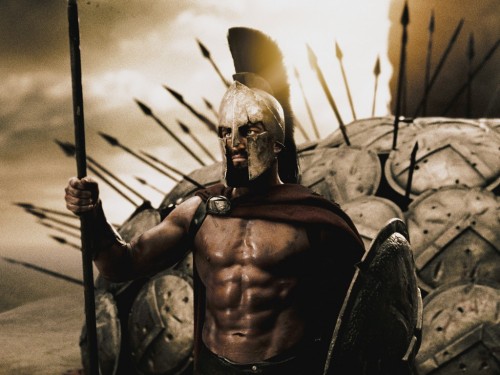
Leonidas & the Spartan Ethos

gerard11.jpg

Leonidas & the Spartan Ethos

By Theodore J. O'Keefe

Ex: http://www.counter-currents.com/

The Persian rider edged his horse cautiously forward. Just ahead the coastal plain dwindled to a narrow passage between the mountains and the sea, scarcely wider than a carriage track. Somewhere within the pass, the Greeks had massed to deny the Persians entry. It was the duty of the horseman to determine the size and disposition of their forces. Xerxes, his lord, the emperor of the Persians, knew that if his troops could force the pass, which the Greeks called Thermopylae, his armies could then stream unchecked into the heart of Greece.

The scout caught his breath as he sighted the Greeks in the western end of the pass. His trepidation gave way to surprise as he looked more closely. There were only about 300 of them, arrayed before a wall which blocked further access to the pass, and they were behaving most oddly. Some, stripped naked, performed exercises, like athletes before a contest. Others combed their long, fair hair. They gave their observer no notice.

Were these the vaunted Spartans? The Persian turned his horse and rode back to the imperial camp.

Xerxes received the scout’s report with undisguised amazement. The behavior of the Greeks seemed impossible to account for. Until now his advance down the northern coast of Greece had resembled a triumphal procession. City after city had submitted with the symbolic offering of earth and water. When at last the Greeks seemed disposed to stand and fight, their most gallant soldiers, the Spartans, were conducting themselves more like madmen than warriors.

The emperor summoned Demaratus, who had been a king of the Spartans until his involvement in political intrigues had forced him to flee to the Persian court. While Xerxes listened from his golden throne, Demaratus spoke of the Spartans:

“Once before, when we began our march against Greece, you heard me speak of these men. I told you then how this enterprise would work out, and you laughed at me. I strive for nothing, my lord, more earnestly than to observe the truth in your presence; so hear me once more. These men have come to fight us for possession of the pass, and for that struggle they are preparing. It is the common practice for the Spartans to pay careful attention to their hair when they are about to risk their lives. But I assure you that if you can defeat these men and the rest of the Spartans who are still at home, there is no other people in the world who will dare to stand firm or lift a hand against you. You have now to deal with the finest kingdom in Greece, and with the bravest men.”

The year was 480 B.C. During the previous three years Xerxes had assembled what promised to be the mightiest military force the world had ever seen, drawn from every corner of his far-flung realms. Modern historians are properly skeptical of the millions of soldiers and sailors meticulously enumerated by the great historian Herodotus, and of his endless catalogs of camel-riding Arabs, trousered Scythians, and frizzy-haired Ethiopians. Nevertheless, Herodotus’ account gives dramatic expression to the feeling of the Greeks that all the numberless, swarthy hordes of Africa and Asia were advancing on them.

Ten years before, the Athenians, who had aroused the wrath of Xerxes’ father and predecessor, Darius, by aiding their Ionian Greek cousins of Asia Minor in an unsuccessful revolt against their Persian overlords, had all but annihilated a Persian punitive expedition at Marathon, a few miles from Athens. It was Xerxes’ purpose to avenge that defeat and to crush the power of the impudent Hellenes, as the Greeks called themselves, once and for all.

There was more to it than that. Xerxes was a Persian, an Aryan, of the noble Achaemenid line, descended ultimately from the same race as the Hellenes. His ancestors had ranged the mountains and steppes of Iran and Central Asia, proud and free.

But as the Persians had increased their power and then wrested the great empire of the Near East from the Babylonians, their kings had fallen prey to the power and the regalia and the idea of empire. Once the Iranian leaders had regarded themselves, and been regarded, as first among Aryan equals. Now his fellow Persians, like all his other subjects, abased themselves at Xerxes’ feet. And like his imperial predecessors, Xerxes intended to make the remainder of the known world do the same.

As the Persian army moved ponderously across the great bridges with which the emperor had joined Europe and Asia at the Dardanelles, the Hellenes hesitated. Xerxes had accompanied the exertions of his engineers with a diplomatic campaign. While his engineers built the Dardanelles bridges and dug a canal across the Acte peninsula in Thrace by which his fleet could circumvent the stormy cape, his diplomats worked to promote defeatism in Greece. Argos and Crete promised to stay neutral, and the priestess of Delphi muttered gloomy oracles of Persian conquest.

The delegates from the Hellenic city-states who gathered at the Corinthian Isthmus in the spring of 480 were at first divided as to their course of action. The Peloponnesians were for guarding only their southern peninsula, while the Athenians and their allies on the neighboring island of Euboea pressed for an expedition to the north of Greece. Eventually the congress of diplomatic representatives agreed to dispatch a joint force of Athenians and Peloponnesians to the Vale of Tempe, in northern Thessaly, which seemed a fit place to bar the Persians’ way from Macedonia into Greece.

At Tempe, to their dismay, the Hellenes found that other passes afforded the invader entry into Hellas from the north. As the Greek contingent retreated to the south, the northern Greeks abandoned their determination to resist and submitted to the Persian emperor.

As Xerxes’ forces began to advance south from Macedonia into Greece, the Greeks were thrown into something of a panic. Following their first contact with the numerically superior Persian fleet, the Greek navy fled down the straits between Euboea and the Greek mainland. Only the loss of a considerable number of the Persian ships in a storm off the Artemisian cape at the northern tip of Euboea emboldened the Hellenic fleet to sail northward to face the enemy once more. In the meantime the Athenians made plans to evacuate their population to the islands of Salamis and Aegina to the southwest.

One force remained in the field to confront the Persians with determined opposition: Leonidas, king of the Spartans, had occupied the crucial pass at Thermopylae.

The gateway from northern to central Greece, Thermopylae stretched more than four miles between the towering wall of Mt. Oeta and the waves of the Malian Gulf. At both its eastern and western extremities, the pass contracted to a narrow, easily defended pathway. For much of the intervening distance, the pass billowed out into a broader expanse. Here there were a number of thermal springs, both salt and sulfur, from which Thermopylae derived its name, which means “hot gates.”

The garrison which held Thermopylae was at first considerably larger than the 300 Spartans whom the Persian scout had glimpsed at the western entrance to the pass. Behind the wall, which the Greeks had hastily rebuilt after occupying the pass, and along the ridge of Mt. Oeta, Leonidas had stationed nearly 7000 troops. About half of them were men from Sparta’s neighbor cities in the Peloponnesus. The rest were Boeotians from Thebes and Thespiae in central Greece, or hailed from nearby Phocis and Locris.

Although their Greek allies were many times more numerous, Leonidas and his Spartan guard formed the backbone of the Hellenic defense force. In recognition of the peril attending their mission, the 300 consisted exclusively of men with living male heirs, so that names and bloodlines would be carried on if they fell. Leonidas and his men were the elite of an elite, and on their example would depend the conduct of the other Greeks at Thermopylae.

What manner of men were the Spartans, that Xerxes hesitated to pit his myriads against their hundreds?

The origins of Sparta are shrouded in the mists of Greek antiquity, but it is certain that Sparta was founded by the Dorians. The last wave of Hellenic migrants from the north, the Dorians swept their Greek predecessors, the Achaeans, westward into Attica and Asia Minor. From the time of the Dorian migrations, the traditional division of the Hellenes into Dorians, Ionians, and Aeolians begins to take shape.

The Dorians were probably more Nordic in type than the other Greek tribes. As the great classicist Werner Jaeger wrote, “The Dorian race gave Pindar [the great poet of Thebes] his ideal of the fair-haired warrior of proud descent.” As Jaeger implies, the Dorians—above all those in Sparta—placed a premium on the preservation and improvement of their native stock.

One branch of the Dorians invaded the district of Laconia in the southeastern Peloponnesus. In the words of the great historian J. B. Bury, “The Dorians took possession of the rich vale of the Eurotas, and keeping their own Dorian stock pure from the admixture of alien blood reduced all the inhabitants to the condition of subjects. . . . The eminent quality which distinguished the Dorians from the other branches of the Greek race was that which we call ‘character’; and it was in Laconia that this quality most fully displayed and developed itself, for here the Dorian seems to have remained more purely Dorian.”

The city of Sparta arose from the amalgamation of several neighboring villages along the Eurotas. The Spartans gradually came to wield political power over the other Dorians in Laconia, the so-called perioeci, who nevertheless retained some degree of self-government and ranked as Laconian, or Lacedaimonian, citizens.

Not so the racially alien helots, the pre-Dorian inhabitants of Laconia, whom the Spartans reduced to serfdom and denied all political rights. The helots bore their servitude grudgingly and threatened constantly to revolt and overthrow their masters. To contain the helots’ revolutionary inclinations, the Spartans organized periodic campaigns, containing something of the spirit of both the fox hunt and the pogrom, in which their young men were given free rein to wreak havoc and eliminate the more truculent and dangerous of their serfs.

During the eighth century, the Dorians conquered the Messenians, who had occupied the remainder of the southern Peloponnesus. A century later, they suppressed a Messenian uprising only after a long and difficult war. From that time on, constrained to manage their own helots and the unruly Messenians as well, the Spartans evolved a unique ethos involving both the preservation of their racial integrity and a comprehensive system of military education and organization.

To a greater extent than any state before or since, the Spartans safeguarded and improved their biological heritage with an uncompromising eugenics program. Marriage outside the Spartan racial community was forbidden, nor was immigration tolerated. There were penalties for celibacy and late marriage, while men who fathered several children could be exempted from standing watch at night, and even from paying taxes.

The Spartans required that the newborn be presented for inspection by officers of the state. Sickly or deformed offspring were left to die.

According to the ancient biographer Plutarch, Lycurgus, the legendary lawgiver of Sparta, made even further provisions for healthy progeny, which continued to be adhered to in classical times. After describing the chaste upbringing of young Spartans of both sexes, Plutarch continues:

After guarding marriage with this modesty and reserve, he [Lycurgus] was equally careful to banish empty and womanish jealousy. For this object, excluding all licentious disorders, he made it, nevertheless, honorable for men to give the use of their wives to those whom they should think fit, so that they might have children by them. . . . Lycurgus allowed a man who was advanced in years and had a young wife to recommend some virtuous and approved young man, that she might have a child by him, who might inherit the good qualities of the father, and be a son to himself. On the other side, an honest man who had love for a married woman upon account of her modesty and the well-favoredness of her children, might, without formality, beg her company of her husband, that he might raise, as it were, from this plot of good ground, worthy and well-allied children for himself. And indeed, Lycurgus was of a persuasion that children were not so much the property of their parents as of the whole commonwealth, and, therefore, would not have his citizens begot by the first-comers, but by the best men that could be found; the laws of other nations seemed to him very absurd and inconsistent, where people would be so solicitous for their dogs and horses as to exert interest and to pay money to procure fine breeding, and yet kept their wives shut up, to be made mothers only by themselves, who might be foolish, infirm, or diseased; as if it were not apparent that children of a bad breed would prove their bad qualities first upon those who kept and were rearing them, and well-born children, in like manner, their good qualities.

As might be gathered, the women of Sparta were regarded, first of all, as the mothers of Spartan children. The young women were educated for childbearing. They engaged in vigorous gymnastic exercises and dances, often while nude, to the scandal of the other Greeks, although the Spartan women were proverbial for their chastity. Doubtless in consequence of heredity as well as a carefully cultivated physical fitness, the women of Sparta were accounted the most beautiful in Hellas.

Despite the emphasis on their role as mothers, Sparta’s women were the freest in Greece. Indeed, they were accused of dominating the Spartan men. When Gorgo, the wife of Leonidas, was so taunted, she summed up the situation of the Spartan women succinctly: “We rule men with good reason, for we are the only women who bring forth men.”

The men of Sparta were raised to be soldiers. They left the management of commercial affairs and the trades to the perioeci and devoted themselves exclusively to the business of government and war. Each Spartan citizen supported himself from a hereditary plot of land, farmed by the helots, which could not be alienated by sale or division.

Between the ages of seven and twenty the Spartans received their soldierly training. They acquired far more than a mechanical mastery of military skills. Their instructors strove to inculcate in their cadets an absolute devotion to Sparta, the ability to endure any hardship, and an unwavering courage on the battlefield.

To keep the young men on their mettle, the Spartan training system played off the exigencies of discipline against the defiant and adventurous spirit of youth. Young Spartans were compelled to steal their food, yet subjected to severe punishment if they were caught, a seeming paradox epitomized in the story of the Spartan boy who let the fox he concealed under his cloak tear at his vitals rather than give himself away. The Spartan school was a cruel but effective one, for it caught its students up in the enthusiasm of constant challenge and danger.

When he reached the age of 20 the young Spartan became a full-fledged soldier. For the next ten years he lived the barracks life with his comrades. Allowed to take a wife, he saw her only during brief and furtive visits. In times of peace, the young men were instructors to the Spartan boys.

On his thirtieth birthday the Spartan was invested with the remainder of his civic rights and duties. Thenceforth he attended the apella, the assembly of the people, and could vote on measures proposed by the two kings or by the ephoroi, Sparta’s five-man judiciary. The Spartan could at last establish his own household, although still bound to dine in common with his peers.

The principal fare at these communal messes was a black broth much favored by the Spartans, although the other Hellenes found it hard to stomach. (After sampling it a visitor from opulent Sybarisis supposed to have exclaimed, “Now I know why Spartans have no fear of death!”)

The Spartans spiced their meals with a dry and pithy wit renowned through Hellas as much for its substance as for its sting. As Plutarch tells it, Lycurgus replied to a Spartan who had advocated democracy, “Begin, friend, and set it up in your family.” Or, as the Spartan women are supposed to have said when handing their sons their shields before they marched to battle, “With it or on it.”

Spartan law reinforced its citizens’ contempt for luxury by banning private ownership of gold and silver. The result, according to Plutarch, was that “merchants sent no shiploads into Laconian ports; no rhetoric-master, no itinerant fortune-teller, no harlot-monger, or gold- or silver-smith, engraver, or jeweler, set foot in a country that had no money; so that luxury, deprived little by little of that which fed and fomented it, wasted to nothing and died away of itself.” Like the Spartans’ wills, their coins were made of iron.

Sparta’s military life did not stifle the minds and spirits of its citizens. Early in its history Sparta was a leading center of poetry and music. Terpander and Alcman brought the lyre and lyric from Asia Minor to the banks of the Eurotas. Lame Tyrtaeus, Lacedaimon’s native son, shaped his country’s ethos with his martial songs. Choral songs and dances carried on, in which the Spartan men melodically affirmed their patriotism, and the Spartan maidens urged them on to future deeds of valor. Rightly Pindar sang of Sparta:

“Councils of wise elders here, /And the young men’s conquering spear, / And dance, and song, and joy appear.”

It was not so much the Spartans’ works of art as the Spartan ideal which won the admiration of great Hellenic thinkers such as Plato. There was something noble in the stem simplicity of the Spartan way of life. Sparta’s fundamental laws, the rhetroi, which Lycurgus was said to have received direct from “golden-haired Apollo,” were few, unwritten, and to the point. Their purpose, to mold men of character in the service of the common good, struck a responsive chord through allHellas.

It is not difficult to detect in the wistful praise the Hellenes paid to Sparta a longing for the values and uses of their Indo-European forebears. Outside of Sparta these had all too often been forgotten amid the lures of Oriental luxury, or lost forever due to mixing of Hellenic blood. The Spartans, just as they transformed the rough-hewn, wooden longhouses of their northern ancestors into gleaming Doric temples, developed from their innate, racial outlook a guide and bulwark for their state.

And, of course, it was on the battlefield that the Spartan arete, or manly excellence, found its chief expression. The Spartans asked not how many the enemy were, but only where they were. They were ignorant of surrender, but knew well how to die.

But let Plutarch speak once more: “It was at once a magnificent and a terrible sight to see them march on to the tune of their flutes, without any disorder in their ranks, any discomposure in their minds, or change in their countenances, calmly and cheerfully moving with the music to the deadly fight. Men in this temper were not likely to be possessed by fear or any transport of fury, but with the deliberate valor of hope and assurance, as if some divinity were attending and conducting them.”

Such were the men who faced Xerxes and his host atThermopylae.

Xerxes waited for four days, in the hope that the Greeks would abandon their position, as they had in Thessaly. His attempt at psychological warfare was lost on the Spartans. When a fearful Greek from the surrounding countryside informed the Spartan Dieneces that “so many are the Persian archers their arrows blot out the sun,” Dieneces was unperturbed: “If the Persians hide the sun, we shall have our battle in the shade.”

On the fifth day, seething with anger at the Greeks’ impertinence, Xerxes sent forth an assault force of Medes and Cissians, Iranian kindred to his own Persians.

Xerxes’ troops stormed the western gate to Thermopylae with a valor exceeding their skill in combat. The Spartans met and overwhelmed them in the narrow space between the rocks and the water. Well armored, wielding their long spears expertly, the Spartan heavy infantry was more than a match for the Iranians with their short swords and wicker shields. The Spartans cut them down by the hundreds at close quarters.

From a neighboring hill, seated on his throne of gold, Xerxes watched the fighting, fuming at what he deemed his soldiers’ incompetence. To bring the matter to a quick end, he ordered his elite guard, the King’s Immortals, forward to the deadly pass. Again the Spartans outfought the emperor’s men.

All at once the Spartans turned and fled, seemingly in panicky confusion. With a shout, the Immortals rushed forward in disarray. But the Spartans were all around them in an instant, and they cut the emperor’s picked troops to pieces. According to Herodotus, Xerxes, watching from his hill, “leapt to his feet three times, in terror for his army.”

The next day’s fighting went no better for the Persians. The Greek allies took turns spelling the Spartans at the western approach, and once again the Hellenes reaped a bloody harvest. As the sun set over the western mountains, the waters of the gulf lapped crimson at the heaps of Persians on the shore.

That night, as Xerxes puzzled bitterly how to break the death grip of the Greeks on Thermopylae, a traitor came forth from a local district, looking for a rich reward. The information he gave the emperor was the doom of the men of Thermopylae.

Ephialtes the Malian revealed to Xerxes the existence of a path over the hills and along the crest of Mt. Oetato the rear of Thermopylae. The path was not unknown to Thermopylae’s defenders, and Leonidas had stationed the Phocian troops along Mt.Oela’s ridge to ward off enemy attempts to flank his forces in the pass.

At dawn the next morning, the Phocians heard the sound of marching feet advancing through the fallen leaves which carpeted the floor of the oak forest below the summit of Mt. Oeta. As the Greeks sprang to arm themselves, the Immortals, their ranks reinforced, rushed up the mountainside. The Phocians retreated to the highest point on Mt. Oetaunder a hail of Persian arrows, but the emperor’s picked troops disdained to close with them. Swerving to the left, they made their way down the mountain to a point east of Thermopylae’s rear approach. The Hellenes in the pass were trapped between two Persian forces.

Leonidas learned of the threat from his lookouts along Mt. Oeta and stragglers from the Phocian contingent. He quickly took stock of the changed circumstances. It was evident to the Spartan king that the pass could not be held much longer. The Greeks to the south had need of the troops engaged in Thermopylae’s defense.

But there were other considerations. Leonidas and his 300 men were first of all Spartans. The laws and customs of their native city bade them to conquer or die at the posts assigned them, whatever the superiority of the enemy’s numbers. And there was an oracle, made known at the outset of the Persian invasion, which prophesied that Sparta or a Spartan king must fall in the coming conflict.

Leonidas dismissed the allied troops, all but the men of Thebes and Thespiae. The remainder of the Peloponnesians, as well as the Phocians and Locrians, made their way across the hills between the Persian armies, to fight again another day.

The next morning, after Xerxes had poured a libation to the rising sun, his men stormed Thermopylae from both sides. Scornful of their own lives, Leonidas and his men surged out to meet the Persians on the open ground before the narrow entrance to the pass. Godlike the Spartans swept forward, cutting a swath through the enemies’ ranks. Again they exacted a fearful toll, as the Persian officers drove their men on from the rear, making liberal use of their whips.

The Hellenes fought with reckless courage and with grim determination. When their spears splintered and broke, they fought on with their swords. Leonidas fell, and a fierce struggle raged over the body of the Spartan king. Four times the Persians were repulsed, and many of their leaders, including two of Xerxes’ brothers, were slain.

Gradually the remaining Spartans, bearing the fallen Leonidas, fell back to a small elevation within the pass. There they made a last stand. Beside them fought the brave citizens of Thespiae. The Thebans covered themselves with disgrace by throwing down their arms and submitting abjectly to Xerxes.

After a short but furious resistance, the Spartans and the Thespians were annihilated by the swarming Persian infantry. When all was still, and Xerxes walked among the dead on the battleground he had until then avoided, the Persian emperor was stricken with anger at the tenacity which Leonidas had displayed in thwarting his imperious will. He ordered the Spartan king beheaded, and his head fixed on a stake.

Once more Xerxes summoned Demaratus.

“Demaratus,” he began, “you are a good man. All you said has turned out true. Now tell me, how many men of Lacedaimon remain, and are they all such warriors as these fallen men?”

“Sire,” Demaratus replied, “there are many men and towns in Lacedaimon. But I will tell you what you really want to know: Sparta alone boasts eight thousand men. All of them are the equals of the men who fought here.”

When Xerxes heard this he paled. The memory of Demaratus’s words must have been much with him during the next few months, until Leonidas’ Spartan comrades avenged him at the climactic battle of Plataea and drove the Persian horde forever from Hellenic soil.

The Greeks erected several monuments at Thermopylae, bearing suitable inscriptions. A lion marked the spot where Leonidas perished. But it was the marker the Spartans raised to the memory of their 300 countrymen which best evokes the spirit of their people. With laconic brevity it read:

“Wanderer, if you come to Sparta, tell them there / You have seen us lying here, obedient to their laws.”

Source: Kevin Alfred Strom, ed., The Best of Attack! and National Vanguard Tabloid (Arlington, Va.: National Vanguard Books, 1984), pp. 127-130.


Article printed from Counter-Currents Publishing: http://www.counter-currents.com

URL to article: http://www.counter-currents.com/2012/10/leonidas-and-the-spartan-ethos/