


lundi, 03 décembre 2012
A Note on the Art of Political Conversion
A Note on the Art of Political Conversion
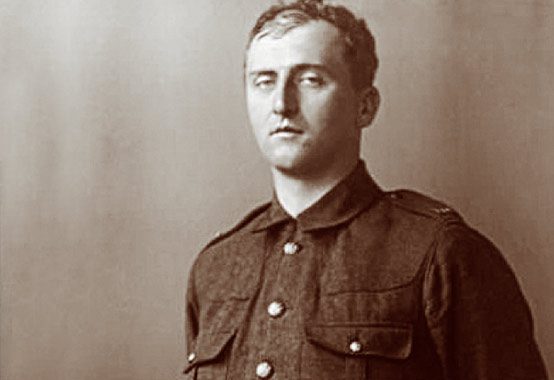
Some day a wonderful book will be written on the art of persuasion, a new sophistic. One may suppose that psychology will ultimately become as complete a science as geometry and mechanics are now. It will be possible then to predict the effect of an argument on a man’s mind as surely as one can now predict the eclipse of the moon. On the basis of this developed science will be built an infallible set of rules for converting a man to any opinion you like. The mechanism of mind will be as bare as that of a typewriter. You will press the right levers, and the result you want will follow inevitably. The lover will sigh no more, but will consult the manual and succeed—unless the lady be similarly armed. So dangerous will the art be that the knowledge of it must be confined to a special caste, like Plato’s guards, disciplined and trained not to make any malicious use of their power. Or more probably the then prevailing form of government will seize it and make a monopoly of it as they now do of armed force, and used it for their perpetual preservation.
Pending the arrival of this political canvasser’s millennium, one can sketch out the beginnings of the thing. Materials for the art already exist: Schopenhauer’s “Art of Controversy,” Pascal’s “Pensées,” the manuals which the credulous Protestant imagines that the Jesuits are brought up on, and, more recently, James’s “Will to Believe,” and “L’Arte di Persuadere” of the brilliant Italian pragmatist Pezzolini, who would bring all philosophy to the service of such a sophistic.
All these are founded on a recognition of the basic fact of the absolute impotence of a mere idea to produce any change in belief. All conviction, and so necessarily conversion, is based on the motor and emotional aspects of the mind. No intellectual conception has any moving force unless it be hinged on to an emotion or an instinct. In every man’s mind there exist certain fixed instincts and prejudices, certain centers of emotion, tendencies to react to certain words. The expression “center” is not merely metaphorical. In all probability there does exist a corresponding organization of the neurones in the brain. These are the parts of a man’s mind which lead to conviction expressed in action, ballotwise or otherwise. You have got to get hold of these to produce any change. If you can’t do this, then the idea is “dead,” it has no motive power, the most logical presentation will have no effect. There must be in any successful propaganda, then, an element more important than good argument. A good case is the last, not the first part of a successful conversion. In practice men have always known this. Practice remains constant throughout the ages; it is not reserved for any particular century to “discover” anything new about the ways of the human. With theory, however, it is very different. That may be wrong continually, and may, at a definite moment, be put right. In this case it certainly is so. For a long time reason was given a too predominant place in psychology, and to it all other faculties were subordinated. Gradually, during the last 50 years in philosophy, instinct and emotion have asserted their rightful place, until at the present time the reaction has gone so far that the intellect is regarded merely as a subtle and useful servant of the will, and of man’s generally irrational vital instincts. Bergson, Le Roy, Croce, Eucken, Simmel are all anti-intellectualists.
The particular effect of this change of view which concerns me here is that of the difference it makes to the theory of politics. Formerly the prevailing conception was something of this kind—you perfected the mechanism of democracy until each man’s carefully thought-out opinion had its effect. You then, on any particular measure, set out on a campaign of careful argument. Each side stated their reasons to the best of their ability, the elector heard both sides, and recorded his vote accordingly. All this, of course, sounds very fantastical now in the light of what actually does happen at a General Election. But the Bentham-Mill School honestly regarded it as a possible idea. We all recognize this now as fantastical, but what must be substituted for it as a true account of the psychology of the matter? This kind of inquiry would have to go into two parts — an account of the process by which the mass of the electors are converted, and the quite different process in the minds of the intellectuals, The first has been done very completely and amusing by Gustave Le Bon in “Psychology of the Crowd,” and in Graham Wallas’s “Human Nature in Politics.” They recognize quite clearly that the process of conversion here is anything but intellectual.
They show the modern politician frankly and cynically recognizing this, setting out deliberately to hypnotize the elector, as the owners of patent medicines hypnotize the buyers. They don’t argue; they deliberately reiterate a short phrase, such as “Pears’ Soap” or “Pea Food,” until it gets into the mind of the victim, by a process of suggestion definitely not intellectual. But no one has yet given any connected theory of the more interesting part of the subject—the conversion of the “intellectual,” of the leisured middle-class wobbler. Wallas himself somehow leaves you with a suspicion in your mind that he does still think that the “intellectual” is in the position which Mill, in the age of naive belief in reason, imagined him to be—that of weighing arguments, and then calmly deciding a question on its merits. Now, nothing could be grater nonsense. No one can escape from the law of mental nature I have referred to. We are all subject to it. We may be under the delusion that we are deciding a question from purely rational motives, but we never are. Even the detached analyst of the phenomena is himself subject to the law. Conversion is always emotional and non-rational.
Now this does seem to me to be a point of practical importance if it helps us to convert this class. For though the type may not be numerous, it does have, in the end, a big influence in politics. Not very obviously or directly, for in no country do the intellectuals appear to lead less than in ours; but ultimately and by devious ways their views soak down and color the whole mass. The first step is to recognize the fundamental identity of the two processes of conversion — that en masse, and that of the intellectuals; in this respect that mere logical presentment is of very little use. As the modern electioneer sets out on a cynical recognition of the fact to convert the mass, so he should just as directly try to capture the smaller class.
There must be two quite different methods of attack, for what attracts the one repels the other. Great words empty of sense, promises of Elysium a few years ahead, have been, and always must be, the means by which the mass can be stirred, but they leave the few very cold. In this case, sauce for the goose is not sauce for the gander, for the only resemblance is the fact of appetite. Now, here seems to me to be the weakens of the Unionists. They emphatically do not provide any sauce for the gander. They practice the other art well enough, the art which Graham Wallas analyzes — that of manipulating the popular mind by advertisement and other means. But the smaller one they neglect, for no one can seriously think that Mr. Garvin is fit food for the adult intelligence. I have in mind a particular minor variety of this class: the undergraduate who, arriving in London, joins the Fabian Society. Now there is nothing inevitable in this. He may imagine that an intellectual process landed him there. Nothing of the kind. The Fabian Society provides him with the kind of stuff to fit in with his complex prejudices, and the Conservatives do not. He is merely a Socialist faute de mieux. The emotions involved are fairly simple—an insatiable desire for “theories,” the vague idea to be “advanced,” and the rest of it. There is no reason in the nature of things why the other side should not cater for this. In France, Action Française has made it rather bête démodée to be a Socialist. The really latest and advanced thing is to be a Neo-Royalist. They serve their victim with the right kind of sauce. So successful has this been that Jaurès recently warned his followers against the cleverness of the bourgeoisie.
To get back, however, to the main position. I take the view for the time being that we are not concerned with truth, but with success. I am considering the problem that should present itself to the acute party entrepreneur—did such a mythical person exist—how can this particular type of people be converted? Here is the type; how can it be caught? They must be converted exactly as everyone else is—by hitching on your propaganda to one of their centers of prejudice and emotion. But the difficulty comes in the analysis and discovery of these centers. They must be there, but they are complex and elusive, and sometimes unknown even to the subject himself. Here is where the difference comes in between this and the other sophistic. The problem in the case of the laborer is not so much to find these centers as to get hold of them before the other man does and to stick to them. Some day, I surmise, all this analysis will be done for us in a neat little manual.
But meanwhile, I can give data for the future compiler of such a book by analyzing one of these typical complexes, which I found embedded in my own head and influencing my politics without my knowing it. I probed my mind and got rid of it as I might of a tumor, but the operation was a violent one.
It came about from watching my own change of mind on the subject of Colonial Preference. I was, I suppose the typical wobbler, for while politically inclined to be a Protectionist, yet, as a pupil of Professor Marshall’s, theory pulled me in the opposite direction. Now, amid the whirlwind of that campaign of argument, I noticed that two apparently disconnected and irrelevant things stuck in my head had a direct influence on my judgment, whilst the “drums and tramplings” of a thousand statistics passed over me without leaving a trace. The one was a cartoon in Punch—Mr. Chamberlain landing at Dover and being passed quickly by the Customs officer: “There is no bother here, sir; this is a free country.” The other was an argument most constantly used at the time, I imagine, by Sir Edward Grey, and recently revived by a supposedly Conservative paper which does most of its thinking in its heels. “To attempt,” he said, “to bind the Empire together by tariffs would be [a] dangerously artificial thing; it would violently disturb its ‘natural growth.’ It was in opposition to the constant method which has made us a successful Colonial power. Let other nations fail through trying to do things too directly.” This had a powerful effect on me, and I imagine must have had on a great many other people; for this reason: that whereas we all of us had a great many emotions and nerve-paths grouped round the idea of Empire, these were by this argument bound up with Free Trade. It seemed to bring Preference in conflict with a deeply seated and organized set of prejudices grouped round the word “free” and “natural,” for the moving force of the cartoon and Grey’s argument were the same. This may look like an intellectual decision, but it isn’t. I could not, at the time, have formulated it as definitely as I do now. It was then just a kind of vague sentiment which, in the intervals of argument, pulled one in a certain way. This was so because, as I have maintained, conviction is in the end an emotional process. The arguments on each side were so numerous that each one inhibited the slight effect the other might have had, and in the resulting stalemate it was just odd little groups of emotions and prejudices, like the one indicated, that decided one.
Now this is only a prejudice—why should one have a definite distrust of any constructive scheme, and think that leaving it to nature was so much better and so much more in the English tradition? Looking at it from an a priori standpoint, it seems probable that a definite policy directed towards a certain end will gain that end. Examples are all around us to prove it—that of German unity in particular. There was no leaving it to nature there. Yet, in spite of its absurdity from a reasonable point of view, this idea of what is “natural” and “free” remained a fixed obsession. It was too deep-seated to be moved by any argument, and had all the characteristics of one of those complex prejudices which I said must be analyzed as preliminary to the art of conversion. It has all kinds of ramifications, and affects opinion in many directions, on conscription, for example, and a score of other matters. It can be traced back from its origin in the disputes of rival schools of medieval physicians scholastically inclined. Berthelot has analyzed the influence of these medical doctrines on politics. It can be seen particularly well in Quesnay, at the same time a doctor and an economist, from whom Adam Smith borrowed the theory of free exchange. It can be followed through Adam Smith, Coleridge, and Burke to the formation of the political theory of laissez-faire which dominated the 19th century. This theory of politics — and, of course, it is this which produced the personal prejudice which influenced me — may be considered as a kind of Hippocratic theory of political medicine whose principal precept in the treatment of the social “body” is that on no account must the “natural” remedial force of nature be interfered with.
Now, once I had got the theory out fairly and squarely before me, had seen its origin and history, its influence over me had gone. It was powerful before because I really didn’t know that it existed. The thing that most interested me was how it got so firmly fixed in my mind-center without my knowing it; and here comes really the only practical part of this paper. In my own case, the prejudice, I ma certain, had been formed in this way—the histories I had been brought up on, while never stating this view as a theory, had yet so stated all events in our Colonial history as to convey it by suggestion. Always the English were shown as succeeding as by some vague natural genius for colonization or something of that kind. Never by a consistent constructive effect. The people who did make definite plans, like the French under Colbert, and later the Germans, were always represented as failing. Now, this was the reason that the idea was so embedded in one. If it had been presented definitely as a theory, it would have been destroyed by argument. It became an instinct because it was suggested to one in this much more indirect and subtle way.
It took me years to get rid of the effects of this. For when an idea is put into your head in this indirect way, you are never conscious of its existence. It just silently colors all your views. Born with blue spectacles, you would think the world was blue, and never be conscious of the existence of the distorting glass. Ideas insinuated like this become in the end a kind of mental category; the naïve person never recognizes them as subjective, but thinks they lie in the facts themselves. Here, then, is my practical point. This kind of thing is dangerous. One is handicapped, as far as clear-thinking about politics goes, by being educated in Whig histories. It takes strenuous efforts to get rid of the pernicious notion implanted in one by Macaulay, say. My remedy would be this—prevention. I should adopt for secondary schools what was recently proposed as a solution of the religious difficulty in primary ones. Let there be so many hours set apart for history each week, and let each political party be allowed to send in their own historian. The first step towards this must be the writing o a definitely Tory history. The Whigs have too long had it their own way in this sphere. I can give a definite example of a recent successful accomplishment of this kind of thing in Charles Maurras’s history of the French Monarchy, which is converting scores of young Republicans.
After all, there is nothing ridiculous in the idea itself. It only appears so because it is a logical, definite application in a small scale of a process which is taken as a matter of course in greater ones. All national histories are partisan, and designed to give us a good conceit of ourselves. We recognize that even while we laugh at the American school-books and the Belgian accounts of the Waterloo campaign. But we are not familiar with the same process in small affairs inside the nation. But it is coming rapidly. I can mention Howell Evans’s history of Wales, recommended recently by the Welsh Education Council, which ends up with a panegyric of the late Budget. Or take Mrs. Richard Green’s history of Ireland, now being sold at half-price to all secondary schools of a Nationalist character. It is definitely written to convince the Irishman that his country was not civilized by the English conquest, but had itself, in earlier times, the most cultured civilization in Europe. It is done by a careful selection and manipulation of old manuscripts. It goes flat against the known facts, for the poet Spenser described them as naked barbarians. But what does that matter? It fulfills its intention. Anyone who still has a lingering dislike of this frankly partisan type of history is under the influence of an opposite ideal. He would prefer an impartial record of facts. But this ideal standard by which he condemns the party history does not exist. True, there has been a school of scholars who definitely took it as their ideal — the modern Cambridge historians. But I remember the late Dr. Emil Reich telling me that the greatest triumph of his life took place in a room at Cambridge, when, after an argument on this very subject, he was able to take down from the bookshelves a well-known Jesuit history of the Elizabethan persecutions which contained nothing but facts, no biased comment or theory, but which, at the same time, produces an extreme anti-Protestant effect. According to his own account, this entirely silenced them.
No, the whole thing is impossible. No history can be a faithful mirror. If it were, it would be as long and as dull as life itself. It must be a selection, and, being a selection, must inevitably be biased. Personally, I don’t regard this as a disagreeable necessity; I like the idea. After all, who would care an atom about the past were it not a reservoir of illustrations to back up his own social theories and prejudices? For purposes of political argument, I myself specialize in the history of the 4th century, for no casual opponent knows enough to contradict me. If I rashly illustrated them from the French Revolution, everyone can remember enough facts to back the opposite view.
Originally published in the Commentator, Feb. 22, 1911; March 1, 1911; March 8, 1911.
T.E. Hulme (1883-1917) was an English poet and critic whose books include Speculations: Essays on Humanism and the Philosophy of Art and Notes on Language and Style.
00:08 Publié dans Littérature, Théorie politique | Lien permanent | Commentaires (0) | Tags : lettres, lettres anglaises, littérature, littérature anglaise, t. e. hulme, avant-gardes, art |  |
|  del.icio.us |
  |
|  Digg |
  Facebook
Alain Soral dédicacera « Chroniques d’avant-guerre » le samedi 8 décembre 2012 à la librairie Facta
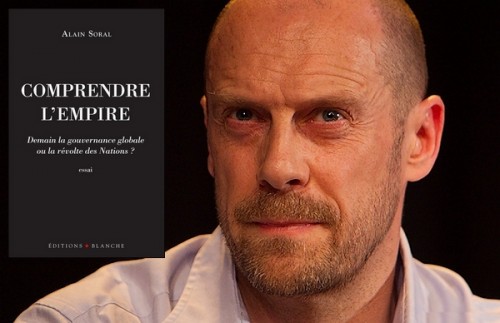
Alain Soral dédicacera « Chroniques d’avant-guerre » le samedi 8 décembre 2012 à la librairie Facta
Venez rencontrer l’auteur à la librairie Facta :
4, rue de Clichy Paris IXe
Téléphone : 01 48 74 59 14
Courrier électronique : librairiefacta@wanadoo.fr
Situer la librairie :
Sur Google Maps : http://maps.google.fr/maps?f=q&…
Sur Mappy : http://fr.mappy.com/map#d=4+rue+de+…
« Quand on est jeune et novice dans le débat d’idées, on croit qu’en politique c’est comme en sport, qu’il y a deux équipes : la vôtre et celle d’en face, les bons et les méchants, le pouvoir et l’opposition. Puis avec la pratique, pour ceux qui passent à la pratique – les autres n’y comprennent jamais rien –, on découvre que dans la vraie vie, comme dans 1984 de George Orwell, c’est plus compliqué que ça. Il y a le pouvoir, l’opposition au pouvoir et… Goldstein.Soit l’opposant créé par le pouvoir, ou plutôt favorisé par le pouvoir – ne soyons pas complotistes – pour dévier les énergies contestataires vers la stérilité, l’inutile…Gauchisme à la Prévert ou gauchisme à la Baader, qu’on soit dans les nuages ou qu’on fonce droit dans le mur, sur le plan de l’inefficacité politique – les années de prison mises à part – ça revient au même… »Chroniques d’Avant-guerre, compilation des articles publiés dans l’éphémère revue Flash entre octobre 2008 et mars 2011, est le 11e livre d’Alain Soral. Reprenant, sur le mode chronologique plutôt qu’orthographique, le principe des textes courts de ses Abécédaires (Jusqu’où va-t-on descendre ?, Socrate à Saint-Tropez), il est aussi un complément utile à son essai majeur écrit au même moment : Comprendre l’Empire.
00:05 Publié dans Evénement | Lien permanent | Commentaires (0) | Tags : alain soral, france, événement, paris, politique | | del.icio.us | | Digg | Facebook
Freund oder Feind. Zur Aktualität Carl Schmitts
Freund oder Feind. Zur Aktualität Carl Schmitts
von Erich Vad
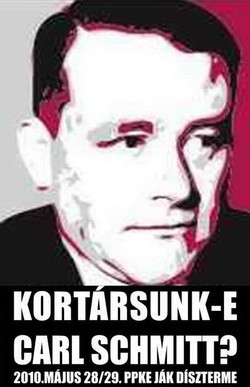 Der 1985 im Alter von 97 Jahren verstorbene Carl Schmitt hat sich nicht nur mit Staats- und Verfassungsrecht, sondern auch mit grundsätzlichen Fragen der Kriegstheorie, der Geo- und Sicherheitspolitik beschäftigt. Dabei wurde sein Denken nachhaltig von der Erfahrung des „Europäischen Bürgerkriegs“ (Ernst Nolte) geprägt, vor allem durch die spezifisch deutsche Bürgerkriegslage zwischen 1919 und 1923 sowie die Gefahr ihrer Wiederholung in den Jahren 1932 bis 1934. Schmitts Nationalismus und sein Eintreten für einen starken Staat lassen sich aus diesem Zusammenhang ebenso erklären wie seine Entscheidung zu Gunsten der staatlichen Ordnung, die notfalls unter Bruch der Verfassung gewahrt werden sollte, oder seine Entscheidung für eine zeitweise Kollaboration mit dem NS-Regime, das allein in der Lage schien, den vollständigen Zusammenbruch zu verhindern.
Wegen dieser Kollaboration mit dem Nationalsozialismus hat man Schmitt immer wieder beschimpft, als „geistigen Quartiermacher“ (Ernst Niekisch) Hitlers, als „charakterlosen Vertreter eines orientierungslosen Bürgertums“ (René König) oder als „Schreibtischtäter des deutschen Unheils“, so etwa Christian Graf von Krockow, der aber auch zugab, daß Schmitt, „… der bedeutendste Staatsrechtslehrer des 20. Jahrhunderts“ gewesen sei. Eine Beurteilung, die noch überboten wurde von dem Religionsphilosophen und Rabbiner Jacob Taubes, der über Schmitt sagte, dieser verkörpere eine „… geistige Potenz, die alles Intellektuellengeschreibsel um Haupteslänge überragt“. Schließlich sei noch Raymond Aron erwähnt, der in seinen Lebenserinnerungen äußerte: „Er gehörte zur großen Schule der Gelehrten, die über ihr Fachgebiet hinaus alle Probleme der Gesellschaft samt der Politik umfassen und somit Philosophen genannt zu werden verdienen, so wie es auch Max Weber auf seine Weise war.“
Diese Wertschätzung Schmitts erklärt sich vor allem aus dessen epochemachender Lehre vom Politischen, das er im Kern bestimmt sah durch die Unterscheidung von Freund und Feind. Dabei meinte Schmitt „Feind“ im Sinne des lateinischen hostis, das heißt den öffentlichen, den Feind des Staates, nicht inimicus im Sinne von privater Gegner; eine Differenzierung, wie es sie auch im Griechischen mit polemios und echthros gibt. Gegen alle Versuche, die fundamentale Scheidung von Freund und Feind zu umgehen, wie sie vor allem in Deutschland nach 1945 üblich wurden, behauptete Schmitt, daß ein Volk nur durch Verleugnung seiner eigenen politischen Identität dahin kommen könne, die Entscheidung zwischen Freund und Feind vermeiden zu wollen. In seinem berühmten, zuerst 1927 erschienenen Essay Der Begriff des Politischen hieß es: „Solange ein Volk in der Sphäre des Politischen existiert, muß es, wenn auch nur für den extremsten Fall – über dessen Vorliegen es aber selbst entscheidet – die Unterscheidung von Freund und Feind selber bestimmen. Darin liegt das Wesen seiner politischen Existenz.“
Wenn man diesen Satz auf unsere Lage bezieht, ergibt sich sofort der denkbar schlechteste Eindruck von der Außen- und Sicherheitspolitik der gegenwärtigen Bundesregierung. Innenpolitische Probleme und Parteiinteressen bei Wahlkämpfen wirken stärker auf das Regierungshandeln als reale Bedrohungen des Landes und langfristige Strategien zur Wahrung nationaler Interessen. Im Glauben an einen herrschaftsfreien Diskurs auch in den Außenbeziehungen nimmt man bei akuten internationalen Krisen selbstgefällige, nur scheinbar überlegene moralische Positionen ein, um dann mittels utopischer Problemlösungsversuche die eigene Handlungsunfähigkeit zu verdecken. Man begnügt sich mit der Rolle des inzwischen als unzuverlässig geltenden Metöken, der gerade noch in der Lage ist, militärische Einrichtungen von Bündnispartnern im eigenen Land zu bewachen, ihnen Überflug- und Landerechte zu gewähren und andere Unterstützungsleistungen gerade so weit zur Verfügung zu stellen, daß eine Kabinetts- und Regierungskrise vermieden wird.
Die Kernfrage war für Schmitt immer die, wie wir als Erben der uralten brüderlichen Feindschaft von Kain und Abel mit dem zentralen Kriterium des Politischen umgehen sollen. In dem Zusammenhang ist ein von ihm handschriftlich kommentiertes Tagungsprogramm der Evangelischen Akademie Berlin aufschlußreich, das sich in seinem Nachlaß erhalten hat. Die Veranstaltung, die zwischen dem 26. und dem 28. November 1965 stattfand, hatte das Thema „Feind – Gegner – Konkurrent“. In der Einführung zum Programm eines „Freundeskreises junger Politologen“ („Freundeskreis“ von dem selbstverständlich nicht geladenen Schmitt rot markiert) wurde die Frage aufgeworfen, ob noch die Berechtigung bestehe, vom Feind zu sprechen, oder ob nicht an seine Stelle „Der Partner politischer und ideologischer Auseinandersetzung“ oder „Der Konkurrent im wirtschaftlichen Wettbewerb“ getreten sei. Schmitt notierte am Rande polemisch: „Der Ermordete wird zum Konfliktpartner des Mörders?“
Er wollte damit zeigen, daß die hier geäußerten Vorstellungen die Existentialität menschlicher Ausnahmelagen nicht treffen konnten. Und mehr als das: Der Programmtext war für Schmitt auch eine indirekte Bestätigung seiner These von der notwendigen Freund-Feind-Unterscheidung, insofern als man fortwährend Begriffe verwendete, die auf elementare Gegensätzlichkeiten hinwiesen, wie zum Beispiel „Ideologie“, „Theologie“, „der Andere“, „Liebe“, „Diakonie“ etc. Daß sich die Veranstalter dessen nicht bewußt waren, machte die Sache nicht besser. Schmitt bezeichnete ihre moralisierenden, auf Verschleierung des polemischen Sachverhalts abzielenden Formulierungen in einer Marginalie als „Entkernung des Pudels durch Verpudelung des Kerns“.
Schmitts Bestimmung des Politischen durch die Unterscheidung von Freund und Feind gilt auch heute noch, trotz aller anderslautenden Beteuerungen. So, wenn die Vereinten Nationen ein Land wie den Irak faktisch aus der Völkergemeinschaft ausschließen und damit eine hostis-Erklärung im Sinne Schmitts abgeben, so, wenn die USA nach den Anschlägen vom September 2001 den internationalen Terrorismus und die ihn unterstützenden politisch unkalkulierbaren Staaten als Feind bestimmten. Eine mit modernsten Waffen operierende Guerilla oder eine weltweit vernetzte, organisierte Kriminalität können, auch wenn sie nicht selbst staatenbildend wirken, durchaus als Feinde im politischen Sinn betrachtet werden. Überhaupt ist die nichtstaatliche und privatisierte Form der Gewalt, also alles, was die low intensity conflicts kennzeichnet, nichts grundsätzlich Neues. Thukydides beschrieb sie bereits im Peloponnesischen Krieg, ähnliches gilt für Clausewitz oder die stark von ihm beeinflußten Theoretiker und Praktiker des revolutionären Krieges wie Friedrich Engels, Wladimir I. Lenin, Mao Tse-Tung, den Vietnamesen Vo Nguyen Giap oder Che Guevara. Die Wandelbarkeit des Krieges war sogar schon einem seiner frühesten Theoretiker, dem Chinesen Sun Tze, bewußt, der vor 2500 Jahren zu der Feststellung kam: „Der Krieg gleicht dem Wasser. Wie Wasser hat er keine feste Form.“
Der Kampf heutiger Terroristen ist allerdings im Gegensatz zu dem, was Schmitt in seiner Theorie des Partisanen ausführte, nicht mehr „tellurisch“ verortbar, sondern global angelegt. Musterbeispiel dafür sind die raumübergreifenden Operationen der al-Qaida in Afghanistan, auf dem Balkan, dem Kaukasus und in den zentralasiatischen Staaten oder die terroristischen Anschläge auf amerikanische Botschaften und Einrichtungen in Afrika oder am Golf. Der Plan für die Terrorangriffe gegen die USA wurde in den Bergen Afghanistans und im europäischen Hinterland erdacht und dann auf einem anderen Kontinent exekutiert. Das Flugzeug, das Transportmittel der Globalisierung par excellence, setzte man als Waffe ein. Planung und Operation der Terroraktion hatten globale Maßstäbe. Weltweit operierende warlords wie Osama Bin Laden könnten bevorzugte Akteure dieser neuen Form des bewaffneten Kampfs werden.
Es spricht vieles dafür, daß die Zukunft des Krieges eher von Terroristen, Guerillas, Banditen und nichtstaatlichen Organisationen bestimmt sein wird, als von klassischen, konventionellen Streitkräften. Dort, wo die Macht immer noch aus Gewehrläufen kommt, führen zunehmend irreguläre Formationen in Privatund Söldnerarmeen Krieg. Religiöser oder politischer Mythos, generalstabsmäßige Planung und üppige Finanzressourcen bilden die Voraussetzungen eines veränderten Kriegsbilds. In seiner erwähnten Theorie des Partisanen nahm Schmitt diesen Aspekt der heutigen Sicherheitslage durchaus zutreffend vorweg, vor allem, wenn er die Bedeutung des Fanatismus als Waffe hervorhob: „Der moderne Partisan erwartet vom Feind weder Recht noch Gnade. Er hat sich von der konventionellen Feindschaft des gezähmten und gehegten Krieges abgewandt und sich in den Bereich einer anderen, der wirklichen Feindschaft begeben, die sich durch Terror und Gegenterror bis zur Vernichtung steigert.“
Wie soll man auf diesen Wandel reagieren, oder, – um die kritischen Fragen Schmitts aufzugreifen: Wer hat jetzt das Recht, den Feind zu definieren und gegen ihn mit allen Mitteln – das heißt unter den gegebenen Umständen auch mit Massenvernichtungswaffen – vorzugehen? Wer darf Strafen gegen den definierten Feind verhängen und sie – notfalls präventiv – durchsetzen? Und wie schafft man ein internationales Recht und die Fähigkeit, es notfalls mit Hilfe von Gewalt durchzusetzen? Schließlich: Wie verhindert man die Instrumentalisierung des Völkerrechts für nationale Macht- und Einflußpolitik?
Schmitt war grundsätzlich skeptisch gegenüber allen Versuchen ideologischer und das heißt auch menschenrechtlicher Legitimation des Krieges. Der Krieg, so Schmitt, sei im Kern nur zu begreifen als Versuch „… der seinsmäßigen Behauptung der eigenen Existenzform gegenüber einer ebenso seinsmäßigen Verneinung dieser Form“. Und weiter: „Es gibt keinen rationalen Zweck, keine noch so richtige Norm, kein noch so ideales Programm, keine Legitimität oder Legalität, die es rechtfertigen könnte, daß Menschen sich dafür töten.“
Die Legitimität des Krieges bei einer vorliegenden „seinsmäßigen Verneinung“ der eigenen Existenzform bekommt durch die modernen Bedrohungsszenarien, angesichts des internationalen Terrorismus einerseits und der Proliferation von Massenvernichtungswaffen andererseits, eine neue Dimension. Das Wesen des Politischen bleibt aber unberührt. Darüber belehrt auch jeder genaue Blick auf die Verfaßtheit des Menschen, der in dauernder Auseinandersetzung mit anderen Menschen lebt und nur aus Gründen der Selbsterhaltung und der Vernunft bereit ist, den „Krieg aller gegen alle“, den Schmitt wie Thomas Hobbes als natürlichen Zustand des Menschen betrachtete, durch einen staatlich garantierten Friedenszustand zu überwinden.
In Der Begriff des Politischen schrieb Schmitt: „Man könnte alle Staatstheorien und politischen Ideen auf ihre Anthropologie prüfen und danach einteilen, ob sie, bewußt oder unbewußt, einen ›von Natur bösen‹ oder einen ›von Natur guten‹ Menschen voraussetzen.“ Gerade mit Blick auf den heutigen Menschenrechtsuniversalismus und die gleichzeitige Verfügung über Massenvernichtungswaffen wird die tiefe Problematik jeder Lehre von der natürlichen Güte des Menschen deutlich. Denn der mögliche Einsatz von Massenvernichtungswaffen nötigt zur vorhergehenden Diskriminierung des Feindes, der nicht mehr als Mensch erscheinen darf – denn die Verwendung so furchtbarer Waffen widerspricht der Idee der Menschenrechte –, sondern nur noch als Objekt, das ausgelöscht werden muß, als Unmensch oder Glied eines „Schurkenstaates“.
Schmitt sah diese furchtbare Konsequenz moderner Politik deutlich ab, die so unerbittlich ist, weil sie im Namen hehrster Prinzipien vorgeht: „Die Masse der Menschen müssen sich als Schlaginstrument in Händen grauenhafter Machthaber fühlen“ – schrieb er nach dem Krieg und mit Blick auf seine persönliche Situation. Und hinsichtlich des Geltungsanspruchs universaler Forderungen nach Humanität kam Schmitt zu der bitteren Erkenntnis: „Wenn das Wort ›Menschheit‹ fällt, entsichern die Eliten ihre Bomben und sehen sich die Massen nach bombensicherem Unterstand um“.
Schmitt meinte, daß die Reideologisierung des Krieges im 20. Jahrhundert zwangsläufig den totalen, auch und gerade gegen die Zivilbevölkerung gerichteten Krieg hervorgebracht habe. Paradoxerweise ermöglichte die moralische Ächtung des Kriegs als Mittel der Politik den „diskriminierenden Feindbegriff“ und damit die Denunziation des Gegners, der nicht mehr als Kontrahent in einem politisch-militärischen Konflikt angesehen wurde, sondern als Verbrecher. Erst der totale Krieg schuf den totalen Feind und die Entwicklung der Waffentechnik seine mögliche totale Vernichtung.
Diese Einsicht Schmitts ist so wenig überholt wie jene andere, die weniger mit Krieg und mehr mit Frieden zu tun hat. Sein Ende der dreißiger Jahre entwickeltes Konzept des „Großraums“ und des Interventionsverbots für „raumfremde Mächte“ war, trotz offiziellem Tabu, nach 1945 und selbst in der Hochphase des Kalten Krieges das ungeschriebene Prinzip der außen- und sicherheitspolitische Konzepte beider Supermächte. Daran hat sich auch in Folge des Zusammenbruchs der Sowjetunion wenig geändert. Nach wie vor können Staaten, denen es ihr politisches, militärisches und wirtschaftliches Potential ermöglicht, eigene Einflußsphären aufbauen und durch angemessene geopolitische und geostrategische Maßnahmen schützen.
Mit seinen Schriften Der Leviathan, Völkerrechtliche Großraumordnung und der „weltgeschichtlichen Betrachtung“ Land und Meer suchte Schmitt angesichts des Auftretens neuer, „raumüberwindender“ Mächte und einer nachhaltigen Infragestellung der traditionellen Staatlichkeit die Faktoren einer neuen Sicherheitspolitik zu bestimmen. Beim Blick auf die historische Entwicklung, insbesondere des Aufstiegs der Seemächte England und Nordamerika, erkannte er die Bedeutung des Großraums und einer entsprechenden Ordnung. Die amerikanische Monroe-Doktrin von 1823, die die westliche Hemisphäre als Interessengebiet der USA bestimmt hatte, gewann für Schmitt Vorbildcharakter im Hinblick auf eine europäische Konzeption.
Daß dieses Projekt eines „europäischen Großraums“ seitdem immer wieder gescheitert ist, sagt wenig gegen seine Notwendigkeit. Europa bildet wie andere geopolitische Räume eine Einheit auf Grund von Weltbild und Lebensbedingungen, Traditionen, Überlieferungen, Gewohnheiten und Religionen.
Es ist nach Schmitt „verortet“ und „geschichtlich konkret“ und es muß deshalb, um auf Dauer zu bestehen, einen adäquaten Machtanspruch erheben und weltanschaulich begründen. Im Bereich des Politischen sind solche Weltanschauungen nichts anderes als „Sinn-Setzungen für Großplanungen“, entworfen von Eliten in einem bestimmten historischen Moment, um sich selbst und den von ihnen zu lenkenden Massen den geistigen Bezugsrahmen politischen Handelns zu schaffen.
Die Aktualität der Überlegungen Schmitts zur Bedeutung solcher „geistiger Zentralgebiete“ ist im Hinblick auf einen „Kampf der Kulturen“ (Samuel Huntington) offensichtlich: In beinahe zweihundert Nationalstaaten der Welt existieren mehrere tausend Kulturen. Sie bilden die Grundlage „geistiger Zentralgebiete“ und schaffen damit auch das Bezugsfeld für Kriege. Was das „Zentralgebiet“ inhaltlich bestimmt, mag sich ändern, an dem Tatbestand selbst ändert sich nichts. So markierte der Grundsatz cuius regio eius religio eben ein religiöses Zentralgebiet, das nach der Glaubensspaltung des 16. Jahrhunderts von Bedeutung war, während das Prinzip cuius regio eius natio nur vor dem Hintergrund der Nationalstaatsbildung im 19. Jahrhundert zu verstehen ist und die Formel cuius regio eius oeconomia ihre Erklärung findet in der enorm gesteigerten Bedeutung internationaler Wirtschaftsverflechtungen seit dem Beginn des 20. Jahrhunderts. Entsprechend haben sich die Kriege fortentwickelt von Religions- über Nationalkriege hin zu den modernen Wirtschafts- und Handelskriegen.
Die Kriege mitbestimmenden „geistigen Zentralgebiete“ waren für Schmitt stets Kampfzonen sich ablösender, miteinander konkurrierender und kämpfender Eliten. Sie können niemals nur Sphäre des Geistigen und ein Ort des friedlichen Nachdenkens und Diskurses sein. Das gilt trotz der in jüngster Vergangenheit so stark gewordenen Erwartung, daß der Krieg gebannt sei. Schmitt hat früh die Vergeblichkeit solcher Hoffnungen erkannt und etwas von ihrer furchtbaren Kehrseite geahnt: „Wir wissen, daß heute der schrecklichste Krieg nur im Namen des Friedens, die furchtbarste Unterdrückung nur im Namen der Freiheit und die schrecklichste Unmenschlichkeit nur im Namen der Menschheit vollzogen wird.“
Ein wesentliches Kennzeichen des modernen Kriegs ist gerade seine unkriegerische Terminologie, sein pazifistisches Vokabular, das die Aggression aber nur verdeckt, nicht beseitigt. Die „friedlichen“ Methoden der modernen Kriegsführung sind die vielfältigen Möglichkeiten finanz- und wirtschaftspolitischer Pression, das Sperren von Krediten, das Unterbinden der Handelswege und der Rohstoff- oder Nahrungsmittelzufuhr. Werden militärische Maßnahmen als notwendig erachtet, bezeichnet man sie nicht als Kriege, sondern als Exekution, Sanktion, Strafexpedition, Friedensmission etc. Voraussetzung für diese Art „pazifistischer“ Kriegführung ist immer die technische Überlegenheit des eigenen Apparats. Das moderne Völkerrecht folgt dieser Entwicklung, indem es die Begriffe zur Stabilisierung des politischen Status Quo liefert und die Kontrolle von Störern der internationalen Ordnung juristisch begründet. Es ist das Kennzeichen von Weltmächten, wie sie seit dem Ende des Ersten Weltkriegs auftreten konnten, Rechtsbegriffe mit universalem Anspruch zu definieren und dann souverän zu entscheiden, was Recht und was Unrecht ist. Die aktuelle Irakkrise zeigt auch hier, wie zutreffend die Einschätzung Schmitts war.
Die Zukunft der großen Staaten China, Indien, Rußland, aber auch der Vereinigten Staaten ist ungewiß. Wir können kaum einschätzen, welche Konstellationen sich entwickeln werden. Vielleicht entwerfen die USA für den asiatischen Raum eine ähnliche balance of power-Doktrin wie Großbritannien sie im 19. Jahrhundert gegenüber den europäischen Staaten besaß. Vielleicht gelingt es Washington, die Annäherung Rußlands an die NATO weiter voranzutreiben und es wie Indien in eine Geostrategie für den pazifischen Raum zwecks Eindämmung Chinas einzubinden. Weiter muß die Frage beantwortet werden, ob Europa Teil des atlantischen Großraums bleibt oder sich hier Tendenzen in Richtung auf eine gleichberechtigte Partnerschaft mit Amerika verstärken. Deutschland spielt in diesem Zusammenhang allerdings kaum eine Rolle, da sich seine derzeitige politische Führung bei außenpolitischen Problemen regelmäßig an der Innenpolitik orientiert, Bedrohungen ignoriert oder den Vorgaben anderer anschließt.
Die von Schmitt im Zusammenhang mit seiner Theorie der Staatenwelt analysierten Verteilungs-, Quarantäne- und Freundschaftslinien, die auch zivilisatorische Konfliktlinien sein können, drohen heute zu Grenzen zwischen unversöhnlichen Gegnern zu werden. Wir wissen nicht erst seit den Terroranschlägen auf das World Trade Center, daß sich die westliche Welt mit anderen Zivilisationen in Konkurrenz befindet. Die wichtigsten Auseinandersetzungen der Zukunft scheinen an den Grenzen aufzutreten, die Kulturkreise voneinander trennen. Hier könnten die Brennpunkte von Kriegen sein, die sich durch Regellosigkeit, Ent-Hegung und Rebarbarisierung auszeichnen. Hier entwickeln sich militärische und politische Herausforderungen globalen Ausmaßes, denen nur auf dem Wege eines neuen internationalen Ordnungssystems und eines erweiterten Verständnisses von Sicherheit begegnet werden kann.
Die gestiegene Wahrscheinlichkeit eines Ernstfalls, die für Deutschland nach den Angriffen vom 11. September 2001 sehr deutlich geworden und die Tragweite der Außen- und Sicherheitspolitik deutlich gemacht zu haben schien, hat tatsächlich vor allem die Handlungsunfähigkeit einer nachbürgerlichen politischen Klasse gezeigt, deren Weltbild sich primär aus reeducation, aus den erstarrten Ritualen der Vergangenheitsbewältigung und Achtundsechziger-Mythologie speist. Diese geistigen Verirrungen bedürfen eines Gegenmittels, und in der politischen Philosophie Carl Schmitts könnte das zur Verfügung stehen.
Wie Hobbes im 17. entfaltete Schmitt im 20. Jahrhundert ein politisches Denken, das von der unnormierten Lage, das vom Ausnahmezustand und der ständigen Möglichkeit inner- und zwischenstaatlicher Anarchie und Gewalt ausging. Ein solcher Ansatz steht im Gegensatz zur idealistischen Utopie einer weltweiten Entfaltung der Menschenrechte, eines friedlichen Ausgleichs der Kulturen und Zivilisationen sowie freizügiger, offener und multikultureller Gesellschaften. Anders als viele hoffen, sind gerade diese Gesellschaftskonzepte potentielle Konfliktherde. Eine Gefahr, der man nicht durch moralische Appelle begegnen kann, sondern nur durch Gefahrensinn, politischen und militärischen Realismus und durch rationale Antworten auf die konkreten Herausforderungen der Lage.
Article printed from Sezession im Netz: http://www.sezession.de
URL to article: http://www.sezession.de/7844/freund-oder-feind-zur-aktualitaet-carl-schmitts.html
URLs in this post:
[1] pdf der Druckfassung: http://www.sezession.de/wp-content/uploads/2009/09/Vad_Freund-oder-Feind.pdf
00:05 Publié dans Philosophie, Révolution conservatrice, Théorie politique | Lien permanent | Commentaires (0) | Tags : carl schmitt, théorie politique, politologie, sciences politiques, révolution conservatrice | | del.icio.us | | Digg | Facebook
T. E. Hulme: The First Conservative of the Twentieth Century
T. E. Hulme: The First Conservative of the Twentieth Century
Ex: http://www.imaginativeconservative.org/
[significantly modified and expanded from a previous post at STORMFIELDS]

History should never have forgotten T.E. Hulme, and we would do well to remember him and what he wrote. Indeed, the German shell that took his life in the early autumn of 1917 might have changed a considerable part of the twentieth century by removing Hulme from it. Our whole “Time of Troubles” as Kirk defined it, might have been attenuated by the presence, personality, and witness of this man.
Eliot, certainly one of the greatest of twentieth-century men, understood the importance of Hulme in 1924. Eliot saw him as the new man—the twentieth-century man. In April 1924, he wrote: “When Hulme was killed in Flanders in 1917 . . . he was known to a few people as a brilliant talker, a brilliant amateur of metaphysics, and the author of two or three of the most beautiful short poems in the language. In this volume [the posthumous Speculations, edited by Herbert Read] he appears as the forerunner of a new attitude of mind, which should be the twentieth-century mind, if the twentieth century is to have a mind of its own.”
Hulme is, Eliot continued, “classical, reactionary, and revolutionary; he is the antipodes of the eclectic, tolerant, and democratic mind of the end of the last century . . . . A new classical age will be reached when the dogma. . . of the critic is so modified by contact with creative writing, and when the creative writers are so permeated by the new dogma, that a state of equilibrium is reached. For what is meant by a classical moment in literature is surely a moment of stasis, when the creative impulse finds a form which satisfies the best intellect of the time, a moment when a type is produced.”
Eliot continued to praise Hulme in his private letters. In one, he stated bluntly to Allen Tate, “Hulme has influenced me enormously.” In another, Eliot claimed Hulme to be “the most remarkable theologian of my generation.”
Historian Christopher Dawson believed that Hulme, almost alone in his generation, understood the dangers of progressivism: “The essentially transitory character of the humanist culture has been obscured by the dominance of the belief in Progress and by the shallow and dogmatic optimism which characterized nineteenth-century Liberalism. It was only an exceptionally original mind, like that of the late T.E. Hulme, that could free itself from the influence of Liberal dogma and recognize the sign of the times—the passing of the ideals that had dominated European civilization for four centuries, and the dawn of a new order.”
In hindsight, the praise of such magnitude from both Eliot and Dawson should give any twenty-first century conservative pause. Who was this man who profoundly shaped the thought of two of the most recognized conservatives of the last century. Unfortunately, the name of “Hulme” no longer rolls off the tongue when we think or our lineage. We might think: Godkin, Babbitt, More, Nock, Eliot, Dawson, Kirk . . . . But, rarely does a conservative mention the name of Hulme.
Yet, at one time, few would have questioned his shaping of a movement.
In 1948, the Jesuit periodical, America, proclaimed Hulme as the model—mostly in thought, if not in person—for a literary revival. The English poet offered a “charter,” as the author put it, of Catholic arts and literature.
A writer in the New York Times in 1960 summed up Hulme’s influence nicely: “T.E. Hulme had modified the consciousness of his age in such a way that by 1939 his name had become part of a myth.”
It is a myth that we—those of us writing and reading the Imaginative Conservative, Ignatius Insight Scoop, Front Porch Republic, Pileus, etc.—would do well to revive.
Hulme, from all accounts, possessed a rather powerful personality, able to form communities of thought and art around himself. As just mentioned, he might well serve as a model for our own conservatism as we think about rebuilding what two decades have torn apart in terms of our coherence as an intellectual movement and what centuries have deconstructed in terms of culture and the rise of Leviathan and Demos.
If Hulme is remembered, he’s best remembered as a poet of influence. Most credit Hulme with founding Imagist poetry.
Imagism, as our own John Willson has argued, connected the horizon and the sky, the vertical and horizontal, time and eternity.
F.S. Flint, a companion of Hulme’s, remembered the creation of the Imagist movement in 1908, in the May 1, 1915, issue of THE EGOIST:
“SOMEWHERE in the gloom of the year 1908, Mr. T. E. Hulme, now in the trenches of Ypres, but excited then by the propinquity, at a half-a-crown dance, of the other sex (if, as Remy de Gounnont avers, the passage from the aesthetic to the sexual emotion. . . the reverse is surely also true), proposed to a companion that they should found a Poets' Club. The thing was done, there and then. The Club began to dine; and its members to read their verses. At the end of the year they published a small plaquette of them, called For Christmas MDCCCCVIII.”
Hulme’s poem “Autumn” appeared.
“A touch of cold in the Autumn night—
I walked abroad,
And saw the ruddy moon lean over a hedge
Like a red-faced farmer.
I did not stop to speak, but nodded,
And round about were the wistful stars
With white faces like town children.”
While this poem doesn’t strike me as anything profound in terms of its theme (though, maybe I’ve not spent enough time with it), I can readily see its influence on the work of Eliot. Could Eliot have produced The Wasteland, The Hollow Men, or the Four Quartets without the influence of Hulme and the school of poetry he founded? The Four Quartets is arguably the greatest work of art of the twentieth century. If for no other reason, I’m truly thankful Hulme contributed what he did simply in offering this new form of poetry.
Like Eliot, Hulme adopted and accepted modernist forms of art while rejecting the meaning and essence of modernity. In one of his most powerful essays, defining the nature of humanism, properly understood, Hulme argued that all scholarship and art must begin with the premise (fact) of original sin. “What is important, is what nobody seems to realise--the dogmas like that of Original Sin, which are the closest expression of the categories of the religious attitude. That man is in no sense perfect but a wretched creature who can yet apprehend perfection.”
Rousseauvian/enlightenment thinking had moved society away from understanding this fundamental truth of the human person. As Hulme saw it, Rousseauvianism is a “heresy, a mistaken adoption of false conceptions.” By focusing on feelings and individual desires and blind lusts (and glorifying them) it attempts to allow man to become a God—and, as a result, “creates a bastard conception of Personality.”
The human person only overcomes his depravity though heroic virtue, Hulme argued: “From the pessimistic conception of man comes naturally the heroic task requiring heroic qualities. . . virtues which are not likely to flourish on the soil of a rational and skeptical ethic. This regeneration can, on the contrary, only be brought about and only be maintained by actions springing from an ethic which from the narrow rationalist standpoint is irrational being not relative, but absolute.”
When Hulme received a commission in the British Army during the Great War, he embraced what he had preached, and he gave his life as a patriot of western civilization.
Even in the trenches, before his death, Hulme continued to shape his contemporaries. “In all this [group of poets] Hulme was ringleader. He insisted too on absolutely accurate presentation and no verbiage; and he and F. W. Tancred, a poet too little known, perhaps because his production is precious and small, used to spend hours each day in the search for the right phrase. Tancred does it still; while Hulme reads German philosophy in the trenches, waiting for the general advance.” [EGOIST, May 1, 1915]
If only Hulme’s mind—per Eliot’s wishful thinking in 1924—had become the “twentieth-century mind.” We might very well have avoided a “progressive” world immersed in ideological terror on one side and in flabby citizens demanding unearned health care and subsidies for big businesses (so-called stimulus packages) on the other.

00:05 Publié dans Littérature | Lien permanent | Commentaires (0) | Tags : conservatisme, t. e. hulme, littérature, littérature anglaise, lettres, lettres anglaises, conservatisme révolutionnaire | | del.icio.us | | Digg | Facebook
Conférence de Franck Abed

Conférence de Frank Abed
à La Charité sur Loire
Dimanche, 9 décembre 2012 - 15 h
00:05 Publié dans Actualité, Evénement | Lien permanent | Commentaires (0) | Tags : événement, france, la charité sur loire, ctrise, crise européenne, europe, affaires européennes | | del.icio.us | | Digg | Facebook