


samedi, 16 février 2013
Il totalitarismo della “società aperta” antitradizionale
Il totalitarismo della “società aperta” antitradizionale

[1] “Riflessioni sulla cultura dei diritti dell’uomo”, Luigi Arnaboldi, http://www.interculture-italia.it.
[2] Antoine de Sainte-Exupery, Cittadella, ed. Borla, Roma, 1999, pg. 195-196.
[3] Il Mondo della Tradizione, centro studi Raido, Roma, pg. 23.
[4] Octavian Racu, www.octavianracu.wordpress.com.
00:05 Publié dans Philosophie, Théorie politique, Traditions | Lien permanent | Commentaires (0) | Tags : philosophie, société ouverte, théorie politique, tradition, saint-exupéry |  |
|  del.icio.us |
  |
|  Digg |
  Facebook
The Conservative Kerouac
The Conservative Kerouac
Beat novelist, Catholic, Republican—do you know Jack?
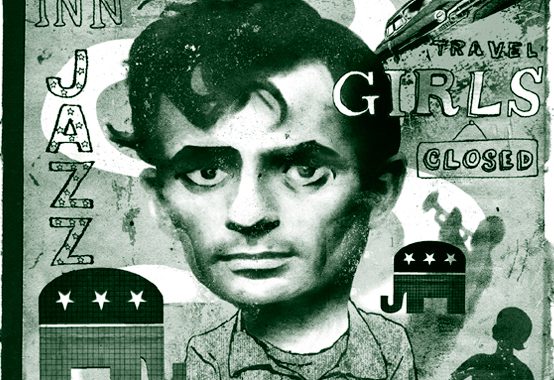
Someone’s gonna give you wings
You’ll think it’s what you need
You’ll fly, man, you’ll be so high
But your history acts as your gravity
—Joseph Arthur
For someone who documented just about every moment of his life in torrents of breathless, “spontaneous” prose, Jack Kerouac—the late author of On the Road, Big Sur, and other stream-of-consciousness, hyper-autobiographical novels—remains surprisingly up for grabs ideologically. The hippies claim him as an inspiration, as do many western Buddhists; a biography called Subterranean Kerouac attempts to out him as a homosexual; a new film adaptation of On The Road starring Kristen Stewart opens the door for the Twilight generation; and I wouldn’t be surprised if there aren’t more than a few Occupy Wall Street protestors hunkering down in their tents with battered copies of Kerouac’s The Dharma Bums stuffed in their jacket pockets.
Each of these groups is absolutely sincere in its self-identification with Kerouac. Each sees its concerns and agendas reflected in his roiling ocean of language. Yet this bopping, scatting, mystical jazz poet who almost singlehandedly willed the 1960s counterculture into being was himself a political conservative and a Catholic.
How can this be?
The key to understanding Kerouac lies in a close examination of his roots, for it was in the small French Canadian community of Lowell, Massachusetts that the future author was inculcated with the values that would carry him through his life. He did indeed go on to lead a wild existence filled with alcohol, drugs, and perpetual shiftlessness; he fled from monogamy as from leprosy. Yet one cannot grasp the soul of Kerouac unless one understands his fundamentally traditional core. He never wished to foment a revolution. He did not desire to change America; he intended to document, celebrate, and, in the end, eulogize it.
Jean-Louis (“Jack”) Kerouac was born in Lowell, Massachusetts in 1922, the son of French Canadian immigrants. His father Leo, like so many immigrants, fiercely loved his adopted country. This belief in the land of opportunity remained with him even after his Catholicism lapsed in the wake of devastating business failures. Jack’s conservatism, like his father’s, was the conservatism of the old ways: of hard work and even harder drink, of big blue-collar families passing down oral traditions. Above all, it was a conservatism of the natural world: of the large, solid, protective trees, of the perpetually roaring Merrimack and Concord Rivers—all combining to cast that crucial illusion of unchangingness that, in the best of circumstances, cradles and fortifies a soul for its journey beyond childhood. Late in life Kerouac would tell William F. Buckley Jr., “My father and my mother and my sister and I have always voted Republican, always.” This had nothing to do with party planks and everything to do with family identity, with holding onto something, no matter how arbitrary, in an otherwise disorienting world. We’re Kerouacs and this is what we do.
Hand in hand with the politics was the pre-Vatican II Catholicism that saturated Lowell’s tight-knit French Canadian community. Gabrielle Kerouac—Jack’s mother—matched Leo’s civic pride with a fervent religious faith, which if anything intensified after the death of Jack’s older brother Gerard, whom Jack would later eulogize as an unheralded saint in the novel Visions of Gerard. This was that majestic, fearsome Catholicism that now exists purely in the realm of imagination for most modern practitioners: the Catholicism of the Latin mass, of all-powerful priests, of God as the unknowable, awe-inspiring other. To New England’s mostly impoverished French Canadians, the Catholic Church served as de facto government, educator, extended family, and cultural arbitrator. Perhaps as a result of this spiritual immersion, both Gabrielle and Jack saw signs of God and angels everywhere.
“The Catholic Church is a weird church,” Jack later wrote to his friend and muse Neal Cassady. “Much mysticism is sown broadspread from its ritual mysteries till it extends into the very lives of its constituents and parishoners.” It is impossible to overstate the influence of Catholicism on all of Kerouac’s work, save perhaps those books written during his Buddhist period in the mid-to-late 1950s. The influence is so obvious and so pervasive, in fact, that Kerouac became justifiably incensed when Ted Berrigan of the Paris Review asked during a 1968 interview, “How come you never write about Jesus?” Kerouac’s reply: “I’ve never written about Jesus? … You’re an insane phony … All I write about is Jesus.”
Berrigan ought to have known better. But casual readers can be forgiven for failing to grasp the religiosity in Kerouac’s writing. After all, his version of Christianity esteemed visions and personal experience over doctrine and dogma. He felt a special affinity for such offbeat souls as St. Francis of Assissi, St. Therese of Liseux (“The Little Flower”), and Thomas Merton, all of whom to some extent de-emphasized legalism in favor of a direct union with God. Beyond the confines of the Catholic Church, the influence of the painter and ecstatic poet William Blake loomed just as large and perhaps fueled Kerouac’s disregard for what he perceived to be restrictive sexual mores.
Of course, Kerouac is best known not for his lovely Lowell-centered books but for On the Road, a breathless jazz-inflected torrent of words initially typed out onto a “scroll”—actually hundreds of pages of tracing paper taped together and fed continuously through his typewriter—during one epic coffee-fuelled writing session in 1951 and ultimately published in 1957. The book, now considered an American classic, documents the author’s real-life adventures traipsing around the country in his mid-20s with friends Allen Ginsberg, William S. Burroughs, and Neal Cassady who, together with Kerouac, would comprise the core of “The Beat Generation,” the last great American literary movement. Much drinking, drugging, and fornicating ensues over the course of Road’s 320 pages. Not surprisingly, these prurient elements did not endear Kerouac to the mainstream right of his time, which irked the young author, as he felt no affinity for the left.
He never saw the impartial documenting of his own reckless youth as license for others to drop out of society. If anything, the downbeat ending of Road, in which Kerouac predicts the frantic, kicks-obsessed “Dean Moriarty’s” (Neal Cassady’s) eventual slide into oblivion, as well as his unflinching depiction of his own nervous breakdown from alcoholic excess in the follow-up novel Big Sur, make quite clear the inevitable outcome of a “life on the road.” But Kerouac should not have been surprised by the right’s reaction; this was, after all, not conservative writing. The books did not follow the established standards of the novel and, in reality, were not novels at all but something else entirely: “confessional picaresque memoirs” (a phrase coined by Beat scholar Ann Charters), with the names of the participants changed to avoid accusations of libel. The conservative critics, missing the deeper themes of loneliness and the yearning for God, lambasted Kerouac for encouraging delinquency, while critics of all stripes complained about his sloppiness and occasional incoherece.
These commentators had a point: as novels, the books could be frustratingly uneven. Readers often found themselves bewildered by the sheer number of characters drifting in and out of the pages, unable to keep track of all the “mad ones” that Kerouac strained to include in his storylines. Why, the critics wondered, couldn’t Kerouac simply create a few composite characters embodying his friends’ most noteworthy traits? By any standard such an authorial modification would have vastly improved the readability of the books.
But that was not Kerouac’s aim. He wished to capture the truth, his truth, as best and as purely as he could. And he wanted to do this spontaneously, like a jazz musician wailing on his horn during an onstage improvisation. Revision, in Kerouac’s eyes, would only dilute the purity of the original performance. Furthermore, since he viewed his writing vocation as rooted in the Sacrament of Reconciliation: revision was tantamount to lying in the confessional. It might have have resulted in better novels, but they would no longer have been “spontaneous” and “true” novels. And it is the spontaneity and the emotional truth of these books, more than anything else, that continue to speak to readers.
It’s easy to approach On the Road with cynicism: an almost rapturous naïveté, or idiocy, permeates throughout. Yet this wide-eyed quality is actually one of the book’s great strengths; it evokes the exhilaration of being young, of leaving home for the first time and venturing out into the wider world with an open heart and credulous mind. Kerouac had the beguiling ability to find the admirable and holy in every soul he encountered on his travels, just as he had seen angels and the Holy Mother emerging from every corner in Lowell. And who has not experienced the sweet rush of moral transgression or the anguish of having to accept the consequences of such behavior? On the Road captures those emotions expertly.
Kerouac’s self-destructive nature, which led to his premature death from alcohol-induced hemhorraging, is perhaps the most curious aspect of his life story. Why would a man who worked so relentlessly at his craft, who endured 15 years of obscurity and rejection before his triumphant breakthrough, and who seemed to derive blissed-out enjoyment from even the most mundane aspects of life methodically destroy everything he had worked so hard to attain?
The answer may lie in a combination of near-crippling shyness and the very emotional openness that gave his writing such warmth. A fundamentally quiet, sensitive soul, Kerouac was woefully ill-equipped for the spotlight and had very little tolerance for criticism. Alcohol bolstered his confidence to speak in public and partially anaesthetized the sting of the many bad reviews his books received. Yet it was not enough. His friends watched helplessly as he barrelled onward to his demise, spurred ever faster by the hostile media.
As the apolitical Beat Generation metastasized into the heavily politicized hippie movement, Kerouac’s despondency and sense of alienation deepened. “I made myself famous by writing ‘songs’ and lyrics about the beauty of the things I did and ugliness too,” he said in a heated exchange with polical activist Ed Sanders on Buckley’s “Firing Line.” “You made yourself famous by saying, ‘Down with this, down with that, throw eggs at this, throw eggs at that!’ Take it with you. I cannot use your refuse; you may have it back.”

He allowed political differences to play a part in the demise of one of his greatest friendships. “I don’t even particularly wanta see [Allen Ginsberg],” he wrote his friend John Clellon Holmes in 1963, “what with his pro-Castro bullshit and his long white robe Messiah shot. … He and all those bohemian beatniks round him have nothing NEW to tell me.” This was a one-sided breakup. Ginsberg, by then a famous poet, remained intensely loyal to Kerouac even after Kerouac started publicly denouncing his old friend and hurling anti-Semitic insults in his direction. Ginsberg was wise enough, and big-hearted enough, to understand that Kerouac’s flailing out at him was a symptom of larger issues.
Kerouac’s sad final years were spent in an increasingly frantic quest to find a true home for himself and his mother. On an almost yearly basis he oscillated between Florida and New England, always following the same cycle: purchase a home, move in, grow restless, sell it; purchase another one, move in, sell it; and so on. Tragically, even when he returned to Lowell for a brief time, he found that the nurturing community he had written about so fondly for so many years now existed only in his books. He yearned, as the fictional Odysseus had during his wanderings, for the familiar, for something real and stable in his life. His mistake lay in looking for these things outside of him. Nevertheless, that desire is a good, true, worthy desire, and it permeates all of Jack Kerouac’s writing. It is the reason why the Beat movement could not last. Allen Ginsberg, the poet visionary, pined for utopia and spiritual revolution. William S. Burroughs, the outlaw libertarian, pined for anarchy and gay liberation. Neal Cassady, the exiled cowboy, pined for girls and cars. Jack Kerouac, the mystic, pined for God and home.
Robert Dean Lurie is the author of No Certainty Attached: Steve Kilbey and The Church.
00:05 Publié dans Littérature | Lien permanent | Commentaires (1) | Tags : états-unis, jack kerouac, littérature, littérature américaine, lettres, lettres américaines | | del.icio.us | | Digg | Facebook
La fièvre acheteuse
LA FIEVRE ACHETEUSE
par Paul Willems
Ex: http://cerclegustavethibon.hautetfort.com/
Voici un terme qui prête à rire et pourtant il s'agit bel et bien d'une maladie nécessitant un traitement médical selon les psychologues. Et si le traitement n'était pas tout simplement la fin de la société de consommation ?
 "La plupart des gens trouvent bien agréable de faire des courses de temps à autres une après-midi et de rentrer le soir à la maison avec de nouvelles affaires. Ce sont surtout les femmes qui y trouvent une sympathique forme de détente.
Les gens achètent quelque chose de nouveau parce qu'ils ont besoin de ce produit, parce qu'ils en feront bon usage ou parce qu'ils le désirent. Les acheteurs compulsifs ne sont pas dans ce cas. Le comportement de ces acheteurs compulsifs reflète une manière d'échapper à la réalité et ils parviennent ainsi à une sorte d'ivresse.
Cette ivresse serait comparable à celle provenant de l'usage de certaines drogues. Ces malades perdent le contrôle et achètent un tas de choses dont ils n'ont pas besoin. Souvent, ils ne réalisent pas qu'ils ont acheté quelque chose et s'étonnent de ce qu'ils trouvent au fond du cabas lorsqu'ils rentrent à la maison. Cela peut se comparer à ce que font les cleptomanes. Ceux-ci ont une pulsion de vol, ne se souviennent que rarement de ce qu'ils ont subtilisé lorsqu'ils reviennent d'une crise. Pour eux, c'est l'ivresse du vol. Pour les acheteurs compulsifs c'est la même chose. Leur taux d'adrénaline leur procure un état d'ivresse qui les coupe de la réalité. Ils échappent aux problèmes de la vie quotidienne. C'est aussi le cas dans d'autres types d'assuétudes (l'alcool, la drogue).
A la question de savoir comment l'on devient esclave du shopping, il n'y a pas de réponse simple. Différents facteurs peuvent jouer un rôle. L'ennui peut souvent mener au développement d'une assuétude. Boire, manger ou acheter par ennui peuvent mener à l'esclavage. Les dépressions peuvent avoir le même effet. Les personnes ayant une faible confiance en elles sont très sensibles. Les achats compulsifs leur apportent quelques instants de soulagement. Mais tout comme pour une assuétude à l'alcool ou à la drogue, l'ivresse est de courte durée, et le réveil à la dure réalité est douloureux.
Fréquence
Combien de personnes en Belgique sont-elles des acheteurs compulsifs? Difficile à estimer. Les vrais malades représentent probablement un pourcentage restreint, mais d'après certaines enquêtes, il y a assez bien de personnes qui ont ce penchant pour l'achat compulsif (jusqu'à la moitié des femmes et un tiers des hommes).
Ce sont plutôt les femmes qui paraissent sujettes à cet esclavage. Pour elles, faire du shopping avec des amies constitue une occupation de rêve. Un nombre important d'hommes détestent faire les courses. Ils deviendront plus difficilement acheteurs compulsifs. Je connais personnellement assez bien d'hommes qui ne s'achètent leurs vêtements qu'une fois par an. Ils fréquentent chaque fois le même magasin, là où ils sont certains de trouver ce qu'ils cherchent et achètent en une fois leurs pantalons, chaussettes, chemises, etc. Ce ne sont pas ces magasins qui vont les rendre fous. Les acheteurs compulsifs dépenseront par contre des fortunes pour leurs passe-temps favori. Il peut s'agir de timbres-postes, de maquettes de trains,…
Conséquences
La fièvre acheteuse n'a pas toujours de conséquences dramatiques, mais malheureusement c'est bien souvent le cas. Quand on dispose d'un revenu confortable, on peut se permettre bien des dépenses sans pour autant se ruiner. Mais nombre de malades vont vraiment trop loin et s'enlisent dans les dettes. Cela ajoute des problèmes financiers, mais aussi familiaux et psychologiques. Quand la maman ou le papa claque le budget mensuel d'un seul coup, cela peut créer des tensions dans le ménage qui ne s'amélioreront pas si les achats compulsifs se poursuivent.
Si l'on se rend compte que l'on devient esclave du shopping et que les problèmes amplifient sans cesse, il faut chercher de l'aide rapidement. Cette maladie ne se guérit pas toute seule et il est difficile de se soigner. L'aide peut venir d'une thérapie ou d'un groupe de conversation si l'on a du mal à se contrôler. Comme le sentiment d'infériorité et d'autres facteurs psychologiques interviennent, il vaut mieux se confier à un psychologue. En tout premier lieu on peut exposer le problème au médecin généraliste."
Article de Paul Willems.
Source : Vivat.be
00:05 Publié dans Sociologie | Lien permanent | Commentaires (0) | Tags : sociologie, consommation, fièvre acheteuse, moeurs contemporaines | | del.icio.us | | Digg | Facebook
Limonov par Edouard Limonov
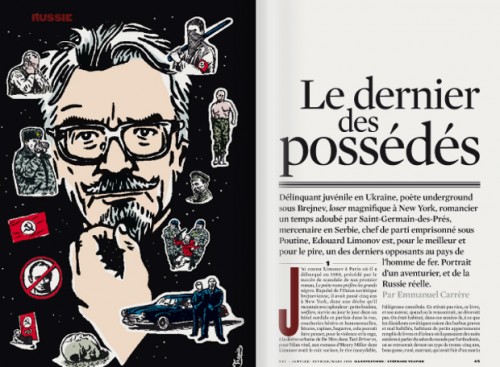
Limonov par Edouard Limonov
Ex: http://ungraindesable.hautetfort.com/
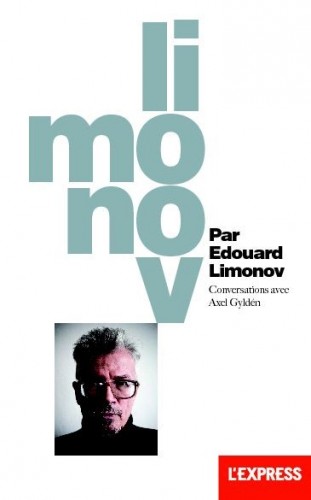 Petit tour hebdomadaire, hier, chez Emaüs ou j’ai déniché ceci : Limonov Par Edouard Limonov Conversations avec Axel Gyldén
Etonnant … je ne l’avais pas remarqué à sa sortie, il faut dire que ne fréquente pas le site de l’Express.
En ce moment le public français découvre Limonov grâce à Carrère « Il est certain que le succès de Carrère m’a bien servi. Mais j’ai aussi servi Carrère. Notre couple est comparable à celui de Régis Debray et Che Guevara. Sans le Français, qui a présenté le révolutionnaire au public européen, Guevara n’aurait probablement pas eu la même aura. Et voyez Jésus-Christ : sans la trahison de Judas, il serait peut-être tombé aux oubliettes de l’histoire. Je comprends très bien comment fonctionnent les choses : à l’image de Sibylle qui guide Enée vers les flammes, dans l'Énéide de Virgile, il faut être deux pour pénétrer aux Enfers.
Tout cela est très positif : la France s’intéresse de nouveau à mon œuvre qui compte plus de cinquante livres. Or Le poète russe est depuis longtemps épuisé et non réédité. Sur Amazon, sa cote dépasse 300 euros. À vrai dire, j’estime que sa vraie valeur se situe plutôt autour de 3.000, voire de 30 000 euros, mais passons. Il sera bientôt réédité, j’imagine. Certains de mes livres, encore inédits en France, seront peut-être traduits. »
Continuons plus loin avec Limonov.
— Comment s’est déroulée la rencontre avec le leader du Front national ?
— Le Pen nous a offert un dîner mémorable dans sa propriété du parc de Montretout, à Saint-Cloud, d’où l’on voit tout Paris. Avec Le Pen, Jirinovski et moi-même, nous formions une belle brochette de « bad boys ». Sur les murs de la villa de Montretout, une chose m’a frappé : j’y ai reconnu des tableaux de l’artiste russe Ilya Glazounov. [Ilya Glazounov était lui aussi monarchiste.] Le Pen était étonné que je connaisse cet artiste. Il m’a expliqué qu’ils étaient amis depuis les années 1960.
— Cela ne vous dérange pas de fréquenter des gens qui flirtent avec l’antisémitisme ?
— Il n’existe aucune preuve de ce que vous avancez. Je préfère toujours forger mon opinion à partir d’observations personnelles plutôt que sur la base d’avis extérieurs ou d’articles de presse. Si je me fie à ma méthode de compréhension des hommes au premier regard exposée plus haut, il est clair que Jean-Marie Le Pen est beaucoup plus sympathique que, par exemple, Vladimir Poutine ou Dmitri Medvedev. Il est aussi plus honnête. En fait, Le Pen est sans doute l’homme politique français dont l’honnêteté intellectuelle est la plus incontestable.
J’ai apprécié, chez lui, un côté humain, affable. Il a une manière aimable de recevoir ses invités, sans façons, et en leur faisant sentir qu’ils sont des personnages plus importants que lui-même. Certes, il vit comme un bon bourgeois. Mais il est un peu baroudeur, et un peu voyou, ce qui en fait un type intéressant. Par son talent oratoire et son tempérament impétueux, il m’a fait penser à Danton.
— Le Pen, « sympathique » ? Vous allez encore vous faire des amis en France…
— De moi aussi la moitié des gens disent que je suis antipathique et infréquentable. Mais c’est faux. Voilà peu, mon nouvel agent littéraire François Samuelson buvait une vodka chez moi et l’a dit : « Mais pourquoi Emmanuel Carrère a-t-il écrit que tu étais distant ? Tu n’es pas distant. » Je suis certes un peu froid au premier contact. Mais ensuite, je m’ouvre, je me livre. Carrère a projeté sur moi ce qu’il est : il est beaucoup plus froid, distant, réservé que moi. Le vrai problème avec moi, c’est que j’ouvre ma grande gueule. Une attitude insupportable pour la France qui est le royaume du « political correctness ».
— La France est « politiquement correcte » ?
— Exactement. Il y a chez vous des régions entières de la pensée, des territoires intellectuels, des pans de la mémoire collective qu’il est interdit d’explorer. Je ne veux pas entrer dans les détails. Mais le résultat, c’est qu’en France, les idées se tarissent et la pensée est unique. Ce n’est pas un hasard s’il n’y a plus de grands maîtres à penser, ni de grands écrivains depuis trois bonnes décennies, en France.
— Dans certains cas, le « politiquement correct » n’est-il pas souhaitable, notamment pour empêcher l’expression du racisme assumé ? Certaines pensées sont, en effet, indicibles.
— Je ne suis pas d’accord. En France comme en Allemagne, il est interdit d’exprimer l’idée que l’immigration de masse en provenance des pays musulmans pose des problèmes. Le « politiquement correct » l’interdit. Pourtant, c’est la réalité. Comment traiter cette question si elle n’est pas énoncée ?
Cet entretien se termine par cette question
— À 69 ans, il serait peut-être temps d’envisager de prendre des vacances ?
— Je n’en ai jamais pris. Je n’ai jamais voyagé avec l’idée de me reposer ou de visiter des endroits. Tous mes déplacements avaient un objectif professionnel : participer à un salon littéraire, tenir un meeting, faire la guerre. Voilà mon idée des vacances. Le tourisme est une occupation artificielle, inintéressante. Regarder une carte postale procure autant de plaisir.
Cependant, j’aurais aimé explorer l’Afrique au temps de Livingstone et Stanley. Ce n’était pas du tourisme, c’était une aventure trépidante, une lutte pour la vie. L’industrie du tourisme me dégoûte. J’étais ravi quand j’ai appris que des requins avaient dévoré des touristes allemands en Égypte !
Bien sûr dans ce livre beaucoup de thèmes sont abordés : son enfance, ses parents, sa vie de voyou, son départ d’URSS , ses rencontres avec des artistes, le mouvement punk, L’Idiot international, la prison, le milieu littéraire parisien, la prison, la guerre …
00:05 Publié dans Littérature | Lien permanent | Commentaires (0) | Tags : edouard limonov, russie, freance, lettres, lettres russes, lettres françaises, littérature, littérature russe, littérature française | | del.icio.us | | Digg | Facebook