Ok

En poursuivant votre navigation sur ce site, vous acceptez l'utilisation de cookies. Ces derniers assurent le bon fonctionnement de nos services. En savoir plus.

vendredi, 10 février 2012

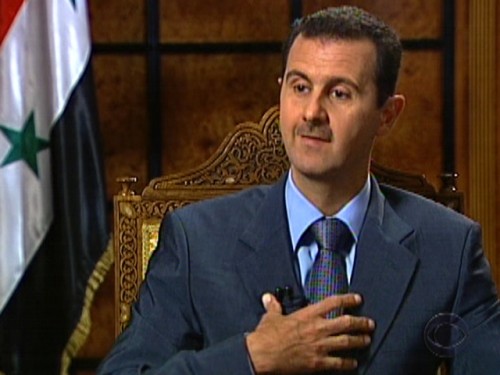
Auch Bin Laden wurde mal unterstützt. Der Westen gegen Assad

bashar-al-assad.jpg

Auch Bin Laden wurde mal unterstützt. Der Westen gegen Assad
       
Geschrieben von: Robin Classen   
Ex: http://www.blauenarzisse.de/

Es war ein seltsames Schauspiel, was sich Beobachtern der letzten Tagung des UN-Sicherheitsrates bot. Schon vor der Abstimmung waren die Gesichter der Vertreter der westlichen Länder, insbesondere der US-Botschafterin Susan Rice, von Frustration und Missmut gezeichnet. Nach der Abstimmung, bei der Russland und China ihr Veto einlegten, eskalierte die Situation beinahe. Susan Rice giftete ins Mikrofon, dass man „angewidert“ sei, der britische Außenminister William Hague fragte offen, wie viele Menschen denn noch sterben müssten, bis Russland und China ihre eigenen Interessen hinten anstellten und handelten. Peter Wittig, deutscher Vertreter und der einzige Botschafter, der seine Erklärung nicht in der Landessprache vorlas, griff zum Schul-Englisch und kommentierte das Abstimmungsverhalten der beiden östlichen Vetomächte mit: „This is the real scandal.“

Russland und China legen Veto ein

Man fragt sich, worum es bei dieser Abstimmung überhaupt ging, wenn das Thema offensichtlich so polarisierend wirkte. Die Resolution, über die letztlich abgestimmt wurde, sah keine zusätzlichen Sanktionen und auch keine Rücktrittsforderung vor, sondern unterstützte einfach nur die Forderungen der Arabischen Liga. Diese, euphemistisch „Friedensplan“ genannten, Forderungen besagten, dass Assad alle Sicherheitskräfte aus den syrischen Städten binnen 15 Tagen abziehen, sämtliche Terrorverdächtige freilassen und arabische „Beobachter“ ins Land lassen müsse. Für Syrien würden diese Forderungen letzten Endes bedeuten, dass Islamisten und Terroristen ohne Strafverfolgung auf freien Fuß gesetzt und die Sicherheit in Syriens Städten, gerade für ethnische und religiöse Minderheiten, völlig aufgegeben würde.

Außerdem bliebe Assad im Falle einer Befolgung dieser Forderungen der mehrheitlich islamistischen Mitglieder der Arabischen Liga wohl nur noch der Rücktritt. Kein Wunder also, dass Assad zwar verbal zugestimmt, aber bisher noch nicht gehandelt hat. Dieser Umstand wird von China und Russland kritisiert, von denen vor allem die Russen natürlich auch eigene Interessen verfolgen dürfte, denn Syrien ist einer ihrer besten Handelspartner in der arabischen Welt. Nichtsdestotrotz erscheinen die Argumente der beiden Großmächte überzeugend: An die gewalttätigen Demonstranten, die Islamisten, stellt die UN-Resolution nämlich keinerlei Forderungen, verurteilt deren menschenverachtendes Treiben in keiner Silbe.

Die Arabische Liga: Ein Zusammenschluss islamistischer Staaten?

Es ist ein handfester Skandal, dass der UN-Sicherheitsrat sich allen Ernstes einer Forderung anschließt, die von theokratischen Diktaturen ausgearbeitet wurde, um ihren militanten Dschihadisten in Syrien an die Macht zu verhelfen. In der Arabischen Liga finden sich die üblichen Verdächtigen der islamischen Revolution von 2011, von Ägypten, Marokko, Tunesien über Libyen bis hin zum internationalen Islamisierungs-Financier Saudi Arabien. Wenn man bedenkt, dass Ägypten zeitweise ausgeschlossen war, weil es einen Friedensvertrag mit Israel geschlossen hatte, dürfte jeder wissen, woher der Wind in dieser Organisation weht.

Am nächsten Tag ging es auf der Münchner Sicherheitskonferenz dann auch munter weiter mit dem Russen- und Chinesen-Bashing. Diesmal nahmen die arabischen Nationen Stellung zu den Geschehnissen im Sicherheitsrat. Zunächst durfte die vollverschleierte Tawakkul Karman die Bühne betreten und ins Mikrophon bellen, dass Russen und Chinesen „die menschliche Verantwortung“ für ein bis heute nicht bewiesenes „Massaker“ in Syrien trügen und sie „im Namen der arabischen Jugend“ die Haltung der beiden Länder aufs schärfste verurteile. Erstmals auf internationalem Parkett konnte sich auch gleich der tunesische Ministerpräsident Hamad Jebali von der radikal-islamistischen Ennahda-Partei in die internationale Front einreihen und kündigte an, er sei „stolz darauf“, nun den syrischen Botschafter nach Hause zu schicken.

Meldungen über Syrien-Massaker berufen sich auf zwielichtige Nachrichtenagentur

In Syrien gehen derweil die islamistischen Proteste weiter. Was die FAZ kleinlaut preisgibt, wird ansonsten in den Medien totgeschwiegen: Die Demonstrationen werden unter dem einfachen wie unmissverständlichen Motto „Alla'hu akbar“ beworben und durchgeführt. Der Grund für die einseitige Berichterstattung im Westen, ja sogar für die Haltungen der europäischen Regierungen, dürfte in einem handfesten Medienskandal liegen. Fast alle Horrormeldungen über angebliche Massenerschießungen und Ähnlichem gehen nämlich auf ein kleines Ein-Mann-Nachrichtenbüro in London zurück, das „Syrian Observatory for Human Rights“, von dem vorher noch kein Mensch etwas gehört hat, auf dessen Meldungen sich aber nahezu alle Presseberichte berufen. Unbekannt ist, welcher Geheimdienst oder welche Organisation diese selbsternannte Nachrichtenagentur nun ins Leben gerufen hat. Manche vermuten, es handle sich um eine US-Organisation, wahrscheinlicher könnte sogar sein, dass der „Präsident“ Rami Abdul-Rahman von Saudi Arabien finanziert wird, um Europa zu einem Eingreifen in seinem Sinne zu überreden.

Fakt ist, dass Syrien mit Assad einen der liberalsten und menschlichsten Präsidenten in der gesamten arabischen Welt hat. Assad ist Alevit und gehört somit einer sehr liberalen Glaubensrichtung an, die von der Mehrheit der Muslime korrekterweise gar nicht zum Islam gezählt wird. Assad posiert mit seiner grundsätzlich unverschleierten Frau, die mit ihren engen Jeans, ihrem Schmuck und ihren modischen Blusen in keiner westlichen Großstadt auffallen würde, ganz offen im Fernsehen beim Spielen mit seinen Kindern.

Assad gehört zu den liberalsten und menschlichsten Präsidenten der arabischen Welt

Dabei scheint ihn noch nicht einmal zu stören, dass seine Frau steht und er mit den Kindern spielt, was dem aufmerksamen Araber wohl als Symbolik gelten dürfte, dass er „unter Pantoffel“ steht. Außerdem wird Assad von nahezu allen ethno-religiösen Minderheiten, gerade auch den Christen, offen unterstützt. Kaum ein Herrscher im Nahen Osten hat Minderheitenrechte so rigoros umgesetzt, kaum jemand hat Islamisten so effektiv von Übergriffen abgehalten, wie Präsident Assad. Richtig ist aber, dass er zu keinem Zeitpunkt ein Präsident der Mehrheit war, sondern immer nur ein überparteilicher, überkonfessioneller Verwalter, mit dem sich ganz Syrien mehr oder minder arrangieren konnte.

Dies war nur deshalb möglich, weil er auch den Muslimen in vielerlei Hinsicht freie Hand ließ: Unvergessen ist der Besuch von Ahmadinedschad vor zwei Jahren, als das ganze Land mit iranischen Fahnen geschmückt war und man merkte, dass Assad für die muslimische Bevölkerung weniger als Identifikationsfigur diente, als der Präsident des islamistischen Nachbarstaates. Ins Fadenkreuz der USA dürfte Assad auch deshalb gelangt sein, weil unter seiner Regie ein nordkoreanischer Atomreaktor auf syrischem Boden gebaut wurde, der dann in einer international nur rudimentär medial behandelten Nacht-und-Nebel-Aktion von israelischen Militärflugzeugen noch während der Errichtung zerstört wurde.

Auch Osama Bin Laden wurde mal unterstützt

Gerade in der letzten Zeit war aber eine verstärkte West-Anbindung Assads zu bemerken – die Lage in Syrien hatte sich beruhigt. Dies lässt die jetzige harte Hand Amerikas gegenüber dem „Verwaltungsherrscher“ Assad als ungerechtfertigt und die Unterstützung der islamistischen Opposition als naiv erscheinen. Offensichtlich hat man in Amerika vergessen, dass man vor Jahren auch Osama Bin Laden im Kampf gegen die Sowjetunion unterstützte, und genau dieser Bin Laden dann im Jahr 2001 tausende amerikanische Staatsbürger tötete. Angesichts des islamistischen Mobs auf den Straßen, der dank der amerikanischen Unterstützung über kurz oder lang wohl Assad stürzen wird, könnte man meinen, die Geschichte würde sich wie so oft wiederholen.

Chypre, tête de pont russe en méditerranée

L'histoire d'amour entre Chypre et la Russie pourrait sembler suspecte à certains bien-pensants européistes sinon internationalistes.

Chypre, tête de pont russe en méditerranée

Les présidents chypriote et russe, Dimitris Christofias et Dmitry Medvedev, en 2010. / Petros Karadjias/AP/SIPA

Ex: http://mbm.hautetfort.com/

Illustration des relations russo-chypriotes: un cargo russe chargé d'armes transite par Chypre, qui le laisse filer en Syrie. Entre intérêts stratégiques de la grande Russie et nécessité économique pour la petite Chypre, les deux pays entretiennent des rapports ambigus et légalement douteux.

Le 10 janvier 2012, le cargo russe MV Chariot chargé de 35 à 60 tonnes de munitions type AK-47 en partance pour la Syrie était interpellé à Chypre, dans le port de Limassol.

Game over pour le convoyeur d’armes ? Pas tout à fait. Quelques heures plus tard, et malgré l’embargo sur les armes décidé par l’Union européenne contre le régime d'Hafez al-Assad, le gouvernement chypriote l’a laissé filer. Et le navire et ses kalachnikovs sont arrivés finalement à bon port, celui de Tartus, en Syrie.

Cette surprenante mansuétude chypriote est-elle innocente? Les liens avec la Russie sont étroits et la petite île a beaucoup à gagner du soutien russe.

  • Qu’ils soient économiques: Vladimir Poutine a promis à l’île un prêt de 2.5 milliards d’euros (dont une partie a déjà été versée), pour affronter la crise. Un chèque dont le montant équivaut à 10% du PIB de Chypre…
  • Ou politiques: la Russie défend par tradition les intérêts de Chypre au Conseil de sécurité de l’ONU, notamment sur la question de la RTCN (la "République turque de Chypre du Nord", Etat autoproclamé par Ankara après l'invasion turque de 1974, Ndlr). RTCN que Moscou ne reconnait pas. Alors le moment est mal choisi pour froisser le Kremlin.

"Limassolgrad"

Au-delà du jeu diplomatique, l’entente russo-chypriote saute aux yeux sur l’île d’Aphrodite. A Chypre, 35.000 à 40.000 habitants sont russophones. La destination plaît aux touristes russes, ils ont été 56.400 en 2011, selon le service russe des statistiques des agences de voyage.

C’est à Limassol (Sud), deuxième ville du pays, importante pour son port, que l’on peut mesurer l’emprise de la diaspora. A tel point que la ville est baptisée "Limassolgrad". Restaurants, menus, enseignes de boutiques, tout est traduit en russe. Ιl y a un journal russe, une chaine de télé, une autre de radio, et deux écoles.

Historiquement, Chypre a connu plusieurs vagues d’immigration russe. L’une d’elles à la suite de la Révolution soviétique, dans les années 20, lorsque sont arrivés les Russes travaillant dans les mines d’amiante. L’autre, beaucoup plus récente, est celle des "Pontiques", des Russes d’origine grecque venus s’installer à Chypre après la chute de l’URSS. Aujourd’hui, le visage de la diaspora a changé. Armateurs, promoteurs immobiliers, entrepreneurs, ce sont désormais ces "nouveaux Russes" qui viennent investir sur l’île.

Ils sont attirés par un taux d’imposition bas (10% pour les entreprises chypriotes) et la facilité du business. Un quart des dépôts bancaires à Chypre sont d’origine russe, tout comme le tiers des investissements étrangers. Comme hier les Libanais, ces russes multiplient les sociétés écran et compagnies off-shore.

Ιls débarquent avec des valises pleines. Ils placent leurs fortunes dans les banques ou l’immobilier. La plupart viennent à Chypre pour laver cet argent"

témoigne Irène Efstathiou, franco-russe mariée à un chypriote et membre de la communauté russe à Chypre.

"Le mouton rouge de l’Europe"

Tous ne s’y installent pas. Chypre, Etat-membre de l’UE depuis 2004, demeure une étape, un trait d’union méditerranéen utile à la Russie pour étendre certains commerces plus ou moins avouables. En particulier celui des armes, vers les pays du Moyen-Orient (Syrie, Liban, Iran et Irak) mais aussi, vraissemblablement, vers la Chine et l’Inde.

Et la Russie peut compter sur un allié de marque: le président chypriote, Demetris Christofias, russophone (il a étudié en Russie soviétique) et ex-dirigeant du parti communiste Akel. En 2008, au détour d’un voyage à Moscou, Christofias ne s’est-il pas vanté d’être "le mouton rouge de l’Europe" ?

Le Département d'Etat US joue avec le feu en alimentant la subversion afin d'encourager le départ des militaires égyptiens

Le Département d'Etat US joue avec le feu en alimentant la subversion afin d'encourager le départ des militaires égyptiens

L'Egypte pourrait se retrouver bientôt dans le camp du BRICS avec Iran et Syrie comme alliés

Les militaires égyptiens contre Washington, pour leur sauvegarde ?

Ex: http://mbm.hautetfort.com/

Est-il si difficile de prévoir qu’un pouvoir aux abois, pressé par un mécontentement populaire très puissant et qui a entre ses mains divers membres d’organisations activistes dépendant d’une puissance étrangère, dont il est aisé de prouver l’activisme dans le soutien des manifestations de certains aspects de ce mécontentement, trouve dans cette occurrence une voie idéale pour tenter de désamorcer une partie de ce mécontentement en dénonçant une violation de la souveraineté nationale ? Mais les USA ne s’intéressent pas à cette sorte de prolongement, s’ils l’imaginent seulement.

Par conséquent, c’est une crise en aggravation rapide, qui s’installe entre l’Égypte et les USA. En cause, cette vilaine affaire d’ONG, dont certaines de nationalité US bien entendu, qui sont désormais la cible privilégiée des autorités égyptiennes, militaires et civiles réunies en l’occurrence. Les USA ont réagi avec violence devant la perspective du jugement de 19 citoyens US impliqués dans des ONG de même nationalité, avec un discours où Clinton menace de suspendre l’aide annuelle de $1,5 milliard à l’Égypte. Toujours la même fine tactique, avec une légèreté de souliers cloutés et de bruits de bottes… Les Égyptiens ont à leur tour réagi avec violence, – avec une délégation militaire qui se trouvait à Washington pour parler de cette affaire, annulant brutalement, pour repartir en Égypte, une rencontre avec des sénateurs pompeux et puissants, crime de lèse-majesté pour des visiteurs venus à Washington selon un rituel d’allégeance minutieusement conformé aux conceptions de l’establishment américanistes… Ce que résume ainsi Russia Today le 7 février 2012

«Egyptian military officials who were scheduled to meet with US Senators John McCain, Joseph Lieberman and Carl Levin on Tuesday were reportedly recalled to Egypt, according to Reuters. This comes following Hillary Clinton’s warning that a crackdown by Egypt's military rulers on US and local pro-democracy groups could put aid for the Arab nation at risk.

»Clinton said the US has worked very hard to put in place financial assistance and other support for the economic and political reforms in Egypt. However, under the current circumstances the aid will have to be reviewed. “Problems that arise from this situation that can impact all the rest of our relationship with Egypt,” she said. The US Secretary of State spoke to the media in Munich, where she met Egyptian Foreign Minister Mohamed Kamel Amr on the sidelines of an international security conference.

Auparavant, RT avait publié un texte plus général sur la détérioration continuelle des relations entre le pouvoir égyptien et les USA, à la lumière de cette affaire des ONG. (Le 6 février 2012.)

«The honeymoon between the United States and the new post-Mubarak government in Egypt didn't last long. […] The Egyptian government vows that they will bring 19 Americans to trial for allegedly influencing the violent revolutions after last year’s ousting of former President Hosni Mubarak with the aid of foreign funds. Nearly 20 Americans have been named in an Egyptian investigation over how foreign pressure help fund unrest by way of international pro-democracy groups. An English-language website out of Egypt published the names of 43 persons being charged on Monday, including 19 Americans.

»Washington initially vowed to impose sanctions on Egypt if they follow through with charges against the Americans. On Monday, Cairo ignored warnings and insisted that the 19 Americans will be brought to trial. Egyptian leaders say that during and after the fall of Mubarak, the nearly four dozen people in question used foreign funds to encourage violence, unrest and revolution in Egypt. Among the Americans that are facing trial are the son of US Transportation Secretary Ray LaHood, and Patrick Butler, the vice president of programs at the DC-based International Center for Journalists…»

Cette affaire est effectivement un feu de discorde qui sera difficile à éteindre, car il y a une épreuve de force entre deux pouvoirs qui ont également mis leur prestige, ou ce qu’il leur reste de prestige dans la balance ; et cette épreuve de force portant sur une procédure judiciaire, un procès, etc., toutes choses qui prennent du temps et entretiennent constamment la tension ; et, naturellement, cette épreuve de force avec un aspect public à forte pression de communication, qui pousse encore plus à l’intransigeance les deux partis.

Les militaires au pouvoir en Égypte sont dans une situation extrêmement précaire et, avec le pouvoir civil qu’ils ont installé, ils sont de plus en plus irrités par les menaces US constantes de rupture de l’aide annuelle des USA à l’Egypte. Ils le sont d’autant plus qu’ils sont persuadés que cette menace est un pur moyen de pression et de chantage. Selon leurs sources à Washington, et notamment avec le Pentagone, en effet, les militaires égyptiens savent que le Pentagone est opposé à cette mise en cause de l’aide (essentiellement militaire), principal lien d’influence et de coopération avec les forces armées égyptiennes, qui constituent traditionnellement (constituaient ?) un point d’appui puissant de sa présence dans la région… Mais, dans cette affaire, le département d’Etat joue sa propre carte, avec soutien de la Maison-Blanche, et du Congrès bien entendu, et cette ligne dure est pour l’instant privilégiée à Washington selon l’équation des pouvoirs impliqués et les pressions de communication. Certaines indications montrent que le Pentagone, ou dans tous les cas certaines fractions du Pentagone, encouragent secrètement cette riposte égyptienne dans l’espoir qu’elle brisera la politique dure du département d’Etat et permettra une détente avec l’Égypte.

Mais le jeu est délicat, et il n’est nullement assuré que l’ Égypte ne se dirige pas, plus radicalement, vers une réorientation radicale de sa politique à l’occasion de cette affaire des ONG. L’intransigeance des militaires observée jusqu’ici constitue une carte majeure de communication, pour tenter de désamorcer le mécontentement populaire en jouant sur le réflexe nationaliste et l’exaspération générale des intrusions US dans les affaires intérieures du pays. Parallèlement, le pouvoir militaire ne lutte guère contre les activités clandestines dans le Sinaï (anti-israéliennes, naturellement), dont un des effets est un très récent nième attentat de rupture d’une oléoduc vers Israël. Enfin, il y a la possibilité pour l’instant théorique mais favorisé éventuellement par les évènements, d’un rapprochement avec la Russie, voire de l’établissements de liens inédits avec la Chine, qui pourraient se faire en même temps qu’une évolution de l’Égypte vers une opposition marquée à la politique du bloc BAO en Syrie. Il s’agit d’options classiques d’un dispositif de réalignement de l’Égypte, qui choisirait alors un réalignement d’abord international (et non pas régional en premier), par la seule nécessité d’une ferme prise de distance des USA et d’une ouverture vers la tendance des pays du BRICS. A ce moment, le réalignement régional suivrait naturellement, avec la confirmation de la politique de méfiance vigilante contre Israël et une possible mise en cause du traité de paix de Camp-David, avec une plus grande implication anti-US en Syrie, avec la possibilité d’une évolution vers des relations plus actives avec l’Iran. Tout cela mettrait-il également en péril les relations de l’Egypte avec l’Arabie ? La direction égyptienne n’en est pas assurée, estimant que l’Arabie est beaucoup moins contrainte par sa politique activiste qu’on ne croit, et qu’elle est plus que jamais inquiète des rapports et des évolutions politiques des USA et d’Israël, dans les deux crises, syrienne et iranienne.

On voit combien cette affaire des ONG, que Washington traite avec son habituelle arrogance, constitue bien plus qu’un vif incident de parcours, combien elle pourrait servir de détonateur pour le pouvoir militaire égyptien, pour un prolongement politique important dont il attendrait des dividendes intérieurs, lui-même dans cette situation précaire qu’on sait. En d’autres mots, l’“incident de parcours” tomberait à point pour justifier un tournant décisif vers une voie plus “panarabe” selon la vieille formule nassérienne mais avec l’apport islamiste supposé pacifié comme différence et contre la tendance libérale pro-occidentaliste en Égypte, tout cela vu comme une voie décisive pour rompre le cercle vicieux de l’impopularité et des troubles intérieurs. Le schéma prend en compte également un réalignement général international de la situation avec la crise iranienne, et la potentialité d’un activisme nouveau des pays du BRICS, qui constitue une des nouveautés potentielles révolutionnaires dans le jeu des influences au Moyen-Orient. L’essentiel à retenir dans ces hypothèses est le climat dans la direction militaire égyptienne : cette direction se trouve de plus en plus aux abois face aux pressions populaires et il lui faut trouver un évènement politique important qui rompe cette pression en constante augmentation, qui risque de lui faire perdre le contrôle de la situation. (Et, à ce point du raisonnement, nous revenons à notre point de départ ; car les militaires, qui commencent à bien connaître les USA dans leur actuelle période, soupçonnent des organisations US de continuer à jouer un jeu de soutien subversif dans les troubles actuels, – soupçon qu’on ne serait nullement surpris de voir justifié.)


The Coming Battle of Britain

The Coming Battle of Britain

The secret coalition that will ensure Scottish independence

by Colin Liddell

Ex: http://www.alternativeright.com/

This article was originally published on the website of Civil Liberty, an organization in the UK dedicated to fighting the tyranny of political correctness.

David Cameron's stint as prime minister has been dominated by four main political narratives:

1. Britain's opposition to the ongoing Franco-German centralization of Europe
2. The maintenance of financial credibility
3. The "Big Society"
4. The question of Scottish independence

The government's inability to stem the rising tide of immigration and the ongoing economic and social chaos this is spreading throughout the land has, in the absence of a potent British nationalist party, largely fallen off the political stage.

But back to the four main political narratives, it is easy to see a synergy between these. The "Big Society," essentially the concept of volunteerism writ large as an alternative to the state doing everything, is an aspect of the government's attempt to curtail public spending in order to maintain financial credibility. This in turn is linked to Britain's supposed opposition to Euro centralization, which is how the main EU countries are dealing with similar problems created by their public sector bloating.

Of course, it could be pointed out that the "Big Society" is nothing more than aspirational hot air and a political device to offload onerous responsibilities, while also stealing easy credit for successful private, charitable, and communal initiatives.

Likewise, Cameron's opposition to the Evil Merkozy that lies at the dark heart of Europe is, on deeper analysis, rather hollow; certainly as long as voters are denied a referendum on Europe, and Pan-European institutions, such as the European Court of Human Rights continues to interfere in British affairs. Also, although the Euro may be temporarily weakened it is clearly not dead. There is a very real sense that once it recovers, the pound and Britain’s partial economic independence will be the next item on its ongoing project of financial gleichschaltung.

What is significant about these political narratives is not the actual level of achievement, which is minimal or non-existent, but the extent to which Cameron has dominated them and turned them to his political advantage, even in the case of the "Big Society." Although this has an increasingly hollow ring with the British public, it still allows the PM to posture as a compassionate anti-statist.

Cameron is apparently on top of all these political narratives except the last one, the issue of Scottish independence. This is the joker in the pack, both because of its complexity and unpredictability and because of its potential to far outweigh all the other political narratives put together.

Scottish independence is the game changer

While the Euro-stropping, "Big Society" posturing, and budget balancing bickering will all fizzle out in the usual political and technocratic compromise zone and slide slowly into the swamp of political amnesia, Scottish independence could be a real game changer.

There are several aspects of this issue that do not get much publicity but probably should. First of all, there is no doubt that both the EU and David Cameron would benefit enormously from it.

Although the EU has been badly winded by recent financial events, the vested interests involved mean that it will probably weather this storm and emerge even stronger and more set on its long term goals of European economic and political integration. It should be noted that this tendency seems to progress regardless of whether European voters are electing centre left or centre right politicians, and there is every possibility that even if 'far right' or even 'far left' candidates were elected in significant numbers a similar modus operandi could be maintained as the EU seems to have power political and economic benefits that appeal to any ruling class.

Scottish independence would strengthen the EU hand vis-à-vis Westminster, reducing England to a smaller and weaker entity, and one that would also be demoralized from the loss of a vital component of its identity and power. In cultural semantic terms, the name "Britain" is the name of a conquering entity that has straddled the globe and proved invincible. The vestiges of this greatness are still what power the vision of a Britain independent from the EU. The name "England," by contrast, is historically that of a smaller, weaker entity, rather easily conquered by Dane and Norman, and only saved from the Spaniard by the vagaries of the weather. At least that's the mythic image or perception, and such factors will work like a Fifth Column to reduce the resistance to the warm, all-enveloping embrace of Europe.

Given that the EU would benefit from Scottish independence, we must expect some tangible support for it at some stage.

What form this will take is hard to predict, but possibly it will take the form of economic guarantees when the unionist campaign raises questions of Scottish economic viability in the absence of the Barnett Formula.

The second main point, that David Cameron would benefit greatly from Scottish independence, is perhaps more counter-intuitive but just as rational. This is based on the widespread loathing for the Conservative Party that has existed in Scotland since the tenure of Margaret Thatcher. In addition to her de-industrializing economic policy that hit Scotland (and my family) particularly hard, her personification of bossy, middle-class, Margot Leadbetter, WI-style Englishness did not go down particularly well in a society that has always been dominated by a tough male, working-class ethos.

People see Scotland as a Labour country and this is easily 'proved' by the results of almost every Westminster election over the last several decades, but the recent rise of the SNP, which is politically more centrist, reveals the true story. The main reason that Scots have voted overwhelmingly Labour in the past has simply been because it was the most effective way to hurt another party that was indelibly linked in the Scottish mind with domineering Englishness.

The political side effects of Scottish independence

Scottish independence would have powerful effects on each side of the border. With Scotland freed from Westminster, there would be much less reason for Scottish voters to vote Labour. This would effectively result in the collapse of Labour in Scotland. Of course, the SNP, having fulfilled its historical purpose, might also face a serious drop in support as a range of new parties rose up to take advantage of the new political ecosystem.

In England, the removal of approximately 50 Labour MPs to the one Tory that Scotland still sends to Westminster would have a cataclysmic effect on Labour's prospects of ever winning outright power again.

A large part of the support that a major political party receives is not because of agreement with its policies, but because it has the capability of winning. Voters are rather like London-based Manchester United fans. As long as Man Utd are the big club, these fans, with no real connection to the city of Manchester, will continue to associate themselves with the success of the club, but once the club starts losing championships these fans quickly move on. The same phenomenon can be observed in politics. Americans tend to vote overwhelming Republican or Democrat because these two parties are the only ones that can grant access to representation through the extremely undemocratic American system.

The Labour Party is essentially the expression of the class politics of the early 20th century, but has managed to trade on the electability created by those limited conditions to draw out its political life long past its sell-by date. The very name of the party, which has an unpleasant, antiquated ring for voters in a post-industrial society, reveals this very clearly. The sudden removal of its contingent of Scottish MPs from the political equation would very likely deliver it a death blow.

With the Labour party removed or truncated to midget proportions, British politics would start to resemble the present governing coalition, while in the remaining White working class areas we could expect to see a post-Griffinite BNP or a new English nationalist party hoovering up votes on an identitarian basis of both race and class.

Given that the Tory Party would benefit from Scottish independence, we must expect some tangible support for it at some stage.

This is despite Mr. Cameron's professions of unionism. What form this will take is hard to predict, but possibly it will take the form of Mr. Cameron earnestly entering into patronizing Lord-Snooty-style debates with that wee ghillie Alex Salmond. With Cameron and the Eurocrats secretly or not so secretly on Salmond's side, the unionists are probably marching to the political equivalent of the Second Battle of Bannockburn!

Roll on 2014!!
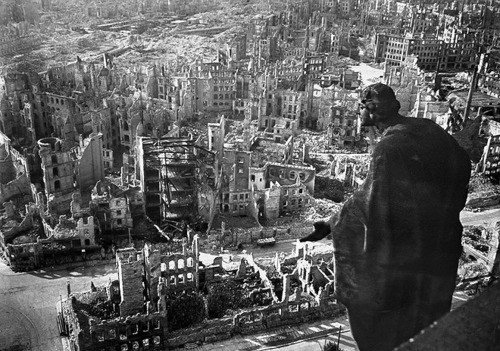
Europe 1945

tumblr_lhyr4enfYc1qzw5wjo1_500.jpg

Europe 1945

By A. R. D. Fairburn

Ex: http://counter-currents.com/


And now spring comes to the starved and blackened land
where the tailless abominable angel has spent his passion;
dead roots are twined through the bones of a broken hand;
now death, not Schiaparelli, sets the fashion.

In the twentieth century of the Christian era
the news-hawk camera man, no Botticelli,
walks on this stricken earth with Primavera,
and Europe cries from the heart of her hungry belly.

Ten flattened centuries are heaped with rubble,
ten thousand vultures wheel above the plain;
honour is lost and hope is like a bubble;
life is defeated, thought itself is pain.

But the bones of Charlemagne will rise and dance,
and the spark unquenched will kindle into flame.
And the voices heard by the small maid of France
will speak yet again, and give this void a Name.

Source: http://www.nzetc.org/tm/scholarly/tei-FaiColl-t1-body-d2-d4.html#n98 [2]


Article printed from Counter-Currents Publishing: http://www.counter-currents.com

URL to article: http://www.counter-currents.com/2012/02/europe-1945/
