Franco Volpi, Jünger, una vita vissuta come esperienza primordiale
Vintila Horia, La sombra del mal en Ernst Jünger y Miguel Delibes
Alberto Lombardo, Tempo degli alberi, delle pietre e degli uomini
En poursuivant votre navigation sur ce site, vous acceptez l'utilisation de cookies. Ces derniers assurent le bon fonctionnement de nos services. En savoir plus.



De oligarchie
door Georges FELTIN-TRACOL 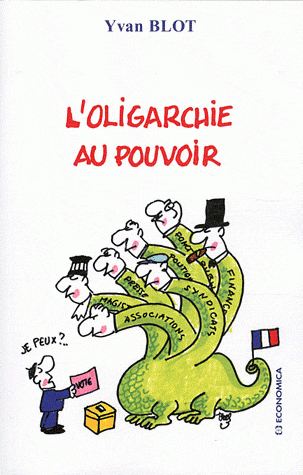 « De westerse politieke systemen hebben zich dermate perfect georganiseerd, dat ze niet in vraag gesteld kunnen worden door het volk. Uiteraard kan de politieke klasse een stembusgang verliezen. Maar in dat geval worden ze vervangen door gelijkaardige creaturen wier beleid nooit veel verschilt van dat van hun voorgangers (p. 16). » Deze harde vaststelling werd geformuleerd door Yvan Blot in zijn nieuw werk dat luistert naar de veelzeggende titel L’oligarchie au pouvoir. Deze hoge ambtenaar – hij is inspecteur-generaal van de administratie van het Ministerie van Binnenlandse zaken – en voormalige volksvertegenwoordiger (eerst was hij tussen 1986 en 1988 voor het RPR volksvertegenwoordiger van Pas-de-Calais, daarna tussen 1989 en 1999 Europees volksvertegenwoordiger voor het FN), is zich bewust van het fundamentele belang van de strijd der ideeën. Hij stond trouwens mee aan de wieg en aan het hoofd van de Club de l’Horloge en leidt momenteel de vereniging Agir, die zich inzet voor de directe democratie.
L’oligarchie au pouvoir is het resultaat van een groot aantal onderzoeksresultaten, die sinds vele jaren werden bijeengebracht. Als fervent voorstander van het referendumsysteem van volksinitiatieven plaatste Yvan Blot nogal wat vraagtekens bij de terughoudendheid van politici ten aanzien van dit middel om de burgers te laten deelnemen aan openbare aangelegenheden. Doorheen zijn zoektocht naar de redenen van hun terughoudendheid heeft hij het bestaan van een oligarchisch systeem blootgelegd, dat ook wel eens “hyperklasse” of “Franse nomenklatoera” wordt genoemd. « Wij leven in een oligarchie onder het mom van een democratie die “representatief” genoemd wordt. Deze oligarchieën zijn de burgerlijke overheid (de beruchte « technocraten »), de media, de vakbondsleiders, de leiders van culturele en religieuze lobbygroepen, die machtige, interagerende netwerken vormen tegenover wie de gewone burger machteloos staat (met uitzondering van de directe democratie) (pp. 13 – 14). » Hij had er kunnen aan toevoegen dat deze Franse oligarchie haar eigen smaak en biotoop heeft: men kan haar bijvoorbeeld elke laatste woensdag van de maand ontmoeten in de buurt van de place de la Concorde, waar de beruchte clubavondjes van Le Siècle plaatsvinden, die zo treffend beschreven werden door de onvermoeibare dissidente journalist Emmanuel Ratier (1).
Zeker, « de term oligarch wordt tegenwoordig bij voorkeur gebruikt voor de rijke zakenmensen die in Rusland sinds de ontbinding van de Sovjetbureaucratie tegen de politieke macht aanschurken. Maar Rusland heeft zeker geen monopolie op oligarchen. Je vindt hen ook in het westen (p. 1) », meer bepaald in de Verenigde Staten (het federale establishment loopt er vol van) en in Frankrijk. Groot-Brittannië zou er vreemd genoeg van gespaard blijven…in werkelijkheid bestaat de Britse oligarchie wel degelijk, maar haar structuur en samenstelling verschillen van haar evenknieën. In Frankrijk «bestaat de oligarchie niet enkel uit politici. Hoge ambtenaren spelen een hoofdrol in het ontwerpen van wetten, en dit in samenspel met allerlei georganiseerde lobbygroepen, werkgeversorganisaties of vakbonden, en groepen die particuliere belangen verdedigen. De media behouden een zekere mate van controle, aangezien ze het gedrag van de andere oligarchieën denken aan de kaak te stellen, maar ze zijn zelf oligarchisch in hun eigen organisaties (p. 2) ».
Aangedreven als ze worden door convergerende belangen, delen de oligarchieën « een gemeenschappelijke ideologie […] (de « politieke correctheid ») [die] de burgers wil herleiden tot een rol van uitwisselbare toeschouwers, goed om te produceren en te consumeren en voorts onder controle te blijven (p. 2) ». Inderdaad, in tegenstelling tot wat men zou kunnen vermoeden, is de oligarchie wel degelijk in staat tot enig denkwerk. In navolging van Aristoteles, Heidegger en Arnold Gehlen, heeft Yvan Blot een denkschema ontwikkeld dat voortvloeit uit de aristotelische logica der vier oorzaken (motorisch, materieel, formeel en finaal) en die hem aan de heideggeriaanse Quadriparti herinnert (de mensen, de aarde, de lucht en de Goddelijkheid/de Goden). Daaruit volgt dat hij van mening is dat « de oligarchie in de moderne wereld regeert volgens een nieuwe logica, deze van het Gestell, van de utilitaire inspectie, naar de woorden van Heidegger (p. 21) ». Deze inspectie leidt tot de materiële en morele verminking van de wereld, draagt bij tot de algemene onverschilligheid en begunstigt « een culturele chaos zonder geheugen » (p. 42). Ze drukt tevens een duidelijke voorliefde voor de korte termijn en voor de onmiddellijkheid uit. De gevolgen voor de Europese samenlevingen zijn ronduit dramatisch, met een dalend geboortecijfer en zijn verwerpelijk uitvloeisel, de bevolkingsinvasie van buiten Europa.
« De economie, die de neiging heeft om de noden van de consumenten te vermenigvuldigen en er geld uit te slaan is het domein van de verstrooiing en de futiliteit (p. 63). » Waarom? Omdat het Systeem, enerzijds, het egalitarisme aanmoedigt, dat « verdedigd wordt door oligarchieën die zich onmiddellijk boven het volk plaatsen met de bijgaande privileges, inclusief de voorrechten (p. 34) » en dat, anderzijds, “de mens […] enkel gewaardeerd wordt omwille van zijn economisch nut. […] alles wat de menselijke wezens van elkaar doet verschillen moet uit de weg geruimd worden, aangezien dit de verwisselbare aard kan hinderen, die de mensen moet kenmerken om perfecte primaire materie te kunnen zijn (p. 24) ». De oligarchie en haar media, die in de geesten geleidelijk en op subtiele wijze een schadelijke censuur en een arglistige propaganda verspreiden, rechtvaardigen dit ontmenselijkende en utilitaire discours door het obligate bewieroken van de Vooruitgang, van het « governance », van het egalitarisme en van het dogma van de mensenrechten. Als ijverige lezer van de liberale en libertaire theoretici verkiest Yvan Blot, net zoals Hayek, de “fundamentele vrijheden” boven het vage concept van de mensenrechten, die in de werkelijkheid « een voorwendsel voor een steeds grotere inmenging vanwege de Staat en voor een inperking van de vrijheden vormen (p. 71) ». Hij voegt er zelfs terecht aan toe dat “de notie van het “mensenrecht” zowel unilateraal als vaag van karakter blijft. Unilateraal, aangezien er geen rechten zonder plichten zijn; vaag, omdat men nooit weet of dit begrip slaat op vrijheden of op invorderingsrechten jegens de samenleving. In de praktijk wordt de notie van de mensenrechten als wapen tegen de Staat en tegen de samenleving gebruikt om te voldoen aan de capriolen van het ego dat tot een ware afgod is verworden (p. 73) ».
De vier belangrijkste ijkpunten van de oligarchie blijven de techniek (of haar essentie, zijnde de berekenende rede), de massa’s (de ochlos), het geld en het ego. Op die manier “werkt zij mee aan het verval van transcendente waarden, en wordt het geld stilaan de allerhoogste waarde (p. 27) ». Een opgeblazen ego vermorzelt de burger! « Hoe meer de burgers geïsoleerd worden door hun egoïsme, des te ongevaarlijker ze worden voor de oligarchie. Het regime veroordeelt de minste afwijking van het discours als zijnde discriminerend, maar toont zich extreem tolerant tegenover pornografie. Hoe meer het individu zich opsluit in het onmiddellijke genot […], des te minder mengt hij zich in de staatszaken (pp. 37 – 38) », schrijft hij als antwoord op die graag vooruitlopende auteurs die samenlevingen uitvinden waarin elke vorm van seksualiteit verboden is… .
Wat valt er te doen? Moeten we ons engageren in politieke partijen en geleidelijk aan de bestaande oligarchie afmaken? Yvan Blot heeft daar zo z’n twijfels over. Hij stelt « een afglijden van democratieën in de richting van oligarchische machtsvormen (p. 1) » vast. « Wij leven […] in een « fictieve democratie », waarin de rechten van het volk onderworpen zijn aan de goodwill van de politieke klasse die er de grenzen en de toepassing van bepaalt, en dit op soevereine wijze. De façadedemocratie verbergt de echte machten van een oligarchie, de « politieke klasse », die zichzelf rekruteert door coöptatie in de schoot van de politieke partijen (p. 19). » Uit eigen ervaring stelt hij vast dat “de politici de beslissingen nemen die hen goed uitkomen en ze worden beïnvloed, om niet te zeggen gecorrumpeerd, door minoritaire, maar goed georganiseerde lobbygroepen (p. 6) ». Bovendien « worden de kandidaten vooraf geselecteerd door de politieke partijen. Het volk stemt in feite voor partijen en het zijn de partijen die besturen, en bovendien zijn hun interne structuren vaak verre van democratisch (de partijen zijn oligarchisch van aard) (p. 6) ». Bovenop de oligarchie krijgen we dus de particratie! Deze situatie ontkracht ten volle de – dwaze – theorie van de scheiding der machten, die Montesquieu zo dierbaar was. « In werkelijkheid ligt de wetgevende macht grotendeels in de handen van de uitvoerende macht, die aan de basis ligt van de wetten en die deze laat opstellen door de overheidsdiensten (p. 11). » Erger nog, « de tweede macht van het parlement, het toezicht op de regering, functioneert niet echt, omdat de parlementaire meerderheid horig is aan de uitvoerende macht en de oppositie machteloos, want in de minderheid (p. 74) ». In de partijen heerst absolute kadaverdiscipline, aangezien deze er regelmatig mee dreigen de weerbarstige parlementsleden in de toekomst geen verkiesbare plaats meer te geven! Kortom, het zijn de meest slaafse, onderdanige en schaapachtige sujetten die de parlementen bevolken… .
De institutionele ontsporing beperkt zich niet tot de wetgevende macht. « De rechterlijke macht, die daarin een in wezen Amerikaanse tendens volgt, knabbelt meer en meer aan de wetgevende macht (2), waardoor er uiteindelijk geen scheiding der machten meer bestaat (p. 2). » Voortaan, « is de regering de belangrijkste initatiefnemer van wetten. Zij wordt op haar beurt beïnvloed door de overheidsdiensten, de media en door alle georganiseerde economische, sociale, culturele en religieuze belangengroeperingen, die rondom haar cirkelen (pp. 11 – 12) ». Tegenover deze non-democratie plaatst de auteur het Zwitserse voorbeeld en stelt hij voor om verschillende referendumprocedures in te voeren om wetten aan te nemen of te verwerpen.
Voor Yvan Blot staat het vast dat enkel de directe democratie in staat is om het Gestell af te schaffen en de zin voor democratie, burgerzin en patriottisme te reactiveren. « De democratie berust op nationale wortels, transcendente morele waarden en een zin voor het Heilige […en] berust op het concept van de verantwoordelijke burger die zich wil inschakelen in de lotsgemeenschap van zijn vaderland (p. 29) ». Indien « de natie de sokkel is waarop de mens […] gaat wonen (p. 121) », dan herbergt de natie twee heilige instellingen in haar schoot: het gezin, dat de geboortecyclus garandeert, en het leger, dat « de dood beheert (p. 123) ». Het invoeren van een participatieve democratie impliceert evenwel voor het voorgaande dat men zijn identiteit terugvindt, « die gebaseerd is op het geheugen (p. 69) ». Bijgevolg « vernietigt men de identiteit van een volk, wanneer men zijn geheugen vernietigt. In zekere zin kan men in dat geval spreken van een culturele genocide (p. 69) ». Brengt de directe democratie soelaas voor de volksidentiteiten? Laat ons het antwoord op deze primordiale vraagstelling ontdekken in een volgend essay dat specifiek aan de referendumdemocratie gewijd zal zijn.
Georges Feltin-Tracol
Voetnoten
1 : Emmanuel Ratier, Au cœur du pouvoir. Enquête sur le club le plus puissant de France, Paris, Facta, 2011.
2 : Wanneer hij heeft over de rechterlijke macht, begaat Yvan Blot een kleine fout, aangezien de Grondwet van 1958 spreekt in termen van « rechterlijk gezag ». In de logica van zijn opstellers geniet de – niet verkozen – magistratuur niet dezelfde legitimiteit als de uitvoerende en de wetgevende macht, die uitgaan van de soevereine volkswil.
• Yvan Blot, L’oligarchie au pouvoir, Paris, Économica, 2011, 144 p., 19 €.
00:06 Publié dans Livre, Théorie politique | Lien permanent | Commentaires (1) | Tags : livre, yvan blot, oligarchie, politique, politologie, sciences politiques, théorie politique |  |
|  del.icio.us |
  |
|  Digg |
  Facebook
Ernst Jünger @ http://www.centrostudilaruna.it/
Sezione multilingue dedicata a Ernst Jünger (29.III.1895-17.II.1998), alla sua opera e al suo pensiero.
00:05 Publié dans Littérature, Philosophie, Révolution conservatrice | Lien permanent | Commentaires (0) | Tags : philosophie, révolution conservatrice, ernst jünger, allemagne, lettres, lettres allemandes, littérature allemande, littérature | | del.icio.us | | Digg | Facebook
Une étude anglaise met en exergue le lien direct entre coupes budgétaires et révoltes sociales. Les auteurs, sociologues de l’université du Kent, prédisent l’augmentation des émeutes, des manifestations et des grèves, au Royaume-Uni et ailleurs en Europe, dans les prochains mois.

Les Européens pourront-ils supporter la course à l’austérité qui sévit actuellement dans en Europe? Une étude anglaise “More cutbacks mean more riots”, (“Une hausse des coupes budgétaires entraîne une augmentations des émeutes”), publiée cette semaine, analyse les liens entre les coupes budgétaires et les révoltes sociales. Alors que le nombre de manifestations constatées en Europe et dans le monde en 2011 a battu tous les records, cette étude donne des éléments de réponse.
Emeutes, délinquance et assassinats
Le sociologue Peter Taylor-Gooby de l’université du Kent s’est d’abord appuyé sur les travaux des économistes Jacopo Ponticelli et Hans-Joachim Voth. Ils avaient souligné en août dernier une forte corrélation entre les périodes de réductions budgétaires et celles d’augmentation de l’”instabilité” sociale, à savoir les émeutes et manifestations ainsi que la délinquance et les assassinats constatés.
Comme le montre le schéma ci-dessus, le nombre d’événements augmente toujours en période de coupes budgétaires. Lorsque les réductions de dépenses dépassent les 2% du PIB, l’instabilité grimpe de manière significative. Et lorsque ce seuil dépasse les 3%, on constate jusqu’à un doublement des indicateurs choisis.

Les coupes sociales à éviter
Le professeur Peter Taylor-Gooby a, lui, tenté de comprendre quelles dépenses supprimées engendrent cette instabilité. Il s’est penché sur les conséquences sociales des réductions de budgets réalisées dans 26 pays, principalement européens*, entre 1980 et 2005.
Premier constat: les phases de réduction des dépenses ne correspondent pas toujours à des périodes d’émeutes. En elle-même, l’austérité ne serait donc pas facteur de révolte sociale si l’on en croit les événements depuis 1980.
L’étude montre, par contre, que les vagues de privatisations “qui privent une partie de la population de l’accès aux services publics”, les coupes brutales dans les “amortisseurs sociaux” ainsi que les phases d’augmentation de la pauvreté, engendrent systématiquement un regain de désordre social. Une invitation, selon l’auteur, à modérer les coupes dans les budgets sociaux lorsque les économies sont mises à la diète.
Bien sûr, Peter Taylor-Gooby rappelle que les manifestations recensées ne visent pas forcément les politiques gouvernementales en matière sociale, mais peuvent être liées à des contextes locaux. Même si certaines émeutes ont été retirées des données, comme celles dénonçant les décisions gouvernementales de politique étrangère, ces biais restent importants. Par ailleurs, la manifestation est un fait social qui prend des significations différentes selon les pays. Ces corrélations sont donc à prendre avec des pincettes.
Mais l’auteur du rapport n’hésite pas à s’inquiéter des événements à venir au Royaume-Uni, où sont organisées des coupes budgétaires sans précédent. Il fait le lien entre ces réductions de budget et les semaines d’émeutes qui ont secoué le pays l’été dernier:
Ce sont les quartiers les plus pauvres qui ont vécu les pires émeutes. Le tout s’est suivi de manifestations records contre la politique du gouvernement, notamment la réduction des retraites.
Selon lui, toute l’Europe est menacée:
En 2012 nous verrons une augmentation de la pauvreté, une réduction de la sécurité de l’emploi et davantage de privatisations et de coupes dans les budgets sociaux. Nous assisterons donc aussi à plus d’émeutes, de manifestations et de grèves.
00:05 Publié dans Actualité, Affaires européennes, Politique | Lien permanent | Commentaires (0) | Tags : actualités, europe, affaires européennes, sociologie, crise | | del.icio.us | | Digg | Facebook
Russie: rapport de force
par Alexandre LATSA
Ex: http://fr.rian.ru/
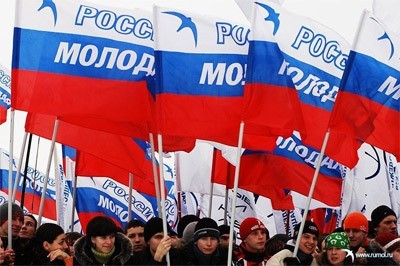
Moscou et la Russie toute entière ont encore connu une grande journée de manifestations le samedi 4 février 2012. Il était intéressant d’observer ces manifestations et de les comparer aux manifestations de décembre 2011. Une première grande manifestation de l’opposition avait eu lien le 10 décembre 2011 sur la place Bolotnaya à Moscou, regroupant entre 35 et 45.000 personnes. Beaucoup de manifestants contestaient les résultats des dernières élections législatives, mais le meeting s’était rapidement transformé en un meeting anti-Poutine.
Le succès de cette première manifestation a incité un certain nombre de personnalités de l’opposition politique, de leaders de mouvements et d’associations mais également de membres de la société civile (blogueurs, journalistes) à créer un mouvement protestataire de fond avec deux revendications principales: annuler les élections législatives et surtout exiger le départ du premier ministre et candidat à l’élection présidentielle, Vladimir Poutine.
Dans cet élan, le 24 décembre, une seconde grande journée de contestation a été organisée à Moscou et dans toute la Russie afin de maintenir la pression et d’annoncer un grand mouvement de protestation durant le mois de février, destiné à faire vaciller le pouvoir de Russie Unie, et à forcer les autorités à tenir compte des revendications des manifestants.
Cette seconde grande journée de mobilisation n’aura été finalement un succès qu’à Moscou, car le 24 décembre, en province et même à Saint-Pétersbourg, la mobilisation aura été bien plus faible que le 10 décembre. Mais à Moscou, la manifestation qui a eu lieu sur l’avenue Sakharov a réuni sans doute près de 50.000 personnes, soit plus que lors de la manifestation du 10 décembre.
Encouragés par ce succès Moscovite, les organisateurs prévoyaient déjà l’Armageddon pour la rentrée 2012. Ceux-ci avaient réservé les emplacements du 10 et du 24 décembre pour la manifestation du 04 février. Le charismatique blogueur nationaliste-libéral Alexey Navalny, une des figures de ce mouvement de contestation, avait annoncé la couleur en affirmant avant le rassemblement du 4 février 2012: "La prochaine fois, nous allons faire descendre un million de personnes dans les rues de Moscou".
Pourtant la réalité des manifestations de samedi dernier a été toute autre, puisque ce sont moins de 260.000 manifestants qui ont choisi de politiser activement leur samedi 4 février dans le pays, à travers une centaine d’événements. Cette journée du 4 février semble bien marquer le début de la campagne électorale pour les présidentielles.
Contrairement à certains grands titres de la presse Française, la province n’a pas manifesté contre Poutine mais plutôt pour Poutine. Faisons un tour d’horizon des rapports de force à travers le pays, pendant ces manifestations du 4 février:
A Koursk, 5.000 personnes ont défilé pour Poutine contre 7.000 à Briansk 7et 3.000 a Novgorod. Dans ces trois ville l’opposition n’a pas pu rassembler plus d’une 50aine de personnes. A Voronej, 12.000 manifestants ont soutenu le pouvoir, l’opposition a rassemblé 1.000 personnes. A Tambov, 500 pour et 300 contre. A Nijni-Novgorod, 1.000 personnes ont réclamé des élections honnêtes. Vers la Volga, à Oulianovsk 5.000 personnes ont soutenu le premier ministre, l’opposition à elle rassemblé prés de 300 personnes. A Penza, le meeting pro-Poutine a rassemblé 3.000 personnes contre 300 pour l’opposition. A Saransk, 7.000 pro-Poutine ont défilé. Dans le centre du pays, A Kazan seuls 300 militants de l’opposition ont défilé. A Oufa en Bachkirie, un meeting de soutien à Vladimir Poutine a attiré environ 5.500 personnes, contre 800 pour celui de l’opposition. Dans l’Oural, à Iekaterinbourg: les pro-Poutine ont initié le mouvement un peu plus tôt puisque le 28 janvier de 6 à 7.000 manifestants avaient manifesté leur soutien à Vladimir Poutine. Les opposants à Vladimir Poutine ont eux rassemblé ce samedi 4 février près de 3.000 personnes dans la même ville. A Tcheliabinsk, 4.000 personnes ont défilé en soutien du pouvoir, contre 800 pour l’opposition. A Kourgan, seuls 4.000 pro-Poutine ont défilé alors qu’à Perm l’opposition a rassemblé 2.000 manifestants.
En Sibérie, à Novossibirsk, l’opposition a rassemblé 1.500 personnes contre 3.000 le 10 décembre. A Kemerovo le meeting de soutien au pouvoir a rassemblé 1.000 personnes contre 300 pour le meeting d’opposition. A Omsk environ 6.000 personnes ont participé à une manifestation de soutien à Vladimir Poutine, alors que l’opposition a mobilisé 2.000 personnes. A Irkoutsk, l’opposition a rassemblé entre 300 et 400 personnes. A Kyzyl ce sont prés de 1.500 personnes qui se sont rassemblées en soutien du premier ministre. A Krasnoïarsk, 4.000 militants pro- Poutine ont manifesté contre 700 pour l’opposition.
Le sud s’est faiblement mobilisé, à Krasnodar, 500 personnes ont défilé pour des élections honnêtes, 800 à Samara, 300 à Saratov et 1.000 à Rostov. Rostov ou prés de 4.000 partisans pro Poutine ont également défilé. A Astrakhan 4.000 manifestants ont soutenu le premier ministre, et 150 l’opposition. Enfin dans le Caucase, seulement 500 personnes sont descendues dans la rue, le plus gros meeting étant celui de soutien au premier ministre en Karachevo-Cherkessie, qui a réuni près de 350 participants.
En Extrême-Orient, 3.500 personnes ont défilé à Petropavlovsk Kamtchatka en soutien de Vladimir Poutine, l’opposition n’ayant réuni que 200 personnes. L’opposition a également réuni 300 personnes à Khabarovsk. 50 à Magadan et 200 à Vladivostok, alors que 600 supporters du premier ministre ont manifesté à Birobidjan. Enfin 1.500 personnes ont manifesté en soutien du premier ministre en république de Komi, et plus d’un millier à Narïan-Mar la capitale du district autonome Nénet. A Blagoveschensk, 1.000 manifestants ont apporté leur soutien à Vladimir Poutine, alors que l’opposition réunissait environ 150 personnes.
Les meetings d’oppositions étaient du reste souvent organisés par le parti communiste, le parti libéral-démocrate de Vladimir Jirinovski ou le parti d’opposition libéral Iabloko.
(Sources: Ridus, Kommersant, Ria-Novosti et Kommersant).
Mais la grande question concernait la nature et l’importance de la mobilisation à Moscou et Saint-Pétersbourg. A Saint-Pétersbourg, la manifestation d’opposition n’a réuni que 3.000 personnes contre 4.000 le 24 décembre dernier, et 10.000 le 10 décembre. A Moscou sur la place Bolotnaya, là ou la manifestation du 10 décembre avait eu lieu, ce sont 50 à 60.000 personnes qui se sont rassemblées, soit sensiblement le même nombre que le 10 décembre dernier, ce qui laisse penser que l’opposition contestataire a fait le plein dans la capitale. Sur l’avenue Sakharov, la seconde manifestation n’a attiré que 150 personnes, sur les 30.000 qui étaient attendues. Par contre un meeting de soutien à Vladimir Poutine a réuni plus de 100.000 personnes sur le mont de la victoire (voir photos ici et un film la à partir de 1:10). Cette manifestation se voulait une manifestation conservatrice, pour un pouvoir fort et sur le thème: "nous avons quelque chose à perdre". Les différents orateurs et organisateurs du meeting (Serguey Kourganian, Maksim Shevshenko, Nikolaï Starikov, Tatyana Tarassova, Alexandre Douguine, Michael Leontiev...) ont insisté sur la nécessité pour la Russie de se préserver de la peste orange, tout en appelant à des élections honnêtes.
Quelles conclusions peut-on tirer de cette journée de manifestation?
1/ Tout d’abord que l’opposition contestataire qui défile depuis le 04 décembre ne peut plus désormais prétendre représenter la voix du peuple puisque de nombreux rassemblements populaires ont eu lieu dans de nombreuses villes du pays, en faveur d’un Vladimir Poutine qui vient tout juste de rentrer en campagne présidentielle.
2/ En l’espace d’une semaine, le front contestataire s’est totalement fissuré. Non seulement il n’a plus le monopole de la rue, mais il est désormais évident que le pays réel s’est réveillé et va faire entendre sa voix. Les partis politiques sont mobilisés pour la campagne présidentielle.
3/ Le front d’opposition contestataire qui a rassemblé tant des mouvements libéraux, nationalistes, d’ultra-gauche, anarchistes, tiers-mondistes, monarchistes que des membres de la société civile n’a pas créé de mouvement unifié. Sans programme et sans candidat, ce front né pendant les manifestations de décembre 2011 semble être amené a disparaître à très court terme, surtout lorsque certains des leaders politiques (notamment extrémistes de gauche) appellent publiquement a une révolution orange en Russie, ce que la très grande majorité des russes ne souhaite pas.
4/ Les manifestants anti-Poutine se seraient sans doute bien passés de l’encombrant soutien du terroriste Dokou Oumarov, qui a appelé a une trêve des attentats en Russie contre les civils russes, car ceux-ci manifestent contre Vladimir Poutine.
5/ La société civile russe tant décriée a montré sa capacité à se mobiliser et à défiler sans incidents. Pour autant, on est loin de la mobilisation incroyable qui a accompagné la ceinture de la vierge en décembre dernier, et qui a mobilisé 3 millions de russes à travers tout le pays.
6/ Mention spéciale a l'agence AP qui a réussi a comptabiliser 20.000 manifestants a la manifestation pro-Poutine, et enfin au Parisien qui illustre la manifestation d'opposition avec des photos de la manifestation pro-Poutine, ce qui a valu au journal une pleine page dans la presse russe :)
L’opinion de l’auteur ne coïncide pas forcément avec la position de la rédaction.
* Alexandre Latsa est un journaliste français qui vit en Russie et anime le site DISSONANCE, destiné à donner un "autre regard sur la Russie". Il collabore également avec l'Institut de Relations Internationales et Stratégique (IRIS), l'institut Eurasia-Riviesta, et participe à diverses autres publications.
00:05 Publié dans Actualité, Affaires européennes, Politique | Lien permanent | Commentaires (0) | Tags : politique internationale, russie, europe, affaires européennes | | del.icio.us | | Digg | Facebook
Thoughts on Debt Repudiation
By Greg Johnson
Ex: http://www.counter-currents.com/
 In Ancient Athens, debtors who were unable to pay their creditors lost their land and were reduced to serfs who had to give their landlords one sixth of their produce in perpetuity. If the debt exceeded the debtor’s total assets, he and his family were reduced to slavery. A debtor could also become a slave by pledging his personal freedom for his debts.
By the 6th century BC, serfdom and slavery had become so widespread in Athens that the small landowners and militia men who were the backbone of Athenian society were disappearing. Wealth and power were becoming concentrated in the hands of a few families through the black arts of usury. Athens was thus in danger of losing the freedom guaranteed by its large, landed middle class, which was increasingly unable to resist the power of the rising plutocratic elite.
Thus to preserve republican government, the Athenian lawmaker Solon (c. 638 BCE–558 BCE) instituted the Seisachtheia, from seiein, to shake, and achthos, burden, i.e., to shake off the burden of debt. Solon’s debt repudiation cancelled all outstanding debts, emancipated all slaves and serfs, and returned all property seized by creditors. Solon also instituted a legal limit to property size, to prevent the concentration of land into the hands of a few wealthy families.
Similar forces were at work in the Roman Republic. Debtors who defaulted could lose their property, their freedom, and even their lives to usurers. This led to the concentration of power and property in the hands of the few and the decline of the small farmers and legionaries who were the foundation and strength of the Republic.
Rome, unfortunately, lacked a statesman with the vision of Solon. There was no wholesale debt repudiation, but some palliative measures were passed. For example, one of the provisions of the Lex Licinia Sextia of 376 BCE was the distribution of captured lands to establish small farms. The Lex Poetelia Paprina of 326 BCE abolished debt bondage (nexum). But, as Brooks Adams summarizes so compellingly, the unrelieved march of usury—along with deflation and cheap slave labor—was one of the chief causes of the destruction of Roman freedom. (See Brooks Adams, “The Romans [2]” and my own “Brooks Adams on the Romans [3].”)
Debt repudiation is also described in the book of Leviticus, where it is instituted on a 50 year cycle. In Leviticus 25:10, it is commanded: “Consecrate the fiftieth year and proclaim liberty throughout the land unto all the inhabitants thereof: it shall be a Jubilee unto you—and you shall return every man unto his own clan, you shall return every man to his family.” This is taken to mean the abolition of debt slavery and indentured servitude. The Jubilee is also connected with land reform. In Leviticus 25:23 we read: “The land must not be sold permanently, for the land belongs to me. You are only foreigners, my tenant farmers.” In Leviticus 27:21 we read: “When the field reverts in the Jubilee year it shall become holy unto the LORD, as a field set apart; and it shall become owned by the priests.”
The purpose of the Jubilee seems to be the prevention of the concentration of land (the primary form of wealth in pastoral and agricultural societies) in the hands of a few families through usury, which results in the loss of land and liberty for debtors who cannot pay. Presumably, after the Jubilee, when land reverts to God (under the administration of the priests), it is again divided up among small farmers, including newly freed slaves and indentured servants. The idea that all men are tenant farmers of God means that no men should be tenant farmers of other men, which is a strong affirmation of the idea of a society of small, independent farmers. (It is ironic that the ancient Jews argued against usury and debt slavery and in favor of agrarian populism, given the economic profile they later assumed as urban money-lenders, traders, and professionals. Apparently Jews had become an overwhelmingly urban and non-agrarian people by late antiquity.)
The common assumption of the Solonic Seisachtheia and the Biblical Jubilee is that freedom is a high political value. Freedom, moreover, is best secured by a society in which as many men as possible are free and able to support themselves on their own land. Freedom requires private property that is widely distributed. Over time, however, debt and foreclosure lead to the concentration of wealth and power into the hands of the few, leading to the loss of freedom. Thus the preservation of freedom requires wholesale debt repudiation
The fate of debtors has become easier over the centuries. Debt slavery and serfdom are no more. Debtors’ prisons were abolished in the United States beginning in 1833 and in the United Kingdom in 1869. Bankruptcy laws allow people to escape crushing burdens of debt.
The moral premise of bankruptcy laws is that individuals should not have their lives and prospects ruined by financial mistakes. Society as a whole is better off if a man can shake off his debts and focus on the future: pursue an education, start a family, start a business, etc.
But if it is right for individuals to shake off their own debts, then it is certainly right to shake off the debts imposed upon us by others, including people who are long dead, i.e., public debts. Life is lived forward. Ascending life should not be shackled by the dead weight and accumulated mistakes and debts of the past.
Debt may no longer lead to slavery or prison. But debt still corrodes freedom is subtler ways. Those who are self-employed have more liberty of thought and action than employees, who are pressured to conform to the opinions and tastes of their employers. For the same reasons, property owners are freer than renters. And debt and foreclosure are the major factors in turning the self-employed into employees and property owners into renters. Thus if we wish to reestablish a society with a large middle class of self-employed farmers and businessmen, we need to revisit the idea of debt repudiation.
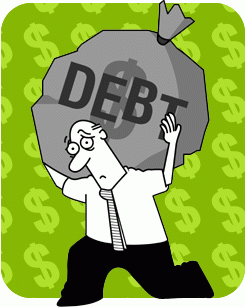
America’s national debt is now beyond $15 trillion and counting. The debt now approaches $50,000 per American citizen, $135,000 per taxpayer. Unless we have radical change, it will only get bigger. And in addition to paying those debts, taxpayers will also have to fund Social Security, Medicare, and Prescription Drug liabilities approaching $120 trillion and counting. That means that every white baby born today is saddled with $1.2 million in federal debts and liabilities (provided that he becomes a producer not a parasite). And this does not include state and local government debts.
But ask yourself: when a pregnant Mexican sneaks across the border to drop her “anchor baby,” is she bringing America another taxpayer to assume $1.2 million in debts and liabilities run up by Gringo politicians? Or is she here to add to the burdens that must be borne by white children?
Remember this when the eyes of immigration apologists grow moist describing the travails of hard-working people from around the globe who only wish to “contribute” to the great American experiment. Are they here to contribute more than $1.2 million apiece? Obviously not. They are coming to take, not contribute. They are coming to add to our burdens, not share them. Ultimately, they are coming here to replace us and our posterity. And when they are the majority, they are not going to go on laboring to feed and medicate old white people. They are going to pull the plug and take care of their own.
In addition to public debt, Americans also have trillions of dollars in personal debts, primarily in the form of credit cards, home mortgages, and student loans, some of them accruing interest at ruinous rates.
Nobody seriously thinks that all of these debts will be repaid. It is not a question of whether they will be repudiated, but how. The most likely method will be the devaluation (inflation) of the dollar. Someday, you might have the choice of paying $100,000 to pay off your student loans or to buy a cup of coffee. And since we’ll always be able to buy a cup of coffee, maybe hyperinflation would not be such a scary prospect, except that it creates economic and social chaos.
Beyond that, inflation is deeply unfair. When the currency is inflated, it is not all devalued at once. Instead, huge amounts of money are handed over to politically connected insiders. When they spend this money, it has the purchasing power of the previous day’s non-inflated currency. But with every subsequent transaction, as the value of the money is discounted, its purchasing power drops. So the first man who gets to spend a $100 bill can buy a nice dinner for two, but the last man who spends it can’t afford a taco. That can only lead to further concentration of wealth in the hands of parasites.
From a White Nationalist point of view, the most important thing is to accomplish debt repudiation with a minimum of interference in the real economy, particularly the core biological functions of the economy: the preservation and reproduction of our race. We cannot have bursting silos and empty stomachs. We can’t have creditors seizing real assets for merely notional debts.
But before we deal with practical questions, we need to deal with the moral question of the rightness of debt repudiation.
Two points of clarification: First, I am not arguing for the wholesale repudiation of debts between individuals or businesses. Sometimes such debts need to be repudiated, but this can be handled with existing bankruptcy laws.
Second, I am not arguing for the wholesale repudiation of Social Security, Medicare, and other such entitlements. I believe that these sorts of programs ought to exist in some form. The existing programs should simply be improved, not abolished.
What I specifically wish to establish is the morality of repudiating government debts and all private debts to banks.
Ultimately, only the ends justify the means, and in this case, debt repudiation is justified as the means to restore and preserve a society with widely distributed, securely held private property, which is the foundation of a large and powerful middle class. Aristotle argued that such a society best equips the majority to resist the tyranny of elites, although Aristotle could not have imagined the ultimate in tyranny: an elite so wicked that it would work for the destruction and replacement of its own people.
But debt repudiation would not merely help preserve our people. It would also simultaneously strike a blow against our enemies, who are deeply invested in the financial sector of the economy.
Let’s deal with government debts first. The moral principle behind public debt is that governments, acting in the common good of the people, can create collective obligations, such as laws, treaties, or debts. Although one can question whether many government policies really are in the common good, I accept the underlying principle that there are collective goods that can justify collective obligations.
My question is: Why do governments need to go into debt in the first place? Why do governments have to borrow money at all when they can either (a) print it, or (b) raise it through taxation?
In the past, currency consisted of scarce bits of shiny metal. If the government needed more of these bits than it could raise by taxation, it had to go to people with hoards of coins and borrow them at interest.
But in today’s world, in which governments can simply print money, why is there any need to borrow it from banks? Particularly when the banks themselves just make up the money they lend out.
Thus my argument is simply that public debt is wrong because it is not necessary. It is, therefore, fraudulent to justify public debt in the name of the common good. Public debt is actually a way of making the society as a whole—specifically, the taxpayers—subservient to private interests (banks) and even to alien peoples (market dominant minorities, foreign governments).
But a free people should serve its own interests—and, I would argue, the higher interests of life—not foreign interests or private interests. Such debts should, therefore, be repudiated.
As for the foreign governments holding US bonds, we should offer them the following compensation. They can keep all the factories that American businesses have built over there, and they can use them for domestic production. Because debt repudiation should go hand in hand with the restoration of economic nationalism, including tariffs on imported manufactured goods. So businesses that wish to sell products in the United States should have to manufacture them here.
As for the repudiation of debts to banks: this is necessary, because existing debts can never be repaid, and it is moral for the reasons already laid out above. Beyond that, it is morally absurd to hold that banks, which create money out of nothing, have a right to demand the repayment of their principal plus interest. In the end, however, the case for the repudiation of bank debt rests on the existence of a viable alternative financial system, some elements of which I have sketched in my essay “Money for Nothing [4].”
The repudiation of government and individual debts should be a political imperative for White Nationalists. When White Republics emerge, we will of course repudiate the debts of predecessor states. But even within the present system debt repudiation should be stressed by White Nationalists, for it would prove a very popular political plank. Debt repudiation would also be useful to break White Nationalists away from the dead ends of Republican conservatism and “free market” economic orthodoxy.
Of course the primary aim of White Nationalism is to secure the existence of our people and a future for white children. But if that does not get people’s attention, then promising to cancel their credit card, student loan, and home mortgage debts definitely will.
Article printed from Counter-Currents Publishing: http://www.counter-currents.com
URL to article: http://www.counter-currents.com/2012/02/thoughts-on-debt-repudiation/
00:00 Publié dans Economie, Réflexions personnelles | Lien permanent | Commentaires (0) | Tags : dette, endettement, crise, crise financière, réflexions personnelles, actualité | | del.icio.us | | Digg | Facebook