

dimanche, 03 février 2013
P. Vial: le droit à l'identité touareg...
Une Terre, un Peuple : le droit à l'identité touareg...
Un communiqué de Pierre Vial :
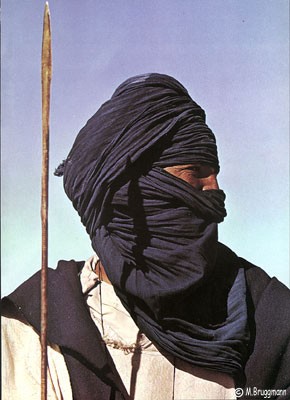 Conformément à la ligne qui a toujours été la sienne, le mouvement Terre et Peuple affirme et défend le droit à l’identité du peuple touareg, qui doit se traduire par la reconnaissance d’un Etat de l’Azawad.
Reconnaissance qui doit être le fait de l’Etat malien (mais qui est représenté en réalité par qui aujourd’hui ?), de la France et de la communauté internationale. Seule cette reconnaissance, qui doit s’accompagner d’une protection active de la population touareg, menacée par les exactions de l’armée malienne, peut permettre de stabiliser la situation dans le Sahel et de marginaliser au maximum les islamistes qui essayent d’exploiter à leur profit les légitimes revendications des Touaregs.
00:07 Publié dans Actualité, Nouvelle Droite | Lien permanent | Commentaires (0) | Tags : pierre vial, actualité, touareg, mali, politique internationale, afrique, affaires africaines, sahel, sahara, nouvelle droite, terre & peuple |  |
|  del.icio.us |
  |
|  Digg |
  Facebook
Portraying Fathers of the Syrian Revolution
Portraying Fathers of the Syrian Revolution
By Armine AKOPYAN (Armenia)
Ex: http://orientalreview.org/

During the whole of the “Arab Spring” and the Syrian war in particular, the Arab press has kept the actions of the emir of Qatar, Saudi Arabia’s royal family and the leader’s of Israel and Turkey in their crosshairs. When confronted with the published facts, it is possible to believe that not a single one of these sides is acting alone, that they are united by common aims and interests and in achieving these, it is the people of the Middle East who are paying with their own blood and their own futures.
With reference to Syrian information sources, the Islam Times reports on the activities of a group of foreign agents in Syria. This group is serving the interests of Saudi Arabia, Qatar, Israel and Turkey and consists of 16 members who are all citizens of either Israel, Turkey, Qatar or Saudi Arabia. Foreign agents have been operating under the guise of militant terrorists and the Syrian Freedom Army and have been kidnapping and murdering Syrians as well as Palestinian scientists and experts from a variety of fields. The Syrian army recently announced that seven members of this gang had been arrested and were being questioned.
A second gang of marauders has been putting rare museum pieces from Syria onto the international black market. Naturally, all of this is being done through Turkey. Factories are also being dismantled and and shifted to the Turkish territory. Trade in human organs is being established in Turkey just as it was in Kosovo at the beginning of the 2000s. The reluctant donors are Syrian refugees without the means to keep their families in Turkish refugee camps.

Director General of Saudi Intelligence Agency Prince Bandar bin Sultan
The head of the Saudi Intelligence Agency, Prince Bandar Bin Sultan, along with the leader of the Lebanese opposition party and member of the anti-Syrian coalition “14 March”, Samir Farid Geagea, are playing an important role in destabilising and aggravating the situation in Syria and neighbouring Lebanon. They are the ones sending armed groups of terrorists to fight with Syria and after Syria has fallen it will become the Lebanese Shi’ites turn. In addition, the Arabic online publication Islam Times also mentions Prince Bandar bin Sultan’s other activities as Saudi Arabia’s ambassador to the United States from 1983 to 2005; he only managed to get himself appointed as head of the Saudi Intelligence Agency after organising several fatal terrorist attacks against high-ranking Syrian officials. The prince is now dreaming of making it to the royal throne in his own country and the only way he will manage this is if Syrian President Bashar Assad is assassinated.
Lebanese oppositionist Samir Geagea also has his eye on the very highest post – the presidential chair – and the only way he will be able to achieve that is by removing the Shi’ite Hezbollah. As the publication points out, Israel and the USA have been pushing for the “mutual cooperation” of both. The only effective way to achieve if not Assad’s assassination then at least his downfall is terrorism. Al-Qaeda and its offspring “Jabhat an-Nusra” are just the kind of convenient instruments that can help interested parties overthrow any state system sooner or later. It has been reported that two “Jabhat an-Nusra” instructors have undergone Israeli training. The plan is that in the future they will not just be fighting Hezbollah, but Lebanese Salafists as well. Among the militants are also Kurds, who are under the command of the Kurdish leader within al-Qaeda. Samir Geagea sees yet one more advantage for himself as a result of the Syrian war: the concentration of Syrian Christian refugees in the Lebanon could lead to a political shift in religious terms and prepare his own path to the presidency.
Since 2010, Americans and Qatar have been buying up weapons from tribes in South Afghanistan. This was reported to the Iranian press by Afghan middleman Habibullah Kandahari and besides him, the Americans had also ordered weapons from seven other Afghans. Kandahari reports that he personally had provided 4,000 units over a period of six months. These included handguns and other types of firearms, for which their former owners were paid large sums of money. The Afghan middlemen handed over the purchased weapons to the Americans at Kandahar airport and were told nothing about the future fate of the weapons. So as not to cause any unnecessary curiosity or suspicion, the Americans said that the weapons were being bought to guarantee the safety of their own soldiers from the local population. According to Habibullah Kandahari, he had noted privately that the Americans had never been attacked by peaceful civilians, only armed groups. Weapons in Afghanistan were loaded onto Qatar aeroplanes and then taken through Jordan to Syria, where they ended up in the hands of terrorists. Qatar aircrafts, the same as American aircrafts, were able to land at airports in Afghanistan without difficulty and even without the knowledge of the local authorities. During one of the meetings of the National Security Council, the country’s president even ordered that the total lack of authority when it came to the Americans be looked into and clarified who should give consent for Qatar and American aircraft to land in Afghanistan without prior agreement and how this should be done. An Afghan security expert notes that in 2010, nobody had openly bought such quantities of weapons and dispatched them to Jordan, but following the first peaceful protests and demonstrations in Syria in 2011, weapons had been bought up openly.
Elections for the 19th Knesset were held in Israel on 21 January and were won by the party of the current Prime Minister, Benjamin Netanyahu. The Israeli politician’s pre-election campaign was paid for by the emir of Qatar. Leader of the opposition party “Kadima” and former Minister of Foreign Affairs in Ehud Olmert’s cabinet, Tzipi Livni, told journalists that it had cost approximately USD 3 million. She also added that she was very close friends with the emir’s wife.
In getting rid of Palestinian leaders and scientists it finds undesirable both in Palestine itself and in Syria, and now paying for the pre-election campaign of an Israeli politician with extremely right-wing views, Qatar is aiming to close the Palestinian question for all Arabs once and for all and place it under the watchful control of the Muslim Brotherhood, or the Egyptian government, in other words. It will also tackle the issue of Jordan in the future, if the royal regime there can be toppled and power transferred to the Brotherhood. It would mean that the Palestinian question is laid to rest forever, since in the future part of the Palestinian population would have been resettled in Jordan and part of the population in Sinai. Which, as a matter of fact, is what the USA is trying to achieve with Israel.
The Lebanese coalition “14 March” has once again shown that it is not the interests of Lebanon that are being served, or even the interests of Christians, but centres that are completely strange and alien to Lebanon. The coalition’s activities are particularly damaging against the backdrop of the Syrian war, where anti-Syrian sentiment among part of the Lebanese population is escalating to such a level that it could spill over from the political arena into armed conflict and civil war.
With regard to everything that has been said here, one is reminded of a quote by Yitzak Rabin: “I would like Gaza to sink into the sea, but that won’t happen, and a solution must be found” . It seems that the emir of Qatar and Netanyahu have come up with the same solution. And not just for Palestine…
Source in Russian: Национальная Идея
Translated by ORIENTAL REVIEW.
00:05 Publié dans Actualité | Lien permanent | Commentaires (0) | Tags : politique internationale, géopolitique, syrie, révoltes arabes, monde arabe, monde arabo-musulman, proche orient, moyen orient, qatar, arabie saoudite | | del.icio.us | | Digg | Facebook
Anatomie du durcissement russe
Anatomie du durcissement russe
Ex: http://www.dedefensa.org/
Une nouvelle déclaration officielle russe confirme le blocage complet des relations stratégiques avec les USA, notamment sur la question fondamentale pour la Russie du réseau antimissile (BDM et BMDE). Cette déclaration est du plus modéré des dirigeants russes, le Premier ministre Medvedev, qui était interrogé sur CNN, lors de l’émission de Fareed Zakarias GPS. Russia Today a extrait de ces déclarations, ce 28 janvier 2013, celles qui concernent ce point de litige fondamental des deux pays qu’est la question des antimissiles.
«No ease in relations over missile defense, no flexibility arose. We stand at the same positions – the position of the United States is one, the position of the Russian Federation is, unfortunately, different. And the convergence of these positions is not happening… […] We clearly understand that if we do not have guarantees such as the pairing of our programs, that means that missile defense could also work against the Russian nuclear arsenal. What does this mean? This means that the parity, which we recorded with President Obama by signing the New START treaty (a very important and very helpful treaty, by the way: I think this is the achievement of the so-called reset), [the parity] is being cracked by that, because the missile defense – is a direct continuation of nuclear offensive capability, combat nuclear weapons…»
Ces déclarations n’apportent rien de nouveau mais elles fixent encore plus précisément la vigueur de la détérioration du climat entre les USA et la Russie, compte tenu encore une fois de la position habituelle de Medvedev. Malgré la modération de ton propre à Medvedev, qui n’oublie pas de saluer le nouveau traité START de limitation des armements, le constat du blocage complet et de la dangerosité de la situation pour la Russie est énoncé clairement. (L’on sait, comme on l’a déjà vu le 22 janvier 2013, que ce traité est lui-même en danger si la situation n’évolue pas, que les Russes n’hésiteront pas à en sortir pour pouvoir renforcer leur arsenal offensif face à la pression que va faire peser sur eux le réseau antimissile lorsqu’il sera mis en place en Europe en 2015.)
…Mais au lieu de la Russie et des USA, on devrait parler d’une façon plus générale de la détérioration du climat, de façon plus générale, entre la Russie et les pays du bloc BAO, c’est-à-dire également avec l’Europe. Cette détérioration porte d’ailleurs sur bien plus que la question des antimissiles (qui concerne elle-même également mais indirectement l’Europe, en raison du déploiement à venir des antimissiles en Europe, comme on le voit également dans le même texte référencé du 22 janvier 2013).
La situation générale est très singulière, notamment du côté des Européens et de l’UE, à un point où l’on ne devrait pas hésiter à la qualifier de schizophrénique. Alors que la situation spécifique des relations avec la Russie continue à se dégrader, essentiellement à cause du comportement des pays du bloc BAO d’une façon systématique vis-à-vis de la Russie, les milieux européens qui sont comptables de cette politique s’inquiètent parallèlement de plus en plus vivement de cette détérioration et de ses conséquences. Il existe un courant favorable à des tentatives qui seraient développées pour tenter d’améliorer ce climat, ou tenter au moins de freiner sa dégradation. Des contacts très informels devraient être ou sont d’ores et déjà lancés entre les deux partenaires et, pour ce qui nous concerne ici comme sources de nos appréciations, entre Européens et Russes, essentiellement sinon exclusivement à l’initiative des Européens. Le côté européens est dans une position un peu différente de celle du côté US ; il n’y a pas entre les Européens et la Russie un énorme point de blocage comme celui des antimissiles entre la Russie et les USA, mais bien ce constat d’une dégradation irrésistible des relations qui semble être la conséquence d’un climat évoluant dans ce sens, sans que rien ne puisse sembler être fait contre cela. Ce qui nous intéresse ici est donc moins la teneur concrètes de ces éventuels contacts, la situation circonstanciée de ces très mauvaises relations, etc., que l’état d’esprit des Russes tel qu’il a pu être mesuré et constaté au cours de ces constats.
On fera principalement deux remarques à partir des impressions recueillies de diverses sources.
• La première concerne la position des Russes en général (là aussi, hors de toute question spécifique, – on parle bien de l’état d’esprit et de la position politique générale). Il semble bien se confirmer que l’on arrive à une situation de blocage qui ne tient pas précisément à l’un ou l’autre dossier (bien que le blocage existe bien entendu dans l’un ou l’autre dossier), mais qui concerne l’attitude générale des Russes. Il semble qu’un seuil ait été franchi, qui est celui de la perte complète de confiance des Russes dans leurs “partenaires” du bloc BAO. D’une façon générale ressort la complète lassitude des Russes devant le comportement de leurs interlocuteurs du bloc BAO, qui fait que, dans toute rencontre, dans toute négociation, l’intervention de ces interlocuteurs des Russes est sempiternellement introduite par une leçon infligée aux Russes, de bonnes manières démocratiques, de bonne morale et de respect des divers droits (ceux de l’homme en priorité, certes), accompagnée du conseil à peine voilé de la nécessité pour la Russie d’abandonner un régime quasi-dictatorial pour un comportement civilisé. Les Russes considèrent ces interventions, non seulement comme infondées par rapport aux situations respectives des divers interlocuteurs (la situation de la démocratie aux USA, par exemple, étant considérée souvent du côté russe comme plus mauvaise et plus corrompue que cette situation en Russie, et avec nombre d’excellentes raisons), mais en plus comme des cas flagrant d’ingérence dans les affaires intérieures d’un pays souverain.
• Subsiste plus que jamais, et même grandit jusqu’à créer, pour les Russes eux-mêmes, un problème d’une dimension considérable, la question de l’incompréhension totale où ces mêmes Russes se trouvent de la politique des pays du bloc BAO, et spécifiquement de l’Europe dans ce cas, dans le chef de son élaboration, de son développement, etc. Les Russes se posent ces questions et les posent à leurs interlocuteurs : “Mais qui élabore ces politiques foncièrement et très durement antirusses, et qui violent tous les usages entre nations souveraines” ? “D’où viennent ces politiques” ? “Quelles en sont les causes et les fondements” ? Etc. Peut-être devrait-on citer, comme amorce de réponse qui n’éclaircit rien sur le fond bien entendu mais au moins mesure l'ampleur du problème, cette remarque faite dans notre texte du 25 janvier 2013, qui donne un certain éclairage à la situation extraordinaire où se trouve le bloc BAO d’une façon générale. Cette remarque concerne la politique interventionniste dans le cadre du “printemps arabe” du bloc BAO, mais elle pourrait parfaitement s’intégrer comme explication des questions posées ici concernant la politique russe du bloc BAO : «Il n’étonnera que ceux qui veulent bien l’être, ou ceux qui ignorent comment faire autrement que penser comme ils pensent, d’apprendre que quelques personnalités du plus haut niveau, [du bloc BAO], y compris pour quelques très rares exemples dans la diplomatie française, conçoivent sans hésiter que les politique du bloc BAO ne sont pas humainement élaborées mais bien le fruit d’une dynamique machiniste dont personne ne peut saisir les modalités de fonctionnement, et donc que personne ne peut modifier ou arrêter.» (Cette situation extraordinaire est bien entendu résumée par nous par le simple fait qu’il n’existe plus de politique spécifique dans les pays du bloc BAO, mais simplement l’entraînement irrésistible de ce que nous nommons la “politique-Système, voulue par le Système.)
On sait que les Russes se doutent de quelque chose dans ce sens, depuis un certain temps. En son temps (le 4 août 2008), Rogozine avait déjà exprimé certaines hypothèses à cet égard, en observant que la politique occidentale (bloc BAO) était menée par un système (qu’il désignait comme “le technologisme”) plutôt que par délibération rationnelle et volonté affirmées d’atteindre un but spécifique ; et aussi Lavrov, le 6 juin 2011, lorsqu’il affirmait à des journalistes : «We think our Western partners understand that the events in Libya are taking an undesirable turn, but the decisions that have been taken are continuing by momentum…» Poutine lui-même a déjà exprimé à diverses reprises sa perplexité devant cette “politique” qui semble ne répondre à aucun processus rationnel malgré certaines apparences, – par exemple lorsqu’il observait que la politique du bloc BAO recherchait en Libye et en Syrie le “regime change” mais qu’elle s’avérait finalement “coûteuse, inefficace et largement imprévisible”, c’est-à-dire informe et répondant finalement à d’autres impulsions, manifestement mystérieuses (voir le 5 mars 2012) :
«“Under the guise of trying to prevent the spread of weapons of mass destruction they [the US] are attempting something else entirely and setting different goals – regime change,” news agencies quote Putin as saying. The Russian PM pointed out that US foreign policy, including that in the Middle East, was expensive, inefficient and largely unpredictable. Putin also added that, among other things, it may eventually disserve Israel. “They changed regimes in North Africa. What will they do next? In the end, Israel may find itself between the devil and the deep blue sea”" he said.»
Les Russes ont désormais bien compris cela : que la politique du bloc BAO n’est pas quelque chose de rationnel, qui puisse être compris, discutée, négociée, mais une sorte de phénomène qui semble échapper à ceux qui semblent la conduire. A côté de ce constat, il semble également évident que les Russes ont décidé qu’ils n’en subiraient plus sans broncher les conséquences qui sont pour eux des désagréments inacceptables, ni sans durcir eux-mêmes leur propre politique pour éviter ces désagréments. La question des relations entre le bloc BAO et la Russie est donc en train de s’installer dans une situation de type crisique très aigue, comme quelque chose qui ressemble à une crise endémique comptable d’une tension grandissante et soumise à toutes les possibilités d’explosion selon les circonstances.
00:05 Publié dans Actualité, Affaires européennes, Eurasisme, Géopolitique | Lien permanent | Commentaires (0) | Tags : russie, politique internationale, géopolitique, europe, affaires européennes | | del.icio.us | | Digg | Facebook
The Pacific Ocean: The Pentagon Next «Human Terrain» Battlefield
The Pacific Ocean: The Pentagon Next «Human Terrain» Battlefield
|
Ex: http://www.strategic-culture.org/ |
|
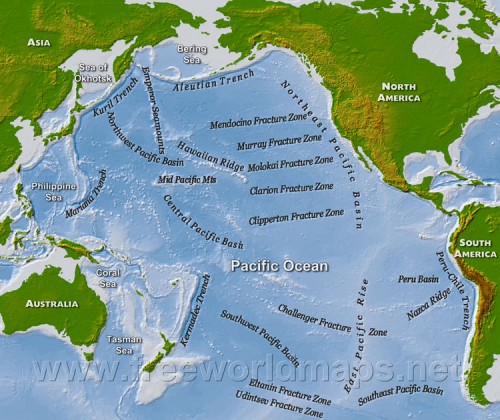
The Pentagon planners and their paid anthropologist shills are gearing up for the Pentagon’s next battle: the one for the Pacific that will ensure that the island nations that dot the vast maritime expanse will remain a part of the Anglo-American sphere of influence and not become part of a «Chinese lake». The Pacific Ocean has been a favorite stomping ground for U.S. government-financed anthropologists ever since Margaret Mead ‘s 1928 treatise on the Samoan people, Coming of Age in Samoa, laid the groundwork for the intelligence-related anthropological study of the peoples of the Pacific Ocean by the U.S. military and intelligence services. Mead later became a researcher for the CIA-connected RAND Corporation and became a supporter of CIA funding of anthropologic surveys and studies via laundered academic research grants from the U.S. Agency for International Development (USAID). USAID / CIA/Special Operations projects with names like Phoenix, Prosyms, Sympatico, and Camelot used anthropologists and social scientists to reconnoiter targeted tribal areas in South Vietnam, Indonesia, Pakistan, Colombia, and Chile to determine how U.S. Special Forces and intelligence agents could use indigenous peoples to further American military goals. The operations in the cases of Phoenix in South Vietnam and Prosyms in Indonesia resulted in genocide on a massive scale… Today, the military’s tribal and native peoples targeting programs fall under the nomenclature of «human terrain systems» or HTS. Brought back to life in Afghanistan and Iraq, these genocidal programs now have their eyes on the Pacific in order to gear up for what the Pentagon and Langley planners believe is an inevitable war with China. It is fitting, therefore, the U.S. Army Corps of Engineers are now looking for up to 15,000 acres of land to lease on American Samoa. The U.S. military wants to establish a major training base on American Samoa for at least five years and probably longer. The base is to provide 24-hour road access that will permit 60 full days of training per year. The Army also wants the base to permit the use of pyrotechnic and blank ammunition during daytime and nighttime training. It is certain that the U.S. is looking at building a simulated rural and village tropical environment for the use of U.S. and future «coalition of the willing» armies to practice battling an enemy in the Pacific region. That «enemy» is China. The United States obviously foresees the Pacific as a future battleground between American and its allied forces and China for control of the important trade routes that crisscross the vast maritime region. Not since the U.S. military campaign against Japan during World War II has the Pacific seen such an American military projection of power. The decision by the Obama administration to «pivot» its military forces into Asia and the Pacific has brought about a strong response from China, which sees itself as the ultimate target for the increased U.S. military presence. China’s ambassador to Australia Chen Yuming called the stationing of 2500 U.S. Marines in Darwin an «affront» and a Cold War containment policy toward China. The establishment of a U.S. military training base on American Samoa follows Secretary of State Hillary Clinton’s first ever attendance by a U.S. Secretary of State of a Pacific Islands Forum (PIF) summit in Rarotonga, Cook Islands on August 31, 2012. It was the first such visit to the Cook Islands and underscored America’s decision to maintain its stranglehold over the small Pacific island nations while at the same time beefing up its military forces in the region. The United States and its two Pacific overseers – Australia and New Zealand –- are attempting to cement their neo-colonialist hegemony over the Pacific states, which are independent in name only. Enter the Human Terrain practitioners from the Pentagon and CIA to keep the Pacific islanders divided. Clinton’s participation in the PIF summit is aimed at not only maintaining the status quo but in promoting the rivalries between Polynesians, Micronesians, and Melanesians among the island states. The United States, having virtual ownership of the quasi-independent Micronesian nations of Micronesia, Palau, and the Marshall Islands, as well as total control over the U.S. territories of Guam and the Northern Marianas, can use its influence over Micronesians to play them off against the other two major ethnic groups,. They are the Melanesian Spearhead Group of Papua New Guinea, Fiji, Solomon Islands, Vanuatu, and the New Caledonia (Kanaky) liberation front and the Polynesian Leaders Group of Samoa, Tonga, Tuvalu, Cook Islands, Niue, Tokelau, French Polynesia, as well as the intelligence eyes and ears of Washington, American Samoa. The United States, Australia, and New Zealand can use their Human terrain System knowledge of ethnic rivalries in the Pacific to ensure that China is kept out of the area. Part of the strategy relies on Taiwan’s «checkbook» diplomacy to maintain Taiwanese rather than Chinese embassies and aid missions in the small island states. There are currently Taiwanese embassies in Tuvalu, Solomon Islands, Marshall Islands, Palau, Nauru, and Kiribati. Among these, Nauru, Solomon Islands, and Kiribati switched their recognition back to Taiwan after opening up diplomatic relations with China. Kiribati came under pressure after it decided to allow China to build a missile tracking station on south Tarawa. The U.S. believed the China Space Telemetry Tracking Station was going to spy on the «Star Wars II» activity at the Ronald Reagan Ballistic Missile Defense Test Site in the Kwajalein Atoll of the Marshall Islands. The Marshallese on the atoll are under constant surveillance by well-armed U.S. security personnel. In 2004, Vanuatu switched its recognition back to China from Taiwan after Prime Minister Serge Vohor paid a secret visit to Taiwan and was ejected from office in a vote of no confidence. Vohor actually punched the Chinese ambassador after Vohor returned from Taiwan. Such incidents in the Pacific Islands have been known to set off riots between opposing political parties and ethnic groups. The Pentagon will use such politico-ethnic tinderboxes as a secret weapon against China. The CIA, Australian Security Intelligence Organization (ASIO), and New Zealand Secret Intelligence Service (NZSIS) have programs to undermine South Pacific governments that establish close relations with Beijing. However, the Human Terrain operatives have gone further. Aware of the animosity that poor Pacific Islanders have toward local successful Chinese businessmen, the bought—and-paid for anthropologists have stirred up riots, especially in Solomon Islands and Tonga, to marginalize China’s influence in the region. There are contingency plans to foment riots against ethnic Chinese in Fiji, Vanuatu, and Papua New Guinea. The CIA’s Operation Prosyms in Indonesia relied on longstanding animosity between Muslim Indonesians and ethnic Chinese to stoke riots against the Chinese in the aftermath of the 1965 CIA coup against President Sukarno. The mayhem resulted in the deaths of over 100,000 ethnic Chinese and a severance of relations between the CIA-installed Suharto government and China. President Obama’s anthropologist mother, Stanley Ann Dunham, played a crucial role in Prosyms. Mrs. Dunham’s son appears prepared to reenact anti-Chinese pogroms in the islands of the Pacific. It is clear that the U.S. military training in American Samoa will be used to train Pacific Islander mercenaries, many of whom, such as Marshall Islanders, American Samoans, and Guamanians already serve in the U.S. military, to train young men from impoverished Kiribati, Micronesia, Samoa, and Fiji. Fijian and Tongan mercenaries, battle-hardened from Western campaigns in Iraq, Afghanistan, and other regions, are also available to supplement the U.S. Pacific Command’s training complex on American Samoa. If Fiji’s military-led government , which has been the subject of diplomatic sanctions by Australia and New Zealand, continues to get close to China and North Korea, these Fijian mercenaries could see coup d’état duty on behalf of the CIA, ASIO, and NZSIS in their homeland of Fiji. And the diplomats of the small Chinese embassy in Nuku’alofa, Tonga have witnessed how fast the fury of local Tongans can be turned on the Chinese business community. These blood-soaked scenarios all figure heavily into Pentagon HTS plans for the Pacific. The United States will continue to keep the Pacific Islands within its vast gulag to prevent the extension of Chinese influence. Today, Pacific Islanders are faced with a virtual «Berlin Wall» that keeps Pacific Islanders confined to their own islands while outsiders, like Chinese and Russians, are kept out. The method by which Washington, Canberra, and Wellington have created airline and sea transit monopolies and transit visa requirements means that Samoans from the Independent State of Samoa cannot visit nearby American Samoa without a special permit. And the U.S. Department of Homeland Security decides who will receive special permits and transit visas, including for those traveling on diplomatic passports. Any scheduled airline that connects any of the islands via American Samoa, Guam, or Hawaii requires a U.S. transit visa and that entails invasive interviews by U.S. Immigration and Customs Enforcement personnel. There is a reason why so many negotiations and agreement to establish the Trans-Pacific Strategic Economic Partnership have been secret. As the title indicates, the TPP, as it is known, is a «strategic» trade bloc, which means it also has a military dimension. In essence, it is no different than the Greater East-Asia Co-Prosperity Sphere established by Imperial Japan during World War II. The United States, not wanting to be viewed as starting the bloc but wanting it to be a replacement for the Cold War military alliance, the Southeast Asia Treaty Organization (SEATO), sat in the background while New Zealand, Singapore, Brunei, and Chile signed up as charter members in 2005. As more nations joined, the TTP’s military profile became clearer. The countries that signed up to the TPP were all being groomed for the anti-China military bloc for the Pacific: Australia, Canada, Malaysia, Mexico, Vietnam, Peru, and the United States signed on. Japan, Thailand, South Korea, the Philippines, Colombia, Costa Rica, Laos, and Taiwan later expressed an interest in joining the TPP. The eastward blockade of China became clear. The United States already had existing military alliances with six of the other ten TPP member nations. From Darwin, Australia and Subic Bay, Philippines to Cam Ranh Bay, Vietnam and the U.S. built Mataveri Airport on Easter Island (Rapa Nui), the U.S. was delineating the borders of its own Asia-Pacific Sphere and a line over which China would be warned not to cross. Mrs. Clinton may have arrived in Rarotonga last year amid waves and smiles but her sinister plans for the Pacific region have more to do with using the Pacific Islanders for cannon fodder in what Washington expects to be a coming regional war with China. |
00:05 Publié dans Actualité, Géopolitique | Lien permanent | Commentaires (0) | Tags : politique internationale, géopolitique, océan pacifique, états-unis, pentagone, cia, géostratégie | | del.icio.us | | Digg | Facebook
Opérations extérieures et opérations d'influence...
Opérations extérieures et opérations d'influence...
Ex: http://metapoinfos.hautetfot.com/
"Nous autres idéalistes, enfants des lumières et de la civilisation, pensons régulièrement que la guerre est morte. Las, cet espoir est aussi consubstantiel à l'homme que la guerre elle-même. Depuis que l'homme est homme, la guerre et lui forment un couple indissociable parce que les hommes sont volontés – volonté de vie et volonté de domination – et que la confrontation est dans la nature même de leurs rencontres." Général Vincent Desportes, La guerre probable (Economica, 2008)
Nous reproduisons ci-dessous un entretien donné par le général Vincent Desportes à Bruno Racouchot pour l'excellente revue Communication & Influence, éditée par le cabinet COMES. Le général Desportes est l'auteur de nombreux essais consacrés à la stratégie comme Comprendre la guerre (Economica, 2000) ou La guerre probable (Economica, 2008).

Opérations extérieures et opérations d'influence: le décryptage du Général Vincent Desportes
Somalie, Centrafrique, Mali… à des titres divers, l'armée française intervient sur bien des fronts. Il ne s'agit plus seulement de frapper l'ennemi, il faut aussi gérer les conflits informationnels et anticiper les réactions, le tout en intégrant de multiples paramètres. Comment percevez-vous cette imbrication des hard et soft powers ?
Nous assistons indéniablement à un affrontement des perceptions du monde. Les terroristes cherchent à faire parler d'eux, à faire émerger leur perception du monde à travers des actions militaires frappant l'opinion, actions dont la finalité est d'abord d'ordre idéologique. Ils inscrivent leurs actions de terrain dans le champ de la guerre informationnelle. Ils font du hard power pour le transformer en soft power. Les opérations militaires qu'ils conduisent le sont en vue de buts d'ordre idéologique. Ils ne recherchent pas l'effet militaire immédiat. Ils agissent plutôt en termes d'influence, à mesurer ultérieurement. Dans cette configuration, il y a une interaction permanente entre le militaire stricto sensu et le jeu des idées qui va exercer une influence sur les opinions publiques. La guerre est alors vue comme un moyen de communication, qui a pour but de faire changer la perception que le monde extérieur peut avoir de celui qui intervient.
Notons que cela ne joue pas que pour les terroristes. La France intervient au Mali et elle a raison de le faire. En agissant ainsi, de manière claire et efficace, elle modifie la perception que le monde pouvait avoir d'elle, à savoir l'image d'une nation plutôt suiveuse des États-Unis, comme ce fut le cas en Afghanistan. En intervenant dans des délais très brefs et avec succès loin de ses bases, en bloquant les colonnes terroristes, en regagnant le terrain perdu par les soldats maliens, et surtout en ayant agi seule, elle ressurgit d'un coup sur la scène médiatico-politique comme un leader du monde occidental. Était-ce voulu au départ ? Je ne sais pas. Mais le résultat est là. La France retrouve sa place dans le jeu complexe des relations internationales à partir d'une action militaire somme toute assez limitée. En conséquence, si l'on veut avoir une influence sérieuse dans le monde, nous devons conserver suffisamment de forces militaires classiques relevant du hard power, pour pouvoir engager des actions de soft power. L'un ne va pas sans l'autre. Le pouvoir politique doit bien en prendre conscience.
Justement, à l'heure où s'achève la réflexion sur le futur Livre blanc, quid des armes du soft power dans le cadre de la Défense ? La France n'est-elle pas en retard dans ce domaine ? N'est-il pas grand temps, comme vous le suggériez dans La guerre probable, de commencer enfin à "penser autrement" ?
"Toute victoire, disait le général Beaufre, est d'abord d'ordre psychologique." Il ne faut jamais perdre de vue que la guerre, c'est avant tout l'opposition de deux volontés. En ce sens, l'influence s'impose bel et bien comme une arme. Une arme soft en apparence, mais redoutablement efficace, qui vise à modifier non seulement la perception, mais encore le paradigme de pensée de l'adversaire ou du moins de celui que l'on veut convaincre ou dissuader. Dans la palette qui lui est offerte, l'homme politique va ainsi utiliser des moyens plus ou moins durs (relevant donc de la sphère du hard power) ou au contraire plus ou moins "doux" (sphère du soft power) en fonction de la configuration au sein de laquelle il évolue et des défis auxquels il se trouve confronté.
Le problème de la pensée stratégique française est justement qu'elle éprouve des difficultés à être authentiquement stratégique et donc à avoir une vision globale des choses. Notre pays a du mal à construire son action en employant et en combinant différentes lignes d'opérations. L'une des failles de la pensée stratégique française est de n'être pas en continuité comme le percevait Clausewitz, mais une pensée en rupture. C'est-à-dire qu'au lieu de combiner simultanément les différents moyens qui s'offrent à nous, nous allons les employer successivement dans le temps, au cours de phases en rupture les unes avec les autres. On fait de la diplomatie, puis on a recours aux armes du hard power, puis on revient à nouveau au soft power. Cette succession de phases qui répondent chacune à des logiques propres n'est pas forcément le moyen idoine de répondre aux problèmes qui se posent à nous. Utiliser en même temps ces armes, en les combinant intelligemment, me paraîtrait souhaitable et plus efficace. Notre pays a malheureusement tendance à utiliser plus facilement la puissance matérielle que la volonté d'agir en douceur pour modifier ou faire évoluer la pensée – et donc le positionnement – de celui qui lui fait face.
Notre tradition historique explique sans doute pour une bonne part cette réticence à utiliser ces armes du soft power. Pour le dire plus crûment, nous nous méfions des manœuvres qui ne sont pas parfaitement visibles. L'héritage de l'esprit chevaleresque nous incite plutôt à vouloir aller droit au but. Nous sommes des praticiens de l'art direct et avons beaucoup de mal à nous retrouver à agir dans l'indirect, le transverse. À rebours par exemple des Britanniques, lesquels pratiquent à merveille ces stratégies indirectes, préférant commencer par influencer avant d'agir eux-mêmes. Prenons l'exemple de leur attitude face à Napoléon. Le plus souvent, au lieu de chercher l'affrontement direct, ils ont joué de toutes les gammes des ressources du soft power et engagé des stratégies indirectes. Ils ont cherché à fomenter des alliances, à faire en sorte que leurs alliés du moment, les Russes, les Prussiens, les Autrichiens, s'engagent directement contre les armées françaises. Ils ont su susciter des révoltes et des révolutions parmi les populations qui étaient confrontées à la présence ou à la menace française, comme ce fut le cas en Espagne. Le but étant à chaque fois de ne pas s'engager directement mais de faire intervenir les autres par de subtils jeux d'influence.
Cette logique demeure toujours d'actualité ?
Indéniablement. Même sur le plan strictement opérationnel, cette même logique perdure sur le terrain. Les travaux de l'historien militaire Sir Basil Henry Liddle Hart dans l'entre-deux guerres mondiales en matière de promotion des stratégies indirectes sont particulièrement édifiants. Liddle Hart prône le harcèlement des réseaux logistiques de l'adversaire, des frappes sur ses réseaux de ravitaillement, et dans le même temps recommande de contourner ses bastions plutôt que de l'attaquer de front.
En ce sens, nous avons un retard à combler. Comme les Américains, au plan militaire, nous préférons l'action directe. Nous avons la perpétuelle tentation de l'efficacité immédiate qui passe par le choc direct. Pour preuve nos combats héroïques mais difficiles d'août 1914. On fait fi du renseignement, on croit que l'on va créer la surprise, on préfère agir en fondant sur l'adversaire, en croyant benoîtement que la furia francese suffira à l'emporter. On sait ce qu'il advint… Le fait est que nous préférons le choc frontal aux jeux d'influence. Nous comprenons d'ailleurs mal les logiques et rouages des stratégies indirectes. Nous cherchons à attaquer la force plutôt que la faiblesse, ce qui est à l'exact opposé de ce que prône Sun Tzu. Comme on le sait, pour ce dernier, l'art de la guerre est de gagner en amenant l'ennemi à abandonner l'épreuve engagée, parfois même sans combat, en utilisant toutes les ressources du soft power, en jouant de la ruse, de l'influence, de l'espionnage, en étant agile, sur le terrain comme dans les têtes. En ce sens, on peut triompher en ayant recours subtilement aux armes de l'esprit, en optimisant les ressources liées à l'emploi du renseignement, en utilisant de façon pertinente les jeux d'influence sur les ressorts psychologiques de l'ennemi.
Jusqu'à ces dernières années, on hésitait à parler d'influence au sein des armées, principalement à cause des séquelles du conflit algérien. Les blocages mentaux sont encore très forts. Cependant, les interventions conduites par les Anglosaxons en Irak et en Afghanistan ont contribué à tourner la page. Nos armées doivent-elles, selon vous, se réapproprier ce concept et les outils qui en découlent ?
Dans les guerres de contre-insurrection que nous avons eues à conduire, nous avons compris que l'important était moins de détruire l'ennemi que de convaincre la population du bienfait de notre présence et de notre intervention. Ce sont effectivement les Américains, qui ont redécouvert la pensée française de la colonisation, de Lyautey et de Gallieni, qui privilégiaient la démarche d'influence à la démarche militaire stricto sensu. Notre problème dans les temps récents est effectivement lié aux douloureuses séquelles du conflit algérien, où nous avions cependant bien compris qu'il fallait retourner la majorité de la population pour stabiliser le pays et faire accepter la force française. Ce qui, dans les faits, fut réussi. Le discrédit jeté sur les armées et certaines méthodes ayant donné lieu à des excès, ont eu pour conséquence l'effacement des enjeux de la guerre psychologique et des démarches d'influence.
Avec l'Afghanistan, les choses ont évolué. Au début, nous considérions que l'aide aux populations civiles avait d'abord pour but de faire accepter la force. Ce fut peut-être un positionnement biaisé. Nous n'avions sans doute pas suffisamment intégré le fait que les opérations d'aide aux populations étaient primordiales, puisqu'il s'agissait d'opérations destinées à inciter les populations à adhérer à notre projet. Les Américains ont compris avant nous que les opérations d'influence étaient faites pour faire évoluer positivement la perception de leur action, en gagnant comme ils aimaient à le dire, les cœurs et les esprits de ces populations.
Dans Le piège américain, vous vous interrogez sur les raisons qui peuvent amener les États-Unis à perdre des guerres. Accorde-t-on une juste place aux opérations d'influence ? Comment voyez-vous chez nous l'évolution du smart power ?
Premier constat, la force est un argument de moins en moins utilisable, car de moins en moins recevable dans les opinions publiques. Si nous voulons faire triompher notre point de vue et imposer notre volonté, il faut s'y prendre différemment et utiliser d'autres moyens. Et d'abord s'efforcer de trouver le meilleur équilibre entre les outils qu'offre le soft power, avec une juste articulation entre les moyens diplomatiques ou d'influence, et les outils militaires. Ces derniers ne peuvent plus être employés comme ils l'étaient avant, l'avantage comparatif initial des armées relevant de l'ordre de la destruction.
Ce bouleversement amène naturellement les appareils d'État à explorer les voies plus douces présentées par les opérations d'influence, lesquelles sont bien sûr davantage recevables par les opinions publiques. Or, pour en revenir à votre question, la puissance militaire déployée par les Américains est par nature une puissance de destruction, donc de moins en moins utilisable dans le cadre évoqué ici. Sinon, comment expliquer que la première puissance mondiale, qui rassemble plus de la moitié des ressources militaires de la planète, n'ait pu venir à bout des Talibans ?
C'est bien la preuve que le seul recours à la force brute ne fonctionne pas. Les États doivent donc chercher dans d'autres voies que celle de la pure destruction, les moyens d'assurer la poursuite de leurs objectifs politiques. Même si nous devons garder à l'esprit que ce moyen militaire stricto sensu reste essentiel dans certaines configurations bien définies. Il ne s'agit pas de se priver de l'outil militaire, qui peut demeurer déterminant sous certaines conditions, mais qui n'est plus à même cependant de résoudre à lui seul l'ensemble des cas auxquels les États se trouvent confrontés.
Vous qui avez présidé aux destinées de l'École de guerre, quelle vision avez-vous de l'influence, des stratégies et des opérations d'influence ?
L'enseignement à l'École de guerre évolue. Même si nous nous efforçons de penser avant tout sur un mode stratégique, néanmoins, nous travaillons toujours sur les opérations relevant prioritairement du hard power.
Nous intégrons bien sûr les opérations relevant du soft power, mais elles ne sont pas prioritaires. L'élève à l'École de Guerre doit avant tout savoir planifier - ou du moins participer à des équipes de planification - dans le cadre de forces et d'opérations d'envergure. Il y a un certain nombre de savoir-faire techniques à acquérir, lesquels reposent davantage sur l'usage de la force que sur celui de l'influence. Pour les élèves, c'est là un métier nouveau à acquérir, complexe, très différent de ce qu'ils ont connu jusqu'alors, qui se trouve concentré sur l'emploi de la force militaire à l'état brut. Cependant, dans tous les exercices qui sont conduits, il y a une place pour les opérations d'influence. La difficulté est que l'on ne se situe pas là dans le concret, et que c'est délicat à représenter. Les résultats sont difficiles à évaluer, ils ne sont pas forcément quantifiables, ils peuvent aussi être subjectifs. Alors, peut-être d'ailleurs par facilité, on continue à faire ce que l'on sait bien faire, plutôt que de s'aventurer à faire ce qu'il faudrait réellement faire.
L'Armée de Terre n'a pas à définir une stratégie d'ensemble. Elle doit simplement donner une capacité opérationnelle, maximale à ses forces. Une Armée se situe au niveau technique et opérationnel. Le niveau stratégique se situe au niveau interarmées. Et c'est là que doit s'engager la réflexion à conduire en matière de soft power. Ces précisions étant apportées, il n'en demeure pas moins que – tout particulièrement au sein de l'Armée de Terre – il est nécessaire d'avoir recours à la doctrine qui porte sur les actions à conduire en direction des populations, puisque l'on veut influer sur la perception qu'elles ont de notre action. Reconnaissons pourtant que nous sommes moins avancés que les Américains en ce domaine. Un exemple: un général américain qui commandait la première division de cavalerie en Irak, m'a raconté comment, avant de partir, il avait envoyé tous ses officiers d'état-major à la mairie de Houston pour voir comment fonctionnait une ville. Car il savait bien qu'il allait acquérir le soutien de la population irakienne non pas en détruisant les infrastructures, mais au contraire en rétablissant au plus vite les circuits permettant d'assurer les besoins vitaux, comme les réseaux d'eau ou d'électricité. Il a donc travaillé en amont sur une opération d'influence, qu'il a su parfaitement intégrer à sa manœuvre globale. De la sorte, la manœuvre d'ordre strictement militaire ne venait qu'en appui de la démarche d'influence.
A-t-on agi de même en Afghanistan?
En Afghanistan, on a travaillé sur trois lignes d'opérations: sécurité, gouvernance, développement. On a compris que l'on ne pouvait pas travailler de manière séquentielle, (d'abord sécurité, puis gouvernance, puis développement), mais que l'on devait travailler en parallèle sur les trois registres, avec une interaction permanente permettant d'aboutir harmonieusement au résultat final. Si les lignes gouvernance et développement relèvent peu ou prou de la sphère de l'influence, il faut cependant reconnaître que le poids budgétaire de la ligne sécurité est de loin le plus important.
Pourquoi ?
Au niveau des exécutifs gouvernementaux, on considère que les opérations militaires sont du ressort du hard power. Or, l'action sur les autres lignes d'opération est au moins aussi importante que sur la ligne d'opération sécurité. De fait, au moins dans un premier temps, les militaires sont d'autant plus à même de conduire les opérations d'influence qu'ils sont les seuls à pouvoir agir dans le cadre extrêmement dangereux où ils sont projetés. Mais ils ont effectivement une propension à penser prioritairement les choses selon des critères sécuritaires. Autre point à prendre en considération, les États ont des budgets limités pour leurs opérations. Les opérations militaires coûtent cher. La tendance naturelle va donc être de rogner sur les autres lignes qui n'apparaissent pas – à tort sans doute – comme prioritaires. Concrètement, influence, développement, gouvernance se retrouvent ainsi être les parents pauvres des opérations extérieures.
N'y-a-t-il pas également un problème de formation?
Dans les armées, on est formé comme lieutenant, capitaine, commandant pour parvenir d'abord à l'efficacité technique immédiate. On est ainsi littéralement obsédé par cet aspect des choses et son corollaire, à savoir le très rapide retour sur investissement. On concentre ainsi nos ressources intellectuelles sur le meilleur rendement opérationnel des forces, en privilégiant le budget que l'on consent à une opération. N'oublions pas que nous évoluons aujourd'hui au sein de sociétés marchandes qui veulent des retours sur investissement quasiment immédiats. Nous sommes ainsi immergés dans le temps court, à la différence par exemple des sociétés asiatiques qui, elles, ont une perception radicalement différente du facteur temps. Elles savent qu'à long terme, il est infiniment moins onéreux de laisser le temps au temps, de laisser les transformations se faire progressivement, d'accompagner par l'influence ces transformations. La Chine se vit et se pense sur des millénaires, elle connaît la force des transformations silencieuses qui atteignent leur objectif par le biais de savantes et patientes manœuvres d'influence. Nous cherchons le rendement immédiat à coût fort. Ils visent le rendement à long terme et à faible coût.
En guise de conclusion, peut-il y avoir une communication d'influence militaire ?
C'est un peu la vocation du Centre interarmées des actions sur l'environnement, créé en juillet dernier de la fusion du Groupement interarmées actions civilo-militaires (GIACM) et du Groupement interarmées des opérations militaires d’influence (GI-OMI). Sur les théâtres où nous opérons, nous mettons naturellement en place des vecteurs destinés aux populations locales, visant à mieux faire comprendre notre action, à faire percevoir en douceur les raisons pour lesquelles nous agissons. En un mot, nous nous efforçons de jouer sur les perceptions et sur l'image. Mais ce jeu assez fin sur l'influence reste le parent pauvre de l'action militaire.
L'influence est tout en subtilité. On ne la perçoit pas comme on peut percevoir un tir d'artillerie ou une frappe aérienne. Même si nous sommes persuadés du bienfondé des opérations d'influence, nous ne parvenons pas à faire d'elles des priorités, donc à dégager suffisamment de budgets et de personnels à leur profit. En outre, les configurations actuelles privilégient plutôt les projections de puissance pour faire plier l'adversaire. Or, dans l'histoire et en prenant les choses sur le long terme, on constate que l'utilisation de la seule force pure ne marche pas dès lors qu'on examine les choses dans la durée. La projection de puissance ou l'action brutale sont capables de faire plier momentanément l'adversaire. Mais tant que l'on n'a pas changé les esprits, l'adversaire va revenir à la charge, quitte à contourner les obstacles. D'où l'importance capitale des opérations d'influence quand on embrasse une question dans son ensemble. Sur ces questions, je renvoie volontiers au remarquable ouvrage du général Sir Rupert Smith, L'utilité de la force, l'art de la guerre aujourd'hui (Economica, 2007). Pour lui, désormais, les opérations militaires doivent être considérées moins pour ce qu'elles produisent comme effets techniques que pour ce qu'elles produisent sur l'esprit de l'autre. C'est là une préoccupation relativement récente. Ainsi, les dommages collatéraux se révèlent contre-productifs et viennent miner le résultat militaire que l'on vise. Il nous faut bien plutôt réfléchir en termes d'effets à obtenir sur l'esprit de l'autre. C'est là que l'influence s'impose comme une démarche capitale, qu'il nous faut apprendre à maîtriser. Si l'on fait l'effort de mettre les choses en perspective, sur le long terme, on voit bien que toute action militaire, au fond, doit intégrer pleinement la dimension influence, jusqu'à être elle-même une action d'influence.
Général Vincent Desportes, propos recueillis par Bruno Racouchot (Communication & Influence, janvier 2013)
00:05 Publié dans Actualité, Affaires européennes, Défense, Entretiens, Militaria | Lien permanent | Commentaires (0) | Tags : militaria, entretiens, politique internationale, france, europe, affaires européennes | | del.icio.us | | Digg | Facebook
An interview with Manuel Ochsenreiter
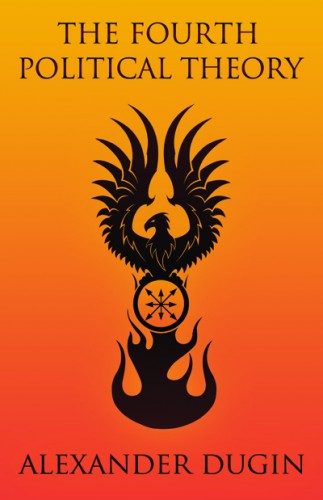
The Fourth Political Theory
An interview with Manuel Ochsenreiter

Natella Speranskaya: How did you discover the Fourth Political Theory? And how would you evaluate its chances of becoming a major ideology of the 21st century?
Manuel Ochsenreiter: Since a certain time I try to follow the developments in Russia, especially Prof. Alexandr Dugin. So it is not a coincidence to get in touch with the Fourth Political Theory. You are asking about the chances. Let me say it like this: The west is actually trapped in its own liberalism. It seems right now that there is no way out because the liberal mainstream political opinion doesn´t accept any alternative ideas. It is like digesting yourself with the same acid over and over again. In my opinion, the Fourth Political Theory could be a medical cure for that sick intellectual situation. It can be a way out of the liberal hamster wheel. And more and more people are looking for such an exit.
Natella Speranskaya: Leo Strauss when commenting on the fundamental work of Carl Schmitt The Concept of the Political notes that despite all radical critique of liberalism incorporated in it Schmitt does not follow it through since his critique remains within the scope of liberalism”. “His anti-Liberal tendencies, – claims Strauss, - remain constrained by “systematics of liberal thought” that has not been overcome so far, which – as Schmitt himself admits – “despite all failures cannot be substituted by any other system in today’s Europe. What would you identify as a solution to the problem of overcoming the liberal discourse? Could you consider the Fourth Political Theory by Alexander Dugin to be such a solution? The theory that is beyond the three major ideologies of the 20th century – Liberalism, Communism and Fascism, and that is against the Liberal doctrine.
Manuel Ochsenreiter: First of all, the liberal doctrine is a totalitarian doctrine. Convinced liberals hate to hear that. They even would deny that it is a “doctrine”. But the reality is: The world wide liberalism and the postmodernism of “values” seem to be more totalitarian than communism, fascism or any –isms before. Liberalism doesn´t accept alternative ideas coexisting beside it. It shows its ugly totalitarian face every day all over the world and its sharpest sword is hypocrisy. The liberal “tolerance”, one of the most mentioned and beloved liberal values just enjoy other liberals. There is no tolerance towards non-liberals. The west showed a couple of times in the past towards some countries who didn’t adjust to this liberal world order, what that can mean at the end: If other societies, people, and countries are not convinced by NGOs, “civil society” and other forms of “western help”, they will be convinced by drones and Cruise missiles. The liberal west tells the beloved stories about “human rights” violations to convince the western societies about the necessity of such military operations. Liberals liberate with money or bombs. The choice is upto the “backwarded” aim. But at the end, everybody knows the “open society” (Karl Popper) means in reality “open market”, “free speech” means “liberal speech” and “freedom of choice” means “McDonalds or Burger King”. There is even a liberal “new speech” for these things: Military ground offensives are now “humanitarian zones”, air raids are “installing a no-flight zone” and ugly primitive Russian girls urge the west to shout “Free Pussy riot!”.
 Every established intellectual, politician or media company moves inside this totalitarian liberal system. For example you will not find any established political party in the German parliament that doesn´t claim to be “also liberal”. Our universities “research” about “identities”, “gender”, and “culture” to change this or that. The new liberal types of human being don´t have a heritage, homeland or cultural identity. Even the gender can be changed. We could consider that as a type of slapstick comedy if it wouldn´t be so serious, because it means a type of destruction of basics and values, which might be hard to repair.
So Prof. Dugin’s theory shows an emergency exit out of this totalitarian system. It is like opening a window to let some fresh air into the western paralyzed intellectual environment. But the liberalism is not a weak ideology which would wait for its defeat.
Natella Speranskaya: Do you agree that today there are “two Europes”: the one – the liberal one (incorporating the idea of “open society”, human rights, registration of same-sex marriages, etc.) and the other Europe (“a different Europe”) – politically engaged, thinker, intellectual, spiritual, the one that considers the status quo and domination of liberal discourse as a real disaster and the betrayal of the European tradition. How would you evaluate chances of victory of a “different Europe” over the ”first” one?
Manuel Ochsenreiter: This reminds me to the “old Europe” and the “new Europe” Donald Rumsfeld was talking about in 2003. The “old Europe” was the one that refused to support the US in the Iraq war, especially Germany and France, and the “new Europe” joined the „coalition of the willing“. But of course you mean something else with your question. There is certainly a “different Europe”. We wouldn´t be talking if it didn´t exist. In all the European countries you see certain types of intellectual resistance against the liberal totalitarian system. I would even call this type of Europe the “real” one. Because the official “Europe” is just a weird construction that denies traditions and differences, everything what makes the rich nature of Europe and the Europeans.
The “real Europe” is everywhere, where intellectuals, journalists, and politicians turn their back to Brussels and the liberal system. You find it in a huge amount of magazines, newspapers, internet forums, and political organizations all over the continent. They do it without any powerful support from other countries, just with their idealism. There are no NGOs or other institutions that fund that important work. But this shows exactly that type of these new political grassroots.
Natella Speranskaya: “There is nothing more tragic than a failure to understand the historical moment we are currently going through; - notes Alain de Benoist – this is the moment of postmodern globalization”. The French philosopher emphasizes the significance of the issue of a new Nomos of the Earth or a way of establishing international relations. What do you think the fourth Nomos will be like? Would you agree that the new Nomos is going to be Eurasian and multipolar (transition from universum to pluriversum)?
Manuel Ochsenreiter: Western liberal propaganda always claims: “Even if we wanted, we couldn´t do something else because it would result in violence and war!” They spread panic and fear among the people. You have to imagine, our German politicians tell us that even if we Europeans would abolish the Euro currency, we might end up in a war. The postmodern globalization is presented as the only single way for the future. I spoke about liberal hypocrisy before. The truth is that the way of globalization is a painful and bloody one as we can see in many countries with western “liberation” attempts. It is a hamster wheel of wars and more wars. The longer it goes the more blood is spilt. This logic is as simple as cruel.
Why is it like this? After the downfall of the Soviet Union and the communist eastern block, western political scientists (Charles Krauthammer, Francis Fukuyama and many others) welcomed more or less the “unipolar moment”; one world with one pole which was the west. This idea was like a western “idyll”. With “Western democracy” and “western freedom” spreading all over the world also to the last little corner, mankind will face a long-term, a “final” period of peace and prosperity. Although we see every day in the news the evidence of failure of this ideology, the west still works on it. As I already said, since the end of the Cold war and the geopolitical attempts of the west to install this unipolar idea, we witness the chaotic and violent results of this sort of geopolitics.
A multipolar international order is not just the answer. It is a logical result. The question is how will this multipolar order be organized? A well-organized multipolar world would not just bring stability, but would also be a great intellectual chance of cultural exchange on a really high level. It recognizes the value of “difference” while the west today propagandizes worldwide equality and unity. The local and regional cultures would have the chance of free development, tradition, and cultural identity (both is denied by the western ideology) that could prosper. The actual western hegemony with the means of NGOs and media tries to push down these things, but not forever. And of course Eurasia will play an important role.
Natella Speranskaya: Do you agree that the era of the white European human race has ended, and the future will be predetermined by Asian cultures and societies?
Manuel Ochsenreiter: Today’s Europe is losing its human substance. It shows once more that the liberal ideology is a suicidal idea. On the one hand it fights against families and promotes for example abortion; on the other hand it campaigns extremely for mass immigration. The consequence is extinction of the Europeans. How long it takes is pure mathematics. How much the face of Europe already has changed you can witness in any European capital between Lisbon and Athens. We cannot say that the quality of the human resources really become better by immigration even if we would consider that as a neutral or even “positive” development as the liberals do. In contradiction, we face a lot of problems with immigrant communities. The liberal ideology refuses to see the reasons where they are: in ethnic backgrounds. They just speak about an alleged “discrimination” of the migrant communities and about the alleged social injustice the migrants are facing. Politics denying ethnic differences deny the reality.
Of course this development weakens Europe. We are busier more and more with “integration”, what means with ourselves. You have really to be an anti-realist to see a benefit in that suicidal development. But this exactly is told by the liberal dogma. This means automatically that other entities and cultures who don´t suffer under such development will have an advantage against a weak Europe.
Natella Speranskaya: Do you consider Russia to be a part of Europe or do you accept the view that Russia and Europe represent two different civilizations?
Manuel Ochsenreiter: I don´t see a contradiction. I personally consider Russia as a European country, of course with diverse ethnic groups. And of course it has its own culture, traditions, and identity. But every European country has its own culture and traditions. The only difference is, we Europeans are told nonstop by the Brussels propaganda that we are all somehow “the same”. The Russians have the benefit not being bombarded by that ridiculous nonsense. For me as a German, Russia should be our close friend and ally. We share a lot of interests, we share a common history of course with ups and downs – at least Moscow is closer to us than Washington. A close relationship to Russia would be in the national interest of Berlin and Moscow.
Natella Speranskaya: Contemporary ideologies are based on the principle of secularity. Would you predict the return of religion, the return of sacrality? If so, in what form? Do you consider it to be Islam, Christianity, Paganism or any other forms of religion?
Manuel Ochsenreiter: When people start worshipping their bank accounts, the horoscopes in the yellow press magazines or their luxury cars what does that tell us about the alleged absence of religion? When it is forbidden to deny liberalism as it used to be forbidden to deny the existence of god in the Middle Ages? The “secularity” in today’s Europe just refers to the power of the organized religion, but obviously not to the needs of the people. When the religion disappears they find something else. In Berlin housewives are running into Buddhist temples because they adore the eternal smile of the Dalai Lama or the haircut of Richard Gere. Of course they don´t understand anything about the spirituality of Buddhism. Trendy Businessmen do some yoga exercises. Others start doing esoteric things. But this is also an element of liberalism: superficiality. While this is happening, the organized churches are more and more weakened themselves by the liberal virus. Sometimes it is really hard to see the difference between a protestant bishop and a liberal teacher. It is somehow ironic that God comes back to Europe in these days as a Muslim migrant. All of a sudden people go on the streets to protest against blasphemy. And this takes place at the same time when “Christian” clerics in Germany seriously support the blasphemy group “Pussy riot”.
So we see on the one side the spiritual needs of the people, but on the other side also today’s Christian churches’ refusal to serve those needs. Of course there are also some exceptions. But the general situation especially in Germany and other central and western European countries is like that.
I personally don´t believe that a new type of paganism might be a dominant religious power in Europe. Why? Because it would be a pure artificial concept for the people. The strength of the churches in the past was their ties to the traditional daily life of the people. Especially Catholicism perfected to adopt and integrate old pagan traditions in its system. If Europe recovers, I am sure that maybe a new type of European Christianity would also recover. It would be a logic thing. When liberalism starts to disappear, it´s totalitarian system will also disappear. Even the Bishops of liberalism like George Soros would lose their power. But if Europe falls, the last of the “three Romes” will be Moscow – and the only resistance against the liberalist doctrine in Europe will be done by the Muslim communities while the organized Christians celebrate their own downfall.
00:04 Publié dans Actualité, Affaires européennes, Entretiens, Nouvelle Droite | Lien permanent | Commentaires (0) | Tags : entretiens, politique internationale, alexandre douguine, manuel ochsenreiter, nouvelle droite, neue rechte, allemagne, théorie politique, politologie, sciences politiques, philosophie politique | | del.icio.us | | Digg | Facebook