

lundi, 23 septembre 2013
L'impresa fiumana

19:09 Publié dans Evénement, Littérature | Lien permanent | Commentaires (0) | Tags : italie, d'annunzio, événement, lettres, littérature, lettres italiennes, littérature italienne |  |
|  del.icio.us |
  |
|  Digg |
  Facebook
L’etno-nazionalismo e l’ideologia völkisch
L’etno-nazionalismo e l’ideologia völkisch
Federico Prati
Ex: http://walseruradel.blogspot.com
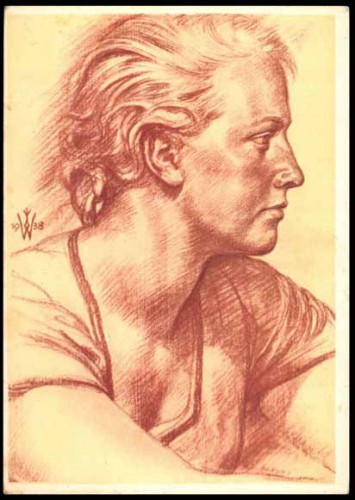 Come già scritto, l’etnonazionalismo si rifà al federalismo etnico, forma modernizzata del nazionalismo etnico e dell’ideologia völkisch. Tale ideologia assegna la priorità alla tutela del Volk, inteso come comunità di Sangue e Suolo. L’etnicità costituisce per noi etnonazionalisti il criterio fondante della nazione, che prende corpo attraverso la forza del Sangue. Il singolo individuo è subordinato al volere della Volksgemeinschaft, della comunità etnica. Nella visione etnonazionalista la mappa geopolitica dell’Europa deve essere ridisegnata, attraverso la nascita di una Federazione europea etnica, costituita da Regioni-Stato, etnicamente omogenee. Ecco perché nel nostro edificio etnocentrico non vi è posto per lo Stato nazionale etnicamente eterogeneo.
Il pensiero etnonazionalista si rifà ad una concezione oggettiva della nazione, che corrisponde al Volk della tradizione di Herder, Fichte e M.H. Boehm.
Bisogna sostituire gli Stati nazionali etnicamente pluralisti, e quindi ingiusti, con un insieme d’unità etnicamente omogenee. Lo Stato nazionale di matrice massonica e giacobina è il nemico in quanto si è storicamente sviluppato come realtà istituzionale etnicamente eterogenea, che non fonda i diritti di cittadinanza sull’appartenenza etnica! Dunque un indispensabile criterio per comprendere l’etnonazionalismo deve essere la conoscenza del pensiero völkisch, che si sviluppò in Germania e nelle università tedesche tra gli anni ’20 e ’30. Il pensiero völkisch nasceva da un profondo Kulturpessimismus presente in alcuni strati della società tedesca e si concretizzava in un’avversione per gli aspetti materialistici della moderna società industriale.
Antiindustrialismo e antiurbanesimo, anticapitalismo e antiliberismo, coniugate ad una volontà di ritornare all’Ahnenerbe, all’eredità degli Avi: sono queste alcune delle facce con cui tale pensiero si mostrava, e proprio nel pensiero völkisch questi aspetti s’intrecciavano indissolubilmente. L’aggettivo völkisch sarebbe stato introdotto, secondo il germanista von Pfister, nel 1875 in sostituzione alla parola “national”. Il pensiero völkisch, che aveva le sue radici profonde nel periodo delle guerre napoleoniche ed in istanze romantiche, nasceva da un senso di frustrazione rispetto ad un’unificazione compiuta sotto l’egida prussiana e ad una scissione confessionale del paese, per recuperare un’identità etnonazionale più profonda e genuina, che si basasse sullo spirito popolare. Germanesimo ed antropologia razziale, antimodernismo e biologismo sono alcune delle facce che caratterizzano il pensiero völkisch. Un legame di popolo a livello biologico attraverso il Sangue e la Razza ed un mitico radicamento nel Suolo dell’Heimat, nell’idioma e negli usi e costumi trasmessi dalla Tradizione rappresentano il pensiero völkisch.
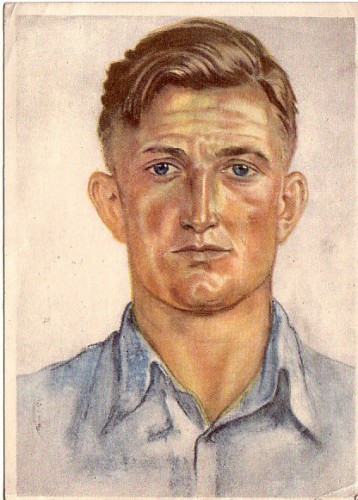 La forza di tale pensiero risiede proprio nella profonda carica emotiva e passionale che era (è) capace di trasmettere. Dunque la teoria völkisch, termine che in italiano si traduce in “etnonazionale”, sostiene la prevalenza di una concezione della cittadinanza che contrappone “das Volk” a “the people”, e fa sì che in Germania si sia applicato lo jus sanguinis, il diritto del Sangue: cittadino tedesco era solo chi discendeva da genitori tedeschi, parlava tedesco e propagava la cultura tedesca. Per noi etnonazionalisti lo jus sanguinis è un punto fermo, irrinunciabile.
Un extraeuropeo che lavora da 30 anni in una delle comunità etnonazionali che costituiscono la Padania (ad esempio il Veneto) non sarà mai un cittadino Veneto, dal momento che conserva le sue racines, la sua cultura allogena, la sua lingua. Il diritto di cittadinanza, a nostro avviso, dovrà spettare, infatti, solo a chi appartiene alla comunità etnica, cioè, ad esempio in Veneto, è cittadino chi è Veneto di sangue.
The people significa invece jus soli, diritto del suolo: la cittadinanza si acquisisce semplicemente risiedendo in un posto, e questa è la concezione tipica dello stato nazionale multietnico e giacobino-massone nato dalla Rivoluzione Francese. È proprio in nome del diritto alla differenza culturale e del diritto all’identità etnica che attualmente noi propugniamo un’etnoconfederazione. La nostra teoria völkisch etnonazionalista pone un’importanza speciale sulla supremazia della nazione rispetto all’individuo: per noi etnonazionalisti Razze, Etnie, Stirpi, Nazioni sono le categorie umane fondamentali, rifiutiamo categoricamente il concetto che le popolazioni siano flessibili e mutevoli, senza correlazione fra caratteristiche fisiche e culturali. Vi sono sicuramente analogie di pensiero tra alcuni esponenti della Nuova Destra (es.: Guillame Faye, Robert Steuckers,…) e noi etnonazionalisti völkisch, tali analogie si possono individuare nelle seguenti idee-guida:
- Il federalismo basato sul criterio etnico quale elemento costitutivo di un nuovo ordine europeo (“L’Europa delle comunità etnonazionali e delle Stirpi”), in cui alla disintegrazione degli Stati nazionali etnicamente eterogenei corrisponda la nascita di una federazione di Stati regionali etnicamente omogenei; il federalismo quale forma istituzionale che consenta l’esercizio del diritto all’autodeterminazione;
- La richiesta di una nuova mappa politica dell’Europa, con la modifica degli odierni confini, da noi considerati artificiali;
- La priorità assegnata ai diritti collettivi, di gruppo, rispetto ai diritti fondamentali dell’individuo; l’avversione verso l’universalismo;
- Il rigetto della società multiculturale, considerata fonte di conflitti interetnici, la teorizzazione di forme del pensiero differenzialista;
- L’esaltazione di comunità naturali e omogenee contrapposte all’idea di nazione nata dalla rivoluzione francese;
- La relativizzazione della democrazia liberale, che necessita di correttivi etnici.
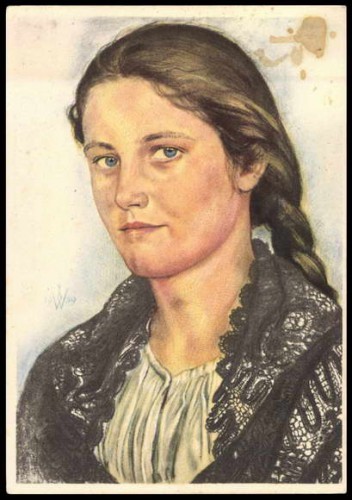 Nostro punto di riferimento culturale sono:
-
Intereg (Internationales Institut fur Nationalitatenrecht und Regionalismus, ossia Istituto Internazionale per il diritto dei gruppi etnici e il regionalismo). Finanziato attraverso la Bayerische Landeszentrale fur Politische Bildungsarbeit (ente centrale bavarese di istruzione politica), fino alla sua scomparsa è sostenuto caldamente da Franz Joseph Strauss. Nella dichiarazione istitutiva dell’Intereg si precisa l’obbiettivo di una “relativizzazione degli stati nazionali”, al fine di conseguire “l’affermazione di un diritto dei gruppi etnici e dei princìpi dell’autodeterminazione e dell’autonoma stabilità delle regioni”.
-
BdV (Bund der Vertriebenen), è l’associazione regionale dei tedeschi espulsi dopo il 1945 dai territori orientali del Terzo Reich. BdV nasce grazie al land della Baviera e su iniziativa dei profughi dei Sudeti, la regione popolata da tedeschi grazie a cui Hitler invase la Cecoslovacchia. Il BdV non riconosce gli attuali confini della Germania.
-
SL: (Sudetendeutsche Landsmannschaft), è la lega dei profughi dei Sudeti
-
Fuev (Federalistiche Union Europaischer Volksgruppen), Unione federalista delle comunità etniche in Europa. Per gruppo etnico, secondo la Fuev, si intende una comunità che si definisce “attraverso caratteri che vuole mantenere come la propria etnia, lingua, cultura e storia”. Dopo la caduta del muro di Berlino e dell’Urss, tre milioni di cittadini di origine tedesca sono presenti negli stati post sovietici, per cui Bonn, dopo il 1989, ha iniziato a finanziare la Fuev.
-
VdA: (Verein fur das Deutschtum in Ausland), associazione per la germanicità all’estero.
-
Guy Héraud: coeditore di “Europa Etnica”, organo ufficiale della Fuev e di Intereg, figura nel comitè de patronage della “Nouvelle Ecole”, la rivista della nuova Destra francese. È il padre del federalismo etnico, la dottrina istituzionale che presenta le “Piccole Patrie”, nate dalla secessione dallo Stato nazionale multietnico, come l’estremo bastione contro la globalizzazione e l’invasione allogena. “Padre spirituale” del nazionalismo etnico è R.W. Darré e il suo testo, fondamentale per ogni etnonazionalista, è Neuadel aus Blut un Boden (Ed. italiana: Edizioni di Ar, Padova 1978): l’indissolubile binomio di “sangue e suolo” esprimeva la carica fortemente etnonazionalista e biologista del pensiero ruralistico di Darré. L’uomo, considerato innanzi tutto nella dimensione biologica di portatore e custode nel suo sangue di un prezioso patrimonio genetico, doveva realizzare la sua esistenza attraverso un’intima fusione con la terra.
 Egli doveva “come la pianta mettere radici nel suolo per prendere parte alla forza primigenia, eternamente rinnovantesi della terra”. “Vogliamo far diventare di nuovo il sangue e il suolo il fondamento di una politica agraria tedesca chiamata a far risorgere il “contadinato” e con ciò superare le idee del 1789, cioè le idee del liberalismo. Perché le idee del 1789 rappresentano una Weltanschauung che nega la razza, l’adesione al contadinato invece è il nucleo centrale di una Weltanschauung che riconosce il concetto di razza. Intorno al contadinato si scindono gli spiriti del liberalismo da quelli del pensiero völkisch”. Tra i molti importanti esponenti del pensiero völkisch vi furono: Julius Langbehn (Rembrandt als Erzieher), Paul de Lagarde (Deutsche Schriften), il movimento dei Wandervoegel, W. Schwaner (Aus heiligen Schriften germanischer Völker), Hermann Ahlwardt (Der Verzweiflungskampf der arischen Völker mit dem Judentum), Artur Dinter (Die Sünde wider das Blut), H.F.K. Guenther (Rassenkunde des deutschen Volkes, Rassenkunde Europas, Rassengeschichte des hellenischen und des römischen Volkes), Friederich Naumann, Alfons Stoecker e infine Georg Ritter von Schönerer.
 Nostro dovere di etnonazionalisti è, quindi, prima di tutto quello di far riscoprire a tutti i Popoli Padano-Alpini ed agli Europei l’appartenenza alle proprie millenarie comunità di sangue, di suolo, di destino e di storia: comunità che da sempre hanno costituito quella più grande comunità di popoli che è oggi la Padania.
Dire Padania, significa per noi evocare subito una molteplicità d’immagini e di concetti diversi. Primo fra tutti un concetto geografico: la Padania è una terra. Ma subito dopo un concetto d’ordine etnico: la Padania è, infatti, un insieme di popoli affini per comuni radici di sangue e di tradizioni. Ancora, un concetto d’ordine storico: la Padania è il risultato di millenni di vicende storiche specifiche, è il prodotto della vita fisica e spirituale, delle attività delle genti che l’hanno abitata. E infine un concetto d’ordine ideale: la Padania è un insieme di civiltà. Non è dunque possibile pensare la Padania senza avere ben presenti questi quattro momenti fondamentali della sua identità: la Padania come Terra, la Padania come Sangue, ovvero come l’insieme di numerose comunità etniche, la Padania come Memoria storica, la Padania come Civiltà. Noi rappresentiamo quelle Heimaten, quelle Stirpi che esistono da millenni e non un’artificiosa costruzione massonica e giacobina come lo stato italiano, noi siamo quella Terra di Mezzo che da sempre è il cuore pulsante della Mitteleuropa.
Il concetto di sangue e suolo non è certo astratto e trova un riscontro materiale nelle mappature genetiche italiane, che dimostrano in maniera scientifica come non esista in termini etnici un popolo italiano e come gli antichi popoli preromani siano ancora oggi presenti con i loro geni. Anche linguisticamente le differenze sono nette e parlare di dialetti è un eufemismo non supportato da riscontri scientifici. Non si può inoltre confondere la razza con l’etnia, ragion per cui gli Europei autoctoni sono razzialmente omogenei ed etnicamente divisi. Il Sacro Romano Impero della Nazione Germanica, unendo nella diversità rimane l’esempio più alto di un’Europa forte, libera e rispettosa delle tante patrie che la compongono.
Detto questo riteniamo comunque che di fronte al pericolo immediato e mortale per l’intera Civiltà europea di un’immigrazione che è un’autentica invasione, sia oggi più importante ricercare i valori della comune Tradizione europea ed unire le forze per salvare il salvabile. Lo stato italiano è condannabile in quanto giacobino e perciò centralista e mondialista e nemico delle etnie che lo compongono. Un’etnofederazione basata sui valori della nostra Tradizione potrebbe essere un passo fondamentale verso la costruzione della Padania e dell’Europa che sognamo.
La battaglia è appena iniziata: siamo noi, tutti noi Popoli Padano-Alpini ed Europei che dobbiamo alzare il grido di battaglia, serrare i ranghi, e inondare le piazze di questa Terra antica dal nuovo destino. Inondarla delle nostre millenarie bandiere di libertà! E soprattutto noi etnonazionalisti dobbiamo restare uniti e legati come lo sono gli alberi di una stessa foresta, le onde di uno stesso fiume, le gocce di uno stesso sangue. Allora sarà veramente impossibile fermarci! Forza dunque: Padania, Europa in piedi!
Federico Prati
L’etno-nazionalismo e l’ideologia völkisch
00:08 Publié dans Révolution conservatrice, Terroirs et racines, Théorie politique | Lien permanent | Commentaires (0) | Tags : théorie politique, politologie, sciences politiques, ethnisme, ethno-nationalisme, révolution conservatrice | | del.icio.us | | Digg | Facebook
Réflexion sur l’État dans l’économie
Qu’est-ce que le vrai colbertisme?
Réflexion sur l’État dans l’économie
Par Guillaume Faye
Ex: http://www.gfaye.com
 Par manque de formation historique et économique, on présente le « colbertisme » comme de l’interventionnisme étatique à la façon de l’État Providence ou des velléités de notre bruyant ministre du ”Redressement productif ”, M. Montebourg. Première erreur. On s’imagine aussi que le colbertisme est un dirigisme anti-libéral, le choix d’une économie bureaucratique et administrée, sous prétexte de ”volontarisme” anti-marché. Seconde erreur. Le colbertisme n’a rien à voir avec ces clichés, bien au contraire. Dans l’histoire de France récente, les véritables politiques colbertistes ont été menées par De Gaulle et Pompidou, mais certainement pas par les socialistes. Explications.
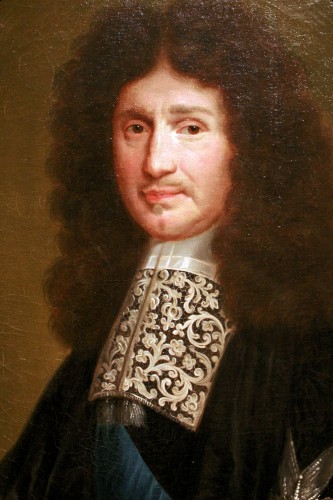
Colbert, homme pragmatique, principal ministre de Louis XIV, était révulsé par l’économie corporatiste, héritée de la période médiévale, avec ses corsets réglementaires, coutumiers, paralysants, fiscalistes. Un type d’économie archaïque que défendent, en fait, aujourd’hui les socialistes au pouvoir et les féodalités syndicales. Colbert était un adepte du mercantilisme anglais : il ne faut pas entraver le commerce, même avec les meilleures mais stupides intentions, mais le favoriser, afin d’augmenter la richesse et la prospérité. Mais Colbert ajouta une french touch, comme on dit : l’État ne doit pas seulement veiller à laisser en paix les acteurs économiques, à ne pas les assommer de règlements, les imposer, les contraindre, mais aussi à les aider et à leur construire un environnement favorable et à mener de grands projets d’investissement ciblés, et énormes pour l’époque : la manufacture de Saint-Gobain, celle des Gobelins, celle de Sèvres, le canal du Midi, les grandes routes royales (1), le pavage de Paris, les grands chantiers et commandes artistiques somptueuses, vitrines de la France, etc.
Colbert développa ainsi l’idée d’investissements d’État productifs : les manufactures, les infrastructures et les comptoirs coloniaux. Ces ”grands projets” constituaient à la fois un appel d’offre pour les entrepreneurs privés mais s’inscrivaient dans la doctrine mercantiliste anglo-hollandaise : créer un environnement propice à l’expansion commerciale et à l’exportation – plus d’ailleurs qu’à l’industrie. Loin de lui l’idée de faire de l’État royal un acteur interventionniste, mais plutôt un ”facilitateur”. Pour Colbert, l’État devait être économe, avec des comptes équilibrés, d’où son conflit avec le dispendieux Louvois. L’État colbertiste est libéral et initiateur à la fois. Il limite les impôts. Il favorise le commerce maritime avec les comptoirs.
Le bricolage économique et industriel des socialistes n’a donc rien à voir avec le colbertisme dont l’approximatif M. Montebourg se réclame. Le gouvernement socialiste veut au contraire (mythe marxiste de la ”nationalisation”) que l’État bureaucratique se substitue aux entreprises, les dirige avec prétention et incompétence, tout en les assommant de charges par ailleurs. D’où par exemple le prétentieux et inutile programme étatique en 34 plans techno-industriels (septembre 2013) qualifié avec cuistrerie de « troisième révolution industrielle », par lequel l’État va « faire naître les inventions de demain, les usines de demain, les produits de demain ». Les dirigeants de Google ou de X Space doivent bien rigoler. Ce projet coûtera 3,7 milliards d’euros. Ce sera un coup d’épée dans l’eau. Car les élus et les fonctionnaires sont les plus mal placés pour définir les axes de recherche-développement du secteur industriel marchand. Ce dernier sait faire son job tout seul. À ce propos, Yves de Kerdrel écrit (2) : « à quoi bon mettre l’accent sur la production de textiles intelligents lorsque dans le même temps des industriels de ce secteur se voient refuser l’autorisation d’ouvrir un site de production dans telle friche industrielle sous prétexte qu’on y aurait aperçu une espèce protégée d’escargots. » (3)
De même, la création de la récente banque publique d’investissements est une usine à gaz bureaucratique et coûteuse. L’État ferait mieux non pas de se mêler de créer des emplois, mais de faciliter leur création, non pas de subventionner ça et là des entreprises de pointe mais de cesser de pressurer de taxes, de paralyser par des règlementations l’ensemble des entreprises, d’assouplir le marché du travail, etc. L’État français socialisé est un fossoyeur qui se fait passer pour un infirmier, un destructeur d’industries qui se pose en sauveur de l’industrie. (4)
Tout autre est le véritable colbertisme, ou plutôt le néo-colbertisme de l’ère gaullo-pompidolienne. En ce temps-là (1958-1974), le budget était en équilibre. Ce qui n’empêchait l’État d’aider au financement (lui seul pouvait le faire) de grands projets structurants pour l’avenir, avec une vraie vision, pour la France et pour l’Europe. Nous sommes toujours les héritiers de ces projets, qui n’ont plus de successeurs à la hauteur.
Mentionnons pour mémoire : le programme nucléaire des 58 réacteurs (indépendance énergétique et électricité propre), le Concorde (échec commercial franco-britannique mais énormes retombées technologiques), le programme spatial (Arianespace, leader mondial), le TGV, le réseau autoroutier, Airbus, l’avionique militaire française et tant d’autres initiatives. Bien sûr il y eut des échecs cruels. (5) Le néo-colbertisme se caractérise donc par une action de l’État dans deux domaines essentiels : fournir aux entrepreneurs, forces vives d’une nation, les infrastructures nécessaires à grande échelle ; passer des commandes d’État ou proposer des partenariats dans des domaines stratégiques. Pas ”bricoler” avec des boîtes à outils socialistes, avec de la ”com” (propagande mensongère) à la rescousse.
Maintenant, pour conclure, n’oublions pas que l’État américain fédéral pratique le néo-colbertisme dans certains domaines, avec la NASA ou le pilotage du complexe militaro-industriel. L’Union européenne, elle, adepte d’un fédéralisme mou, bureaucratique, ”libéral” au mauvais sens du terme, n’a aucun projet techno-industriel de grande ampleur, et mobilisateur. Le colbertisme suppose une volonté nationale et l’Union européenne ne se pense toujours pas véritablement comme nation. Très probablement – c’est l’enseignement de l’Histoire – elle ne le fera que si l’alchimie explosive se fait entre une menace et un leader. La menace existe, et le leader européen pas encore.
Notes:
(1) Au début du XVIIe siècle, il fallait trois fois plus de temps pour aller de Paris à Marseille ou à Bordeaux que du temps de l’Empereur Trajan, à la fin du Ier siècle, lorsque les voies romaines étaient entretenues. Après les investissements routiers de Colbert, cette différence n’existe plus. Dans le Paris de Henri IV, le confort urbain était inférieur à celui de Rome ou de Pompéi : pas de rues pavées, pas d’égouts, très peu d’apports hydrauliques non phréatiques.
(2) Le Figaro, 18/09/2013, in « Colbert, reviens ! Ils sont devenus fous », p. 15, article stimulant qui m’a donné l’idée d’écrire celui-ci.
(3) Toujours le principe de précaution, frilosité écolo, que Claude Allègre a dénoncé. Voir l’interdiction, en France, même des recherches sur l’exploitation propre des gaz et huiles de schiste. Les escargots valent mieux que les emplois. Le lobby écologiste (même fanatisme que les islamistes) est dans l’utopie contre le réel. Hélas, il est écouté.
(4) La cause principale de la désindustrialisation de la France est la perte de compétitivité des entreprises industrielles, du fait du fiscalisme pseudo-social étatique, et non pas la recherche de la maximisation des profits par les ”patrons”, contrairement au discours paléo-marxiste.
(5). Par exemple, le “Plan Calcul“ gaulliste des années soixante, maladroit et trop étatiste, qui n’a pas empêché l’informatique mondiale d’être dominée par les Américains. Ou encore notre bon vieux Minitel, lui aussi trop piloté par l’État (sub regnum Mitterrandis), trop cher, balayé par l’Internet US, en dépit de ses innovations et de ses avantages.
00:05 Publié dans Economie, Nouvelle Droite, Théorie politique | Lien permanent | Commentaires (0) | Tags : colbert, colbertisme, économie, politologie, théorie politique, sciences politiques, guillaume faye, nouvelle droite | | del.icio.us | | Digg | Facebook
LA CHARTE DE LA LAÏCITE
LA CHARTE DE LA LAÏCITE
De l’éducation du vulgaire ou comment on y remédie
Michel LHOMME
Ex: http://metamag.fr
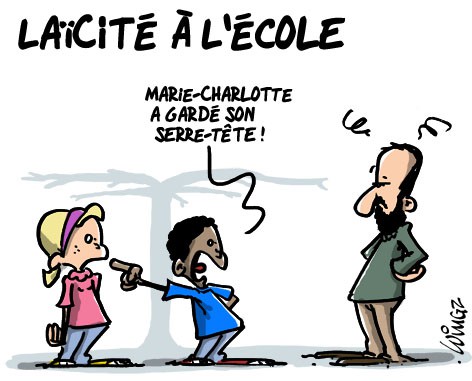
Il y a quelque chose de surprenant dans les dictatures ou les fins de régime, c’est qu’ils sont toujours transparents. Ainsi en va-t-il de la Charte de la Laïcité de Vincent Peillon. Alors qu’on attend pour la France les résultats catastrophiques de Pisa 2013 et le classement de ses universités, l’Education nationale s’entête.
Dans la déroute, il faut bien colmater les brèches et se préparer aux futurs procès. Vincent Peillon travaille pour la jurisprudence et le tribunal administratif. Afficher avec tant d’ostentation dans toutes les écoles publiques, la Charte de la laïcité, c’est s’adresser une fois de plus aux Musulmans de France. La « refondation » de l’école est un fiasco. Les bandes avec sabre frappent à la porte des grands établissements parisiens (le lycée Edgar Quinet, lundi matin). Peillon n’est pas sot. Les « étrangers » à l’école sont homophobes, sexistes et souvent antisémites ! Alors, Vincent Peillon s’égosille à rappeler à une génération illettrée les règles du laïcisme.
Cependant, « la question de la laïcité ne doit pas tourner à l’obsession de l’Islam » ose-t-il reconnaître le 26 août dernier. Le Monde écrivait à ce propos que « les difficultés se nouent surtout autour de certaines disciplines, certains points du programme: L’étude de textes religieux en 6ème ou en 5ème, l’enseignement de l’histoire de la Shoah en 3ème et en 1ère, le conflit israélo-palestinien au lycée, en biologie, les cours sur l’évolution, sur la sexualité. En sport, à la piscine, en arts plastiques, à la cantine, dans la cour de récréation, lors de voyages scolaires ».

Depuis PISA 2009, on sait que les résultats des jeunes Français ne sont pas fameux. En lecture, 20% des élèves sont en échec scolaire c'est-à-dire au niveau 1 (le niveau plus faible) dont 8% au niveau 1b et en dessous. C'est plus que la moyenne de l'OCDE qui se tient à 6% aux niveaux 1b et en dessous. La France fait partie avec Israël, la Belgique et l'Autriche, des pays où l'écart est le plus fort entre les élèves les plus doués et les plus faibles. La part des élèves faibles en lecture dépasse la moyenne OCDE. Un chiffre circule (non vérifié) qui indiquerait qu’un professeur sur 5 démissionnerait durant sa première année d'enseignement, un sur trois durant les 5 premières années. Malgré les vacances et le statut de fonctionnaire, on préfère parfois être serveur dans un café plutôt que de se faire cracher dessus ou insulter. Les disciples de l’ intellectuel Meirieu, Prix Lyssenko 2011 avancent maintenant l’idée d’une « pédagogie inversée », de la « classe inversée » c’est-à-dire cours, théorie à la maison et les exercices et les devoirs en classe, sans même se poser la question de l’espace du travail domestique de l’enfant et de l’adolescent ! Déjà, le nouveau lycée propose ces fameux accompagnements personnalisés ou des enseignements d’exploration non notés. Il ne s’agit plus de surnoter – cela ne cache plus la déroute ! – mais de supprimer carrément les notes !
De toutes ces réformes, plus personne dans le métier n’y croit. Marcel Gauchet a d’ailleurs récemment fait l’aveu de toute une génération : « Relu à l’aune de ce degré zéro de la connaissance, le virage des années 70 ressemble à un gros saut dans le vide. Nous pensions avoir un parachute et… nous nous rendons compte au milieu de la descente que nous n’en avons pas » (Le Monde, 22 mars 2013).
Dans une plaquette destinée aux futurs candidats aux concours enseignants 2014, on note l’obsession caricaturale de la professionnalisation et de l’enseignement par compétences, la nouvelle panacée du Ministère. On ressasse les mêmes idées pour en finir avec le cours magistral et centrer sur les activités, l’élève se trouvant au centre du dispositif scolaire. Certes, on acquiesce : si l’on veut des élèves compétents, il faut bien des professeurs compétents mais c’est pour la plaquette, des « techniciens de l’éducation » ! On évoque même des « référentiels de compétences professionnelles ». Ce dépliant est un petit bijou de communication mais surtout de retour du refoulé. Elle s’enivre de mots qu’elle répète à l’envie pour mieux y croire : « traçabilité », « interdisciplinarité », « métiers à visée pédagogique », « capacités et attitudes », « gestes », « les apprenants », « des professionnels ». On ne parle jamais de savoirs disciplinaires alors que pourtant, on s’adresse à de futurs professeurs ! Mais autant supprimer de suite l’agrégation.
D’ailleurs, n’ayez crainte, on y songe sérieusement avec les classes prépa ! Le maître n’a pas à en savoir plus que l’élève. Certes, on pourrait se demander pourquoi tant d’acharnement à détruire le savoir de la part de professeurs après tout bien formés ? La plaquette le révèle, il faut « lutter contre les savoirs morts, les connaissances inertes » sans remarquer que la pédagogie par compétences, par grilles, entraîne de facto la mécanisation de la transmission c’est-à-dire la fin de toute pensée vivante, l’abrutissement et l’ennui. En fait le comble, c’est qu’en lisant cette plaquette, on sent bien que leurs auteurs n’y croient même pas. Ils n’arrivent même pas à cacher dans leurs phrases une certaine inquiétude. On vous l’a dit : ce sont sans doute d’honnêtes professeurs ! Ils avouent par exemple au détour d’une phrase qu’un « niveau suffisant de maîtrise des savoirs », « une clarté de l’expression écrite et orale » sont tout de même nécessaires au métier d’enseignant ! En sorte, c’est comme si ces universitaires en venaient à se méfier eux-mêmes du niveau des diplômes supposés de leurs futurs collègues c’est-à-dire des diplômes qu’eux-mêmes délivrent ! Inquiétant !
On n’est plus ici au milieu de la descente mais carrément dans le grand plongeon.
00:05 Publié dans Actualité, Ecole/Education | Lien permanent | Commentaires (0) | Tags : laïcité, école, éducation, france, actualité | | del.icio.us | | Digg | Facebook
La teoria etnonazionalista
La teoria etnonazionalista
Da pochi giorni è stato pubblicato un nuovo libro sull’etnonazionalismo, che uno dei quattro autori mi ha pregato di segnalare. Lo faccio ben volentieri, anche perché tutti e quattro hanno pubblicato loro contributi anche sul sito del Centro Studi La Runa.
* * * Orizzonti del Nazionalismo Etnico Pensiero Etnonazionalista e Idea Völkisch

Effepi Edizioni, pagg. 144 Euro 16,00 Maggio 2007 IL LIBRO – Nel testo, vera guida dogmatica al Pensiero Etnonazionalista ed all’Idea Völkisch, si affermano quali debbano essere le “linee guida” che ogni “Soldato politico” etnonazionalista, per essere definito e considerato tale, debba seguire. Il Pensiero Etnonazionalista Völkisch assurge al ruolo di nuovo paradigma etno-identitario di cui la Volksgemeinschaft, la Comunità di Sangue, ne diviene il cardine. Il Popolo rappresenta la Comunità di Sangue: il concetto di Razza e d’ereditarietà, le nozioni derivate dalle ancestrali tradizioni degli Avi. Una comunità di popolo che vuole proteggere e favorire i valori radicati nell’individuo che accetterà ed accoglierà l’atavica eredità atropo-razziale, etno-culturale e storico-politica per riacquistarne ed attualizzarne i Valori fondanti l’identità etnonazionale. Questo paradigma consiste dunque in una riscoperta e riproposizione del concetto di Sangue e Suolo, Razza e Patria, Etnia e Stato. DAL TESTO – “ Il non facile compito che gli autori del libro si sono proposti è quello di “illustrare” e “spiegare”, nella maniera più completa ed organica possibile, la Weltanschauung che sta alla base del pensiero Etnonazionalista Völkisch. Illustrare, pertanto, quale sia, la particolarità metapolitica dell’Etnonazionalismo Völkisch, che gli conferisce una costante attualità, in quanto Idea-Forza in grado di fornire sempre serie e concrete soluzioni politico-culturali capaci di ovviare ai mali che da troppo tempo affliggono l’Europa tutta. Difendere ad ogni costo le Identità etnico-razziali e le ancestrali Tradizioni delle Piccole Patrie europee dalla Sovversione politico-culturale e spirituale che le minaccia. Riaffermare con forza la volontà di ritornare pienamente padroni sulle nostre terre. Rendere edotti e consapevoli i Giovani d’Europa di appartenere a comunità etnico-nazionali antichissime aventi nei Popoli Indoeuropei i nobili padri fondatori. Vigilare, custodire, ricordare le ataviche Tradizioni di quell’Europa Aria che diede vita alle nostre Nazioni di Sangue e Suolo. Salvaguardare l’immenso ed unico patrimonio razziale, etnico, culturale, storico, linguistico ed ambientale delle nostre millenarie Heimat.”
GLI AUTORI – Federico Prati, Silvano Lorenzoni, Flavio Grisolia e Harm Wulf .
INDICE DELL’OPERA – Premessa – Pensiero Etnonazionalista e Idea Völkisch – Immigrazione allogena, massoneria e mondialismo capitalista – Bibliografia essenziale.
Ordinabile presso: Effepi Edizioni effepiedizioni@hotmail.com tel 338 919 5220
00:05 Publié dans Livre, Livre, Terroirs et racines, Théorie politique | Lien permanent | Commentaires (0) | Tags : ethno-nationalisme, ethnies, livre, théorie politique, sciences politiques, politologie, ethnisme | | del.icio.us | | Digg | Facebook
René Guénon and Eric Voegelin on the Degeneration of Right Order
René Guénon and Eric Voegelin on the Degeneration of Right Order
Ex: http://www.brusselsjournal.com
I. Introduction. No area of Western history is quite as recondite as that of the Diadochic empires, the successor-kingdoms that sprang up in the wake of Alexander the Great’s meteoric campaigns (334 – 323 BC) to subdue the world under militaristic Hellenism. One knows that the unity of Alexander’s Imperium, ever tenuous and improvisatory, broke down immediately on his death, when his “companions” fell to bellicose squabbling over bleeding chunks of the whole. Of Ptolemy’s Macedonian Egypt, one knows something – largely because the realm’s newly built Greek metropolis, Alexandria, became culturally the most important polis in the Mediterranean world, even after Octavian conquered Cleopatra and organized her Macedonian rump-state into Rome’s emergent world-federation. To transit from historical fair-certainty to historical incertitude, however, requires only that one switch focus from the Ptolemaic kingdom in the Nile Delta to the Seleucid... Indeed, to the Seleucid what? For Seleucus’ prize in the wars of the successors stretched in geographic space from Syria and Cilicia, and associated insular territories, eastward through portions of Mesopotamia and Asia Minor into the hinterlands of Parthia and Bactria. The Seleucid kingdom’s borders, as distinct from those of the more stable Ptolemaic kingdom in Egypt, remained, like the Heraclitean river, in constant flux; moreover, the Seleucid kingdom steadily withdrew in the direction of the sunrise, sacrificing its westerly regions for the defensibility of its easterly keeps, until in its last act, as the remnant Greco-Bactrian principality, it attempted to perpetuate itself against political mortality by an exodus-through-conquest from Central Asia across the Hindu Kush into Northern India.
One progresses, it seems, from obscurity to super-obscurity, as one might progress from Antioch, a polity known more or less in the annals of Western history (it served Seleucus for a capital city), to Pushkalavati, a polity all but unknown in those annals. These murky events in half-legendary places nevertheless issued in archeologically and literarily documentable consequences. When the Maurya emperor Ashoka (304 – 232 BC) converted to Buddhism around 250 BC and established it as his state religion, for example, he had to promulgate his policy in the northwest provinces of his expansive kingdom in Greek as well as in the indigenous languages. As late the First Century BC, Greek communities – if not actual poleis – still existed in what would today be Pakistan and Afghanistan, the original name of whose second largest city, Alexandria, corrupted itself over the centuries into the barbarism Kandahar. A post-Bactrian dux bellorum, Strato II, controlled a territory in the Indus Valley as late as 10 BC. Under the Seleucids and their heirs, the canons of Greek art influenced local sculpture and painting. The Bamiyan Buddhas, completed around 500 and dynamited by the Taliban in 2001, still reflected stylistic elements of Hellenistic statuary. Finally, it was through the Seleucid kingdom and its sequelae that India and the Mediterranean came into significant communication with one another so that Brahmanism and Buddhism might be known and studied by the Greek-speaking scholars of the Serapeum and something of the dialectical method might be adopted by Hindu philosophy.

This précis of Hellenistic penetration into the Near East and Central Asia in the great age of competing empires that consummated itself in the ascendancy of Rome in the West is by way of introduction to a modest comparative study of René Guénon’s Spiritual Authority & Temporal Power (1929) and Eric Voegelin’s Ecumenic Age (1974), the fourth volume of his five-volume Order and History (incipit 1956, with Israel and Revelation). The “Bactrian” chapter of the Alexandrian Drang nach Osten provides an important object of study in both books. Voegelin (1901 – 1985) could not, of course, have been known to Guénon (1886 – 1951) and it seems relatively unlikely that this particular book by Guénon would have been known to Voegelin, who, however, might have been familiar with The Crisis of the Modern Age (1927) and The Reign of Quantity & the Signs of the Times (1945); Spiritual Authority is something of a sequel to The Crisis, whose topics The Reign of Quantity revisits. Of interest is that Guénon and Voegelin, while quite different in the style of their thinking, nevertheless identify in the phenomenon of the Bactrian episode (including its Indian prequel) the same historical and spiritual significances and see in closely similar ways the relevance of that episode to an understanding of the modern phase of Western history. It goes almost without saying that for both Guénon and Voegelin, modernity is a disorderly and corrupt period in which the dominant elites have betrayed the hard-earned wisdom of philosophy and revelation and believe themselves anointed to remake a wicked world into a rational paradise liberated from superstition and bigotry, a project necessarily entailing the destruction of tradition. Modernity is “Gnostic,” in Voegelin’s term. Gnosticism designates a markedly low order of mental activity, in spiteful rebellion against the difficulties entailed by a contrasting openness to and participation in reality. Following chronology, it is natural to begin with Guénon.
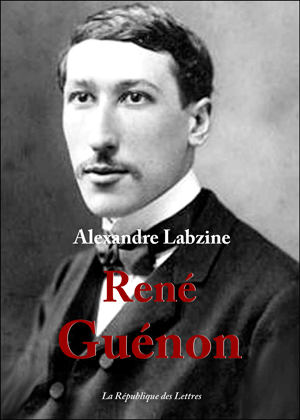 II. Guénon. A student of comparative religion, Guénon took lively interest in Hinduism, Brahmanism, and Buddhism. The Hindu scriptures especially provided him with a rich symbolism, which he found that he could instructively put in parallel with, among other vocabularies, that of the Platonic lexicon. Spiritual Authority & Temporal power draws on Guénon’s knowledge of the Vedas and related documents – a propensity that can at first stymie a reader uninitiated in the specialist vocabulary. (I put myself in the category.) However, Spiritual Authority repays readerly perseverance; the references to Plato give context to the exploration of caste not as an item of sociological but rather as one of metaphysical importance. A central political-philosophical question, who should govern, as Guénon points out, is shared by Hindu religious speculation and Platonic discourse. Guénon declares the topic of his essay to be “principles that, because they stand outside of time, can be said to possess as it were a permanent actuality.” Respecting the debate about the fundamental legitimacy of temporal offices, Guénon asserts, “the most striking thing is that nobody, on either side, seems concerned to place these questions on their ground or to distinguish in a precise way between the essential and the accidental, between necessary principles and contingent circumstances.” The petulant habit of deliberately ignoring first things by itself merely provides “a fresh example [so writes Guénon] of the confusion reigning today in all domains that we consider to be eminently characteristic of the modern world for reasons already explained in our previous works.” Guénon’s phrase for the Twentieth-Century contemporaneity of his book is “the modern deviation.”
Where Voegelin stands out as above all an exegete of symbols, Guénon strikes one as rather more a modern mythopoeic thinker who takes symbols as his main stuff of purveyance, but this is not to say that he lacks analytical ability. Rather, Guénon grasps that symbols and myths – while they might be, as Voegelin would later call them, compact – articulate reality more fully and more truly than the clichés of modern reductive thinking and that therefore one best wrests intoxicated minds from the drug of those clichés by jerking them around (rhetorically, of course) so as to get them to face and contemplate the symbols in their numinous fullness. It belongs to Guénon’s suasory strategy that the strangeness of Hindu or even European Medieval symbols can fascinate the modern subject even when, as usual, that subject diametrically misunderstands them. Get their attention, Guénon seems to say – interrupt the trance; explanations can come later. Guénon’s unblushing references to a primordial tradition, “as old as the world,” can cause him, in the case of a superficial reader, to resemble a Theosophist or a spiritualist. It is worth remembering that the hard-headed Guénon wrote studies exposing Theosophy as a “pseudo-religion” and spiritualism as mountebank hocus-pocus. But if modernity were a “deviation,” then from what would it have deviated? Although Guénon’s first chapter in Spiritual Authority bears the title “Authority and Hierarchy,” the actual topics are caste and hierarchy, two of the range of first principles that modernity has insouciantly rejected.
Caste and authority relate to one another in complex ways. Modernity bristles at one or the other of the two terms with equal righteousness, but whereas traditionalists and reactionaries acknowledge the necessity of authority, they too might nevertheless feel aversion to caste, as it has manifested itself in India since the Muslim conquest. Guénon reminds his sympathetic but possibly skeptical readers that the existing caste-system of the British Raj of his time is itself a latter-day deviation and quite as acute a one as any aspect of the Western deviation into modernity. Guénon finds the true definition of caste in the Sanskrit etymologies. Accordingly, “The principle of the institution of castes, so completely misunderstood by Westerners, is nothing else but the differing natures of human individuals; it establishes among them a hierarchy the incomprehension of which only brings disorder and confusion, and it is precisely this incomprehension that is implied in the ‘egalitarian’ theory so dear to the modern world.” Additionally, “The words used to designate caste in India signify nothing but ‘individual nature,’ implying all the characteristics attaching to the ‘specific’ human nature that [differentiates] individuals from each other.” Finally, “One could say that the distinction between castes… constitutes a veritable natural classification to which the distribution of social functions necessarily corresponds.” Guénon also asserts that caste, even in the moment when it appears, suggests a fallen condition, “a rupture of the primordial unity” by which “the spiritual power and the temporal power appear separate from one another.” The assertion will disturb no one familiar with the Platonic relation between the realm of the ideas and the realm of social action; or with the Augustinian distinction between the City of God and the City of Man.
In classical Indian society, the roles of authority on the one hand and of power on the other fell respectively to the Brahmins, or the priestly caste, and the Kshatriyas, or the warrior caste. What is at first a harmonious functional distinction becomes, however, in the course of time, “opposition and rivalry,” or so Guénon states. The functionaries of the two castes yield to their baser instincts; they commence a struggle for absolute domination in the society. The struggle finds its outcome “in total confusion, negation, and the overthrow of all hierarchy.” Long before the climax, the real functions of the two castes have lapsed in desuetude. “As for the priesthood, its essential function is the conservation and transmission of the traditional doctrine, in which every regular social organization finds its fundamental principles.” In rivalry with the warrior caste, the priesthood abandons “its proper attribute,” which is “wisdom.” As for the warrior caste, its essential function is active policing of right order within the society, including the maintenance of the priesthood, and defense of the society against external predation. In rivalry with the priesthood, the warrior caste repudiates its guidance under wisdom, whereupon its virtues (heroism, nobility, rectitude) become unintelligible. The rebellious warrior caste claims that no power exists superior to its own, a boast brutally plausible once the community has lost sight of transcendence and “where knowledge is denied any value.”
In addressing the phenomenon of “insubordination,” which as he says modernity instantiates in extremis, Guénon in fact has a particular historical episode in mind, which he treats in the chapters of Spiritual Authority called “The Revolt of the Kshatriyas” and “Usurpations of Royalty and their Consequences.” Guénon cites no dates and names no names, but the episode in question belongs to the career of the Bactrian Greeks in India. A few facts will help to vivify Guénon’s purely abstract account. I take the facts from The Greeks in Bactria and India (1951) by William Woodthorpe Tarn. The chronology runs from the late Third Century to the middle Second Century BC. The main players on the Greco-Bactrian side of the drama are Demetrius I (reigned 200 – 190 or 180 BC); two of his sons, Demetrius II (reigned 175 – 170 BC) and Apollodotus (reigned 174 – 165 BC); and a general, Menander, who soon acquired kingship (reigned 155 – 130 BC). The two sons of the first Demetrius just mentioned, and their sons and grandsons, and Menander, ruled over Indian territories exclusively, the Bactrian Kingdom itself having succumbed by degrees to nomadic invaders (the Yueh-chi) during this period, ceasing to exist after 130 BC. The main players on the Indian side of the drama are the Maurya emperors, who were Buddhists, and their usurper-successors the Sunga emperors, beginning with Pushyamitra (reigned 185 – 149), who were Brahmins. Demetrius II, Apollodotus, and Menander were likely by profession also Buddhists.
When Demetrius I with his sons and Menander as generals invaded India, he was both responding opportunistically to events in Indian politics and acting on the ambition-provoking model of concupiscential militarism, as established by Alexander and the successors. As for Pushyamitra – when he deposed the last Maurya emperor by assassination, he merely continued a long-simmering civil conflict between Brahmins and Buddhists that had been begun by Chandragupta, the first Maurya emperor, who climbed to power by promoting the Buddhist Kshatriyas against the Brahmin overlord class. Tarn notes that in this period “the Brahman was the natural enemy of the Greek,” whom the priestly class categorized under the caste system as Kshatriyas. The corollary of priestly ire against the Greeks was Buddhist (that is, Kshatriya) interest in Greek military support against the Sunga dynasts. Tarn writes, “Both Apollodotus and Menander on their coins… called themselves Soter, ‘the Saviour.’” The discussion will return to the numerous implications of these details in the section on Voegelin, to follow. At this point, we will switch focus back to Guénon and Spiritual Authority.
In the chapter on “The Revolt of the Kshatriyas,” Guénon writes, “Among almost all peoples and throughout diverse epochs – and with mounting frequency as we approach our times – the wielders of temporal power have tried… to free themselves of all superior authority, claiming to hold their power alone, and so to separate completely the spiritual from the temporal.” When the office of the purely temporal order “becomes predominant over that representing the spiritual authority,” Guénon argues, the result will be social chaos masquerading as order under blatantly “anti-metaphysical doctrines.” A doctrine qualifies as “anti-metaphysical” for Guénon when it “denies the immutable by placing… being entirely in the world of ‘becoming.’” To deny first or transcendent principles is equivalent to submitting unconditionally to what Guénon dubs “succession.” The sequence of names in the Bactro-Indian “Who’s Who” – Chandragupta, Pushyamitra, Demetrius, Apollodotus, Menander, and Eucratides – suggests the resounding vanity of mere “succession.” Guénon reminds his readers that: “Modern ‘evolutionist’ theories… are not the only examples of this error that consists in placing all reality in ‘becoming’”; rather, “theories of this kind have existed since antiquity, notably among the Greeks, and also in certain schools of Buddhism.” Let it be noted that Guénon criticizes only the political Buddhism of the Indian Time of Troubles, not the original Buddhism of the Gautama, which “never denied… the permanent and immutable principle of… being.” Guénon implicitly also criticizes the politicized Brahmanism of the same Time of Troubles, which, entangling itself in grossly temporal affairs, forfeited its legitimacy under the law of spiritual immutability.
“Immutable being” is the same as reality; it is a verbal symbol of reality taken as the inalterable nature of the totality of things. To rebel against immutable being is therefore to rebel against reality, with inevitable consequences, the same in every case. As Guénon writes, the Revolt of the Kshatriyas “overshot its mark.” The immediate victors “were not able to stop it at the precise point where they could have reaped advantage from what they had set in motion.” The denial of “Atman,” the Brahmanic First Principle, led to the denial of caste, which led to the usurpation of offices by individuals unsuited to exercise them. It fell out that the Kshatriyas, in dispossessing the Brahmins, made themselves vulnerable to rebellious dispossession by the classes formerly arranged beneath them in the social hierarchy. “The denial of caste opened the door to [one and] every usurpation, and men of the lowest caste, the Shudras, were not long in taking advantage of it.” In fact, “the denial of caste” created a power-crisis in the Indus Valley and adjacent areas that eventually drew in, first, the Persians, then Alexander himself, and then in their turn the Bactrians, who were Alexander’s epigones of the nth degree, and finally a wave of nomadic destroyer-invaders. A familiar theme in Indian politics, foreign occupation, has a history that begins long before the British Empire. Northern India had Greco-Bactrian rulers from the time of Demetrius II, Apollodotus, and Menander until the time of Julius Caesar in the West.
Guénon insists that the Revolt of the Kshatriyas with its aftermath provides only an instance of a general pattern, pedagogically useful in its starkness whose essential features appear, however, in other instances. In the chapter in Spiritual Authority on “Usurpations of Royalty and their Consequences,” Guénon writes of “an incontestable analogy… between the social organization of India and that of the Western Middle Ages,” adding that “the castes of the one and the classes of the other” reveal how “all institutions presenting a truly traditional character rest on the same natural foundations.” Similarly, the Western Middle Ages know parallel experiences to the Revolt of the Kshatriyas. “Long before the ‘humanists’ of the Renaissance, the ‘jurists’ of Philip the Fair were already the real precursors of modern secularism; and it is to this period, that is, the beginning of the Fourteenth Century, that we must in reality trace the rupture of the Western world from its own tradition.” Even before Louis IV, Philip pursued the policy of consolidating all power in France in the kingship. Guénon writes that, “Temporal ‘centralization’ is generally the sign of an opposition to spiritual authority, the influence of which governments try to neutralize in order to substitute their own.”
The analyst may follow the line from Philip in France through the Protestants in Northern Europe, with their national churches, to the secular revolutionary movements that ensue from the Jacobin usurpation of national power in France in the events of 1789 and beyond that to the political-ideological chaos of the Twentieth Century.
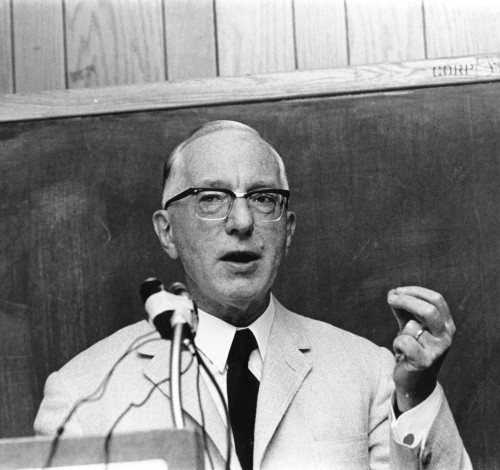
III. Voegelin. The fourth volume of Order and History bears the title The Ecumenic Age. The term ecumene functions centrally in Voegelin’s theory that the order of history emerges through the history of order, that is, as successive differentiations of consciousness and the concomitant increases in noetic clarity. But what is the ecumene and what is meant by The Ecumenic Age? Etymologically, the word ecumene refers to any organized district (the English word economy shares the same Greek root); by the time of the historian Polybius (200 – 118 BC), however, ecumene, which Polybius uses, had come to mean any – or rather the – geographical area over which rival empires or empire-builders might compete. Since by Polybius’ day this geographical area included everything that Alexander had conquered or tried to conquer in the East and everything that Rome had conquered in the West through the Third Punic War, the word effectively meant the known world, from Spain and Gaul to Bactria and India. In one of Voegelin’s several definitions in The Ecumenic Age, the ecumene arises when “empire as an enterprise of institutionalized power” becomes (in the phrase) “separated from the organization of a concrete society,” as happened for the first time in the case of Achamaenid expansion beyond the boundaries of the traditional Persian state in the Sixth Century BC. Persian conquests in the Greek field soon enough produced a reaction in the form of Alexander, who subdued Persia on his way to India; on Alexander’s death, as we have noted, his generals tried to wrest his conquests for themselves – the result being the Diadochic kingdoms. Voegelin writes that, “The new empires [beginning with Persia] apparently are not organized societies at all, but organizational shells that will expand indefinitely to engulf former concrete societies.” The ecumene may additionally be defined as, “the fatality of a power vacuum that attracted, and even sucked into itself, unused organizational force from outside”; and which therefore “originated in circumstances beyond control rather than in deliberate planning.”
Again in The Ecumenic Age, Voegelin writes how, in distinction to the polis, which organizes itself on the lines of a subject, the ecumene “is an object of organization rather than a subject.” This geographical-political phenomenon of the ecumene appears moreover not as “an entity given once and for all as an object for exploration,” the way the earth was given to Eratosthenes or Strabo; “it rather was something,” Voegelin writes, “that increased or diminished correlative with the expansion or contraction of imperial power” radiating from an “imperial center.” Working up to a striking phrase, “The ecumene… was not a subject of order but an object of conquest and organization; it was a graveyard of societies, including those of the conquerors, rather than a society in its own right” (emphasis added). As for the Ecumenic Age – it is the datable period, beginning with Persian expansion and ending with the disintegration of the Roman Empire in the West during which, amidst the destruction of the traditional, concrete societies, the actors of the drama forgot how to heed received wisdom while the victims of their agency had to rethink basic questions about the meaning of existence. In this way, ironically, “the Ecumenic was the age in which the great religions had their origin, and above all Christianity,” but including Buddhism, which had a Greek phase.
It will perhaps have begun to be apparent why Voegelin should take an interest in the Bactrian episode. The Bactrian episode runs its course at the farthest end of the Western ecumene, as defined by the imperial expansions of Darius and Alexander; and in the campaign of Demetrius and his sons it replicates in miniature the concupiscential exodus that Darius and Alexander enacted in setting forth to subdue the world. In the Bactrian episode, the Western ecumene comes into contact with the Indian and the Chinese ecumenes. This contact affected India more than the West, and China hardly at all, but the episode remains instructive. “In the wake of Alexander’s campaign in the Punjab,” Voegelin writes, “the scene of imperial foundations expands to India.” In exploring the significance of the Bactrian episode, Voegelin promises to “refrain from drawing the all-too-obvious parallels with the phenomenon of imperial retreat and expansion we can observe in our own time,” a statement that naturally directs readerly attention to those very parallels. Concerning Chandragupta, whom we have already encountered in our discussion of Guénon’s Spiritual Authority, Voegelin records that, “Among other Indian princes he had come to the camp of Alexander at Patala, 325 B.C.” When the last Macedonian governor departed the Punjab in 317, the ambitious prince “established himself in the new power vacuum with the help of the northwestern tribes and then descended on the kingdom of Maghada,” whose ruling dynasts he ruthlessly exterminated – man, woman, and child. Chandragupta with deft diplomacy avoided conflict when Alexander’s successor Seleucus revisited “Asia.” Concluding a treaty to fix the frontier, Chandragupta received from Seleucus one of the Macedonian’s daughters for a princess-bride; Seleucus received from Chandragupta a squadron of war-elephants.
What seemed a brilliant stroke of self-interested negotiation on the Indian’s part illustrates, in fact, Voegelin’s contention: The ecumene, despite its weird ontology, has the real power to draw in those who inhabit its periphery. The attraction exerted itself reciprocally: Indians were drawn into the Seleucid and Bactrian spheres and Seleucids and Bactrians were drawn into the Indian sphere; every conqueror-usurper generated his own conqueror-usurper, and the degeneration reached its nadir in barbarian incursions and desertification of whole provinces. In Voegelin’s description, “When a general of the last Maurya ruler, Pushyamitra Sunga, assassinated his master… an imperial power vacuum was created, comparable to the earlier one, after the death of Alexander”; and “as the earlier vacuum had attracted the Maurya Chandragupta, so the present one invited Demetrius, the king of Bactria, to conquering action.” Demetrius found success in his venture partly because of the Brahmin-Buddhist split; he could appeal to the Kshatriya caste as their Soter – their “liberator” or “savior” – against the Brahmin caste. Saving and liberating belong, in Voegelin’s analysis, to a “new symbolism of the Ecumenic Age,” with the codicil that its newness equates to its degeneracy. “An age of ecumenic imperialism throws up of necessity… the curious phenomenon which is today called ‘liberation,’ i.e., the replacement of an obnoxious imperial ruler by another one who is a shade less obnoxious.”
Voegelin’s account points up the existential ironies of the Bactrian episode – naturally, because he is dealing in historical specifics – more than Guénon’s account. Demetrius having conquered India, the Seleucids saw in his absence from Bactria the ripe opportunity to reincorporate that former province. Antiochus IV sent Eucratides to complete the task; when Demetrius returned from his Indian triumph to confront the invader, he succumbed in the engagement. Voegelin speculates that Eucratides, who came with only a small army, found crucial support among the Macedonian faction in Bactria that resented Demetrius’ policy of fusion with the native Bactrians. Voegelin characterizes Eucratides as “another Savior, this time of Macedonians and Greeks from a ruler who favored the native barbarians.” While Bactria reverted temporarily to the by-now-much-truncated Seleucid kingdom, northern India found itself under Greek domination in the kingdom of Menander, who, consolidating the work of Demetrius and his sons, declared independence. In a final blow of absurdity, the Parthians invaded the re-Seleucized Bactria and Eucratides fell battling them in 159 BC.
The sequence of events that constitutes the Bactrian episode resembles the plot of one of those operas of the Late Baroque or Early Classical periods, like the Zoroastre (1749) of Jean-Philippe Rameau or the Mitridate (1770) of Wolfgang Mozart: It has five acts, plays for three hours, and boasts so many characters that the audience can hardly keep track of them while struggling to extract the meaning. The spectators leave the performance feeling dazed and disoriented. We recall that the Bactrian episode is merely a recapitulation, and to some extent an anticipation, in miniature, of the entirety of the Ecumenic Age. Voegelin writes: “During the Ecumenic Age itself… the violent diminution, destruction, and disappearance of older societies, as well as the embarrassing search, by the conquering powers, for the identity of their foundations, was the bewildering experience that engendered the ‘ecumene’ as the hitherto unsuspected subject of the historical process.” Overlooking Voegelin’s use of the term “subject” in this sentence (one of his few lapses in ambiguity) while remembering that the ecumene is an object rather than a subject it is worth examining the paradoxes that stem from the question, already posed, how to define the Polybian lexeme. “For,” as Voegelin writes, “the ecumene was not a society in concretely organized existence, but the telos of a conquest to be perpetrated.” In addition, “one could not conquer the non-existent ecumene without destroying the existent societies, and one could not destroy them without becoming aware that the new imperial society, established by destructive conquest, was just as destructible as the societies now conquered.”
The instigators of concupiscential conquest think no such thoughts; in abandoning wisdom for the purely pragmatic adventure of the conquistador they bring about the divorce in their home societies between wisdom and action – the very same divorce whose exemplar Guénon discovers in the Revolt of Kshatriyas. Voegelin’s way of describing this spiteful repudiation of wisdom and even of knowledge is the formula, “humanity contracted to its libidinous self.” Such humanity condemns itself to endure the reduction of being to becoming – to the endless and meaningless temporal succession that it instigates. And what is most wicked is that it drags the rest of humanity along with it. Voegelin sketches a phenomenology of the conqueror: “These imperial entrepreneurs of the Ecumenic Age understood the meaning of life as success… in the expansion of their power” and in no other way; worse – and tellingly – they experienced any checks against their ambitions as instances of outrageous “victimization.” They and their rhetorical sycophants also invented “the games by which the power-self makes itself the fictitious master of history,” for example, as a “Savior.” Who does think the thoughts that lead to the identification of the ecumene as existentially meaningless and intolerable?
The answer to the question of who thinks those thoughts is, obviously, the ecumene’s non-sympathetic survivors, who, however, avoid thinking of themselves in selfishly victimary terms. They are those who remember wisdom or at least remember that such a thing as wisdom exists and may be sought for even in the spiritual desert of wrecked civilizations. The meaning of history, and therefore the meaning of human existence, emerges only by exodus from the ecumene; this will be a spiritual exodus aimed at reclaiming wisdom and restoring transcendence, either to the society, should it be extant, or for the sake of a new society not yet founded, which might arise from the wreckage and accord itself with reality. Indeed, in Voegelin’s words, “the relation between the concupiscential and the spiritual exodus is the great issue of the Ecumenic Age.”
IV. Guénon, Voegelin, and the Modern Crisis. Responding to the Siren Song of the ecumene to conquer and possess it qualifies as Voegelin’s privative exodus in at least two senses. Pragmatically, the conqueror in going forth leaves home; he generally leaves it, moreover, with the cream of the young men and a significant portion of the collective wealth in the forms of his provisions and armaments. Very likely he leaves behind him a vacuum of confusion, and a fat opportunity for mischief. Philosophically or metaphysically, the conqueror in going forth demonstratively exempts himself from the wisdom that, like his homeland, he leaves behind; under the pomp and color of his banners he declares himself indeed the prime mover of reality, a gesture of hubris in the highest degree. For in declaring himself such, he declares nothing less than the abolition of reality, as though it were his prerogative to guarantee what is possible and what is not and so to make patent his success before it occurs. Homer knew this at the beginning of the polis civilization. Agamemnon goes forth to conquer but brings about only the reduction to rubble of the heroic world, including his own murdered corpse; Odysseus, involuntarily alienated from home, struggles back to purge his household of uninvited mischief-makers. One sign of the rebellion against reality by the conquistadors of the Ecumenic Age, which entails the abolition of actually existing “concrete societies,” is their insistence on auto-apotheosis, as when Seleucus or Demetrius or Menander identifies himself on his coinage with Helios Aniketos, “The Unvanquished Sun,” or the equivalent. To paraphrase Voegelin: The ecumene is not only a graveyard of societies, but it is also a graveyard of the Helioi Aniketoi; and thus, amid the debris left by their late passage, of their innumerable victims.
In its dumb absurdity, the myriad of tombs affirms reality against concupiscential insouciance by pointing back to the violated wisdom as its cause. Guénon in Spiritual Authority puts it this way: “All that is, in whatever mode it may be, necessarily participates in universal principles, and nothing exists except by participating in these principles, which are eternal and immutable essences contained in the permanent actuality of the divine Intellect; consequently, one can say that all things, however contingent they may be in themselves, express or represent these principles in their own manner and according to their own order of existence, for other wise they would only be a pure nothingness.” Voegelin would recognize in Guénon’s balanced phrases one of the essential differentiations of consciousness with which his Order and History is concerned. The concupiscential campaigner can begin in only one way, by blanking out the knowledge of his own contingency; and if anyone should remind him of his contingency, he must blank out that person. He would not be stymied, or as he sees it, victimized.
Voegelin argues generally that differentiations of consciousness are irreversible, that they remain available after they occur; but he admits into his theory the concession that “diremptions” and “derailments” can also prevail during which the old symbols of wisdom no longer effectively signify and new symbols have not yet achieved full articulation. When Christianity emerges against the background of meaningless imperial succession, for example, it includes in its peculiar differentiations all the previous differentiations achieved in revelation and philosophy, from Moses to Plato. Nevertheless between the decline of philosophy and the consolidation of Christianity, there falls a long, anxiety-ridden stretch of ad hoc syncretism, thaumaturgy, Gnosticism, orgiastic enthusiasm, and general disorientation. The mental disorder of such things is the spiritual counterpart of the destruction of concrete societies under the ecumenic empires. People can for a time repudiate or lose touch with the luminous articulations that, formerly, reconciled them to reality; they either die off or recover something of clairvoyance. It happens that in The Ecumenic Age, Voegelin repeatedly references one of the earliest of the Western, reality-reconciling articulations, the one in respect of which the “Saviors” of the Ecumenic wars behaved with conspicuous heedlessness. Anaximander (610 – 546 BC, a contemporary of the Buddha) wrote: “The origin (arche) of things is the Apeiron… It is necessary for things to perish into that from which they were born; for they pay one another penalty for their injustice (adikia) according to the ordinance of Time.” Whether it is the Kshatriyas repudiating the Brahmins or Alexander repudiating Aristotle – payment of the Anximandrian “penalty” falls due and the interest on the debt begins to build up.
Both Guénon in Spiritual Authority and Voegelin in The Ecumenic Age take care to avoid topicality. Guénon writes of his intention “to remain exclusively in the domain of principles, which allows us to remain aloof from all those discussions, polemics, and quarrels of school or party in which we have no wish to be involved, directly or indirectly, in any way or to any degree.” In Voegelin’s terminology, Guénon’s authorship, at least where it concerns Spiritual Authority, corresponds to the positive exodus by which the man in search of wisdom withdraws in contemplation from the endless pragmatic exodus of the ecumene. Guénon adds, however, that “we leave everyone free to draw from these conclusions whatever application may be deemed suitable for particular cases.” Voegelin is less strict than Guénon in this respect, but in The Ecumenic Age he does mainly isolate his topical asides in his introductory and concluding chapters. These asides are nevertheless provocative, wherever they occur in the text. One will be sufficient to indicate the meaning of the Bactrian episode, which occupies the structural center of The Ecumenic Age, with respect to the modern crisis. We have previously cited Voegelin’s remark on “the games by which the power-self makes itself the fictitious master of history.” In a brief continuation of the same remark, Voegelin adds that those games “are still played today.”
It will undoubtedly have impressed those who have followed the argument so far that, simply at the level of descriptive phraseology, many of Guénon’s constructions and Voegelin’s suggest their own application to the contemporary state of affairs in the incipient Twenty-First Century. Guénon in Spiritual Authority mentions the origins of étatisme, with its relentless centralization of political power, in Fourteenth Century France. Voegelin in The Ecumenic Age refers to the ecumenic empires as “organizational shells that will expand indefinitely to engulf former concrete societies.” The centripetal and centrifugal movements might seem opposite to one another and therefore non-compossible, but they are in fact simultaneous and complementary. They describe in structural terms the libidinous process by which the bearers of “moral apocalypse” – that is, the Gnostic reformers of society – progressively obliterate the concrete societies that come under their imperial-entrepreneurial sway. Whether it is the arrogantly self-aggrandizing Federal Government in the United States of America or the inhumanly bureaucratic Brussels Parliament of the European Union in Western Europe, the attitude of the reigning elites towards the world is none other than the attitude of the auto-apotheotic conquistador toward the ecumene.
The goal of the new concupiscential exodus does not end with conquest, however; it has the jurisdictional goal beyond conquest of what it calls transformation or “change” but what can only be experienced by those who do not elect it as annihilation in the mode of total undifferentiation.
The point of view of the resistors is the true one: The mantra of “change,” so dear to the Left, is Newspeak (“disorder,” writes Guénon, “is nothing but change reduced to itself”); and the celebratory invocation by the Left of “difference” or “diversity” is likewise Newspeak. It requires only a smidgen of acuity to notice that the endless parade of “diverse people” who witness on behalf of “change” all say the same thing and tell the same stereotyped story; the “diversity” of the propagandists never exceeds the categories of skin-color, number of skin-piercings, peculiarity of dress, or deflected erotic interest because mentally they are all already completely assimilated to the narrow gnosis on the basis of which the regime claims its legitimacy. The succession of speakers in the lecture-calendar replicates in small the meaningless temporal succession of titled eminences in the ecumene. One might also notice that the ceaseless doctrinal self-justification of the modern rebellious elites resembles the soteriological propaganda of the ancient ecumenic campaigners; for in annihilating tradition the regime through its spokesmen claims to be engaging in a vast program of salvation or redemption. For ten years they have been redeeming the place formerly called Bactria.
The difference between the “Saviors” of the Ecumenic Age and those of today consists in this: Whereas the men of the Alexandrian succession did not intend to wreck the societies that they left behind and whereas that wreckage came about as an unintended side effect of campaigning elsewhere (“backwash,” in modern jargon); the modern “Saviors” by distinction explicitly intend to wreck the societies from which they have treacherously defected. That is their main motivation. They say so unashamedly, over and over. They have captured education from the kindergartens to the doctoral programs and they train new cohorts every year to carry out the project of calling forth a new ecumene and perpetrating Ausratiertung on everything in it. To convince themselves and others that their toxic whimsies stand free of any ethical or practical limitation, they have developed a baroque anti-epistemology that they call, appropriately, Deconstruction which would obliterate logic itself and even knowledge. This makes their obsession with “change” all the more pernicious. In Spiritual Authority, Guénon reminds his readers that, “Change would be impossible without a principle from which it proceeds and which, by the very fact that it is the principle of change, cannot itself be subject to change.” In a parallel comment, Guénon adds that, “Action, which belongs to the world of change, cannot have its principle in itself.” Yet the modern “Saviors,” through their “Action Committees,” invariably claim to be champions of principle. We all live in Bactria now and may not fire back.
The Gnostic rebellion against reality denies limitations, but it is, of course, subject to them because it is subject to reality; the rebellion is moreover radically maladapted to reality (denying logic and repudiating knowledge are bad bets in the Darwinian game) and it will eventually have to pay its penalty to Anaximander’s “Unlimited.” Or, we might say, to God. When the rebellion will reach its limit, however, only God knows. The instruments of torture with which O’Brien threatens Smith in 1984 are old and rusty; the regime has been in place for a long time, dragging the whole of Anglo-Saxon humanity with it into the Big-Brother nightmare. In The Ecumenic Age, Voegelin has these wise words: “A ‘modern age’ in which the thinkers who ought to be philosophers prefer the role of imperial entrepreneurs will have to go through many convulsions before it has got rid of itself, together with the arrogance of its revolt, and found the way back to the dialogue of mankind with its humility.”
00:05 Publié dans Philosophie, Traditions | Lien permanent | Commentaires (0) | Tags : erich voegelin, rené guénon, tradition, traditionalisme, politologie, sciences politiques, théorie politique, philosophie | | del.icio.us | | Digg | Facebook