

samedi, 07 décembre 2013
L’ARRIÈRE-PAYS ROUMAIN DE JEAN PARVULESCO
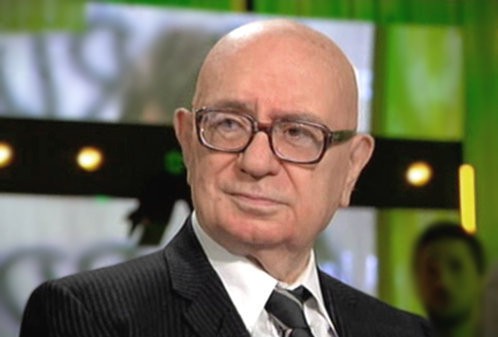
L’ARRIÈRE-PAYS ROUMAIN DE JEAN PARVULESCO
par Claudio Mutti
Ex: http://www.eurasia-rivista.org
Le texte suivant reproduit l’intervention du directeur d’”Eurasia” au colloque sur Jean Parvulesco qui a eu lieu à Paris le 23 novembre 2012.
Ma première rencontre avec le nom de Jean Parvulesco date du 1974, quand j’étais l’objet d’attention des mêmes juges italiens qui, dans le cadre d’une enquête politique, s’intéressaient aussi à ce mystérieux roumain lequel appelait à être prêt pour le Endkampf (un mot très suspect aux yeux des chasseurs de sorcières, qui, dans leur orthographe, devenait endekampf) (1).
Selon les enquêteurs, le Roumain aurait voulu réaliser, avec deux des accusés, un accord fondé sur deux points: “a) adhésion à la politique de lutte internationale contre le bipolarisme russo-américain dans la perspective de la ‘Grande Europe’, de l’Atlantique aux Ourals; b) contacts avec les forces du gaullisme et du neutralisme eurasien qui se proposaient cette ligne internationaliste” (2).
Trois ans après, en 1977, je lus dans le bulletin “Correspondance Européenne”, dirigé par Yves Bataille, un longue article intitulé L’URSS et la ligne géopolitique, qui semblait confirmer les bruits diffusés par quelques “dissidents” soviétiques au sujet de l’existence d’une mouvance pro-eurasienne agissant plus ou moins clandestinement de l’intérieur de l’Armée Rouge.
J’ai publié la traduction de cet article dans le premier numéro (janvier-avril 1978) d’une petite revue italienne qui s’appelait “Domani”.
L’auteur en était Jean Parvulesco, qui résumait dans la façon suivante les thèses fondamentales de certains milieux russes présentés comme “les groupes géopolitiques de l’Armée Rouge”, thèses exprimées dans une série de documents semi-clandestins arrivés en sa possession.
1. Le “Grand Continent” eurasiatique est un et indivisible, “de l’Atlantique au Pacifique”.
2. La politique européenne de la Russie soviétique ne saurait donc être qu’une politique d’unité continentale, solidaire avec une Europe intégrée autour de la France et de l’Allemagne.
3. L’unité du Grand Continent eurasiatique doit être poursuivie, aussi, à travers la mise en place d’une structure de relations économiques et politiques avec l’Afrique, le Monde Arabe, le Japon, l’Indonésie.
4. L’ennemi fondamental de l’unité géopolitique eurasiatique reste les Etats-Unis.
5. La mission historique de la Russie n’est pas terminée, elle ne fait que commencer.
Selon un “mince livret” cité dans l’article de Parvulesco, le jour de la mort de Staline trois saints staretz étaient partis à pied de Kiev, en assumant, chacun d’eux, la responsabilité apostolique du renouveau final de l’Orthodoxie dans une aire culturelle du Continent. Des trois staretz, Élie prit la Russie, Alexandre la “Grande Sibérie” e Jean l’Europe.
Ce dernier, Frère Jean, bien que poursuivi pendant des années par la Securitate roumaine, aurait produit par sa seule présence sur place le “changement intérieur” du régime communiste de Bucarest.
Pour soutenir cette affirmation, Parvulesco évoque le témoignage du roman Incognito de Petru Dumitriu, paru en 1962 chez les Éditions du Seuil.
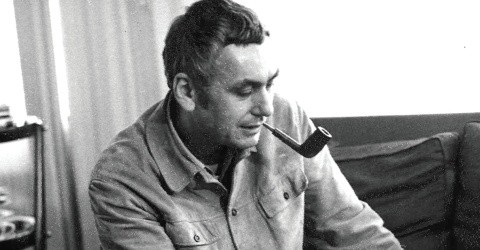 Petru Dumitriu (1924-2002) a été un romancier roumain, dont le chef-d’oeuvre, Cronica de familie, a été également publié en France par Seuil, en 1959. En 1960, voyageant en Allemagne de l’Est, il passa clandestinement à Berlin Ouest et demanda asile politique aux autorités françaises, qui le lui refusèrent; il l’obtint en Allemagne Fédérale. Ensuite il vécut à Frankfurt et à Metz, où il mourut en 2002.
Le Frère Jean qui figure dans Incognito de Petru Dumitriu est vraisemblablement l’alter ego littéraire du moine russe Ivan Koulyguine (1885- ?), représentant d’un filon hésychaste remontant au grand staretz ukrainien Païssius Vélitchkovsky (1722-1794), qui vécut au XVIIIe siècle au monastère de Neamtz en Moldavie et ensuite à Optina Poustyne.
En novembre 1943 le Père Ivan Koulyguine s’était enfui de l’Union Soviétique avec le métropolite de Rostov et avait trouvé refuge dans le monastère Cernica, près de Bucarest. Appelé en Roumanie Ioan Străinul, c’est à dire Jean l’Étranger, le Père Ivan devint le guide spirituel du Buisson Ardent (“Rugul Aprins”), un groupe d’intellectuels roumains qui se proposait de ranimer la tradition hésychaste.
Ivan Koulyguine fut arrêté par les Soviétiques en octobre 1946; poursuivi en justice et condamné en janvier 1947 à dix ans de travaux forcés, il fut transféré en URSS, où l’on perdit sa trace.
Jean Parvulesco n’est pas le seul à parler d’un “changement intérieur” produit en Roumanie par l’action de Frère Jean, c’est à dire du Père Ivan.
Aussi Alexandru Paleologu, qui a été ambassadeur de la Roumanie à Paris, a écrit qu’après la libération des survivants du groupe du Buisson Ardent, qui eu lieu grâce à l’amnistie voulue par Gheorghiu-Dej, “les nouvelles générations, les jeunes assoiffés de Dieu, (…) devinrent, en quelque sorte, les témoins au deuxième degré d’un mouvement chrétien qui a su jouer un rôle encore plus important qu’on aurait pu le croire et qui, à la vérité, s’avérait être de ‘longue haleine’ et d’une influence profonde” (3).
Ensuite, j’ai trouvé l’état civil de Jean Parvulesco dans une fiche de la Securitate roumaine rédigée dans les années ’50, que je vais traduire:
“Jean Pîrvulescu, fils de Ioan et de Maria, né le 29 septembre 1929 à Piteşti, dernier domicile à Craiova, str. Dezrobirii n. 25. En 1948 il a disparu de son domicile et il a passé frauduleusement la frontière; en 1950 il a écrit de Paris, France, à ses proches en RPR. En 1956 on a signalé que, avec l’espion Ieronim Ispas, il était sur le point de venir en Roumanie sous couverture du rapatriement, en mission d’espionnage. Dans le cas où il est identifié, il doit être arrêté” (4).
Piteşti, la ville natale de Jean Parvulesco, se trouve au bord de l’Argeş, une rivière qui constitue le scénario d’une fameuse légende roumaine: la légende de Maître Manole, constructeur de ce monastère de Curtea de Argeş qui fut commissionné par Negru Voda, duquel la mère de Jean Parvulesco serait une descendante.
Piteşti est située très près de la région historique de l’Olténie, dont Craiova est la capitale. Dans cette même région se trouve la localité de Maglavit, où, depuis le 31 mai 1935, un berger illetré du nom de Petrache Lupu (1908-1994) était le destinataire des communications d’une entité qu’il appellait Moşul, c’est à dire “le Vieux”, et qui était considérée comme une sorte de théophanie. “À Maglavit et dans les alentours – rapporte la presse de l’époque – prévaut un état d’esprit complètement nouveau. Les gens ont accueili les exhortations de Petrache Lupu à chercher de s’imposer un type de vie différent” (5).
L’écho que ces événements ont en Roumanie (on parle de la “psychose de Maglavit”) conduit Emil Cioran à changer d’avis sur le scepticisme du peuple roumain et à placer ses espoirs en un prochain grand phénomène spirituel et politique. “On ne peut pas dire – écrit Cioran – ce qu’il sera; mais on peut dire que, s’il ne naît pas, nous sommes un pays condamné” (6).
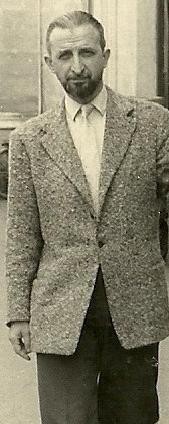 Mihai Vâlsan (1911-1974) reçoit du voyant de Maglavit une sorte de “bénédiction” (binecuvântare); et, comme les messages du “Vieux” semblent annoncer aux Roumains que leur terre deviendra le siège d’un centre spirituel comme l’avait déjà été la Dacie dans l’antiquité, Vâlsan pense que tout cela a affaire avec le Roi du Monde. On connaît le développement de cette histoire.
Ce qui peut nous intéresser ici, c’est la position de Parvulesco face à ces deux Roumains d’expression française – Cioran et Vâlsan.
Pour ce qui est de Cioran, Parvulesco a dit dans un entretien avec Michel d’Urance paru dans “Éléments”: “Je porte encore en moi le deuil atroce que j’avais ressenti devant l’effroyable auto-mutilation que Cioran avait infligée à son génie profond, à son inspiration la plus intime, afin qu’il puisse se faire relativement admettre au banquet des noces démocratico-marxistes d’après la guerre – qui battait alors son plein. Le nihilisme de Cioran, aussi loin qu’il pût aller, n’avait jamais représenté un choix doctrinal, n’ayant en aucun cas constitué que le signe exacerbé d’un constat de désastre face à l’effondrement en cours de la civilisation européenne tout près de sa fin” (7).
Quant à Michel Vâlsan, Jean Parvulesco a dû voir en lui, dans quelque façon, l’intermédiaire secret entre l’enseignement de René Guénon et le Général De Gaulle.
Dans La spirale prophétique il se demande: “Quels sont (…) les rapports encore présents et les rapports à venir entre l’oeuvre de René Guénon et celle de Michel Vâlsan? Y a-t-il eu, y a-t-il, de l’une ou l’autre, la continuation d’un même ministère, exclusivement, ou bien l’oeuvre de Michel Vâlsan apparaît-elle, ou commencerait-elle à apparaître comme la proposition, comme le fruit ardente d’une spécification déjà differenciée?” (La spirale prophétique, p. 75). En tout cas, Parvulesco était convaincu de “l’existence d’une convergence voilée mais très profonde entre l’enseignement de René Guénon et les dimensions confidentielles, voire occultes, de l’action historique et transhistorique entreprise par Charles de Gaulle (…)” (8).
Si nous devions ajouter foi aux dires de Jean Robin, Michel Vâlsan aurait joué un rôle occulte auprès de “ce grand guénonien que fut le général de Gaulle” (9), rangé par Vâlsan lui-même – toujours selon Jean Robin – parmi les “préfigurations du Mahdi” (10) qui se sont manifestées au XXe siècle. Rapportant une information qu’il déclare avoir recueillie auprès de “certains disciples de Michel Vâlsan” (11), Jean Robin fait allusion à une correspondance épistolaire entre Vâlsan et le Général, ainsi qu’à une “mystérieuse initiation” que le premier aurait transmise au second dans les jardins de l’Élysée; il ajoute que Vâlsan était en mesure d’annoncer à l’avance à ses disciples les décisions de Charles de Gaulle y compris les moins prévisibles.
Cependant, Michel Vâlsan ne figure pas dans la liste des écrivains qui, selon ce que Parvulesco dit dans l’entretien paru dans “Éléments”, “ont le plus compté pour [lui], qui ont souterrainement nourri [son] oeuvre”. Il s’agit d’une liste de trente-six auteurs, parmi lesquels il y a Virgile et Dante, Rabelais et Pound, Gobineau et Saint-Yves d’Alveydre; on y trouve aussi Haushofer, Hamsun, Drieu La Rochelle, Céline, Guénon, Corbin, Heidegger.
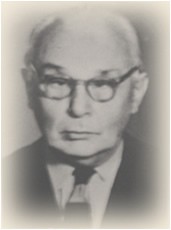 Le seul compatriote que Parvulesco ait cité dans cette liste est “Basile Lovinesco”, c’est à dire ce Vasile Lovinescu (1905-1984) qui nous a donné l’exégèse hermétique de la légende de Maître Manole.
D’ailleurs, lorsque dans La spirale prophétique nous lisons la phrase sur les “remanences carpathiques de l’ancien culte du dieu Zamolxis” (12), c’est bien Vasile Lovinescu qui nous vient à l’esprit, avec son essai sur la “Dacie hyperboréenne”, écrit sous le pseudonyme de “Géticus” et originellement paru en français dans plusieurs livraisons de la revue “Études Traditionnelles” en 1936-1937.
Pour ce qui est de Mircea Eliade, dans l’entretien avec Michel d’Urance Jean Parvulesco dit que, selon une information qu’il avait reçu à la rédaction d’”Etudes”, Jean Daniélou aurait demandé à Eliade, sur instance du pontife Pie XII, de s’engager dans un travail intellectuel ayant pour but d’exposer une nouvelle vision de l’histoire des religions, pour combattre dans les milieux universitaires l’hégémonie culturelle du marxisme et de ses dérivés. L’engagement d’Eliade dans cette entreprise, observe Parvulesco dans l’entretien citée plus haut, “ne lui a plus permis de tellement s’occuper de littérature, alors que ses romans roumains d’avant la guerre, ainsi que ses nouvelles plus récentes, n’avaient pas cessé d’administrer la preuve éclatante de son extraordinaire vocation de romancier”.
Parvulesco nous dit que deux nouvelles d’Eliade, Minuit à Serampore et Le secret du Docteur Honigberger (respectivement parues en Roumanie en 1939 et en France chez Stock en 1956 et 1980), recèlent une conception tantrique occulte et interdite envisageant la suspension et le changement du cours et de la substance même de l’histoire (13).
Il nous dit encore que tous les grands romans roumains écrits par Eliade avant la guerre “instruisent pathétiquement le procès de cette génération [c'est à dire la "nouvelle génération" roumaine entre les deux guerres mondiales, génération, il dit,] de hauts mystiques sacrifiés dans un dessein très occultement providentiel, et qui eurent à subir, en quelque sort, l’épreuve de l’immolation sanglante jusqu’à l’avoir eux-mêmes inexorablement attirée sur eux” (14).
Parmi les romans éliadiens d’avant-guerre, c’est surtout Le retour du Paradis (Întoarcerea din rai) qui a touché Parvulesco, et cela à cause d’une citation poétique insérée dans ce texte. Il écrit: “C’est en lisant, adolescent encore, Le retour du Paradis de Mircea Eliade que j’avais en effet pris conscience des pouvoirs suprahumains contenus dans un hymne orphique de Dan Botta, qui s’y trouvait cité (sans doute très à dessein, je ne le sais plus). Quarante ans après, des fragments de l’hymne orphique de Dan Botta viennent me hanter encore. (…) Ce fut à l’instant même de la première lecture de l’hymne orphique de Dan Botta que Chidher le Vert est venu se saisir de moi, porté par le sommet d’une immense vague de lumière verte, supracosmique, lumière fondamentale (…) de la Voie Deltaïque, qui concerne l’humanité dans les cycles de son devenir impérial occulte d’avant et d’après le cycle actuel, Voie Deltaïque régie, dans les abîmes, par la divine Una, la jeune femme verte, la vierge supracosmique dont le nom et la figure irradiante se perpétuent irrationnellement dans les remanences carpathiques de l’ancien culte du dieu Zamolxis” (15).
Le roumain Dan Botta (1907-1958), poète, dramaturge, essayiste, philologue, traducteur de Sophocle, Euripide, Shakespeare, Villon et Poe, appartenait à la “nouvelle génération” et adhéra au mouvement légionnaire; il fut membre du comité de direction de l’Encyclopédie Roumaine et fonda en 1941 la revue “Dacia”.
Comme poète, il débuta en 1931 avec un volume de vers intitulé Eulalii et préfacé par Ion Barbu (1895-1961), dans lequel se trouve la plus célèbre de ses créations poétiques, Cantilena, écrite dans les formes et les rythmes d’une poésie populaire. Or, l’”hymne orphique de Dan Botta” est justement Cantilena et le passage cité par Eliade qui a hanté longuement Jean Parvulesco est le suivant:
Pe vântiri ascult
Orficul tumult
(…)
Oh, mă cheamă-ntruna
Palida nebuna
Fata verde Una,
Şi-n mine se strânge
Piatra ei de sânge…
Parvulesco nous en donne une belle traduction, un peu libre, faite vraisemblablement par lui même:
exposé sur les hauts vents
un orphique tumulte j’entends
quand elle dresse soudain sa lyre,
la fille verte de mon délire
Una, et qu’en moi se tend
la pierre rouge de son sang.
Dans le même chapître du Retour du Paradis où sont cités les vers de Cantilena, quelques personnages du roman d’Eliade essayent de comprendre pourquoi la femme aimée par le protagoniste, Anicet, porte le nom de Una; l’un d’eux pense à la Junon des Etrusques, qui s’appellait Uni, tandis qu’un autre pense au Dialogue entre Monos et Una de Edgar Poe. Mais on n’arrive pas à une explication conclusive.
En 1960, vingt-six ans après la publication du Retour du Paradis, Mircea Eliade est revenu sur les vers de Cantilena, écrivant dans une revue de l’émigration roumaine: “Pour Dan Botta, le monde devenait réel quand il commençait à révéler ses structures profondes; c’est à dire, quand l’oeuil de l’esprit commence à saisir, derrière les apparences, les images éternelles, les figures mythiques. Tu pénétrais dans le mystère d’une nuit d’été quand tu arrivais à te la révéler comme dans ces vers de Cantilena: ‘Pe vântiri ascult – Orficul tumult – Când şi ardică struna – Fata verde, Una, – Duce-i-aş cununa…‘ Alors le cosmos entier dévoilait ses significations profondes, car le vent, la lune étaient la chiffre de mythes et drames anciens, qui faisaient déjà partie de l’histoire spirituelle de l’homme. Plus exactement: de l’homme balcanique, entendant par ce terme ethno-géographique toute l’Europe de l’est (…) Dan Botta avait un faible pour ce territoire (…) Dans une certaine façon c’était une géographie sacrée, parce que sur ces plaines et ces montagnes les hommes avaient rencontré Apollon et Dionysos, Orphée et Zamolxis” (16).
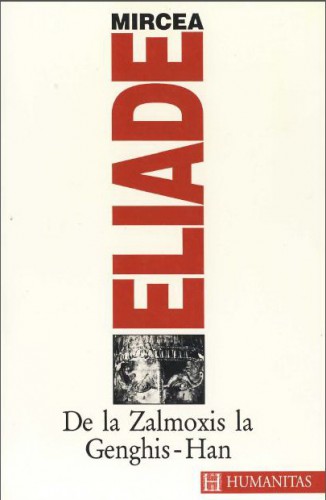 La relation entre la suprême divinité des Daces et l’activité de Eliade a été soulignée par Jean Parvulesco, qui, à propos des “remanences carpathiques de l’ancien culte du dieu Zamolxis”, écrit: “D’ailleurs, juste avant la dernière guerre, Mircea Eliade n’avait-il pas commencé l’édition d’une collection de cahiers de l’histoire des religions intitulée, précisément, Zamolxis ?” (17).
Pour revenir à la “fille verte Una”, il faut citer un autre passage de La spirale prophétique, qui est le suivant: “Je rappelle que, dans certains groupements spirituels des plus spéciaux et actuellement des plus retirés, c’est le 7 juillet [rappellez cette date] que des rassemblements se font, à l’abri du plus parfait secret, pour célébrer la ‘déesse verte’ Una, l”infiniment absente, l’infiniment lointaine, l’infiniment silencieuse mais qui, bientôt, ne le sera plus’ ” (18).
Dans “la fille verte Una” (fata verde Una) évoquée par Dan Botta, Eugène Ionesco y a vu une épiphanie de Diane rattachable à la mythologie légionnaire, probablement parce que la couleur verte était la couleur symbolique de la Garde de Fer.
Mais il faut dire, aussi, qu’en Dacie on a trouvé des nombreuses inscriptions dédiées à Diane (Diana regina, vera et bona, mellifica), avec laquelle a été identifiée une divinité traco-gétique.
Il faut ajouter que le nom latin de Diana a produit en roumain le mot zână, qui signifie “fée”, tandis que Sancta Diana a donné origine à la forme plurielle Sânziene. Le Sânziene sont fêtées dans la nuit du 24 juin, une fête solsticiale qui coïncide avec la nativité de Saint Jean le Baptiste. C’est précisement cette nuit la “nuit d’été” que Eliade – dans le passage que je viens de vous lire – a mis en relation avec les vers de Cantilena qui hantaient Jean Parvulesco.
Je rappelle aussi que Noaptea sânzienelor, “La nuit des fées”, est le titre d’un roman de Mircea Eliade (publié en 1955 chez Gallimard avec le titre de Forêt interdite), où le protagoniste, Ştefan Viziru, se trouve emprisonné avec les légionnaires à Miercurea Ciuc, exactement comme le fut Mircea Eliade.
Or, Jean Parvulesco a écrit un texte mystique qui s’appelle Diane devant les Portes de Memphis, imprimé exactement le 7 juillet 1985 et présenté comme une liturgie de Diane.
Qui est donc cette Diane célébrée par Jean Parvulesco? D’après ce qu’il dit, on la peut l’identifier avec la mystérieuse “femme couverte de soleil, la lune sous ses pieds et couronnée dedouze étoiles” (19) qui se tient, dit Parvulesco, au centre de la future civilisation impériale eurasiatique.
Ici il faut donc souligner une autre convergence essentielle entre Mircea Eliade et Jean Parvulesco. C’est leur commune reconnaissance du destin unitaire du Continent eurasien. Dans ses entretiens avec Claude-Henri Rocquet, Eliade déclarait avoir découvert qu’en Europe “les racines sont bien plus profondes que nous l’avions cru (…) Et ces racines nous révèlent l’unité fondamentale non seulement de l’Europe, mais aussi de tout l’ékoumène qui s’étend du Portugal à la Chine et de la Scandinavie à Ceylan” (20).
Presque simultanément, Jean Parvulesco s’engageait dans les voies de l’avènement de la nouvelle Europe grande-continentale, de l’ « Empire Eurasiatique de la Fin ».
1. Fiasconaro e Alessandrini accusano. La requisitoria su la strage di Piazza Fontana e le bombe del ’69, Marsilio, Padova 1974, p. 231.
2. Fiasconaro e Alessandrini accusano, cit., p. 142.
3. André Paléologue, Le renouveau spirituel du “Buisson Ardent”, “Connaissance des Religions”, avril 1990, p. 132.
4. Mihai Pelin, Culisele spionajului românesc. D.I.E. [Direcţia de Informaţii Externe] 1955-1980, Editura Evenimentul Românesc, Bucarest 1997, p. 42.
5. H. Sanielevici, Rasa lui Petrache Lupu din Maglavit, “Realitatea Ilustrată”, IXe année, n. 447, 14 août 1935.
6. E. Cioran, Maglavitul şi cealalta Românie, “Vremea”, VIIIe année, n. 408, 6 octobre 1935, p. 3.
7. Jean Parvulesco: “Une conscience d’au-delà de l’histoire”. Propos recueillis par Michel d’Urance, “Éléments”, 126, Automne 2007, pp. 54-57.
8. Jean Parvulesco, La spirale prophétique, Guy Trédaniel, Paris 1986, p. 76.
9. Jean Robin, René Guénon. La dernière chance de l’Occident, Guy Trédaniel, Paris 1983, p. 9.
10. Jean Robin, Les Sociétés secrètes au rendez-vous de l’Apocalypse, Guy Trédaniel, Paris 1985, p. 211.
11. Jean Robin, Les Sociétés secrètes au rendez-vous de l’Apocalypse, cit., p. 335.
12. Jean Parvulesco, La spirale prophétique, cit., p. 325.
13. Jean Parvulesco, La spirale prophétique, pp. 255-256.
14. Jean Parvulesco, La spirale prophétique, pp. 324-325.
15. Jean Parvulesco, La spirale prophétique, p. 325.
16. Mircea Eliade, Fragment pentru Dan Botta, “Prodromos”, 7, juillet 1967, p. 21.
17. Jean Parvulesco, La spirale prophétique, pp. 325-326.
18. Jean Parvulesco, La spirale prophétique, pp. 328.
19. Jean Parvulesco: “Une conscience d’au-delà de l’histoire”. Propos recueillis par Michel d’Urance, cit., p. 53.
20. Mircea Eliade, L’épreuve du labyrinthe. Entretiens avec Claude-Henri Rocquet, Pierre Belfond, Paris 1978, p. 70.
00:08 Publié dans Hommages, Jean Parvulesco | Lien permanent | Commentaires (0) | Tags : jean parvulesco, claudio mutti, témoignage, hommage |  |
|  del.icio.us |
  |
|  Digg |
  Facebook
La Thaïlande tournera-t-elle la page de la démocratie « à l’occidentale » ?
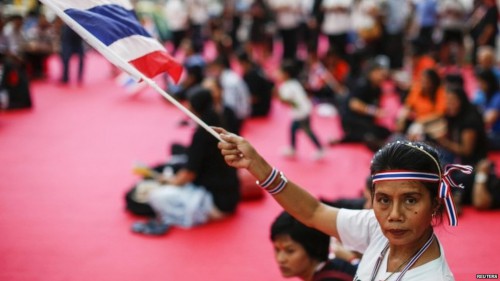
La Thaïlande tournera-t-elle la page de la démocratie «à l’occidentale»?
Eric Miné
Ex: http://synthesenationale.hautetfort.com
La Thaïlande tournera-t-elle la page de la démocratie « à l’occidentale » ? C’est la question qui se pose au regard des récents développements de l’épreuve de force engagée depuis plusieurs semaines déjà dans le royaume par l’ancien vice-premier ministre Suthep Thaugsuban et ses alliés – les « jaunes » – contre le gouvernement de Yingluck Shinawatra, sœur du milliardaire en exil Thaksin, déposé lui-même par un coup d’État militaire en 2006. La radicalisation des dernières heures, qui ont vu les opposants prendre le contrôle à Bangkok de plusieurs ministères et de la télévision publique, ainsi que les premiers morts et les heurts violents qui ont eu lieu entre les affidés de la famille Shinawatra – les « rouges » – et les étudiants de l’université Ramkhamhaeng qui n’ont dû leur salut qu’à l’intervention de l’armée, pourraient bien faire basculer celle-ci en faveur d’un mouvement qui tourne à l’insurrection générale. La porte serait dès lors ouverte à une modification substantielle du régime. Là est le véritable enjeu.
Du complexe gouvernemental de Changwathana qu’occupent les chefs de la rébellion réunis sous la bannière du « Comité du Peuple pour la démocratie absolue thaïlandaise sous la monarchie constitutionnelle », Suthep Thaugsuban, avec le soutien du principal parti d’opposition parlementaire, a en effet clairement indiqué son objectif. Constatant que les élections étaient de plus en plus biaisées par les pratiques corruptives d’un capitalisme international sans scrupules abusant de populations naïves – les Shinawatra en étant l’avatar local –, il entend suspendre la démocratie électorale au profit d’institutions plus représentatives de la nation, reprenant en cela pour partie les revendications insatisfaites des ultra-royalistes du Pad qui avaient bloqué en 2010 les aéroports de la capitale et provoqué la chute d’un précédent gouvernement pro-Thaksin. Si ceux-ci voulaient alors tempérer le pouvoir des députés issus du vote par l’instauration à la chambre de corps désignés pérennes – aristocratique, militaire et religieux –, il semble que Suthep inclinerait davantage vers une expression plus corporatiste des volontés du peuple, mais dégagée tout autant d’une contrainte des urnes jugée aujourd’hui sous ces cieux fauteuse de troubles.
Si l’on en juge par l’élan général et l’enthousiasme suscité, nonobstant les médias occidentaux qui ne voudraient voir dans ces événements que la répétition d’une crise sociale récurrente qui verrait s’opposer des « élites citadines gravitant autour du palais » à des « masses rurales défavorisées du nord-est », il s’agit bien là d’une révolte populaire visant à sauver les intérêts vitaux et les valeurs fondatrices d’un pays qui a su jusque là s’accommoder de la mondialisation tout en préservant ses traditions et ses règles. Ce qui est condamné là-bas, c’est précisément notre modèle démocratique prétendument universel, mais de fait idéologique, daté et occidental.
Si l’entreprise de Suthep Thaugsuban devait être couronnée de succès, elle pourrait ainsi donner des idées à d’autres qui souffrent tout autant ailleurs d’un système n’engendrant plus qu’une représentation collective erronée des peuples pour mieux les soumettre à ses dérives financières, consuméristes et totalitaires.
La portée de ce qui se joue aujourd’hui à Bangkok va donc bien au-delà des frontières d’un royaume tropical prisé des touristes pour ses cocotiers et son sourire.
Article publié sur Breizh info cliquez ici
Le blog d'Eric Miné cliquez là
00:05 Publié dans Actualité | Lien permanent | Commentaires (0) | Tags : politique internationale, thaîlande, asie, affaires asiatiques, bangkok | | del.icio.us | | Digg | Facebook
Eerste topbankiers naar veilige locaties gevlucht
'Instorting binnen 1 tot 2 jaar'

Bankenprotest in Ierland. Feitelijk hebben de banksters wel degelijk een 'place to hide', als het hen te heet onder de voeten wordt.
Volgens 'V', de 'Guerilla Econoom' die we het afgelopen jaar al vaker hebben aangehaald, zijn de eerste topbankiers inmiddels naar veiligere oorden gevlucht, vanwaar ze hun zaken regelen. Dat betekent niet dat de 'grote crash' al morgen of volgende week komt. Het betekent wel dat de wereldsituatie veel onstabieler is dan u doorgaans te horen krijgt. 'V' denkt daarom dat het nog hooguit 1 tot 2 jaar duurt, voordat de gevreesde instorting een feit zal zijn.
'V', die ooit als topanalist bij één van de grootste Britse banken werkte en zich baseert op zijn contacten in die wereld, opereert Jamie Dimon, president van megabank JPMorgan, inmiddels vanaf één van zijn privé eilanden, en is ook zijn gezin voorbereid om daarheen te vluchten. Michael Corbat, CEO van Citigroup, is druk doende dezelfde weg te bewandelen. Lloyd Blankfein, topman van het notoire Goldman Sachs, zit op dit moment in zijn verblijf ergens in de staat New York, maar zal zeer spoedig het land verlaten.
Meer dan 1000 topbankiers stopten er al mee
Sinds 2011 hebben meer dan 1000 topbankiers en -managers plotseling ontslag genomen. Volgens V wisten zij dat het einde eraan komt, en wilden daarom tijdig hun schaapjes op het droge krijgen. Ondertussen wordt het gewone volk onwetende gehouden, onder andere met behulp van valse cijfers en statistieken, waaruit zou blijken dat het weer de goede kant opgaat.
Het tegendeel is echter waar, zegt V. De Russell 2000 Index (de kleinere en middelgrote beursgenoteerde bedrijven) is 30% overgewaardeerd, de DOW Jones index (Wall Street) zelfs 67%, en de technologie index NASDAQ 50%. 'Toch hebben de idioten 'op straat' en de kopstukken op tv het over de terugkeer van goede tijden. Maar hoe kan de markt zó hoog staan, terwijl alle belangrijke economische indicatoren een voortdurende krimp laten zien?'
Negatieve rente signaal van naderend einde
De echte economie heeft zich dan ook definitief losgemaakt van de financiële (schijn)wereld van de beurzen. Hoge aandelenkoersen zeggen hoegenaamd niets meer over de werkelijke financieel-economische situatie, die vele malen ernstiger is dan wordt voorgesteld.
Eén van de duidelijke tekenen hiervan is het -ook in het vorige artikel genoemde- plan om kosten te gaan berekenen voor positieve banksaldo's. De gewone man zal dan geld moeten betalen om zijn geld op de bank te 'mogen' laten staan. Dit betekent volgens V dat het einde van het systeem nabij is.
Ratten verlaten het zinkende schip
'Degenen in de machtselite verlaten als de spreekwoordelijke ratten het zinkende schip. Ik ben er rotsvast van overtuigd dat -onvoorziene gebeurtenissen daargelaten- we misschien nog een tot twee jaar hebben voordat de stekker uit de terminaal zieke patiënt genaamd Amerika wordt getrokken.' En zodra dat gebeurt, gaat de rest van de wereld -in meer of mindere mate, al naar gelang landen zich verbonden hebben met de Amerikaanse economie en dollar- mee. (1)
In minder in het oog springende landen is te zien hoe penibel de situatie reeds is. In Panama, een opkomende economie, is het voor Amerikanen al een maand uiterst moeilijk om geld op te nemen bij pinautomaten van verschillende banken. (2)
'Financieel verkracht' tijdens economische systeemcrisis
Twee weken geleden maakte V duidelijk dat de problemen beslist niet beperkt zullen blijven tot de VS. 'Ongeacht waar u leeft en wat uw bank is, u staat op het punt om op een zeer systematische en methodische wijze financieel verkracht te worden.'
Dit gaat veel verder dan de stapsgewijze afbraak van onze koopkracht door het creëren van enorme hoeveelheden nieuw geld. 'Het gaat veel dieper,' legde hij uit. 'De centrale banken verzamelen wereldwijd al uw persoonlijke informatie, zodat ze u aan hun controle kunnen onderwerpen.' Dit is in zijn ogen de opmaat naar een 'al lang geleden geplande wereldwijde economische systeemcrisis.' (3)
Xander
* Quotes voorlopig niet tussen aanhalingstekens, omdat dit een vervelende storing in het beheer geeft.
(1) Steve Quayle
(2) Steve Quayle
(3) Northeast Intelligence Network
Zie ook o.a.:
21-11: 'Valutaoorlog losgebarsten; Koopkracht burgers zal worden vernietigd'
18-11: Centrale banken overwegen spaarders rente te laten betalen in cashloos systeem
23-10: Trends Institute: Wereldwijde totale instorting in 2014
28-09: Ook oud-FED topman Greenspan waarschuwt voor nieuwe, nog grotere crash
20-09: Machtigste bank ter wereld kondigt financiële crash aan
01-09: Pentagon bereidt zich voor op 'grootschalige economische instorting'
00:05 Publié dans Actualité, Economie | Lien permanent | Commentaires (0) | Tags : usurocratie, ploutocratie, banques, banksterisme, finances, actualité, politique internationale | | del.icio.us | | Digg | Facebook
The Monroe Doctrine is History, But the Empire is Attacking Everywhere
The Monroe Doctrine is History, But the Empire is Attacking Everywhere
| Nil NIKANDROV - Ex: http://www.strategic-culture.org |
|
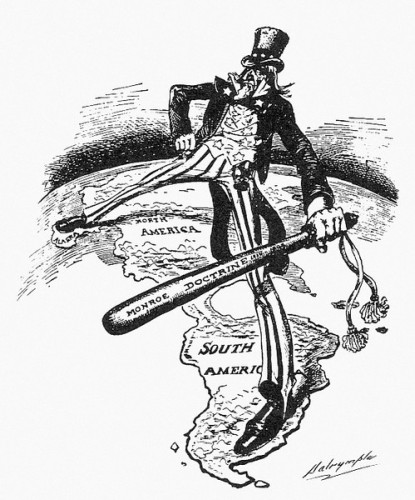
U.S. Secretary of State John Kerry has announced the end of «the era of the Monroe Doctrine». On November 18 he gave a keynote speech on partnership with Latin America at the headquarters of the Organization of American States in Washington. For almost 200 years U.S. policy in the Western Hemisphere has been based on the doctrine named after the fifth president of the U.S., James Monroe, which declares that the countries of Latin America should not be seen by European powers as objects of colonization… «America for the Americans» - the United States used this slogan to mask the imperialist essence of the doctrine, which was used in the Cold War years to counter «Soviet expansion». The Monroe Doctrine has been used to justify the suppression of revolutions in Guatemala and Chile, the physical elimination of popular leaders, and military operations against guerillas in Cuba, Nicaragua and other countries… The key point of Kerry's speech was the assertion that in today's historical conditions, the U.S. views the states south of the Rio Grande as «equal partners» which must «promote and protect...democracy,» «sharing responsibilities [and] cooperating on security issues». It is difficult to interpret these wordings clearly. On the one hand, Washington seems to be stating that it will not resort to armed intervention in the region to defend its «vital interests». On the other hand, the statements about «sharing responsibilities» and «cooperating on security issues» sound quite equivocal. Cooperating with whom, exactly? Against whom? And on what terms? However, against whom the «cooperation on security issues» is to be directed follows from the speech itself. Kerry assailed Venezuela and Cuba with criticism. In his opinion, «democratic institutions are weakened» in Venezuela. Most likely Washington is irritated by the fact that the National Assembly voted to give President Nicolas Maduro special powers which he has already begun to use to stop the economic war on Venezuela (speculation, hoarding consumer goods and food, and undermining the purchasing power of the national currency, the bolivar). Venezuelans approve the measures being taken by President Maduro. The authority of the Bolivarian leadership has grown noticeably. In Cuba the head of the State Department is dissatisfied with the pace of the democratic process. Kerry stated that the U.S. hopes these processes will gain speed, that «the Cuban Government embraces a broader political reform agenda that will enable its people to freely determine their own future». And the U.S. would very much like the process of democratization in Cuba to take on a landslide-like character, similar to the process which destroyed the USSR. The U.S. has shelved the Monroe Doctrine, but it has not given up pressuring Latin American countries or conducting complex operations to destabilize them. Targeted propaganda attacks are carried out against undesirable leaders. Streams of slander pour down on Bolivian President Evo Morales, first and foremost because of his government’s «insufficient efforts» in fighting against illegal coca plantations and drug trafficking. And this when Bolivian intelligence agencies are battling fiercely with drug cartels financed, as a rule, though banks controlled by U.S. businessmen and the Drug Enforcement Administration (DEA). Morales gives as good as he gets, confident that the best defense is a good offence. He has more than once advocated handing over Barack Obama to a «tribunal of the peoples» to be tried for «crimes against humanity». His accusations were loudest of all in his address at the 68th session of the UN General Assembly. The Bolivian president claims that in order to maintain its dominant position in the world, the U.S. makes use of the most criminal of methods, extensively organizing conspiracies and assassination attempts. Morales has reduced contacts with representatives of the U.S. to a minimum, preferring to conduct business with China, Western European countries, Russia and Belarus. The president of Bolivia has threatened, «If we need to, we will close the U.S. embassy altogether». Washington has never ceased its hostile activities against Ecuador. After the CIA's failed attempt to get rid of President Rafael Correa using agents in the Ecuadorian police, the U.S. embassy is sparing no efforts to «reform» him. Adam Namm, the American ambassador in Quito, criticized President Rafael Correa for cultivating closer relations with Iran and Belarus. The response was immediate: «I am not surprised at his [Namm's] pronouncements, because the diplomat is new at these issues. Ecuador will not ask permission from anyone to maintain sovereign relations with whatever countries it wishes. It is enough to note how many countries where absolutely no elections are held at all have privileged relations with the United States. Absolute monarchies! So that's enough! We are not anyone's colony. While I am the president of this country, there will be no neocolonialism!» Correa's harsh comments on Obama's pronouncements about the «exceptionalism of the American people», who are supposedly concerned with protecting the interests of «all humanity», are also conspicuous. The Ecuadorian president compared these claims with the «Nazi policy» of the Third Reich. In October Correa visited Russia, where he discussed, among other things, armaments cooperation issues and shipments of Russian armaments to Ecuador, in particular air defense systems, as well as an additional shipment of Mi-171E transport helicopters. Russia is interested in implementing several large oil and gas projects in Ecuador. The Ecuadorians are discussing prospects of intensifying military cooperation with China; recruiting Chinese specialists for the construction of an oil refinery (Refineria del Pacifico), to be completed in 2017, has also been proposed. Even now there are 60 Chinese companies working in Ecuador in the mining industry and road infrastructure construction. All of this is causing great concern in Washington, which is why the spying activities of American intelligence agencies have intensified in Ecuador. According to the site Contrainjerencia.com, in 2012-2013 the number of CIA personnel at the Ecuadorian station doubled. Agents with experience in subversive operations in Latin America are being sent to Ecuador: U. Mozdierz, M. Haeger, D. Robb, H. Bronke Fulton, D. Hernandez, N. Weber, A. Saunders, D. Sims, C. Buzzard, М. Kendrick and others. The problems which Washington is now having with Brazil and Argentina due to the scandalous revelations regarding the wiretapping of these countries' presidents, Dilma Rousseff and Cristina Fernandez de Kirchner, have yet to be resolved satisfactorily. The Americans have still not really apologized for the total espionage in these countries. And the espionage not only has not stopped, it has become more subtle, forcing national intelligence agencies to develop joint measures to combat the operations of the CIA, the NSA and U.S. military intelligence. At the same time, steps are being taken to create a system for fighting electronic espionage within the framework of the Union of South American Nations (UNASUR). In Mexico and the countries of Central America and the Caribbean Basin, American intelligence run things with almost no interference, unless you count Cuba and Nicaragua, whose counterintelligence agencies occasionally strike painful blows against the CIA's agent network. Today the most important task for U.S. military and intelligence agencies is maintaining control of Honduras, which is often called the «unsinkable aircraft carrier of the U.S.» in Central America. There are already U.S. military bases located on the territory of Honduras, but the Pentagon is planning to build new air and naval bases. Washington's cynical interference in the election campaign which just took place in Honduras is yet another signal from the Obama administration to Latin America: we will protect our interests at any cost; no other outcome is acceptable to us. The «U.S.'s man» in the elections in Honduras is Juan Orlando Hernandez, the candidate from the conservative National Party. For over three years he headed the National Congress and contributed greatly to the consolidation of political forces hostile to ex-president Manuel Zelaya and his wife Xiomara Castro. It is she who was his main competitor in the elections as the candidate for the center-left Liberty and Refoundation Party (LIBRE). Hernandez supported the 2009 military coup d’état which led to the overthrow of Zelaya, maintains close ties with the military, and facilitated the expansion of the «security» functions of military personnel, including in fighting drug trafficking. For the U.S. embassy, not allowing Xiomara Castro to come to power is a matter of principle. Upcoming events will show how it will be resolved. In a radio interview with Radio Globo, Manuel Zelaya stated, «Xiomara has won the fight for the post of president of the republic. They [the Supreme Electoral Court of Honduras] are stealing the victory from Xiomara Castro. The Court's count does not stand up to statistical analysis. We do not acknowledge this result; we reject it». Lisa Kubiske, the U.S. ambassador in Honduras, actively interfered in the election process in order to guarantee victory for Hernandez. In essence, it is she who is Xiomara Castro's main rival. Whether the U.S. embassy will be able to ensure that Hernandez comes to power will be seen in the near future. But there is already information in the international media that in the process of counting the votes, he is leading by a wide margin. |
00:05 Publié dans Actualité, Géopolitique | Lien permanent | Commentaires (0) | Tags : actualité, géopolitique, politique internationale, états-unis, doctrine de monroe, américanisme, panaméricanisme | | del.icio.us | | Digg | Facebook
The Faustian Soul & Western Uniqueness
The Faustian Soul & Western Uniqueness
By Domitius Corbulo
Ex: http://www.counter-currents.com/
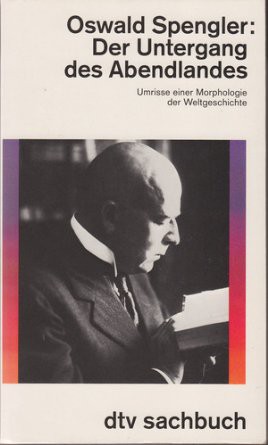 If I had to choose one word to explain why the West has been the most creative civilization it would be “Faustian.” My choice of this word hinges on the realization that the West has been following a unique cultural path since ancient times in the course of which it has exhibited far higher levels of achievement in all the intellectual, artistic, and heroic spheres of life.
The current academic consensus is that the West diverged from the Rest only with the onset of mechanized industry, use of inorganic sources of energy, and application of Newtonian science to industry. This consensus holds for both multiculturalist and Eurocentric historians. David Landes, Kenneth Pomeranz, Bin Wong, Joel Mokyr, Jack Goldstone, E.L. Jones, and Peer Vries all single out the Industrial Revolution of 1750/1830 as the point during which the “great divergence” occurred. It matters little how far back in time they trace this Revolution, or how much weight they assign to preceding developments such as the Scientific Revolution or the gains from the colonization of the Americas, their emphasis is on the “divergence” generated by the arrival of the steam engine.
Charles Murray’s Human Accomplishment:Pursuit of Excellence in the Arts and Sciences, 800 BC to 1950, informs us that ninety-seven percent of accomplishment in the sciences occurred in Europe and North America from 800 BC to 1950. It also informs us that, in the arts, Europe alone produced a far higher number of “significant figures” than the rest of the world combined. In music, “the lack of a tradition of named composers in non-Western civilization means that the Western total of 522 significant figures has no real competition at all” (Human Accomplishment, 259).
But Murray’s statistical analysis can only take us so far. He pays no attention to accomplishments in warfare, exploration, and heroic leadership. His definition of accomplishment includes only peaceful individuals carrying scientific experiments and creating artistic works. I think Europeans were exceptional also in their expansionist and exploratory behaviors. Both their “civilized” and “uncivilized” were inseparably connected to their peculiarly agonistic ethos of aristocratic individualism. The great men of Europe were all artists driven by an intensively felt desire for unmatched deeds. The “great ideas” – Archimedes’ “Give me a place to stand and with a lever I will move the whole world,” – Hume’s “love of literary fame, my ruling passion” – were associated with aristocratic traits, disputatiousness and defiant temperaments – no less than Cortez’s immense ambition for honour and glory, “to die worthily than to live dishonoured.”
Spengler has provided us with the best word to overcome the current naïve separation between a cultured/peaceable West and an uncivilized/antagonistic West with his image of a strikingly vibrant culture driven by a type of Faustian personality overflowing with expansive, disruptive, and imaginative impulses manifested in all the spheres of life.
Spengler believed that the “prime-symbol” of the Faustian soul was its “tendency towards the infinite,” and that this tendency found its “purest expression” in modern mathematics. The “infinite continuum,” the exponential logarithm and “its dissociation from all connexion with magnitude” and transference to a “transcendent relational world” were some of the words he used to describe Western mathematics. But Spengler also wrote of the “bodiless music” of the Western composer, “in which harmony and polyphony bring him to images of utter ‘beyondness’ that transcend all possibilities of visual definition”, and, before the modern era, of the Gothic “form-feeling” of “pure, imperceptible, unlimited space” (Decline of the West, trans. Charles Francis Atkinson, vol.1, Form and Actuality [Alfred Knopf, [1923] 1988: 53-90, 183-216).
Mathematicians no less than musicians were “artist-men” and these artists were exemplars of the “emancipation” of the Western soul from magnitude, from “servitude” to measureable lines and planes, from the “near and corporeal.” Spengler believed that this soul-type was first visible in medieval Europe, starting with Romanesque art, but particularly in the “spaciousness of Gothic cathedrals,” “the heroes of the Grail and Arthurian and Siegfried sagas, ever roaming in the infinite, and the Crusades,” including “the Hohenstaufen in Sicily, the Hansa in the Baltic, the Teutonic Knights in the Slavonic East, [and later] the Spaniards in America, [and] the Portuguese in the East Indies (Decline of the West, 183-216).
I will leave aside my disagreements with Spengler’s image of classical Greece and Rome as cultures that conceived things in terms of proportion and balance in recurring patterns, except to agree with Nietzsche that classical Greeks were singularly agonal, driven by a Promethean aristocratic ethos.
This soul was palpable in all the Western spheres of life – painting, politics, architecture, science, literature, poetry, exploration, warfare, and philosophy. There was something Faustian about all the great men of Europe, in real life or fiction: Hamlet, Richard III, Gauss, Newton, Nicolas Cusanus, Don Quixote, Goethe’s Werther, Gregory VII, Michelangelo, Paracelsus, Dante, Descartes, Don Juan, Bach, Wagner’s Parsifal, Haydn, Leibniz’s Monads, Giordano Bruno, Frederick the Great, Rembrandt, Ibsen’s Hedda Gabler. “The Faustian soul – whose being consists in the overcoming of presence, whose feeling is loneliness and whose yearning is infinity – puts its need of solitude, distance, and abstraction into all its actualities, into its public life, its spiritual and its artistic form-worlds alike” (Decline of the West, 386).
Christianity, too, became a thoroughly Faustian moral ethic. “It was not Christianity that transformed Faustian man, but Faustian man who transformed Christianity — and he not only made it a new religion but also gave it a new moral direction”: will-to-power in ethics (Decline of the West, 344). This “Faustian-Christian morale” produced “Christians of the great style — Innocent III, Loyola and Savonarola, Pascal and St. Theresa […] the great Saxon, Franconian and Hohenstaufen emperors . . . giant-men like Henry the Lion and Gregory VII . . . the men of the Renaissance, of the struggle of the two Roses, of the Huguenot Wars, the Spanish Conquistadores, the Prussian electors and kings, Napoleon, Bismarck, Rhodes” (Decline of the West, 348-49).
Spengler captured better than anyone else (though Hegel was a great anticipator) the West’s main protagonist: not a calmed, disinterested, rationalistic personality, but a highly energetic, restless, fateful being, unwilling to be limited by boundaries, determined to break through the unknown, supersede the norm and achieve mastery. Some other words and phrases Spengler used to describe the traits and aims of this soul were: “unrestrained,” “strong-willed,” “far-ranging,” “active, fighting, progressing,” “overcoming of resistances,” “against what is near, tangible and easy,” “the fierceness and joy of tension” (Decline of the West, 308-337).
The seemingly amorphous, immeasurable, and infinite concept of a Faustian soul is far better to explain Western uniqueness than the measurable but rather confined IQ concept. There is clearly a general link between IQ and cultural achievement. But IQ experts, J. Philippe Rushton and Richard Lynn, have yet to offer a sound explanation why Europeans achieved far more culturally than the East Asians with their higher average IQ. Rushton highlights Chinese priority in a number of technologies before the modern era. He points to the Chinese use of printing by the 9th century, “600 years before Europe saw Gutenberg’s first Bible.” He says the Chinese were using “flame throwers, guns, and cannons” by the 13th century, “about 100 years before Europe.” They were using the magnetic compass in the 1st century, “not found in European records until 1190.” “In 1422, seventy years before Columbus’s three small ships crossed the Atlantic, the Chinese reached the east coast of Africa,” with a fleet of 65 ships superior in size and technique.
Sounding like a multicultural revisionist, Rushton adds: “With their gunpowder weapons, navigation, accurate maps and magnetic compasses, the Chinese could easily have gone around the tip of Africa and ‘discovered’ Europe!” (Race, Evolution, and Behavior, 2nd Abridged Version, Charles Darwin Research Institute, 2000).
Even more, Rushton views the last five centuries of European superiority as a temporary deviation that is now being superseded by not only Japan but China, Taiwan, Singapore, and South Korea. Lynn has the same opinion. But they have not offered an answer as to why Europeans were responsible for almost every single advance and invention in modern times. East Asian creativity, they say, was kept under a lid by cultural norms and institutions that are now breaking down. But there are multiple problems with Rushton’s claims, staring with his very one-sided association of creativity with science and technology, and his exaggerations about Chinese technology prior to 1500. After the Sung era (960-1279), the Chinese ceased to be inventive, whereas it was the medieval Europeans who went on to make continuous improvements on the Chinese inventions Rushton mentions, and then added their own: spectacles, mechanical clocks, navigational techniques, gauges, micrometres, water mills, fine wheel cutters, and more. The Chinese possessed large junks but did not discover a single new nautical mile. The ancient Greeks were far more advanced in the theoretical sciences, geometry, deductive reasoning, not to mention their arts and humanities. The Romans were just as inventive technologically, progenitors of great military strategists and conquerors, and true innovators in jurisprudence. Chinese education is still backward, dogmatic, and this is why they send their students to the West. Europeans invented each and every discipline taught in our universities. Virtually every great philosopher, poet, painter, novelist, explorer in history is European.
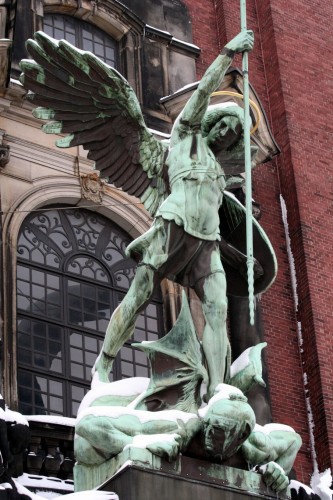 We need an explanation for this incredible discrepancy. But what exactly is the Faustian soul? How do we connect it to Europe’s creativity? To what original source or starting place did Spengler attribute this yearning for infinity? He directed attention to the barbarian peoples of northern Europe. In Man and Technics, he wrote of how the Nordic climate forged a character filled with vitality, “an intellect sharpened to the most extreme degree, with the cold fervour of an irrepressible passion for struggling, daring, driving forward.” The Nordic character was a human biological being to be sure, but one animated with the spirit of a “proud beast of prey,” like that of an “eagle, lion, [or] tiger.” For this Nordic individual, “the concerns of life, the deed, became more important than mere physical existence.” He wants to climb high, soar upward and reach ever higher levels of existential intensity. Adaptation and reproduction are not enough (Man and Technics: A Contribution to a Philosophy of Life, Greenwood Press, 1976: 19-41).
But why a Faustian soul is attributed only to Europeans? Are their “primary emotions” really different from that of ordinary humans? A good way to start answering this question is to compare the idea of a Faustian soul with Immanuel Kant’s observations on the “unsocial sociability” of human beings. In his essay, “Idea for a Universal History from a Cosmopolitan Point of View,” Kant seemed somewhat puzzled but nevertheless attuned to the way progress in history had been driven by the fiercer, self-centred side of human nature. Looking at the wide span of history, he concluded that without the vain desire for honour, property, and status humans would have never developed beyond a primitive Arcadian existence of self-sufficiency and mutual love: “all human talents would remain hidden forever in a dormant state, and men, as good-natured as the sheep they tended, would scarcely render their existence more valuable than that of their animals. . . . [T]he end for which they were created, their rational nature, would be an unfulfilled void.”
There can no development of the human faculties, no high culture, without conflict, antagonism, and pride. It is these asocial traits, “vainglory,” “lust for power,” “avarice,” which awaken the dormant talents of humans and “drive them to new exertions of their forces and thus to the manifold development of their capacities.” Nature in her wisdom, “not the hand of an evil spirit,” created “the unsocial sociability of humans.”
But Kant never asked, in this context, why Europeans were responsible, in his own estimation, for most of the moral and rational progression in history. In another publication, Anthropology from a Pragmatic Point of View (1798), Kant did observe major differences in the psychological and moral character of races as exhibited in different places on earth. He ranked races accordingly, with Europeans at the top in “natural traits.” Still, Kant never connected his anthropology with his principle of asocial qualities.
Did “Nature” foster these asocial qualities evenly among the cultures of the world? While these “vices” – as we have learned today from evolutionary psychology — are genetically-based traits that evolved in response to long periods of adaptive selective pressures associated with the maximization of human survival, there is no reason to assume that the form and degree of these traits evolved evenly or equally among all the human races and cultures. It is my view that the asocial qualities of Europeans were different, more intense, acuter, strident, individuated.
I believe that this variation should be traced back to the aristocratic culture of Indo-Europeans. Indo-Europeans were a pastoral people from the Pontic-Caspian steppes who initiated the most mobile way of life in prehistoric times starting with the riding of horses and the invention of wheeled vehicles in the fourth millennium BC, together with the efficient exploitation of the “secondary products” of domestic animals (dairy products, textiles, harnessing of animals), large-scale herding, and the invention of chariots in the second millennium. By the end of the second millennium, even though Indo-Europeans invaded both Eastern and Western lands, only the Occident had been “Indo-Europeanized.”
Indo-Europeans were uniquely ruled by a class of free aristocrats grouped into war-bands. These bands were constituted associations of men operating independently from tribal or kinship ties, initiated by any powerful individual on the merits of his martial abilities. The relation between the chief and his followers was personal and contractual: the followers would volunteer to be bound to the leader by oaths of loyalty wherein they would promise to assist him while the leader would promise to reward them from successful raids. The most important value of Indo-European aristocrats was the pursuit of individual glory as members of their warbands and as judged by their peers. The Iliad, Beowulf, The Song of Roland, including such Irish, Icelandic and Germanic sagas as Lebor na hUidre, Njals Saga, Gisla Saga Sursonnar, The Nibelungenlied recount the heroic deeds and fame of aristocrats — these are the earliest voices from the dawn of Western civilization. Within this heroic ‘life-world’ the unsocial traits of humans took on a sharper, keener, individuated expression.
What about other central Asian peoples from the steppes such as the Mongols and Turks who produced a similar heroic literature? There are a number of substantial differences. First, the Indo-European epic and heroic tradition precedes any other tradition by some thousands of years, not just the Homeric and the Sanskrit epics but, as we now know with some certainty from such major books as M. L. West’s Indo-European Poetry and Myth, and Calvert Watkins’s How to Kill a Dragon: Aspects of IE Poetics (1995), going back to a prehistoric oral tradition. Second, IE poetry exhibits a keener grasp and rendition of the fundamentally tragic character of life, an aristocratic confidence in the face of destiny, the inevitability of human hardship and hubris, without bitterness, but with a deep joy. Third, IE epics show both collective and individual inspiration, unlike non-IE epics which show characters functioning only as collective representations of their communities. This is why in some IE sagas there is a clear author’s stance, unlike the anonymous non-IE sages; the individuality, the rights of authorship, the poet’s awareness of himself as creator, is acknowledged in many ancient and medieval European sagas.
But how do we connect the barbaric asocial traits of prehistoric Indo-European warriors to the superlative cultural achievements of Greeks and later civilized Europeans? Another German thinker, Nietzsche, provides us with the best insights to explain how the untamed agonistic ethos of Indo-Europeans was translated into civilized creativity. I am thinking of the fascinating idea, expressed in his early essay “Homer on Competition,” that civilized culture or convention (nomos) was not imposed on nature but was a sublimated continuation of the strife that was already inherent to nature (physis).The nature of existence is based on conflict and this conflict unfolded itself in human institutions and governments. Humans are not naturally harmonious and rational as Socrates had insisted; the nature of humanity is strife. Nietzsche argued against the separation of man/culture from nature: the cultural creations of humanity are expressions or aspects of nature itself.
But nature and culture are not identical; the artistic creations of humans, their norms and institutions, constitute a rechanneling of the destructive striving of nature into creative acts, which give form and aesthetic beauty to the otherwise barbaric character of natural strife. While culture is an extension of nature, it is also a form by which human beings conceal their cruel reality, and the absurdity and the destructiveness of their nature. This is what Nietzsche meant by the “dual character” of nature; humans restrain or sublimate their drives to create cultural artefacts as a way of coping with the meaningless destruction associated with striving.
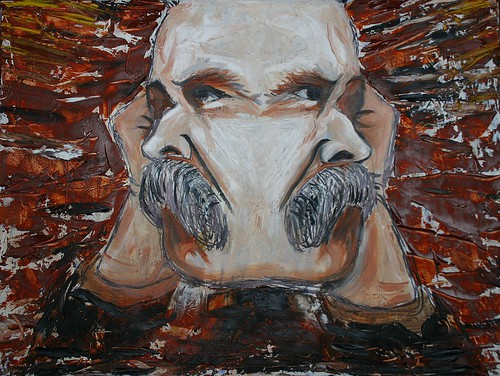
Nietzsche, in another early publication, The Birth of Tragedy, referred to this duality of human existence, nomos and physis, as the “Apollonian and Dionysian duality.” The Dionysian symbolized the excessive and intoxicating strife which characterized human life in early tribal societies, whereas the Apollonian symbolized the restraint and rechanneling of conflict possible in state-organized societies. In the case of Greek society, during pre-Homeric times, Nietzsche envisioned a world in which there were no or few limits to the Dionysian impulses, a time of “lust, deception, age and death.” The Homeric and classical (Apollonian) inhabitants of city-states brought these primordial drives under “measure” and self-control. The emblematic meaning of the god Apollo was “nothing in excess.” Apollo was a provider of soundness of mind, a guardian against a complete descent into a state of chaos and wantonness. He was a redirector of the willful and hubristic yearnings of individuals into organized forms of warfare and higher levels of art and philosophy.
For Nietzsche, Greek civilization was not produced by a naturally harmonious character, or a fully moderated and pacified city-state. One of the major mix-ups all interpreters of the rise of the West fall into is to assume that Western achievements were about the overcoming and suppression of our Dionysian impulses. But Nietzsche is right: Greeks achieved their “civility” by rechanneling the destructive feuding and blood lust of their Dionysian past and placing their strife under certain rules, norms and laws. The limitless and chaotic character of strife as it existed in the state of nature was “civilized” when Greeks came together within a larger political horizon, but it was not repressed. Their warfare took on the character of an organized contest within certain limits and conventions. The civilized aristocrat was the one who, in exercising sovereignty over his powerful longings (for sex, booze, revenge, and any other kind of intoxicant) learned self-command and, thereby, the capacity to use his reason to build up his political power and rule those “barbarians” who lacked this self-discipline. The Greeks created their admirable culture while remaining at ease with their superlative will to strife.
To complete Nietzsche’s insights we need to add the historically based argument that the Greeks viewed the nature of existence as strife because of their background in an Indo-European state of nature where strife was the overriding ethos. There are strong reasons to believe that Nietzsche’s concept of strife is an expression of his own Western background and his study of the Western agonistic mode of thinking that began with the Greeks. One may agree that strife is in the “nature of being” as such, but it is worth noting that, for Nietzsche, not all cultures have handled nature’s strife in the same way and not all cultures have been equally proficient in the sublimated production of creative individuals or geniuses. Nietzsche thus wrote of two basic human responses to the horror of endless strife: the un-Hellenic tendency to renounce life in this world as “not worth living,” leading to a religious call to seek a life in the beyond or the after-world, or the Greek tragic tendency, which acknowledged this strife, “terrible as it was, and regarded it as justified.” The cultures that came to terms with this strife, he believed, were more proficient in the completion of nature’s ends and in the production of creative individuals willing to act in this world. He saw Heraclitus’ celebration of war as the father and king of the whole universe as a uniquely Greek affirmation of nature as strife. It was this affirmation which led him to say that “only a Greek was capable of finding such an idea to be the fundament of a cosmology.”
The Greek-speaking aristocrats had to learn to come together within a political community that would allow them to find some common ground and thus move away from the state of nature with its endless feuding and battling for individual glory. There would emerge in the 8th century BC a new type of political organization, the city-state. The greatness of Homeric and Classical Greece involved putting Apollonian limits around the indispensable but excessive and brutal Dionysian impulses of barbaric pre-Homeric Greeks. Ionian literature was far from the berserkers of the pre-Homeric world, but it was just as intensively competitive. The search for the truth was a free-for-all with each philosopher competing for intellectual prestige in a polemical tone that sought to discredit the theories of others while promoting one’s own. There were no Possessors of the Way in aristocratic Greece; no Chinese Sages decorously deferential to their superiors and expecting appropriate deference from their inferiors.
This agonistic ethos was ingrained in the Olympic Games, in the perpetual warring of the city-states, in the pursuit of a political career and in the competition among orators for the admiration of the citizens, and in the Athenian theatre festivals where a great many poets would take part in Dionysian competitions. It was evident in the sophistic-Socratic ethos of dialogic argument and the pursuit of knowledge by comparing and criticizing individual speeches, evaluating contradictory claims, competitive persuasion and refutation. In Descartes’s rejection of all prior knowledge and assertion of his autonomous intellect, “I think, therefore I am”, the transcendent mind, the self-determining ego, separated from any unity with nature and tradition. Spengler saw this ego expressing itself everywhere: in “the Viking infinity wistfulness” and their colonizing activities through the North Sea, the Atlantic, and the Black Sea; in the Portuguese and Spaniards who “were possessed by the adventured-craving for uncharted distances and for everything unknown and dangerous; in “the emigration to America,” “the Californian gold-rush,” “the passion of our Civilization for swift transit, the conquest of the air, the exploration of the Polar regions and the climbing of almost impossible mountain peaks” — “dramas of uncontrollable longings for freedom, solitude, immense independence, and of giantlike contempt for all limitations.”
“These dramas are Faustian and only Faustian. No other culture, not even the Chinese, knows them” (Decline of the West, 335-37).
Article printed from Counter-Currents Publishing: http://www.counter-currents.com
URL to article: http://www.counter-currents.com/2013/12/the-faustian-soul-western-uniqueness/
URLs in this post:
[1] Image: http://www.counter-currents.com/wp-content/uploads/2013/12/oswald-spengler.jpg
00:05 Publié dans Philosophie, Révolution conservatrice | Lien permanent | Commentaires (0) | Tags : allemagne, révolution conservatrice, oswald spengler, spengler, philosophie, philosophie de l'histoire, esprit faustien | | del.icio.us | | Digg | Facebook
L’anti racisme ça ne marche plus

Raoul Fougax
Ex: http://metamag.fr
00:05 Publié dans Actualité | Lien permanent | Commentaires (0) | | del.icio.us | | Digg | Facebook
Anne Brassié: Lire sous les sapins

00:05 Publié dans Evénement | Lien permanent | Commentaires (0) | Tags : anne brassié, lectures, lettres, littérature, paris, événement | | del.icio.us | | Digg | Facebook