

dimanche, 08 décembre 2013
Les "Bonnets Rouges" sur "prorussia.tv"
Bienvenue pour cette nouvelle édition du journal télévisé de La Voix de la Russie. Ce rendez-vous hebdomadaire en français vous présente les actualités russes, françaises et internationales sous l’angle de la réinformation. Contrairement à une vision tronquée et manichéenne de l’information délivrée par le mainstream médiatique français, nous nous efforcerons de vous faire percevoir que la vérité n’est jamais toute entière du même côté…
Vous pourrez également retrouver en intégralité les interventions des dirigeants des Bonnets Rouges, sur la chaîne Le journal par chapitres.
Réunis à Carhaix en centre Bretagne, pour leur seconde manifestation, le mouvement de contestation des « Bonnets rouges » a visiblement réussi son pari : réunir plus de monde qu’à Quimper le 2 novembre dernier, et cela malgré les tentatives de divisions des centrales syndicales, de représentants politiques ou les commentaires d’experts médiatiques.
En effet, l’ordre social établi et stérilisant la France depuis des dizaines d’années, est mis à mal par un mouvement populaire et enraciné qui met en évidence le manque total de légitimité de ces centrales syndicales non-représentatives, politisées et simples relais de transmissions des mots d’ordre parisiens.
De même, ce mouvement des Bonnets Rouges agace et inquiète des formations politiques, car elles n’arrivent pas à le récupérer, et ne parviennent pas à saisir cette âme bretonne, qui transgresse toutes les lignes de fractures que sont les divisions politiques droite-gauche, salariés-patrons, fonctionnaires-commerçants, actifs-retraités… bref, tout ce qui permet d’ordinaire au pouvoir en place de se maintenir, en jouant sur des divisions stériles du pays réel, afin de maintenir en place un pouvoir légal incompétent, contestable et contesté.
Les experts médiatiques s’y perdent, incapables de cacher la réalité de ce mouvement, malgré les ordres reçus des rédactions parisiennes de minorer et de caricaturer ce drôle de peuple qui a décidé de ne plus subir, mais de « vivre, décider et travailler en Bretagne ».
Car c’est bien résolument placé sous les couleurs Bretonnes, que plus de 35 000 personnes, selon les organisateurs, se sont réunies pour dénoncer un pouvoir centralisateur et uniformisateur parisien, complètement déconnecté des aspirations et des réalités locales. La rédaction de Prorussia.tv a décidé d’y consacrer ce journal et voici les différents témoignages recueillis par nos 5 équipes présentes pour l’occasion. Selon notre formule, sur des images de foule qui vous donneront l’ampleur de la mobilisation, sans guerre de chiffre, nous avons laissé s’exprimer ce peuple breton rassemblé sous les bonnets rouges et les Gwen Ah-Du.
Partageant comme de nombreux français le sentiment d’être méprisés mais aussi abandonnés par un pouvoir politique qui semble une fois de plus demeurer sourd et distant, ce sont des salariés, artisans, entrepreneurs, artistes mais aussi des personnes de tous les horizons qui sont venus en famille clamer encore plus fortement leurs revendications mais aussi leur attachement à leur identité régionale. Le mouvement des Bonnets Rouges est certes Breton mais il témoigne d’un mal profond qui touche toutes les régions françaises. Celui de populations qui réclament de redevenir maîtresses de leur présent comme de leur destin, et de pouvoir offrir à leurs enfants le projet de vivre, de travailler mais surtout de décider au pays, sans se voir imposer des mesures par un pouvoir jugé anti-démocratique et spoliateur. Car en effet, on ne gouverne plus à Paris, on ne fait qu’administrer les décisions prises à Bruxelles par un comité restreint de personnalités non-élues.
Devant l’impuissance, la trahison, diront les plus déterminés, des politiciens, des syndicalistes, des journalistes, le cri de colère des Bonnets Rouges en Bretagne, exprime la volonté de tout un peuple de redevenir maître de son destin et de sa terre. Face au mondialisme et au cosmopolitisme, ils veulent rester « eux mêmes »…
00:05 Publié dans Actualité, Affaires européennes | Lien permanent | Commentaires (0) | Tags : politique internationale, politique, bretagne, france, europe, affaires européennes, bonnets rouges, révolte sociale |  |
|  del.icio.us |
  |
|  Digg |
  Facebook
Les mémoires de Jean-Claude Valla
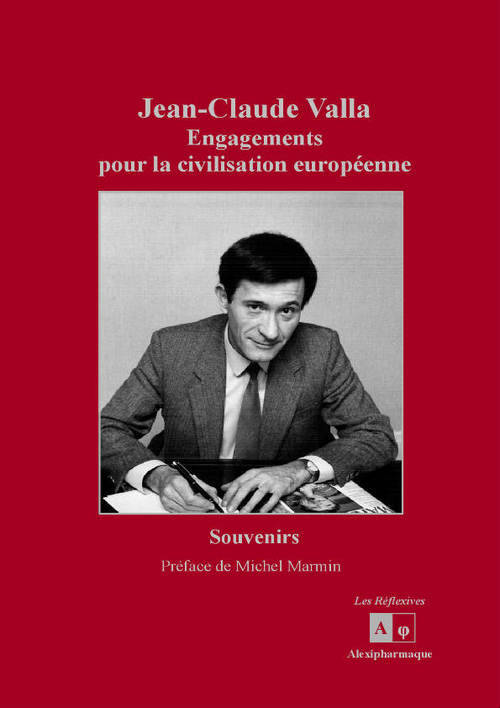
" Jean-Claude Valla (1944-2010) restera, devant l’histoire, comme l’une des figures les plus importantes et les plus attachantes de la Nouvelle Droite, à laquelle son parcours personnel et son œuvre ne sauraient toutefois être réduits.
Militant nationaliste dans les années 1960, il fut dans la décennie suivante le chef de file incontesté du GRECE et le principal animateur, avec Alain de Benoist, d’un combat métapolitique qu’il devait illustrer en lançant la revue Éléments en 1973 et en dirigeant les rédactions d’hebdomadaires aussi prestigieux que Le Figaro Magazine ou Magazine Hebdo. Meneur d’hommes qui savait allier la délicatesse à la fermeté, Jean-Claude Valla était un grand journaliste, doublé d’un historien non conformiste et scrupuleux.
Ses mémoires, dont sa disparition prématurée interrompit malheureusement la rédaction, restituent pleinement sa personnalité lumineuse. Pour être incomplets, ils n’en constituent pas moins une magnifique leçon de conviction et de courage, deux vertus que les jeunes Européens ne sauraient trop aujourd’hui cultiver.
Pour les historiens des idées politiques, ces Engagements pour la civilisation européenne seront dorénavant incontournables. “
00:05 Publié dans Livre, Livre, Nouvelle Droite | Lien permanent | Commentaires (0) | Tags : nouvelle droite, livre, jean-claude valla | | del.icio.us | | Digg | Facebook
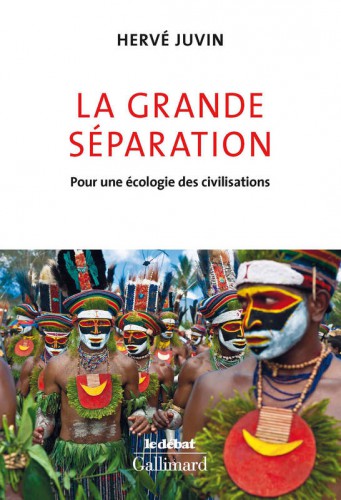
Le plaidoyer pour la diversité d’Hervé Juvin
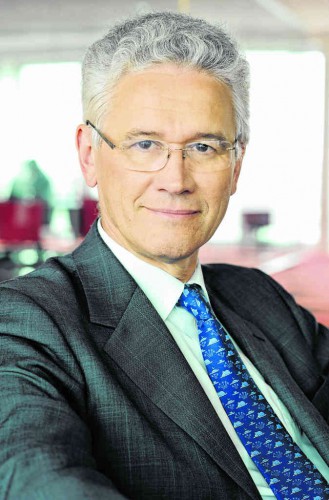
Identité, influence, puissance : face à la mondialisation, le plaidoyer pour la diversité d’Hervé Juvin
Dans l’entretien qu’il a accordé à Bruno Racouchot, directeur de Comes Communication, Hervé Juvin invite à penser le monde de l’après-mondialisation, du retour des singularités, des identités et des déterminations politiques. L’Europe et spécialement la France ont tous les atouts pour relever le défi. En particulier sur le registre du soft power et de l’influence. A condition toutefois de ne pas céder à la facilité, qui nous conduirait à renoncer à notre place dans le monde.
Bruno Racouchot (Directeur Comes Communication) : Dans votre dernier ouvrage, on voit que le processus de mondialisation exerce son pouvoir d’une part brutalement via les normes, la finance et le droit ; et d’autre part plus subrepticement via une pensée unique qui ne tolère pas la diversité des identités et des valeurs. Nous sommes donc bien là confrontés à un système de domination combinant hard et soft powers ?
Hervé Juvin : Permettez-moi de commencer par une anecdote historique rapportée par Alain Peyrefitte, qui tenait les minutes du conseil des ministres du général de Gaulle. Lorsqu’il organise son gouvernement, le général de Gaulle confie à Jean Foyer la charge de Garde des Sceaux. Il lui donne expressément la mission de respecter l’ordre suivant dans la hiérarchie des préoccupations : l’État d’abord, puis le droit. L’État et la nation ont primauté sur les formes et la conformité du juridique. Or, nous vivons aujourd’hui exactement l’inverse.
L’État apparaît comme le moyen de la mise en conformité du peuple et de la nation au regard de normes et de règles venues d’ailleurs. A la source de ce dysfonctionnement, il y a Bruxelles bien sûr, mais surtout Washington.
Car beaucoup de mesures qui entrent en application en Europe viennent directement de tel ou tel think tank, ONG ou relais d’influence américain. Ce qui dénote au passage un vide de la pensée et de l’analyse inquiétant sur le Vieux continent.
Si l’on fait ainsi l’histoire des mots comme “gouvernance”, “conformité juridique”, “création de valeur”, on observe qu’ils sont d’importation nord-américaine récente. On voit aussi que les “droits de l’homme” ne sont plus une proclamation généreuse, à caractère général sans conséquence légale concrète. Dans les faits, ils sont aujourd’hui devenus une arme politique et géopolitique de premier plan, qui peut être utilisée pour saper l’unité interne de n’importe quel pays et n’importe quel peuple.
Peu d’historiens et d’analystes politiques se sont essayés à décortiquer ce processus. A l’exception notoire de Marcel Gauchet qui publie en 1980, dans la revue Le Débat, un article de fond intitulé très clairement ” Les droits de l’homme ne sont pas une politique “, où il souligne notamment que “la conquête et l’élargissement des droits de chacun n’ont cessé d’alimenter l’aliénation de tous”. Marcel Gauchet persévère et signe en 2000, toujours dans les colonnes de la revue Le Débat , un autre article intitulé “Quand les droits de l’homme deviennent une politique”. Il n’apporte pas la réponse, mais je crois qu’en filigrane, nous pourrions deviner que ce soit une catastrophe !
En réalité, le système unique, c’est le rêve que tous les humains soient les mêmes partout dans le monde, sans que leur origine, leur sexe, leur croyance, leur langue, leur communauté politique puissent leur donner une identité. Ce qui justifie la remarque de René Girard, qui explique qu’à force de tolérer toutes les différences, on finit par n’en plus respecter aucune.
Je crains ainsi que sous couvert de l’éloge indiscriminé des différences individuelles, on soit en train de faire disparaître à grande échelle et très rapidement toutes les différences réelles, lesquelles sont par nature et donc nécessairement collectives.
Ces différences politiques, religieuses, de mœurs, de droit… sont ainsi visées directement par le rouleau compresseur de la mondialisation et son corollaire, à savoir la conformité aux droits individuels.
BR : Pour ce qui est de combattre ce soft power de la pensée unique à l’échelle mondiale, quelles stratégies de contre-influence imaginer et sur quel socle les faire reposer ?
HJ : Il nous faut ouvrir les yeux et travailler. Nous devons nous mettre d’urgence aux outils et à la logique du soft power. Je suis frappé du fait qu’en Chine, aux États-Unis, en Russie et dans bien d’autres pays émergents, on travaille sérieusement cette question. Un exemple : la floraison de think tanks et d’ONG anglo-américaines a permis que de nouveaux concepts soient acceptés comme vérités d’Évangile, en France, en Europe ou ailleurs, à notre plus grande défaveur. C’est la construction de dispositifs intellectuels, d’outils de diffusion et de promotion, qui favorise cette puissance discrète.
De même, le repérage de jeunes talents ou de personnages ayant une audience fait partie du jeu. Voyez comment certains diplomates américains travaillent avec les minorités visibles des banlieues françaises. Ces jeunes sont assez vite conviés à venir à Washington pour participer à des travaux, et entrent ainsi dans une spirale d’influence. Il y a donc travail à plusieurs niveaux : organisation, déploiement de moyens, recherche d’incitations productives, puis montée en puissance et synergie. Chinois, Russes, Américains, Israéliens… ont tous une conscience aiguë que les distinctions entre public et privé s’effacent quand l’intérêt national est en jeu. Encore plus quand il s’agit d’un enjeu de survie.
Le libre-échange, l’égalité entre les peuples, et autres thèmes en vogue sont en fait des doctrines à vocation d’exportation, de la part d’entités politiques qui se conçoivent comme des puissances en lutte. Or dans cette lutte, tous les outils – commerciaux, juridiques, intellectuels, militaires, etc. – doivent être employés au service de l’intérêt national.
Prenez l’exemple des sociétés les plus créatives, les plus échevelées et innovantes, comme le sont les sociétés américaines de la sphère internet : elles travaillent main dans la main avec les agences de renseignement des États-Unis ! Nous sommes là aux antipodes de notre praxis politique actuelle, bien française, qui veut qu’il y ait une frontière bien marquée entre sphère publique et sphère privée. Nous ne parlons malheureusement pas en France en termes d’intérêt national. On s’interdit de travailler main dans la main entre public et privé alors que l’intérêt national l’exigerait. A cet égard, les dogmes de la Commission de Bruxelles – par exemple en matière de concurrence – nous font énormément de mal et surtout nous bloquent dans l’expression de notre puissance.
BR : Le concept d’identité se trouve au cœur de la démarche développée depuis quinze ans par Comes Communication. Selon vous, la mise en valeur de son identité par une entreprise ne constitue-t-elle pas un puissant facteur différenciant, donc un avantage concurrentiel ? En ce sens, l’identité, qui permet d’affirmer sa spécificité et son authenticité, ne s’impose-t-elle pas comme un facteur de performance, générant de la création de valeur, pour les entreprises comme pour d’ailleurs toute organisation ?
HJ : En matière d’identité, ce qui a fait durant des siècles l’autorité et l’écoute du discours français, c’est d’abord son autonomie, faisant de nous un pays non-aligné pas vraiment comme les autres. Notre parole n’était pas celle d’une superpuissance, mais celle d’une puissance phare en matière d’intelligence et de liberté. Si l’on devait refaire aujourd’hui une conférence de Bandung [NDLR : conférence des non-alignés en 1955], la France y aurait pleinement sa place, aux côtés de ceux qui entendent conserver leur identité et leurs singularités. Là réside sans doute le grand champ géopolitique de demain.
De même, ce qui vaut pour la sphère politique vaut aussi pour les sociétés privées. Depuis une trentaine d’années, ces dernières développent des stratégies essentiellement guidées par des critères financiers. Or les stratégies ainsi définies s’arrêtent à la surface des choses. Parce qu’à mon sens, les entreprises qui seront gagnantes sur le long terme seront celles qui auront su développer, en interne comme en externe, une identité propre, autrement dit une singularité les distinguant de leurs concurrents et de leur environnement.
Cette identité assure leur pérennité dans le temps car elle est transmissible. On observe d’ailleurs que la définition de cette identité d’entreprise est fréquemment liée à la personnalité d’un dirigeant, qui marque souvent plus par l’implicite que par l’explicite.
L’identité n’est ni une succession de powerpoints, ni une logique de ratios. L’identité ne se laisse jamais mettre en équation ni cerner par les chiffres. Une entreprise qui se réduit à des chiffres se réduit assez vite à rien. Si elle veut agir dans la durée, et favoriser la création de valeur ajoutée, la résilience, la capacité de mobilisation des équipes, l’entreprise doit s’efforcer de jouer sur son identité bien plus que sur le socle fallacieux des chiffres.
BR : Sur le plan géostratégique et géoéconomique, le recours aux liens identitaires constitue à vos yeux un moyen idoine pour enrayer la montée en puissance à l’échelle planétaire de l’individu-déraciné-et-consommateur que prône la mondialisation. Le rôle-clé de l’identité, son action, son rôle s’appliquent-ils de la même façon aux individus, aux peuples, aux États ? Comment l’identité s’intègre-t-elle dans les rapports de force économiques, politiques, sociaux, culturels… ?
HJ : Si l’on se place dans une perspective historique, il apparaît que l’identité est clé dans tous les processus de résilience ainsi que dans la performance stratégique. On a usé et abusé de la formule de Sénèque, selon laquelle il n’est pas de vent favorable à celui qui ne sait où aller. Je serais tenté de dire qu’il n’y a pas de vent favorable non plus pour celui qui non seulement ne sait pas qui il est, mais en outre, ignore qui l’accompagne sur le bateau.
La capacité à affirmer une identité va de plus en plus s’imposer comme un élément-clé dans les années à venir.
L’idée américaine selon laquelle on doit fermer les yeux sur les questions de sexe, de religion, de culture, d’appartenance à une communauté, aboutit à nier même la notion même de singularité des hommes et des organisations. Or, ce sont justement ces singularités ne se réduisant pas à une valeur monétaire qui vont compter dans les années à venir.
Les entreprises qui se laisseront prendre au piège de l’indifférenciation et de la mondialisation, passeront à côté de cette question-clé de l’identité. L’entreprise sans usine, qui externalise tout, qui sous-traite au point de perdre la maîtrise de ses métiers de base, se trouve en fait réduite à rien, dépassée et dévorée. Prenons l’exemple d’une chaîne de supermarchés : ce sont d’abord des épiciers, avec l’alliance subtile de leurs défauts et leurs qualités, qui in fine produit leur identité. Ce ne sont pas des comptables ou des financiers qui en sont les artisans. Nous avons donc bien là affaire à des logiques intimes, clairement différentes.
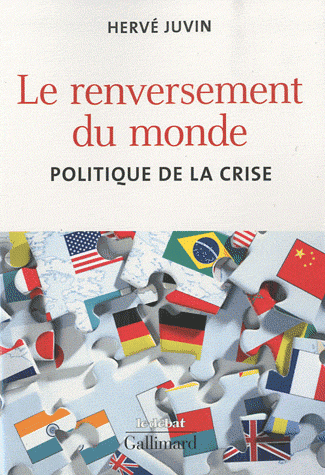 BR : Vous écrivez dans votre dernier livre : “La décomposition des nations européennes procède de la censure, de la grande fatigue devant l’histoire et de leur soumission par en haut aux institutions internationales, par en bas aux communautés et minorités revendicatrices.” Comment les peuples peuvent-ils espérer agir pour renouer avec cette énergie vitale et cette confiance en eux qui leur permettront d’affronter les défis à venir ?
HJ : Nous sortons d’une période de prospérité dont nous n’avons pas eu clairement conscience. En France et en Europe, l’immense majorité de la population vit bien. Au regard de l’histoire de l’humanité, je dirai même que ce constat constitue une exception : pacification des territoires, niveau de vie, santé, etc. nous avons prospéré durant ces dernières décennies sur un mode extrêmement privilégié.
Le retour au réel risque d’être quelque peu brutal. Nous allons devoir nous confronter de nouveau aux dures réalités géopolitiques.Le facteur déclenchant sera probablement l’explosion de la classe moyenne. La lucidité politique va s’imposer rapidement à nous.
En outre, l’idée béate dans laquelle se complaît l’Europe, selon laquelle tous les problèmes de ressources sont liés aux marchés et aux prix, va trouver de fait ses limites. Nous allons très vite basculer sur des logiques de survie, n’ayant plus rien à voir avec une approche rationnelle. Et probablement assister demain, avec la question de l’eau, des terres rares ou des terres arables, à des défis semblables à ceux du pétrole hier. Le pétrole est un objet géopolitique, bien avant d’être l’objet du marché. Par la force des choses, nous allons donc être ramenés aux réalités des enjeux géopolitiques. Et notre survie va exiger que soit dès lors prioritairement prise en compte la notion d’intérêt national.
Ne nous leurrons pas : la question de notre survie politique se trouve bel et bien posée. Est-ce que quelque chose qui s’appellera encore la France existera en 2050 ? L’Union européenne existera-t-elle en 2020 ? Pour ma part, ce qui m’inquiète, c’est que nos élites et nos dirigeants ne me paraissent pas formés pour faire face à ces défis. Ces gens ont toujours œuvré dans un monde de continuité. La question était : va-t-on faire +3% ou + 5 % de croissance ?… Oui, nous entrons dans un monde avec des perspectives radicalement différentes. Ce qui veut dire que notre mindset, notre disposition d’esprit, notre logiciel de pensée, et donc toutes nos approches stratégiques, doivent être revus de fond en comble.
C’est là, me semble-t-il, le vrai défi d’actualité pour la pensée française. À savoir la capacité à penser le monde de l’après-mondialisation, du retour des singularités, des identités et des déterminations politiques. Je crois que nous avons tous les atouts pour cela. À condition toutefois de ne pas céder à la paresse ou à la facilité intellectuelle, qui nous conduisent à renoncer et à perdre notre place dans le monde. Ne nous y trompons pas : au-delà des rodomontades et des stupidités de notre politique étrangère – qui jouent assez peu, en fait, sur le long terme – c’est la capacité de la France à être un émetteur d’idées, un diffuseur de pensée, avec une réelle autorité et une authentique aptitude créatrice, qui compte. Mais prenons garde à ce que ces atouts ne soient pas en train de s’épuiser…
00:05 Publié dans Actualité, Entretiens, Philosophie | Lien permanent | Commentaires (0) | Tags : hervé juvin, philosophie, différentialisme, entretien, diversité, pluralité | | del.icio.us | | Digg | Facebook
'Israël en Saudi Arabië ontwikkelen super-Stuxnet virus tegen Iran'
Iraanse official: Obama heeft ons tot nieuwe strategische partner gemaakt
Ex: http://xandernieuws.punt.nl

De Iraanse kerncentrale in Bushehr was 3 jaar geleden één van de doelen van het Amerikaans-Israëlische Stuxnet virus.
Volgens het Iraanse persbureau Fars werken de inlichtingendiensten van Israël en Saudi Arabië samen aan een nieuwe, nog schadelijkere variant van het Stuxnet computervirus, dat in 2010 grote delen van het Iraanse nucleaire programma wist te ontregelen. Een Iraanse official wist te melden dat president Obama deze keer niet meedoet met de cyberoorlog, omdat hij van koers is veranderd en besloten heeft om Iran tot zijn nieuwe strategische partner in het Midden Oosten te maken.
Algemeen wordt aangenomen dat het originele Stuxnet-virus ruim 3 jaar geleden werd ontwikkeld door Israël en de VS. Als recente berichten kloppen, zou dit virus nog altijd de ronde doen en zowel een Russische kerncentrale als het Internationale Ruimtestation hebben bereikt.
In drie jaar tijd zijn de machtsverhoudingen op de wereld flink verschoven. Wie had ooit kunnen denken dat de Verenigde Staten, dat net als Israël jarenlang dreigde met militair ingrijpen, een radicale ommezwaai zou maken, en dat de inlichtingendiensten van Israël en Saudi Arabië zouden gaan samenwerken.
Saudi"s zien deal met Iran als 'westers verraad'
Dat is althans wat Fars beweert. Prins Bandar bin Sultan, hoofd van de Saudische inlichtingendienst, en Tamir Pardo, leider van de Israëlische Mossad, zouden op 24 november -kort na het tekenen van de interim overeenkomst met Iran- samen met hun beste cyberoorlogspecialisten in Wenen bij elkaar zijn gekomen om een virus te ontwerpen, dat erger is dan Stuxnet en dat de software van het Iraanse nucleaire programma moet gaan vernietigen.
Het project werd in gang gezet nadat de 5+1 machten hun handtekening onder het voorlopige akkoord met Iran zetten, dat door de Israëliërs een 'historische fout' en door de Saudiërs zelfs 'Westers verraad' werd genoemd.
Publiek geheime ontmoetingen
Dezelfde Iraanse bron 'onthulde' dat prins Bandar en Tamir Pardo elkaar meerdere malen hebben ontmoet in de Jordaanse havenstad Aqaba. Toen dit een publiek geheim werd, zou de Saudische kroonprins Salman bin Abdulaziz prins Bandar hebben gewaarschuwd dat de nauwe samenwerking met de Mossad het koninklijke huis toch zorgen baarde.
De bron wist ook te melden dat prins Bandar in het geheim naar Israël reisde, precies op het moment dat de Franse president Francois Hollande op 17 en 18 november op bezoek was in de Joodse staat. Bandar zou samen met de Israëliërs en Fransen hebben overlegd over hoe het Iraanse nucleaire programma alsnog een halt toe kan worden geroepen.
Diplomatiek schaakspel
Om diplomatiek tegenwicht te bieden, stuurde Iran minister van Buitenlandse Zaken Javad Zarif naar enkele Arabische Golfstaten, maar niet naar Saudi Arabië. Door prins Bandars samenwerking met de Mossad te benadrukken, hoopt men in Teheran de interne machtsstrijd over de troonsopvolging in Riyad verder aan te wakkeren. De Iraanse mullahs maken zich namelijk grote zorgen over de samenwerking van het land met Israël.
De 'onthulling' van deze samenwerking moet tegelijkertijd de interne oppositie in Teheran overtuigen hun verzet tegen de deal met de 5+1 machten op te geven. Iran zou, bijvoorbeeld als het weigert de afspraken met het Westen na te komen, anders alsnog alleen tegenover Israël en Saudi Arabië kan komen te staan.
Israëlische defensiespecialisten merken op dat de onthullingen wel door de Russische media, maar niet door de Westerse werden overgenomen. Dit zou kunnen duiden op een nauwe samenwerking tussen de Iraanse en Russische inlichtingendiensten.
Xander
(1) DEBKA
00:05 Publié dans Actualité, Géopolitique | Lien permanent | Commentaires (0) | Tags : iran, israël, arabie saoudite, moyen orient, géopolitique, politique internationale, cyberguerre, guerre cybernétique | | del.icio.us | | Digg | Facebook
Thomas Manns Protest gegen den Zivilisationsliteraten
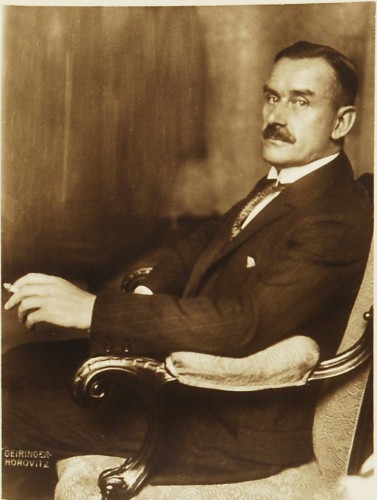
Thomas Manns Protest gegen den Zivilisationsliteraten
Als Thomas Mann seine „Betrachtungen eines Unpolitischen“ schrieb, war er noch streng deutschnational und kriegsbejahend gesinnt. Das sollte sich bald ändern: Schon kurze Zeit später distanzierte sich Mann von seinem schriftstellerischen Beitrag zum Ersten Weltkrieg und avancierte zum Vernunftrepublikaner, der die Weimarer Republik publizistisch gegen ihre Feinde von rechts und links verteidigte. Manns frühe Betrachtungen sind allerdings nicht einfach als dumpfe Kriegspropaganda abzustempeln, sondern stellen große Literatur dar, die darüber hinaus immer noch wichtige Einsichten politischer und kultureller Art zu vermitteln in der Lage ist. Mit Blick auf seinen Bruder Heinrich –damals pazifistisch eingestellt und ein eifernder Gegner des heraufziehenden Krieges – entwarf Mann die Figur des Zivilisationsliteraten, der gegen sein eigenes Land als intellektueller Agent der Westmächte publizistisch zu agitieren begann. Natürlich ist diese Figur stereotypisch überzeichnet; wir dürfen aber davon ausgehen, dass dieser Typus damals zuhauf Repräsentanten fand – und bis heute findet. Thomas Mann verketzert das Zivilisationsliteratentum jedoch nicht als „Verräterei“ und schiebt sie auf die Feindseite ab, sondern fragt nach den tieferen Ursachen dieses Phänomens.
Dabei stellt er fest, dass die innere geistige Einheitlichkeit und Geschlossenheit, wie sie bei allen europäischen Nationen gerade in Kriegszeiten besonders entwickelt ist, für Deutschland nicht so einfach in Anschlag zu bringen ist: Deutschland sei keine Nation in diesem Sinne, denn es habe eine andere Bildungsgeschichte und einen anderen Menschlichkeitsbegriff. Die geistigen Gegensätze seien so stark ausgeprägt, dass sie ein nationales Band nur schwerlich umfassen und vereinigen könne. Das liege vor allem daran, dass diese Gegensätze weniger nationaler als europäischer Art sind, die ihre Spannungen auf deutschem Boden und in deutscher Seele entladen: „In Deutschlands Seele werden die geistigen Gegensätze Europas ausgetragen, — im mütterlichen und im kämpferischen Sinne ›ausgetragen‹. Dies ist seine eigentliche nationale Bestimmung. Nicht physisch mehr — dies weiß es neuerdings zu verhindern —, aber geistig ist Deutschland immer noch das Schlachtfeld Europas.“ Infolge von Deutschlands Mittellage in Europa gerät es nicht nur in eine geopolitische Bedrohungssituation, sondern wird zum seelischen Kampfplatz für europäische Gegensätze. Das bedeutet nicht nur, als eine permanente Arena eines Kulturkampfes zu dienen, sondern auch eine geistig-kulturelle Gemengelage, die künstlerischer Schaffenskraft eine produktive Anarchie von singulärer Qualität ermöglicht. Der Preis dafür fällt hoch aus: es ist die Zersplitterung der deutschen Seele, die wie der ehemalige Flickenteppich deutscher Lande zerrissen und unversöhnlich fragmentiert daliegt. Es entsteht eine Geistesspaltung, die nicht nur die Seele der Nation durchfährt, sondern auch die Seele jedes einzelnen Deutschen, sein Kopf und sein Herz. Deutschtum – das ist nach Mann also keineswegs ein festgefügtes Wesen, eine fertige Festung, die lediglich nach außen verteidigt werden müsste, nein: Deutschtum ist durch und durch problematisch, es ist selbst ein Problem, eine unbeantwortete Frage. Welche Gefahr bestünde nun für Deutschland, falls es den Weltkrieg verlöre und dem Westen einverleibt würde? Wäre das nicht ein nachhaltiger Beitrag für den Frieden in Europa? Nicht zufällig berufen sich die gegenwärtigen EU-Propagandisten, wenn sie ihre Vision in Frage gestellt sehen oder weitere Forderungen und Maßnahmen durchsetzen wollen, auf diese ideologische Legitimationsformel. „Westintegration“, „westliche Wertgemeinschaft“, „der Frieden in Europa“ – ob mit Krieg oder ohne, es sind bis heute die unhinterfragbaren Grundaxiome, die das Fundament bundesrepublikanischen Selbstverständnisses abgeben sollen. Die deutsche Eigenart kommt hingegen überhaupt nicht mehr vor, nicht mal mehr an zweiter Stelle. Was sagt nun Thomas Mann zu Deutschlands nationaler Neutralisation? „Wessen Bestreben es wäre, aus Deutschland einfach eine bürgerliche Demokratie im römisch-westlichen Sinn und Geiste zu machen, der würde ihm sein Bestes und Schwerstes, seine Problematik nehmen wollen, in der seine Nationalität ganz eigentlich besteht; der würde es langweilig, klar, dumm und undeutsch machen wollen und also ein Anti-Nationalist sein, der darauf bestünde, daß Deutschland eine Nation in fremdem Sinne und Geiste würde . . .“ Bei „bürgerlicher Demokratie im römisch-westlichen Sinne“ dürfen wir nicht primär an eine Staatsform denken, sondern es ist eine ganz andere politische Kultur gemeint, die heute nicht wesentlich anders aussieht als damals; man könnte sie „Weltbürgertum“ oder „Weltzivilisation“ nennen, eine imperialistische Bestrebung, die darauf abzielt, das globale Dorf zu begründen, das multikulturelle Traumparadies oder den ewigen herrschaftsfreien Diskurs im Maßstab der Weltkommunikation. Totale Menschheit, totale Toleranz, totaler Fortschritt. Wenn Deutschland darin aufgehen würde, würde es aufhören, Problem zu sein bzw. überhaupt zu sein. Um zu verstehen, warum Mann diese Option, die heute wahrscheinlicher als je erscheint, so perhorresziert, müssen wir die Rolle klarer herausstellen, die unser Land laut ihm in seiner Geschichte gegen den Westen einnahm. Helmut Plessner sprach abfällig von der „verspäteten Nation“ und bescheinigte Deutschland einen zivilisatorischen Rückstand gegenüber Frankreich und England. Mann perspektiviert denselben Sachverhalt andersherum und dreht ihn ins Positive: Deutschland sei immer das protestierende Reich gegen den „römischen Westen“ gewesen. Es machte bei dessen universalistischen Heilsphantasien nicht mit und scherte ostentativ aus. Es erwies sich dadurch als das protestantische Land im wahrsten Sinne des Wortes.
Was tut der Zivilisationsliterat? Nun, er protestiert gegen den Protest und „fordert den innigen Anschluß Deutschlands an das Zivilisationsimperium“. Er bekennt sich nicht nur dazu, er kämpft tatsächlich auf der Gegenseite. Er ist inneres Ausland. Und trotzdem: Mann hütet sich, ihn als Vaterlandsverräter oder „undeutsch“ zu denunzieren: „Der Begriff ›deutsch‹ ist ein Abgrund, bodenlos, und mit seiner Negation, der Entscheidung ›undeutsch‹, muß man äußerst vorsichtig umgehen, um nicht zu Fall und Schaden dabei zu kommen.“ Da der Begriff „deutsch“ ohnehin abgründig ist und eigentlich bereits eine Negation darstellt, ist die Negation dieser Negation eine schwierige Angelegenheit. Anders gesagt: Wenn Deutschtum wesentlich Negativität bedeutet, schließt es auch seine eigenen Negationen in sein positives Wesen mit ein, so dass den Zivilisationsliteraten auch ein gewisser Patriotismus nicht abzusprechen ist. Nur: „Ihr Patriotismus bekundet sich dergestalt, daß sie die Vorbedingung der Größe, oder, wenn nicht der Größe, so doch des Glückes und der Schönheit ihres Landes nicht in seiner störenden und Haß erregenden »Besonderheit«, sondern, um es zu wiederholen, in seiner bedingungslosen Vereinigung mit der Welt der Zivilisation, der Literatur, der herzerhebend und menschenwürdig rhetorischen Demokratie erblicken, — welche Welt durch die Unterwerfung Deutschlands in der Tat komplett würde: ihr Reich wäre vollendet und umfassend, es gäbe keine Opposition mehr gegen sie.“ Der Triumph des Westens wäre das globale Universalreich der Kommunikation, die offene Gesellschaft ohne ihre Feinde, oder negativer gesprochen: der totale Konformismus einer gleichförmigen ‚One World’ ohne Opposition und Protest, zu denen gerade Deutschland nach Thomas Mann die geistig-kulturelle Potenz besessen hätte. Vielleicht steht dessen Ausfall nicht zuletzt mit der sukzessiven Annäherung an diesen scheinbar alternativlosen Weltzustand in kausalem Zusammenhang.
Doch lassen wir Mann diese schwammige Ideologie noch weiter konkretisieren, damit hinter ihrer zuckrigen Fassade zugleich auch ihre Peitsche sichtbar wird. Er nennt den Zivilisationsliteraten einen Pleonasmus. Was bedeutet das? Letztendlich, dass die Zivilisation, die der Zivilisationsliterat propagiert, eben nichts anderes als Literatur ist! Das heißt keine realpolitisch mögliche Wirklichkeit, sondern eine utopische Fiktion, die bestenfalls in Träumen oder Romanen ihren angemessenen Platz hat. Ihre Demokratie ist pure Rhetorik. Mann entlarvt sie als Kopfgeburt der französischen Revolution, als deren zeitgenössische Vollstecker sich die Zivilisationsliteraten verstehen: „Frankreich ist sein Land, die Revolution seine große Zeit, es ging ihm gut damals, als er noch ›Philosoph‹ hieß und in der Tat die neue Philosophie, nämlich die der Humanität, Freiheit, Vernunft vermittelte, verbreitete, politisch zubereitete…“ Der Zivilisationsliterat –ein „Element des nationalen Schicksals“ – erweist sich deshalb als so gefährlich, weil er den Monopolanspruch und die Definitionshoheit über solche Begriffe wie Menschheit und Brüderlichkeit errungen hat, obwohl wer Menschheit sagt, auch betrügen könnte oder Brüderlichkeit und Blutgerüste nahe beieinanderliegen könnten. Das sieht man diesen abstrakten Begriffen allerdings nicht an, sondern höchstens ihren historischen Verwirklichungsversuchen und zwar erst dann, wenn es schon zu spät ist. Um historische Durststrecken zu überbrücken und Aktivierungsenergie für die vernünftige Menschheitsrepublik zu sammeln, identifiziert sich der Zivilisationsliterat gerne mit dem Lauf der Geschichte selbst, die er als Fortschritt im Bewusstsein der Freiheit denkt: „Das Bewußtsein, den ›Fortschritt‹ für sich zu haben, zeitigt offenbar eine sittliche Sicherheit und Selbstgewißheit, die der Verhärtung nahekommt und schließlich das Gemeine zu adeln glaubt, einfach dadurch, daß sie sich seiner bedient.“ Wer für den Fortschritt ist, dem ist alles erlaubt und darf jedes Mittel recht und billig sein. Wer diesen hingegen in Frage stellt, den trifft das Gemeine mit voller Breitseite.
Mann weigert sich jedoch hartnäckig, den Zivilisationsliteraten dasjenige Schicksal zuzumuten, das er seinen Feinden aufbürden will, sie nämlich zur persona non grata außerhalb von Recht und Menschheit zu deklarieren und für verbale und physische Barbarenschelte freizugeben: „Undeutsch? Aus allen meinen Kräften wehre ich mich dagegen, ihn undeutsch zu nennen, und werde nicht aufhören, mich dagegen zu wehren, solange die Kräfte mir nicht versagen. Man kann höchst deutsch sein und dabei höchst antideutsch. Das Deutsche ist ein Abgrund, halten wir fest daran.“ Im Zivilisationsliteraten schaut „Der Deutsche“ in seinen eigenen Abgrund: „Selbstekel und Einfremdung, kosmopolitische Hingebung und Selbstentäußerung“, die auch Teil deutschen Wesens sind, seines tief gespaltenen Wesens. Aber nicht nur das. Wenn er genauer hinsieht, würde er ebenso das Antlitz eines fremden Nationalismus erkennen, und zwar nationalfranzösischer Art: „Er ist einer der besten französischen Patrioten. Der Glaube trägt ihn und verleiht seinem Stile zuweilen ein herrliches Tremolo, einen bewunderungswürdigen Schwung: der Glaube an die Ruhmes- und Missionsidee seines — des französischen — Volkes und daß es ein für allemal zum Lehrer der Menschheit berufen sei, berufen, ihr ›die Gerechtigkeit‹ zu bringen, nachdem es ihr ›die Freiheit‹ gebracht hat (welche aber aus England stammt). Er denkt nicht nur in französischer Syntax und Grammatik, er denkt in französischen Begriffen, französischen Antithesen, französischen Konflikten, französischen Affären und Skandalen. Der Krieg, in dem wir stehen, erscheint ihm, völlig entente-korrekt, als ein Kampf zwischen ›Macht und Geist‹ — das ist seine oberste Antithese! —, zwischen dem ›Säbel‹ und dem Gedanken, der Lüge und der Wahrheit, der Roheit und dem Recht. (Ich brauche nicht hinzuzufügen, auf welcher Seite nach seiner Ansicht sich Säbel, Roheit und Lüge, auf welcher sich die antithetisch entsprechenden Ideale befinden.)“ Diese manichäische Logik, obwohl sie bei weitem nicht mehr so martialisch daherkommt, dauert bis heute fort, nur mit dauernd veränderter Rollenbesetzung: Zivilisation gegen Barbarei, die Guten gegen das Reich des Bösen, der Aufstand der Anständigen usw. Wer so redet, führt eine Feindbestimmung durch und meldet politische Hegemonieansprüche unter einem moralischen Denkmäntelchen an. Wer will schließlich nicht gerne mit den Heeren des Geistes und der Zivilisation marschieren? Widersprechende müssen verrückt, dumm oder krank sein. Aber wieso überhaupt noch marschieren? Ist der Zivilisationsliterat nicht notwendig Pazifist, weil er den Geist verkörpert? Ganz im Gegenteil, urteilt Mann: „Es verhält sich so, daß der Zivilisationsliterat den Krieg nicht mißbilligt, wenn dieser im Dienste der Zivilisation unternommen wird. […] Wie könnte denn auch der Schüler der Revolution — um nicht zu sagen: ihr Epigone — das Vergießen von Blut um der guten Sache, um der Wahrheit, des Geistes willen grundsätzlich verurteilen? »Entschlossene Menschenliebe« — das Wort gehört dem Zivilisationsliteraten - entschlossene Menschenliebe ist nicht blutscheu;“ Entschlossene Menschenliebe heiligt also das Mittel des Krieges, der zunehmend Kreuzzugscharakter gewinnt, insofern er ja im Zeichen von Menschheit, Zivilisation und Gerechtigkeit steht. Die Gegner sind damit per definitionem die Menschenhasser und Barbaren, deren Anliegen jede Legitimität abgesprochen wird. Wir haben es hier mit der pervertierten Renaissance des gerechten Krieges zu tun, der in dem Maße, wie er mit Sendungsbewusstsein und Missionseifer aufgeladen ist, seine Feinde entmenschlicht. Das Ziel des Zivilisationsliteraten lässt sich mit keinen geringeren Vokabeln umschreiben als mit „Erlösung“ oder „Befreiung“, die der römische Westen in pädagogischer Oberlehrermanier seinem frechen Ziehsohn Deutschland beibringen will: „»Deutschland wird sich schicken müssen«, sagte er damals, und seine Augen glommen. Deutschland wird endlich artig sein müssen, sagte er, und es wird dann glücklich sein wie ein Kind, das nach Schlägen schrie und, wenn es welche bekommen hat, dankbar ist, daß man seinen Trotz gebrochen, ihm über seine Hemmungen hinweggeholfen, es erlöst, es befreit hat. Wir erlösen und befreien Deutschland, indem wir es schlagen, es auf die Knie werfen, seine böse Renitenz, ihm selbst zur Wohltat, brechen und es zwingen, Vernunft anzunehmen und ein ehrenwertes Mitglied der demokratischen Staatengesellschaft zu werden.“ Wie würde die Welt wohl aussehen, wenn sich das westliche Zivilisationsimperium global durchgesetzt und die Renitenz seiner Feinde nachhaltig eliminiert hätte – eine Weltsituation, die heute nicht mehr als allzu weit hergeholt erscheint, nachdem Deutschland als Bastion des Protestes nach zwei Weltkriegen endgültig unter die Fittiche der westlichen Wertegemeinschaft genommen und in eine der Vorzeigekolonien der Weltzivilisation verwandelt wurde? Thomas Mann formulierte diese Option noch vorsichtig im Konjunktiv, weil die letzten Entscheidungen noch nicht gefallen waren: „Gesetzt, das wäre geschehen, die Entente ihrerseits hätte rasch und glänzend gesiegt, die Welt wäre vom deutschen ›Alpdruck‹, dem deutschen ›Protest‹ befreit worden, das Imperium der Zivilisation hätte sich vollendet, oppositionslos übermütig geworden: das Ergebnis wäre ein Europa gewesen, — nun, ein wenig drollig, ein wenig platt-human, trivial-verderbt, feminin-elegant, ein Europa, schon etwas allzu ›menschlich‹, etwas preßbanditenhaft und großmäulig-demokratisch, ein Europa der Tango- und Two-Step-Gesittung, ein Geschäfts- und Lusteuropa à la Edward the Seventh, ein Monte-Carlo-Europa, literarisch wie eine Pariser Kokotte.“ Die Neutralisierung Deutschlands beträfe das kulturelle Gepräge Gesamteuropas: Der ganze Kontinent durchliefe eine Entwicklung, in deren Zuge er zu einem „Geschäfts- und Lusteuropa“ degenerierte, das – obwohl im Zeichen von „human freedom und peace“ – tatsächlich die eigene geistg-kulturelle Prostitution zelebrierte. Sind wir heute noch so weit davon entfernt? Auch Mann gab schon zu, dass es eine Entwicklung sei, „die ich für notwendig, da heißt: für unvermeidlich halte“, ein „Fortschritt, – der mir, nicht selten wenigstens, als unaufhaltsam und schicksalsergeben erscheint und den an meinem bescheidenen Teile zu fördern mein eigenes Schicksal ist“. Der ‚Protest’ gegen den ‚Fortschritt’ sieht aussichtslos aus: „Der Fortschritt hat alles für sich. Nur scheinbar ist er die Opposition. Der erhaltene Gegenwille ist es, der in Wahrheit immer und überall die Opposition bildet, der sich in der Verteidigung befindet, und zwar in einer, wie er genau weiß, aussichtslosen Verteidigung.“
Trotzdem sollte die Verteidigung versucht, wenigstens der Nonkonformismus mit dem Zivilisationsliteratentum praktiziert werden. Es ist wichtig an dieser Stelle nochmals zu betonen, dass die Zivilisationsliteraten keine bestimmte politische Gruppierung darstellen, auf die man despektierlich mit dem Finger zeigen könnte – davor hatte Mann ja schon 1918 scharf gewarnt. Der Zivilisationsliterat steht weder rechts noch links, weder oben noch unten in der Gesellschaft, sondern er ist ein Symbol, das damals wie heute nicht nur die süße Versuchung der nationalen Selbstentkernung Deutschlands anzeigt – moderner: „Deutschland schafft sich ab“- sondern zugleich auch immer für eine Grundmöglichkeit deutschen Daseins steht, die seinem abgründigen Wesen entspringt. Die andere Grundmöglichkeit deutschen Daseins ist als Gegengewicht ebenso notwendig und kann mit Mann „konservative Opposition“ oder „ästhetische Revolte“ genannt werden. Die Proponenten dieses Flügels haben sich immer wieder die Frage zu stellen, die Thomas Mann am Ende des Kapitels zu seinem Zivilisationsliteraten rhetorisch gestellt hat: „Es handelt sich um die Politisierung, Literarisierung, Intellektualisierung, Radikalisierung Deutschlands, es gilt seine ›Vermenschlichung‹ im lateinisch-politischen Sinne und seine Enthumanisierung im deutschen . . . es gilt, um das Lieblingswort, den Kriegs- und Jubelruf des Zivilisationsliteraten zu brauchen, die Demokratisierung Deutschlands, oder, um alles zusammenzufassen und auf den Generalnenner zu bringen: es gilt seine Entdeutschung . . . Und an all diesem Unfug sollte ich teilhaben?“ Um die wirklich eigene Form von Demokratie und politischer Kultur wieder zu gewinnen, um in das eigene Wesen wieder einzukehren, bedarf es vor allem eines: Mut zum Protest.
Literatur:
Thomas Mann: Betrachtungen eines Unpolitischen.
00:05 Publié dans Littérature, Révolution conservatrice | Lien permanent | Commentaires (0) | Tags : thomas mann, allemagne, littérature, littérature allemande, lettres, lettres allemandes, révolution conservatrice, première guerre mondiale | | del.icio.us | | Digg | Facebook
IL “NIET” DELL’UCRAINA ALL’UE: MITI E REALTÀ
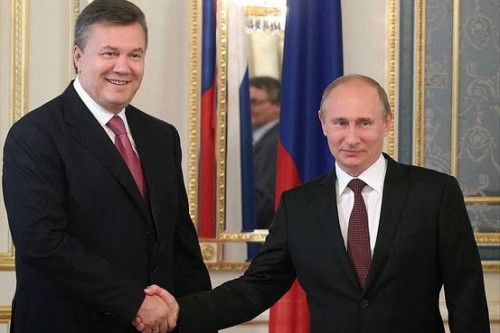
IL “NIET” DELL’UCRAINA ALL’UE: MITI E REALTÀ
Giuseppe Cappelluti
Ex: http://www.eurasia-rivista.org
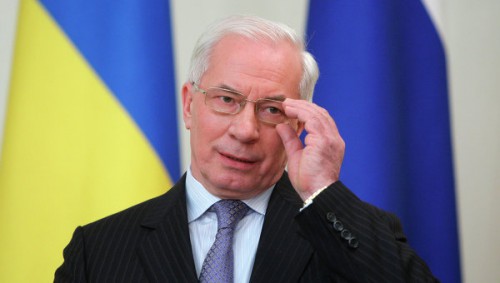
Il 21 novembre 2013 il Primo Ministro ucraino Nikolaj (in ucraino Mykola) Azarov ha annunciato che il suo Paese non intende più firmare l’Accordo di Associazione con l’Unione Europea e che intende invece rilanciare le proprie relazioni commerciali con la Russia, l’Unione Doganale Eurasiatica e i Paesi della CSI[i] [1]. Nello stesso giorno, in una seduta parlamentare condita da forti polemiche e scambi di accuse, il voto contrario dei comunisti e del Partito delle Regioni attualmente al governo ha impedito il trasferimento a Berlino per cure mediche dell’ex Primo Ministro Julia Tymošenko, che l’Unione Europea aveva posto come una delle maggiori precondizioni per la stipula dell’accordo che avrebbe portato alla liberalizzazione degli scambi commerciali tra UE e Ucraina, salvo che per i prodotti agricoli[ii] [2].
Si tratta, probabilmente, dell’atto finale di una commedia che perdura ormai da diversi anni, e la cui conclusione ha lasciato sorpresi in molti. Dopo la guerra commerciale tra Ucraina e Russia dello scorso agosto e l’approvazione da parte del governo di alcuni dei provvedimenti in termini di giustizia, sistema elettorale e riforme economiche richiesti dall’Unione, la prospettiva che il Vertice di Vilnius previsto per il prossimo 29 novembre si sarebbe concluso con la sottoscrizione dell’Accordo di Associazione tra Unione Europea e Ucraina non era più così lontana. A metà ottobre, poi, il futuro europeo dell’Ucraina pareva ormai vicino quando il Presidente Viktor Janukovič annunciò la possibilità di concedere alla Tymošenko la possibilità di recarsi all’estero per cure mediche[iii] [3]. Ma così non è stato, e anzi gli ultimi giorni prima della decisione finale hanno visto un raffreddamento dei rapporti euro-ucraini e una parallela intensificazione dei contatti tra Janukovič e Putin. Un epilogo quasi preannunciato, malgrado tutto, e che non ha mancato di suscitare polemiche.
Dall’Occidente, come si può facilmente immaginare, sono arrivate forti critiche nei confronti di Janukovič e della Russia. L’Alto Commissario per la Politica Estera Catherine Ashton ha dichiarato che “la decisione è un fallimento non solo per l’UE, ma anche per il popolo ucraino” e il Ministro degli Esteri svedese Carl Bildt, uno dei protagonisti delle trattative tra l’UE e l’Ucraina per l’Accordo di Associazione, ha accusato la Bankova di essersi chinata alle “brutali pressioni” del Cremlino. Più contenuta la reazione del Ministro degli Esteri tedesco Guido Westerwelle, il quale ha affermato che “l’Ucraina ha il diritto di scegliere quale percorso seguire”[iv] [4]. Anche la stampa occidentale è schierata in gran parte contro Janukovič e Putin. Deutsche Welle, ad esempio, titola “Le minacce russe bloccano l’accordo commerciale euro-ucraino”[v] [5], e il titolo del New York Times è sulla stessa lunghezza d’onda[vi] [6]. Non pochi, poi, hanno accusato Janukovič di aver sacrificato la prospettiva europea sull’altare dei propri interessi personali mantenendo in carcere una sua pericolosa rivale. Putin, dal canto suo, ha rispedito al mittente le accuse di minacce denunciando un “ricatto” dell’Europa nei confronti dell’Ucraina[vii] [7].
Si tratta, però, di posizioni che non focalizzano il problema, oltre a denotare una palese faziosità antirussa. La Tymošenko, infatti, è solamente la punta dell’iceberg, e se Azarov alla fine ha scelto di gettare la spugna i motivi sono soprattutto di natura economica. L’Ucraina, pur avendo un notevole potenziale agricolo e industriale, è stata notevolmente colpita dalla fine del sistema sovietico e dalla rottura dei legami tra le Repubbliche dell’URSS, ma il Paese, a differenza delle Repubbliche Baltiche, è stato incapace di sostituirli con qualcosa di nuovo. Allo stesso tempo, però, non ha potuto né voluto mantenere forti legami economici con la Russia e i Paesi della CSI come ha fatto la vicina Bielorussia. Questo limbo è dovuto in gran parte alle forti divisioni tra la popolazione ucraina: l’Ovest è culturalmente legato all’Europa, le regioni orientali e meridionali guardano verso la Russia e sono di religione ortodossa, mentre una porzione non marginale degli abitanti del Paese, pur ricordando i Russi sotto molti aspetti e parlando russo più che ucraino, guarda con favore alla prospettiva di entrare nell’Unione Europea e agli apparenti benefici che comporta quest’adesione, mentre vede la Russia in una luce tutt’altro che positiva. Tutto ciò ha limitato in maniera non indifferente lo sviluppo del Paese, condannato a oscillare tra Occidente e Russia ma senza diventare parte integrante dell’uno o dell’altra.
Negli anni Duemila l’Ucraina ha goduto di un buon andamento economico, ma la crisi del 2008 ha colpito il Paese molto duramente. Gli anni successivi hanno visto una leggera ripresa, ma il Paese continua ad essere uno dei più poveri d’Europa. La Naftogaz, la società nazionale degli idrocarburi nonché la maggiore azienda del Paese, è fortemente indebitata con Gazprom, anche a causa di quei contratti sfavorevoli al Paese sottoscritti nel 2009 dalla Tymošenko quando era ancora Primo Ministro[viii] [8]. Nel 2011 la prospettiva di una fusione tra Naftogaz e Gazprom in cambio di sconti sul gas è stata rigettata dal governo ucraino[ix] [9], mentre il passaggio al colosso russo della gestione della rete di gasdotti, ma non della proprietà, è al momento bloccato in quanto tale passo richiederebbe l’approvazione di una riforma costituzionale[x] [10]. Il problema, però, resta: Kiev paga a Mosca prezzi esosi per il suo gas (400 dollari ogni 1000 metri cubi), e a fine ottobre Gazprom ha richiesto alla controparte ucraina un pagamento di ben 882 milioni di dollari per le forniture di gas di agosto, portando così il debito della compagnia a 1,4 miliardi[xi] [11].
I contratti firmati nel 2009 hanno valenza decennale, e la Russia si è mostrata disposta a una loro revisione solo in cambio dell’adesione dell’Ucraina all’Unione Doganale. Lo sconto proposto da Mosca consentirebbe a Kiev di risparmiare circa 8 miliardi l’anno[xii] [12], ma malgrado tutto il Paese non sembra intenzionato a compiere un passo che implicherebbe dire addio alla prospettiva europea. Il Paese, anzi, ha avviato da circa due anni una strategia per la riduzione della dipendenza dal gas russo, basata soprattutto sulla diversificazione degli approvvigionamenti e sullo sfruttamento delle riserve di gas non convenzionale (il cosiddetto “gas da argille” o shale gas)[xiii] [13]. Si tratta, però, di una mossa tardiva, che probabilmente non darà i risultati sperati, e in ogni caso la strategia di diversificazione degli approvvigionamenti portata avanti da Kiev è di gran lunga in ritardo nei confronti di quella delle vie di trasporto che la Russia porta avanti da più di quindici anni e che, con la futura entrata in funzione del gasdotto South Stream, potrà dirsi a pieno regime. E’alquanto probabile, quindi, che la Russia uscirà vittoriosa da questa “guerra”.
L’intreccio tra gas e politica è un altro grande problema dell’Ucraina odierna. La possibilità di offrire gas a prezzi politici è infatti un importante cavallo di battaglia per i politici ucraini, specie a ridosso degli appuntamenti elettorali, ma i vari governi hanno sempre osteggiato la possibilità di accettare una soluzione affine a quella bielorussa, che recentemente ha venduto alla Gazprom la società che gestisce la rete di metanodotti del Paese. Il risultato è che l’Ucraina, pur acquistando il gas a prezzi piuttosto alti, lo vende ai suoi cittadini a prezzi convenzionati, con conseguenze che si possono facilmente immaginare. Nel 2011 l’Ucraina ha dovuto chiedere un prestito di 15 miliardi di dollari al Fondo Monetario Internazionale, ma l’organizzazione pose come precondizione l’abolizione dei sussidi sul gas, e il rifiuto di Kiev segnò il fallimento dell’accordo[xiv] [14]. Un’analoga richiesta di prestito presentata all’FMI due anni dopo si è anch’essa risolta con un fallimento, e questo solo il giorno prima del gran rifiuto di Azarov[xv] [15]. Il fallimento delle trattative tra l’Ucraina e l’FMI ha avuto senza dubbio un ruolo cruciale nell’allontanare Kiev da Bruxelles e nel riavvicinarla a Mosca. Un riorientamento che ha già iniziato a dare i propri frutti: il 24 novembre, infatti, il Cremlino ha annunciato la propria disponibilità a una revisione dei termini dei contratti sul gas con l’Ucraina[xvi] [16].
Accanto alle questioni del gas e dei debiti, va ricordata quella della bilancia commerciale del Paese. Per la Russia un eventuale ingresso dell’Ucraina nell’Unione Doganale rappresenterebbe senza dubbio un grande successo geopolitico e morale, ma dal punto di vista economico i benefici sono più limitati, sebbene consentirebbe al mercato eurasiatico una maggiore autosufficienza e lo renderebbe più attraente agli occhi di esportatori e investitori stranieri. Ben maggiori sono invece i vantaggi per l’Ucraina: secondo alcune stime, infatti, gli sconti sul gas, l’abolizione delle misure protettive e delle barriere tecniche e la rimozione delle tasse sulle esportazioni garantirebbe al Paese esteuropeo guadagni pari a 11-12 miliardi annui[xvii] [17]. Ben diverso, invece, è il discorso nei riguardi dell’Accordo di Associazione con l’UE. L’industria ucraina, malgrado il suo potenziale, non è competitiva con quella dei Paesi europei, e si prevede che un’eventuale stipula dell’accordo provocherebbe un peggioramento del 5% della bilancia commerciale del Paese[xviii] [18]. L’impatto sarebbe particolarmente pesante nelle regioni orientali, polmone industriale del Paese nonché roccaforte elettorale di Janukovič, e agli inizi di novembre Azarov ha dichiarato che il Paese necessiterebbe di 150-160 miliardi di euro per allineare agli standard europei l’industria ucraina[xix] [19]. Ma l’UE non risulta particolarmente propensa ad aiutare Kiev: alla richiesta di quest’ultima di un prestito di 8 miliardi di dollari, infatti, Bruxelles ha risposto offrendone uno di 1 miliardo di euro (ossia circa 1,3 miliardi di dollari), e peraltro ha posto come condizione l’approvazione di tagli potenzialmente destabilizzanti per il Paese[xx] [20].
Nell’UE l’Ucraina sarebbe una seconda Grecia, mentre il suo habitat naturale sembra essere un’Eurasia dove il suo potere sarebbe secondo solo a quello di Mosca. Un Ucraino occidentale o particolarmente “patriottico” può dire che “l’Ucraina non è la Russia”, e ciò è sostanzialmente vero se si parla, ad esempio, di Leopoli o della Transcarpazia; ma, allo stesso modo, non è la Lettonia, e non ha la stessa propensione ai sacrifici che ha dimostrato Riga nel cammino che l’ha portata all’adozione dell’euro. Nella prima metà di ottobre Azarov ha dichiarato che “nulla vieta all’Ucraina di sottoscrivere l’Accordo di Associazione con l’UE e, nel contempo, creare un’area di libero scambio con l’Unione Doganale”[xxi] [21], ma quest’idea, all’apparenza la migliore soluzione per il Paese, non è fattibile per il tipo di rapporti che si sono venuti a creare tra Russia e Ucraina. I due Paesi, infatti, hanno frontiere sostanzialmente aperte, e l’abolizione dei dazi tra UE ed Ucraina provocherebbe, almeno secondo il Cremlino, un’invasione di prodotti europei a prezzi non gravati dai dazi sui mercati dell’Unione Doganale, rendendo così necessaria l’introduzione di misure protettive nei confronti di Kiev[xxii] [22]. Le perdite dovute alle sanzioni, a detta di Janukovič, si aggirerebbero attorno ai 15 miliardi di dollari, e ciò, per il Paese, sarebbe un’autentica pugnalata[xxiii] [23]. Il fatto che l’accordo di libero scambio con l’UE escluda i prodotti agricoli, che per l’Ucraina sono una delle maggiori merci di esportazione, non è propriamente di secondaria importanza.
La svolta del 21 novembre, che alcuni in Ucraina hanno già ribattezzato “il giovedì nero”, è senza dubbio una sconfitta non solo per l’Unione Europea, ma per l’intero Occidente, che malgrado l’impegno degli Stati Uniti si rivela più debole della Russia nello spazio ex-sovietico. Per la Russia, invece, si sta per chiudere un autunno denso di successi: la mediazione di Putin per prevenire l’intervento americano in Siria, la svolta eurasista dell’Armenia, le elezioni in Georgia e il miglioramento della posizione della Russia in una serie di indicatori economici. Ma la virata di Kiev verso l’Eurasia è tutt’altro che priva di risvolti positivi per l’Europa. La Russia forte e imperialista tanto osteggiata da politici europei e attivisti dei diritti umani, infatti, per l’Europa è di gran lunga meno pericolosa di una Russia debole. La Russia moderna, infatti, non è l’Unione Sovietica, e a differenza di quest’ultima non ha e né può avere ambizioni universaliste. L’assenza del ruolo dell’ideologia comunista obbliga il Paese a promuovere i propri interessi nel mondo non in quanto portabandiera della rivoluzione mondiale, ma in quanto Russia, e ciò riduce di molto il suo raggio d’azione impedendole di intervenire qualora non siano in gioco i propri interessi diretti o quelli di una nutrita schiera di cittadini russi o di Russi etnici. Allo stesso modo l’Unione Doganale, ispirata ai principi del libero mercato, non propone un ritorno al passato. Ma molte delle sfide che oggi la Russia si trova ad affrontare sono comuni all’Occidente: il fondamentalismo islamico, il traffico internazionale di stupefacenti, la stabilità di regioni potenzialmente a rischio come l’Asia Centrale. Per l’Europa, quindi, è di fatto più utile un’Ucraina filorussa che non un’Ucraina nell’UE: la prima contribuirebbe in maniera sostanziale al miglioramento della sicurezza e della situazione economica dell’Eurasia, la seconda si trasformerebbe inevitabilmente in una nuova Grecia. Ma, per vedere l’Ucraina fare domanda di ammissione nell’Unione Doganale (o, in alternativa, intraprendere seriamente il cammino dell’eurointegrazione), dovremo probabilmente attendere il 2015. L’anno delle prossime elezioni presidenziali.
[i] [24] http://voiceofrussia.com/2013_11_22/Kiev-suspends-drafting-of-the-EU-Ukraine-Association-Agreement-8935/ [25]
[iii] [28] http://www.reuters.com/article/2013/10/18/us-ukraine-tymoshenko-idUSBRE99H05120131018 [29]
[vi] [34] http://www.nytimes.com/2013/11/22/world/europe/ukraine-refuses-to-free-ex-leader-raising-concerns-over-eu-talks.html?_r=0 [35]
[vii] [36] http://italian.ruvr.ru/2013_11_23/Putin-lEuropa-usa-con-lUcraina-la-pressione-e-il-ricatto/ [37]
[viii] [38] I contratti del 2009 sono stati la causa della condanna della Tymošenko a 7 anni di carcere per abuso di potere.
[x] [41] http://temi.repubblica.it/limes/nella-guerra-del-gas-tra-russia-e-ucraina-vincera-putin/45202 [42]
[xii] [45] R. Dragneva e K. Wolczuk, Russia, the Eurasian Customs Union and the EU: Cooperation, Stagnation or Rivalry?, Chatham House, Londra, 2012, p. 11.
[xiii] [46] http://temi.repubblica.it/limes/lucraina-sogna-lindipendenza-energetica-ma-rischia-un-brusco-risveglio/54205 [47]
[xv] [50] http://www.nytimes.com/2013/11/23/world/europe/ukraine-blames-imf-for-collapse-of-accord-with-european-union.html?_r=0 [51]
[xvi] [52] http://tengrinews.kz/sng/rossiya-soglasilas-peresmotret-gazovyiy-kontrakt-s-ukrainoy-246070/ [53]
00:05 Publié dans Actualité, Affaires européennes, Géopolitique | Lien permanent | Commentaires (0) | Tags : politique internationale, géopolitique, europe, affaires européennes, ukraine, russie, union européenne, actualité | | del.icio.us | | Digg | Facebook
TWO STUDIES ON NEO-EURASIANISM
TWO STUDIES ON NEO-EURASIANISM
by Martin A. Schwarz
Ex: http://www.eurasia-rivista.org
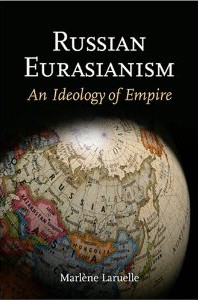
Marlene Laruelle: Russian Eurasianism: An Ideology of Empire. Washington, D.C.: Woodrow Wilson Press/Johns Hopkins University Press, 2008, 288 p.
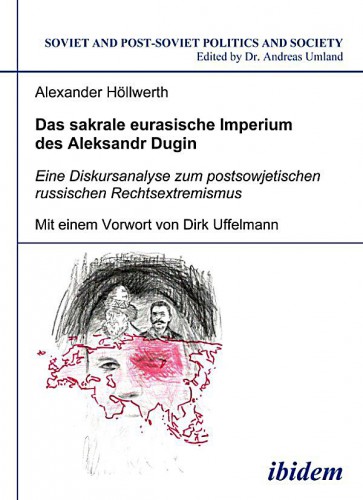
Alexander Höllwerth: Das sakrale eurasische Imperium des Aleksandr Dugin. Eine Diskursanalyse zum postsowjetischen Rechtsextremismus. Soviet and Post-Soviet Politics and Society, Vol. 59. Stuttgart: Ibidem Verlag 2007. 735 p.
Different strands of Russian Eurasianism (Laruelle, part 1)
Marlene Laruelle, a young but prolific French-American scholar, who has already published books about the classic Eurasianism and about its precursor in the 19th century, has now written “Russian Eurasianism. An ideology of Empire”, one of the first comprehensive academic studies of Neo-Eurasianism, or at least in the West. In difference to other works of this kind, the author sticks to her principles of impartiality, which does not mean that she does not present her own theories about history and function of Eurasianism as an “ideology of Empire”, but, in her own words “this book analyzes Neo-Eurasianism without judging it, for two reasons. First, I do not think one may, either methodologically or ethically, judge and analyze at the same time. Knowledge is a prerequisite of argument, but the former must precede the latter. Second, as Pierre-André Taguieff has remarked, ‘There is no need to put words into an author’s mouth or demonize him in order to critically examine theses that one believes must be opposed.’” (Laruelle, p. 13)
 After a brief introduction in which she points to the relevance of the subject, her different approach (as mentioned), and the specific weight of the personalities she choose for presentation, the first chapter is devoted to the original Eurasianism from 1920-1930. This is a rather brief outline, as she has already written a book on the subject (L’Idéologie eurasiste russe ou comment penser l’empire, Paris 1999) , and brings not many new or original informations about a movement, which was the “conservative revolution” á la Russe, borrowing from Fascism and Bolshevism, but denouncing their short-comings and “Western” features. Two things though seem to be central for Laruelle’s understanding of the Eurasianists: the notion of a “geographic identity” for Russians, instead of the Western self-understanding of a “historic” and therefore progressive understanding of the identity of nations (which of course was transferred as “historical materialism” to Russia, and also was promoted by liberals and – inverted – by nostalgic monarchists). Therefore the geographic orientation of Eurasianism lies at the core of the movement, but was paradoxically developed in the Western exile: “The Eurasianist doctrine must be grasped in its fundamentally provocative character. It was born of the malaise of young nationalists who were reluctant to integrate into the host culture and who refused to resign themselves to the thought that links with homeland were definitely broken. Their rejection of Europe can only be understood if we remember that it was elaborated in the West by those Russians who, culturally speaking, were the most Europeanized.” (p. 25) While it is undeniable true, that Eurasianism as self-affirmation could only become self-knowledge in the encounter and subsequently (at least partial) rejection of Western ideologies, Laruelle shows a tendency to psychologize the phenomenon: “(Eurasianism) attempts to theorize what is above all an experience and a feeling: the experience of young men in exile who feel humiliated by the defeat of the Whites and try to understand the reality of the motherland and stay in touch with it.” (p. 47)
Another paradox or ambiguity can be found in the Eurasianist re-evaluation of the Far Eastern part of Russian history and culture, the Mongolic and Islamic one. „(…) before Eurasianism in the 1920s, no Russian intellectual movement displayed a real openness to the Turko-Mongol world. Asia was only ever highlighted under the aspects of Aryanism; it was a mere detour to reinforced claims of Europeaness.“ (p. 4) While this heritage was now used by the Eurasianists as an argument for the distinction of Russia not only to Western Europe but also to Pan-Slavism, the religions and cultures of Buddhism and Islam as such were denigrated in favor of a militant Orthodox Christianity. As the final parts of this book are dedicated to the relation between (neo-)Eurasianism and Islam, this question has not to be answered at this point.
After this brief, not very differentiated presentation of the original Eurasianists, Laruelle looks more in detail in the thinking of the three most influential neo-Eurasianists. These are, in her words “the theories of ethnogenesis elaborated by the Orientalist Lev N. Gumilëv (1912-92); the fascistic geopolitics of the fashionable theorist Aleksandr Dugin (1962-); the philosopher Aleksandr Panarin’s (1940-2003) defense of a multipolar world.” (p. 2)
Lev Gumilëv, the missing link – or rather: not missing link – between “old” and “new” Eurasianism enjoys nearly universal popularity in Russia. His theories of Ethnogenesis are generally excepted and taught in schools and universities, often without reference to the Eurasianist Weltanschauung, although they are deeply connected with their organic understanding of peoples and societies. While Gumilëv shares with the Eurasianists the idea that the individual draws the meaning from the totality, Gumilëv’s theory of ethnos is definitively on the more biologistic and deterministic side of possible variations of this idea. One that, as I must say, does not fit well with the ideas of an supra-natural origin of culture, which is the normal religious concept, and also especially stressed by the representatives of integral traditionalism (René Guénon, Julius Evola, and others), whose ideas were introduced to neo-Eurasianism by Aleksandr Dugin and Geidar Dzhemal. As Laruelle writes, “he [Gumilëv] takes up the original Eurasianists’ organicism and radicalizes it, using numerous biological or even genetic metaphors with far-reaching political implications”, although “he does not, strictly speaking, develop a political theory; and […| he cannot be considered a partisan of conservative revolution.” (p. 82) Instead he stressed (as must remembered: in the time of Soviet stagnation of the Brezhnev era) very social conservative norms: endogamy, family life, respect for the elderly, the nation, and rejection of any challenge to the powers that be, all necessary for the survival of the ethnos. Laruelle considers him – understandably – “the least intellectually relevant and the least original (Neo-)Eurasianist.” (p. 82) As Gumilëv was neither in touch with Western intellectuals nor in tune with Soviet science , “his thought, the product of intellectual solitude, was fundamentally autistic” (p. 82), This result, if true, is by the way in striking contradiction to his notion of the supremacy of the collective ethnos as a sovereign whole, and also a total contrast to the very mercurial and alert ideologue of Neo-Eurasianism, Aleksandr Dugin, well-known in the West and very present in Russian media.
Before devoting space to Dugin, Laruelle discusses Aleksandr Panarin, whom she clearly favors. She calls him intellectually superior to Dugin and Gumilëv, or to be exact: she writes that “many”, but unnamed “Russian scholars” (p. 86) did consider him to be. Be this at it may, Panarin was in the Yeltsin era a promoter of “people’s capitalism” (p. 87) and in the Putin era an advocate of “the restoration of both Orthodox spirituality and Stalinist statehood.” (p. 88) Maybe he could be considered as flexible or opportunist as Dugin? Nevertheless he presented a “civilized Eurasianism”, “civilized” here being the indicator of “the exact opposite to Dugin’s variety.” (p. 88) Nevertheless Panarin became a member of the Central Council of Dugin’s Eurasian Party in 2002, and planned to write a foreword to a book by Dugin, but as Laruelle writes, “death put an end to this unlikely cooperation.” (p. 89) Panarin’s work was marked by the search for a third way, “between the West’s egalitarian universalism and the ethnic particularism of the non-European world.” (p. 93) Panarin’s model for an Eurasian Empire in his words, as quoted by Laruelle: “The principle of cultural pluralism, as well as attention and tolerance for different ethnocultural experiences are combined with a monist political authority that tolerates no opposition.” (p. 97) One of the intriguing but also problematic ideas of Panarin was the need for a combination of the Eurasian religions into something, what he calls the “Great Tradition” (p. 98), especially a fusion between Orthodox Christianity and Islam. In his quoted words: “We need a new, powerful world-saving idea that would ensure a consensus between Orthodox and Muslim culture for the benefit of a common higher goal.” (p. 99) Later he seemed to have abandoned this attempt in favor of an Orthodox supremacism and a renewed pan-Slavism, according to Laruelle in reaction to the NATO bombardment of Serbia. (p. 100)
The chapter on Aleksandr Dugin in titled “Aleksandr Dugin: A Russian Version of the European Radical Right?“ and was published before as a study by the Woodrow Wilson Institute in Washington, DC. While the title indicates the direction and the somewhat limited approach to the multi-faceted Dugin, it can be said that this attempt to analyze the influences of the New Right and the „Traditionalist school“ on Dugin’s theories is of much superior quality than the ramblings of the ubiquous Andreas Umland and his school of Dugin bashing. Like the New Right in Western Europe Dugin has attempted to adopt the teachings of Carl Schmitt, Karl Haushofer, Ernst Niekisch and Moeller van den Bruck, the so-called “Conservative Revolution” in Germany’s Weimar period, to the present situation of Russia, which largely means the attempted forced Westernization through Globalization and the counter-measures of the re-establishment of state power. This “conservative revolution” intellectual heritage is accompanied by two more currents, the New Right or rather: Nouvelle Droite, and the „integral Tradition“, both not so much of German but French and Italian origins, although the thinking of Alain de Benoist not only has a strong „Conservative Revolutionary“ foundation, but was also influenced by Armin Mohler, the personal link between Ernst Jünger and Carl Schmitt, and Alain de Benoist. Additionally and largely unrelated to Benoist was the Belgian European activist Jean Thirirat, whose model of an „European nation“ has preformed Dugin’s „Eurasian nation“ as much as the French Nouvelle Droite’s think tank GRECE and their meta-political approach did for the somehow fluctuating style of Dugin’s intellectual enterprises. Therefore Laruelle is not mislead, when she writes: “Dugin distinguishes himself from other figures in the Russian nationalist movements precisely through his militant Europeanism, his exaltation of the Western Middle Ages, and his admiration for Germany. All these ideological features contrast strongly with the ethnocentrism of his competitors.“ (p. 128)
Even more on the point is her acknowledgment of the influence of René Guénon and Julius Evola, and their minor intellectual allies and successors, on Dugin. She calls „Traditionalism“ the „foundation of Dugin’s thoughts“. While it can correctly be said, that the notion of a primordial Tradition as the common origin of all the religious-cultural traditions of Eurasia, can not be found in the writings of the „founding fathers“ of Eurasianism and was directly alien to some of their ideas – the rambling against the „Roman-Germanic civilization“ - , nevertheless Dugin could find only here the organic and integral solution to some of the most urgent problems of Russia’s Eurasian (com)position between Orthodoxy, Islam, Buddhism and other more minor elements: the transcendent – esoteric - unity of the exoteric different heirs of one primordial Tradition. Which is why – in our not Laruelle’s view – and without considering possible personal idiosyncrasy and political opportunism, his brand of neo-Eurasianism must be considered superior to those of his „competitors“, take for example the ill-fated attempt of Panarin’s Islam/Orthodoxy „melting pot“. Dugin’s claim of post-Guénonism because of his attempt to „Russify“ Guénon and to criticize the lack of references to Orthodox Christianity (p. 123), should be seen rather as a complementary effort. Similar is his attempt to reconcile Evolian „paganism“ (p. 123), or rather Aryanism, with Russian Christianity, with its strong national element. And not only of theoretically value is the distinction between Traditional Islam – as represented in the Sufi traditions and in Shiite Iran – and the Western-allied Wahhabite branch. In this context Laruelle makes reference to the important symposium “Islamic Threat or Threat against Islam?” (p. 118) which intended to establish a Russian-Muslim strategic partnership.
A „discourse analysis“ of Aleksandr Dugin (Höllwerth)
Alexander Höllwerth’s doctor thesis in Salzburg (Austria) on the „sacred Eurasian empire of Alexander Dugin“ impresses by it sheer quantity of more than 700 pages. The reader expects to gain access to fundamental texts of Russian neo-Eurasianism, otherwise only available in Russian. This expectation is fulfilled only partially because the author does give way to much space to his own objections, considerations and assumptions. A part called „contextualisations“, which brings nothing new, but gives an oversight of the historical Eurasianist movement, follows the book’s methodological reflections (reaching from Foucault’s discourse notion to Buruma’s occidentalism model).
Höllwerth then summarizes the literature from Stephen Shenfield („Russian Fascism“) to Andreas Umland (who is the editor of this volume and wrote its preface) on the biography of Aleksandr Dugin. He gives his estimation of the relationship between the subject of the book and the current Russian regime. Höllwerth states that Dugin is one of the few prominent intellectuals in Russia whom it is allowed to criticize the Kremlin without being banned from public discourse into the small niches of opposition media (which are rather the domain of Dugin’s enemies, the Western orientated liberals). Dugin has written in 2005 that the “acting of Putin can be evaluated as an artificially masked continuation of the pro-American, liberal, pro-oligarch strategy of Yeltsin, as a camouflage of the decline of Russia and its geopolitical spheres of influence.” (Höllwerth, p. 182) But this harsh assessment was followed by a phase of “reconciliation”. One could consider this as an evaluation of differing politics by a principled intellectual, the changes being on the side of the Kremlin and not on the side of the commentator. Höllwerth tends to mystify this point of view, but with the help of Dugin himself or rather his edition of Jean Parvulesco’s book “Putin and the Eurasian Empire” which differentiates between “Putin-1”, the real Putin, and “Putin-2”, the metaphysical Putin, the “mysterious builder of the Great Eurasian Empire of the End” (p. 184), the agent or tool of the great Eurasian conspiracy, a vulgarized or at least popularized variation of the initiation as described by René Guénon, but assuming in the sketch of Parvulesco rather counter-initiative features.
But what is the real and not “metaphysical” influence of Aleksandr Dugin, according to Höllwerth? “The attempt to estimate the ‘real political influence’ of Dugin is confronted with the difficulty to separate the plane of staging from the plane of factuality. This difficulty, with which the external scholar is confronted, seems to be part of a conscious strategy: the meaning of Dugin’s staging does, metaphorically put, not be to let the viewer look behind the scenery of the staging, but to focus his attention on the staging itself. (…) ‘Behind the scenery’ activities in connection with the Dugin phenomenon (secret services, political string-pullers, etc.) can not be excluded, are even probable, but should not lead to ambitious speculations based on few evidences.” (p. 194 f.) By the way, a sensationalist piece of work, based on such “ambitious speculations based on few evidences” was published by the same publishing house, which did not dare to include it in their scientific series and did flank it with cautious remarks. (Vladimir Ivanov: Alexander Dugin und die rechtsextremen Netzwerke. Fakten und Hypothesen zu den internationalen Verflechtungen der russischen Neuen Rechten. Stuttgart: Ibidem Verlag, 2007) And of course also with a preface by the inevitable Andreas Umland. A work to be put on the same shelve with Jean Parvulesco’s political fiction, but one has to admit that it has better entertainment value than Höllwerth’s rather sour work.
With page 197 starts the real discourse-theoretical body of the book, being also the real achievement of Höllwerth: „Dugin’s construction of world and reality“. Which is itself parted into three: Space, Order, Time, or also: Geopolitics, State, and History. But through these 500 pages goes one leitmotif: Höllwerth tries to reduce the complexity of Dugin’s system of synthesis and distinction to simple dualisms; we and the other, Eurasia (=Russia) against the West, Empire against democracy, etc., which are in return recognized as redundant repetitions of one and only mantra of power. After Dugin’s philosophy and policy has passed through Höllwerth’s mechanism of discourse analysis we arrive at exactly the same result, a more temporizing genius like Andreas Umland did achieve with one piece of paper and only two quotes of Dugin out of context: the exposure of a dangerous enemy of freedom and democracy. Vade retro, Dugin! But with Höllwerth’s help the Western reader can uplift himself by dining from a broad protruding self-affirmation of Western values with a more than saturating scientific apparatus.
The most compelling aspect of Höllwerth’s de- and reconstruction of Dugin’s discourse is its stringent structure. Also the obvious inclusion of the most important Western and Eastern authors must be noted. The confrontation with the matadors of Western liberalism (Jürgen Habermas, Sir Karl Popper, Bassam Tibi, Jean-François Lyotard) could be seen as helpful. But the extensive reproduced arguments of Dugin’s counter-parts are put on the same level of discourse with Dugin, even where Höllwerth notes the metaphysical character of Dugin’s traditionalists argument. The resulting impossibility of a dialogue between equals is construed by Höllwerth as a deficit of Dugin’s discourse.
Another example of Höllwerth’s inadequate approach: Höllwerth did indeed – and this is rather remark- and laudable - read the French metaphysician René Guénon. But only to point out the deviations of Dugin from the Guénon traditionalist “standard”, which is rather pointless, because Höllwerth himself has already classified Dugin correctly as Russian Evolianist (p. 355 ff.) and most of Höllwerth’s arguments seemingly advocating Guénon could also been directed against Julius Evola, and on this subject a large intra-traditionalist discussion could be cited. More than once Höllwerth argues that Dugin postulates a metaphysical dichotomy of East and West, while Guénon did stress the common original unity and only accepted a difference East-West since the decline of the West beginning with the modern era. But the West is the Occident, the sphere of sunset, by definition, and essential before the temporal decline began. So Dugin and Guénon are both correct, if they are read correctly!
Not unrelated is another important objection, which may indeed be problematic if true. This is the dependency of Dugin not only from Western authors in general, but also in his understanding of Eastern, meaning mainly Russian-Orthodox authors. Höllwerth tries to argue this in detail in some examples (for example: p. 664 ff.), this unfortunately cannot be assessed by me, due to my lack of knowledge of the Russian sources. But one thing is clear, this argument of Western influence can cut in two directions. Höllwerth points out that in one of Dugin’s best known texts “The metaphysics of national-bolshevism” Dugin does refer to Sir Karl Popper’s view of Platon, (p. 320 ff.) but everything the ideologue of the “open society” does characterize negatively is affirmed by Dugin, therefore he arrives at the holistic, total state of the philosophical rulers and the caste of watchers, this not through an adequate study of Platon, but as the reverse of an one-sided caricature made by Popper. If we see the Western history of philosophy not as a footnote to Platon, as was famously said, but as the decline from Platon to Popper, which really was the case, we can still see a partial truth in Höllwerth’s criticism of Western dependency by Dugin, but we have also to recast it into a much greater blame against the West, not to have remained true to its origin.
The adherence of Dugin to a kind – and which kind - of nationalism or a nation-transcending form of Eurasianism would be another question which would need a deeper consideration than Höllwerth provides. The question of nation can in the East not be separated from the confession. From the point of view of metaphysics and tradition (in the sense of René Guénon) most of the values attributed to the Russian nation should be rather connected with the Russian-Orthodox church. The formulation of the “angels of peoples” by the great Russian philosophers and theologians are thought from the premise of the identity nation=religion and correct for all authentic traditions but certainly not for nations in the modern Western sense, where Evola’s and Guénon’s critique of nationalism is totally applicable. Höllwerth’s attempt to find a contradiction between Dugin and the different strands of thought which convene in his own – traditionalist, conservative revolutionary, Orthodox and Russian – can therefore not be followed so easy.
Russia’s Eurasian mission, which lies in the simple fact to be Eurasia in the excellent sense (there is a incomplete Eurasia possible without China or India or Western Europe, but without Russia it makes to sense to speak from Eurasia), is not necessarily a chauvinism of thinking of itself as the hub of the world, but a fact of geopolitics, which can be confirmed by a look at the world map. If the space called Russia would be not be populated by Russians, there would be another people populating this space, and it would have to adopt to the stated property of large space, and would become exactly “Russian” in this way. Thus it becomes clear, why Höllwerth can quote Dugin’s definition of the being (Wesen) of the Russians as space (extension) (p. 401). All this is to keep in mind, when Höllwerth agitates himself on Dugin’s corresponding affirmation, that Russia is the whole (of Eurasia).
The difference between land (Eurasia) and sea (Anglo-America), coincident with rise and decline, Orient and Occident (in the afore mentioned sense of temporal difference by same origin in the metaphysical North, p. 212 ff.) would demand another thorough study. Höllwerth makes a lot out of the seemingly different use of the term “Nomos of the earth” (Nomos der Erde) by Carl Schmitt and Aleksandr Dugin. While Schmitt did mean the search for a new principle of international law for the whole globe, Dugin exclusively uses the phrase as synonym with “Nomos of the land” as contrasted with “Nomos of the sea” (p. 249). This dichotomy of laws according to the different Nomos is not the only problem of mediation, the intra-Eurasian and therefore more urgent is the juristic mediation of the different tradition, when according to Dugin the law is not universal but traditional (for each tradition) (p. 475 ff.). The “integral traditionalism” is exactly the only possible foundation to preserve the differences of the traditions while acknowledging their common and in this sense universal origin (the primordial Tradition). The “universalism” of traditionalism allows to stress the discerned internally and the common ground externally. Especially Hindu tradition and Islam have traditionally absolutely no problems in recognizing the other traditions as varieties of the one Tradition. (But Dugin may not evaluate these two as much as would be desirable, especially in their function of beginning and closing the cycle of mankind.) Finally it becomes absurd when Höllwerth in his “discourse analysis” regards the universalism of all traditions as structurally equivalent to the arrogant “universalism” of Western liberalism. On the one hand, favored by Dugin, the land-bound traditions take all part in the whole of Tradition (analogue to the classic model of idea by Platon), on the other hand, the Western universalism, championed by Höllwerth, is nothing more than a particular, very late development deviation from one specific tradition, the rejection of Western Christianity in its own boundary, and its violent expansion on the way of the world’s seas, postulating itself as the only valuable, and this exactly because it is anti-traditional (“enlightened”)!
Coping with Dugin’s philosophical and geopolitical notion of sacredness, Höllwerth seems to misled by a point of view, which he seems to have adopted from Mircea Eliade, a founder of the modern science of comparative religion (p. 209, p. 529 f.). A partial truth, the difference of profane and sacred, is been used as absolute segregation. There exist sacred places (and times), and on this the sacred geography (and sacred history) is founded, whose importance for Dugin’s geopolitics Höllwerth does carve out – much to his credit, as this level of argument is overlooked to often as pure rhetoric. But are there also in a strict sense profane things? “Come in, here do dwell Gods, too”, Heraclitus did say. Or, speaking with Guénon: there exists no profane thing, but only a profane point of view. Dugin seems to look at all questions also – certainly not only – in a metaphysical perspective, and in general he is able to explain why a certain political action is seen as necessary in this metaphysical perspective by him. This opens here the possibility of misuse through the sacralization of the profane, as on the other hand the profanization of the sacred in the West. The Western man is the one who takes the utilitarism as the measure for all things. The pure action – of which Julius Evola speaks - , which principle of not-clinging to the fruits of action has been affirmed by Dugin, the exact opposite of utilitarism, can only be seen as measure for the validity of Dugin’s decisions. To say, that he may not always be in the right in his metaphysical decisions is a different thing than saying he is guided by profane utility, as the sacred point of view does not make a saint. Höllwerth´s grasp of this problems is flawed because of his attempt to arrange the perceived oppositions into mirrored congruencies, instead of acknowledgment their structurally inequality, which would lead to the necessarily conclusion of the metaphysical superiority of the Eurasian tradition over its Western descent and rival.
Eurasianism and Islam (Laruelle, continuation)
In the last two chapters of her book Marlene Laruelle gives attention to the Muslim Eurasianists, first between the Muslim minorities of the Russian federation and then outside. This topic, though well-known by specialists, did not grasp the attention of a broader public as much as for example Dugin’s role in relation to the Kremlin. Therefore Laruelle’s retelling of the sometime short-lived organizational and personal development is very helpful, but can obviously not been retold in this review. In general there are two kinds of involvement of the Muslim minorities, one in specific Islamic Eurasianist parties, and the other the involvement of Islamic representatives in the general Eurasianist movement. There are two rival organizations representing the Muslim citizens of the Russian Federation, who were headed by two personal rivals, Mufti Talgat Tadzhuddin, who died shortly ago, and Mufti Ravil Gainutdin. The first was a member of Dugin’s party, close to the Kremlin, and a friend of the Russian patriarch Alexis II (p. 156), who coincidentally also died shortly ago. Gainutdin on the other hand keeps more distant to the Orthodox Church and the Kremlin (p. 158), and supports one of the more important Eurasianists rival of Aleksandr Dugin, Abdul-Vakhed V. Niizaov and his Eurasianist Party of Russia. (p. 161) The author summarizes the differences of the Muftis, which also reflect the differences of Dugin and Niizaov: “Tadzhuddin and Gainutdin embody two poles of traditional Russian Eurasianism: on the one hand, Russian nationalism and Orthodox messianism; and on the other hand, a more secular patriotism, which combines great-power ambitions with an acknowledgment of Russia’s multiethnic and multireligious character. Thus Eurasianism has become one of the crystallization points between the various Islamic representative bodies (…)” (p. 161 f.) Alongside these two mainstream bodies of Islam in Russia, there exist many smaller groups. One deserves special mention, the Islamic Commitee of Russia, lead by a former ally of Aleksandr Dugin, who broke with him on several issues, Geidar Dzhemal. The philosopher Dzhemal is an Azeri Shiite (Shiism being the dominant branch of Islam in Azerbaijan), with a close relation to the Islamic Republic of Iran, what separates Dzhemal from the other mentioned Muslim representatives. Strangely this fact is not mentioned by Laruelle. What she stresses, is the importance Dzhemal gives to Islam for securing Russia’s future: “Dzhemal […] states: ‘Russia’s only chance to avoid geopolitical disappearance is to become a Islamic state.’ Thus the movement remained on the borderline of Eurasianism, because it talked of conversion rather than cultural symbiosis ” (p. 147) Dugin’s apparently strong opposition to any conversions on the other hand is self-contradictory given his heavy reliance of his “Traditionalist” foundation on the teaching of René Guénon, also known as Sheikh Abd al-Wâhid Yahya. But it cannot neglected that the Orthodox-Islamic tension in the Eurasianist movement is as much ethnic as religious. The Turkic people can claim to represent “Eurasia” even more than Russians do. “In this view, the Russian people are European and party alien to Eurasia, as opposed to the Turkic people, who are considered to better illustrate the great meeting between Europe and Asia. Russia is no longer understood as a great power but as the most backward part of Europe, by contrast with the dynamism of the Far East and China.” (p. 169) A certain ambiguity in this question goes back to the classic Eurasianist movement of the Twenties of the last century, as Laruelle earlier in a different context has already stated: “Eurasianism’s place within the Russian nationalist spectrum has remained paradoxical due to the fact that it can be interpreted in either a ‘Russocentric’ or a ‘Turkocentric’ way. However, the paradox is not simply in the eye of the outside beholder; it has also divided the Neo-Eurasianists, who have accused each other of advocating the supremacy of one people over another.” (p. 5)
Naturally there is no question on which side the Eurasianist interpretation leans in the cases of Turkish Eurasianism outside of Russia, which is the final topic of this manifold book. In Kazakhstan one can state a “Eurasianism in Power” (p. 171), but a pragmatic Eurasianism this is, without any of the eschatological or traditionalist features of Dugin’s world-view. But Kazhakh Eurasianism as a whole is a multifaceted movement: “’Eurasianist’ Kazakh nationalism has several embodiments: a literary tradition introduced by Olzhas Suleimenov; a highly pragmatic variety used by the presidential administration; and a type of Eurasianist rhetoric that merely masks a much more traditional view of the nation and its right to exist, and mentions Russia only in the negative.” (p. 172) Suleimenov being a friend and ally of Lev Gumilëv (p. 175) and an apologist of “multiethnicity, tolerance, and diversity”, as characteristics of Eurasia. (p. 175) Also present in this intellectual Eurasianism seems to be a religious syncretism, “embracing all the religions that have ever (co)existed in the steppe. For example, the Kazakh Eurasianists make a great deal of archaeological traces of Nestorian Christianity, Zoroastrianism, Buddhism, and Shamanism, trying to go beyond the classic Orthodox-Islamic dualism.” (p. 176) President Nazarbaev proposed a “Union of Eurasian States” already in 1994 (p. 177) and embodies a mainly “economically based Eurasianism, whose integrationists ideas are popular among those who have suffered from the breakdown of links between the former Soviet republics.” (p. 177) But Nazarbaev is nothing less than an ideology-free technocrat, he has written even a book “In the stream of history”, in which he claims the Aryan and sedentary origin of Kazakhstan, predating the Mongol nomadic arrival. (p. 186) Additionally, the country’s Muslim character of the country is stressed, and Nazarbaev is proud of the global Islamic relevance Muslim scholars of Kazhakh origin like Al-Farabi and Al-Buruni.
Finally the only example of Eurasianism beyond the border of the former Soviet Union, studied by Laruelle, is the case of Turkey. Here the Eurasianist claim of the Turkish people goes along with the implication, “that Russia and Turkey are no longer competing for the mythical territory of Inner Asia – which both Eurasianists and pan-Turkists claim as their people’s ancestral homeland – but are Eurasian allies.” (p. 171) Laruelle starts by postulating common ideological roots of Eurasianism and Turkism, the “official Turkish state discourse on the nation’s identity” (p. 193), in romanticism and “Pan-“Ideologies (p. 188), but this seems to be rather a feature of Pan-Slavism than of Eurasianism with its re-evaluation of the non-Russian strands of the Empire. A similar development in the development from Turkism to Avrasyanism seems to be lacking. Rather it can be seen as a turning the back to the West, to which Mustafa Kemal, the so-called Atatürk (Father of the Turks), wanted to direct the aspirations of the Turks. The author states the original competition between the Turkish Avrasyian tendency and the Russian Eurasianist movements, similar to the natural antagonistic relation of nationalisms. But the interesting developments are the recently “attempts (…) to turn the two ‘Eurasias’ into allies rather than competitors” and parallel “a Dugin-style ideologization of the term in response to American adcendancy.” (p. 198) The few pages Laruelle dedicates to these developments are rather brief, and she has in the mean time published a more extensive study (Russo-Turkish Rapprochement through the Idea of Eurasia: Alexander Dugin’s Networks in Turkey, Jamestown Foundation, Occasional Paper, 2008), which itself has been overtaken by the dismantling of large parts of these „networks“ through the Ergenekon affair, but which is definitively outside the scope of this review.
The different manifestations of Eurasianism in this book leave the author and the reader with the question of the unity of Eurasianists idea. Laruelle states that Eurasianism is “a classic example of a flexible ideology. This explains its success, its diversity, and its breadth of coverage.” (p. 221) Without arguing about sheer words the author cannot be followed in her strict subsumption of Eurasianism under the term nationalism. At least a more nuanced view of nation in a more traditional sense, common to both Orthodox and Islamic thinking, in difference to the Western concept of nation-state (as I discussed in the part on Höllwerth) would have to be considerated instead of stating that the Eurasianists “concept of ‘civilization’ is only a euphemism for ‘nation’ and ‘empire.’” (p. 221).
Article printed from eurasia-rivista.org: http://www.eurasia-rivista.org
URL to article: http://www.eurasia-rivista.org/two-studies-on-neo-eurasianism/19891/
00:05 Publié dans Eurasisme, Géopolitique, Livre, Livre, Nouvelle Droite | Lien permanent | Commentaires (0) | Tags : eurasisme, politique internationale, livre, alexandre douguine, russie, nouvelle droite | | del.icio.us | | Digg | Facebook