

lundi, 23 mars 2009
Ucraina: chiave géopolitica tra la Russia e la NATO
| |||
Questa pagina è stata stampata da: http://www.eurasia-rivista.org/cogit_content/articoli/EkFZEAVFlEWwoCcNwy.shtml |
00:51 Publié dans Géopolitique | Lien permanent | Commentaires (0) | Tags : ukraine, otan, russie, europe, affaires européennes, mer noire, atlantisme, stratégie |  |
|  del.icio.us |
  |
|  Digg |
  Facebook
Het Land der Skiptaren

Het land der Skiptaren
Ex: http://onsverbond.wordpress.com/
In de kringen der nationalisten in Vlaanderen denken velen, zonder de situatie te velde degelijk te kennen, dat Kosovo van oudsher Albanees gebied is en bijgevolg terecht onafhankelijk werd. Dit is echter een absoluut foutieve voorstelling, te wijten aan een gevolg van de aversie der (rechtse) nationalisten voor het communistische voormalige Joegoslavië, waar de Serviërs de rol van ‘de slechten’ speelden: slechten die de Albanese bevolking van Kosovo onderdrukten. Met een kinderhandje vol archeologische vondsten trachten Albaneesgezinden het gelijk aan hun kant te krijgen, maar de sporen zijn zo miniem en betwistbaar dat historici er geen rekening mee houden.
Dr. Koenraad Elst schreef het reeds in ‘t Pallieterke: het steunen van de onafhankelijke staat Kosovo staat zowat gelijk met het toejuichen van het in 1830 onafhankelijk geworden misbaksel, België dus. Zo verwees hij naar het niet bestaan van een Albanees toponiem voor de Slavische naam Kosovo voor het gebied, tenzij door een verbastering à la Craeinhem voor Kraainem of Nivelles voor Nijvel.
In het algemeen is de kennis van de casus Kosovo in voornoemde middens te beperkt, waardoor verkeerde conclusies getrokken worden. Wie wel weet hoe de vork aan de steel zit, zijn bijvoorbeeld de wanbestuurders zoals Karel De Gucht in ons land. Daarom dat zij wél Kosovo’s onafhankelijkheid enthousiast steunen en meteen klaar en duidelijk stellen dat Vlaanderen, Schotland, Catalonië en andere volksgebieden er niet moeten aan denken zich nu ook onafhankelijk te verklaren. Ah neen, hier gaat het immers om volkeren die verantwoord aanspraak maken op hun grondgebied zonder dat van een ander in te pikken en dan op te eisen met alle mogelijke volksontwrichting en brutaliteit van de inpikker er bovenop. Wij kennen wel onze Franstaligen, maar kennen we wel de internationaal Albanezen genoemden die nu Kosovo in handen kregen? Zijn het wel Albanezen?
Gegen, Tosken en Skiptaren
De echte Albanezen leven sinds mensenheugenis op hun grondgebied, dat ongeveer het huidige Albanië omvat. Dit zijn de Zuid-Albanezen en Noord-Albanezen, correcter de Tosken en de Gegen. Zij spreken de twee basisdialekten Toskisch en Gegisch, die samen het Albanees vormen. Pas in 1972 werd er een algemene Albanese taal opgelegd, voornamelijk gebaseerd op het Toskisch. Tegenstanders (vooral Gegen) bestrijden dit, deels omdat dit voortgekomen zou zijn van de communistische leiders, die vooral Tosken waren. Fout echter, het is taalkundig relatief correct gebleken. Hoe dan ook - officieel Albanees, Toskisch of Gegisch dialect -, het gaat telkens om een taal die de ‘Albanese Kosovaar’ moeilijk verstaat en amper spreekt. Zij spreken wat ze zelf noemen Skip, afgeleid van de zichzelf toegekende eigennaam Skiptaren.
Wie zijn de Skiptaren?
Het zijn de afstammelingen van de Ottomaanse bloedlegers, die de Balkan gedurende eeuwen onderdrukten. Zij islamiseerden de streek zeer fanatiek en vestigden zich massaal in Noord-Albanië, Zuid-Kosovo en Noordwest-Macedonië. Skiptar betekent trouwens letterlijk ‘leger dat Skopje overwon’. De stad Skopje werd immers overmeesterd door de Turkse huurlingenlegers - veelal Turkmeense nomaden - en de heerschaar die de overwinning op zijn palmares schreef, werd de Skiptar genoemd. De Skiptaren zijn hiervan de niet bij de ingewikkelde volksverhuizingsoperatie in de jaren 1920 verdreven afstammelingen, toen de Turken het huidige Turkije van Grieken mochten zuiveren en dat dan ook naar hun kunnen zo grondig mogelijk deden. Minder grondig gingen de Joegoslaven en Albanezen te werk, met alle gevolgen vandien. Vandaag eisen deze Skiptaren - dus diegenen waarvan de meesten onder ons denken dat het Albanezen zijn - bijvoorbeeld niet alleen half Macedonië op, maar ook Noordwest-Griekenland en zelfs meer: de ideologen van het voormalige UCK vragen niet meer of niet minder dan de restauratie van het vroegere Ottomaanse rijk (met grenzen tot in Oekraïne!), onder de heerschappij der Skiptaren.
De officiële versie - overal lezen we dezelfde opgelegde tekstjes zonder uitwijding noch bronvermeldingen - luidt dat Skiptar zou voortkomen van het Albanese woord shqiponja, dat adelaar betekent. Of het zou stammen van het oud-Albanese shqiptoj, dat duidelijk spreken betekent. Voor dit laatste is er een argument: het is aannemelijk dat het allochtone volk zichzelf de duidelijk sprekenden (Shqipetoi) zou noemen. Er is ook de Noord-Albanese stad Shköder (Scutari in het Latijn, een oude Illyrische en dus pre-Albanese stad), die naar de afgeleide vormen shqiptoi en Shqiptar zou kunnen verwijzen. Toch is het niet zo, het lijkt veeleer een toeval van twee van elkaar losstaande begrippen die elkaar wonderwel aanvullen en in een dubbele betekenis gebruikt kunnen worden. Het is trouwens opvallend dat pas ná de val van Skopje (Scupi in het Latijn) het woord Skiptar in gebruik kwam als naam van volk en streek. Het zou tot een boeiende discussie kunnen leiden, maar niemand die ze voeren wil. Omdat het verhaal van de adelaar niet klopt? Het is tenslotte het symbool van een macht die aan Albanië vreemd was, net als de Ottomanen die het zeer dun bevolkte land overrompelden en grotendeels bevolkten.
De taal van Kosovo
Welke taal spreekt het volk dat door het Westen voor Kosovaarse Albanezen versleten wordt? Kosovaars? Neen, want dat bestaat niet. Albanees? Neen, want dat begrijpen ze maar gedeeltelijk. Zoals vermeld is het Skiptaars, een mengtaal van Servo-Kroatisch, Turks, Albanees, Macedonisch, Grieks, Romane (taal van de Roma die wij gemakshalve én foutief zigeuners noemen) en Roemeens (vooral maritieme terminologie).
Het is ook logisch dat een samenraapsel van nomaden, dat een leger vormt en zich uiteindelijk ergens settelt, de plaatselijke taal of talen deels of geheel overnemen, zoals de Joodse nomaden die het Hebreeuws overnamen van de Kanaänieten en waaruit hun huidige taal lang geleden groeide. Het Skiptaars is wel degelijk een absolute mengtaal en kan vandaag eventueel als een soort grof dialect van het Albanees beschouwd worden. Merkwaardig is trouwens dat sommige Skiptaren beweren dat zij het juiste Albanees spreken, terwijl de Tosken en Gegen alleen een dialect zouden spreken van het Kosovaarse Albanees. Ook een taalstrijd?
Wie dit laatste goed begrijpt, ziet in dat de zogenaamde Kosovaarse Albanezen ook Albanië opeisen als hun gebied en de echte Albanezen niet dulden. Net zoals ze de Serviërs niet dulden en wegpesten. Net zoals ze de Romazigeuners soms zeer gewelddadig wegjagen. Omdat Kosovo naar het schijnt multicultureel is en weldra met goedkeuring van de VS, de NAVO, de EU en andere internationale instanties een etnisch-Skiptaarse en islamitische staat in Europa zal vormen, die het gedrocht EU met open armen versneld en koesterend zal opnemen als de zoveelste lidstaat. Tot plezier van de Turken (en in hun kielzog de VS en andere globalisten), die met leedvermaak gadeslaan hoe wij hier in de drek trappen en er ons zo heilzaam bij voelen. Tijd om in die drek te roeren zodat we eindelijk eens gaan ruiken hoe die stinkt …
Gunter Cauwenberghs
00:24 Publié dans Terres d'Europe | Lien permanent | Commentaires (1) | Tags : albanie, balkans, peuples d'europe, europe, affaires européennes, ethnologie, linguistique, illyrie | | del.icio.us | | Digg | Facebook
Homo Americanus: Child of the Postmodern Age
| |

BOOK REVIEW
HAVING endured life under communist and liberal-capitalist regimes in both Croatia and the United States respectively, Tom Sunic is particularly well-qualified to address the serious problem of postmodern America and to examine the hard-line theocracy that lies at the very core of its current geopolitical impetus. The author is renowned both for his honesty and for his penetrating insight, and this – similar to his previous literary offerings - represents a perfect blend of empirical and intellectual wisdom. However, this is not simply the latest in a series of gratuitous Eurocentric attacks on the American people themselves; it is a scathing indictment of their system and the wider implications it has for the rest of the world. More importantly, Sunic argues that the nostalgic America of the past had, and still retains, the creativity and potential to become a positive driving force for those inhabitants of European extraction.
It is no great secret that Europe has also fallen victim to Americanism and “often appears unnerving to American visitors in Europe in search of an elusive ‘true’ Frenchman, German or a Dutchman.” (p.5) So this book is also written from the perspective of Homo Americanus himself, avoiding the usual stereotypes with which some of the more unthinking critics here in Europe tend to chip away at the American edifice. The book’s working postulate looks at Homo Americanus as “a distinct sociobiological specie and not only a derogatory label for an average American citizen” (p.8), regardless of his social or geographical status. This useful form of terminology allows Sunic to dissect, examine and formulate American development over the last 200 years.
The author, who is a former Croatian diplomat and Professor at the University of California, spends a great deal of time explaining why critics of America’s egalitarian values are likely to incur the wrath of the U.S. system. Opponents of these values are denounced as ‘fascists’ and ‘anti-Semites’, or portrayed as ‘anti-American’ heretics. Sunic has been a victim of this narrow-mindedness himself, although the fact that he is no longer resident in America or working for the Croatian government does, at least, mean that he is at slightly more liberty to criticise the intellectual hypocrisy of the international thought police. The rabid vilification of those who dare to stand outside of the liberal parameters, Sunic explains, is being perpetuated by intellectuals who not only cut their teeth in the leftist environs of the Frankfurt School, but who also represent a secularised version of early American Calvinism. In fact the theocratic roots of America are much to blame for the millenarian fervour that now drives the free-market economy and its army of docile consumers. In fact modern American racialists are criticised for failing to appreciate that “[w]hile they bewail the passing of the white race, they fail to critically examine the foundations of Americanism . . . Why should one worry about the passing of the great white race if that race has only been involved in endless economic transactions?” (p.23)
America’s role in the Cold War is also examined, although the relationship between Homo Americanus and Homo Sovieticus is shown to have been far less antagonistic than most people think. Sunic does contend that, without America, “the Soviet Union would likely have become a reality for most people on earth” (p.29) and that the masses much prefer American consumerism to life under the Soviets themselves. However, whilst anti-communist rhetoric is often solely obsessed with the ‘atheistic’ nature of communism, it remains a fact that both systems share the same egalitarian undercurrent and that no attempt is made to examine the dynamics of this relationship. Sunic goes on to speculate that communism – as a direct result of its egalitarianism - has to a large extent managed to achieve its ends through the American system. It is already a well-known fact that after the collapse of communism, many former party apparatniks in Eastern Europe eagerly pinned their colours to the new liberal mast, but the author capably demonstrates that a similar form of intellectual and ideological duplicity has taken place in the West: “A large number of American left-leaning intellectuals seriously began to think that ‘true’ communism could have a second chance with a humane face in America, and this by means of employing different forms of social engineering. Some European authors observed that communism died in the East because it has already been implemented in the West.” (p.34) It is not uncommon, of course, for rats to leave a sinking ship and to redirect their energies elsewhere. We see this opportunistic trend happening in the economic sphere, too, as Big Business conglomerates continue to transfer their business operations to China and the Third World. But lest you doubt the author’s theory concerning the gradual importation or transference of Communist principles to America, we need only remind ourselves that the egalitarian ideals of Thomas Jefferson and other formulative American leaders were – as writers like Noam Chomsky and Lawrence R. Brown openly contend – a radical and pronounced form of leftism. The seeds, therefore, had already been sown at the very beginning of American history.
One of the more successful weapons in the struggle for liberal ascendancy has been political correctness. The kind of terminological double-speak that we so often hear emanating from the mass media, particularly during the Anglo-American attacks on Iraq and Afghanistan, had previously been developed for the purposes of self-policing, censorship and social engineering. Sunic rightly attributes the early origins of political correctness to the Frankfurt School, which, as the name suggests, was a German-based think-tank headed mainly by Jewish intellectuals who had fled to America during the rise of Hitler. At the end of World War Two, however, these individuals returned to Germany and the Frankfurt School was then used by America to essentially brainwash the next generation of young Germans. Sunic explains: “Most of the American educators, however, were former disciples of Freud and Marx, who considered that the best approach in curing defeated Germany was by treating Germans as a nation of ‘clinical patients’ in need of a hefty dose of liberal and socialist therapy.” (p.66) The clandestine book-burning and shelf-clearing that followed, however, was designed to function as an intellectual tabula rasa for the subsequent re-education of the German people themselves. After more than 60 years the witch-hunts are still going on, of course, with nationalists and revisionists alike facing the wrath of the modern German system. But more importantly, perhaps, the kind of political persecution that was first hatched on the drawing boards of the Frankfurt School, soon found their way into America. There may not be as much overt repression in the United States as there has been among those who laboured under Soviet communism or who suffered the spiteful tribulations of post-war Germany, but the same objectives are being pursued: “The entire West, including America itself, has become a victim of collective guilt which, strangely enough, is induced more by intellectual self-denial and by Christian-inspired atonement, and less by State repression.” (p.73)
Chapter IV is the most illuminating and revealing section of the book, particularly for those American readers who often find it hard to look at themselves objectively and particularly in the way that they are viewed by outsiders. Despite the fact that the political and religious realms are kept entirely separate in public life, Christian fundamentalism is still a potent force in modern-day America and Sunic gets to grips with the country’s seemingly inextricable Calvinist origins. This potency is reflected in the attitude that Americans express, not merely with regard to one another, but also towards the rest of the world: “Foreigners, by contrast, and particularly Europeans, immediately notice in American behaviour strong pedagogical outbursts which they wrongly interpret as camouflage for capitalist hypocrisy (p.87) . . . It is often formulated in petty sentimentalism, passing pep talks, gigantic fake smiles, verbiage teeming with bombastic adjectives, and a vicarious ‘love thy neighbour attitude’, always accompanied by a strong desire for social conviviality.” (p.89) The arrogant and patronising morality so often associated with the vast majority of Americans is the direct result of Protestant influence among the New England settlers of the seventeenth-century; something which, in turn, was transported directly from the dogmatic horror show that was Oliver Cromwell’s Puritan England. Sunic, by way of Werner Sombart, demonstrates how Christianity has acted as the perfect impetus for American universalism, not least because the traditional values of Calvinism, which are stringently linear and progressivist in nature, are so very similar to Judaism. This proliferation of the Jewish spirit through Christian fundamentalism, which, as Carl Schmitt also believed, has since become secularised but certainly no less formidable, has caused many people to attribute blame to the Jews themselves. However, Sunic notes that Jewish power in America is not simply down to the Jews, it has also been aided and abetted by those philo-Semites who have swallowed Jewish theocracy hook, line and sinker. In other words, the Calvinist tradition, with its so-called ‘work ethic’ and universalistic mores, matches precisely the mercantile framework in which cosmopolitan Jewish capitalists have managed to ascend the gilded throne of opulence, or, as the author puts it, “America became a Jewish substitute utopia . . . This multi-racial social engineering was facilitated by the ecumenical and globalistic framework of the early American Puritans – who had considered themselves as spiritual Jews.” (p.99) American racialists who retain their Christian roots also come in for some flak: [R]egardless whether they are hypermoralistic Puritans or more authority prone Catholics, [they] are in no position to found an ethnically and racially all-white Gentile society while adhering at the same time to the Christian dogma of pan-racial universalism.” (p.101) Sunic believes this conflict of interests will result in some form of neurosis, because despite his hatred for Jews, the American anti-Semite “lugs behind himself a Levantine deity that is not of European cultural origin.” (p.104)
The alternative, of course, as other New Right figures such as Alain de Benoist have advocated, is some form of pagan revival. But Sunic is careful to point out that “the rejection of monotheism does not imply a return to the worship of Indo-European deities or the veneration of some exotic gods and goddesses. It means forging another civilisation, or rather, a modernised version of scientific and cultural Hellenism, considered once as a common receptacle for all European peoples.” (p.106) On the other hand, Oswald Spengler’s ‘second religiosity’ – which may be interpreted as an ineffectual escape from reality - is cited as one example of how not to proceed, particularly as its modern legacy is epitomised by the multifarious cults that swamp the face of America but which completely fail to have any unified political or cultural impact. Sunic concludes his assault upon the theocratic foundations of America by stating emphatically that “the Western world did not begin with the birth of Christ or in America. Neither did the religions of ancient Europeans see the first light of day with Moses – in the desert . . . America’s Greco-Roman-Nordic ancestors also believed in honour, justice, and virtue, although they attached to those notions a radically different meaning.” (p.114)
Now that he has addressed the origins of Americanism, the author turns his mind to the dissemination of those ideals overseas. Beginning with the Monroe Doctrine in 1917, which, if you know your history, was rather a curious year to launch such a profoundly egalitarian statement, Sunic takes us into the murky world of American geopolitics. But whilst the relationship between America and the Israelis appears to make no sense whatsoever to the average American taxpayer, let alone the rest of the world, once you recall the Calvinist roots of those now at the helm it becomes easier to grasp why America is so disastrously committed to the eradication of its Islamic enemies from the face of the earth. Samuel Huntingdon’s ‘clash of civilisations’ thesis appeared to pre-empt the cataclysmic attack on New York in September 2001, but as far as the author is concerned “the scope of his analyses and predictions about Americanism are far behind the probity of the German jurist Carl Schmitt or the expert on geopolitics Karl Haushofer.” (p.140)
Postmodernism, at least from the perspective of those who oppose it, has been discussed on several occasions, one of the best examples appearing in Michael O’Meara’s well-researched New Culture, New Right: Anti-Liberalism in Postmodern Europe (1stBooks, 2004). Similarly, Sunic devotes a whole chapter to this crucial topic and tells us that “postmodernity reflects an intellectual climate in which preceding political paradigms are meant to be discarded on the grounds of their allegedly outdated nature.” (p.143) In fact, just like the denizens of the Frankfurt School, postmodern theorists are derived from Freudian and Marxist circles. This fact demonstrates the validity of the author’s earlier theory concerning the ideological ‘conversion’ that many of academia’s key players seem to go undergo and reminds me somewhat of the cultural and intellectual ‘seeding’ process discussed by Ernst Scott in The People of the Secret (Octagon Press, 1983). According to these postmodern shapers of reality, “[i]ntellectual history has finally come to an end and everything must be replaced by micro-histories and consensual truth from all parts of the world, including all lifestyles imaginable.” (p.145) However, despite what appears to represent an increase in individual freedom and expression, the old egalitarian myths still cannot be questioned and therefore the Calvinist-inspired dogma and economic progressivism still lurk in the background; “postmodernity is a historical oxymoron, a buzzword which neatly covers up intellectual mendacity.” (p.145) Ironically, perhaps, much postmodern rhetoric is infused with the language of Nietzsche and Heidegger, although once again, this is a smokescreen for the Orwellian double-speak that masks the more nefarious objectives of its shadowy progenitors. Sunic, like Gilles Lipovetsky before him, believes that a more appropriate term for this development is ‘hypermodernity’: “Postmodernity is hypermodernity insofar as the means of communication render all political signs disfigured and out of proportion.” (p.150) In other words, committed efforts by postmodernists to assign to an innumerable amount of discourses and lifestyles their own peculiar validities – however surreal – now means that everything has become ‘memorialised’; hence the term ‘postmodern’ and its relation to ‘hypermodernism’.
But once again, certain matters are not open to scrutiny and postmodern discourse is highly-selective and there to ensure that only certain things are retained for posterity: “First comes the American virtual icon, most likely by means of a movie, a TV show, or a computer game; then the masses start using this imagery in the implementation of their own local reality. It is the media projection of hyper-real America which serves from now on as the best propaganda weapon for the American dream.” (p.152) This manifests itself through narcissistic behaviour and a fear of the unpredictable. Whilst America is infatuated with its own contrived image, the effects of this fragile state of unreality on the general population have led to widespread anxiety and health problems. Indeed, “given that Americanism, at least in the eyes of its non-American imitators, functions solely as a make-believe system, i.e. as a hyper-copy of its own projected and embellished self” (p.154), surely it won’t be too long before the whole artificial structure begins to collapse completely?
The author then counteracts this frighteningly realistic image with his own heady dose of optimism, referring us instead to great American cultural icons like Henry Miller, H.L. Mencken, Ezra Pound and Francis Parker Yockey. He contrasts nostalgia and reality, arguing that one’s memories can often be unexpectedly shattered by an unpleasant experience in a place that once held a sense of great personal significance. At the same time, Sunic asks “Is not the dream of having another geographic alternative at hand the only way to make human life bearable?” (p.161) He is suggesting, of course, that another America still exists in the memory, and that it is still possible to make it a reality once again. This, he claims, can be achieved by using postmodernity “as a launching pad for diverse forms of Euro-American-nationalism, including the rebirth of a new European-inspired American political elite . . . No one can rule out that European-Americans will cordon themselves off into their own well-guarded racial reserves.” (p.166) The anti-egalitarianism of Nietzsche, meanwhile, is posited as a potential saviour from the Puritanical dogma of hypermodernism, and the author goes on to suggest that whilst Americanism has been derided, no serious attempt has been made to seize the cultural initiative. I would argue that this is slowly beginning to change, not least as a result of the impending marriage between the ‘Industrial’ music underground, self-styled National-Anarchists and sections of the New Right. All it takes is for this current to be tilted in the right direction; one spark of organisational brilliance and the future will be ours.
Sunic’s optimism continues with a brief look at postmodern agrarianism and American scholars like George Fitzhugh and Richard Weaver. But whilst these figures are undeniably part of the hidden America, they are perhaps a little out of place in an otherwise radical work such as this. Indeed, when used in this context they represent little more than an appeal to the kind of nostalgic Paleoconservative mindset that one finds in the pages of Chronicles magazine .
The parting shot, however, is reserved for American democracy and the author takes an elitist position by rightly conceding that the masses are not interested in traditional American ideas. He also explains that egalitarian, multi-racial societies are doomed and that the consequences will inevitably plunge America into balkanisation and civil strife. Furthermore, “as the American system becomes more and more economically opulent, even the slightest economic crisis, resulting in a small drop in living standards is bound to cause social discord and political upheavals.” (p.188)
Tom Sunic’s classic American hero can be found in the celluloid beauty of a Spaghetti Western, or perhaps among the characters of a Jack London novel. Finally, let it be said that his excellent book represents a final chance for Homo Americanus to redeem himself. Let’s hope he does so before it’s too late.
00:15 Publié dans Livre | Lien permanent | Commentaires (0) | Tags : amérique, etats-unis, postmodernité, modernité, croatie, américanisme | | del.icio.us | | Digg | Facebook
Baldur Springmann, pionnier de l'écologie allemande
Archives de SYNERGIES EUROPEENNES - 1995
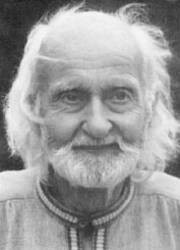
Baldur Springmann, pionnier de l'écologie allemande
Baldur Springmann, né en 1912 à Hagen en Westphalie, est le fils d'un grand industriel. Après 1945, il est expulsé de sa propriété de l'Est, achète une ferme dans le Holstein et l'exploite. En 1954, il la transforme en entreprise pionnière de l'agriculture biologique/dynamique. Il participe au vaste mouvement qui s'oppose aux centrales nucléaires. Conjointement à Herbert Gruhl, ancien porte-paroles de la CDU en matières écologiques, il contribue au lancement du mouvement vert. Il le quitte quand les groupes marxistes commencent à noyauter le mouvement et placent leurs hommes aux postes-clef. En 1982, il publie un livre, Partner Erde (= Notre partenaire, la Terre). Depuis 1991, il appartient au mouvement des écologistes indépendants en Allemagne.
Q.: Y a-t-il eu dans votre vie un événements crucial, qui a fait de vous un écologiste?
BS: Oui. Par exemple, dès l'âge de quinze ans, j'ai ressenti, dans mon fors intérieur, qu'existait bel et bien ce que C.G. Jung appelait l'“archétypal”; j'ai donc ressenti que mon vécu se branchait immédiatement sur l'essence même de la nature. Par ce contact direct, j'ai pris conscience des forces mortelles que déployait l'industrialisation, avec laquelle je ne voulais ni ne pouvais vivre. Voilà pourquoi je suis devenu paysan. Mais j'ai dû constater par la suite qu'il y avait agriculture et agriculture...
Q.: Vous avez été l'un des co-fondateurs du parti des “Verts”. Peut-on encore considérer que ce parti est aujourd'hui encore une plate-forme pour un véritable mouvement écologique?
BS: Dans l'ensemble, non. Ce qui s'est passé dans les années 70 pour le mouvement anti-nucléaire, s'est passé chez les Verts. Les idéologues marxistes qui cherchaient un tremplin et qui ne se souciaient pas le moins du monde de l'écologie, se sont introduits dans le mouvement, l'ont transformé et déformé, l'ont forcé à prendre une direction qui n'a plus grand'chose à voir avec les positions véritablement écologiques du début. Quoi qu'il en soit, les Verts sont encore le seul parti qui a défendu des positions écologiques, avec des hauts et des bas.
Q.: Quel est le reproche principal que vous adressez aux Verts?
BS: Leur anti-germanisme. L'anti-germanisme est aujourd'hui une forme de racisme beaucoup plus virulente que l'anti-sémitisme. Pourquoi l'anti-germanisme serait-il moins raciste, moins hostile à la vie, moins dangereux que l'anti-sémitisme? C'est la présence de ce racisme qui me dégoute chez les Verts. C'est aussi la raison pour laquelle ils ont eu des difficultés avec le mouvement Bündnis 90, où ce racisme n'est pas présent. Ces hommes et ces femmes ont encore le sentiment d'appartenir à un peuple, tout naturellement, sans aucune crispation. Ceux qui veulent se faire valoir en répétant à satiété des slogans comme «germanité = criminalité», développent au fond une idéologie qui n'a rien à voir avec l'écologie. Les obsessions racistes et discriminantes sont une preuve d'incompétence en matières écologiques.
Q.: Cette équation entre germanité et criminalité que l'on trouve chez les Verts, qu'a-t-elle à voir avec les questions écologiques?
BS: On peut tout bonnement se débarrasser de l'écologie comme d'un vulgaire déchet si, d'une part, on revendique la guérison de la nature, et, d'autre part, on nie les liens qui unissent le peuple, le terroir et l'homme. L'écologie, c'est davantage que l'installation d'un biotope protégé pour les grenouilles et les crapauds, et le terroir, c'est beaucoup plus que le parking du supermarché du coin. Pour l'homme, le terroir c'est le fait de se sentir protégé, de se sentir à l'abri, dans une Geborgenheit dirait le philosophe Heidegger; mais à l'abri de quoi? D'une culture protectrice, englobante, maternante et poliçante. Le sentiment du terroir touche directement ce que j'appelle l'“écologie proprement humaine”. L'écologie, en effet, est la tentative de reconnaitre scientifiquement les liens qui unissent tous les domaines de la nature. L'homme n'est pas en dehors de la nature. Il est lié à elle. Et à tout l'univers. Peut-on, sans sombrer dans l'irréalisme et la sottise, nier ces liens qui unissent l'homme à la nature et à l'univers?
Q.: Prochainement, vous allez faire paraître un nouveau livre. De quoi s'agit-il?
BS: Mon livre paraîtra bientôt aux éditions dirigées par Siegfried Bublies [l'éditeur de la revue Wir Selbst, ndlr]. L'essentiel de cet ouvrage autobriographique, c'est de contribuer à une éthique de libération écologique. Faire passer dans les esprits une mutation de conscience radicalement écologique, voilà bien l'une des questions essentielles de notre époque, qui décidera de la survie des peuples. Il s'agira de susciter un véritable partenariat entre l'homme et la Terre, de proposer des alternatives réalisables, des formes actuelles, non passéistes, de vie écologique.
Q.: Beaucoup de militants de droite estime que l'écologie sert de cache-sexe à l'utopisme habituel des gauches. C'est ce qui explique leurs réticences.
BS: Ces militants-là ont encore l'esprit encombré de scories du 19ième siècle. Celui qui pense véritablement en termes d'écologie n'appartient ni à la gauche ni à la droite, mais est un homme en avance sur son temps. Nous sommes sur le point d'entrer dans une nouvelle ère culturelle et nous n'avons plus à nous orienter sur des boussoles idéologiques du passé, nous devons aller de l'avant! Le clivage passera très vite entre une minorité prête à respecter la vie et à comprendre les forces de la Nature comme révélations du divin, et une majorité relative, plus puissante, composée de technocrates arrogants qui croiront toujours pouvoir dominer la nature selon le slogan: “Soumettez-vous la Terre”.
Q.: L'écologie n'est-elle pas une thématique fondamentalement conservatrice?
BS: Oui. Mais il ne faut pas oublier qu'il existe aussi un conservatisme négatif, qui ne songe qu'à préserver les vieilles formes mortes. En fait, il faut que forme, contenu et temporalité puissent être en harmonie. Aujourd'hui plus personne ne se laisse enthousiasmer par le vocable “patrie” (Vaterland), mais vu les succès des Verts et d'un certain féminisme, on pourra susciter l'intérêt en parlant de “matrie” (Mutterland). Nous n'aurons plus affaire à des “patriotes” mais à des “matriotes”, c'est-à-dire des hommes et des femmes qui aiment toujours leur peuple, la matrice de ce qu'ils sont, leur “matrie”. C'est un amour tranquille, doux, qu'on ne saurait comparer au patriotisme des tambours et des trompettes. Le “matriotisme” pourrait parfaitement être accepté par les jeunes d'aujourd'hui.
Q.: La CSU vient de faire quelques déclarations claires contre l'hostilité à la technique qui se répandrait dans la population. Elle a également réclamé davantage de “progrès” dans quelques secteurs-clef de l'économie. Elle a traité les socialistes et les verts de “bloqueurs du progrès”. A votre avis, la CSU est-elle la forge idéologique où l'on crée des arguments contre ceux qui veulent préserver les fondements de notre existence biologique?
BS: La tendance de tous les partis actuels est d'être ennemis de la vie. Les partis se perçoivent comme les protecteurs de l'économie capitaliste et non pas comme les protecteurs de la Terre. Herbert Gruhl, quand il était encore parmi nous, a dit clairement ce qu'il fallait dire à propos de la folie de ce système, qui ne peut survivre sans “croissance”.
Q.: Mais tous le monde parle pourtant de protection de l'environnement...
BS: La préservation de la nature n'est pas, en premier lieu, un problème technique. Il s'agit d'une nécessité beaucoup plus profonde, c'est-à-dire d'une rénovation totale sur les plans spirituel et culturel. L'homme est un être de culture qui, bien entendu, influence directement ou indirectement la Nature par tout ce qu'il fait. Au départ, la relation d'échange entre l'homme et la Nature n'a pas remis en question les systèmes et les circuits écologiques existants. Mais les efforts des hommes en Occident d'échapper à l'emprise des formes socio-culturelles d'ancien régime a dégénéré, pris le mors aux dents, pour devenir une volonté d'échapper aux liens qui nous unissent biologiquement à la Nature. Les hommes en sont arrivés à vouloir s'émanciper de notre Mère la Nature, mais cela n'a pas fonctionné.
Q.: Vous voulez promouvoir une volonté d'émancipation hors de la superstition techniciste...
BS: Nous n'avons nullement l'intention de promouvoir une hostilité généralisée à la technique, mais nous voulons installer dans les esprits une attitude critique à l'endroit de la technique. Nous disons que telle ou telle situation doit être changée. Nous raisonnons dans un cadre global écologique en matières agricoles, économiques, dans les domaines des communications, de l'urbanisme, de l'habitat, bref, dans tous les domaines de la vie. Nous souhaitons que les décisions politiques soient prises en tenant compte de notre cadre écologique global, en tenant compte des impératifs de la Nature et non le contraire.
Q.: Il y a une question typique que posent les partis: pendant combien de temps encore serons-nous en mesure de financer la protection de l'environnement?
BS: C'est une question qu'il ne faudrait pas poser. En revanche, il faudrait en poser une autre: que signifient les progrès que nous avons faits sur la voie techniciste et mécaniciste par rapport à l'ensemble des paramètres de la Vie sur notre Terre? Et quels sont les effets de ces “progrès” sur l'environnement, la culture, les faits ethniques, qui structurent l'homme? Le question du financement de la protection de l'environnement est une question d'irresponsable, une question d'esprit libéral.
Q.: La question écologique est-elle simultanément une question profondément religieuse?
BS: Pour que nous puissions vivre un bouleversement réel, définitif, de notre pensée, marqué par la conscience écologique, il faut qu'une religiosité nouvelle se déploie. Aujourd'hui, la religion a pour ainsi dire disparu. Il ne reste plus que des structures confessionnelles. Le christianisation de l'Europe a été la première étape dans le houspillement du divin hors de la nature, hors de notre vivifiante proximité, hors du tellurique. Cette christianisation a préparé le terrain au désenchantement, puis au désenchantement technicisto-mécaniciste, qui nous a conduit à la situation désastreuse que nous connaissons aujourd'hui. Quand je parle de déployer une nouvelle religiosité, je n'évoque pas le New Age ou une autre superficialité du même acabit, mais je veux retourner aux sources mêmes de toute religiosité, c'est-à-dire au regard plein d'émerveillement que jetaient nos plus lointains ancêtres sur l'harmonie cosmique, sur les astres. Pour eux, la Nature, dans sa plus grande perfection, c'était ces étoiles qui brillaient au firmament. Il faut restaurer cette dimension cosmique et astronomique de la religion. Et se rappeler de l'année cosmique dont parlait Platon, année cosmique qui durait 2150 ans. Un cycle de cet ordre de grandeur est en train de s'achever: nous nous trouvons dans une sorte d'interrègne, dans une phase de transition, nous allons rentrer dans une nouvelle année cosmique selon Platon. Les religions révélées dualistes, qui ont dominé au cours des siècles précédents, vont s'effillocher et céder le terrain à des religiosités de l'immédiateté, des religiosités holistes. Notre tâche: trouver des formes socio-politiques adéquates, qui correspondent à cette transition, à cette nouvelle année cosmique.
Q.: Y a-t-il une recette patentée pour nous débarrasser de la dictature du matérialisme et des paradigmes du mécanicisme?
BS: Je suis opposé à toutes les “recettes patentées”. Elles ont plutôt l'art d'exciter mes critiques. Mais l'humanité doit prendre des décisions fondamentales. Le retournement des valeurs va s'opérer, en dépit de l'hostilité que lui porte le capitalisme dominant. Je ne crois pas que ce retournement va s'opérer brutalement, en un tourne-main, par une sorte de révolution-parousie. La lutte sera longue. Nous, les écologistes, nous devons élaborer des propositions réalistes.
Q.: Ce sont des propositions réalistes de ce type que vous suggérez dans votre livre, notamment en formulant «Dix thèses pour une agriculture vraiment paysanne». En même temps, vous formulez une critique acérée contre les politiques agricoles conventionnelles...
BS: Pour la plupart des politiciens de l'établissement, les quelques misérables pourcents de l'agriculture dans le PNB sont une quantité négligeable. C'est pour cette raison que tout le discours sur la “promotion des entreprises agricoles familiales” n'a jamais été suivi d'effets, que ce discours n'a été que propagande et poudre aux yeux. En réalité, on a, par décrets administratifs, systématiquement exterminé le paysannat européen. Cette politique a commencé avec Mansholt; elle a continué avec Bochert; leur intention était claire: évacuer le fossile paysannat, le jeter définitivement au dépotoir de l'histoire. Je m'oppose avec vigueur à ce génocide, je refuse de considérer le paysannat comme une quantité négligeable. Je pose une question qui vous donne d'emblée le clivage qui s'installe: Agriculture véritablement paysanne ou industrie agro-alimentaire? Si nous luttons pour revenir à une agriculture naturelle, nous luttons pour l'avenir de tous les hommes sur la planète. Ce retour à l'agriculture s'effectuera sans doute à la fin de la période de transition que nous vivons aujourd'hui. Mais si nous ratons cette transition, nous mettrons en jeu la survie de l'humanité, nous préparerons le dépérissement misérable de nos descendants.
Je veux promouvoir une renaissance du mode de production originel. Seuls les produits issus d'un tel mode de production peuvent générer la vraie Vie. Une véritable agriculture, c'est le pilotage et l'accroissement naturel des processus agraires dans le cadre d'un environnement naturel, sans que celui-ci ne soit artificiellement transformé. Les bio-paysans, nombreux en Allemagne aujourd'hui, pratiquent cette agriculture avec succès. Leurs produits sont meilleurs, sont demandés. Leurs méthodes scientifiques, écologiques au sens scientifique du terme, sont performantes. Ils pratiquent ainsi une immédiateté avec la nature, le sol, la géologie, ils s'abstiennent d'utiliser des méthodes transformatrices dangereuses sur le long terme; ils reviennent au mode de production originel, tout en restant concurrentiels. Voilà des exemples concrets à suivre. Dans tous les domaines de l'économie.
(propos recueillis par Hanno Borchert et Ulrich Behrenz, parus dans Junge Freiheit, n°16/95).
00:05 Publié dans Ecologie | Lien permanent | Commentaires (0) | Tags : écologie, verts, écolos, biorégionalisme, politique, théorie politique, enracinement, racines, allemagne | | del.icio.us | | Digg | Facebook