
Ok

En poursuivant votre navigation sur ce site, vous acceptez l'utilisation de cookies. Ces derniers assurent le bon fonctionnement de nos services. En savoir plus.

samedi, 30 octobre 2010

La liberté d'installation au sein de l'UE ne doit pas conduire à des abus

agenouilles-devant-des-crs-le-06-juillet-2010-au-campement-du-hanul-a-saint-denis-le-plus-ancien-d-ile-de-france-selon-des-associations.jpg

La liberté d’installation au sein de l’UE ne doit pas conduire à des abus


Si les citoyens de l’UE abusent de la liberté qui leur est accordée de voyager et de s’installer dans l’Union et cherchent les lieux où ils peuvent le plus facilement pratiquer certaines formes de petite criminalité, alors nous devons remettre le système en question !


Dans le débat qui fait rage aujourd’hui à propos de l’expulsion de Roms hors de France et vu la procédure en cours contre ce pays (qui est toutefois atténuée), le député européen de la FPÖ autrichienne Andreas Mölzer a pris la parole. Il a déclaré : « Le débat est vicié, surtout par la façon dont l’a amorcé la Commissaire européenne Viviane Reding, car le droit de s’installer partout dans les pays de l’UE ne peut en aucun cas signifier que l’on possède le droit, en tant que citoyen d’un pays de cette UE, de se chercher à la carte un lieu où exercer une forme ou une autre de petite criminalité », a déclaré le mandataire de la FPÖ au service de presse de son parti.


« Lorsque, par exemple, un pays comme la France a expulsé près de 8000 Roms vers les pays dont ces personnes sont originaires, soit la Roumanie et la Bulgarie, parce qu’elles avaient provoqué des problèmes inacceptables, il convient de respecter cette décision française », a poursuivi Mölzer. « Il ne faut pas en tirer la conclusion que la France doit être sanctionnée pour cette politique visant l’élimination de problèmes réels, ou d’aller dire que la France doit modifier son droit ; non, il faut que les directives européennes limitent la libre circulation des personnes possédant la citoyenneté d’un pays de l’Union, en cas d’activités criminelles ou de comportements inacceptables vis-à-vis du pays hôte, et, dans de tels cas, il convient donc de limiter aussi le droit d’installation ». Tels ont été les propos du député autrichien de la FPÖ auprès du Parlement Européen, qui s’est efforcé de ramener le débat vers la raison et l’honnêteté intellectuelle, direction qu’il n’avait nullement empruntée !


(Source : http://www.andreas-moelzer.at/ ).

La sucia verdad detràs de Coca-Cola

Coca-Cola%2043.jpgLa sucia verdad detrás de Coca-Cola

Ex: http://causarevolucionaria.wordpress.com/

La compañía Coca-Cola gasta 2.8 mil millones de dólares al año en publicidad para asegurar que su refresco sea visto como la bebida más icónica de EEUU – una bebida disfrutada alrededor del mundo, constructora de la paz virtual en una botella.

La compañía ha dedicado 124 años puliendo su imágen, pero solo le tomó 300 páginas al autor Michael Balnding para empañar ese brillo. En su nuevo libro, ‘La Máquina de Coca-Cola: La Sucia Verdad Detrás de la Bebida Favorita del Mundo’, Blanding detalla la sórdida historia de la compañía, desde el patentar experimentos de medicina hasta ser una gigante multinacional.


El libro abre con una página que revuelve el estómago sobre la descripción del asesinato de Isidoro Gil, un trabajador del sindicato que estab fijo en la entrada de la planta embotelladora de Coca-Cola en Carepa, Colombia.

Como describe Blanding luego en el libro, Coca-Cola fue acusada de ser cómplice en las muertes de miembros del sindicato en Sur América, quienes fueron asesinados por paramilitares. Algunas personas pueden ver esto como algo espeluznante. Saber que la Compañía Coca-Cola sea acusada de asesinato es como saber que San Nicolás es acusado de ser un pedófilo”, escribe Blanding en la introducción.

Pero a través del libro, él detalla las acusaciones en contra de Coca-Cola en el frente de los derechos humanos, explicando por qué la Coca Cola es vilipendiada en cualquier lugar del mundo.

En India y México, la compañía esta enfrentado un retroceso por acusaciones de que sus plantas embotelladoras han agotado los acuíferos locales y han contaminado fuentes de agua. En Turquía hay más cargos de actividad anti sindical, y en EEUU y Europa, la gente esta harta de la publicidad para los niños de Coca-Cola, especialmente en las escuelas, y están preocupados por el vínculo que hay entre los refrescos y la obesidad.

Fuente

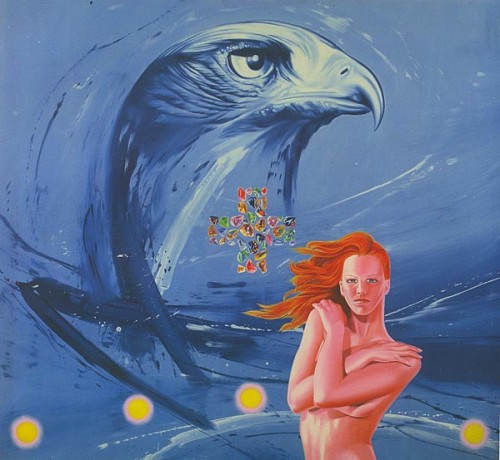
Aigle impérial par Dragos Kalajic

drago03nk2.jpg

En souvenir de notre camarade serbe Dragos Kalajic, qui a quitté nos rangs trop tôt!

Notre souvenir ému !

00:10 Publié dans art | Lien permanent | Commentaires (1) | Tags : serbie, tradition, art, peinture, arts plastiques | |  del.icio.us | | Digg! Digg |  Facebook

Eastern Europe versus the Open Society

by Srdja Trifkovic

Ex: http://www.chroniclesmagazine.org/
 
Excerpts from a speech to the H.L. Mencken Club, Baltimore, October 23, 2010

4886122ae5131.jpgTwo weeks ago the first “gay pride parade” was staged in Belgrade. Serbia’s “pro-European” government had been promoting the event as yet another proof that Serbia is fit to join the European Union, that is has overcome the legacy of its dark, intolerant past. Thousands of policemen in full riot gear had to divide their time between protecting a few hundred “LBGT” activists (about half of them imported from Western Europe for the occasion) and battling ten times as many young protesters in the side streets.

 The parade, it should be noted, was prominently attended by the U.S. Ambassador in Belgrade Mary Warlick, by the head of the European Commission Office, Vincent Degert of France, and by the head of the Organisation for Security and Cooperation in Europe (OSCE) Mission in Serbia, Dimitris Kipreos. Needless to say, none of them had attended the enthronment of the new Serbian Patriarch a week earlier. Two days later, Hillary Clinton came to Belgrade and praised the Tadic regime for staging the parade.

Mrs. Clinton et al are enjoying the fruits of one man’s two decades of hard work in Eastern Europe. George Soros can claim, more than any other individual, that his endeavors have helped turn the lands of “Real Socialism” in central and eastern Europe away from their ancestors, their cultural and spiritual roots. The process is far from over, but his Open Society Institute and its extensive network of subsidiaries east of the Trieste-Stettin line have successfully legitimized the notions that only two decades ago would have seemed bizarre, laughable or demonic to the denizens of the eastern half of Europe.

The package was first tested here in America. Through his Open Society Institute and its vast network of affiliates Soros has provided extensive financial and lobbying support here for

  • Legalization of hard drugs: We should accept that “substance abuse is endemic in most societies,” he says. Thanks to his intervention the terms “medicalization” and “non-violent drug offender” have entered public discourse, and pro-drug legalization laws were passed in California and Arizona in the 90s.
  • Euthanasia: In 1994 Soros—a self-professed atheist—launched his Project Death in America (PDIA) and provided $15 million in its initial funding. (It is noteworthy that his mother, a member of the pro-suicide Hemlock Society, killed herself, and that Soros mentions unsympathetically his dying father’s clinging on to life for too long.) PDIA supports physician-assisted suicide and works “to begin forming a network of doctors that will eventually reach into one-fourth of America’s hospitals” and, in a turn of phrase chillingly worthy of Orwell, lead to “the creation of innovative models of care and the development of new curricula on dying.”
  • Population replacement: Soros is an enthusiastic promoter of open immigration and amnesty & special rights for immigrants. He has supported the National Council of La Raza, National Immigration Law Center, National Immigration Forum, and dozens of others. He also promotes expansion of public welfare, and in late 1996 he created the Emma Lazarus Fund that has given millions in grants to nonprofit legal services groups that undermine provisions of the welfare legislation ending immigrant entitlements.

Soros supports programs and organizations that further abortion rights and increased access to birth control devices; advocate ever more stringent gun control; and demand abolition of the death penalty. He supports radical feminists and “gay” activists, same-sex “marriage” naturally included. OSI states innocently enough that its objectives include “the strengthening of civil society; economic reform; education at all levels; human rights; legal reform and public administration; public health; and arts and culture,” but the way it goes about these tasks is not “philanthropy” but political activism in pursuit of all the familiar causes of the radical left—and some additional, distinctly creepy ones such as “Death in America.”

Soros’s “philanthropic” activities in America have been applied on a far grander scale abroad. His many foundations say that they are “dedicated to building and maintaining the infrastructure and institutions of an open society.” What this means in practice? Regarding “Women’s Health” programs in Central and South-Eastern Europe, one will look in vain for breast cancer detection programs, or for prenatal or post-natal care. No, Soros’s main goal is “to improve the quality of abortion services.” Accordingly his Public Health Program has focused on the introduction of easily available abortion all over the region, and the introduction of manual vacuum aspiration (MVA) abortion in Macedonia, Moldova, and Russia. Why is Soros so keen to promote more abortions? Overpopulation cannot be the reason: the region is experiencing a huge demographic collapse and has some of the lowest fertility rates in the world. Unavailability of abortions cannot be the answer either: only five European countries had more abortions than live births in 2000: the Russian Federation, Bulgaria, Belarus, Romania and Ukraine. The only answer is that Soros wants as few little European Orthodox Christians born into this world as possible.

Soros’s Public Health Programs additionally “support initiatives focusing on the specific health needs of several marginalized communities,” such as “gays” and AIDS sufferers, and promote “harm reduction” focusing on needle/syringe exchange and supply of methadone to adicts. His outfits lobby governments to scrap “repressive drug policies.” Over the past decade and a half the Soros network has given a kick-start to previously non-existent “gay” activism in almost all of its areas of operation. The campaign for “LGBT Rights” is directed from Budapest, publishing lesbian and gay books in Bulgaria, the Czech Republic, Hungary, Slovenia and Slovakia, opening Gay and Lesbian Centers in Ukraine and Rumania. Its activists routinely attack the Orthodox Church as a key culprit for alleged discrimination of “LGBTs.”

Education is a key pillar of Soros’s activities. His Leitmotif is the dictum that “no-one has a monopoly on the truth” and that “civic education” should replace the old “authoritarian” model. Even under communism Eastern Europe has preserved very high educational standards, but the Soros Foundation seeks to replace the old system with the concept of schools as “exercise grounds” for the “unhindered expression of students’ personalities in the process of equal-footed interaction with the teaching staff, thus overcoming the obsolete concept of authority and discipline rooted in the oppressive legacy of patriarchal past.” The purpose of education is not “acquisition of knowledge”: the teacher is to become the class “designer” and his relationship with students based on “partnership.” Soros’s reformers also insist on an active role of schools in countering the allegedly unhealthy influence of the family on students, which “still carries an imprint of nationalist, sexist, racist, and homophobic prejudices rampant in the society at large.”

“Racism” is Soros’s regular obsession, but he had a problem finding it in racially non-diverse East European countries. This has been resolved by identifying a designated victim group—gypsies (“Roma”). His protégés now come up with policy demands to “protect” this group that could have been written by Rev. Jesse Jackson:

  • anti-bias training of teachers and administrators;
  • integration of Romani history and culture in the textbooks at all levels;
  • legally mandated arffirmative action programs for Roma;
  • tax incentives for employers who employ them;
  • access to low-interest credit for Roma small family businesses;
  • setting aside a percentage of public tenders for Roma firms;
  • legislation to fight “racism and discrimination” in housing;
  • adoption of “comprehensive anti-discrimination legislation”;
  • creation of mechanisms “to monitor implementation of anti-discrimination legislation and assist victims of racial discrimination in seeking remedies”;
  • recognition by governments of “the Roma slavery and the Holocaust through public apology along with urgent adoption of a package of reparatory measures.”

A budding race relations industry is already in place, with the self-serving agenda of finding “discrimination” in order to keep itself in place for ever.

To make his agenda appear “normal” to the targeted population, millions of East Europeans are force-fed the daily fare of OSI agitprop by “the Soros media”—the term is by now well established in over a dozen languages—such as the B-92 media conglomerate in Serbia.

The social dynamics Soros uses to penetrate the target countries is interesting. To thousands of young East Europeans to become a “Soroshite” represents today what joining the Party represented to their parents: an alluring opportunity to have a reasonably paid job, to belong to a privileged elite, for many to travel abroad. The few chosen for the future new Nomenklatura go to Soros’s own Central European University in Budapest. In all post-communist countries Soros relies overwhelmingly on the sons and daughters of the old Communist establishment who are less likely to be tainted by any atavistic vestiges of their native soil, culture and tradition. The comparison with the janissary corps of the Ottoman Army is more apt than that with the Communist Party. The new janissaries, just like the old, have to prove their credentials by being more zealous than the Master himself.

The key ideological foundation for Soros’s beliefs is the same: that all countries are basically social arrangements, artificial, temporary and potentially dangerous. A plethora of quotes from his writings will make it clear that he thinks that owing allegiance to any of them is inherently irrational, and attaching one’s personal loyalty to it is absurd. Like Marx’s proletarian, Soros knows of no loyalty to a concrete country. He could serve any—or indeed all—of them, if they can be turned into the tools of his Wille zur Macht. In 1792, it could have been France, in 1917 Russia. Today, the United States is his host organism of choice because it is so powerful, and its media scene is open to penetration by his rabidly anti-traditionalist and deeply anti-American worldview and political agenda.

Textbooks and educational curricular reforms pushed by Soros in Eastern Europe indicate that he is trying to perform crude dumbing down of the young. Within months of coming to power in October 2000 the “reformists” within Serbia and their foreign sponsors insisted that schools—all schools, from kindergarden to universities—must be reformed and turned from “authoritarian” institutions into poligons for the “unhindered expression of students’ personalities in the process of equal-footed interaction with the teaching staff, thus overcoming the obsolete concept of authority and discipline rooted in the opressive legacy of patriarchal past.” They started with primary schools, with a pilot program of “educational workshops” for 7-12 year olds. The accompanying manual, sponsored by UNICEF and financed by the Open Society, denigrades the view that the purpose of education is acquisition of knowledge and insists that the teacher has to become the class “designer” and his relationship with students based on “partnership.”

The reformers devote particular attention to the more active role of schools in countering the allegedly unhealthy influence of the family on students, which “still carries an imprint of nationalist, sexist, [anti-Roma] racist, and homophobic prejudices rampant in the society at large.” The time-honored Balkan tradition of slapping childrens’ bottoms when they exceed limits is now presented in the elementary classroom as a form of criminal abuse that should be reported and acted upon. Traditional gender roles are relativized by “special projects” that entail cross-dressing and temporary adoption of opposite gender names.

Soros’s vision is hostile even to the most benign understanding of national or ethnic coherence. His core belief—that traditional morality, faith, and community based on shared memories are all verboten—is at odds even with the classical “open society” liberalism of Popper and Hayek, by whom he swears. His hatred of religion is the key. He promotes an education system that will neutralize any lingering spiritual yearnings of the young, and promote the loss of a sense of place and history already experienced by millions of Westerners, whether they are aware of that loss or not. Estranged from their parents, ignorant of their culture, ashamed of their history, millions of Westerners are already on the path of alienation that demands every imaginable form of self-indulgence, or else leads to drugs, or suicide, or conversion to Islam or some other cult.

To understand Soros it is necessary to understand globalization as a revolutionary, radical project. In the triumph of liberal capitalism, the enemies of civilization such as Soros have found the seeds of future victory for their paradigm that seeks to eradicate all traditional structures capable of resistance. The revolutionary character of the Open Society project is revealed in its relentless adherence to the mantra of Race, Gender and Sexuality. His goal is a new global imperium based that will be truly totalitarian. But he is making a colossal miscalculation. He does not realize that the unassimilated and unassimilable multitudes do not want to be the tools of his will to power. Illegal aliens in America, Algerians in France, Turks in Germany and Pakistanis in Britain have their own, instinctive scenario, and it does not entail leaving Soros and his ilk in positions of power, or alive.

About the Author

Dr. Srdja Trifkovic, an expert on foreign affairs, is the author of The Sword of the Prophet and Defeating Jihad. His latest book is The Krajina Chronicle: A History of the Serbs in Croatia, Slavonia and Dalmatia.
See All Posts by This Author

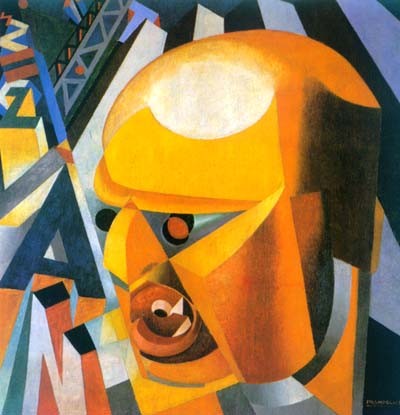
Filippo Marinetti

marinetti-Futurismo.jpgFilippo Marinetti

Kerry BOLTON
 
 
Filippo Marinetti is unlike most of the post-nineteenth Century cultural avant-garde who were rebelling against the spirit of several centuries of liberalism, rationalism, the rise of the democratic mass, industrialism, and the rule of the moneyed elite. His revolt against the leveling impact of the democratic era was not to hark back to certain perceived ‘golden ages’ such as the medieval eras upheld by Yeats and Evola, or to reject technology in favor of a return to rural life, as advocated by Henry Williamson and Knut Hamsun. To the contrary, Marinetti embraced the new facts of technology, the machine, speed, and dynamic energy, in a movement called Futurism.

The futurist response to the facts of the new age is therefore a quite unique reaction from the anti-liberal literati and artists and one that continues to influence certain aspects of industrial and post-industrial sub cultures. An example of a contemporary cultural movement paralleling Futurists is New Slovenian Art, which like futurism embodies music, graphic arts, architecture, and drama. It is a movement whose influence is felt beyond the borders of Slovenia. The best-known manifestation of this art form is the industrial music group Laibach.

Marinetti is also the inventor of free verse in poetry, and Futurist adherents have had a lasting impact on architecture, motion pictures and the theater. The Futurists were the pioneers of street theatre. They inspired both the Constructivist movement in the USSR and the English Vorticists Ezra Pound and Wyndham Lewis.

Marinetti was born in Alexandria Egypt in 1876. He graduated in law in Genoa in 1899. Although the political and philosophical aspects of the course held his interest, he traveled frequently between France and Italy and interested himself in the avant-garde arts of the later nineteenth Century promoting young poets in both countries. He was already a strong critic of the conservative and traditional approaches of Italian poets. He was at this time an enthusiast for the modern, revolutionary music of Wagner, seeing it as assailing “equilibrium and sobriety . . . meditation and silence . . . ”

By 1904, Futurist elements had manifested in his writing, particularly in his poem Destruction that he called “an erotic and anarchist poem,” a eulogy to the “avenging sea” as a symbol of revolution. After an apocalyptic destruction, the process of rebuilding begins on the ruins of the “Old World.” Here already is the praise of death as a dynamic and transformative.

With the death of Marinetti’s father in 1907, his wealth allowed him to travel widely and he became a well-known cultural figure throughout Europe. Nietzsche was at this time one of the most well-known intellectuals who desired liberation from the old order. Nietzsche was widely read among the literati of Italy, and D’Annunzio was the most prominent in promoting Nietzsche. Among the other philosophers of particular importance whom Marinetti studied was the French syndicalist theorist Georges Sorel, who inclined towards the anarchism of Proudhon. This rejected Marxism in favor of a society comprised of small productive, cooperative units or syndicates; and founded a new myth of heroic action and struggle. Rejecting much of the pacifism of the left. Sorel viewed war as a dynamic of human action. Sorel in turn was himself influenced by Nietzsche, and applying the Nietzschean Overman to socialism, states that the working class revolution requires heroic leaders. Sorel became influential not only among Left wing syndicalists but also among certain radical nationalists in both France and Italy.

Futurist Manifesto

Marinetti’s artistic ideas crystallized in the Futurist movement that originated from a meeting of artists and musicians in Milan in 1909 to draft a Futurist Manifesto. With Marinetti were Carlo Carra, Umberto Boccioni, Luigi Russolo and Gino Severini. The manifesto was first published in the Parisian paper Le Figaro, and exhorted youth to, “Sing the love of danger, the habit of energy and boldness.”

marinetti02The Futurists were contemptuous of all tradition, of all that is past:

We want to exult aggressive motion . . . we affirm that the magnificence of the world has been enriched by a new beauty: the beauty of speed.

The machine was poetically eulogized. The racing car became the icon of the new epoch, “which seems to run as a machine gun.” The Futurist aesthetic was to be joy in violence and war, as “the sole hygiene of the world.” Motion, dynamic energy, action, and heroism were the foundations of “the culture of the Futurist future. The fisticuffs, the sprint and the kick were expressions of culture. The Futurist Manifesto is as much a challenge to the political and social order as it is to the status quo in the arts.

It declared:

1. We intend to sing the love of danger, the habit of energy and fearlessness.

2. Courage, audacity, and revolt will be essential elements of our poetry.

3. Up to now literature has exalted a pensive immobility, ecstasy, and sleep. We intend to exalt aggressive action, a feverish insomnia, the racer’s stride, the mortal leap, the punch and the slap.

4. We affirm that the world’s magnificence has been enriched by a new beauty: the beauty of speed A racing car whose hood is adorned with great pipes, like serpents of an explosive breath–a roaring car that seems to ride on grape shot is more beautiful than the victory of Samothrace.

5. We want to hymn the man at the wheel, who hurls the lance of his spirit across the Earth, along the circle of its orbit.

6. The poet must spend himself with ardor, splendor, and generosity, to swell the enthusiastic fervor of the primordial elements. Except in struggle, there is no more beauty. No work without an aggressive character can be a masterpiece. Poetry must be conceived as a violent attack on unknown forces, to reduce and prostrate them before man.

7. We stand on the last promontory of the centuries. Why should we look back when what we want is to break down the mysterious doors of the impossible? Time and space died yesterday. We already live in the absolute, because we have created eternal, omnipresent speed.

8. We will glorify war–the world’s only hygiene–militarism, patriotism, the destructive gesture of freedom-bringers, the beautiful ideas that kill, and scorn for women.

9. We will destroy the museums libraries academies of every kind, will fight moralism feminism, every opportunistic or utilitarian cowardice.

10. We will sing of great crowds excited by work, by pleasure, and by riot. We will sing of the multi-colored, polyphonic tides of revolution in the modem capitals, we will sing of the vibrant nightly fervor of arsenals and shipyards blazing with violent electric motors, greedy railway stations that devour smoke-plumed serpents, factories hung on clouds by the crooked lines of their smoke; bridges that stride the rivers like giant gymnasts, flashing in the sun with a glitter of knives; adventurous steamers that sniff the horizon: deep-chested locomotives whose wheels paw the tracks like the hooves of enormous steel horses bridled by tubing: and the sleek flight of planes whose propellers chatter in the wind like banners and seem to cheer like an enthusiastic crowd.

It is from Italy that we launch through the world this violently upsetting incendiary manifesto of ours. With it, today, we establish Futurism, because we want to free this land from its smelly gangrene of professors, archaeologists, ciceroni and antiquarians. For too long has Italy been a dealer in second-hand clothes. We mean to free her from the numberless museums that cover her like so many graveyards.

Museums: cemeteries! . . .  Identical, surely, in the sinister promiscuity of so many bodies unknown to one another. Museums: public dormitories where one lies forever beside hated or unknown beings. Museums: absurd abattoirs of painters and sculptors ferociously slaughtering each other with color-blows and line-blows, the length of the fought-over walls!

That one should make an annual pilgrimage, just as one goes to the graveyard on All Souls’ Day, that we grant. That once a year one should leave a floral tribute beneath the Gioconda, I grant you that . . .  but I don’t admit that our sorrows, our fragile courage, our morbid restlessness should be given a daily conducted tour through the museums. Why poison ourselves? Why rot? And what is there to see in an old picture except the laborious contortions of an artist throwing himself against the barriers that thwart his desire to express his dream completely? Admiring an old picture is the same as pouring our sensibility into a funerary urn instead of hurtling it far off in violent spasms of action and creation.

Do you then wish to waste all your best powers in this eternal and futile worship of the past, from which you emerge fatally exhausted, shrunken, beaten down?

In truth we tell you that daily visits to museums, libraries, and academies (cemeteries of empty exertion, Calvaries of crucified dreams, registries of aborted beginnings!) are, for artists, as damaging as the prolonged supervision by parents of certain young people drunk with their talent and their ambitious wills. When the future is barred to them, the admirable past may be a solace for the ills of the moribund, the sickly, the prisoner . . .  But we want no part of it, the past, we the young and strong Futurists!

So let them come, the gay incendiaries with charred fingers! Here they are! Here they are! . . .  Come on! set fire to the library shelves! Turn aside the canals to flood the museums! . . .  Oh, the joy of seeing the glorious old canvases bobbing adrift on those waters, discolored and shredded! . . .  Take up your pickaxes, your axes and hammers and wreck, wreck the venerable cities, pitilessly!

The oldest of us is thirty so we have at least a decade for finishing our work. When we are forty, other younger and stronger men will probably throw us in the wastebasket like useless manuscripts–we want it to happen!

They will come against us, our successors will come from far away, from every quarter, dancing to the winged cadence of their first songs, flexing the hooked claws of predators, sniffing dog-like at the academy doors the strong odor of our decaying minds which will have already been promised to the literary catacombs.

But we won’t be there . . .  At last they’ll find us–one winter’s night–in open country, beneath a sad roof drummed by a monotonous rain. They’ll see us crouched beside our trembling aeroplanes in the act of warming our hands at the poor little blaze that our books of today will give out when they take fire from the flight of our images.

They’ll storm around us, panting with scorn and anguish, and all of them, exasperated by our proud daring, will hurtle to kill us. Driven by a hatred the more implacable the more their hearts will be drunk with love and admiration for us.

Injustice, strong and sane, will break out radiantly in their eyes. Art, in fact, can be nothing but violence, cruelty, and injustice.

The oldest of us is thirty: even so we have already scattered treasures, a thousand treasures of force, love, courage, astuteness, and raw will-power, have thrown them impatiently away, with fury, carelessly, unhesitatingly, breathless, and unresting . . . Look at us We are still untired! Our hearts know no weariness because they are fed with fire, hatred, and speed . . .  Does that amaze you? It should, because you can never remember having lived! Erect on the summit of the world, once again, we hurl our defiance at the stars.

You have objections?–Enough! Enough! We know them . . .  We’ve understood! . . .  Our fine deceitful intelligence tells us that we are the revival and extension of our ancestors–Perhaps! . . .  If only it were so!–But who cares? We don’t want to understand! . . . Woe to anyone who says those infamous words to us again! Lift up your heads. Erect on the summit of the world, once again we hurl our defiance after stars!”

A plethora of manifestos by Marinetti and his colleagues followed, futurist cinema, painting, music (“noise”), prose, plus the political and sociological implications.

War, the World’s Only Hygiene

Marinetti’s manifesto on war shows the central place violence and conflict have in the Futurist doctrine.

We Futurists, who for over two years, scorned by the Lame and Paralyzed, have glorified the love of danger and violence, praised patriotism and war, the hygiene of the world, are happy to finally experience this great Futurist hour of Italy, while the foul tribe of pacifists huddles dying in the deep cellars of the ridiculous palace at The Hague. We have recently had the pleasure of fighting in the streets with the most fervent adversaries of the war and shouting in their faces our firm beliefs:

1. All liberties should be given to the individual and the collectivity, save that of being cowardly.

2. Let it be proclaimed that the word Italy should prevail over the word Freedom.

3. Let the tiresome memory of Roman greatness be canceled by an Italian greatness a hundred times greater.

For us today, Italy has the shape and power of a fine Dreadnought battleship with its squadron of torpedo-boat islands. Proud to feel that the martial fervor throughout the nation is equal to ours, we urge the Italian government, Futurist at last, to magnify all the national ambitions, disdaining the stupid accusations of piracy, and proclaim the birth of Pan-Italianism.

Futurist poets, painters, sculptors, and musicians of Italy! As long as the war lasts let us set aside our verse, our brushes, scapulas, and orchestras! The red holidays of genius have begun! There is nothing for us to admire today but the dreadful symphonies of the shrapnel and the mad sculptures that our inspired artillery molds among the masses of the enemy.

Artistic Storm Trooper

Marinetti brought his dynamic character into an aggressive campaign to promote Futurism. The Futurists aimed to aggravate society out of bourgeoisie complacency and the safe existence through innovative street theater, abrasive art, speeches, and manifestos. The speaking style of Marinetti was itself bombastic and thunderous. The art was aggravating to conventional society and the art establishment. If a painting was that of a man with a mustache, the whiskers would be depicted with the bristles of a shaving brush pasted onto the canvas. A train would be depicted with the words “puff, puff.”

Both the words and deeds of the Futurists matched the nature of the art in expressing contempt for the status quo with its preoccupation with “pastism” or the “passe.” Marinetti for example, described Venice as “a city of dead fish and decaying houses, inhabited by a race of waiters and touts.”

To the Futurist Boccioni, Dante, Beethoven and Michelangelo were “sickening” Whilst Carra set about painting sounds, noises and even smells. Marinetti traversed Europe giving interviews, arranging exhibitions, meetings and dinners. Vermilion posters with huge block letters spelling ‘futurism’ were plastered throughout Italy on factories, in dance halls, cafes and town squares. Futurist performances were organized to provoke riot. Glue was put onto seats. Two tickets for the same seat would be sold to provoke a fight. “Noise music” would blare while poetry or manifestos were recited and paintings shown. Fruit and rotten spaghetti would be thrown from the audience, and the performances would usually end in brawls.

Marinetti replied to jeers with humor. He ate the fruit thrown at him. He welcomed the hostility as proving that Futurism was not appealing to the mediocre.

Politics

Portrait of Marinetti by Carlo Carra


The first political contacts of Marinetti and the Futurists were from the Left rather than the Right, despite Marinetti’s extreme nationalism and call for war as the “hygiene of mankind.” There were syndicalists and even some anarchists who shared Marinetti’s views on the energizing and revolutionary nature of war and gave him a reception.

In 1909, Marinetti entered the general elections and issued a “First Political Manifesto” which is anti-clerical and states that the only Futurist political program is “national pride,” calling for the elimination of pacifism and the representatives of the old order. During that year, Marinetti was heavily involved in agitating for Italian sovereignty over Austrian-ruled Trieste. The political alliance with the extreme Left began with the anarcho-syndicalist Ottavio Dinale, whose paper reprinted the Futurist manifesto. The paper, La demolizione was not especially anarcho-syndicalist, but of a general combative nature, aiming to unite into one “fascio” all those of revolutionary tendencies, to “oppose with full energy the inertia and indolence that threatens to suffocate all life.” The phrase is distinctly Futurist.

Marinetti announced that he intended to campaign politically as both a syndicalist and a nationalist, a synthesis that would eventually arise in Fascism. In 1910, he forged links with the Italian Nationalist Association, which from its birth also had a pro-labor, syndicalist aspect. In 1913 a Futurist political manifesto was issued which called for enlargement of the military, an “aggressive foreign policy,” colonial expansionism, and “pan-Italianism”; a “cult” of progress, speed, and heroism; opposition to the nostalgia for monuments, ruins, and museums; economic protectionism, anti-socialism, anti-clericalism. The movement gained wide enthusiasm among university students.

Interventionism

The chance for Italy’s “place in the sun” came with World War I. Not only the nationalists were demanding Italy’s entry into the war, but so too were certain revolutionary syndicalists and a faction of socialists led by Mussolini. From the literati came D’Annunzio and Marinetti.

In a manifesto addressed to students in 1914 Marinetti states the purpose of Futurism and calls for intervention in the war. Futurism was the “doctor” to cure Italy of “pastism,” a remedy “valid for every country.” The “ancestor cult far from cementing the race” was making Italians “anaemic and putrid.” Futurism was now “being fully realized in the great world war.”

The present war is the most beautiful Futurist poem which has so far been seen. Futurism was the militarization of innovating artists.

The war would sweep away all the proponents of the old and senile, diplomats, professors, philosophers, archaeologists, libraries, and museums.

The war will promote gymnastics, sport, practical schools of agriculture, business and industrialists. The war will rejuvenate Italy: will enrich her with men of action, will force her to live no longer off the past, off ruins and the mild climate, but off her own national forces.

The Futurists were the first to organize pro-war protests. Mussolini and Marinetti held their first joint meeting in Milan on March 31st 1915. In April, both were arrested in Rome for organizing a demonstration.

Futurists were no mere windbags. Nearly all distinguished themselves in the war, as did Mussolini and D’Annunzio. The Futurist architect Sant Elia was killed. Marinetti enlisted with the Alpini regiment and was wounded and decorated for valor.

Futurist Party

Ritratto di Marinetti by Thayat


In 1918, Marinetti began directing his attention to a new postwar Italy. He published a manifesto announcing the Futurist Political Party, which called for “Revolutionary nationalism” for both imperialism and social revolution. “We must carry our war to total victory.”

Demands of the manifesto included the eight hour day and equal pay for women, the nationalization and redistribution of land to veterans; heavy taxes on acquired and inherited wealth and the gradual abolition of marriage through easy divorce; a strong Italy freed, from nostalgia, tourists, and priests; industrialization and modernization of “moribund cities” that live as tourist centers. A Corporatist policy called for the abolition of parliament and its replacement with a technical government of 30 or 40 young directors elected form the trade associations.

The Futurist party concentrated its propaganda on the soldiers, and recruited many war veterans of the elite Arditi (daredevils), who had been the black-shirted shock troops of the army who would charge into battle stripped to the waist, a grenade in each hand and a dagger between their teeth.

In December 1919, the Futurists revived the “Fasci” or “groups.” which had been organized in 1914 and 1915 to campaign for war intervention, and from which was to emerge the Fascists.

Futurists and Fascists

The first joint post-war action between Mussolini and Marinetti took place in 1919 when a Socialist Party rally was disrupted in Milan.

That year Mussolini founded his own Fasci di Combattimento in Milan with the support of Marinetti and the poet Ungasetti. The futurists and the Arditi comprised the core of the Fascist leadership. The first Fascist manifesto was based on that of Marinetti’s Futurist party.

In April, against the wishes of Mussolini who thought the action premature, Marinetti led Fascists and Futurists and Arditi against a mass Socialist Party demonstration. Marinetti waded in with fists, but intervened to save a socialist from being severely beaten by Arditi. (To place the post-war situation in perspective, the Socialists had regularly beaten, abused, and even killed returning war veterans). The Fascists and futurists then proceeded to the offices of the Socialist Party paper Avanti, which they sacked and burned.

Marinetti stood as a Fascist candidate in the 1919 elections and persuaded Toscanini to do so. Whilst the Fascists held back, the Futurists threw their support behind the poet-soldier D’Annunzio’s takeover of Fiume. Marinetti arrived and was warmly welcomed by D’Annunzio.

When the Fascist Congress of 1920 refused to support the Futurist demand to exile the King and the Pope, Marinetti and other Futurists resigned from the Fascist party. Marinetti considered that the Fascist party was compromising with conservatism and the bourgeoisie. He was also critical of the Fascist concentration on anti-socialist agitation and on opposition to strikes. Certain futurist factions realigned themselves specifically with the extreme Left. In 1922, there were several Futurist exhibitions and performances organized by the Communist cultural association, Pro-letkul, which also arranged a lecture by Marinetti to explain the doctrine of Futurism.

Futurism and the Fascist Regime

mussolini


When the Fascists assumed power in 1922 Marinetti, like D’Annunzio, was critically supportive of the regime. Marinetti considered: “The coming to power of the Fascists constitutes the realization of the minimum futurist program.”

Of Mussolini the statesman, Marinetti wrote: “Prophets and forerunners of the great Italy of today, we Futurists are happy to salute in our not yet 40-year-old Prime Minister of marvelous futurist temperament.”

In 1923, Marinetti began a rapprochement with the Fascists and presented to Mussolini his manifesto “The Artistic Rights Promoted by Italian Futurists.” Here he rejected the Bolshevik alignment of Futurists in the USSR. He pointed to the Futurist sentiments that had been expressed by Mussolini in speeches, alluding to Fascism being a “government of speed, curtailing everything that represents stagnation in the national life.”

Under Mussolini’s leadership, writes Marinetti:

Fascism has rejuvenated Italy. It is now his duty to help us overhaul the artistic establishment . . . . The political revolution must sustain the artistic revolutions Marinetti was among the Congress of Fascist Intellectuals who in 1923 approved the measures taken by the regime to restore order by curtailing certain constitutional liberties amidst increasing chaos caused by both out-of-control radical Fascist squadisti and anti-Fascists.

At the 1924 Futurist Congress, the delegates upheld Marinetti’s declaration:

The Italian Futurists, more than ever devoted to ideas and art, far removed from politics, say to their old comrade Benito Mussolini, free yourself from parliament with one necessary and violent stroke. Restore to Fascism and Italy the marvelous, disinterested, bold, anti-socialist, anti-clerical, anti-monarchical spirit . . .  Refuse to let monarchy suffocate the greatest, most brilliant and just Italy of tomorrow . . .  Quell the clerical opposition . . . . With a steely and dynamic aristocracy of thought.

In 1929, Marinetti accepted election to the Italian Academy, considering it important that “Futurism be represented” He was also elected secretary of the Fascist Writer’s Union and as such was the official representative for fascist culture. Futurism became a part of fascist cultural exhibitions and was utilized in the propaganda art of the regime. During the 1930s, in particular the Fascist cultural expression was undergoing a drift away from tradition and towards futurism, with the fascist emphasis on technology and modernization. Mussolini had already in 1926 defined the creation of a “fascist art” that would be based on a synthesis culturally as it was politically: “traditionalistic and at the same time modern.”

In 1943, with the Allies invading Italy, the Fascist Grand Council deposed Mussolini and surrendered to the occupation forces. The fascist faithful established a last stand, in the north, named the Italian Social Republic.

With a new idealism, even former Communist and liberal leaders were drawn to the Republic. The Manifesto of Verona was drafted, restoring various liberties, and championing labor against plutocracy within the vision of a united Europe. Marinetti continued to be honored by the Social Republic. He died in 1944.

00:05 Publié dans art | Lien permanent | Commentaires (0) | Tags : italie, art, avant-gardes, futurisme, marinetti | |  del.icio.us | | Digg! Digg |  Facebook