


dimanche, 01 janvier 2012
Cina e Giappone abbandonano il dollaro
di Enrico Piovesana
Fonte: eilmensile.it
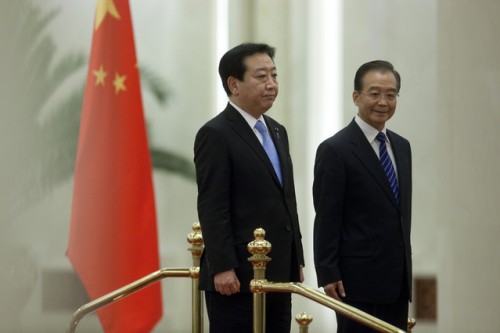
Giornali e Tg non ne parlano, ma per gli ambienti finanziari globali è la notizia-bomba di queste festività natalizie: la seconda e la terza economia mondiale, Cina e Giappone, hanno siglato un accordo che prevede l’abbandono del dollaro americano come valuta utilizzata negli scambi commerciali tra le due nazioni asiatiche, consentendo quindi un interscambio direttamente in yen e yuan.
Finora, circa il 60 per cento degli scambi commerciali tra Cina e Giappone vengono regolati in dollari. L’intesa, siglata lunedì a Pechino al termine dell’incontro tra il premier cinese Wen Jiabao e il primo ministro giapponese Yoshihiko Noda, è un chiaro segnale di sfiducia delle due potenze economiche asiatiche nei confronti della travagliata area euro-dollaro.
Questa mossa viene interpretata dagli economisti come il primo passo concreto del governo di Pechino per far diventare la moneta cinese, lo yuan (o renminbi), una valuta di riserva globale sostitutiva al dollaro. Cosa attualmente non ancora possibile, vista la non completa convertibilità della valuta cinese.
Per il ministro delle finanze tedesco Wolfgang Schaeuble, il patto Cina-Giappone rappresenta una sfida che evidenzia l’importanza di una ”Europa unita e di una moneta comune che ci dà buone chanches di perseguire i nostri interessi e l’opportunità di realizzarli a livello mondiale”.
Tante altre notizie su www.ariannaeditrice.it
00:10 Publié dans Actualité | Lien permanent | Commentaires (0) | Tags : dollar, politique internationale, japon, chine, monnaie, asie, affaires asiatiques |  |
|  del.icio.us |
  |
|  Digg |
  Facebook
De la germanophobie au FMI, la bêtise européenne dans toute sa splendeur !
De la germanophobie au FMI, la bêtise européenne dans toute sa splendeur !

Depuis le début de la crise, on a entendu monter en crescendo un petit refrain : « l’Allemagne payera ! ». On se serait cru revenu à Versailles en 1919. Certes, il aura fallu du temps pour que la sauce prenne, car on ne savait pas bien quoi leurs reprocher aux braves Allemands. Élève modèle de la zone euro, le succès économique de l’Allemagne a certes de quoi exaspérer, il faut bien l’admettre : 4ème économie mondiale, 1ère européenne, elle est aujourd’hui le plus grand exportateur mondial de biens devant les États-Unis et la Chine et enregistrait en 2010 un excédent commercial de 150 milliards d’euros.
Après des reformes draconiennes entreprises sous le mandat de Gerhard Schröder, les Allemands ont vu, comparativement à leur voisins européens, leur niveau de vie baisser de 20 à 30% en 10 ans. Coupes claires dans les budgets sociaux, retraite à 67 ans et introduction d’une dose de capitalisation, gèle drastique des salaires… Jamais des réformes aussi dures n’avaient étaient mises en œuvre dans un pays afin de restaurer ainsi sa compétitivité.
Mais comme toujours en Europe dès qu’une nation prend l’ascendant, la réaction des voisins ne se pas fait attendre. Lorsque la Grèce a trébuché alors qu’on apprenait qu’aucun de ses citoyens ne s’acquittait de ses impôts, des voix se sont fait entendre pour réclamer que l’Allemagne paie ! Leur argument était un peu simpliste, puisqu’il reposait sur le postulat que, quels que soient les torts grecs, il n’était que justice que les pays riches payent. Et ce sans se poser la question de savoir si les Allemands n’avaient pas déjà durement, à leur façon, payé cette richesse relative qu’on leur reprocherait presque. Pendant ce temps, d’autres voix, plus grinçantes celles-là, aiguisaient des arguments plus habiles qui faisaient jouer à l’Allemagne un rôle trouble.
De prime abord, cet argument se tient. Il avance notamment l’idée que l’Allemagne aurait mené une sournoise politique déflationniste, dopant ainsi sa productivité, contre ses partenaires européens en siphonnant leurs plans de relance. Il est vrai que pratiquer la déflation compétitive n’est jamais en soi une bonne solution. Cela écrase les classes populaires et s’avère toujours dangereux à terme, car baisser les salaires étrangle la consommation. C’est d’ailleurs ce qui menace l’Allemagne, maintenant que tous les États se plient à la rigueur. Le seul souci est que ce qui est présenté comme des plans de relance ne sont au fond que des incuries budgétaires affligeantes. L’aberrante loi des 35 heures peut-elle décemment être considérée comme un plan de relance ? La réalité est que l’Allemagne s’appliquait à réarmer son économie pendant que le reste de l’Europe, pays latins en tête, se la coulait douce en profitant des crédits à bas taux que leur offrait un mark miraculeusement transformé en euro pour tous.

Qu’importe ! Vu de France, l’Allemagne reste inexcusable ! Un vent de germanophobie, passablement rance, s’est mis à souffler sur l’hexagone. Tous les chroniqueurs ont repris ce crédo en chœur : « c’est la faute à l’Allemagne ! ». Récemment encore, lorsque Merkel refusa de transformer la BCE en « bad bank », déclinant ainsi l’option de la voir racheter les dettes des Etats, tout le monde lui est tombé dessus. L’Allemagne craignait légitimement de voir la BCE devenir un faux-monnayeur et l’euro, une monnaie de singe. Rien n’y faisait ! Preuve était faite que la rigidité allemande était bien à la source de la crise. Il est pourtant facile de comprendre qu’une Allemagne qui comptera 22 millions de retraités en 2020 ne peut décemment accepter une logique inflationniste dont personne ne saurait prédire l’issue.
Car contrairement au dollar, l’euro n’est pas une monnaie d’échange internationale. Faire tourner la planche à billet aboutira fatalement à une explosion inflationniste. Si trop d’euro étaient imprimés pour financer les dettes (on parle ici de plusieurs centaines de milliards), les fonds souverains russe, chinois ou saoudiens se débarrasseraient immédiatement de leur réserve en devise européenne pour se prémunir des effets de la dévaluation qui s’ensuivrait. Tout cet afflux soudain de monnaie provoquerait en retour, d’abord une chute vertigineuse de l’euro, ensuite une violente poussée inflationniste. Dévaluation et inflation peuvent être des solutions en soi, mais avec 22 millions de retraités-rentiers (1/4 de la population), une politique exclusivement inflationniste pour l’Allemagne tiendrait lieu d’un suicide collectif.
Les Européens seraient donc mieux inspirés de reconnaitre leurs torts partagés pour se mettre d’accord autour d’une solution offensive contre la prédation des marchés. Une solution qui pourrait par exemple mélanger un savant dosage de restructuration, d’effacement partiel et de monétarisation de la dette ; le tout dans le cadre d’une politique protectionniste garantie par une dévaluation monétaire maitrisée. Bien évidemment, cette solution mettrait sur la paille un certain nombre de banques qu’il faudrait alors nationaliser.
Mais les grandes banques ne l’entendent pas de cette oreille. Elles veulent qu’on leur rembourse tout sans que le système spéculatif, tel qu’il ne tourne pas rond, ne soit trop bousculé. Plutôt que d’affronter les grands argentiers de la finance transnationale, les dirigeants européens préfèrent s’accuser les uns les autres, en s’apprêtant à abandonner aux plans de coupe budgétaire du FMI les nations les plus faibles. La veulerie des gouvernants européens est totale et leur égoïsme, coupable.
Car que penser d’autre de l’option, évoquée lors du dernier sommet européen, qui autoriserait la BCE à avancer des fonds au FMI pour que celle-ci prête en retour aux Etats européens en difficulté ? Cette solution, envisagée comme un moyen de contourner rapidement les traités européens et de neutraliser un emballement inflationniste, fait froid dans le dos. Elle reviendrait de facto à abdiquer toute souveraineté européenne. L’Europe ne serait plus alors qu’un spectre politique diaphane, sans consistance, qui exécuterait servilement les consignes des experts anglo-saxons du FMI. La bêtise européenne prendrait alors toute sa splendeur !
Olrik
00:05 Publié dans Actualité, Affaires européennes, Economie | Lien permanent | Commentaires (0) | Tags : politique internationale, germanophobie, allemagne, euro, fmi, crise financière, économie, europe, affaires européennes | | del.icio.us | | Digg | Facebook
Unrelenting Global Economic Crisis: A Doomsday View of 2012
Introduction
The economic, political and social outlook for 2012 is profoundly negative. The almost universal consensus, even among mainstream orthodox economists is pessimistic regarding the world economy. Although, even here, their predictions understate the scope and depth of the crises, there are powerful reasons to believe that beginning in 2012, we are heading toward a steeper decline than what was experienced during the Great Recession of 2008 – 2009. With fewer resources, greater debt and increasing popular resistance to shouldering the burden of saving the capitalist system, the governments cannot bail out the system.
Many of the major institutions and economic relations which were cause and consequence of world and regional capitalist expansion over the past three decades are in the process of disintegration and disarray. The previous economic engines of global expansion, the US and the European Union, have exhausted their potentialities and are in open decline. The new centers of growth, China, India, Brazil, Russia, which for a ‘short decade’ provided a new impetus for world growth have run their course and are de-accelerating rapidly and will continue to do so throughout the new year.
The Collapse of the European Union
Specifically, the crises wracked European Union will break up and the de facto multi-tiered structure will turn into a series of bilateral/multi-lateral trade and investment agreements. Germany , France , the Low and Nordic countries will attempt to weather the downturn. England - namely the City of London, in splendid isolation, will sink into negative growth, its financiers scrambling to find new speculative opportunities among the Gulf petrol-states and other ‘niches’. Eastern and Central Europe, particularly Poland and the Czech Republic , will deepen their ties to Germany but will suffer the consequences of the general decline of world markets. Southern Europe ( Greece , Spain , Portugal and Italy ) will enter into a deep depression as the massive debt payments fueled by savage assaults on wages and social benefits will severely reduce consumer demand.
Depression level unemployment and under-employment running to one-third of the labor force will detonate year-long social conflicts, intensifying into popular uprisings. Eventually a break-up of the European Union is almost inevitable. The euro as a currency of choice will be replaced by or return to national issues accompanied by devaluations and protectionism. Nationalism will be the order of the day. Banks in Germany , France and Switzerland will suffer huge losses on their loans to the South. Major bailouts will become necessary, polarizing German and French societies, between the tax-paying majorities and the bankers. Trade union militancy and rightwing pseudo ‘populism’ (neo-fascism) will intensify the class and national struggles
A depressed, fragmented and polarized Europe will be less likely to join in any Zionist inspired US-Israeli military adventure against Iran (or even Syria ). Crises ridden Europe will oppose Washington ’s confrontationalist approach to Russia and China .
The US : The Recession Returns with a Vengeance
The US economy will suffer the consequences of its ballooning fiscal deficit and will not be able to spend its way out of the world recession of 2012. Nor can it count on ‘exporting’ its way out of negative growth by turning to previously dynamic Asia, as China, India and the rest of Asia are losing economic steam. China will grow far below its 9% moving average. India will decline from 8% to 5% or lower. Moreover, the Obama regime’s military policy of ‘encirclement’, its economic policy of exclusion and protectionism will preclude any new stimulus from China .
Militarism Exacerbates the Economic Downturn
The US and England will be the biggest losers from the Iraqi post war economic reconstruction. Of $186 billion dollars in infrastructure projects, US and UK corporations will gain less than 5% (Financial Times, 12/16/11, p 1 and 3). A similar outcome is likely in Libya and elsewhere. US imperial militarism destroys an adversary, plunging into debt to do so, and non-belligerents reap the lucrative post-war economic reconstruction contracts.
The US economy will fall into recession in 2012 and the “jobless recovery of 2011” will be replaced by a steep increase of unemployment in 2012. In fact, the entire labor force will shrink as people losing their unemployment benefits will fail to register.
Labor exploitation (“productivity”) will intensify as capitalists force workers to produce more, for less pay, thus widening the income gap between wages and profits.
The economic downturn and growth of unemployment will be accompanied by savage cuts in social programs to subsidize financially troubled banks and industries. The debates among the parties will be over how large the cuts to workers and retirees will be to secure the ‘confidence’ of the bondholders. Faced with equally limited political choices, the electorate will react by voting out incumbents, abstaining and via spontaneous and organized mass movements, such as the “occupy Wall Street” protest. Dissatisfaction, hostility and frustration will pervade the culture. Democratic Party demagogues will scapegoat China ; the Republican Party demagogues will blame the immigrants. Both will fulminate against “the Islamo-fascists” and especially against Iran .
New Wars in the Midst of Crises: Zionists Pull the Trigger
The ‘52 Presidents of the Major American Jewish Organizations’ and their “Israel First” followers in the US Congress, State Department, Treasury and the Pentagon will push for war with Iran . If they are successful it will result in a regional conflagration and world depression. Given the extremist Israeli regime’s success in securing blind obedience to its war policies from the US Congress and White House, any doubts about the real possibility of a major catastrophic outcome can be set aside.
China: Compensatory Mechanisms in 2012
China will face the global recession of 2012 with several possibilities of ameliorating its impact. Beijing can shift toward producing goods and services for the 700 million domestic consumers currently out of the economic loop. By increasing wages, social services and environmental safety, China can compensate for the loss of overseas markets. China ’s economic growth, which is largely dependent on real estate speculation, will be adversely affected when the bubble is burst. A sharp downturn will result, leading to job losses, municipal bankruptcies and increased social and class conflicts. This can result in either greater repression or gradual democratization. The outcome will profoundly affect China ’s market - state relations. The economic crisis will likely strengthen state control over the market.
Russia Faces the Crises
Russia ’s election of President Putin will lead to less collaboration in backing US promoted uprisings and sanctions against Russian allies and trading partners. Putin will turn toward greater ties with China and will benefit from the break-up of the EU and the weakening of NATO.
The western media backed opposition will use its financial clout to erode Putin’s image and encourage investment boycotts though they will lose the Presidential elections by a big margin. The world recession will weaken the Russian economy and will force it to choose between greater public ownership or greater dependency on state funds to bail out prominent oligarchs.
The Transition 2011 – 2012: From Regional Stagnation and Recession to World Crises
The year 2011 laid the groundwork for the breakdown of the European Union. The crises began with the demise of the Euro, stagnation in the US and the outbreak of mass protests against the obscene inequalities on a world scale. The events of 2011 were a dress rehearsal for a new year of full scale trade wars between major powers, sharpening inter-imperialist struggles and the likelihood of popular rebellions turning into revolutions. Moreover, the escalation of Zionist orchestrated war fever against Iran in 2011 promises the biggest regional war since the US-Indo-Chinese conflict. The electoral campaigns and outcomes of Presidential elections in the US , Russia and France will deepen the global conflicts and economic crises.
During 2011 the Obama regime announced a policy of military confrontation with Russia and China and policies designed to undermine and degrade China ’s rise as a world economic power. In the face of a deepening economic recession and with the decline of overseas markets, especially in Europe , a major trade war will unfold. Washington will aggressively pursue policies limiting Chinese exports and investments. The White House will escalate its efforts to disrupt China ’s trade and investments in Asia, Africa and elsewhere. We can expect greater US efforts to exploit China ’s internal ethnic and popular conflicts and to increase its military presence off China ’s coastline. A major provocation or fabricated incident in this context is not to be excluded. The result in 2012 could lead to rabid chauvinist calls for a costly new ‘Cold War’. Obama has provided the framework and justification for a large-scale, long-term confrontation with China . This will be seen as a desperate effort to prop up US influence and strategic positions in Asia . The US military “quadrangle of power” – US-Japan-Australia-South Korea – with satellite support from the Philippines , will pit China ’s market ties against Washington ’s military build-up.
Europe: Deeper Austerity and Intensified Class Struggle
The austerity programs imposed in Europe, from England to Latvia to southern Europe will really take hold in 2012. Massive public sector firings and reduced private sector salaries and job opportunities will lead to a year of permanent class warfare and regime challenges. The ‘austerity policies’ in the South, will be accompanied by debt defaults resulting in bank failures in France and Germany . England ’s financial ruling class, isolated from Europe, but dominant in England , will insist that the Conservatives ‘repress’ labor and popular unrest. A new tough neo-Thatcherite style of autocratic rule will emerge; the Labor-trade union opposition will issue empty protests and tighten the leash on the rebellious populace. In a word, the regressive socio-economic policies put in place in 2011 have set the stage for new police-state regimes and more acute and possibly bloody confrontations with workers and unemployed youth with no future.
The Coming Wars that Ends America “As We Know It”
Within the US , Obama has laid the groundwork for a new and bigger war in the Middle East by relocating troops from Iraq and Afghanistan and concentrating them against Iran . To undermine Iran , Washington is expanding clandestine military and civilian operations against Iranian allies in Syria , Pakistan , Venezuela and China . The key to the US and Israeli bellicose strategy toward Iran is a series of wars in neighboring states, world- wide economic sanctions , cyber-attacks aimed at disabling vital industries and clandestine terrorist assassinations of scientists and military officials. The entire push, planning and execution of the US policies leading up to war with Iran can be empirically and without a doubt attributed to the Zionist power configuration occupying strategic positions in the US Administration, mass media and ‘civil society’.
A systematic analysis of American policymakers designing and implementing economic sanctions policy in Congress finds prominent roles for such mega-Zionists (Israel-Firsters) as Ileana Ros-Lehtinen and Howard Berman; in the White House, Dennis Ross in the White House, Jeffrey Feltman in the State Department, and Stuart Levy, and his replacement David Cohen, in the Treasury. The White House is totally beholden to Zionist fund raisers and takes its cue from the ‘52 Presidents of the Major American Jewish Organization. The Israeli-Zionist strategy is to encircle Iran , weaken it economically and attack its military. The Iraq invasion was the US ’s first war for Israel ; the Libyan war the second; the current proxy war against Syria is the third. These wars have destroyed Israel ’s adversaries or are in the process of doing so.
During 2011, economic sanctions, which were designed to create domestic discontent in Iran , were the principle weapon of choice. The global sanctions campaign engaged the entire energies of the major Jewish-Zionist lobbies. They have faced no opposition from the mass media, Congress or the White Office. The Zionist Power Configuration (ZPC) has been virtually exempt from criticism by any of the progressive, leftist and socialist journals, movements or grouplets – with a few notable exceptions. The past year’s re-positioning of US troops from Iraq to the borders of Iran , the sanctions and the rising Big Push from Israel ’s Fifth Column in the US means expanded war in the Middle East . This likely means a “surprise” aerial and maritime missile attack by US forces. This will be based on a concocted pretext of an “imminent nuclear attack” concocted by Israeli Mossad and faithfully transmitted by the ZPC to their lackeys US Congress and White House for consumption and transmission to the world. It will be a destructive, bloody, prolonged war for Israel ; the US will bear the direct military cost by itself and the rest of the world will pay a dear economic price. The Zionist-promoted US war will convert the recession of early 2012 into a major depression by the end of the year and probably provoke mass upheavals.
Conclusion
All indications point to 2012 being a turning point year of unrelenting economic crisis spreading outward from Europe and the US to Asia and its dependencies in Africa and Latin America . The crisis will be truly global. Inter-imperial confrontations and colonial wars will undermine any efforts to ameliorate this crisis. In response, mass movements will emerge moving over time from protests and rebellions, and hopefully to social revolutions and political power.
James Petras is a frequent contributor to Global Research. Global Research Articles by James Petras
00:05 Publié dans Actualité, Affaires européennes, Economie | Lien permanent | Commentaires (0) | Tags : crise, crise globale, globalisation, crise financière, actualité, politique internationale | | del.icio.us | | Digg | Facebook