Ok

En poursuivant votre navigation sur ce site, vous acceptez l'utilisation de cookies. Ces derniers assurent le bon fonctionnement de nos services. En savoir plus.

mardi, 08 janvier 2013

Introduction to Guillaume Faye’s book Convergence of Catastrophes

Introduction to Guillaume Faye’s book Convergence of Catastrophes, published by Arktos Media

An Explosive Cocktail

The modern world is like a train full of ammunition ­running in the fog on a moonless night with its lights out.’ (Robert Ardrey[1])
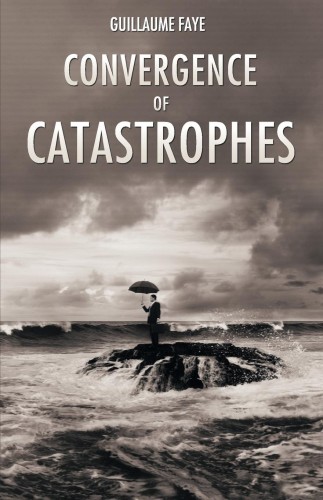
GFcoc_1.jpgFor the first time in its history, humanity is threatened by a convergence of catastrophes.

A series of ‘dramatic lines’ are approaching one another and converging like a river’s tributaries with perfect accord (between 2010 and 2020) towards a breaking point and a descent into chaos. From this chaos — which will be extremely painful on the global scale — can emerge the new order of the post-catastrophe era and therefore a new civilisation born in pain.

Let us briefly summarise the nature of these lines of catastrophe.

The first is the cancerisation of the European social fabric. The colonisation of the Northern hemisphere for purposes of permanent settlement by the peoples of the global South, which is increasingly serious despite the reassuring affirmations of the media, is pregnant with explosive situations; the failure of the multiracial society, increasingly full of racism of all kinds with different communities becoming more and more tribal; the progressive ethnic and anthropological metamorphosis of Europe, a true historical cataclysm; the return of poverty to Western and Eastern Europe; the slow but steady growth of criminal activity and drug use; the continual disintegration of family structures; the decline of educational infrastructure and the quality of academic programs; the disruption of the transmission of cultural knowledge and social disciplines (barbarisation and loss of needed skills); the disappearance of popular culture and the increasing degrading of the masses by the culture of spectacles.[2] All this indicates to us that the European nations are moving toward a New Middle Ages.[3]

But these factors of social breakdown in Europe will be aggravated by the economic and demographic crisis which will only get worse and end by producing mass poverty. By 2010 the number of active workers will not be large enough to finance the retirements of the ‘grandpa boomers’. Europe will collapse under the weight of old people; then its ageing countries will see their economies slowed and handicapped by payments for healthcare and retirement benefits for unproductive citizens; in addition, the ageing of the population will dry up technical and economic dynamism. In addition to these problems, the economy will increasingly resemble the Third World because of the uncontrolled immigration of unskilled populations.

Modernity’s third dramatic line of catastrophe will be the chaos of the global South. By displacing their traditional cultures with industrialisation, the nations of the South, in spite of a deceptive and fragile economic growth, have created social chaos that is only going to get worse.

The fourth line of catastrophe, which has recently been explained by Jacques Attali,[4] is the threat of a world financial crisis, which will be much more serious than the crisis of the 1930s and will bring about a general recession. The harbinger of the crisis will be the collapse of the stock markets and currencies of the Far East, like the recession that is striking this region.

The fifth line of catastrophe is the rise of fanatical religious cults, principally Islam. The rise of radical Islam is the backlash to the excesses of the cosmopolitanism of modernity that wanted to impose on the entire world the model of atheist individualism, the cult of material goods, the loss of spiritual values and the dictatorship of the spectacle. In reaction to this aggression, Islam has radicalised, just as it was already becoming once again a religion of domination and conquest, in conformity with its traditions.

The sixth line of catastrophe: a North-South confrontation, with theological and ethnic roots, will appear on the horizon. It is increasingly likely to replace the risk of an East-West conflict, which we have so far avoided. No one knows what form it will take, but it will be serious, because it will be based on collective challenges and sentiments much stronger than the old and artificial partisan polarity of the USA and USSR, capitalism and Communism.

The seventh line of catastrophe is the uncontrolled increase of pollution, which will not threaten the Earth (which still has four billion years to look forward to and can start evolution over again from zero), but the physical survival of humanity. This collapse of the environment is the fruit of the liberal and egalitarian myth (which was once also a Soviet myth) of universal industrial development and a dynamic economy for everyone.

We can add to all this the probable implosion of the contemporary European Union, which is increasingly ungovernable, the risks involved with nuclear proliferation in the Third World, and the probability of ethnic civil war in Europe.

The convergence of these factors in the heart of a globalised and very fragile civilisation allows us to predict that the Twenty-first century will not be the ‘progressive’ continuation of the contemporary world, but the rise of another world. We must prepare ourselves for this tragic possibility with lucidity.

Believing in Miracles

We are dealing with a general prejudice inherited from the egalitarian and humanitarian utopias, like the philosophy of Progress, according to which ‘we can have everything at the same time’ and that reality never has negative consequences.

People believe they can have their cake and eat it too. They imagine, according to the liberal faith, that an ‘invisible hand’ will spontaneously restore a harmonious equilibrium. I shall mention a few examples of believing in miracles:

•    Imagining that the dogma of the unlimited economic development of every nation is possible without massive pollution and ecological catastrophes that will destroy this very development. This is the illusion of indefinite development.

•    Believing that a permissive society will not produce a social jungle, and that you can obtain at the same time libertarian emancipation and self-disciplined harmony. We see this drama being acted out in the shipwreck of our schools, where violence, insecurity, ignorance, and illiteracy are arising out of the illusion of progressive education, an educational method which rejects any form of discipline for its students.

•    Believing that it will be possible to preserve retirement systems and social and medical entitlements while remaining faithful, in a period of demographic decline, to the ideal of ‘solidarity of distribution’. This is the illusion of the Communist conception of solidarity.

•    Believing that large-scale alien immigration is compatible with the ‘values of the French Republic’ and the preservation of the civilisation of the nations and peoples of Europe; and that Islam can become secular and blend in with republican values. Believing also that we can renew the working population by importing immigrants, when these immigrants are unskilled welfare recipients and our responsibility. Imagining also that by regularising the status of masses of illegal immigrants, it will be possible to assimilate them and avoid the arrival of new masses, although we observe exactly the opposite. This is the illusion of the benefits of immigration.

•    Extolling the assimilation and integration of aliens while wanting to preserve and maintain their special characteristics, their original cultures, their memories and native mores. This is the communitarian illusion, one of the most harmful of all, which is particularly cherished by ‘ethno-pluralist’ intellectuals.

•    Imagining that by cancelling Third World debt we can encourage their economic growth and prevent new indebtedness in the future. This is the Third Worldist illusion.

•    Demanding at one and the same time that we abandon nuclear energy programs and replace them with power plants using natural gas, coal and petroleum, while advocating the reduction of polluting gases. This is the ecologist’s illusion.

•    Thinking that a world economy founded on short term speculation based on computerised markets and replacing monetary policies with the caprice of financial markets will guarantee a lasting ‘new growth’. This is the illusion of the new economy.

•    Believing that democracy and ‘republican values’ will be reinforced by eliminating ‘populism’, that is, the direct expression of the will of the people.

I could make the list longer. In all these matters, believing in miracles can be explained by the incorrigible optimism of the secular religion of egalitarian progressivism, but also by the fact that, although it has reached an impasse, the dominant ideology does not dare deny its dogmas or make heartbreaking revisions, while clinging to the idea that ‘the storm will never come’. The whole thing is explained by the sophisms of bogus experts, whose conclusions are always that everything is going well and getting better and that we have the situation under control. They are like a driver who speeds through a red light and justifies it by explaining that the faster he drives, the less time he spends in the intersection and therefore reduces the risk of a collision.

Man, a Sick Animal

Paul MacLean,[5] Konrad Lorenz,[6] Arthur Koestler,[7] and Jean Rostand[8] have sensed that man is a sick animal, endowed with a brain that is too large. Conscience is perhaps, on the evolutionary scale, an illness and intelligence a burden. Man has lost touch with his natural survival instincts. We have not been on the Earth for a long time and it may be that, from life’s point of view, or Gaïa’s,[9] we are a failed species, an abortive experiment; and that, especially by destroying the ecosystem that supports it, the suicidal human race is hastening its own disappearance.

Our neocortex, which some biologists compare to a tumour, does not function sufficiently in symbiosis with our reptilian brain. This is ‘cerebral schizo-physiology’, the source of a chaotic and self-destructive culture: wars, religious fanaticisms, frenzied exploitation of nature, aberrant demographic proliferation or, on the other hand, catastrophically low birth levels, frustrating natural selection, etc.: Homo sapiens sapiens does not deserve the name he has given himself. He is not ‘wise’, only intelligent. But he will perhaps perish from this excessive intelligence, which is pushing him to excess, hybris[10], and is making him lose every instinct of collective survival and all capacity to ‘feel’ the dangers that are piling up.

The Golem Parable, or the Machine that Went Mad

Humanity has lost control of the forward rush of the technological and globalised civilisation born in the Nineteenth century. We should remember the parable of the Golem, the Jewish allegory from Prague, in which a mud figure brought to life by magic escapes its maker, becomes an autonomous and out of control entity, and then starts spreading terror.

Today’s little Jules Vernes[11] are mistaken. Optimistic and short-sighted mechanics, they are only making the situation worse. More than that, they are not in control of the machine and have no idea where it is heading. There really is a pilot in the airplane, but he is convinced that he is driving a locomotive.

Among the inescapable trends at work today, there are other risks that are unforeseeable today but which will make things worse (or perhaps better, but this is less likely), or else create new tendencies or new earth-shattering phenomena. At any rate, it is hard to see any positive signs. All the indictors are flashing red.

In futurology, there are only two types of extrapolation from current trends that one can make with a high degree of probability: the weak and the strong. Today predictions are typically based on weak extrapolations. These latter are, for example, the pursuit of economic growth, linear and continuous technological progress, scientific civilisation, the affirmation of democracy everywhere in the world (who is telling us that Europe will be ‘democratic’ in 2030?); the lasting character of the United Nations; the effectiveness of antibiotics in the next century, and so on.

We are less concerned with strong extrapolations, which have a good chance of being realised in the next twenty years: the demographic disequilibrium of North and South that will grow massively; the unavoidable ageing of the indigenous European population; the growth of mass immigration into rich countries; the worsening of pollution, atmospheric warming and the exhaustion of resources, which is growing worse regardless of what measures may be taken today on a global level (and they are not being taken); the rising power of Islam; the worsening of social disintegration in Europe along ethnic lines, etc. All these strong extrapolations are headed in the direction of the system’s breakdown, and are what we might call ‘pessimistic’.

The ‘Billiard Ball’ Theory

The current implicit ideology that dominates the world, especially in the West, still continues to profess, officially, the utopia inherited from the egalitarian philosophy of the Enlightenment (Eighteenth century), positivism[12] and scientism (Nineteenth century): to create a situation where, in a few decades from now, some eight billion people will live on the planet with a good standard of living and democracy for all. All this resembles the billiard player who imagines that after four or five rebounds his ball will automatically fall into the hole. These professors of ballistics are playing golf, but they do not know it.

It is a quasi-certainty that this persistent belief in progress and modernity, concepts which the political classes of the West are always jabbering about and which are totally obsolete, will never see its objectives occur. The dream will shatter into pieces. Constraining forces, a physical wall, makes this ideology resemble a mass of intellectual stupefaction and belief in miracles.

The demanding parameters, mentioned above, based upon the assumption that current realities will persist and that current projections for the future will be realised, are not taken into account. No one is looking at the dashboard or the fuel gauge. Only the short-term counts, but for how much more time? The majority of the elites do not concern themselves with the long term, or even the middle term, in this civilisation of the here and now. The fate of future generations does not interest the decision-makers at all. They care only about their own careers.

*  *  *

They are helped by the experts in every field, who practice constant disinformation and censorship of pessimism, taking advantage of the good old Coué method of optimistic autosuggestion:[13] ‘Everything is going badly, so, to reassure myself, I say that everything is going well.’ Actually pessimism would be more convincing, since it incites people to improve matters and to try to cure the disease. Alas, I think that is already too late. We have passed the point of no return.

The majority of intellectuals, media people, politicians and businessmen maintain a language of utopian optimism, clinging to their dogmas and making a gross travesty of reality: ‘republican assimilation is making progress and will continue to make progress in France’; ‘we are on the path to control massive illegal immigration’; ‘Islamism is in decline’; ‘we are on track to win the war on terror’; ‘economic growth will resume next year and, because of the economic recovery, unemployment will go down’ (when tomorrow comes, erasing it will cost nothing); ‘we are going to establish democracy in the Near East’; ‘we can stop using nuclear power and reduce pollution by making more efficient use of other resources, even if we go back to power plants that use petroleum, natural gas and coal’; ‘we are going to find the money to pay for the costs of healthcare insurance without increasing public borrowing’; and so on.

We go forward each time either by lying and misrepresenting the objective situation, or by deliberately ignoring the parameters and changes that are taking place.

If elites of all different kinds pretend to believe this nonsense, public opinion (once upon a time we used to say, ‘the people’) subscribes to it less and less. Pessimism is present everywhere, like a sort of presentiment of a coming apocalypse. Already in 1995, an IFOP[14] poll published in the Leftist newspaper Libération revealed that to the question, ‘In ten years will we live in a better world?’ 64 % of those polled responded in the negative. They were not mistaken.

‘Catastrophe Theory’ and ‘Discrete Structural Metamorphoses’

In his ‘catastrophe theory’ French mathematician René Thom[15] explained that a ‘system’ (whether physical-chemical, mechanical, climatic, organic, social, civilisational, etc.) is an always fragile ensemble that can suddenly lurch into chaos, without anyone anticipating it, as a result of an accumulation of factors. It is the famous ‘drop of water that causes the cup to overflow’. Every system is unstable and every civilisation is mortal, like everything in the universe. But sometimes the collapse is violent and sudden. For a long time a system can be worn away from inside by an endemic crisis; it holds out for a long time and then, suddenly, everything tips over. We find here the law of viral and bacterial biology: incubation is slow, but the final attack is as fast as lightning. A tree, apparently in good health, falls down during the first storm, although no one suspected that its insides were eaten away.

History offers us examples of sudden and unforeseen collapses: the Amerindian civilisation after the Spanish invasion, or else the Egyptian empire facing the assault of the Romans. I am defending the thesis that this is what awaits today’s global civilisation in the next twenty years. We are going to hit a very sudden breaking point arising from the simultaneous convergences of great crises. It is easy to envisage spectacular and rapid historical reversals.

*  *  *

It is always necessary to beware of surprises, these unforeseen and sometimes discrete transformations, which turn everything upside down. They radically modify a system’s structure, without making a loud noise and suddenly, their consequences explode and change everything. That is what is heading for us today. They are ‘discrete structural metamorphoses’.

We believe that we are still living in world X, when we are already in world Y, and the house of cards of the old world collapses without warning. These metamorphoses do not always make the front pages of newspapers; they take place without making a fuss. They constitute history’s infrastructure, not its ephemeral surface.

The founding of the Fifth Republic,[16] the fall of Communism, the results of American elections, etc., are events that depend on the superstructure. On the other hand, what we have called the ‘discrete structural metamorphoses’ will have incalculable consequences. For a generation they have been increasingly frequent and rapid. They are transforming the face of our civilisation.

Let us mention some cases. In France and Belgium, and soon in other countries, the number of active practitioners of Islam is soon going to surpass that of the Christian churches; the depopulation of Europe has begun as the radical ethnic modification of its population; the Spanish language has already equalled and even surpassed English in the American Southwest; some twenty nations possess the technology for making nuclear weapons; in a number of Western countries the traditional family is collapsing and a demographic coma is in place; the ‘casino economy’, purely speculative and unregulated, stretches over the entire world, especially in China, which still calls itself ‘Communist’; antibiotics are less and less effective against bacterial epidemics, and so on.

We are in control of none of these structural metamorphoses. And very few people are aware of the power of their interaction.

We Must Stop Believing in Sorcerers: Techno-science Gone Mad

The elites who direct the Western world, the over-credentialed ‘experts’, are pulling the wool over our eyes. They possess neither strategy nor mastery of analysis and are satisfied with tactics. The real problems are never investigated. The solutions are rhetorical or electoral. The good apostles, bureaucrats with MBAs from prestigious schools, are only masters of words. No improvement is in sight. The Golem’s inexorable march continues.

The burden of ‘doing nothing’ is the heaviest. But the experts and specialists (once called ‘savants’) are consoling us. They play the role sorcerers played in ancient societies.

*  *  *

No one is directing science and technology any longer and, far from improving the human condition as they used to, they are making it worse, notably by exhausting resources and destroying the environment. The modern myth of ‘development’, which is venerated more than ever all over the world, leads to its opposite, a gigantic regression, a race to the bottom. No authority, no international planning has emerged. Globalisation is anarchy. The backdrop of this fatal movement is generalised individual consumerism, the search for the highest possible standard of living, unbridled enthusiasm for the free market, the speculative economy and the cult of ‘taking each day as it comes’.

Similarly, democracy has to be seen as an aggravating factor, for this type of regime removes any central authority that can, when it sees the storm appearing, react in an emergency. Liberal democracy favours improvidence, the law of the market, and short-term calculation by individuals or corporations. If once upon a time this type of regime was efficient, today it seems incompetent, as it shows every day, to stem the rise of dangers.

International conferences on the environment are a futile waste of time. Just as there is no control over mass immigration, so the destruction of fish reserves and our forest heritage, the increased emission of greenhouse gases, the demographic gap between North and South, etc., are out of control. Even the authorities who arise to reverse the catastrophic course of events, whether they represent countries or the United Nations, do not succeed in correcting the direction of the cargo ship that is going full sail, faster and faster, towards the reefs.

*  *  *

But we are reassured by the ‘experts’ and are still fascinated by techno-science, believing that it will solve all our problems using some new form of magic. Computers, the electric or low-polluting engines, organic agriculture, and pharmaceutical research will not prevent the return of famines and epidemics or the exponential growth of pollution. It is too late. The machine is racing. Intellectuals and ‘philosophers’ have been telling us over and over again for decades that ‘the myth of Progress’ is dead. On the contrary, it has never been in such good shape, especially in the developing countries of the South. We are victims of the psychological condition of derealisation, a loss of the sense of reality of what is happening. Our contemporaries have persuaded themselves that ‘catastrophe cannot happen’ and that this civilisation is at the same time eternal and continually getting better and better, that it will never experience a reversal, and a fortiori[17] not a collapse. Not only is this a possibility, but it will happen, and very soon.

What comforts us in this gloomy illusion is our techno-scientific environment, which we consider to be indestructible, when on the contrary this global civilisation is a colossus with feet of clay. The politicians and the experts, who possess neither audacity nor imagination, reject every radical solution. They always prefer little solutions, tactical or rigged, compromises that please an electorate with cold feet, always respecting the status quo. They believe, like King Arthur, that ‘the fortress is impregnable’ when no one is guarding the walls.[18]

The groundswell — or rather the different groundswells arriving at the same time, demographic, strategic, sociological, economic, environmental — is arrogantly ignored. In France we even use the surreal expression ‘sustainable development’! The dominant ideology, which calls itself rationalist, is really magical. In every area it plays the role of an ‘ideology of sleep’.

*  *  *

We must not forget — and it is one of the central theses of this work — that mini-catastrophes reinforce one another, multiplying their effects among one another to produce a global mega-catastrophe. An accident (of an airplane, for instance) is the result of a series of causes and never just one: for example, the conjunction of a technical problem in the controls, bad weather and pilot error.

It is the same with the situation we are living through, or rather that we are soon going to be living through. For example, the natural calamities produced by global warming aggravate the famines caused by other economic and demographic causes and thus make the economic situation even worse and push the populations of the South to emigrate to the North, thus destabilising the West still more. Growing poverty in certain countries feeds religious fanaticism that, in turn, complicates political instability. And so on.

The system is holistic and interactive, which explains the acceleration of the arrival of the breaking point, since a multitude of crises converge at the same moment, without anyone being able to treat them separately.


[1]     Robert Ardrey (1908-1980) was a widely read and discussed author during the 1960s, particularly his books African Genesis (1961) and The Territorial Imperative (1966). Ardrey’s most controversial hypothesis, known as the ‘killer ape theory’, posits that what distinguished humans’ evolutionary ancestors from other primates was their aggressiveness, which caused them to develop weapons to conquer their environment and also leading to changes in their brains which led to modern humans. In his view, aggressiveness was an inherent part of the human character rather than an aberration. Ardrey’s ideas were highly influential at the time, most notably in the ‘Dawn of Man’ sequence of 2001: A Space Odyssey, and also in the writings of GRECE, in which Ardrey was frequently cited.

[2]     Presumably a reference to ‘society of the spectacle’, a term coined by Guy Debord (1931-1994), a French Marxist philosopher and the founder of the anarchist Situationist International. The spectacle, as described in his principal work, The Society of the Spectacle, is one of the means by which the capitalist establishment maintains its authority in the modern world — namely, by reducing all genuine human experiences to representational images in the mass media, thus allowing the powers-that-be to determine how individuals experience reality.

[3]     This is a concept developed by the French author Alain Minc, in which he predicts a coming time of chaos and hardship resembling the Middle Ages, which will end in the development of a much smaller, but more sustainable, global economy. He discusses this idea in Le Nouveau Moyen-âge (Paris: Gallimard, 1993).

[4]     Jacques Attali (b. 1943) is a French economist who was an advisor to Mitterrand during the first decade of his presidency. Many of his writings are available in translation. Faye may be referring to Attali’s article ‘The Crash of Western Civilisation: The Limits of the Market and Democracy’, which appeared in the Summer 1997 issue of the American journal Foreign Policy. In it, Attali claimed that democracy and the free market are incompatible, writing: ‘Unless the West, and particularly its self-appointed leader, the United States, begins to recognise the shortcomings of the market economy and democracy, Western civilisation will gradually disintegrate and eventually self-destruct.’ In many ways his arguments resemble Faye’s.

[5]     Paul D. MacLean (1913-2007) was an American neuroscientist who developed the triune theory of the human brain, postulating that, over the course of its evolution, the brain was actually made up of three distinct elements: the reptilian complex, the limbic system, and the neocortex. As a result, human behavior is the product of all three tendencies.

[6]     Konrad Lorenz (1903-1989) was an Austrian ethologist who won the Nobel Prize in 1973. He was a member of the National Socialist Party during the Third Reich. He speculated that the supposed advances of modern life were actually harmful to humanity, since they had removed humans from the biological effects of natural competition and replaced it with the far more brutal competition inherent in relations between individuals in modern societies. After the war, his books on popular scientific and philosophical topics earned him international fame.

[7]     Arthur Koestler (1905-1983) was a Hungarian writer who, in his 1967 book The Ghost in the Machine, speculated that the triune model of the brain as described by Paul MacLean was responsible for a failure of the various parts to fully interconnect with each other, resulting in a conflict of desires within each individual leading to self-destructive tendencies.

[8]     Jean Rostand (1894-1977) was a French biologist who was a proponent of eugenics as a means for humanity to take responsibility for its own destiny.  He was also a pioneer in the field of cryogenics.

[9]     Gaïa is the Ancient Greek name for the goddess of the Earth. In recent decades, the name has been adopted by ecologists, who use it to depict the combined components of the Earth as a living organism with its different parts acting in symbiosis with one another, rather than as a resource merely intended to be exploited by humans.

[10]    Latin: ‘pride’.

[11]    Jules Verne (1828-1905) was a French novelist who is regarded as the inventor of the science fiction genre. Several of his books are notable for their predictions of future technological developments.

[12]    Positivism holds that the only knowledge which can be considered reliable is that which is obtained directly through the senses and via the (supposedly) objective techniques of the scientific method.

[13]    Émile Coué (1857-1926) was a French psychologist whose method involved repeating ‘Every day, in every way, I am getting better and better’ at the beginning and end of each day in a ritualized fashion, believing that this would influence the unconscious mind in a manner that would allow the practitioner to be more inclined toward success.

[14]    The Institut français d’opinion publique, or French Institute of Public Opinion, is an international marketing firm.

[15]    René Thom (1923-2002) was a French mathematician who made many achievements during his career, but is best remembered for his development of catastrophe theory. The theory is complex, but in essence it states that small alterations in the parameters of any system can cause large-scale and sudden changes to the system as a whole.


[16]    The Fifth Republic began after the collapse of the Fourth Republic in 1958 as a result of the crisis in Algeria, bringing Charles de Gaulle to power and resulting in the drafting of a new constitution. It has remained in effect up to the present day.

[17]    Latin: ‘an argument with a stronger foundation’.

[18]    King Arthur’s Camelot was frequently left unguarded while his knights were engaged in lengthy quests.

Boganmeldelse af Guillaume Fayes ‘Mon programme’

Boganmeldelse af Guillaume Fayes ‘Mon programme’


Vi bringer en boganmeldelse, som blev bragt i Den Danske Forenings blad Danskeren nr. 4, 2012. (Ikke online før næste nummer udkommer)

Et ægte systemskifte

Guillaume Faye:
Mon programme.
(Les Éditions du Lore, 2012. 221 sider. 20 euro).

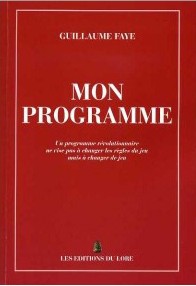
Faye,%20Guillaume%20-%20Mon%20Programme.jpgEt yndet argument mod dem, der ønsker befolkningsudskiftningen og globalismen tilbagerullet, er, at det er urealistisk eller ganske enkelt ikke kan lade sig gøre. Det har derfor stor værdi, at den franske filosof Guillaume Faye nu for sit eget lands vedkommende har skrevet et meget konkret og udførligt program for national genopretning med undertitlen: ”Et revolutionært program, der ikke skal ændre spillets regler, men ændre selve spillet.”

Faye ser økonomien som nøglen til en nations magt, men den er dog kun noget sekundært i forhold til den nationale overlevelse, som afhænger af nationens ”antropo-biologiske germen” – dens demografiske kim eller kerne – samt af kvaliteten og videreførelsen af dens kultur.

Men ikke mindst i Frankrig har socialismen og bureaukratiseringen gået sin sejrsgang i en sådan grad, at kampen mod dette kvælertag på et frit samfund har høj prioritet. Som Faye påpeger, er venstrefløjens kritik af de borgerliges ”ultraliberalisme” og ”kommercialisering” jo helt ude af proportioner i et land, hvor skattetryk og administrationens dødvægt kun slår nye rekorder. Krisen er fremkaldt af bl.a. for lidt økonomisk liberalisme, ikke af for meget. Globaliseringen er et ideologisk valg, for så vidt som 70 % af de firmaer, der er flyttet ud af Frankrig, ville være blevet, hvis der havde været en mere fornuftig skattepolitik. Socialstaten udspringer i bund og grund af misundelse, ikke af seriøs økonomisk analyse. Og den støtter kun, den hjælper ikke grundlæggende. Den lammer og fratager folk modet (også nationalt), og den har skabt en arbejdsløshedskultur, som derpå skaber ”behov” for indvandring: Alene i Frankrig kan man ikke finde indfødte ansøgere til en halv million job. Lediggang er mere indbringende. Det samme er paradoksalt nok kommet til at gælde for de indvandrere, man angiveligt har lukket ind for at løse problemet. Muslimerne i Frankrig (og hele Vesteuropa) forfordeles jo ikke eller holdes som slaver, tværtimod har de fået mere støtte end nogen indfødt gruppe. Sammen med de indfødte bureaukrater i beskyttede stillinger udgør muslimerne (som i bogen kaldes et nyt fødselsaristokrati) i Fayes øjne nutidens udbyttende klasse eller ”parasitter”, som han maner til klassekamp imod på vegne af det produktive folk og de marginaliserede indfødte franskmænd.

Faye foreslår derimod et system, der giver franskmænd incitament til at arbejde, og samtidig giver indbyggere med ikke-europæisk baggrund incitament til at udrejse – altså så lidet tiltrækkende vilkår, at de ikke har grund til at blive i landet. Statslige ydelser såsom børnepenge begrænses til franskmænd, og så snart ikke-vestlige i landet ophører med at være selvforsørgende, skal de ud uanset tidligere status. Illegale indvandrere kan aldrig nogensinde legaliseres og skal selvfølgelig altid udvises umiddelbart.

Desuden er det mht. indvandringen nødvendigt at gå til ondets rod, hvilket de i dag anerkendte ”internationale forpligtelser” ikke muliggør. Derfor må retten til at søge asyl ophæves. Udgifterne til den tvangsmæssige behandling af disse for det meste grundløse sager er jo uhyre. Ej heller kan asylsøgere, der er godkendt andetsteds i EU, få indrejsetilladelse til Frankrig. Flygtninge skal kun anerkendes som en absolut undtagelse via et særlig, personligt dekret fra præsidenten. Endelig overskygges princippet om, at love ikke må have tilbagevirkende kraft, af national nødret.

Faye gør op med den herskende misforståede læsning af Montesquieu, hvorefter domstolene skulle udgøre en ”tredje magt” i samfundet på linje med regering og parlament. Af denne forfejlede læsning udspringer nutidens juristvælde, hvor politikerne angiveligt er magtesløse. Ideen var dog oprindelig, at domstolene kun skulle være en myndighed med en bestemt autoritet, underlagt folkesuveræniteten.

I kriminalitetsbekæmpelsen slagter Faye flere hellige køer. Betingede straffe afskaffes. Enten straffes man eller ej. Og straffens formål skal ikke være ”resocialisering”, men netop straf. Det modsatte fører logisk set i sidste instans til ophævelse af enhver straf, fordi alle ugerninger kan forklares psyko-socialt. Et enkelt og inappellabelt straffesystem har i USA ført til mere end en halvering af kriminalitet på få måneder, og samme resultat kan selvfølgelig nås i Europa. I modsætning til i USA vil Faye dog ikke bruge dødsstraf, men total isolation på livstid som højeste straf. Som alternativ til denne frygtelige skæbne kan den dømte så vælge frivillig eutanasi.

Udenrigspolitisk ønsker Faye, at Frankrig kun blander sig, når landets interesser, borgere eller territorium er direkte truede. Han ser de forskellige ”krige mod terrorisme” diverse steder i verden som direkte kontraproduktive, alt imens befolkningsudskiftningen herhjemme kun fortsætter. Det franske forsvar bør derimod indrettes efter den eventualitet, at massive udvisninger af visse befolkningsgrupper eller etnisk borgerkrig i Frankrig fører til straffeforanstaltninger fra fx USA, hvilket franskmændene så må være i stand til at værge sig mod. NATO må derfor gradvist erstattes af et forsvarssamarbejde mellem nationalt sindede europæiske regeringer. Pirat-uvæsnet mod vestlige skibe vil Faye løse på kort tid ved hjælp af hær og flåde uden at tage fanger.

For Faye at se er ulandene ikke ofre for et ”neoliberalt” udbytningssystem. De er derimod deres egne værste fjender. Ulandshjælp-ideologien er den sande nykolonialisme, som må undsiges, fordi den altid har slået fejl. Han afviser, at ulandshjælp kan ses som et forsøg på at hindre indvandringen til Europa. Den har virket modsat, og i sin bog viser han udførligt, at masseindvandringen netop udmærket kan standses uden ulandshjælp som værktøj. Faye påpeger, at man aldrig i historien har set, at en invasion er standset ved, at man har ”stimuleret” aggressoren til ikke at invadere, kun ved at man har forbudt invasionen med trussel om brug af magt.

Principperne i Fayes program udspringer af hans retsfilosofiske grundanskuelse, som han kalder aristotelisk. Den forkaster formalisme og evige principper og ser udelukkende på realiteten og dens konkrete krav (efter den græske filosof Aristoteles’ modsætningsforhold til Platons idealisme). Faye erkender med Aristoteles, at enhver form for politik har en bagside. Enhver god afgørelse er samtidig problematisk. Det afgørende er bare, at det positive med tiden overskygger det negative. Det moderne ønske om at kunne tilfredsstille alle parter er en illusion. Trods ulemperne for nogle må Faye derfor kalde sit program for ”plan A”, den fornuftige løsning. For plan B, hvor lidenskaberne uundgåeligt på et tidspunkt tager over, kender hverken ”elegance, respekt eller nåde”.

Peter Neerup Buhl

00:20 Publié dans Livre, Nouvelle Droite | Lien permanent | Commentaires (0) | Tags : nouvelle droite, livre, guillaume faye | |  del.icio.us | | Digg! Digg |  Facebook

Sinofobia, la Siria e la “sinistra degenerata”

Avril-2011-Chine-Russie_galleryphoto_paysage_std.jpg

Sinofobia, la Siria e la “sinistra degenerata”

Ex: http://aurorasito.wordpress.com/

La sinofobia e la “sinistra degenerata”
Vi è una sezione incredibilmente piccola della sinistra degli Stati Uniti e dell’Europa occidentale, che sostiene la Cina come paese socialista (Workers World Party, Freedom Road Socialist Organization e il Party for Socialism and Liberation sono i tre gruppi marxisti più noti). Vi è una sezione leggermente più grande, della sinistra, che ha una visione ambivalente della Cina e dell’influenza cinese, inclusi ma non limitati al revisionista  Partito Comunista USA e il rifondatore Committee for Correspondence on Democracy and Socialism. Tuttavia, la maggior parte della sinistra degli Stati Uniti ha una visione del tutto negativa della Cina. Gruppi come International Socialist Organization (ISO) e l’International Marxist Tendency condividono la stessa visione della Cina del Wall Street Journal (WSJ) e dell’Economist, che la trattano da paese a capitalismo di stato. Inoltre, di norma l’ISO arriva oltre equiparando la Cina a una potenza imperialista uguale agli Stati Uniti. Anche la Segretaria di Stato Hillary Clinton potrebbe trovare un terreno comune con questa posizione, dato il suo commento in un vertice in Tanzania, lo scorso anno, secondo cui la Cina persegue una politica di “nuovo colonialismo” in Africa. Clinton ha fatto questi commenti senza un pizzico di ironia, così come non vi è alcuna ironia in “Record dell’imperialismo della Cina“, un articolo apparso sul Socialist Worker del 2009. Questo è ovviamente un parere condiviso da The North Star, che chiama la Cina “elemento di sostegno essenziale, forse il supporto essenziale, al dominio capitalista internazionale“. (2) Ciò è un importante punto di partenza per comprendere le basi teoriche della “sinistra degenerata” di cui The North Star fa parte.
Significativamente, nell’ultimo pezzo di Binh non vi è alcuna menzione della deterrenza militare o politica fornita da Cina e Russia sulla Siria. Nel pezzo originale, difendendo l’intervento della NATO in Libia e Siria, Binh fa menzione dell’opposizione della Cina e della Russia all’intervento in stile Libia, dicendo: “Paradossalmente, la vittoriosa campagna della NATO in Libia ha reso una futura campagna USA/NATO in Siria meno probabile. Russia e Cina sono ora determinate a bloccare qualsiasi tentativo di applicare il modello libico in Siria al Consiglio di sicurezza, e l’amministrazione Obama non è disposta a sfidarle avviando un’azione militare unilaterale in stile Bush, per il momento.” Cinque mesi più tardi, il ruolo di Cina e Russia non merita neanche una menzione, anche se Binh ridicolizza la sinistra anti-imperialista che risponde a nuovi segni di aggressione. Al contrario, la spiegazione della riluttanza di Washington ad intervenire direttamente per conto dei ribelli, si riduce a tre punti principali: (1) Washington non ha le truppe necessarie per invadere e occupare la Siria, (2) il Senato degli Stati Uniti limita la capacità di Obama di lanciare una no-fly zone, e (3) gli Stati Uniti fondamentalmente non vogliono vedere rovesciato Assad, perché la ribellione è pro-palestinese e i palestinesi sostengono la ribellione.

Il ruolo della Cina e della Russia come contrappesi all’imperialismo
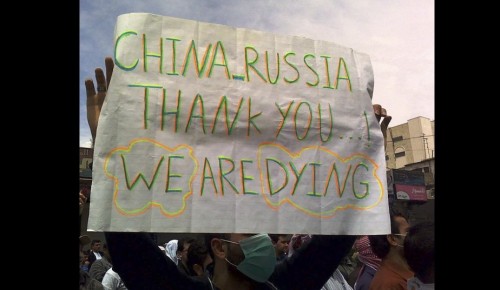
Cominciamo con il secondo argomento sulla mancanza di sostegno politico interno, al Senato degli Stati Uniti, a una no-fly zone. L’argomento di Binh è risibile dato che Stati Uniti, Francia, e le altre potenze imperialiste hanno già spinto per una no-fly zone attraverso le Nazioni Unite, come hanno fatto un anno fa, per lanciare l’assalto alla Libia, a giugno. Se avessero affrontato le stesse astensioni di Cina e Russia, come è successo con la no-fly zone in Libia, non vi è motivo di ritenere che l’intervento militare non si sarebbe già verificato. Tuttavia, la Cina e la Russia hanno, infatti, posto il veto al Consiglio di sicurezza dell’ONU verso la no-fly zone, riducendo notevolmente la percezione  di un consenso internazionale verso le operazioni militari straniere in Siria.
Ad agosto, il Ministro degli Esteri russo Sergej Lavrov, “ha avvertito l’occidente a non intraprendere azioni unilaterali contro la Siria, affermando che la Russia e la Cina sono d’accordo che violazioni del diritto internazionale e della Carta delle Nazioni Unite, vanno vietate.” (3) Sia la Cina che la Russia continuano a supportare la Siria e a spezzare le sanzioni dell’occidente al governo di Assad, con la Russia che si fa avanti aiutando effettivamente il governo siriano nel conflitto. Sia la Cina che la Russia continuano a chiedere una soluzione politica della crisi siriana, e sconfessano esplicitamente la strategia dell’esercito libero siriano di prendere il potere attraverso la guerra. E sia la Cina che la Russia si sono opposte all’escalation degli Stati Uniti, tra cui il recente collocamento di missili Patriot sul confine turco-siriano.
La Cina e la Russia risponderebbero militarmente se l’occidente intervenisse unilateralmente in Siria? E’ difficile dirlo, anche se la Russia è molto più pronta a lanciare un contrattacco per difendere il governo di Assad. Il punto più saliente è che la Cina e la Russia hanno esercitato la loro influenza in contrappeso all’imperialismo occidentale, riguardo la Siria. Le potenze imperialiste occidentali possono ancora intervenire militarmente in Siria, ma vi assicuro che uno dei più grandi ostacoli che li ha tenuti a bada, finora, sono la Cina e la Russia. Che cosa dovremmo pensare dell’astensione della Cina e della Russia al voto per la no-fly zone in Libia, alle Nazioni Unite nel 2011, che ha facilitato il barbaro assalto della NATO contro il popolo libico e la caduta di Muammar Gheddafi? Ritengo che sia la Cina che la Russia la ritengano  un fallimento; un passivo ‘rimorso del compratore’. Martin Beckford del Telegraph ha segnalato questo, “nelle prime settimane dell’attacco della NATO: la Cina, che affronta spesso critiche per la soppressione dei propri movimenti democratici interni, ha detto che “deplora” l’azione militare e rispetta la sovranità della Libia. Un comunicato del Ministero degli Esteri ha dichiarato: “La Cina ha preso atto degli ultimi sviluppi in Libia, ed esprime rammarico per gli attacchi militari contro la Libia. Speriamo che la Libia sia in grado di ripristinare la stabilità nel più breve tempo possibile ed evitare ulteriori vittime civili, a causa dell’escalation del conflitto armato”, ha aggiunto.” (4) La reazione della Russia è stata simile.
La Cina ha raramente usato il suo potere di veto al Consiglio di Sicurezza, e la Russia post-1991 ha seguito questa strada e, nonostante ciò, entrambe hanno supportato in silenzio nazioni indipendenti come la Siria. Tuttavia, l’entità e la ferocia dell’assalto alla Libia ha spinto il Partito Comunista Cinese (PCC) a cambiare posizione, riassumendo la sua inazione come un fallimento di cui “rammaricarsi”.

Scemo e più scemo: la sinofobia e il cinismo fuori luogo della sinistra degenerata
Binh e quelli del The North Star saranno pronti a sottolineare gli interessi  commerciali in Siria di Cina e Russia, insieme alla loro stretta relazione economica con l’Iran. Yusef Khalil dell’ISO, ha descritto il veto della Cina e della Russia a una no-fly zone sulla Siria, come “una [mossa] per proteggere i propri interessi imperialisti nella regione.” (5) La questione della Russia è un argomento altrettanto importante, ma la dovremo riservare per un’altra volta. Certo, la Cina è partner commerciale della Siria e il più grande titolare estero nella partecipazione al petrolio siriano. (6) Dopo l’embargo paralizzante fissato dall’Occidente, la Cina ha continuato ad acquistare petrolio siriano, minando gravemente il successo della ‘guerra delle sanzioni’. (6) Tuttavia, questo inevitabile contro-argomento è difettoso e ridicolo come l’intera premessa secondo cui la Cina sia un paese imperialista. Adel al-Toraifi, capo- redattore di al-Majalla News, dipana gli argomenti di tutti coloro che sostengono che la posizione della Cina sulla Siria sia basata su considerazioni economiche: “…La Cina ha avuto rapporti commerciali con la Siria, e una forte cooperazione economica con il regime di Bashar al-Assad dal 2001, dopo che entrambe le parti hanno firmato un accordo di cooperazione economica e tecnica, il che significa che la Cina è il terzo più importante partner commerciale della Siria. Tuttavia, il volume degli scambi commerciali tra i due paesi, pari a 2,2 miliardi di dollari nel 2010, è nulla in confronto allo scambio commerciale tra la Cina e gli Stati del Golfo, che supera i 90 miliardi di dollari all’anno. Quindi la Cina non è troppo preoccupata per la perdita della Siria come partner economico, ma il problema non è la perdita di utili o di affari, in particolare gli interessi cinesi sono protetti opponendosi alle mosse statunitense ed europea per promuovere un cambiamento di regime nel Medio Oriente.” (7)
Sostenendo che la Cina, un paese che in linea di massima non ha esercitato il suo potere di veto al Consiglio di Sicurezza, improvvisamente segua un capriccio e sostenga un partner commerciale minore come la Siria, sfida la logica. Solo una analisi cruda dei numeri di base, rivela che la Cina aveva oltre 20 miliardi di investimenti nella Libia del governo di Gheddafi, quasi dieci volte l’ammontare degli investimenti in Siria. (8) Il petrolio è un fattore determinante nella diversa linea  della Cina sulla Siria, rispetto la Libia? Ma neanche ci si avvicina. La Siria è un piccolo  produttore di petrolio, per gli standard del Medio Oriente, meno dell’1% delle esportazioni di petrolio siriane va in Cina (meno di 4.000 barili al giorno). (9) La Cina ha importato più di 15000 barili di petrolio libico al giorno con Gheddafi, ovvero circa 37,5 volte la quantità importata dalla Siria. (10)
Potremmo continuare a svelare l’argomento dell’interesse economico della Cina attraverso altri confronti economici. Per il bene del lettore, però, andiamo al sodo: la Cina ha molto meno motivi di partecipare alla difesa della Siria dalle aggressioni occidentali, di quanto abbia fatto con la Libia, ma le due domande hanno suscitato risposte diverse. La sinistra degenerata e la destra degli Stati Uniti condividono un cinismo comune verso le azioni cinesi negli affari mondiali. Tuttavia, la destra usa cinicamente la sinofobia come una tattica di pura propaganda volta a suscitare il nativismo negli Stati Uniti. La sinistra degenerata, d’altra parte, sembra davvero credere a questa farsa, ripetendo le stesse bugie a danno del movimento mondiale anti-imperialista.

La sinofobia della sinistra degenerata la spinge a saltare nel neo-conservatorismo
La politica estera della Cina è un eco lontano dal supporto critico dell’Unione Sovietica alle lotte di liberazione nazionale in tutto il mondo. In realtà, è importante per gli anti-imperialisti notare e criticare gli errori di politica estera commessi da Pechino, durante il conflitto cino-sovietico, che fin troppi gruppi statunitensi del nuovo movimento comunista hanno abbracciato acriticamente. Tuttavia, la sinistra degenerata che paragona la Cina a un interessato concorrente mondiale imperialista degli Stati Uniti, ha trascurato  totalmente le effettive dinamiche in gioco.
Poiché la maggior parte della sinistra occidentale vede nel commercio globale solo un affare diretto da multinazionali, vede il ruolo della Cina nel mercato mondiale come parte della stessa macchina imperialista, contro cui protesta nei propri paesi. Un elemento di opportunismo politico gioca in questa analisi, anche se si considerano le fiammate sinofobe palesemente alimentate da molti sindacati degli Stati Uniti. La sinistra degenerata ha un atteggiamento cinico nei confronti della Cina, anche quando fa qualcosa di incredibilmente lodevole come porre il veto alla risoluzione per la no-fly zone, derivante principalmente dal suo abbraccio della propaganda sinofoba. The North Star, insieme ad altri blog come Politics in the Zeroes, continuano a tacciare la Cina per il “massacro” di Piazza Tiananmen, dicendo che negli USA non sarebbe accaduto. (11) Naturalmente la Cina è sempre falsamente indicata quale potenza imperialista, per il suo rapporto con il Tibet, nonostante gli interessi feudali e imperialisti che alimentano il movimento Free Tibet. (12)
Con tutte le sue contraddizioni, la Cina rimane un paese socialista. Le leve fondamentali dell’economia sono ancora controllate dallo Stato, che è controllato solo dal partito comunista ed è orientato verso gli operai e i contadini. Un settore capitalista si è sviluppato in Cina, dalle riforme di Deng Xiaoping che rispecchiavano la nuova politica economica di Lenin, ma questo settore è del tutto dipendente dallo stato socialista. E anche se la Cina non è più un fautore verbale della rivoluzione mondiale, molti definirebbero questo revisionismo, la sua linea sulla questione siriana dimostra l’impegno costante del PCC nell’anti-imperialismo e nello sviluppo indipendente. Respingendo la Cina e tutta l’esperienza socialista del 20° secolo, la sinistra degenerata accetta già le premesse di base dell’elite di destra e borghese degli Stati Uniti. Naturalmente non si ferma solo alla Cina.
Se si respinge la Cina quale capitalismo di stato, o anche come stato imperialista, allora si deve andare oltre, rifiutando gli stati nazionalisti borghesi, come il governo di Assad in Siria o il governo di Gheddafi in Libia. Ogni tentativo di sostenere contro l’aggressione occidentale questi governi, da parte della Cina, o anche la Russia, viene visto come un’azione inter-imperialista, secondo la sinistra degenerata. Con ciò, i cosiddetti marxisti dei vari gruppi possono rispolverare Lenin, citando fuori contesto alcune sue denunce della Seconda Internazionale, e riprendendole oggi. Alcuni, come Binh, saltano Lenin e arrivano a Malcolm X, stracciando “con ogni mezzo necessario” in modo così grossolanamente fuori contesto, usando uno dei leader più rivoluzionari della liberazione nazionale, per giustificare lo stesso imperialismo contro ha combattuto.
Tutti si compiacciono nella loro soddisfazione di opporsi alla tirannia, nemmeno più il capitalismo, ma il concetto metafisico della tirannia, per conto di un immaginario movimento dei lavoratori ‘dal basso’. Questo ultimo punto, riguardo la semplicistica e completamente anti-dialettica visione del mondo della sinistra degenerata, è molto importante per capire il suo rapporto con il neo-conservatorismo. Perché la Siria è uno stato borghese, con una economia capitalistica, il degenerato vede il governo di Assad e le sue azioni nel vuoto politico. Non vi è alcuna comprensione dialettica delle contraddizioni primarie e secondarie, che rivelano che la lotta delle nazioni oppresse contro le nazioni che opprimono sono la contraddizione principale che affronta il popolo siriano. Invece, Assad è visto dalla sinistra degenerata allo stesso modo con cui Saddam (Hussein) era visto dall’amministrazione Bush: un tiranno che nega la libertà e la democrazia alla propria gente. Secondo questa visione del mondo, Assad non può essere progressista in qualsiasi contesto, perché guida uno stato borghese. Non importa che sia un nazionalista in opposizione all’imperialismo occidentale! Non importa che l’economia siriana sia ancora in gran parte controllata dallo Stato! Non importa che sostenga le lotte di liberazione nazionale in Palestina e in Libano! Opprime il suo popolo; una frase particolarmente condiscendente verso qualsiasi cosa che possa far parlare di sé la gente. E naturalmente non c’è discussione o differenziazione verso i popoli colpiti dalla repressione dello stato siriano (collaboratori e simpatizzanti dell’imperialismo, terroristi).
La Cina è anche uno dei fattori in questa visione tautologica del mondo. Per il degenerato di sinistra, la solidarietà internazionale da uno Stato, ogni Stato, è categoricamente impossibile, perché ritiene che più o meno tutti gli Stati siano capitalisti. Si consideri la tautologia qui all’opera: quando la Cina vieta una risoluzione sulla no-fly zone, è una tirannia che supporta una tirannia. Quando la Cina non vieta la risoluzione sulla no-fly zone in Libia, fornisce un “supporto essenziale, forse il supporto essenziale, al dominio capitalista internazionale.” (2) Quando la Russia posiziona delle navi per compensare i missili Patriot degli Stati Uniti in Turchia, è una potenza imperialista che salvaguarda i suoi interessi strategici e commerciali. Se la Russia non si oppone all’intervento occidentale in Libia, è un partner silenzioso del progetto imperialista. … O forse dobbiamo affrontare la Cina, e la Russia, dialetticamente considerando il loro ruolo in relazione all’imperialismo in un determinato momento della storia!
E’ una sorpresa che molti trotzkisti del 20° secolo, che hanno costruito le loro misere carriere politiche “denunciando tutte le istanze del socialismo come capitalismo di Stato, siano diventati dei neo-conservatori nell’era Reagan?* Cominciamo a capire il caso vergognoso di Christopher Hitchens, guerrafondaio sull’Iraq, quando ci rendiamo conto del suo odio per tutti i paesi socialisti esistenti, che vede come potenze capitaliste e imperialiste, non migliori rispetto agli Stati Uniti.

La Siria, la Cina, gli Stati Uniti e la sinistra
L’intervento militare in Siria sembra più probabile ogni giorno. Tragicamente, la risposta della sinistra degli Stati Uniti sembra ridursi sempre più ad ogni guerra o azione militare lanciata dall’amministrazione Obama. Con i suoi importanti legami economici con gli Stati Uniti e il mercato mondiale, la Cina potrebbe assumere un ruolo più attivo facendo pressione economica sulle potenze imperialiste, affinché non intervengano. In definitiva se la NATO è stata dissuasa da un intervento in stile Libia, sulla questione delle armi chimiche, la presenza militare russa nel Golfo avrà probabilmente più a che fare con ciò. Il punto più saliente è che la sinistra degenerata continua a fiancheggiare le potenze imperialiste, a parole (The North Star) o con i fatti (ISO). La sinistra degli Stati Uniti deve scartare queste teorie fallite e abbracciare l’anti-imperialismo, se spera di costruire una resistenza militante a questi attacchi criminali, un anti-imperialismo che invii un messaggio unificato di supporto ad Assad e all’autodeterminazione siriana, in questo periodo di crisi, come abbiamo scritto lo scorso fine settimana.
Tuttavia, la sinofobia della sinistra degenerata continua a perseguitare i movimenti degli Stati Uniti, impossibilitati a distinguere l’amico dal nemico. Anche la russofobia, un argomento da affrontare un’altra volta, alimenta una visione semplicistica del mondo, aliena dalla teoria leninista dell’imperialismo. In realtà capitalista, la Russia non è ancora una potenza imperialista e, soprattutto, fa da contrappeso all’imperialismo insieme alla Cina. Il coinvolgimento sia della Cina che della Russia nella crisi in Siria ha diverse contraddizioni, ma gli anti-imperialisti riconoscerebbero che questi due paesi hanno reso la sottomissione del popolo siriano al capitale finanziario occidentale più difficile. Né la Cina né la Russia sono i leader del movimento mondiale anti-imperialista. Questa distinzione appartiene alla lotta delle masse  per l’autodeterminazione e la rivoluzione in Colombia, India, Palestina, Filippine, e in tutto il mondo. Ma la sinistra degli Stati Uniti deve riconoscere che la Cina è un amico, non un nemico, del movimento anti-imperialista, e inizierà a vedere questioni come la Siria molto più chiaramente.

Return to the Source ha difeso l’orientamento socialista della Cina e il suo ruolo nel commercio mondiale, e chi è interessato a un esame più approfondito deve fare riferimento a Cina e il socialismo di mercato: Una questione di Stato e rivoluzione.
* In nessun modo questa affermazione dovrebbe essere preso come un atto di accusa a tutti i gruppi che professano il patrimonio ideologico di Lev Trotzkij. Per quanto imperfetto, come noi crediamo, sulla linee e la strategie di organizzazione, molti di questi gruppi, come il Socialist Equality Party, hanno perlopiù confermato una posizione anti-imperialista sulla Siria.

Note
(1) Pham Binh, The North Star, ““Red Line” or Empty Threat? How the Left Gasses Itself on #Syria”, 6 dicembre 2012
(2) Gabriel Levy, The North Star, “The Trouble With Economic Growth”, 2 ottobre 2012
(3) Reuters, “Russia, China warn West against Syria intervention”, 21 agosto 2012
(4) Martin Beckford, The Telegraph, “Libya attacks criticised by Arab League, China, Russia and India”,  21 marzo 2011
(5) Yusef Khalil, Socialist Worker, “A Turning Point in Syria”, 31 maggio 2012
(6) Joel Wuthnow, The National Interest, “Why China would intervene in Syria”, 16 luglio 2012
(7)Adel al-Toraifi, al-Majalla, “Does China truly support Bashar al-Assad?” 16 febbraio 2012
(8) Michael Kan, The African Business Journal, “China’s Investments in Libya
(9) Energy Information Administration, “Country Analysis Briefs: Syria”, Updated August 2011
(10) Deborah Brautigam, “China in Africa: The Real Story, “China’s Oil Imports From Libya”,  23 marzo 2011
(11) Malcolm Moore, The Telegraph, “Wikileaks: No Bloodshead Inside Tianamen Square, cables claim”, 4 giugno 2011
(12) Michael Parenti, “Friendly Feudalism: The Tibet Myth”, gennaio 2007

Traduzione di Alessandro Lattanzio – SitoAurora

Appel aux citoyens

00:05 Publié dans Actualité, Evénement | Lien permanent | Commentaires (0) | Tags : événement, manifestation, paris | |  del.icio.us | | Digg! Digg |  Facebook

Libros e ideas para una respuesta identitaria a la globalizacion

mondialisation_1.jpg

Libros e ideas para una respuesta identitaria a la globalizacion

Ex: http://enricravello.blogspot.com/

El discurso identitario es la antítesis ideológica al paradigma de la globalización mundialista, de raíz neoliberal y de voluntad cosmopolita.

Frente a este intento de reducción de los pueblos y las identidades del mundo una tiranía mundialista, totalitaria y economicista; los identitarios oponemos el discurso de la diferencia, del derecho de los pueblos y de la defensa de las culturas.

 
Frente a su idea de un mercado universal donde las personas y los pueblos sean reducidos a consumidores-productores intercambiables y despersonalizados, los identitarios proponemos la creación de grandes espacios económicos continentales y autocentrados. Ésa es nuestra voluntad de construir Europa.

Conscientes de la necesidad de dotar de contenido a nuestra  alternativa identitaria, anunciamos el inicio de una actividad editorial y cultural en ese sentido. Como adelanto de lo que decimos, adjuntamos el prólogo de una obra que aparecerá en los próximos meses escrita conjuntamente por el conocido filósofo identitario, Laureano Luna y por Enric Ravello.
 
 Prólogo que a modo de presentación de ideas, escrito íntegramente por Laureano Luna y del que consideramos necesaria una máxima difusión.

 
Enric Ravello
Secretario de relaciones nacionales e internacionales de Plataforma per Catalunya


 REFLEXIONES PARA LA LUCHA POLÍTICA SOCIAL-IDENTITARIA

 
I. Una lucha política revolucionaria tiene que basarse en una idea racional y más racional que sus rivales. Esto es así porque la historia de Europa ha demostrado que, en el medio y largo plazo, Europa marcha siempre hacia mayores niveles de racionalidad.

 
Eso implica identificar una idea última que informe y gobierne la lucha política. Nadie hace historia sino a lomos de un caballo y de una gran idea. Hoy, para nosotros, esa idea sólo puede ser la preservación de la civilización occidental. Haga solamente un intento esbozado de caracterizar a nuestra civilización. Intentémoslo primero a través de sus cuatro grandes valores:

 
-el conocimiento, como acercamiento racional a la realidad;

-el deber, como mandato de la racionalidad práctica;

-el amor, como empatía con todos los seres capaces de sufrir;

-la belleza.

 
Para seguir caracterizándola debemos señalar que nuestra civilización exige de la sociedad, para considerarla una sociedad civilizada, que satisfaga las condiciones siguientes:

 
-que esté dirigida a propiciar el desarrollo de la racionalidad y, por tanto, que respete las libertades cívicas que permiten al ciudadano pensar, investigar, expresarse, asociarse y manifestarse libremente, y que a la vez eduque a los ciudadanos para que desarrollen el sentido del deber y el temperamento que permite cumplirlo, incluso en las condiciones más desfavorables;

 
-que no admita más desigualdades que las que están justificadas por  los méritos o las capacidades o por el bien común de todos los ciudadanos;

 
-que sea una sociedad abierta a la participación política del pueblo, en la que las decisiones políticas no estén reservadas a una persona o a un grupo;

 
-que en ella la economía esté al servicio de la comunidad, controlada por el poder político y sometida a mecanismos de solidaridad que aseguren la cohesión social.

 
Erigir la defensa de la civilización occidental como eje ideológico de una lucha política sólo tiene sentido si esa civilización está bajo una amenaza de dimensiones históricas: hacer política revolucionaria es hacer historia y para hacer historia hay que captar el sentido del momento histórico, es decir, hay que identificar qué es lo que está históricamente en juego en el punto de la historia en el que se opera.

 
Y lo que está en juego es la civilización.

 
La civilización europea está amenazada por un avatar del capitalismo salvaje, al que llamamos capitalismo global. El capitalismo global destruye las bases, es decir, las condiciones de posibilidad de la civilización como la entendemos. Por una parte, el capitalismo global mina las bases naturales de la civilización, esto es, sus condiciones naturales de posibilidad, y, por otra parte, socava igualmente sus condiciones sociales de posibilidad.

 
El capitalismo global amenaza las condiciones naturales de posibilidad de la civilización occidental eliminando progresivamente la población que ha creado esta civilización a lo largo de los últimos 2.500 años: no hay garantía alguna de que la civilización, tal como la conocemos y valoramos, pueda sobrevivir a la desaparición de la población que la creó. Y amenaza igualmente esas condiciones destruyendo el medio ambiente que es imprescindible para el mantenimiento de la vida humana civilizada.

 
Además, el capitalismo global amenaza las condiciones sociales de posibilidad de la civilización occidental al menos de tres maneras:

 
-destruyendo la tradición cultural, moral y espiritual occidental;

 
-sustituyendo la democracia por el poder del dinero, y sustituyendo los procesos democráticos de toma social de decisiones por los mecanismos del mercado global;

 
-eliminando el sentido social de la economía: el capitalismo global es intrínsecamente neoliberal y está aprovechando la apertura de los mercados a nivel mundial para destruir las conquistas de las clases trabajadoras en los últimos 200 años, conquistas que son ahora parte integrante de nuestra civilización.

 
II. Toda lucha política genera amigos y enemigos. Esas amistades y enemistades se basan primariamente en intereses y secundariamente en sentimientos y principios ideológicos. Todo movimiento político necesita analizar quiénes son sus amigos y quiénes son sus enemigos. Sus amigos se convertirán en su clientela política potencial.

 
Una lucha política por la civilización occidental y contra el capitalismo global tendrá en Europa como aliados naturales a las clases trabajadoras y a las pequeñas empresas; tendrá como enemigos al gran capital y a la clase política ligada a él. Igualmente tendrá como enemigos a los transmisores de la ideología dominante, a quienes, diciéndose de izquierdas o de derechas, son en realidad meros ‘progres’ apegados a los dogmas de la superestructura ideológica del capitalismo global; y éstos son esencialmente los medios de comunicación.

 
La globalización es consecuencia de la dinámica del capitalismo y parte del credo neoliberal: es esencialmente la libre circulación de mercancías, capitales y mano de obra. A su vez el neoliberalismo es consecuencia de la concepción ilustrada del ser humano como un yo puro, sin determinaciones biológicas o culturales y sin vínculos comunitarios: es la ideología del hombre como individuo químicamente puro; es la falsificación sistemática de la naturaleza humana. Es ésta ideología la que ha desembocado históricamente, como en su producto final, en el capitalismo global: ese es el fondo real de esa concepción del hombre, su materialización. La concepción ilustrada del hombre como un yo puro sobrevivirá con el triunfo de la globalización o sucumbirá con su fracaso porque la barbarie de la globalización capitalista es el secreto desvelado de las ideologías que sobre la concepción ilustrada del hombre se articulan.

 
En esta circunstancia histórica hay tres intereses que convergen llamativa y poderosamente:

 
-los intereses morales de quienes están dispuestos a luchar por ese milagro de la historia que llamamos civilización occidental;

-los intereses ideológicos de quienes defienden una concepción del hombre alternativa, espiritual, comunitaria e identitaria;

-los intereses económicos de las clases trabajadoras.

 
A nivel abstracto esto es así porque todos esos intereses son enemigos del capitalismo global y ante tamaño enemigo la definición política esencial es a favor o en contra.

 
Pero la historia tiene tramas mucho más concretas. El capitalismo global, mediante la anulación de facto de las fronteras políticas, ha puesto a competir a los trabajadores del mundo occidental con los trabajadores del resto del mundo, cinco veces más numerosos y con salarios medios siete veces más bajos. Esta competencia se realiza a través de tres mecanismos:

 
-la inmigración;

-la deslocalización y la concentración de las inversiones en el tercer mundo;

-las importaciones desde países que producen con dumping social y ecológico, es decir, con salarios de miseria, con condiciones laborales de semiesclavitud y sin pagar impuestos para la protección del medio.

 
Mientras los trabajadores occidentales perciban salarios más altos o disfruten de mejores condiciones salariales:

 
-serán paulatinamente sustituidos por inmigrantes;

-serán despedidos porque la producción se trasladará a países con mano de obra más barata;

-serán despedidos porque sus empresas no podrán competir con las que producen en el tercer mundo y exportan a Occidente.

 
El proceso sólo terminará cuando los salarios reales de los trabajadores occidentales hayan descendido a menos de la mitad, cuando sus condiciones de trabajo hayan empeorado sustancialmente y ellos estén incondicionalmente en manos de las empresas, y cuando las cotizaciones sociales, y con ellas las prestaciones sociales, hayan disminuido hasta hacer desparecer el estado del bienestar. Es decir, el proceso desembocará en la restauración del capitalismo salvaje y la consiguiente destrucción de las conquistas sociales de Occidente y, con ellas, de la misma civilización europea.

 
Lo que la globalización significa es esencialmente esto: los trabajadores dejan de estar protegidos por sus estados nacionales (de las patrias que en su lucha conquistaron e hicieron solidarias), de modo que sus vidas empiezan a estar en manos de los mercados mundiales. El final del siglo XX vio romperse el pacto fordista-keynesiano, que había limado la lucha de clases desde 1945. Desde los años ochenta el gran capital ha lanzado una nueva lucha de clases, dirigida contra los derechos de los trabajadores y contra la economía social. Los trabajadores tarde o temprano responderán alzándose contra el capitalismo global. Y sólo podrán hacerlo buscando sustituir la lógica del dinero por la lógica democrática, la lógica de los mercados por la lógica política, es decir, apelando al poder político de los estados nacionales. Pero el fundamento de esos estados es la identidad nacional y cultural de las poblaciones. Por eso, la rebelión de las clases trabajadoras es lo único que se interpone entre nosotros y la sustitución de la civilización por el capitalismo salvaje, y esa sublevación será una revolución contra los mercados y por los estados nacionales. En consecuencia, la lucha obrera, la lucha identitaria y la lucha por la civilización occidental han sido unidas por la historia con lazo tan fuerte que el hombre no podrá separarlas.

 
Y ese lazo alumbrará nuevas ideologías, que serán nuevas concepciones del ser humano.

 
Para poner en pie la lucha de clases en el siglo XXI hay que comprender la naturaleza del capitalismo global y la de su única alternativa posible: la revolución social-identitaria. Todo lo demás es tontería. Quienes digan defender a los trabajadores y luchar contra el capitalismo pero renieguen de las fronteras e identidades nacionales, defiendan la inmigración y el libre comercio, no defienden a los trabajadores ni luchan contra el capitalismo: hacen el juego a éste y paralizan la lucha de los trabajadores creando desconcierto. Esos constituyen esa izquierda, ya falsa por vieja, que, ignorando cómo luchar contra el capitalismo global, se dedican a expandir la ideología antipatriótica que allana su desarrollo.

 
Y la única manera de revertir el proceso globalizador para preservar nuestras tradiciones culturales y los valores de la civilización occidental consiste en apoyarse en los intereses de los trabajadores: quienes no vean que toda lucha por las identidades nacionales y por la civilización pasa hoy por una posición social y económica anticapitalista serán absolutamente incapaces de contribuir a esa lucha y se convertirán en aliados objetivos de los globalizadores.

 
III. El arma más poderosa del capitalismo es la ideología. El control moderno de las masas no se realiza generalmente a través de la violencia o la coerción física sino mediante el control mental: en palabras de Marx, mediante la superestructura ideológica.

 
La superestructura ideológica del capitalismo global es el antirracismo. No un antirracismo sincero, entendido como defensa de los pueblos y las personas contra la opresión de otros pueblos o contra las discriminaciones injustas. No, no es ese el antirracismo que transmiten los medios de comunicación. Se trata del antirracismo como negación del derecho de los pueblos a su identidad y a regir sus destinos dentro de sus legítimas fronteras. Se trata de un antirracismo diseñado para paralizar en el alma de los trabajadores, y mediante el sentimiento de culpabilidad, las protestas contra la inmigración, la deslocalización y las importaciones con dumping social y ecológico. Se trata de un antirracismo diseñado para obligar a los pueblos a abandonar el control democrático-político de sus vidas en manos de los mercados. Se trata de un antirracismo que es en realidad un racismo anti-blanco, que pretende infiltrar en el sentir de los trabajadores a los que quiere dominar un sentimiento de culpabilidad que atenace su capacidad para ver claramente la realidad y para alzarse eficazmente para transformarla.

 
El falso antirracismo de los políticos, de los medios de comunicación, de los libros de texto no es más que una superestructura ideológica diseñada con el propósito de hacer bajar nuestros salarios.

 
La defensa de los derechos de los trabajadores europeos, la defensa de la civilización occidental, la defensa del derecho de los pueblos a ser dueños de su destino y a conservar su identidad, no es racismo. Oponerse a la invasión migratoria que va a destruir la identidad y las conquistas sociales de Occidente no es racismo, no es oponerse al inmigrante. Y no lo es porque sólo si Occidente se mantiene como fortaleza social, como plaza fuerte de las conquistas sociales y civilizatorias de la humanidad, será posible evitar que la humanidad entera se sumerja en la barbarie del capitalismo salvaje. Europa debe erigirse en fortaleza social y civilizatoria para que su coraje en la lucha por la justicia sea ejemplo y semilla para la lucha de los trabajadores por sus derechos en el mundo entero.

 
No es racismo; es pura lucidez histórica. Si los medios de comunicación (es decir, los transmisores canónicos de la ideología del capitalismo global) tachan de racismo a nuestra posición, la razón última es que nuestra lucha por la identidad amenaza al capitalismo y a los intereses del dinero.  

 
IV. Occidente es esencialmente Europa. Los EEUU, como entidad política, no son una parte de Occidente sino más bien el brazo armado de su peor enemigo: el brazo armado del capitalismo global.

 
Los europeos tenemos varios niveles de identidad. Somos bávaros o provenzales o galeses o gallegos. Somos españoles, alemanes o franceses. Somos europeos.

 
El patriotismo de los trabajadores, el que tiene que enfrentar y vencer al capitalismo global, debe respetar todos esos niveles de identidad. Cualquier centralismo jacobino que ahogue la identidad de las regiones de Europa peca contra el derecho de los pueblos a su identidad. Y los nacionalismos que pretenden un soberanismo imposible y vacío de contenido pecan contra la necesidad de apuntalar los estados nacionales para hacerlos más fuertes que el poder del dinero, más fuertes que los mercados, más fuertes que sus enemigos. Finalmente, cualquier sentimiento antieuropeo basado en exclusivismos nacionales peca contra la patria futura de los trabajadores europeos y la cuna de nuestra civilización compartida. Examinemos este último punto.

 
El primer gran intento de globalización capitalista se quebró en la crisis del 29 y dio lugar a un resurgir de los nacionalismos. Estamos ahora en otro nivel de la historia. Ninguna nación europea podrá jugar en solitario un papel relevante en la política mundial. Sólo Europa podrá hacerlo. Los actuales estados nacionales europeos deben constituirse en los ladrillos de la construcción europea, de una confederación europea que actúe a nivel mundial como un solo agente político para defender los valores de nuestra civilización. A pesar de que la Unión Europea y la Eurozona son creaciones del capitalismo, concebidas como grandes espacios para el neoliberalismo y como pasos hacia la globalización, nosotros no debemos destruirlas sino más bien conquistarlas y cambiarlas de signo hasta dotarlas de carácter social, identitario y civilizatorio. Igual que durante siglos los estados nacionales sirvieron a los intereses de la burguesía hasta que los trabajadores y su lucha los conquistaron e inculcaron en ellos la dimensión social y solidaria que hoy estamos en trance de defender, de esa misma manera los trabajadores conquistarán y transmutarán el monstruo neoliberal que hoy llaman Europa en una confederación social-identitaria.

 
V. The future’s not ours to see: ‘no nos cabe ver el futuro’ dice la famosa canción Qué será, será.

 
Pero hay razones para la esperanza. El capitalismo global se convierte progresivamente en un modo de producción ineficiente. Los mercados, cuanto más independientes se hacen del control estatal, se vuelven más inestables, porque los sistemas complejos tienden a hacerse inestables si no se dotan de elementos de control central. Los mercados, cuanto más internacionalizados se vuelven, más inestables resultan, porque los sistemas complejos se vuelven inestables cuando no adoptan fronteras que los protejan de las perturbaciones procedentes del exterior. Un puñado de teorías lógico-matemáticas (la teoría de sistemas, la dinámica de sistemas, la teoría de los sistemas dinámicos discretos…) nos están avisando de que el capitalismo global es intrínsecamente inestable y, como tal, condenado a convertirse en ineficiente. Las repetidas burbujas y sus estallidos son manifestaciones de esa ineficiencia.

 
Probablemente, el modelo económicamente más eficaz de organización para la humanidad es el modelo de las áreas autocentradas: grandes áreas de tradición y cultura semejantes convertidas en zonas de libre comercio y en actores geopolíticos en la escena mundial: Europa, Norteamérica, los países árabes, Latinoamérica, China y el extremo oriente… Las simulaciones por ordenador sugieren que la organización económica más estable es la que se corresponde con un mundo dividido en un puñado de áreas autocentradas, áreas en las que la economía esté controlada por poderes políticos democráticos e imbuidos de los valores de los pueblos, áreas nunca aisladas pero sí dotadas de fronteras que eviten que el colapso en un punto del globo se convierta en colapso universal.

 
El capitalismo global es además ineficiente en el medio plazo porque es un sistema depredador, porque la lógica de los mercados y el dinero es incompatible con la lógica del equilibrio entre la humanidad y su planeta. Sólo una lógica política nueva, sustentada por una concepción nueva del hombre y su relación con la naturaleza, puede resultar en una economía sostenible.

 
La humanidad evoluciona siempre en el medio y largo plazo hacia mayores cotas de racionalidad y eso en economía significa también mayor eficiencia. Esa simple constatación alimenta la esperanza de que, por simples necesidades económicas, el capitalismo global tendrá que ser desechado. Esa mutación histórica, el hundimiento del capitalismo global, otorgará una oportunidad a quienes luchan por un orden más justo y más acorde con la verdadera naturaleza humana.

 
Al menos si han visto con lucidez y se han preparado con diligencia.

 
Siles. Diciembre del 2012. Laureano Luna Cabañero

La géopolitique du schiste

La géopolitique du schiste

h-20-2487472-1304705000
 

Selon les revues élitaires et la presse d’opinion, l’avenir de la politique étrangère repose en grande partie sur des idées : l’élan moral en faveur d’interventions humanitaires, les diverses théories relatives aux taux de change et au rééquilibrage de la dette nécessaire pour arranger Europe, la montée du cosmopolitisme parallèlement à la vitalité tenace du nationalisme en Asie orientale et ainsi de suite. En d’autres termes, le monde de l’avenir peut être conçu et défini sur la base des thèses de doctorat. Et dans une certaine mesure cela peut être vrai. Comme le 20ème siècle nous l’a montré, les idéologies – que ce soit le communisme, le fascisme ou l’humanisme – comptent et comptent beaucoup.

Mais il y a une autre vérité: La réalité de grandes forces impersonnelles comme la géographie et l’environnement qui contribuent aussi à déterminer l’avenir des événements humains. L’Afrique a été pauvre historiquement [sic, NdT] en grande partie à cause de la rareté de bons ports naturels et de fleuves navigables de l’intérieur vers la côte. La Russie est paranoïaque à cause de sa masse terrestre exposée aux invasions avec peu d’obstacles naturels. Les émirats du Golfe Arabo-persique sont fabuleusement riches non pas à cause d’idées, mais à cause des dépôts importants de sources d’énergie souterraines. Vous avez compris. Les intellectuels se concentrent sur ce qu’ils peuvent changer, mais nous sommes impuissants à changer une grande partie de ce qui se passe.
Prenez le schiste, une roche sédimentaire au sein de laquelle le gaz naturel peut être piégé. Le gaz de schiste constitue une nouvelle source d’énergie extractible pour le monde post-industriel. Les pays qui ont d’importants gisements de schiste seront mieux placés dans la compétition entre États du 21e siècle, et ceux qui n’ont pas de tels dépôts seront défavorisés. Dans ce domaine, les idées compteront peu.
Stratfor, en l’occurrence, a étudié la question en profondeur. Voici ma propre analyse, influencée en partie par la recherche de Stratfor.
Voyons donc qui a du schiste et comment cela peut changer la géopolitique. Car l’avenir sera fortement influencé par ce qui se trouve sous terre.
 
Les USA, cela est avéré, ont de vastes gisements de gaz de schiste: au Texas, en Louisiane, au Dakota du Nord, en Pennsylvanie, dans l’Ohio, l’État de New York et ailleurs. L’USAmérique, indépendamment de la plupart des choix politiques qu’elle fait, est en passe de devenir un géant énergétique du 21e siècle. En particulier, la côte du Golfe, avec comme centre le Texas et la Louisiane, s’est engagée dans un  véritable boom du gaz de schiste du pétrole. Cette évolution fera de la Caraïbe une zone focale de l’hémisphère occidental sur le plan économique, ce qui sera favorisé par l’élargissement du canal de Panama en 2014. Dans le même temps, la coopération entre le Texas et le Mexique voisin va s’intensifier, comme le Mexique va devenir de plus en plus un marché pour le gaz de schiste, avec ses propres bassins de schiste exploités près de sa frontière nord.
Ce sont là, en partie, des nouvelles troublantes pour la Russie. La Russie est actuellement le géant énergétique de l’Europe, exportant du gaz naturel vers l’ouest en grandes quantités, ce qui fournit à Moscou un levier politique sur toute l’Europe centrale et de l’Est en particulier. Toutefois, les réserves de la Russie sont souvent dans certaines parties de la Sibérie qui sont difficiles et coûteuses à exploiter, même si la technologie d’extraction de la Russie, autrefois vieille, a été considérablement modernisée. Et la Russie pour le moment peut faire face à relativement peu de concurrence en Europe. Mais que faire si à l’avenir les USA étaient en mesure d’exporter du gaz de schiste vers l’ Europe à un prix compétitif?
Les USA ont encore peu de capacités d’exportation de gaz de schiste en Europe. Ils seraient obligés de construire de nouvelles installations de liquéfaction pour le faire, en d’autres termes, il faudrait édifier des usines sur le golfe du Mexique qui liquéfient le gaz afin qu’il puisse être transporté par bateau à travers l’Atlantique, des installations de regazéification le reconvertiraient en gaz en Europe. Cela est faisable avec de l’investissement en capital, de l’expertise et une législation favorable. Les pays qui construiront de telles installations auront plus d’options énergétiques, pour exporter ou pour importer, quel que soit le cas. Alors imaginez un avenir dans lequel les USA exporteraient du gaz de schiste liquéfié vers l’Europe, réduisant la dépendance des pays européens vis-à-vis des sources d’énergie russe. La géopolitique de l’Europe pourrait changer quelque peu. Le gaz naturel pourrait devenir pour la Russie un outil moins politique et plus purement économique (même si un tel changement non-négligeable exigerait d’importantes exportations de gaz de schiste de l’Amérique du Nord vers l’Europe).
Moins de dépendance envers la Russie permettrait à la vision d’une Europe centrale et orientale véritablement indépendante et culturellement dynamique de pleinement prospérer – un idéal des intellectuels de la région depuis des siècles, même si les idées, dans ce cas, auraient peu de choses à voir là-dedans.
Cela pourrait être particulièrement pertinent pour la Pologne. Car la Pologne peut avoir d’importants gisements de gaz de schiste. Si les gisements polonais de schiste s’avéraient être les plus importants d’Europe (un très gros «si»), la Pologne pourrait devenir un producteur d’énergie à part entière, ce qui ferait de ce plat pays sans défenses naturelles, à l’est et à l’ouest – annihilé par l’Allemagne et l’Union soviétique au 20e siècle – un État-pivot ou une puissance moyenne au 21e siècle. Les USA, à leur tour, quelque peu libérés du pétrole du Moyen-Orient grâce à leurs propres sources d’énergie (y compris les gisements de gaz naturel), pourraient se concentrer sur le renforcement de la Pologne comme une puissance amie, tout en perdant une grande partie de leur fort intérêt pour l’Arabie Saoudite; Certes, les immenses gisements de pétrole et de gaz naturel dans la péninsule arabique, l’Irak et l’Iran maintiendront le Moyen-Orient comme grand exportateur d’énergie pour encore des décennies. Mais la révolution du gaz de schiste va compliquer l’approvisionnement et la répartition des hydrocarbures de la planète, de sorte que le Moyen-Orient pourra perdre une partie de sa primauté.
Il s’avère que l’Australie a également d’importantes réserves de gaz naturel, récemment découvertes, ce qui, avec des installations de liquéfaction, pourrait la transformer en un des principaux pays exportateurs d’énergie principale vers l’Asie orientale, en supposant que l’Australie réduise considérablement ses coûts de production (ce qui peut s’avérer très difficile à faire). Parce que l’Australie a déjà commencé à émerger comme l’allié militaire le plus fiable des USA dans l’anglosphère [resic, NdT], l’alliance de ces deux grands producteurs d’énergie de l’avenir pourrait cimenter encore plus l’influence occidentale en Asie. Les USA et l’Australie se partageraient le monde : tant bien que mal, bien sûr. En effet, si l’exploitation du gaz naturel non-conventionnel a quelque chose à y voir, le soi-disant monde post-usaméricain serait tout sauf cela.
L’émergence géopolitique du Canada – encore une fois, grâce au gaz naturel et au pétrole – pourrait amplifier cette tendance. Le Canada possède d’immenses gisements de gaz naturel en Alberta, qui pourrait éventuellement être transporté par des futurs gazoducs à venir vers la Colombie-Britannique, où, avec les installations de liquéfaction, il pourrait ensuite être exporté vers l’Asie orientale. Pendant ce temps, l’est du Canada pourrait bénéficier de nouveaux gisements de gaz de schiste qui sous la frontière se prolongent dans le nord des USA. Ainsi, des nouvelles découvertes de sources d’énergie lieraient plus étroitement les deux pays nord-américains, alors même que l’Amérique du Nord et l’Australie seront devenus plus puissants sur la scène mondiale.
La Chine a également d’importants gisements de gaz de schiste dans ses provinces intérieures. Parce que Pékin est grevé par relativement peu de règlementations, le régime pourrait acquérir les terres et construire les infrastructures nécessaires à son exploitation. Cela allégerait un peu la crise énergétique de la Chine et aider la stratégie de Pékin pour compenser le déclin de son modèle économique orienté vers le littoral en stimulant le développement des terres intérieures.
Les pays qui pourraient éventuellement souffrir à cause d’une révolution du gaz de schiste seraient les pays enclavés, producteurs de pétrole et politiquement instables comme le Tchad, le Soudan et le Sud-Soudan, dont les hydrocarbures pourraient perdre relativement en valeur à mesure que ces autres sources d’énergie seront exploitées. La Chine, en particulier, pourrait à l’avenir se désintéresser des gisements d’énergie dans ces  pays de bas de gamme [reresic, NdT] et à haut risque si le gaz de schiste qu’elle recèle se met à gicler en abondance.
De manière générale, l’arrivée du gaz de schiste ne peut qu’accentuer l’importance de la géographie. Quels pays ont du schiste dans leur sous-sol et lesquels n’en ont pas permettra de déterminer les relations de pouvoir. Et comme le gaz de schiste peut être transporté à travers les océans sous forme liquide, les États ayant des côtes auront l’avantage. Le monde deviendra plus petit en raison de la technologie de l’extraction du gaz non conventionnel, mais cela ne fait qu’accroître le caractère précieux de la géographie, plutôt que de le  diminuer.

Note du traducteur : ayant peu de choses en commun avec Monsieur Kaplan, je ne partage évidemment pas ses présupposés, ancrés dans l’idéologie usaméricaine de la « Destinée manifeste de l’Amérique », pas plus que je ne crois à une « fatalité géographique ». Le but de cette traduction est d’alimenter la réflexion de tous les citoyens francophones qui se battent dans le monde contre la malédiction du gaz de schiste en leur fournissant des éléments de compréhension des stratégies fumantes (et fumeuses) « d’en haut » à l’œuvre.


Robert D. Kaplan

Traduit par  Fausto Giudice
Merci à Tlaxcala
Source: http://tinyurl.com/a5hjvt4

Une approche des surréalismes de Belgique


Une approche des surréalismes de Belgique

par Marc. Eemans 

Café Het Goudblommeke (55 rue des Alexiens 1000 Brussel) maart 1953. Van links naar rechts: Marcel Mariën, Camille Goemans, Gérard Van Bruaene, Irène Hamoir, Georgette Magritte, E.L.T. Mesens, Louis Scutenaire, René Magritte en Paul Colinet.

Tout comme l'histoire de la peinture et de la sculpture symbolistes belges doit encore être écrite, cela en dépit de nombreux et parfois remarquables travaux d'approche tels des catalogues d'expositions et de savantes monographies de détail ou d'ensemble, l'histoire de l'art surréaliste de Belgique reste encore à écrire. Certes, il existe déjà pas mal de publications à ce sujet, ne serait-ce que les innombrables livres parus à la louange de la peinture de René Magritte ou de Paul Delvaux. Il y a eu de même des esquisses de travaux d'ensemble qui pèchent, hélas, par manque d'objectivité ou d'information. Le travail le plus complet jusqu'ici est le beau livre de Madame José Vovelle, actuellement professeur en Sorbonne. Ce livre, édité en 1972 aux Editions André De Rache à Bruxelles, n'est toutefois qu'une thèse de doctorat de troisième cycle soutenue en 1968 à Paris.

Comme le dit un modeste "avertissement" en tête de ce très remarquable travail, "Depuis des documents inédits ont été divulgués et des études particulières ont précisé tel ou tel point de la matière envisagée". Et en effet, de nombreuses perspectives nouvelles se sont ouvertes, tandis que des faits tout aussi nouveaux ont tenté de brouiller celles-ci depuis la rédaction de l'ouvrage de Madame Vovelle.

Puisse le catalogue pour la présente exposition des oeuvres qui ont fait l'objet du legs Hamoir-Scutenaire rectifier quelque peu ces perspectives, et d'abord en précisant que ce que l'on présente généralement comme le surréalisme en Belgique n'est le plus souvent que le surréalisme de la "Société du mystère" (selon l'expression de Patrick Waldberg) de l'entourage de Magritte, et encore ... Bien souvent on oublie d'y ajouter le surréalisme du "Groupe surréaliste du Hainaut", en ignorant à peu près complètement l'éphémère effloraison du surréalisme liégeois avec Auguste Mambour, qui fut un remarquable surréaliste durant environ trois ans, et le couple Delbrouck-Defize qui exposa même un jour à Paris sous l'égide d'André Breton.

Deux femmes surréalistes wallonnes, qui relèvent plutôt du groupe surréaliste parisien, sont la Namuroise Marianne Van Hirtum et la Liégeoise Alika Lindberg, fille du poète Hubert Dubois, l'inspirateur du surréalisme de Mambour. Cette dernière figure toutefois dans les annales du surréalisme parisien sous le nom de Monique Watteau. Toutes deux semblent des inconnues pour les historiens du surréalisme belge, tout comme la Gantoise Suzanne Van Damme, l'épouse du surréaliste italien Bruno Capacci et l'amie des surréalistes bruxellois Paul Colinet et Marcel Lecomte. ·

C'est par ailleurs un lieu commun d'affirmer que si l'expressionnisme belge est flamand, le surréalisme belge serait wallon. Rien n'est moins vrai, car le maître à penser du surréalisme bruxellois, Paul Nougé, bien que d'origine française, avait une mère flamande, tout comme l'historiographe officiel du surréalisme belge, Marcel Mariën est anversois. Il en est de même pour son homonyme (également un oublié quoique surréaliste depuis 1926-1927), le collagiste Georges Mariën, chef de file de plusieurs collagisles surréalistes anversois.

N'oublions pas que Camille Goemans est le fils du Secrétaire perpétuel de l'Académie royale de Langue et de Littérature flamandes de Belgique et que E.L.T. Mesens se proclamait volontiers, ne serait-ce que par bravade ou provocation, "le flamingant de Londres". Fait est qu'en sa jeunesse présurréaliste celui-ci avait été un intime des poètes expressionnistes flamands Wies Moens et Paul Van Ostaijen ainsi que du futur chef fasciste flamand Joris Van Severen dont une grande amie de Magritte, la Flamande, quoique francophone Rachel Baes a été la fidèle égérie au point de se faire enterrer à ses côtés au cimetière d'Abbeville en France.

On néglige également l'apport pourtant important au surréalisme belge des Flamands Fritz Van den Berghe, tout au moins en son ultime période (1927-1939), de Maxime Van de Woestijne (il est le seul à représenter le surréalisme belge dans une petite monographie allemamle consacrée à l'ar1 surréaliste) et de nous-même, auteur d'un album contenant "dix formes linéaires influencées par dix formes verbales" (1930), le seul recueil vraiment surréaliste paru en langue néerlandaise, tout au moins en Flandre.

Comme on a bien voulu conférer à un dessinateur quelque peu naïf et sans le moindre talent le statut de surréaliste à part entière pour la seule raison qu'il est le neveu de Paul Colinet, pourquoi ne nous permettrions-nous pas de joindre également aux surréalistes belges un Jules Lempereur qui inspira par certains de ses dessins le livre de Marcel Lecomte intitulé "Connaissance des degrés", paru toutefois sans les arts dessins. Même dans les milieux officiels (Administration des Beaux-Arts et Musées) le surréalisme belge est devenu ûn vrai fourre-tout. C'est ainsi, par exemple, qu'à l'exposition "Werkelijkheid en verbeelding - Belgische Surrealisten" (Réalité et imagination - Surréalistes belges), qui s'est tenue à Arnhem du 12 juillet au 6 septembre 1964, nous retrouvons parmi les exposants James Ensor, Léon Spilliaert, Victor Servranckx , Jan Burssens, Marcel Delmotte et Octave Landuyt, sans oublier plusieurs peintres qur fréquentaient la taverne bruxelloise "Le Petit Rouge", promus surréalistes par E.L.T. Mesens du fait qu'il y avait ses habitudes lors de ses séjours, après guerre, dans sa ville natale...

***

Si l'on veut vraiment écrire une histoire objective des "surréalismes de Belgique", il conviendrait d'y reconnaître trois courants dont les prodromes sont un courant dadaïste ("Oesophage", "Marie"), un courant rationaliste , très valéryen ("Correspondance") et un courant métaphysique, proche des vues sur la poésie du poète flamand Paul Van Ostaijen ("Hermès").

Des trois courants seuls les deux premiers ont requis l'attention des historiens du surréalisme belge (voir e.a. le livre de José Vovelle et le catalogue de l'exposition "René Magritte et le Surréalisme en Belgique" (Musées royaux des Beaux-Arts de Belgrque, Bruxelles 24 septembre - 5 décembre 1982). Quant au troisième courant, fort proche du surréalisme de l'André Breton du "Second manifeste du Surréalisme", 1929, il ne prit vraiment corps qu'en 1930, lorsque Camille Goemans et Marc. Eemans eurent pris congé", du surréalisme à la Nougé-Magritte et Scutenaire, en fondant les Editions "Hermès".

La vraie soudure entre les surréalistes bruxellois se fit à l'occasion de ce qu'il est convenu d'appeler la "bataille du Casino de Saint Josse" (novembre 1926): Les futurs membres du groupe vinrent à cette manifestation en char à bancs (une initiative de Geert van Bruaene) accompagnés d'un "chevalier" mercenaire en armure, car les acteurs du "Groupe Libre" avaient averti leurs adversaires qu'ils seraient reçus sans ménagement. Il y eut en effet non seulement chahut, mais aussi bataille avec quelques blessés légers de part et d'autre, dont Camille Goemans.

Parmi les amis des futurs surréalistes il y avait outre Van Bruaene , trors Flamands, les poètes Gaston Burssens et Paul Van Ostaijen (à cette époque un associé de van Bruaene) ainsi que l'auteur de ces lignes qui fut le seul de ceux-ci à rejoindre le groupe.

Marc. Eemans entraîna dans son sillage son amie Irène Hamoir laquelle il venait d'apprendre les rudiments du surréalisme selon les préceptes du premier "Manifeste du surréalisme" de Breton, d'où la "Lettre à Irène sur l'automatisme". Hélas, pour Eernans ! l'"automatisme" n'était pas tout à fait à l'ordre du jour de surréalistes bruxellois loin de là ! Il avait oublié que ceux-ci étaient surtout férus d'insolite et de spéculations diverses sur les apparences des choses et de leur réalité la plus banale possible tout en les rangeant dans un ordre peu habituel. Seconde bévue d'Eemans au sein du groupe, fut sa traduction d'une "Vision" d'une mystique médiévale brabançonne, Soeur Hadewych. Selon lui, le déroulement de cette vision rejoignait la quête du mervetlleux des surréalistes. Il suivait en cela une des thèses de son ami Van Ostaijen selon laquelle, tout en n'accordant que peu de crédit à l'écriture automatique à la Breton, celui-ci prônait en poésie une exploitation consciente du subconscient, en faisant une distinction nette entre la poésie subconsciemment inspirée et la poésie consciemment construite. Selon Van Ostaijen, la première de ces deux poésies procéderait d'un état extatique et, si l'on n'est pas un mystique, cette poésie pourrait procéder d'un fonds de mythes et d'archétypes selon une psychologie des profondeurs comme l'a formulée un Carl Gustav Jung.

A l'époque, Eemans et Van Ostaijen étaient encore ignorants de la psychologie jungienne, mais en bon surréaliste Eemans se croyait autorisé à se référer au freudisme et à ses vues sur l'inconscient. Toutefois, sans connaître Jung, Van Ostaijen et Eemans s'étaient déjà convertis aux vertus de tout ce qui relèverait de l'irrationnel, du métaphysique el de l'hermétique : aussi bien la mystique, orthodoxe ou non, que l'occultisme, l'alchimie, la parapsychologie, le romantisme, surtout allemand, et le symbolisme, sans oublier l'art des fous et ce que l'on appellerait plus tard l'"art brut", bref tout ce qui. s'insère dans l'imaginaire, le féerique du "hasard objectif', le fantastique et le merveilleux visionnaire.

Que nous sommes loin d'un surréalisme à la Nougé - Magritte et surtout de la gratuité du dadaïsme à la Mariën ! mais proche du surréalisme du Breton qui croit à ce fameux "point suprême d'où la vie et la mort, le réel et l'imaginaire, le passé et le futur, le communicable et l'incommunicable cessent d'être perçus contradictoirement".

Et aussi que nous sommes encore loin de ce futur surréalisme "non-dit" de la revue "Hermès", celle-ci consacrée à l'étude comparée de la poésie, de la mystique el de la philosophie.

Marc. Eemans en devint un des deux directeurs et Camille Goemans y fut l'auteur des "Notes des Editeurs" ainsi que des "Notes sur la poésie et l'expérience" rédig ées en collaboration avec l'essayiste Joseph Capuano. Henri Michaux, ami de collège de Goemans, devint le secrétaire de rédaction de la revue et André Rolland de Renéville, l'auteur de "Rimbaud le Voyant", ainsi que Bernard Groethuysen et quelques autres spécialistes en la matière y entrèrent au comité de rédaction. La revue compta parmi ses collaborateurs Marcel Lecomte qui entretint ainsi certains contacts avec le groupe Nougé, Magritte et Scutenalre. Que de sérieux peu "surréaliste" dans tout cela dira-t-on ! Aussi le ludique E.L.T. Mesens fut-il, "très fâché" en traitant ses anciens amis de "petits curés"... Plus tard tout rentra toutefois dans l'ordre surréaliste et Camille Goemans re devint à la grande joie de celui-ci un riche acheteur d'oeuvres de Magritte. Quant à Eemans, il redevint l'ami intime de Mesens et l'on sait que le couple Scutenaire-Hamoir, ainsi que le brave et gentil Colinet, cessèrent de bouder le vieux complice de leur "Bande Bonnot".

Seul le caractériel Marcel Mariën (en raison d'une jalousie d'ordre sentimental!) et ses jeunes séides d'après-guerre ne cessèrent de harceler Eemans de leur hargne, bien que Tom Gutt lui ait toul récemment adressé quelques lettres fort courtoises...

Mais arrêtons ici ces trop brèves el peul-être trop subjectives notes sur les "surréalismes de Belgique". N'empêche qu'en dépit de récentes lois en matière de révisionnisme politique, il conviendrait de pratiquer pas mal de révisionnisme surréaliste en réagissant contre certaines déviations el dérives vers la facilité pseudo- ou néo-dadaïste et la grossièreté pure et simple sous prétexte de faire de l'anti-esthétique el de l'antifascisme.

Et souvenons-nous du fameux pamphlet de Salvador Dali à l'adresse des "cocus du vieil art moderne". Quoique l'on puisse en penser, il ne s'agit pas que d'humour "paranoïa-critique"…

Marc. Eemans

Mai 1995

Uit: Eemans, M. (1995), Une approche des surréalismes de Belgique. Bruxelles: Fondation Marc. Eemans : archives de l’art idéaliste et symboliste.

00:05 Publié dans art | Lien permanent | Commentaires (0) | Tags : art, avant-gardes, surréalisme, belgicana, belgique, marc eemans | |  del.icio.us | | Digg! Digg |  Facebook