
Ok

En poursuivant votre navigation sur ce site, vous acceptez l'utilisation de cookies. Ces derniers assurent le bon fonctionnement de nos services. En savoir plus.

mercredi, 09 janvier 2013

Jeudi 10 janvier, Pierre Vial au local!

Jeudi 10 janvier,

Pierre Vial au local

10-JANVIER-2013.jpg

Eurasia and Europe: Dialogue of “Big Spaces”

speranskaya_1320212648_27.jpg

Natella Speranskaya

Eurasia and Europe: Dialogue of “Big Spaces”

 
Carl Schmitt regarded the earth as a single whole and was looking for its global mission. This "whole" was formed by Schmitt in the concept of Nomos. He used the Greek word derived from the verb «nemein», which is identical to German “nehmen” - “to take”. Nomos comprises three acts of the drama: "taking", "division and distribution of the taken", "exploitation and use of the taken and distributed." According to Schmitt, Nomos of the Earth existed always. First Nomos is described as a "promised land" of ancient peoples. It is the Nomos of the ancient times and the Middle Ages. It ceased to exist after the exploration of the great oceans and the American continent. Thus began the Second Nomos, the Nomos of national sovereign states that had the Eurocentric structure. Events of the World War II led to its destruction, so that the land was divided into east and west, which were in a state of "cold war". It is not about mere geographic opposites, but a more original and profound contradistinctions. Carl Schmitt wrote: "The whole history of the planetary confrontation of East and West in its entirety is reducible to the fundamental dualism of the elements: Earth and Water, Land and Sea. What we now call the East, is a single mass of solid land: Russia, China and India - a huge piece of land, the "Middle Earth", as named by the great English geographer Sir Halford Mackinder. What we call today the West, is one of the world's oceans, hemispheres, where the Atlantic and Pacific oceans are placed. Confrontation of the sea and land powers, worlds - is the global truth that lies at the heart of explanation of civilization dualism that constantly generates a planetary stress and stimulates the whole process of history ." Thus, the birth of a third Nomos was caused by division of the world between the West and the East. However, it was destroyed with the fall of the Berlin Wall and the collapse of the Soviet Union.

Schmitt's understanding of "three Nomoses of the Earth" brings us to the question, what will be the fourth Nomos of the Earth? Alexander Dugin, the founder of the theory of a multipolar world, the founder of the Russian school of geopolitics, believes that the new Nomos of the Earth will be a Nomos of large continental logic of the Eurasian continent. Certainly, the worst possible option would be a unipolar, globalist Nomos. Which of the Nomoses will be established depends on the strategic decision of Heartland, Russia, the civilization of land.

Italian political scientist Tiberio Graziani thinks, that Russia "has everything necessary to fulfill the historical role of the cornerstone of the whole global system," and he regards its location in the heart of Eurasia to be one of its most important elements. That is why all the strategic decisions of Atlanticists imply  fragmentation of the Heartland, considering that this process will provide the accession of a unipolar order. Alexander Dugin says, "On that, whether Russia can be sufficiently weakened, split and destabilized, and subjected by its fragments to the external power, largely depends the fate of globalization." And further: "For anyone who is serious about counter American hegemony, globalization and planetary domination of the West (Atlanticism), the axiom should become the following statement: The fate of the world order is decided at the moment only in Russia by Russia and through Russia." To describe the time in which we now live, the prominent sociologist Zygmunt Bauman applies the concept of Interregnum – so was called in ancient Rome the period between the death of Caesar and the accession of another one. It is a state of instability, uncertainty, unpredictability, when the demolition of the old order is as obvious as the emergence of the new one is. But what this new order (and, accordingly, the new Nomos) will be - is unknown. In the context of the changes of the new world order, we can speak of  paradigmatic shift from the "unipolar moment" to the formation of a multipolar world order. In other words, the focus should be on the end of the era of unipolarity, because there are all essential conditions for the realization of the alternative project. According to Huntington, the unipolar state is able to "effectively deal with all the major international problems alone, and none of the unions of other states can even be hypothetically capable of stopping it." It is difficult to deny that the hegemon represented by the United States now has no serious opponent, whether a coalition of states or, quite incredibly, a single state  that shows such strong potential that it inevitably involves the speedy restoration of the bipolar order.

According to Zygmunt Bauman, about 60-70 years ago an event occurred that contributed to a fundamental change in global politics: the gap between Macht and Staat, in other words, between Might and Politics, Might and the State (which are integral aspects of the Power) led to the situation, when Macht (Might) moved to supra-national space. Thus, the nation-state could no longer control it. In unipolar paradigm namely national states are actors of international relations. The said gap means neither more nor less than a gradual slippage to non-polarity. Namely, this, according to Richard Haass, Director of Foreign Policy Studies at the Brookings Institute and head of CFR, will determine international relations in the XXI century. Nation-states are nearly deprived of possibility of efficiency, "of doing things" (as Bauman understands Macht), emerging into a state of political paralysis. Antonio Gramsci treated Interregnum as a period when the old is no longer working, and the new has not yet appeared.

We are "stuck" between unipolarity and multipolarity, and have no idea what should the solution to this situation be. Of course, the question arises: what to do? And, above all, question themselves nation-states, de jure retained the ability to make decisions , but Zygmunt Bauman rightly argues that under current circumstances, the question should be formulated in a different way: who will do what is necessary rather than what to do? Which actor will assume responsibility for the actions that solve fundamental problems? Sure, we do not consider like such nation-states. Instead, we turn to the theory developed by Alexander Dugin, the Theory of the Multipolar World. Book with the same title gives a clear picture of what is happening in the field of international relations today: when the bipolar model of the world order has changed to unipolar one, it came to mean the triumph of the liberal-democratic ideology . The West has modeled values and guidelines system that were imposed upon the world as universal. Thus, the West came to the consistent implementation of the control (dictatorship) of cognitive and strategic spheres. The area of international relations became "American Science", the content of the discussions was reduced to polemical confrontation between realists and liberals. The diplomatic corps itself was formed within the unipolar world and the Western discourse, Western mentality, where political actors are  the national states. Another model of the world order, namely the multi-polar model, involves a form of organization of spaces based on several actors - "civilizations", as rightly pointed out by Samuel Huntington. This leads us to the formation of a new diplomatic corps and the new diplomatic language based on a multipolar world order. And the most progressive political thinkers have already come to a conclusion about the need to change the paradigm of international relations. One of them just raised the question of what will be next, others - have found the answer and freely operate  the basic concepts of the new system. It is impossible not to recognize the fact that the vast majority of politically engaged figures remain under the old paradigm, failing to perceive  the ongoing shift, which will commence the new historical period, completely changing the picture of the world politics . The Unipolar world - is yesterday. Here and now we are discussing the change of the unipolar paradigm to the multi-polar one, poly-civilizational.

Theory of the multipolar world suggests to establish new actors in international relations, which are of civilizations , and each of them, by definition, has a strategic center, serving as the subject of dialogue in international relations and, therefore, the subject of power. The transition from national states to civilizations is an inevitable consequence of the rupture described by Zygmunt Bauman.

Specialist in International Relations, Professor Adam Roberts notes the loss of a leading U.S. role in the current world order. Asked who will perform their receiver , he gives a completely obvious answer: no one. More precisely, we have not yet entered the period of interregnum, but just got close to it, and all that is happening in global politics - is the agony of the dying Caesar (USA).

The genuine emergence into Interregnum will happen with the final loss of the U.S. role as the world's hegemon and the cancellation of a "unipolar moment." It is here that the danger appears, that in the period of interregnum and consistent implementation of the formative stages of a multipolar world order will come "The variable geometry" of the nonpolarity and everything will be in the melting pot of globalization; we are immersed in liquid modernity (Z.Bauman), the main feature of which is "non-directedness of changes”, that is lack of strict direction, guideline, which ultimately makes us unprepared to respond to sudden challenges, elusive from any calculations and projections. The collapse of the Soviet Union occurred suddenly as lightning, completely changing the landscape of history. Non-polarity, which seems to come, may become a needed respite, a period of possibility of full value formation of the new model of the world order - for it is impossible to deny that the paradigmatic shift, followed by the demolition of numerous structures, will not be able to quickly create in all areas of Political  all the necessary conditions for the accession of the multipolar order. Non-polarity, Interregnum in the XXI century - are the funeral of the retired Caesar and the preparation for the enthronement of the new rulers (in the plural), that is rise of the poles, power centers.

Non-polarity is a "decapitation" of the U.S., but at the same time it can be called the attempt of the hegemon to maintain its influence through self-dispersion, dissolution. Under these circumstances it is strictly necessary to prevent delays, getting stuck in post-liberal environment and humility with a "coherent non-polarity." New actors must challenge the postmodern "non- directedness of changes" now and knowingly take absolute responsibility for strategic decisions and actions in the field of political practice. The leading research associate of the New America Foundation, Parag Khanna, analyzing the current situation and the precarious position of the U.S., discusses a critical role of diplomacy towards which the focus should be shifted . For improvement of the global diplomatic structure is laid the responsibility of the strengthening of U.S. hegemony . However, he does not take into account the fact that the diplomatic language is undergoing  a significant reformatting in the context of  paradigmatic shift to multipolar model, and this process is irreversible. Now we have to discuss  the dialogue of civilizations. The dialogue is built on a completely different level, which is beyond the rules of the dialogue between national states (i.e., outside the imposed Western discourse), with the U.S. having the unltimate decision-making power . Unless we understand that the battle for the world domination is not between civilizations, but a single (western) civilization with all the "other" ones, which are offered only two options: 1) to be on the side of this civilization, 2) or to be against it, defending the right for their own independence and uniqueness - we are not able to form a new diplomatic language for civilizational dialogue. And this should be understood, above all, by the elite of civilization, responsible, according to Alexander Dugin, for the conduct of the dialogue. If all the "others" agree with the unipolar project, our battle is lost, but if they make a radically different choice, we are waiting for  the "rise of the rest" (Fareed Zakaria). We should note that the world-famous British political scientist Paul Kennedy expresses his concerns about the emergence of the ideological differences between the U.S. and Europe, due to opposition to one of the projects of the world order - unipolar or multipolar. In the current environment we should not just rely on the increased conflict between Europe and America, but prepare the situation of split and division of the former from the hegemonic influence of the latter . Here Russia has a special role.

However, we must admit, that during the last decades, Russia increasingly moved away from its original purpose - to be a bridge between East and West. Interregnum can be our chance to recover, a chance for Russia to become and be. The theory of a multipolar world can be considered to be the starting point of the end of the unipolar era and of entry into the "post-American" period, a feature of which will be the presence of several poles (the subjects of inter-civilizational dialogue) and the certain elimination of an identity crisis, because in a multipolar world identity acquires a civilizational character. Today our dialogue with Europe is a dialogue of "big spaces"; in the new system of international relations GROSSRAUM becomes an operational concept of multipolarity. Alexander Dugin offers the "FOUR-polar" or "quadri-polar" model of the world, which consists of four world zones.

In the first zone, under the full control of the United States, there are two or three "big spaces." We get two "big spaces" by combining the U.S. and Canada - on the one hand, and Latin America - on the other. According to Alexander Dugin, three "big spaces" can emerge when "we shall divide those Latin American countries that are sufficiently well integrated with the U.S. and are completely under their control, and those that tend to create their own geo-political zone, challenging the U.S."..

The second zone is the area of Euro-Africa with the European Union as Its undoubted pole . Here appear  three "big spaces": the European Union, the black  Africa and the Arab GROSSRAUM.

The third zone is Eurasia with Russia (Heartland ) as its pole. Meanwhile, Prof. Dugin indicates, there are also a number of regional centers of power, namely Turkey (if it chooses the Eurasian path), Iran, Pakistan and India. Thus, the Eurasian zone consists of several "great spaces": Russia and CIS countries are the Russian-Eurasian GROSSRAUM. Three "great spaces" are also Turkey, Iran, India and Pakistan.

 The fourth zone - is the Pacific region. Its pole can become either China (which is a "big space") or Japan (potential GROSSRAUM, having all the essential factors - economic, geopolitical, technological, etc.- for its recovery:).

Justifying the basic guidelines for practical action to build a multipolar world, Professor Dugin focuses on the following directions:

1. Strategic reorganization of Heartland.

This implies the geopolitical activity of "middle earth" and the implementation of integration projects aimed at strengthening of the multipolar model.

2. Changes in the minds of the political elite of Russia.

Mainly he focuses on acquiring geopolitical thinking, as well as the high level of competence in the field of social science, sociology, and history. "The elite of Russia should understand themselves as the elite of Heartland, should think in Eurasian categories, not just on a national scale, herewith being clearly aware of the non-applicability of the atlanticist and globalist scenario to Russia" - writes A. Dugin. We cannot speak of any awakening of elite, until it makes a conscious choice towards Eurasianism, rejecting blind attempts to play up anti-Russian scenarios of Atlantist strategists.

3. The model of building relations between Russia and the United States.

With the understanding of destructive U.S. policies aimed at dismantling Russia for the absolute control of the whole Eurasia, these relationships become irreversibly hostile. We need to undertake drastic actions in order to prevent the NATO presence in the Eurasian "big space" and weakening of Heartland.

4. The model of building relations with Europe.

This model involves a strategic partnership with countries, adhering to the policy of the continental tradition - France, Germany, Italy and Spain. Here it is appropriate to talk about the project of axis "Paris-Berlin-Moscow". Another situation is deployed with countries of "New Europe", as well as England – that are oriented against Russia and have a tendency to adapt to the requirements of Washington.

5. The project "Great Eastern Europe."

This project includes the Slavs (Slovaks, Czechs, Poles, Bulgarians, Serbs, Croats, Slovenes, Bosnians, Macedonians, Serbs-Muslims), Orthodox (Macedonians, Serbs, Bulgarians, Greeks and Romanians). Prof. Dugin says that Hungarians are the only people who do not fall into the "Orthodox" category and at the same time they cannot be called the "Slavic". Hungarians have a Eurasian-Turanian origin.

6. Heartland and Western CIS countries.

It is about the multi-polar integration of Russia, Ukraine and Belarus, which belong to the area of Heartland, a single strategic structure. This political action will prevent the risk of entry of Belarus and Ukraine into NATO. Special attention is given to Moldova, whose integration with Romania, which is a part of NATO, seems to be impossible until the implementation of the project of the "Great Eastern Europe."

7. Eurasian Middle East and the role of Turkey.

Prof. Dugin mentions the American project the «Greater Middle East Project» concerning the Middle East. It implies the democratization and modernization of Middle Eastern societies, and strengthening of the military presence of the U.S. and NATO. Guided by conflicting interests, the strategy of Heartland in this direction should include political actions directed towards Turkey’s exit from NATO and the creation of the axis "Moscow - Ankara." Furthermore, the project of axis "Moscow - Tehran" should be taken with the utmost attention. According to Alexander Dugin, Iran is a "strategic space that automatically solves the problem of converting Heartland into a force in the global world." Neither Russia nor Iran should allow the implementation of the scenario, laid in the project of the "Greater Central Asia” (Greater Central Asia Partnership). Its launch would inevitably lead to the emergence of the "sanitary cordon", which would hardly separate Russia from Iran. In addition, having included such countries as Georgia, Afghanistan, Armenia, Azerbaijan, Kyrgyzstan, Kazakhstan, Uzbekistan, this cordon would make those countries controlled by American influence. The union of Russia and Iran, of course, will solve yet another fundamental problem, namely, it will open the "anaconda’s terret", depriving American strategists of any possibility of preventing marine operations of Russia.

 The strategy of Heartland should include projects of integration of Russia, Kazakhstan and Tajikistan into a single economic and customs space. In turn, the relationship with Pakistan should be built in strict accordance with the strategy of displacement of U.S. forces from this area. Alexander Dugin points to the need for a new model of relations with Afghanistan's Pashtun majority.

8. Axis "Moscow-Delhi."

Relationships with politically neutral "big space" of India should be directed towards achieving partnership. The main objective of this axis is to deter attempts of Washington to deploy its dominance in the South Asian region.

9. Russian-Chinese relations.

Prof. Dugin focuses on two difficult issues such as:

- Demographic spread of Chinese in sparsely populated areas of Siberia,

- China's influence in Central Asia.

It is necessary to build a balanced relationship with China, focusing on the fundamental point of strategic contact – support of the idea of the multipolar world.

10. Russian - Japanese relations.

Prof. Dugin indicates the need for the release of Japan from the American influence and the support of Japan as a sovereign regional power. Here it is appropriate to talk about  the project of axis "Moscow - Tokyo" as an integral part of Asian politics of Eurasia. "The alliance with Japan is vital - says Alexander Dugin, in his work "The bases of Geopolitics" – the Moscow-Tokyo axis, contrary to the Moscow - Beijing axis is an important and perspective, providing such prospects for continental empire-building, that will finally make Eurasia geopolitically completed, at the same time extremely weakening the Atlantist empire of the West, if not destroying it finally".

11. The geopolitics of the Arctic zone.

The following countries tend to control this zone: USA, Canada, Norway, Denmark and Russia. All of these countries (except Russia) are NATO members. Conquering territories in the polar region, and joining the race to develop large deposits of minerals, to its future plans Russia included the creation of a widescale system of communication and monitoring in the Arctic. Russia claims the polar area with size of 1.2 million square kilometers, with the incoming North Pole. In 2011 a brave move of the Russian researchers who had planted a Russian flag on the seabed of the Arctic Ocean  has been highly publicized by American media.

There is no doubt that we enter into a battle for the fundamental changes of the rules of political discourse, carrying out the task of undermining the basic principles of Western hegemony. The implementation of the multi-polar project, contrary to the considerations of skeptical Western political scientists, depends on the political course which Russia will adhere. The choice towards Eurasianism shows the approaching readiness to take the next step in building a new world order.

Natella Speranskaya

Is Catastrophe Inevitable?

Is Catastrophe Inevitable?


Alex Kurtagic

Ex: http://www.amren.com/  

How liberalism may lead to collapse and Western rebirth.
 
Guillaume Faye, Convergence of Catastrophes, Arktos, 2012, 220 pp., $28.05 (soft cover)

Convergence of Catastrophes is the third book by French author Guillaume Faye to be published by Arktos in English. If you have read the other two (Archeofuturism and Why We Fight), you will recognize in the title a familiar theme in the author’s critique of liberal modernity: the idea that liberalism has unleashed a series of catastrophic processes now converging towards a cataclysmic global implosion.

I was keen to read this volume because it promised an elaboration on one of the key arguments Dr. Faye makes in Archeofuturism. This proved to be the case, though one difference is that Dr. Faye’s prose has shifted to reflect a higher degree of rage, directed at Europe’s and particularly France’s liberal establishment.

Dr. Faye frankly addresses the unfolding, slow-motion policy car crash no politician wants to talk about. Though in a different order and separated into more categories, he identifies the following lines of catastrophe converging in the West today:

  1. The collapse of the earth’s ecosystem, caused by overpopulation, half-hearted or absent environmental policies, and the belief that the Third World needs to be “developed” to the American standard—which Faye thinks would require several earths’ worth of resources.
  2. The degeneracy of European culture and man, brought about by egalitarianism, secularism, and social liberalism.
  3. The clash of civilizations, particularly between a degenerate Europe and a vigorous Islam, which Faye considers extremist by nature and never moderate (Dr. Faye deems the idea of a secular, moderate Islam a myth invented by scared Western politicians).
  4. The demographic coma in Europe, resulting in a shrinking and ageing population, and the lack of political will to reverse this with pro-natalist policies rather than immigration.
  5. The colonization of Europe by settlers from the Third World, who see the continent as a welfare El Dorado and whose continued arrival will increase ethnic tensions to the point of ethnic civil war.
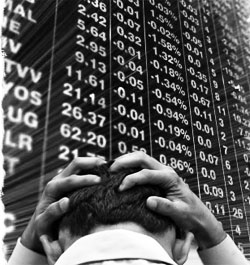
  6. The giant economic crisis caused by the failure of the casino economy of finance capitalism, which will lead to a collapse worse than the Great Depression and to universal poverty and a new Middle Ages.
The tone of Convergence is lighter than in Archeofuturism and Why We Fight, though each page drips with sarcasm, cynicism, and animated exasperation. There is no mincing of words here.

Dr. Faye takes the darkest view of everything, predicting always the worst possible outcomes. In his view it is too late; for decades the warning signs have been ignored, suppressed, and explained away by politicians, academics, and the media. Nothing has been done. They have let structural problems grow worse in the belief that disaster will somehow be averted or that things will magically work themselves out. Though he does not state it explicitly, it is clear that Dr. Faye has no hope of any kind of counter-cultural movement with the power to halt the final cataclysm.

Towards the end of the book, Dr. Faye outlines three possible collapse scenarios: a soft one, a hard one, and a very hard one. In the soft one a total systemic breakdown is averted, but Western societies live on impoverished and in a state of permanent crisis. In the very hard one there is total breakdown. Western civilization is destroyed and the world population collapses, ushering in a new Middle Ages. Dr. Faye considers this both the most likely and the most desirable scenario. For him, history is cyclical. We are at the end of a cycle, and the harder scenario clears the decks for a new beginning, founded on entirely different—and better—philosophical suppositions. For this reason, Dr. Faye believes that this grim convergence of catastrophes is positive and necessary, and that the prospect of a new beginning should be reason for hope.

For the future, Convergence offers the vision outlined in Archeofuturism: a diversified world with a highly developed zone in the northern hemisphere and agricultural or subsistence societies in the south. Dr. Faye sees this as not only environmentally more sustainable, but as a more accurate reflection of the diversity of human societies; only a fraction of humanity, in his view, is suited to a techno-industrial society.

I generally agree with Dr. Faye’s thesis of converging catastrophes, but I fear it includes a slight element of wishful thinking. It seems Dr. Faye looks forward to the collapse; his attitude is the mirror image of the liberals’, who are either complacent or in denial. This may lead him to paint a scenario that satisfies him and that begins to unfold within his lifetime—in other words, he imagines he will be there to gloat as liberals bite the dust. He also suggests that Europeans will rise naturally from the ashes, without stressing that this depends on what we do now; it is not the natural outcome of collapse. This assumption is dangerous, because there are no guarantees of anything.

There is no guarantee that Europeans will rise from the ashes.

I am less willing than Dr. Faye to predict cataclysm sometime within the next eight years (when he wrote Archeofuturism in 1999, he predicted disaster by 2020). Nor would I assume that the lines of catastrophe will all converge within a narrow timeframe, or that European man will necessarily exist in the post-collapse world, even in smaller numbers.

To begin with, collapse scenarios can take a variety of forms, including forms in which the collapse would not be recognized as such by those living through it, or even by those living after it. A soft collapse, for example, can be one in which life remains pleasurable, so collapse is never widely recognized as such. Standards of morality weaken, the race degenerates, and a culture dissolves gradually, giving way to another that takes over therapeutically, subtly enslaving people who do not mind because they love their slavery. There may be a few bumps here and there along the way, of course, but, on the whole, this is how it unfolds. Does this not sound like the collapse of WASPdom in the United States?

Dr. Faye’s soft collapse scenario I would describe as either “deferred” or “slow.” In the first, the collapse has already occurred, but the final cataclysm is endlessly postponed, more or less like the financial crisis we are living through now. Through subterfuge, ways keep being found to levitate what should already be on the ground. In the second, the collapse unfolds gradually, in a managed and technocratic manner, and the social temperature is always kept below the threshold needed for a revolution.

One can also debate the “hard” convergence thesis. We can accept that various catastrophic trends are in place, but will they converge close enough together in time for a complete collapse, or will the catastrophes hit in succession over a long period? It is conceivable that each line of catastrophe may progress at a different speed, and that some will prompt a delaying action, thus weakening the convergence.

For example, global warming may be slowed significantly if electric cars are improved enough to trigger a phase out of the internal combustion engine over the next 10 to 15 years. In 2004, when Convergence was originally published in French, the electric car was still a distant prospect; now it is getting closer, and with decreasing petroleum reserves, it may soon make sense for motorists to make the switch. A technological breakthrough could potentially take the environmental and even the economic trend out of the equation, or at least slow them down, though this may not matter a great deal if the other trends continue.

Of course, this does not argue against the very real prospect of declining economic conditions, continuing political paralysis, and so on; it simply argues in favor of what Dr. Faye may consider the worst and most insidious of all scenarios: a “soft” convergence and a protracted or deferred collapse, whose final denouement occurs so far in the future that there are not enough of us left for it to matter any longer.

The important point is that the outcomes of collapse are not foreordained: They depend on what we do now. If some form of collapse is inevitable, then it is imperative that we establish today the bases for the world that will follow that collapse, and that we seize control of the process—including precipitating it artificially—so as to ensure for us the most favorable outcome. I believe Faye would agree with this, although he does not say so explicitly.

I must refer to this book’s latent anti-Americanism. It is only a minor part of the narrative, but it is a flaw, and Jared Taylor’s foreword points out Dr. Faye’s careless conflation of America with the American government. For many Americans, their government is their number-one enemy, and is distinct and separate from America. In Convergence, Dr. Faye accuses America of trying to weaken Europe by promoting free trade and multiculturalism, while practicing protectionism and controlling immigration to the US, when, in fact, America enthusiastically practices the same policies it promotes in Europe. Fortunately, and as Mr. Taylor points out, Dr. Faye has since revised this position: In a speech delivered in Nashville at the 2012 American Renaissance conference, he described Americans and Europeans as brothers in arms.
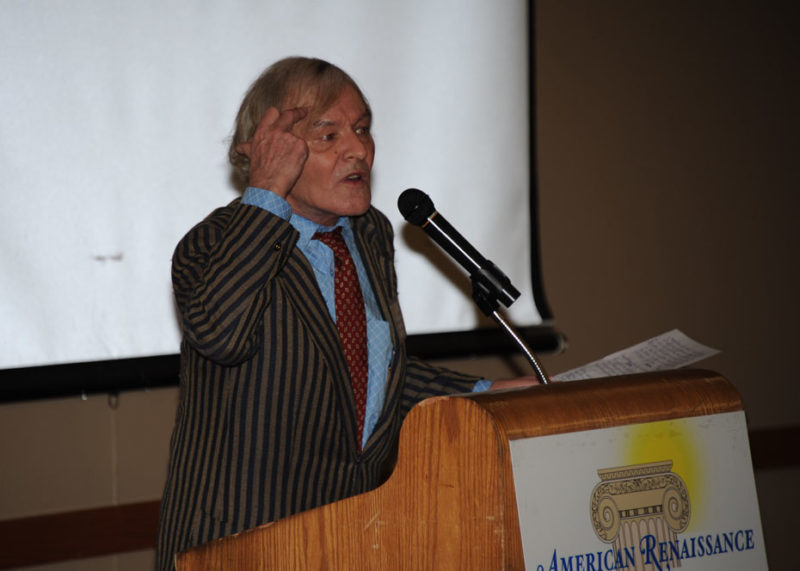
Dr. Faye speaking at the 2012 American Renaissance conference.

The philosophical foundations of the American republic are classical liberalism, but I believe it is essential—even if difficult—to separate liberalism (Americanism) from America, and to re-imagine America in philosophically non-liberal terms. To this we would need to look at the parts of American heritage that existed before, or beyond the reach of, classical liberalism. One can think of the early colonial period (before) and the wild West (beyond). This may prove vital in the effort to guarantee the continuity in the 21st century of white Americans and white American culture in the New World.

Do not look to Dr. Faye for a practical action plan; his purpose is to frankly assess present trends in the West and to point out that any cataclysmic outcome marks a beginning as well as an end. It is up to each reader to decide his course of action and translate what he has learned into effective action. For more concrete policy matters, Dr. Faye has just published Mon Programme (My Program), but it is available only in French.

Despite its imperfections, Convergence is a compelling and furious read, addressing important topics with an honesty that is rarely found and never with such intensity in a single volume. Futurology is very subjective, so one must be lenient with predictions—particularly those involving complex global events; but Dr. Faye’s analysis is fundamentally correct and will be read with profit by anyone who wants to understand how the liberal global experiment will eventually end.

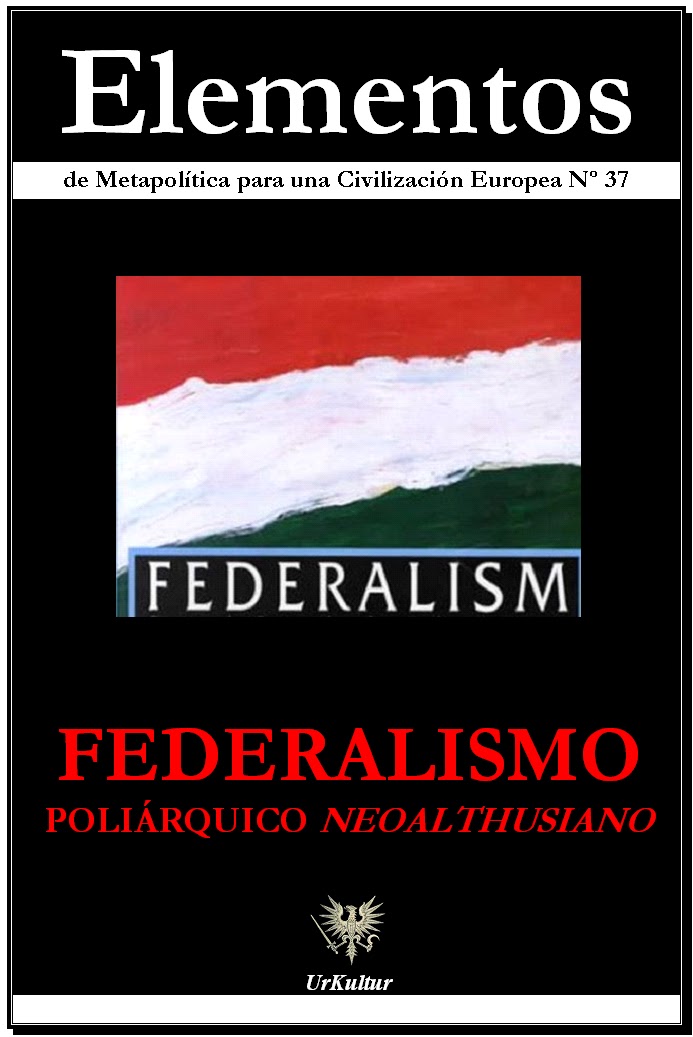
Elementos 38: Werner Sombart / Elementos 37: Federalismo

ELEMENTOS Nº 38. WERNER SOMBART. EL BURGUÉS: HOMO OECONOMICUS MODERNO
 
Enlace Revista electrónica

Enlace Revista documento pdf


Sumario.-
 
El burgués: paradigma del hombre moderno, por Alain de Benoist
Werner Sombart y la teoría histórica de la economía, por José Antonio Rubio
Werner Sombart y el hombre económico moderno, por João Carlos Graça
El burgués, de Werner Sombart, por Conrado García Alix
Las doctrinas económicas de Werner Sombart, por E. L. Marshall
Socialismo, fútbol y movilidad social. A proposito de ¿Por qué no hay socialismo en los Estados Unidos?, de W. Sombart, por Francisco Javier Noya Miranda,
Sombart. La cultura de la otra Europa, por Thule
Sombart y la teoría de la destrucción creativa, por Jorge Ortega
Sombart y los judíos, por Claudio Mutti
Sombart: lujo y capitalismo, por Juan Soler Llácer
Actualidad de Werner Sombart, por José Mª Castroviejo
Sombart y Spengler. Las Grandes Ciudades y sus contradicciones, por Patricio H. Rändle
Libros electrónicos:
¿Por qué no hay socialismo en Estados Unidos?
Los judíos y el capitalismo moderno
Enlaces a esta entrada
 
Enlace Revista electrónica

Enlace Revista documento pdf


Sumario
 
El primer federalista. Johannes Althusius, por Alain de Benoist
 
Carl Schmitt y el Federalismo, por Luis María Bandieri
Nacionalismo, Democracia y Federalismo, por Ramón Máiz
Europa federal y el principio de subsidiariedad, por Rodrigo Agulló
España, ¿federación o autodeterminación?, por Sebastian J. Lorenz
Plurinacionalidad, Federalismo y Derecho de Autodeterminación, por Jaime Pastor
El federalismo pluralista. Del federalismo nacional al federalismo plurinacional, por Miquel Caminal
Federalismo plurinacional, por Ramón Máiz
Estado federal y Confederación de Estados, por Max Sercq
De la Confederación a la Federación. Reflexiones sobre la finalidad de la integración europea, por Joschka Fischer
Federalismo versus Imperialismo, por Juan Beneyto
Europa. De imperio a federación, por Josep M. Colomer
Entrevistas imaginarias con el Presidente de Europa y el Jefe del Gobierno europeo

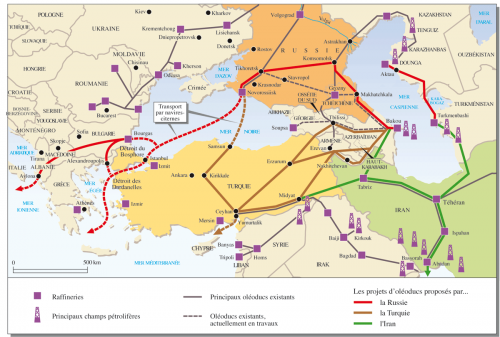
Turkey’s Energy Challenges

caucase_turquie.png

Reserves Could Lead to Resolve

Turkey’s Energy Challenges

by DANIEL WAGNER AND GIORGIO CAFIERO

Ankara will soon be confronted with some difficult foreign policy decisions that could affect its long-term energy interests. The discovery of vast reserves of natural gas off the coasts of Cyprus and Israel could oblige Turkey to resolve longstanding disputes with its neighbours.

Turkey has managed to maintain impressive growth rates over the past decade in spite of a lack of indigenous sources of energy. Ankara has pursued a foreign policy aimed at diversifying the country’s energy imports while simultaneously positioning itself as a major energy hub. Turkey’s geostrategic position makes achieving this dual objective challenging, but it has managed to strike a balance between being assertive and deferential in acquiring and managing its energy supply. While the Turkish government’s power to influence events in the region is of course limited, it will be compelled to make some difficult foreign policy decisions in the near term that could substantially impact its long-term energy interests.

Turkey imports 91 percent of its oil and 98 percent of its natural gas. In 2011, approximately 51 percent of its oil came from Iran and 55 percent of its natural gas from Russia. Iraq’s resurrection as a major oil and gas exporter to the world offers Turkey an opportunity to become an increasingly influential energy hub between the Arabian Gulf and European markets. However, the tense triangular relationship between Turkey, Iraq and the Kurdish Regional Government has greatly complicated the energy trade with Iraq. This has also cast doubt about the long-term reliability of the Iraqi-Turkish pipeline that exports nearly 400,000 barrels per day to the important port of Ceyhan in southern Turkey. Turkey’s perennial battle with Kurdish separatists has served to ensure that the relationship with Iraq remains problematic and uncertain.

The discovery of an estimated 122 trillion cubic feet of natural gas off the coasts of Israel and Cyprus could lead to another major regional energy source that could challenge Turkey’s ambition to become a major energy hub, while likely denying it an additional potential source of oil and gas. The prospect of the formation of an energy partnership in the eastern Mediterranean that excludes Turkey will not be well received in Ankara. Turkey’s logistical advantage is that any pipeline that transfers gas from Cyprus to Greece would be far less expensive if it entered distribution via Turkey’s (disputed) offshore territory. A direct Cyprus/Greece pipeline would need to be significantly longer and installed in water as deep as 1.2 miles before reaching the Dodecanese Archipelago. Greece may ultimately be pressured to cooperate with the Turks due its economic constraints and what is arguably in their own long-term interest.

The Cypriot conflict further complicates the picture for Ankara, which signed an exploration deal with the Republic of Northern Cyprus following news that the Greek Cypriot administration began exploratory offshore drilling. Whether the recent discovery of Cypriot natural gas reserves pressure Athens and Ankara to resolve these lingering territorial disputes or leads to greater friction remains an open question. If history is any guide, Turkey’s rise and Greece’s troubles will only lead to greater conflict between them.

Other unresolved territorial disputes imply that the bonanza of natural resource wealth within the Levantine Basin is more likely to spur conflict than cooperation in the future. As Israel and Lebanon remain in a technical state of war, no maritime boundaries have been agreed by either state regarding their shared offshore gas reservoir. Unless some accommodation is reached, it will be problematic for either state to develop the reserves in the near future. Given their current state of bilateral relations, the chronic state of affairs between Israel and Iran, and the ongoing morass in Syria, there seems little reason to believe that the plethora of conflicts in the region will be resolved or gas will begin to flow any time soon. Turkey’s ability to become a major energy hub would likely be undermined by a new Israel-Cyprus-Greece energy triad.

The Tabriz-Ankara pipeline offers Turkey opportunities to capitalize on the exportation of energy resources from Kazakhstan, Uzbekistan and Turkmenistan to markets in Europe. Given Turkey’s limited domestic energy resources, growing demand for energy, the proximity of Iran’s gas and oil reserves, and its aspirations to become a Eurasian energy hub, it is reasonable to conclude that Ankara will continue to place immense value on its energy partnership with Iran – its largest source of foreign oil and second largest source of natural gas.

It is within this context that Turkey has refused to participate in the West’s campaign to isolate Iran economically. Ankara’s acknowledgment in November 2011 that its skyrocketing gold exports to Iran were related to its payment for Iranian gas is indicative of the Turks’ interest in maintaining energy ties with Iran, despite Western pressure. Tehran already views Turkey as an important partner in its quest to counter isolation and sanctions. Bilateral trade increased sixteen-fold between 2000 and 2011. By 2011, Turkey was home to more than 2,000 privately-owned Iranian firms – a six-fold increase from 2002. A variety of Iranian industries depend on Turkey to provide their link to the global economy. The flip side to that is that an eruption of greater Middle Eastern turmoil, or indeed a military strike against Iran, could severely undermine Turkey’s energy and commercial interests – as occurred during and following the Gulf War in 1991.

The Syrian crisis has created tension between Iran and Turkey, which have hedged their bets on opposite sides of the conflict. Additionally, the prospect of Iran becoming increasingly connected with Asian energy markets has created unease for the Turks, who are determined to maintain a close energy trading relationship with Iran. That said, Turkey’s announcement in March 2012 that it would begin importing more Libyan and Saudi Arabian oil, while decreasing oil imports from Iran by 20 percent, suggests that Turkey may already be seeking alternative sources to Iran, given the political ramifications of continued energy dependence on Iran.

Iran’s standoff with the West, and the continuing mayhem in Syria, will force Ankara to make some difficult decisions regarding its relationship with Tehran in 2013. However, in the short-term, Turkey and Iran are unlikely to take actions that would jeopardize their partnership with respect to energy, commerce, or regional security.

Turkey is currently the world’s 17th largest economy, and is determined to expand its strategic depth among its neighbors. If Ankara can balance its security and energy interests wisely, while acting as a force for regional stability, Turkey has real potential to satisfy its domestic energy demands while maintaining substantial leverage over regional energy markets. But if Turkey misjudges its balance of power and hedges its bets poorly, or if other states find alternative energy routes that exclude Turkey, the Turks may find themselves subject to the influence of larger powers’ ambitions. Thus far, Turkey has deftly balanced its interests with the plethora of challenges that confront it, which implies stability in the regional and global energy markets as 2013 begins.

DANIEL WAGNER is CEO of Country Risk Solutions, a cross-border risk management consulting firm, and author of the book “Managing Country Risk”. GIORGIO CAFIERO is a research analyst with CRS. 

Lectures fermes pour une époque molle

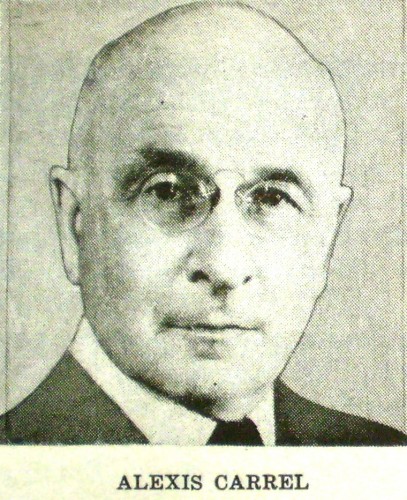
Alexis_Carrel.jpg

Lectures fermes pour une époque molle

Dominique Venner

À celles et ceux qui me lisent, je présente tous mes vœux d’énergie, de courage et de beauté. Pour accompagner ces vœux, je vais commenter ma relecture récente d’un ouvrage fondamental et un peu oublié, voire dénigré (signe de qualité dans un environnement décadent) : L’Homme cet inconnu d’Alexis Carrel. Mon édition date de 1968, elle reprend l’édition Plon originale de 1935 (1) (image en Une, édition de 1957).
Prix Nobel de médecine en 1912, le Dr Carrel ne fut pas seulement un biologiste inventif et un virtuose de la chirurgie, c’était un esprit d’une hauteur exceptionnelle. Loin de s’enfermer dans sa discipline, il s’intéressait à tout ce qui se rapporte aux mystères de la vie humaine envisagée sous ses aspects physiologiques, intellectuels et moraux afin d’améliorer la société moderne.

On sait combien sont solidesp hysiquement et moralement ceux qui, dès l’enfance, ont été soumis à une discipline intelligente… C’était un esprit très ouvert et jamais dogmatique, qui s’exprimait avec une grande clarté. On trouve chez lui une foule d’observations précieuses pour se reconstruire ou éduquer les enfants. Celle-ci, par exemple sur les bienfaits de l’adaptation à des conditions de vie contrastées : « L’homme atteint son plus haut développement quand il est exposé aux intempéries, quand il est privé de sommeil et qu’il dort longuement, quand sa nourriture est tantôt abondante, tantôt rare, quand il conquiert par un effort son abri et ses aliments. Il faut aussi qu’il exerce ses muscles, qu’il se fatigue et qu’il se repose, qu’il combatte, qu’il souffre, que parfois il soit heureux, qu’il aime et qu’il haïsse, que sa volonté alternativement se tende et se relâche, qu’il lutte contre ses semblables et contre lui-même. Il est fait pour ce mode d’existence, comme l’estomac pour digérer les aliments. C’est dans les conditions où les processus adaptatifs s’exercent de façon intense qu’il devient le plus viril. On sait combien sont solides physiquement et moralement ceux qui, dès l’enfance, ont été soumis à une discipline intelligente, qui ont enduré quelques privations et se sont accommodés à des conditions adverses » (p. 282).
Le Dr Carrel était un homme de son temps, un homme des années 1930, hanté, entre autres par les effets de la Première Guerre mondiale et de la grande crise économique consécutive au krach de 1929. Il avait une perception forte d’une dégénérescence des peuples blancs qui avaient été, depuis quatre siècles, les bâtisseurs d’un nouveau type de société associé au progrès des sciences et des techniques. C’était un volontariste, comme on l’était en son temps (avant les désastres de la Seconde Guerre mondiale). Il croyait fermement à la possibilité d’endiguer la déchéance qu’il voyait poindre. Pour cela, il pensait nécessaire de mettre ses conclusions à la disposition des réformateurs politiques en vue de décisions salvatrices. Cette ambition élevée était aux antipodes de l’individualisme forcené, des promesses de jouissance liée à la consommation de biens inutiles et du verbiage compassionnel qui dominent notre époque. Mais ces dérives décadentes actuelles n’auront qu’un temps, alors que les enseignements de Carrel ont une valeur éternelle.
La foi qui l’habitait lors de la publication de L’Homme cet inconnu (plusieurs millions d’exemplaires vendus dans le monde entier) est résumé à la fin du livre en une page toujours actuelle. Après avoir rappelé le rôle des ordres monastiques et des ordres de chevalerie durant les périodes sombres du haut Moyen Âge, il enchaîne (p. 348) : « Il n’y aurait pas besoin d’un groupe dissident très nombreux pour changer profondément la société moderne. C’est une donnée ancienne de l’observation que la discipline donne aux hommes une grande force. Une minorité ascétique et mystique acquerrait rapidement un pouvoir irrésistible sur la majorité jouisseuse et aveulie. Elle serait capable, par la persuasion ou peut-être par la force, de lui imposer d’autres formes de vie. Aucun des dogmes de la société moderne n’est inébranlable. Ni les usines gigantesques, ni les offices buildings qui montent jusqu’au ciel, ni les grandes villes meurtrières, ni la morale industrielle, ni la mystique de la production ne sont nécessaires à notre progrès. D’autres modes d’existence et de civilisation sont possibles. La culture sans le confort, la beauté sans le luxe, la machine sans la servitude de l’usine, la science sans le culte de la matière permettraient aux hommes de se développer indéfiniment, en gardant leur intelligence, leur sens moral et leur virilité... » Virilité pour les hommes et aptitudes à l’amour, à l’énergie, au dévouement et à l’éducation des enfants chez les femmes, parmi bien d’autres qualités.

Dominique Venner

(1) Dr Alexis Carrel, L’Homme cet inconnu, Plon. D’occasion sur différents sites en ligne.[Note de Novopress : l’édition de 1999 est également disponible neuve.]

Les services américains prédisent l'enfer pour 2030


Les services américains prédisent l'enfer pour 2030

Ex: http://fortune.fdesouche.com/

Surpopulation, guerre de l’eau, manque de nourriture et épuisement des ressources de la planète, un rapport du National Intelligence Council dresse un constat qui fait froid dans le dos pour les années à venir.

A quoi ressemblera la Terre en 2030? Combien serons-nous? Y aura-t-il assez à manger pour tout le monde? Où devrons-nous vivre? Autant de questions qui peuvent être des facteurs d’instabilité dans le monde et auxquelles le National Intelligence Council (NIC) américain vient de répondre dans le rapport Global Trends 2030 publié récemment.

Crucial

La question de la démographie est cruciale pour l’avenir de la planète. Et la Terre devrait accueillir 8,3 milliards d’habitants en 2030, rappelle l’étude rapportée par Le Monde, contre 7,1 aujourd’hui. Mais surtout contre 2,5 milliards en 1950.

Autant de chiffres qui ont des conséquences pour l’état de santé de la Terre. Des conséquences d’abord alimentaires. Car la demande en nourriture devrait augmenter de 35% d’ici 2030. Or, les rendements agricoles, même s’ils continuent de s’améliorer, n’arriveront pas à répondre à la demande et nous vivons déjà sur les réserves selon le rapport du NIC, le bras analytique et prospectif des services de renseignement américains.

On consomme plus que l’on produit

«Au cours de sept des huit dernières années, le monde a consommé plus de nourriture qu’il n’en a produit. Une grande étude internationale estime qu’en 2030, les besoins annuels en eau atteindront 6900 milliards de mètres cubes, soit 40% de plus que les ressources durables actuelles», note l’étude. Pire encore : le rapport souligne que presque la moitié de la population mondiale vivra dans des régions touchées par la sécheresse, provoquant ainsi de gros risques de guerre pour l’eau. Mad Max n’est décidément pas loin…

En outre, les pays émergents sont en train de changer leur régime alimentaire et consomment de plus en plus de viande. Or, la production de viande exige beaucoup d’eau et de céréales également avides de liquides.

Le rapport souligne aussi que 60% de la population mondiale vivra en ville en 2030. Là aussi, les conséquences seront graves pour l’environnement. Car l’urbanisation croissante «a conduit à des réductions drastiques des forêts, des changements négatifs dans le contenu nutritif et la composition microbienne des sols, des altérations dans la diversité des plantes et animaux supérieurs ainsi que des changements dans la disponibilité et la qualité de l’eau douce».

Bref, l’avenir ne s’annonce pas franchement rose en terme de sécurité alimentaire. Reste à savoir comment les Américains, qui ont refusé de s’engager récemment sur la limitation des gaz à effet de serre lors des négociations de Doha, vont empoigner le problème décrit minutieusement cette fois pour leurs propres services de sécurité.

Le Matin.ch

Le roman de Charette

Philippe de Villiers:

le roman de Charette

 9782226244215.jpg

« Combattu souvent, battu parfois, abattu jamais » : la vie de François-Athanase Charette de la Contrie est à l’image de sa devise. Vendéen comme lui, Philippe de Villiers nourrit depuis longtemps un attachement tout particulier pour ce héros dont le destin fait écho à sa propre histoire familiale. Au point de s’identifier à lui et de ressusciter, sous forme de mémoires imaginaires, la vie aventureuse de cet homme aussi séduisant qu’intrépide, fidèle envers et contre tout à une cause : « la Patrie, la Foi, le Roi ».

De sa brillante carrière dans la Marine royale, intégrée à l’âge de quatorze ans, à ce jour de 1793 où, à la tête d’une troupe de paysans du Marais breton, Charette part à l’assaut de la République, Philippe de Villiers ressuscite la flamboyante épopée d’un homme dont l’audace et le courage, la personnalité singulièrement libre et moderne, n’ont pas fini de fasciner.

Le roman de Charette, Philippe de Villiers, Albin Michel, 2012, 480 pages, 22,00 €.