ON THE EURASIAN ROOTS OF INDIAN SPIRITUAL TRADITIONS
Kashmir Shaivism and Slavic-Russian Mysticism
Acharya Peter Wilberg
Ex: http://granews.info/
1. Historical Introduction and Background
This essay will seek to show that here is no more profound and powerful counterpart and complement to Indian wisdom traditions than Slavic-Russian Mysticism and its relation to Nordic-Arctic climate and culture. There is now both archaeological and linguistic evidence to show that the Vedas and Upanishads and Tantras (including those of Kashmir Shaivism) all had their roots in a highly advanced pre- or proto Indo-European and Arctic civilisation covering the entire area known as Eurasia and with centres not only in the Indus Valley but in many other ancient civilisations such as Sumeria and also Russia and the Arctic. This pre-historic or ‘primordial’ civilization was founded by ruler priests and teachers from other planets and/or planes of consciousness called ‘Urs’ in the Nordic-Arctic region (‘Ur’ being cognate with the German prefix ‘Ur-’ which means ‘primordial’ – and recalling also both the Urals in Russia and the name of the Sumerian city called Ur, Uru or Urim.
According to Levashov (The Untold History of Russia)
“Urs became tutors and guides to the rest of the people. They protected an initially rather small number of settlements of ‘ordinary’ people both from wild nature and ‘biped predators’. Urs trained people and helped them to master primary technologies, and gave them the knowledge necessary for them at that moment as well as knowledge that would be called for only in millennia.
Urs taught them and gave them into the charge of a special caste of keepers – volkhvs[1], who in due time were to convey conserved knowledge, having carried them through millennia and preserved as much of it as possible.
For this purpose those keepers-volkhvs received two runic alphabets, each of them was used by volkhvs of different levels of initiation. Those alphabets were da’Aryan and h’Aryan letters[2].
The memory of Urs, the teachers, has remained in language, for example, in the word ‘cult-ur-e’, which means a system of moral and spiritual concepts, which were transferred by Urs to their wards, the Ruses.
The two-caste system of the ancient Slavs reverberated in the names given them by their neighbours. For instance, the majority of Asian neighbours called an inhabitant of the Slavoniс-Aryan Empire as ‘ur-rus’, uniting the self-names of these two castes in a single word. Even now many Asian neighbours call Russians in the old fashioned manner, as ‘Urruses’.
There was a time when the names of the Slavonic tribes were formed by the addition of prefixes to the root ‘rus’, reflecting distinctive features of these tribes of Ruses, for example, Et-rus-can, P-rus-sian. The prefix ‘et’ before the self-name of Ruses means ‘elucidated Ruses’ – the carriers of highcult-ur-e. The proof of their existence has been found in the north of Italy in the form of inscriptions on stones and works of art. The name ‘Prussian’ meant ‘Ruses of Perun’[3], their other self-name was Venedas[4] (bellicose tribes of western Slavs), was kept in the self-name of the territory where they lived up to the 19th-20th centuries even after the German (gothic) tribes seized this land in 9th-10th centuries A.D. The gothic tribes destroyed the majority of Prussian-Slavs, assimilated the rest amidst them and borrowed their name. After that one of the German tribes that lived on this territory began to call themselves ‘Prussians’; in the 19th century they played a key role in the merger of German tribes into a united state.
During the thousands of years of history of the Slavs, who initially had a united culture and language, the formation of self-names of the different Slavonic tribes was influenced by different factors. In the Urs’ time all Slavonic tribes have the second name ‘Ur-rus’. After the Urs’ disappearance their functions had to be distributed between their wards, Ruses.
This led to the formation of several castes: a caste of Volkhvs, carriers of knowledge and traditions; a caste of professional warriors, defenders from external enemies; a caste of handicraftsmen, grain-growers and cattlemen. At the top of all castes was a patrimonial aristocracy.
After the Urs’ disappearance, Ruses added to the common tribal name (Rus) one or another prefix reflecting their basic type of activity (Et-rus-can, P-rus-sian).”
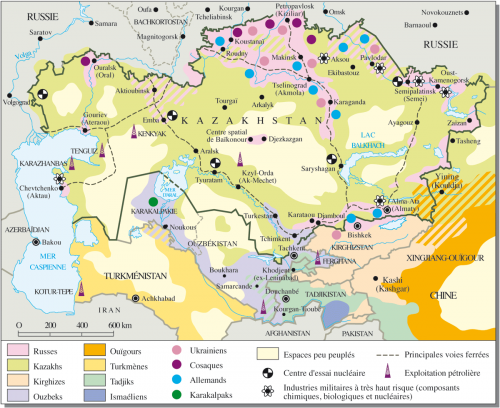
The ancient pre- or proto-Aryan civilisation that Levashov describes, with a caste system clearly similar to that of Vedic civilisation, was essentially a Eurasian civilisation with multiple centres, not only in the Indian sub-continent, but also in Sumeria (whose language was neither Indo-European nor Semitic), Babylon and Assyria, the Egyptian Middle Kingdom, Minoan Crete, Troy and Mycenae – and as recent discoveries show it also had centres in Russia and the Arctic. Evidence for this was found in 1987, when archaeological discoveries were uneathed in the Southern Urals (the so-calledARKAIM site) of an earlier ‘Arctic’ civilisation. This was referred to by Herodotus, Hesiod, Homer and Pindra as Hyperborea (‘beyond the North Wind’ or Boreas) and by Virgil as Thule. It corresponds also to Asgard – the land of the Norse gods or Aesir, one of the nine worlds unified by the world tree called Yggdrasill and described in the Nordic Eddas as the abode of the god Odin and his wife Frigg and the site of his fortress – Valhalla. What has since come to be known as the Slavic Vedasshare a similar script to Sanskrit, similar scriptures to the Vedas, and similar sagas to the Eddas – describing a migration south from the Arctic as climatic conditions changed from temperate to glacial. The singular of aesir is ás related to the Sanskrit word asura – referring to the ‘anti-gods’ opposed to but inseparable from their half-brothers, the celestial sura – known in Sanskrit as devasor ‘shining ones’ (from the root *diw meaning “to shine”).
What united all the centres of this proto-Indo-European or Eurasian civilisation was both the ‘pillar’ connecting Sky (ARKA) and Earth (IM) - also one important meaning of the Shivalingam – and theswastika/svastika symbol found in so many ancient cultures. This is now understood not as a solar or sun symbol alone but as representing a spiralling or spinning galaxy. In this context it is interesting to note that the Slavic svastika symbol, called kolovrat means ‘spinning wheel’ – just as the Sanskrit chakra also means a ‘wheel’ which turns or spins.
Neither svastika nor kolovrat essentially symbolise the sun however. For ancient Eurasian religious cultures worshipped the pole star rather than the sun – that star, close to the constellation of the bear (URSA) which lights up the darkness of the night sky and points us North i.e. towards the planet Nibiru from which the Sumerian ruler-priests were thought to have come, toward the pole star – and toward the giant ‘black hole’ or ‘black sun’ at the very centre of our galaxy around which both the earth and the entire solar system turns or ‘spins’. All the different geographical centres of the Eurasian civilisation however were seeded and guided long ago in the past by the advanced knowledge of their extra-terrestrial ruler priests or Urs. Conversely however, the rebirth in Russia of a future Eurasian culture and civilisation - one that will replace the currently dominant global capitalist culture of the U.S.A. - was anticipated by the German theosophist Rudolf Steiner. One of the chief current advocates of spiritual-political Eurasianism in Russia is Aleksandr Dugin – erstwhile organiser of the now-banned National Bolshevik Party and National Bolshevik Front in Russia, and founder of the Eurasia Party – now called Eurasia Movement and now leader of the International Eurasian Movement.
| “In principle, Eurasia and our space, the heartland Russia, remain the staging area of a new anti-bourgeois, anti-American revolution …The new Eurasian empire will be constructed on the fundamental principle of the common enemy: the rejection of Atlanticism, strategic control of the USA, and the refusal to allow liberal values to dominate us. This common civilizational impulse will be the basis of a political and strategic union.” Dugin —The Basics of Geopolitics (1997) |
|
| |
2. The Metaphysics of Light and Darkness
As early as 1903, Lokamanya Bâl Gangâdhar Tilak (then proprietor of the Kesari and the Mahrattanewspapers, author of the Orion or Researches into the Antiquity of the Vedas) wrote a book presenting evidence of clear reference to an ‘Arctic Homeland’ in the Sanskrit Vedas and Zoroastrian Avestas. This in turn formed the basis of a work by J.G. Bennett (metaphysical interpreter of the ‘4th Way’ spiritual movement of Gurdjieff and Ouspensky) entitled ‘The Hyperborean Origin of Indo-European Culture’. A key argument that Tilak offers are numerous temporal indications in the Vedas of a ‘year’ in which, as is the case above the Arctic circle, the sun rises only once – making it the equivalent of a ‘day’. Nordic-Arctic countries in general are influenced culturally and psychologically by long periods of sunless winter darkness, interspersed with only brief summers in which the sun shines through the night.
This brings us to the central metaphysical theme of this essay – namely that there is no more profound and powerful counterpart and complement to both the Vedas, Upanishads and Kashmir Shaivism itself than Slavic-Russian Mysticism and its relation to Nordic-Arctic climate and culture.
For whereas Kashmir Shaivism places special emphasis on the ‘light’ of awareness, Russian mysticism and even the Russian Orthodox Church has always emphasised the ‘darkness’, ‘dark light’ or ‘luminous darkness’, as expressed in the blackness of the night sky and long winters, rather than the blue sky of summer. Inward depth and darkness of soul go together, just as outward expansiveness of soul goes together with light.
“The divine darkness is not the kind of blackness we experience stumbling into an underground room with no lights. This darkness is a positive reality that helps us to discover God, and hence is called “luminous.” Although it sounds like a contradiction in terms, a luminous darkness is one filled with God’s presence, and by faith, the soul can begin to perceive God in darkness. In fact, the closer that God comes to the soul, the more intense the darkness becomes; it is then that all other things of this world are cleared away. The soul looks up to the Lord and never ceases to desire him.”
St. Gregory of Nyssa
If, as in Kashmir Shaivism, we understand God (Shiva) as ultimately identical with awareness as such or ‘pure awareness’ – and awareness as the ultimate sole reality (what I call The Awareness Principle) then we must also recognise that awareness itself is first and foremost an awareness of the ‘dark’ realm of ‘non-being’ constituted by infinite potentials of awareness – infinite potential consciousnesses or ‘beings’. It is the very awareness of these potentials that ultimate leads to their actualisation and birth – like the birth of stars in the darkness of the cosmos.
Similarly, The Awareness Principle understands the key Kashmiri Shaivist term Spanda as a primordial tension (German ‘Spannung’) that literally spans the dark realm of potentiality (symbolised by the blackness of Ma Kali) and the light of awareness by which alone all things actual – including the sun and stars – become visible. Spanda can be compared to a stretched string or ‘monochord’ strung between the twin poles of dark potentiality and illuminated actuality. The chord not only has a fundamental tone – the OM sound or Omkara, but also countless harmonics – each a unique tonal quality or ‘colouration’ of awareness. The Awareness Principle also recognises the universe as amultiverse – a multitude of parallel space-time universes all of which open up like bubbles of space and light within the darkness of a wholly non-extensional ‘space’ of potentiality. For just as light and ordinary ‘extensional space’ are inseparable, so also are ‘intensional’ space and darkness. Within any space-time universe light is what rays out from a centre towards a cosmic circumference, like light raying out from stars in the night sky. Darkness or ‘dark light’ on the other hand, is ‘light’ raying in from that cosmic circumference we behold as the blackness of the night sky itself and its ‘luminous darkness’ – illuminated at all times by the pole star.
According to the colour theory of both Goethe and Steiner, redness is light beheld through darkness. Blueness, on the other hand is darkness behold through light. Hence the two colour poles of the spectrum of darkness and light are red and blue. As the blue-throated one, Shiva has come to be associated with blue. Yet as we know, one of the principal Vedic gods associated with Shiva isRudra – which is cognate with words such as ruddy or reddish. Similarly the syllable ‘rus’ in Russia is a proto-Slavic word for both bear and ‘reddish-haired’, cognate with ursus or ursa – the constellation of the Bear whose name combines the words ‘ur’ and ‘rus’. Furthermore, the Slavic ‘s’ in ‘rus’ corresponds to the ‘d’ in the name Rudra itself, which also means ‘to howl’ – like a bear or wolf. Indeed, the Sanskrit ‘Shiva’ may itself be a loan word from the Tamil-Dravidian civa – meaning ‘red’ or ‘angry’. Blue and red have become of course powerful colour symbols in politics. Communists or those on the political left are ‘reds’. Conservatives or those on the political right on the other hand, are signified by the colour blue. Interestingly, since the collapse of the Soviet Union the flag of the Russian Federation is no longer purely red but red, white (the colour of the anti-Bolshevik ‘White Russians’) and… blue. But let us return to Levashov:
“At the end of the 20th century, people got access to the Slavoniс-Aryan Vedas, which contained a lot of very interesting information that was vainly ignored by modern science. These unique manuscripts translated into modern Russian reveal that last glacial age was a consequence of the war between the Great Russenia and Antlania[5] (Atlantis). This war happened more than 13,000 years ago. Then people moved large distances of planetary scale by means of Vaitmans [Sanskrit Vimanas]. So, those mysterious rhombic platforms on the three-dimensional map of Western Siberia are nothing else but landing grounds for Vaitmars. The last Vaitmars [travelers in the Vaitmans] left our planet Midgard-Earth about 3500 years ago when the Night of Svarog[6] began.
There is another interesting document – the Book of Veles. The last records in it were made by volkvs of Novgorod at the end of the 10th century. This book covers more than 20,000 years of Slavic history.
To learn something useful is always welcome, but did it happen like this in reality? Let us remember, that in the middle of the 11th century (according to the Christian calendar) a daughter of Jaroslav Mudry, princess Anna became the French queen. Arriving from the «wild» Kievan Rus, the princess did not consider that arrival as entering into civilized Europe but considered Paris a big village. This has documentary acknowledgement in the form of her letters. She brought with her to the remotest depth of the provinces, which France was then, a part of the library, some books from which returned to Russia only in the 19th century and were found in the library of Mr. Sulakadzaev. It was he who made the first translation into modern Russian of the Book of Veles, which was composed of wooden plates with runic letters on them. After Sulakadzaev’s death his widow sold the greater part of his library to the Romanovs, and after that nobody heard anything about these books. The most interesting fact is that after the appearance of these copies, all originals without exception have disappeared – they either were burned down in bonfires of the inquisition, having been declared as heretical books, or were lost in ‘accidental’ fires and epidemics ‘affecting’ all ancient libraries.The libraries of Alexandria, Athens, and Tzargrad (Constantinopol), along with the Etruscan library in Rome, were burned down almost simultaneously. The libraries of Yaroslav I the Wise (978-1054) and Ivan IV the Terrible (1530-1584) disappeared without a trace. All originals were burned or disappeared, while the copies made from them so «opportunely» have been kept and cherished. Old books were destroyed; new ones were written. They were adjusted so that in new ‘history’ there was no any mention about the Slavonic-Aryan Empire. The period of history before the 10th century in Europe was declared as dark, barbarous centuries, which were illuminated by the light of education brought with the culture of the Sacred Roman Empire.”
Note firstly that the 10th century marked both the apotheosis and the beginning of the decline of Kashmir Shaivism. Note also that the very term ‘dark ages’ places a negative connotation on darkness. Then again, the Bible itself (Genesis 1) admits that ‘darkness was over the surface of the deep’ even before God said ‘Let there be light’ and supposedly created heaven and earth. Still today, however, inner knowing or gnosis is associated almost exclusively with ‘illumination’ or ‘en-lightenment’. This is paradoxical given that modern scientific and atheistic ‘rationalism’ had its source origin in the European ‘Age of Enlightenment’. Yet the modern scientific mode of ‘rationality’ it gave rise to however, is now confronted with an ‘occult’ mystery that threatens to undermine its entire theoretical framework – the mystery of what physicists and cosmologists term ‘dark matter’ and ‘dark energy’ – whose nature is completely unknown but which is nevertheless acknowledged to make up 90% of the mass and two thirds of the ‘mass-energy’ of the universe. Levashov:
“…the last record in the Book of Veles and christening of Kievan Rus falls on the same time – the end of the 10th century according to contemporary chronology … What are these Days and Nights of Svarog? These words are mentioned in the Slavonic-Aryan Vedas quite often. It is time to understand what these concepts mean. There are several types of star accumulations in our Universe, such as spiral and spherical galaxies, star nebulas, etc. Our Sun is located in one of four sleeves of our spiral galaxy, in the «backyards» of this sleeve. Every spiral galaxy rotates around its nucleus while traveling on the star roads of our Universe. Seven primary matters form our Universe. The so-called, physically solid matter, which everybody is used to see as galaxies, nebulas, stars, planets, etc., appeared as a result of the merging of these primary matters in the areas of space, where necessary terms for this merging were observed. As proved by ‘scientists’,’physically’ solid matter makes only 10% of the whole matter of the Universe, and the rest (90%) is so-called ‘dark matter’. However, they do not specify what this “dark matter,” which can not be registered by any known modern scientific tool, is; we will forgive them this ‘insignificant misunderstanding’ and will move on to business.”
The galactic ‘nucleus’ that Levashov refers to is recognised to be a huge ‘black hole’ – itself a portal linking our universe to other universes in the ‘honeycomb’ plurality of multiple universes or ‘multiverse’. The types of ‘primary matter’ that Levashov refers to are what is now ‘scientifically’ termed ‘dark matter’. He refers also to the ‘psi-generators’ used in early civilisations, and those which he himself employs as medium of both healing and natural growth and regeneration. These he sees as “made of dark matter” and therefore essentially neither detectable by or requiring any technical or physical instrumentation, except as outward symbols for the subjective manipulation of the dark matter in its different forms.
The Awareness Principle understand the forms of ‘dark matter’ that Levashov refers to as specific potentialities and qualities of awareness - and their dark power or ‘energy’ as the capacity or power (Shakti) for the actualisation of these potentials – itself released by interaction with the invisible lightof awareness (Paramashiva). On the physical plane, this interaction plays itself out as an interaction between solar and earthly magnetism – what we call ‘magnetism’ being itself a bipolar spatial flow pattern of the all-pervasive ‘aether’ of pure awareness known in Sanskrit as Akash.
In modern translations the tantric term Shakti is almost invariably translated as ‘energy’. A closer translation would be ‘power’ or ‘power of action’ (Shak). Indeed this translation of Shakti accords with the root meaning of the term ‘energy’ itself – not as some ‘thing in itself’ but as pure action – the actualisation of those powers or potentialities of action latent in space itself as the ‘aether’ of pure awareness. What I call ‘The Awareness Principle’ is the metaphysical understanding that awareness is ultimate reality – that ultimately ‘awareness is everything’ and ‘everything is awareness’. The Awareness Principle stands in direct contrast to ‘The Energy Principle’ shared by modern science and ‘New Age’ pseudo-science alike – namely the principle that ‘energy is everything’ and ‘everything is energy’. As a ‘Theory Of Everything’ (TOE) ‘The Energy Principle’ is a highly questionable one, resting as it does on an unquestioned notion of energy as some ‘thing in itself’, a notion that is at the same time a distortion of its root meaning as that ‘formative action’ (energein) through which all forms are actualised in awareness. Pure awareness then, like the seeming emptiness of space itself, is no mere formless void but a plenum of formative potentials. ‘Energy’ in the root sense is the actualisation of these potentials – the emergence of form from the apparent formlessness of space.
The Sanskrit term akash is translated both as ‘space’ and ‘aether’, sometimes spelled ‘ether’. It is understood in Indian thought as pervaded by countless basic units or “animations of consciousness” (Seth) which constitute the very ‘air’ or ‘breath’ of awareness called Prana – and the quintessence of air as such. The Sanskrit term prana is etymologically cognate with the Latin-derived terms ‘spirit’ and ‘spiral’ (from spirare – ‘to breathe’). It is also cognate with the root meanings of the Greek words for ‘spirit’ and ‘soul’ – pneuma (meaning air or wind) and ‘psyche’ (‘vital breath’). To be ‘spiritual’ in the root sense of this word therefore, is to be capable, quite literally, of a wholly different type of re-spiration or breathing – a type of whole body ‘transpiration’ of the clear, luminous expansiveness of the space around us – not through our lungs alone but through every pore of our felt body surface. It is the long-lost experience of breathing the clear, luminous ‘air’ or ‘aether’ of awareness itself that lies concealed behind both the otherwise wholly vague Western notion of ‘spirit’, as well as different classical and modern-scientific notions of a cosmic ‘aether’. Its secret is that invisible breath or ‘air’ of awareness (Prana) that pervades the entirety of space (Akash), both the space around us and the space which pervades and makes up by far the largest proportion of each and every atom of ‘matter’. This space vibrates with spanda – the fundamental tensing spanning the realm of the potential and the actual, together with the vibration of the actual within the potential and of the potential within the actual. Spanda is also what resounds with the inner sound ‘OM’. Hence also the association in Indian thought of the Akash with the element of sound or vibration. The double meaning of the Sanskrit Akash as both ‘space’ and ‘aether’ goes together with the Greek meaning of the word aether itself – as that ‘upper’, less gaseous, purer and thus morespacious air of the sort we breathe at Himalayan mountain summits – or in Nothern polar regions such as the Arctic. For aether was the ‘higher air’ breathed by the gods themselves in their uppermost abode – whether we call this Olympus, Hyperborea, Thule or Asgard.
Dark Forces?
“I’m not the Devil. I’m much, much older. I watched the beginning and I will see the end. I am the dark behind all the stars. I am the dark inside you all.”
…from the screenplay of the film ‘Event Horizon’
The Greek word Khaos refers to a gaping dark void or chasm. It is cognate with Sanskrit Kha andAkash – referring to space itself, understood as the womb of all things – including the gods. In contrast, the Sanskrit kala means ‘time’ As such it is connected with the name of the great black Indian mother goddess Kali (kal – black / kala – time). Metaphysically, she can be understood as both, the ultimate temporal circumference or ‘event horizon’ of this spatial womb (kala – time) and as an ultimate ‘black hole’ or ‘singularity’ at its heart. Put in other terms, the realm of pure potentiality symbolised by Kali is a realm of unbounded inwardness – an inwardness that cannot be perceived by looking out from some localised centre of consciousness in space, but only by looking inwards from an infinite periphery, circumference or ‘horizon’ of awareness.
If the actual physical universe is a realm of spatial and material extensionality, then the primordial realm of potentiality is a non-extensional realm – a realm of pure intensionality. As such, it is made up not of extensional material bodies in space-time but of pure intensities of awareness in an unbounded ‘time-space’. The massive density of intensities that constitute this realm of unbounded inwardness – deified as Kali – find manifestation only through gravitational densities of matter so great, that they have collapsed themselves into ‘black holes’ with a so-called ‘singularity’ at their core. In physical-scientific terms, a black hole is ‘black’ because at its ‘event horizon’ the gravitational pull of the ‘singularity’ is so great as to bend space itself around itself – allowing no light-information to escape – only sound in the form of a fundamental tone (the primordial sound of silence known as the Omkara or ‘OM’ sound).
From a metaphysical perspective however, the apparent outer surface of every visible body in space is also an event horizon. For like the visible outer surface of the human body, every ‘physical’ body conceals an unbounded and invisible psychical interiority along with invisible psychical ‘events’. These can never be perceived from without, no matter to what degree the physical interiority of the body is opened up and physiologically examined. For, what we perceive as fleshly bodies, cells and organs too are but outer surface appearances or ‘event horizons’ concealing an invisible psychicalinteriority and invisible psychical events.
When the crew on board the fictional movie spaceship called ‘Event Horizon’ start ‘hallucinating’ terrifying images of bodies invisible to others (and later perceive each other’s bodies in horrific form) is this because they have entered ‘hell’ in the Christian sense or because, under the influence of the ship’s black hole, they have also unconsciously penetrated the event horizon of their own and each other’s bodies – perceiving events and images within their otherwise invisible psychical interiority in outward bodily form? The root meaning of ‘hallucinate’ is ‘to wander’. The crew’s ‘hallucinations’ are an expression of their wandering into and within the realm of ultimate inwardness associated with the primordial “agony” of creation as described in ‘The SETH Material’ by Jane Roberts – in which what Seth calls ‘All That Is’ (in essence the ultimate and universal awareness) sought a way to release all the potential consciousnesses embraced but still contained in His nebulous, dreamlike awareness into that state of autonomous actuality or being into which they “clamoured to be released”.
In reality then, every outwardly perceived body is an Event Horizon. And at the core of all material bodies is a ‘black hole’ or “Singularity of Awareness”. This singularity at the core of all material bodies is both a central point (Sanskrit Bindu) and a central tone linking that unit of extensional matter to all other bodies through that dark, intensional realm of unbounded inwardness and inexhaustible potentiality that “flows through and forms all matter”.
This flow is that of the higher air or aether of awareness itself in its twin but inseparable aspects of light and darkness. Darkness is the in-flow of an invisible and wholly translucent ‘light’ of awareness from the cosmic circumference towards a centre just as light is the outward radiance of that invisible light of awareness from a centre. If we learn to sense the entirety of ‘empty’ cosmic space above and surrounding the entire surface of our heads and upper bodies, we can come to to experience ourselves breathing in its innate aetheric vitality of that invisible light and feel its countless centres – each of which have the character of miniature, light-emitting ‘white holes’ – revitalising the inner spaces within every atom, cell and molecule of our body.
If, on the other hand, we sense our lower bodies and let awareness flow inwards from our abdominal surface towards the singularity of awareness at its centre – or a few inches below and behind our navel – we will experience that inner space of our abdomen or hara (Japanese) as filled with inner darkness or blackness. Each out-breath can then be experienced as both an inward and downward flow of a ‘dark light’ of awareness – one that not only rays inwards from the abdomen or toward itshara centre or tanden but also flows downwards from our lower body and abdominal centre to yet lower centres. This dark inward and downward flow of awareness ultimately reaches and roots down below the very ground beneath our feet and towards the fiery core of the earth itself. Here we contact the ‘dark force’ known in occult literature as Vril or Kundalini – the fire of awareness that then rises from that molten and fiery core – whose spinning is known to be responsible for the earth’s magnetic field.
The felt surface of our bodies then, both unites and distinguishes two spaces or fields of awareness – one extending outward and upward to a heavenly cosmic circumference, the other downward and inward towards a bodily and earthly centre or ‘singularity’ of awareness. The relationship between these two different flows of awareness is essentially a relation between the invisible space or light of awareness in its dual character – as both light and darkness. It also finds expression as the relation between polar or axial magnetism on the one hand and ‘spherical’ magnetism or ‘magnetospheres’ on the other. Thus, like the earth itself, the body has both axial magnetic poles (North and South) and a ‘magnetosphere’ – the outer surface or ‘event horizon’ surrounding the black hole at its gravitational centre and the fiery core into which it can lead – demonised as the ‘underworld’ or ‘hell’ in both religious mythology and science fiction. The word ‘hell’ however derives from the German Halle (hall) and the verb hallen – to echo or resound, as the Omkara does from within the event horizon of a black hole. Polar axial and vertical dimensions of light and darkness, space and gravity, electricity and magnetism are all expressions of axial and vertical flows of awareness – corresponding to the Shivalingam and the vertical axis of kundalini within our body of awareness. On the other hand, spherical dimensions of light and darkness, space and gravity, electricity and magnetism – all express spherical boundaries, spaces and centres of awareness.
Beyond space, time and ‘space-time’
Time too has a spatial dimension – including a spherical one and not just a linear one. Like a sphere, time (Seth) has an outside and an inside. Behind and beyond ‘space’ ‘time’ and ‘space-time’ as physicists conceive it is a “spacious present” (Seth). This is ‘space-time’ understood and experienced as a spherical time-space of awareness embracing and yet ‘outside’ all ‘space-time’ universes and embracing also all actual and potential pasts and futures – both of the cosmos and of human civilisation. The interweaving of the actual and potential in the realm of dreams and mythical possibilities – like the interweaving of dreams and mythologies that opens up new possibilities for humankind – are themselves nothing mythical but the ‘dreamtime’ and very loom or tantra of time-space. It finds expression today in the mythological history, credible actuality and futural possibility of the civilisation called ‘Eurasia’ – with both its multiple geographical centres and its single axial pole – pointing to the pole star and to the ‘black hole’ at the centre of our spinning galaxy or kolovrat.
Dream-Land
By a route obscure and lonely,
Haunted by ill angels only,
Where an Eidolon, named Night,
On a black throne reigns upright,
I have reached these lands but newly
From an ultimate dim Thule –
From a wild weird clime, that lieth, sublime,
Out of Space – out of Time.
Edgar Allen Poe 1844
3. Personal Postscript
I might not have come to write this piece were it not for the fact that, lying down on my mother’s sofa one afternoon in the late seventies or early eighties – and despite being wholly ignorant of what was then the still-undiscovered ARKAIM site - I entered a hypnagogic state in which I experienced the strong but invisible presence of Rudolf and Marie Steiner beside me. Accompanying this, I had a most vivid and lucid dream of an isolated citadel of the future – from within which I found myself peering out at a vast steppe land, one which I knew from the Steiners to be somewhere in Russia – and the centre of a future civilization.
Links:
ARKAIM – ancient Russian city
Michael Kosok The Singularity of Awareness
Peter Wilberg THE AWARENESS PRINCIPLE
Peter Wilberg TANTRA REBORN – ON THE SENSUALITY AND SEXUALITY OF THE SOUL BODY
P.Wilberg EVENT HORIZON – TERROR, TANTRA AND THE ULTIMATE METAPHYSICS OF AWARENESS
J. G. Bennett – THE HYPERBOREAN ORIGIN OF THE INDO-EUROPEAN CULTURE
Lokamanya Bâl Gangâdhar Tilak – THE ARCTIC HOME IN THE VEDAS
Levashov – THE UNTOLD HISTORY OF RUSSIA
INTERNATIONAL EURASIAN MOVEMENT
THE NATIONAL PEOPLES PARTY U.K.
INTERVIEW WITH ALEKSANDR DUGIN 
EVENT HORIZON – the film
THE BOOK OF VELES
[1]A Volkhv is a cleric, the Supreme priest, and a keeper of ancient sacred texts.
[2] Da’Aryan and h’Aryan characters (letters) are two of four kinds of writing of the Great Race: da’Aryan Trags, h’Aryan Runes, Sviatorussians Images (bukvitca, runica, cherty and rezy) and Russenian Molvitca.
[3] Perun was the god-patron of all soldiers, the defender of the land and the clan of SviatoRuses (Russians, Byelorussians, Asts, Lits, Lats, Latgalls, Zemgalls, Polans, Serbs, etc.)
[4] Venedas were inhabitants of the Great Venea where Clans and tribes of Venedas migrated. It corresponds to the territory of modern Western Europe.
[5] Antlania was an island in the Atlantic Ocean where Slavonic clan of Ants was lodged. Then their land began to be called as Ant-lan, i. e., the Land of Ants. Ancient Greeks named it Atlantis and its inhabitants – atlantes (modern Ukrainians; U-krai-ne means in Russian outskirts («krai») of the Land of Holy Race).
[6] The Night of Svarog, according to Slavonic tradition, is the name of a dark difficult time when our solar system passes through spaces of the Dark Worlds; or Kali-Uga in Aryan or Indian tradition.




 del.icio.us
 Digg
Digg Facebook