Ex: http://www.counter-currents.com/
Antoine Compagnon
Les antimodernes:
De Joseph de Maistre à Roland Barthes
Paris: Gallimard, 2005
“Ce qu’on appelle contre-révolution ne sera
point une révolution contraire, mais le
contraire de la révolution.”
—Joseph de Maistre
 Though Antoine Compagnon’s eloquently written and extensively researched essay won a number of prizes and set off a stir among France’s literati, there is little to recommend it here—except for its central theme, which speaks, however implicitly, to the great question of our age in defining and classifying a form of thought whose mission is to arrest modernity’s seemingly heedless advance toward self-destruction.
The antimoderne, Compagnon argues, was born with the birth of liberal modernity. Neither a reactionary nor an antiquarian, the anti-modernist is himself a product of modernity, but a “reluctant” one, who, in the last two centuries, has been modernity’s most severe critic, serving as its foremost counter-point, but at the same time representing what is most enduring and authentic in the modern. This makes the antimoderne the modern’s negation, its refutation, as well as its double and its most authentic representative. As such, it is inconceivable without the moderne, oscillating between pure refusal and engagement. The anti-modernist is not, then, anyone who opposes the modern, but rather those “modernists” at odds with the modern age who engage it and theorize it in ways that offer an alternative to it.
Certain themes or “figures” distinguish anti-modernism from academism, conservatism, and traditionalism. Compagnon designates six, though only four need mentioning. Politically, the antimoderne is counter-revolutionary; unlike contemporary conservatives, his opposition to modernity’s liberal order is radical, repudiating its underlying premises. Philosophically, the antimoderne is anti-Enlightenment; he opposes the disembodied rationalism born of the New Science and its Cartesian offshoot, and he sides with Pascal’s contention that “the heart has its reasons that reason knows not.” Existentially, the antimoderne is a pessimist, rejecting the modern cult of progress, with its feel-good, happy-ending view of reality. Morally or religiously, the antimoderne accepts the doctrine of “original sin,” spurning Rousseau’s Noble Savage and Locke’s Blank Slate, along with all the egalitarian, social-engineering dictates accompanying modernity’s optimistic onslaught.
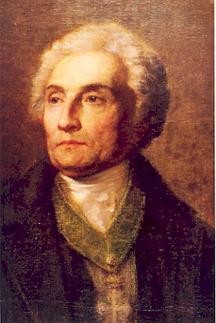
The greatest and most paradigmatic of the antimoderns was Joseph de Maistre (1753–1821). Prior to the Great Revolution of 1789, which ushered in the modern liberal age, Maistre had been a Freemason and an enthusiast of the Enlightenment. The Revolution’s wanton violence, combined with Burke’s Reflections, helped turn him against it. Paradoxically indebted to the style of Enlightenment reasoning, his unorthodox Catholic critique of the Revolution became the subsequent foundation not only for the most meaningful distillations of Continental conservatism, but of the antimodern project.
The tenor of Maistre’s anti-modernism is probably best captured in his contention that the counter-revolution would not be a negation of the Revolution, but its dépassement (i.e., its overtaking or transcendence). Unlike certain reactionary anti-revolutionaries who sought a literal restoration of the old regime, the grand Savoyard realized the Revolution had wreaked havoc upon Europe’s traditional order, and nothing could ever be done to undo this, for history is irreversible. The counter-revolution would thus have to be revolutionary, going back not to the old regime, but beyond it, to a new order representing both the Revolution’s completion and transcendence. In this sense, the anti-modern project—by rejecting what is decadent and perverted in the modern, while defending what is great and necessary in it—holds out the prospect of rebirth.
Between the Great Revolution and the Second World War, as anti-modernists were excluded from the leading spheres of French political and social life, they took refuge, Compagnon argues, in literature and letters—their “ideological resistance [being] inseparable from [their] literary audacity.” Balzac, Baudelaire, Flaubert, Proust, Péguy, Céline—to name those most familiar to English-speaking readers—are a few of the great figures of French literature who, in implicit dialogue with Maistre, resisted the modern world in modernist ways. (Not coincidentally, for it was also a European phenomenon, the great Welsh Marxist scholar, Raymond Williams, makes a similar argument for English literature in his Culture and Society, 1780–1950 [1958], though in anti-capitalist rather than anti-modernist terms.)
But if Compagnon develops a suggestive term to designate the nineteenth- and twentieth-century resistance to modern liberal dogmas, he himself is no anti-modernist—which is what one would expect from this professor of French literature occupying prestigious chairs at both the Sorbonne and Columbia University. For anti-modernism is not simply modernity’s aesthetic auxiliary, as Compagnon would have it, but an ideological-cultural tradition frontally challenging the modern order. Given, moreover, the anti-liberal and frequently anti-Semitic implications of the anti-modern temper, as well as its uncompromising resistance to the reigning powers, no feted representative of the system’s academic establishment could possibly champion its tenets. Thus, despite Compagnon’s invaluable designation of one of the great figures opposing modernity’s destructive onslaught, he not only characterizes the antimoderne in exclusively literary terms, missing thereby its larger historical manifestations and contemporary relevance, he never actually comes to term with its defining antonym: the “moderne.”
The concept of modernity, though, is crucial not only to an understanding of the anti-modern, but to an understanding of—and hence resistance to—the forces presently threatening the European life world. There are, of course, a number of different ways to understand these anti-white threats. In an earlier piece in TOQ, I argued that they stem ultimately from the ontological disorder (“consummate meaninglessness”) that marks the foundation of the modern age. Others in these pages have pointed to the Jewish “culture of critique” and the managerial revolution of the Thirties, both of which throw light on the subversive forces threatening us. At other venues, there are those emphasizing the predatory nature of international capitalism, the suicidal disposition of our secular, humanist civilization, or the complex and perplexing forces of modern structural differentiation, to mention just a few of the contending interpretations. Because the historical process is a complicated affair and rarely lends itself to a single monolithic interpretation, the wisest course is probably an eclectic one accommodating a variety of interpretations.
However, if it were necessary to put a single label on the historical process responsible for the “decomposition and involution” preparing the way for our collective demise as a race and a culture, the best candidate in my view is the admittedly imprecise and difficult to define term “modernity”—and its variants (modernism, modernization, modern times, etc.). Over the last century and a half, some of our greatest thinkers have wrestled with this term, offering a variety of not always compatible interpretations of that “certain something” which distinguishes modern life from all former or traditional modes of existence. Compagnon adopts the view of Baudelaire, who invented the term, defining “modernité” as an experience “which is always changing, which does not remain static, and which is most clearly felt in the [bustling] metropolitan center of the city [where everything is] constantly subject to renewal.” The Baudelairian conception, like other interpretations of the modern stressing its fleeting, fragmented, and discordant nature, relates back to the Latin modernus or the early French modo, meaning “just now”—that is, something that is of present and not of past or “old-fashioned” times. In this sense, it is associated, positively, with the new, the improved, the unquestionably superior; negatively, with the ephemeral, the fashionable, and the superficial.
Here is not the place to review the history of this key term. Suffice it to note that the modernist sees life in the present as fundamentally and qualitatively different from life in the past. In contrast to traditionalists, who view the present as a continuation, a transmission, and a recuperation of the past, modernists (and today we are all, to one degree or another, modernists) emphasize discontinuity, favoring reason’s endless capacity to create ever more desirable forms of existence, opposing, thus, the historic, organic, and traditional orders of earlier social forms and identities. Racially, culturally, and in other ways, modern civilization cannot, then, but pursue its abstract, disordering cult of progress in a manner that contests who we are.
There is also a geography to modernity. It began as a European idea, but its fullest historical realization came in lands where the European tradition was weakest, specifically in America (“the home of unrelenting progress . . . where tomorrow is always better than today”) and, to a lesser extent, Soviet Russia. Thus it was that up to 1945 anti-modernists dominated European literature and letters and anti-modernist principles not infrequently found their way into the European public sphere. Since das Jahre Null, however, all has changed, and anti-modernists have been largely exiled to Samizdat and marginal publications—a sign of modernity’s increasingly totalitarian disposition to regulate, level, and homogenize for the sake of America’s modern “way of life.”
Flawed as it may be, Compagnon’s book not only helps us rediscover the anti-modern tradition that stands as an antidote to a runaway modernity, it comes at a time when modern civilization, in the form of globalization, faces its gravest crisis. Phillipe Grasset (at dedefensa.org), arguably the greatest living student of modern, especially American, civilization, claims that a triumphant modernity is today completely unchained, drunk on its own power, as it remakes the planet and transforms our lives in ways that destructure all known identities and beliefs. Like earlier French Jacobins, who exported their revolution to the rest of Europe, American Jacobins in the White House and on Wall Street are today imposing their revolutionary disorder on the rest of the world, as they turn it into a monochrome, amorphous herd of consumers shorn of everything that has traditionally been the basis of our civilization.
A single force compels the spiritless modernism of these latter-day Jacobins: the chaos-creating imperatives of their techno-economic cult of progress, which runs roughshod over every organic, historic, and traditional reference. Evident in Iraq, along our southern border, and in the antechambers of the European Commission, they thrive not just on the illusion that the past is discontinuous with the present, but on a “virtualism” whose artificial and self-serving constructions bear little relationship to the realities they endeavor to affect. As one White House official said to a New York Times reporter (October 17, 2004) on the subject of Bush’s “faith-based community”: “When we act, we create our own reality.” The modernist is prone, thus, to taking refuge in the illusory idea he makes of reality. This “virtualist” affirmation of illusion as reality inevitably leads to chaos, madness, and a world which is no longer our own.
Because our age’s defining conflict increasingly revolves around the battle between a destructuring modernity, in the form of globalism, and the anti-modernist forces of order rooted in the cultural and genetic heritage defining the European, the anti-modernist project has never been more pertinent. In Grasset’s view, what is at stake in this conflict is “the consciousness of existing as a specific phenomenon”—that is, identity. For as the modernist impetus of an American-driven globalism imposes its virtualist identities (based on creedal abstractions, not history, nature, or tradition), it clashes with the anti-modern project of forging an identity based on a synthesis of primordial identities and modern imperatives, as the temporal and the untimely meet and merge in a higher dialectic.
Throughout the nineteenth century and into the first half of the twentieth century, anti-modernists commanding the cultural heights of modern civilization were able, at times, to mitigate modernity’s destructive import. Since the American triumph of 1945, especially since 1989, as liberals and globalists subjected the spirit to new, more iron forms of conformity, this has changed, and anti-modernist writers and critics have been systematically purged from the public sphere.
The anti-modern, though, is not so easily suppressed, for it is the voice of history, heritage, and a reality that refuses to adapt to the modernist’s Procrustean demands.
Banned now from literature and letters, it is shifting to other fields. With the terrorist assault of 9/11, fourth-generation war in Iraq, the European referendum of 2005, etc.—the anti-modern forces of history and heritage continue to make themselves felt, for as our clueless modernists fail to understand, the past is never dead and gone.
TOQ, vol. 7, no. 4, Winter 2007–2008

 del.icio.us
 Digg
Digg Facebook