

vendredi, 19 août 2011
The New Jewish Question of Guillaume Faye
The New Jewish Question of Guillaume Faye
By Michael O'MEARA
Ex: http://www.counter-currents.com/
 Guillaume Faye
La nouvelle question juive
Chevaigné: Editions du Lore, 2007
“I don’t know whether God loves or hates the English; I only know that they must be driven out of France.”— Saint Joan
In his critique of this controversial book, the Swiss “revisionist” scholar Jürgen Graf, now exiled in Russia, writes that Guillaume Faye has permanently discredited himself “in racial nationalist and nationalist circles worthy of the name.”[1] The reason: His “dishonest” and defamatory attack on those who challenge the Holocaust story and on those who uphold the traditional “Judeophobic” orientation of the nationalist right.
“The New Jewish Question” (henceforth NJQ) may indeed mark the end of Faye’s career as a leading identitarian and nationalist ideologue among certain segments of the racially conscious community—though by no means all of it, maybe not even the majority of it. For the sharp differences pitting the Holocaust-debunking exile against the militant anti-Islamic Frenchman reflect differences that divide nationalists throughout Europe, as long-standing historical-theoretical identities closely associated with the anti-liberal wing of the nationalist right clash with the electoral imperatives of national-populist parties endeavoring to stem the pro-immigrant policies of their respective states.[2] The white man’s future may well hinge on how these differences are resolved.
The Argument
Faye’s anti-revisionism is part of a larger argument related to what he claims is the changing Jewish relationship to white society.
Central to this change is the Third World colonization of the European heartland—and all the world-destroying effects that have followed in its wake.
Since the late 1990s, as the colonizers became bolder and more assertive, attacks on French Jews (in the form of vandalized synagogues, school violence, murders, etc.) have steadily risen. The Mainstream Media routinely denounce the “radical right,” but these attacks are largely the work of Muslim immigrants. Still of “low intensity,” Faye claims they are symptomatic of a new, more virulent anti-Semitism, which mixes anti-Zionist politics with the Koran’s traditional ethnocidal aversion to the Jews, threatening in this way to move Europe ever closer to Eurabia.
In appraising this new phenomenon, Faye, who has long been persecuted by Jewish advocacy groups for his nationalism, professes to be neither pro- nor anti-Jewish. His single avowed concern as a writer and activist is the survival of Europe. In his treatment of the NJQ, he thus fully acknowledges that the Jews are not “white” (i.e., not of Aryan or European Christian descent) and that their relationship to European society has often been negatively affected by their “schizophrenic” attitude toward Europeans (or what Kevin MacDonald more forthrightly calls their ethnocentric “double standard”).[3] He also acknowledges that the Jewish Question was once “pivotal to the issue of European, especially French, identity, for, historically, the Jews were seen as the métèque [i.e., the ‘wog,’ the ‘wop,’ the offensive foreigner] who threatened the corruption of the nation’s blood and morals” (p. 23).
Given the present Third-World inundation, the Jews, he argues, can no longer seriously be taken as either an alien menace or a métèque, especially considering that more and more of them are allegedly beginning to doubt the wisdom of open borders. Not a few nationalists and identitarians have consequently abandoned their traditional anti-Semitism. The Vlaams Belang, Europe’s most successful nationalist formation, has, for example, formed a tacit alliance with the Jewish community of Flanders in order to stem the nation’s Islamization; he also cites the Jews’ role in Jared Taylor’s American Renaissance and could have mentioned Griffin’s BNP, Fini’s National Alliance, Kjaersgaard’s Danish People’s Party, and many others.
Anti-Jewish sentiment nevertheless persists on the nationalist right, in Faye’s view distorting its movement and distracting it from its principal tasks.
He also claims that nationalist and far right anti-Semites have, in face of the invasion, altered their view somewhat, seeing Jews less as an immediate physical threat than a pernicious influence—as Zionism and elite social engineering—responsible for policies, immigration preeminently, that threaten white survival. Contemporary anti-Jewish ideology, as a result, now rests on three general tenets: That (1) the Jews dominate the world through the cultural and financial powers they wield; that (2) they are the principal force promoting white decadence; and that (3) they immunize themselves to criticism through their manipulation of the Holocaust Story. Much of the NJQ seeks to refute these tenets, revealing not just their alleged political inappropriateness to the nationalist cause, but their role in occultating the challenges facing it. More specifically, the NJQ seeks to sever all association with historic anti-Semitism, the Third Reich, and everything else that might alienate whites from joining nationalists in repelling the Muslim advance. In the name of political realism, then, Faye makes a case for abandoning principles and positions that Graf, among others, considers essential to the nationalist project.
Decadence
The poorly researched and poorly argued case Faye makes in support of his argument, especially regarding the third tenet, is amply demonstrated in Graf’s review and need not be rehashed here. Two larger and equally serious questions raised by Faye do, however, deserve revisiting: Namely (1) are the Jews, traditional purveyors of anti-ethnic and anti-racial principles, the cause of the white man’s present decline, and (2) are the Jews, as the most powerful group in society, the principal enemy in the battle for white survival?
In respect to the first question, Faye says that though white or European decadence may have been promoted by certain Jewish intellectuals, its real origins lie in the inner recesses of the European soul—specifically in the secular and religious distillations of Christianity. Jews, in other words, have only exacerbated tendencies already indigenous to white life.
The French Catholic Church, he points out, dwarfs French Jewish efforts in promoting not just open borders, race mixing, and pro-immigrant policies, but cosmopolitanism, universalism, and a self-denying love of the Other.
Faye’s argument here is certainly correct in claiming that the ultimate responsibility for our race replacement lies with ourselves and that Christianity, along with its various secular offshoots (egalitarianism, individualism, universalism, etc.), has had a terrible effect on white identity, helping foster processes destructive of both the race’s organic and cultural substratum.
The problem with this aspect of his argument is that Catholicism, like other forms of Christianity, is a temporal institution subject to history. And as a historical subject, it has been different things in different periods. Thus it was that Bishop Turpin in La Chanson de Roland confronted the “Saracens” as a “Christian” warrior bearing the arms of the Frankish hero cult, while antebellum Episcopalians defended the legitimacy of negro slavery with chapter and verse. Even if the argument is only that the deep structure of Christian belief harbors an anti-white or anti-ethnic impetus, it still doesn’t explain why for centuries it served an opposite purpose. Finally, and most importantly, it was the secularization of Christian belief, associated with modernization, that provoked (or, at least, marked the beginning of) the “crisis of Western man” and the subsequent assault on the unique worth of his specific being—and not Christianity itself.[4]
In a similar way, this historical factor also affects the anti-Semitic argument. When Jew-hatred shed its religious forms in the latter part of the nineteenth century, becoming an “anti-Semitism” (implying a critique of Jewish behavior) instead of an anti-Judaism (implying a critique of Jewish religion), it did not explain why the Jews’ anti-gentile disposition (which, after all, had been around since the Hellenistic Age) was suddenly becoming hegemonic. Many of the great anti-Semites (e.g., Proudhon, Dühring, Drumont, Sombart, etc.) consequently directed their critique not just against the Jews but against those white elites who collaborated with them and especially against the emerging social-economic order which fostered such collaboration and made Jewish subversion possible. (Hence also the prominence of anti-Semites in nineteenth- and twentieth-century anti-modernist movements). The point here is that this people “that shall dwell alone” may have evolved a psychology destructively opposed to white society—a psychology, given its biological foundation, that transcends historical contingencies—but in itself this doesn’t explain why in one period Jews were fleeing pogroms and in another managing the White House.
Faye is much more convincing when he emphasizes those larger processes that turned Europeans against themselves, noting that the history leading to the white man’s present self-destruction—the history whose distant origins reside in the Renaissance, the Reformation, and the French Revolution and whose most imposing forms were philosophically expressed in the Enlightenment, politically in liberalism, and economically in capitalism—was part of a long, complex chain of causes and effects that cannot seriously be attributed to a Jewish conspiracy. Egalitarianism, human rights, materialism, individualism, and the categorical imperative, moreover, may all have been promoted by Jewish intellectuals at the white man’s expense, but to think that they are not preeminently products of European culture is possible only through an ignorance of that heritage. The sources of what Faye calls the present decay lie, as a consequence, as much in ourselves as elsewhere.[5] Since Jews, then, are only the occasional instrument of this historical subversion, they are no worse than the multitude of whites who also serve the subversive forces. To blame them for the predicament we’re in is not only false, Faye insists, but dishonorable.
There is a truth in this, just as vulgar or obsessive anti-Semitism which attributes all the white man’s woes to the “highly-ethnocentric, Christian-hating” Jews is something of a bugaboo, justifying its critics’ contempt. But there is nevertheless sound reason for seeing the forces assaulting white life and culture as Judaic in spirit—in the sense that they either stem directly from the Jews’ innate hostility to white existence, reflect the white man’s embrace of Jewish behavioral norms, represent what it means to be “modern” in Yuri Slezkine’s use of the term and “postmodern” in the current multicultural sense, or constitute part of the Jews’ historic campaign against Europe’s traditions, aristocracies, symbols, and transcendent values.[6] Relatedly it is hardly coincidental that for millennia European peoples designated the esprit juif—the spirit of “rule breakers, border crossers, and go-betweens”—as not just alien to their own, but destructive to their unique “synthesis of spirituality and virility.” (The more extreme forms of this designation went so far as to link Jews with “those cosmic forces which are destructive and evil and inimical to human life.”) This still doesn’t make the Jews the chief source of white decadence, and Faye is certainly correct in emphasizing that Europeans have never needed them to engage in ethnomasochist behavior—for the entire course of modern, especially twentieth-century, history has been cause enough. But it does suggest that white and Jewish spirits are fundamentally opposed and that the hegemony of the latter cannot but have a distorting effect on white being. Indeed, it is the white man’s alienation from his spirit that causes him, as Heidegger says, to “fall out of being” and thus into decay, decline, and decadence.[7]
Revealingly, Faye ignores the fact that anti-Semitism appears in virtually every period of European history. He understands the Jewish Question only as a facet of nineteenth- and early twentieth-century developments and does so without actually examining the nature of our increasingly Hebraicized world. Moreover, it is only the Jews’ “schizophrenia,” the divided loyalties they harbor toward Europe, that he sees as arousing European hostility and provoking gentile opposition. Though acknowledging the often negative offshoots of this “schizophrenia,” he also claims it is nowhere near as threatening as the menace posed by Islam and that it is frequently mitigated by the Jews’ identification with “Western Civilization.” Faye thus joins those nationalists who seek “freedom from history” in order to pursue anti-immigrant politics without being associated with the demobilizing tags of anti-Semitism, Nazism, and extremism, dismissing, in effect, the contention that it is the anathematization of these earlier expressions of European being that empowers and legitimatizes the system’s anti-European policies.
It would be historically unserious, I believe, to dispute Faye’s claim that the Jews are not wholly responsible for the white man’s decline. But at the same time it is quite another thing to then claim, as Faye does, that the Jewish Question is today passé and of no political interest to the struggle for white survival. There’s a difference he ignores between discarding the baggage of past failures and avoiding the challenges the past poses for the present. A case in point is the Holocaust Story, whose misrepresentation, as Graf, among many others, points out, is used to defame Europe’s greatest people, the Germans, demonizing not only their history and ethnos, but that of all Europeans. A European or white nationalist movement to stave off the race’s destruction by accepting this defamation and demonization, along with the lies, propaganda, and repression accompanying them, might arguably enhance its electoral prospects, but the proponents of such a system-accommodating movement never seem to concern themselves with the kind of “nationalism” it would represent or the sort of goals it could possibly achieve—or if it would actually be able to address the real sources of European decay. Following Heidegger, I would go further and argue that Europe and the “West” will never be reborn without the spiritual rebirth of the Germans and that this is impossible as long as they are forced to cower in the shadow of the Holocaust Story.
The Enemy
Of even greater concern for Faye is his belief that nationalists and identitarians fixated on the Jewish Question ignore the real enemy: The non-white, Muslim-led hordes encamped on Europe’s southern border who threaten to replace the indigenous European population.
Confronted with six million non-whites inside France and the millions to arrive in the near future, Faye argues that 600,000 French Jews (the largest Jewish community in Europe) are hardly an enemy. He even argues that the power and influence of France’s Jewish minority, virtually omnipotent in anti-Semitic eyes, are waning. Unlike the nineteenth and first half of the twentieth century, Jews no longer dominate the nation’s financial heights, having been supplanted by the holders of Anglo-American pension funds, Arab petro-dollars, and the new East Asian economies; he also stresses that none of the world’s top fifty banks are Jewish owned. Likewise, in French education, the judiciary, the unions, and the civil service, Jewish power is marginal and in French politics, ideas, and media, while still prominent, is hardly dominant. Possessing powers incommensurate with their demographic weight, these powers are not, then, what they once were. Future trends (world opinion’s increasingly negative image of Israel, European Islamization, and the rise of the East Asian powers and a non-Eurocentric world order, etc.), Faye insists, will exacerbate this tendency. At the same time, Jews are allegedly becoming less and less supportive of mass Third World immigration.[8] In a period when Europe is under assault by Islam, revisionism and other anti-Jewish engagements, he argues, are “a typical example of a phony problem, a strategy of avoidance, of taking shelter in the past” (p. 171).[9] Anti-Semitism, in a word, has become “an ideological relic of a dead past,” irrelevant to the great challenge posed by the rising tide of color.
I imagine TOQ readers will find this a strange argument, given that Jewish power in the United States has never been greater or more destructive and that even France, the one European country not completely subject to American hegemony, has recently been captured by “semi-neocons.”[10] How, then, can Faye, given his history and publishing record, make such a claim? One obvious reason, touched on above, is that anti-Jewish politics have the effect of politically marginalizing nationalists and that for them to break out of their ghetto they need to conform to the system’s underlying principles or else risk continued irrelevance. His argument (which is not entirely wrong) nevertheless rests on the assumption that the European situation is roughly analogous to the American one. Jewish power in Europe, however, has never been as great as its American counterpart and has a different nature, for it is a product of the American-centric system introduced in 1945—a system, I would argue, whose deracinating, globalizing, and totalizing economic and technological tendencies are preeminently Jewish, though it takes an ostensibly American form (Graf describes it as “a Frankenstein monster with a non-Jewish body and a Jewish head”).[11]
Given the power of this system’s centripetal forces and the degree to which the old European order was destroyed during the Second World War (and thus the degree to which it is no longer possible to speak of Europe as an autonomous actor), Faye in my view underestimates the external (American) sources of Jewish influence. For this system—which today subjects the entire planet to its “democratic” terrorism—is geared to the transnational imperatives of U.S. planners, which has the effect of subordinating Europe to its inherently Judeo-American logic. When Faye points out that France’s pro-immigration policies were mainly the work of gentiles and that countries like Sweden, Ireland, and Spain, with negligible or non-existent Jewish communities, have enacted similar ethnocidal policies, he is quite right to argue that Jewish involvement, if any, was peripheral. Nevertheless, the anti-European system prompting the implementation of these policies—the system which transferred sovereignty from the nation-state to the New World’s global economic order—is very much Jewish in depriving whites of everything that might prevent their submersion in its great coffee-colored market.[12] In effect, Europe’s philosemitic policies are facets of the “invisible empire” to which its comprador elites are irreparably tied, and this empire (with its liberal-capitalist impetus and often Jewish leadership) is inherently disposed to destroying the white man’s “racial and blood values.” Faye, in fact, has himself in numerous previous works emphasized the degree to which the United States has lobbied, if not compelled, Europeans to promote multiculturalism, mass Third World immigration, and Muslim Turkey’s admission to the EU.[13]
All this is mentioned by way of getting to Faye’s most important question: Who is the enemy?
From the Schmittian perspective of twentieth-century nationalism, the designation of the enemy is at the heart of every grande politique. “The enemy,” Carl Schmitt writes, “exists only when . . . one fighting collectivity of people confronts a similar collectivity.”[14] Historically, the enemy was a rival state that threatened one’s survival. But the political—which poses man’s highest existential tasks—is invoked whenever friend and enemy polarities come into play, as one adversary “intends to negate his opponent’s way of life.”[15] That the question of race replacement touches on the continued existence of the white biosphere makes racial politics “political” in the highest sense.
Even though “some” Jews continue to employ their double standard, Faye believes they are not the life and death threat that the non-white invaders pose. And though their open border advocacy and their pathologization of white identity have helped foster conditions facilitating the replacement of the indigenous white population, Faye questions if this makes the Jews a greater threat than the Third World interlopers—who are presently ethnically cleansing neighborhoods, disrupting traditional ways of life, and de-Europeanizing Europe. Worse, an obsession with Jews has caused not a few nationalists to ally with their enemy—the Muslims, who are qualitatively more anti-white and supremacist than the Jews. (The latest, most disastrous example of this was the 2007 presidential campaign of Le Pen’s National Front.) He claims, moreover, that the Jews (specifically their intellectuals) are not solely responsible for opening the gates to the “barbarians,” that they have in fact been joined by other, often more consequential, white culprits, and that to waste energy focused on their gate-opening activities is to neglect the real danger lurking in the suburbs and on the border. If nationalists are to mount an effective resistance to the anti-European forces, it is imperative, Faye insists, that they jettison their anti-Semitism and wage their struggle within the system’s philosemitic terms.
There is both a political and a theoretical issue at stake here. In our postmodern age, when the jus publicum Europaeum has given way to globalism’s anti-European order, nationalists confront a situation where they are obliged to fight a multi-front, asymmetrical war: Against an external enemy, the non-white hordes replacing Europeans, and against an internal enemy, those liberal elites, Jewish and otherwise, who promote and make possible this replacement. Faye and the reformists focus on the external enemy, his critics, like Graf, on the internal enemy. And, as in every multi-front war, the question inevitably arises: Who is the principal enemy, the gate keepers or the gate crashers?
For Faye, it’s the non-white immigrants, and every distraction from this realization is a step closer to the European’s impending Islamization. For Graf, it is the system responsible for the Third World invasion. “Effective struggle against immigration within the current framework,” he writes, “is totally impossible. In order to stop the invasion the system has to be overthrown either by a popular insurrection or a coup d’état.” This is a revolutionary answer that strikes at the root of the problem.[16] Of course, such an anti-institutional answer is one that neither Faye nor the conservative majority in nationalist ranks is presently willing to entertain—if for no other reason than it slights the visible enemy in our midst and complicates white efforts to reform existing policies.
How one sees the system, then, affects how one defines the principal enemy. And how one sees the Jews in relation to the system decides if this makes them the principal enemy or not. To the degree, therefore, that the esprit juif is the system’s spirit and favors specifically Jewish interests at the expense of white ones, the Jews are the real danger. But—and this is the qualification that muddies the waters—to the degree that it is the system itself, independent of the Jews, that is responsible for our predicament and thus the degree to which the Jews are only one of its instruments, then they are just facets of a larger, more complex web of subversion—which makes them an adversary to be sure, and one with a very distinct visage, but not, in themselves, the principal enemy.[17]
There is, admittedly, nothing neat and tidy in this, yet it is characteristic of late twentieth-century struggle that nationalists, compelled to fight both foreign invaders and their own collaborating ruling class, face nearly insurmountable challenges under the worst possible conditions.[18] The totalizing character of such struggle, with its universalization of enmity and its confusion of opponents, again owes a great deal to the breakdown of the Eurocentric system of nation-states after 1945, for this breakdown, in addition to threatening the existence of white people and denying a future to their children, completely undermined the traditional European “bracketing” of war—to such an extent that it now increasingly pits the state against the nation, conflates the forces of civil war, revolution, and national liberation, and entails a struggle that is as much about class as it is about race.[19] This makes it very difficult to designate the principal enemy. Relatedly, it raises a question of the highest political order, which Faye neglects entirely: For instead of exonerating the Jews, whose collaboration with the system is either necessary or sufficient to its purpose, and instead of abandoning our European past, which offers numerous historical examples of successfully waged anti-system struggles, Faye might have asked if anything meaningful can possibly be accomplished within a system which he himself once described as “the destroyer of nations” (le tueur des peuples).
Notes
[1] Jürgen Graf, “The New Jewish Question, or The End of Guillaume Faye,” http://www.adelaideinstitute.org/LEGAL2006/Faye.htm [2]; my quotations come from the French original, “La nouvelle question juive ou la fin de Guillaume Faye,” http://www.juergen-graf.sled.name/articles/graf-la-fin-de-guillaume-faye.html [3]. Cf. “Dr. Robert Faurisson on Guillaume Faye,” http://www.thecivicplatform.com/2007/ 11/23/dr-robert-faurisson-on-guillaume-faye-2/ [4]; Michael O’Meara, “Guillaume Faye and the Jews [5].”
[2] For disclosure’s sake, I should mention the divided loyalties affecting my review of this work. Revisionism, especially as disseminated by Mark Weber’s IHR, played a major role in shaping my work as a professionally trained historian and as a racial nationalist; relatedly, revisionist ideas led to the termination of my short-lived academic career. My identification with Graf is thus both personal and intellectual. At the same time, I helped introduce English-speaking nationalists to Faye’s ideas, which I continue to think are an invaluable contribution to the coming European Revolution.
[3] Kevin MacDonald, The Culture of Critique (Bloomington, Ind.: 1stBooks, 2002).
[4] This is not an apology, but a simple historical observation—one, moreover, made with the knowledge that most non-Orthodox distillations of Christianity are today objectively anti-white and that, at the same time, any credible nationalist movement in America cannot be anti-Christian.
[5] In probing the sources of European decay, our greatest thinkers are closer to Faye than to the anti-Semitic vulgate: Think of Nietzsche’s theory of nihilism, Weber’s Iron Cage, Heidegger’s evasion of being, Spengler’s organic cycles, or Evola’s loss of Tradition—all of which emphasize the self-destructive tendencies inherent in European culture. Kevin MacDonald’s own work, in considering the role that individualism, weak ethnocentrism, and moral universalism have played in making whites vulnerable to Jewish subversion, also acknowledges the effects of these European sources (though he tends to emphasize the primacy of the Jewish ones).
[6] When Slezkine argues (further substantiating MacDonald’s argument in The Culture of Critique) that the “Modern Age is the Jewish Age,” he affirms, in effect, the essentially Judaic character of the existing system. Yuri Slezkine, The Jewish Century (Berkeley: University of California Press, 2004). Julius Evola, whom I consider the most profound anti-Jewish critic of the twentieth century, actually ended up abandoning his anti-Semitism after 1945 because he thought it “absurd” to continue posing the Jewish Question when the “negative behavior attributed to Jews had become that of the majority of Aryans.” Julius Evola, Il Camminino del Cinabro (Milan: Scheiwiller, 1972). See also Michael O’Meara, “Evola’s Anti-Semitism [6].”
[7] Martin Heidegger, Introduction to Metaphysics, trans. by G. Fried and R. Polt (New Haven: Yale University Press, 2000).
[8] As evident in the immigration policies of Nicolas Sarkozy, French Jews are becoming less supportive of the present Afro-Arab immigration, which is the principal source of the growing anti-Semitism. But this does not mean, as Faye assumes, that they are beginning to oppose Third World immigration tout court. Rather, Sarkozy’s “select immigration” is increasingly oriented to East Asians, who are both less of a welfare charge and indifferent to Judaism. See Michael O’Meara, “Racial Nationalism and the French Presidential Election of 2007,” http://www.vanguardnewsnetwork.com/?p=1703 [7].
[9] This argument bears comparison to the argument he makes against European anti-Americanism. See Guillaume Faye, Le coup d’Etat mondial: Essai sur le Nouvel Impérialisme Américain (Paris: L’Æncre, 2004); Michael O’Meara, “Europe’s Enemy: Islam or America? [8]”
[10] “Semi” because Sarko l’Américain has on several occasions threatened (and threatens still) to mutate into Sarko l’Européen—given that the geopolitical imperatives of France’s leadership of Europe overrides the pro-Americanism of his neocon ideology. See “Candide postmoderne, avec Ray-Bans, jeans et ‘esprit apocalyptique’” (1-11-08), http://www.dedefensa.org/article.php?art_id=4819 [9].
[11] The history of this system has yet to be written. It was anticipated as early as 1950 in Carl Schmitt, The Nomos of the Earth, tr. by G. L. Ulmen (New York: Telos Press, 2006). Its origins have been examined in Jean-Gilles Malliarakis, Yalta et la naissance des blocs (Paris: Eds. du Trident, 1982, 1995). One of its better recent theoretical conceptualizations is Alexandre Zinoview, La grande rupture: Sociologie d’un monde bouleversé (Lausanne: Eds. L’Age d’Homme, 1999). Faye himself attempted to grasp the system’s nature in one of his more important early works, Le Système à tuer les peuples (Paris: Ed. Copernic, 1981).
[12] Julius Evola, Three Aspects of the Jewish Problem (NP: Thompkins & Cariou, 2003).
[13] “What we call Americanism is nothing else . . . than the Jewish spirit distilled.” Werner Sombart, The Jews and Modern Capitalism, trans. by M. Epstein (New Brunswick: Transaction Books, 1982). Writing at the end of the twentieth century, Kevin MacDonald makes a similar contention in The Culture of Critique. The difference is that Sombart believed the liberal-capitalist core of American civilization was inherently Judaic, while MacDonald contends that it was imposed.
[14] Carl Schmitt, The Concept of the Political, trans. by G. Schwab (Chicago: University of Chicago Press, 1996).
[15] Schmitt, Concept of the Political.
[16] Cf. Michael O’Meara, “The Defeat of the Jewnited States as Imagined by H. A. Covington,” http://www.vanguardnewsnetwork.com/?p=1936; and “Through the Barrel of a Gun or Not at All,” http://www.vanguardnewsnetwork.com/?p=2236.
[17] For decades now, the Jewish spirit has obviously influenced the “hostile elite” managing America’s world system, but whether this elite is Jewish in essence is something that anti-Jewish critics have yet to prove.
[18] Think of France in the early Sixties, when General Salan’s Organisation Armée Secrète had to fight a non-white enemy in Algiers and a French enemy in Paris; or the situation today in Iraq, as Sunni insurgents simultaneously battle Shi’ites, the puppet government in Baghdad, and the foreign army of occupation.
[19] Carl Schmitt, “Theory of the Partisan,” Telos no. 127 (Spring 2004).
Article printed from Counter-Currents Publishing: http://www.counter-currents.com
URL to article: http://www.counter-currents.com/2011/08/the-new-jewish-question-of-guillaume-faye/
00:18 Publié dans Judaica, Livre, Nouvelle Droite | Lien permanent | Commentaires (1) | Tags : judaica, question juive, guillaume faye, livre, nouvelle droite, polémique |  |
 del.icio.us |
 |
 Digg |
 Facebook
Articles de Jean Mabire sur "centrostudilaruna"
Articles de Jean Mabire
sur http://www.centrostudilaruna.it/
 Jean Mabire (Paris 8 février 1927 - Saint-Malo 29 mars 2006), était un écrivain, journaliste et critique littéraire français, engagé des milieux régionalistes normands et de la Nouvelle droite. Il est l'auteur de nombreux livres consacrés à l'histoire, notamment à la Seconde Guerre mondiale.
00:05 Publié dans Nouvelle Droite | Lien permanent | Commentaires (0) | Tags : jean mabire, nouvelle droite | | del.icio.us | | Digg | Facebook
Guillaume Faye and the Jews
Guillaume Faye & the Jews
By Michael O'Meara
Ex: http://www.counter-currents.com/
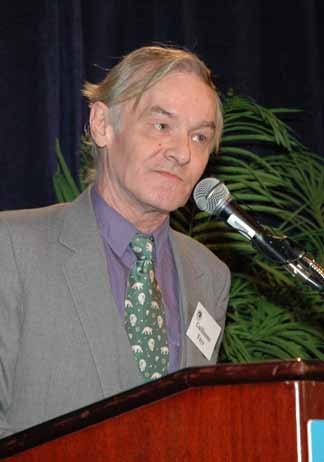 Few postwar thinkers in my view have played a greater role in ideologically resisting the forces assaulting Europe’s incomparable bioculture than Guillaume Faye. This was publicly evident at the international conference on “The White World’s Future” held in Moscow in June 2006, which he helped organize. It’s even more evident in the six books he’s written in the last seven years and in the innumerable articles, interviews, and conferences in which he’s alerted Europeans to the great challenges threatening their survival.
In this spirit he has developed an “archeofuturist” philosophy that takes its inspiration from the most primordial and Faustian urgings of our people’s spirit; he has incessantly warned of the threat posed by the Third World, specially Islamic, invasion of the former white homelands; he has promoted European collaboration with Russia and made the case for a white imperium stretching from Dublin to Vladivoskov; he privileges biopolitics over cultural or party politics; he’s developed a theory of the interregnum that explains why the existing system of subversion will soon collapse; and he’s successfully promoted anti-liberal ideas and values in a language and style that transcends the often ghettoized discourse of our movement. But despite his incomparable contribution to the forces of white resistance, he has always remained suspiciously silent on certain key issues, particularly regarding the Jews, the so-called Holocaust, and the interwar heritage of revolutionary nationalism — even though he is routinely referred to in the MSM as a fascist, a racist, and a negationist. On those few occasions he has spoken of Israel or the Jews, it has been to say that their cause is not ours and that we need to focus on the dangers bearing down on us. To this degree, his silence was tolerable. Recently, however, he’s broken this silence and taken a stance likely to alienate many of his supporters.
The occasion was an interview granted to the Zionist France-Echos — now posted at subversive.com. When asked in the interview about anti-Semitism in the “identitarian” movement he leads, Faye responded in explicitly philosemitic terms:
Anti-Judaism (a term preferable to anti-Semitism) has melted away like snow in the sun. There are, of course, pockets of resistance . . . . But this tendency is more and more isolated . . . because of the massive problem posed by Islamizaton and Third World immigration. In these circumstance, anti-Judaism has been forgotten, for the Jew no longer appears as a menace. In the milieux I frequent, I never read or hear of anti Jewish invectives. . . . [A]nti-Judaism is a political position that is obsolete, unhelpful, out of date, even when camouflaged as anti-Zionism. This is no longer the era of the Dreyfus Affair. Anti-Jews, moreover, are caught in an inescapable contradiction: they despise Jews, but claim they dominate the world, as if they were a superior race. This makes anti-Judaism a form of political schizophrenia, a sort of inverted philosemitism, an expression of resentment. One can’t, after all, detest what one aspires to . . . . My position is that of Nietzsche: To run down the Jews serves no purpose, it’s politically stupid and unproductive.
Besides ignoring the fact that Jewish influence has never been more dominant and more destructive of white existence, three questions are raised in this quote:
(1) Is it that the problems posed by immigration and Islam have trivialized those once associated with the Jews?
(2) Or is it that Islam and immigration reveal that the Jews are not (and never were) a problem, that the anti-Judaism of the Dreyfus era, like other historical expressions of anti-Judaism, was simply a product of a culture whose traditionalism or resentment “stupidly” demonized the Jew as the Other?
(3) Or is it that one can’t have two enemies at the same time, that the threat posed by Islamic immigration is greater than whatever threat the Jews might pose, making it strategically necessary to focus on the principal enemy and to relegate the other to a lesser degree of significance?
Faye tends to conflate these questions, leaving unsaid what needs to be said explicitly. He assumes, moreover, that the Islamic or Third World threat (both in the form of the present invasion and internationally) is somehow unrelated to the Jews. He acknowledges, of course, that certain Jews have been instrumental in promoting multiracialism and immigration. But the supposition here is that this is just a tendency on the part of certain Jews and that to think otherwise is to commit the error of seeing them in the way that “old-fashioned” anti-Semites once did. At first glance, his argument seems to be that of Jared Taylor and American Renaissance, being a tactical decision to take the path of least resistance (which many of us don’t support but nevertheless can live with). Faye, though, goes beyond Taylor, making claims about the Jews that will inevitably compromise our movement.
The anti-Islamism and philosemitism that Faye here combines reflect a deep ideological divide in French nationalist ranks. This divide is symptomatic of a larger schism that is rarely discussed by white nationalists, but has had worldwide ramification for our movement. Since 1945, when the anti-white forces of triumphant American liberalism and Russian Communism, in alliance with Zionism, achieved world hegemony, the hounded and tattered ranks of the nationalist right, in Europe and America, split into a number of divergent, if not contradictory tendencies. With the advent of the Cold War and the formation of the Israeli state, these tendencies tended to polarize around two camps. One tendency, including certain ex-Nazis, allied with postwar anti-Communism, viewing the Russian threat as the greater danger to Western Civilization. Given Israel’s strategic place in the Cold War alignment, these anti-Communists treated organized Zionism as an ally and downplayed the “anti-Semitism” that had traditionally been part of their anti-liberal nationalism. This tendency was opposed by another, which also included former Nazis, but it saw Russian Communism in terms of Stalin’s alleged anti-Semitism and nationalism. This led it to assume an anti-American, anti-Zionist, and pro-Third World position.
The legacy of this polarization continues to affect white nationalist ranks, even though elements of it have been jumbled and rearranged in recent years. As ideal types, however, neither tendency is completely supportable nor insupportable. White nationalism, I suspect, will succeed as a movement only in synthesizing the positive, pro-white elements in each tendency. For a long time, I thought Faye represented this synthesis, for he was both pro-Russian without being hysterically anti-American, anti-Third World without supporting the globalist super-structure dominating the “West.” More impressive still, his orientation was to a revolutionary, racially conscious, and archeofuturist concept of the European race that refused any accommodation to the existing regime.
Recently, however, his anti-Islamism seems to have morphed into a Zionism that cannot but trouble our movement. In the France-Echos interview he says in reference to his nationalist critics that it is nonsensical to call him a Zionist since he is not a Jew. But in the same breath he adds:
How could I be anti-Zionist . . . . Unlike Islamism, Communism, Leftism, human rights, and masochistic, post-conciliar Christianity, Zionism neither opposes nor restrains in any significant way the ideals I defend, that is, the preservation of [Europe's biocultural] identity. How would the disappearance of Israel serve my cause? For a European identitarian to think that the Hebrew state is an enemy is geopolitically stupid.
He goes on to argue that those who are viscerally anti-American and anti-Zionist are implicitly pro-Islam, pro-Arab, and immigrationist, allies in effect of the Left’s Third-Worldism. Pointing to Alain de Benoist’s GRECE, Christian Bouchet’s revolutionary nationalist movement, and those “Traditionalist” European converts to Islam, all of whom are fascinated by Iran’s new leadership and by Hezbollah, he claims, with some justice, that these anti-Zionists are in the process of abandoning their commitment to Europe.
Faye’s contention that Islam (the civilization) is a mortal threat to Europe is solidly grounded. While one might appreciate Amadinehjad’s critique of Zionist propaganda, especially as it takes the form of the Holocaust, or Nasrallah’s humbling of the IDF, to go from there to supporting Iran’s Islamic Republic or Islamic insurgents in general (think of the Paris Ramadan riots of November 2005) is, for white nationalists, a betrayal of another sort. Faye here acts as an important bulwark against those in our ranks who would leave it to others to fight our battles — others, if history is any guide, who won’t
hesitate to subjugate us once the opportunity arises.
Where Faye crosses the line in my view is in arguing that Jews ought to be considered part of European civilization, that the defense and reinforcement of the Israeli state is a vital imperative for Europe, and that Israel is the vanguard in the struggle against “our common enemy.” The collapse of Israel, he claims, would “open the door to the total conquest of Europe.” He concludes by declaring that he is no Judeophile. “I consider the Jews allies, as part of European civilization, with a very particular and original status as a people apart.” He rejects anti-Judaism “not because it is immoral, but because it is unuseful, divisive, infantile, politically inconsistent, out dated.” For ostensively strategic reasons, then, he rejects anti-Judaism.
It is not my intention here to critique Faye’s new-found Zionism (which I find insupportable) — that would require a format different from this report. It is also not my intention to put his other ideas in doubt, for I continue to believe that he has made an incomparable intellectual contribution to the cause of white resistance. I do, however, question how Faye can consider a non-European people like the Jews to be part of our biocivilization; how he can ignore the destructive role they have played in European and especially American history; how he can dismiss their role in fostering the anti-white forces of multiculturalism, globalism, and the existing regime; and how he can think that Israel is not a geopolitical liability to Europe and Russia?
Finally, I can’t help but recall an earlier occasion when Faye argued that our survival as a people depends on “ourselves alone” — and not on appeals to those whose interests are inevitably served at our expense.
From VNN, July 31, 2006
Article printed from Counter-Currents Publishing: http://www.counter-currents.com
URL to article: http://www.counter-currents.com/2011/08/guillaume-faye-the-jews/
00:05 Publié dans Judaica, Nouvelle Droite | Lien permanent | Commentaires (0) | Tags : judaica, nouvelle droite, guillaume faye, antisionisme, sionisme, islamophobie | | del.icio.us | | Digg | Facebook
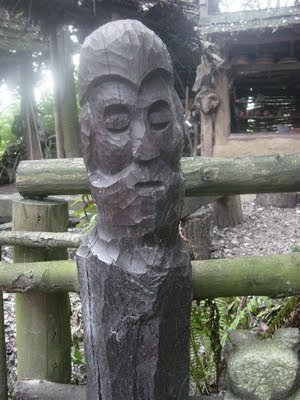
Baraecus, dios celta hispano de las aguas, los guerreros iniciados y los castros
En la zona de Cáceres está estrechamente relacionado con las aguas y los ríos de esa zona, donde se le conoce como Revve Anabaraecus.
El estudio de precedentes y paralelos (entre otros la escultura de Oceanus del mitreo de Mérida) nos conducen a otras reflexiones sobre la inscripción, particularmente acerca de las posibles relaciones de ambas personificaciones con la actividad religiosa propia de un augustal. Esto la conduce a sugerir una relación entre Barraecus y el teónimo indígena, posiblemente vetón, Revve Anabaraecus, conocido de antiguo en Trujillo y Ruanes (en ésta fragmentado en baraeco), en el que ella interpreta el elemento revve como “río, dios del río” o “de ambos ríos” (por la doble vv), sugiriendo por ello que existía en la Antigüedad un culto en general a las confluencias de los ríos, del que éste de Mérida sería un ejemplo, como algunos otros, del tipo Langanidaecus.
Otro de los lugares donde se encuentra una relación con esta deidad, aun cuando con otro nombre, es en el territorio de los arevacos. Allí se encuentra un dios llamado Bormanicus, quien a su vez esta relacionado con el dios galo Borbanus, deidades relacionadas a su vez con las aguas, y balnearios naturales. Lo cual para autores como Diez Velasco pudiera significar o estar relacionado con algún tipo de ritual iniciatico para los guerreros celtas, tanto galos como hispanos. Máxime cuando para el mundo celta el transito entre el mundo de los vivos y de los muertos ocurría a través del agua. Es decir, para los celtas, las aguas, ríos y manantiales eran puertas que unían la tierra de los hombres con el mundo de los dioses.
Como suele ocurrir con la casi totalidad de nombres indígenas celtas en la península, poco o nada mas se conoce de esta deidad., a la que en algunos lugares se la relaciona igualmente con una entidad espiritual protectora de los castros y las murallas defensivas. Esta ultima teoría de Baraecus protector, viene dada según Blázquez por –BARR- , palabra que significaría muralla o vallado protegido. Según lo cual Baraecus tendría igualmente una función de dios protector, de las murallas, o zonas amuralladas (Castros) y en consecuencia de las tribus que tras ellas habitan. Es igualmente importante decir que Baraecus, no solo sería un dios de los castros y por consiguiente del pueblo, sino de todos los terrenos que están amurallados, ya fueran fincas, castros, casas o establos. Por ello también se le ha identificado, o pretendido dar un carácter de dios ganadero. Aun cuando personalmente creo que estaría mas vinculado al sentido de protector de la propiedad privada: clan, nación, familia, casa, poblado etc.
Resumiendo por tanto y estando siempre abiertos a nuevas investigaciones y conocimientos dentro del desconocido mundo de la mitología celta hispánica. Podríamos decir que el dios Baraecus o Bormanicus. Representaría salvando las diferencias étnicas existentes dentro de las diferentes tribus de toda la península celta. A una deidad relacionada con el mundo de las aguas, como gran parte de los dioses celtas, principalmente de los ríos. Siendo igualmente en algunas zonas de la meseta norte, relacionado con el culto de los guerreros iniciaticos, o guerreros jóvenes. Y posiblemente con la protección de la propiedad privada, las murallas y los castros fortificados o amurallados.
00:00 Publié dans Terroirs et racines, Traditions | Lien permanent | Commentaires (0) | Tags : mythologie, paganisme, hispanie antique, espagne antique, celtibères, celtes, racines, terroirs, dieux | | del.icio.us | | Digg | Facebook