

mardi, 03 janvier 2012
Poutine contre-attaque: “Ce sont des drones américains qui ont tué Khadafi!”

Matteo BERNABEI:
Poutine contre-attaque: “Ce sont des drones américains qui ont tué Khadafi!”
Nous assistons désormais à une confrontation sur toute la ligne entre la Russie et les Etats-Unis. Après le différend qui a opposé les deux grandes puissances à propos de la crise syrienne et après la menace de sanctions que fait peser Washington sur quelques fonctionnaires du gouvernement de Moscou, accusés “d’abus en matière de droits de l’homme”, le Premier Ministre russe Vladimir Poutine a attaqué en termes fort durs les autorités nord-américaines. “Muammar Kadhafi a été assassiné au moyen d’aéroplanes sans pilote, qui ont attaqué la colonne de véhicule dans laquelle il se trouvait et l’ont tué sans qu’il n’y ait ni tribunal ni enquête”, a déclaré sans ambages le dirigeant russe au cours d’un long entretien accordé à la télévision d’Etat. Il a également souligné que tout cela ne constitue en rien un “acte démocratique”. La réplique du Pentagone fut immédiate: il a déclaré que les paroles de Poutine étaient “ridicules” et que “la mort de Kadhafi a été attestée par des documents rendus publics, tant sur le plan des circonstances que sur celui des responsabilités”. Cette dernière affirmation du Pentagone ne correspond toutefois en rien à la vérité car les uniques images de la mort du Colonel libyen sont celles qui le montre blessé et capturé par les rebelles; elles ne révèlent rien sur la manière dont Kadhafi a été blessé ni sur qui a porté le coup.
Après avoir évoqué le cas de Kadhafi et l’affaire libyenne, le premier ministre russe a abordé le cas de l’ancien candidat républicain John McCain, qui avait accusé Poutine de malversations lors des récentes élections pour la députation de la Douma de Moscou. “McCain a combattu au Vietnam -a dit Poutine- et je crois, moi, qu’il a les mains sales, sales du sang de citoyens vietnamiens innocents; à ce titre, il ne peut inventer que des histoires sanguinaires”.
Le climat entre Washington et Moscou est de plus en plus tendu. Moscou n’a cessé de critiquer l’interprétation qu’ont donnée les Etats-Unis et la fameuse “coalition des volontaires” de la résolution 1973 des Nations-Unies, en foulant aux pieds faits et principes pour pouvoir agir militairement en Libye.
En dépit du climat international tendu et de la situation difficile dans laquelle se débat le pays nord-africain, le Conseil National de Transition de Benghazi, c’est-à-dire l’organisme qui gouverne actuellement la Libye, adopte une politique étrangère propre. Le 15 décembre 2011, à Rome, le numéro un de ce CNT libyen, Moustafa Abdel Djalil, a rencontré le “néo-président” du Conseil italien, Mario Monti et le Président de la République Giorgio Napolitano afin de réactiver le traité d’amitié italo-libyen. Au départ, le gouvernement “de facto” de Benghazi avait montré beaucoup de perplexité à relancer ce traité, à cause des clauses relatives à l’immigration illégale qu’il imposait. Il a néanmoins pu rentrer à nouveau en vigueur, surtout grâce au déblocage, par l’exécutif italien, des fonds libyens préalablement gelés. Ceux-ci sont dès lors passés de 230 à 600 millions d’euro.
Matteo BERNABEI.
(article paru dans “Rinascita”, Rome, 16 décembre 2011; http://www.rinascita.eu ).
00:05 Publié dans Actualité, Affaires européennes | Lien permanent | Commentaires (1) | Tags : politique internationale, poutine, russie, libye, kadhafi |  |
|  del.icio.us |
  |
|  Digg |
  Facebook
Modern art was CIA 'weapon'
Modern art was CIA 'weapon'
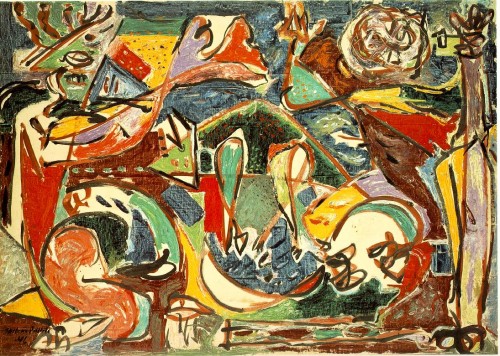
For decades in art circles it was either a rumour or a joke, but now it is confirmed as a fact. The Central Intelligence Agency used American modern art - including the works of such artists as Jackson Pollock, Robert Motherwell, Willem de Kooning and Mark Rothko - as a weapon in the Cold War. In the manner of a Renaissance prince - except that it acted secretly - the CIA fostered and promoted American Abstract Expressionist painting around the world for more than 20 years.
The connection is improbable. This was a period, in the 1950s and 1960s, when the great majority of Americans disliked or even despised modern art - President Truman summed up the popular view when he said: "If that's art, then I'm a Hottentot." As for the artists themselves, many were ex- com- munists barely acceptable in the America of the McCarthyite era, and certainly not the sort of people normally likely to receive US government backing.
Why did the CIA support them? Because in the propaganda war with the Soviet Union, this new artistic movement could be held up as proof of the creativity, the intellectual freedom, and the cultural power of the US. Russian art, strapped into the communist ideological straitjacket, could not compete.
The existence of this policy, rumoured and disputed for many years, has now been confirmed for the first time by former CIA officials. Unknown to the artists, the new American art was secretly promoted under a policy known as the "long leash" - arrangements similar in some ways to the indirect CIA backing of the journal Encounter, edited by Stephen Spender.
The decision to include culture and art in the US Cold War arsenal was taken as soon as the CIA was founded in 1947. Dismayed at the appeal communism still had for many intellectuals and artists in the West, the new agency set up a division, the Propaganda Assets Inventory, which at its peak could influence more than 800 newspapers, magazines and public information organisations. They joked that it was like a Wurlitzer jukebox: when the CIA pushed a button it could hear whatever tune it wanted playing across the world.
The next key step came in 1950, when the International Organisations Division (IOD) was set up under Tom Braden. It was this office which subsidised the animated version of George Orwell's Animal Farm, which sponsored American jazz artists, opera recitals, the Boston Symphony Orchestra's international touring programme. Its agents were placed in the film industry, in publishing houses, even as travel writers for the celebrated Fodor guides. And, we now know, it promoted America's anarchic avant-garde movement, Abstract Expressionism.
Initially, more open attempts were made to support the new American art. In 1947 the State Department organised and paid for a touring international exhibition entitled "Advancing American Art", with the aim of rebutting Soviet suggestions that America was a cultural desert. But the show caused outrage at home, prompting Truman to make his Hottentot remark and one bitter congressman to declare: "I am just a dumb American who pays taxes for this kind of trash." The tour had to be cancelled.
The US government now faced a dilemma. This philistinism, combined with Joseph McCarthy's hysterical denunciations of all that was avant-garde or unorthodox, was deeply embarrassing. It discredited the idea that America was a sophisticated, culturally rich democracy. It also prevented the US government from consolidating the shift in cultural supremacy from Paris to New York since the 1930s. To resolve this dilemma, the CIA was brought in.
The connection is not quite as odd as it might appear. At this time the new agency, staffed mainly by Yale and Harvard graduates, many of whom collected art and wrote novels in their spare time, was a haven of liberalism when compared with a political world dominated by McCarthy or with J Edgar Hoover's FBI. If any official institution was in a position to celebrate the collection of Leninists, Trotskyites and heavy drinkers that made up the New York School, it was the CIA.
Until now there has been no first-hand evidence to prove that this connection was made, but for the first time a former case officer, Donald Jameson, has broken the silence. Yes, he says, the agency saw Abstract Expressionism as an opportunity, and yes, it ran with it.
"Regarding Abstract Expressionism, I'd love to be able to say that the CIA invented it just to see what happens in New York and downtown SoHo tomorrow!" he joked. "But I think that what we did really was to recognise the difference. It was recognised that Abstract Expression- ism was the kind of art that made Socialist Realism look even more stylised and more rigid and confined than it was. And that relationship was exploited in some of the exhibitions.
"In a way our understanding was helped because Moscow in those days was very vicious in its denunciation of any kind of non-conformity to its own very rigid patterns. And so one could quite adequately and accurately reason that anything they criticised that much and that heavy- handedly was worth support one way or another."
To pursue its underground interest in America's lefty avant-garde, the CIA had to be sure its patronage could not be discovered. "Matters of this sort could only have been done at two or three removes," Mr Jameson explained, "so that there wouldn't be any question of having to clear Jackson Pollock, for example, or do anything that would involve these people in the organisation. And it couldn't have been any closer, because most of them were people who had very little respect for the government, in particular, and certainly none for the CIA. If you had to use people who considered themselves one way or another to be closer to Moscow than to Washington, well, so much the better perhaps."
This was the "long leash". The centrepiece of the CIA campaign became the Congress for Cultural Freedom, a vast jamboree of intellectuals, writers, historians, poets, and artists which was set up with CIA funds in 1950 and run by a CIA agent. It was the beach-head from which culture could be defended against the attacks of Moscow and its "fellow travellers" in the West. At its height, it had offices in 35 countries and published more than two dozen magazines, including Encounter.
The Congress for Cultural Freedom also gave the CIA the ideal front to promote its covert interest in Abstract Expressionism. It would be the official sponsor of touring exhibitions; its magazines would provide useful platforms for critics favourable to the new American painting; and no one, the artists included, would be any the wiser.
This organisation put together several exhibitions of Abstract Expressionism during the 1950s. One of the most significant, "The New American Painting", visited every big European city in 1958-59. Other influential shows included "Modern Art in the United States" (1955) and "Masterpieces of the Twentieth Century" (1952).
Because Abstract Expressionism was expensive to move around and exhibit, millionaires and museums were called into play. Pre-eminent among these was Nelson Rockefeller, whose mother had co-founded the Museum of Modern Art in New York. As president of what he called "Mummy's museum", Rockefeller was one of the biggest backers of Abstract Expressionism (which he called "free enterprise painting"). His museum was contracted to the Congress for Cultural Freedom to organise and curate most of its important art shows.
The museum was also linked to the CIA by several other bridges. William Paley, the president of CBS broadcasting and a founding father of the CIA, sat on the members' board of the museum's International Programme. John Hay Whitney, who had served in the agency's wartime predecessor, the OSS, was its chairman. And Tom Braden, first chief of the CIA's International Organisations Division, was executive secretary of the museum in 1949.
Now in his eighties, Mr Braden lives in Woodbridge, Virginia, in a house packed with Abstract Expressionist works and guarded by enormous Alsatians. He explained the purpose of the IOD.
"We wanted to unite all the people who were writers, who were musicians, who were artists, to demonstrate that the West and the United States was devoted to freedom of expression and to intellectual achievement, without any rigid barriers as to what you must write, and what you must say, and what you must do, and what you must paint, which was what was going on in the Soviet Union. I think it was the most important division that the agency had, and I think that it played an enormous role in the Cold War."
He confirmed that his division had acted secretly because of the public hostility to the avant-garde: "It was very difficult to get Congress to go along with some of the things we wanted to do - send art abroad, send symphonies abroad, publish magazines abroad. That's one of the reasons it had to be done covertly. It had to be a secret. In order to encourage openness we had to be secret."
If this meant playing pope to this century's Michelangelos, well, all the better: "It takes a pope or somebody with a lot of money to recognise art and to support it," Mr Braden said. "And after many centuries people say, 'Oh look! the Sistine Chapel, the most beautiful creation on Earth!' It's a problem that civilisation has faced ever since the first artist and the first millionaire or pope who supported him. And yet if it hadn't been for the multi-millionaires or the popes, we wouldn't have had the art."
Would Abstract Expressionism have been the dominant art movement of the post-war years without this patronage? The answer is probably yes. Equally, it would be wrong to suggest that when you look at an Abstract Expressionist painting you are being duped by the CIA.
But look where this art ended up: in the marble halls of banks, in airports, in city halls, boardrooms and great galleries. For the Cold Warriors who promoted them, these paintings were a logo, a signature for their culture and system which they wanted to display everywhere that counted. They succeeded.
* The full story of the CIA and modern art is told in 'Hidden Hands' on Channel 4 next Sunday at 8pm. The first programme in the series is screened tonight. Frances Stonor Saunders is writing a book on the cultural Cold War.
Covert Operation
In 1958 the touring exhibition "The New American Painting", including works by Pollock, de Kooning, Motherwell and others, was on show in Paris. The Tate Gallery was keen to have it next, but could not afford to bring it over. Late in the day, an American millionaire and art lover, Julius Fleischmann, stepped in with the cash and the show was brought to London.
The money that Fleischmann provided, however, was not his but the CIA's. It came through a body called the Farfield Foundation, of which Fleischmann was president, but far from being a millionaire's charitable arm, the foundation was a secret conduit for CIA funds.
So, unknown to the Tate, the public or the artists, the exhibition was transferred to London at American taxpayers' expense to serve subtle Cold War propaganda purposes. A former CIA man, Tom Braden, described how such conduits as the Farfield Foundation were set up. "We would go to somebody in New York who was a well-known rich person and we would say, 'We want to set up a foundation.' We would tell him what we were trying to do and pledge him to secrecy, and he would say, 'Of course I'll do it,' and then you would publish a letterhead and his name would be on it and there would be a foundation. It was really a pretty simple device."
Julius Fleischmann was well placed for such a role. He sat on the board of the International Programme of the Museum of Modern Art in New York - as did several powerful figures close to the CIA.
00:05 Publié dans art, Manipulations médiatiques | Lien permanent | Commentaires (0) | Tags : cia, art, art abstrait, art contemporain, cia, politique internationale, manipulations médiatiques, guerre froide | | del.icio.us | | Digg | Facebook
Dominique Venner, électrochoc des esprits pour un choc de l’histoire
Dominique Venner, électrochoc des esprits pour un choc de l’histoire
 Dans un livre d’entretien conduit par la journaliste Pauline Lecomte, « Le choc de l’histoire » publié aux éditions « Via Romana », Venner se penche une nouvelle fois sur notre époque en crise. On retrouvera en filigrane la grille d’analyse affûtée qu’il avait déjà exposée dans son ouvrage « Le siècle de 1914 », mais cette fois pour en dépasser le cadre restreint de la discipline historique.
Selon lui, la grave crise actuelle clos un cycle historique amorcé en 1914 et qui aura secoué tout le XXème siècle. Après avoir favorisé un lent processus de déchristianisation, les idéaux des Lumières ont vu, au cours du dernier siècle, les grands récits idéologiques qu’ils avaient enfantés s’effondrer les uns après les autres. Après avoir tordu le cou aux aventures fascistes en Europe, le communisme et le capitalisme mondialiste, qui se sont imposés à une Europe réduite à la sujétion, se sont révélés finalement incapables de surmonter les contradictions systémiques internes qui les taraudaient.
Le communisme s’affaissera brutalement sur lui-même sans prévenir, en 1989, laissant le mondialisme des droits de l’homme porté par les Etats-Unis bien seul face à ses propres apories. Passée une brève période d’euphorie, la faillite de Lehmann Brother en 2008 est venue signifier à une planète incrédule la mort par KO technique de la dernière illusion issue des ruines du XXème siècle et partant, le début du déclin de l’empire américain.
Pour Dominique Venner, la grande faute qui caractérisa toutes ces expériences idéologiques fut de ne s’inscrire qu’exclusivement dans le champ trop temporel du politique ou de l’économique. Malgré les prétentions eschatologiques et les abords religieux que ces aventures n’ont jamais manqué d’emprunter, toutes se révélèrent in fine bien incapables de bâtir des modèles durables de société, comme su par exemple le faire en son temps le christianisme. Les mythes du progressisme égalitaire, de l’homme nouveau ou encore de la fin de l’histoire auront finalement buté sur l’amère réalité de leur impossible avènement. Leurs échecs successifs laissent donc aujourd’hui les Européens à la fois exsangues et durement désemparés devant un sérieux questionnement identitaire.
Même le christianisme, passablement épuisé, ne présente plus la moindre possibilité d’un recours. Son universalisme – qui put être un atout lorsqu’il s’agissait de légitimer l’hégémonie de l’Europe sur le monde – se révèle désormais totalement inopérant à offrir des solutions pour des Européens ramenés à un monde multipolaire et violemment chaviré par un rééquilibrage des puissances entre ex-dominés et ex-dominants. Pire encore ! Ce résidu d’universalisme, qui nimbe encore tout l’Occident, les handicape aujourd’hui dans leur capacité à répondre au réveil identitaire, et souvent revanchard, des civilisations concurrentes.

L’état des lieux est clair : l’Europe, assommée par le traumatisme de deux guerres mondiales, est entrée en dormition depuis plus de 50 ans. Mais l’effondrement annoncé de l’empire américain provoquera inévitablement le retour souverain des nations du vieux continent dans le jeu de l’histoire. Inutile de s’illusionner ! Ce réveil ne se fera pas sans de déchirantes et profondes révisions. La grande démonstration de ce livre tient précisément dans l’évidence que la solution dépasse largement le champ des contingences du politique stricto sensu.
Dépourvue de religion identitaire, à la différence de l’Inde, du Japon ou de la Chine, l’Europe va devoir retrouver ce qui la singularise en renouant avec sa plus longue mémoire. Une mémoire amenée à former les bases d’une mystique identitaire apte à produire un imaginaire collectif opérant face aux nouveaux enjeux de la modernité. Les Européens vont devoir se réarmer moralement s’ils ne veulent pas tomber en servitude. A cet égard, il nous donne l’exemple du renouveau hindouiste actuel en Inde, amorcé grâce à la création par Nagpur en 1925 d’un mouvement identitaire à vocation plus culturelle et spirituelle que politique.
Sur ce chemin qui remonte dans notre plus longue mémoire, Dominique Venner nous indique des pistes. Il nous renvoie d’abord à son ouvrage « Histoire et Tradition des Européens : 30000 ans d’identité » et évoque ensuite une « histoire européenne des comportements [pouvant] être décrite comme le cours d’une rivière souterraine invisible et pourtant réelle. » Pour lui, cette rivière qui coule en nous, souvent à notre insu, prend sa source dans la Grèce antique en général et dans l’œuvre fondatrice d’Homère en particulier. Dans l’Iliade et l’Odyssée, qu’il qualifie de « mémoire des origines », il est possible de retrouver tout l’imaginaire européen dans sa substance la plus parfaite. Notre vision du monde, notre rapport à la nature, au vivant, à la mort, notre cœur aventureux, notre façon d’enchanter les éléments et de sublimer nos sentiments, cette relation entre les hommes et les femmes sur un pied d’égalité, tout est là sous nos yeux, écrit il y a presque 3000 ans déjà.
Venner nous avise toutefois à ne pas confondre tradition et folklore. La vraie tradition consiste à entreprendre des choses neuves dans le même esprit que celui des anciens. Alors que le folklore, c’est justement l’inverse. En exemple, il nous donne des figures contemporaines d’Européens, sur lesquelles, selon lui, l’esprit de la tradition a indéniablement soufflé. Parmi ceux-ci, il s’attarde longuement sur le cas du colonel Claus von Stauffenberg. Cet officier qui incarna la fidélité à la tradition aristocratique allemande fut l’instigateur décisif de l’attentat manqué contre Hitler.
En conclusion, nous citerons cette phrase de Dominique Venner : « ce n’est pas rien de se savoir fils et filles d’Homère, d’Ulysse et de Pénélope. »
Olrik
00:05 Publié dans Livre, Nouvelle Droite | Lien permanent | Commentaires (0) | Tags : livre, nouvelle droite, histoire, dominique venner | | del.icio.us | | Digg | Facebook
Mircea Eliade, il genio
Mircea Eliade, il genio
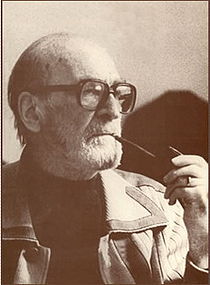 Il 13 marzo di cent’anni fa nasceva a Bucarest Mircea Eliade. Fin dall’infanzia i genitori spostano il compleanno al 9 marzo. Al suo nome di battesimo non corrispondeva infatti alcun patrono nel calendario ortodosso, sicché la famiglia decise di festeggiare il giorno 9, che non era consacrato a nessun santo particolare bensì ai Quaranta Martiri uccisi a Sebaste durante le persecuzioni di Luciano.
Studioso del mito e delle religioni, esperto di yoga e sciamanesimo, di occultismo ed esoterismo, romanziere fecondo, saggista dall’erudizione prodigiosa e a suo agio in otto lingue, Eliade è stato tra le intelligenze più acute e versatili del Novecento. Ma l’intelligenza è un dono di dèi invidiosi, un dono avvelenato: il confine che la separa dall’ottusità è mobile.
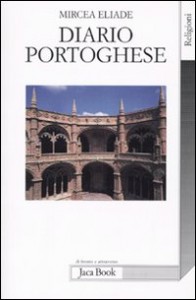
«Che uomo straordinario sono!», annota il trentaquattrenne intellettuale nel suo Jurnalul din Portugalia, l’inedito diario dei cinque anni, dal 1941 al 1945, trascorsi come consigliere culturale all’ambasciata rumena di Lisbona (in Italia sarà pubblicato da Bollati Boringhieri). Il giovane Eliade, all’epoca ancora sconosciuto al grande pubblico europeo, passa parte delle sue giornate a rileggere alcune sue pagine e si paragona ai grandi della letteratura: «La mia capacità di comprendere e percepire tutto ciò che appartiene alla sfera culturale è illimitata … Comunque sia, i miei orizzonti intellettuali sono più vasti di quelli di Goethe». Il 15 luglio 1943 annota con ineffabile disinvoltura: «Mi rendo conto che dopo Eminescu [il poeta nazionale rumeno], la nostra razza non ha mai più conosciuto una personalità tanto (…) potente e tanto dotata quanto la mia».
 I diari integrali saranno desecretati solo nel 2018, ma tutto fa pensare che l’autocritica non appartenesse al pur vastissimo repertorio di Eliade. Né che egli sia mai guarito dalla megalomania di cui evidentemente andava affetto. A quattordici anni aveva già pubblicato il suo primo racconto: Come ho scoperto la pietra filosofale. In un successivo Romanzo dell’adolescente miope (1923) elabora la quasi umiliante scoperta della propria sessualità. Qualche anno dopo, in Gaudeamus (1928), entrano in scena la femminilità e l’amore, e per converso il concetto di «virilità», mutuato dall’adorato Papini, autore di Maschilità. Il suo io è superalimentato dall’ambizione e da una «religione della volontà» fatta di astinenza e disciplina (dormiva cinque ore per non sottrarre tempo allo studio).
Iscrittosi nel 1925 a Lettere e Filosofia dell’università di Bucarest, emerge come leader della giovane «Generazione», un gruppo di intellettuali anticonformisti che aspira a rinnovare la tradizione rumena. Tra gli altri «latini d’Oriente» ci sono Cioran (che nel 1986 gli dedicherà uno dei suoi superbi Exercises d’admiration), Ionesco, Costantin Noica e Mihail Sebastian, un ebreo a lui molto caro.
Nel 1927 e 1928 visita l’Italia, avendo alle spalle una serie di letture rapaci che mettono le ali alla sua passione per nostra cultura (documentata esaurientemente da Roberto Scagno per Jaca Book). Su tutti Papini ed Evola, a proposito del quale scriverà un testo, Il fatto magico, andato perduto. Dopo la laurea su La filosofia italiana da Marsilio Ficino a Giordano Bruno, alla fine del 1928, parte alla volta dell’India per studiare la filosofia orientale con Surendranath Dasgupta. Vi rimane fino al dicembre del 1931, imparando il sanscrito e raccogliendo materiali, conoscenze ed esperienze che lo segnano profondamente. C´è anche una storia d’amore con Maitreyi, la figlia di Dasgupta, nella cui casa a Calcutta era andato ad abitare. La ragazza è la protagonista dell’omonimo romanzo, che Eliade pubblica in Romania nel 1933. Sarà un grande successo, che trasfigura Maitreyi in un simbolo dell’immaginario rumeno.
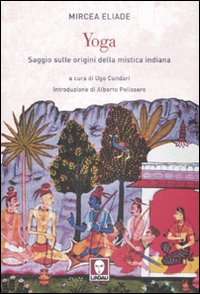 Incrinatisi i rapporti con Dasgupta, viaggia nellHimalaya occidentale soggiornando nell’ashram di Shivananda e facendosi iniziare allo yoga. Nel contempo lavora alla tesi di dottorato, che discute a Bucarest nel ‘33 e pubblica a Parigi nel ‘36 con il titolo Yoga, saggio sulle origini della mistica indiana. Un libro che lo lancerà come autore di culto quando lo yoga si diffonderà in Occidente.
Dal 1933 al 1940 è di nuovo a Bucarest come assistente di Nae Ionescu, il leggendario maestro della giovane Generazione. Ionescu lo avvicina alla Guardia di Ferro, l’organizzazione di estrema destra capeggiata da Codreanu. Costui era convinto, tra l’altro, che gli ebrei cospirassero per fondare una nuova Palestina tra il Mal Baltico e il Mar Nero, e il suo vice, Ion Mota, aveva tradotto in rumeno I protocolli dei Savi di Sion. Eliade non era antisemita, ma all’epoca si lasciò intruppare. Il diario che l’amico ebreo Sebastian tenne fra il 1935 e il 1944, pubblicato nel 1996, è un’accorato lamento per il comportamento ambiguo di Eliade. Che è tutto preso dalle sue carte: pubblica vari saggi (tra cui Oceanografia e Il mito della reintegrazione), romanzi (tra cui Ritorno dal Paradiso, La luce che si spegne, i due volumi Huliganii), un’importante rivista di studi mitologici, Zalmoxis, che richiamerà l’attenzione di Carl Schmitt ed Ernst Jünger.
 Alla fine della guerra si trasferisce a Parigi dove, aiutato da Dumézil, insegna all’Ecole des Hautes Etudes. Il Trattato di storia delle religioni (1949) lo consacra come massimo studioso del fenomeno religioso su scala mondiale. Ostile al metodo positivistico e storicista, Eliade riprende la prospettiva aperta da Rudolf Otto e sviluppa uno studio comparativo del sacro e delle sue manifestazioni, le «ierofanie». La sua non è una storia bensì una morfologia del sacro, le cui forme appaiono e si ripetono nel tempo, con le feste, e nello spazio, con i «centri del mondo», riattualizzando miti primordiali. Per lui il mito non è affatto arcaico né fuori gioco. Si è piuttosto ritirato negli interstizi della modernità, dove si tratta di scovarlo. Contro la presunta superiorità dell’uomo moderno sui «primitivi».
Nel 1950 è invitato da C.G. Jung al primo incontro di «Eranos» ad Ascona. Nel 1956 passa a insegnare alla Divinity School di Chicago, dove rimarrà fino alla morte (avvenuta il 22 aprile 1986 per un ictus). Dal 1960 al 1972 dirige con Ernst Jünger una straordinaria rivista di storia delle religioni, Antaios. Intanto seguita a pubblicare a ritmo martellante un’infinità di lavori, culminati nella grande Storia delle credenze e delle idee religiose (1976-1983). È anche candidato al Nobel per la letteratura.
Purtroppo, un dettaglio ne stoppa l’apoteosi, e gli schizza addosso una macchia infamante. Un dettaglio biografico, sul quale la sua intelligenza si incaglia e si rovescia in ottusità.
Nel 1972 lo storico Theodor Lavi (pseudonimo di Lowenstein), in base al diario ancora inedito di Sebastian e ad altre testimonianze, rivela su Toladot, una piccola rivista dell’emigrazione rumena in Israele, che Eliade era stato vicino alla Guardia di ferro. Eliade fa finta di nulla, cerca di sbarazzarsi del suo passato come un serpente della sua pelle. Ma la notizia fa il giro del mondo, in Italia è ripresa da Furio Jesi. Un suo viaggio a Gerusalemme nella primavera del 1973 dev’essere annullato in extremis, tra lo sconcerto dell’amico Gershom Scholem. Nei suoi diari, silenzio.
Da quel momento Eliade adopera la sua intelligenza per dissimulare e insabbiare. Cerca coperture, si stringe ad amici insospettabili, come Paul Ricoeur e lo scrittore ebreo Saul Bellow. Quest’ultimo diventa suo intimo, ma nel romanzo Ravelstein inscena il dubbio che lo tormenta. Il protagonista, alias Allan Bloom, mette in guardia l’amico narratore da Radu Grielescu, alias Eliade: è stato «un seguace di Nae Ionescu che fondò la Guardia di Ferro», avverte, un jew-hater che denunciò «la sifilide ebraica che contagiava la raffinata civiltà balcanica», «ti strumentalizza» per «rifarsi una verginità». Il tarlo del sospetto non soffocherà la compassione, e ai funerali di Eliade Bellow prenderà la parola per dire il suo dolore e la sua compassione.
 È difficile giudicare del caso Eliade. Come è difficile giudicare di Heidegger, Carl Schmitt o Céline. Certo, la loro opera non può più essere letta solo in chiave scientifica o letteraria, separandola dalla biografia. Eppure, la loro vita mediocre non basta a oscurare la grandezza dell’opera che ha generato. Ci chiediamo: perché intellettuali di tale statura si sono ostinati a tacere il loro passato? La verità è che gli uomini sono molto meno uguali di quello che dicono, e molto più di quello che pensano.
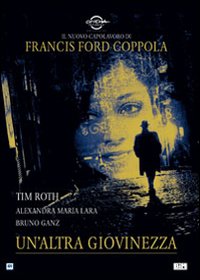
È probabilmente questa saggezza che ha indotto perfino il regista Francis Coppola a rendere omaggio a Eliade. Il suo nuovo film, Youth without Youth, prende spunto da un omonimo racconto di Eliade (Tinerete fara tinerete): un settantenne professore, colpito da un fulmine, diventa più giovane anziché più vecchio, attirando l’attenzione dei servizi segreti. Il professore deve scappare attraverso vari paesi fino in India… Anche questa singolare fortuna è un dettaglio in cui si nasconde il buon Dio, e ci avverte che l’opera di Eliade rimane un capitolo inevitabile della storia intellettuale del Novecento, un passaggio obbligato per capirne le convulsioni.
* * *
Tratto da Repubblica del 12 marzo 2007.
00:05 Publié dans Philosophie, Traditions | Lien permanent | Commentaires (0) | Tags : mircea eliade, roumanie, religions, mythologie, tradition | | del.icio.us | | Digg | Facebook