


mercredi, 23 janvier 2013
Les Indo-Européens, faits et polémiques

16:58 Publié dans Evénement | Lien permanent | Commentaires (0) | Tags : événement, france, indo-européens |  |
|  del.icio.us |
  |
|  Digg |
  Facebook
La position stratégique de la Roumanie dans l’Union Européenne
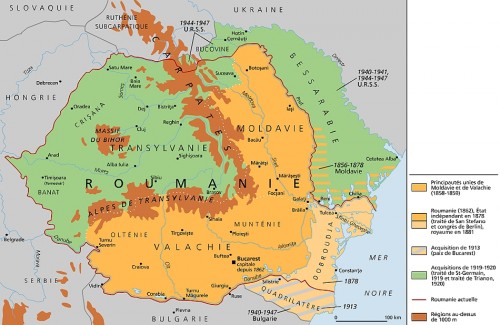
La position stratégique de la Roumanie dans l’Union Européenne
La Roumanie a été un pays très attractif au fil du temps pour les plus grandes puissances du monde : l’UE, la Russie et les Etats-Unis, grâce à sa position géographique, à ses ressources naturelles disponibles et à l’accès aux voies maritimes importantes. Toutefois, le manque d’une vraie stratégie post-adhésion UE ainsi que la mauvaise coordination des pratiques politiques nationales ont mené à un fort affaiblissement de l’influence de la Roumanie sur l’UE, durant ces dernières années. Est-ce que, à nos jours, la Roumanie représente encore d’intérêt pour l’Union Européenne et son intégration totale au sein de l’Europe ?
UN GRAND POTENTIEL EN TERMES DE PUISSANCE…
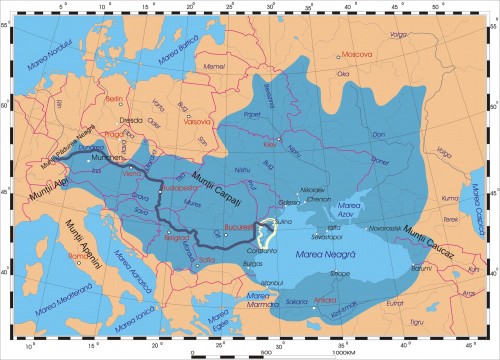
La position géographique. L’isthme ponto-baltique
Le territoire roumain représente la frontière Est de l’UE et l’OTAN et constitue le lien avec l’Europe Orientale, la Russie et le Moyen Orient. Il serve comme plateforme de transport paneuropéen ainsi que comme porte d’entrée pour toute activité commerciale provenant de l’Est.
L’accès aux voies de transport maritime
La Roumanie comprend sur son territoire plus de 30% de la voie fluviale la plus importante de l’Europe, le Danube, ayant aussi accès à la Mer Noire. Cette position marque le point de confluence des pôles générateurs de transports de l’Europe, Balkans et du Moyen-Orient. Elle constitue ainsi une plateforme importante des flux de trafic du basin marin (devenant un hub pour la circulation fluviale qui remonte le Danube), représentant un grand intérêt pour les secteurs de l’agriculture, du commerce et de l’énergie (énergie nucléaire et hydraulique, la centrale « Portile de Fier » étant une des plus grandes centrales hydroélectriques européennes).
Les ressources naturelles et le potentiel énergétique
La richesse naturelle du territoire roumain se traduit par de grandes quantités de ressources, notamment : le bois, le charbon, les grandes surfaces agricoles et les terrains fertiles, mais aussi le gaz naturel et le pétrole. La Roumanie est considérée un des pays les plus attractifs du point de vue de son potentiel énergétique pour l’exploitation des ressources renouvelables. On mentionne ici l’énergie éolienne et les réserves de gaz de schiste comme domaines d’intérêt majeur pour une exploitation future.
L’axe de la défense et de la sécurité internationale
Suite à l’adhésion à l’OTAN en 2004, le Roumanie s’inscrit sur l’axe de la défense et de la sécurité internationale, par l’ouverture de l’espace terrestre et aérien aux troupes militaires américaines et par la création des bases militaires portuaires pendant la guerre en Irak. Ainsi, ce pays arrive à être un point militaire stratégique pour la préparation des cadres militaires et aussi pour la participation active en temps de conflit.
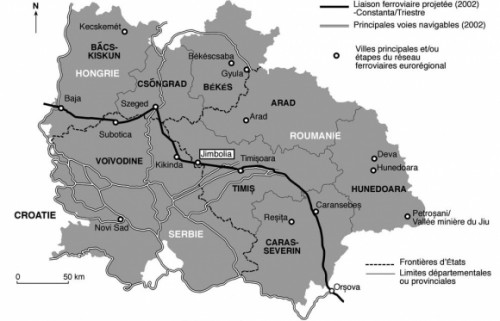
…MAIS UNE FAIBLE UTILISATION DES FORCES
L’instabilité politique interne et les problèmes de corruption
L’intensification des conflits et des désaccords entre les forces politiques présentes au sein du gouvernement roumain a conduit à un vrai coup d’Etat cette année, mettant en lumière deux aspects négatifs majeurs : la pratique de la corruption aux plus hauts niveaux de l’Etat, ainsi que l’abus de contrôle du président de la république et des autres membres de la gouvernance. Les derniers événements qui ont eu lieu sur la scène politique roumaine ont eu un impact majeur sur l’image externe du pays. L’instabilité politique de l’Etat a diminué la confiance de l’Union Européenne et des autres partenaires externes en l’Etat roumain, affectant ses perspectives futures de gagner des nouveaux accords et de contrats d’investissement.
Un ralentissement du développement dans tous les domaines stratégiques
A présent, la Roumanie garde une position globale plutôt faible face à l’Union Européenne. Dans le cadre de la crise économique européenne qui a débuté en 2008, les problèmes nationaux existants au niveau de la gestion des finances publiques, de la corruption et de la bureaucratie se sont aggravés. En conséquence, la Roumanie a subit des grands déficits budgétaires, ainsi qu’une forte diminution en termes de volume d’investissements directs étrangers, ralentissant son évolution à long terme. En même temps, tous ces éléments ont engendré une dégradation majeure en termes de puissance de la Roumanie sur le marché européen de consommation.
Dans le domaine militaire aussi, on constate une baisse de l’influence de la Roumanie. L’Etat ne bénéficie plus d’un équipement technique performant et mis à neuf, imputable au manque d’investissements au cours des dernières années. Cela révèle la décroissance en importance du pays en ce domaine à travers le temps, dû à l’échec de développer une stratégie claire et de s’affirmer comme vrai acteur dans la problématique de la défense et pas comme un simple accessoire.
Mais peut-être un des plus grands échecs que la Roumanie a vécu reste celui du secteur énergétique, par l’incapacité de participer aux projets South Stream ou Nabucco. L’Etat roumain a eu une position incertaine dans les négociations, favorisant l’alliance avec la Russie dans la perspective d’obtenir un accord direct avec celle-ci pour l’approvisionnement en gaz naturel (en vue de renoncer aux intermédiaires), mais en se déclarant en même temps partisan du projet South Stream, pour les implications pour l’Union Européenne. Ce jeu confus a mis sous doute, une fois de plus, la loyauté de la Roumanie face à l’UE, diminuant sa crédibilité en qualité de partenaire et d’allié.
Les échecs diplomatiques
Sur le plan international, la Romanie n’a pas encore réussi à élaborer une stratégie diplomatique claire, ce qui a rendu difficile l’amélioration de son image externe. Cela s’explique principalement par une orientation vers la défense des intérêts nationaux face à l’organisation européenne, au lieu d’essayer d’intégrer les valeurs européennes globales dans l’élaboration de sa politique nationale.
L’Etat roumain s’est aussi confronté avec un problème de représentation dans le Conseil Européen, mettant en lumière le manque de concordances existant au niveau des réglementations nationales. La séparation des attributions concernant la politique externe du pays marque le clivage entre celui qui élabore et celui qui représente les stratégies internationales de l’Etat à l’extérieur. Ce fait a entrainé un manque de confiance des partenaires et des acteurs européens dans le déroulement de leurs négociations avec l’Etat roumain car ils doivent passer par des intermédiaires qui n’ont ni d’intérêts directs, ni pouvoir de décision.
Il semble aussi important de mentionner les entraves rencontrées dans les démarches d’adhésion à l’espace Schengen. Si, à la base, c’était un problème de positionnement géographique qui facilitait l’entrée du commerce illégal et du trafic illégal des personnes en Europe, maintenant, le refus d’adhérer à l’espace Schengen est surtout un problème d’ordre politique. Les officialités européennes ont conditionné la révision de toute nouvelle demande d’adhésion par la résolution des conflits politiques internes et par la création d’un environnement interne stable.
PERSPECTIVES ET CONCLUSION
A ce jour, la Roumanie n’est plus considérée comme un membre significatif pour l’Union Européenne. Elle n’a pas réussi développer de smart power qui lui aurait permis de combiner de manière efficace ses outils de puissance, afin de reprendre sa place comme partenaire-clé dans l’espace européen. Cette situation pourrait cependant changer, à condition que la Roumanie dirige tous ses efforts vers une résolution des tensions politiques internes, suivie par une redéfinition totale de ses stratégies externes futures.
Floriana Maniutiu
REFERENCES BIBLIOGRAPHIQUES
Cristescu Juliette et Muntele Ionel, « Les conséquences humaines et territoriales du processus d'adhésion de la Roumanie à l'Union européenne », L'Information géographique, 2007/4 Vol. 71
Duboz Marie-Line, « Bulgarie, Roumanie » Interrogations sur leur adhésion à l'Union européenne, Le Courrier des pays de l'Est, 2007/5 n° 1063, p. 34-42
Institutul « Ovidiu Sincai » : « Influenta Romaniei in Uniunea Europeana : Rezultate si perspective », Raport de analiza politica, 2009/5, Bucuresti, « Despre Actiunea Internationala a Romaniei – dilema institutionala sau problema politica ? », Raport de analiza politica, 2012/05
Lhomel Édith, « Roumanie 2002-2003 » Un parcours encourageant, mais parfois sinueux, Le Courrier des pays de l'Est, 2003/6 n° 1036-1037, p. 173-189
Lhomel Édith, « Roumanie 2003-2004 » Sur la dernière ligne droite ?, Le Courrier des pays de l'Est, 2004/4 n° 1044, p. 185-201
00:16 Publié dans Actualité, Affaires européennes, Géopolitique | Lien permanent | Commentaires (0) | Tags : politique internationale, géopolitique, roumanie, europe, affaires européennes, espace danubien, danube, mer noire, stratégie, géostratégie | | del.icio.us | | Digg | Facebook
Putschisten und Touareg-Rebellen in Mali wurden von US-Instrukteuren geschult
Putschisten und Touareg-Rebellen in Mali wurden von US-Instrukteuren geschult
Thema: Zuspitzung der Lage in Mali
Ex: http://de.rian.ru/

Die Putschisten und Touareg-Rebellen in Mali, deren Handlungen zur Besetzung des nördlichen Teils des Landes durch Islamisten geführt hatten, sind einem Zeitungsbericht zufolge von US-Instrukteuren im Kampf gegen den Terrorismus geschult worden.
"In den zurückliegenden vier Jahren haben die USA ein umfassendes Anti-Terror-Programm in der Region absolviert sowie bis zu 600 Millionen Dollar in die Ausbildung von Militärkontingenten in Mali investiert", berichtet die "New York Times" am Montag. "Nachdem gut bewaffnete Islamisten aus dem benachbarten Libyen im März 2012 in nördliche Gebiete von Mali eingedrungen waren, kam es in Mali zu einem Militärputsch mit dem von den Amerikanern ausgebildeten General Amada Sanogo an der Spitze."
Dem Blatt zufolge haben die Amerikaner nicht nur den heranreifenden Putsch übersehen, sondern auch außer acht gelassen, dass das Kommando über Elitetruppen an Vertreter der Touareg übertragen wurde, die seit rund 50 Jahren im Konflikt mit der Zentralregierung stehen. "Im April riefen die Touareg im Norden von Mali den Staat Azawad aus. Die Befehlshaber von drei der vier Armeeeinheiten im Norden des Landes gingen samt Personal und Waffen auf die Seite der Separatisten über, verstärkt durch etwa 1600 Deserteure."
"Die Hilfe der Amerikaner erwies sich als nutzlos. Sie hatten die falsche Wahl getroffen", zitierte das Blatt einen malischen Offizier.
00:05 Publié dans Actualité, Géopolitique | Lien permanent | Commentaires (0) | Tags : politique internationale, actualité, géopolitique, mali, afrique, monde arabe, monde arabo-musulman, affaires africaines | | del.icio.us | | Digg | Facebook
Post-US world born in Phnom Penh
Post-US world born in Phnom Penh
by David P. Goldman
Ex: http://www.currentconcerns.ch/
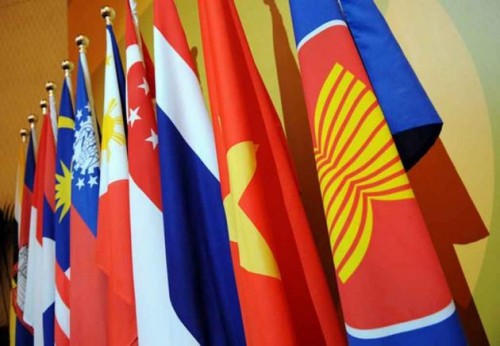
It is symptomatic of the national condition of the United States that the worst humiliation ever suffered by it as a nation, and by a US president personally, passed almost without comment last week. I refer to the 20 November announcement at a summit meeting in Phnom Penh that 14 Asian nations, comprising half the world’s population, would form a Regional Comprehensive Economic Partnership excluding the United States.
President Obama attended the summit to sell a US-based Trans-Pacific Partnership (TPP) excluding China. He didn’t. The American ledpartnership became a party to which no-one came.
Instead, the Association of Southeast Asian Nations (ASEAN), plus China, India, Japan, South Korea, Australia and New Zealand, will form a club and leave out the United States. As 3 billion Asians become prosperous, interest fades in the prospective contribution of 300 million Americans – especially when those Americans decline to take risks on new technologies.
America’s great economic strength, namely its capacity to innovate, exists mainly in memory four years after the 2008 economic crisis.
A minor issue in the election campaign, the Trans-Pacific Partnership was the object of enormous hype on the policy circuit. Salon.com enthused on 23 October:
“This agreement is a core part of the Asia pivot that has occupied the activities of think tanks and policymakers in Washington but remained hidden by the tinsel and confetti of the election. But more than any other policy, the trends the TPP represents could restructure American foreign relations, and potentially the economy itself.”
As it happened, this grand, game-changing vision mattered only to the sad, strange people who concoct policy in the bowels of the Obama administration. America’s relative importance is fading.
To put these matters in context:
The exports of Asian countries have risen more than 20% from their peak before the 2008 economic crisis, while Europe’s exports have fallen by more than 20%. American exports have risen marginally (by about 4%) from their pre-2008 peak.
China’s exports to Asia, meanwhile, have jumped 50% since their pre-crisis peak, while exports to the United States have risen by about 15%. At US$90 billion, Chinese exports to Asia are three times the country’s exports to the United States.
After months and dire (and entirely wrong) predictions that China’s economy faces a hard landing, it is evident that China will have no hard landing, nor indeed any landing at all. Domestic consumption as well as exports to Asia are both running nearly 20% ahead of last year’s levels, compensating for weakness in certain export markets and the construction sector. Exports to the moribund American economy are stagnant.
In 2002, China imported five times as much from Asia as it did from the United States. Now it imports 10 times as much from Asia as from the US.
Following the trade patterns, Asian currencies began trading more closely with China’s renminbi than with the American dollar. Arvind Subramanian and Martin Kessler wrote in an October 2012 study for the Peterson Institute:
“A country’s rise to economic dominance tends to be accompanied by its currency becoming a reference point, with other currencies tracking it implicitly or explicitly. For a sample comprising emerging market economies, we show that in the last two years, the renminbi (RMB/yuan) has increasingly become a reference currency which we define as one which exhibits a high degree of co-movement (CMC) with other currencies.
In East Asia, there is already a RMB bloc, because the RMB has become the dominant reference currency, eclipsing the dollar, which is a historic development. In this region, 7 currencies out of 10 co-move more closely with the RMB than with the dollar, with the average value of the CMC relative to the RMB being 40% greater than that for the dollar. We find that co-movements with a reference currency, especially for the RMB, are associated with trade integration.
We draw some lessons for the prospects for the RMB bloc to move beyond Asia based on a comparison of the RMB’s situation today and that of the Japanese yen in the early 1990’s. If trade were the sole driver, a more global RMB bloc could emerge by the mid-2030’s but complementary reforms of the financial and external sector could considerably expedite the process.”
All of this is well known and exhaustively discussed. The question is what, if anything, the United States will do about it.
Where does the United States have a competitive advantage? Apart from commercial aircraft, power-generating equipment, and agriculture, it has few areas of real industrial pre-eminence. Cheap natural gas helps low-value-added industries such as fertilizer, but the US is lagging in the industrial space.
Four years ago, when Francesco Sisci and I proposed a Sino-American monetary agreement as an anchor for trade • integra•tion, the US still dominated the nuclear power plant industry. With the sale of the Westinghouse nuclear power business to Toshiba, and Toshiba’s joint ventures with China to build power plants locally, that advantage has evaporated.
The problem is that Americans have stopped investing in the sort of high-tech, high-value-added industries that produce the manufactures that Asia requires. Manufacturers’ capital goods orders are 38% below the 1999 peak after taking inflation into account. And venture capital allocations for high-tech manufacturing have dried up.
Without innovation and investment, all the trade agreements that the Washington policy circuit can devise won’t help. Neither, it should be added, will an adjustment in exchange rates.
What does the United States have to offer Asians?
It is hard to fathom just what President Obama had in mind when he arrived in Asia bearing a Trans-Pacific Partnership designed to keep China out. What does the United States have to offer Asians?
• It is borrowing $600 billion a year from the rest of the world to finance a $1.2 trillion government debt, most prominently from Japan (China has been a net seller of Treasury securities during the past year).
• It is a taker of capital rather than a provider of capital.
• It is a major import market but rapidly diminishing in relative importance as intra-Asian trade expands far more rapidly than trade with the United States.
• And America’s strength as an innovator and incubator of entrepreneurs has diminished drastically since the 2008 crisis, no thanks to the Obama administration, which imposed a steep task on start-up businesses in the form of its healthcare program.
Washington might want to pivot towards Asia. At Phnom Penh, though, Asian leaders in effect invited Obama to pivot the full 360 degrees and go home. •
Source: Asia Times Online, 27.11.2012
“With a view to preserving the independence, integrity and fruitful diversity of the cultures”
Source: Constitution of the United Nations Educational, Scientific and Cultural Organization (UNESCO)
The Governments of the States Parties to this Constitution on behalf of their peoples declare:
That since wars begin in the minds of men, it is in the minds of men that the defences of peace must be constructed;
That ignorance of each other’s ways and lives has been a common cause, throughout the history of mankind, of that suspicion and mistrust between the peoples of the world through which their differences have all too often broken into war;
[...]
For these reasons, the States Parties to this Constitution, believing in full and equal opportunities for education for all, in the unrestricted pursuit of objective truth, and in the free exchange of ideas and knowledge, are agreed and determined to develop and to increase the means of communication between their peoples and to employ these means for the purposes of mutual understanding and a truer and more perfect knowledge of each other’s lives;
In consequence whereof they do hereby create the United Nations Educational, Scientific and Cultural Organization for the purpose of advancing, through the educational and scientific and cultural relations of the peoples of the world, the objectives of international peace and of the common welfare of mankind for which the United Nations Organization was established and which its Charter proclaims.
Article I: Purposes and functions
1. The purpose of the Organization is to contribute to peace and security by promoting collaboration among the nations through education, science and culture in order to further universal respect for justice, for the rule of law and for the human rights and fundamental freedoms which are affirmed for the peoples of the world, without distinction of race, sex, language or religion, by the Charter of the United Nations.
[...]
3. With a view to preserving the independence, integrity and fruitful diversity of the cultures and educational systems of the States Members of the Organization, the Organization is prohibited from intervening in matters which are essentially within their domestic jurisdiction.
* Adopted in London on 16 November 1945, last amended by the UNESCO General Conference on 16 November 1999
00:05 Publié dans Actualité, Géopolitique | Lien permanent | Commentaires (0) | Tags : politique internationale, géopolitique, asean, asie, affaires asiatiques | | del.icio.us | | Digg | Facebook
T. S. Eliot reads "Journey of the Magi"
00:05 Publié dans Littérature | Lien permanent | Commentaires (0) | Tags : t. s. eliot, littérature, lettres, lettres anglaises, littérature anglaise, angleterre, états-unis, poésie | | del.icio.us | | Digg | Facebook
Fritz Klimsch: sculpture (2)
Fritz Klimsch

00:05 Publié dans art | Lien permanent | Commentaires (0) | Tags : art, sculpture, arts plastiques, allemagne, fritz klimsch, néo-classicisme, art néo-classique | | del.icio.us | | Digg | Facebook