Ok

En poursuivant votre navigation sur ce site, vous acceptez l'utilisation de cookies. Ces derniers assurent le bon fonctionnement de nos services. En savoir plus.

vendredi, 14 juin 2013

L'Afrique réelle nos. 41 & 42

bernard-lugan.jpg

L'Afrique Réelle N°42 - Juin 2013

 
SOMMAIRE :
 
 
Dossier : Côte d’Ivoire, tous les problèmes demeurent
 
 
- Une situation politique complexe
- Les forces du désordre
 
 
Dossier : Le Sahelistan du Nigeria
 
 
- Une situation explosive amplifiée par l’inversion des rapports de force Nord-Sud
 
 
- La question du saillant de Jos
- Boko Haram et la tentative de création d'un Etat théocratique
- Radicalisation islamique et charia
 

 Editorial de Bernard Lugan :
 
Au Mali, durant une vingtaine de jours de combats dans la région des Iforas, dont presque une semaine d’accrochages continus, les forces françaises se sont heurtées à la farouche résistance de petits groupes de combattants organisés en deux lignes de défense, sans possibilité de recul, et qui laissèrent plus de 150 des leurs sur le terrain.
Cette manœuvre de retardement permit à l’essentiel des combattants islamistes qui occupaient le nord du Mali de se réfugier en Libye. Là se trouve aujourd’hui leur base d’action d’où ils peuvent, à tout moment, lancer des opérations dans l’ensemble de la zone sahélienne.

Le président nigérien Mahamadou Issoufou fut le premier à rompre le mur du silence, déclarant que les auteurs de l’attentat meurtrier du 23 mai qui a frappé son pays venaient de Libye. Toutes les forces de déstabilisation se sont en effet regroupées dans le sud de ce pays où elles disposent d’un véritable sanctuaire puisque l’Etat libyen n’existe plus.

Comme je le disais dans un précédent communiqué, ceux qui ont lancé la France dans la guerre civile libyenne portent toute la responsabilité de la situation actuelle.
Celle du président Sarkozy est double car, après avoir renversé le colonel Kadhafi, il est demeuré passif quand, au mois de janvier 2012, au Mali, il était impératif de fixer et de traiter l’abcès islamiste afin d’éviter sa dissémination. Au lieu de cela, dans la plus totale indécision doublée d’un manque absolu de vision géostratégique, la France a camouflé sa démission derrière l’argument d’une « action » militaire de la CEDEAO.

Avec une grande continuité dans l’incompétence, le président Hollande laissa ensuite les islamistes liquider militairement les Touareg tout en affirmant que la France n’interviendrait en aucun cas, ce qui fut un encouragement donné aux jihadistes. Cependant, et heureusement, à la différence de son prédécesseur, François Hollande a fini par écouter les militaires et a ordonné l’opération Serval. Mais cette nécessaire intervention était trop tardive car la dissémination terroriste s’était produite.

Aujourd’hui, le Niger, le Tchad et le Cameroun sont menacés, mais c’est au Nigeria que la situation est la plus explosive. Dans cet Etat mastodonte et fragmenté où les antagonismes nord-sud peuvent à n’importe quel moment déboucher sur un conflit de grande envergure, les islamistes disposent en effet d’un terreau favorable ; à telle enseigne que c’est une véritable guerre que l’armée fédérale mène actuellement contre les fondamentalistes de Boko Haram qui contrôlent une partie du nord du pays.
 

L'Afrique Réelle N° 41 - Mai 2013

 
SOMMAIRE :
 
Dossier : Les guerres de Libye depuis 2011
- La première guerre de Libye (février - octobre 2011)
- Les autres guerres de Libye
 
Histoire : Une traite qu'il est bon ton de passer sous silence : l'esclavage arabo-musulman en Afrique
- Les trois pôles de la traite arabo-musulmane
- La lutte contre la traite arabo-zanzibarite
- La traite arabo-musulmane : quel bilan chiffré ?
 
Editorial de Bernard Lugan :
 
Les vrais responsables de l’anarchie libyenne

Il aura donc fallu l’attentat à la voiture piégée qui a visé l’ambassade de France à Tripoli le 23 avril dernier pour que la presse française découvre enfin que la Libye n’existe plus comme Etat.
Depuis cet attentat, et alors que, jusque là, les perroquets répétaient que le pays était en voie de stabilisation et de démocratisation, son état réel illustre chaque  jour un peu plus leur psittacisme. C’est ainsi que tout le sud du pays est devenu une zone grise dans laquelle évoluent les terroristes chassés du Mali par l’opération Serval. Ailleurs, l’incapacité de l’Etat atteint des proportions inouïes avec le siège mis devant certains ministères par des groupes de miliciens écartés du partage des dépouilles opimes enlevées au colonel Kadhafi. Sans parler de la quasi sécession de la Cyrénaïque, déchirée par une guerre civile et religieuse.

Si, comme le disait Charles Maurras « une politique se juge à ses résultats », le bilan du duo Sarkozy-BHL dans cette affaire est donc particulièrement accablant. En ayant immiscé la France dans une guerre civile alors que ses intérêts n’étaient pas en jeu, le politique et le « philosophe » ont en effet offert la victoire aux délinquants de toutes sortes et aux fondamentalistes islamistes qui se battent au grand jour pour récupérer des miettes de pouvoir.
Pour des raisons encore inconnues, le prétexte « humanitaire » étant une fable destinée aux enfants de l’école maternelle, Nicolas Sarkozy a renversé un chef d’Etat qui n’était certes pas un modèle de vertu, mais qui, dans le combat contre le fondamentalisme islamiste était devenu son allié. Un chef d’Etat fantasque et imprévisible, mais qui, après avoir agité la région sahélienne en était devenu un élément stabilisateur. Un chef d’Etat ancien soutien du terrorisme, mais qui, là encore, s’était mis à le combattre. Un chef d’Etat qui était un partenaire essentiel dans la lutte contre l’immigration clandestine et ses parrains mafieux. Un chef d’Etat qui avait fait croire que la Libye existait alors qu’il ne s’agit que d’une mosaïque tribalo-régionale.
Un chef d’Etat enfin qui ne risquera pas de faire des révélations « gênantes » lors d’un procès. Sa tête ayant été mise à prix comme celle d’un vulgaire délinquant de droit commun, il fut en effet liquidé après avoir été torturé et sodomisé par les doux démocrates de la milice de Misrata… Ces mêmes miliciens avaient été sauvés de justesse quelques mois auparavant par une audacieuse opération menée par des commandos français. La seule de ce genre et de cette importance durant toute la guerre, l’intervention française dans le djebel Nefusa ayant été de nature différente. Là encore, une autre question se pose elle aussi restée sans réponse à ce jour : pourquoi, et alors que d’autres objectifs étaient militairement plus importants, le président Sarkozy a-t-il ordonné de dégager les miliciens de Misrata ?

Bernard Lugan

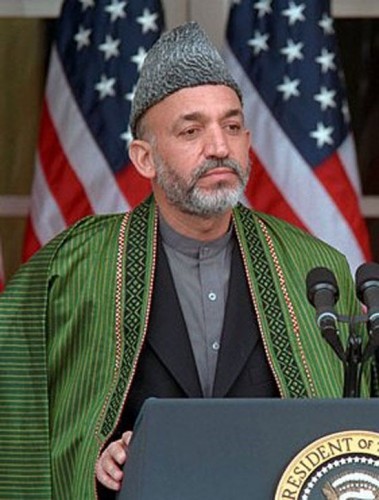
Kabul, transizione sulle sabbie mobili

Karzai.jpg

Kabul, transizione sulle sabbie mobili

di Manlio Dinucci

Fonte: Il Manifesto [scheda fonte]


È rientrata dall'Afghanistan la 53ma «vittima» italiana, termine usato per definire i militari Natouccisi nelle operazioni belliche, non le migliaia di vittime civili che la guerra continua a provocare.


E mentre si spettacolarizza il dolore dei familiari e le massime autorità dello stato esprimono il solito «profondo cordoglio», il ministro della difesa Mauro declama: «La libertà, la pace e la democrazia, a cui noi contribuiamo in diversi teatri operativi nel mondo, hanno purtroppo un prezzo e questa volta a pagarlo sono i nostri soldati». Per ben altri scopi sono in Afghanistan oltre 3mila soldati italiani (il quarto maggiore contingente dopo quelli di Stati Uniti, Gran Bretagna e Germania).

Sono là, sulla scia della strategia Usa, per occupare un territorio che - situato al crocevia tra Asia centrale e meridionale, occidentale e orientale - è di primaria importanza geostrategica rispetto a Russia, Cina, Iran e Pakistan, e alle riserve energetiche del Caspio e del Golfo. Sono là sotto comando Usa da quando la Nato ha assunto nel 2003 con un colpo di mano (allora senza autorizzazione del Consiglio di sicurezza) la «leadership dell'Isaf, forza con mandato Onu». Dopo aver speso nella guerra circa 1.200 miliardi di dollari secondo il Pentagono (in realtà molti di più se si calcolano altre spese, tra cui quelle per gli oltre 18mila militari Usa feriti), gli Stati uniti hanno deciso di ridurre dal 2014 il numero delle loro truppe in Afghanistan da 68mila a circa 10mila. Riduzioni proporzionali sono state annunciate per gli altri contingenti, compreso quello italiano.

Secondo quanto prevede il piano, un crescente ruolo sul campo dovrà essere svolto dalle forze governative afghane addestrate, armate e di fatto comandate da quelle Usa/Nato, che conserveranno le principali basi in Afghanistan. La «transizione» consisterà non nella fine della guerra, ma nella sua trasformazione in guerra «coperta», condotta con forze speciali e droni.

Gli Usa hanno impegnato gli alleati a contribuire alla formazione delle «forze di sicurezza afghane», già costata oltre 60 miliardi di dollari. Le cose non vanno però tanto bene: diversi soldati afghani, una volta addestrati, rivolgono le armi contro gli addestratori. Per la «transizione» la Nato deve quindi puntare ancora di più sul governo afghano, ossia sul gruppo di potere che ha insediato a Kabul. A tal fine sarà accresciuto il «fondo per la ricostruzione», già costato oltre 20 miliardi. In tale quadro si inserisce l'Accordo di partenariato firmato da Monti e Karzai, che prevede crediti agevolati e altri investimenti italiani in Afghanistan per centinaia di milioni di euro. Questo fiume di denaro finirà in gran parte nelle tasche di Hamid Karzai e dei suoi familiari, molti dei quali hanno cittadinanza Usa. Continueranno così ad arricchirsi con i miliardi della Nato (che escono anche dalle nostre tasche), gli affari sottobanco con compagnie straniere e il traffico di droga.

Non a caso l'anno scorso l'Afghanistan ha accresciuto del 18% le proprie piantagioni di oppio, il cui traffico è gestito non solo dai taleban ma in primo luogo dalla cerchia governativa. Una inchiesta del «New York Times» conferma che, per oltre un decennio, sono arrivate nell'ufficio del presidente Karzai, tramite la Cia, «borse di denaro liquido» per l'ammontare di decine di milioni di dollari. Niente scandalo: lo stesso Karzai ha dichiarato di essere stato assicurato dalla Cia che continuerà a ricevere «denaro contante», parte del quale servirà a «pagare l'élite politica, dominata dai signori della guerra».

Tante altre notizie su www.ariannaeditrice.it

War and Water

War and Water: Hydropolitics Propel Balkanization in Africa

Ex: http://www.globalresearch.ca/

Wherever there are reports of melting glaciers and a future of diminished water resources, there is an increasing Balkanization of nation-states. Those who manipulate world events for maximum profit understand that it is much easier to control water resources if one is dealing with a multitude of warring and jealous mini-states than it is to deal with a regional power…

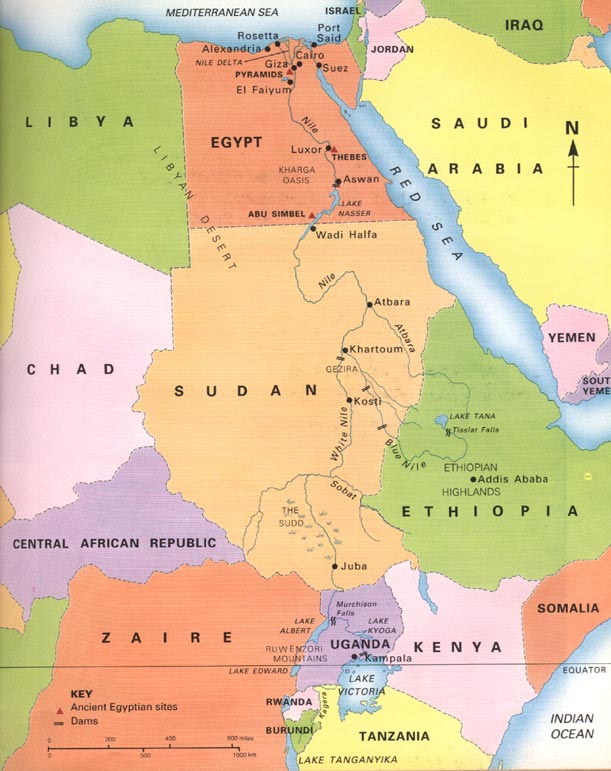
The Nile Basin is seeing record fragmentation of nation-states by secessionist and other rebel movements, some backed by the United States and its Western allies and others backed by Egypt and Saudi Arabia. Yet other secessionist groups are backed by regional rivals such as Ethiopia, Eritrea, Uganda, and Sudan.

Ethiopia has announced that its Grand Ethiopian Renaissance Dam project on the Blue Nile will begin diverting the Blue Nile at the end of 2014. Ethiopia’s decision has set off alarm bells down river in Sudan and Egypt, which are both critically dependent on the Nile for drinking water, irrigation, and in the case of Egypt’s Aswan High Dam, electric power. A 1959 agreement between Egypt and Sudan guarantees Egypt 70 percent and Sudan 30 percent of the Nile’s water flow.

Egypt’s government has warned Ethiopia, a historical rival, not to restrict the Nile water flow to the extent that it would adversely affect the Aswan Dam or Egypt’s water supply. Sudan has voiced similar warnings. Cairo and Khartoum are also aware that their mutual enemy, Israel, has close relations with Ethiopia and the Republic of South Sudan, the world’s newest nation. The independence of South Sudan would not have been possible without the backing of Israel’s leading neo-conservative allies in Washington and London.

The White Nile flows from the Tanzania, Rwanda, Burundi, through Uganda and South Sudan, to Sudan. Egypt and Sudan have also been concerned about Israel’s heavy presence in South Sudan. The South Sudanese secession put tremendous pressure on the future territorial integrity of Sudan, which faces additional Western- and Israeli-backed breakaway movements in Darfur and northeastern Sudan.

Independence for South Sudan was long a goal of former Secretary of State Madeleine Albright and her god-daughter, current U.S. ambassador to the UN Susan Rice. The splitting of Sudan into an Arab Muslim north and a black Christian and animist south was also long a goal of Israel, which yearned for a client state in South Sudan that would be able to squeeze the supply of the Nile’s headwaters to Egypt and north Sudan.

South Sudan’s independence was cobbled together so rapidly, its Western sponsors were not even sure, at first, what to call the country. Although South Sudan was finally agreed upon, other proposals were to call the nation the «Nile Republic» or «Nilotia,» which were rejected because of the obvious threatening meaning that such names would send to Cairo and Khartoum.


The names «Cush» or «Kush» were also rejected because of their reference to the land of Cush that appears in the Jewish Bible and the obvious meaning that such a name would have for those who accuse Israel of wanting to expand its borders beyond the borders of the Palestinian mandate. «New Sudan» was also rejected because of implied irredentist claims by South Sudan on the contested oil-rich Abyei region between Sudan and South Sudan.

Egypt has been lending quiet support to Ethiopian and Somali secessionists, which Cairo sees as a counterweight to Ethiopian neo-imperialist designs in the Horn of Africa. Although Ethiopia maintains good relations with the breakaway Republic of Somaliland, Addis Ababa does not want to see Somalia fragmented any further. But that is exactly what is desired by Cairo to keep Ethiopia’s military and revenues preoccupied with an unstable and collapsing neighbor to the east.

Two other parts of Somalia, Puntland and Jubaland, also spelled Jubbaland, have declared separatist states. Jubaland should not be confused with the capital of South Sudan, Juba, which is being relocated to Ramciel, close to the border with Sudan. However, all this confusion and map redrawing is a result of increasing hydropolitics in the region, as well as the ever-present turmoil caused by the presence of oil and natural gas reserves. The Rahanweyn Resistance Army is fighting for an independent state of Southwestern Somalia.

Somaliland has its own secessionist movement in the western part of the country, an entity called Awdalland, which is believed to get some support from neighboring Djibouti, the site of the U.S. military base at Camp Lemonier.

Ethiopian troops, supported by the African Union and the United States, are trying to prop up Somalia’s weak Federal government but Somalia’s fracturing continues unabated with Kenya supporting a semi-independent entity called «Azania» in a part of Jubaland in Somalia.

There are also a number of nascent separatist movements in Ethiopia, many being brutally suppressed by the Ethiopian government with military assistance from the United States, Britain, and Israel. Some of these movements are backed by Eritrea, which, itself, broke away from Ethiopia two decades ago. Chief among the groups are the Ogadenis, who want a Somali state declared in eastern Ethiopia and the Oromo, who dream of an independent Oromia.

Ethiopia’s ruling dictatorship has tried to placate the Oromos and Ogadenis with peace talks but these moves are seen as window dressing to placate Ethiopia’s benefactors in Washington and London.

However, separatist movements throughout the Horn of Africa took pleasure in the advent of South Sudan because they saw the «inviolability» of colonial-drawn borders, long insisted upon by the Organization of African Unity and the African Union, finally beginning to wither. In fact, that process began with Eritrea’s independence in 1993. Eritrea also faces its own secessionist movement, the Red Sea Afars. The Afars also maintain separatist movements in Ethiopia and Djibouti, the latter having once been known as the French Territory of the Afars and Issas.

In another U.S. ally, Kenya, the homeland of President Barack Obama’s father, Muslims along the coast have dusted off the Sultan of Zanzibar’s 1887 lease to the British East Africa Company of the 10-mile strip of land along the present Indian Ocean coast of Kenya. Legally, when the lease expired the strip was to revert back to control of the sultan. Since the Sultan was ousted in a 1964 coup, the coastal Kenyans argue that the coastal strip was annexed illegally by Kenya and that, therefore, the coastal strip should be the independent Republic of Pwani. The discovery of major oil and natural gas reserves in Uganda and South Sudan has resulted in plans for pipelines to be built to the port of Mombasa, the would-be capital of Pwani on the Indian Ocean. In Kenya, hydropolitics and petropolitics in the Horn of Africa has resulted in Balkanization spilling into Kenya.

In the Himalayas, glacier retreat and rapidly diminishing snow cover are also adding to hydropolitical angst and fueling separatist movements backed by the bigger powers in the region: India, China, Pakistan, and Bangladesh. Snow melt is now being seen in some parts of the Himalayas in December and January. Four dams on the Teesta River, which flows from Sikkim through north Bengal to the Brahmaputra basin, have not only affected the geo-political situation in Sikkim, which has nascent independence and Nepali irredentist movements, but also helps to fuel demands for increased autonomy for Gorkhaland, Bodoland, and Assam, an independent Madhesistan in southern Nepal, an ethnic Nepali revolt in southern Bhutan, and consternation in Bangladesh, where the Brahmaputra and Ganges converge to largely support a country with a population of 161 million people. Bangladesh has also seen its share of secessionist movements, including the Bangabhumi Hindu and the Chittagong Hill Tracts movements.

Hydropolitics, petropolitics, and the status quo, like water and oil, do not mix, especially when it comes to the preservation of current borders. Northeastern Africa and South Asia are not unique in this respect.

M. Drac : Enjeux géopolitiques pour l'avenir

Entretien avec Michel Drac :

Enjeux géopolitiques pour l'avenir

Classical Liberalism’s Impossible Dream

Classical Liberalism’s Impossible Drea

By Robert Higgs

Ex: http://www.attackthesystem.com/

I can understand why someone might embrace classical liberalism. I did so myself more than forty years ago. People become classical liberals for two main reasons, which are interrelated: first, because they come to understand that free markets “work” better than government-controlled economic systems in providing prosperity and domestic peace; second, because people come to believe that they may justifiably claim (along more or less Lockean lines) rights to life, liberty, and property. These two reasons are interrelated because the Lockean rights provide the foundation required for free markets to exist and operate properly.


Like Locke, classical liberals recognize that some persons may violate others’ rights to life, liberty, and property and that some means of defending these rights adequately must be employed. On this basis they accept government (as we know it), but only with the proviso that the government must be limited to protecting people against force and fraud that would unjustly deprive them of life, liberty, and property. They believe that government (as we know it) can perform these functions, whereas private individuals without such government would be at the mercy of predators and hence that their lives would be, as Hobbes supposed, solitary, poor, nasty, brutish, and short. Nobody wants that.

So, to repeat, I can understand why someone might become a classical liberal. However, as the years have passed, I have had increasing difficulty in understanding why someone would remain a classical liberal, rather than making the further move to embrace genuine self-government in place of the classical liberal’s objective, “limited government.” My difficulty arises not so much from a dissatisfaction with government’s being charged with protecting the citizens from force and fraud, but from a growing conviction that government (as we know it) does not, on balance, actually carry out these tasks and, worse, that it does not even try to carry them out except in a desultory and insincere way—indeed, as a ruse.

Truth be told, government as we know it never did and never will confine itself to protecting citizens from force and fraud. In fact, such government is itself the worst violator of people’s just rights to life, liberty, and property. For every murder or assault the government prevents, it commits a hundred. For every private property right it protects, it violates a thousand. Although it purports to suppress and punish fraud, the government itself is a fraud writ large—an enormous engine of plunder, abuse, and mayhem, all sanctified by its own “laws” that redefine its crimes as mere government activities—a racket protected from true justice by its own judges and its legions of hired killers and thugs.

Confronted with these horrors, the classical liberal takes a deep breath and resolves to seek “reforms” of government’s “misguided” and “counter-productive” actions and policies. However, the dedicated classical liberal steadfastly refuses to recognize that such government’s actions are anything but misguided; indeed, the government acts to attain its true objectives ever so directly, and it quickly discontinues anything that fails to enrich and empower its own leaders and their key cronies in the so-called private sector (which is something of a myth, given the government’s pervasive interference in it). The government’s actions and programs are not at all “counter-productive,” once we recognize that its declared objective of serving the general public interest was never meant to do anything but serve as a smokescreen for its robbing and bullying the general public. What economists and others call “government failure” is nothing of the sort, but only a failure to do what in reality the government’s movers and shakers never had the slightest intention of doing in the first place.

In sum, the classical liberal who, in the face of these realities, clings to the myth of Lockean limited government would seem to be a person irrationally devoted to sheer wishful thinking. Dreams have their place in human life, no doubt, but the dream of a government (as we know it) that confines itself to its Lockean functions and stays so confined is a dream that never was and never can be realized. At some point, people must open their eyes to this emperor’s nakedness—and, indeed, to the emperor’s viciousness, brutality, and utter, systematic injustice. Otherwise, classical liberals do little more than provide objects of amusement for the cynical men and woman who control the government and employ its powers in the service of their own aggrandizement and aggressive caprice.


Addendum: When I speak of “government (as we know it),” I mean government as it now exists virtually everywhere and as it has existed in many places for thousands of years—a government that claims a monopoly of legitimate force in a certain territory and does not rest on the explicit, individual, voluntary consent of every adult subject to its authority. I contrast this type of government with “genuine self-government,” which does have the explicit, individual, voluntary consent of every adult subject to its authority.