


 del.icio.us
 Digg
Digg Facebook
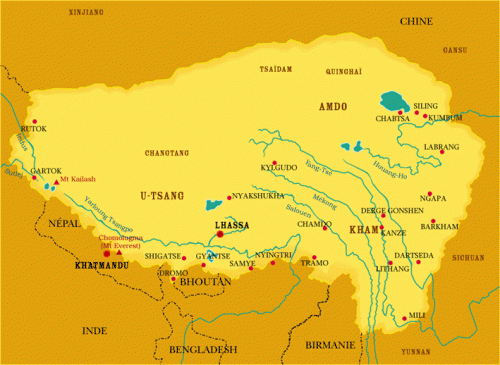
 La Cina detiene il 7% delle risorse mondiali di acqua, stante però una popolazione equivalente al 20% del totale, Pechino si classifica al centesimo posto su centosettantacinque paesi nel ranking relativo alle risorse idriche mondiali pro capite (con un ammontare di 2.093 m3 di acqua a persona)1.Essendo quella cinese un’economia ancora in espansione, il fabbisogno idrico ne risulterà certamente crescente in maniera esponenziale, soprattutto dal punto di vista industriale e abitativo. Sei regioni nel paese registrano già consumi di acqua superiori alle risorse disponibili, mentre altre cinque vengono considerate al di sotto della soglia di criticità (fissata a 1000 m3 di acqua pro capite)2.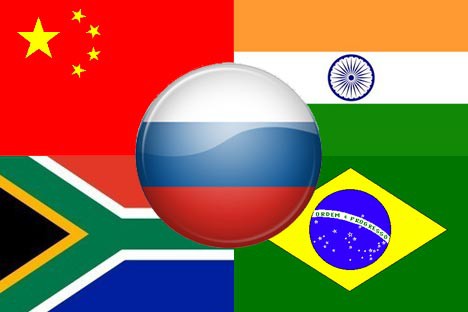
Professor of the Moscow State University, Doctor of political sciences, founder of the contemporary Russian school of Geopolitics, leader of the International Social Movement “Eurasian Movement”, Moscow, Russian Federation.
I. Multipolarism and “Land Power”
Geopolitics of the Land in the Global World
In the previous part we discussed the subject of globalism, globalization, and mondialism in a view considered to be generally accepted and “conventional”. Geopolitical analysis of the phenomenon of the subject of globalism, globalization, and mondialism has showed that in the modern globalism we only deal with one of the two geopolitical powers, namely, with a thalassocracy, a “Sea Power” that from now on claims for uniqueness, totality, and normativeness and strives to pretend to be the only possible civilization, sociological and geopolitical condition of the world.
Therewith, the philosophy of globalism is based upon the internal surety with universalism of exactly the Western-European value system thought to be the summary of all the diverse experience of the human cultures on all stages of their history.
And finally, in its roots, globalization has an active ideology (mondialism) and power structures that spread and bring this ideology into use. If taking into account that the latter are the most authoritative intellectual US centers (such as CFR and neoconservatives), structures of the US Supreme Military Command and their analysts (Owens, Sibrowsky, Barnett, Garstka), international oligarchs (such as George Soros), a number of international organizations (The Bilderberg Club, Trilateral Commission, etc.), and innumerous amount of analysts, politicians, journalists, scientists, economists, people of culture and art, and IT sector employees spread all over the world, we can understand the reason why this ideology seems to be something that goes without saying for us. That we sometimes take globalization as an “objective process” is the result of a huge manipulation with public opinion and the fruit of a total information war.
Therefore, the picture of global processes we described is an affirmation of the real state of affairs just in part. In such a description, there is a significant share of a normative and imperative volitional (ideological) wish that everything should be quite so, which means, it is based upon wrenches and, to some extent, striving to represent our wishful thinking as reality.
In this part, we will describe an absolutely different point of view on globalization and globalism that is impossible from inside the “Sea Power”, i.e. out of the environment of the nominal “Global World”. Such a view is not taken into account either in antiglobalism or in alterglobalism because it refuses from the most fundamental philosophical and ideological grounds of Eurocentrism. Such a view rejects the faith in:
- universalism of the Western values, that Western societies, in their history, have passed the only possible way all the other countries are expected to pass;
- progress as an indisputable forwardness of historical and social development;
- that it is limitless technical, economical, and material development, which is the answer for the most vital needs of all humankind;
- that people of all cultures, religions, civilizations, and ethnoses are principally the same as the people of the West and they are governed by the same anthropological motives;
- absolute superiority of capitalism over other sociopolitical formations;
- absence of any alternative for market economy;
- that liberal democracy is the only acceptable form of political organization of the society;
- individual freedom and individual identity as the superior value of human being;
- liberalism as a historically inevitable, higher-priority, and optimal ideology.
In other words, we proceed to the position of the “Land Power” and consider the present moment of the world history from the point of view of Geopolitics-2, or the thalassocratic geopolitics as an episode of the “Great Continent War”, not as its conclusion.
Of course, it is difficult to refuse that the present moment of historical development demonstrates a number of unique features that, if desired, can be interpreted as the ultimate victory of the Sea over the Land, Carthage over Rome and Leviathan over Behemoth. Indeed, never in history the “Sea Power” was such a serious success and stretched might and influence of its paradigm in such a scale. Of course, Geopolitics-2 acknowledges this fact and the consequences included. But it clearly realizes that globalization can be also interpreted otherwise, namely, as a series of victories in combats and battles, not as the ultimate win in the war.
Here, a historical analogy suggests itself: when German troops were approaching to Moscow in 1941, one could think that everything was lost and the end of the USSR was foredoomed. The Nazi propaganda commented the course of the war quiet so: the “New Order” is created in the occupied territory, the authorities work, economical and political hierarchy is created, and the social life is organized. But the Soviet people kept on violently resisting – at all the fronts as well as in the rear of the enemy, while systematically moving to their goal and their victory.
Now, there is precisely this moment in the geopolitical stand of the Sea and the Land. Information policy inside the “Sea Power” is built so as no-one has any doubt that globalism is an accomplished fact and the global society has come about in its essential features, that all the obstacles from now on are of a technical character. But from certain conceptual, philosophical, sociological, and geopolitical positions, all of it can be challenged by suggesting an absolutely different vision of the situation. All the point is in interpretation. Historical facts make no sense without interpretation. Likewise in geopolitics: any state of affairs in the field of geopolitics only makes sense in one or another interpretation. Globalism is interpreted today almost exclusively in the Atlantist meaning and, thus, the “sea” sense is put into it. A view from the Land’s position doesn’t change the state of affairs but it does change its sense. And this, in many cases, is of fundamental importance.
Further, we will represent the view on globalization and globalism from the Land’s position – geopolitical, sociological, philosophical, and strategical.
Grounds for Existence of Geopolitics-2 in the Global World
How can we substantiate the very possibility of a view on globalization on the part of the Land, assuming that the structure of the global world, as we have shown, presupposes marginalization and fragmentation of the Land?
There are several grounds for this.
- The human spirit (conscience, will, faith) is always capable to formulate its attitude to any ambient phenomenon and even if this phenomenon is presented as invincible, integral, and “objective”, it is possible to take it in a different way – accept or reject, justify or condemn. This is the superior dignity of man and his difference from animal species. And if man rejects and condemns something, he has the right to build strategies to overcome it in any, most difficult and insuperable, situations and conditions. The advance of the global society can be accepted and approved but it can be rejected and condemned as well. In the former case, we float adrift the history, in the latter one – we seek a “fulcrum” to stop this process. History is made by people and the spirit plays the central part here. Hence, there is a theoretical possibility to create a theory radically opposite to the views that are built on the base of the “Sea Power” and accept basic paradigms of the Western view on the things, course of history, and logic of changing sociopolitical structures.
- The geopolitical method allows to identify globalization as a subjective process connected with a success of one of the two global powers. Be the Land ever so “marginal and fragmentized», it has serious historical grounds behind itself, traditions, experience, sociological and civilization background. The Land’s geopolitics is not built on a void place; this is a tradition that generalizes some fundamental historical, geographical, and strategical trends. Therefore, even on the theoretical level, estimation of globalization from the position of Geopolitics-2 is absolutely relevant. Just as well as there is the “subject” of globalization in its center (mondialism and its structures), the Land Power can and does have its own subjective embodiment. In spite of a huge scale and massive forms of the historical polemics of civilizations, we, first of all, deal with a stand of minds, ideas, concepts, theories, and only then – with that of material things, devices, technologies, finances, weapons, etc.
- The process of desovereignization of national states has not yet become nonreversible, and the elements of the Westphalian system are still being partly preserved. That means that a whole range of national states, by virtue of certain consideration, can still bank on realization of the land strategy, i.e. they can completely or partially reject globalization and the “Sea Power’s” paradigm. China is an example of it; it balances between globalization and its own land identity, strictly observing that the general balance is kept and that only what consolidates China as a sovereign geopolitical formation is borrowed from the global strategies. The same can be also said about the states the US have equaled to the “Axis of Evil” — Iran, Cuba, North Korea, Venezuela, Syria, etc. Of course, the threat of a direct intrusion of US troops hangs over these countries like the sword of Damocles (on the model of Iraq or Afghanistan), and they are continuously subject to more politic network attacks from inside. However, at the moment their sovereignty is preserved what makes them privileged areas for development of the Land Power. It is also possible to refer here a number of hesitant countries, such as India, Turkey and others, which, being significantly involved into the globalization orbit, preserve their original sociological features, getting out of accord with the official precepts of their governing regimes. Such situation is characteristic of many Asian. Latin-American and African societies.
- And, finally, the most general. — The present state of Heartland. The world dominance, as we know, and thus, reality or evanescence of monopolar globalization depends on it. In 1980-90-s, Heartland fundamentally reduced its influence area. Two geopolitical belts – Eastern Europe (whose countries were within the “Socialist Block”, “Warsaw Pact», Comecon, etc.) and the Federative Republics of the USSR consistently withdrew from it. By the mid 1990-s, a bloody testing for a possibility of further breakdown of Russia into “national republics” had started in Chechnya. This fragmentation of Heartland, down to a mosaic of marionette dependent states in place of Russia, had to become the final accord of construction of the global world and the “end of history”, after which it would be much more difficult to speak about the Land and Geopolitics-2. Heartland is of central importance in the possibility of strategical consolidation of all Eurasia and, thus, the “Land Power”. If the processes that took place in Russia in 1990-s had moved in a groove and its disintegration kept on, it would be much more difficult to challenge globalization. But since late 1990-s — early 2000-s, a turning-point has taken place in Russia, disintegration was stopped; moreover, the federal authorities have restored control over the rebellious Chechnya. Then V. Putin implemented a legal reform of the Federation subjects (excision of the article about “sovereignty”, governors’ appointment, etc.) that has consolidated the power vertical all over Russia. The CCI integration processes have started gathering pace. In August 2008, in the course of the five-day conflict of Russia with Georgia, Russia took its direct control over territories beyond the borders of the Russian Federation (Southern Ossetia, Abkhazia), and acknowledged their independence, in spite of a huge support of Georgia on the part of the US and the NATO countries and pressure of the international public opinion. Generally, since early 2000-s Russia as Heartland has ceased the processes of its self-disintegration, has reinforced its energetics, has normalized the issues of energy supply abroad, has refused from the practice of unilateral reduction of armaments, having preserved its nuclear potential. Whereby, influence of the network of geopolitical agents of Atlantism and Mondialism on the political authority and strategical decision making has qualitatively diminished, consolidation of the sovereignty has been understood as the top-priority issue, and integration of Russia into a number of globalist structures menacing its independence has been ceased. In a word, Heartland keeps on remaining the foundation of Eurasia, its “Core” — weakened, suffered very serious losses, but still existing, independent, sovereign, and capable to pursue a policy, if not on a global scale, then on a regional one. In its history, Russia has several times fallen yet lower: the Domain Fragmentation on the turn of the 13th century, The Time of Troubles, and the events of 1917-1918 show us Heartland in a yet more deplorable and weakened condition. But every time, in some period, Russia revived and returned to the orbit of its geopolitical history again. The present state of Russia is difficult to recognize brilliant or even satisfactory from the geopolitical (Eurasian) point of view. Yet in general — Heartland does exist, it is relatively independent, and therefore, we have both a theoretical and practical base to consolidate and bring to life all the pre-conditions for development of a response to the phenomenon of monopolar globalization on the part of the Land.
Such an answer of the Land to the challenge of globalization (as a triumph of the “Sea Power”) is Multipolarism, as a theory, philosophy, strategy, policy, and practice.
Multipolarism as a Project of the World Order from the Land’s Position
Multipolarism represents a summary of Geopolitics-2 in actual conditions of the global process evolution. This is an extraordinarily capacious concept that demands a through consideration.
Multipolarism is a real antithesis for monopolarity in all its aspects: hard (imperialism, neocons, direct US domination), soft (multilateralism) and critical (alterglobalism, postmodernism, and neo-Marxism) ones.
The hard monopolarity version (radical American imperialism) is based upon the idea that the US represents the last citadel of the world order, prosperity, comfort, safety, and development surrounded by a chaos of underdeveloped societies. Multipolarism states the directly opposite: the US is a national state that exists among many others, its values are doubtful (or, at least, relative), its claims are disproportional, its appetites are excessive, methods of conducting its foreign policy are inacceptable, and its technological messianism is disastrous for the culture and ecology of the whole world. In this regard, the multipolar project is a hard antithesis to the US as an instance that methodically builds a unipolar world, and it is aimed to strongly disallow, break up, and prevent this construction.
The soft monopolarity version does not only act on behalf of the US, but on behalf of “humanity”, exclusively understanding it as the West and the societies that agree with universalism of Western values. Soft monopolarity does not claim to press by force, but persuade, not to compel, but explain profits peoples and countries will obtain from entering into globalization. Here the pole is not a single national state (the US), but Western civilization as a whole, as a quintessence of all the humanity.
Such, as it is sometimes called, “multilateral” monopolarity (multilateralism, multilateralization) is rejected by Multipolarism that considers Western culture and Western values to represent merely one axiological composition among many others, one culture among different other cultures, and cultures and value systems based on some absolutely different principles to have the full right for existence. Consequently, the West in a whole and those sharing its values, have no grounds to insist on universalism of democracy, human rights, market, individualism, individual freedom, secularity, etc. and build a global society on the base of these guidelines.
Against alterglobalism and postmodern antiglobalism, Multipolarism advances a thesis that a capitalist phase of development and construction of worldwide global capitalism is not a necessary phase of society development, that it is despotism and an ambition to dictate different societies some kind of single history scenario. In the meantime, confusion of mankind into the single global proletariat is not a way to a better future, but an incidental and absolutely negative aspect of the global capitalism, which does not open any new prospects and only leads to degradation of cultures, societies, and traditions. If peoples do have a chance to organize effective resistance to the global capitalism, it is only where Socialist ideas are combined with elements of a traditional society (archaic, agricultural, ethnical, etc.), as it was in the history of the USSR, China, North Korea, Vietnam and takes place today in some Latin-American countries (e. g., in Bolivia, Venezuela, Cuba, etc.).
Further, Multipolarism is an absolutely different view on the space of land than bipolarity, a bipolar world.


Multipolarism represents a normative and imperative view on the present situation in the world on the part of the Land and it qualitatively differs from the model predominated in the Yalta World in the period of the “Cold War”.
The Bipolar World was constructed under the ideological principle, where two ideologies – Capitalism and Socialism – acted as poles. Socialism as an ideology did not challenge universalism of the West-European culture and represented a sociocultural and political tradition that threw back to the European Enlightenment. In a certain sense, Capitalism and Socialism competed with each other as two versions of Enlightenment, two versions of progress, two versions of universalism, two versions of the West-European sociopolitical idea.
Socialism and Marxism entered into a resonance with certain parameters of the “Land Power”, and therefore they did not win where Marx had supposed, but where he excluded this possibility – in an agricultural country with the predominant way of life of a traditional society and imperial organization of the political field. Another case of an (independent) victory of Socialism – China – also represented an agricultural, traditional society.
Multipolarism does not oppose monopolarity from the position of a single ideology that could claim for the second pole, but it does from the position of many ideologies, a plenty of cultures, world-views and religions that (each for its own reasons) have nothing in common with the Western liberal capitalism. In a situation, when the Sea has a unified ideological aspect (however, ever more going to the sphere of subauditions, not explicit declarations), and the Land itself doesn’t, representing itself as several different world-view and civilization ensembles, Multipolarism suggests creating a united front of the Land against the Sea.
Multipolarism is different from both the conservative project of conservation and reinforcement of national states. On the one hand, national states in both colonial and post-colonial period reflect the West-European understanding of a normative political organization (that ignores any religious, social, ethnical, and cultural features of specific societies) in their structures, i.e. the nations themselves are partially products of globalization. And on the other hand, it is only a minor part of the two hundred fifty-six countries officially itemized in the UN list today that are, if necessary, capable to defend their sovereignty by themselves, without entering into a block or alliance with other countries. It means that not each nominal sovereign state can be considered a pole, as the degree of strategical freedom of the vast majority of the countries acknowledged is negligible. Therefore, reinforcement of the Westphalian system that still mechanically exists today is not an issue of Multipolarism.
Being the opposition of monopolarity, Multipolarism does not call to either return to the bipolar world on the base of ideology or to fasten the order of national states, or to merely preserve the status quo. All these strategies will only play in hands of globalization and monopolarity centers, as they have a project, a plan, a goal, and a rational route of movement to future; and all the scenarios enumerated are at best an appeal to a delay of the globalization process, and at worst (restoration of bipolarity on the base of ideology) look like irresponsible fantasy and nostalgia.
Multipolarism is a vector of the Land’s geopolitics directed to the future. It is based upon a sociological paradigm whose consistency is historically proven in the past and which realistically takes into account the state of affairs existing in the modern world and basic trends and force lines of its probable transformations. But Multipolarism is constructed on this basis as a project, as a plan of the world order we yet only expect to create.
2 Multipolarism and its Theoretical Foundation
The absence of the Multipolarism Theory
In spite of the fact that the term “Multipolarism” is quite often used in political and international discussions recently, its meaning is rather diffuse and inconcrete. Different circles and separate analysts and politicians insert their own sense in it. Well-founded researches and solid scientific monographs devoted to Multipolarism can be counted on fingers[1]. Even serious articles on this topic are quite rare[2]. The reason for this is well understood: as the US and Western countries set the parameters of the normative political and ideological discourse in a global scale today, according to these rules, whatever you want can be discussed but the sharpest and most painful questions. Even those considering unipolarity to have been just a “moment[3]” in the 1990-s and a transfer to some new indefinite model to be taking place now are ready to discuss any versions but the “multipolar” one. Thus, for example, the modern head of CFR Richard Haass tells about “Non-Polarity” meaning such stage of globalization where necessity in presence of a rigid center falls off by itself[4]. Such wiles are explained by the fact that one of the aims of globalization is, as we have seen, marginalization of the “Land Power”. And as far as Multipolarism can only be a form of an active strategy of the “Land Power” in the new conditions, any reference to it is not welcome by the West that sets the trend in the structure of political analysis in the general global context. Still less one should expect that conventional ideologies of the West take up development of the Multipolarism Theory.
It would be logical to assume that the Multipolarism Theory will be developed in the countries that explicitly declare orientation upon a multipolar world as the general vector of their foreign policy. The number of such countries includes Russia, China, India, and some others. Besides, the address to Multipolarism can be encountered in texts and documents of some European political actors (e.g., former French minister of Foreign Affairs Hubert Vidrine[5]). But at the moment, we can as well hardly find something more than materials of several symposiums and conferences with rather vague phrases in this field. One has to state that the topic of Multipolarism is not properly conceptualized also in the countries that proclaim it as their strategical goal, not to mention the absence a distinct and integral theory of Multipolarism.
Nevertheless, on the base of the geopolitical method from the position of the “Land Power” and with due account for the analysis of a phenomenon called globalism, it is quite possible to formulate some absolute principles that must underlie the Multipolarism Theory when the matter comes to its more systemized and expanded development.
Multipolarism: Geopolitics and Meta-Ideology
Let’s blueprint some theoretical sources, on whose base a valuable theory of Multipolarism must be built.
It is only geopolitics that can be the base for this theory in the actual conditions. At the moment, no religious, economical, political, social, cultural or economical ideology is capable to pull together the critical mass of the countries and societies that refer to the “Land Power” in a single planetary front necessary to make a serious and effective antithesis to globalism and the unipolar world. This is the specificity of the historical moment (“The Unipolar Moment”[6]): the dominating ideology (the global liberalism/post-liberalism) has no symmetrical opposition on its own level. Hence, it is necessary to directly appeal to geopolitics by taking the principle of the Land, the Land Power, instead of the opposing ideology. It is only possible in the case if the sociological, philosophical, and civilization dimensions of geopolitics are realized to the full extent.
 The “Sea Power” will serve us as a proof for this statement. We have seen that the very matrix of this civilization does not only occur in the Modem Period, but also in thalassocratic empires of the Antiquity (e.g., in Carthage), in the ancient Athens or in the Republic of Venice. And within the Modern World itself atlantism and liberalism do not as well find complete predominance over the other trends at once. And nevertheless, we can trace the conceptual sequence through a series of social formations: the “Sea Power” (as a geopolitical category) moves through history taking various forms till it finds its most complete and absolute aspect in the global world where its internal precepts become predominant in a planetary scale. In other words, ideology of the modern mondialism is only a historical form of a more common geopolitical paradigm. But there is a direct relation between this (probably, most absolute) form and the geopolitical matrix.
There is no such direct symmetry in case of the “Land Power”. The Communism ideology just partly (heroism, collectivism, antiliberalism) resonated with geopolitical percepts of the “ground” society (and this just in the concrete form of the Eurasian USSR and, to a lesser degree, of China), as the other aspects of this ideology (progressism, technology, materialism) fitted badly in the axiological structure of the “Land Power”. And today, even in theory, Communism cannot perform the mobilizing ideological function it used to perform in the 20th century in a planetary scale. From the ideological point of view the Land is really split into fragments and, in the nearest future, we can hardly expect some new ideology capable to symmetrically withstand the liberal globalism to appear. But the very geopolitical principle of the Land does not lose anything in its paradigmatic structure. It is this principle that must be taken as a foundation for construction of the Multipolarism Theory. This theory must address directly to geopolitics, draw principles, ideas, methods and terms out of it. This will allow to otherwise take both the wide range of existing non-globalist and counter-globalist ideologies, religions, cultures, and social trends. It is absolutely unnecessary to shape them to transform into something unified and systematized. They can well remain local or regional but be integrated into a front of common stand against globalization and “Western Civilization’s” domination on the meta-ideological level, on the paradigmatic level of Geopolitics-2 and this moment – plurality of ideologies – is already laid in the very term “Multi-polarism” (not only within the strategical space, but also in the field of the ideological, cultural, religious, social, and economical one).
Multipolarism is nothing but extension of Geopolitics-2 (geopolitics of the Land) into a new environment characterized with the advance of globalism (as atlantism) on a qualitatively new level and in qualitatively new proportions. Multipolarism has no other sense.
Geopolitics of the Land and its general vectors projected upon the modern conditions are the axis of the Multipolarism Theory, on which all the other aspects of this theory are threaded. These aspects constitute philosophical, sociological, axiological, economical, and ethical parts of this theory. But all of them are anyway conjugated with the acknowledged – in an extendedly sociological way – structure of the “Land Power” and with the direct sense of the very concept of “Multipolarism” that refers us to the principles of plurality, diversity, non-universalism, and variety.
3 Multipolarism and Neo-Eurasianism
Neo-Eurasianism as Weltanschauung
Neo-Eurasianism is positioned nearest to the theory of Multipolarism. This concept roots in geopolitics and operates par excellence with the formula of “Russia-Eurasia” (as Heartland) but at the same time develops a wide range of ideological, philosophical, sociological and politological fields, instead of being only limited with geostrategy and application analysis.
What is in the term of “Neo-Eurasianism” can be illustrated with fragments of the Manifesto of the International “Eurasian Movement” “Eurasian Mission»[7]. Its authors point out five levels in Neo-Eurasianism allowing to interpret it in a different way depending on a concrete context.
The first level: Eurasianism is a Weltanschauung.
According to the authors of the Manifesto, the term “Eurasianism” “is applied to a certain Weltanschauung, a certain political philosophy that combines in itself tradition, modernity and even elements of postmodern in an original manner. The philosophy of Eurasianism proceeds from priority of values of the traditional society, acknowledges the imperative of technical and social modernization (but without breaking off cultural roots), and strives to adapt its ideal program to the situation of a post-industrial, information society called “postmodern”.
The formal opposition between tradition and modernity is removed in postmodern. However, postmodernism in the atlantist aspect levels them from the position of indifference and exhaustiveness of contents. The Eurasian postmodern, on the contrary, considers the possibility for an alliance of tradition with modernity to be a creative, optimistic energetic impulse that induces imagination and development.
In the Eurasianism philosophy, the realities superseded by the period of Enlightenment obtain a legitimate place – these are religion, ethnos, empire, cult, legend, etc. In the same time, a technological breakthrough, economical development, social fairness, labour liberation, etc. are taken from the Modern. The oppositions are overcome by merging into a single harmonious and original theory that arouses fresh ideas and new decisions for eternal problems of humankind. (…)
The philosophy of Eurasianism is an open philosophy, it is free from any forms of dogmatism. It can be appended by diversified areas – history, religion, sociological and ethnological discoveries, geopolitics, economics, regional geography, culturology, various types of strategical and politological researches, etc. Moreover, Eurasianism as a philosophy assumes an original development in each concrete cultural and linguistic context: Eurasianism of the Russians will inevitably differ from Eurasianism of the French or Germans, Eurasianism of the Turks from Eurasianism of the Iranians; Eurasianism of the Arabs from Eurasianism of the Chinese, etc. Whereby, the main force lines of this philosophy will, in a whole, be preserved unalterable.(…)
The following items can be called general reference points of the Eurasianism philosophy:
- differentialism, pluralism of value systems against obligatory domination of a single ideology (in our case and first of all, of the American liberal democracy);
- traditionalism against destruction of cultures, beliefs and rites of the traditional society;
- a world-state, continent-state against both bourgeois national states and “the world government”;
- rights of nations against omnipotence of “the Golden Billion” and neo-colonial hegemony of “the Rich North”;
- an ethnos as a value and subject of history against depersonalization of nations and their alienation in artificial sociopolitical constructions;
- social fairness and solidarity of labour people against exploitation, logic of coarse gain, and humiliation of man by man.»[8]
Neo-Eurasianism as a Planetary Trend
On the second level: Neo-Eurasianism is a planetary trend. The authors of the Manifesto explain:
«Eurasianism on the level of a planetary trend is a global, revolutionary, civilization concept that is, by gradually improving, addressed to become a new ideological platform of mutual understanding and cooperation for a vast conglomerate of different forces, states, nations, cultures, and confessions that refuse from the Atlantic globalization.
It is worth carefully reading the statements of the most diverse powers all over the world: politicians, philosophers, and intellectuals and we will make sure that Eurasianists constitute the vast majority. Mentality of many nations, societies, confession, and states is, though they may not suspect about it themselves, Eurasianist.
If thinking about this multitude of different cultures, religions, confessions, and countries discordant with “the end of history” we are imposed by atlantism, our courage will grow up and the seriousness of risks of realization of the American 21st century strategical security concept related with a unipolar world establishment will sharply increase.
Eurasianism is an aggregate of all natural and artificial, objective and subjective obstacles on the way of unipolar globalization, whereby it is elevated from a mere negation to a positive project, a creative alternative. While these obstacles exist discretely and chaotically, the globalists deal with them separately. But it is worth just integrating, pulling them together in a single, consistent Weltanschauung of a planetary character and the chances for victory of Eurasianism all over the world will be very serious.»[9]
Neo-Eurasianism as an Integration Project
On the next level, Neo-Eurasianism is treated as a project of strategical integration of the Eurasian Continent:
“The concept “the Old World” usually defining Europe can be considered much wider. This huge multicivilization space populated with nations, states, cultures, ethnoses and confessions connected between each other historically and spatially by the community of dialectical destiny. The Old World is a product of organic development of human history.
The Old World is usually set against the New World, i.e. the American continent that was discovered by the Europeans and has become a platform for construction of an artificial civilization where the European projects of the Modern, the period of Enlightenment have taken shape. (…)
In the 20th century Europe realized its original essence and had gradually been moving to integration of all the European states into a single Union capable to provide all this space with sovereignty, independence, security, and freedom.
Creation of the European Union was the greatest milestone in the mission of Europe’s return in history. This was the response of “the Old World” to the exorbitant demands of the “New” one. If considering the alliance between the US and Western Europe – with US domination – to be the Atlantist vector of European development, then the integration of European nations themselves with predomination of the continental countries (France-Germany) can be considered Eurasianism in relation to Europe.
It becomes especially illustrative, if taking into account the theories that Europe geopolitically stretches from the Atlantic to the Urals (Ch. de Gaulle) or to Vladivostok. In other words, the interminable spaces of Russia are also valuably included in the field of the Old World subject to integration.
(…) Eurasianism in this context can be defined as a project of strategical, geopolitical, economical integration of the North of the Eurasian Continent realized as the cradle of European history, matrix of nations and cultures closely interlaced between each other.
And since Russia itself (like, by the way, the ancestors of many Europeans as well) is related in a large measure with the Turkish, Mongolian world, with Caucasian nations, through Russia – and in a parallel way through Turkey – does the integrating Europe as the Old World already acquire the Eurasianism dimension to full extent; and in this case, not only in symbolic sense, but also in geographical one. Here Eurasianism can be synonimically identified with Continentalism.[10]»
These three most general definitions of Neo-Eurasianism demonstrate that here we deal with a preparatory basis for construction of the Multipolarism Theory. This is the ground view on the sharpest challenges of modernity and attempt to give an adjust response to them taking into account geopolitical, civilization, sociological, historical and philosophical regularities.
[1] Murray D., Brown D. (eds.) Multipolarity in the 21st Century. A New World Order. Abingdon, UK: Routledge, 2010; Ambrosio Th. Challenging America global Preeminence: Russian Quest for Multipolarity. Chippenheim, Wiltshire: Anthony Rose, 2005; Peral L. (ed.) Global Security in a Multi-polar World. Chaillot
Paper. Paris: European Institute for Security Studies, 2009; Hiro D. After Empire: The Birth of a Multipolar World. Yale: Nation Books , 2009.
[2] Turner Susan. Russia, Chine and the Multipolar World Order: the danger in the undefined// Asian Perspective. 2009. Vol. 33, No. 1. C. 159-184; Higgott Richard Multi-Polarity and Trans-Atlantic Relations: Normative Aspirations and Practical Limits of EU Foreign Policy. – www.garnet-eu.org. 2010. [Electronic resource] URL: http://www.garnet-eu.org/fileadmin/documents/working_papers/7610.pdf (дата обращения 28.08.2010); Katz M. Primakov Redux. Putin’s Pursuit of «Multipolarism» in Asia//Demokratizatsya. 2006. vol.14 № 4. C.144-152.
[3] Krauthammer Ch. The Unipolar Moment// Foreign Affairs. 1990 / 1991 Winter. Vol. 70, No 1. С. 23-33.
[4] Haass R. The Age of Non-polarity: What will follow US Dominance?’//Foreign Affairs.2008. 87 (3). С. 44-56.
[5] Déclaration de M. Hubert Védrine, ministre des affaires étrangères sur la reprise d’une dialogue approfondie entre la France et l’Hinde: les enjeux de la resistance a l’uniformisation culturelle et aux exces du monde unipolaire. New Delhi — 1 lesdiscours.vie-publique.fr. 7.02.2000. [Electronic resource] URL: http://lesdiscours.vie-publique.fr/pdf/003000733.pdf
[6] Krauthammer Ch. The Unipolar Moment. Op.cit.
[7] Евразийская миссия. Манифест Международного «Евразийского Движения». М.: Международное Евразийское Движение, 2005.
[8] Ibid
[9] Ibid.
[10] Ibid.
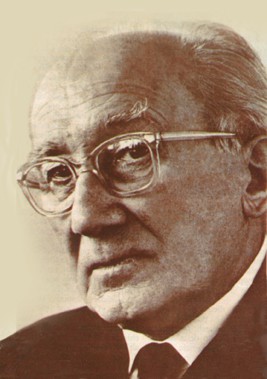 Guardini wurde als Sohn einer aus Südtirol stammenden Mutter und eines italienischen Geflügelgroßhändlers geboren. 1886 übersiedelte die Familie nach Mainz, wo Guardini das humanistische Gymnasium absolviert.
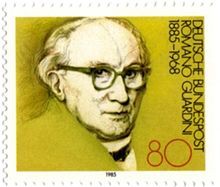 Guardinis Denkstil war wesentlich künstlerisch bestimmt, weshalb er in den späten Jahren auch in der Münchener Akademie der Schönen Künste eine herausgehobene Wirkungsstätte finden sollte. In seiner Münchener Zeit wandte sich Guardinis Deutungskunst auch Phänomenen wie dem Film zu. Wenn er schon mit der Schrift Der Heiland 1935 eine profunde christliche Kritik der NS-Ideologie vorgelegt hatte, so konnte er daran 1950 mit der Untersuchung Der Heilsbringer anknüpfen, einer bahnbrechenden Studie für das Verständnis von totalitären Ideologien als Politische Religionen. Wenig bekannt ist Guardinis Bemühung um ein hegendes »Ethos der Macht«, das gegenüber den anonymen Mächten zur Geltung zu bringen sei, die seiner Diagnose gemäß immer deutlicher zutage treten, das aber auch die charismatische Macht und Herrschaft zu domestizieren weiß.