Ok

En poursuivant votre navigation sur ce site, vous acceptez l'utilisation de cookies. Ces derniers assurent le bon fonctionnement de nos services. En savoir plus.

dimanche, 16 février 2014

Brussel, een artistiek Stromboli

Brussel, een artistiek Stromboli

Boekbespreking

Brussel staat vandaag centraal in veel politieke discussies, maar wat is er te vertellen over de geschiedenis van de stad? Eric Min schreef er een boek over, Frans Crols las het.

Frans Crols
 
Ex: http://www.doorbraak.be

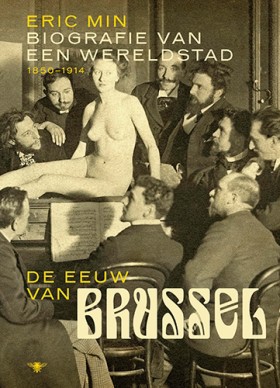
Eeuw_Van_B.jpgEen tweede man die een pen kan voeren vertoont zich als Brusselkenner. Naast Geert van Istendael en zijn trefzekere en te prijzen 'Arm Brussel', van oude datum (1992) met heruitgaven, heeft Eric Min een ronduit fantastische biografie geschreven over Vlaanderens trots en schande. Eric Min en zijn fraaie, rijke zinnen ken ik sedert zijn waardevolle en vernieuwende levensverhaal over James Ensor. Men zou denken dat over die Oostendse schilder van bizarrerieën alles in veelvoud was herkauwd, niets bleek minder waar te zijn. Ensor was het eerste boek van Min, die ambtenaar is van de Vlaamse regering, en in zijn vrije tijd cultuurmedewerker van De Morgen. Wat Min leerde uit Ensor, een opdracht van uitgever Meulenhoff (nu Bezige Bij), is hoeveel braakgrond, hoeveel sluimerende bronnen en teksten er blijven voor het portretteren van kunstenaars, schrijvers, prominenten waarover men denkt alles geschreven te zijn. Fout. Soms zijn er honderden brieven nooit gelezen, bestudeerd of geannoteerd bij de familie, op zolderkamers, in archieven waar geen professor of assistent binnen wil. Dat is ook de ervaring die Min opdeed bij het schrijven van de biografie van Brussel.

Is de titel 'De eeuw van Brussel, 1850-1914' een loze reclamekreet om het boek interessanter te maken dan mag? Neen. De karakterisering is correct. In de tweede helft van de negentiende eeuw en de eerste jaren van de twintigste eeuw was Brussel een artistieke, politieke, economisch uiterst dynamische, baanbrekende wereldstad. Niet de slonzige zus naast opulent Parijs. Op een beperkte plek - het centrum van de stad rond de nog bestaande winkelgalerijen (toen een unicum in Europa) en de wijk rond de vijvers van Elsene - ageerden een beperkt aantal mensen, 250 in totaal. Die 250 waren advocaten, schilders, letterkundigen, galeriehouders, professoren, politici, ondernemers. Een humus van geld, goede smaak, loge-idealen, nieuwe politieke inzichten, salons, kunsthuizen en excentriekelingen als de progressieve Edmond Picard, die ook een notoire anti-semiet was, naast socialistisch senator. Zijn anti-joodse pamfletten werden in 1940 herdrukt door Rex.

Kunst is niet per definitie een progressieve bezigheid, maar meestel wel en in het Brusselse geval zeker. De wegen, de nachten, de vriendinnen, de mecenassen, de bewonderaars van de langdurige bewoners of passanten van Brussel als Charles Baudelaire, Victor Hugo, Paul Verlaine, Arthur Rimbaud, Félicien Rops, Auguste Rodin, Victor Horta, Henry van de Velde, August Vermeylen kruisten mekaar aan de Zenne in een rondedans van kunstvertier, vooruitstrevende beeldenstorm, banketten, bordeelbezoek, artistieke doorbraken, politiek gekonkelfoes.

Brussel was een vrijstad in die jaren die de kunstzinnige internationale Franstalige beau monde aantrok en, zie hun brutale Brusselmemoires, afstootte. Uit een mengeling van gearriveerde artiesten met vernieuwers ontstond de Art Nouveau, de beeldhouwkunst van Rodin, de shockerende homopoëzie van Rimbaud, de productie van anarchistische pamfletten, met een Elysée Reclus, de gangmaker van het libertaire socialisme in Frankrijk die, eenmaal in de Belgische hoofdstad, als een van de weinige vooraanstaanden van dat bruisende Brussel opkwam voor het Nederlands. In die fascinerende ontbolsterende oude wereld duikt als een zelfdzame, naast Rik Wouters, Vlaamsgezinde op, August Vermeylen met het kunstentijdschrift Van Nu en Straks, en zijn bijdrage 'Vlaamsche en Europese Beweging' (1990).

Van Nu en Straks was antipaaps en anarchistisch en verfoeide het onderdanige katholicisme van het traditionele Vlaanderen. Vermeylen draaide 100 procent mee in 'de eeuw van Brussel' en was voorstander van links, emancipatie, vrijdenken, secularisering, het vrije huwelijk. Alhoewel hij braafjes en formeel in de echt trad met een poppetje uit de betere kringen die de vrijmetselaar zelfs tot aan het altaar sleurde.

Eric Min is een kosmopoliet met een progressieve ingesteldheid en deelt de klassieke afkeer van de linkse medemens voor wat Vlaams-nationaal is, nationalistisch, gebrand op volkse identiteit. Laat u daardoor niet afschrikken om zijn boek te lezen. De grootste Brusselvriend én de grootste Brusselvijand zullen smakelijke, erudiete uren doorbrengen bij de vele onbekende feiten en figuren en genieten van een taalzwier die van het bovenstebeste is.

Beoordeling : * * * *
Titel book : De eeuw van Brussel
Subtitel book : biografie van een wereldstad 1850-1914
Auteur : Eric Min
Uitgever : De Bezige Bij Antwerpen
Aantal pagina's : 418
Prijs : 34.99 €
ISBN nummer : 9789085423942
Uitgavejaar : 2013

Groot Brittannië opent grenzen voor Moslim Broederschap

Groot Brittannië opent grenzen voor Moslim Broederschap

Ex: http://xandernieuws.punt.nl

Egypte beschuldigt Britse regering van steunen islamitisch terrorisme en extremisme


Premier Cameron, die ooit zei dat de Britten zich aan de islam moeten aanpassen, en niet andersom, zet met het toelaten van de Moslim Broederschap terreurorganisatie nog meer druk op zijn eigen volk.

Groot Brittannië, Europees dhimmi-kampioen bij uitstek, heeft een nog diepere knieval voor de islam gemaakt door zijn grenzen te openen voor de Moslim Broederschap, die nota bene in Egypte officieel als terreurorganisatie te boek staat. Aan de overkant van Het Kanaal is te zien wat de gevolgen zijn van een almaar groter wordende moslimbevolking, die stap voor stap steeds meer druk op de democratie beginnen te zetten.

Het verval van Europa is wellicht nergens zo duidelijk zichtbaar als in Groot Brittannië. De regering in Londen heeft nu besloten dat het lidmaatschap van de Moslim Broederschap geen bewijs is van islamitisch extremisme. Het kabinet van de conservatieve premier David Cameron weigert de Broederschap als terreurorganisatie te kenmerken. Activisten van de Broederschap mogen dan ook vrijelijk in het land opereren, zolang ze de nationale wetten respecteren.

Egypte beschuldigt Londen van steun aan terrorisme

Dit geeft een aantal Broederschapleiders en andere leden, die Egypte ontvluchtten nadat hun president Mohamed Morsi werd afgezet, de mogelijkheid om publiekelijk politieke actie te ondernemen tegen de door de militairen gesteunde nieuwe Egyptische regering. Egyptische politici en mediakopstukken hebben de Britse regering al openlijk beschuldigd van het steunen van het islamitische terrorisme en extremisme, mede omdat de Moslim Broederschap de moederorganisatie van de Palestijnse terreurbeweging Hamas is. (1)

Egypte heeft een sterk argument: de Britten hebben immers meegeholpen met het afzetten van de Libische leider Muammar Gadaffi in 2011, waarna er een door het Westen gesteunde, aan Al-Qaeda gelieerd regime aan de macht kon komen.

Na Amerikaanse verraadt ook Britse regering eigen volk

De Britten zijn nu de eersten in Europa die officieel de deuren openen voor moslimterroristen. Daarmee heeft de regering Cameron zijn eigen volk verraden, en verdient daarom het predicaat 'crimineel'. Als de groeiende invloed van de islam geen halt toe wordt geroepen, staat dit waarschijnlijk ook andere EU-landen te wachten.

Eerder zette de Amerikaanse president Obama al een groot aantal Moslim Broederschapleden op hoge posities in zijn regering, en gaf hij hen een speciale VIP-status, zodat ze ongehinderd de VS in kunnen reizen. Onlangs leverden we niet alleen daar opnieuw bewijs voor, maar ook voor het feit dat Obama's broer Malik via o.a. de Barack H. Obama Foundation* openlijk Hamas, de voor oorlogsmisdaden gezochte Soedanese moslimpresident Al-Bashir en andere islamitische terreurgroepen steunt.

* Inmiddels is er in de VS een tweede stichting met exact dezelfde naam opgericht, hoogstwaarschijnlijk om de eerste stichting uit de wind te houden.

Xander

(1) Ahram Online (via Shoebat)

Zie ook o.a.:

29-01: Obama's broer sluit zich aan bij Hamas en zegt 'Jeruzalem is van ons'
20-01: Bevestigd: Regering Obama gaf leden Moslim Broederschap VIP-status
10-01: Generaal en oud-vicestafchef: Moslim Broederschap in regering Obama

2013:
02-12: Deal met Iran: Vervult Obama islamitische profetie over wegbereider Mahdi?
03-09: Egyptische krant: Obama is volwaardig lid van Moslim Broederschap
08-06: FBI noemt de Koran het geopenbaarde woord van god
|12-01: Egyptische magazine bevestigt infiltratie Moslim Broederschap Witte Huis

The World of C. H. Douglas

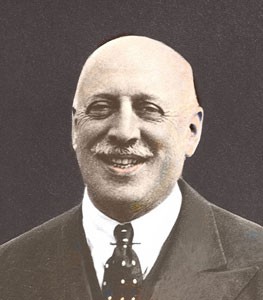
Douglas-recolored-3.jpgThe World of C. H. Douglas

By Sandy Wolfe-Murray

Ex: http://www.counter-currents.com

“Salvation by history” — H. G. Wells, The Undying Fire

“The most effective way to destroy people is to deny and obliterate their own understanding of their history.” — George Orwell, Nineteen Eighty-Four

H. G. Wells described the devil and the adversary of all that is good as “the Unexpected,”[1] a condition suitable for any discussion concerning economics and C. H. Douglas. Of particular interest to New Righters is Douglas’ declaration that Social Credit “covers and comprehends a great deal more than the money question.” [2] It is more than economics and “fundamentally involves a conception, I feel a true conception – but you must enlarge upon that yourselves – of the relationship between individuals and their association in countries and nations and their association in groups.”[3] The unexpected is always present and in discussing the money aspect of Social Credit which Douglas regarded as “the scientific money system for the automation age of abundance and leisure”[4] we should understand the time in which Douglas lived. Unlike our age, his held a promise of future prosperity in a homogenous society. But, as Martin Armstrong wrote, “When it comes to the economy, you cannot extract weather, famine, earthquakes, volcanoes, or the study of war, and expect to comprehend the entire landscape within which we live no less assess future risk.”[5]

The medieval church had a saying that “dogma is life petrified.”[6] Life today is anything but petrified and our subject economics is as stressed as the social system; not that the two can ever be truly separated. Economics is dynamic and Martin Armstrong can now write that tax is a barbaric relic of the past and “since money is no longer tangible and predominantly electronic, there is no need for taxes anymore.”[7] The unexpected occurred and the trendy are using Bit Coin and paying the cashier with their smart phones. The mechanics are certainly available to facilitate any future introduction of Social Credit.

Douglas came to his theorem through his observation as an engineer. David Ricardo was a trader and a businessman, and his proposition of Comparative Advantage was achieved by observation. Adam Smith too, observed how things functioned before he wrote his masterpiece. The much maligned John Law, an experienced trader, was the first to use the term demand, and he was certainly the first to join it with the word supply. John Law used these two terms to establish the first theory of price movement — supply and demand.[8] Every other theory, Marxism, Keynesianism, Monetarism, or whatever, has proven to be false for without experience,[9] they tried to ascertain how things function. As a working engineer C. H. Douglas falls in between the serious economists such as Ricardo and Law and the empty headed theorists. Douglas might indeed hold the key to setting up a financial system for the world envisioned by the North American New Right. But before venturing forth into unchartered waters we should understand the world that gave us Douglas and his idea.

Although Douglas devised his theorem while at work in an aircraft factory during WWI his idea reached its apex during the 1930s when the world changed forever. The much-ignored Herbert Hoover came to office a mere seven months before Oct, 29th 1929, and by 1932 William Starr Myers, Professor of Politics of Princeton University, could declare “that President Hoover was the world leader who had contributed most to this victory over chaos. The battle against the depression had been won.”[10] Sadly, a year later, Irving Fisher was to say in a speech before the American Economic Association, December 28, 1933, “We should have been further on the road toward recovery today had there been no election last year. Recovery started under Mr. Hoover but . . . a recession occurred because of the fear over political uncertainties.”[11] Needless to say the introduction of Social Credit would be fraught with “political uncertainties.”

In the spirit of Douglas and his idea of association between individuals, groups, countries, and nations,[12] Hoover organized the President’s Unemployment Relief Organization which was a great success and as President Herbert Hoover said himself in pre multi-cultural America, “Modern society cannot survive with the defense of Cain, ‘Am I my brother’s keeper?’”[13] Like Julius Caesar before him, he realized precisely what the problem was and acted on it. Hoover lost the election, and Caesar was stabbed in the back because his efforts to save Rome cost the money-lending senators a third of their wealth.[14]

Douglas was born in England in 1873 when Queen Victoria was on the throne. She herself, most observers agree, was a Christian even though the 1851 religious census showed that the Church of England over which she reigned had less than half of the population of its home country as members. Such was the world of Douglas. After Victoria came Edward VII who reigned until 1910 and whose era marked a great turn in British society. Later, in 1930 the Church of England approved the use of condoms, and my readers are well aware how contraception insidiously lowers the IQ of a people. By the time Douglas died in 1953, the M.V. Empire Windrush had disgorged its cargo of Jamaicans on the shores of the Camp of the Saints, and globalization was in full swing.

Ever since the Adversary slithered up to Eve and whispered in her ear, “Yea, hath God said . . . ?” man has been twisting religion every which way to suit his own advantage. However, religion is part of the story and can’t really be excluded. From Douglas’s era and from some of his preserved lectures and writings some of the basic principles of the ancient faith and Merrie Olde Englande jump out; the Sabbath was made for man and not man for the Sabbath and that if a man did not provide for his own, and especially for those of his own house, he had denied the faith and was worse than an infidel.[15] But perhaps the greatest principle for the distribution of new wealth was that of Matthew 5:45 where Jesus told how God the Father made the sun shine on the evil and the good and how he sent the rain on the just and the unjust. After receiving his quota, it was up to each what he did with it. What Douglas abhorred was the philosophy of Frederick the Great of Prussia which prevails today, “Above all, uphold the following maxim, ‘that to despoil your neighbors is to deprive them of the means to injure you.’” Frederick, who may as well have written the “cold-blooded” Protocols of the Elders of Zion, which according to Douglas was either a plan or a prophecy and written by someone or some group promoting the ideal of the result justifying the means and that force is the first right.[16]

The two opposing forces in Douglas’ world were the Protocols and Christianity, although both had the same premise. Both recognized the “primacy and formative nature of ideas.” Douglas saw the Protocols as the Bible of the Anti-Christ, “and that its policy, Communism and Socialism, which can easily be linked with Frederick of Prussia as their first prominent and identifiable exponent, are essentially the policy of a religion of which the energizing factor is physical force and the fear of it.”[17] Douglas thought way back then that Britain was heading that way, and today James Davidson can write that America is sliding into a full East German-style lockdown.[18]

Douglas envisioned the world of “The Anti-Christ” as one possessing the essential characteristics of fear and violence of the Protocols. In comparison, Douglas regarded the world of Christ as that of courage, allied to love, i.e., perfect love casteth out fear. The knight of chivalry, Douglas wrote, watched his armor alone in the chapel throughout the night and then went out to do battle alone for love, against fear and oppression. The mass, wrote Douglas is unsaveable and as insane as the mob, and here we get to the driving force behind his Social Credit idea, “the object of anti-Christ is to keep mankind in ever larger mobs, thus defeating the object of Christ, to prevent the emergence of self-governing, self-conscious individuals, exercising free will, and choosing good because it is good.”[19]

In Douglas’s world of Christ and anti-Christ he put great store in his church and that “the policy embodied in Social Credit proposals was in consonance with, and was intended as far as possible to derive from, the philosophy of the Christian Church.”[20] Douglas however, was not blind to reality and could write what most people feel about the Church of England, namely “they love its exquisite liturgy, the mirror of a nobler day, and they would agree that it holds many good and able men; but it simply does not register. It is so tolerant that it is difficult to name anything to which it objects.”[21] As a member of the Church of England he was also cognizant that “government systems do not change human nature.”[22] He was well aware that the moral basis of society was changing and that what we vaguely call Christianity “is merely Liberal Judaism.”[23] The pillars of the ancient British Race, king, church, and commons have all gone, and only their ghosts remain. He did believe that the Magna Carta remained as a witness to the ancient idea that the Christian Church was the living incarnation of righteousness and that his Social Credit idea would be a more righteous means of distribution.

Decay is an ongoing process, and Douglas saw further signs of it in the utterances of the Jew, Lord Samuel who said that “It is indefensible that a man should sit in the House of Lords because his father sat there before him.”[24] Douglas saw that this would lead to the family being declared a myth, and we would all be citizens of the world. Heredity was to be retained for the Jew only, the same Jew that was employing the same tactic against the race “as that employed against the Christian Church – to deny the validity of its origins. Just a little at a time of course, but the direction is unmistakable.”[25] Twenty-five years later Wilmot Robertson would write The Dispossessed Majority.

Douglas believed that the modern transcendentalist Christianity of a world to come was considered safe and that earlier persecutions had only arisen when Christians tried to apply Christian economics. Even more radical was Douglas’s belief that the only justification for government was to allow you to do things more easily and comfortably; that to imagine that we are born into the world to be governed by something not inherent in the cosmos, i.e., money, “is one of the most astonishing pieces of hypnotism that has ever afflicted the world.”[26]

C. H. Douglas applied his Christian principles to what he saw as a still basically Christian and homogenous world. The Unexpected had occurred, and unlike medieval times not everyone belonged to the church any more. The driving force behind Douglas is as dead as the Rome of Julius Caesar. Douglas lived in a world of rising prosperity and would neither have expected the true engines of growth to be sent away nor the country flooded with cheap alien labor. Once again, the unexpected had occurred, and the challenge for today’s Social Creditors is not only the policy for wealth distribution but of regaining both the means and the ability to create wealth.

Notes

[1] H. G. Wells, The Undying Fire (New York: Macmillan, 1919), p. 2.

[2] C. H. Douglas, The Approach to Reality, p. 6.

[3] C. H. Douglas, The Approach to Reality, p. 6.

[4] C. H. Douglas, Social Credit, back cover.

[5] Martin Armstrong, Cycles of War, 1914, p. 8.

[6] David Knowles OBE, The English Mystics (London: Burns, Oates, and Washbourne, 1927), p. 15.

[7] http://armstrongeconomics.com/2014/01/13/the-tax-hunt-is-for-anyone-not-just-the-rich/ [2]

[8] Martin Armstrong, Theory and Observation and Plagiarism, December 21, 2013.

[9] Ibid.

[10] Herbert Hoover, The Memoirs of Herbert Hoover (New York: Macmillan, 1952), p. 164.

[11] Ibid.

[12] C. H. Douglas, The Approach to Reality (Warwickshire, England: KRP Publications, 1936), p. 6.

[13] Hoover, The Memoirs of Herbert Hoover, p. 151.

[14] Armstrong Martin Sovereign Debt Crisis (DVD) 2 1:45 50.

[15] 1st Timothy 5:8

[16] Douglas, C. H. The Realistic Position of the Church of England, 1948, p. 9.

[17] Ibid., p. 11.

[18] James Dale Davidson Strategic Investments Baltimore, January 2014.

[19] Douglas, The Realistic Position of the Church of England, p. 11.

[20] Ibid., p. 3.

[21] Ibid., p. 4.

[22] Ibid., p. 8.

[23] Ibid., p. 6.

[24] Ibid., p. 12.

[25] Ibid., p. 12.

[26] Ibid., p. 13.


Article printed from Counter-Currents Publishing: http://www.counter-currents.com

URL to article: http://www.counter-currents.com/2014/02/the-world-of-c-h-douglas/

URLs in this post:

[1] Image: http://www.counter-currents.com/wp-content/uploads/2012/12/Douglas2.jpg

[2] http://armstrongeconomics.com/2014/01/13/the-tax-hunt-is-for-anyone-not-just-the-rich/: http://armstrongeconomics.com/2014/01/13/the-tax-hunt-is-for-anyone-not-just-the-rich/

Pakistani Province of Baluchistan at Cross-Roads of Geo-Political games


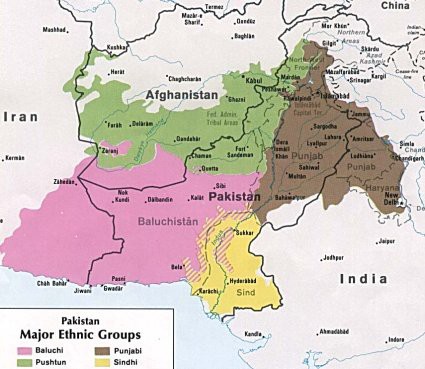
This aspect is related to the geographical location of Baluchistan at the maritime interface of the Western, Southern and Eastern segments of Asia alongside the Indian Ocean that further enhances its importance in facilitating global trade and energy shipments. Baluchistan thus provides a number of shortest possible land and sea route to and from the East and the West. For this very reason Baluchistan has become a ‘geo-strategic’ fulcrum of this arena of extremely heightened geo-political competition. The US sponsored idea of “Greater Baluchistan” has done Baluchistan no good. On top of all Baluchistan’s territorial link with Afghanistan and use of its territory for the facilitation of NATO supplies has made it even more vulnerable to the geo-political maneuvering of the US and its allies in the region.

The idea of “greater Baluchistan” includes not merely territorial disintegration of Pakistan alone; it also includes that of both Iran and Afghanistan. In introducing a resolution on ‘independent Baluchistan’ in the US House of Representative in 2012, the US Congressman Dana Rohrabacher said that the people of Baluchistan, “currently divided between Pakistan, Iran, and Afghanistan, have the right to self-determination and to their own sovereign country,” adding that they should be afforded full opportunity to choose their own status among the community of nations. This ‘moral support’ is being followed by the supply of ample foreign fundings, arms deliveries and military training. In 2001, Jane’s information group, one of the leading sources on intelligence information, reported that the RAW and MOSSAD have created five new agencies to penetrate Pakistan to target important religious figures, civil and military personnel, journalists, judges etc, and the current situation and information provided by Pakistan’s various security agencies also verifies the fact of foreign involvement in Baluchistan. Even the government of Afghanistan has been abetting the disruptive forces in igniting conflict in the region by providing territorial sanctuaries to the so-called insurgents.

The continuing Baluch struggle against “deprivation”, properly supplied by the Western fighter for the greater good have successfully spread the conflict into many zones of Baluchistan, making them virtually independent. By repeatedly highlighting and emphasizing the state of deprivation of the Baluch people, the US and its allies have been exploiting the Baluch youth that is dying out with foreign arms in its hands in an attempt to attain the much yearned after ‘national’ independence from the ‘dictatorial’ domination of the Punjab. In this context, the US Congress bill on Baluch’s right to separation and self determination, tabled in 2012, is one of the manifest examples of the deliberately designed geo-political maneuvering. That bill was and is not only a violation of the internationally recognized principle of non-intervention, but also a sort of window dressing of the US’ and its Western allies’ global agendas. In essence, it was nothing else but an attempt to give a ‘legitimate’ cover to pursue, on part of the US, the twentieth century grand objectives which include domination of the region extending from Baluchistan to Central Asia and Eurasia and to Eastern Asia by way of segmenting the entire region, thereby controlling and dominating the flow of energy to and from the Eastern, Central and Western segments of Asia through the Indian Ocean.

It is for this reason that many US policy makers have, from time to time, been emphasizing the geo-strategic significance of Baluchistan in terms of serving the “grand objectives” of the US. For example a prominent US expert on South Asian affairs, Selig Harrison, urged the White House in 2011 to contain the fast spreading influence of China in the India Ocean, “by supporting the movement for an independent Baluchistan along the Arabian Sea and working with Baluch insurgents to oust the Chinese from their budding naval base at Gwadar.” Similarly, the evidence of such an interest in disintegrating Pakistan can also be found in an article, “Blood Borders” written by a military analyst of the US, Lt. Col. Ralph Peter, who presented the idea of revision of the boundaries of the entire Middle East as per the wished of the people of locale, and further suggested the placement of the US forces in the region to “continue to fight for security from terrorism, for the prospect of democracy and for access to oil supplies in a region that is destined to fight itself.”

The US has thus been using its presence in Afghanistan, which is by default linked to the attainment of the US’ grand objectives, to play dirty game in Baluchistan too. In 2012, during a briefing to the upper house of Pakistan’s parliament, the then interior minister of Pakistan, Mr. Rehman Malik, presented a number of letters written by the Afghan government to provide funds, visas, weapons and ammunition to Brahamdagh Bugti’s followers inside Baluchistan. Only in Kandhar there were reported 24 CIA sponsored training camps which train insurgents for carrying out their militant missions inside Baluchistan; and moreover, since 2002, the CIA has been running training camps inside Baluchistan for the Baluchistan Liberation Army (BLA) and it has considerably assisted it in establishing a ‘state within a state.’

Needless to say, the CIA’s use of mercenaries to fight covert wars is an escapable feature of the US foreign policy. The arrest of such a mercenary, Raymond Davis, in Lahore blew the lid off the extensive role CIA covert operations are playing in creating the climate of violence and instability throughout Pakistan, and more specifically in Baluchistan. The underlying purpose of such covert operations is to manipulate in favour of supporting the Baluch peoples’ right to self-determination through secession.

That is how the neo-imperial forces of the West, led by the US, have been applying the policy of divide and rule—the classic political stratagem that has not escaped the interest of the neo-colonial states. While the truth is that the location of Baluchistan at the interface of three major segments of Asia, its maritime significance because of Gwadar port, its capacity to provide the shortest possible route to the landlocked states of Afghanistan and Central Asia, its capacity to serve as an international energy transit corridor, and its own untapped numerous reservoirs of energy sources add to its significance in the current era of extremely heightened competition in and around the Indian Ocean. As such, by disintegrating Pakistan, leading to an extended redrawing of regional boundaries, the US can significantly alter regional balance of power, and can place its own military in the region in the name of ‘maintaining peace and security.’

The US, in its quest for dominating the world is showing little to no respect for human rights Despite the fact that Pakistan is a non-NATO ally of the US,  is standing in the way of the U.S. and pays a handsome price for it.

Salman Rafi Sheikh, research-analyst of International Relations and Pakistan’s foreign and domestic affairs. Exclusively for the online magazine “New Eastern Outlook”.

Quel avenir pour notre industrie?

Industrie%20lourde.jpg

Quel avenir pour notre industrie?

Nous ne serons pas sauvés par la seule innovation

Philippe Berthier
Ex: http://metamag.fr

La crise économique dure, mettant à mal notre modèle économique et social. Beaucoup d'hommes politiques et de journalistes focalisés sur le court terme ne comprennent pas la situation. Ils ne voient pas que nous vivons un choc pétrolier mou. Par rapport aux vingt années de contre-choc pétrolier (1986-2006), une quarantaine de milliards d'euros sortent chaque année du circuit économique.

Ignorant la contrainte physique, beaucoup imaginent le retour de la croissance. Comme si la croissance était un phénomène météorologique : on ne peut prévoir la pluie, mais on sait qu'elle reviendra. Les journalistes adorent cette attitude qui leur permet d’écrire une foule de papiers parfaitement creux. Ces derniers temps, on se réjouissait par exemple, du maintien des investissements étrangers en France, sans se rendre compte que la France exportait la même masse de capitaux et que les investissements en question concernaient plus la distribution que la production.

Les plus conscients des hommes politiques ont compris que la croissance reposait sur le progrès technique. Deux comportements apparaissent alors : le premier reste attaché à cette imprévisibilité : on ne sait pas ce que la science nous donnera, on ne peut pas prévoir l'avenir. Il est vrai qu'un certain nombre de progrès sont dus au hasard, la découverte de l'aspartame ou le passage d'internet du monde de la recherche à la ménagère de moins cinquante ans par exemple. Peut-on faire reposer l'avenir de nos enfants sur le hasard ? Epuisons alors les dernières réserves de pétrole, on trouvera bien une solution à temps. Ce propos choquant est pourtant la politique officielle de l'Europe de Bruxelles, qui ne prévoit pas de diminution de la consommation d'hydrocarbures en Europe. . Cette attitude a eu un précédent historique : l''espoir des derniers partisans de l'Axe dans les armes nouvelles à la fin de la guerre 39-45. La technique ne les a pas sauvés.

Les vrais hommes politiques, sont ceux qui ont compris que les tournants techniques ne sortent plus de quelques individus au hasard, mais qu'ils proviennent de plans de développement structurés et d'investissements. C'est comme cela que l'on a bâti le monde industriel. S'il y a des Bill Gates et des Steeve Jobs, c'est aussi parce qu'il existe une industrie des microprocesseurs

L'automne dernier, le tandem Hollande-Montebourg a prévu d'engager environ 3 milliards d'euros (il semble s'agir d'une valeur annuelle comme les autres chiffres de ce texte) dans 34 plans sur 36 initiaux, pour redresser l'industrie française. C'est approximativement la somme qui était affectée au crédit impôt recherche. Ces plans concernent quatre domaines : énergie, transport, information et matériaux.  La valeurs ajoutée, c'est à dire le flux monétaire provoqué par la réussite de ces plans serait de l'ordre de 45 milliards d'euros. Même si seulement la moitié des plans réussissait, l’investissement de l'état aura été judicieux. Mais en aucun cas les produits de l'innovation nous permettrait d'effacer la crise pétrolière, qui est un poids du même ordre, ni de faire face au choc démographique du vieillissement qui nécessite de trouver 20 milliards d'euros supplémentaires en 2020 et 100 en 2040. Le nombre d'emplois créés : 480 000, ne remplacerait même pas les 750 000 perdus dans l'industrie ces dix dernières années.

Sauf apport extérieur, comme un progrès en Asie sur le coût des batteries, il est donc impossible que nous puissions sauver notre économie par la seule innovation. Pour sauver notre industrie et notre économie, compte-tenu des sommes nécessaires, il faut donc compter sur nous mêmes : TVA sociale ou contribution sociale sur les importations : 7 à 15 milliards d'euros, retour aux 37 ou aux 39 heures : peut-être jusqu'à 40 milliards d'euros, réduire de moitié nos achats de voitures allemandes : une dizaine de milliards d'euros. Arrêter le rachat de l'électricité du photovoltaïque et de l'éolien offshore (6 milliards d'euros de surcoût en 2020) etc. Le redressement sera difficile et nous obligera à sortir du politiquement correct.