

vendredi, 27 janvier 2012
Plaidoyer pour un protectionnisme européen
Plaidoyer pour un protectionnisme européen
« L’UE, avec ses 495 millions d’habitants, reste à ce jour le plus vaste et le plus riche marché du monde. Face à la menace de rétorsions commerciales, elle a des arguments à faire valoir pour négocier les conditions auxquelles elle consent à acheter les produits et services du monde. » affirme Gaël Giraud, chercheur au CNRS.

Sans attendre que les circonstances nous l’imposent, il nous serait possible de développer un « protectionnisme européen raisonné ». De quoi s’agirait-il ? D’imposer des barrières douanières autour de l’Union européenne (UE), qui pénalisent les biens, services et capitaux importés des pays : qui ne respectent pas les conditions de travail « décentes » préconisées par l’Organisation internationale du travail ; qui ne respectent pas les accords internationaux de Kyoto ; qui tolèrent les sociétés écrans et permettent de contourner l’impôt dû ailleurs (non pas les paradis fiscaux au sens de la liste « grise » de l’OCDE, vidée de toute substance, mais au sens, par exemple, de l’indice d’opacité financière établi par le Tax Justice Network.
Ces conditions peuvent paraître insuffisantes : elles laissent de côté, notamment, les accords multilatéraux sur l’environnement, ainsi que tout ce qui pourrait concerner la lutte contre le dumping salarial. Elles n’en constitueraient pas moins une première étape. Quant à établir une taxe sur les biens produits dans des conditions salariales « déloyales », elle suppose une révision intellectuelle en profondeur du concept même de concurrence, qui n’est guère à la portée, aujourd’hui, de la Commission européenne ou encore de l’Organisation mondiale du commerce (OMC).
Quoi qu’il en soit, cette étape devrait s’accompagner d’un plan de transition verte de la zone euro (si cette dernière survit). La protection de notre industrie et de notre agriculture pour leur « mue » est une condition sine qua non de succès : le climat et l’énergie exigent des investissements de long terme pharaoniques (600 milliards d’euros selon la Fondation Nicolas Hulot), dans les infrastructures ferroviaires, la capture du CO2, l’isolation de l’habitat… La pression de la concurrence internationale rend difficilement envisageables de tels investissements. Il nous faut une nouvelle révolution industrielle, non moins phénoménale que celles des XVIIIe et XIXe siècles. Ni l’Angleterre, ni l’Allemagne, ni la France, les États-Unis ou le Japon n’ont eu recours aux débouchés extérieurs pour leur décollage économique.
En un sens, la taxe écologique, abandonnée par le président Sarkozy, eût été un premier pas dans cette direction. Et le Système monétaire européen, de 1979 à 1993, constituait une version tout à fait réussie, dans son principe, d’une forme de protectionnisme régional tempéré. Sans doute conviendrait-il d’édifier de telles barrières par étapes, en ménageant, au moins dans un premier temps, les relations de l’UE avec l’Amérique du Nord, la Norvège ou la Suisse, par exemple. Nous devrons également faire des exceptions pour ce qui concerne les matières premières importées, certains produits agricoles et les biens d’équipement sans lesquels les entreprises européennes ne peuvent plus tourner. Mais ces exceptions devraient être débattues à l’échelon politique européen. Quel usage, surtout, faudra-t-il faire des recettes induites par ces nouveaux droits de douane ? Elles pourraient abonder un fonds d’aide au développement des pays du Sud (destiné à les aider à améliorer les conditions de travail de leurs salariés et à diminuer, chez eux, la facture écologique) ou encore un fonds souverain européen pour accélérer la transition vers une industrie verte.
Loin de constituer un renoncement à toute forme de concurrence sur le territoire européen, un cordon sanitaire permettrait, au contraire, l’organisation d’une concurrence loyale, les entreprises qui s’installeraient en Europe ayant à travailler dans les mêmes conditions que les nôtres. Bien sûr, nous devrions nous appliquer les critères imposés au reste du monde : en particulier une harmonisation fiscale européenne (l’UE compte de nombreux paradis fiscaux, à commencer par le Royaume-Uni, le Luxembourg, l’Autriche, l’Irlande ou Malte)
À qui ce protectionnisme ferait-il mal ?
Ce protectionnisme provoquerait-il une hausse du coût de la vie (en renchérissant les produits importés) ? Rien n’est moins sûr. Il rendrait enfin possible le rattrapage salarial qui nous fait cruellement défaut, en Allemagne comme dans le reste de l’Europe – condition nécessaire pour rendre une transition verte économiquement rentable. Car aujourd’hui, ce que nous gagnons comme consommateurs en achetant des biens bon marché produits hors d’Europe, nous le perdons, comme salariés, du fait de la compression des salaires.
Bien sûr, des mesures de protection commerciale n’inciteront pas seulement certains de nos partenaires à produire davantage pour leurs marchés internes (à l’instar de la Chine) : elles induiront aussi des rétorsions de leur part. Les PME françaises qui exportent à l’étranger en souffriraient-elles ? Avec raison, les médias relayent volontiers la réussite de certaines d’entre elles. Ainsi, les 600 producteurs de la coopérative d’Isigny-Sainte-Mère, dans le Calvados, exportent leur lait depuis trente ans. Mais c’est une exception. En 2008, environ 100 000 entreprises françaises exportaient des biens, d’après les Douanes, soit une entreprise sur 20. L’essentiel des exportations est assuré par un très petit nombre d’entreprises : mille assurent 70 % du chiffre d’affaires à l’export. Ce sont les grands groupes français et les entreprises de groupes étrangers implantés en France. La part des PME indépendantes reste limitée. Les années 2000, très « libre-échangistes » dans le discours, ont connu une baisse du nombre d’entreprises exportatrices françaises.
Et la moitié des PME qui exportent ont pour débouché un pays d’Europe de l’Ouest et ne seraient pas concernées par un cordon commercial européen. Un quart seulement exportent vers un pays émergent. On peut imaginer que les recettes des droits de douane servent aussi à soutenir le petit nombre de PME qui auraient à souffrir d’une telle politique. Enfin, la baisse de productivité qu’exigera notre transition verte, tout comme le transfert de nombreuses activités à la campagne, le réaménagement du territoire, etc., pourront être source de créations d’emplois et compenser le manque à gagner des PME concernées par d’éventuelles pertes de marchés extérieurs.
Qui, en Europe, serait donc pénalisé ? Le secteur financier. La déflation salariale et le maintien d’un chômage de masse en Europe (qui ne sont pas étrangers aux politiques de libre-échange exigent, pour être socialement supportables, une inflation faible. Celle-ci favorise l’explosion du rendement des placements financiers malgré une croissance molle depuis vingt ans. Mais l’insuffisance du pouvoir d’achat des ménages occidentaux a conduit à un recours massif au crédit à la consommation, à l’origine de la crise initiée en 2007. Le relâchement de la contrainte salariale des pays du Sud lèverait un obstacle majeur à une revalorisation des salaires et des prestations sociales au Nord pour répondre à l’inflation (due au pic du pétrole). Les revenus financiers s’en trouveraient mécaniquement rognés. Est-ce un mal ?
Si l’Europe voulait…
Lorsqu’en février 2009, la commissaire européenne en charge de la concurrence, Neelie Kroes, fait des remontrances à la France parce qu’elle conditionne son aide publique au secteur automobile à des engagements de non-délocalisation et de protection des emplois nationaux, deux remarques s’imposent. Tout d’abord, la conditionnalité d’une telle aide devrait porter en priorité sur l’accélération de la transition vers la production d’automobiles électriques. Subventionner l’automobile à essence, compte-tenu de la contrainte environnementale et énergétique, est un non-sens. Bruxelles a eu raison de tancer Paris… mais pour de mauvais motifs ! C’est au niveau européen qu’une aide publique à l’industrie européenne (verte), conditionnée à des clauses de non-délocalisation, devrait être organisée. Car la délocalisation (celle des usines que l’on ferme, mais aussi celle, invisible, de toutes les décisions d’investissement qui ne sont pas prises sur le sol européen n’est rendue intéressante que grâce au dumping salarial des pays émergents et au coût relatif très faible jusque-là, du pétrole.
La seconde étape de cette politique commerciale, destinée à contrebalancer le dumping salarial des pays émergents (mais aussi du Japon et de l’Allemagne), ferait-elle tort aux pays exportateurs ? Elle contrarierait une dynamique au terme de laquelle les pays émergents, la Russie et l’Opep (Organisation des pays exportateurs de pétrole) réalisent à eux seuls 50 % de la valeur des exportations mondiales en 2010 (contre 27 % en 1998). Mais elle les inviterait à revaloriser leur demande interne. La consommation des ménages représente moins de 35 % du volume du Pib chinois en 2010, contre 50 % en 1998. Et la part de la masse salariale, 48 % du Pib chinois en 2010, contre 52 % en 2001. Les bénéfices que la Chine retire de la mondialisation ne sont donc pas distribués au profit des salariés. C’est cette logique qu’un protectionnisme européen viendrait entraver. La Chine centralisée d’avant « l’ouverture » connaissait une assurance maladie, supprimée depuis lors pour augmenter son avantage compétitif.
L’UE, avec ses 495 millions d’habitants, reste à ce jour le plus vaste et le plus riche marché du monde. Face à la menace de rétorsions commerciales, elle a des arguments à faire valoir pour négocier les conditions auxquelles elle consent à acheter les produits et services du monde. D’ailleurs, les représailles existent déjà : les contrats chinois passés avec Airbus ou Boeing prévoient que les futurs avions soient sous-traités en Chine, dans le cadre de co-investissements avec des entreprises chinoises. Pékin a choisi, au début des années 2000, d’instituer une taxe de 23 % sur les importations d’avions régionaux, en vue de protéger sa production. Et nous devrions nous refuser à adopter ce type de politique commerciale bien comprise par crainte de rétorsions que nous subissons déjà ?
Des mesures protectionnistes vont-elles à contre-sens de ce que préconisent Bruxelles et l’OMC ? Les articles du Traité de Lisbonne ont été allègrement bafoués lors des grandes opérations de consolidation du secteur bancaire menées à la faveur de la crise. Serait-ce que l’extraordinaire concentration du secteur, qui accroît le risque systémique lié aux banques « too big to fail », ne contrevient pas aux règles de la saine concurrence ? La Commission sait faire des exceptions à ses principes. C’est donc qu’ils ne sont pas inviolables et doivent pouvoir faire l’objet d’un véritable débat démocratique. Sans cela, les deux revirements stratégiques évoqués supra auxquels nous serons sans doute contraints à plus ou moins brève échéance – le renoncement, pour cause de « dé-globalisation », au pari allemand des exportations extra-européennes comme principal moteur de la croissance ; la fermeture du capital des entreprises européennes aux investisseurs orientaux – seront pratiqués dans une forme de déni schizophrène.
À l’aube d’une âpre négociation ?
Pour mettre des barrières douanières, il faut l’accord unanime des Vingt-Sept. La Pologne, l’Espagne, l’Estonie ont des secteurs industriels très différents de ceux de la France et de l’Allemagne. Les négociations promettent d’être complexes ! L’Angleterre y sera hostile par tradition et par souci de conserver ses relations transatlantiques. L’Allemagne, grisée par le succès de ses exportations de biens d’équipement, se pense comme une grande bénéficiaire du libre-échange (alors que le pouvoir d’achat de ses classes moyennes a diminué depuis quinze ans). Elle ne consentira à une déchirante révision que lorsqu’il deviendra clair que sa stratégie d’exportation sur les marchés émergents est vouée à l’échec par le pétrole très cher et la réorientation de l’industrie chinoise vers son propre marché domestique. La percée que le Parti vert allemand est en train de réaliser outre-Rhin, aux dépens de la très libérale FDP (Parti libéral-démocrate) et de la CDU (Union chrétienne démocrate), pourrait augurer un changement d’attitude à l’égard d’un possible protectionnisme écologique. En France, une telle volonté politique emporterait l’assentiment de 55 % des Français. Mais c’est à l’échelle européenne qu’une telle politique devrait être menée.
00:10 Publié dans Actualité, Affaires européennes, Economie | Lien permanent | Commentaires (0) | Tags : actualité, économie, europe, affaires européennes, protectionnisme, union européenne |  |
|  del.icio.us |
  |
|  Digg |
  Facebook
Loi sur le génocide arménien : une régression civilisationnelle
Loi sur le génocide arménien : une régression civilisationnelle
Jean-Yves LE GALLOU
Ex: http://www.polemia.com/
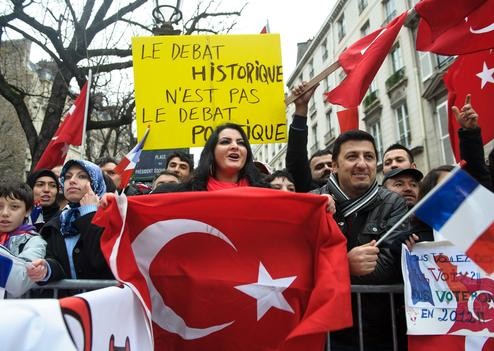
En votant une loi sur la répression de la négation du génocide arménien le Parlement français a commis une double atteinte : à la liberté d’expression et à l’esprit européen. Explications.
Au XIXe siècle la bataille politique en France s’est concentrée sur la liberté d’expression et d’opinion. L’arbitrage final a été rendu par la grande loi de 1881 sur la liberté de la presse. Son article premier est lumineux : « L'imprimerie et la librairie sont libres ». Ce principe rencontrait alors peu d’exceptions : certes, la diffamation était poursuivie par le Code pénal mais dans un cadre procédural très strict et très protecteur des libertés. En dehors des périodes de guerre et de troubles civils ce dispositif protecteur des libertés a duré près d’un siècle.
Régression des libertés
Il a été profondément bouleversé en 1972 avec le vote de la loi Pleven. Sous prétexte de lutter contre le « racisme », le délit d’opinion a été rétabli en France et, dans les faits, les débats libres sur l’immigration ont été rendus difficiles.
Nouvelle entorse à la liberté en 1990 avec la loi Gayssot créant le délit d’opinion historique à propos de la « shoah », une loi aboutissant à mettre en prison des hommes (Vincent Reynouard récemment) sur le seul fondement d’un délit d’opinion. Le fait que ces opinions soient réputées odieuses ne sont pas un argument justificatif : ni M. Trotski, ni M. Lénine, ni M. Hitler, ni M. Staline, ni M. Mao n’ont déporté des gens dont ils trouvaient les idées sympathiques. Ce sont évidemment les gens qui tiennent des idées jugées odieuses dont la liberté a besoin d’être protégée. Penser autrement c’est adopter une attitude totalitaire.
En 2001, précisément, nouvelle avancée du totalitarisme avec la loi Taubira créant le délit d’opinion sur la traite atlantique (et sur la seule traite atlantique ; la traite méditerranéenne, orientale et musulmane n’étant pas concernée !). Dans la foulée l’historien Olivier Pétré-Grenouilleau est poursuivi devant les tribunaux pénaux.
Ajoutons que les filets protecteurs de la procédure de diffamation sont progressivement abrogés : impossibilité d’offrir des preuves, refus de reconnaître la bonne foi, allongement des délais de prescription.
Régression civilisationnelle
Cette formidable régression des libertés s’accompagne d’une régression civilisationnelle.
A travers l’antiquité gréco-latine, la première Renaissance du XIIe/XIIe siècle, la grande Renaissance, la pensée européenne a toujours distingué deux ordres de vérité
- - les vérités religieuses où le dogme s’impose comme article de foi ;
- - les vérités scientifiques ou historiques qui se déterminent par le libre débat. Dans ces domaines peut être dit vrai (ou faux) ce qui est librement réfutable. Philosophiquement, un fait, une opinion, un point de vue, une analyse qui ne peut être librement réfuté ne peut–être dit ni vrai, ni faux (sauf dans l’ordre religieux). Ainsi les lois mémorielles transforment-ils des événements historiques en dogmes religieux. C’est une formidable régression.
En retirant des pans entiers d’histoire au libre examen, les lois mémorielles (Gayssot, Taubira ou Boyer) ne sont pas seulement des atteintes à la liberté d’expression, ce sont aussi des fautes contre l’esprit.
Jean-Yves Le Gallou
Polémia
24/01/2012
Voir aussi :
Evolution des libertés en France : Cent restrictions en quarante ans (reprise de l'article paru le 01/12/07)
La loi Gayssot : une régression civilisationnelle
00:05 Publié dans Actualité, Affaires européennes | Lien permanent | Commentaires (2) | Tags : actualité, france, turquie, arménie, génocide arménien, lois mémorielles | | del.icio.us | | Digg | Facebook
¿Qué es una Guerra Escatológica?

¿Qué es una Guerra Escatológica?
Por Sergio Prince Cruzat
Ex: http://geviert.wordpress.com/
I. Introducción
En este trabajo intento dilucidar el significado de la expresión ‘guerra escatológica’ acuñado por J. Derrida (1930 – 2004). La EXPLICACIÓN de la guerra escatológica, no se encuentra en las taxonomías tradicionales de la guerra. Se trata de una problematización propia del filósofo argelino pero que nunca desarrolló. Por lo demás los conceptos mismos de guerra y escatología nunca fueron objeto, por parte de Derrida, de una indagación sistemática. El análisis que yo propongo no es definitivo; constituye un conjunto de conjeturas más que una tesis. Se trata de la descripción de tres escatologías cuyos enunciados son importantes para el estudio de las relaciones internacionales. Lo que presento a la consideración del lector no es otra cosa que un modo de problematización del estudio de la guerra en el siglo XXI.
Cuando se estudia el significado del concepto ‘guerra’, encontramos numerosas taxonomías que remiten a expresiones tales como, guerra convencional, asimétrica, de cuarta generación y, últimamente, guerra irrestricta [1]. No aparece hasta ahora definición alguna de ‘guerra escatológica’. Esto se debe, en gran medida, a que la expresión fue acuñada en un ámbito aparentemente ajeno a los estudios políticos y estratégicos. Esta aparece en un escrito del filósofo posestructuralista francés Jaques Derrida (1930 – 2004). Éste se titula De espectros de Marx. El estado de la deuda, el trabajo del duelo y la nueva internacional. Data de 1993. En el capítulo II titulado Conjurar el marxismo, se refiere a la guerra entre escatologías, la guerra por la “apropiación simbólica de Jerusalén”, la verdadera guerra mundial, que demuestra que la promesa neo – evangélica de Fukuyama (1992) no se ha cumplido y sigue siendo sólo eso: una promesa. Fukuyama afirmaba que la caída del comunismo y el triunfo de las democracias liberales marcaban el comienzo de la etapa final en la que no había más lugar para largas batallas ideológicas. En este sentido, la historia habría terminado. El “Fin de la historia”, afirmó Fukuyama, significaría el fin de las guerras y de las revoluciones sangrientas, los hombres podrían satisfacer sus necesidades a través de la actividad económica sin tener que arriesgar sus vidas en ese tipo de batallas. Según Derrida (1992) este evangelio desempeña un papel que excede la trasnominación como cliché retórico e indica la mayor concentración sintomática o metonímica de lo que es irreductible en la coyuntura mundial que tenía [y aún tiene hoy] lugar en Medio Oriente. Allí se movilizan tres escatologías mesiánicas distintas, allí todas las fuerzas del mundo, todo el “orden mundial” participa en la guerra sin cuartel que mantienen, directa o indirectamente las tres religiones del Libro:
[…] la mayor concentración sintomática o metonímica de lo que permanece irreductible en la coyuntura mundial […] tiene su lugar, su imagen o la imagen de su lugar, en Oriente Medio: tres escatologías mesiánicas distintas movilizan allí todas las fuerzas del mundo y todo el “orden mundial” en la guerra sin cuartel que mantienen, directa o indirectamente; movilizan [...]
¿A qué se refiere Derrida cuando habla de la mayor concentración sintomática o metonímica de lo que irreductible en la coyuntura mundial? Veamos. Sintomático es lo que constituye un síntoma de algo y, síntoma, es un indicio que revela un trastorno funcional. Por otra parte, la metonimia[2] es un tropo que alude al sentido translaticio. Ambos términos hablan sobre algo haciendo referencia a un otro que se relaciona con el algo de algún modo. Síntoma y metonimia son un hablar, un decir indirecto sobre algo que no es lo hablado o lo dicho. Ambos términos nos indican la existencia de algo velado, inefable que es al mismo tiempo irreductible. En el Corán las metonimias, las metáforas no son un mero recurso retórico, sino que ponen de manifiesto, develan la semejanza entre lo oculto y lo visible. En el libro sagrado del Islam hay una palabra que indica esta conexión, tawhîd. Esta palabra denota la conexión interior entre el mundo espiritual y el material, se refiere a la conciencia de que todo está relacionado, nos recuerda que el mundo no es un conjunto de cosas, sino un conjunto de signos que denotan a otra cosa que no son sí mismo. Una montaña es una palabra, un río es otra, un paisaje es una frase. Todo dice, todo es lenguaje y permanece conectado. Ahora bien, para Derrida lo irreductible es la crisis que afecta una sociedad como resultado de la convergencia de un conjunto relevante de eventos tales como los equilibrios presupuestarios, los imperativos técnicos, económicos, científicos y militares, que están inefablemente vinculados al mundo espiritual. A mayor imposición de estos imperativos materiales mayor es la irreductibilidad espiritual de una crisis (Derrida, 1991)[3]. Entonces, podemos entender la mayor concentración de metonimia como la mayor cantidad de argumentos espirituales indirectos que demuestran que la Historia se resiste a su fin. Estos argumentos espirituales y materiales se manifiestan con una claridad meridiana en los conflictos, en la crisis permanente que vive el Medio Oriente
Al refutar la tesis de Fukuyama, Derrida abrió, un nuevo campo de estudio y la posibilidad de una nueva reflexión sobre los conflictos, la guerra y el terrorismo. Todo sintetizado en los acontecimientos del Medio Oriente, en esta guerra sin cuartel que mantienen, directa o indirectamente las religiones del Libro. Estas enfrentan el mundo globalizado en una lucha intestina que tiene rasgos de una guerra civil. Economía y política de árabes, judíos y cristianos se enfrentan en una lucha sin cuartel que impide la paz prometida por la democracia liberal y el libre mercado que predicó el politólogo de origen nipón.
II. Los mitemas de las escatologías
Revisemos la estructura o los mitemas[4] de las tres escatologías. Estas comparten la creencia en una Edad de Oro, en una Teleología de la Historia, en un Demiurgo o un sujeto de la historia y en una sociedad futura: una Jerusalén reconstruida que vendrá al mundo para premiar a los justos.

En la guerra escatológica se enfrentan estructuras fundadas en la creencia de una verdad única, lo que imposibilita un dialogo racional. Cualquier toma y dacca se da entre elementos superficiales. Existe una suerte de dificultad ontológica que impide solucionar el conflicto o acabar con la guerra. El conflicto entre escatologías permite un acuerdo cosmético sólo sobre un tema: los orígenes de la humanidad. Las escatologías comparten lo que llamaré la estructura hesíodica del mito sobre el origen de la humanidad. Comparten la idea de una Edad de Oro que podemos rastrear hasta el poema Trabajos y Días, en donde el poeta relata el mito de las edades:
al principio, los Inmortales, en tiempos de Cronos, crearon una dorada estirpe de hombres mortales, quienes vivían en paz y armonía con los dioses, disfrutando de los deleites de una vida fácil, abundante en riquezas y comodidades, hasta que la vida se les acababa en sueños, sin sufrimiento. Luego, crearon una estirpe de inmortales de plata, de menor inteligencia y belleza. Los niños se criaban bajo la protección de su madre y, ya adultos, vivían poco tiempo lleno de sufrimiento debido a su falta de sabiduría, extremada violencia y falta de respeto por los dioses. Después de que muriera esta estirpe, Zeus creó una tercera, de bronce, interesada solo en la guerra, por lo que la edad de oro es la edad originaria, primigenia, en la cual se vive la unidad original (Hesíodo, [VIII a. C.] 2007).
En lo referente a la teleología de la historia, su sentido, su finalidad no hay acuerdo posible a pesar de los esfuerzos del ecumenismo. Para las tres religiones del libro este es un tema fundamental ya que expresa el propósito de éstas y explica la acción presente en pos de aquel futuro lejano. Los especialistas han distinguido varias formas de teleología, en especial tendientes a diferenciar lo que se entiende por “finalidad” en las ciencias naturales con lo que se entiende por “finalidad” o propósito en la filosofía y las humanidades en donde se utilizan las nociones de “tendencia, “aspiración”, “intencionalidad” y “propósito para explicar el significado del telos. El fin o el propósito de las religiones del libro es hacer que la fe en la escatología desempeñe un papel efectivo, práctico, reformando la vida humana, preparándola para el gran final.
Sobre este último punto, se presentan las diferencias que impiden el acuerdo de la paz y que convocan a la guerra para imponer la recta ratio. Los judíos esperan el mesías, los cristianos esperan que el mesías vuelva a gobernar y los islamitas esperan el paraíso en el cual serán premiados con todos los placeres sensuales que les han sido privados en la vida en este mundo. Ni un cristiano ni un judío esperan el paraíso de Alá. Ni un buen islamita espera algo así como la venida del Mesías de origen humano o el Reino de Cristo al final de los tiempos. Así, parece lícito tratar de convertir a los otros a “verdad”. De allí que el otro pase de enimicus a hostis por no aceptar la verdad.
Tener que decidir quién es el sujeto de la historia, el Demiurgo, divide a las escatologías. Esta decisión implica decidir quién transforma la realidad y mueve la Historia: ¿Yavé? ¿Cristo? ¿Alá? Los atributos de Dios son muy similares en las distintas escatologías, sin embargo, las especulaciones teológicas provocan un abismo insalvable entre ellos. El atributo que da rango de soberano a quienes gobiernan desde el “cielo a sus súbditos, hace imposible la decisión racional. Yavé, Melej haMelajim[5] (rey de reyes de Israel), Alá al-Maalik (el soberano)[6] y Cristo Rey, disputan la soberanía sobre el cuerpo y el espíritu de los seres humanos.
Aquí surgen preguntas tal como: ¿Qué rey gobierna la historia? o ¿Qué rey gobernará al final de los siglos? En el Medio Oriente combaten los soldados de Dios, los soldados de Yavé, Jesucristo y Alá. Luchan por establecer un reino, reino de paz, de justicia, de amor pero epistemológicamente excluyente y ontológicamente intolerante. Por la fuerza de las armas Dios busca imponerse al igual que en las Cruzadas, en las Guerras de religión de Francia, en el Ulster, en los Balcanes, en el Líbano, y en las hostilidades que aún enfrentan a palestinos e israelíes.
En esta lucha del Oriente Próximo se juega el rostro, el carácter que tendrá el Fin de los Tiempos. Por esta razón Derrida pudo afirmar que la tesis del Fin de la Historia de Fukuyama (1992) estaba errada. Es obvio que entonces existían y aún existen fuerzas que luchan, que combaten, que guerrean con la finalidad de imponer su escatología. Una guerra escatológica, una guerra por el Fin de los Tiempos, no se entrega a las reglas del Arte de la Guerra propuestas por Suntzu, Maquiavelo o Clausewitz. La guerra entre escatologías va más allá de toda regla, de todo límite, de todo concepto tradicional de “soldado” “arma”, y campo de batalla. Por ejemplo, la nueva conceptualización de arma en la guerra entre escatologías considera todos los medios que trascienden el ámbito militar, pero que aún pueden ser utilizados en operaciones de combate. Todo lo que puede beneficiar a la humanidad también puede hacerle daño (Faundes, 2010). Esto quiere decir que no hay nada en el mundo de hoy que no puede convertirse en un arma, y esto requiere pensar que se puede abrir el dominio del reino de armas de un solo golpe: un accidente en un solo mercado de valores, una invasión de virus o el rumor de una o escándalo que dé lugar a una fluctuación en los tipos de cambio del país enemigo o que exponga a los líderes enemigos en Internet, todos pueden ser incluidos en las filas de la nueva concepción de armas (Liang y Xiangsui. (1999:25)[7]
Faundes (2010) también nos dice que observando en detalle el fenómeno guerra, tal como lo describen los coroneles China Liang y Xiangsui (1999)[8], es posible entender que la sutileza es una nueva herramienta que se puede explotar, por medio de ataques imperceptibles que afecten el funcionamiento regular de un país, por ejemplo alterando la calidad del agua, atentando contra los productos de exportación, interviniendo el mercado financiero local, azuzando movimientos en contra del poder político (sindicales y étnicos, por ejemplo), efectuando ataques informáticos, etc. Con todo, una Estado puede estar en medio de una guerra escatológica sin siquiera saberlo, peor aún, desconociendo al adversario. Veamos un ejemplo. El 13 de septiembre de 2010 minuto digital.com[9] informó:
“que tal y como informa España y Libertad en su web, la última ofensiva mediática yihadista data del pasado miércoles: los radicales llaman al “boicot” y a “combatir” a España tras conocer que en Águilas se reabrió una discoteca de nombre La Meca. Los yihadistas, incluso, amenazan con una «gran guerra entre España y el pueblo del Islam”.
A pesar de la violencia del discurso yihadista, no todos los españoles saben que están en medio de un combate escatológico, como el que vivieron hace siglos. La guerra con el Islam no terminó con la conquista de Granada en 1492 y desde entonces las armas se han sofisticado hasta llegar a ser armas de la cotidianeidad. Liang y Xiangsui precisan:
“Lo que debe quedar claro es que el nuevo concepto de armas está en el proceso de creación de nuevas armas que están estrechamente relacionadas con la vida de la gente común”. Con el advenimiento de este nuevo concepto de las armas la guerra escatológica se elevará a un nivel insospechado por la gente común y los militares: “Creemos que algunas personas despertarán por la mañana para descubrir con sorpresa que algunos objetos amables y cotidianos han comenzado a tener características ofensivas y letales (Liang y Xiangsui, 1999:26).[10]
III. Los mitemas del soldado
El soldado que combate al alero de una escatología tiene clara la distinción entre el bien y el mal. Nada más necesario. Esta claridad que no existe entre los filósofos contemporáneos permite al soldado saber que su causa es justa en tanto él es servidor del bien. Esta licenciado y protegido por la bondad que encarna la patria, la patria celestial y / o llamada por Dios a ser el eje de la Historia Universal. Las distinciones entre Bien y Mal suelen coincidir con la distinción amigo enemigo y, siguiendo a Schmitt, puedo afirmar que enemigo, es para el soldado de la escatología, aquel el conjunto de hombres y mujeres que de acuerdo con una posibilidad real se le opone combativamente. [11] Existe un enorme parecido entre el amigo y el enemigo schmittiano que también se observa entre el amigo enemigo escatológico; son una esencia que los hace existencialmente distintos en un sentido particularmente intensivo que hemos mencionado supra: ‘¿Qué Dios es el motor de la Historia?’ Responder a esta pregunta es lo que lleva, quizás, al punto más extremo de su relación ¿Existe alguien, fuera de ellos, que pueda intervenir en la decisión del conflicto? Schmitt responde a esta cuestión diciendo que sólo es posible intervenir en la medida en que se toma partido por uno o por otro, cuando el tercero se convierte en amigo o enemigo. No hay mediación posible, no hay neutralidad posible en el enfrentamiento entre diferentes telos. El conflicto sólo puede ser resuelto por los implicados, pues sólo a ellos les corresponde decidir si permiten su domesticación o viceversa como una forma de proteger su forma esencial de vida. Las opciones escatológicas se definen entre las escatologías, al combatiente sólo puede triunfar o morir. O vivir con honor o morir con gloria[12], es un emblema que indica la realidad del soldado que combate por el Fin de la Historia. El honor se da al vivir en la bondad, en la verdad, el haber alcanzado el telos, el fin. La gloria, la muerte gloriosa es como la que esperan los soldados del Islam, en una muerte Ad maiorem Dei gloriam.
Disciplina. El soldado de infantería, que llevaba una kipá, sacó una tarjeta colorida del bolsillo de su campera. En el exterior estaba impreso el “Shema” (que significa “Oye, Israel”), que es el credo judío. Y rodeado de coloridas ilustraciones de lugares judíos de todo Israel, se encontraba en la parte interior de la tarjeta una “oración para el combate”:
“¡Señor de los ejércitos, que tienes tu trono por encima de los ángeles! Tú nos has ordenado en tu Torá y nos has dicho: ‘Oye, Israel, vosotros os juntáis hoy en batalla contra vuestros enemigos; no desmaye vuestro corazón, no temáis, no os azoréis, ni tampoco os desalentéis delante de ellos; porque Jehová vuestro Dios va con vosotros, para pelear por vosotros contra vuestros enemigos, para salvaros’ (Dt. 20:3-4). … Puedas Tú ahora estar con los soldados del ejército israelí, con los mensajeros de Tu pueblo que hoy van a la batalla contra sus enemigos. Danos fuerza y valor. Protégenos y pelea Tú nuestra batalla. Fortalécenos, protégenos y guárdanos. Ayúdanos y sálvanos por amor a Tu bondad”[13].

Bibliografía sugerida
Cohn, Norman.(1995). El Cosmos, el caos y el mundo venidero. Barcelona: Crítica – Grijalbo Mondadori.
Faundes, C. (2010). Desde la guerra total a la guerra irrestricta. La deconstrucción de un concepto. Tesis para optar al grado de Magíster en Seguridad y Defensa, mención Política de Defensa, Santiago de Chile: Academia Nacional de Estudios Políticos y Estratégicos.
Qiao Liang y Wang Xiangsui (1999). Unrestricted Warfare, Beijing: PLA Literature and Arts Publishing House. Disponible en formato pdf en www.c4i.org/unrestricted.pdf. Visitado 12 septiembre 2010
Orozco, José Luis. (2001). De teólogos, pragmáticos y geopolíticos. Aproximación al globalismo norteamericano. Barcelona: Gedisa-UNAM
Schmitt, Carl. (1999), El concepto de lo político, Alianza Editorial, Madrid..
[1] La guerra irrestricta (超限战, literalmente “guerra allende los límites”) es una guerra combinada que trasciende los límites de las dimensiones y métodos en las dos principales áreas de asuntos militares y no-militares, se deben incluir todas las dimensiones que ejercen influencia sobre la seguridad nacional. Para que una guerra sea irrestricta lo suficiente es que se persiga un objetivo político por medio del ejercicio de la violencia en un sentido amplio, es decir, traspasando el dominio de lo militar para combinar de manera irrestricta elementos de las distintas dimensiones de la seguridad, sobrepasando sus fronteras, por medio de combinaciones en lo supra-nacional, supra-dominio, supra-medios y supra-niveles; todo con el objeto de controlar al adversario. En Latinoamérica, la guerra irrestricta ha sido estudiada por Faundes (2010).
[2] La metonimia (griego: μετ-ονομαζειν met-onomazein [metonomadz͡ein], «nombrar allende’, es decir, ‘dar o poner un nuevo nombre» ), o transnominación, es un fenómeno de cambio semántico por el cual se designa una cosa o idea con el nombre de otra, sirviéndose de alguna relación semántica existente entre ambas. Son casos frecuentes las relaciones semánticas del tipo causa-efecto, de sucesión o de tiempo o de todo-parte.
[3] Derrida, J. (1991). El derecho a la filosofía desde el punto de vista cosmopolítico. Edición On line disponible en http://www.jacquesderrida.com.ar/textos/derecho_filosofia.htm#_edn2 [Consultado el 1 de agosto de 2010]
[4] Levi-Strauss, C. (1955). El estudio estructural del mito en Journal of American Folklore, nº 68 p. 428-555. En el estudio de la mitología, un mitema es una porción irreducible de un mito, un elemento constante (a diferencia de un meme cultural) que siempre aparece intercambiado y reensamblado con otros mitemas relacionados de diversas formas, o unido en relaciones más complicadas, como una molécula en un compuesto. Por ejemplo, los mitos de Adonis y Osiris comparten varios elementos, lo que lleva a algunos investigadores a concluir que comparten una misma fuente.
[5] También se le nombra como Elohim, plural de Dios que se usa repetidamente con verbos singulares, y con adjetivos y pronombres en singular, de la que una de sus hipótesis de origen indicaría que podría ser un plural mayestático que significa ‘Dios por sobre todos los dioses’ o ‘Dios de todo’ o podría ser simplemente un plural de majestad para indicar la alta dignidad de la persona divina.
[6] Al-Asmā’ al-Husnà (الأسماء الحسنى), en árabe, “los nombres más hermosos”, también llamados los noventa y nueve nombres de Dios o noventa y nueve nombres de Alá, son las formas de referirse a dios en el Islam. En su mayor parte son epítetos que hacen referencia a atributos divinos.
[7] Liang y Xiangsui. 1999:25. Citado en Faundes (2010)
[8] Quiao Liang and Wang Xiangsui (1999). Unrestricted Warfare, Beijing: PLA Literature and Arts Publishing House
[9] http://tinyurl.com/365lqgs
[10] Liang y Xiangsui, 1999:26. Citado en Faundes (2010)
[11] Schmitt, Carl. (1999), El concepto de lo político, Alianza Editorial, Madrid.
[12] Esta postura de Schmitt cambia un poco cuando estudia la neutralidad
[13] Escrito encontrado en la libreta de combate del Sargento Mario Antonio Cisnero. Caído en combate en la Gesta de Malvinas en 1982. http://tinyurl.com/297fwsc
00:05 Publié dans Philosophie, Théorie politique | Lien permanent | Commentaires (0) | Tags : guerre, guerre sainte, djihad, guerre eschatologique, philosophie, carl schmitt, théorie politique, politologie, théologie politique, sciences politiques | | del.icio.us | | Digg | Facebook
The Legionary Doctrine
The Legionary Doctrine
By Christopher Thorpe
Ex: http://www.counter-currents.com/
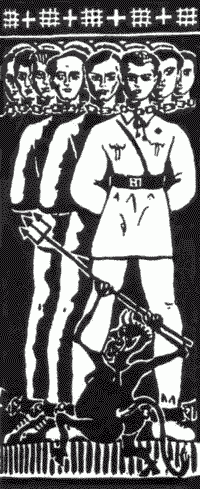 The Legionary Doctrine (also called Legionarism) refers to the philosophy and beliefs presented by the Legion of Michael the Archangel (also commonly known as the Iron Guard), the Romanian Christian Nationalist organization founded by Corneliu Zelea Codreanu, who is the key figure in the creation of its doctrine. It is necessary to clarify what the members of the Legionary Movement taught and believed due to many misconceptions arising from ignorance and outright deception, as well as the mistaken assumption that the Legionary Movement was largely an imitation of Fascism or National Socialism.
Precursors
In 1878 and 1879, after Romania had won its independence from the Ottoman Empire, the new nation wanted to be recognized by other European powers. The Romanians could not achieve this without signing the Treaty of Berlin, which forced them to grant citizenship to Jews, a hostile and alien people on Romanian land. Although the treaty was signed, certain significant cultural and political figures in Romanian history spoke out against the Jews in order to warn their nation that the Jews were culturally and economically harmful. These men’s works from 1879 were significant intellectual sources of the Legionary Movement’s Christian nationalism and awareness of the Jewish Problem. The most influential of them were the following:
- Vasile Conta (1845–1882) – philosopher and politician
- Vasile Alecsandri (1821–1890) – diplomat and politician
- Mihail Kogălniceanu (1817–1891) – statesman and historian
- Mihail Eminescu (1850–1889) – famous poet and journalist
- Bogdan Petriceicu Hasdeu (1838–1907) – historian and philologist
- Costache Negri (1812–1876) – politician
- A. D. Xenopol (1847–1820) – historian and economist
Other intellectuals, who lived in the early 20th century and saw the birth and growth of the Legionary Movement, also educated Codreanu and other Legionaries about the Jewish Problem, national mysticism, Orthodox mysticism, and economic practices. These men were:
- A. C. Cuza (1857–1947) – politician and professor of law and political economy
- Nicolae Iorga (1871–1940) – historian, professor of history, and politician
- Nicolae Paulescu (1869–1931) – physiologist, professor of medicine, and philosopher
- Ion Gavanescul (1859–1949) – professor of pedagogy
- Nichifor Crainic (1889–1972) – professor of theology, theologian, and philosopher
To avoid misconceptions, it must be noted that it is not implied here that the precursors of the Legionary Movement agreed with Legionary doctrine on every point. For example, some of them had different political attitudes; the Legion rejected republicanism while precursors such as Eminescu supported the democratic system.
Anti-Semitism and the Jewish Problem
Some people today who follow the Legionary doctrine or admire the Legionaries assert that the Legion was not anti-Semitic but only appeared so because of a Jewish problem in Romania. One of the major reasons for which they object to the term “anti-Semitic” is because of a certain way by which that term is defined by Jews and philo-semites. Such groups define it as an irrational hatred of all Jews, and in that case the Legionaries were not truly anti-Semitic, since their hostility to the Jews was not irrational nor were they enemies with every Jew (it has been pointed out that the Legion had a few Jewish supporters, although it should be remembered that the majority of Jews were enemies of the Legion).
However, in the late 19th century and early 20th century the term anti-Semite was simply defined as one who had hostility towards Jews and opposed their presence in one’s nation. This is how Cuza and other precursors, Corneliu Codreanu, and his successor Horia Sima defined it, and they all had no qualms about calling themselves anti-Semitic. Codreanu freely stated in his major book For My Legionaries about his visit to Germany that “I had many discussions with the students at Berlin in 1922, who are certainly Hitlerites today, and I am proud to have been their teacher in anti-Semitism, exporting to them the truths I learned in Iasi.”
It should be noted, however, that while Codreanu had no problem associating with the German National Socialist movement (although he also correctly insisted that his Legion was entirely independent of National Socialism), Horia Sima objected to any connection between the two after World War II. In his 1967 book Istoria Mişcarii Legionare (History of the Legionary Movement) Sima wrote:
The Legionary Movement, since its first manifestation, was the object of all sorts of slander. One of the most common allegations by its countless internal and external enemies was that the Legion was a “branch of Nazism.” Such statements can be made as a result of ignorance or bad faith. The anti-Semitism of the Legionary Movement has nothing in common with German anti-Semitism. By taking a stand against the Jewish danger, a danger extremely active and menacing in Romania, Corneliu Codreanu was simply continuing an almost century old Romanian tradition.
It should also be emphasized that Legionary hostility to the Jews as an ethnic group was actually rational, based not only on the scientific studies of the Jewish problem by intellectuals such as Cuza, Paulescu, Iorga, Xenopol, et al. but also on real experiences and observations made by many average Romanians. The Jewish problem was a vivid reality. Both intellectual observation as well as common observation showed the people beyond any doubt that the majority of Jews not only lived parasitically off of the labor of Romanian workers by their ownership of many companies or financial activity, but also posed a threat to Romanian culture and tradition, which they were damaging through their influence on mass media and certain government policies.
It is also worth noting that while Codreanu was first and foremost concerned with the Romanian condition, he believed that an alliance between nations needed to be made to solve the Jewish problem internationally. This is made clear by a statement in For My Legionaries:
There, I shared with my comrades an old thought of mine, that of going to Germany to continue my studies in political economy while at the same time trying to realize my intention of carrying our ideas and beliefs abroad. We realized very well, on the basis of our studies, that the Jewish problem had an international character and the reaction therefore should have an international scope; that a total solution of this problem could not be reached except through action by all Christian nations awakened to the consciousness of the Jewish menace.
The solution to the Jewish problem was not to kill the Jews, as many dishonest people accuse Codreanu of wanting, but to expel the Jews from Romania. This plan for deportation is plainly stated in The Nest Leader’s Manual, where he wrote “Romania for Romanians and Palestine for the Jews.”
Economics and Labor: Anti-Communism and Anti-Capitalism
When Codreanu first went to the University of Iasi in 1919, years before he created the Legion, he discovered that most of the city and university were heavily influenced by Communist political campaigns. The Romanian workers were experiencing terrible working conditions and had very low wages, so they had been drawn to Communism by Marxist propagandists. Professors and students at the University were also largely converted to Communism, and Communist student meetings attacked the Romanian army, the Orthodox Church, the monarchy, and other aspects of traditional Romanian life. It was this situation that drove Codreanu into a heroic fight against Communism, finally leading a conservative group to completely crushing the Communist movement. Codreanu, being a traditionalist, insisted on defending faith in God, nationalism, the Crown, and private property.
On the other hand, Codreanu also believed in fighting the Capitalist system, which he realized was an inherently exploitive system, which allowed corporations to exploit millions of workers. In 1919, when forming the program of “National Christian Socialism,” he stated that “It is not enough to defeat Communism. We must also fight for the rights of the workers. They have a right to bread and a fight to honor. We must fight against the oligarchic parties, creating national workers organizations which can gain their rights within the framework of the state and not against the state.”
Later in 1935 he announced the creation of a new system which he hoped would be adopted by the nation as a whole once the Legionary Movement took power: “Legionary commerce signifies a new phase in the history of commerce which has been stained by the Jewish spirit. It is called: Christian commerce — based on the love of people and not on robbing them; commerce based on honor.” Essentially Codreanu was a Third Position socialist, supporting private property but at the same time opposing the materialistic and money-centered system of capitalism. Another important point of Codreanu’s ideas for Romania is that labor is something in which everyone must be involved in. Laziness was a trait that should be treated as a highly negative vice. All Legionaries in some way did some kind of physical work, often to help lower class Romanians in their own labor and problems. Codreanu wrote: “The law of work: Work! Work every day. Put your heart into it. Let your reward be, not gain, but the satisfaction that you have laid another brick to the building of the Legion and the flourishing of Romania.”
One issue which has often been brought up against Codreanu is the fact that he associates both Capitalism and Communism with the Jews, as both of them were dominated by Jews in Romania. He wrote, connecting Jewish Capitalists and Jewish Communists, “But industrial workers were vertiginously sliding toward Communism, being systematically fed the cult of these ideas by the Jewish press, and generally by the entire Jewry of the cities. Every Jew, merchant, intellectual, or banker-capitalist, in his radius of activity, was an agent of these anti-Romanian revolutionary ideas.” Some of his opponents have objected to this connection by arguing that it is ridiculous to say that Jewish company owners and bankers would support Communists, who supposedly would destroy them upon a revolution, since they would want to eliminate the capitalists. But it should be remembered that not all of the bourgeoisie were exterminated in Communist revolutions across Europe. Sometimes, members of the bourgeoisie who supported Communism before a revolution, who were oftentimes Jews, would be given a place in the Communist system once the revolution was achieved.
Nation and Land
The Legionaries believed that nations were not merely products of history and geography, but were created by God Himself and had a spiritual component to them. Codreanu wrote in For My Legionaries, adopting the teachings of Nichifor Crainic:
If Christian mysticism and its goal, ecstasy, is the contact of man with god through a “leap from human nature to divine nature,” national mysticism is nothing other than the contact of man and crowds with the soul of their people through the leap which these forces make from the world of personal and material interests into the outer world of nation. Not through the mind, since this any historian can do, but by living with their soul.
A nation was also inseparable from the land on which it developed, to which the people grew a spiritual connection with over time. Codreanu wrote of the Romanian people:
We were born in the mist of time on this land together with the oaks and fir trees. We are bound to it not only by the bread and existence it furnishes us as we toil on it, but also by all the bones of our ancestors who sleep in its ground. All our parents are here. All our memories, all our war-like glory, all our history here, in this land lies buried. . . . Here . . . sleep the Romanians fallen there in battles, nobles and peasants, as numerous as the leaves and blades of grass . . . everywhere Romanian blood flowed like rivers. In the middle of the night, in difficult times for our people, we hear the call of the Romanian soil urging us to battle. . . . We are bound to this land by millions of tombs and millions of unseen threads that only our soul feels . . .
Finally, it must be noted that Codreanu also believed that every nation has a mission to fulfill in the world and therefore that only the nations which betray their mission, given to them by God, will disappear from the earth. “To us Romanians, to our people, as to any other people in the world, God has given a mission, a historic destiny,” wrote Codreanu, “The first law that a person must follow is that of going on the path of this destiny, accomplishing its entrusted mission. Our people has never laid down its arms or deserted its mission, no matter how difficult or lengthy was its Golgotha Way.” The aim of a nation, or its destiny in the world of spirit, was that it does not simply live in the world but that it aims for resurrection through the teachings of Christ. “There will come a time when all the peoples of the earth shall be resurrected, with all their dead and all their kings and emperors, each people having its place before God’s throne. This final moment . . . is the noblest and most sublime one toward which a people can rise.” It was for this ideal that the Legion fought tirelessly against all obstacles, corrupt politicians, and alien peoples such as the Jews which insisted on feeding off the Romanian people and land.
Religion and Culture
One aim of the Legionary Movement was the preservation and regeneration of Romanian culture and customs. They knew that culture was the expression of national genius, its products the unique creations of the members of a specific nation. Culture could have international influence, but it was always national in origin. Therefore, the Liberal-Capitalist position that different ethnic groups should be allowed to freely move into another group’s nation, interfering with that nation’s culture and development by their presence and influence, was incredibly wrong. Each ethnic group has its own soul and produces and crystallizes its own form and style of culture. For example, a Romanian cultural image could not be created from German essence any more than a German cultural image could be created from Romanian essence.
Furthermore, religion was an important aspect in a people’s culture, oftentimes the origin of many customs and traditions. The Legionaries believed that Christianity was not only a significant part of their culture, but also that it was the religion which represented divine truth. This is why in order to join the Legion of Michael the Archangel one had to be a Christian and could not be of another religion or an atheist. With these principles clear, the Legion therefore aimed for a Romanian nation made up of only ethnic Romanians and only Christians.
With this in mind, it becomes clear why Codreanu and many other Romanians felt that the Jewish presence in their nation was so threatening. The Jews became influential in economics, finance, newspapers, cinema, and even politics. Through this they even became powerful in the field of culture, slowly changing Romanian customs and Romanian thinking, making it more related to that of the Jews. Codreanu, as concerned about the problem as people such as Cuza and Gavanescul, commented:
Is it not frightening, that we, the Romanian people, no longer can produce fruit? That we do not have a Romanian culture of our own, of our people, of our blood, to shine in the world side by side with that of other peoples? That we be condemned today to present ourselves before the world with products of Jewish essence?” and “Not only will the Jews be incapable of creating Romanian culture, but they will falsify the one we have in order to serve it to us poisoned.
Race
The reality of race was accepted by most Legionaries, and Codreanu wrote of the importance of keeping a nation racially cohesive. In For My Legionaries, Codreanu quoted Conta’s racial separatist arguments, which formed the basis of his own attitudes on race, and even compared them to the German National Socialist view. He wrote: “Consider the attitude our great Vasile Conta held in the Chamber in 1879. Fifty years earlier the Romanian philosopher demonstrated with unshakeable scientific arguments, framed in a system of impeccable logic, the soundness of racial truths that must lie at the foundation of the national state; a theory adopted fifty years later by the same Berlin which had imposed on us the granting of civil rights to the Jews in 1879.”
However, it should be noted that at least a few Legionaries did not agree that race was important. Ion Mota, in 1935 when he met with the NSDAP in Germany, criticized the National Socialists by telling them that “Racism is the most vulgar form of materialism. Peoples are not different by flesh, blood or color of skin. They are different by their spirit, i.e. by their creations, culture and religion.” Of course, Mota’s attitude is unlikely to have been dominant among the Legion, since Codreanu was the founder of the ideas the majority of its members shared. It is also notable that Horia Sima, in his works on Legionary beliefs, agreed with Codreanu that race is real and important. However, Sima disagreed with connecting Romanian racial views with German racialism, censuring the followers of Hitler by asserting that their worldview misused racialism, making it too absolute and materialistic.
The New Man
The Legionary Movement aimed to create a New Man (Omul Nou), to transform the entire nation through Legionary education by transforming each individual into a person of quality. The New Man would be more honest and moral, more intelligent, industrious, courageous, willing to sacrifice, and completely free of materialism. His view of the world would be centered around spirituality, service to his nation, and love of his fellow countrymen. This new and improved form of human being would transform history, setting the foundations of a new era never before seen in Romanian history.
Codreanu wrote:
We shall create an atmosphere, a moral medium in which the heroic man can be born and can grow. This medium must be isolated from the rest of the world by the highest possible spiritual fortifications. It must be defended from all the dangerous winds of cowardice, corruption, licentiousness, and of all the passions which entomb nations and murder individuals. Once the Legionary will have developed in such a milieu . . . he shall be sent into the world. . . . He will be an example; will turn others into Legionaries. And people, in search of better days, will follow him . . . will make a force which will fight and will win.
Therefore, a spiritual revolution would create the basis for a political revolution, since without the New Man no political program could achieve any lasting accomplishment.
Politics
Romania ’s government was that of a constitutional monarchy, thus the nation’s government was considered a democracy. Corneliu Codreanu was a member of the Romanian parliament two times, and his experiences with democratic politics led him to firmly conclude that the democratic system, although claiming to represent the will of the people, rarely ever achieved its goal of representation. In fact, he felt that it did just the opposite. In For My Legionaries, he listed out some major objections he had to the system and the way it worked (the following is a paraphrase of his points):
- Democracy destroys the unity of the people since it creates factionalism.
- Democracy turns millions of Jews (and other alien groups) into Romanian citizens, thus carelessly destroying the ancient ethnic make-up of a nation.
- Democracy is incapable of enduring effort and responsibility because by design it inherently leads to an unending change in leadership over short period of time. A leader or party works to improve the nation with a specific plan, but only rules for a few years before being replaced by a new one with a new plan, who largely if not completely disregard the old one. Thus little is achieved and the nation is harmed.
- Democracy lacks authority since it does not give a leader the power he needs to accomplish his duties to the nation and turns him into a slave of his selfish political supporters.
- Democracy is manipulated by financiers and bankers, since most parties are dependent on their funding and are thus influenced by them.
- Democracy does not guarantee the election of virtuous leaders, since the majority of politicians are either demagogues or corrupt, and the masses of common people usually are not capable or knowledgeable enough to elect good men. Codreanu rhetorically remarked about the idea of the masses choosing its elite, “Why then do soldiers not choose the best general?”
Therefore, Codreanu aimed for a new form of government, rejecting both republicanism and dictatorship. In this new system the leaders would not inherit power through heredity, nor would they be elected as in a republic, but rather they would be selected. Thus, selection and not election is the method of choosing a new elite. Natural leaders, demonstrating bravery and skill, would rise up through Legionary ranks, and the old elite would be responsible for choosing the new elite. The concept of the New Man is important to Codreanu’s system of leadership, because only by the establishment of the New Man would the right leaders rise and become the leaders of the nation. The elite would be founded on the principles Codreanu himself laid out: “a) Purity of soul. b) Capacity of work and creativity. c) Bravery. d) Tough living and permanent warring against difficulties facing the nation. e) Poverty, namely voluntary renunciation of amassing a fortune. f) Faith in God. g) Love.”
This new system of government which Codreanu aimed to establish would be authoritarian, but it would not be totalitarian. He described it in this way: “He (the leader) does not do what he wants, he does what he has to do. And he is guided, not by individual interests, nor by collective ones, but instead by the interests of the eternal nation, to the consciousness of which the people have attained. In the framework of these interests and only in their framework, personal interests as well as collective ones find the highest degree of normal satisfaction.”
An important point in the Legionary political system is that the Legion recognized three entities: “1) The individual. 2) The present national collectivity, that is, the totality of all the individuals of the same nation, living in a state at a given moment. 3) The nation, that historical entity whose life extends over centuries, its roots imbedded deep in the mists of time, and with an infinite future.”
Each of these entities had their own rights in a hierarchical sense. Republicanism recognized only the rights of the individual, but the Legionary Movement recognized the rights of all three. The nation was the most important entity, and thus the rights of the national collectivity were subordinate to it, and finally the rights of the individual were subordinate to the rights of the national collectivity. The destructive individualism of “democracy” infringed on the rights of the national collectivity and the rights of the nation, since it ignored the rights of those two entities and placed that of the individual above all.
With these facts in mind, it becomes clear that to accuse the Legionary Movement of wishing to establish a tyrannical dictatorship or of being “Fascist” is nothing more than mindless or deceitful propaganda against the movement.
Martyrdom
“The Legionary embraces death,” wrote Codreanu, “for his blood will serve to mold the cement of Legionary Romania.” Throughout the struggles and intense persecutions it faced, the Legionary Movement produced many martyrs, two of the most often referenced being Ion Mota and Vasile Marin, who died in 1937 helping Franco fight against Marxist Republicans in the Spanish Civil War. Other martyrs of the Legion include Sterie Ciumetti, Nicoleta Nicolescu, Lucia Grecu, and Victor Dragomirescu among hundreds of others. Finally, in 1938, Corneliu Codreanu himself became a martyr after Armand Calinescu, acting outside of the law, had him murdered. Martyrs were often honored in songs all Legionaries sang and in Legionary rituals, when their names were announced in the roll call, all Legionaries attending spoke “present!” They believed that the souls of Romanian dead would still be present with them in their battles.
Violence
Along with martyrdom, in which death was received, there was an occasional violence committed by Legionaries against their enemies. Codreanu originally intended that the Legionary Movement would be nonviolent, but the unusually ruthless and cruel manner in which their enemies treated them created conditions in which violence was inevitable. When their political opponents physically attacked them, the Legionaries often struck back. In certain select cases, certain top enemies of the Legion were assassinated. There are three most prominent examples:
- In 1933, the government of I. G. Duca had banned the Legion to keep it from participating in elections, arrested 18,000 Legionaries, and tortured and murdered several others. On December 29–30 of that year, the Legionaries Nicolae Constantinescu, Doro Belimace, and Ion Caranica (who are often referred to as the Nicadori) assassinated Duca in revenge.
- In 1934, Mihail Stelescu, a member of the Legion, was investigated by top Legionaries and discovered to have had planned to betray the Legion and create his own group and was therefore expelled. Stelescu then created the group in 1935, calling it Cruciada Romanismuliu (“The Crusade of Romanianism”), and slandered Codreanu in its newspaper. There is also evidence that Stelescu was plotting to assassinate Codreanu and that, after contacting top political figures, he received government support for this plan. In this situation, ten Legionaries later called the Decemviri (“The Ten Men”) shot him.
- In November of 1938, Armand Calinescu had the military police illegally murder Codreanu (who was earlier that year imprisoned for ten years for unproven charges at unfair trials), the Nicadori, and the Decemviri. On September 21, 1939 nine Legionaries referred to as the Rasbunatorii (“The Avengers”) assassinated Calinescu. After they turned themselves in, they were tortured and executed without trial. These nine men were: Miti Dumitrescu, Cezar Popescu, Traian Popescu, Nelu Moldoveanu, Ion Ionescu, Ion Vasiliu, Marin Stanciulescu, Isaia Ovidiu, and Gheorghe Paraschivescu.
One may object to such actions on the part of the Legionaries, asserting that they are thus taking part in un-Christian actions. However, to correctly understand this, one must remember that throughout the history of Christianity there were many people who had committed violent acts or killed for the sake of their religion. Certain crusader knights who had killed huge numbers of people were even sainted. Clearly it is nothing new for Christian zealots to engage in combat against their enemies. Some would argue that because Christ taught people to “love their enemies” that therefore Codreanu was openly violating Christian teaching. But it is not quite so clear.
It should be remembered that in the original Greek and Latin the phrase “love your enemies” (Matthew 5:44; Luke 6:27) referred specifically to private enemy, not public enemy or national enemy (who could therefore be hated). This is why Codreanu said to the Legionaries:
Forgive those who struck you for personal reasons. Those who have tortured you for your faith in the Romanian people, you will not forgive. Do not confuse the Christian right and duty of forgiving those who wronged you, with the right and duty of our people to punish those who have betrayed it and assumed for themselves the responsibility to oppose its destiny. Do not forget that the swords you have put on belong to the nation. You carry them in her name. In her name you will use them for punishment-unforgiving and unmerciful. Thus and only thus, will you be preparing a healthy future for this nation.
These are the facts which need to be remembered in order to properly understand why Codreanu and the Legionaries did what they did. Otherwise, a proper historical study cannot be done.
Bibliography
Corneliu Zelea Codreanu, For My Legionaries, third edition, translated and edited by Dr. Dimitrie Gazdaru (York, S.C., USA: Liberty Bell Publications, 2003).
Corneliu Zelea Codreanu, The Nest Leader’s Manual (USA: CZC Books, 2005).
Corneliu Zelea Codreanu, The Prison Notes (USA: Reconquista Press, 2011).
Radu Mihai Crisan, Eminescu Interzis: Gândirea Politică (Forbidden Eminescu: Political Thought) (Bucharest: Criterion Publishing, 2008).
Radu Mihai Crisan, Istoria Interzisă (Forbidden History) (Bucharest: Editura Tibo, 2008).
Alexander E. Ronnett and Faust Bradescu, “The Legionary Movement in Romania,” The Journal of Historical Review, vol. 7, no. 2, pp. 193–228.
Alexander E. Ronnett, Romanian Nationalism: The Legionary Movement (Chicago: Romanian-American National Congress, 1995).
Horia Sima, Doctrina legionară (Legionary Doctrine) (Madrid: Editura Mişcării Legionare, 1980).
Horia Sima, Era Libertaţii – Statul naţional-Legionar, vol. 1 (It was Freedom – National Legionary State, vol. 1) (Madrid: Editura “Miscarii Legionare, 1982).
Horia Sima, Era Libertaţii – Statul naţional-Legionar, vol. 2 (It was Freedom – National Legionary State, vol. 2) (Madrid: Editura Miscãrii Legionare, 1990).
Horia Sima, Istoria Mişcarii Legionare (History of the Legionary Movement) (Timişoara: Editura Gordian, 1994).
Horia Sima, Guvernul National Român de la Viena (Romanian National Government in Vienna) (Madrid: Editura Miscarii Legionare, 1993).
Horia Sima, The History of the Legionary Movement (Liss, England: Legionary Press, 1995).
Horia Sima, Menirea Nationalismului (The Meaning of Nationalism) (Salamanca: Editura Asociaţiei Culturale Hispano-Române, 1951).
Horia Sima, Prizonieri ai Puterilor Axei (Prisoners of the Axis Powers) (Madrid: Editura Miscarii Legionare, 1990).
Horia Sima, Sfârşitul unei domnii sângeroase (The End of a Bloody Reign) (Madrid: Editura Miscarii Legionare, 1977).
Horia Sima, The History of the Legionary Movement (Liss, England: Legionary Press, 1995).
Carl Schmitt, The Concept of the Political (Chicago: University of Chicago Press, 2007).
Michael Sturdza, The Suicide of Europe: Memoirs of Prince Michael Sturdza, Former Foreign Minister of Rumania (Boston & Los Angeles: Western Islands Publishers, 1968).
Article printed from Counter-Currents Publishing: http://www.counter-currents.com
URL to article: http://www.counter-currents.com/2012/01/the-legionary-doctrine/
URLs in this post:
[1] Image: http://www.counter-currents.com/wp-content/uploads/2012/01/ironguard.jpg
00:05 Publié dans Histoire | Lien permanent | Commentaires (0) | Tags : roumanie, histoire, légionarisme, codreanu | | del.icio.us | | Digg | Facebook