

samedi, 07 septembre 2013
EU houdt Grieken in eurozone vanwege nieuwe aardgaspijpleiding
Griekse regering misbruikt Trans Adriatische Pijplein voor nieuwe schulden op kosten van de EU

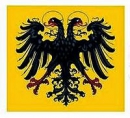
Achter het streven om met alle mogelijke middelen Griekenland in de eurozone te houden zit behalve een politiek motief ook een belangrijk economisch aspect: aardgas. De EU wil zijn grote afhankelijkheid van Russisch aardgas verminderen en een nieuwe pijpleiding van Turkije via Griekenland naar Italië bouwen (zie afbeelding). Een eventuele Griekse uittreding uit de eurozone zou dit project in gevaar kunnen brengen.
Afhankelijk van Russisch gas
De Europeanen vragen zich af waarom de EU keer op keer op hun kosten nieuwe belastingmiljarden in Griekenland blijft pompen. Het bankroete land stevent inmiddels op zijn zoveelste reddingspakket af, en heeft nog amper iets van de vereiste hervormingen doorgevoerd. Waarom dan toch zo coulant voor de onverbeterlijk frauderende Grieken?
Het antwoord: de EU voelt de knellende band van bijna totale afhankelijkheid van Russisch aardgas. Feitelijk kunnen de Russen doen en laten wat ze willen; het is Gazprom dat bepaalt of miljoenen Europeanen komende winter hun huizen warm kunnen stoken, of in de kou moeten zitten.
Monopolie Gazpromia
Om het monopolie van 'Gazpromia', zoals Rusland ook wel spottend wordt genoemd, te doorbreken, wil Europa uit Azerbeidzjan aardgas importeren. Dit gas moet geleverd worden via de Trans-Adriatische-Pijplijn (TAP), die Russisch grondgebied vermijd. De TAP is dringend nodig, aangezien de geplande andere pijpleiding via Syrië niet gebouwd kan worden vanwege de burgeroorlog in dat land. Dat was tevens de reden van het Europese aardolie-embargo tegen de Syrische regering.
Athene misbruikt machtspositie voor nieuwe schulden
Omdat tweederde van de pijpleiding over Grieks grondgebied loopt en de Grieken beseffen dat de EU niet zonder hen kan, misbruikt Athene dit gegeven om vrijwel onbeperkt nieuwe schulden te maken, wetende dat Brussel nooit zal toestaan dat het TAP-project in gevaar komt. Uittreding uit de eurozone zal Griekenland namelijk absoluut zeker totaal doen instorten.
Extra gas vanwege mislukte Energiewende
Extra aardgas is broodnodig, vooral nu in Duitsland de Energiewende -de overgang op groene energie- een gigantisch financieel, technologisch en logistiek fiasco is geworden. Desondanks heeft de Nederlandse regering Rutte vorige maand besloten om ook in ons land met tientallen miljarden euro's subsidie een vergelijkbare, eveneens tot mislukken gedoemde omschakelijking te realiseren.
Strategisch belang
De pijpleiding wordt in geopolitiek opzicht van strategisch belang geacht. TAP-chef Kjetil Tungland is adviseur van de Atlantic Council, een Amerikaanse lobbygroep onder leiding van minister van Defensie Chuck Hagel. Zoals we in mei uitlegden draait het conflict in Syrië voor een groot deel om de nieuw te bouwen Nabucco pijpleiding van de Rode Zee via Jordanië en Syrië naar Turkije, die eveneens een geduchte concurrent voor Gazprom dreigt te worden.
Nieuw gasveld in Koerdistan
Bovendien is er in het Iraakse deel van Koerdistan onlangs een enorme nieuwe gasvoorraad ontdekt. Er worden reeds plannen gemaakt om dit gasveld aan te sluiten op de TAP in Turkije, waardoor de Europese afhankelijkheid van Russisch gas verder zal afnemen.
Alleen elite profiteert
De gewone Griek zal overigens niet profiteren van de gaspijpleiding. Die wordt namelijk net zoals in ons eigen land opgezadeld met forse bezuinigingen en pijnlijke ingrepen in de sociale zekerheid. Alleen de machtselite in Athene zal -zoals het al 100 jaar gaat- de eigen bankrekening flink kunnen spekken.
Nederlander betaalt indirect mee aan TAP
Via de vele bailouts, noodkredieten, hulpprogramma's, schuldenkwijtscheldingen betaalt de Nederlandse bevolking dus indirect mee aan de komst van de TAP, die € 4 miljard euro kost. De 'redding' van Griekenland met Europees belastinggeld is dus niet alleen voor de banken een buitengewoon lucratieve zaak, maar ook voor de energiegiganten.
Xander
(1) Deutsche Wirtschafts Nachrichten
Zie ook o.a.:
28-05: Strijd Syrië gaat om aardgas en monopoliepositie Gazprom
00:05 Publié dans Actualité, Affaires européennes, Géopolitique | Lien permanent | Commentaires (0) | Tags : politique internationale, grèce, géopolitique, europe, affaires européennes, méditerranée, hydrocarbures, gaz |  |
|  del.icio.us |
  |
|  Digg |
  Facebook
Vortrag Dr. Sunic / Conference Dr. Sunic
Prof. Dr. Tomislav Sunic
(http://www.tomsunic.com/?cat=35)
(USA, Kroatien)
(Schriftsteller, ehemaliger US Professor der Politwissenschaften)
Rede: „Ulrichsberg: Mahnort oder Wegweiser neuer Katastrophen“?
Im Andenken an die Zivilopfer des Kommunismus
Kranzniederlegung
Sonntag, den 15. September 2013, 10 Uhr, Österreich (Kärnten), Ulrichsberg, Ort: 9063 Pörtschach am Berg bei der Stadt Klagenfurt
...................................................................................................
Dr. Tomislav Sunic
(USA, Croatia)
(Author, former US political science professor)
Commemorative speech in the German language: “Ulrichsberg: A Memorial Place or a Guidepost to new Catastrophes”?
In memory of civilian victims of communism
Laying of a wreath
Sunday, September 15, 2013, 10AM, Austria, Carinthia, 9063 Pörtschach am Berg, near the town of Klagenfurt
...........................................................
Prof. Dr. Tomislav Sunic
( autor, bivši profesor političkih znanosti, SAD)
Govor na njemačkom: „Ulrichsberg: memorijalni centar ili putokaz za nove katastrofe“?
U sjećanju na civilne žrtve komunizma
Polaganje vijenca i za hrvatske žrtve
Nedjelja, 15. rujna, 2013, 10h. Austrija, Koruška, 9063 Pörtschach am Berg kod Klagenfurta
.......................................
Tomislav Sunic
(USA, Croatie)
(Écrivain, ancien professeur de Sciences Politiques)
Allocution en langue allemande :
"Ulrichsberg, un lieu de commémoration ou l'annonce de nouvelles catastrophes „ ?
A la mémoire des victimes du communisme
Dépôt de gerbe
Dimanche, le 15 Septembre 2013, 10h00, Ulrichsberg, près de Klagenfurt, Autriche, 9063 Pörtschach am Berg
.............................................................................................................………………………………
............................................................................................................................................................
Anschließend legt Dr. Sunic mit dem Obmann des Bleiburger Ehrenzuges (PBV) Ilija Abramovic einen Kranz für alle Kriegsopfer am kroatischen Ehrendenkmal der Opfer von Bleiburg am Ulrichsberg nieder.
Fahnen der Veteranen und Opferverbände ausdrücklich erwünscht.
Impressionen vom letzen Ulrichsbergtreffen
Kroatischer Kranz und Ehrendenkmal des Bleiburger Ehrenzuges am Ulrichsberg:
http://www.meinbezirk.at/klagenfurt/kultur/gedenktafeln-m3011086,348907.html
00:05 Publié dans Actualité, Affaires européennes, Evénement, Histoire | Lien permanent | Commentaires (0) | Tags : tomislav sunic, croatie, mitteleuropa, europe centrale, histoire, deuxième guerre mondiale, seconde guerre mondiale | | del.icio.us | | Digg | Facebook
A Breviary for the Unvanquished
A Breviary for the Unvanquished
By Michael O'Meara
A propos of Dominique Venner
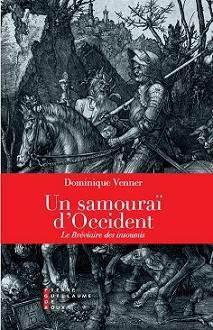
Un Samouraï d’Occident: Le Bréviaire des insoumis [2]
Paris: PGDR, 2013
 In his commentaries on the Gallic Wars, Julius Caesar claimed the ancient Celts were ruled by two principles: to fight well and to speak well. By this standard, the now famous essayist, historian, and former insurgent, Dominique Venner, who frequently identified with his Gallic ancestors, was the epitome of Caesar’s Celt—for with arms and eloquence, he fought a life-long war against the enemies of Europe.
Like much else about him (especially his self-sacrifice on Notre Dame’s high altar, which, as Alain de Benoist writes, made him un personage de l’histoire de France), Venner’s posthumously published Un Samuraï d’Occident bears testament not just to his rebellion against the anti-European forces, but to his faith in the Continent’s tradition and the restorative powers this tradition holds out to a Europe threatened by the ethnocidal forces of the present American-centric system of global usury.
His “samurai” (his model of resistance and rebellion) refers to the “figure” of the aristocratic warrior, once honored in Japan and Europe. Such a figure has, actually, a long genealogy in the West, having appeared 30 centuries ago in Homer’s epic poems. And like a re-occurring theme, this figure continued to animate much of Western life and thought—up until at least 1945.
An especially emblematic illustration of Venner’s warrior is Albrect Dürer’s 1513 engraving of “The Knight, Death, and the Devil.” In the daunting Gothic forest sketched by Dürer, where his solitary knight encounters both the devil and time’s relentless march toward death, the figure of the noble warrior is seen serenely mounted on his proud horse, with a Stoic’s ironic smile on his lips, as he patrols the lurking dangers, accompanied by his dog representing truth and loyalty.
For Venner, Dürer’s timeless rebel does what needs doing, knowing that however high the price he must pay to defend the cosmic order of his world, it will be commensurate with whatever “excellence” (courage and nobility) he finds in himself. It is, in fact, the intensity, beauty, and grandeur of the knight, in his struggle with the forces of death and disorder, that imbue him with meaning. The crueler the destiny, it follows, the greater it is—just as a work of art is great to the degree it transcends tragedy by turning it into a work of beauty.
Contemporary “conservatives” and libertarians struggling with the crisis-ridden economic imperatives of our globalized/miscegenated consumer society, will undoubtedly think Venner’s warrior irrelevant to the great challenges facing it—but this is not the opinion of the “European Resistance” (and it will not likely be the opinion of the European-American Resistance, if one should arise). For between those forming the fake, system-friendly opposition to the liberal nihilism programming our global electronic Gulag—and those European rebels defending the Continent’s millennial tradition and identity—there stretches a gaping ontological abyss.
***
Venner’s book begins with an account of a not uncommon situation in today’s France, especially among the so-called petit blancs—the little people. He cites the case, reported by Le Monde, of one “Catherine C.,” who is what France’s black and brown invaders refer to as a Gauloise: a French native (i.e., someone whose Celtic ancestors fought Caesar’s legions).
All her life Catherine C. has lived in the suburbs of Paris, in a housing estate originally designed to lodge French workers, but now occupied almost exclusively by the invaders. She has hence become a “minority,” a stranger in her own land, abandoned to the whim and rule of the non-Europeans dominating her environment. As such, she rarely leaves her apartment, feeling alienated not just from her “neighbors,” but from the established institutions and authorities favoring the invaders. Even her son, who lacks her sense of French identity, has converted to Islam and wants “to be black or beur [Arab] like everyone else.” But however isolated and threatened, this Gauloise refuses—out of pride—to abandon her home or identity.
We know from other sources that Venner’s resistance to the present anti-white regime began long ago, in his late adolescence, when he took up arms to defend “French Algeria.” His resistance – then on the field of battle (against the outer enemy), later in Parisian street skirmishes (against the inner traitor), and finally on the printed page – has shaped the course of his entire life. Though a “tribal solidarity” and “rebel heart” motivated his initial resistance, the cause of France’s “little people”—the Catherine C.’s—constituting the majority of the nation—became a no less prominent motive for him, especially in that the “little people” of French France are the principal victims of the elites’ criminal system of governance and privilege.
***
“To exist,” Venner argues, “is to struggle against that which denies me.” Since 1945, the whole world has “denied” the European (allegedly “responsible” for the Shoah, slavery, colonization, etc.) the right to exist. At the most fundamental level, this implies that Europeans have no right to an identity: no right to be who they are (given that they are a scourge to humanity). Venner, of course, refused to submit to such tyranny, which has made him a “rebel”: someone who not only refuses to accommodate the reigning subversion, but who remains true to himself in the name of certain higher principles.
Venner’s rebel—the “unvanquished” to use Faulkner’s term—is an offspring of indignation. In face of imposture or sacrilege, the rebel revolts against a violated legitimacy. His rebellion begins accordingly in the conscience before it occurs in arms. Our earliest example of such a rebellion is Sophocles’ Antigone, who rebelled against King Creon’s violation of the sacred law. Like Antigone, Venner’s rebel warrior obeys a transcendent “legitimacy” and resists all that transgresses it; similarly, he never calculates the prospect of success or refuses to pay the often terrible price of rebellion—because a higher defining duty with which he identifies impels him to do so.
Since such rebellion arises from an offended spirit, it often breaks out where least expected. In a life spanning the 20th century’s great catastrophes (World War II, the German Occupation of France, the so-called “Liberation” and its murderous left-wing purges, the Cold War, Decolonization, etc.), Venner has known a Europe paralyzed by dormition (sleep)—too traumatized by the great bloodlettings and destructions of earlier decades to counter her ongoing de-Europeanization. The present “shock of history,” he contends, may change this.
A historical figure (in the form of a revolutionary opponent of De Gaulle’s Fifth Republic, then as a founder of the European New Right, and finally as a proponent of a “revolutionary nationalist” Europe) before he became a historian, Venner holds that there are no fatalities in history (“the trace men leave on their destiny”) and that Europeans, with their incomparable legacy, will eventually awake to resume their destiny. Their history and tradition weighs thus in their favor.
In the last year of his life, Venner thought the forces of French indignation had finally begun to stir. The massive, spontaneous upsurge of outraged opinion in early 2013 against the Taubira Law legalizing homosexual marriage had set it off. (What was so unexpected in this was that earlier, “Catholic” Spain had passed a similar law without mass protest.) Everywhere in French France, however, this perverted law was experienced as the last straw, for in denaturalizing the family it assaulted the very foundation of Continental life.
***
When a régime contemptuous of popular opinion provokes a “rebellion of the mothers,” as François Hollande’s Socialist/African government had, Venner thought it sign that an unpardonable transgression had occurred. For once middle-class Catholic house wives, with their children and strollers, joined militant identitarians and other rebels, in pouring onto French streets in unprecedented numbers to protest the Soviet-style desecrations, it was if another age had suddenly dawn— sign, perhaps, that the awakening had commenced.
Venner also reminds us that the founding work of European civilization, Homer’s Iliad, is all about what happens when the marriage law is violated. Though Homer believed a civilization could not exist in face of such violation, today’s elites know better—which suggests not just the advanced degree of decay among the latter, but the future-significance of the former.
The young identitarian and revolutionary nationalist rebels, who share Venner’s faith in the ongoing significance of the European tradition and follow him in resisting the violators, are the ones in whose hands the Continent’s future now lies—if Europeans are to have a future. The course of history in any case remains endless and open-ended: which means that the sons and daughters of Odysseus and Penelope, however denied they have become, may one day get another chance to re-conquer their lands and lives.
Venner’s last work (and he was always conscious that words are arms) addresses these awakening forces of resistance—preeminently those opposing the denaturalization of the nation (la Grande Replacement)—for the “prayers and hymns” of his breviary revere an alternative to liberal nihilism that re-grounds Europeans in themselves and in their unique heritage.
***
This European heritage is key to everything, for a people or civilization lacking a memory of its past and a stake in its continuation, is a people or civilization that no longer exists as such. Contrary to the tabula rasa suppositions of the moneychangers, Europeans were not born yesterday. Whatever future they have is unlikely to come from the deranged utopias planned for them, but rather from the memory of their past—and thus from the recognition of who they are in this period and of what is expected of them. Faithful to Europe, Venner’s rebel warrior fights for a future he sees sanctioned in everything that has gone before.
The hubristic course of the 20th century—with its great civil wars and wanton destruction, its world crusades and diseased, mercantile, technological metaphysics—has created a situation in which for the first time in history the Continent’s peoples have been denied their tradition (the soul of their culture) and compelled to find themselves in everything alien to who they are. As a historian and as one of Nietzsche’s “good Europeans,” Venner’s life work might be characterized as a struggle to recover Europe’s memory and the relevance of her sacred wisdom.
If Europeans, then, are to escape the great abyss of nothingness the money powers in Washington and New York plan for them, they will need to recover their identity as a people and a civilization. This means returning (not literally, but spiritually) to their roots, to those authentic sources that created them at the beginning of their history, distinguished their destiny from others, and sustained them over the millennia.
There is, as such, nothing antiquarian or nostalgic in this privileging of history’s longue durée, for the tradition and culture animating a people’s millennial history are ultimately never things of the past per se, but of the future—given that the aesthetic values and living spirituality inherent in them nourish the Europeans’ representations, structure their behavior, and lend meaning to their endeavors.
***
Venner claims the preeminent source for the spiritual re-conquest of Europe’s identity (given that the Catholic Church has abandoned its European roots for the sake of becoming a truly universal religion) is Homer, for his sacred poems reveal the “secret permanences” distinct to the Continent’s family of closely related nations and peoples. Though written at the dawn of our civilization, there is nothing in the Homerian epics that is not intimately familiar to the European of today. For in giving form to the European soul, Homer articulated a conception of the world that is entirely unique to the West—a conception, as Georges Dumézil demonstrated, that was rooted in the earlier Indo-European or Borean antecedents of pre-Hellenic Europe, and one that would shape the subsequently Latin, Celtic, Slavic, and Germanic expressions of European life. In Homer, the true European encounters a mirror of his soul.
Virtually every figure and sentiment distinct to European man is to be found in the civilization-creating monuments of the blind poet—for his epics articulated archetypes that will always be timeless and timely for “the white men of the West.” This seems especially the case in respect to Homer’s model of life, which makes “nature the base, excellence the goal, and beauty the horizon.” Above all, Homer’s virile concept of the warrior and his affirmation of the European tradition (which never actually changes, only adapts) offer Europeans the sole alternative to their impending extinction.
***
Those acquainted with Venner’s vast opus will find Un Samuraï d’Occident an eloquent summation of his identitarian postulates. Those unfamiliar with it may find a door opening to an entirely different future. Finally, for Venner’s fellow rebels—the unvanquished—his breviary is certain to impart new vigor to the hours and offices of their already endless sacrifices to remain true to themselves.
More on Dominique Venner
• “The Rebel [3]”
• “From Nihilism to Tradition [4]”
• “The Foundations of the 21st Century [5]”
• “Another European Destiny [6]”
• “The Shock of History [7]”
• “Arms and Being [8]”
Source: http://www.wermodandwermod.com/newsitems/news310820131249.html [9]
Article printed from Counter-Currents Publishing: http://www.counter-currents.com
URL to article: http://www.counter-currents.com/2013/08/a-breviary-for-the-unvanquished/
URLs in this post:
[1] Image: http://www.counter-currents.com/wp-content/uploads/2013/08/Venner-Dominique-Un-samourai-dOccident.jpg
[2] Un Samouraï d’Occident: Le Bréviaire des insoumis: http://www.amazon.fr/Un-samoura%C3%AF-dOccident-br%C3%A9viaire-insoumis/dp/2363710738
[3] The Rebel: http://www.counter-currents.com/2010/06/the-rebel/
[4] From Nihilism to Tradition: http://www.counter-currents.com/2010/06/from-nihilism-to-tradition/
[5] The Foundations of the 21st Century: http://www.counter-currents.com/2010/06/foundations-of-the-twenty-first-century/
[6] Another European Destiny: http://www.counter-currents.com/2010/06/another-european-destiny/
[7] The Shock of History: http://www.counter-currents.com/2011/11/the-shock-of-history/
[8] Arms and Being: http://www.counter-currents.com/2013/07/arms-and-being/
[9] http://www.wermodandwermod.com/newsitems/news310820131249.html: http://www.wermodandwermod.com/newsitems/news310820131249.html
00:05 Publié dans Livre, Livre, Nouvelle Droite | Lien permanent | Commentaires (0) | Tags : dominique venner, nouvelle droite, livre | | del.icio.us | | Digg | Facebook
Jean-Yves Le Gallou à Nantes
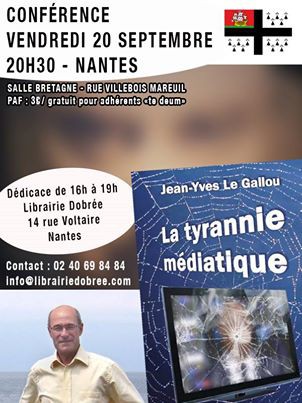
Conférence de Jean-Yves Le Gallou à Nantes le vendredi 20 septembre :
00:05 Publié dans Actualité, Evénement, Manipulations médiatiques, Nouvelle Droite | Lien permanent | Commentaires (0) | Tags : tyrannie médiatique, événement, jean-yves le gallou, manipulations médiatiques, nantes | | del.icio.us | | Digg | Facebook
Nietzsche et l'éternité
Pierre Le Vigan
Ex: http://metamag.fr
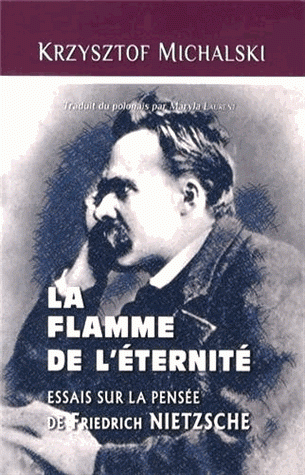 « La vie éternelle n’est pas une autre vie, mais, précisément, la vie que tu vis » écrivait le philosophe de Sils-Maria. La question de l’éternité est au cœur de la pensée de Nietzsche. Aimer la vie longue est selon lui le contraire d’aimer la vie. L’homme ne se résigne pas à la brièveté. L’homme est malade du manque d’éternité. Pour Nietzsche c’est la cause du nihilisme. L’éternité est pourtant à portée de main. Elle est dans le corps même, ce grand oublié, elle est dans la vie même. C’est la vie elle-même qui crée les valeurs qui rendent inutile le nihilisme. La tentation du nihilisme est inhérente à la vie elle-même mais c’est la vie qui permet de la surmonter. « Nous ne pouvons comprendre que le monde que nous avons créé » explique Nietzsche. Il rejette ainsi toute foi et toutes valeurs extérieures à l’homme. Le principe d’une foi extérieure à l’homme est de refuser le temps cyclique, comme le faisait Augustin d’Hippone. Le monothéisme veut le temps droit et linéaire. Au contraire, Nietzsche affirme que « tout ce qui est droit ment (…), toute vérité est courbée, le temps lui-même est un cercle. » (Zarathoustra). C’était ce qu’exprimait Héraclite : « Pour le temps comme sur le pourtour de la roue, le début et la fin sont communs ».
00:05 Publié dans Livre, Livre, Philosophie | Lien permanent | Commentaires (0) | Tags : philosophie, nietzsche | | del.icio.us | | Digg | Facebook
Nietzsche e o Mundo Homérico

Nietzsche e o Mundo Homérico
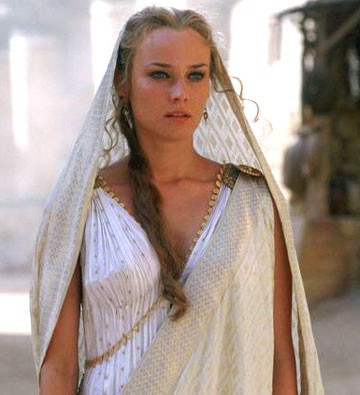
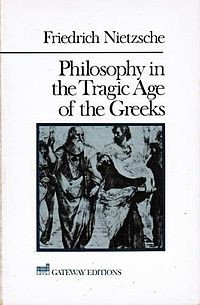 Nietzsche desde o princípio apresentou um apego ao mundo grego, uma idealização deste como estrutura social, ideológica e intelectual. Esta aproximação não é especificamente com a época clássica, mas com a época arcaica que é representada através dos poemas homéricos.
 Tomando esta citação compreendemos que a aristocracia se conforma a partir de sua riqueza, e devido a isto é fundamental entre os nobres fomentar vínculos com seus iguais, o qual se dá através da hospitalidade, já que se atende a alguém do mesmo valor moral e social. Neste sentido também se volta importante uma espécie de relação de parentesco dentro da que surge certo intercâmbio econômico representado em presentes (hedna). Na Odisséia se faz patente esta relação de hospitalidade através da narração da viagem de Telêmaco pelas cortes gregas, onde é bem recebido e por sua vez se atende tal como se formara parte da família, sem importar de onde venha, nem as fronteiras que os separam. Outro exemplo chave é o fato que conduz à Guerra de Tróia, a falta da hospitalidade de Paris (Alexandre) frente a Menelau ao raptar Helena.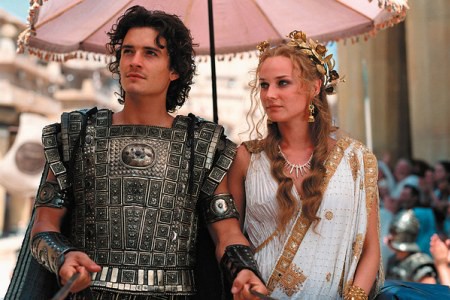
00:05 Publié dans Philosophie, Traditions | Lien permanent | Commentaires (0) | Tags : iliade, monde homérique, nietzsche, tradition, mythologie, traditionalisme, homère, grèce antique, philologie classique, hellénité, hellénisme, philosophie | | del.icio.us | | Digg | Facebook