

jeudi, 19 décembre 2013
The Life & Ideas of Colin Wilson
A Heroic Vision for Our Time:
The Life & Ideas of Colin Wilson
By John Morgan
Ex: http://www.counter-currents.com
Colin Wilson, the English author of well over a hundred books on subjects as diverse as philosophy, literary criticism, criminology, and the occult, as well as many novels, essays and short stories, passed away last Thursday (December 5, 2013) at 11:45 PM local time, in the presence of his wife, Joy, and his daughter, Sally. He was 82.
It was unfortunate that Colin’s death came within hours of Nelson Mandela’s, as it ended what little chance it had of being reported in the television news media, as would have been fitting for an author who I believe to have been among the most important authors of the latter half of the twentieth century. A number of obituaries have appeared in the British press this week, most of them full of mockery and some venturing shamelessly into insult. This was not unexpected, for reasons that I will discuss further on.
Colin’s name is probably not familiar to many younger readers in the United States, unless they have unusual reading tastes. Even in his native England, Colin isn’t very well-known among the younger generations, apart from his popular true crime and occult-themed books, which is a pity, since Colin’s work encompassed much more than that. Indeed, his first book, The Outsider [2], which has been variously classified as a work of existentialism, sociology and literary criticism, was published in 1956, when Colin was only 24 years old, and became an instant bestseller throughout the English-speaking world, and was, briefly, the talk of the literary world. Few would have imagined at that time, I suspect, that he would end up passing into obscurity. It is certainly unjust that his exit from this world should have been upstaged by Mandela’s, since Colin was undoubtedly the more important of the two men.
I am probably biased in making this judgment, since Colin was a personal acquaintance of mine. I remember first coming across his book, Beyond the Outsider [3]
Life
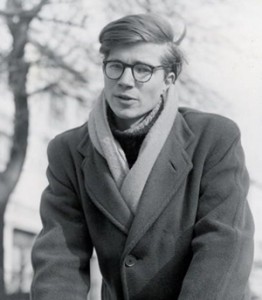 Colin wrote two autobiographies: the first, Voyage to a Beginning [4]

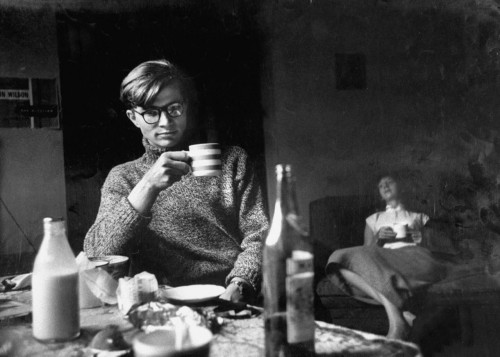
Colin was born on June 26, 1931 in Leicester, England to a working-class family. He developed an early passion for reading and ideas, although his first love was science. He left school, as was normal for teenagers who were expected to go to work, at age 16, and got a job as an assistant in a chemistry lab. He has described how his early enthusiasm for science quickly waned, as he discovered that it alone failed to answer many of the essential questions, such as the meaning of life and his place in it. Gradually sinking into despair, he describes how he went to work one day with the intention of killing himself. Upon arriving, he took down a bottle of hydrochloric acid that he knew would kill him immediately. But once he opened it and was about to drink, he suddenly saw himself as two people. One was a depressed and confused teenager; the other was the person he realized he could become. He realized that it didn’t matter at all if the first killed himself, he said; but if the first Colin Wilson died, he would be taking the other one with him, and that would be a tragedy. So he put the bottle back and went about his work.
Colin discovered his new passion in literature, philosophy and writing, which he threw himself into with feverish enthusiasm. Supporting himself through a series of low-paying jobs for the next several years, he began gestating the ideas that would eventually become his first book, The Outsider [2]
It should be of interest to Counter-Currents readers that, at this time, Wilson befriended Sir Oswald Mosley, whom he met at a café. (Wilson later claimed that he knew nothing of Mosley’s political activities at the time.) Wilson and Mosley shared an interest in many of the same writers and philosophers, and apparently their friendship continued until Mosley’s death, over 20 years later. Mosley even penned a very laudatory review of The Outsider [2]
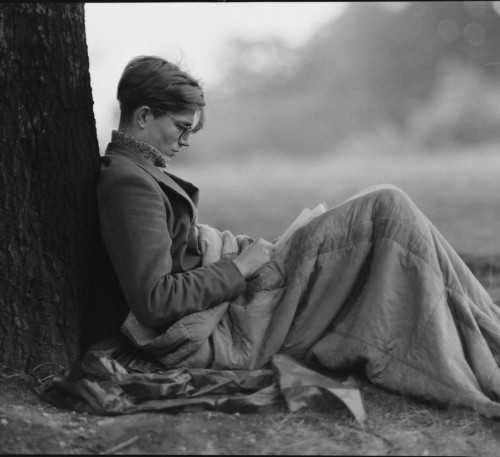
It was in 1955 that Colin, frustrated at the amount of time and energy that he was spending just to make ends meet instead of reading and writing, gave up his flat and took up residence in a sleeping bag on Hampstead Heath, a park in London. He would spend his days in the Reading Room at the British Museum, studying and working on The Outsider [2]
And it was.
Upon the publication of the second book in what came to be called Colin’s “Outsider cycle,” Religion and the Rebel [6]
There are many reasons for this. Jealousy was no doubt a factor. Another was that the press made Colin into a celebrity, and he, at age 24, was too naive to realize how he was being used by them, as he himself later conceded. People became sick of seeing Wilson’s name and picture in the newspapers and magazines (he even made the cover of Life magazine). Another factor was an incident in early 1957 in which Joy’s father came across some notes that Colin had been making for a novel he was working on (which later became Ritual in the Dark [7]
It just so happened that the publication of The Outsider [2]
The Outsider
So what is The Outsider? The book is still in print – and, as far as I know, has been continuously since 1956 – so readers still have ample opportunity to find out for themselves. But I will provide a brief overview. It is a survey of writers, artists, and mystics who Colin believed defined the outsider identity. This included H. G. Wells, George Bernard Shaw, Hermann Hesse, Albert Camus, Jean-Paul Sartre, T. S. Eliot, Ernest Hemingway, T. E. Lawrence, Vincent van Gogh, Nijinsky, Friedrich Nietzsche, Fyodor Dostoevsky, William Blake, Ramakrishna, and G. I. Gurdjieff, among others.
Colin defined “outsiders” as those individuals who feel alienated from the society they live in, and who feel compelled to defy the conventions of their time and attempt to forge something new that transcends it, either in their work or in their own lives (sometimes both). He once said that outsiders are the warts that appear on the face of a civilization that has lost its health and sense of meaning. Colin believed that the existentialists, who were at the peak of their popularity in Continental Europe at the time he was writing, held the key to understanding this predicament. The existentialists recognized that life has no meaning apart from what we ourselves give it, which Colin agreed with. But he took the French existentialists to task for coming to what he saw as negative conclusions. Sartre and Camus, he held, saw it as a tragedy that man has no essential meaning and that he was “condemned” to be free. Such a view led Sartre to come to the rather ridiculous conclusion that, all meanings being equal, he should embrace Communism. For Colin, existentialism should not be about making false commitments, but rather of affirming the boundless potential freedom of the individual to realize himself.
The mystical experience was a vital proof of this. (“Any system of values must ultimately be mystical,” he wrote.) Rather than interpreting mysticism in a religious way (Colin was always uninterested in any form of institutionalized religion), he saw such experiences as a crucial factor in human evolution. An analogy he frequently used was the “Christmas morning” experience that a child has, when everything seems alive, fresh and infinitely complex, or the “absurd good news” referenced by G. K. Chesterton. In Colin’s view, psychologically healthy people have such experiences all the time. He believed that those who were among the elite of human society (which he estimated as being 5% of the whole) would actively seek such states through various means such as adventure, danger, sex, drugs, battle, art, and/or asceticism. For Colin, this was more than just a psychological phenomenon – it was a presaging of an entirely new form of consciousness that humans are only just beginning to explore, but which will eventually bring about an entirely new phase in our development. “The outsider stands for truth,” he wrote.
Career and Ideas
In spite of the savagery his second book sustained at the hands of the critics, the success of The Outsider had at least provided Colin with enough money to purchase a home in Cornwall, where he and Joy were to remain permanently, and they began raising a family – Colin eventually had three sons and one daughter. He also now had a reputation as a writer, and this enabled him to begin supporting himself entirely from his writing, although this proved to be a challenging task for a man with a family, and no doubt explains his prodigious output. His intensive need to make his living by his pen even led to a nervous breakdown in 1973, from the strain of overwork.
In typical Wilsonian fashion, Colin was inspired to take one of his ideas from the experience, which he termed “the ladder of selves,” by which he meant the various levels of consciousness that one can attain. Most, he felt, never venture beyond the lower rungs, which are accessible by anyone with merely biological impulses. But those with a drive to realize their will, he believed, could access the higher rungs, and discover previously unknown layers of their own personalities. Colin believed that multiple personality disorder was a corruption of this facet of human nature.
Nevertheless, Colin persevered, and always earned his living as a writer (with occasional teaching gigs, lecturing, and television appearances to go along with it). Wilson also had a reputation for being a voracious book and record (LPs, for the young) collector. He is reputed to have acquired many tens of thousands of volumes over the course of his life, and eventually had to construct a series of sheds on his property in Cornwall in order to house them.
Colin’s writing career had two distinct phases to it. The phase that commenced with The Outsider, and which comprises his work of the 1950s and ’60s, I would term his “New Existentialism” phase, and is undoubtedly the era of his most important books. This is when Colin laid down the premises for his work, primarily through philosophy and literature, although he also began to engage with psychology. He befriended Dr. Abraham Maslow, and adopted from him the term “peak experience” to describe the mystical states of intensity which outsiders experience. Maslow believed that peak experiences come and go, but that one couldn’t control them. Colin contested this idea, believing that they could be induced at will, and he actually worked at developing techniques by which they could be attained.
At the same time, he was also laying the foundations for a new school of existentialism that was free of the pessimism that defined the French incarnation of it. Colin was very adamant that pessimism was detrimental to human development, and believed that pessimism could even affect perception and thus alter one’s ability to accurately perceive and know the world. This was an overriding concern of his throughout his career. An illustration he frequently used to make this point was the existence in the course of Van Gogh’s lifetime both of the painting, “Starry Night,” and Van Gogh’s suicide note. When one looks at the painting, one is awestruck by the wonderment of the scene. It gives the impression of an overflowing of the senses, of gifted perception made permanent. And yet the man who was capable of seeing the world in this way was also capable of despising life to the extent that he could destroy himself, leaving a note that said, “Misery will never end.” “‘Starry Night’ was true, the suicide note was false,” Colin was fond of saying. I still believe that the basis for a new existentialism upon the premises that he outlined remains an as yet unexplored potential worthy of further consideration, and may even offer a worthy alternative to postmodernism.
In 1971, this interest in the mystical led to one of Colin’s most important works, The Occult [10]

The other genre that defines the second part of Colin’s career is true crime, which actually began in 1961 when he co-wrote Encyclopedia of Murder [12]
Some people who had been admirers of his early books were disappointed by the turn that Colin’s work took from the 1970s onward. Apart from occasional essays, Colin largely abandoned philosophy and literary criticism – he wrote no major works on those subjects after the early 1970s. Part of this was no doubt because he discovered that it was easier to sell occult and true crime books than books on philosophy. However, I do believe that he said everything that he wanted to say about philosophy in those early books, and his later books – the best of them, at any rate – can be seen as a continuation of his earlier concerns in other mediums. Colin’s perpetual subject was always consciousness and its possibilities, and while some may disagree with the direction he took, there is no doubt in my mind that he genuinely believed that the study of the occult and of the criminal mentality could offer vital clues as to how consciousness is evolving, and thus help to resolve the “search for meaning” of the existential outsider.
There are also some books of his that defy easy categorization. There is A Book of Booze [13]


Politics
As this is appearing at Counter-Currents, I feel I should also write something about Colin’s relationship to politics. Colin himself always eschewed politics, and rarely mentioned it in his work; he said at times that he didn’t think writers should engage with contemporary politics, and suggested on more than one occasion that writers who did so were wasting their time. He also claimed that he really didn’t understand politics himself. Nevertheless, there are a few interesting things to be said. I have already discussed Colin’s relationship with both Sir Oswald Mosley and Bill Hopkins. In his autobiography, he says that he considered himself to be an anarchist in his youth; in the 1950s and ’60s, he expressed sympathy for socialism in some of his public statements. In the 1970s, he aroused some controversy for writing a review of Richard Verrall’s Did Six Million Really Die?, a work of Holocaust revisionism. The controversy arose not because Colin defended Verrall’s thesis, since he remained noncommittal about it, but simply because he said that the evidence presented was compelling and was worthy of being taken seriously. Given the problems he had encountered earlier because of his connection to Mosley, this has also been presented by some as proof of his fascist sympathies.
I also recall reading an uncollected essay by Colin that was published in the 1970s on the subject of Hitler. The essay as a whole was rather unremarkable, but something Colin wrote at the end of it struck me and stuck in my memory. I don’t have a copy at hand, but I remember he pointed out that Hitler’s power derived from his ability to create a myth that inspired and motivated the German people to incredible feats. At the end, he wrote something to the effect of, “If the civilization which defeated Hitler is actually to demonstrate that it is better than his was, then it needs to create heroic myths of its own, rather than embrace nihilism.” I think this aptly sums up the primary difference between the traditional worldview and that of liberalism.
By the 1980s, Colin had taken a more decisive turn toward Toryism. This was underscored by what I believe to be his sole venture into the world of contemporary politics: a volume he co-edited in 1987 entitled Marx Refuted: The Verdict of History [16]
Something that is not very well-known about Colin, however, is that his books are extremely popular in the Middle East, and many of them have been translated into Arabic and Farsi (although he once mentioned to me that he profited little from this popularity, as most of the books were pirated editions). In 1973, he was invited to Beirut, where he was met at the airport by the mayor of the city on a red carpet. On the same trip he was invited by some Palestinian guerrillas to visit one of their camps. The experience made him very sympathetic to the Palestinian cause, and he wrote an essay in favor of them at the time. He also related to me that on this same trip, he went to Damascus, where he was met by the then War Minister, General Tlas, who regaled him with a story from when he and his comrades had been imprisoned by the previous regime. They had read Colin’s novel Ritual in the Dark by tearing the pages out of a copy and passing them from one to the other as they read. As a token of thanks, he presented Colin and Joy with Arab robes and a bronze plaque. Colin was also invited to Iran at the behest of the government in the 1970s, but he said the plan fell through after the Shah was overthrown.
The most interesting connection, however, is between Colin and Colonel Gaddafi. Gaddafi made frequent complimentary references both to Colin and to The Outsider throughout his reign. (I remember seeing a transcript of a speech he had given in the 1990s in which he chided the Clinton White House for inviting Salman Rushdie there, but not Colin Wilson.) Colin told me that he had been asked by the Libyan embassy to make a visit to the country at the government’s behest, but that he had declined out of fear that such a visit would have made it seem as though he were endorsing Gaddafi’s politics.
I would not call Colin a Rightist or a traditionalist. To do such a thing would be to read something into his work that simply isn’t there. At the same time, however, Colin always remained an unabashed elitist, from start to finish. He often reiterated his view that it is only 5% of humanity that comprise a potential elite, and that the majority of men, as he once put it, ought not to have bothered to be born at all. As such, his work is entirely consistent with a hierarchical view of life and civilization.
Reflections
I no longer view Colin Wilson as the demigod that I saw him as when I was in my mid-’20s, when I took his word as gospel and believed that he had the answer to life, the universe, and everything. (Julius Evola and René Guénon, whom I discovered shortly thereafter, soon knocked him off of that pedestal.) His critics are at least partially correct when they say that Colin sometimes overstretched himself, and was perhaps guilty of too much generalization and unfounded speculation on occasion. And I certainly would not suggest to anyone that they attempt to read through his entire corpus – anyone who has read many of Colin’s books will attest that only a third of them, perhaps, are truly great. The rest of them contain a lot of repetition, and some of them were obviously only written for money (such as many of his occult and true crime books, entertaining as they can be). But that third is genuine gold, and I believe is worthy of being read by anyone who is looking for worthy alternatives to the prevailing way of thinking about the nature and destiny of humanity in modern times.
Colin Wilson occupies a unique place in late twentieth-century thought. In an era of extreme specialization, he dared to range across the entire gamut of human endeavor in pursuit of understanding humanity’s untapped potential. In an era when the culture and figures of the West are frequently derided, Colin based his work unapologetically on the best minds of our civilization, and never worried about political correctness. In an era when equality, conformity and consumerism is valued over genuine achievement and self-development, Colin offered a vision of heroism, which affirmed that not only can an individual rise above the monotonous, bourgeois reality of our times, but that, for the outsider, it is an absolute must.
His vision will remain a compelling one long after his death.
His Chief Works
For those interested in delving into Colin’s work, I can offer a few suggestions. Many of Colin’s older works are long out-of-print, but it’s usually not difficult to find used copies.
His most important works, few would argue, are those in his “Outsider cycle.” The sequence is comprised of The Outsider, Religion and the Rebel [6]


The Craft of the Novel [23]
In terms of his occult work, The Occult [10]

A Criminal History of Mankind [26]

And lastly, there are his novels. He wrote many, including “novels of ideas,” mysteries, and science fiction. My personal favorites would include Ritual in the Dark [7]


There is also a good anthology of selections from several of Colin’s works intended to introduce his chief ideas entitled The Essential Colin Wilson [31]

Article printed from Counter-Currents Publishing: http://www.counter-currents.com
URL to article: http://www.counter-currents.com/2013/12/a-heroic-vision-for-our-time/
URLs in this post:
[1] Image: http://www.counter-currents.com/wp-content/uploads/2013/12/wilson.jpg
[2] The Outsider: http://www.amazon.com/gp/product/0874772060/ref=as_li_ss_tl?ie=UTF8&camp=1789&creative=390957&creativeASIN=0874772060&linkCode=as2&tag=countercurren-20
[3] Beyond the Outsider: http://www.amazon.com/gp/product/B0000CMF88/ref=as_li_ss_tl?ie=UTF8&camp=1789&creative=390957&creativeASIN=B0000CMF88&linkCode=as2&tag=countercurren-20
[4] Voyage to a Beginning: http://www.amazon.com/gp/product/B0006CZ5MU/ref=as_li_ss_tl?ie=UTF8&camp=1789&creative=390957&creativeASIN=B0006CZ5MU&linkCode=as2&tag=countercurren-20
[5] Dreaming to Some Purpose: http://www.amazon.com/gp/product/0099471477/ref=as_li_ss_tl?ie=UTF8&camp=1789&creative=390957&creativeASIN=0099471477&linkCode=as2&tag=countercurren-20
[6] Religion and the Rebel: http://www.amazon.com/gp/product/0575012587/ref=as_li_ss_tl?ie=UTF8&camp=1789&creative=390957&creativeASIN=0575012587&linkCode=as2&tag=countercurren-20
[7] Ritual in the Dark: http://www.amazon.com/gp/product/0914171631/ref=as_li_ss_tl?ie=UTF8&camp=1789&creative=390957&creativeASIN=0914171631&linkCode=as2&tag=countercurren-20
[8] Look Back in Anger: http://www.amazon.com/gp/product/0140481753/ref=as_li_ss_tl?ie=UTF8&camp=1789&creative=390957&creativeASIN=0140481753&linkCode=as2&tag=countercurren-20
[9] lecture: http://www.counter-currents.com/2013/07/bill-hopkins-and-he-angry-young-men/
[10] The Occult: http://www.amazon.com/gp/product/0394465555/ref=as_li_ss_tl?ie=UTF8&camp=1789&creative=390957&creativeASIN=0394465555&linkCode=as2&tag=countercurren-20
[11] Fingerprints of the Gods: http://www.amazon.com/gp/product/0517887290/ref=as_li_ss_tl?ie=UTF8&camp=1789&creative=390957&creativeASIN=0517887290&linkCode=as2&tag=countercurren-20
[12] Encyclopedia of Murder: http://www.amazon.com/gp/product/B0006AX7B8/ref=as_li_ss_tl?ie=UTF8&camp=1789&creative=390957&creativeASIN=B0006AX7B8&linkCode=as2&tag=countercurren-20
[13] A Book of Booze: http://www.amazon.com/gp/product/0575018313/ref=as_li_ss_tl?ie=UTF8&camp=1789&creative=390957&creativeASIN=0575018313&linkCode=as2&tag=countercurren-20
[14] Brandy of the Damned: http://www.amazon.com/gp/product/B0000CMCCT/ref=as_li_ss_tl?ie=UTF8&camp=1789&creative=390957&creativeASIN=B0000CMCCT&linkCode=as2&tag=countercurren-20
[15] L’Amour: The Ways of Love: http://www.amazon.com/gp/product/B0006C2USC/ref=as_li_ss_tl?ie=UTF8&camp=1789&creative=390957&creativeASIN=B0006C2USC&linkCode=as2&tag=countercurren-20
[16] Marx Refuted: The Verdict of History: http://www.amazon.com/gp/product/0906798728/ref=as_li_ss_tl?ie=UTF8&camp=1789&creative=390957&creativeASIN=0906798728&linkCode=as2&tag=countercurren-20
[17] The Age of Defeat: http://www.amazon.com/gp/product/B0000CKD1W/ref=as_li_ss_tl?ie=UTF8&camp=1789&creative=390957&creativeASIN=B0000CKD1W&linkCode=as2&tag=countercurren-20
[18] The Strength to Dream: http://www.amazon.com/gp/product/0349137366/ref=as_li_ss_tl?ie=UTF8&camp=1789&creative=390957&creativeASIN=0349137366&linkCode=as2&tag=countercurren-20
[19] Origins of the Sexual Impulse: http://www.amazon.com/gp/product/B0000CLQME/ref=as_li_ss_tl?ie=UTF8&camp=1789&creative=390957&creativeASIN=B0000CLQME&linkCode=as2&tag=countercurren-20
[20] Beyond the Outsider: http://www.amazon.com/gp/product/0881847046/ref=as_li_ss_tl?ie=UTF8&camp=1789&creative=390957&creativeASIN=0881847046&linkCode=as2&tag=countercurren-20
[21] The New Existentialism: http://www.amazon.com/gp/product/0704504154/ref=as_li_ss_tl?ie=UTF8&camp=1789&creative=390957&creativeASIN=0704504154&linkCode=as2&tag=countercurren-20
[22] An Introduction to the New Existentialism: http://www.amazon.com/gp/product/B000NUOT0O/ref=as_li_ss_tl?ie=UTF8&camp=1789&creative=390957&creativeASIN=B000NUOT0O&linkCode=as2&tag=countercurren-20
[23] The Craft of the Novel: http://www.amazon.com/gp/product/0575019972/ref=as_li_ss_tl?ie=UTF8&camp=1789&creative=390957&creativeASIN=0575019972&linkCode=as2&tag=countercurren-20
[24] Mysteries: http://www.amazon.com/gp/product/1842931857/ref=as_li_ss_tl?ie=UTF8&camp=1789&creative=390957&creativeASIN=1842931857&linkCode=as2&tag=countercurren-20
[25] Beyond the Occult: http://www.amazon.com/gp/product/B00FIMWELS/ref=as_li_ss_tl?ie=UTF8&camp=1789&creative=390957&creativeASIN=B00FIMWELS&linkCode=as2&tag=countercurren-20
[26] A Criminal History of Mankind: http://www.amazon.com/gp/product/0881846465/ref=as_li_ss_tl?ie=UTF8&camp=1789&creative=390957&creativeASIN=0881846465&linkCode=as2&tag=countercurren-20
[27] New Pathways in Psychology: Maslow and the Post-Freudian Revolution: http://www.amazon.com/gp/product/0575027967/ref=as_li_ss_tl?ie=UTF8&camp=1789&creative=390957&creativeASIN=0575027967&linkCode=as2&tag=countercurren-20
[28] The World of Violence: http://www.amazon.com/gp/product/1939140269/ref=as_li_ss_tl?ie=UTF8&camp=1789&creative=390957&creativeASIN=1939140269&linkCode=as2&tag=countercurren-20
[29] The Philosopher’s Stone: http://www.amazon.com/gp/product/0874775094/ref=as_li_ss_tl?ie=UTF8&camp=1789&creative=390957&creativeASIN=0874775094&linkCode=as2&tag=countercurren-20
[30] The Mind Parasites: http://www.amazon.com/gp/product/0974935999/ref=as_li_ss_tl?ie=UTF8&camp=1789&creative=390957&creativeASIN=0974935999&linkCode=as2&tag=countercurren-20
[31] The Essential Colin Wilson: http://www.amazon.com/gp/product/0890874727/ref=as_li_ss_tl?ie=UTF8&camp=1789&creative=390957&creativeASIN=0890874727&linkCode=as2&tag=countercurren-20
[32] Colin Wilson: The Man and His Mind: http://www.amazon.com/gp/product/1852301767/ref=as_li_ss_tl?ie=UTF8&camp=1789&creative=390957&creativeASIN=1852301767&linkCode=as2&tag=countercurren-20
00:09 Publié dans Littérature | Lien permanent | Commentaires (0) | Tags : lettres, lettres anglaises, littérature, littérature anglaise, colin wilson |  |
|  del.icio.us |
  |
|  Digg |
  Facebook
Solidarité - Identité

00:05 Publié dans Actualité, Evénement | Lien permanent | Commentaires (0) | Tags : actualité, solidarité, identité, événement, italie | | del.icio.us | | Digg | Facebook
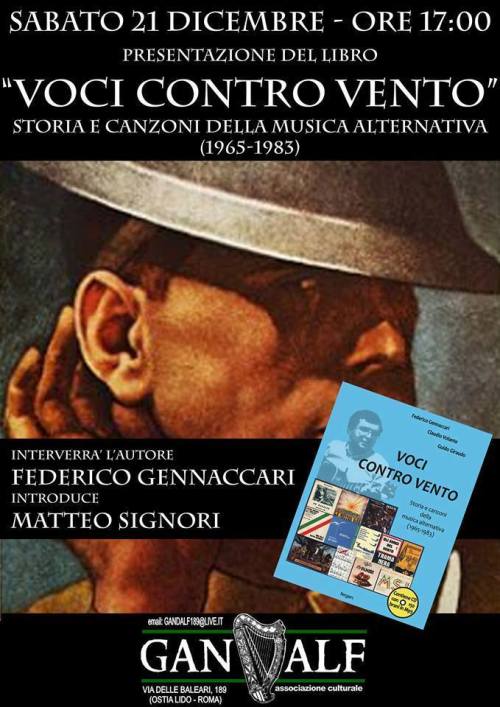
Voci contro vento
00:05 Publié dans Evénement, Musique, Musique | Lien permanent | Commentaires (0) | Tags : événement, musique, italie, rome | | del.icio.us | | Digg | Facebook
The West's Alliance with «Jihad Warriors» in Syria: Sinister Fruits
|
|
The West's Alliance with «Jihad Warriors» in Syria: Sinister Fruits |
|
|
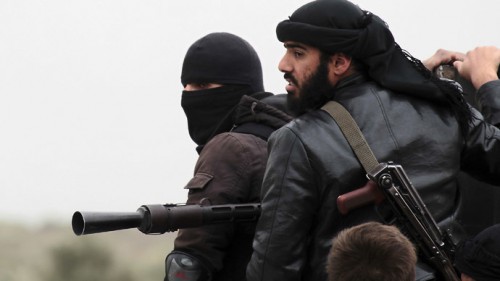
After suffering one military defeat after another, the Syrian radical opposition, backed by the support of the West and the monarchies of the Persian Gulf, are increasingly retaliating cruelly against the civilian population. The jihadists seize towns and cultural and religious sites which up to that point had remained outside the combat zone, loudly proclaiming their victories. For example, in response to the advance of the government army into the Qalamoun mountains between Damascus and Homs, where a powerful group of rebels had gathered for a sudden advance on the capital from the north (this group grew from 5,000 men a year ago to 20,000 in November of this year), the jihadists once again rushed into the nearby Christian town of Maaloula. After vandalizing and desecrating the ancient churches, on December 2 they took 12 nuns from the Orthodox convent of St. Thecla hostage, hiding them in the city of Yabrud, which is held by the rebels. The rebels stated that they would burn the convent and kill the hostages, including the abbess, Mother Pelagia Sayyaf, after which the army retreated. The Free Qalamoun Brigades, which are part of the Army of Islam (Jeysh al-Islam), took responsibility for these barbarous acts. News agencies reported only an offer to exchange the kidnapped sisters for a thousand female prisoners accused of aiding terrorists, but in fact the rebels demanded that the government forces stop their attack on Yabrud and lift the siege against the rebels in East Ghouta in exchange for the lives of the unfortunate nuns, in other words, encourage their barbarism by handing them the victory. The Qatari television channel Al-Jazeera broadcast video meant to show that the sisters «are being treated well in captivity» (as if they can be considered prisoners of war!). However, it is clear from the broadcast that the nuns were forced to remove their crosses, which is an insult to the symbol of their faith. At the same time, hundreds of rebels from the groups Jabhat al-Nusra and Ahrar ash-Sham Al Islami were redeployed from Yabrud to Rankous in an attempt to occupy the nearby Christian city of Saidnaya. During the attack on the city they used grenade launchers, from which they shelled the local churches and convent. In eastern Syria, in the city of Ar-Raqqah, the group called the Islamic State of Iraq and Syria (ISIS) destroyed all Christian symbols in one of the city's churches and established its headquarters there. In a conversation with the Antiochian patriarch John X, Syrian Prime Minister Najib Mika promised to do everything possible to free the kidnapped nuns, as well as two metropolitans of the Orthodox and Syrian Jacobite churches who have been abducted by rebels. He emphasized the government's dedication to keeping sacred sites of all religions out of combat zones. The widespread desecration of Christian churches by the rebels is only one side of the coin; the other is their sacrileges against Shiite shrines, including those connected with the veneration of the direct descendants of the founder of Islam, as well as turning mosques into fortified posts and military supply depots. The British Independent reports that the terrorist threat to Europe and the United States from the «jihad warriors» in Syria is growing rapidly. MI5 and Scotland Yard have detected the first case of rebels sent from Syria to London for the purpose of carrying out terrorist attacks there «when needed». In June of this year the number of jihadists from Europe who were «broken in» in Syria was estimated at 600; since then this figure has almost tripled. «With regards to the European figures, we estimate it’s between 1500 and 2000», says Belgian Interior Minister Joelle Milquet. «It’s a phenomenon which is very generalized». Intelligence analysts in the West are already making recommendations to preserve the Syrian government army after the «overthrow of Assad's regime» for the fight against the Islamic radicals in order not to repeat the mistakes made in Iraq and Libya. Salim Idris, the commander of the pro-Western Free Syrian Army (FSA), has supposedly already agreed to this. But will the Syrian army itself agree? Idris is seen more often in Paris and London than on the battlefield, and his intention to lead a united «opposition-government» army against al-Qaeda evokes nothing but sarcasm. Currently the Islamists have total control over the FSA. According to the Independent, there are 22,500 fighters in ISIS alone. This organization is especially active in taking hostages. For example, they have abducted and detained 35 foreign journalists, as well as 60 various political and public figures. According to U.S. intelligence, over half of the 17,000 foreign insurgents fighting in Syria against the government are part of the Islamic State of Iran and Syria group. The Russian-speaking wing of this group, which numbers several hundred fighters, is led by a Chechen from the Pankisi Gorge in Georgia, Tarkhan Batirashvili, also known as Sheikh Omar al-Shishani... As the Wall Street Journal reports, Batirashvili received his military training in the American-backed Georgian army. His troops include not only emigrants from former Soviet republics, but Europeans who are notable for their «unusual violence...even by the gruesome standards of the war in Syria». Although those close to Batirashvili say that he is trying to strike a blow against one of the Kremlin's allies, he also does not hide his hatred for America, writes the Wall Street Journal. In 2008 he fought against Russia in a Georgian military intelligence unit. It is worth noting that in September 2010 the restless Batirashvili was arrested in Georgia for illegally harboring weapons and sentenced to three years in prison. However, in early 2012 he was released from prison and immediately left for Syria. One could assume that this turn of fate took place with the participation of then-president of Georgia M. Saakashvili. Threats from Syrian jihadists toward the Sochi Olympic Games are also linked with Batirashvili's name. In late November the majority of organizations on which the FSA has been counting declared their commitment to «Islamic values and sharia». They united to form the Islamic Front (IF), announcing their closeness to the «brethren from Jabhat al-Nusra». The total number of fighters in the newly-created front is estimated at 45,000-60,000 men. Western governments, which are rapidly losing control over events in Syria, have already hastened to declare the IF «a force with which it is possible to have a dialog», and even started preliminary negotiations with them. In fact, the IF is a cover and a means of political legalization for the same uncompromising «jihad warriors». Suffice it to say that those who abducted the 12 Orthodox nuns in Maaloula belong to the Islamic Front. At the same time that ancient Christian Maaloula was being vandalized, representatives of Western countries, including the U.S. and Great Britain, were meeting with the leaders of the IF in Ankara through the efforts of mediators from Qatar. The fate of the nun martyrs was not discussed at this meeting. According to information in the press, during the negotiations in Ankara the Western allies tried to convince the Islamists to moderate their criticism of the Supreme Military Council of the Free Syrian Army and its leader Salim Idris. For their part, those who were uncompromising before the meeting demanded that the Military Council show them more active support, particularly with regard to weapons. And apparently they received this support. One of the British participants in the negotiations admitted to The Daily Telegraph that there are «sinister» elements in the Front. In making contact with the Islamic Front, Western diplomats are hoping to prevent it from joining the even more radical groups Jabhat al-Nusra and ISIS, which unlike the IF openly declare their ties with al-Qaeda. However, these hopes are not likely to be justified. Just a few days after the meeting in Ankara, the IF began pushing the Free Syrian Army out of Syria. Fighters from the Islamic Front have begun seizing bases and weapons depots from the FSA along the Turkish border in the Idlib Governorate. They have already occupied the largest weapons storage facilities in Bab al-Hawa. In late November at hearings in the U.S. Congress, leading expert Andrew J. Tabler from the Washington Institute acknowledged that the processes taking place in Syria are not going to stay there, but will inevitably spill out into the entire region. And the abrupt increase in extremist elements among the Syrian opposition makes the possibility of helping its pro-Western parts while bypassing the jihadists unlikely. «We need to start talking to the Assad regime again about counterterrorism and other issues of shared concern,» stated Ryan Crocker, an experienced diplomat who has served in Syria, Iraq and Afghanistan, to The New York Times. «It will have to be done very, very quietly. But bad as Assad is, he is not as bad as the jihadis who would take over in his absence». Even Z. Brzezinski, not known for his sympathies toward Russia, states that the threat of an explosion in the Middle East, and in Syria in particular, means that the U.S. needs to work closely with Russia and China «to some extent more than...[with] Britain or France». And cold war paladin Brzezinski knows what he's talking about here. Foto: bloomberg.com |
|
00:05 Publié dans Actualité, Géopolitique | Lien permanent | Commentaires (0) | Tags : djihadisme, djihad, syrie, levant, proche orient, politique internationale, terrorisme, géopolitique, monde arabe, monde arabo-musulman | | del.icio.us | | Digg | Facebook
Un néoconservatisme antiSystème
Un néoconservatisme antiSystème
Ex: http://www.dedefensa.org
 Nous avons déjà fait une rapide incursion dans le discours de Vladimir Poutine devant la Douma, le 12 décembre dernier. C’était dans un texte du 13 décembre 2013, où nous abordions la question d’une nouvelle doctrine stratégique en cours de développement en Russie. (Un autre discours, celui de Dmitri Rogozine devant la même Douma le jour précédent, était cité.)
Dès ce moment, nous parlions d’un nouveau “conservatisme” dont poutine s’était fait le champion dans son discours, et nous le définissions nous-mêmes, à la fois comme un “conservatisme structurant”, ou “conservatisme antiSystème”. Nous écrivions ainsi : «Poutine a donc également parlé devant la Douma, le lendemain de l’intervention de Rogozine. [...] Poutine a bien entendu abordé tous les sujets : nous reviendrons sur certains de ces autres aspects, en même temps que sur ceux que nous traitons ici. (Les uns et les autres, à côté de leur spécificité, font partie d’une attitude conceptuelle opérationnalisant une conception que l’on pourrait nommer “conservatisme structurant” ou “conservatisme antiSystème” en ôtant au mot “conservatisme” sa connotation politique courante: cette connotation, évidemment péjorative selon “l’air du temps” et le conformisme qui va avec, est faussaire puisqu’imposée par le Système justement, alors qu’on la définit comme antiSystème, donc hors du diktat conceptuel du Système.)»
Plus loin, en développant notre analyse du nouveau concept stratégique, nous étions revenus sur cet aspect plus doctrinal dans le sens ontologique d’une référence à une conception générale dont l’aspect stratégique ne serait qu’une branche. En développant l’analyse de ce concept stratégique et doctrinal, nous en sommes venus à des considérations d’ordre ontologique dans le cadre de la problématique qui nous intéresse de “Système vs antiSystème”, et dans ce cas forces déstructurantes contre structures conservatrices des situations principielles. Cela nous avait conduit à rapprocher la nouvelle doctrine russe qui s’ébauche, de la doctrine nucléaire gaulliste de la dissuasion. La comparaison débouchait également sur cette interprétation ontologique.
«En fait, l’évolution russe nous fait mieux comprendre combien la doctrine gaulliste de la dissuasion constituait également (en plus du fait stratégique), et même surtout une doctrine de type “conservateur antiSystème”. Elle refusait le multilatéralisme, la coopération par entente implicite type-MAD, bref elle refusait la globalisation stratégique en se repliant sur la dimension nationale et sur ses conceptions principielles (souveraineté, légitimité), sur le protectionnisme stratégique, sur la “forteresse” assurée par la possibilité de riposte nucléaire. Le véritable fondement de cette doctrine, d’ailleurs pas nécessairement réalisé puisqu’apparaissant au grand jour aujourd’hui, c’était de refuser d’entrer dans le jeu du Système appuyé sur l’“idéal de puissance” faisant des souscripteurs aux doctrines type-MAD des “complices” pour faire peser l’hégémonie terroriste du Système sur les autres. (On peut voir, dans la Cinquième Partie du premier tome de “La Grâce de l’Histoire”, mise en ligne le 2 décembre 2010, une partie important consacrée à cet aspect prémonitoirement antiSystème de la doctrine gaulliste de la dissuasion nucléaire, – “l’exception française et la G4G”.)»
Ce cadre plus large qui est suggéré ici a été lui-même abordé par nombre de commentateurs, autour du discours de Poutine. Tout cela indique et confirme l’importance que le président russe attache à ce discours, dans le sens où il s’agit d’un acte intellectuel structurant de première importance. Des parlementaires eux-mêmes sont intervenus comme commentateurs du discours, notamment Aleksei Pouchkov and Viatcheslav Nikonov, qui sont des proches de Poutine. Ils sont cités dans un texte de Russia Today du 13 décembre 2013, et notamment dans un passage où ils considèrent l’aspect structurant le plus important du concept évoqué par Poutine, qui est cette sorte de “nouveau conservatisme”, ou d’une nouvelle conception du conservatisme, comme l’explique Nikonov, consistant “non pas à empêcher un mouvement en avant, mais à empêcher un mouvement en arrière”. (Nous apporterions nous-même certaines nuances considérables à cette définition, en observant que cette définition serait plus juste si elle se trouvait amenée à l’idée d’“empêcher un mouvement vers le bas”, sans autre référence explicite, car c’est principalement de cela qu’il s’agit selon notre estimation. La référence principale, qui est désormais une constante de l’évolution russe, est celle de la tradition entendu dans un sens général et contenu dans le concept de “philosophie première” ou “philosophie principielle”.)
«One of the key statements in the address was about Russia's traditional values and the need for them to be protected. “Putin first of all was talking about family values, the values of Russian patriotism, of bringing up children in a traditional Russian way. He described these values as being conservative, but they are conservative in a way not to prevent movement forward, but to prevent movement backward,” Nikonov said.
»Pushkov noted that the president has matched “the traditional values against the so-called new values which are being assorted on societies by minorities, values which have nothing to do with religious roots, with cultural heritage of those countries, and which are basically opposed by the majority of the population.” “The new space of values,” which is now being established in Europe, is “disturbing” for Russia, the MPs stressed. “When you single out a single group [sexual minorities] and say they have special rights, it's also a form of discrimination. We don’t understand it in Russia, thinking that they should be treated as equals and that they should not enjoy a special status or a special program supporting their aspirations,” Pushkov said.»
Comme à l’habitude, Fédor Loukianov, rédacteur en chef du magazine Russia in Global Affairs et proche des milieux politiques dirigeants à Moscou, offre un commentaire intéressant sur la nouvelle approche de Poutine. En effet, il s’agit bien, selon Loukianov, d’une nouvelle approche, et même d’une approche fondamentalement nouvelle. Jusqu’ici la politique russe selon Poutine, ou disons le poutinisme, était “politiquement neutre” en un sens dominant, c’est-à-dire essentiellement pragmatique, précisément selon le sens du mot qui indique la proximité de l’action et les seuls actes concrets pris comme références pour déterminer une politique. («“Pragmatisme” vient du grec pragma, action, ce qui atteste du souci d'être proche du concret, du particulier, de l'action et opposé aux idées abstraites et vagues de l'intellectualisme.»)
Voici quelques extraits du texte de Loukianov, dans Novosti, le 1’ décembre 2013 :«Dans son message annuel au Parlement russe, Vladimir Poutine a pour la première fois exprimé clairement et sans équivoque la philosophie de l'Etat russe : le conservatisme. Ce n’est pas un scoop : les discours antérieurs du président et l'ensemble de la logique des actions du Kremlin ont toujours indiqué que c'est cette école de pensée qui était la plus proche du gouvernement russe. Cette fois le chef de l'Etat a simplement expliqué ce qu'il entendait par cette notion en citant le philosophe Nikolaï Berdiaev : “Le conservatisme n'empêche pas l’évolution, mais protège de la régression, du mouvement vers l'obscurité chaotique et vers un état primitif”. [...]
»Le président – consciemment ou intuitivement – part du fait que tout changement, aujourd'hui, entraînera forcément un résultat négatif. Selon lui, le progrès n'est pas un but en soi mais il doit servir à renforcer les fondements du développement. En revanche, s'il conduit au résultat inverse, qui a besoin d'un tel progrès ? Et qui a eu l'idée de dire qu'il s’agissait d'un progrès ?
»Les anciennes approches des relations internationales et des affaires mondiales sont critiquables, certaines notions sont obsolètes et ont perdu de leur efficacité dans les conditions contemporaines. Il faut effectivement reconnaître qu'elles ont énormément changé. Mais le fait est que rien ne vient prendre leur place. Plus précisément, ce qu'on propose pour remplacer les vieux principes ne forme aucune carcasse et mène uniquement vers des interprétations de plus en plus floues. Et par conséquent vers l'arbitraire, inévitable, qui lui engendre le chaos.
»L'accent mis sur les traditions, que l'on entend depuis longtemps dans les discours du président, a été réitéré dans son message – le désir de trouver quelque soutien est compréhensible. Par définition le conservatisme est opposé à l'idée d’un monde universel. Chaque nation et culture est unique et valorise, avant tout, sa propre identité. [...] C’est un changement significatif car jusqu'à présent la politique de la Russie était explicitement et notoirement non idéologique. Le pragmatisme était considéré comme l'objectif absolu et une valeur phare en politique étrangère. L'idéologie est une notion à double-tranchant et contraignante. Cependant, dans un monde où les images et les points de vue jouent clairement un rôle prédéterminant, un pays qui prétend à une position de leader ne peut pas user d'un simple mercantilisme. Ou simplement nier les idées des autres. Il faut forcément avancer une alternative. C'est risqué car il existe un risque d’erreur, mais en dépit de son conservatisme Vladimir Poutine est joueur.»
Le discours, selon Loukianov, annonce un tournant effectivement fondamental : il s’agit, selon lui de l’idéologisation de la politique russe. Désormais, le poutinisme n’est plus “politiquement neutre” ou pragmatique, il est idéologiquement “conservateur”, – certes, selon un sens qui demande à être explicité, et c’est ici, en partie, le but de notre propos, – et, d’autre part, la cause de notre réticence à employer des termes tels que “idéologie” et “idéologisation”. Ce “tournant idéologique et conservateur” du poutinisme et, plus généralement, de la politique russe, demande à être précisément explicité ; il s’agit d’abord de se dégager des “étiquettes” convenues, liées d’ailleurs à l’“idéologisation”, et qui font en général le jeu du Système. Il s’agit ensuite d’avancer une nouvelle définition, qui permettra de mieux comprendre l’importance et l’orientation de la nouvelle politique russe.
Selon notre conception, on parlera avec le cas Poutine d’un “néoconservatisme” d’une façon assez originale et révélatrice, puisque le terme est déjà pris, pour la partie américaniste (nous l’écrivons également néoconservatisme, mais plus souvent neocon pour faire bref et significatif). Le terme employé pour la partie américaniste est à peu près, dans son approche structurelle, l’exact opposé de la démarche russe, ou encore mieux dit, son exacte inversion. Nous développerons une appréciation du tournant idéologique de Poutine, ou pseudo-idéologique selon nous, en différenciant les deux approches radicalement opposées selon nous, selon un procédé sémantique : d’une part, le “néoconservatisme-neocon” américaniste, d’autre part le “néoconservatisme-poutinien”.
En disant que la démarche poutinienne est elle-même l’inversion du néoconservatisme originel, nous ne parlons que chronologiquement et non du point de vue qualitatif de la justesse des choses. Par rapport à ce qui est nécessaire et juste pour nous, c’est-à-dire la lutte antiSystème, c’est le néoconservatisme-neocon qui est une inversion, dans le sens maléfique de serviteur du Système ; par conséquent, selon cette appréciation, le néoconservatisme-poutinien pratique une inversion vertueuse en rétablissant avec son néoconservatisme le sens antiSystème du conservatisme. (Comme on le verra, le conservatisme selon sa vraie valeur, qui est structurelle et principielle et non idéologique, doit effectivement être perçu comme vertueux puisque nécessairement antiSystème, et adversaire affiché du Progrès en tant que dynamique-Système qui répond à l’objectif de destruction selon le protocole dd&e [voir le 11 novembre 2013]. Cela ne signifie pas “devenir conservateur” au sens de la valse absurde des étiquettes faussaires du temps-idéologisé depuis le début du XIXème siècle, mais utiliser ce qui est utile et va dans le bon sens dans l’enjeu formidable, civilisationnel et eschatologique, de la crise d’effondrement du Système.)
“On ne peut vaincre le Système si l’on n’est pas le Système soi-même”
La remarque essentielle de Loukianov, à partir de laquelle nous développons notre approche, est ce paragraphe repris des extraits : «Le président – consciemment ou intuitivement – part du fait que tout changement, aujourd'hui, entraînera forcément un résultat négatif. Selon lui, le progrès n'est pas un but en soi mais il doit servir à renforcer les fondements du développement. En revanche, s'il conduit au résultat inverse, qui a besoin d'un tel progrès ? Et qui a eu l'idée de dire qu'il s’agissait d'un progrès ?» Comme l’on voit, le terme “progrès” est employé, mais il est employé dans un sens très conjoncturel, alors qu’il ne désigne qu’une dynamique et non une essence en soi. Il s’agit alors de bien éclaircir le propos, et une approche paradoxale à cet égard peut être retrouvée avec un extrait de notre article du 20 février 2012, rendant compte du contenu de dde.crisis consacré à “la crise haute”.

«Pour mieux comprendre cette “bataille de perceptions” entre ceux qui perçoivent une “crise unique” (du Système, de la modernité, de la contre civilisation) englobant toutes les crises sectorielles, et les négationnistes de cela, on peut proposer l’hypothèse de la renaissance de l’Unité ou du Principe Unique. Il s’agit de la notion fondamentale selon laquelle l’unicité de cette crise, alors évidemment perçue comme crise haute, ne peut s’expliquer que par le “progrès” qu’elle recélerait. Ce terme complètement paradoxal dans ce cas de “progrès” fait référence à une interprétation de Daniel Vouga, analysant l’influence essentielle de Joseph de Maistre chez Charles Baudelaire (la plus importante influence de Baudelaire avec Edgar Allan Poe), dans ‘Baudelaire et Joseph de Maistre’ (Corti, 1957). Observant l’emploi laudatif du concept de “progrès” chez Maistre et chez Baudelaire, paradoxe absolu proche de la contradiction impossible pour ces deux penseurs antimodernes par excellence, Vouga observe ceci : “[P]rogresser, pour eux, ce n’est pas avancer, ni conquérir, mais revenir et retrouver... [...] Le progrès donc, le seul progrès possible, consiste à vouloir retrouver l’Unité perdue...”»
Ainsi justifions-nous, à la lumière de cette définition paradoxale de “progrès” selon des auteurs antimodernes et proches de la philosophie principielle, de présenter la notion de “progrès” (ou “Progrès” majusculé), telle qu’on l’entend aujourd’hui et telle qu’on l’entend en vérité depuis le “déchaînement de la Matière”, comme un faux-nez sémantique pour dissimuler l’activité principale du Système, qui est le processus de destruction dd&e. Ce “progrès”-là est bien ce que Loukianov définit dans le chef de Poutine de cette façon, – et alors “progrès” (et acte du Système par conséquent) pourrait avantageusement remplacer le terme “changement” : «[le] fait que tout [progrès], aujourd'hui, entraînera forcément un résultat négatif.»
... Certes, la notion de “progrès” dont parle Vouga à propos de Maistre et de Baudelaire implique, du point de vue opérationnel, et du point de vue métaphysique, une dynamique de structuration tendant idéalement vers le Principe Unique, donc par essence une dynamique principielle. C’est le contraire absolu de la notion courante de “progrès”, ou notion-Système telle que nous la définissons selon l’évolution-Système de notre époque, qui est substantivée par la dynamique dd&e, et par conséquent un processus qui n’est nullement combattu, au contraire qui est favorisé par le néoconservatisme-poutinien. C’est là, dans ce rapport avec la dynamique dd&e, que l’on retrouve la contradiction totale entre le néo-conservatisme poutinien et le néoconservatisme-neocon. Les étiquettes peuvent apparaître alors pour ce qu’elles recouvrent régulièrement ; dans ce cas, l’introduction du concept de “néoconservatisme-poutinien”, même si ce concept n’est que temporaire, a au moins la vertu de réhabiliter le concept de “conservatisme” dans son extension “néo-”, alors qu’il a été complètement perverti, et certainement à dessein par rapport aux forces animées par le Système et dans le chef de ses forces bien plus que des sapiens impliqués, pour pouvoir mieux favoriser des jugements conceptuels faussaires. On s’en aperçoit avec éclat aujourd’hui, où nombre de partisans “libéraux” (“progressistes” dans le sens US) d’Obama, soutenant une politique-Système pire que celle de Bush, s’avèrent bien plus neocons que les adeptes du néoconservatisme-neocon ; la chose vaut évidemment pour la France, comme l’on sait (voir le 7 décembre 2013).
• Le néoconservatisme-neocon a, effectivement, toujours été enrobé de significations et compréhensions paradoxales qui en préparent l’imposture complète que représente ce concept. Certaines de ses origines principales sont sans aucun doute puissamment progressistes dans son aspect déstructurant et dissolvant, puisque, notamment avec son fondateur Irving Kristol, d’origine idéologique trotskiste. Les neocons ont d’ailleurs été démocrates de gauche (autour du sénateur Jackson dans les années 1970) avant de devenir républicains et d’adopter la dénomination de “conservateurs” (“néoconservateurs”). Le terme a donc été utilisé comme une simple étiquette, exactement comme un artefact de relations publiques, tandis que la substance du mouvement, complètement idéologisée, elle, grâce à l’usage d’étiquettes de combat telles que “démocratie” (démocratisation) et “libéralisme économique”, impliquait par nature, un mouvement de déstructuration et de dissolution appliqué dans la politique extérieure (dynamique dd&e). Il s’agissait en substance également d’une complète inversion de la notion de “conservatisme de combat”, antiSystème par définition, puisque l’utilisation de la dynamique dd&e impliquait la notion de “progrès” au sens où l’entend le Système.
• Le néoconservatisme-poutinien ne se définit que par rapport au “progrès” “au sens où l’entend le Système”, et absolument contre lui, dans tous les domaines, – aussi bien stratégique et politique, que culturel et sociétal. La compréhension de cette position n’est donc pas idéologique, mais activiste : c’est une notion de résistance, par conséquent une notion d’activisme antiSystème. On pourrait penser que c’est le premier effort conceptuel qui est fait pour instituer une dynamique structurelle antiSystème, et non plus seulement une dynamique antiSystème conjoncturelle, presque de type “accidentel” (ceux qui la pratiquent ne réalisent pas nécessairement qu'elle est antiSystème). Il est manifeste que cette évolution russe, – à notre sens, Poutine ne fait qu’exprimer une affirmation russe impérative, – était prévisible, identifiable, et c’est elle qui est la cause de la véritable haine sans retour dont la Russie et Poutine font l’objet, d’une façon continue et structurelle, et parfois hystérique lorsque la résistance antiSystème s’affirme, de la part de tout ce qui représente ou relaie, directement ou indirectement, le Système. (En Ukraine, le rassemblement pro-UE est justement défini par Sergei Strokan comme “The new club of Russia haters” [voir Russia Today le 16 décembre 2013], et c’est bien cela qui réunit cette mosaïque d’opposants, sans aucune unité idéologique ni politique, et nullement la farce grotesque de l’amour pour l’Europe, bien évidemment [voir le 17 décembre 2013].) Alors que le néoconservatisme-neocon avait (il est en lambeaux aujourd’hui, puisque seul un Hollande s’y intéresse encore) pour mission d’être un faux-nez pour le “progrès” (le “progrès”-Système) aux yeux de ceux qui prétendent encore refuser le “progrès”, le néoconservatisme-poutinien a pour mission de désacraliser le “progrès”, de lui ôter sa dimension fascinatrice, et donc d’attaquer spécifiquement le “progrès”-Système.
Tout cela étant posé, il nous apparaît aussitôt impératif de préciser que nous ne croyons pas une seconde, – nous l’avons souvent dit dans le même sens, – que Poutine se pose comme une alternative valable au Système, capable de vaincre le Système, ni même de l’inquiéter vraiment. On ne peut vaincre le Système si l’on n’est pas le Système soi-même... Mais on peut lui opposer une telle résistance, essentiellement conceptuelle, notamment en agitant des conceptions principielles un peu comme l’on agite le chiffon rouge pour rendre plus furieuse encore la Bête pour soudain bouleverser et rendre folle sa surpuissance, que le Système s’engagera encore plus profondément, encore plus rapidement, encore plus inexorablement dans son processus d’autodestruction. C’est le rôle que joue déjà la Russie, dont l’activisme depuis 2011 et la Syrie a conduit les pays du bloc BAO, donc le Système, à d’innombrables erreurs, à des enchevêtrements d’erreurs, avec une usure psychologique à mesure qui produit à nouveau d’autres erreurs et les embourbent dans des cas similaires et potentiellement de plus en plus explosifs (l’Ukraine, dont la déstabilisation affecterait beaucoup plus, à notre sens, l’UE elle-même voire l’OTAN que la Russie, qu’elle unirait dans la lutte contre un danger pressant).
Il faut bien comprendre que ce bloc BAO, que ce Système si absolument surpuissant est nécessairement, par un rapport inverti de cause à effet, si absolument impuissant. Le cas militaire est ici un bon observatoire : le désordre-BAO, l’accumulation d’erreurs, cette façon à la fois de mépriser la Russie comme partie négligeable, à la fois de s’effrayer considérablement de sa supposée puissance, est une mécanique qui pourrait être assurée dans certaines circonstances de mener à une confrontation militaire à laquelle les pays du bloc BAO ne sont plus partie prenante, pour des raisons profondes de démobilisation psychologique. C’est une porte de sortie éventuelle pour le centenaire de la Grande Guerre ; il y en a d’autres ... (Ainsi faut-il préciser que “le cas militaire” n’est pas et ne doit pas être considéré ici comme l’enjeu central de la crise européenne en nième version, en formation accélérée, qu’il n’est qu’une voie qui n'est pas nécessairement décisive précipitant la crise, qu’il y a d’autres voies comme par exemple le désordre auto-dissolvant et autodestructeur au sein du bloc BAO/du Système.)
Un point important à cette lumière, pour conclure sur ce sujet, est d’admettre que le néoconservatisme-poutinien qui vient d’être déclaré, abandonnant effectivement le pragmatisme assez neutre qui animait la politique russe, est un pas en avant considérable dans une attitude d’hostilité déclarée de la Russie au Système. (C’est avec la Syrie, bien sûr, que les Russes ont perdu leurs illusions à ce propos et commencé leur “médiation” vers le pas essentiel de l’engagement antiSystème structurel [voir le 13 juin 2012].) Cela ne promet rien d’autre, – mais c’est déjà si important que cela en est essentiel, – qu’un nouveau palier dans l’affrontement, dans l’agressivité entre Système et antiSystème, et cette fois avec les Russes qui s’affirmeront d’une façon beaucoup plus effective qu’ils n’ont fait jusqu’ici. Sans doute n’ont-ils pas négocié ce tournant de gaieté de cœur, eux qui ont cherché essentiellement à équilibrer et à stabiliser les relations internationales, mais ils n’avaient pas le choix à cet égard parce que le Système tient irrévocablement une course d’agressivité et d’antagonisme.
Extrait du Tome II, Cinquième Partie, de La Grâce de l’Histoire
Comme nous le faisons épisodiquement, nous allons publier, pour approfondir notre commentaire, un extrait de La Grâce de l’Histoire. Il s’agit d’un extrait du Tome II (Le Deuxième Cercle), dans sa Cinquième Partie intitulée Invertir la “contre-civilisation” ... Ce que nous cherchons à suggérer avec cet extrait, c’est la complexité des termes de “conservatisme” et de “progrès”, à partir du moment où s’est faite sentir l’interférence du Système (à partir du “déchaînement de la Matière”). Aussi suggérons-nous de considérer ces concepts comme maniables, sinon inversables, et de ne les prendre qu’avec une “explication de texte” et sans contrainte idéologique. Ce qu’il nous importe de montrer, au contraire, c’est l’importance de références telles que la Tradition et l’expérience du passé, essentiellement des Anciens d’avant notre civilisation dans ce cas, dès lors qu’on s’est débarrassé des scories de la pensée que sont les termes vues ci-dessus et phagocytés par le Système.
Notre propos, dans cet extrait, est de nous amener à considérer l’importance de l’enseignement du passé pour notre crise actuelle, jusqu’au point central de cette crise qui est l’archétypique production du “progrès”-Système, sous la forme opérationnelle du phénomène du technologisme et de ses effets sur la situation du monde. Ainsi expliquons-nous, dans cet extrait, comment nous sommes conduits à faire du véritable passé notre référence, à explorer la question du rapport entre les Anciens et des technologies, donc la question de ce qui est la centralité de notre crise. (On a vu un autre extrait de la même Partie dans ce sens, mais plus avancé dans cette exploration, notamment appuyé sur la référence au philosophe des civilisations Toynbee, le 4 novembre 2013.) L’extrait envisagé décrit le processus intellectuel qui y conduit en écartant avec mépris et décision les diktat du Système lorsqu’il s’agit de nous imposer une conception du conservatisme, du “progrès” et ainsi de suite. Ce faisant, nous entendons également montrer que le néoconservatisme-poutinien, s’il se développe, s’il joue son rôle de trublion excitant la Bête jusqu’au comble de la fureur autodestructrice de celle-ci, sera conduit à mettre tout en question, – y compris les artefacts fondamentaux du progrès, y compris le technologisme par conséquent.
« Par conséquent, il est question de l’Histoire et même de l’au-delà de l’Histoire, dans sa chronologie, lorsque surgit la dimension métaphysique. Cette chronologie se comprend et se justifie comme un enchaînement pérenne dont la source originelle jaillit de ce que, à l’exemple de beaucoup d’autres et pour signaler de quel parti l’on est, nous nommons la Tradition. (Mais c’est de “monde”, du kosmos qu’il faut parler, nullement de “parti”...) Alors, pour mieux avancer, et enrichir encore la compréhension de notre destin, peut-être en deviner la perspective, on ne peut qu’épouser cette évidence qu’il importe de tourner sa pensée vers le passé le plus lointain. Cette orientation justifie parfaitement l’affirmation précédente concernant l’importance de la Tradition dans notre propos ; mais, certes, faire la démarche de la façon qui importe réalise l’exact contraire de ce que perçoit l’esprit commun forgé par la modernité qui est qu’en se tournant vers le passé l’on se perçoit, implicitement mais puissamment, comme rétrograde, désuet, dépassé, abaissé, – passé de mode, si l’on veut, plus du tout “tendance”... Cette conception est évidemment, pour nous, dépourvu de sens ; “se tourner vers le passé”, c’est-à-dire faire cela à la façon que définissait excellemment Evola, déjà cité, lorsqu’il parlait de la pensée traditionnelle ; et nous préciserions, selon notre propos, avec une traduction différente d’un des mots, indiquée entre crochets, au risque du pléonasme : « C’est une pensée “originelle”, elle ne [recule] pas en arrière dans le temps, elle s’élève verticalement hors du temps en direction du noyau transcendant… ». (Cette idée est générale lorsqu’il s’agit de ces antimodernes dont l’accointance de toutes les façons avec la Tradition est la raison d’être, et elle impose de considérer tous les termes employés à cette aune. Daniel Vouga, analysant l’influence essentielle de Joseph de Maistre chez Charles Baudelaire dans Baudelaire et Joseph de Maistre (Corti, 1957), observait l’emploi laudatif du concept de “progrès” chez Maistre et chez Baudelaire, qui semblait une contradiction impossible pour ces deux penseurs antimodernes par excellence, et il commentait : « [P]rogresser, pour eux, ce n’est pas avancer, ni conquérir, mais revenir et retrouver... [...] Le progrès donc, le seul progrès possible, consiste à vouloir retrouver l’Unité perdue... »)
» Un tel énoncé d’“avancer” ou de “progresser” en se tournant vers le passé implique, par la puissance des mots tels que ces mots s’imposent à nous, que le passé se transmute, qu’il n’est plus seulement passé selon l’entendement profane qui nous accable et nous infecte, qu’il se dresse en vérité dans la mesure d’une si grande hauteur par rapport à nous, qu’il fut plus haut que nous, que nous n’avons fait que descendre, chuter... Cela est une façon de voir, ou de se préparer à voir, qui rompt résolument avec les diktat de la modernité qui nous imposent leur propre histoire récrite par elle-même, la modernité, et ainsi recomposée de façon à ce qu’elle justifie ce qui semblerait en être l’issue glorieuse, qui est effectivement la modernité elle-même. Rompant avec les diktat de la modernité, nous rompons avec un passé composé par ce présent catastrophique que nous dénonçons, qui ne trouve plus pour se justifier que ce passé fabriqué. Cela signifie qu’en nous tournant vers le passé le plus lointain, nous nous lançons dans une aventure propre à nous bouleverser, à transformer notre présent dans une mesure inouïe ; cela signifie qu’il faut envisager cette hypothèse où, en rencontrant un passé qui n’est pas seulement dans la mesure du temps sans autre précision mais dans la mesure d’un temps dont la variabilité se mesure dans les différentes hauteurs qui le caractérisent, on découvrirait que la plus grande hauteur se trouverait dans la plus lointaine perspective en arrière de nous.
» D’autre part, se tourner vers le passé et re-monter vers lui, c’est aller aux sources des choses et, dans ce cas qui nous importe, à la source même du fondement de la contre-civilisation ; car il s’impose d’admettre que cette source de la contre-civilisation dépasse évidemment les données historiques que l’on a réunies, et aussi bien la chronologie qui les accompagne ; qu’en s’inscrivant comme elle le fait dans l’histoire, avec ce caractère terrible du déchaînement de la Matière qui caractérise son élan, cette contre-civilisation implique l’intervention d’une dimension métaphysique qui nous fait passer à la métaHistoire et, par conséquent, nous délie des contraintes chronologiques trop réductrices de la seule histoire. Ainsi doit-on considérer cette démarche qui entend achever la description générale tracée et approfondie dans ce deuxième tome, ou Deuxième Cercle, du processus historique, nécessairement devenu métaphysique et donc nécessairement métahistorique, qui nous a conduit dans cette situation du début du XXIème siècle d’où nous avons lancé cet effort ; ainsi doit-on considérer cette démarche, comme une exploration qui remonte à tous égards dans le temps, dans un effort prodigieux pour comprendre le monde tel qu’il nous avait été offert originellement, après avoir identifié le monde à partir d’où il nous a été imposé comme quelque chose de complètement différent (Renaissance et Révolution, l’une ou l’autre fait l’affaire), et la transformation de son état entre ceci et cela.
» L’exploration, à ce stade où nous sommes, “après avoir identifié le monde à partir d’où il nous a été imposé comme quelque chose de complètement différent”, nous conduit dans le monde des Anciens car c’est là que se trouve l’essentiel du Mystère dont la puissance et la nécessité nous attachent, et dont l’illumination nous suggérera la clef. Il s’agit d’aborder la plus discrète, la moins précise et en un sens dirait-on la moins historique des trois révolutions qui opérationnalisent dans le champ terrestre de notre histoire courante le “déchaînement de la Matière” ; celle dont l’origine nous paraît à la fois la plus évidente et la plus “naturelle” si l’on s’en remet à la narrative du Progrès ; celle de ces narrative qui prend l’allure d’une énigme métaphysique si l’on se départit d’elle pour l’observer de plus haut, en se débarrassant du diktat de ce même Progrès et en observant à la fois les ambitions qui la sous-tendent implicitement et les conséquences terribles qu’elle va entraîner. D’ores et déjà, à manier ces appréciations paradoxales parce que si différentes selon le point de vue choisi, on devine effectivement qu’on touche là à une centralité de notre propos.
» Il s’agit donc de la “révolution du choix de la thermodynamique”, comme nous l’avons désignée, ou encore de l’expression superbe de Choix du feu ; ce qu’on définira également, indirectement, par ce mot affreux, plusieurs fois répété dans ce récit, qui remplit Stendhal d’effroi et le fit changer de camp et choisir son camp, ce mot terrible enfin : “le parti de l’Industrie” (« Les Lumières, c’est désormais l’industrie »)... »
00:05 Publié dans Actualité, Théorie politique | Lien permanent | Commentaires (1) | Tags : politique internationale, néoconservatisme, théorie politique, politologie, pensée politique, sciences politiques, philosophie politique | | del.icio.us | | Digg | Facebook
Les Japonais et la Guerre de l'Asie-Pacifique
Rémy Valat
Ex: http://metamag.fr
Le livre de Michael Lucken, Les Japonais et la guerre (1937-1952), est un ouvrage qui fera date dans l'historiographie du Japon contemporain autant par l'originalité et la pertinence de l'approche méthodologique que par l'acuité des idées exprimées par son auteur.
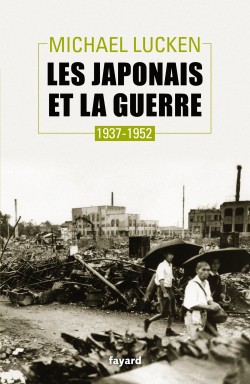 Michael Lucken est professeur des université près l'Institut des langues et des civilisations orientales, spécialiste de l'art japonais, spécialité qui est une des pièces maîtresse du dispositif analytique et des sources exploitées par l’auteur pour saisir notamment les mécanismes psychologiques ayant animé les Japonais pendant la guerre de l'Asie-pacifique et l'immédiat après-guerre (fin de l'occupation américaine). Rien de plus précieux en effet, en une période où la parole publique n'est pas nécessairement libre, que de recourir aux sources littéraires, graphiques et visuelles pour saisir l'ampleur affective du drame, son appropriation par les Japonais et son instrumentalisation par les pouvoirs politiques nippons et américains.
Il suffit de garder en mémoire les passages poignants de Shûsako Endô, notamment dans son roman Le fleuve sacré, pour apprécier l'impact sur cet auteur lorsqu'il fût informé a posteriori des actes de cannibalisme commis par des soldats affamés, harcelés et en déroute en pleine jungle de Birmanie. L'ombre de la guerre se pose aussi implicitement ou explicitement dans les réalisations cinématographiques et la bande dessinée contemporaines (films, anime, manga). Surtout, Michael Lucken, qui a exploité une importante quantité de sources japonaises, nous démontre comment la Seconde Guerre mondiale est devenue « une figure mythique » au Japon. Il nous explique comment la fin du conflit, et en particulier le drame des bombes atomiques, a été exploitée par l'empereur et sa chancellerie pour assurer, avec le consentement des autorités américaines d'occupation (SCAP), la survie et la permanence de l'institution impériale au prix du sacrifices de nombreuses vies humaines, d'une interprétation et d'une manipulation de la réalité historique. Ce thème est abordé dans la seconde partie de l’ouvrage et apporte un éclairage sur les enjeux mémoriels et politiques actuellement en jeu en Asie.
L’auteur relate peu les crimes commis par l'armée japonaise en guerre. Cela a déjà été traité par Jean-Louis Margolin (Violences et crimes du Japon en guerre, 1937-1945, Grand Pluriel, 2009) et les campagnes militaires, ce n'est pas l'objet principal de son livre. Il a surtout étudié le vécu de l'arrière, l'impact de la guerre sur le quotidien : une guerre d'abord coloniale et lointaine, et qui devient de plus en plus présente en raison d'un plus grand embrigadement du corps social, de l'accroissement du nombre des tués et des bombardements alliés. Le lecteur pourra être choqué par le mépris des autorités pour leurs soldats, et en particulier du problème du rapatriement des ossements des morts au combat : pour les Japonais, le respect aux défunts et le deuil des familles est conditionné par le retour des cendres, de restes ou d'effets personnels du défunt ; or, la réalité des engagements armés ne le permettant pas toujours, les autorités militaires japonaises ont multipliés les expédients, et même préconisé le prélèvement in vivo et anticipé de reliques, principalement les phanères (à l'instar des pilotes de kamikaze qui avaient la tête rasée, à l'exception d'une mèche de cheveux destinée à être envoyée aux proches du héros). Ce mépris a ouvert très tôt les portes à toutes les sollicitations au sacrifice : si la valorisation et la pratique d’offrir héroïquement sa vie au combat est ancienne au Japon (et pas uniquement japonaise, l'auteur explique brillamment l'influence de la pensée occidentale au Japon, et en particulier Romain Rolland), c’est surtout l’exemple des trois soldats qui se seraient délibérément sacrifiés à Shangai le 22 février 1932 en transportant un tube de Bangalore (explosif servant à faire des brèches dans les fortifications ou lignes de barbelées adverses) que les contemporains de la guerre ont en mémoire : ces « trois bombes humaines » ou « projectiles de chair » sont à l’origine du terme « nikudan », largement employé dans la presse pour désigner les soldats prêts à mourir dans une mission sans retour. L'épisode des kamikaze se situe dans cette continuité, mais avec une intensité supérieure, car le Japon se trouve devant le gouffre de la défaite...

Enfin, Michael Lucken nous éclaire sur la dimension romantique de l'engagement patriotique de la population japonaise qui pensait sincèrement que l'occupation nippone en Asie serait temporaire, le temps nécessaire d' « éclairer spirituellement » les populations des pays conquis... Malgré la brièveté de la présence des armées impériales, le message d'émancipation véhiculé à l'époque a porté ses fruits, comme en témoigne la vague de décolonisation asiatique. Nous est révélée l'irrationalité et le romantisme du peuple et des élites nippons dans le déclenchement et la poursuite d'une guerre avec de faibles, voire aucune, perspectives de victoire. « Le Japon enfermé dans la modernité occidentale (…) n'avait d'autres solutions (…) que de se lancer dans la guerre, pour que les individus puissent ainsi une dernière fois sentir et prolonger la pureté du souffle national. Il n'y avait à l'horizon ni paix ni après-guerre, seul importait un engagement immédiat, complet et sans retour. La lumière se trouverait dans la ruine. »
Michael Lucken, Les Japonais et la guerre (1937-1952), Fayard, 2013, 399 p.
00:05 Publié dans Histoire, Livre, Livre | Lien permanent | Commentaires (0) | Tags : japon, asie, affaires asiatiques, deuxième guerre mondiale, seconde guerre mondiale, océan pacifique, géopolitique, histoire | | del.icio.us | | Digg | Facebook