Ok

En poursuivant votre navigation sur ce site, vous acceptez l'utilisation de cookies. Ces derniers assurent le bon fonctionnement de nos services. En savoir plus.

mardi, 27 avril 2010

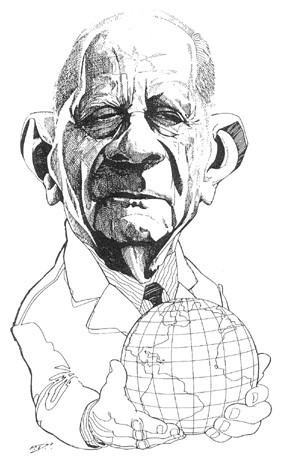
An interest in Carl Schmitt

Carl_Schmitt_thumb.jpgAn interest in Carl Schmitt

Ex: http://majorityrights.com/

Last month I put up a brief post titled Leviathan Rising.  It speculated on the general policy direction by which the transformation to a Leviathan superstate might be effected.  Of course, the times would be characterised by trauma injury to European societies made raceless, and therefore loveless and powerless - for without love between the people there can be no strength in them.

The approach of this condition we can all surmise from the evidence about us.  We read and write about it every day.  But let’s venture beyond.

In my post I argued that the “detachment into domestic policy blandness and irrelevance, and the shift to action abroad” would be the sign that the totalitarian Rubicon had finally been crossed.  But actually, I’ve just come across a better formulation from Leo Strauss in writings about his teacher, the great German jurist Carl Schmitt: “[It] would be a world of entertainment without politics and the possibility of struggle.” Recognise that?

Now, sixty-three years after the extinction of the system he helped to theorise, Schmitt is still the pre-eminent authority on matters of total dominion?  Addressing the riddle of how to despatch liberal democracy without triggering what Habermas has termed “the legitimation crisis”, he formulated a legal and philosophical legitimisation for dictatorship.  This he did through a number of influential works in the years up to 1933, when he finally joined the Nazi Party.  His thought, however, reduces to four core concepts:-

1. The concept of “Exception” from the normal restraints on state power in the absence of order.

2. The concept of “The Political”, as the dominion or theatre of action for the state (and the state alone).

3. The concept of “friend/enemy”.  In the racial sense applying in National Socialist Germany, this could be seen as the division into in-group/out-group from the standpoint of the state.  In our age, the “enemy” is European Man.  But it need not be racial, of course, and indeed is really just a means of defining the activism of “The Political” (or the interests of the elite).

4. “Nomos” or the historic dynamic out of which grew the European Age or Global Order of the 18th and 19th centuries, which Schmitt idealised and at the summit of which placed the development of the sovereign state.

It should be no surprise that for well over a decade now Carl Schmitt has been an object of study and fascination both on the liberal-left and the Straussian right.  I will explore some of his ideas in greater depth later on.  But to give you a flavour of the man I’m going to end this post with the transcripts from his interrogations at Nuremberg.

He was arrested by the Russians in Berlin in April 1945, interrogated and then released.  But six months later he was arrested by the Americans at the instigation of German Jews in OMGUS (Office of Military Government, United States), and interned until March 1947.  He was then interrogated by a prosecutor for the War Crimes Trials, Robert M. W. Kempner, on three occasions.  Here are the full transcripts of those interviews:-

Kempner: You do not have to testify, Professor Schmitt, if you do not want to, and if you think you are incriminating yourself. But if you do testify, then I would be grateful if you would be absolutely truthful, would neither conceal nor add anything.  Is that your wish?
Schmitt: Yes, of course.
Kempner: And if I come to something you might find self-incriminating, you can simply say you prefer to remain silent.
Schmitt: I have already been interrogated by the C.I.C. [U.S. Army counter-intelligence] and in the camp.  I would be glad to tell you all I know.  However, I would like to know what I am being blamed with. All previous interrogations ultimately ended in academic discussions.
Kempner: I do not know why anyone else has questioned you.  I will tell you quite candidly what I am interested in: your participation, direct and indirect, in the planning of wars of aggression, of war crimes and of crimes against humanity.
Schmitt: Planning wars of aggression is a new and very broad concept.
Kempner: I take it for granted that, as a professor of public law, you know exactly what a war of aggression is.  Do you agree with me on the fact that Poland, Norway, France, Russian, Denmark, Holland were invaded? Yes or no?
Schmitt: Of course.
Kempner: Did you not provide the ideological foundation for those kinds of things?
Schmitt: No.
Kempner: Could your writings be so interpreted?
Schmitt: I do not think so - not by anyone who has read them.
Kempner: Did you seek to achieve a new international legal order in accordance with Hitlerian ideas?
Schmitt: Not in accordance with Hitlerian ideas and not sought to achieve but diagnosed.
Kempner: What is your attitude toward the Jewish Question, in general, and how it was handled by the Third Reich?
Schmitt: It was a great misfortune and, indeed, from the very beginning.
Kempner: Did you consider the influence of your Jewish colleagues, who were teachers of international law, a misfortune?
Schmitt: With the exception of Erich Kaufmann, there were no Jewish legal scholars there [in Nazi Germany].  He was a belligerent militarist.  He originally coined the phrase “The social ideal is the victorious war,” in “Die Clausula rebus sic stantibus.”
Kempner: Now, however, Erich Kaufmann is not here, but you are.
Schmitt: I do not want to incriminate him.  I also would not like to create the impression of incriminating this man.
Kempner: Would you say there was a definite discussion between international and constitutional law influenced by Jews and that which you taught and advocated?
Schmitt: The standpoint of Jewish colleagues was not sufficiently homogeneous for that.
Kempner: Have you ever written such things?
Schmitt: I wrote only once that Jewish theorists have no understanding of this territorial theory.
Kempner: Where did you write that?
Schmitt: In a little essay in the Zeitschrift fur Raum-Forschung, 1940-41.
Kempner: What was that essay called?
Schmitt: I cannot recollect the title.
Kempner: Who published the journal?
Schmitt: The Reich Office for Raum Research.
Kempner: How long is the essay?
Schmitt: Volkerrechtliche Grossramordnung had 50 large octavo pages.
Kempner: How many editions?
Schmitt: I believe 5 or 6.  The essay was reprinted there from the Zeitschrift fur deutsche Raumforschung, published by Deutscher Rechtsverlag, a press of the National Socialist League of Jurists.
Kempner: It had a swastika on its publisher’s insignia?
Schmitt: Yes, of course.
Kempner: Reading your writings creates a completely different impression from the one you are now providing.
Schmitt: If one reads them completely, they have very little to do with the Jewish Question.
Kempner: You admit, however, that it [Volkerrechtliche Grossramordnung] is clearly an international legal theory of Lebensraum?
Schmitt: I call it Grossraum.
Kempner: Hitler was also for Grossraum.
Schmitt: All of them were probably for it, including the citizens of other countries.
Kempner: A reading of this essay shows it was written in the purest Hitler syle.
Schmitt: No.  I am proud of the fact that since 1936 I had nothing to do with that.
Kempner: Previously, therefore, you wrote in the Hitlerian style.
Schmitt: No, I did not say that.  Until 1936 I considered it possible to give meaning to these catchwords.
Kempner: You assumed the editorship of various journals, which previously you had not.  Die deutsche Juristenzeitung, for example?
Schmitt: From 1934 to 1936.
Kempner: Would it not have been better to have avoided becoming involved with that?
Schmitt: Yes, now one can say that.
Kempner: The accused is confronted with his publication Volkerrechtliche Grossramordnung, 4th Edition, and the following passage from page 63 is read to him: “The Jewish authors had, of course, as little to do with the previous development of Raum theory as they had with the creation of anything else.  They were also here an important cause of the dissolution of concretely-determined territorial orders.” Do you deny that this passage is in the purest Goebbels-style?  Yes or no?
Schmitt: I do deny that the content and form of that is in Goebbels’ style.  I would like to emphasize that the serious scholarly context of that passage should be taken into consideration.  In its intent, method, and formulation it is a pure diagnosis.
Kempner: Do you want to say anything else?
Schmitt: I am here as what?  As a defendent?
Kempner: That remains to be determined.
Schmitt: Everything I stated, in particular this passage, was intended as scholarship, as a scholarly thesis I would defend before any scholarly body in the world.
Kempner: Here, however, we are before a criminal court.  You were the directing, one of the leading jurists of the Third Reich.
Schmitt: Someone who in 1936 was publicly defamed in Das Schwarze Korps [the S.S. journal] cannot be described in that fashion.
Kempner: How does your interpretation fit with the fact that, after 1936, you delivered lectures financed by the Nazi Reich in Budapest, Bucharest, Salamanca and Barcelona; in the notorious espionage and propaganda institute, “The German Instiute in Paris,” and other places.  Did you deliver lectures?  Yes or no?
Schmitt: Yes, I did deliver lectures.  They were not paid for.
Kempner: Who paid for the trip?
Schmitt: Part [was paid] by the inviting societies, part by German agencies.
Kempner: Therefore: the Nazi Reich.
Schmitt: That was a forum for me; I had no other.
Kempner: You see that there is in this fact of your defamation, on the one hand, and your lectures, on the other, a certain contradiction very difficult for me to comprehend.
Schmitt: If you are interested in an explanation, I would be pleased to give you one.  This is the first conversation I have had about it since 1933.  I would like to discuss that.
Kempner: It is related to what extent you provided the scholarly foundation for war crimes, crimes against humanity, the forceful expansion and widening of Grossraum.  We are of the opinion that the executing agencies in the administration, the economy and the military are not more important than the men who conceived the theory and the plans for the entire affair.  Maybe you would like to write down what you have to say.  To what extent did you provide the theoretical foundation for Hitlerian Grossraum policy?
Schmitt: I will write it down.  This is thus the question to be answered.

(2)
Kempner: Were you so kind to write your answers?
Schmitt: It took a long time, because I was given a table so late.  May I give it to you?
Kempner: I must, of course, read through this later.  Who invited you to the German Institute in Paris?
Schmitt: The director, Dr. Epting, on the suggestion of certain gentlemen whom he knew.  The lecture was a pretext for the trip.  I was accompanied by Pierre Linn, a Jewish friend and his wife.
Kempner: I am interested in the German Institute.
Schmitt: I had very little to do with that.  The director was Epting.  The motivating force behind my invitation was Dr. Bremer.  He had many friends, including Frenchmen such as Alfred Fabre-Luce.
Kempner: Would you be so good as to sign the pages with your initials C.S.?  Are all the facts correct?  Then please write: The truth of the above statements is pledged on my word of honour.
Schmitt: Yes.  May I ask something else?
Kempner: What questions do you still have?
Schmitt: You wanted to lend me Volkerrechtliche Grossramordnung.
Kempner: You still have not received it?
Schmitt: No, I still have no answer from my wife.  May I request that my wife send me the manuscript of the lecture on the “Lage der europaischen Rechtswissenschaft”?  The manuscript is still with the publisher.  The lecture was basically intended for a Fetschrift for Popitz.  I have not said anything that is not contained in the manuscript.  That provides perhaps the best account of the remarks I made in Bucharest, Budapest, Madrid, Barcelona Coimbra.
Kempner: Have you now been able to reconcile yourself in any way to the role you played in the Third Reich and in the preparation of criminal offenses, as I interpret them?
Schmitt: Here we are not really disputing facts.  I accept them.  It is a question of interpretation and legal evaluation.  As a long-standing professor of jurisprudence, I cannot stop thinking.
Kempner: Nor should you.  To clarify again what the theory of the public prosecutor is: Did you participate in the preparation, etc. of wars of aggression and in other punishable offenses related to these at the point of decision-making?  What is your answer to that?  Could you state it concisely in a single sentence?
Schmitt: I neither served in a decision-making capacity, nor did I participate in the preparation of wars of aggression.
Kempner: Our theory about the term “point of decision-making” is as follows: is not one of the leading university professors in this field as least as important in the decision-making-process as other high state or party officials?
Schmitt: Also in a totalitarian state?
Kempner: Yes, particularly in a totalitarian system.  And furthermore: what we understand by wars of aggression is very clearly expressed in the decision of the IMT [International Military Tribunal in Nuremberg], with which you are familiar.
Schmitt: Yes, it would be good if I could have the complete text.  I have no material at all.  I have one final question, which is not connected with the preceding.  You mentioned the name Radbruch.  I hardly know him.  If you want to inquire about my activity as a professor during the last 10 years, I would request that you question colleagues who really have known me.
Kempner: Who, for example?
Schmitt: Carl Brinkmann.  He was in Berlin until 1944 and is now in Erlangen.
Kempner: I will be glad to question him.  Was he a party member?
Schmitt: No, otherwise he would not now be a professor in Erlangen.  I do not believe he was a party member.  It may not be pleasant for him to do that.  The Dr. Carl Schmitt myth is pure myth.  Carl Schmitt is quite a peculiar individual, not just a professor; he is also a composite of various other individuals.  I observed this when I was interrogated by Dr. Flechtheim.  You can inquire about that.
Kempner: I have my sources.
Schmitt: Radbruch is a politician.  He sees things in a particular way and does not understand that a person can sit quietly at a desk.
Kempner: Did Rousseau leave his desk?
Schmitt: No.
Kempner: Who else did not leave his desk?
Schmitt: Thomas Hobbes.
Kempner: It is very difficult to render a criminal judgment.
Schmitt: May I speak frankly?  I have now been in solitary confinement for 3 weeks ...
Kempner: You do not want to be alone?
Schmitt: I would like to be even more alone.  All possible questions were asked of me at the time I was placed under arrest.  I said then only: I would like to be able to speak about my case from my own perspective.  I desire only to clarify things to myself.  But my name, my physiognomy is too famous for me to be left alone.  I had hundreds of students in all countries, thousands of listeners.
Kempner: To the extent that it relates to audience, your reputation vacillates in history.
Schmitt: That will always be the case when someone takes a position in such situations.  I am an intellectual adventurer.
Kempner: You have the blood of an intellectual adventurer?
Schmitt: Yes, that is how thoughts and knowledge develop.  I assume the risk.  I have always accepted the consequences of my actions.  I have never tried to avoid paying my bills.
Kempner: If, however, what you call the pursuit of knowledge results in the murder of millions of people?
Schmitt: Christianity also resulted in the murder of millions of people.  One does not know unless one has experienced it oneself.  I by no means feel, as do many others, an innocent victim to whom something horrible has happened.
Kempner: But this is no comparison.  And is it not, simply stated, a criminal investigation of your personal make-up?
Schmitt: I can tell you a great deal about that.  If I were asked, I would be glad to express my honest opinion.
Kempner: I would like to ask you something without touching on your own matters.  Let us for a moment consider a case from another area.  You are familiar with Mr. Lammers and, as a constitutional lawyer, his position.  You know what a Reich Minister is?
Schmitt: Personally, I have only seen him once, in 1936.  He was Chief of the Reich Chancellery, where everything was concentrated.
Kempner: How do you explain psychologically that a man like Lammers, as an old professional civil servant, signed hundreds of horrible things?
Schmitt: I do not understand that.  I have not done that.
Kempner: That does not relate to you, you avoided such things?  How do you explain that a diplomat like von Weizsacker, as a state secretary, signed hundreds of such things?
Schmitt: I would like to give you a nice answer.  The question has great significance, a distinguished man like von Weizsacker… Only I must protect myself…
Kempner: This theme could get us into constitutional matters.  At present, I am not questioning you about Lammers personally, but about the position of Chief of the Reich Chancellery in a totalitarian state.  I am asking you neither as a defendent nor as someone accused or as a witness, but as a constitutional lawyer.  I am asking you here purely as an expert, why this position is more important than that of another Reich Minister?
Schmitt: Perhaps Bormann was more important.
Kempner: That is not completely correct.  The position of Bormann first became important in 41-42.
Schmitt: I would like to formulate this for you as best as possible in writing.
Kempner: In the Bismarckian Reich I would have stated: Lammers had the key to lawmaking in his hand.  In the dictatorship he had more in his hand: the handle to the door of the dictator.  Does this explain the significance of his position?
Schmitt: Yes.
Kempner: Write that up in a small essay.

(3)
Kempner: How are you, Professor Schmitt?  Have you written something?
Schmitt: Yes.  I have brought along both written elaborations and have signed them.  I no longer recall the exact wording of your question: “Did you participate in the preparation of wars of aggression, etc.”
Kempner: Do you pledge the accuracy of your statements on your word of honour?
Schmitt: On my word of honour I pledge the accuracy of the statements from pages 1-17.  That is a written elaboration, a legal opinion.
Kempner: Please write at the end of your elaboration: I pledge that I have given the above legal opinion according to the best of my knowledge and conscience.
Schmitt: Yes.  The legal opinion is on pages 1-15.
Kempner: I will examine this very closely.
Schmitt: I am happy to have found a reader once again.  In general, my writings have been read very poorly.  I fear the superficial reader.
Kempner: I will read through it not only form the standpoint of criminal law, but also from the standpoint of constitutional law.
Schmitt: I have written it with great interest.  Can it be indicated that I did not do that on my own initiative?
Kempner: Professor Carl Schmitt made the assessment of the constitutional position of the Reich minister and chief of the Reich chancellery at the instigation of the interrogator.  Are you afraid of doing that on your own initiative?
Schmitt: Not that.  Maybe it is improper in my circumstances.
Kempner: Prof. Carl Schmitt submits, in addition, his own comments on the subject of participating in wars of aggression.  Were you a member of the SS?
Schmitt: No.
Kempner: To what extent did you participate in the ideological preparation of SS ideology?
Schmitt: Not at all.  I was an opponent of the SS.  I was publicly assaulted and defamed in Das Schwarze Korps.
Kempner: Do you know Gottlob Berger?
Schmitt: I have never seen him.
Kempner: Were you not the idol of SS professors such as Boehm, etc.?
Schmitt: When a state concillor in a totalitarian system is publicly spat at by the Schwarze Korps, that cannot be said.
Kempner: After you were spat at, did you not travel to Salamanca, Paris, Madrid, etc.?
Schmitt: That occurred in 1943 on special invitation from the faculties.
Kempner: You had nothing to do with the SS?
Schmitt: I was strongly opposed to it.  I was secretly observed and controlled by the SS.
Kempner: Did you state that German legislation and the German administration of justice must be carried out in the spirit of National Socialism?  Yes or no?  Did you state that between 1933 and 1936?
Schmitt: Yes.  I was from 1935 to 1936 head of the professional organization.  I felt superior at that time.  I wanted to give the term National Socialism my own meaning.
Kempner: Hitler had a National Socialism and you had a National Socialism.
Schmitt: I felt superior.
Kempner: You felt superior to Adolf Hitler?
Schmitt: Intellectually, of course.  He was to me so uninteresting that I do not want to talk about that at all.
Kempner: When did you renounce the devil?
Schmitt: 1936.
Kempner: Are you not ashamed to have written these kinds of things at that time, such as, for example, that the administration of justice should be National Socialist.
Schmitt: I wrote that in 1933.
Kempner: Do you deserve good or poor grades for that?
Schmitt: It was a thesis.  The National Socialist League of German Jurists extracted it, so to speak, from my mouth.  At that time there was a dictatorship with which I was not yet familiar.
Kempner: You were not familiar with any dictatorship.
Schmitt: No.  This total dictatorship was actually something new.  Hitler’s method was new.  There was only one parallel, Lenin’s Bolshevik dictatorship.
Kempner: Was that something new?
Schmitt: Yes, certainly.
Kempner: In your own library you have writings about totalitarian dictatorship.
Schmitt: Not totalitarian.
Kempner: Are you not ashamed that you wrote these kinds of things at that time?
Schmitt: Today, of course.  I do not consider it appropriate to continue to rummage around in the disgrace we suffered at that time.
Kempner: I do not want to rummage around.
Schmitt: Without question, it was unspeakable.  There are no words to describe it.
Kempner: I consider it better if we converse about such matters outside, not here in custody.
Schmitt: That would be agreeable to me for reasons of health.  I also consider it better in the interest of the case.  This professional opinion suffers from this situation.
Kempner: I want to see that you return home.
Schmitt: My wife gave up the apartment in Berlin.  We have no other lodging than with my sisters in Westphalia.  Could you see that I go there and not automatically be sent to Berlin?
Kempner: That will be taken care of today.
Schmitt: I would appreciate it.

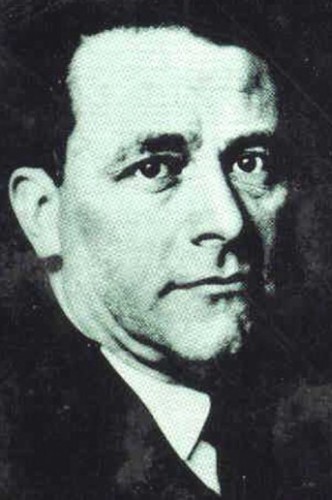
The Lesson of Carl Schmitt

cs1.jpgThe Lesson of Carl Schmitt

Translated by Greg Johnson

Ex: http://www.toqonline.com/

We met Carl Schmitt in the village of Plettenberg, the place of his birth and retirement. For four remarkable hours we conversed with the man who remains unquestionably the greatest political and legal thinker of our time. “We have been put out to pasture,” said Schmitt. “We are like domestic animals who enjoy the benefits of the closed field we are allotted. Space is conquered. The borders are fixed. There is nothing more to discover. It is the reign of the status quo . . .”

Schmitt always warned against this frozen order, which extends over the Earth and ruins political sovereignties. Already in 1928, in The Concept of the Political,[1] he detects in the universalist ideologies, those “of Rights, or Humanity, or Order, or Peace,” the project of transforming the planet into a kind of depoliticized economic aggregate which he compares to a “bus with its passengers” or a “building with its tenants.” And in this premonition of a world of the death of nations and cultures, the culprit is not Marxism but the liberal and commercial democracies. Thus Schmitt offers one of the most acute and perspicacious criticisms of liberalism, far more profound and original than the “anti-democrats” of the old reactionary right.

He also continues the “realist” manner of analyzing of politics and the state, in the tradition of Bodin, Hobbes, and Machiavelli. Equally removed from liberalism and modern totalitarian theories (Bolshevism and fascisms), the depth and the modernity of his views make him the most important contemporary political and constitutional legal theorist. This is why we can follow him, while of course trying to go beyond some of his analyses, as his French disciple Julien Freund, at the height of his powers, has already done.[2]

The intellectual journey of the Rhenish political theorist began with reflections on law and practical politics to which he devoted two works, in 1912 and 1914,[3] at the end of its academic studies in Strasbourg. After the war, having become a law professor at the universities of Berlin and Bonn, his thoughts were focused on political science. Schmitt, against the liberal philosophies of the Right, refused to separate it from politics.

His first work of political theory, Political Romanticism (1919),[4] is devoted to a critique of political romanticism which he opposes to realism. To Schmitt, the millennialist ideals of the revolutionary Communists and the völkisch reveries of the reactionaries seemed equally unsuitable to the government of the people. His second great theoretical work, Die Diktatur [Dictatorship] (1921),[5] constitutes, as Julien Freund writes, “one of the most complete and most relevant studies of this concept, whose history is analyzed from the Roman epoch up to Machiavelli and Marx.”[6]

Schmitt distinguishes “dictatorship” from oppressive “tyranny.” Dictatorship appears as a method of government intended to face emergencies. In the Roman tradition, the dictator’s function was to confront exceptional conditions. But Machiavelli introduces a different practice; he helps to envision “the modern State,” founded on rationalism, technology, and the powerful role of a complex executive: this executive no longer relies upon the sole sovereign.

Schmitt shows that with the French jurist Jean Bodin, dictatorship takes to the form of a “practice of the commissars” which arose in the sixteen and seventeenth centuries. The “commissars” are omnipotent delegates of the central power. Royal absolutism, established on its subordinates, like the Rousseauist model of the social contract which delegates absolute power to the holders of the “general will” set up by the French revolution, constitutes the foundation of contemporary forms of dictatorship.

From this point of view, modern dictatorship is not connected with any particular political ideology. Contrary to the analyses of today’s constitutionalists, especially Maurice Duverger, “democracy” is no more free of dictatorship than is any other form of state power. Democrats are simply deceiving themselves to think that they are immune to recourse to dictatorship and that they reconcile real executive power with pragmatism and the transactions of the parliamentary systems.

In a fundamental study on parliamentarism, The Crisis of Parliamentary Democracy (1923),[7] Schmitt ponders the identification of democracy and parliamentarism. To him, democracy seems to be an ideological and abstract principle that masks specific modalities of power, a position close to those of Vilfredo Pareto and Gaetano Mosca. The exercise of power in “democracy” is subject to a rationalist conception of the state which justified, for example, the idea of the separation of powers, the supposedly harmonious dialogue between parties, and ideological pluralism. It is also the rationality of history that founds the dictatorship of the proletariat. Against the democratic and parliamentarian currents, Schmitt places the “irrationalist” currents, particularly Georges Sorel and his theory of violence, as well as all non-Marxist critiques of bourgeois society, for example Max Weber.

This liberal bourgeois ideology deceives everyone by viewing all political activity according to the categories of ethics and economics. This illusion, moreover, is shared by liberal or Marxist socialist ideologies: the function of public power is no longer anything but economic and social. Spiritual, historical, and military values are no longer legitimate. Only the economy is moral, which makes it possible to validate commercial individualism and at the same time invoke humane ideals: the Bible and business. This moralization of politics not only destroys all true morals but transforms political unity into neutralized “society” where the sovereign function is no longer able to defend the people for whom it is responsible.

By contrast, Schmitt’s approach consists in analyzing the political phenomenon independently of all moral presuppositions. Like Machiavelli  and Hobbes, with whom he is often compared, Schmitt renounces appeals to the finer feelings and the soteriology of final ends. His philosophy is as opposed to the ideology of the Enlightenment  (Locke, Hume, Montesquieu, Rousseau, etc.) and the various Marxian socialisms as it is to Christian political humanism. For him, these ideologies are utopian in their wariness of power and tend to empty out the political by identifying it with evil, even if it is allowed temporarily—as in the case of Marxism.

But the essence of Schmitt’s critique relates to liberalism and humanism, which he accuses of deception and hypocrisy. These theories view the activity of public power as purely routine administration dedicated to realizing individual happiness and social harmony. They are premised on the ultimate disappearance of politics as such and the end of history. They wish to make collective life purely prosaic but manage only to create social jungles dominated by economic exploitation and incapable of mastering unforeseen circumstances.

Governments subject to this type of liberalism are always frustrated in their dreams of transforming politics into peaceful administration: other states, motivated by hostile intentions, or internal sources of political subversion, always emerge at unforeseen moments. When a state, through idealism or misunderstood moralism, no longer places its sovereign political will above all else, preferring instead economic rationality or the defense of abstracted ideals, it also gives up its independence and its survival.

Schmitt does not believe in the disappearance of the political. Any type of activity can take on a political dimension. The political is a fundamental concept of collective anthropology. As such, political activity can be described as substantial, essential, enduring through time. The state, on the other hand, enjoys only conditional authority, i.e., a contingent form of sovereignty. Thus the state can disappear or be depoliticized by being deprived of the political, but the political—as substantial—does not disappear.

The state cannot survive unless it maintains a political monopoly, i.e., the sole power to define the values and ideals for which the citizens will agree to give their lives or to legally kill their neighbors—the power to declare war. Otherwise partisans will assume political activity and try to constitute a new legitimacy. This risk particularly threatens the bureaucratic states of modern liberal social democracies in which civil war is prevented only by the enervating influence of consumer society.

These ideas are expressed in The Concept of the Political, Schmitt’s most fundamental work, first published in 1928, revised in 1932, and clarified in 1963 by its corollary Theory of the Partisan.[8] Political activity is defined there as the product of a polarization around a relation of hostility. One of the fundamental criteria of a political act is its ability to mobilize a population by designating its enemy, which can apply to a party as well as a state. To omit such a designation, particularly through idealism, is to renounce the political. Thus the task of a serious state is to prevent partisans from seizing the power to designate enemies within the community, and even the state itself.

Under no circumstances can politics be based on the administration of things or renounce its polemical dimension. All sovereignty, like all authority, is forced to designate an enemy in order to succeed in its projects; here Schmitt’s ideas meet the research of ethologists on innate human behavior, particularly Konrad Lorenz.

Because of his “classical” and Machiavellian conception of the political, Schmitt endured persecution and threats under the Nazis, for whom the political was on the contrary the designation of the “comrade” (Volksgenosse).

The Schmittian definition of the political enables us to understand that contemporary political debate is depoliticized and connected with electoral sideshows. What is really political is the value for which one is ready to sacrifice one’s life; it can quite well be one’s language or culture. Schmitt writes in this connection that “a system of social organization directed only towards the progress of civilization” does not have “a program, ideal, standard, or finality that can confer the right to dispose of the physical life of others.” Liberal society, founded on mass consumption, cannot require that one die or kill for it. It rests on an apolitical form of domination: “It is precisely when it remains apolitical,” Schmitt writes, “that a domination of men resting on an economic basis, by avoiding any political appearance and responsibility, proves to be a terrible imposture.”

Liberal economism and “pluralism” mask the negligence of the state, the domination of the commercial castes, and the destruction of nations anchored in a culture and a history. Along with Sorel, Schmitt pleads for a form of power that does not renounce its full exercise, that displays its political authority by the normal means that belong to it: power, constraint, and, in exceptional cases, violence. By ignoring these principles the Weimar Republic allowed the rise of Hitler; the techno-economic totalitarianism of modern capitalism also rests on the ideological rejection of the idea of state power; this totalitarianism is impossible to avoid because it is proclaimed humane and is also based on the double idea of social pluralism and individualism, which put the nations at the mercy of technocratic domination.

The Schmittian critique of internal pluralism as conceived by Montequieu, Locke, Laski, Cole, and the whole Anglo-Saxon liberal school, aims at defending the political unity of nations, which is the sole guarantor of civic protection and liberties. Internal pluralism leads to latent or open civil war, the fierce competition of economic interest groups and factions, and ultimately the reintroduction within society of the friend-enemy distinction which European states since Bodin and Hobbes had displaced outwards.

Such a system naturally appeals to the idea of “Humanity” to get rid of political unities.  “Humanity is not a political concept,” writes Schmitt, who adds:

The idea of Humanity in doctrines based on liberal and individualistic doctrines of natural Right is an ideal social construction of universal nature, encompassing all men on earth. . . . which will not be realized until any genuine possibility of combat is eliminated, making any grouping in terms of friends and enemies impossible. This universal society will no longer know nations. . . . The concept of Humanity is an ideological instrument particularly useful for imperialistic expansion, and in its ethical and humane form, it is specifically a vehicle of economic imperialism. . . . Such a sublime name entails certain consequences for one who carries it. Indeed, to speak in the name of Humanity, to invoke it, to monopolize it, displays a shocking pretense: to deny the humanity of the enemy, to declare him outside the law and outside of Humanity, and thus ultimately to push war to the extremes of inhumanity.[9]

To define politics in terms of the category of the enemy, to refuse humanitarian egalitarianism, does not necessarily lead to contempt for man or racism. Quite the contrary. To recognize the polemical dimension of human relations and man as “a dynamic and dangerous being,” guarantees respect for  any adversary conceived as the Other whose cause no less legitimate than one’s own.

This idea often recurs in Schmitt’s thought: modern ideologies that claim universal truth and consequently consider the enemy as absolute, as an “absolute non-value,” lead to genocide. They are, moreover, inspired by monotheism (and Schmitt is a Christian pacifist and convert). Schmitt claims with good reason that the conventional European conception that validated the existence of the enemy and admitted the legitimacy of war—not for the defense of a “just” cause but as eternally necessitated by human relations—caused fewer wars and induced respect for the enemy considered as adversary (as hostis and not inimicus).

Schmitt’s followers, extending and refining his thought, have with Rüdiger Altmann coined the concept of the Ernstfall (emergency case), which constitutes another fundamental criterion of the political. Political sovereignty and the credibility of a new political authority is based on the capacity to face and solve emergency cases. The dominant political ideologies, thoroughly steeped in hedonism and the desire for security, want to ignore the emergency, the blow of fate, the unforeseen. Politics worthy of the name—and this idea pulverizes the abstract ideological categories of “right” and “left”—is that which, secretly, answers the challenge of the emergency case, saves the community from unforeseen trials and tempests, and thereby authorizes the total mobilization of the people and an intensification of its values.

Liberal conceptions of politics see the Ernstfall merely as the exception and “legal normality” as the rule. This vision of things, inspired by Hegel’s teleological philosophy of history, corresponds to the domination of the bourgeoisie, who prefer safety to historical dynamism and the destiny of the people. On the contrary, according to Schmitt, the function of the sovereign is his capacity to decide the state of the exception, which by no means constitutes an anomaly but a permanent possibility. This aspect of Schmitt’s thought reflects his primarily French and Spanish inspirations (Bonald, Donoso Cortès, Bodin, Maistre, etc.) and makes it possible to locate him, along with Machiavelli, in the grand Latin tradition of political science.

In Legality and Legitimacy (1932),[10] Schmitt, as a disciple of Hobbes, suggests that legitimacy precedes the abstract concept of legality. A power is legitimate if it can protect the community in its care by force.  Schmitt accuses the idealistic and “juridical” conception of legality for authorizing Hitler to come to power. Legalism leads to the renunciation of power, which Schmitt calls the “politics of non-politics” (Politik des Unpolitischen), politics that does not live up to its responsibilities, that does not formulate a choice concerning the collective destiny. “He who does not have the power to protect anyone,” Schmitt writes in The Concept of the Political, “also does not have the right to require obedience. And conversely, he who seeks and accepts power does not have the right to refuse obedience.”

This dialectic of power and obedience is denied by social dualism, which arbitrarily opposes society and the sovereign function and imagines, contrary to all experience, that exploitation and domination are the political effects of “power” whereas they much more often arise from economic dependency.

Thus Schmitt elaborates a critique of the dualistic State of the nineteenth century based on the conceptions of John Locke and Montesquieu aiming at a separation between the sphere of the State and the private sphere. In fact, modern technocracies, historically resulting from the institutions of parliamentary representation, experience interpenetrations and oppositions between the private and public, as shown by Jürgen Habermas. Such a situation destabilizes the individual and weakens the State.

According to Schmitt, it is this weakness of the democracies that allowed the establishment of one party regimes, as he explains in Staat, Bewegung, Volk [State, Movement, People].[11] This type of regime constitutes the institutional revolution of the twentieth century; in fact, it is today the most widespread regime in the world. Only Western Europe and North America preserved the pluralist structure of traditional democracy, but merely as a fiction, since the true power is economic and technical.

The one party state tries to reconstitute the political unity of the nation, according to a threefold structure: the state proper includes civil servants and the army; the people are not a statistical population but an entity that is politicized and strongly organized in intermediate institutions; the party puts this ensemble in motion (Bewegung) and constitutes a portal of communication between the state and the people.

Schmitt, who returns again and again to Nazism, Stalinism, theocracies, and humanitarian totalitarianisms, obviously does not endorse the one party state. He does not advocate any specific “regime.” In the old Latin realist tradition inherited from Rome, Schmitt wants an executive who is both powerful and legitimate, who does not “ideologize” the enemy and can, in actual cases make use of force, who can make the state the “self-organization of society.”

War thus becomes a subject of political theory. Schmitt is interested in geopolitics as a natural extension of politics. For him, true politics, great politics, is foreign policy, which culminates in diplomacy. In The Nomos of the Earth (1951),[12] he shows that the state follows the European conception of politics since the sixteenth century. But Europe has become decadent: the bureaucratic state has been depoliticized and no longer allows the preservation of the history of the European people; the jus publicium europaeum which decided inter-state relations is declining in favor of globalist and pacifist ideologies that are incapable of founding an effective international law. The ideology of human rights and the vaunted humanitarianism of international institutions are paradoxically preparing a world where force comes before law. Conversely, a realistic conception of the relations between states, which allows and normalizes conflict, which recognizes the legitimacy of will to power, tends to civilize the relationship between nations.

Schmitt is, along with Mao Tse-Tung, the greatest modern theorist of revolutionary war and of the enigmatic figure of the partisan who, in this era of the depoliticization of states, assumes the responsibility of the political, “illegally” designates his enemies, and indeed blurs the distinction between war and peace.[13]

Such “a false pacifism” is part of a world where political authorities and independent sovereignties are erased by a world civilization more alienating than any tyranny. Schmitt, who influenced the constitution of the Fifth French Republic—the French constitution that is most intelligent, most political, and the least inspired by the idealism of the Enlightenment—gives us this message: liberty, humanity, peace are only chimeras leading to invisible oppressions. The only liberties that count—whether of nations or individuals—are those guaranteed by the legitimate force of a political authority that creates law and order.

Carl Schmitt does not define the values that mobilize the political and legitimate the designation of the enemy. These values must not be defined by ideologies—always abstract and gateways to totalitarianism—but by mythologies. In this sense, the functioning of government, the purely political, is not enough. It is necessary to add the “religious” dimension of the first function, as it is defined in Indo-European tripartition. It seems to us that this is the way one must complete Schmitt’s political theory. Because if Schmitt builds a bridge between anthropology and politics, one still needs to build another between politics and history.


[1] Carl Schmitt, The Concept of the Political, trans. George Schwab, expanded edition (Chicago: University of Chicago Press, 2007)—trans.


[2] Cf. Julien Freund, L’Essence du politique (Paris: Sirey, 1965), and La Fin de la Renaissance (Paris: PUF, 1980).

[3] Carl Schmitt, Gesetz und Urteil. Eine Untersuchung zum Problem der Rechtspraxis [Law and Judgment: An Investigation into the Problem of Legal Practice] [1912] (Munich: C. H. Beck, 1968) and Der Wert des Staates und die Bedeutung des Einzelnen [The Value of the State and the Meaning of the Individual] (Tübingen: J. C. B. Mohr [Paul Siebeck], 1914)—trans.

[4] Carl Schmitt, Political Romanticism, trans. Guy Oakes (Cambridge, Mass: The MIT Press, 1985).—trans.

[5] Carl Schmitt, Die Diktaur: Von den Anfängen des modernen Souveränitätsgedankens bis zum proletarischen Klassenkampf [The Dictator: From the Origins of Modern Theories of Sovereignty to Proletarian Class Struggle] (Berlin: Duncker & Humblot, 1921)—trans.

[6] In his Preface to the French edition of The Concept of the Political: Carl Schmitt, La notion de politique (Paris: Calmann-Lévy, 1972).

[7] Carl Schmitt, The Crisis of Parliamentary Democracy, trans. Ellen Kennedy (Cambridge, Mass.: The MIT Press, 1986). See also Carl Schmitt, Political Theology: Four Chapters on the Theory of Sovereignty [1922], trans. George Schwab (Cambridge, Mass.: The MIT Press, 1986)—trans.

[8] Carl Schmitt, Theory of the Partisan: Intermediate Commentary on the Concept of the Political, trans. G. L. Ulmen (New York: Telos Press, 2007)—trans.

[9] Cf. The Concept of the Political, 53–54—trans.

[10] Carl Schmitt, Legality and Legitimacy, trans. Jeffrey Seitzer (Durham, N.C.: Duke University Press, 2004)—trans.

[11] Staat, Bewegung, Volk: Die Dreigleiderung der politischen Einheit [State, Movement, People: The Three Organs of Political Unity] (Hamburg: Hanseatische Verlagsanstalt, 1934)—trans. It concerns a series of studies on one-party states, primarily Marxist, that appeared in 1932.

[12] Carl Schmitt, The Nomos of the Earth in the International Law of Jus Publicum Europaeum, trans. G. L. Ulmen (New York: Telos Press, 2006)—trans.

[13] Cf. “The Era of Neutralizations and Depoliticizations” [1929], trans. Matthias Konzett and John P. McCormick, in the expanded edition of The Concept of the Political—trans.
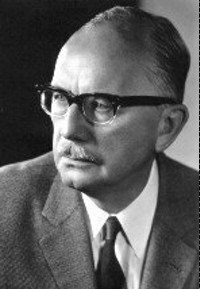
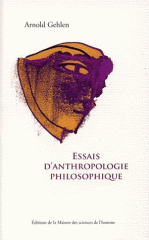
Arnold Gehlen et l'anthropologie philosophique

Gehlen.jpgArnold Gehlen et l'anthropologie philosophique

Ex: http://metapoinfos.hautetfort.com/

Les éditions de la Maison des sciences de l'homme viennent de publier Essais d'anthropologie philosophique,un recueil de texte du philosophe allemand Arnold Gehlen. Fondateur de l'anthropologie philosophique, sa réflexion porte sur l'homme en tant qu'"animal inachevé" (Nietzsche) mais "ouvert au monde". Considéré comme un des intellectuels conservateurs les plus importants  de XXème siècle, son oeuvre a été, jusqu'à présent, très peu traduite en français et donc largement ignorée de ce côté-ci du Rhin. Seules les éditions PUF ont publié, il y a tout juste vingt ans, un de ses ouvrages, un recueil de textes intitulé Anthropologie et psychologie sociale. Il convient aussi de noter que la revue Krisis d'Alain de Benoist a traduit un texte de Gehlen, Problèmes psychosociologiques de la société industrielle, dans son numéro consacré à la technique (n°24, novembre 2000).

Gehlen.gif

"Le premier article de ce recueil définit l'anthropologie philosophique comme la science de l'être humain, de concert avec la morphologie, la physiologie, la psychologie, la linguistique, la sociologie, etc. Science philosophique systématique et interdisciplinaire, elle est fondée sur des hypothèses exemptes de toute « métaphysique ». L’homme. Sa nature et sa position dans le monde (1940) présente les plus fondamentales. Deux articles publiés en 1951 et en 1968 leur ajoutent des éléments du pragmatisme anglo-américain et des éléments de la psychanalyse freudienne. L’idée essentielle de Gehlen est que « l’action et les transformations prévues du monde, dont la quintessence porte le nom de "culture", font partie de l’"essence" de l’être humain, et [que], à partir du point d’approche que constitue l’action, on peut en construire une science globale ».

Influencé par Kant, Herder et Fichte, mettant ses pas dans ceux de Jakob von Uexküll et de Konrad Lorenz, l’homme est selon lui une créature qui se maintient en vie par la transformation et l’amélioration permanente des données de la nature. Sa défectuosité biologique est compensée par l’invention technique. Dépourvu de « niche écologique », il s’adapte à tous les milieux, il est capable en dépit d’une pression intérieure immédiate d’ajourner son action ; cette espèce d’hiatus lui permet de la planifier, d’anticiper l’avenir.
Ces thèses ont nourri la réflexion de Jürgen Habermas, Hans Blumenberg, Ernst Tugendhat, Theodor Adorno.

Quand les pollutions, le dérèglement climatique, etc., menacent l’avenir de l’humanité, mais quand aussi s’expriment partout le souci de sa préservation, alors il est temps de découvrir l’anthropologie d’Arnold Gehlen."

Ibntroduccion a los "Dialogos sobre el poder" de Carl Schmitt

Los alemanes de ahora tienen muy poco tiempo, deben leer necesariamente Kafka,

se deben fatigar y estar siempre listos para convalecer de tanto Kafka.

Carl Schmitt a Ernst Jünger, carta del 23.01.1955 


Introducción a los Diálogos sobre el poder de Carl Schmitt

Giovanni B. Krähe / Ex: http://geviert.wordpress.com/

Recientemente se han publicado dos nuevas traducciones de las obras de Carl Schmitt: Las memorias durante la prisión luego de la Segunda Guerra, publicadas con el título Ex captivitate salus y los Diálogos sobre el poder. La primera traducción ha sido publicada por la editorial española Trotta, que tiene en su catálogo también una nueva traducción de la Teología política. El segundo libro ha sido editado por  el Fondo de Cultura Económica. Se trata de la traducción de la obra de Carl Schmitt Gespräch über die Macht und den Zugang zum Machthaber. El título de la edición castellana es: diálogos sobre el poder y el acceso al poderoso. No hace mucho estos diálogos han sido republicados también en Alemania por la editorial Klett-Cotta. Quisiéramos ocuparnos sobre este segunda novedad editorial, los diálogos sobre el poder.

Schmitt publicó  este breve libro en 1954 con el editor Neske a partir de la transcripción de un diálogo radiofónico imaginario que creó para la ocasión. La propuesta original era, en realidad, un diálogo (que no se concretizó) con el politólogo y sociólogo Raymond Aron sobre el concepto de poder. Otros posibles invitados serían los sociológos Helmut Schelsky y Arnold Gehlen. Schmitt pensó que el diálogo sobre el tema con tales invitados hubiese sido demasiado sofisticado para la idea que tenía en mente, motivo que lo llevó a decidirse por un guión de diálogo para ser  leído por dos interlocutores cualquiera, uno anciano y el otro joven. El guión original fue transmitido finalmente en una programa radial con el título “principios del poder”, el 22.06.1954. De ese guión nace el presente libro. Se trata de una obra entre la teoría política realista, la ironía sutil, y el estilo del diálogo apodíptico sobre el concepto de Poder (Macht). La teología política schmittiana está en el fondo del diálogo. Al inicio del post se puede ver la imagen de la primera edición del libro con el editor Neske (a la izquierda la edición del FCE). En la biografía de nuestro autor, los diálogos es un texto simbólico clave, porque significa el inicio de la influencia intelectual de Schmitt – desde el silencio en su casa de Plettenberg – en la reconstrucción constitucional-liberal de Alemania (se lea bien), luego de la Segunda Guerra. En efecto, algo que voluntariamente omiten los críticos, apologistas y demás engañamuchachos al paso de Carl Schmitt, cuando relatan pedagógicamente sobre la biografía o la obra del autor, es su influencia en el fortalecimiento constitucional de la Grundgesetz (la ley fundamental, la actual constitución alemana), entre otras constituciones por el mundo (la constitución israelí por ejemplo). Conceptos schmittianos claves y decisivos en la actual politología alemana – por ejemplo el concepto de konstruktives Misstrauenvotum, moción constructiva de censura* - , o en la doctrina constitucional – por ejemplo el concepto de Verfassungswirklichkeit, realidad (fáctica, material) de la Constitución -, fueron conceptos (ambos típicamente liberal-garantistas), introducidos por Schmitt en el debate especializado de la época. Ambas categorías son válidas hasta el día de hoy.

(*) Sobre el concepto de moción constructiva, la (cada vez peor) enciclopedia online Wikipedia  menciona el nombre de Schmitt curiosamente mal escrito.

Los Diálogos

Dada la importancia de este breve libro para entender el concepto y la teoría del poder que Schmitt maneja en el resto de su obra, quisiéramos proponer una breve nota introductoria a partir de una revisión nuestra, comentada, de la traducción de este libro de Schmitt, a partir de la edición original alemana.  No tenemos acceso a la nueva edición del FCE, por lo tanto vamos a revisar la traducción castellana aparecida en la Revista de Estudios Políticos, 1954, 52, Nr. 78, p. 3-20 (descargable aquí). La revista no lo menciona, pero es probable que esta primera versión española haya sido traducida por Anima Schmitt, la hija del autor. El lector que posea la nueva edición de la FCE puede comentar comparativamente la pertinencia de la versión crítica que proponemos. Al mismo tiempo nos podrá comentar si la edición del FCE es efectivamente nueva o simplemente es una copia de la versión de Estudios políticos. Esperamos que, en este caso, la gente del FCE al menos cite, dados los precedentes con la (mala) introducción al  libro Teología política.

A continuación la traducción revisada. Se tome suma atención a la versión que proponemos, puesto que notamos que las versiones castellanas (al menos esta que revisamos) no toman en cuenta las peculiaridades de la versión alemana. Ya hemos notado lo mismo con Heidegger (se medite). Se trata de (aparentes) formalismos que influyen en la compresión final del texto, a nuestro parecer. Iremos publicando poco a poco las revisiones. Siendo un guión radiofónico, al final intentaremos presentar una versión grabada del diálogo entre miembros del Geviert-Kreis.

Texto original: Carl Schmitt: Gespräch über die Macht und den Zugang zum Machthaber, Pfullingen: Neske,1954 (1).

———————————————————————–

¿Vosotros sois felices?

¡Nosotros somos poderosos!

LORD BYRON

———————————————————————–

PROTAGONISTAS DEL DIÁLOGO:

E.- (un joven estudiante pregunta) (2)

C. S.- (responde)

El Intermezzo puede ser leído por una tercera persona.

———————————————————————-

E.-Antes de que hable Usted sobre el poder, tengo que preguntarle una cosa.

C. S.- Dígame, por favor, Señor E.

E.- ¿Usted mismo tiene algún poder o no tiene Usted ninguno?

C. S.- Esta pregunta es muy pertinente y justificada. Quien hable del poder debería decir previamente en que situación de poder se encuentra él mismo (3).

E.- ¡Aja! Pues bien entonces, ¿tiene Usted poder o no lo tiene?

C. S.- Yo no tengo poder. Soy de los que carecen de poder.

E.- Esto es sospechoso.

C. S.- ¿Por qué?

E.- Porque entonces probablemente estará Usted predispuesto contra el poder. Disgusto, amargura y resentimiento son peligrosas fuentes de errores.

C. S.- ¿Y si yo perteneciera a los que tienen poder?

E.- Entonces, probablemente, estaría usted predispuesto a favor del poder. También el interés por el propio poder y su mantenimiento son, naturalmente, fuente de errores.

C. S.- ¿Quién, entonces, tiene derecho a hablar sobre el poder?

E.- ¡Esto debería decírmelo Usted! (4).

C. S.- Yo diría que quizá existe aún otra posición: la de la observación y descripción desinteresadas.

E.- ¿Este sería entonces el papel del tercer hombre o de la inteligencia flotando libremente? [N.d.T. freischwebende Inteligenz] (5)

C. S.- ¡Y dale con la inteligencia! Es mejor que no empecemos con tales subsunciones. Intentemos enfocar más bien primeramente con precisión un fenómeno histórico que todos podamos vivir o padecer. El resultado se mostrará por sí mismo.

1.

E.- Hablamos, entonces, del poder que ejercen los hombres sobre los otros hombres. ¿De dónde procede realmente el inmenso poder que, pongamos por caso, Stalin, Roosevelt o cualquier otro que pueda citarse, han ejercido sobre millones de hombres?

C. S.-En tiempos pasados se hubiese podido responder: el poder procede de la naturaleza o de Dios.

E.-Me temo que hoy en día el poder ya no nos parece algo natural.

C. S.-Eso me lo temo yo también. Frente a la naturaleza nos sentimos hoy muy superiores. Ya no la tememos. Cuando nos resulta molesta, ya sea como enfermedad o como catástrofe natural, tenemos la esperanza de vencerla pronto. El hombre -por naturaleza un ser viviente débil- se ha elevado poderosamente sobre cuanto le rodea con ayuda de la técnica. Se ha hecho el señor de la naturaleza y de todos los seres vivientes de este mundo. La barrera que sensiblemente le oponía, en otros tiempos, la naturaleza -con fríos y calores, con hambres y carestías, con animales salvajes y peligros de toda índole- empieza a ceder visiblemente.

E.-Es cierto. Hoy en día no tenemos que temer a ningún animal salvaje.

C.S.-Las hazañas de Hércules nos parecen hoy poca cosa; y si hoy un león o un lobo aparecen en una gran ciudad moderna, constituiría, todo lo más, un entorpecimiento de la circulación, y apenas se asustarían los niños. Frente a la naturaleza, el hombre se siente hoy tan superior, que se permite el lujo de instalar parques protegidos.

E.-¿Y qué sucede con Dios?

C. S.-En lo que respecta a Dios, el hombre moderno -aludo al típico habitante de la gran ciudad- tiene también el sentimiento de que Dios retrocede o que se ha retirado de nosotros. Cuando surge hoy el nombre de Dios, el hombre de cultura media de nuestros días cita automáticamente la frase de Nietzsche: Dios ha muerto. Otros, aún mejor informados, citan una frase del socialista francés Proudhon, que precede de cuarenta años a la frase de Nietzsche y que afirma: Quién dice Dios quiere engañar.

E.-Si el poder no procede ni de la naturaleza ni de Dios, ¿de dónde proviene entonces?

C. S.-Entonces solo nos queda una posibilidad: el poder que un hombre ejerce sobre otros hombres procede del hombre mismo.

E.- ¡Ah! bueno, eso está mejor. Hombres lo somos evidentemente todos finalmente. También Stalin fue un hombre; también Roosevelt o quienquiera se nos ocurra citar aquí.

C. S.-Claro, eso suena realmente tranquilizador. Si el poder que un hombre ejerce sobre otros procede de la naturaleza, entonces es, o bien el poder del progenitor sobre su prole, o la supremacía de los colmillos, de los cuernos, garras, pezuñas, vejigas ponzoñosas y otras armas naturales. Pienso que podemos prescindir aquí del poder del progenitor sobre su prole. Nos queda, pues, el poder del lobo sobre el cordero. Un hombre que tiene poder sería un lobo frente al hombre que no tiene poder. Quien no tiene poder se siente como cordero hasta que, por su parte, alcanza la situación de poderoso y desempeña el papel del lobo. Esto lo confirma el adagio latino Homo homini lupus. En castellano: el hombre es un lobo para el hombre.

E.-¡Pero qué horror! ¿Y si el poder procede de Dios?

C. S.-Entonces, el que lo ejerce es posesor de una cualidad divina. Con su poder adquiere algo divino que mantiene consigo. Algo que se debería venerar, si no a él mismo, sí al poder de Dios que se da en el posesor. Esto lo confirma el adagio latino Homo homini Deus. En castellano: el hombre es un Dios para el hombre.

E.-¡Oh! ¡Esto sí que es demasiado!

C. S.- Pero si el poder no procede entonces ni de la naturaleza ni de Dios, todo lo que se refiere al poder y a su ejercicio acontece exclusivamente entre hombres. Entonces estamos los hombres entre nosotros mismos. Los posesores de poder están frente a los sin poder, los potentes frente a los impotentes. Sencillamente, hombres frente a hombres.

E.-Así es. El hombre es un hombre para el hombre.

C. S.- En efecto, lo confirma el adagio latino Homo homini homo (6).

(sigue)

————————————————————————————–

Comentarios

(1) El alemán Machthaber indica una separación entre la naturaleza del poder (Macht) y aquel que lo posee o lo representa: el detentador, el posesor (Haber) del poder. El adjetivo castellano poderoso (cfr. RAE) tiene connotaciones psicológicas (colmo, magnífico, excelente, virtuoso)  que el término alemán no posee (tampoco el término correspondiente mächtig, poderoso). Machthaber sin embargo (cfr. WAHRIG), tiene una connotación negativa en el alemán actual, relativo al poder dictatorial. Esta distinción entre el poder, su esencia, su naturaleza por un lado,  y su posesor por el otro, es muy importante para entender lo que Schmitt explicará durante todo el breve tratado sobre el poder en sus diferentes dimensiones (tres específicas, se vea más adelante). Una distinción similar se puede encontrar en el término alemán Inhaber. Este particular del término Machthaber se puede notar también en una carta del 1954 al editor Neske.  En esta carta, Schmitt comenta los posibles títulos para su breve texto. Dos títulos posibles le propone al editor: 1) Der Zugang zur Macht (el acceso al poder) 2) Raum und Vorraum menschlicher Macht (espacio y antesala del poder humano). Se note la importancia del significado espacial, local que Schmitt quiere darle al título (Zugang, acceso a ; Raum, Vorraum, lugar, espacio, antesala). Tenemos, entonces, un tercer elemento: el poder, el representante y el lugar donde esta unión se da concretamente (se vaya reflexionando las implicaciones para la teoría de la representación política). En aquella carta, Schmitt preferirá provisoriamente una combinación de las dos opciones con el siguiente título posible: Der Zugang zur Macht. Ein Gespräch über den Raum und über den Vorraum menschlicher Macht (El acceso al poder. Una diálogo sobre el espacio y la antesala del poder humano).

(2) En la edición alemana el interlocutor de Schmitt es un Jugend, un joven. Para la preparación del primer manuscrito, Schmitt grabó el diálogo con su hija Anima en una cinta magnetofónica. En aquel periodo Anima Schmitt estudiaba en Heidelberg. La idea detrás del rol de un interlocutor primerizo es poner a la prueba al jovencito de la nueva generación de posguerra (los futuros verdes, 68 y demás subculturas) que, para su gran desgracia, se pregunta y tiene que opinar sobre política (se adapte el rol al prurito posmoderno, siempre actual, del intelectual desencantado (des)comprometido).

(3) Se nos permita extender la moraleja al debate en otros posts sobre el argumento, es decir: quien tanto se llena la boca en Latinoamérica con el término ideología, análisis ideológico, poderes fácticos y demás, debería ser el primero en presentar un claro auto-análisis ideológico de sí mismo para que el lector sepa al menos desde qué lugar está analizando las relaciones de poder. Nada. Medio siglo de análisis ideológicos para ocultar la buena ideología. Si el analista no lo hace, el lector puede deducir rápidamente  con qué tipo de prestidigitadores está tratando.

(4) Usted en cursivo. Se note cómo Schmitt considera la posesión y la falta de poder, por igual, como fuentes de error (estar a favor o en contra del poder) para la compresión de la naturaleza del poder (¡genitivo subjetivo!). El poder tiene su propria dimensión, que deberá ser delimitada debidamente en el resto del texto, a partir del análisis del acceso a ella de parte del posesor. Al final, Schmitt pone puntualmente el acento con ese Usted para referirse a aquel que está planteando el problema sobre el poder ahora, es decir el joven que ha iniciado la interrogación determinando la pregunta y que ahora exige una respuesta. Se note en el texto la sutil paradoja que Schmitt (que es también el mismo joven) no responde expresamente.

(5) En el texto alemán no hay referencias a esta línea oscura. En castellano tampoco quiere decir nada por sí misma, traducida literalmente. Es muy probable que Schmitt se esté refiriendo irónicamente con esa “inteligencia flotante” al autor de Ideología y utopía, el sociólogo marxista Karl Mannheim que introduce precisamente el concepto de “freischwebende Intelligenz”. Este concepto es una especie de curiosa epoché teórica que permite al analista marxista evitar la paradoja de no ser ideológico mientras aplica su método de análisis ideológico. De esta manera puede neutralizar fácilmente a sus enemigos políticos. Sobre el “tercer hombre” es probable (por ahora una mera suposición) que Schmitt se esté refiriendo irónicamente a la obra de Graham Greene: “The Third Man” (título de un famosa película filmada en Austria, después de la Segunda Guerra).

(6) Tres tipos de genealogía del poder: Homo homini lupus, homo homini Deus y homo homini homo. Se note que Schmitt está relacionando la fenomenología del poder a partir de tres precisas dimensiones bien distintas, ya notas durante el medioevo: Dios, hombre, naturaleza (en este orden, con el hombre en medio). Se recuerde la nota al inicio del post, sobre la importancia del significado locativo en la definición de poder. Este particular también es importante para la compresión del término Nomos. A partir de estas tres precisas dimensiones Schmitt observa tres relaciones diferentes de poder: 1) en relación a Dios (poder divino), 2) en relación a otros hombres (obediencia y autoridad), 3) en relación a la naturaleza (poder técnico). Mientras que las formas de ejercer el poder en relación a la primera y a la última dimensión (aparentemente) se pierden con la modernidad, la dimensión intermedia se expresa todavía claramente bajo la forma de la protección y la obediencia. Esto no quiere decir, sin embargo, que las mencionadas dos dimensiones laterales desaparezcan sin más, atención. Precisamente es lo que hará, por ejemplo, el maestro de Schmitt, Max Weber, recuperando para nosotros el concepto de Carisma.

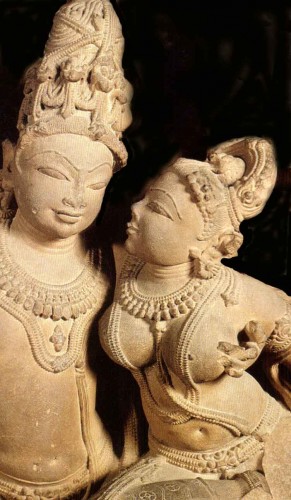
Le monde du tantrisme indien

couple-01.jpgArchives de SYNERGIES EUROPEENNES - 1999

Le monde du tantrisme indien


Analyse : Helmut UHLIG, Das Leben als kosmisches Fest.

Magische Welt des Tantrismus, Gustav Lübbe Verlag, Bergisch Gladbach, 1998, 304 p., ISBN 3-7857-0952-8.


Né en 1922 et décédé en 1997, Helmut Uhlig, historien de l’art, a été pendant toute sa vie fasciné par l’Inde. On lui doit des ouvrages remarqués sur des thèmes aussi diversifiés que la route de la soie, sur le Tibet, sur l’Himalaya, sur l’Anatolie, sur la Grande Déesse, sur le bouddhisme et le tantrisme, etc. Jochen Kirchhoff vient de publier son dernier livre sur le tantrisme, resté inachevé, en le complétant d’une postface remarquable, branchant les réflexes mentaux que nous enseignent les voies tantriques sur les acquis de la physique et de la biologie contemporaines.


Premier constat d’Uhlig : le monde occidental est atomisé, handicapé psychiquement. Les Occidentaux et les Asiatiques qui les imitent vivent désormais dans un monde d’illusions et de falsifications, où l’esprit de carrière, l’envie, l’obsession de l’avoir et l’orgueil tiennent le haut du pavé. Il écrit (p. 9) : «…l’homme a perdu son fonds originel (Urgrund) religieux et noumineux, est victime d’une attitude purement matérialiste et pragmatique, qui domine le monde occidental, qui a ses racines intellectuelles dans cette vita activa, issue de l’esprit greco-romain et du christianisme paulinien». Exactement comme Evola, il constate que ce double héritage de l’hellénisme (qui n’est pas la Grèce dorienne des origines, précisons-le ! !) et du paulinisme distrait dangereusement l’homme, qui devient incapable de saisir le noumineux : «Ce sont des éléments que nous pouvons considérer comme des représentations originelles de l’esprit et de la dignité humains qui, au cours des millénaires, n’ont rien perdu de leur force, de leur signification et de leur pouvoir fondateur de sens. Nous les résumons sous le concept de “tantrisme”, un concept encore et toujours mystérieux, à la fois magique et cosmique» (p. 10). Le tantrisme est donc la religiosité qui se réfère immédiatement au “vécu primordial” (Urerlebnis), et n’est nullement cette pâle caricature que certains tenants du New Age et de la spiritualité de bazar en font. Le boom ésotérique de ces récentes années a fait du vocable “tantrisme” un article de marché, une fadeur exotique parmi tant d’autres. Ceux qui l’emploient à tort et à travers ne savent pas ce qu’il signifie, n’en connaissent pas la profondeur.


«Je vais tenter dans ce livre d’aborder et de révéler le tantrisme comme un phénomène cosmique, comme l’un des vécus primordiaux de l’homme. Ce qui est nouveau dans mon approche du tantrisme, c’est que je ne vais pas le réduire à ses manifestations historiques, comme celles qui nous apparaissent dans l’espace culturel indien et himalayen mais je vais poser la question des origines et de la puissance de la pensée et du vécu tantriques. Car je crois que, dans le tantra, se cache l’un des phénomènes primordiaux de l’Etre de l’homme. Ainsi, mon texte est une tentative de retrouver la trace de ce phénomène primordial et de sa constitution cosmique, de la rendre visible, car, dans les dernières décennies du deuxième millénaire, elle acquerra une importance toujours croissante et une puissance réelle, y compris pour le monde occidental» (p. 11). Ensuite, il précise son approche du noumineux : «Il existe des aspects de la réalité qui ne sont ni spatiaux ni temporels. Ils n’ont pas de dimension historique. Ils agissent (wirken), mais restent pour nous invisibles, ils viennent du Tout, du cosmos, et sont reconnaissables de multiples manières» (p. 19).  


C’est en 1960 que Helmut Uhlig débarque pour la première fois en Inde. Le Brahmane qui le reçoit et le guide lui déclare, quelques jours après son arrivée : «Nous les Indiens, nous sommes assez tolérants. Le mot de Yahvé qu’on trouve dans la Bible : “Tu n’auras pas d’autres Dieux que moi”, personne ne le comprend ici. Et personne ne le suivrait d’ailleurs, vu le très grand nombre de Dieux qui sont enracinés dans la psyché de notre peuple. C’est aussi la raison pour laquelle les missionnaires chrétiens ont à peine été acceptés en Inde» (p. 14). Le culte de Shiva et des autres divinités indiennes prouve combien profondément enracinée dans l’âme hindoue est la propension “à être toujours bien disposé à l’égard de tous les Dieux à la fois, à ne pas se couper d’eux” (p. 21). D’où la religiosité tantrique repose sur une acceptation du monde tel qu’il est dans sa pan-imbrication (Allverflechtung), où monde visible et invisible sont unis par mille et un fils (de tapisserie). Uhlig en conclut que des éléments tantriques ont été présents dans toutes les religions primordiales. Mais cette idée centrale de pan-imbrication de tout dans tout est difficile à expliquer et à comprendre, surtout pour les Occidentaux, habitués à penser en termes de césures et de cloisonnements. Le terme “tantra” lui-même dérive d’une racine étymologique, tan, qui signifie “élargir”, “accroître en dimension et en étendue”. Quant à tana, cela signifie tout à la fois “fils” (au pluriel) et “étendue”. Tantawa signifie “fait de fils”, “tissé”. Le tantrisme indique donc ce qu’est la texture du cosmos : un tapis immense fait de milliards et de milliards de fils (p. 28).  Uhlig : «Nous ne pouvons comprendre et juger correctement le tantrisme que si nous nous libérons de l’emprise des commandements et des principes qui nous sont conventionnels et que l’Etat et la religion ont imposés chez nous depuis la fin du moyen âge. Les critères de valeurs que nous a transmis le christianisme clérical, notamment la doctrine des catégories du bien et du mal, du moral et de l’immoral, troublent notre regard et le grèvent de préjugés, ne nous permettant pas d’entrer dans le monde tel que le saisit et le réalise le tantrisme. Cela vaut surtout pour le jugement que porte l’Occident sur la sphère sexuelle, ses formes d’expression et ses pratiques. Les relations sexuelles entre les personnes ne sont soumises à aucun tabou dans le tantrisme, car elles y sont considérées comme des fonctions centrales et naturelles, qui sont effectivement traduites en actes. Pour la plupart des auteurs occidentaux, qui ont écrit sur le tantrisme depuis une centaine d’années, la sexualité tantrique a suscité d’âpres critiques, formulées dans une terminologie chrétienne, dévalorisant tout ce qui touche à la sexualité. Ainsi, le tantrisme a été dévalorisé sur le plan éthique, ses cultes ont été diabolisés ; les textes critiques des Occidentaux ne tentaient même pas de comprendre le contexte du tantrisme» (pp. 26-27). Cela vaut également pour le contre-mouvement, où une mode pro-tantrique, portée par des oisifs californiens ou des décadents des beaux quartiers de Londres, a superficialisé les dimensions sexuelles, les faisant basculer dans un priapisme vulgaire et une pornographie bassement commerciale. Le tantrisme ne vise nullement à favoriser une promiscuité sexuelle de nature pornographique, à transformer la Cité en lupanar, mais, plus fondamentalement, à appréhender les secrets les plus profonds de la conscience humaine. Uhlig rend hommage au premier Européen, Sir John Woodroffe (alias Arthur Avalon) qui a traduit et explicité correctement les textes tantriques, si bien que les Indiens adeptes du tantrisme le considèrent comme un sauveur de cet héritage.


Les pratiques tantriques ont un lointain passé, affirme Uhlig, y compris hors d’Inde. La religiosité visant à appréhender les plus profonds secrets de l’âme humaine se retrouve partout : elle a été occultée par le christianisme ou la modernité. Ainsi, pour Uhlig, est tantrique le mythe sumérien d’Inanna et Tammuz, où une hiérogamie est réalisée au sommet d’un zigourat à huit niveaux (dans bon nombre de traditions, sauf dans le judaïsme pharisien et le christianisme, le “8” et l’octogone indiquent l’harmonie idéale de l’univers ; cf. le château de Frédéric II de Hohenstaufen, Castel del Monte, les Croix de Chevalier inscrites dans un motif octogonal de base et non sur la croix instrument de torture, les plans des églises byzantines, de la Chapelle d’Aix/Aachen ou de la Mosquée El-Aqsa à Jérusalem, le Lotus à huit feuilles de l’initiation à la Kalachakra ou “Roue du Temps”, la division de l’orbe terrestre en quatre fois huit orientations chez les navigateurs scandinaves du haut moyen âge ; pour Marie Schmitt, la religion pérenne privilégie l’harmonie du “8”, les religions coercitives et messianiques, le “7”).


Revenons au mythe d’Inanna et de Tammuz. Dans la chambre hiérogamique se trouvent simplement un lit, avec de belles couvertures, et une table d’or. Il n’y a pas l’image d’un dieu. L’essentiel du culte vise la préservation et la revitalisation de la fertilité. Ce culte a frappé les Israélites lors de la captivité babylonienne, ce qui s’est répercuté dans le texte du fameux “Chant des Chants”, où, en filigrane, il ne s’agit nullement de Yahvé, mais bel et bien d’une hiérogamie, tendrement sexuelle et sensuelle. Martin Buber l’a traduit, restituant sa signification originelle, au-delà de toutes les traductions “pieuses”. Pharisaïsme et christianisme paulinien/augustinien s’ingénieront à occulter ce “Chant des Chants”, joyeuse intrusion pagano-tantrique dans l’Ancien Testament. Ainsi, en 553, lors du deuxième concile de Constantinople, Théodore de Mopsuestia, interprète “sensuel” du “Chant des Chants” est banni, son interprétation ravalée au rang d’une hérésie perverse. «… les zélés pères de l’église ont tout fait pour combattre les interprétations mystiques du “Chant des Chants” : à leur tête Origène, suivi plus tard de Bernard de Clairvaux, de Bonaventure et de François de Sales, qui ont rivalisé pour en donner une interprétation dépourvue de fantaisie, fade» (p. 71). «Ici se révèle l’un des fondements de l’attitude anti-naturelle du christianisme, qui détruit l’holicité des sens et de l’Etre, qui débouche sur un ascétisme qui condamne les corps, et auquel l’église tient toujours, puisqu’elle continue à imposer le célibat des prêtres. Non seulement cela a conduit à faire perdre toute dignité aux prêtres, mais cela a rejeté la femme dans les rôles peu valorisants de la séductrice et du simple objet de plaisirs. La dégénérescence de l’antique union sacrée des corps, don de soi à l’unité mystique, dans la vulgaire prostitution en est le résultat, car la femme n’est plus considérée que comme une prostituée» (p. 71). En revanche, Inanna/Ichtar était la déesse des déesses, la reine et la conductrice de l’humanité entière. Ce passage du rôle primordial de “déesse des déesses” à celui de vulgaire prostituée constitue le fondement de l’âge sombre, du Kali Yuga. Il y a assombrissement parce que le culte de la Reine Conductrice est progressivement ignoré, parce qu’il n’y a plus d’hiérogamie sacrée possible car tout accouplement est désormais démonisé.


Enfin, après avoir exploré le tantrisme dans toutes ses dimensions, Uhlig rend hommage à Plotin (pp. 214-222). Plotin était également opposé à la gnose et au christianisme, rejetant leur “religiosisme”, leurs simplismes de “croyeux”, hostiles à la philosophie grecque. Plotin commence sa quête en 233, année où il rencontre le philosophe Ammonios Sakkas, dont il sera l’élève pendant onze ans. Pendant cette période, à Alexandrie, il entre en contact (tout comme Origène !) avec des représentants de la spiritualité persane et indienne. Leurs enseignements le fascinent. Si bien qu’il veut aller à la rencontre de leur culture. Il suit l’Empereur Gordien III dans sa campagne contre les Perses, espérant atteindre leur pays et découvrir directement leur religion. Uhlig écrit à ce propos (p. 218) : «L’historiographie de la philosophie en Europe n’a consacré que trop peu d’attention à ce fait et n’a jamais étudié l’influence indienne sur la philosophie de Plotin». Gordien III est assassiné en 244 sur les rives de l’Euphrate par un de ses généraux. Plotin doit fuir vers Antioche puis vers Rome. Son enseignement influence la famille impériale. Il est holiste comme sont holistes les enseignements tantriques. Ses Ennéades évoquent une Gesamtverwobenheit (un tissage cosmique), très proche de la vision tantrique originelle. L’élimination violente des filons néoplatoniciens et plotiniens dans la pensée européenne a commencé par l’horrible assassinat d’Hypathie, philosophe néoplatonicienne d’Alexandrie, par une foule de chrétiens furieux et délirants qui ont lacéré son corps et en ont traîné les lambeaux dans les rues. Elle se poursuit par l’occultation systématique de ces traditions dans nos principaux établissements d’enseignement. Cette élimination est aux sources du malaise de notre civilisation, aux sources de notre nervosité et de notre cinétisme insatiable, de nos désarrois, de notre incapacité à nous immerger dans l’organon qu’est le monde. La tradition néoplatonicienne chante, comme les filons panthéistes et pélagiens celtiques, la “merveilleuse variété” du monde et de la nature (poikilè thaumatourgia). «Il y a aussi des dieux dans la cuisine», disait Héraclite à des visiteurs inattendus, qui l’avaient trouvé près de son feu, sur lequel cuisait son repas.


Dans sa postface, Jochen Kirchhoff nous rappelle les exhortations de David Herbert Lawrence dans son plaidoyer pour les religiosités païennes et cycliques, intitulé Apocalypse (1930). Pour Lawrence, il fallait retourner à la cosmicité, raviver nos rapports avec le cosmos. Ensuite, Kirchhoff rappelle les tentatives de Nietzsche de restaurer les dimensions extatiques et dionysiaques de l’Etre pour les opposer au christianisme, ennemi de la vie. L’Etre doit être une “fête cosmique”, entièrement, sans partage, sans dualité.


Kirchhoff explore ensuite toutes les possibilités de restaurer la vision tantrique du monde (la pan-imbrication) via les pratiques sexuelles, complétant et actualisant ainsi La Métaphysique du sexe et Le Yoga tantrique d’Evola. Il salue un ouvrage à succès de Margo Anand dans les milieux “New Age” (The Art of Sexual Ecstasy. The Path of Sacred Sexuality for Western Lovers) mais constate rapidement les limites philosophiques de la démarche de cet auteur. Le New Age a produit peu de bonnes choses en la matière. Le travail de Margo Anand est bon, écrit Kirchhoff, utile pour une thérapeutique sexuelle, mais reste superficiel, ne permet pas un approfondissement philosophique et métaphysique. Quant à l’Américain Franklin Jones (alias “Da Free John”, “Da-Love Ananda” ou “Adi Da”), il a poussé la caricature du tantrisme jusqu’au ridicule (cf. son ouvrage le plus connu : Dawn Horse Testament). Finalement, le freudo-marxiste Wilhelm Reich a élaboré une théorie et une thérapeutique de l’orgasme plus valable (Kirchhoff est moins sévère qu’Evola), car sa vision de la bio-énergie ou orgon était au moins omni-compénétrante. Kirchhoff souligne toutefois bien la différence entre les rituels sexuels tantriques et l’obsession moderne de la performance (orgasmique ou non, mais toujours multi-éjaculatoire).  Car, dit-il, «il existe des rituels tantriques qui freinent effectivement l’orgasme féminin comme l’orgasme masculin, visant de la sorte une prolongation contrôlée ou un retardement de celui-ci pour atteindre des objectifs (spirituels) supérieurs ou pour obtenir un accroissement du plaisir» (p. 278). En effet, poursuit-il, l’orgasme et/ou l’éjaculation masculine mettent un terme à l’étreinte sexuelle, limitant la durée du plaisir et des caresses partagés. Retenir ses énergies (et son sperme) permet de jouir du plaisir sexuel et de donner à la femme davantage de joie. C’est dans cet exercice, cette ascèse (ce yoga), que réside la qualité inégalée du tantrisme sur le plan sexuel, le hissant très au-dessus du stupide priapisme rapide et bâclé que nous servent les médias contemporains, véhicules de la pornographie populaire.    


Mais c’est dans la physique moderne que Kirchhoff place ses espoirs de voir réémerger une vision tantrique de l’univers. Depuis la consolidation de la physique quantique, le monde apparaît à nouveau comme “pan-imbriqué”. Dans les colonnes d ’Antaios, Patrick Trousson avait déjà démontré l’étroite similitude entre les acquis de l’antique mythologie celtique et ceux de la science physique actuelle. Kirchhoff répète ces arguments, citant Carl Friedrich von Weizsäcker (Zeit und Wissen, 1992), Frithjof Capra (Le Tao de la physique), le physicien indien Amit Goswami (qui a comparé la philosophie du Vedanta et les acquis de la nouvelle physique), le théoricien systémique Ervin Lazslo, le biochimiste Rupert Sheldrake, etc. L’essentiel dans cette physique est de refuser les dualismes segmenteurs, de réfuter les pensées de la césure.


En philosophie, Kirchhoff cite l’Américain Ken Wilber (Eros, Kosmos, Logos. Sex, Ecology, Spirituality), qui lutte contre tous les réductionnismes et les dualismes. Wilber est influencé par le bouddhisme tantrique, mais aussi par les Vedanta.


Le livre d’Uhlig nous dévoile de manière très didactique tous les aspects de la merveilleuse vision du monde tantrique. La postface de son ami Kirchhoff nous ouvre de très larges horizons : en physique et en philosophie. La lutte d’Uhlig (et la nôtre…) contre les mutilations de la pensée n’est pas terminée. Mais nos adversaires doivent désormais savoir une chose : nos arsenaux sont mieux fournis que les leurs…


Detlev BAUMANN.