


lundi, 02 septembre 2013
Marche pour la Syrie

14:12 Publié dans Actualité, Affaires européennes | Lien permanent | Commentaires (0) | Tags : strasbourg, alsace, syrie, pacifisme, politique internationale |  |
|  del.icio.us |
  |
|  Digg |
  Facebook
Les Etats-Unis et leurs alliés – La «souveraineté limitée» selon la doctrine de Brejnev
Les Etats-Unis et leurs alliés – La «souveraineté limitée» selon la doctrine de Brejnev
par Willy Wimmer*
Ex: http://www.horizons-et-debats.ch
Les révélations de Snowden sont un éclairage sous les feux des projecteurs: notre pays n’est pas, pour les Etats-Unis, un partenaire, mais est considéré comme un repaire de terroristes.
Il faudra se rappeler du visage ouvert et, somme toute, sympathique, d’Edward Snowden. Qui donc a réussi à lancer par la presse, une pareille bombe médiatique, à partir d’un refuge à Hong Kong, obligeant le président américain à chercher des explications concernant la situation réelle des libertés individuelles et des questions de sécurité dans son pays? Si ce n’était pas aussi sérieux, on dirait, bravo, bien joué. Mais de tels mots restent en travers dans la gorge, tant tout cela n’est pas crédible. Il se trouve que quelqu’un veut défendre les libertés individuelles et les droits civiques fondamentaux et se voit obligé de fuir – où? – en Chine.
D’un seul coup – comme en 1987, l’aviateur Mathias Rust, en survolant le Kremlin – le jeune Snowden a arraché le masque cachant le visage de sa patrie. On est loin de cette représentation des Etats-Unis, symbole de la démocratie et des valeurs étatiques fondamentales. La Chine n’est pas particulièrement connue comme Preaceptor Libertatis, la Fédération de Russie non plus d’ailleurs. Et pourtant, la Russie se présente, depuis un certain temps, comme courageuse représentante des droits humains. Autrement dit, on reprend aux Etats-Unis et à l’Occident ce droit qu’on croyait inaliénable de représenter ces valeurs. On n’a pas oublié que, déjà, lors de la guerre de 1999, la République fédérale de Yougoslavie, en violation du droit international, fut sacrifiée au nom des intérêts particuliers des Américains. Et maintenant cela! Les dirigeants chinois n’ont pas été hissés au gouvernement selon les règles qui nous sont chères. Mais cela ne signifie pas qu’ils n’évaluent pas soigneusement les intérêts de leur pays. Ils l’ont certainement aussi fait lorsqu’ils ont laissé la voie libre à ce jeune homme de se rendre à Moscou. C’est ainsi qu’ils ont créé des conditions propices pour que le ballon placé devant leurs pieds par le jeune Américain et les Etats-Unis vacillants, reste en l’air.
La rage de tout contrôler, qu’Edward Snowden avait décelée au sein de la National Security Agency (NSA) et chez ses clients, n’aurait pu être découverte à un moment aussi pire. Ce qu’il avait à dire concernait surtout l’Allemagne, ce sont nous, les Allemands qui se trouvent dans la ligne de mire de l’Etat fouineur américain. Il y a de quoi se frotter les yeux, car – indépendamment des guerres menées en violation du droit international – on se sent plutôt comme un allié des Etats-Unis et non pas comme un repaire du terrorisme international. Ce fut un magnifique signal, envoyé juste avant la visite à Berlin du président Obama. Mais la suite fut pire: nous sommes l’objectif officiellement déclaré de la surveillance totale, en commun avec nos amis européens, et pourtant nous nous trouvons dans une situation pour le moins singulière. La clause des Etats ennemis de la Charte des Nations Unies reste d’actualité dans la centrale de la NSA à Fort Meade.
A Berlin, la cloche de la liberté se trouve dans l’Hôtel de Ville de Schöneberg. Il ne s’agit pas seulement d’un cadeau généreux des Etats-Unis à l’Allemagne vaincue. Avec l’inscription «Ce monde doit renaître avec l’aide de Dieu vers une nouvelle liberté», elle représente aujourd’hui encore un leitmotiv démocratique pour notre pays. Ainsi on perd un peu de vue que depuis la réunification, il y a en Allemagne environ 2000 collaborateurs de la CIA pour couvrir tout le pays et analyser quelles prises d’influence on pourrait encore développer. Etant donné qu’à Washington chacun, tant au département d’Etat que dans les offices fiscaux, possède son propre système d’espionnage, Berlin peut facilement évaluer le nombre d’espions d’un pays ami se trouvant dans le pays. Et on ne compte pas les anciens collaborateurs de la Stasi et du service de sécurité de l’Etat qui ont été embauchés dès l’effondrement de la RDA, les recruteurs n’hésitant pas à faire du porte à porte avec leurs listes dans certains quartiers berlinois.
Le président Obama est reparti. Lui, qui est tant apprécié en Allemagne, continue son chemin pour visiter tout autour du globe, outre Guantanamo, encore d’autres pénitenciers. Peut-être que notre président allemand se souvient avec gratitude des larmes versées lorsque retentit l’hymne américain devant le château de Bellevue et de ses paroles conciliantes concernant la surveillance d’un ami par un ami. Néanmoins, il serait utile que quelqu’un s’assure à la mairie de Schöneberg que la fameuse cloche de la liberté ne se soit pas fêlée, car trop c’est trop.
L’énorme secousse causée par Monsieur Snowden, ne doit pas occulter le fait que nous n’avons pas de raisons d’être surpris. Il y a quelques années déjà, nous nous préoccupions de la problématique d’Echelon. Il apparut alors qu’une conséquence directe de la Seconde Guerre mondiale reposait sur le fait que la coalition des vainqueurs anglo-saxons, non seulement, conserva sa coopération SIGINT [Signals Intelligence] – c’est-à-dire la surveillance des signaux électromagnétiques et de toute communication électronique – mais la développa à l’infini. Nos amis londoniens ont repris la tâche d’intercepter à l’aide de stations d’écoute le trafic de courriels de l’Europe entière, y compris dans le but d’exercer un espionnage de transférer ces données immédiatement aux Etats-Unis. De ce fait apparaît, ce que l’on constate depuis des décennies en Europe, mais aussi en Allemagne: les installations étatiques allemandes sont soumises au contrôle parlementaire et doivent respecter les lois du pays. Les amis américains accordent, bien sûr de façon tout à fait désintéressée, une participation aux résultats des écoutes à certains organes de l’Etat allemand, qui eux-mêmes n’obtiendraient jamais de permission pour de telles activités de la part de leur gouvernement ou du Bundestag. Ce n’est pas précisément le procédé pour se créer des amis, c’est plutôt un comportement qui fait exploser l’ordre étatique. Il y a suffisamment d’exemples pour qu’on en vienne à s’interroger sur l’attention excessive accordée par certaines installations étatiques en Allemagne à un gouvernement parallèle sis à Washington …
De toute façon et cela depuis bien avant la dénonciation des aspirateurs de données de la NSA, on peut se demander si, dans la relation entre les Etats-Unis et leurs alliés, on n’a pas plutôt affaire à un système de «souveraineté limitée» selon le modèle de la doctrine de Brejnev. Des prescriptions financières de Bâle-II en passant par le statut de la Cour pénale internationale de La Haye et le pénitencier de Guantanamo, jusqu’au droit, soi-disant tout naturel, des Etats-Unis de mener des «guerres sur demande» [«Wars on Demand»], en violation de la charte des Nations Unies, il y a une longue chaîne d’exemples prouvant que les Etats-Unis se sont arrogés le droit de se placer au dessus du droit international. Alors qu’il est scrupuleusement observable que nous autres Européens respectons les sévères prescriptions de capital propres aux entreprises et aux instituts financiers (Bâle-II et prochainement Bâle-III) – les Etats-Unis, eux, les prennent à la légère. En matière de politique financière on ne découvre aucune de ses cartes et on ridiculise autrui. Quant à la Cour pénale internationale de La Haye, les Etats-Unis ont imposé leur système juridique afin de tenir l’Europe en laisse. Mais pour eux-mêmes, ils s’attribuent le droit d’attaquer d’autres pays si jamais ceux-ci se permettaient de faire comparaître des soldats américains devant les tribunaux pour crimes de guerre. On en aura pris connaissance, et pas seulement aux Pays-Bas.
Selon les révélations de Snowden concernant Prism, c’est la gigantesque industrie américaine active dans le domaine des données électroniques qui sert de véhicule pour imposer cette «souveraineté limitée». La porte d’entrée pour l’érosion du système juridique européen dans le domaine des droits civiques et des libertés individuelles se trouve en Irlande, qui est, à part cela, un pays tout à fait sympathique. L’Irlande laisse agir librement les multinationales spécialisées dans l’électronique – et voilà que nos droits et l’ordre juridique les protégeant, se volatilisent. C’est ainsi que la voie est toute grande ouverte aux immenses entreprises américaines d’avocats et qu’il ne reste aux Européens, de leur ordre juridique, pas même ce que les Indiens, dans l’empire britannique, pouvaient considérer comme leur propre droit [«home rule»]. Voilà les conditions dans lesquelles l’Europe aborde les négociations pour l’Accord de libre-échange transatlantique, qui se sera transformé en un Accord colonial transatlantique avant même que les négociations aient débutées.
A Washington, on avait – déjà du temps du président Clinton, lors de la mise en place des fondements du nouvel ordre mondial américain et du déclenchement de guerres, l’une après l’autre – réfléchi au rôle de l’économie américaine dans le monde. Les secteurs industriels dans lesquels les entreprises américaines devaient être prépondérantes furent définis. On peut en voir les résultats aujourd’hui et tirer son chapeau à ces planificateurs. Ils sont allés loin! L’accord de libre-échange a-t-il pour but de continuer à développer cette position? Les industries européennes doivent-elles subir le même sort que celui imposé par les multinationales de la communication électronique? Ne parlera-t-on plus qu’américain? Comment le gouvernement européen moyen, comment la Commission européenne, conçoivent-ils les négociations avec les Etats-Unis, alors que les positions européennes seront connues à la NSA à Fort Meade dans le Maryland avant même que les textes aient été terminés dans leurs ordinateurs portables? Lorsqu’on connaît le «Situation Room» de Fort Meade, on sait une chose: à Berlin et à Bruxelles on ne traverse pas la route lorsque le feu est au rouge sans que le visage du malfaiteur apparaisse sur les écrans du «Situation Room». •
Première parution in: Compact 08/2013 (www.compact-magazin.com)
(Traduction Horizons et débats)
* Willy Wimmer, né en 1943, adhéra à la CDU en 1958 et fut député au Bundestag allemand de 1976 à 2009. De 1988 à 1992, il fut en tant que secrétaire d’Etat à la défense membre du gouvernement fédéral.
00:05 Publié dans Actualité, Affaires européennes | Lien permanent | Commentaires (0) | Tags : souveraineté, états-unis, otan, politique internationale, europe, affaires européennes | | del.icio.us | | Digg | Facebook
VILLON & CÉLINE de Pierre de BONNEVILLE
Vient de paraître : VILLON & CÉLINE de Pierre de BONNEVILLE

Quatrième de couverture
Villon et Céline : près de cinq siècles les séparent, mais ils ont beaucoup de points communs. Parmi ceux-ci, l’auteur a relevé l’identité, la personnalité, le milieu, le génie, l’invention, le parcours, le destin, la musique, le comique et le tragique. Dans un parallèle rigoureux, il nous trace ces ressemblances, qui sont l’occasion de replonger dans les citations, les textes de ces deux écrivains d’exception.
« Les études comparatistes ne sont plus guère à la mode. Le fait que notre auteur renoue avec cette tradition se justifie tant il est vrai que le parallèle entre l’œuvre et l’itinéraire respectifs de Villon et Céline apparaît ici comme une évidence. Se basant notamment sur la somme du grand médiéviste Pierre Champion, il passe en revue tout ce qui les réunit. Leur destin d’écrivain maudit bien sûr, mais surtout ce lyrisme basé sur l’émotion et les ressources du langage populaire » (Marc Laudelout).
00:05 Publié dans Littérature, Livre, Livre | Lien permanent | Commentaires (0) | Tags : livre, littérature, lettres, lettres françaises, littérature française, villon, céline, marc laudelout | | del.icio.us | | Digg | Facebook
L'antiracisme, prothèse de l'idéologie dominante...

L'antiracisme, prothèse de l'idéologie dominante...
par Robert Redeker
Ex: http://metapoinfos.hautetfort.com
Nous reproduisons ci-dessous un texte incisif de Robert Redeker, cueilli sur le blog de cet auteur et consacré à la mascarade antiraciste...
Professeur de philosophie, essayiste à l'origine classé à gauche, Robert Redeker vit depuis plusieurs années sous protection policière pour avoir publié dans le Figaro un texte hostile à l'slamisme.
L'antiracisme est une prothèse destinée à donner une illusion qui comble le vide politique. Il distille à ses intoxiqués l’illusion de la politique. Ce vide est aussi bien l'effet du temps, de l'usure de l’histoire, que d'une volonté fataliste : en finir avec les idéaux de la gauche et leur substituer une sorte de substitut ludique. L’antiracisme est un opium qui laisse croire qu'il est une réconciliation de la politique et de la morale. Alors qu'il n'est ni l'une ni l'autre, ni bien sûr leur synthèse.L'antiracisme permet de rejouer la politique. De la simuler. De jouer à la politique. Mais auparavant la politique aura été vidée de tous ses enjeux. D'un certain point de vue le concept marxiste d'idéologie décrit bien à l'antiracisme. D'un autre point de vue, il faut le compléter par celui, issu des écrits de Jean Baudrillard, de simulation. Chez Marx, l’idéologie – le noir barbu de Trêves vise surtout, à travers ce concept, la religion – est le dispositif par lequel la bourgeoisie masque la réalité de ses intérêts derrière les idées abstraites. Mais à la différence de la religion telle que Marx la perçoit, l'antiracisme masque moins des intérêts, qu'il ne conteste pas, qu'une disparition. Au contraire même, aux temps du triomphe de l'antiracisme, les intérêts sont, parallèlement, proclamés haut et fort. L'antiracisme est à la politique ce que le paintball est à la guerre. Il crée dans l'âme des naïfs et des rêveurs l’illusion que continuent d'exister des concepts, des analyses et des projets et des combats politiques, alors que toutes ces choses ont été jetées par-dessus bord.Qu'est-ce que la simulation ? Jean Baudrillard en propose une bonne définition : « L'ère de la simulation est ainsi partout ouverte par la commutabilité des termes jadis contradictoires ou dialectiquement opposés ». C'est l'époque mitterandienne qui a inauguré ces commutations, mères de l'âge de la simulation : capitalisme/gauche, argent roi/gauche, luxe/gauche, gestion/gauche. Il y a évidemment, tant qu'on s'en tient à la rationalité, à la dialectique, une opposition entre la super-caste privilégiée de la galaxie du show business et du sport, voire de la mode, d'une part, et la misère des cités de banlieue, d'autre part. Or, l'antiracisme, pour assurer sa propagande, les rend commutables, chanteurs, rappeurs, acteurs et sportifs (à l'image de Lilian Thuram, de Djamel Debouze, de Joey Starr) passant sans gêne d'un rôle à l'autre, se régalant d'être pris pour des jeunes de banlieue. Alors que la politique, la gauche, l'horizon révolutionnaire, étaient engendrés par la théorie, la pensée, l'antiracisme est engendré par l'univers du show-business et les industries du divertissent. Alors que les réformes sociales (par exemple celles de 1936) étaient imposées par la pression politique des masses, des luttes, des grèves, qui électrisaient toute la société, bref par l’Histoire, les mesures antiracistes sont imposées par le monde doré de la variété, du show-business, du cinéma, de la télévision et du sport, par les industries du divertissement, autrement dit par la simulation parodique de l'Histoire.Dans l'index (qui, sous la forme d'un vocabulaire philosophique occupe une quarantaine de pages) de la classique et monumentale Introduction à la philosophie marxiste due à la plume érudite et militante de Lucien Sève , philosophe communiste français officiel, le mot racisme se signale par son absence. Autrement dit, en 1980, le racisme ne passe pas encore pour un problème majeur du côté des marxistes, sans doute de la gauche en général. Aujourd'hui, il suffit d'écouter un responsable politique d'un parti de gauche, de parcourir les colonnes d'un journal de gauche, Libération ou L'Humanité, pour se rendre à l'évidence: les mot « immigré » a remplacé le mot « prolétariat », le mot « antiracisme » a remplacé le mot « communisme », le mot « racisme » a remplacé le mot « anticommunisme », le mot « islam » a remplacé l'expression « conscience de classe ». A l'insu de tous et de chacun, la gauche s'est dissoute dans l'antiracisme. Les mots « racisme », « antiracisme », « immigré », « sans-papiers » remplissent toutes les pages du quotidien communiste L'Humanité alors qu'il y a trente ans cet honneur était réservé au mot « prolétaire ».L'antiracisme simule et parodie les luttes sociales, il simule et parodie la gauche. Mais, si l'on sait ce que remplace l'antiracisme, il faut demander auparavant : que remplace ce à quoi dans l'imaginaire dominant l'antiracisme s'oppose, le racisme ? D'abord il se substitue à une réalité métaphysique dont notre temps, à tout le moins en Europe de l'ouest, se refuse à prononcer le nom : le mal. Plus justement : le mal moral. Les sociétés consuméristes et hédonistes, celles dont Herbert Marcuse et Gilles Lipovetsky ont dessiné les traits les plus remarquables, apparues dans le monde occidental à partir des années 60, refoulent l'usage explicite du concept de mal. « Racisme » est le mot qu'elles ont mis en circulation pour dire ce que jadis on appelait le mal moral. Une grande partie des fautes naguère rangées sous la catégorie de mal sont devenues soit anodines soit des qualités. Voici l'envie vantée par la publicité comme une vertu ! La chanson de geste de la luxure inonde les écrans et les gazettes. La trahison, l'infidélité, la perfidie sont, d'écran publicitaire en spot de réclame, de téléfilm en jeu d'avant prime-time, valorisées. La cupidité – gagnez, gagnez... - est élevée au rang de l'exemplarité morale. L'école elle-même enseigne aux élèves des lycées sous couvert de réussir à savoir ce vendre ; autrement dit impose aux jeunes générations un impératif prostitutionnel. Plus : elle laisse entendre que le bien dans la vie collective se résume à une sorte de prostitution généralisée, où tout le monde se vend. Réussir, voilà la seule misérable ambition qu'elle propose aux nouvelles générations ! La dégradation des mœurs – qu'il faut entendre, insistons sur ce point, dans toute sa force inédite : cette dégradation n'est pas le résultat de vices privés, cachés, recouverts par la honte, qui prendraient le dessus en assumant la réprobation qu'elle s'attirerait, non, cette dégradation est voulue, organisée, dirigée parce qu'elle est le moteur de la société de consommation - a vidé le mot mal de toute sa substance. C'est le souvenir de cette substance, de ce contenu, qui explique qu'un puissant tabou, plus sociétal que social, plane sur le concept de mal, paralysant son réemploi. Jusqu'ici n'existaient dans les sociétés qu'un seul temps durant lequel des conduites tenues pour vicieuses étaient louées comme vertueuses : le temps de la guerre (transformation du crime en vertu à l'origine de la désillusion de Freud devant l'homme). Tuer, violer, torturer, piller, mentir – ces crimes, en époque de suspension de la paix, deviennent dignes de louange. La société de la modernité tardive a inventé de l'inédit : ce n'est plus seulement de loin en loin que le vice devient officiellement vertu, c'est, sous les formes que nous venons d'exposer, en permanence. Sous l'aspect de la morale, la société de consommation est la guerre en temps de paix, elle entretient chez les hommes un état d'esprit de mercenaire sans foi ni loi en période de paix.L'antiracisme s'est substitué à l'engagement, à ce que les générations des décennies cinquante, soixante, soixante-dix, appelaient dans le sillage de Sartre l'engagement. Ce que les contemporains de Sartre désignaient sous ce vocable brisait le consensus social dominant. S'engager revenait à vivre dangereusement. De grands risques accompagnaient l’engagement, en particulier ceux de la mise-à-l’écart, de la marginalisation, de la censure. Des événements historiques – comme la guerre d'Algérie – faisaient planer sur l'engagement les menaces de la torture et d’exécution. La censure cherchait aussi àbâillonner l'engagement. Au contraire, jamais depuis que l'antiracisme s'est substitué àl'engagement politique aucune proclamation antiraciste n'a été censurée. Plus : ces proclamations ont toujours été mises en valeur à la fois par les services de l'Etat et par les médias. Elles ont toujours été relayées dans les écoles. L'engagement sartrien, parce qu'il n'était pas de nature parodique, n'a jamais bénéficié de pareilles largesses de la part du système social dominant. Pour s'engager, il fallait accepter de devenir un pestiféré. Le militantisme antiraciste ne court pas de pareils dangers. S'affirmer antiraciste revient à rejoindre le consensus dominant, adhérer à l'idéologie dominante ; s'engager revenait, inversement, à rompre, à divorcer d'avec cette idéologie dominante. Quand l’engagement des années quarante, cinquante, soixante, était âpre, le militantisme antiraciste contemporain est gratifiant, en procurant l'assurance de recevoir des approbations, voire d'être couvert de lauriers. Dans certaines professions, tout spécialement celles qui touchent à l’univers du spectacle, l’antiracisme est un passage obligé pour éviter de disparaître de l'affiche. De même, l'instituteur et le professeur verront leur enseignement couvert de louanges par les autorités académiques et les parents d'élèves s'il se moule dans de la propagande antiraciste. Le militantisme antiraciste est une parodie de ce que l'engagement a été.L'antiracisme est le fantôme décharné de ce que fut l'engagement. L'antiracisme vole aussi la place des luttes sociales. Il en usurpe le souvenir. Dans les années trente du siècle dernier la notion de classe est sortie victorieuse de son affrontement avec la notion de race. Après la seconde guerre mondiale, toute l'attention s'est focalisée sur la lutte des classes, à tel point que le concept de révolution, dans son acception marxiste, régnait sans partage sur les consciences. Les grandes idées de la gauche – transformation de la société à partir de la destruction de l'inégalité liée à la propriété, modification des rapports de production, etc...- ont été portées par des mouvements collectifs, des « masses-en-fusion » aurait dit Sartre, des révolutions (1848, 1917, la Commune de Paris, 1936, Budapest 1956), des partis politiques, des syndicats. L’antiracisme, lui, qui a pris le relais après l’évanouissement du projet révolutionnaire, est porté par le show-business. Avec beaucoup de cynisme, ce dernier s'est installé sans vergogne à la place du peuple. Il aime à parader dans le rôle de moteur du progrès moral, à condition que celui-ci ne risque pas de se muer en revendication de progrès social. Il lui vole la parole au peuple, il parle à sa place, il donne des leçons à sa place, des leçons de moraline ! Le show-business souffle à l'oreille du peuple ce qu'il faut penser : non que l'inégalité et les privilèges, l'exploitation abusive du travail d'autrui, c'est mal, mais que le racisme est le plus grands de tous les maux. L’antiracisme replace au centre des débats la notion qui avait été, par la gauche, écartée au profit de la notion de classe, la race. C’est pourquoi, viagra politique de la gauche, l'antiracisme occupe, sur un mode aussi parodique que stérile, la place qui fut naguère celle de lutte des classes.
Robert Redeker (Quand Redeker eut les cinquante-neuf ans, 10 août 2013)
00:05 Publié dans Actualité, Philosophie | Lien permanent | Commentaires (0) | Tags : anti-racisme, robert redeker, philosophie, idéologie dominante, bourrage de crâne, totalitairsme, prêt-à-penser, conformisme | | del.icio.us | | Digg | Facebook
D. H. Lawrence on the Meaning of Sex
D. H. Lawrence on the Meaning of Sex
By Derek Hawthorne
Ex: http://www.counter-currents.com
D. H. Lawrence is best known to the general public as a writer of sexy books. In his own time, his treatment of sex made him notorious and caused him to run afoul of the authorities on a number of occasions. I have no desire to rehearse in detail the well-known history of Lawrence’s troubles with censorship, but for those who do not know anything of it a few details will suffice.
 In September 1915 Lawrence’s novel The Rainbow, one of his major works, was published by Methuen. By November it had been banned by court order, largely due to Lawrence’s brief (and, by today’s standards, extremely tame) depiction of a lesbian affair. The following year Lawrence finished what is arguably his greatest novel, Women in Love. However, owing to the notoriety of The Rainbow as well as to Women in Love’s much more frank depiction of sexuality, he could not find a publisher for the novel until 1920. Disgusted by his treatment at the hands of his fellow countrymen, Lawrence moved himself and his wife Frieda to Sicily that year, thereby beginning a long sojourn abroad that would take them to Sardinia, Ceylon, Australia, California, and New Mexico.
Lawrence was deterred neither by censorship nor by the frequent vilification he suffered at the hands of the press. In 1926, on a visit to Italy he wrote the first of three versions of Lady Chatterley’s Lover, his most sexually explicit work and, in fact, one of the most sexually explicit “serious” works of literature ever written. A small edition of the novel was brought out in Florence in 1928, and another in Paris. Various pirated editions were also printed.
Copies of the novel were seized by customs in both the United States and Great Britain, and the reviews that appeared were brutal. One English critic declared that the novel was “the most evil outpouring that has ever besmirched the literature of our country. The sewers of French pornography would be dragged in vain to find a parallel in beastliness . . . Unfortunately for literature as for himself, Mr. Lawrence has a diseased mind.”[1] (The famous court case in Britain occurred thirty years after Lawrence’s death, when Penguin Books brought out an unexpurgated edition of Lady Chatterley.)
In 1926 Lawrence had started to paint. He wrote to his friend Earl Brewster, a Buddhist, “I put a phallus, a lingam you call it, in each one of my pictures somewhere. And I paint no picture that won’t shock people’s castrated social spirituality.”[2] Predictably, when an exhibition of his paintings was held in London in 1929 it was raided by the police, though, as Jeffrey Meyers notes, the officers “politely waited to carry out their orders until the Aga Khan had finished viewing the pictures.”[3]
Why was Lawrence seemingly so preoccupied with sex? The answer is that he saw sex as a means to awaken the true self, and to discover not only our own inner being but the inner being of all things. In Fantasia of the Unconscious he writes, “To the individual, the act of coition is a great psychic experience, a vital experience of tremendous importance.”[4]
Lawrence was unquestionably influenced by Schopenhauer in his views about the metaphysical significance of sex. In his unpublished notebooks—summing up views he expressed more circumspectly in his published writings—Schopenhauer states
If I am asked where the most intimate knowledge of that inner essence of the world, of that thing in itself which I have called the will to live, is to be found, or where that essence enters most clearly into our consciousness, or where it achieves the purest revelation of itself, then I must point to ecstasy in the act of copulation. That is it! That is the true essence and core of all things, the aim and purpose of all existence.[5]
However, Lawrence (unlike Schopenhauer) saw the inner essence of things as having religious significance. He felt that the “life mystery” at the core of all was the only thing that he could honestly call God. Hence, he regarded sex as sacred—indeed as an act of divine worship—since it opens us to the life mystery. In a posthumously published essay Lawrence writes, “In the very darkest continent of the body there is God.”[6] This is the real key to understanding Lawrence’s treatment of sex: it is reverential; he regards sex as sacred, not as profane. The public attacks on Lawrence’s work as “smut” are hugely unjust, for Lawrence had a lifelong hatred of pornography precisely because he saw it as a profanation of sex.
An illustration of Lawrence’s attitude is his reaction to James Joyce’s Ulysses. As Jeffrey Meyers notes, it was, in part, Lawrence’s hostile reaction to Ulysses that spurred him to write Lady Chatterley’s Lover. In a letter Lawrence stated, “The last part of [Ulysses] is the dirtiest, most indecent, obscene thing ever written. . . . This Ulysses muck is more disgusting than Casanova. I must show that it can be done without muck.”[7] This may seem a trifle ironic, given how others had attacked Lawrence’s own work with similar invective. But, in fact, Lawrence’s attitude to Joyce is not hypocritical. He is not attacking the explicitness of Joyce’s treatment of sex, but rather what he regarded as its unforgivable irreverence.
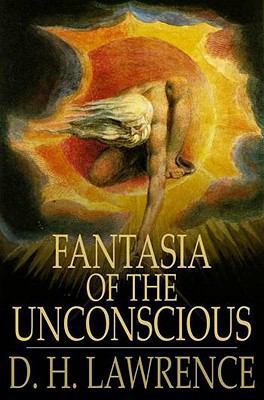 In Fantasia of the Unconscious Lawrence writes, “In sex we have our basic, most elemental being.”[8] Further, he declares that the procreative purpose of sex is “just a side-show.”[9] Lawrence rejects the reductive, scientific understanding of sex; part and parcel of the scientific will to nullify beauty and mystery and to make everything mundane and “practical.”
Sex can lead to reproduction, but it is no more correct to say that the “purpose” of sex is reproduction than it is to say that the purpose of eating is to fill our stomachs. More often than not, we eat not because we happen to really need nourishment just then, but because we take pleasure in eating, in the taste of food, and in the company of those we eat with. And frequently the food we enjoy ingesting has little actual nutritional value. If the purpose of eating were simply to acquire nourishment, then we ought not mind the idea of simply ingesting a tasteless paste full of vitamins, minerals, protein, and carbohydrates three times daily.
Sex, Lawrence tells us,
is our deepest form of consciousness. It is utterly non-ideal, non-mental. It is pure blood-consciousness. It is the basic consciousness of the blood, the nearest thing in us to pure material consciousness. It is the consciousness of the night, when the soul is almost asleep. The blood-consciousness is the first and last knowledge of the living soul: the depths.[10]
When we enter into what Schopenhauer calls “ecstasy in the act of copulation,” there is a sloughing off of intellect, of self-consciousness. The act is ecstatic precisely to the extent that this is accomplished. The Greek ekstasis could be translated literally as “standing outside oneself.” In ecstatic acts we have the sense of leaving ourselves, and certainly our consciousness of ourselves (our inner monitor, inner censor, inner doubter) behind. Insofar as we cannot accomplish this, the sexual act will be dissatisfying. The woman may experience little pleasure, and the man may even be unable to perform, should he fail to disengage the intellect.
Of course, when we are caught in the ecstasy of sex we are not literally unconscious. What happens, in effect, is that a different sort of consciousness takes over: what Lawrence calls “blood-consciousness.” What Lawrence means by this term is the pre-reflective, pre-conceptual, subterranean depth in consciousness: what he sometimes confusingly calls the “unconscious.”
Sometimes this type of consciousness is derisively labeled the “animal” in us. This is misleading, for we have a tendency not to think of ourselves as animals, and labeling the blood-consciousness “animal” becomes a way to disown it. But it is our own, and, of course, we are animals. In the heat of true, ecstatic sexual passion, one loses a sense of individuality. It is common to hear the participants speak (later on) of losing the sense of bodily boundaries, and feeling as if the two bodies merged into one. Strange, animal-like cries are uttered and motions become automatic rather than deliberately willed.
In sex we surrender our intellect and self-consciousness, and open ourselves to the blood-consciousness, to our primal self—so that we become, for the space of the act, that primal self. And this is the reason why modern people are so sex-obsessed.
To live in modern, industrialized society means to live almost constantly from what Lawrence calls the “upper centres,” from intellect. And it means to live surrounded at all times by the products of intellect, cocooned in a synthetic, human world built over top of the natural world, operating according to human ideas and ideals. Almost always, this life requires us to lead an existence that is false in certain fundamental ways; false and inimical to life and to the natural, primal self. Passionate sex, insofar as modern people can even manage it, is the only respite from this that most people know. As such, Lawrence believes that in sex we are fundamentally truer than at most other times in life. And reflection on what the sex act means may help us to recover this trueness in daily life, outside of sexual activity.
All of the above is an attempt to say “what sex is.” But Lawrence holds that ultimately it is ineffable:
We can never say, satisfactorily. But we know so much: we know that it is a dynamic polarity between human beings, and a circuit of force always flowing. . . . We know that in the act of coition the blood of the individual man, acutely surcharged with intense vital electricity—we know no word, so say “electricity,” by analogy—rises to a culmination, in a tremendous magnetic urge towards the blood of the female. The whole of the living blood in the two individuals forms a field of intense, polarized magnetic attraction. So, the two poles must be brought into contact. In the act of coition, the two seas of blood in the two individuals, rocking and surging towards contact, as near as possible, clash into a oneness.[11]
Lawrence’s remark about his use of the term “electricity” tells us that we should not take this description very literally. When he speaks of an “electricity” in the blood of a sexually aroused man or woman, he uses this term, for lack of a better one, to describe the peculiar sense of acute, tingling “aliveness” that one feels in sexual ecstasy. When he speaks of a “magnetic attraction” between the blood of man and woman, he means the uncanny, overpowering, and unchosen sense of attraction that one experiences for the other. It is a sense of attraction that at times makes men and women feel that they must come together or die.
We attempt to deflate the mystery of this attraction by chalking it up to “chemistry.” Indeed it may somehow be chemical, but to describe the physical conditions necessary for a profound experience to take place does not render it less profound, or less mysterious. It might seem a bit ironic, given Lawrence’s criticisms of science, that his own language has a kind of scientific veneer, with its talk of “electricity,” “magnetism,” and “polarity.” But Lawrence’s “science” is, in fact, a throwback to the vitalistic philosophy of nature of the Romantics.
Lawrence attempts to sum things up as follows: “Sex then is a polarization of the individual blood in man towards the individual blood in woman.”[12] At the root of this idea is a basic conviction of Lawrence’s, which cannot be overemphasized: that men and women are fundamentally and radically different—metaphysically different. (See my essay “D. H. Lawrence on Men and Women [2].”) In the same text he writes, “We are all wrong when we say there is no vital difference between the sexes.”
Lawrence wrote this in 1921 intending it to be provocative, but it is surely much more controversial in today’s world, where it has become a dogma in some circles to insist that sex differences (now called “gender differences”) are “socially constructed,” and that the only natural differences between the sexes are purely and simply anatomical. Lawrence continues: “There is every difference. Every bit, every cell in a boy is male, every cell is female in a woman, and must remain so. Women can never feel or know as men do. And in the reverse, men can never feel and know, dynamically, as women do.”[13]
 Interestingly, I believe that Lawrence derives the idea of “cells” being male or female from Otto Weininger’s Sex and Character, a text he was definitely familiar with. Weininger writes: “every cell of the organism . . . has a sexual character.” And: “In a male every part, even the smallest, is male, however much it may resemble the corresponding part of a female, and in the latter, likewise, even the smallest part is exclusively female.”[14]
Setting Weininger aside, this is Lawence’s way of emphasizing that men and women are different all the way down, and that there are ways in which they can never understand each other, and never see as the other sees. Lawrence is concerned in particular (though this is not obvious) to guard against the claim that there are borderline cases of men and women who are (psychically) androgynous, straddling the divide between male and female:
A child is born sexed. A child is either male or female; in the whole of its psyche and physique is either male or female. Every single living cell is either male or female, and will remain either male or female as long as life lasts. And every single cell in every male child is male, and every cell in every female is female. The talk about a third sex, or about the indeterminate sex, is just to pervert the issue.[15]
The reference in the last sentence is to the ideas of figures like Magnus Hirschfeld and, indeed, Otto Weininger, both of whom argued that homosexuals were sexually “intermediate.” Part of the reason Lawrence is so vehement in this passage is that he had strong homosexual inclinations (as any honest reader of Women in Love, especially its deleted “Prologue,” will admit). Early in life he saw himself as an androgynous being, with a hefty share of femininity in his soul. However, he came to repudiate this idea and to regard it as having hindered his development as a man.
The Phallus
In coition, Lawrence writes, “the two seas of blood in the two individuals, rocking and surging towards contact, as near as possible, clash into a oneness.”[16] The means by which this connection occurs, where the blood of the man and the woman is brought together, is the phallus. One of Lawrence’s most important philosophical essays is “A Propos of ‘Lady Chatterley’s Lover,’” which he wrote partly to answer criticisms of the novel, and partly to make explicit and expound upon the novel’s message. He writes at one point that “The phallus is a column of blood that fills the valley of blood of a woman. The great river of male blood touches to its depths the great river of female blood—yet neither breaks its bounds.” The two blood streams, the male and the female, “encircle the whole of life.”[17] They never literally mingle, but coition is essentially an act in which the blood of the male, enfolded within an extension of his flesh, enters the blood-engorged flesh of the woman—and the two blood streams come as close to mingling as they ever will.
The result is a crisis; an ecstatic moment in which—as in the Zen experience of satori—there is the sudden, non-verbal intuition that this here now is all there is, and there is a loss of the sense of individual separateness and isolation; a sense of becoming absorbed into a greater unity. Lawrence describes the orgasm as follows: “There is a lightning flash which passes through the blood of both individuals, there is a thunder of sensation which rolls in diminishing crashes down the nerves of each—and then the tension passes.”[18]
In his later works, Lawrence writes often and explicitly of the metaphysical, indeed the divine significance of the phallus. For example, in the second of Lawrence’s three versions of Lady Chatterley’s Lover (published posthumously as John Thomas and Lady Jane) there is a scene in which Constance Chatterley lies beside her sleeping lover, contemplating his flaccid penis. “Wasn’t there a weird, grotesque godhead in it?” she asks herself, and what follows is a passage of great significance:
To most men, the penis was merely a member, at the disposal of the personality. Most men merely used their penis as they use their fingers, for some personal purpose of their own. But in a true man, the penis has a life of its own, and is the second man within the man. It is prior to the personality. And the personality must yield before the priority and the mysterious root-knowledge of the penis, or the phallus. For this is the difference between the two: the penis is a mere member of the physiological body. But the phallus, in the old sense, has roots, the deepest roots of all, in the soul and the greater consciousness of man, and it is through the phallic roots that inspiration enters the soul.[19]
Lawrence makes a traditional distinction in this passage (though, as usual, he is slip-shod about it) between the penis and the phallus, which is the erect penis. In cultures that have worshipped the penis, it always the erect penis that is depicted and revered. Why? Because, in a real sense, the phallus does not belong to the individual man. It is—notoriously—not under the control of his personality, his mental self-conscious being. It has a will of its own. It is the “second man within the man,” meaning that it is a direct expression or, if you will, externalization of the deeper, truer, self; of the unconscious, or blood-consciousness.
This self is “prior to the personality,” and indeed it is fundamentally the same in all men. So it transcends the individual—indeed it is an expression of the life mystery which permeates all of nature. The penis, Lawrence tells us, is a “mere member of the physiological body,” but the phallus is something that rises from out of the chthonic depth of nature itself. The phallus is our connection to those depths. When Lawrence says that it is “through the phallic roots that inspiration enters the soul” he means that it is insofar as we are able to surrender our intellect and mental awareness that we are guided by the wisdom of the blood-consciousness.
If a man’s mental self dominates him and grips him, refusing to let go, preoccupying him with thoughts, then he cannot achieve an erection. His mind has “blocked” the primal, unconscious self. This is all that the mind can do to the primal self—it cannot command it. Hence there is no “willing” an erection. But if a man can momentarily surrender his mental self, then the blood-consciousness is awakened, and the phallus comes to life. The virile man is admired because he has a connection to the primal force. The impotent man is pathetic in our eyes, because he has lost that connection. He is literally without power.
Thus, for Lawrence, sexual arousal in the male and the sex act following upon it become emblematic of what must take place if there is to be a general return to the blood-consciousness, and thus an achievement of lasting happiness, lasting satisfaction in the whole of life. There must be a surrender of idealism, and of the tendency to live strictly from the “upper centres.” There is no way to get to the natural self by way of intellect and its ideas, just as there is no willing an erection. All that mind can do is to let go—to do nothing. Then the blood-consciousness takes over and the result is that there rises up from the root of us a new man, a new self. New only in the sense that it is unfamiliar to us, for in truth it is actually the oldest of old selves.
Erection and a full, ecstatic sexual experience symbolize for Lawrence the successful reawakening of the primal self that is needed if we are to again become natural creatures and achieve our “fullness of being.” But they are not merely symbolic. Lawrence also sees coition as the deepest, most profound, and profoundly mysterious way in which we come into contact with our chthonic depth, and the chthonic depth of the natural world itself. Hence, in “A Propos of ‘Lady Chatterley’s Lover’” he says the following
[The] phallus is the connecting link between the two rivers [of male and female blood], that establishes the two streams in a oneness, and gives out of their duality a single circuit, forever. And this, this oneness gradually accomplished throughout a life-time in twoness, is the highest achievement of time or eternity. From it all things human spring, children and beauty and well-made things; all the true creations of humanity. And all we know of the will of God is that He wishes this, this oneness, to take place, fulfilled over a lifetime, this oneness within the great dual blood-stream of humanity.[20]
Here Lawrence makes it quite clear, as he does in innumerable other places, that his reverence for the phallus is a religious one. Indeed, it would not be a distortion to call his own, personal religion a form of “phallic worship.” This is, of course, a provocative choice of words, but not an inaccurate one. There is, in fact, a remarkable similarity between Lawrence’s views and Hindu Shaivism, the oldest surviving phallic cult in the world.
The God Shiva is a personification of what Lawrence means by the life mystery or “pan power,” as well as what Schopenhauer meant by the will in nature.[21] Alain Daniélou, one of the foremost Western interpreters of Shaivism, writes
As Lord of Yoga, Shiva is named Yogendra, Yogeshvara, Mahâyogi, since it is he who taught the world the Yoga method through which man can know himself, realize himself and communicate with subtle beings, beasts, plants and gods. He also teaches the dance and the music which leads to ecstasy, the intoxication which takes man out of himself. . . . His festivals are those of Spring, of the Renewal of Life, and of creative Eroticism. . . . He is naked, libidinous, and preaches rapture, love, detachment, and friendship with nature. God of Sensual Pleasure and of Death, he is present in the forest and the funeral pyre. Shiva is at the same time benevolent (Shambhu) and terrible (Bhîma).[22]
Although these and many other qualities are attributed to Shiva, the sacred Shaivite texts indicate that the true Shiva is beyond all human categories: “Shiva (the supreme divinity) is without sign (without sex), without color, without taste, without odor, beyond the reach of words or touch, without qualities, immutable and immobile.”[23] This being can therefore only be known through some tangible sign that it gives of itself in the physical, perceptible universe, and that sign is the phallus.
The Sanskrit word for phallus, lingam, literally means “sign.” Daniélou writes, “The lingam, or phallus, the source of life, is the form by which the Absolute Being, from whom the world is issued, can be evoked. . . . In the microcosm, which is to say in man, the sexual organ, the source of life, is the form in which the nature of the formless manifests itself.”[24]
Daniélou quotes liberally from ancient texts in order to explain the Shaivite attitude toward the phallus and its relationship to Shiva. One such text states, “Shiva said ‘I am not distinct from the phallus. The phallus is identical with me, and therefore must be worshipped. My well-beloved! Wherever there is an upright male organ, I myself am present, even if there is no other representation of me.”[25] This passage indicates that the phallus is not, in fact, merely a symbol of Shiva, but is a physical “expression” of the god—the most perfect expression of the god, in fact. In a way, Shiva is distinct from the phallus, but in a way the phallus is Shiva.
We find just the same sort of mystical logic in Lawrence: the phallus is an expression of the life mystery, as the blood-consciousness that animates it is an expression of the life mystery; but the phallus, and blood-consciousness just are the life mystery, as it expresses itself in us. The phallus is our link to the life force itself. Daniélou writes, “The penis is therefore the organ through which a link is established between man . . . and the creative force which is the nature of the divine.”[26] Lawrence expresses precisely this Shaivite conception in John Thomas and Lady Jane, when Constance Chatterley has an argument with her very modern and irreligious sister:
“I don’t care!” she said stubbornly to Hilda at bedtime. “I know the penis is the most godly part of a man. . . . I know it is the penis which connects us with the stars and the sea and everything. It is the penis which touches the planets, and makes us feel their special light. I know it. I know it was the penis which really put the evening stars into my inside self. I used to look at the evening star, and think how lovely and wonderful it was. But now it’s in me as well as outside me, and I need hardly look at it. I am it. I don’t care what you say, it was the penis gave it me.”[27]
According to Daniélou, Shaivism regards the procreative purpose of sex as “a side show” – just as Lawrence does. Daniélou writes that the phallus has a dual role: “the inferior one of procreation and the superior one of contacting the divine state by means of the ecstasy caused by pleasure (ànanda). The orgasm is a ‘divine sensation.’ So whereas paternity attaches man to the things of the earth, the ecstasy of pleasure can reveal divine reality to him, leading him to detachment and spiritual realization.”[28]
The orgasm, for Lawrence as well as for Shaivism, is a religious experience in which selfhood is transcended and we become reabsorbed, momentarily, into the life mystery; connected to “the stars and the sea and everything.” Daniélou quotes another Shaivite text: “Every orgasm, every pleasure is a divine experience. The entire universe springs forth from enjoyment. Pleasure is at the origin of all that exists.”[29]
Just as Lawrence’s ideas about the metaphysical significance of the phallus and intercourse can be likened to Shaivism, his views about the use of sex as a means to “awakening” can be likened to Tantra. Tantra refers to the set of practical techniques and methods used to bring the individual to union with the divine source.
In the West, we tend to associate Tantra exclusively with a kind of “sex magic,” and although there are other forms of Tantra this is, in fact, the one that I am drawing on in making comparisons to Lawrence. Tantric sex actually involves a rather overwhelmingly complex collection of ritual preparations, mantras, and physical positions. None of these are truly relevant to our concerns here. Suffice it to say that the theory behind Tantric sex involves the belief that if intercourse is approached properly, with an understanding of the metaphysical significance of the act, it affords the participants the opportunity to achieve a state of transcendence.
They lose their sense of individuality and merge with each other, and through merging with each other—through bringing together the male and female natures—they participate in the creative power represented by Shiva. Again, the parallels to Lawrence are obvious. He too regarded the man and the woman as representing eternal male and female powers, and he saw in intercourse a way in which the two become one (“the highest achievement of time or eternity”) and in so doing, lose themselves in the life mystery.
Notes
[1] Quoted in Jeffrey Meyers, D. H. Lawrence: A Biography (New York: Alfred A. Knopf, 1990), 362.
[2] Quoted in Meyers, 367.
[3] Meyers, 369.
[4] D. H. Lawrence, Fantasia of the Unconscious in Fantasia of the Unconscious and Psychoanalysis and the Unconscious (New York: Penguin, 1971), 106.
[5] Arthur Schopenhauer, Manuscript Remains, trans. E. F. J. Payne (Oxford: Berg, 1988–90), vol. 3, 262.
[6] D. H. Lawrence, Phoenix, ed. Edward McDonald (New York: Viking, 1968), 759 (“The Novel and the Feelings”).
[7] Quoted in Meyers, 362.
[8] Fantasia, 185.
[9] Fantasia, 106.
[10] Fantasia, 173.
[11] Fantasia, 106–07.
[12] Fantasia, 185.
[13] Fantasia, 102.
[14] Otto Weininger, Sex and Character, trans. Ladislaus Löb (Bloomington: Indiana University Press, 2005), 17.
[15] Fantasia, 96.
[16] Fantasia, 106–07.
[17] D. H. Lawrence, Phoenix II, ed. Warren Roberts and Harry T. Moore (New York: Viking, 1971), 505 (“A Propos of “Lady Chatterley’s Lover’”).
[18] Fantasia, 106–07.
[19] D. H. Lawrence, John Thomas and Lady Jane (New York: Penguin Books, 1977), 238.
[20] Phoenix II, 506 (“A Propos of “Lady Chatterley’s Lover’”).
[21] Alain Daniélou argues that the Greek Pan is equivalent to Shiva. See Alain Daniélou, The Phallus, trans. Jon Graham (Rochester, Vermont: Inner Traditions, 1995), 47–48.
[22] Alain Daniélou, Gods of Love and Ecstasy: The Traditions of Shiva and Dionysus, no translator credited (Rochester, Vermont: Inner Traditions, 1992), 51.
[23] Linga Purána, 1.3.2–3. Quoted in Alain Daniélou, The Phallus, 11.
[24] Daniélou, The Phallus, 11–13.
[25] Quoted in Daniélou, Gods of Love and Ecstasy, 56.
[26] Ibid., 56.
[27] John Thomas and Lady Jane, 312.
[28] Daniélou, The Phallus, 18.
[29] Ibid., 18.
Article printed from Counter-Currents Publishing: http://www.counter-currents.com
URL to article: http://www.counter-currents.com/2013/08/d-h-lawrence-on-the-meaning-of-sex/
URLs in this post:
[1] Image: http://www.counter-currents.com/wp-content/uploads/2013/08/lawrencepine.jpg
[2] D. H. Lawrence on Men and Women: http://www.counter-currents.com/tag/hawthorne-lawrence/
00:05 Publié dans Littérature, Psychologie/psychanalyse | Lien permanent | Commentaires (0) | Tags : sexualité, littérature, lettres, lettres anglaises, littérature anglaise, david herbert lawrence, d. h. lawrence | | del.icio.us | | Digg | Facebook