

samedi, 19 novembre 2011
Scandale à la mosquée de Cologne
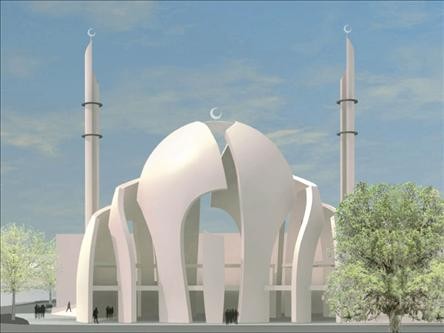
Scandale à la mosquée de Cologne
L'architecte en charge de la construction de l'édifice a été remercié après la découverte d'étranges symboles gravés sur les murs.
00:18 Publié dans Actualité, Affaires européennes, Islam | Lien permanent | Commentaires (0) | Tags : islam, politique internationale, europe, affaires européennes, allemagne, cologne, mosquée de cologne, religion, immigration |  |
|  del.icio.us |
  |
|  Digg |
  Facebook
PAVEL TULAEV RESPONDS TO QUESTIONS BY ALFRED VIERLING
|
Tulaev Pavel Vladimirovich (1959) is a scholar and a writer, the director of the Russian ATHENAEUM. Web-page: http://ateney.ru Ph.D. in History (1985). He is vice-president of the Moscow department of “Synergy European”, one of the leaders of the Slavic and the New Right movement in Russia. Tulaev is the author of many publications in different genres about Russia, Europe, Latin and North America: “K Ponimaniyu Russkogo” (Understanding Russia, 1994), “Veneti: predki slovjan” (Veneti: ancestors of Slavs, 2000), “Rodnyje bogui” (Native Gods, 2008), “Istoki rodnogo mira” (The Native World’s roots, 2011); “Russia and Spain: the two Europe’s wings” (getting ready to be published). He is the editor of collections: “Rossia i Evropa: opit sobornogo analisa” (Russia and Europe: the Experience of Sobor Analysis, 1992), “Russkaya Perspectiva” (Russian Perspective, 1996), “Varvary” (Barbarians, 1999) and many authors’ works, including Andreas Gottliebe Mash, Yuri Venelin, Francisco Franco, Jose Antonio Primo de Rivera, Dmitry Dudko, Antony Sutton, Guillaume Faye. Tulaev’s works have been published in foreign languages. Some of his articles and interviews have been collected in the book “THE WHITE STRUGGLE IN RUSSIA” (Moscow, 2007). Personal web-page with texts in 10 languages and new video interviews: http://.tulaev.ru PAVEL TULAEV RESPONDS TO QUESTIONS BY ALFRED VIERLING ALFRED VIERLING: Dear Mr. Tulaev, let me ask you a few questions? PAVEL TULAEV: Yes, of course, Mr. Vierling. Welcome to Russia. I had a chance to read your publication ‘The Netherlands, a failed State in a failed Continent’ in the English-language journal «AB AETERNO», which deserves attention. I am happy to answer your questions. Demography ALFRED VIERLING: In 2050, the peoples of European descent will be on the verge of extinction, forming less than 6% of the world’s population. The fertility rate in the European Union and Russia currently stands at 1.57, while the replacement fertility rate, as rate required to stabilize the population is equal to 2.1. And in the European Union and Russia alone there is a muslim population of about 30,000,000. Their birth rate being much higher. What do you think about these phenomena? PAVEL TULAEV: Yes, we know this sad statistic and dangerous trend. In the latest issue of “Athenaeum” I have been published demographic study of two Russian authors, entitled ”Do the indigenous peoples of Europe survive?”. This issue is constantly discussed in the pages of our publication. ALFRED VIERLING: The European Union intends to add to this current Muslim immigration another 25 million Africans, while Russia, I think, intends to stop non-European immigration. PAVEL TULAEV: You know better the plans of the European Union’s immigration policy. As for Russia, it is true, the government limited the number of quota on the entry of migrant workers from Asia. At the same time, it prohibited the Movement Against Illegal Immigration (DPNI), which initially opposed the colonization of the Russian people from the South East and Eurasia. The real situation is very dramatic. ALFRED VIERLING: Is it true that the Russian government provides parents with about 18,000 (eighteen thousand) euros for each second or third child? PAVEL TULAEV: Your information on government grants on the occasion of the second, third and subsequent children are not fully reliable. As far as I know, the amount of actual subsidies are much lower. Young families in the age of 30 receive a one-time assistance in 2007 about 1.5 thousand euros for the second child (60 thousand) and 2000 euros (85 thousand) for the third and following. Within a month of giving birth an employer must pay an allowance to care for a baby of around 400 euros. From the perspective of many mothers, such financial assistance is low. However it is important from a moral point of view. In Germany and the Nordic countries, there are similar subsidies. ALFRED VIERLING: You are the author of “White Struggle in Russia” (Moscow, 2007). What did you write there? PAVEL TULAEV: The book “White Struggle in Russia», has been released in a small number of copies and is on display in PDF format on my personal site: http://tulaev.ru. It is a collection of opinion articles and interviews published in English, French, German and Spanish. It is not about demographics and the philosophical-historical and ideological issues. Originally, I wanted to convey to our Western colleagues the thought that we, Russians, are as much white Europeans, as they are. We belong to one race, we have common roots, traditions, values and similar interests. Therefore, the existing differences, such as language or religion, should not interfere with understanding and lead to geopolitical conflicts between sister nations, as it was during the Second World War. My essays are on the meaning of the White Revival, counter to 1917 and beyond, including modernity of the XXI century, and the spiritual and cultural solve the problems, and are not anthropological research. ALFRED VIERLING: Will Russia’s population, which is expected to re-establish be about 150 million in 2030, be able to serve as a reservoir population (Hinterland) and a source of inspiration for the endangered white people in the European Union? PAVEL TULAEV: Your forecast of the growth of Russia’s population to 150 million in 2030 is unrealistic. First, official data on the 2010 census are strongly distorted. In fact, the number of Russian citizens is not 142 million, but much smaller. Experts call a number about a hundred million (to be specified). Over 20 years of liberal-capitalist reforms, the Russian population has lost in the order of 15 million people (the exact figure is discussed). With increased an mortality rate among Russians, Ukrainians and Belarusians, simultaneously accompanied by a significant increase in fertility among the Armenians, Azerbaijanis, Chechens, Ingush, etc. Compensation for loss of the Slavic population of European origin, is due to the growth of Asians, Caucasians and Chinese. If this trend continues, in the long term it will significantly change the racial composition of the Russian citizens in the direction of East Asian and the Mongoloid will be dominant. It is important to note that the quantitative reduction in population is accompanied by a general aging, degeneration, depravity and brainwashing under the influence of Western civilization. It is obvious deterioration in the quality of people, their health and moral character. In this regard, philosophers and religious figures are reminiscent of the laws of the Kali Yuga, the era of total degradation, while state statisticians and demographers are recognizing the genocide. Who could inspire such a reality? It remains to count on those devotees who go against the tide. Civilization and Culture ALFRED VIERLING: The European Union has been subordinated to the United States of America. It will be weakened by America’s “plague of pleasure,” which leads to the individualistic style of life of hic et nunc. In the interest of their Masonic lobby the U.S. is trying to weaken the euro-zone, preaching multiculturalism. This makes the population of European descent a minority in their own land, surrounded by a sea of Muslim and black immigrants. In connection with the rise of nationalist parties in all member states of the European Union recently such national leaders as Sarkozy in France, Merkel in Germany and Cameroon in Britain were forced to admit the failure of multicultural policy. However, after recognition, everything still remains the same like before. So, can Russia offer an alternative to multiculturalism? PAVEL TULAEV: We are attentively watching what is happening in the European Union and we hope for, eventually, a victory by common sense. Indigenous peoples have the right to a national environment. In this sense, Russia has something to offer as an alternative to the phenomenon which you call “multiculturalism.” After going through the experience of Soviet internationalism and cosmopolitanism, post-Soviet, the Russian people with the persistence of their home states cling to (native) culture against the influence of the globalist TV and the Internet. The current government recognizes the fundamental role of the Russian language and the importance of national culture, while simultaneously pursuing and blocking the Russian political parties for alleged extremism. ALFRED VIERLING: What is the role of the Russian Orthodox Church in restoring the traditional way of family life and the revival of Russian civilization as a fundamental culture? PAVEL TULAEV: The role of the Russian Orthodox Church in the life of modern Russia is significant. Among other religions, it is the dominant one in status and real impact, such as the Catholic Church in Europe. The church has taken a clear and active role in protecting the traditional family. It also affects the development of culture, seeing it from a Christian perspective. The greatest Russian philosophers of the XX century came from Orthodox values, and there is now a renaissance of religious culture, thousands of churches have been restored many thousands of copies published of Christian books, movies shot on a historical theme with a positive assessment of Orthodoxy. In this sense, the role of the Church – is consolidated. Moreover, its influence reaches beyond the borders of Russia and covers the territory of the former Russian Empire. It is evident in Belarus, Ukraine, the Baltic States. However, Russian culture in general is not limited to the Orthodox Church and the church. It has a liberal, socialist, technocratic, and other currents. Among young people Vedic direction is gaining momentum, which brings together various groups of modern pagans and rodnovery (Native Faith). ALFRED VIERLING: How does Russia solve the problem of the present day managing of the huge Muslim population? The EU has not yet tackled this… PAVEL TULAEV: This problem is not easy! In Russia live at least 20 million Muslims. Most of them inhabit the south of Russia, Tatarstan and the Volga. The number of citizens who practice Islam is growing in all major cities of our country, especially in Moscow, where two million Muslims have built new moskques. The peak growth of Islamic influence was in the 1990s, when a religious revival led to the wars in Chechnya and Dagestan. As you know, according to the Qur’an, a true believer in God should lead a holy war (jihad) against the “infidels.” This radical position is perceived by Christians as the Islamist extremism and terrorism. The Russian government has to take into account the interests of the dominant religions, including Islam, so it supports the policy of oecumenicalism, peaceful coexistence and dialogue between religions. In the Russian passport and national origin and faith cannot be specified. At the same time, it promotes a cosmopolitan culture in the form of variety, sensuality, all sorts of entertainment and recreation. Security and energy ALFRED VIERLING: The European Union does not have its own army and is occupied by NATO under U.S. military command. The European Union countries are forced to participate in U.S. wars, even in relation to European countries such as Serbia, creating Muslim enclaves in Bosnia and Kosovo, or to maintain the artificial revolutions, as in Ukraine, Georgia, Belarus and Kazakhstan. Can Russia ensure the European Union sufficiently safe supplies of gas and oil so in order to enable Europeans to free themselves from the United States? PAVEL TULAEV: Problems of security and sovereignty are not confined to energy policy, although it is one of the most important strategic factors. Of course, Russia can provide a reliable supply of the EU gas and oil. She is already doing so through the northern and central European pipeline, despite resistance from competitors. It must be borne in mind that there are other modern sources of energy such as nuclear power. They will grow, despite the recent accident in Japan. Europe’s dependence on U.S is rahter in militarily and more technologically and politically, rather than energy-wise. NATO helped Germany reunite, betraying the Soviet leadership, and now takes under its wing western parts of the former Russian Empire, including these into the European Union. ALFRED VIERLING: What do you think of the Russian-European Union plan to ensure mutual security, earlier proposed by Gorbachev, and about Putin’s proposal in the spirit of the Treaty of Paris? PAVEL TULAEV: The direction of the diplomatic effort to build a strategic axis Paris-Berlin-Moscow axis, it was generally correct. But by agreeing to concessions to Germany, it was necessary instead of opposing blocs of NATO and the Warsaw Pact to create alternative structures of collective security, such as the Northern Union. Unfortunately, Western strategists forced the Russian army to retreat eastward. Endless discussions about the program “Partnership with NATO”, are mere moves of military diplomacy. In this so-called “partnership” the U.S. waged local wars which it did not dare do so under its own name, to the obvious detriment of Russia. For example, the bloody partition of Yugoslavia. Tomorrow NATO swallowed Poland, Czech Republic, Slovakia and other Slavic countries of Europe and they may invite us to “divide Ukraine.” This will be the next hook, followed by a new promotion of strategic weapons of the West to the East. It pushes Russia closely into the arms of China, but China has its own interests. The Shanghai Cooperation Organization (SCO) may be a counterbalance to NATO, but Russia is squeezed in-between. As a result, there is a risk that fragments of the Soviet Union will become a bargaining chip, that is a victim of competition between two superpowers – the U.S. and China. ALFRED VIERLING: All countries that have no debt to the banking system, the IMF (International Monetary Fund) are under threat. If the IMF has the tools of influence, as we see in modern Greece, it puts pressure on the country and brings it almost to bankruptcy, to the point of where the Anglo-Saxon banks are able to gain power over key primary resources. PAVEL TULAEV: Indeed, today, as to the world’s banking systems not only small but also large countries are threatened. The International Monetary Fund (IMF) has nodifficulty in destroying Greece, and then arrange the sale of its economic resources. The mechanism of financial and political power has long been realized. It is well known also that the state itself of the USA has long been in terrible financial debt to the bankers. Its total amount is calculated to astronomical figures and growing. As a result, dollars are not backed with gold, and gradually depreciate. However, the bankers and their well-paid analysts – are not fools. They will look more and more new to forms of protection of their interests. For example, after the euro can be introduced a transcontinental currency, AMERICO. Of these financial games the relatively well protected China by the features of its independent economy will survive with a strong Yuan. If Russia is to ensure its security with China, it will further strengthen the threat of sinicization of the eastern regions of our country in the process. The utopian promise of the future ALFRED VIERLING: In the spirit of Guillaume Faye’s archeofuturism you return to the traditional European gods. You are the author of this book with pictures of gods who represent the origin of the Slavs as the Indo-Europeans. What have they taught you? PAVEL TULAEV: I am well acquainted with Guillaume Faye, not only from books, but also personally. At my invitation he came to Russia again. Here we have published in Russian two books, "World Revolution. An essay on the new American imperialism” and "What are we fighting for?", as well as several articles. I respect the author as a thinker and one of the most prominent ideologues of the New Right, but do not completely agree with him. My debate with Guillaume Faye is contained in the article "What we advocate?". The philosophy of “archeofuturism” of Guillaume Faye is close to me, because it is addressed to the future. However, the European gods, I learned not from him, and, in general, not from Western authors. Russia has had a fundamental school of Indo-evolved scholars by the end of the XIX century. Let me mention only the names of Alexander Afanasiev, Alexander Hilferding, Boris Rybakov, Oleg Trubachev. Studies of these and many other authors suggest that Eurasia for millennia been a single cultural space. The motion passed as people from north to south (Hyperboreans and Arians), and from east to west (the Scythians, the Wends and Slavs), and then from south to north (the Romans), and from west to east (the Germans). Along with these peoples have developed the presentation of the gods. For example, the cult of the thunderer, well-known in the Western tradition under the name of Zeus and Jupiter, in ancient times has been widely distributed on the Danube and the Dnieper under the name of Perun. Odin (Votan) came to Scandinavia, from Asia Minor, after passing through northern the Black Sea region. The European cult of the Holy Trinity was first known in India as the Trimurti. The ethical teachings of the Buddha were also preceded by the gospel of Jesus Christ, by not a few centuries. The Album published by me includes 230 artistic images of Indo-European gods, and has 14 contemporary artists. I am the author of a popular science introduction to the book and co-author of an academic explanatory dictionary (96 articles of the gods). In fact, this book – as an illustrated encyclopedia of the Slavic-Aryan mythology- is a wonderful gift for both children and adults. After all, gods – are the living principles of existence of the universe. We receive them from a single organism, we have a common genetic line. Not only people and nations, but also the gods could be close or distant relatives. Awakening of the Gods – is not only a religious activity, but creating a quality environment for the creation of new worlds better than the current civilization. ALFRED VIERLING: How did you come to the conclusion that our rebirth depends on the axioms “first blood of the soil” and “biopolitics before geopolitics?” As a saviour concept for our race and our earth? PAVEL TULAEV: There are the obvious facts that some people will recognize, while others either do not understand or do not want to understand. Human races and types – are as much an objective reality, as the species of animals or plants. To deny the diversity of biological life forms – is silly. The white man – even in Africa remains white, brings to the exploitation of the land their civilization. A Black (black race) and in the European world is black, as in psychology, and culture. Contemporary African-American music in the U.S. constitutes a glaring example. The same thing happens with the Arabs, who carry with them the religion of Islam to Europe and engage in trade, rather than the advancement of science or technology. And also Chinese. Once in Russia, they study the Russian language for communication with the indigenous population and for business, but the Chinese keep their traditional culture: native language, philosophy, ethics, Eastern martial arts. ALFRED VIERLING: Tell me frankly, what do you think of racial mixing? Mixed racial types and their development in new social conditions constitute a special theme. However, at odds of 10:1 if we talk of the relationship between European and non-European populations on a global scale, it is no longer about crossing or complementarity, but about the absorption of the white minority overwhelmed by much more numerous races. Therefore, the genetic principle must be taken into account in strategic planning in the interests of national security. Biopolitics must prevail over geopolitics, because it is very important, who will live in our land, who will manage it, who will create new values and laws? Will here still be the rightful place for White peoples of our sacred culture? Strategy and tactics ALFRED VIERLING: How did you imagine, the “Aryan Revolution ‘? PAVEL TULAEV: I would prefer to speak of Aryan Renaissance or Rebirth, rather than revolution. The latter term is usually associated with political events, while we are faced with spiritual, intellectual and educational tasks. In general, this question is very complicated, so a brief response to all exhausted. First of all, we should understand that the term “Arya” in Sanskrit means a person worthy of respect, a smart person and committed to faithful tradition. In India, it may be a man or woman of some kind, usually belonging to one of the three ruling castes: Brahmins (priests), Kshatriyas (warriors), Vaishyas (traders, farmers and pastoralists). In the modern consciousness, the distorted propaganda of the media, this historical and scientific concept is associated with the theory of “Aryan race” in the Third Reich, which means the people of Nordic origin. Hitler and his destructive war discredited the idea of Aryan, as it belongs to the swastika (in Russian “Kolovrat” or “Yarga”), which means heavenly blessing, and to this day is one of the main symbols of Buddhism. So the first task is to separate the indigenous knowledge of ideological propaganda and Nazi policy, dispelling myths of the XX century. The second fundamental problem constitutes a thorough study and development of the Aryan notion, as if to say in a scientific way – the Vedic tradition. The Vedas – are vast ocean of sacred knowledge. It’s not just the famous “Rigveda”, “Atharvaveda”, “Samaveda” which contain hymns of the ancient rishis (priests), but also “Ayurveda” (traditional medicine and the science of zdovove), the Upanishads (the philosophical and religious tracts), the richest body Puranas (sacred stories about gods, kings and heroes), the shastras (treatises on war, state of art). For spiritual growth, regeneration and prosperity of this knowledge (Veda), we need these Veda like the European science needed Hellenic philosophers Pythagoras, Plato, Aristotle. Spiritual knowledge (Veda) and the Aryan ethic will help us to consolidate the fraternal peoples of Eurasia, from Spain to India – on a positive basis (the traditional religion, a strong family, a healthy lifestyle, the teaching of the Dharma – the highest debt service). And ultimately, build a fair, efficient and technologically advanced society, what we ourselves want to be, rather than that imposed on us. ALFRED VIERLING: What do you mean by tactics of “leaderless resistance? In the USSR, Stalin was as the tough leader needed to throw off Masonic conspirators and contain the spread of Islam: In 1917, in the Soviet Union, at the disposal of 47 forty-seven million Muslims were 23 000 mosques. In 1989 80 million Muslims had only 300 mosques at their disposal. PAVEL TULAEV: The term LEADERLESS RESISTANCE does not belong to me, but to Simson Garfinkel, an article by him we reprinted in “Athenaeum.” He describes the tactics of guerrilla warfare of a world network type, which is qualitatively different from the old system of political parties and trade unions, built on a pyramid. I think that the leaders we need have all the qualities according to dedicated leadership theory, on which there are many publications. The question is, what exactly is meant by the leader. Führer of the old type (the speakers for the area and narcissistic dictators) – do not suit us. A wise leader operates on the principle of 道 dao “Tao”: he knows things, understands how things happen and gives what already has essentially been realized. He is like a midwife that takes an unborn child. He knows how to listen, not just talk. And knows how to make his ideas sound as if they were put forward by others. A good leader successfully operates in a team. Stalin (Dzhugashvili) was indeed a very strong leader, so much he could do. However, do not deify him. He brought a lot of grief to the people of Russia, including the Russian nation, though, and flatterned her. Stalin destroyed not only the Freemasons, but all dissidents. During his personal dictatorship he has killed millions of people for their beliefs. Yes, the mosques in the Soviet Union were in magnitude smaller, but it was the same proportion in the destruction of Christian churches. The Communists were atheists, and fought against religion as such, it had nothing to do with Christian orthodoxy versus Islam. Dictatorship doesn’t appeal to me. As a professional Hispanist I was interested in the experience of Generalissimo Franco, who ruled the country for 40 years! I have issued in Russia, his book “Freemasonry.” However, I do not worship Franco. Today it is impossible to return to the days of the Catholic Inquisition, and it is not desirable. ALFRED VIERLING: You seem to think about the possibility of restoring the autonomy of ethnic revival in Russia and Russian people, by self-esteem, to ensure the independence of national sovereignty or even of its civilization? PAVEL TULAEV: Indeed, I devoted much of my life to the Russian national liberation movement and understanding of contemporary problems of my people. We can say that in the 1990s of the XX century in Russia there was an information boom, which allowed us to talk about the Russian Renaissance. While this has led to the return of national cultural heritage, it did not consolidate into the formation of Russian statehood. The fact is that today the Russian Federation is inhabited by representatives of 180 nationalities that make up 83 territorial entities. Together, they form, according to the Constitution, “the multinational people of Russia.” It is believed that the Russians are about 80% of all citizens, but our federation is not a nation state. The Russian people are not recognized as a legal entity, which is why there are many political conflicts and problems. However, the general direction of this movement is striving towards a homogeneous society with a clear lead of Russian and Slavic ethnic groups. ALFRED VIERLING: Please tell us about the importance of strategy and tactics of the “Athenaeum” for the White Revival throughout the world. PAVEL TULAEV: “Athenaeum” as you know, the tradition goes back to the temples to Athena – goddess of wisdom. In the Age of Enlightenment in all European countries there emerged as the centers of the Athenaeum of Arts and Sciences. Russia before the Revolution, had also a magazine called “Athenaeum.” Our publication was founded in 2000, and has as its main objective the development of strategy and the semantic fields (information space) in the new Rules. These are disruptive (that is, revolutionary in fact) as the direction of Native Faith, Raciologie, white culture, technology, conspiracy, World War IV. We are not conservatives or progressives, but as you surely noticed, archaeo-Futurists. That is our goal – the birth and upbringing of a qualitatively new entity the White Revolution, which will be able to provide leadership to a national avant-garde. By combining the best minds of Russia and Europe, our “Athenaeum” is best known outside the country. This enabled us to organize in 2006 a conference on “The Future of White World”, and in 2007, “Russia and Europe” which was attended by eminent Western thinkers [such as Guillaume Faye, Pierre Krebs, Pierre Vial, Robert Steuckers, Enrique Ravelo, Jann-Ber Tillenon, Gerhoh Rayzegger, David Duke, Manfred Roeder, Silvano Lorenzoni, Stefonos Gekas, Chris Roman, Anton Rachev, and from us, Anatoly Ivanov, Vladimir Avdeev and others]. Proceedings were issued in Moscow and we published a multilingual web site http://ateney.ru True, our ideological opponents don’t like the active position of the leaders of the new rules. They tried to discredit both the conference in Moscow, its members have been exposed to initiated legal proceedings against the publishers of ‘right-wing’ literature. I have reported widely about this in the statement, “Athenaeum under threat.” ALFRED VIERLING: Let me ask, what has happened to the Athenaeum recently? PAVEL TULAEV: Oh, it’s an unpleasant story. In Russia there is a law about the Media and so called “Extremism”. If some statement, that could be treated as extremists is published, then that material is confiscated and its name is included in the list of forbidden literature. It’s very bad news. It’s inquisition. As a result, some publications of the last issue of the Athenaeum, including a report from David Duke criticizing Jewish politics, have been declared extremist and banned for distribution, although they do not contain any incitement to violence, but only objective information. I think it’s wrong. We organize conferences of scientists, seminars, we discuss stuff. It’s the freedom of thoughts. How is it possible to forbid the freedom of thoughts in the XXI century, when there is internet? This policy has no future. ALFRED VIERLING: Is it possible to create the “Alliance of the White nations” to fend off the approaching Fourth World War? What are its characteristics? PAVEL TULAEV: The name “Alliance of White nations,” can hardly be taken seriously for any inter-state union. When the organizing committee of this conference in 2006 discussed the name of the forum, the French and Germans insisted on the term “people of European descent” and not “white people”. Whatever it was, we formed a coordinating council, which operates in the free exchange of information and opinions. The real breakthrough in this direction was the creation of an organization of “Euro-Russia” led by Kris Roman. Through its website it regularly informs our partners about the main news on the continent and within the movement. The persecution of free thought, illegal from the standpoint of Russian and international law, is precisely a form of the fourth world war. It is carried out not by only nations or states, but also by latent international organizations for the benefit of transnational companies and banks, with their subordinate media. Their goal is world domination by their weapons, money, violence and depravity. Humans, like animals, are driven into the golden cage of consumerism, from which they cannot escape. During this “sweet war”, millions of people each year are destroyed by abortion, alcohol, tobacco and other drugs. It is the ‘Stylists’ new world order, modeling desirable from their point of view human types as selfish, idiot, playboy, bitch-like creatures. These degenerative phenomena again remind us of the Vedic teachings of the Kali Yuga. Is it possible to save all people in an apocalypse? In any case, modern idiocy, and slavery in all its forms, that is what we must confront with our spiritual awakening and knowledge, without which there cannot be a true elite of reasonable humanity. ALFRED VIERLING: Dear Pavel, I sincerely thank you for such thorough answers to my questions. PAVEL TULAEV: Thank you, dear Alfred for coming to Russia, for this interview. And I hope our Friends from EuroRus would cooperate with us, learn about Russia, understand Russia and search for ways of cooperative peaceful building. We are not extremists, we represent the European Civilization and Culture. We want peace, so that our nations would prosper. |

00:05 Publié dans Actualité, Affaires européennes, Entretiens | Lien permanent | Commentaires (0) | Tags : russie, entretiens, pavel tulaev | | del.icio.us | | Digg | Facebook
Una lettura geopolitica della Crisi
di Pierluigi Fagan
Fonte: megachip [scheda fonte]
Un possibile percorso interpretativo della crisi, normalmente trascurato dalla principale corrente dei media, potrebbe passare anche attraverso una lettura delle dinamiche che intercorrono tra blocchi geopolitici.
Osservando una sorta di foto panoramica coglieremo meglio quegli elementi che nelle immagini troppo di dettaglio della crisi tendono a sfuggire.
Seguiamo questa ipotesi:
- Con il peggiorare della situazione spagnola e francese (ma è di oggi l’attacco al Belgio, all’Olanda e all’Austria) è ormai chiaro che la crisi di sfiducia dei mercati è sistemica: è nei confronti dell’Euro – Europa e non nei confronti di uno o due paesi.
- Chi sono i “mercati”? Di essi si possono dare due descrizioni. La prima è quella tecnica, ovvero la sommatoria di singole azioni di investimento prese in base alle informazioni disponibili. I mercati sono storicamente affetti da sindrome gregaria, per cui se una massa critica (quantità) o qualificata (qualità) si muove in una direzione, tutto il mercato la segue. Ciò adombra una seconda descrizione possibile ovvero quella dell’interesse strategico che una parte dotata di impatto quantitativo e qualitativo potrebbe avere, trascinando con sé il resto del mercato. I mercati, di per loro, non hanno interesse strategico: si muovono nel breve termine. Alcuni operatori di mercato però (banche e fondi anglosassoni) potrebbero avere interessi strategici e soprattutto essere in grado di perseguirli sistematicamente (rating, vendite alla scoperto, calo degli indici, rialzo dello spread, punizioni selettive, operazioni sui CDS, manovrare non solo i mercati ma - data l’importanza che questi hanno - l’intera vicenda sociale e politica di una o più nazioni. Tali comportamenti non solo perseguono un vantaggio a lungo periodo di tipo geostrategico ma garantiscono anche di far molti soldi nel mentre lo si persegue, una prospettiva decisamente invitante ).
- Quale potrebbe essere l’interesse strategico che muove alcuni operatori di mercato ? Decisamente lo smembramento e il depotenziamento europeo. Colpire l’Europa significa: 1) eliminare il concorrente forse più temibile per la diarchia USA – UK, tenuto conto che con la Cina c’è poco da fare; 2) riaprirsi la via del dominio incondizionato del territorio europeo secondo l’intramontabile principio del “divide et impera”; 3) eliminare una terza forza (USA – ( EU ) – Cina) riducendo la multipolarità a bipolarità, una riduzione di complessità. Male che vada si sono comunque fatti un mucchio di soldi e il dettato pragmatista è salvo.
- Su cosa contano i mercati ? Sulla oggettiva precarietà della costruzione europea al bivio tra il disfacimento e un improbabile rilancio strategico verso progetti federali. Sulla distanza tra opinioni pubbliche e poteri politici che rende appunto “improbabile” un rilancio dell’iniziativa strategica europeista proprio nel momento di maggior crisi, dove si innalzano non solo gli spread ma anche la paura, l’ottica a breve, la difesa del difendibile ad ogni costo, la rinascenza dell’egoismo nazionale. Sulla oggettiva asimmetria tra Germania e resto d’Europa, una asimmetria strutturale che fa divergere gli interessi, ma più che altro la scelta del come far fronte ad un attacco del genere. È pensabile che tutta Europa pur di mettere a sedere in breve tempo la c.d. “speculazione” , concorderebbe facilmente e velocemente sulla possibilità di far stampare euro in BCE per riacquistare debito, magari a tassi politici (un 2% ad esempio ) ma per la Germania questo è semplicemente inaccettabile. Infine sia la Germania, sia la Francia, sia a breve la Spagna e un po’ dopo la Grecia avranno appuntamenti elettorali (nonché ovviamente l’Italia ) e questi condizioneranno in chiave “breve termine” e “nazionale” le ottiche politiche. Ciò potrebbe spiegare anche il: perché adesso ?
A ben vedere e se volessimo seguire l’ipotesi “complotto anglosassone” si presenta anche un obiettivo intermedio: poter premere per disaggregare l’Europa in due, tutti da una parte e l’area tedesca dall’altra (area tedesca = da un minimo della sola Germania, ad un massimo di Olanda, Austria, Slovacchia ? Finlandia ? Estonia ? con particolare attrazione nei confronti dell’ex Europa dell’Est).
L’euro rimarrebbe all’interno di una zona che avrebbe la Francia e l’Italia come poli principali, si svaluterebbe, perderebbe il suo potenziale di moneta internazionale concorrente del dollaro (diventerebbe, per quanto rilevante, una moneta “regionale”).
Il deprezzamento dell’euro, secondo alcuni analisti, era forse l’obiettivo primario di questa ipotizzata strategia. Il fine minimo sarebbe quello di riequilibrare la pericolante bilancia dei pagamenti statunitense, oltre agli obiettivi di geo monetarismo.
Altresì il “nuovo marco” si apprezzerebbe, chiudendo un certo angolo di mercato dell’esportazione tedesca cosa che faciliterebbe l’espansione dell’export americano che gli è, per molti versi, simmetrico.
Ciò che gli USA perderebbero per l’apprezzamento dollaro – nuovo euro (perderebbero in export ma guadagnerebbero in import, le bilance dei pagamento USA e UK sono le più negative nei G7) lo recupererebbero nel deprezzamento dollaro – marco, ma a ciò si aggiungerebbero tutti gli ulteriori benefici del dissolvimento del progetto di Grande Europa.
Il progetto Grande Europa guardava oltre che ad est anche al Nord Africa, al Medio Oriente ed alla Turchia, al suo dissolvimento questi, tornerebbero mercati contendibili.
Da non sottovalutare il significato “esemplare” di questo case history per quanti (Sud America, Sud Est Asiatico) stanno pensando di fare le loro unioni monetarie.
Una volta sancito il divorzio euro – tedesco, l’Europa quanto a sistema unico, svanirebbe in un precario ed instabile sistema binario ed avrebbe il suo bel da fare almeno per i prossimi 15 - 20 anni.
Una strategia geo politica oggi, non può sperare in un orizzonte temporale più ampio. Forse questa ipotesi ha il pregio di funzionare sulla carta ma molto meno nella realtà.
Il giorno che s’annunciasse questo cambio di prospettiva (anticipato da un lungo, lento e spossante succedersi di scosse telluriche) spostare la BCE a Bruxelles e riformulare tutti i trattati sarebbe una impresa a dir poco disperata. Con i governi in campagna elettorale poi sarebbe un massacro. Ma non è altresì detto che ciò che ci sembra improbabile in tempi normali, sia invece possibile o necessario in tempi rivoluzionari.
Il silenzio compunto degli americani sulla crisi dell’eurozona potrebbe testimoniare del loro attivo interesse in questa operazione. Se ci astraiamo dalla realtà e guardiamo il tutto con l’occhio terzo di un marziano, non un atto, non un incontro, non un pronunciamento se non quelli di prammatica (digitate Geithner su Google e troverete una pagina che riporta una sola frase:” l’euro deve sopravvivere[1]” dichiarato il 9.11.2011, un gran bel pronunciamento) , accompagnano la crisi del primo alleato strategico degli USA. La crisi è degli europei e gli europei debbono risolverla, questo il refrain che accompagna gli eventi. Quale terzietà ! Quale bon ton non interventista ! Quale inedito rispetto delle altrui prerogative sovrane !
Al silenzio americano, fa da contraltare il chiacchiericcio britannico dove Cameron non passa giorno (e con lui il FT, l’Economist e molti economisti a stipendio delle università britanniche ed americane ) senza sottolineare come l’impresa dell’euro non aveva speranze e ciò a cui assistiamo non è che la logica conseguenza di questo sogno infantile. Sulla tragica situazione dell’economia britannica avete mai sentito pronunciar verbo ?
Qualche giorno fa c’è stata una frase del tutto ignorata anche perché pronunciata dal Ministro degli Esteri francese Alain Juppé (le connessioni neuronali dei giornalisti sono sempre a corto raggio e soprattutto mancano sistematicamente di coraggio). Cos’ha detto Juppé? Relativamente alle notizie sull’Iran, ha pronunciato un pesante giudizio: “gli Stati Uniti sono una forza oggettivamente destabilizzante”.
Da ricordare il disprezzo americano che ha accompagnato l’ipotesi “Tobin tax” sostenuta virilmente da Sarkozy all’ultimo G20 e le impotenti lagnanze dell’Europa per lo strapotere non del tutto trasparente dei giudizi di rating, nonché le lamentale off record di Angela Merkel sull’indisponibilità anglosassone a dar seguito ai buoni propositi regolatori della banco finanza internazionale che si sprecarono all’indomani del botto Lehman e che sono poi diventati remote tracce nelle rassegne stampa.
Il punto è quindi tutto in Germania. O la Germania sceglierà il destino che le è stato confezionato da questa presunta strategia o avrà (un improbabile) scatto di resistenza.
Da una parte, il consiglio dei saggi dell’economia tedesca (la consulta economica del governo tedesco è una istituzione che è eletta direttamente dal Presidente della Repubblica) che ha nei giorni scorsi emesso il suo verdetto: tutti i debiti sovrani dell’eurozona che eccedono il 60% di rapporto debito/Pil vanno ammucchiati in un fondo indifferenziato e sostenuti dall’emissione di eurobond garantiti in solido dai singoli stati ognuno in ragione ovviamente della sua percentuale di debito in eccedenza.
Gli eurobond sicuri e garantiti spalmerebbero l’eccesso di debito in 25 – 30 anni, (quello della dilazione temporale è poi ciò che sta facendo la Fed che compra bond del Tesoro Usa a breve per farne riemettere a lungo).
Dall’altra parte la cancelliera tedesca agita lo spettro di una quanto mai improbabile rinegoziazione del Trattato di Maastricht in senso ulteriormente restrittivo e con diritto di invasione di campo nelle economie politiche nazionali da parte degli eurocrati di Francoforte. La Germania però non sembra potersi porre all’altezza dei suoi compiti strategici e probabilmente lascerà fare agli eventi.
Laddove una volontà forte, intenzionata ed organizzata incontra una volontà debole, dubbiosa e con competizione delle sue parti decisionali, l’esito è scontato. Vedremo come finirà.
[1] “sopravvivere” è il termine esatto che fa capire quale sarebbe il desiderio americano, un tramortimento, un depo tenziamento che non faccia tracollare la già più che certa recessione che ci aspetta nel prossimo decennio. Comunque al di là delle parole, nei fatti, l’empatia americana per la crisi europea è tutta in questa magra frase.
Tante altre notizie su www.ariannaeditrice.it
00:05 Publié dans Actualité, Affaires européennes, Economie, Géopolitique | Lien permanent | Commentaires (0) | Tags : politique internationale, affaires européennes, europe, géopolitique, économie, crise, crise économique, crise financière, finances | | del.icio.us | | Digg | Facebook
L’uranium, un outil stratégique pour la Mongolie
L’uranium, un outil stratégique pour la Mongolie
par Antoine MAIRE
Ex: http://mbm.hautetfort.com/

Les médias ont récemment fait mention de la reprise de l’exploitation de l’uranium en Mongolie à l’horizon 2017[1]. Cet événement est une première étape symbolique de la politique de reprise en main du secteur mise en place à la fin de la décennie 2000. En effet la Mongolie bénéficie depuis le milieu des années 2000 d’un développement minier conséquent qui nourrit la croissance exponentielle du pays. Les gisements géants d’Oyu Tolgoï et de Tavan Tolgoï sont les symboles de ce potentiel minier mais ils ne doivent cependant pas occulter les autres richesses enfouies sous le ciel bleu mongol. L’uranium occupe parmi ces richesses une place importante, d’autant plus qu’il joue aussi un rôle prépondérant dans la politique stratégique mise en place par Oulan-Bator pour tenter d’échapper à ses déterminants historiques.
Secteur de l’uranium en Mongolie
L’une des particularités stratégiques majeures de la Mongolie est son enclavement géographique. Isolé du reste du monde par la Chine et la Russie, le pays du ciel bleu doit par conséquent faire face à une série de dépendances qui viennent mettre à mal l’exercice complet de sa souveraineté. L’affirmation et la pérennisation de l’indépendance du pays sont donc des objectifs essentiels de la politique mongole. Le développement minier et particulièrement la question de l’uranium jouent un rôle stratégique majeur dans cette politique. En effet si le pays n’extrait pour l’heure pas de ce minerai, les explorations qui ont actuellement lieu font d’ores et déjà état de la présence de ressources conséquentes. Il est probable que d’importantes découvertes soient à venir. Quelques cent trente licences d’exploration ont été accordées[2] et les ressources mongoles estimées par l’AIEA dans son dernier livre rouge font déjà état de 49 300 tonnes de réserves ce qui place déjà la Mongolie au quinzième rang mondial. Les autorités mongoles estiment quant à elles que leur pays ne détient pas moins de 10 % des réserves mondiales qu’il reste encore à découvrir. La Mongolie a donc la possibilité de gérer et d’accompagner le développement de l’exploitation d’uranium en tenant compte de ses objectifs stratégiques.
L’exploitation de l’uranium en Mongolie n’est pas un phénomène neuf. La collaboration avec l’Union Soviétique a notamment permis la mise en exploitation de la mine de Dornod entre 1988 et 1995. Cependant, la faiblesse des cours de l’uranium combinée à la fin des subventions étatiques ont entrainé la fermeture et l’abandon du projet en 1995. Le début des années 2000 a quant à lui offert de nouveaux espoirs au secteur avec l’arrivée des investisseurs canadiens Khan Resources et Western Prospectors. Ces développements ne transformèrent pas fondamentalement le secteur mais l’année 2009 marqua un tournant dans la stratégie mongole de gestion de ses ressources en uranium.
Prise de contrôle tactique du secteur
La Mongolie a entrepris de faire du secteur de l’uranium un élément central de sa politique stratégique et de sa politique d’indépendance. La loi sur l’énergie nucléaire adoptée à l’été 2009 fait dans ce cadre figure de décision fondatrice de cette nouvelle approche. Il s’agit notamment de réintégrer le développement du secteur de l’uranium dans le giron de l’État. Pour parvenir à cet objectif, ce minerai a été exclu de la législation minière commune et a été consacré par un statut particulier, symbole de l’importance de ce minerai dans la nouvelle politique mongole. Avec cette décision la Mongolie s’est accordée des prérogatives importantes. Tous les gisements d’uranium sont qualifiés de stratégiques. La loi[3] prévoit par conséquent que l’État doit détenir au moins 34 % du capital de la société avec laquelle il coopère si l’exploration a été effectuée sans fond public. Dans le cas où des fonds publics auraient été utilisés, la participation de l’État doit s’élever au minimum à 51 %. Ces prérogatives importantes permettent à l’État de garder le contrôle sur le développement d’un secteur jugé stratégique pour l’avenir de l’État mongol. De plus il permet à la Mongolie d’avancer une base d’acquis non-négociables lors de la tenue de négociations pour la mise en exploitation d’un gisement. Le fait que cette loi ait été adoptée au cours de l’été 2009, quelques semaines avant la conclusion d’un accord intergouvernemental avec la Russie sur la collaboration dans le domaine de l’uranium et sur la mise en exploitation du gisement de Dornod n’est dans ce cadre sans doute pas innocente.
En effet si les principaux gisements d’uranium connus en Mongolie, à savoir celui de Donrod et de Gurvanbulag ont été attribués respectivement à la Russie et à la Chine, il n’en reste pas moins que ces derniers pourraient être marginalisés par de nouvelles découvertes à court ou moyen terme. Il convient également de souligner la volonté mongole de créer une filière de l’uranium susceptible de créer de la valeur ajoutée et d’éviter ainsi à la Mongolie de devenir un « appendice de matières premières pour les autres pays »[4]. L’idée est de placer le pays sur une niche stratégique et de faire notamment de la Mongolie un fournisseur de combustible nucléaire au reste de l’Asie. Les « troisièmes voisins », notamment le Japon, la Corée du Sud où les États-Unis seraient susceptibles de porter plus facilement ce genre de projet. Les récentes rumeurs de création d’un centre d’enfouissement de déchets nucléaires dans le pays sont un exemple de cet état de fait.
Politique de « troisième voisin » et choix stratégiques mongols
L’idée mongole vise à briser les dépendances traditionnelles qui pèsent sur le pays et sur son processus de prise de décisions. La stratégie mongole d’indépendance est connue sous le nom de « politique de troisième voisin ». Ce concept, élaboré à l’occasion de la visite de D. Rumsfeld en Mongolie en 2005, était d’abord spécifiquement destiné à la puissance américaine. Cependant il est aujourd’hui utilisé par les autorités mongoles dès que l’occasion leur est offerte. Il faut cependant souligner que la « politique de troisième voisin » connut un certain succès dans la mesure où elle fut appliquée au domaine économique, principale source de vulnérabilité du pays du ciel bleu. C’est dans le cadre de cette approche que la politique mongole de l’uranium doit être lue. Il est notamment intéressant de noter que les principaux permis d’exploration n’ont pas été attribués à la Chine ou à la Russie mais à des entreprises issues d’États qui sont considérés par Oulan-Bator comme des « troisième voisins ». L’objectif du gouvernement mongol est ici de diminuer la portée des dépendances à la Russie et à la Chine auxquels le pays fait face dans l’exploitation de ses ressources en charbon et en cuivre. Pour cela la Mongolie cherche à accorder l’exploitation des nouveaux secteurs miniers en développement, et en particulier de celui de l’uranium, à des troisièmes voisins pour faire reculer l’influence de ses deux voisins sur la conduite de son économie.
La Mongolie ne possède pas les capacités technologiques et financières pour procéder à l’exploitation de ses ressources en uranium. Le choix des partenaires avec lesquels le pays du ciel cherche à s’associer est donc un choix stratégique qui engage la sécurité, l’indépendance et la souveraineté de l’État mongol. Des accords ont notamment été trouvés avec la Russie mais aussi avec le Japon, l’Inde, la France et plus récemment avec les Émirats Arabes Unis et la Corée du Sud. Un « accord 123 », de coopération en matière nucléaire serait de plus à l’étude avec les États-Unis Le vice-président de Monatom, entreprise d’état mongole dans le secteur nucléaire, a résumé la situation au mois d’avril dernier en déclarant « Je ne dirais pas que nous ne voulons pas d’eux (Chine et Russie) mais nous souhaitons un équilibre »[5].
La récente annonce d’une reprise de l’exploitation de l’uranium en Mongolie est donc un élément important dans la quête d’indépendance à laquelle fait actuellement face le pays du ciel bleu. Il est symbolique que la reprise des activités d’exploitation soit le fait d’une entreprise, en l’occurrence Areva, qui représente la France, l’un des troisièmes voisins de la Mongolie. Cette annonce contraste avec les difficultés que rencontre le projet russo-mongol pour le gisement de Dornod. Ces dernières sont sans doute le reflet de la volonté d’émancipation des Mongols et de l’attachement de ces derniers à la recherche d’une diversification de leurs partenaires et d’une diminution de la part de leurs voisins dans l’économie nationale[6]. La Mongolie vit aujourd’hui une période cruciale de son histoire et les choix qui sont actuellement faits sont des choix structurants qui engageront le pays et son avenir. La mise sur pieds de cette politique stratégique pour l’uranium est une première étape qui pourrait en préfigurer de prochaines, notamment dans le secteur hautement stratégique qu’est celui des terres rares.
Antoine Maire
Spécialiste de la Mongolie
- News.mn, 02/11/2011, “French firm to export processed uranium from Mongolia”, http://english.news.mn/content/85333.shtml.
- News.mn, 07/02/2011, “Mongolia has 100 detection of uranium”, http://english.news.mn/content/52897.shtml.
- Grand Khural de Mongolie, 15/08/2009, « Nuclear Energy Law », http://www.mongolianminingjournal.com/index.php?pid=1&sec=view&id=282.
- Grand Khural de Mongolie, 15/07/2010, « National Security Concept », http://www.mfat.gov.mn/index.php?option=com_content&view=category&id=35&Itemid=54&lang=en.
- UB Post, 08/04/2011, « Mongolia’s First Nuclear Power Plant and the Uncertainties that Comes with It », http://interview-yariltslaga.blogspot.com/2011/06/mongolias-first-nuclear-power-plant-and.html.
- Le président de Rosatom, entreprise d’État russe dans le domaine nucléaire, déclarait notamment que les retards dans la mise en œuvre du projet russo-mongol pour Dornod étaient dus à aux lenteurs de la partie mongole. Itar-tass, 31/05/2011, « Effecting of RF-Mongolian uranium venture agt delayed – Rosatom. »
00:05 Publié dans Economie, Géopolitique | Lien permanent | Commentaires (0) | Tags : géoéconomie, mongolie, asie, affaires asiatiques, eurasie, uranium, minerais, minerais stratégiques | | del.icio.us | | Digg | Facebook
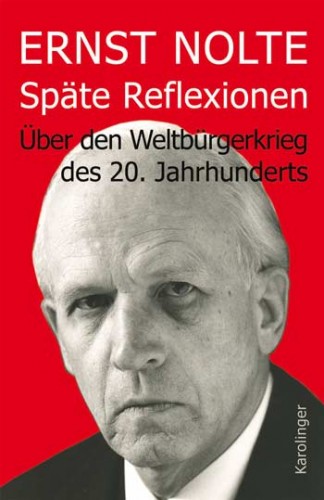
Ernst Nolte: Späte Reflexionen
|
Ernst Nolte 320 Seiten, brosch. … Wissenschaft entsteht nur aus der Kenntnisnahme der einen so gut wie der anderen Sache(n) und aus dem unvoreingenommenen Abwägen und Erörtern. Wissenschaft kann es nur geben, wenn Tatbestände und Umstände auch dort, wo sie zunächst aus sehr verständlichen, ja edlen Gründen ins Dunkel gerückt wurden, endlich in die Offenheit der wissenschaftlichen Diskussion gestellt werden. Das setzt voraus, daß das „politisch Korrekte“ zwar nicht verworfen oder als solches bekämpft, aber durch Bezugnahmen auf das „Unkorrekte“ wissenschaftsgerecht gemacht wird. Darin besteht das Ziel dieser „späten Reflexionen“, die mein „letztes Wort“ sind … (Ernst Nolte) Der bekannte Doyen der deutschen Geschichtswissenschaft führt in unsystematisch gefügten Aphorismen und Kurz- Essays durch die Felder seiner Forschungen, in Überlegungen, die auch Entlegeneres streifen, auch Philosophisches und Meta-Historisches. Strittigem geht der Autor nicht aus dem Weg, klärend, nicht polemisch. Aus dem Inhalt: |
00:05 Publié dans Histoire, Livre | Lien permanent | Commentaires (0) | Tags : histoire, livre, allemagne, ernst nolte | | del.icio.us | | Digg | Facebook