

samedi, 21 septembre 2013
Kerry Bolton: Revolution from Above
Kerry Bolton: Revolution from Above
By Manfred Kleine-Hartlage
Ex: http://www.sezession.de
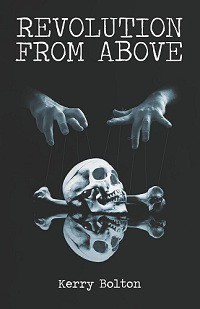 Jeder, der einmal versucht oder auch nur theoretisch erwogen hat, einen größeren geistig-politischen Umschwung herbeizuführen – von einer Revolution ganz zu schweigen –, weiß, daß dazu vor allem eines erforderlich ist: Geld.
Geld bringt Journalisten dazu, bestimmte Themen hoch- oder niederzuschreiben, Geld veranlaßt Professoren, ihre Erkenntnisinteressen denen ihrer Drittmittelgeber anzupassen, Geld ermöglicht es, Zeitungen und Fernsehsender zu kaufen, mit Geld kann man Kurse für Agitatoren und solche, die es werden wollen, bezahlen, mit Geld eine Infrastruktur von „Nichtregierungsorganisationen“ unterhalten, und wenn all dies nicht reicht, kann man mit Geld Waffen kaufen.
Obwohl dies so offenkundig ist, daß man es schon banal nennen muß, ist es zugleich ein Tabuthema. Jeder weiß zwar, daß etwa die Bolschewiki eine Organisation von „Berufsrevolutionären“ waren; und jeder, der darüber nachdenkt, könnte sich sagen, daß Berufsrevolutionäre – wie alle anderen Berufstätigen auch – auf Arbeitgeber oder Kunden angewiesen sind, die sie bezahlen. Und doch gilt die Oktoberrevolution bis heute als das Werk eines gewissen Lenin, nicht etwa als das seiner Geldgeber. Allenfalls gesteht man zu, daß die Millionensummen, die die deutsche Regierung während des Ersten Weltkriegs zur Verfügung stellte, eine gewisse Rolle gespielt haben mögen. Daß entsprechende Summen aber schon lange vor dem Ersten Weltkrieg an die Bolschewisten und andere revolutionäre Organisationen flossen, und daß sie keineswegs aus Deutschland stammten, sondern aus amerikanischen Finanzkreisen: Das ist zwar kein Geheimnis, sondern wohldokumentiert; im offiziösen Geschichtsbild kommt es aber nicht vor.
Dabei ist die Russische Revolution noch dasjenige Thema, bei dem der kausale Zusammenhang zwischen den Interessen schwerreicher Finanziers und der Entfesselung der Revolution am ehesten thematisiert werden kann. Wer dagegen fragt, warum 1789 wie auf Kommando in ganz Frankreich Agitatoren auftauchten, die ein gar nicht so unzufriedenes Volk aufzuhetzen verstanden, sieht sich schnell als „Verschwörungstheoretiker“ abgestempelt, und erst recht gilt dies für den, der den ominösen „Zeitgeist“ hinterfragt, der – man weiß nicht wie – seit rund hundert Jahren, spätestens aber seit dem Zweiten Weltkrieg, grundsätzlich nur von links zu wehen scheint.
Wiederum ist es nicht wirklich ein Geheimnis, daß dieser Zeitgeist keineswegs von selbst entstanden ist, und es ist auch kein Geheimnis, wer seine Entstehung organisiert und finanziert hat: Die verantwortlichen Akteure rühmen sich dessen sogar und geben in ihren Veröffentlichungen detailliert Auskunft darüber. Und doch haben diese allgemein zugänglichen Informationen kaum Eingang ins herrschende politische Bewußtsein gefunden.
In seinem Buch „Revolution from Above“ [2], das zur Zeit leider nur auf Englisch verfügbar ist, hat der neuseeländische Autor Kerry Bolton diese Informationen zusammengetragen und zu einem theoretisch überzeugenden und empirisch unanfechtbar untermauerten Ganzen zusammengefügt. Er weist überzeugend – und dies ausschließlich auf der Basis von Selbstzeugnissen der einschlägigen Akteure! – nach, daß praktisch alle intellektuellen und politischen Strömungen der Linken im 20. Jahrhundert, soweit sie nicht von der UdSSR finanziert wurden, nur aufgrund der milliardenschweren Unterstützung durch eine winzige Schicht von amerikanischen Superreichen und deren Stiftungen zum Zuge kommen konnten. Zumindest hätten sie ohne diese Unterstützung bei weitem nicht die Durchschlagskraft haben können, die sie haben.
Ein solcher Befund mag denjenigen überraschen, der den Gegensatz von Kapitalisten und Sozialisten immer noch für unüberbrückbar hält. Tatsächlich war er das nie. Die Linke leistet dem Kapital vielmehr gute Dienste bei der Zerstörung hergebrachter Strukturen, Bindungen und Werte. Sie planiert damit das Gelände, auf dem der globale Kapitalismus errichtet wird. Sie zerstört reale, gewachsene Solidarität im Namen einer fiktiven und bloß ideologisch postulierten, und sie erzeugt damit die Gesellschaft von atomisierten Einzelnen, die auf ihre Rolle als Produzenten und Konsumenten zurückgeworfen werden und als Masse so lenkbar und nutzbar sind wie eine Viehherde. Das gilt für die russischen und chinesischen Kommunisten, die eine traditionelle agrarische Gesellschaft ins Industriezeitalter katapultierten und schließlich in den Weltmarkt einbanden; es gilt genauso für die westliche Linke mit ihrem Kampf gegen Nation, Tradition, Religion und Familie.
Boltons Buch ist die passende Ergänzung zu meinen eigenen Ausführungen zu diesem Thema (in „Die liberale Gesellschaft und ihr Ende“ [3]). Wo ich die Zusammenhänge abstrakt analysiere, nennt er konkrete Namen, Summen, Profiteure und Strategien. Steinchen für Steinchen entsteht dabei das Mosaik einer langfristigen Strategie der amerikanischen Plutokratie, die auf nicht mehr und nicht weniger hinausläuft als auf eine Weltrevolution – eben auf die Revolution von oben, der das Buch seinen Titel verdankt.
Solche Bücher können auch entmutigen: Wie will man denn, so mag mancher Leser fragen, einem Feind entgegentreten, der an allen Fronten unter Einsatz schier unbegrenzter Mittel auf dem Vormarsch ist? Ist da nicht jeder Widerstand von vornherein zumm Scheitern verurteilt?
Ich selbst ziehe den umgekehrten Schluß: Wenn der Feind Milliardensummen einsetzt, dann deshalb, weil er es nötig hat. Wer ganze Völker mit einem geschlossenen System von Lügen indoktrinieren muss, muß wesentlich mehr investieren als der, der es sich leisten kann, mit Wahrheiten zu operieren. Freilich rechtfertigt auch diese Feststellung nicht eine in manchen Kreisen immer noch verbreitete naive rechte Sozialromantik, die ohne professionelle Strukturen auszukommen glaubt, weil die Wahrheit sich allein durch den Idealismus ihrer Verfechter durchsetzen werde.
Kerry Boltons Buch ist insofern kein Anlaß zu Resignation, wohl aber zu produktiver Ernüchterung: Wir kommen mit weniger Geld aus als der Gegner, aber auch wir werden viele Millionen Euro benötigen, um einen spürbaren politischen Effekt zu erzielen. Es wird Zeit, daß diese Einsicht sich unter den besser betuchten Sympathisanten der politischen Rechten herumspricht.
Article printed from Sezession im Netz: http://www.sezession.de
URL to article: http://www.sezession.de/40908/kerry-bolton-revolution-from-above.html
URLs in this post:
[1] Image: http://www.sezession.de/wp-content/uploads/2013/09/kerry-bolton-revolution-from-above.jpg
[2] „Revolution from Above“: http://www.arktos.com/revolution-from-above.html
[3] „Die liberale Gesellschaft und ihr Ende“: http://antaios.de/detail/index/sArticle/314/sCategory/13
19:09 Publié dans Livre, Livre, Nouvelle Droite | Lien permanent | Commentaires (0) | Tags : kerry bolton, nouvelle droite américaine, livre |  |
|  del.icio.us |
  |
|  Digg |
  Facebook
Siria, cosa sta succedendo?

00:05 Publié dans Actualité, Evénement | Lien permanent | Commentaires (0) | Tags : perugia, italie, actualité, syrie | | del.icio.us | | Digg | Facebook
HORRIBLE ÉPREUVE POUR BHL
HORRIBLE ÉPREUVE POUR BHL :
IL SE DIT “FOUDROYÉ”
par Robert Spieler
Ex: http://synthesenationale.hautetfort.com
BHL se dit “foudroyé”, C’est l’horreur. Sa jeune sœur, prénommée Véronique, s’est récemment convertie au christianisme. Interrogé par son ami Elkabach, le 3 juin sur Europe 1, on avait vu, filmé par une caméra, deux êtres totalement accablés par l’horreur de la situation. La vidéo a été visionnée par 40 000 internautes et suscite évidemment des commentaires peu amènes, dénonçant l’intolérance du tandem vis-à-vis de cette conversion. Le 21 juin, rebelote. Jean-Pierre Elkabach recevait à nouveau Bernard-Henri Lévy pour un nouvel entretien. Le thème était les rapports entre peinture et philosophie, ainsi que sur la spécificité du judaïsme dans la représentation des images. Elkabach, que cela travaillait visiblement, on se demande pourquoi, est revenu sur la conversion de Véronique Lévy, en posant cette incroyable question à BHL : « Vous ne pouvez rien faire contre son choix ? » BHL devait conclure cet entretien en avouant avoir appris la nouvelle « comme si la foudre » lui était tombé dessus…

00:05 Publié dans Actualité, Le coin de Diogène, Réflexions personnelles | Lien permanent | Commentaires (0) | Tags : bhl, france, actualité | | del.icio.us | | Digg | Facebook
Idéologie du genre: la porte étroite d’un combat
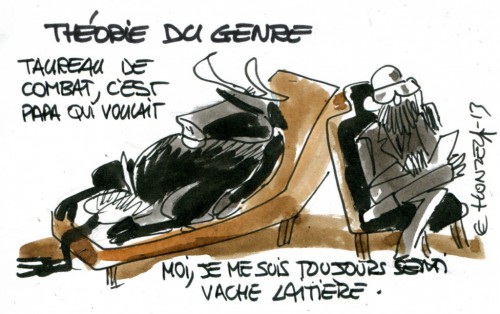
Idéologie du genre: la porte étroite d’un combat
Contre le terrorisme intellectuel cherchant à imposer l’idéologie du genre, le risque est grand de se tromper de cible et d’argumentaire.
Alors que le sexe est biologique, le gender est culturel : il est, d’une certaine manière, le sexe social de l’individu. Ceci explique la célèbre formule de Simone de Beauvoir, selon qui « on ne naît pas femme » mais « on le devient ». Identifiée à ses fonctions sexuelles et reproductives, la femme aurait été dépossédée d’elle-même. La conception stéréotypée des sexes l’aurait enfermée dans les rôles traditionnels de mère et de ménagère. Une réelle égalité entre hommes et femmes nécessiterait donc la non-différence sexuelle.
L’idéologie du genre entend supprimer les rôles sociaux fondés sur le sexe (époux/épouse, père/mère) pour permettre à l’individu d’échapper à tout déterminisme. Le projet social qu’elle porte consiste dans la transformation des rapports sociaux en permettant à quiconque de s’approprier les attributs et les fonctions du sexe opposé. Le sexe anatomique ne doit induire aucune sexualité : toutes les pratiques sont supposées être l’expression d’un choix (susceptible d’évoluer) et sont également légitimes. De même, alors que le couple générationnel est nécessairement constitué d’un homme et d’une femme, l’idéologie du genre a construit un concept alternatif à celui de parenté (sexuée) : la parentalité (sociale). La plurisexualité a naturellement pour corollaire les parentalités multiples.
Les études d’histoire et de sociologie du genre ont eu le mérite de rappeler que l’identité d’une personne se construit dans l’altérité. Ainsi, les authentiques parents sont-ils ceux qui éduquent l’enfant et non les simples géniteurs. Mais l’idéologie du genre entend nier, dans la personne humaine, la combinaison de l’essence et de l’existence (qui actualise la première), ne prenant en considération que la seconde. En affirmant que la sexualité de la personne n’est pas donnée par son anatomie mais est culturellement construite, le gender semble désexualiser l’individu, alors qu’elle l’enferme dans ses pratiques sexuelles (puisqu’il n’existe pas vraiment tant qu’il n’a pas posé de choix). Dans l’idéologie du genre, ce n’est donc pas la valorisation des fonctions remplies par la personne, mais l’approche matérialiste de celle-ci qui mérite d’être discutée.
La critique du gender doit prendre la précaution de ne pas assimiler le biologique au naturel (qui pourrait réduire l’être humain à son corps) et le social à l’artificiel (ce qui conduirait à nier, implicitement, la sociabilité naturelle). La personne ne se limite pas au corps ; celui-ci ne se résume pas au sexe. Le corps fait partie de l’être, mais ce dernier n’est pas tout corporel. Comme l’illustrent la chasteté avant le mariage ou le célibat ecclésiastique, l’être humain n’est pas entièrement soumis à son sexe biologique ; l’identité dépend aussi des différents rôles sociaux de la personne. Celle-ci n’est pas qu’un donné biologique ; elle est aussi un construit social. Si les idéologues du genre réduisent l’identité de la personne à sa volonté (prométhéenne ?), leurs adversaires auraient tort de se faire les défenseurs d’un naturalisme biologiste. La théorie du genre est un constructivisme quand elle nie la nature humaine sexuée ; mais sa critique serait tout aussi réductrice si elle enfermait l’identité de la personne dans son corps.
Les droits fondamentaux étant des attributs de l’homme, ne pas reconnaître les mêmes droits à tous les êtres humains (quelles que soient leurs pratiques sexuelles) reviendrait à nier leur humanité. Une argumentation fondée sur les droits de l’homme pour combattre l’idéologie du genre est vouée à un échec certain, puisque, selon cette dernière, la nature humaine, d’où ils sont tirés, n’a pas de consistance (ontologique) mais est purement volontariste. Se tromper d’angle d’attaque contre le gender pourrait rendre le combat totalement stérile. Or, sans l’avoir voulu, les théoriciens du genre ont indirectement remis à l’honneur l’idée de persona, notion centrale de la philosophie du droit alternative à celle qui fonde leur position. Répondre au gender ne suppose-t-il donc pas de défendre à nouveau le principe d’un droit attribué aux personnes (individuelles et collectives) en fonction de leurs mérites ?
Guillaume Bernard
maître de conférences HDR à l’Institut catholique d’études supérieures
00:05 Publié dans Actualité, Droit / Constitutions, Sociologie | Lien permanent | Commentaires (0) | Tags : gender studies, idéologie du genre, droit, droits de l'homme, sociologie, problèmes contemporains, actualité | | del.icio.us | | Digg | Facebook
En el centenario de la Declaración Balfour
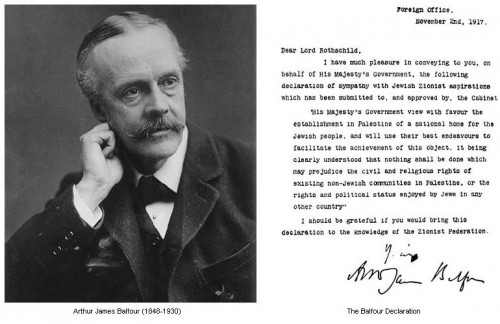
En el centenario de la Declaración Balfour. La responsabilidad histórica de Gran Bretaña en la catástrofe palestina
por Nur Masalha*
Ex: http://paginatransversal.wordpress.com
La Declaración Balfour del 2 de noviembre de 1917 fue fundamental para alianza británico-sionista durante la Primera Guerra Mundial y una poderosa herramienta de propaganda judio-sionista. Al acercarse el centenario de la Declaración es oportuno volver a examinar el impacto tanto de la declaración como de las políticas británicas respecto a Palestina y su población originaria. Este artículo apela al Reino Unido a que reconozca su responsabilidad histórica en las desastrosas consecuencias del colonialismo sionista de asentamiento en Palestina y la subsiguiente catástrofe palestina (Nakba).
Sin el apoyo total de Imperio Británico, el sionismo político no habría podido conseguir sus objetivos a costa de la libertad y la autodeterminación del pueblo palestino. El Estado de Israel era y todavía es fundamental para los proyectos occidentales en Oriente Próximo. De hecho, Israel debe su propia existencia al poder colonial británico en Palestina, a pesar de la tensión militar durante la última década de periodo del Mandato Británico entre la potencia colonial y los dirigentes del militarizado Yishuv, es decir, la comunidad de colonos de asentamiento blancos asquenazíes (1) en Palestina.
Los colonos sionistas europeos eran poco numerosos bajo el Imperio Otomano y nunca se les dio verdaderamente carta blanca en Palestina; si se hubiera dejado al Imperio Otomano el control de Palestina después de la Primera Guerra Mundial, es muy poco probable que el Estado judío se hubiera hecho realidad a expensas de la población indígena. La situación cambió radicalmente con la ocupación de Palestina por parte de los británicos en 1917. Pero antes, el 2 de noviembre de 1917, la Declaración Balfour (cuyas catastróficas consecuencias para el pueblo palestino tienen repercusiones todavía hoy) ya había concedido al sionismo derecho a Palestina. El secretario de Exteriores [británico] Arthur James Balfour envió a la Federación Sionista la carta que contenía la Declaración a través de un prominente judío británico, el barón Walter Rothschild. En ella el gobierno británico declaraba su compromiso con el sionismo: “El gobierno de Su Majestad considera favorablemente el establecimiento en Palestina de un hogar nacional para el pueblo judío y utilizará sus mejores esfuerzos para facilitar la consecución de este objetivo”.
Lo verdaderamente crucial fue que los términos de la Declaración Balfour se incorporaron al Mandato Británico en Palestina en 1922 y fueron aprobados por la Liga de las Naciones. Esto constituyó un espectacular logro político y de propaganda para el movimiento sionista internacional que en aquel momento era un grupo minoritario dentro de los judíos del mundo. Curiosamente, el documento fue criticado duramente por el único miembro judío del gobierno del primer ministro británico Lloyd George: Sir Edwin Montagu, secretario de Estado para India, hizo una clara distinción entre judaísmo y sionismo (una ideología política moderna). Le preocupaba el estatus y la potencial doble lealtad de los judíos británicos y puso en tela de juicio el derecho de la organización sionista a hablar en nombre de todos los judíos.
En 1917 la población judía de Palestina era inferior al 10% del total de su población. El contenido de la Declaración Balfour se arraigaba en la política colonial racista de la denegación. No mencionaba siquiera al pueblo palestino, ya fueran cristianos o musulmanes, que conformaba más del 90% de la población del país. De hecho, el pueblo palestino era propietario de más del 97% de la tierra que Gran Bretaña pretendía regalar. La Declaración se refería a los palestinos cristianos o musulmanes como “las comunidades no judías que existen en Palestina” al tiempo que omitía por completo sus derechos nacionales y políticos. La Declaración es típica del estilo supremacista blanco de la época y encaja con la noción de “una tierra sin pueblo [para un pueblo sin tierra]”, creada para justificar la colonización europea y la negación de los derechos fundamentales de los palestinos.
Envalentonado por la Declaración Balfour, en enero de 1919 el destacado sionista británico Chaim Weizmann acudió a la Conferencia de París y y pidió una Palestina pura “tan judía como Inglaterra es inglesa”. Esto sucedía en un momento en que el principio de “autodeterminación para los pueblos del Imperio Otomano” estaba consagrado en los “Catorce Puntos” del presidente estadounidense Woodrow Wilson. Lloyd George saludó estos principios al tiempo que negaba este reconocimiento internacional del pueblo palestino.
A menudo se explican la alianza británico-sionista y la Declaración Balfour en términos de cálculos de guerra y objetivos estratégicos militares (incluido la proximidad de Palestina al Canal de Suez controlado por Gran Bretaña y la ruta a India). Los historiadores pasan por alto los factores y mitos británicos históricos, ideológicos, de la cultura bíblica protestante y simbólicos. Gran Bretaña y gran parte de Europa habían sido la cuna de las Cruzadas Latinas y de los recuerdos colectivos de la lucha por Jerusalén y Palestina, una amarga “guerra santa” contra el islam que duró varios siglos hasta bien entrado el inicio del periodo moderno y cuya memoria colectiva se revivió en Europa en el momento culminante del imperio en el siglo XIX. Antes de la Declaración Balfour dos imanes, la “Biblia y la espada”, en brillante expresión de Barbara Tuchman (Bible and Sword: England and Palestine from the Bronze Age to Balfour) atrajeron a gran cantidad de cruzados, peregrinos, misioneros, arqueólogos bíblicos, viajeros, cartógrafos, cónsules y miembros del Cuerpo de Ingenieros Reales a Tierra Santa de Palestina. En última instancia esto llevó a la conquista de Jerusalén por parte de Gran Bretaña en diciembre de 1917.
La propia Declaración Balfour estaba calculada para coincidir con el avance del general Edmund Allenby hacia Jerusalén durante la Primera Guerra Mundial. Fue el fruto de unas intensas negociaciones a lo largo de doce meses entre destacados sionistas británicos (el “lobby judío-sionista) y altos cargos del Foreign Office y, en última instancia, del gobierno de guerra de Lloyd George.
El 11 de diciembre de 1917 Allenby entró a pie en Jerusalén y anduvo triunfalmente por la Ciudad Vieja. Era el primer cristiano que conquistaba Jerusalén desde las Cruzadas medievales. Este simbolismo no pasó desapercibido para Allenby o Lloyd George, que describieron la toma de Jerusalén como “un regalo cristiano al pueblo británico”. Allenby fue incluso más explícito: “Ahora han terminado las guerras de los cruzados”, afirmó, dando a entender que su conquista de Palestina por parte de las fuerzas británicas era la “última cruzada”.
El general Allenby nos ha dejado otros símbolos de los antiguos y nuevos cruzados: el “Puente Allenby” (todavía denominado así por los israelíes) que cruza del río Jordán fue construido en 1918 por el propio Allenby sobre los restos de un viejo puente otomano. Actualmente es el único punto de entrada y de salida para los palestinos bajo ocupación israelí que viajen fuera de Cisjordania y a Cisjordania. Tanto Allenby como Balfour son muy apreciados en Israel. Allenby da su nombre a una importante calle de Tel Aviv, “Allenby Street”. Balfouria es una colonia judía al sur de Nazareth fundada en 1922 y fue el tercer moshav (2) que se estableció en la Palestina del Mandato. Toma su nombre del secretario de Exteriores británico que redactó la tristemente célebre Declaración.
En 1917 Weizmann, amigo íntimo del general Jan Smuts, un defensor de la separación racial, primer ministro de Sudáfrica y que se asocia a la redacción del borrador de la Declaración, argumentó: “Una Palestina judía sería una salvaguarda para Inglaterra, en particular con respecto al Canal de Suez”. Sin embargo, tanto Lloyd George como Balfour eran miembros de Iglesias protestantes que compartían la creencia sionista cristiana de que había que “restituir” en Palestina a los judíos del Viejo Testamento antes de la Segunda Venida de Jesús.
La Biblia ha sido el texto clave para redimir el colonialismo de asentamiento europeo. El “primer” texto de Occidente ha sido (y sigue siendo) fundamental para el apoyo occidental al Estado de Israel. La “Biblia y la espada”, las dos herramientas heredadas de las Cruzadas latinas y del colonialismo británico, también han sido fundamentales para la estrategia sionista israelí desde 1948.
Desde finales del siglo XIX el sionismo político (y actualmente el lobby pro-israelí) ha seguido disfrutando de una extraordinaria influencia en las altas esferas de Occidente. Por diferentes razones (entre las que se incluye la epistemología y la política del texto bíblico), el Estado de Israel ha sido fundamental para las políticas de Occidente en el rico en petróleo Oriente Próximo. Además de su valor geopolítico y estratégico, y de sus inmensas capacidades militares y nucleares, el Estado de Israel ha tenido una enorme trascendencia para las políticas occidentales posteriores a la Segunda Guerra Mundial. En el periodo posterior al Holocausto el fuerte apoyo financiero, militar y político concedido al “Estado judío” en Palestina también ha sido considerado una oportunidad de “redimir” a Europa (y a Occidente) por el genocidio nazi.
El sionismo político surgió en Europa a finales del siglo XIX en el momento culminante del imperialismo europeo, directamente influido por el pangermanismo y panjudaísmo. Combinó con éxito los nacionalismos de Europa central y del este con el colonialismo de asentamiento y la Biblia. Los padres fundadores laicos del sionismo judío trataron de sustentar con el texto bíblico la legitimidad de su movimiento colonial de asentamientos.
Desde un principio estuvo claro que el proyecto “restauracionista” solo se podía lograr con el respaldo y el apoyo activo de las potencias europeas. Desde Theodor Herzl a Chaim Weizmann y David Ben-Gurion los dirigentes sionistas eran plenamente conscientes de que no se podía garantizar su programa sin el apoyo de las potencias imperialistas. Herzl escribió claramente acerca de la tierra asiática (no europea) “reclamada” por el sionismo y el establecimiento de un Estado casi europeo de colonos blancos en Palestina: “Si Su Majestad el Sultán [otomano] nos concediera Palestina, a cambio nosotros podríamos emprender la regulación de todas las finanzas de Turquía. Conformaríamos ahí parte de una muralla defensiva para Europa en Asia, un puesto de avanzada de la civilización contra la barbarie”.
Sin embargo, el entonces presidente de la Agencia Judía, Ben-Gurion, declaró al presentar testimonio ante la “Comisión Real de Palestina” encabezada por Lord Peel en 1936: “La Biblia es nuestro mandato”. Para Ben-Gurion la Biblia era el texto matriz del sionismo y el texto fundacional del Estado de Israel. Como Ben-Gurion, Lloyd George y Balfour consideraban la Biblia no solo una fuente histórica de confianza sino también una guía de las políticas cristianas y sionistas en relación con los habitantes indígenas de Palestina. Las militaristas tradiciones y relatos bíblicos de la tierra, reconfiguradas y reinventadas en el siglo pasado como una metanarrativa “fundacional” del sionismo y del Estado de Israel, han sido decisivas en la limpieza étnica de Palestina. Hoy las mismas militaristas tradiciones bíblicas de la tierra siguen estando en el centro del desplazamiento y la desposesión de los palestinos (tanto musulmanes como cristianos) de Jerusalén. Irónicamente, es más probable que, a diferencia de Ben-Gurion, los palestinos modernos sean descendientes de los antiguos israelíes cananeos y filisteos que lo sean los asquenazíes y padres fundadores blancos del Estado de Israel.
El historiador británico Arnold Toynbee calificó una vez a Balfour de “hombre malvado”. Toynbee creía que Balfour y Lloyd George conocían las catastróficas implicaciones que tenían para los palestinos originarios la Declaración Balfour y el hecho de que los británicos fomentaran una comunidad colonial de asentamiento blanca en Palestina.
Por supuesto, ni los cruzados latinos ni la moderna Gran Bretaña tenían derechos de soberanía sobre Palestina. Es indudable que Gran Bretaña no tenía autoridad moral o legal para entregar la tierra que no le pertenecía a un tercero y a un pueblo que no residía en el país. Sin embargo, la Declaración Balfour creó el marco para la lucha sionista por apoderarse de la tierra de Palestina y controlarla, una lucha que ha seguido hasta nuestros días. Por ello la Declaración se convirtió en un elemento fundamental de las exigencias judiciales sionistas e israelíes. Entre 1914 y 1948 la potencia colonial británica en Palestina permitió al movimiento judío establecer en Palestina a cientos de miles de colonos judíos europeos, incluidas varias ciudades, y estableció las bases políticas, militares y de seguridad, económicas, industriales, demográficas, culturales y académicas del Estado de Israel.
Medio siglo después de la Declaración Balfour la primera colonia blanca en Palestina, Kerem Avraham, hoy un barrio de Jerusalén, empezó como una pequeña colonia británica fundada en 1855 por el muy influyente cónsul británico en Jerusalén, James Finn, y su mujer, Elizabeth Anne. Finn combinó un antiguo celo cruzado con un moderno pensamiento “restauracionista” protestante y actividades misioneras con el trabajo oficial de funcionario británico. Él y su mujer eran originariamente miembros de la “Sociedad Londinense para Promover el Cristianismo entre los Judíos”. James Finn también fue un estrecho socio de Anthony Ashley Cooper, séptimo conde de Shaftesbury, un destacado diputado tory, milenarista protestante y colaborador clave del sionismo victoriano cristiano y del evangelismo que preconizaba la vuelta a la Biblia. A Shaftesbury le guiaba el pensamiento victoriano de la “Biblia y la espada”, una combinación de imperialismo victoriano y de profecía mesiánica cristiana. Argumentaba que el “restauracionismo judío en Palestina tendría ventajas políticas y económicas para el Imperio Británico y según la profecía de la Biblia, aceleraría la segunda venida de Jesús. En un artículo publicado en Quarterly Review (enero de 1839), Shaftesbury (inventor del mito “una tierra sin pueblo para un pueblo sin tierra”) escribió: “La tierra y el clima de Palestina están singularmente adaptados para que crezcan productos requeridos por las exigencias del Imperio británico: se puede obtener el algodón más fino en una casi ilimitada abundancia, la seda y la rubia roja (3) son los productos principales del país y el aceite de oliva es ahora, como siempre lo ha sido, la propia grasa del país. Solo se requieren capital y habilidades: la presencia de un oficial británico y la mayor seguridad de la propiedad que su le conferirá presencia, pueden invitar a los de estas islas al cultivo en Palestina; y los judíos, que no se trasladarán a ninguna otra tierra para cultivarla ya que han encontrado en la persona del cónsul británico [James Finn] un mediador entre su pueblo y el Pachá [otomano], probablemente volverán en cantidades aún mayores y se convertirán una vez más en el esposo de Judea y Galilea”.
Con el apoyo del entonces secretario de Exteriores británico Lord Palmerston, Shaftesbury empezó a promover la “restauración” de los judíos en Palestina entre la Inglaterra victoriana de la década de 1830. Shaftesbury también desempeñó un papel decisivo en el establecimiento del consulado británico en Jerusalén en 1839. Las actividades públicas de Shaftesbury, James Finn y sus compañeros “restauracionistas”, que precedieron en casi medio siglo a la fundación del movimiento sionista político europeo por Theodor Herzl, demuestran claramente que el “sionismo” empezó como un claro movimiento de cruzada protestante cristiano y no uno laico judío.
Con todo, lo que llevó al crecimiento del sionismo protojudío laico fueron los estudios del Fondo de Exploración de Palestina (PEF, por sus siglas en inglés) y los mapas de Cuerpo Británico de Ingenieros Reales realizados en la década de 1870. La pacífica cruzada del PEF británico, fundado en 1865 por un grupo de eruditos de la Biblia, geógrafos bíblicos, altos cargos militares y de la inteligencia, y clérigos protestantes, entre los que destacaba el deán de la Abadía de Westminster, Arthur P. Stanley, estaba estrechamente coordinada por la clase dirigente político-militar británica y los servicios de inteligencia ansiosos de penetrar en la Palestina otomana, un país gobernado por el “hombre enfermo de Europa” musulmán (4).
El PEF, que cuenta con oficinas en el centro de Londres, es hoy una organización activa que tiene una publicación académica, Palestine Exploration Quarterly. Por otra parte, el PEF da charlas públicas y financia proyectos de investigación en Cercano Oriente. Según su página web, “entre 1867 y 1870 el capitán Warren llevó a cabo exploraciones en Palestina que conforman la base de nuestro conocimiento de la topografía del Jerusalén antiguo y de la arqueología del Templo del Monte/Haram al-Sherif [sic]”. “Además de estas exploraciones en, bajo y alrededor del Templo del Monte/al-Haram al-Sherif, Warren analizó la Llanura de Philistia y llevó a cabo un muy importante reconocimiento de la parte central del [río] Jordán”. El capitán (después general Sir) Charles Warren, de los Ingenieros Reales y uno de los altos cargos clave del PEF ordenó trazar el mapa de la “topografía bíblica” de Jerusalén e investigar “el emplazamiento del templo”, y observó: “El cónsul [británico] del rey [James Finn] es la autoridad máxima, no de los nativos de la ciudad, sino de los extranjeros. No obstante, en su mayor parte estos extranjeros son los dueños legítimos y los nativos en su mayor parte son los usurpadores”. Al parecer Warren y Finn “cavaron literalmente” bajo los santuarios musulmanes de Jerusalén para trazar el mapa de las “dimensiones originales” del “Templo del Monte”. La arqueología bíblica, los mapas y los estudios de topografía y toponimia llevados a cabo por Warren y los Ingenieros Reales han seguido constituyendo los datos básicos de muchos arqueólogos, geógrafos y planificadores estratégicos oficiales israelíes actuales en su campaña por judaizar la Ciudad Vieja de Jerusalén.
Cuando los colonos judíos blancos se trasladaron a Palestina su actitud respecto a la población originaria fue la típica actitud colonial respecto a pueblos “inferiores” y “no civilizados”, aunque las colonias sionistas siguieron siendo muy pequeñas hasta que los británicos ocuparon Palestina en 1917. Después de la ocupación el proceso se aceleró rápidamente bajo la protección de la potencia colonial. Durante este periodo los sionistas insistieron en que se denominara oficialmente a Palestina la “Tierra bíblica de Israel”. Las autoridades del Mandato Británico concedieron el uso del acrónimo hebreo para “Eretz Yisrael” (la “Tierra de Israel”) tras el nombre de Palestina en todos los documentos oficiales, moneda, sellos, etc.
Durante este periodo (1918-1948) los colonos blancos asquenazíes no hicieron esfuerzo alguno por integrar sus luchas en las de los palestinos que luchaban contra el colonialismo británico. Por el contrario, los colonos actuaron desde la convicción de que la población originaria tendría que ser sometida o expulsada, con la ayuda de los británicos.
Para la década de 1930 la Declaración Balfour se asociaba estrechamente en el pensamiento sionista oficial a la colonización práctica de Palestina y a la limpieza étnica de los palestinos originarios. Desde principios de la década de 1930 en adelante los “comités de traslado” (un eufemismo de “comités de limpieza étnica”) y altos cargos del Yishuv elaboraron una serie de planes específicos que implicaban en general a Trasnjordania, Siria e Iraq. En 1930, sobre el fondo de los disturbios de 1929 en Palestina, Weizmann, entonces presidente tanto de la Organización Sionista Mundial como de la Ejecutiva de la Agencia Judía, empezó a promover activamente en discusiones privadas con altos cargos y ministros británicos la idea del “traslado” de árabes. Planteó al secretario colonial, Lord Passfield, una propuesta oficial aunque secreta de traslado de campesinos palestinos a Transjordania, para lo cual se obtendría un préstamo de un millón de libras palestinas de fuentes financieras judías para la operación de reasentamiento. Lord Passfield rechazó la propuesta. Sin embargo, la justificación que Weizmann había utilizado para defender su propuesta fue la base de los posteriores argumentos sionistas de traslado de población. Weizmann afirmaba que no había nada de inmoral en la limpieza étnica de la tierra, que la expulsión de poblaciones ortodoxas griegas y musulmanas (“turcas”), “intercambios de población”, a principios de la década de 1920 eran un precedente de una medida similar en relación con los palestinos.
Si la Declaración Balfour se convirtió en un elemento fundamental de la memoria colectiva, los mitos y la propaganda sionistas, la Declaración, conocida como “Wa’ad Balfour” o la “Promesa Balfour” en árabe, se convirtió en un elemento fundamental de la memoria colectiva palestina de resistencia. Durante toda la época del Mandato el aniversario de la Declaración (2 de noviembre) se conmemoró de manera generalizada por medio de protestas y huelgas nacionalistas. Los palestinos movilizaron el recuerdo del engaño y la traición británicos como una herramienta de resistencia pacífica a las políticas británica y sionista en Palestina.
La colonización blanca de asentamiento de Palestina culminó con el establecimiento del Estado de Israel en 1948 y la Nakba palestina, la catástrofe de la limpieza étnica y la destrucción de gran parte de la Palestina histórica. La guerra psicológica y la presión militar sionistas expulsaron, en muchos casos a punta de pistola, a aproximadamente el 90% de los palestinos del territorio ocupado por los israelíes en 1948, a menudo bajo la atenta mirada de los británicos que continuaron a cargo del país hasta mediados de 1948. La guerra simplemente proporcionó la oportunidad y el contexto necesarios para purgar la tierra y crear un Estado judío en gran parte libre de árabes. Concentró las mentes judío-sionistas y proporcionó tanto la seguridad como las explicaciones y justificaciones militares y estratégicas para purgar el Estado y desposeer al pueblo palestino. Actualmente, aproximadamente dos terceras partes de los palestinos son refugiados, millones de ellos viven en campos de refugiados miserables en Oriente Próximo y otros millones están repartidos por todo el mundo.
El sionismo militarista e Israel han utilizado la Biblia no solo como una herramienta para la limpieza étnica de Palestina y el “exilio” de millones de palestinos de su patria ancestral, sino también como una manera de borrar la historia palestina y de suprimir la memoria palestina. Actualmente la Nakba palestina está más o menos ausente de la memoria colectiva tanto británica como occidental.
Por otra parte, los palestinos no solo continúan sometidos a la actual limpieza étnica y a las políticas de cruzada en Jerusalén en pleno siglo XXI, sino que durante las seis últimas décadas los israelíes y el lobby proisraelí han desafiado y silenciado los intentos por parte de los palestinos de constituir un relato coherente de su propio pasado. Todavía hoy la Catástrofe de 1948 se excluye del discurso oficial en Gran Bretaña mientras que Israel goza de un apoyo extraordinario en el gobierno británico y la mayoría de los diputados conservadores son miembros de “Amigos Conservadores de Israel”.
La clase dirigente británica elige públicamente una “posición neutral” sobre Palestina que a menudo adopta la forma de silencio o de amnesia colectiva. Dada la responsabilidad histórica de Gran Bretaña en la catástrofe palestina, no puede existir esta neutralidad o indiferencia hacia la injusticia cometida en Palestina.
Se ha creado el proyecto Balfour Project para conmemorar el centenario de la Declaración Balfour y el simbolismo de la alianza británico-sionista y el catastrófico impacto sobre los palestinos. Este proyecto busca: a) honestidad en el debate público y un reconocimiento de las desastrosas consecuencias de las acciones británicas en la época de la Declaración Balfour y a lo largo de todo el Mandato Británico en Palestina, y particularmente el engaño respecto a las verdaderas intenciones británicas; b) disculpas por la mala actuación británica; c) disculpas oficiales británicas a los palestinos por haber ignorado intencionadamente sus legítimas aspiraciones políticas; y d) integridad en el futuro cuando Gran Bretaña aborde la cuestión palestina.
* El Prof. Nur Masalha es Director de Programa del Máster en Religión, Política y Resolución de Conflictos. Formó parte de un equipo de postgrado del Arts and Humanities Research Council (AHRC) y fue miembro del AHRC Peer Review College. Ha sido director el Proyecto de Investigación de Tierra Santa desde 2001 y del Centro para la Religión y la Historia desde 2007. El profesor Masalha también edita Holy Land Studies: A Multidisciplinary Journal (publicado por Edinburgh University Press).
Sus libros más recientes son: The Bible and Zionism: Invented Tradition, Archaeology and Post-Colonialism in Israel-Palestine (2007), La Biblia leída con los ojos de los Cananeos (Editorial Canaán, 2011) y The Palestine Makba: Decolonising History, Narrating the Subaltern, Reclaiming Memory (2012). Próximamente publicará The Politics of Reading the Bible in Israel (2013).
(Traducido del inglés para Rebelión por Beatriz Morales Bastos)
Notas de la traductora:
(1) Los judíos asquenazíes son los judíos oriundos de Europa central y del este.
(2) Moshav es una comunidad rural judío de carácter cooperativo
(3) La llamada rubia roja es una planta cuya raíz se utilizaba para fabricar tintes de color rojo destinados a la industria textil y a la farmacología.
(4) La expresión “hombre enfermo de Europa” se ha aplicado a lo largo de la historia a diferentes países europeos en referencia a la debilidad o decadencia de una economía aparentemente normal.
Fuente: Global Research
00:05 Publié dans Histoire | Lien permanent | Commentaires (1) | Tags : politique internationale, histoire, déclaration balfour, balfour, palestine, levant, proche orient, question palestinienne, monde arabe, monde arabo-musulman | | del.icio.us | | Digg | Facebook
Misopaedia and the Insolence of Gay Monarchy
Misopaedia and the Insolence of Gay Monarchy
Ex: http://www.brusselsjournal.com

Today’s issue of depreciating childhood dovetails perfectly with my previous installment on infantilizing adults: both are reflecting a loss of the sense of maturity and responsibility in our Western culture. For instance, today every newborn is burdened with a four to six figure number of debt depending on his or her whereabouts ( cf. David Willets; “The Pinch – How the Baby Boomers took their Children’s Future-and why they should give it back”, Atlantic Books London: 2010, p.259, 269). Now the first dramatic example of instrumentalizing childhood was the Bohemian version of the Dreyfus affair. In Prague it was the Jewish cobbler Leopold Hilsener who was falsely accused of ritual murder. A little Christian girl called Anezka Hruzova had been found dead on the 1.4.1899 in Polna. And it was the first Czech president after gaining independence in 1921, Professor T.G. Masaryk, who made is name with the revision of the court indictment finally exonerating Hilsener. Nevertheless since then the West is drifting towards a gradual and not merely symbolical - think of child rape and “pedophilia”- reversal of the Abrahamic abolition of child sacrifice.
Now let’s ask a few questions: Who afforded homosexuals the privilege to be addressed as gay by the rest of us like royals? Or: if fathers are supposed to be gay by definition, what is left for their children? What kind of sacrifices children are expected to make for same-sex parents? Children, Sir Elton John deplored to his merit, raised by gay couples have to make do without the devotion of a loving mother. Right to the point, for anyone who has grown up close to homosexual adolescents, knows that we used to call them spoiled “mothers boys”. Ironically this might be very bad news indeed if future gays are supposed to be raised without mothers. Could the homosexual avant-garde become extinct within a few generations after gay marriage has gone mainstream? After all some kind of trepidation must be behind the hard-nosed implementation of homosexual education from cradle to grave in most EU countries
Surely growing up without a mother in a homosexual household is an unfathomable disadvantage since there is strong evidence that only women have a natural capability of unselfish love, essential for raising children. It is for this reason that gay parenting is set to become an unprecedented social experiment with unknown outcome. Nobody can possibly know for sure the unintended consequences - despite phony liberal social science studies to the contrary (Nelson Lund: “A social experiment without science behind it”, WSJ). Over at the Weekly Standard the editors are pointing out that neither benefits nor risks are backed by any “science” since there are simply no samples available, large enough for statistical significance.
Time will tell. But why, for heaven’s sake, would anybody with his right mind take such risks for our society? The only reason that comes to mind is that same-sex couples might on average be “greener” than straight ones because of their prohibitive costs of having and raising children - benefiting in turn our earths “carbon footprint”. Not that I would seriously buy into that. Yet with regards to the risks we know a lot more, specifically about the dismal effect of absent fathers in families run by single mothers. These dysfunctional families have a track record of well above average rates of depression, suicide attempts, educational failure and even increased criminal records with their offspring. The lack of a mother might be expected to elicit even more dramatic effects, particularly enhanced levels of violence. For it is common sense that the weakening of parental authority increases the level of violence in families with a strong tendency to be transferred to the next generation.

Now late Pope Benedict XVI, defending traditional marriage in his last Christmas address, referred the Chief Rabbi of Paris Gilles Bernheim. He is the author of a brilliant paper focusing on the dangers of same-sex parenting. Bernheim’s paper “Homosexual Marriage, Parenting and Adoption” was translated into English immediately after the Pope’s mentioning and attracted considerable international attention. Bernheim believes “that it is a matter of the greatest importance to make clear the true implications of the negation of sexual difference” and that the argument of equality in favor of same-sex marriage does not stand up to scrutiny.
He does not adduce the biblical prohibition of homosexuality in Leviticus because the issue for him is only homosexual parenting and the well-being of children according. He tells us: “What is at stake is the risk of irreversibly scrambling genealogies, as well as legal and social statuses (the child-as-subject becoming child-as-object) and identities— a confusion that would be harmful to society as a whole and that would lose sight of the general interest in seeking the advantage of a tiny minority.” With this in mind the Chief Rabbi points to the absurdity of heterosexual couples who reject marriage demonstrating alongside homosexual activists for the introduction of same sex marriage. The only reasonable explanation for this political solidarity is that both aim at the abolition of traditional marriage.
The rabbi then confronts the spurious claim that homosexuals could be loving parents as much as heterosexuals. For this completely misses the point, reducing the “parental bond to its affective and educative aspects”, overlooking that “the parent–child bond is a psychological vector of fundamental importance for the child’s sense of identity…For the child establishes his (her) own identity only by a process of differentiation, which presupposes that he (she) knows whom he (she) resembles. Thus he (she) needs to know that he (she) issues from the love and the union between a man, his (her) father, and a woman, his (her) mother, thanks to the sexual difference between them. Even adopted children know that they originate from the love and the desire of their parents, even when these are not their biological parents.”
Thus same sex parenting lacks the stimulus based on parental difference to develop the child’s identity and the reassurance of recognizing a place in its genealogy. The generational chain alone guarantees each individual a place in the world in which he or she lives knowing where he or she came from. The categorical error lies in the concept of homosexual parenting as constructed upon gender or the sexuality of two individuals instead of actual parental sex creating offspring. Thus homosexual parenting is a fiction: “The term “parent” is not neutral; it involves sexual difference. To accept the term “homosexual parenting” is to strip the word “parent” of its intrinsic bodily, biological, and fleshly meaning.” There is no right to a child for children are not objects of rights but their subjects, another categorical error of same-sex advocacy. The fallacy of instrumentalization or the disregard of the child’s personality and needs as already present in the Pro-Choice abortion stance. Yet it develops its full traumatic potential only in gay parenting: “This absence allows adults demanding rights to avoid asking about the rights of the child, what the child might need, and whether the child might prefer having a father and mother instead of two parents of the same sex. This is a case where our carelessness borders on cynicism. The right of the child is radically different from the right to the child. The former right is fundamental. It consists in particular in giving the child a family in which he (she) will have the best chance to have the best life.”
Yet it gets worse with homosexual adoption, neglecting the vulnerability that is involved, for same sex adoption thus risks aggravating the “trauma of the abandoned child, for the generational chain would be doubly broken: first in the reality of the child’s abandonment, and second, symbolically, in the fact of the homosexuality of the adoptive parents. Do we have the right to ask a child who has already been wounded by his past to adapt to the affective situation of his parents, a situation that is very different at once from that of the great majority of other children and from what the child aspires to rediscover? Is it the adopted child’s responsibility to adapt to the affective life choices of his or her parents?”
The unintended consequence of imposing gender equality on everyone is that people keep looking inside for difference – reaching into the abyss of instincts and loneliness. The result will be probably more private violence. The irony here is that having dispensed of religion as exalted inwardness people in search of guidance end up with lowering replacements. Tocqueville once held against Rousseau: „In ages of equality…the feelings of each man are turned to himself alone. It is in ages of inequality that public spirit runs high, for only by transforming society can each man transform his own personal relations“(Ph. Rieff “The Triumph of the Therapeutic,” 1976, p.58). Once egalitarian individualism has sapped its virtues, democracy breaks the chain of coherence that held the members of the community together.
On a different note it is important to recognize that with the popular LGBT movement the transgressive spirit of modern disruptive revolutions makes an unwelcome return. Just as previous revolutions launched attacks in their particular way against the church (French Revolution), the nation (Russian Revolution) or the Jewish foundation of civil society (Nazi-Revolution) the sexual revolution starting in 1968 is bound to globalize what the Nazi’s started but could not finish: the destruction of the Judeo-Christian civilization based on the family as we know it.
However the transgressive impulses that would become modern LGBT rage first emerged during the fin-de-siècle decadence with a mix of feminism, homosexuality, anarchism and anti-Semitism. It is no surprise that the lowering impulses emanating from unleashed sexual and violent instincts at the close of the romantic era collided with the oldest codes of human civilizations which is Jewish Law - hence anti-Semitism. Trilling observed that this sensualist turn was reflected in the lowering of the meaning of the word pleasure to “a strictly physical sense” in the Oxford English Dictionary at the time. By contrast James Joyce (Molly in Ulysses), Boris Pasternak (Lara in Dr Zhivago) and William Butler Yeat’s Maud, Trilling tells us, “were among the last devotees of the European cult of Woman…” That is why the emergence of suffragettes is matched by women losing their privileged position of attracting admiration and the longing for pleasure. The object of male desire turned to “innocent youth” (cf. Keats Lamia and his dialectics of pleasure, see Trilling:”Beyond Culture”, London: 1955, p.65). Hence the lockstep rise of homosexuality and pedophilia was epitomized with Oscar Wilde’s “Dorian Grey” – the man who never gets old.
The Victorians could not make up their mind whether children were angels or monsters. Yet Freud and Kafka tackled this problem. They were in this sense the last prophets of the Enlightenment. Their works mark a major Rousseau-an pivot towards the youth cult depreciating maturity and age wisdom. By mimicking the innocence of children Kafka expanded the Rousseau-an vision of the “noble savage” to children: the fatal enlightened prejudice that humans are innocent in general and society is to blame for any evil. Kafka thus spoke of children as the ideal reformers. Freud would theorize about formative early childhood rendering adulthood as cast into predetermined Greek tragedy. Thus Kafka and Freud shared the folly of German historicism and idealism by collapsing any longue durée or traditional view in a new myth of immediacy weakening the power of institutions. The other side of this coin was that Freud, following German idealism, in 1897 declared confessions of female rape victims as (childhood) fantasies, denying their reality. Previously he had understood those abuses as caused by seduction of children by grown-ups as we understand them today.
This Freudian switch to the unconscious amounted to a quiet but sweeping rehabilitation of male rapists of the fin-de-siècle decadence leading up to the First World War. Interwar existentialism was another attempt to reclaim the innocence of childhood by grown-ups, just living for the moment. Eventually the 1968 adoration of spontaneity and pedophiles of the Jimmy Savile format is just another extension. Today the dialectic between infantilizing and paternalistic big government is a self-enforcing circuit, weakening the “ego” by strengthening the “id” and “super-ego” in the manner of divide et impera of old.

It was Fjodor Dostoyevsky who in his influential 1864 Notes from Underground first sensed this transgressive turn in European culture, propelled by abundant materialism. His first person account of a miserable clerk, who hates all purposeful work or drudging away just for “specious goods of pleasure” and who rejects sacrificing his human dignity and freedom. Dostoyevsky’s was a polemic response to the utopian but acquisitive novel “What is to be done” by Nikolai Chernyshevski, that later inspired Lenin’ eponymous work of 1902 that kindled the first revolutionary disorder of 1905. This unnamed clerk as anti-Hero is the ancestor of a contemporary still popular tribe of outcasts devoted to alternative lifestyle. He is the prototype of the antagonistic bohemian type that over the last two centuries emerged equally enthusiastic from the left as from the right radical fringes such as the failed artist Adolf Hitler. Hatred of the bourgeoisie is the lifeblood of modern extremism and unified shortly in 1939 even Hitler and Stalin into war allies against the bourgeois West.
The list of anti-bourgeois activist is endless and a few examples may suffice: Jean Jacques Rousseau, Karl Marx, Friedrich Nietzsche, Richard Wagner, Oscar Wilde, George Lukasz, Wilhelm Reich, Martin Heidegger, Hannah Arendt, Herbert Marcuse, the Black Panthers, Rudi Dutschke and, more recently, Danny Cohn-Bendit (Green MEP) and Judith Butler (University of Berkeley Philosopher) - the latter being intellectual grandchildren of the Nazi philosopher Martin Heidegger and his mistress Hannah Arendt. Whereas Heidegger was a philanderer, Cohn-Bendit joined the student revolt of 1968, later working in a Frankfurt/Main Kindergarten as a confessing pedophile – a clientele that belonged to the founders of the German Green Party. Judith Butler, a radical chic self-hating Jewess, represents the international queer community and the BDS movement fighting the state of Israel.
From an actual film, titled “Hannah Arendt”, by the German director Margarethe von Trotta you may grasp how postmodern anti-Semitism of the liberal persuasion emerged from its hard-right wing Nazi predecessor. The post-WW II existentialist philosopher Hannah Arendt was fascinated not only by her lover Martin Heidegger but also by the dissimulating Nazi clerk of the Holocaust Adolf Eichmann who’s 1961 trial in Jerusalem she was commissioned to report for the “New Yorker” magazine. Heidegger’s philosophical existentialism was the expanded version and culmination of Germany’s historicism and it’s infatuation with “kairos” (Greek for the moment) - the closest thing to a fundamental rejection of the meta-historical Jewish law reflecting immutable human nature. This ideological conflict is at the heart of Heidegger’s lifelong refusal of an apology to the victims of the Holocaust. After all his philosophy had been the leaven of violent activism in the 1930ies re-staged in the 1968 student revolution.
The key here is Heidegger’s concept of parousia which denotes spontaneous action or the secular presence of the holy redeemer or still more remotely the second coming of Christ. In the periods of transition as in the 1920ies and 1960ies this concept was shared by radical right and left wing groups springing from an anti-authoritarian impulse against their father’s war generation - with commanding right extremism after WW I and commanding left extremism after WW II. This reflects the deeper truth that hatred of the middle class or bourgeoisie unites left and right radicals, bohemians and petit bourgeois. The concept has been perfectly expressed by Franz Kafka in fin-de-siècle Prague. As a schoolboy Franz used to be accompanied by the family cook on his way to German primary school, which was not far away from the family villa near the old Town Hall of Prague. The cook bullied unruly Franz as “little Ravachol”, after the nom-de-guerre of the notorious anarchist Francois Königstein who was guillotined in 1892.
Anarchism has been widespread at the time - with roughly thousand reported attempts of assassination in Europe and 500 in America in 1892 alone – reflecting the growing rancor of the ruffled socialist crowds. Kafka early on read most of the anarchists such as Proudhon, Stirner, Bakunin, Kropotkin and also Leo Tolstoy. He even attended anarchist circles at “Zum Kanonenkreuz” in Prague in 1910, a formidable contrast to his boring job as clerk with the Bohemian labor accident insurance. Kafka was pretty much driven by the left prejudice that society is always evil and thus became familiar with the likes of Erich Mühsam, Arthur Holitscher and the Viennese anarchist Rudolf Grossman. Falling short of joining in anarchist action, the dream of a great rebellion had settled deep in his imagination.
The popularity of Kafka as the foremost novelist of the 20th century rests for a good measure on his lifelong antagonism to his father Hermann, a wealthy business man in whole sale lingerie but he also, contributing to Kafka’s paranoia, served as . With the famous letter to his father Kafka set the tone for the central issue of the coming totalitarian century featuring unprecedented dictators and galore male perpetrators. It was Theodore W. Adorno who in his “Dialectic of the Enlightenment”, written in 1944 with Max Horkheimer in the Californian exile, put the authoritarian personality at the center of the Third Reich. All the same for Kafka his father was a God-like, all powerful authority, representing the epicenter of all repressions the son had to endure. This is perfectly epitomized in the following quote from the famous letter to his father: “Sometimes I imagine the map of the world spread out flat and you stretched out diagonally across it. And what I feel then is that only those territories come into question for my life that either are not covered by you or are not within your reach. And, in keeping with the conception that I have of your magnitude, these are not many and not very comforting territories, and above all marriage is not among them.”
It was Philip Rieff who observed that Adorno, just like adolescent Kafka, is liable of generalizations not borne out by the facts when he identifies the authoritarian head of the petit bourgeoisie family as the main culprit of totalitarianism that ended with the Holocaust. Both geniuses are guilty of reducing the whole of civilizational repression to a family affair. However it served perfectly as the postwar screenplay for the anti-authoritarian revolt that continued with the sexual revolution which is still with us. And since homosexuality according to psychoanalysis stems from the unresolved conflict between son and father it follows that a wave of “coming out” was to be expected as a result of the war experience.
It might be quite appropriate to conclude that the gender reductionism of the Frankfurt School actually propelled the student revolt. And with last year’s bestowal to Judith Butler of the Theodore Adorno - Prize the present same-sex revolt in sync with the BDS movement against Israel has been catalyzed again. In a similar fashion the anti-authoritarian revolt of 1968 accomplished its march through the institutions by marginalizing the father and elevating the mother. The best explanation for both is offered by Philip Rieff’s first sociological law, applicable to all public life, which says “there are no aggressions except as transgressions”.
In the same-sex campaign of our day returns the suppressed father with more than a whiff of authoritarianism that marks the implementation of same-sex policies within Western society: the combination of a repressive political order with a permissive moral order. Only in this way we may speak of soft totalitarianism that marks LGBT and the greens as well (cf. Jonah Goldberg “Liberal Fascism”, 2007). In addition our traditional interdictory system of moral restraint is just as much lowered as the social cost for supporting and medically facilitating same-sex families compared to traditional ones is increased. This can only accelerate the breakdown of our overstretched welfare systems in the West. It definitely sends the wrong signal and it might well increase the risk of dictatorship in a Europe that is already beginning to disintegrate under the burden of the financial crisis.
Already the European bureaucrats seem to resort to this panacea of political repression with moral slackness towards ascending elites such as the LGBT crowd. The penchant for the bohemian has always been a feature of major turning points in Western history that between them shared a disgust for the bourgeoisie: the French Revolution of Robespierre, Lenin’s Russian revolutions of 1905 and 1917, Nazi-Berlin of 1934 with Ernst Röhm’s proletarian-homosexual revolt and also at the beginning and the end of the fascist experiment in Fiume 1920 and Salo 1944, orchestrated by the Italian Röhm, Gabriele D’Annunzio serving his duce Mussolini.

The openly homosexual late Italian film director Pierre Paolo Pasolini made this the motive of his film “The 120 Days of Sodom” of 1975 with echoes to the eponymous enlightenment work of Marquis de Sade. It shows sadomasochistic orgies coalescing with political despotism in the Republic of Salo on the Garda Lake in 1944, the last refuge of Mussolini. D’Annunzio had a lesbian lover and wrote obscene prose, the sweeteners that in turn called for Mussolini brandishing the cane. All of this gives us a fair measure of the true modernity not only of the communists, but also of the fascists and Nazis. They are still “sexy” and looking back we can see why. The female types were very popular indeed with feminists in the 1970ies as Susan Sontag has demonstrated in her essay “Fascinating Fascism. For more than a decade the late Sontag had been the star of the post-1968 intellectual New York after being married to Philip Rieff for a decade in the 1950ies.
The dynamics of Western triumphalism heated up in the decadence of fin-de-siècle and exploded in two World Wars are revealing in terms of the sexual imagination. In 1789 as in the 1920ies and 30ies it was ripe with sadomasochism, which is basically the lowering of sexual pleasure to pain of any kind confirming the close link between liberated sex and violence. Thus it has been historically evident that in homosexual sodomy pain usually commands love and not the other way round. This feature raises serious doubts over the concept of homosexuals parenting. That much we have learned about the experience of sodomy from the theorizing and practicing sadomasochist Michel Foucault.
Turning the screw a bit further are those shocking KZ porno’s which are just another sexual augmentation as for instance shown in the movie “The Night Porter” with Charlotte Rampling’s erotic submission to her Nazi tormentor. All this explains why in postwar Germany and beyond we saw a self-destructive gay turn, born out of its predecessor, the collectivist Nazi death cult - or in other words: the last triumph of Ernst Röhm. The post-war homosexual death cult was detectable in the plunging of the gay community into the horror of an AIDS epidemic despite all attempts to respect privacy and protect them against spreading the infection. After a first shock with a sense of repentance most gay people ignored the warnings and preventive measures as far as I can tell from personal experience. I headed an institute in the 1980ies and 90ies dedicated to HIV prevention in Hamburg.
Since the late nineteenth century Germany has been leading the West in terms of secularization with the first homosexual think tank being established by Magnus Hirschfield in Berlin before the turn of the century, when German was still the lingua franca of the scientific community. The artistic cliques of Berlin, Vienna and Munich had just unleashed the first shot of the sexual revolution, which - interrupted by two World Wars except for the roaring twenties in Berlin - gathered full steam with the student revolt of 1968. We seem to have reached the pinnacle today with the victorious same-sex marriage campaign all over the Anglo-sphere, which rings the death knell for conservatives of the Edmund Burke persuasion. Any significance of his “Reflections on the Revolution in France” or of natural law and English common sense for that matter is being vanishing under the final blow of the combined forces of radical NGO advocacy and authoritarian EU bureaucracy.
A hint of the tribulations ahead of us might be taken from the insolence of the “gay”-label monopoly. Quietly indulged by the rest of us without any controversy as far as I am aware, the homosexual community has successfully engineered gaiety - or in proper Gramscian terms: has accomplished cultural hegemony for their politically extremely efficient sodomy networks – probably the strongest version of nepotism in modern Western political history. It has undermined the church first, followed by the media, the universities, the military and now government. With literally no opposition to speak of anymore in academic and media elites this miracle might be explained by manipulated gay victimology: the dominant mainstream account of the persecution of homosexuals by the Nazis, putting them next to the Jews and Gypsies.
This narrative is at best misleading if not outright offensive. For the Jews and Gypsies, by contrast to the homosexual network behind Ernst Röhm, could never have challenged Hitler’s leadership. According to Wikipedia Röhm and Hitler were so close and modern that they addressed each other as du (the German intimate pronoun), the only top Nazi that Hitler addressed as such. In turn, Röhm was the only Nazi who dared address Hitler as "Adolf," rather than "mein Führer”, “My leader”). For the time being Hitler’s person is still unpopular but all positive attributes of his Nazi celebrity are alive and kicking: sexual escapism (Hermann Göring's cross-dressing), smoking bans, the colonoscopy fad, health fetishism, vegetarianism, Asian medicine, animal worship, nuclear power-phobia and last not least anti-Semitism.
In contrast to the presently unassailable gays, the Jews and Israel, with the Holocaust in living memory, are again anything but unassailable. Rather they are increasingly becoming targeted by anti-Semites in Europe. The situation begins to resemble the 1880ies when anti-Semitism first got traction in Europe. Experience holds: when the mores are loosening the Jews ought to take care and start packing. They are doing this right now by the ten-thousands in France and Scandinavia. Jews in continental Europe are advised not to risk their life by publicly displaying their religious credentials. It is not difficult to imagine what the next worldwide export from advanced secular Germany will be. First of all we will certainly see gay lord majors in Western big cities as we already have in Germany’s Berlin and Hamburg among others. And I reckon the German fin-de-siècle invention of nudism will be spreading around the still remotely puritan Anglo sphere. And then triple marriages and what have you will follow.
And this is how the almost unassailable LGBT machine succeeds: You won’t see meaningful controversy in the mainstream media on same-sex marriage, just appeasement as with the Nazi transgressions. The homosexual presumption of being nothing but gay results in putting themselves in the pole position of the pleasure seeking crowds of the sexual revolution, proudly displayed with their spiritual militancy in the vulgar “gay pride” parading in the West and beyond. Exalted gays, still relying on the image of anti-heroes are taking exception to the quotidian human drudgery that Dostoyevsky’s clerk despised - insinuating in childish manner to the rest of us “I have more life than you”. With this they are already attracting heterosexuals curious to share the experience of Berlin darkrooms.
The term “gay” emerged first in England at the close of the 19th century. It was remarkable for lacking any semblance of restraint and has set the homosexuals on a slippery slope. Hence in the 1920ies Berlin was somehow the European capital of debauchery where the urban bohemians flocked. And history, not remembered, tends to repeat itself. Berlin today is again becoming the world hub for sex tourism, proud particularly of it’s more than two dozens of “dark rooms”, an Eldorado of transgressive gay culture. Berlin’s prestigious but also slightly vulgar national newspaper “Die Welt” recently published a book review on the new “Knigge for dark rooms”. The original baron Adolph Knigge wrote a venerable book on what was considered good manners of gentlemen in the 18th century. It is s fair measure of the lowering of Berlin’s cultural reputation to compare the old “Knigge” with the new, a book on codes for transgressive sex addicts.
Whereas in the 1990ies I could still discuss anything with my homosexual friends, today this seems to be impossible in Germany and most of Europe. Meanwhile anyone is excluded from polite society who dares to oppose same sex marriage even if in favor of civic unions. The public climate has turned Orwellian and as a result the whole West all of a sudden miraculously is on the verge of submitting to the pressure of gay advocacy – something unimaginable a decade ago. Homosexuals presently are commanding the public imagination in the West. They are the newest market, kindling the “animal spirits” of otherwise exhausted and overstuffed consumers. It serves as a marginal cultural addition – something new a fad that may pass. Certainly ushering in new markets the gay “wedding culture” offers new consumption opportunities. Homosexuals are also track blazers to other lowering subcultures in Western society opening up opportunities of direct-marketing to prison populations.
For this newest Berlin hype people hop on a plane for a weekend trip as far away as Montreal or Tel Aviv. In Israel the gay pride parades in particular amount to what Philip Rieff called an “assault upon the enabling human gaiety, and its dignity: upon the high life in sacred order, and the necessary dread of ascending in it (Rieff, Feeling intellect, p. 363)”. Despite the stunning and sweeping success of gay campaigning in all segments of our society, gay advocacy does not show any sign of content or gratitude. “Every trespass increases the probability of yet another trespass. The ‘domino theory’ of morality is correct. I think”. (Philip Rieff: The Feeling Intellect, Sentences, University of Chicago Press: 1990, p.368) This is why despite all what has been granted to the LGBT radicals, we still have to put up with offending metropolitan gay-pride parades even in the Holy City of Jerusalem.
Interestingly Tel Aviv and Beirut, with the odd war and terrorist assaults between them, are today competing for international gay tourism which, given that gays earn and spend more than heterosexuals, seems to be very lucrative. With the fading of religion, in Europe much faster than in America, the lowering of the interdictory rules has made progress to the point where it splits in non-binding relative “values”, subject to variable individual choices. We know from history what might happens next: the proverbial strong man will emerge and will enforce those accidental values with brutal power, smashing whatever is left of gaiety to smithereens. The inability of post-modern elites to defend our interdictory culture and moral demand system with indisputable limits is dangerous because it threatens our freedom.
Plato knew a thing about this:
„The goddess of limit, my dear Philebus, seeing insolence and all manner of wickedness breaking loose from all limit in point of pleasure and self-indulgence, established the limit of law and order, of limited being; and you say this restraint was the death of pleasure: I say it was the saving of it.” (Philebus, 26c.)
What gay advocacy has in common with previous revolutionary upheavals, apart from living for the moment, is that it doesn’t seem to respect any limits, buttressing their fondness of transgression for its own sake. Kafka’s story on the metamorphosis of Gregor Samsa is about the terror we feel in the presence of the seemingly inexorable progression of a lowering in sacred order, similar to modern movies with humans beings attacked by insects or monsters – all of which represent a lower order. After the gay abolition of restraint comes inevitably the abyss of pain. If you read de Sade and most of the transgressive literature of the 19th century up to Huysmans you will find this kind of terror and pain: the manna of same sex experiences. The main purpose of post-War gay advocacy has been to remove any interdicts or restraint on pleasure posed by religion or precious traditional custom and habit. What we learn from Plato about gay culture is this: not elevating but lowering of limits is the true death of gaiety.
One more remarkable difference between the decadence of old compared to the present. The pioneering bohemians in the 19th century cherished transgressions but still appreciated those limits they attempted to trespass (cf. George Bataille). Today’s LGBT advocacy groups put up endless fights to remove even the remotest barriers between what used to be polite society or bourgeois culture and the remainder of underground freaks or gender subcultures. Same-sex marriage is a case in point for the very reason that it aims at leveling any differences with heterosexuals if only to commit adultery and promiscuity with a good conscience. It has to be said that the passion of homosexual eroticism is not love but pain. With gays, Trilling notes in “Beyond Culture” (New York: Harcourt 1963, p.57-87), authority of pleasure is thought in pain, achieved through cultivation of lowering violence. Trilling shows in abundance how any interdictory rules were invariably and constantly denounced as “bourgeois” or “repressive” in the most influential literary enterprises.
To be fair, modern heterosexual spirituality is equally fundamentally Rousseau-an as can be observed in TV junk such as “Big Brother” or “Jungle Camp”. It is caught up with instincts, mad for holy fools and fond of the sordid and the disgusting rather than the pleasing and noble. This perverse fundamentalism of cherishing any lowering experience has long captivated the liberal imagination. Liberals don’t realize the paradox that any transgressive mode is an ultimate longing for limiting authority. It is a nostalgic search of the sacred order. Yet alas! Liberal prophets such as Wilhelm Reich, Theodore W. Adorno, Herbert Marcuse and Michel Foucault have succeeded in triumphant lowering and demoralization of Western institutions such as nation, church, military and family, first targeted by Sigmund Freud as repressive modern institutions. But Freud in contrast to his successors at least acknowledged the imperative of repression for any civilization. Yet to no avail. The postmodern prophets of the anti-authoritarian persuasion pressed for ever more lowering of discipline which then has been marketed as alternative life-style.
Freud’s most serious flaw was to reduce the fundamental question of sacred order to the parent question, framing it in his deceptively accessible therapeutic arrangements. But meta-psychologically he obscured the universal status of the question of moral vertical order. It was for this very reason that the death of Satan was far more consequential than the death of God. For the sense of sinful transgression or of lowering or raising moral standards has been completely lost. It has generated an aesthetic without evil as happened with the cult of liberal honesty and the modern therapeutic arrangement. This is why even serious transgressions such as rape and child abused are not anymore recognized as evil. This is the essence of LGBT culture.
The successful abolition of evil has blindfolded the straight public into indulging the destruction of their still sacramental concept of marriage. Everything is on the same level in this world of “comic ugliness and lustered nothingness” (Wallace Stevens “Esthetique du Mal”, in Collected Poems, New York: Alfred Knopf, 1976, 313-26). The dynamics of homosexual emancipation, as with female emancipation before, is under the spell of Freud’s “primary process”: never to be satisfied, for its endless nostalgia for “the place in which to be is not enough to be” (ibid Stevens). Thus don’t fool yourself into believing after sanctioning same-sex marriage the trouble will be over. Far from it the LGBT machine will go on. We will probably see demands for the abolition of incest or the normalization of pedophilia and lots more debasement.
It is an interesting observation that homosexuals emerged in the bourgeois culture in the 19th century as connoisseurs of the arts, gourmets and highbrow intellectuals not publicly living out their sexual orientation. What was irritating some is the combination of aesthetics refinement with at times profane even brutal sexuality. This is famously also a feature of the emerging modern art in fin-de-siècle Europe.
As we have seen in 1968: the apostles of anti-culture invited violence as emancipatory means and pathetic indiscipline: ”Under such shifting conditions, all justifications exposed as ideologies, the discipline necessary for collective existence must become more entirely outward than ever before in our history.” This externalization or “coming out” is unsustainable for the reasons mentioned above and may collapse sooner or later. At some point heterosexuals might not be able to cope with the double whopper of transgression and aggression. Philip Rieff argues: scientists produce new facts but gay orgiasts produce new experiences. This will be the modern dialectic between progressive technologists like the contraceptive pill or fertility and insemination doctors on one side and regressive sensualists of the LGBT persuasion on the other. As a result we will get more disoriented science and less moral guidance rooted in a culture of religious interdicts. This dynamic has already overwhelmed the universities which are meant to protect our culture.
Rieff asserts;
"If a past has no authority, then it is dead, however expensive its artifacts. There can be no culture without living authority, right and proper demands superior to competing immediacies, not reducible to nor identical with power, which is the successful assertion of one's own immediacy over another's."
Power grabs and assertion of immediacies are the one thing that LGBT advocacy understands. It reflects the intricate dynamics between transgression and aggression which was anticipated by the Roman emperor Hadrian, one of the supreme monsters of Jewish history, as Simon Sebag Montefiori tells us in his monumental new biography of Jerusalem: “In 130 C.E., the emperor visited Jerusalem, accompanied by his young lover Antinous, and decided to abolish the city, even down to its very name. He ordered a new city to be built on the site of the old one, to be named Aelia Capitolina, after his own family and Jupiter Capitolinus (the god most associated with the empire), and he banned circumcision, the sign of God’s covenant with the Jews, on pain of death” (Phoenix, London 2012, p.160). The same significance accrues to the abolition of traditional marriage and the construction of a new same-sex Jupiter cult. Lord Carey, the former Archbishop of Canterbury, has put it succinctly “Marriage precedes both the state and the church, and neither of these institutions have the right to redefine it in such a fundamental way.”
00:05 Publié dans Philosophie, Réflexions personnelles, Sociologie | Lien permanent | Commentaires (0) | | del.icio.us | | Digg | Facebook