
Ok

En poursuivant votre navigation sur ce site, vous acceptez l'utilisation de cookies. Ces derniers assurent le bon fonctionnement de nos services. En savoir plus.

vendredi, 20 septembre 2013

Ecologie humaine

16:35 Publié dans Ecologie, Evénement | Lien permanent | Commentaires (0) | Tags : écologie, événement, paris, france | |  del.icio.us | | Digg! Digg |  Facebook

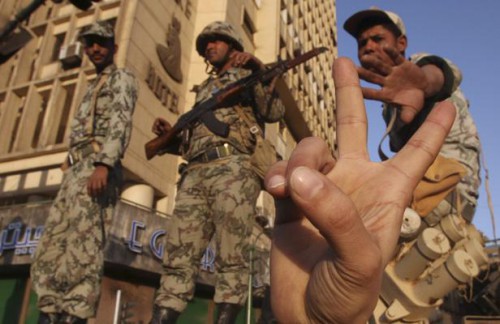
L`Egitto verso i non allineati

article_armee-egypte.jpg

L`Egitto verso i non allineati


Il Cairo rifiuta il prestito Fmi e guarda ai Brics

Lorenzo Moore

E' questa l'altra faccia dello stato di tensione che percorre la politica internazionale e che, facendo perno sulla necessità occidentale (atlantica) di destabilizzare e dividere quello che il nostro più vicino oriente, ha fortunatamente fatto emergere forze di radicale contrasto tra i Paesi non allineati, Iran compreso. Nell'attuale governo provvisorio de Il Cairo, imposto due mesi fa dal generale Abdul Fatah Khalil as-Sisi dopo la deposizione del presidente Morsi, leader dei Fratelli Musulmani, e il conseguente bagno di sangue, sta emergendo una linea di avvicinamento ai Paesi non allineati del blocco dei Brics (Brasile, Russia, India, Cina, Sudafrica). Una deviazione inattesa dalle diplomazie occidentali, già patrocinatrici della "primavera" che aveva determinato il crollo del presidente Mubarak,e che in un certo senso "rivoluziona" sia le virtuali alleanze con Riad e le altre monarchie del Golfo e sia i recenti collegamenti con Ankara.

Tutto si è iniziato con la recente decisione egiziana di rifiutare un nuovo prestito da parte del Fmi e dalla contemporanea dichiarazione, da parte del ministro degli Esteri Nabil Fahmy su un Egitto vittima di un "complotto internazionale" la cui mano armata sarebbero gli "atti di terrorismo" che si verificano in queste settimane all'interno del territorio nazionale "amplificati dai media internazionali" (un'accusa esplicita contro la catena televisiva qatariota al Jazeera e indiretta alla nordamericana Cnn).
Sta di fatto che vari sono stati in questi ultimi tempi i segnali di un "riallineamento dell'Egitto" verso i BRICS e al di fuori del cerchio di alleanze con l'Occidente (Stati Uniti in primis), con l'Arabia saudita e con gli Stati del Golfo.
Lunedì 16 settembre, peraltro, lo stesso Nabil Fahmy, nel corso di una visita ufficiale in Russia, ha dichiarato in un'intervista a Moscow News e a Ria Novosti che "l'Egitto apprezza il sostegno russo alle istanze del popolo egiziano" e ha annunciato lo "sviluppo" di proficue relazioni bilaterali di cooperazione e interessi comuni". Non solo, ma Nabil Fahmy ha dichiarato che il Cairo "apprezza l'iniziativa diplomatica russa sulle armi chimiche in Siria" e  si augura che il suo successo possa  "tutelare la regione del Medio Oriente da una minaccia di divisione" che invece provocherebbe una soluzione militare.
Un'inversione di tendenza, nella politica regionale, a tutto tondo. Sull'Egitto guidato da Morsi, infatti, sia il Qatar che le monarchie arabe alleate degli angloamericani, avevano rivolto le loro pressanti attenzioni per far schierare il Cairo nel fronte di aggressione contro la Siria. Una strategia di sostegno alla Fratellanza Musulmana iniziata dal Qatar fin dal 2008, con l'accensione delle micce di destabilizzazione (dette "Primavere arabe"), in Turchia, Siria, Libano, Palestina, Libia e nello stesso Egitto. Sotto la presidenza Morsi, inoltre, era stata coltivata una spirale di tensione contro l'Etiopia, accusata di attentare alle risorse idriche egiziane con la costruzione di una diga sul Nilo Azzurro per la produzione di energia elettrica.
In questo evidente inizio di riallineamento dell'Egitto su un fronte non allineato, con un ritorno agli equilibri fino ai primissimi anni Settanta, non è inoltre un caso che giochino anche sostanziosi interessi finanziari.
Nei mesi appena precedenti il rovesciamento della presidenza Morsi, l'Egitto aveva ricevuto aiuti per 5 miliardi di dollari dall'Arabia saudita (1 a fondo perduto, 2 con depositi nella sua Banca centrale e 2 con la fornitura di gas e petrolio), per 4 miliardi di dollari dal Kuwait (1 a fondo perduto, 2 in depositi e 1 in forniture petrolifere), 3 miliardi di dollari dagli Emirati Arabi Uniti (1 a fondo perduto e 2 in depositi). Inoltre il Cairo aveva negoziato 1,3 miliardi di dollari di aiuti dagli Usa (comprensivi della fornitura di 20 cacciabombardieri F-16).
La rinuncia all'ulteriore prestito del Fmi - annunciata ufficialmente dal ministro egiziano delle finanze - viene messa dagli analisti del Vicino Oriente in stretta correlazione con la decisione del gruppo non allineato dei Brics (presa a latere del recente G20 a San Pietroburgo) di capitalizzare la propria Banca per lo Sviluppo con 100 miliardi di dollari e di dare seguito a breve ad operazioni di finanziamento ai Paesi emergenti (Egitto, così, incluso).
E' questa l'altra faccia dello stato di tensione che percorre la politica internazionale e che, facendo perno sulla necessità occidentale (atlantica) di destabilizzare e dividere quello che il nostro più vicino oriente, ha fortunatamente fatto emergere forze di radicale contrasto tra i Paesi non allineati, Iran compreso. 
 

17 Settembre 2013 12:00:00 - http://www.rinascita.eu/index.php?action=news&id=22399

The Genesis of the Syrian Crisis and the Perpetual War of the U.S.

soldier-and-flag.jpg

The Genesis of the Syrian Crisis and the Perpetual War of the U.S.

Elena PONOMAREVA

Ex: http://www.strategic-culture.org

 
During the Great Depression era, Franklin Delano Roosevelt, the 32nd president of the U.S. and one of the most eminent statesmen of the first half of the 20th century, stated, "One of my main goals is to keep bankers and businessmen from committing suicide." This touching concern turned into an enormous tragedy for all mankind: World War II, which was stirred up mainly by American industrialists and financiers. Over 54 million people were killed in that war, 90 million were wounded, and 28 million of those wounded were disabled. 

The Second World War resolved many of the problems of the American establishment, but not all of them: The Soviet Union not only survived, but turned into a superpower. But Roosevelt's main goal was achieved and then some; the U.S. became a world financial center. In July 1944 in the small town of Bretton Woods, at an international conference of the victors, such institutions as the International Bank for Reconstruction and Development (IBRD, after 1960 - the World Bank) and the International Monetary Fund (IMF) were founded. At that time the U.S. dollar was declared a world currency, as good as gold. At that moment the U.S. controlled 70% of the world gold reserves. Within the U.S. were 129 billion dollars of liquid savings (a colossal amount even by current standards!).

This money, "earned" by American bankers and industrialists on the suffering and deaths of millions of people, was a powerful stimulus for the production of consumer goods and capital construction, to say nothing of the international status the U.S. acquired. Even Z. Brzezinski, a Russophobe and an ideological enemy of our country, has admitted, "Paradoxically, while the defeat of Nazi Germany elevated America's global status, American had not played a decisive role in the military defeat of Hitlerism. Credit in that regard has to go to the Stalinist Soviet Union". In any case, it was after the last world war that the foundation for the modern hegemony of America was laid.

For those who in fact rule America, the great and terrible war shaped their one and only model of behavior: resolution of one's own problems should always be achieved at the expense of other countries and peoples. Throughout the entire post-war period the U.S. has resorted to aggression each time it has encountered economic problems or it was necessary to direct attention away from unpopular economic measures inside the country.

For example, the Korean War was a reaction to the first post-war economic recession of 1949. The invasion of Lebanon came as a consequence of the recession of 1957-1958. Aggression against Vietnam was a reaction to the economic decline of 1967, and Carter's "launch" of a second wave of the cold war was a reaction to a slump in 1979. The slump of 1981-1982 called into being not only Reagan's "military Keynesianism", but also the American "approach" to Nicaragua and Grenada. To say nothing of such large-scale U.S./NATO interventions in the 21st century as Afghanistan, Iraq and Libya.

Many American scholars and writers have also noticed the aggressive nature of U.S. foreign policy as a reaction to internal problems. For example, Charles Austin Beard(1874-1948), the most influential historian of the first half of the 20th century and one of the founders of the economic school of U.S. historiography, author of the four-volume work The Rise of American Civilization, believed that after the victory over Japan in 1945 the U.S. would wage "perpetual war for perpetual peace".

Using Beard's prior work as a starting point, the eminent American liberal writer Gore Vidal placed tables of military and other operations conducted by Americans up to 2001 on several pages of his 2002 book How We Got to Be So Hated. The author, "out of pity (to the readers. - E.P.), did not list military operations conducted by the CIA in various countries, for example, in Guatemala (1953), or in Iran (1953), when Mossadegh was overthrown, or in Chile, when  Allende was overthrown, etc.". But the main thing, as Vidal emphasized, is that "In these several hundred wars against Communism, terrorism, drugs, or sometimes nothing much, between Pearl Harbor and Tuesday, September 11, 2001, we (America. - E.P.) tended to strike the first blow. But then we're the good guys, right? (emphasis mine - E.P.)."

By the same token, in their book Why Do People Hate America?, Ziauddin Sardar and Merryl Wyn Davies counted 124 American interventions in various parts of the globe in the period from 1890 (the U.S. military operation in Argentina) to 2001 (the beginning of the operation in Afghanistan). And, as the authors indicate, provocations have always occupied a special place in U.S. interventionist policy.  Examples? By all means.

In 1898 an explosion was arranged on the U.S.S. Maine; the Spanish were blamed. As a result, the U.S. declared war on Spain.

On May 7, 1915 the U.S. put the Lusitania in the line of fire from German submarines. The liner, with its name painted out and with no flag of any country, deliberately entered a zone designated by the German government as a "submarine war zone". Under the wartime conditions, the Lusitania was torpedoed by a German submarine and sank. 1198 of the 1958 people on board were killed. This incident was used for informational pressure on public opinion in many countries and abruptly changed attitudes toward Germany.

In 1941 Roosevelt was well informed about the preparations for a strike on Pearl Harbor, but he did nothing, as he needed a reason for entering the war.

In 1964 the so-called Tonkin incident took place, serving as a pretext to begin the Vietnam War.

The explosion of the Twin Towers on September 11, 2001 became the pretext for military intervention in Afghanistan.

A mythical nuclear program was the pretext for the destruction of Iraq. The nuclear provocational pretext has long been hanging over Iran and North Korea. And now chemical weapons in Syria.

***

U.S. foreign policy was also characterized as murderous by one other American scholar, Arno J. Mayer, professor emeritus of history at Princeton University. He was unable to publish his article "Untimely Reflections upon the State of the World" in the U.S., "the most democratic country in the world". He was able to do so in the French newspaper Le Monde. I quote:

"Until now, in modern times, acts of individual terror have been the weapon of the weak and the poor, while acts of state and economic terror have been the weapon of the strong. In both types of terror it is, of course, important to distinguish between target and victim. This distinction is crystal-clear in the fatal hit on the World Trade Center: the target is a prominent symbol and hub of globalizing corporate financial and economic power; the victim the hapless and partly subaltern work force. Such a distinction does not apply to the strike on the Pentagon: it houses the supreme military command...of capitalist globalization, even if it entailed, in the Pentagon's own language, "collateral" damage to human life.

In any case, since 1947 America has been the chief and pioneering perpetrator of "preemptive" state terror, exclusively in the Third World and therefore widely dissembled. Besides the unexceptional subversion and overthrow of governments in competition with the Soviet Union during the Cold War, Washington has resorted to political assassinations, surrogate death squads and unseemly freedom fighters (e.g., bin Laden). It masterminded the killing of Lumumba and Allende; and it unsuccessfully tried to put to death Castro, Khadafi, Saddam Hussein...and condoned Israel's violation of international agreements and UN resolutions as well as its practice of preemptive state terror (emphasis mine. - E.P.)."

The genesis of the Syrian crisis arises from the very nature of U.S. hegemony. However, why has Washington aimed for a "final resolution" of the Syrian issue right now? Why did they resort to their tried and true scheme of provocation? And why did they prepare so poorly? The staged nature of the video footage fobbed off on the world as "proof" of a chemical attack supposedly perpetrated by the Syrian army was obvious practically the next day!

The fact that it was a provocation was confirmed on September 9 at the "Human Rights and Armed Conflicts: The Threat of U.S. Force against Syria and International Law" briefing during the 24th session of the UN Council on Human Rights. As noted in a press release on the results of the meeting, "convincing evidence that the video and photos of chemical attack victims in a suburb of Damascus on August 21 were fabricated beforehand. The audience was shown the testimony of numerous witnesses who unanimously confirmed that it was the rebels who used chemical weapons in the East Ghouta district. The results of investigations into the incident conducted by activists and the testimony of eyewitnesses were handed over to the Independent International Commission of Inquiry on Syria".

But why did the U.S. back off? That's against the principles of a global leader, and the UN is no longer an authority to America.

As was already mentioned, the U.S. is accustomed to solving its problems through international banditry. That is the root of the crisis in Syria and the reason for its escalation.

First, the U.S. economy is currently nearing a "fiscal cliff". In such conditions, the promises Obama made during his election campaign - to lower taxes, raise wages and legalize immigrants - are impossible to fulfill. A stalemate situation has taken shape in the country, coupled with a drop in the popularity of Obama and his team. The advisors and analysts of the White House saw a way out in a "small, victorious war". It would be difficult to find a more convenient place for such a war than exhausted and devastated Syria. And the resolution of internal economic problems through military intervention is a "good old" Anglo-Saxon tradition.

Second, the forces behind Obama actively support and implement the "controlled chaos" project, from Mauritania to Kyrgyzstan to Kashmir. The "arc of instability” which started in the Balkans should, according to their logic, reach Russia and China.

However, a "problem" appeared on the path of global destabilization - Syria. And Damascus is the ally of three large powers at the same time: Russia, China and Iran. To Russia, the Syrians are not just allies, they are friends as well, as Vladimir Putin has particularly emphasized. 

As for "chaos", it is needed for very specific reasons. One of them is the transit of hydrocarbons. And here again the Russian factor arises. I believe that the escalation of the Syrian crisis should be seen as a direct reaction to the intensification of Russian energy policy. The fact of the matter is that on August 13, during Russian President V. Putin's visit to Baku, serious agreements were reached on the transit of oil: corresponding agreements were signed between the Russian state company Rosneft and its Azerbaijani partners, and new areas and formats of cooperation in the field of the fuel and energy complex were defined. And the agreements signed are of a long-term nature, "perspectives for 15, maybe 20 years, that is, a good basis for collaboration for many, many years to come." After the meeting, Azerbaijani President Ilham Aliyev emphasized, "I think that a great number of things in the field of regional energy issues will depend on active cooperation and the coordination of our efforts. We are oriented toward decisive collaboration and the strengthening of cooperation with Russia in this important area of economic and political development". The takeaway from this meeting was the creation of a Russia - Azerbaijan oil union, i.e., just what the West was afraid of and worked against for many years.

From the beginning the genesis of the Syrian crisis was to a great extent determined by the problem of energy resource transit. As is well known, gas fields have been discovered in the Southern Mediterranean region, both on the continental shelf and on the territory of Syria (Kara).  There is one more "gas factor" in the Syrian crisis: if al-Asad's regime is overthrown, then Qatar, which is a liquefied natural gas exporter, will be able to transport the "blue fuel" directly from the Mediterranean coast through Syria. That will at least double its exports and at the same time will complicate exports for Iran. The strengthening of Qatar on the gas market will automatically lead to a weakening of the position of Russian companies. And if you add the establishment of control over Algerian gas (which the Americans are actively working on), that threatens a blockade of all of Russia's oil and gas exports.

In speaking of the oil and gas wars in the Middle East, one mustn't forget what a battle is unfolding around the South Stream. But that is another story.

There are other reasons for the escalation of the Syrian crisis and Washington's aggressive position. For example, a desire to break up the Tehran - Damascus - Hezbollah union, which is causing problems for the U.S. and Israel. However, the main object of a "final resolution" of the Syrian issue still remains demonstrating to Russia and everyone else that everything in the world will be the way the U.S. and the supranational structures of global governance which stand behind it decide it will be.

And now is the perfect time to remember the words of Stalin, who liked to repeat: "There is the logic of intentions and there is the logic of circumstances. And the logic of circumstances is stronger than the logic of intentions." But the provocateurs did not consider the logic of circumstances. They did not consider the fact that Russia has changed, as has the world. The unipolar system no longer exists, and Moscow no longer reacts to shouts from Washington the same way it did twenty years ago.

At the same time, we must admit that the Syrian crisis is far from being resolved. It is only slightly frozen. Ahead lie tense and exhausting diplomatic battles…

La guerre en Syrie: une guerre pour l’Energie?

aleppo.jpg

La guerre en Syrie: une guerre pour l’Energie?


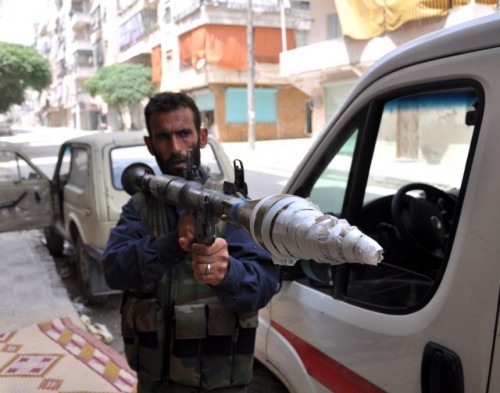
Alors que la guerre en Syrie continue, le Mainstream médiatique, qui s’acharne sur l’Etat syrien, oublie de façon récurrente de rappeler l’un des aspects les plus essentiels de ce conflit: l’aspect énergétique et notamment Gazier. Cet aspect explique principalement le soutien actif de la Russie à non pas la personnalité de Bashar El-Assad mais avant tout à l’effondrement du régime Syrien car cet effondrement voulu de l’extérieur serait un élément géopolitique d’un dispositif bien plus large et assez directement dirigé contre elle.

Lorsque la Russie commence à relever la tète à compter des années 2000, elle devient en effet le principal obstacle au plan de prise de contrôle énergétique des voies énergétiques liant l’Europe et l’Eurasie via les Balkans que les stratèges américains ont programmé et entamé via notamment la guerre en Serbie en 1999.

L'Amérique et l'Union Européenne vont alors chercher par tous les moyens à diversifier l’approvisionnement des pays européens pour réduire leur potentielle dépendance envers Moscou. C’est le début du projet de gazoduc Nabucco, aujourd’hui quasiment abandonné, qui consistait à permettre l'alimentation de l'Europe en gaz produit en Azerbaïdjan et au Turkménistan, via un itinéraire qui aurait traversé la Turquie et évité la Russie tout en contournant la Grèce. Autour de ce projet, il y avait un  plan géopolitique américain très ambitieux: Transformer l'allié Turc en pivot central d’un grand moyen orient à remodeler et aussi en un centre régional de transit énergétique entre les Balkans et le moyen orient.

On comprend dès lors mieux les velléités américaines pour que la Turquie intègre l’Union Européenne et aussi garder ce pays dans leur giron, ce qui leur permettrait de contrôler indirectement mais fermement l’approvisionnement énergétique de l’Europe et surtout d’empêcher une alliance continentale énergétique euro-russe jugée contraire aux intérêts américains en Eurasie.

Ce projet Nabucco a cependant échoué puisque le Turkménistan s'est tourné vers la Chine et que l'Azerbaïdjan s'est lui rapproché du projet russe South Stream. Développé en 2007, South Stream, a pour objectif de permettre à la Russie de garder le contrôle sur l’approvisionnement de l’Europe via notamment la caspienne et le Kazakhstan (membre de l’Union Douanière), tout en y incorporant la Serbie dont l'importance énergétique pour l'Union européenne sera, dans l’avenir, aussi grande que celle de l'Ukraine aujourd’hui. Une Ukraine définitivement contournée pour que ne se reproduise plus les incidents de 2006 et les coupures d’approvisionnement en Europe.

Après la faillite de la Grèce suite à la crise financière, la Russie s’était engagée sur la voie du rachat du consortium gazier grec par Gazprom. Ces négociations se sont arrêtées lorsque le département d'Etat américain a tout simplement mis en garde Athènes contre une coopération énergétique avec Moscou et déconseillé une cession à Gazprom qui "permettrait à Moscou de renforcer sa domination sur le marché énergétique de la région". South Stream prévoit malgré tout un embranchement vers la Grèce, achevant de transformer le projet en une sorte de pont énergétique orthodoxe en direction de l’Europe.

La position d’Ankara est à ce jour assez ambiguë. Fortement liée à la Russie sur le domaine énergétique via par Blue Stream, Ankara a également accepté qu’un raccord soit opéré entre Blue Stream et South Stream. En outre le pays, seconde puissance de l’Otan, s’est également déclaré candidat à rejoindre l’Organisation de Shanghai (l’alliance militaire sous direction Sino-russe), avec laquelle le pays a signé en début d’année 2013 un partenariat de dialogue préalable à l’adhésion. Est-ce le signe d’un profond et crucial retournement d’alliance?

La Syrie, aux prises avec une guerre civile et interconfessionnelle qui oppose chiites et sunnites, est elle directement concernée par deux projets de gazoducs liés aux projets Nabucco et South Stream mentionnés plus haut.

En 2009, un projet appelé "Friendship Pipeline" a été lancé par l'Iran, l'Irak et la Syrie, trois pays à gouvernance musulmane chiite. Le tube amènerait du gaz iranien à la méditerranée, en vue d'alimenter l'Europe, mais en évitant le territoire turc. Ce projet, destiné à permettre à l’Iran d’écouler son stock en Europe, comprend également une extension vers le Liban et selon Roland Lombardi devrait être à terme raccordé au projet russe South Stream. Il faut rappeler que l’Iran était initialement pressenti comme fournisseur essentiel de Nabucco mais sera rapidement exclu du projet pour des raisons politiques et aussi sans doute après que le renversement du régime soit apparu comme de plus en plus improbable, tant par la force que par des procédés moins violents comme l’embryon de révolution de couleur qui a frappé le pays en 2009

En 2009 aussi, un autre projet a été lancé, un projet de pays sunnites et qui aurait reçu l'aval du Pentagone. Du gaz qatari serait livré en Europe, par un gazoduc qui partirait du Qatar, traverserait l'Arabie Saoudite puis la Syrie et enfin la Turquie. Au passage ce projet ressusciterait le projet Nabucco, soutenu par les turcs et les américains, mais abandonné pour l’instant faute de fournisseurs de gaz fiables. Bien entendu, ce projet du Qatar est irréalisable si le régime de Bashar el-Assad n'est pas anéanti et remplacé par un gouvernement docile. On comprend mieux ce qui peut pousser un certain nombre de pays à s'engager activement dans le soutien de l'opposition syrienne.

On voit que le point focal de cette concurrence entre les producteurs de gaz est l'Union Européenne, cet énorme marché solvable dont la consommation de gaz ne devrait qu'augmenter malgré la crise.

Plus que jamais, les choses se passeront en Méditerranée car de nouveaux acteurs vont bientôt apparaitre sur le marché. Israël et Chypre ont découvert de très grandes réserves de gaz off shore dans leurs zones économiques exclusives, ces deux pays deviendront à moyen terme des pays exportateurs importants. Dans ce bassin de la méditerranée orientale, il est probable que les découvertes de gaz off shore ne font que commencer. Le Liban et la Syrie pourraient aussi disposer de réserves exploitables de gaz.

Pour l'exportation de ces nouvelles ressources deux solutions qui mélangent commerce et géopolitique s'affrontent déjà. Les USA sont partisans d'un réseau de gazoducs qui alimenteraient l'Europe en traversant la Turquie et les pressions sur Israël ont déjà commencé. Les russes, pour leur part, préfèreraient que ce gaz soit liquéfié et exporté par méthaniers vers l'Asie industrielle.

Le grand jeu énergétique semble s'accélérer, opposant plusieurs projets énergético-civilisationnels qui traduisent clairement les ambitions politiques et stratégiques de blocs politiques entre lesquels la guerre énergétique est visiblement en train de s’intensifier.

L’opinion exprimée dans cet article ne coïncide pas forcément avec la position de la rédaction, l'auteur étant extérieur à RIA Novosti.

Alexandre Latsa est un journaliste français qui vit en Russie et anime le site DISSONANCE, destiné à donner un "autre regard sur la Russie".

De Apple iPhone 5S, de droom van iedere Big Brother overheid

De Apple iPhone 5S, de droom van iedere Big Brother overheid
 

Uw vingerafdruk vrij toegankelijk voor Apple en de overheid, en kwetsbaar voor fraude door hackers - Ook Blackberry's en Android-smartphones eenvoudig te kraken


De recentste versie van de populair iPhone van Apple is een droom die uitkomt voor iedere 'Big Brother' overheid die zijn burgers onder steeds strakkere controle wil onderwerpen. De iPhone blijft niet alleen behept met talloze apps die via GPS uw locatie traceren en deze direct doorgeven aan bedrijven en de overheid, maar beschikt tevens over een vingerafdruksensor die gebruikt kan worden om uw toestel te ontgrendelen of om apps te kopen. En dat is nog maar het begin.

Inlichtingendiensten zoals de beruchte Amerikaanse NSA zijn in pure extase vanwege de nieuwe iPhone. Burgers hoeven niet langer eerst te worden gearresteerd om hun vingerafdrukken te moeten afgeven. Miljoenen iPhone gebruikers laten hun biometrische gegevens vrijwillig opslaan in een database die zonder enige twijfel vrij toegankelijk is voor Apple en de overheid.

Fraude met uw vingerafdruk

Zoals bekend heeft dezelfde fabrikant via het -inmiddels niet meer zo topgeheime- PRISM programma van de NSA al uw persoonlijke gegevens en chats weggegeven. Beveiligingsexperts en hooggeplaatste high-tech analisten waarschuwen dat al die zogenaamde 'veiligheids'opties waarmee nieuwe smartphones worden uitgerust, in werkelijkheid zeer kwetsbaar zijn. Zo kunnen hackers de enorme database met vingerafdrukken hacken en deze gebruiken voor allerlei vormen van fraude.

Apple beweert dan wel dat de vingerafdrukscans enkel op uw telefoon worden opgeslagen, maar gezien de ervaringen met de NSA en de FBI is dat nauwelijks geloofwaardig. Grote bedrijven zoals Apple verdienen tenslotte bakken met geld met de persoonlijke gegevens van hun klanten. Bedenk dat u met uw vingerafdruk apps kunt kopen. Dit betekent dat uw vingerafdruk op zijn minst door een derde partij ergens moet zijn opgeslagen.

Kwetsbaar voor hackers

'Kan biometrische authenticatie worden gehacked,' vraagt een beveiligingsspecialist op CNET retorisch. 'Vrijwel zeker. Ik ben ervan overtuigd dat iemand met een goede kopie van uw vingerafdruk en enige vaardigheid om wat basismaterialen te maken - of gewoon een goede printer - op deze manier toegang tot uw iPhone kan krijgen... Het grootste probleem met biometrische systemen is de database. Als dit systeem wordt gecentraliseerd, is er een grote database met biometrische informatie die kwetsbaar is voor hackers.'

Big Brother systeem

Stap voor stap wordt de maatschappij gecentraliseerd rond identificatie door middel van biometrische gegevens (vingerafdruk, irisscan, aderenscan, et cetera). De meeste mensen hebben er echter geen benul van dat ze met behulp van bijvoorbeeld gehypte smartphones zoals de iPhone met open ogen in een 'Big Brother' totale-controlesysteem worden gelokt. (1)

Alle grote besturingssystemen te kraken

Overigens zijn niet alleen iPhones, maar ook Blackberry's en smartphones die draaien op Android eenvoudig te bespioneren. De Duitse Spiegel citeerde onlangs interne NSA-documenten waaruit blijkt dat de inlichtingendiensten vrij toegang hebben tot uw contactpersonenlijst, verzonden en ontvangen SMS'jes en zowel huidige als vorige locaties. De NSA heeft voor ieder besturingssysteem een aparte werkgroep, die verantwoordelijk is voor clandestiene operaties waarmee de persoonlijke gegevens van smartphones worden verzameld. Wel zou de NSA het meeste 'succes' bij iPhones behalen.

De Blackberry's gaven de NSA aanvankelijk de meeste problemen, maar in 2010 slaagde de organisatie erin het door de Canadese fabrikant 'ondoordringbaar' genoemde mailsysteem van het toestel te kraken. Met één woord, 'champagne!', vierde de NSA deze voor hen belangrijke mijlpaal. (2)

Disconnect

'Disconnect' is een goede Amerikaanse dramafilm uit 2012 waarin op pijnlijke wijze is te zien hoe eenvoudig mensenlevens kunnen worden verwoest met behulp van valse identiteiten en misbruik van bestaande internet- en identificatiemethoden. Zo weet een hacker via een simpele chatroom in te breken op een computer van een goed opgeleid stel, en op deze wijze al hun geld te stelen. Dit soort 'kleine' (gezins)drama's zijn helaas dagelijkse realiteit geworden.

Xander

(1) Infowars
(2) Russia Today

Zie ook o.a.:

22-08: Duitse overheid: Windows 8 kwetsbaar voor NSA-spionage
03-08: CNN: Met Smart TV's kunnen burgers worden bespioneerd
02-08: FBI kan op afstand microfoons Androidtoestellen inschakelen en gesprekken opnemen
08-06: Speciale app beschikbaar om afluisteren door VS te voorkomen
01-07: Afluisterschandaal: 'VS opereert als Stasi en is morele geloofwaardigheid kwijtgeraakt'
01-02: Bill Gates streeft naar wereldwijd uitbannen van cash geld (/ Eerste Amerikaanse studenten betalen met vingerscan  - Vingerafdrukscanners worden geïntegreerd in mobieltjes)

00:05 Publié dans Actualité | Lien permanent | Commentaires (0) | Tags : technologie, informatique | |  del.icio.us | | Digg! Digg |  Facebook

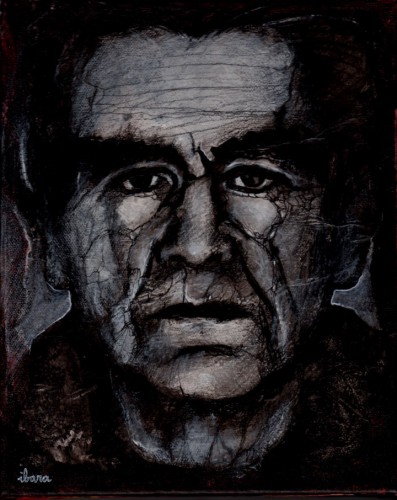
Cioran, le flâneur aux idées noires

Portrait-de-Cioran-peinture-dIbara.jpg

Archives - 1995

Cioran, le flâneur aux idées noires

Par Didier Sénécal

Ex: http://www.lexpress.fr

Notre plus illustre moraliste s'est choisi sa vie. En adoptant la langue française comme une patrie, en décidant de ne jamais travailler, en veillant quand le monde dort...

Cioran est peut-être notre dernier écrivain légendaire. Grâce à son refus des projecteurs et à son indifférence aux honneurs, il a conservé une part de mystère - d'autant qu'il ne s'est jamais donné la peine de corriger les erreurs qui courent à son propos. Ainsi, les dictionnaires sont unanimes à le prénommer Emil Michel. La réalité est tout autre: comme Emil lui paraissait ridicule pour des oreilles françaises, il a adopté les initiales E.M., autrement dit les deux premières lettres de son prénom, en songeant au romancier anglais E.M. Forster. 

Emil Cioran, donc, est né en 1911 à Rasinari, village de Transylvanie, alors sous domination austro-hongroise. Son enfance est enchantée: il galope dans les collines en toute liberté et écoute les bergers dont les histoires proviennent de la nuit des temps. En 1921, ce bonheur prend fin brutalement. Son père, un prêtre orthodoxe, le conduit au lycée de Sibiu, la grande ville voisine où se côtoient Roumains, Hongrois et Allemands. Sept ans plus tard, il part étudier la philosophie à Bucarest. La rupture qui va déterminer toute son existence date de cette époque: le sommeil le fuit. Tenté un moment par le suicide, il préfère suivre le conseil de Nietzsche et transformer ses insomnies en un formidable moyen de connaissance: "On apprend plus dans une nuit blanche que dans une année de sommeil." Etudiant brillant, il écrit son premier livre, Sur les cimes du désespoir, à l'âge de vingt-deux ans. Beaucoup le considèrent comme un des espoirs de la jeune littérature roumaine, aux côtés d'Eugène Ionesco ou du déjà illustre Mircea Eliade. 

Après un séjour à Berlin, le voici professeur de philosophie au lycée de Brasov durant l'année scolaire 1936-1937. Expérience mouvementée, si l'on en juge par son surnom dans l'établissement: "le Dément". A l'en croire, le directeur "se saoule la gueule" le jour de son départ! Mais il doit laisser un sacré souvenir à ses élèves, car certains viendront encore lui rendre visite au bout de plusieurs décennies. C'est en tout cas une expérience unique: il n'exercera plus jamais la moindre activité professionnelle. 

En 1937, une bourse de l'Institut français de Bucarest lui permet d'aller préparer sa thèse à Paris. Non seulement il n'en écrit pas le premier mot, mais il est même incapable d'imaginer un titre... Les années suivantes sont consacrées à d'immenses lectures, à des randonnées à vélo dans les provinces françaises, à la poursuite de son ?uvre en roumain. Cioran vit comme il l'entend: pauvrement, mais sans contraintes, libre de déambuler des nuits entières dans les rues et d'approfondir ses obsessions. Pourtant, il se rend compte qu'il s'est engagé dans une impasse. Il vaudrait mieux, prétend-il, être un auteur d'opérettes que d'avoir écrit six livres dans une langue que personne ne comprend! 

Selon son propre témoignage, il aurait décidé d'adopter le français alors qu'il traduisait Mallarmé en roumain. D'autres épisodes ont sans doute joué un rôle important, en particulier un cours au Collège de France durant lequel un mathématicien étranger effectue une démonstration au tableau noir sans avoir besoin d'ouvrir la bouche. Cette mue linguistique est aussi capitale que l'abandon du russe par Nabokov au profit de l'anglais. Désormais, le français - et qui plus est, le français du XVIIIe siècle - va lui servir de "camisole de force"; la langue de Chamfort va corseter le lyrisme balkanique d'un désespéré qui ne jure que par Thérèse d'Avila et Dostoïevski. De là vient ce ton unique: cette invraisemblable synthèse entre la fièvre et la sagesse, entre le délire mystique et l'ironie des moralistes classiques. 

En 1947, Gallimard accepte la première mouture du Précis de décomposition. Cioran retravaille son manuscrit, qui est publié deux ans plus tard. Les critiques sont excellentes, mais le public ne suit pas. Et cette situation va se prolonger pendant près de trente ans. Il faut dire que Cioran est aux antipodes de Jean-Paul Sartre, qui fait alors la pluie et le beau temps, et qu'il éprouve une haine inexpiable envers le communisme. Les nouveaux maîtres roumains ont emprisonné son frère et certains de ses amis, et ses livres sont interdits de l'autre côté du rideau de fer. Cependant, plusieurs éléments lui donnent la force de surmonter les humiliations, les échecs, les volumes pilonnés. Ses amis, d'abord, qui se nomment Ionesco, Eliade, Beckett, Michaux ou Gabriel Marcel. Ses lecteurs, ensuite, très rares mais généralement fanatiques: "Les gens qui s'intéressent à moi ont forcément quelque chose de fêlé..." 

Et puis, peu à peu, le couvercle se soulève. En 1965, François Erval publie le Précis de décomposition en édition de poche. Une nouvelle génération découvre Les syllogismes de l'amertume et La tentation d'exister. Des traductions paraissent en Allemagne, aux Etats-Unis, en Espagne; les articles se multiplient; les chiffres de vente décollent enfin du plancher. 

Obscur ou fameux, Cioran demeure tel qu'en lui-même. Il continue à fuir les médias et à décliner les prix littéraires. Il brode inlassablement, dans un style d'une élégance glaciale, sur les thèmes qui le hantent depuis l'adolescence: le vertige du temps, la mort, "l'inconvénient d'être né", le mysticisme chrétien, l'essoufflement de la civilisation occidentale, Bouddha, Shakespeare, Bach. Sans doute considère-t-il cette célébrité tardive comme un malentendu; lorsqu'il plaint Borges, c'est à lui-même qu'il songe: "La consécration est la pire des punitions (...) A partir du moment où tout le monde le cite, on ne peut plus le citer, ou, si on le fait, on a l'impression de venir grossir la masse de ses ''admirateurs", de ses ennemis." 

Aveux et anathèmes est publié en 1987. C'est son dernier livre. Si les bruits qui courent en avril 1988 sur une éventuelle tentative de suicide sont infondés, en revanche, il est exact qu'il renonce définitivement à écrire. Atteint par une maladie grave, Cioran vit aujourd'hui dans un hôpital parisien. Cinquante-huit ans après avoir quitté la Roumanie pour jeter l'ancre au Quartier latin, il a toujours le statut d'apatride. 

Ce que je sais à soixante, je le savais aussi bien à vingt. Quarante ans d'un long, d'un superflu travail de vérification...
(De l'inconvénient d'être né) 

Ma vision de l'avenir est si précise que, si j'avais des enfants, je les étranglerais sur l'heure.
(De l'inconvénient d'être né) 

Cioran